
The best hidden towns with a medieval festival that are worth a night in Toscana
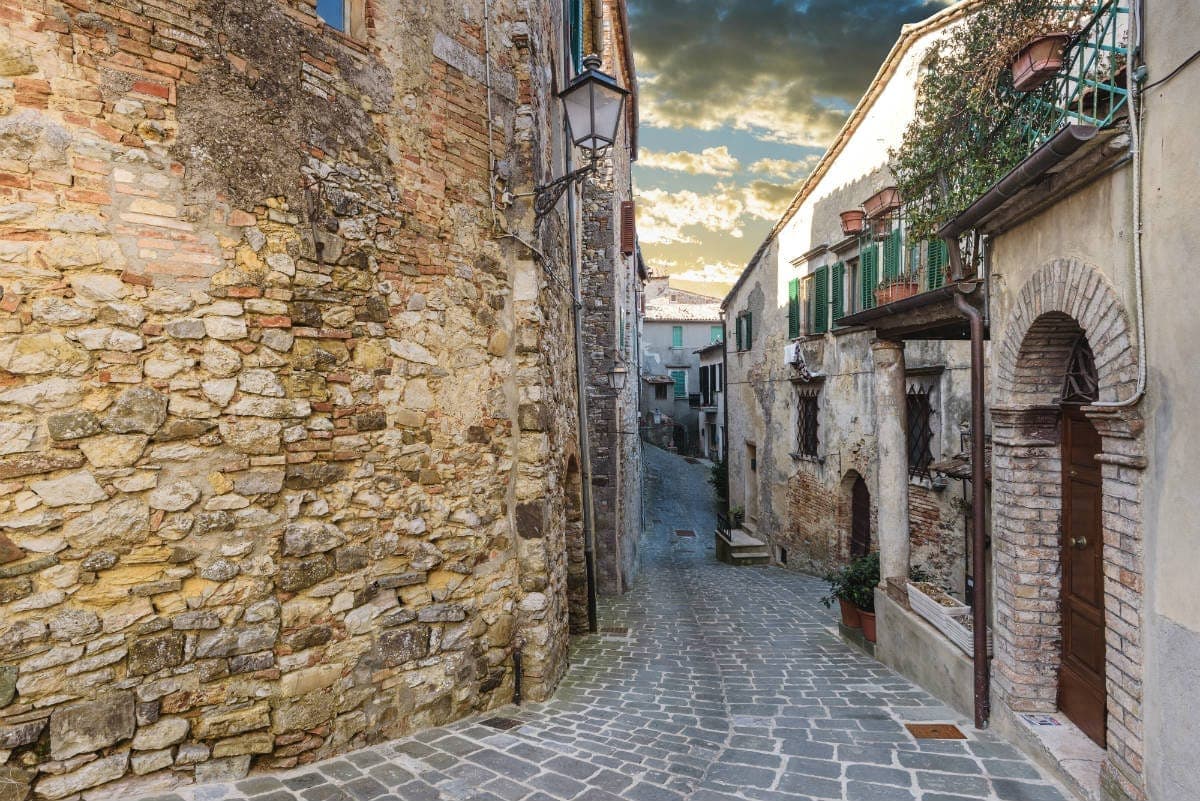
Medieval Tuscany is not only a set of towers and a walled skyline. It is a working calendar: the drum practice heard through open windows in June, the neighbourhood banners hung out weeks early, the smell of grilled meat and woodsmoke in a piazza laid with sand for the horses. The building material shifts as you cross the region, pale travertine in the south, warm stone and brick in the hill towns, tufa where the Maremma begins. Eat what the festival kitchens cook: pici with garlic, wild boar stewed slowly, pecorino and Vin Santo, and in the coastal towns fish soup thick with tomato.
Most people meet this Tuscany in Siena, on the two days of the Palio, when the Campo is packed shoulder to shoulder and every room in the city has been booked since winter. It is the great one, and it deserves the crowd, but it is also a few hours of spectacle wrapped in a long, expensive wait. The same is true of the day trip to Florence and the coach parties that follow it. Arrive, watch, leave, having seen the pageant and none of the town that produces it.
The re-enactments do not stop at the edge of the famous cities. They run right through the hill towns and down to the Maremma, in places where the contrade are neighbours rather than a tourist draw, where the archery contest happens in front of people who have known the archers since school. These are towns worth a night rather than an afternoon, and each has somewhere decent to sleep once the torches are out and the piazza empties.
Of the 84 communes we have mapped in Toscana, 15 qualify as towns with a medieval festival worth staying overnight: each stages a recurring historical re-enactment, and each has a hotel a travel guide has vouched for. This list is the hidden ones, 10 in all, ordered smallest first. The smallest, San Casciano dei Bagni, has 1,500 residents.
If you are still choosing, we have also written The best hidden towns with a food festival that have a serious restaurant in Toscana and The best hidden wine towns with a medieval festival in Toscana.
San Casciano dei Bagni
Why visit San Casciano dei Bagni
San Casciano dei Bagni sits at 582 meters at the southern edge of the province of Siena, above 42 hot springs that average 42 degrees Celsius. The baths were used continuously from Etruscan through Roman times and again from the Renaissance, when visitors came from across Europe.
In 2022, an excavation that began in 2019 at the ancient sanctuary turned up 24 bronze votive statues protected by mud, with around 6,000 coins in gold, silver and bronze. The find was the largest of its kind in fifty years; most surviving Etruscan votive material is terracotta.
The 1,500 residents live on a basalt outcrop above the Roman thermal complex, in a centro storico of stone houses and three small churches. The borgo joined the Borghi più belli network in 2014 and remains one of the smallest communes in Toscana to carry both that label and Bandiera Arancione.
The re-enactment here is Palio di San Cassiano di San Casciano dei Bagni, usually held in August.
What to see in San Casciano dei Bagni
- Santuario Ritrovato. Etruscan-Roman thermal sanctuary excavated since 2019, where 24 bronze votives and around 6,000 coins were recovered in 2022.
- Bagno Grande. The principal natural pool of the 42 hot springs, used from the second century BC through the Renaissance and reopened to the public.
- Collegiata di San Leonardo. Romanesque parish church in the centro storico, restored in the seventeenth century, with a baptismal font carved from local travertine.
How to get to San Casciano dei Bagni
Perugia is roughly 68 minutes away by road.
Our tip
The thermal pools make the calendar different here. Winter is the season many visitors prefer, when the 42-degree water steams against cold air and snow occasionally dusts the basalt outcrop. April through June and September into October are the most balanced months: warm hill light, the dry-stone walls of the borgo at their best, the sanctuary excavations open to guided tours. Sagra del Ciaffagnone di San Casciano dei Bagni falls in June.
Cerreto Guidi
Why visit Cerreto Guidi
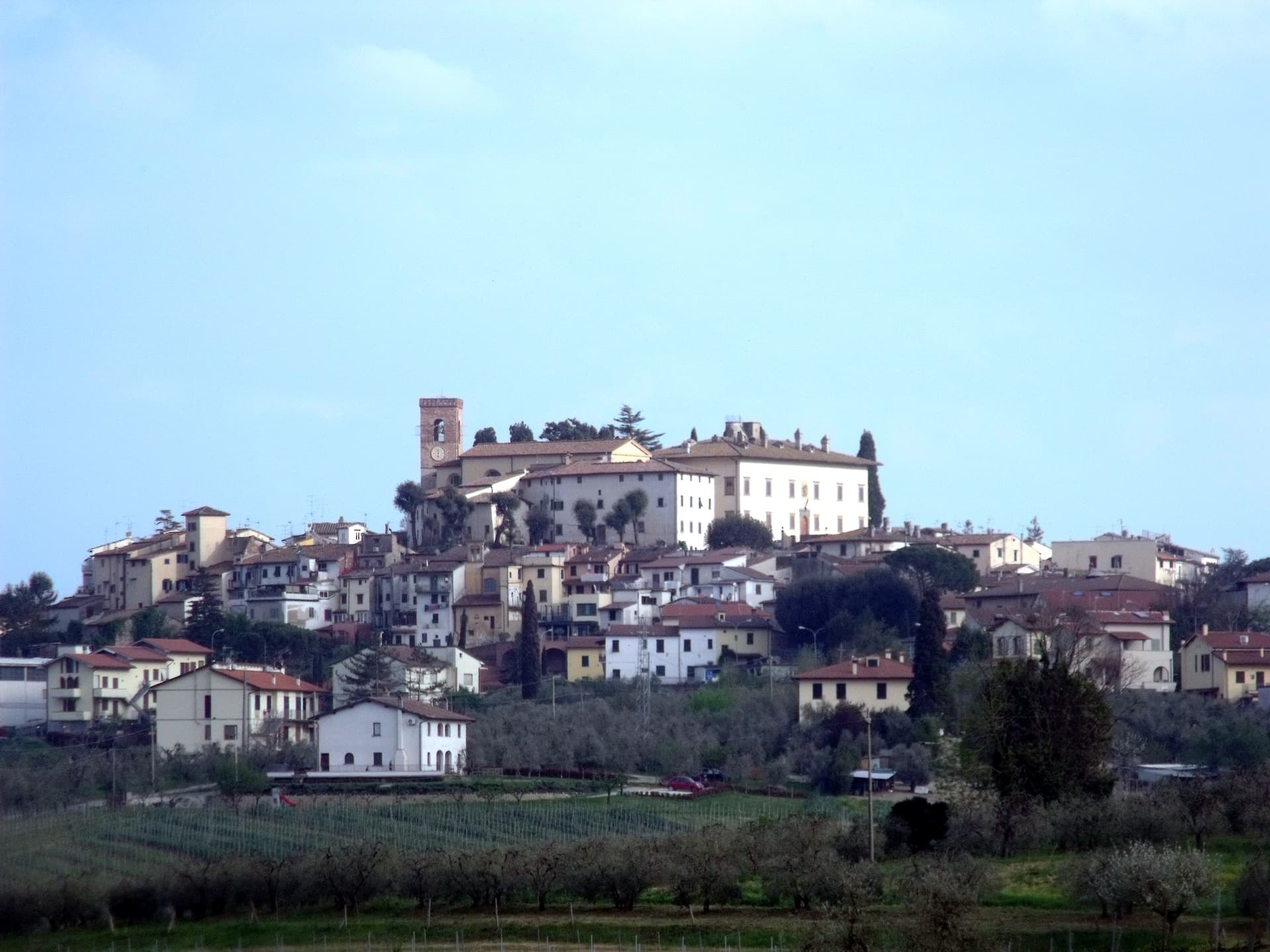
Cerreto Guidi sits at 123 meters above the Padule di Fucecchio, thirty kilometers west of Florence, on the old hunting grounds of the Counts Guidi and later the Medici. Cosimo I commissioned the Villa Medicea here between 1564 and 1567 as a hunting lodge and territorial outpost over the marsh.
The villa is mounted on a scenographic base of four symmetrical ramps of stairs, the ponti medicei, traditionally attributed to Bernardo Buontalenti, designed to raise the perspective plane and the level of the entrance. In 2013 the villa entered the UNESCO list of Medici Villas and Gardens of Tuscany along with twelve others, and it remains one of the few permanently open as a museum, housing the Museo Storico della Caccia e del Territorio since 2002.
The Via Francigena passes a few kilometers south. Isabella de' Medici, daughter of Cosimo I, was strangled in this villa by her husband Paolo Giordano Orsini in July 1576.
The re-enactment here is Palio del Cerro, usually held in September.
What to see in Cerreto Guidi
- Villa Medicea di Cerreto Guidi. Hunting villa built for Cosimo I de' Medici between 1564 and 1567, UNESCO World Heritage since 2013, holding the Museo Storico della Caccia.
- Ponti Medicei. Four symmetric ramps of stairs attributed to Buontalenti, supporting the villa above the village and forming its scenographic base.
- Museo Storico della Caccia e del Territorio. Hunting and local history museum housed in the villa since 2002, with weapons, prints and documents from the Medici hunting grounds.
How to get to Cerreto Guidi
Firenze is roughly 50 minutes away by road.
Our tip
April through June is the easiest time to walk the village and the villa garden, with the Padule di Fucecchio at its greenest. September and October dry the marsh, the harvest in the surrounding Chianti Montalbano vineyards runs through late September. July and August are hot in the lower Arno plain and the villa is the cool place to be; visitor numbers peak around mid-August. Palio del Cerro falls in September.
Pienza
Why visit Pienza
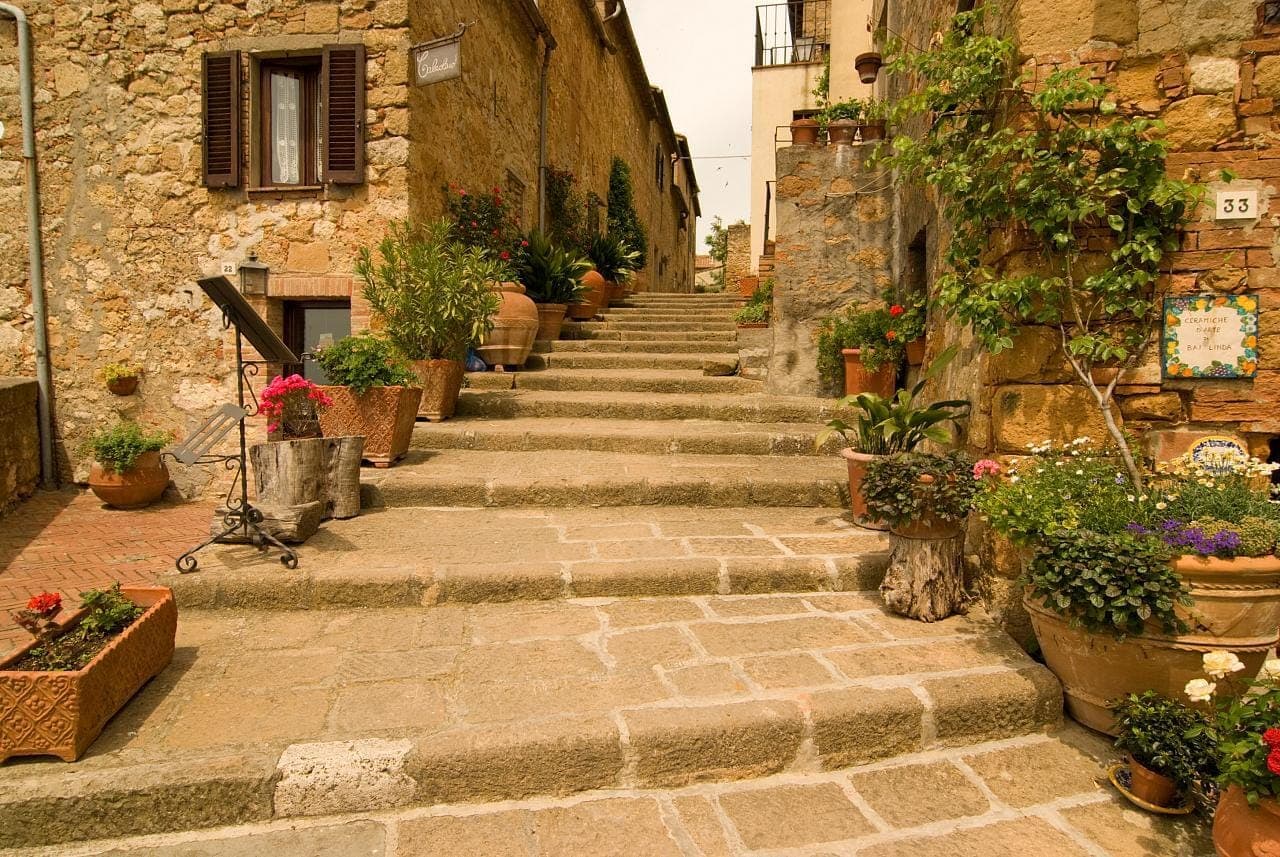
Pienza sits at 491 meters on a long ridge in the Val d'Orcia, an hour and a half south of Siena. The village was called Corsignano until 1462.
Enea Silvio Piccolomini was born here in 1405 and became Pope Pius II in 1458; the following year he ordered the Florentine architect Bernardo Rossellino to rebuild his birthplace as a Renaissance ideal city. The work took three years.
The square at the center, the cathedral on the cliff side, the palace built for the pope's family, the cardinal's palace facing it, and the town hall opposite the cathedral were all designed and built as a single composition rather than assembled piece by piece over time. Pius consecrated the cathedral on 29 August 1462, two years before his death, and the whole arrangement has survived almost unchanged since.
What stands in Pienza today is less a collection of monuments than the physical record of one commission carried out in one stretch of years.
The re-enactment here is Festa rinascimentale e corsa di Pio a Pienza, usually held in September.
What to see in Pienza
- Piazza Pio II. Trapezoidal Renaissance square laid out by Bernardo Rossellino, with the Duomo, Palazzo Piccolomini, Palazzo Borgia and Palazzo Comunale facing each other.
- Duomo di Pienza. Latin-cross cathedral with three apsidal chapels, built on the cliff edge, its Renaissance façade also by Rossellino.
- Palazzo Piccolomini. Renaissance palace for the pope's family, begun 1459, with an internal courtyard and a hanging garden overlooking the Val d'Orcia.
How to get to Pienza
Perugia is roughly 98 minutes away by road.
Our tip
April through June and September into October are the months when the Val d'Orcia sits at its best, green or gold depending on the wheat cycle, and the Piazza Pio II is open for photographs without the day-tripper buses. July and August push past thirty-three degrees and the Corso Rossellino fills with tour groups between ten and four. The Fiera del Cacio, the cheese festival, takes the first Sunday in September, when the streets fill with stalls of pecorino producers from the Pienza ridge. Festa del Cacio di Pienza falls in September.
Montalcino
Why visit Montalcino
Montalcino sits at 564 meters on a hill south of Siena, the centro storico ringed by walls and crowned by a pentagonal fortress built in 1361. When Florence took Siena in 1555, the Sienese exiles regrouped here and held out for almost four years; the Rocca itself never fell.
That date matters less to most visitors than 1980, when Brunello di Montalcino was named one of the first four Italian wines to receive DOCG status. The vineyards run from the town at 600 meters down to plots at 200, on stony galestro soils that ripen Sangiovese Grosso into a wine that ages for decades.
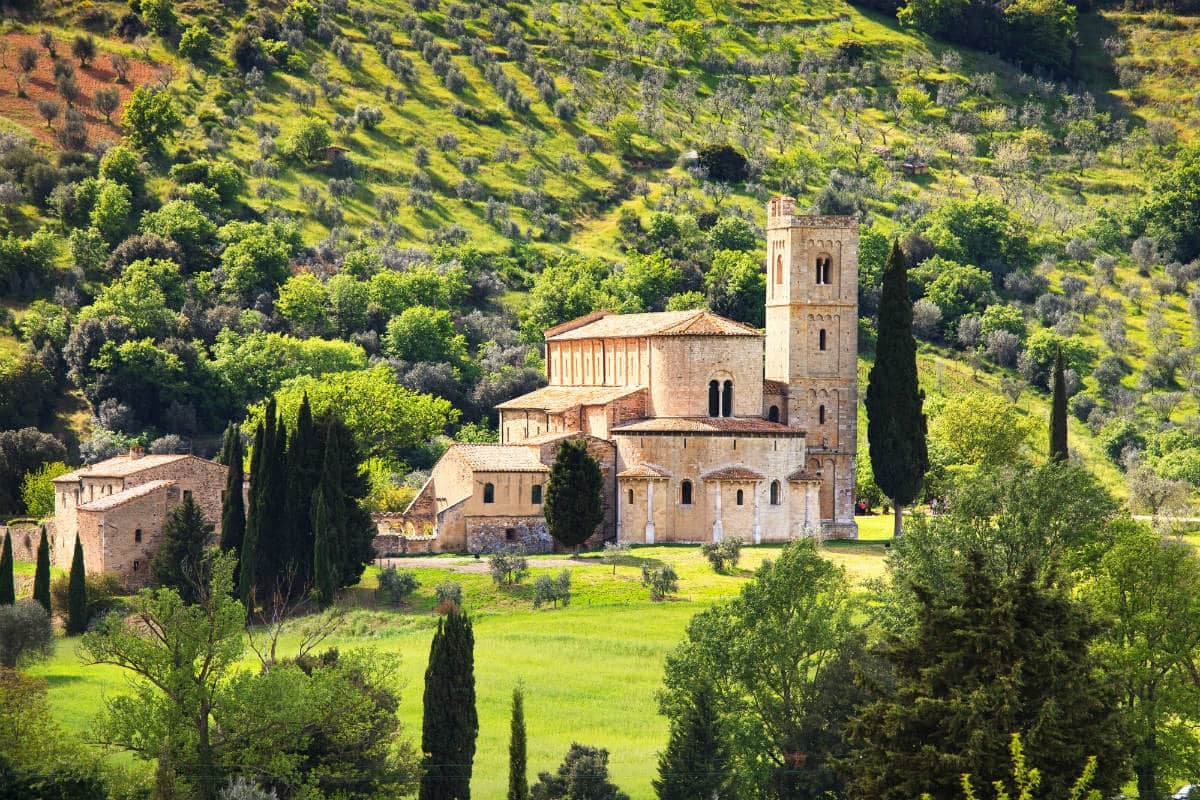
The Abbey of Sant'Antimo, ten kilometers south, is a Romanesque church first documented in 814 and tied by local legend to a vow by Charlemagne. The town also produces miele, olio, and the white truffles of the surrounding woods.
It carries seven institutional signals at once, more than any other commune in this batch.
The re-enactment here is Torneo di Apertura delle Cacce a Montalcino, usually held in August.
What to see in Montalcino
- Rocca di Montalcino. Pentagonal fortress built in 1361 by Sienese architects Mino Foresi and Domenico di Feo, refuge of the Sienese Republic after 1555.
- Abbazia di Sant'Antimo. Romanesque abbey ten kilometers south, first documented in 814, set among olive groves below the town with Gregorian chant still sung.
- Palazzo dei Priori. Thirteenth-century town hall on Piazza del Popolo, slender tower attached, civic seat of the medieval commune.
How to get to Montalcino
There is a railway station in the town, so you can arrive without a car and never need one while you are here. Perugia is roughly 105 minutes away by road.
✷ We have written about Montalcino
“When the film industry needed a picture of heaven, of the fields a dead hero walks home to, they came and shot it here, and that is the truest thing anyone has ever said about the Val d'Orcia. It is not a place. It is the afterlife as imagined by people who lived in cities. It is how the country looks to men who never spent an hour in it, dreamed up by Florentine bankers five hundred years ago and maintained, beautifully, ever since.”
Read our piece on Montalcino →Val d'Orcia | The Postcard Is Constructed
Our tip
April through June and September into October are the months locals prefer. The hills are green or gold depending on the half, and the vineyards run their full work cycle. The Sagra del Tordo, a medieval archery contest between the four quarters of the town, takes place the last Sunday of October. Sagra del Cinghiale di Montalcino falls in the season.
Manciano
Why visit Manciano
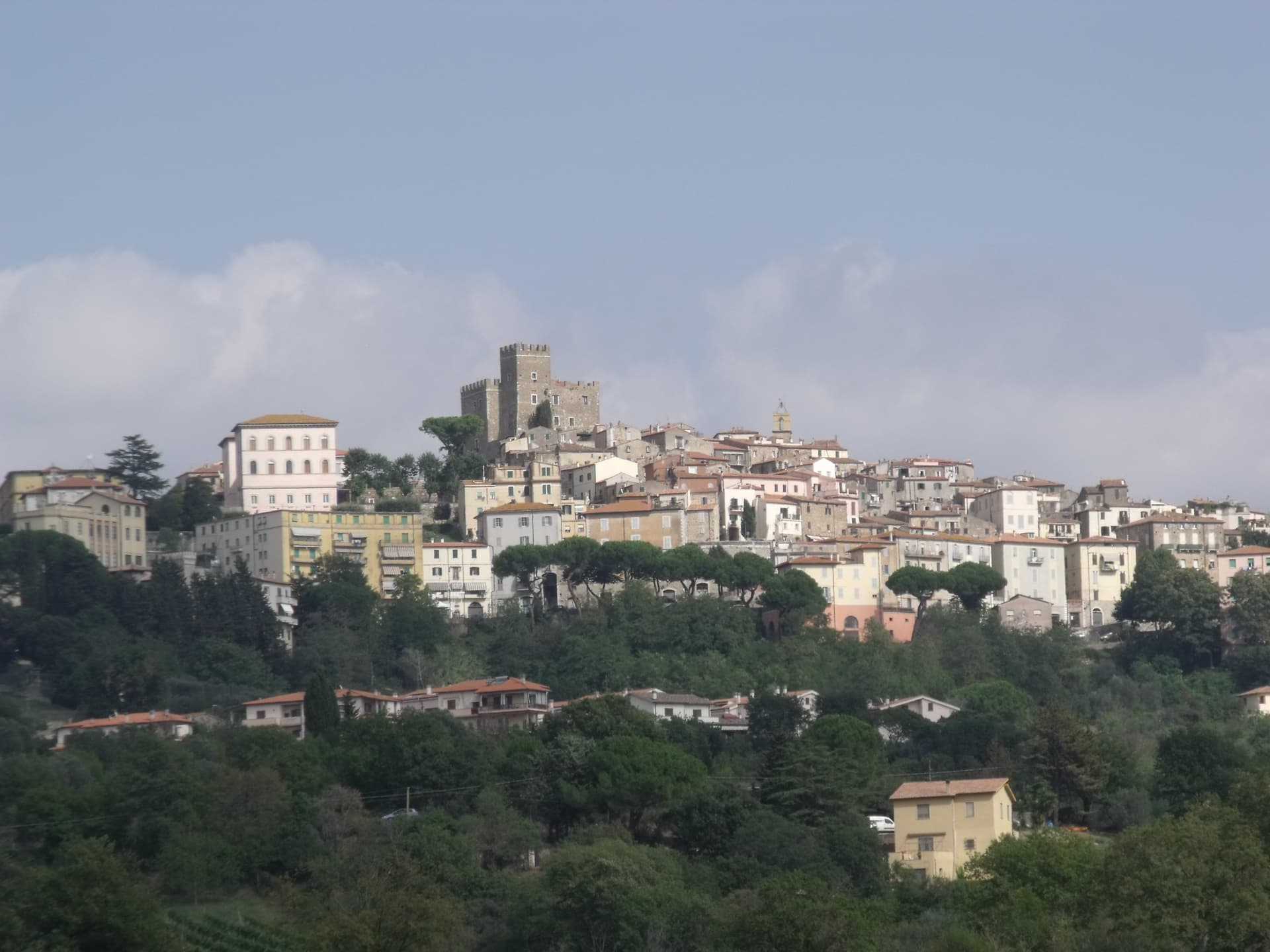
Manciano sits at 444 meters on a hill in the southern Maremma grossetana, with a 360-degree view that runs from Monte Amiata north to the Tyrrhenian coast. The Aldobrandeschi held the original stronghold from the twelfth century.
Siena occupied the town between 1419 and 1455 and built the Rocca that still dominates the centro storico, a square keep with battlements on a shoe-base. After 1455 it returned to local rule and passed eventually to the Medici Grand Duchy.
The comune is large by Toscana standards and includes some of the best-known places of the southern Maremma: Saturnia, the Etruscan town built around its sulphurous hot springs, and Montemerano, a small walled borgo on the road to the Lago di Bolsena. The Albegna and Fiora valleys, which the town once served as a regional market, still meet at its foot.
Wine, olive oil and wild boar work the territory in roughly the order they sit on a Maremmano menu.
The re-enactment here is Palio delle Botti di Manciano, usually held in August.
What to see in Manciano
- Rocca Aldobrandesca. Sienese fortress of 1424 on Aldobrandeschi foundations, square keep, walls with battlements and a solid shoe-base, dominating the centro storico.
- Saturnia. Etruscan town and frazione south of Manciano, with medieval walls, remains of a Roman road and the sulphurous hot springs used since antiquity.
- Montemerano. Small walled borgo east of Manciano, three concentric circles of streets and a fifteenth-century Madonna della Gattaiola in the parish church.
How to get to Manciano
Terni is roughly 132 minutes away by road.
✷ We have written about Manciano
“Everyone driving from Florence down to Rome crosses the Maremma without noticing, because there is nothing on that stretch to make them slow down. The hills give out. The cypresses stop. What opens up instead is flat open country, wheat and grass running off to a few low rises, the least Tuscan-looking part of Tuscany, a landscape you would call dull if you were being honest and which most guidebooks solve by leaving out.”
Read our piece on Manciano →Maremma | The Last Cowboys of Tuscany
Our tip
April through June and September into October are the months Manciano shows the southern Maremma at its best, the territory dry but green, the Saturnia pools warm against cool mornings. The Sagra dell'Anatra runs in mid-August. July and August are hot at 444 meters but easier than the coast; afternoons in the centro storico empty between two and six. Palio delle Botti di Manciano falls in August.
Castiglione della Pescaia
Why visit Castiglione della Pescaia
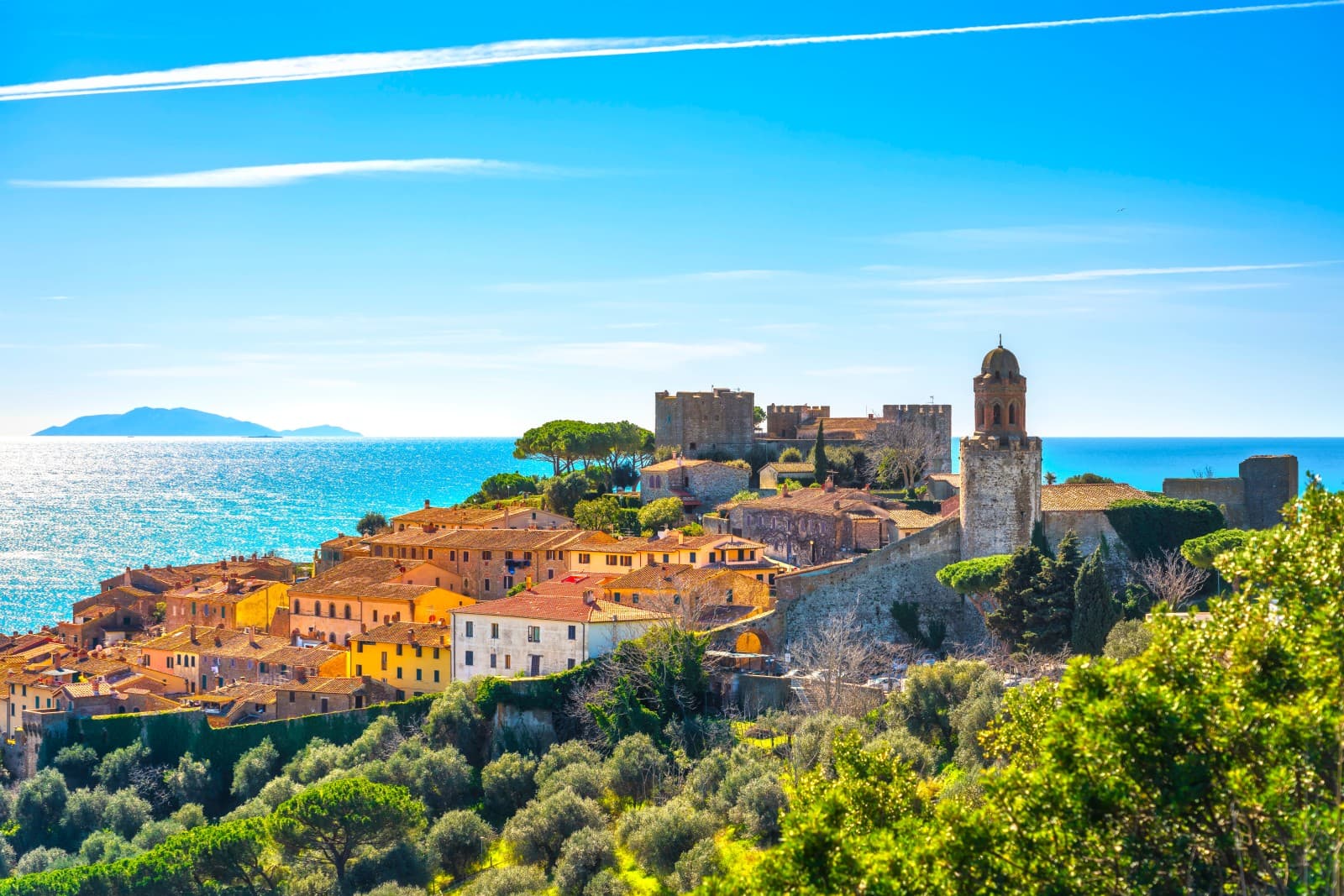
Castiglione della Pescaia sits at sea level on the Maremma coast, north of Grosseto, with a medieval upper town rising on the promontory above the harbor. The site was Roman Salebrone, before that Etruscan and Umbrian, settled because of the lake behind it that the Romans called Portus Traianus.
The lake silted up over time; what remains of it is the wetland reserve southeast of town, a Ramsar site since 1991. The upper town and the harbor below it read as two halves of one settlement: the fortress watching the water from above, the working port beneath, and behind both the flat reclaimed ground where the lake used to be.
Inland and to the east, the hills hold the remains of one of the major Etruscan cities, apart from the coastal life below. North of town, the pine forest gave Calvino his summers and now holds his grave on the hill above the harbor.
The place is built in layers: a silted lake turned nature reserve, a watchtower turned fortress, an Etruscan hill city, and a modern coastline still shaped by all of it.
The re-enactment here is Palio Marinaro di Castiglione della Pescaia, usually held in August.
What to see in Castiglione della Pescaia
- Rocca Aragonese. Castle on the promontory above the harbor, 10th-century watchtower core enlarged by Alfonso of Aragon in the 15th century, modified by Cosimo I and the Lorraine.
- Riserva Naturale Diaccia Botrona. Wetland reserve southeast of town with bird-watching hides, pink flamingos and white herons in season.
- Casa Rossa Ximenes. Hydraulic structure built by Jesuit engineer Leonardo Ximenes for the Lorraine drainage works; now multimedia museum of the wetland reserve.
How to get to Castiglione della Pescaia
Livorno is roughly 113 minutes away by road.
Our tip
May and June bring warm sea and quiet beaches, before the high-summer crowds arrive from Rome and Florence. June through September holds the Bandiera Blu and the Diaccia Botrona stays accessible in the cooler hours. July and August push the coast above thirty; Punta Ala and the harbor fill, and the Rocca above the old town becomes a sunset destination. Palio Marinaro di Castiglione della Pescaia falls in August.
San Gimignano
Why visit San Gimignano
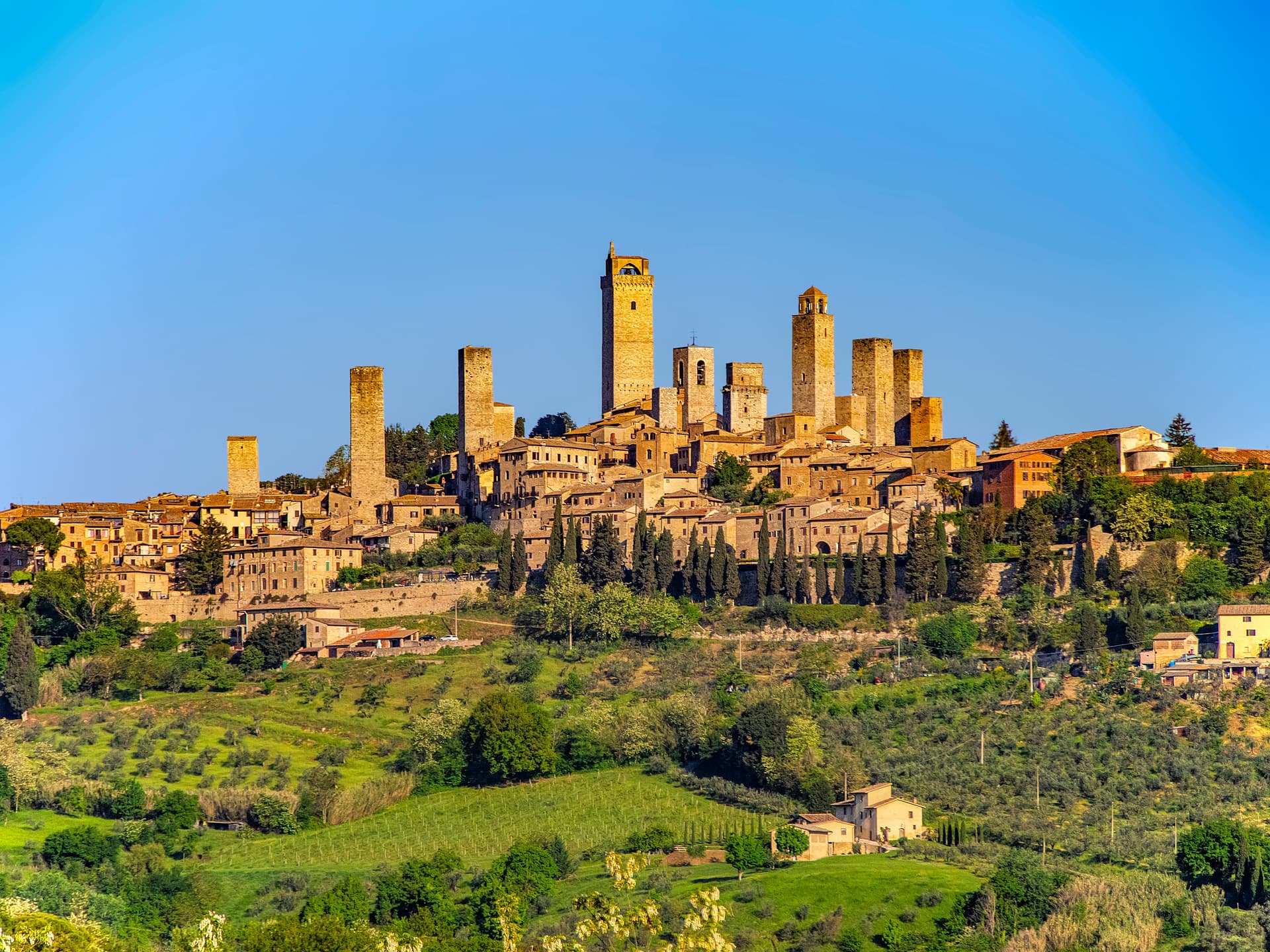
San Gimignano sits at 334 meters in the Val d'Elsa, halfway between Firenze and Siena on the medieval pilgrim road to Rome. Patrician families built 72 tower-houses in the twelfth and thirteenth centuries as proofs of wealth and platforms for vendettas; 14 still stand, the tallest being the Torre Grossa at 54 meters.
The town declared independence from the bishops of Volterra in 1199 and grew rich on saffron and Vernaccia, the white wine grown on the surrounding hills and praised since Dante. The Black Death of 1348 broke the boom; San Gimignano lost more than half its population and submitted to Florence.
That collapse is the reason the medieval skyline survived. UNESCO listed the historic centre in 1990 as a complete record of feudal architecture.
Roughly three million visitors come each year, more than 400 times the resident population, and the centro storico empties into the surrounding olive groves once the day-trippers leave.
The re-enactment here is Fiere delle Messi di San Gimignano, usually held in June.
What to see in San Gimignano
- Torre Grossa. Fifty-four meter civic tower attached to the Palazzo Comunale, the tallest of the surviving 14, open for the climb to the panoramic terrace.
- Piazza della Cisterna. Triangular medieval square paved in brick around an octagonal well of 1287, lined by tower houses and Romanesque palaces.
- Collegiata di Santa Maria Assunta. Romanesque parish church on Piazza Duomo, walls covered by Bartolo di Fredi and Lippo Memmi frescoes of Old and New Testament scenes.
How to get to San Gimignano
Firenze is roughly 61 minutes away by road.
✷ We have written about San Gimignano
“We arrived in the afternoon, into the second half of the day’s crowd. Off-season meant it was groups and guides rather than a flood, but the shops were open and doing their worst, the same garbage souvenirs, the same pasta no one local would eat, and we walked through it the way you walk through a thing you have decided not to let ruin your evening. The towers stood over all of it, indifferent, which is their whole talent.”
Read our piece on San Gimignano →San Gimignano | The Town After Seven
Our tip
April through June and September into October are the months the town is worth a full day rather than three hours. The buses still come, but late afternoon empties the piazzas and lets the towers take their light. July and August push temperatures past thirty and the centro storico becomes uncomfortable between two and six, when the stone radiates heat. Fiere delle Messi di San Gimignano falls in June.
Volterra
Why visit Volterra
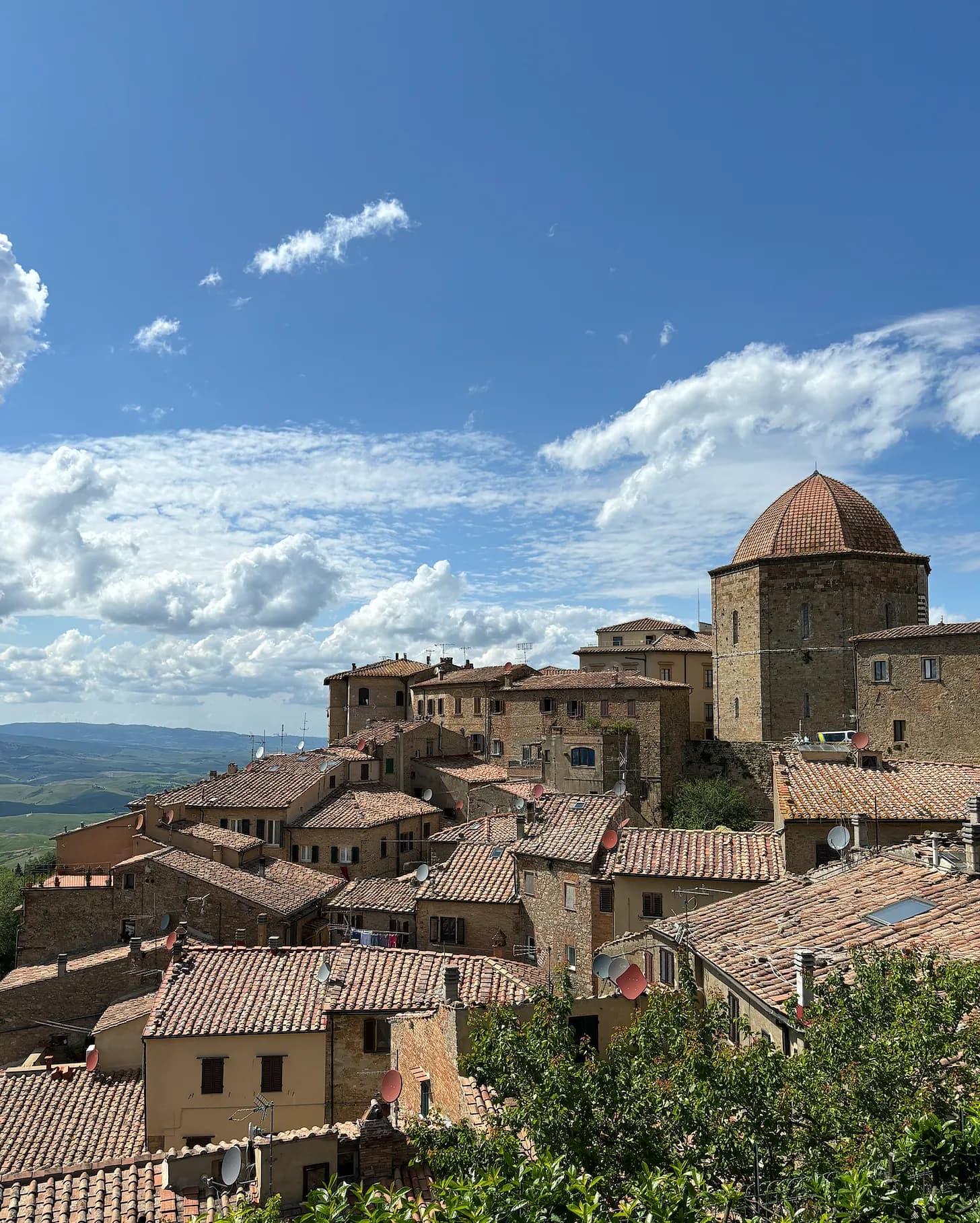
Volterra sits at 531 meters on a long ridge between the Era and Cecina valleys, one of the twelve cities of the Etruscan dodecapolis and the only one still occupied on its original ground. The Etruscans called it Velathri, the Romans Volaterrae; the Porta all'Arco, with three blackened tufa heads of unknown deities, has been the western gate of the town since the fourth century BC.
The Roman theater below the walls, excavated in the 1950s, holds two complete rows of columns and the bath complex behind the stage. Above stands the Palazzo dei Priori, begun in 1208 and the oldest town hall in Tuscany, the model for Florence's Palazzo Vecchio.
The town has been carving alabaster since the Etruscans, who used it for funerary urns; the same workshops on Via Porta all'Arco still cut and polish the soft white stone today. Le Balze, the eroded clay cliffs west of town, swallow a few meters of churchyard every century.
The re-enactment here is Palio del Cero di Volterra, usually held in June.
What to see in Volterra
- Porta all'Arco. Etruscan city gate from the fourth century BC, with three eroded tufa heads of unknown deities set above the arch.
- Teatro Romano. First-century BC Roman theater excavated in the 1950s, with two complete rows of columns and the bath complex behind the stage.
- Palazzo dei Priori. Begun in 1208, the oldest town hall in Tuscany, the architectural model for Florence's Palazzo Vecchio.
How to get to Volterra
Livorno is roughly 83 minutes away by road.
✷ We have written about Volterra
“The wine is the whole economy of these hills, every village with its own, the region’s name stamped on the most famous red in Italy. Tuscan food runs to cured and roasted meat, so the wine ran red to meet it, lighter than you expect, almost fruity, easy, made to sit beside a steak and not to be lectured about. Here is the only wine knowledge you need on this road: it is all good.”
Read our piece on Volterra →Road to Siena | The Long Way Is the Better Way
Our tip
April through June brings the surrounding clay hills green and the temperatures bearable on the exposed ridge. September and October are the second window, with the white truffle harvest peaking at Volterragusto in late October. July and August are hot and bright at altitude; the town fills with Italian and foreign visitors, and the Etruscan urns at the Guarnacci feel cool by comparison. Mostra Mercato del Tartufo Marzuolo falls in April.
Monte Argentario
Why visit Monte Argentario
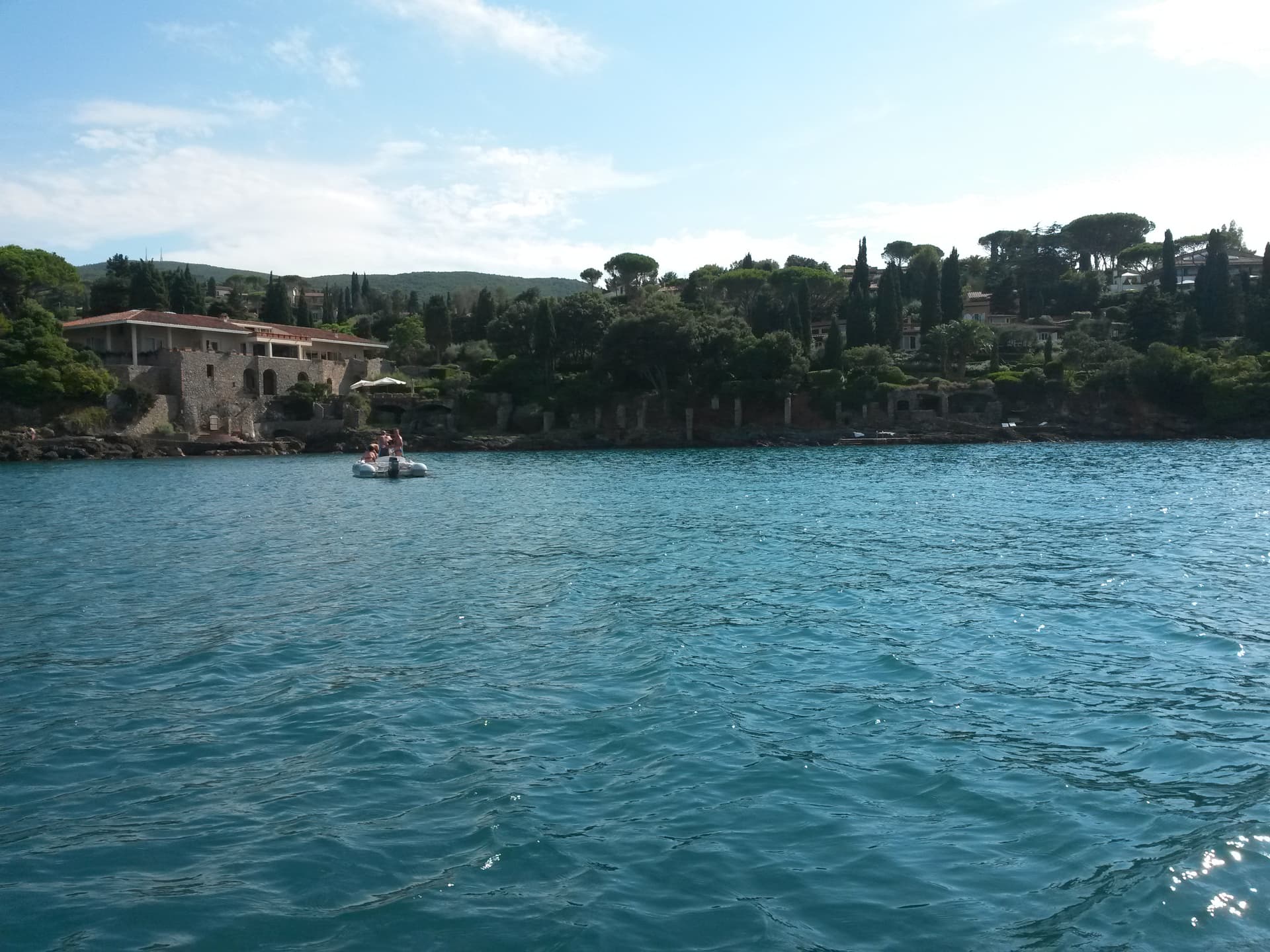
Monte Argentario is a peninsula on the southern Tuscan coast, 35 kilometers south of Grosseto, connected to the mainland by three sand spits that enclose the lagoons of Orbetello. The mountain at its center rises to 635 meters, and the two seats of the comune sit at sea level on opposite sides of it, the northern harbor facing toward Grosseto, the southern one turned toward the open coast below.
The history of the peninsula splits from the rest of Tuscany after 1557, when the territory was carved out of Sienese land and handed to the Spanish crown, which spent the next century and a half fortifying the coastline against corsair raids rather than building the kind of inland towns found elsewhere in the region. The result is a place organized around its edges rather than a center: two ports facing different waters, a mountain of forts between them, and a coastal road that ties the whole shape together for anyone crossing from one harbor to the other.
What the peninsula adds up to is a piece of Tuscany that spent its formative centuries as a Spanish military frontier, and still wears that history in its two-harbor shape and the ring of stone above them.
The re-enactment here is Palio Marinaro dell'Argentario, usually held in August.
What to see in Monte Argentario
- Forte Stella. Six-pointed star fort above Porto Ercole, designed for the Spanish by Buontalenti and Camerini and completed in the mid-1600s as part of the Presidi defense system.
- Forte Filippo. Spanish bastioned fortress above Porto Ercole, named for Philip II and built in the late 16th century to protect the Stato dei Presidi from corsair raids.
- Rocca Aldobrandesca, Porto Ercole. Earlier Aldobrandeschi fortress incorporated into the Spanish defense system, dominating the harbor and the old town of Porto Ercole.
How to get to Monte Argentario
There is a railway station in the town, so you can arrive without a car and never need one while you are here. Roma is roughly 137 minutes away by road.
Our tip
May through September is the season on the peninsula. Porto Santo Stefano and Porto Ercole fill in July and August; the Palio Marinaro on August 15 doubles the population of Porto Santo Stefano for a single afternoon. June and September are the easiest months, with warm water and fewer day-trippers. Palio Marinaro dell'Argentario falls in August.
Montepulciano
Why visit Montepulciano
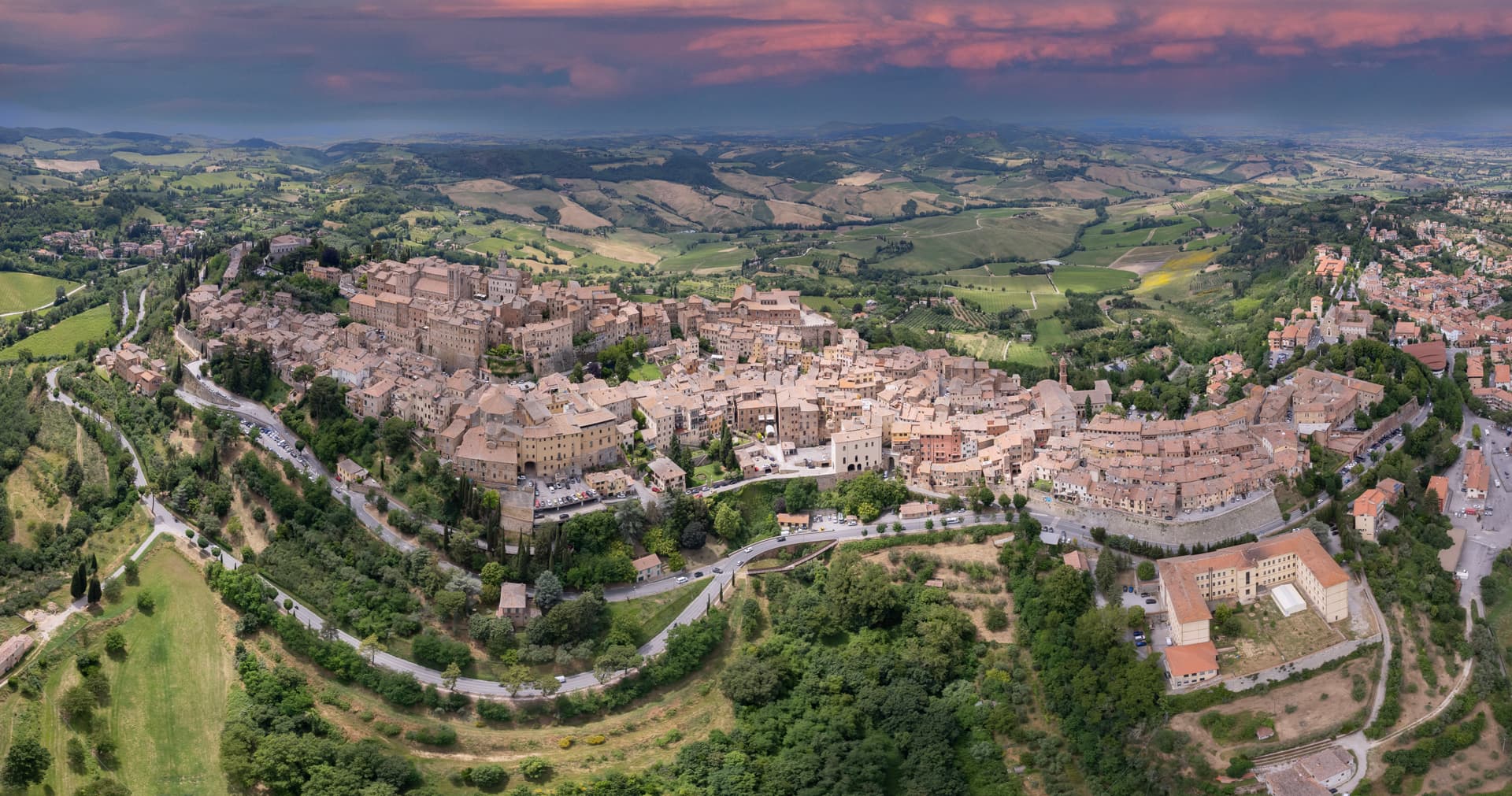
The ridge runs between the Val di Chiana and the Val d'Orcia, 70 kilometers southeast of Siena, and the town follows its spine uphill: streets climb from the gates toward the high point, where the main square sits ringed by the buildings that define the skyline from below. The origin predates the Renaissance fabric by centuries.
Etruscan tombs survive in the surrounding hills, though almost nothing of that period shows in the centro storico itself, which was rebuilt wholesale in the fifteenth and sixteenth centuries over whatever came before. The wine and the festival both use the climb as their setting rather than their subject: the cellars are cut into the rock beneath the palazzi, keeping a constant temperature for aging, and the barrel race each August sends two men from each of the eight contrade hauling an eighty-kilogram cask up the same gradient that every visitor covers on foot, only slower.
The steepness that shaped the defensive site nine centuries ago is still what a person feels first, in the legs, before the buildings register at all.
The re-enactment here is Bravio delle Botti, usually held in August.
What to see in Montepulciano
- Tempio di San Biagio. A 13-meter dome and travertine façade standing alone outside the walls, the ground falling away below it so the building reads as a single volume against the hillside.
- Piazza Grande. The high piazza at the top of the ridge, ringed by the Duomo, the Palazzo Comunale and the Palazzo Tarugi, all rebuilt in the fifteenth and sixteenth centuries.
- Palazzo Comunale. Town hall designed by Michelozzo in the fifteenth century, its tower offering a view over the Val di Chiana and Val d'Orcia.
How to get to Montepulciano
There is a railway station in the town, so you can arrive without a car and never need one while you are here. Perugia is roughly 57 minutes away by road.
Our tip
April through June and September into October are the working months on the ridge: vine work in the surrounding hills, mild days, evening light that lingers over the Val d'Orcia. July and August push into the low thirties and the climb to Piazza Grande slows even the residents. The Bravìo delle Botti runs the last Sunday of August and fills the town. Calici di Stelle falls in July.
More from Anywhere Italy
- The best hidden towns with a food festival that have a serious restaurant in Toscana
- The best hidden wine towns with a medieval festival in Toscana
- The best hidden towns with a medieval festival in the province of Siena
- The best wine towns with a food festival in Toscana
- The best towns with a food festival in the province of Siena
 The 9 best hidden hill towns on a walking route in Toscana