
The 8 best towns you can reach by train in the province of Cuneo
Cuneo is the corner of Piedmont where hills give way to mountains inside an hour. In autumn the Langhe smell of fermenting Nebbiolo and wet hazelnut leaves, white truffles come up from the marl under the oaks, and the restaurants pour raw veal, tajarin cut thin as thread, plin filled with roast meat. Further south the valleys narrow, the houses turn from warm Langhe brick to grey stone with slate roofs, and by December the snow sits on the Maritime Alps. The railway threads through all of it, so the wine and the mountains are both available without a hire car.
Most people who come to this part of Piedmont drive, and most of them drive to Barolo. The village sits on its ridge with the wine museum in the castle, the enoteca queue, the coach park, and no railway station of its own, which is why the same cars circle the same hillside lanes every October. Turin and Milan send weekend traffic down the same roads. It is a very good place, and in truffle season it is a very full one.
The vineyards do not stop at Barolo, and the valleys keep going long after the wine ends. The same slopes, the same Sunday markets and the same slow food kitchens continue along the lines out of Cuneo, Turin and Savona, into towns where the platform is a short walk from the main piazza. These are the places on that network: wine towns, a royal-castle town on the plain, and the stone villages on the mountain line south, each one confirmed reachable without a car.
Of the 23 communes we have mapped in the province of Cuneo, 8 qualify as towns you can reach by train: we have confirmed each is reachable without a car. The smallest, Verduno, has 567 residents.
Elsewhere in the catalogue: The 7 best towns you can reach by train that have a serious restaurant within 90 minutes of Torino and The best towns you can reach by train within an hour of Turin.
Verduno
Why visit Verduno
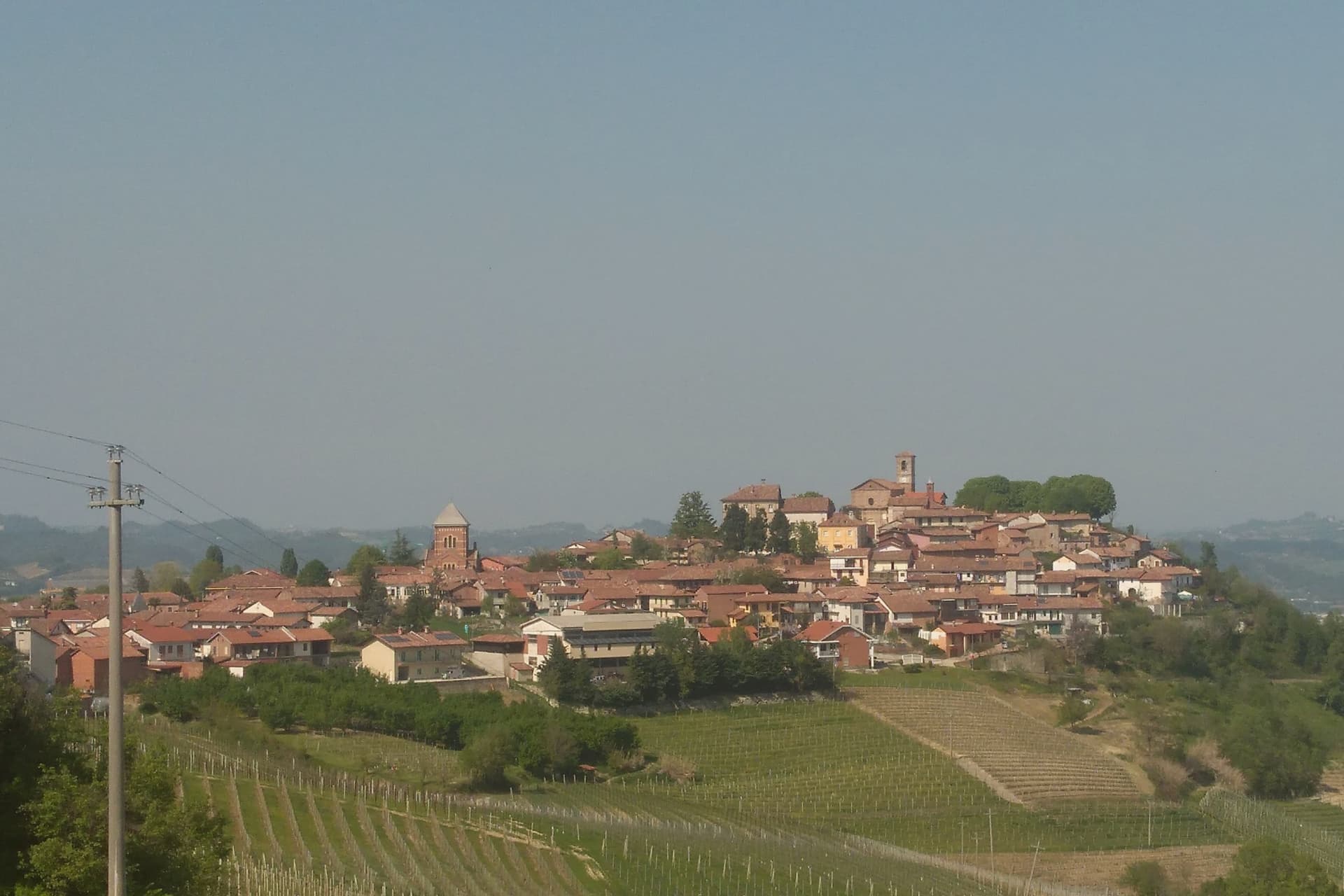
Verduno sits fifty kilometers south of Torino on a Langhe ridge above the Tanaro, its vineyards the only ones among the eleven Barolo communes to lean partly toward the river plain rather than folding back into the hills. That position, facing the water and the Alps beyond it, sets the village apart from the rest of the DOCG even before the wine is considered.
The other thing that sets it apart is Pelaverga Piccolo, a native black grape cultivated commercially in only three Langhe communes: Verduno, La Morra and Roddi. It yields a light ruby red with strawberry, rose and a distinct white-pepper finish, and the first single-variety Pelaverga vineyard on these slopes was planted in 1972.
Between the castle on the ridge and the vine on the plain-facing slope, Verduno holds two things most of its neighbors do not: a wine that is Barolo's own, structurally, and a wine that belongs to almost nowhere else.
We confirmed you can reach this one by train.
What to see in Verduno
- Castello di Verduno. The castle stands on the Langhe ridge and passed to the Burlotto family in 1909, who still work it as a winery producing Barolo and Pelaverga.
- Centro storico. Small hilltop village arranged around the castle and the parish church, with views across the Tanaro and the northern Barolo vineyards.
- Vigneti di Pelaverga. Indigenous Pelaverga Piccolo plantings on the Verduno slopes, including the first single-variety Pelaverga vineyard planted in 1972.
How to get to Verduno
There is a railway station in the town, so you can arrive without a car and never need one while you are here. Torino is roughly 60 minutes away by road.
Our tip
April through June is the green window in the Langhe, hillsides striped between Nebbiolo and Pelaverga vines, mild evenings on the Verduno ridge. September and October are the harvest months: Pelaverga first, Nebbiolo last, with the surrounding cantine open for tastings and walking through the rows possible without crowds. July and August touch the low thirties on the hills; the centro storico thins after lunch and the cellar tastings move under stone vaults to stay cool.
Limone Piemonte
Why visit Limone Piemonte
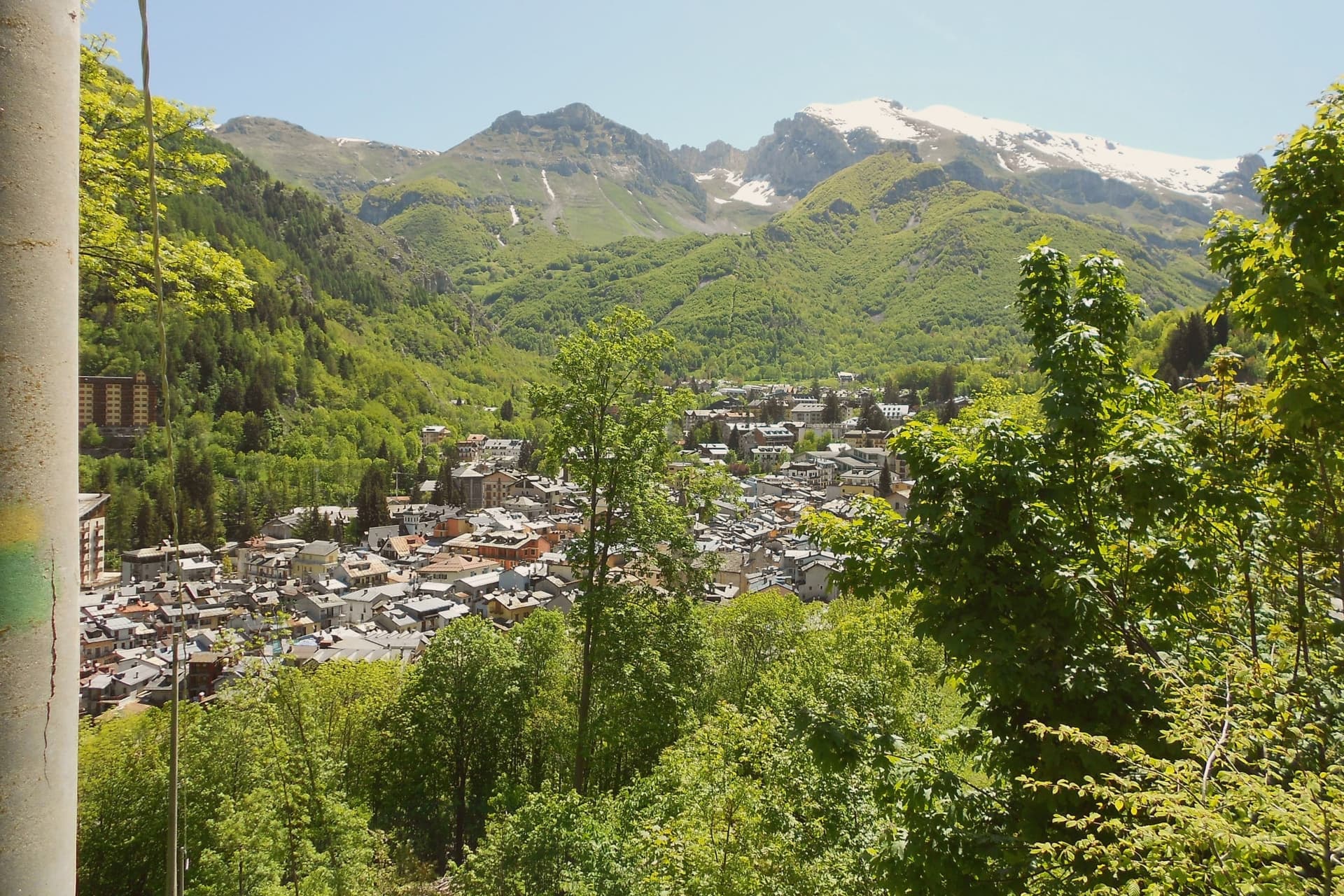
Limone Piemonte sits at 1,000 meters in the Vermenagna valley, twenty kilometers from Cuneo and fourteen from the Colle di Tenda, the historic pass into France. The Riserva Bianca ski domain rises behind the village from 1,050 to 2,085 meters, with eighty kilometers of pistes served by one gondola, ten chairlifts and three drag lifts.
The Cuneo-Ventimiglia railway, opened across this valley in 1900, runs ninety kilometers from the plain to the sea with thirty-three tunnels and twenty-seven bridges, one of the steepest mountain lines in Europe. In the village center, Piazza del Municipio holds a 16th-century stone fountain and the Gothic parish church of San Pietro in Vincoli, with elements of Romanesque and Gothic stonework from the 14th and 15th centuries.
The town empties between seasons and fills twice a year, for the ski months and for the alpine summer.
We confirmed you can reach this one by train.
What to see in Limone Piemonte
- Chiesa di San Pietro in Vincoli. Gothic parish church on Piazza del Municipio, built between the 14th and 15th centuries on Romanesque foundations.
- Riserva Bianca. Ski domain rising from 1,050 to 2,085 meters with 80 km of pistes, the main winter draw of the southern Piemonte Alps.
- Centro storico. Stone village core around Piazza del Municipio, with a 16th-century fountain and a Gothic-Romanesque parish church.
How to get to Limone Piemonte
There is a railway station in the town, so you can arrive without a car and never need one while you are here. Torino is roughly 132 minutes away by road.
Our tip
December through March is the ski season the village was rebuilt for: the Riserva Bianca lifts open, the centro fills on weekends and the railway carries day-trippers up from the plain. June through September brings the second peak, when the same ridges become hiking, grazing and via ferrata country and the Tenda border roads draw cyclists. April, May, October and November are quiet between the two seasons.
Ormea
Why visit Ormea
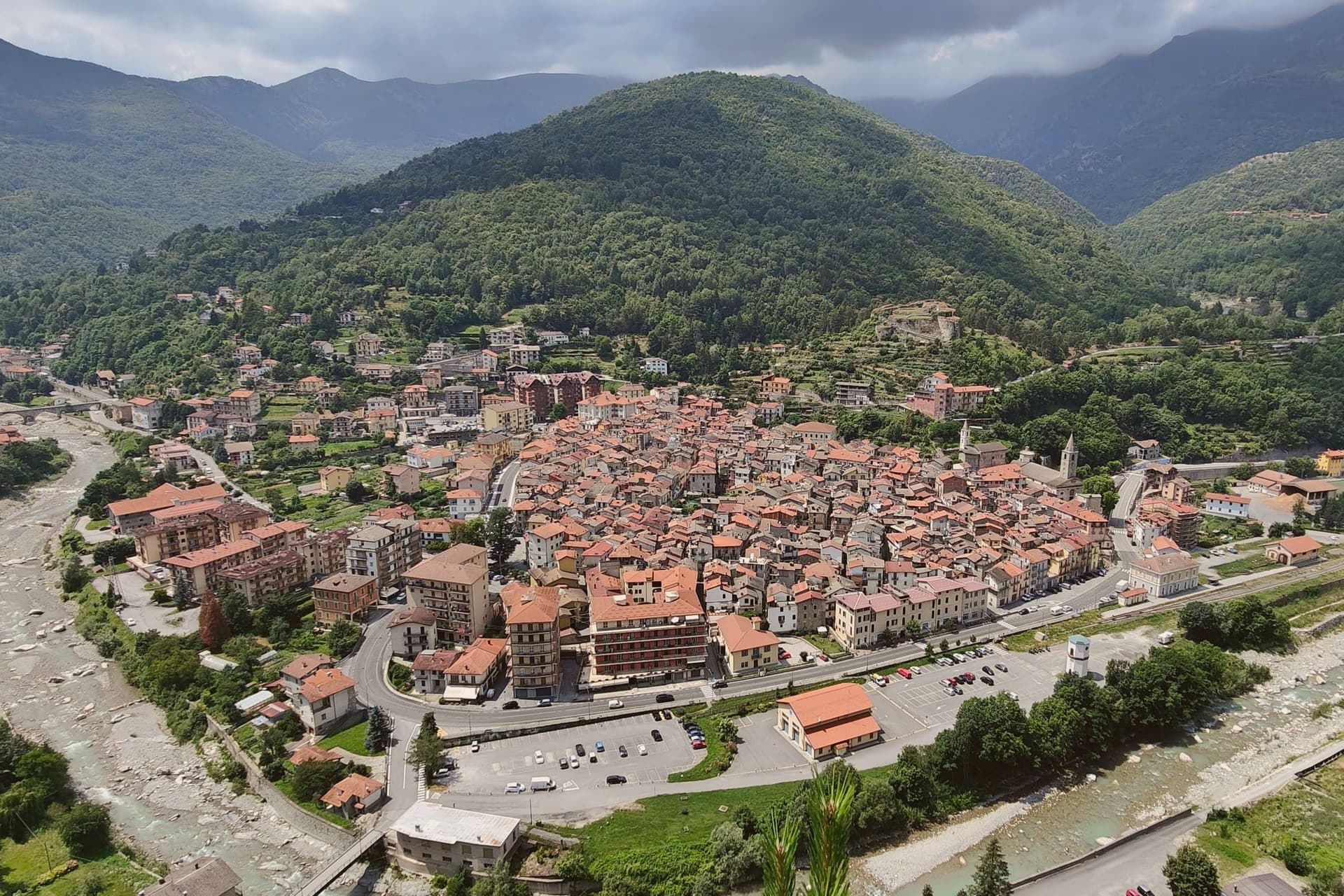
Ormea sits at 736 meters in the upper Tanaro valley, at the confluence of the Armella stream and the river, with the Pizzo d'Ormea rising to 2,476 meters above the rooftops. The historic centre has a recognisable heart-shaped perimeter, set against the Ligurian Alps that separate Cuneo from Imperia and Albenga; on clear days the Riviera sea is visible.
The territory belonged to the Aleramici and then the Marquises of Ceva from 967, contested through the 1200s with the Clavesana branch and the Republic of Genoa, before passing to the Savoys in 1558. In 1722 it became a marquisate under Carlo Vincenzo Ferrero d'Ormea, who built a textile mill capable of competing with English production until the French Revolution and Napoleon's army destroyed both the factory in the main square and the medieval castle.
The commune carries Borghi Autentici and Città del Castagno; the chestnut harvest runs the calendar from October.
We confirmed you can reach this one by train.
What to see in Ormea
- Centro storico. Heart-shaped medieval core at the confluence of the Tanaro and Armella, narrow lanes between stone houses, with views to the Pizzo d'Ormea.
- Ruderi del Castello. Remains of the medieval castle held by the Marquises of Ceva and the Savoys, destroyed during Napoleon's Italian campaign at the end of the 18th century.
- Pizzo d'Ormea. 2,476-metre Ligurian-Alps peak above the town, the dominant summit of the upper Tanaro and a long-day hike from the centro storico.
How to get to Ormea
There is a railway station in the town, so you can arrive without a car and never need one while you are here. Torino is roughly 132 minutes away by road.
Our tip
May through June brings the chestnut woods into full leaf and the Tanaro down from snowmelt; the trails to the Pizzo d'Ormea open by late May. July and August are the climbing and trekking months, mild evenings at 736 meters even when the coast below burns. September and October are the strongest window: clear air, low fog in the valley at dawn, and the chestnut harvest with its weekend sagre.
Garessio
Why visit Garessio
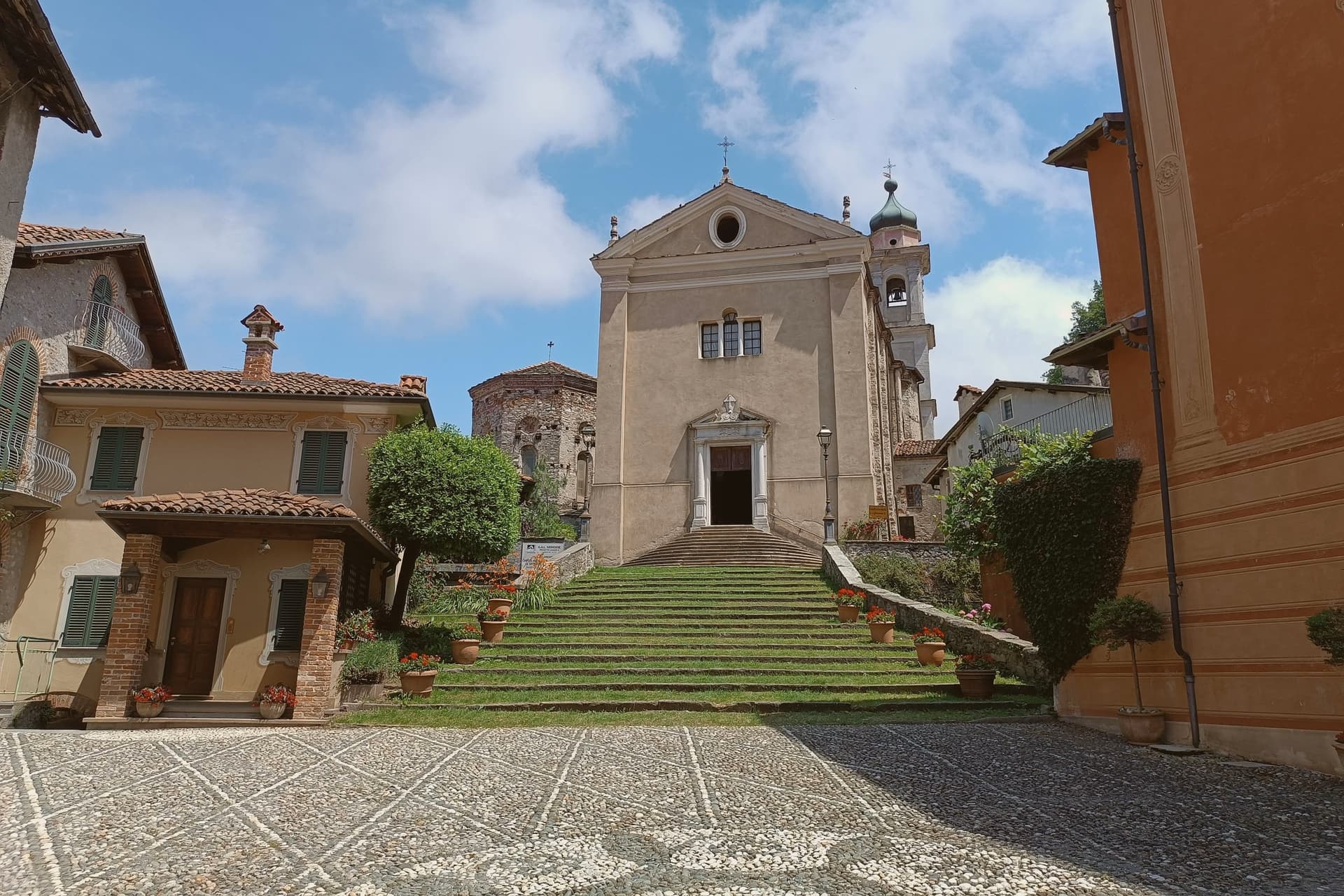
Garessio sits in the upper Tanaro valley, on the watershed where Piemonte meets Liguria. The town is built across four historic quarters, Borgo Maggiore, Borgo Ponte, Borgo Poggiolo, and the borgo that gives its name to the hillside sanctuary and spring above it, each with its own piazza and parish.
The arrangement follows the old traffic of the salt road: Mediterranean salt came up over the Ligurian Alps from Albenga, was repacked in the fortified core, and continued north toward Piemonte and the Po valley. The Savoy family later kept a hunting lodge on the wooded slopes above town, a former Carthusian charterhouse turned retreat, showing a second life for the valley once trade had moved on.
A town built to move salt and later chosen for a royal retreat and a bottling brand: the same slopes have been worked, defended, and rested in by turns, without ever losing the shape of the four quarters that founded it.
We confirmed you can reach this one by train.
What to see in Garessio
- Borgo Maggiore. The medieval core, fortified around 1100 as a ricetto, with three surviving gates, Porta Rose, Porta Jhape, and Porta Liazoliorum, and remnants of the defensive walls.
- Reggia di Valcasotto. Former Carthusian charterhouse converted to a Savoy hunting lodge in the nineteenth century, on the wooded slopes above the town.
- Santuario di Valsorda. Hillside sanctuary above Borgo Valsorda, the town's pilgrimage site, with views over the Tanaro valley.
How to get to Garessio
There is a railway station in the town, so you can arrive without a car and never need one while you are here. Torino is roughly 95 minutes away by road.
Our tip
May through October is the open season. Spring brings the Tanaro running full and the chestnut woods turning green; September and October are dry, with the salt-road footpaths at their clearest. July and August are warm but never coastal-hot at 621 meters; the river keeps the valley cool at night. Cheers Music & Beer Festival falls in August.
Cherasco
Why visit Cherasco
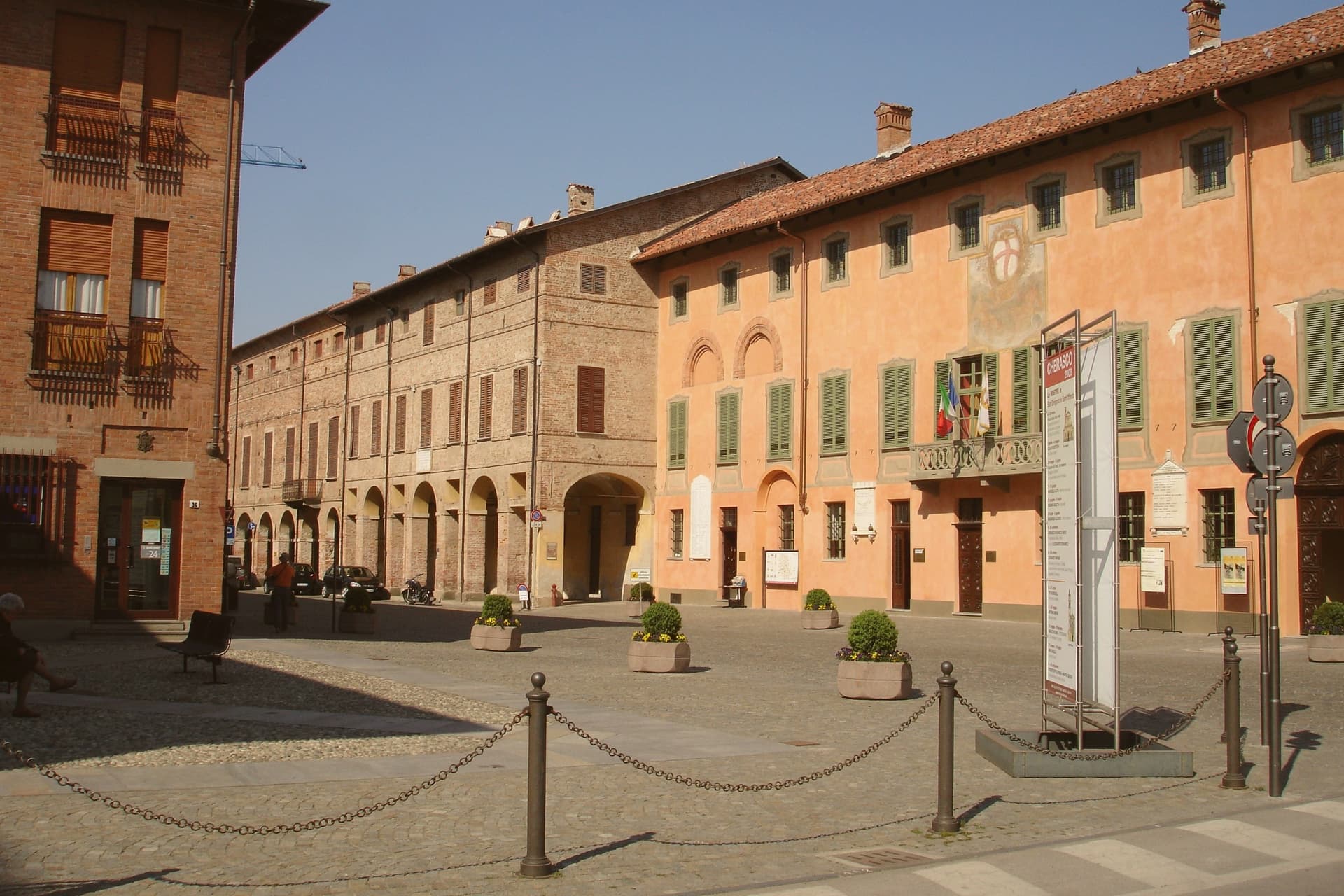
Cherasco sits fifty kilometers southeast of Torino, on the terrace where the Stura di Demonte joins the Tanaro. The site put the town on the frontier between the Piedmontese plain and the Langhe hills, and the 1243 planners answered it with a grid: wide streets, arcades, and walls, laid out in a single act rather than grown over centuries.
The castle anchors one end of that plan, the sanctuary another, and the palace where two treaties were signed sits within the same walkable core, so a visitor moving from arch to palace to church is retracing the town's history in the space of a few streets rather than reading it in sequence. That compactness is the point.
A town this size produced a fortress, two treaties of continental consequence, a baroque sanctuary, and a modern research institute, all within the same walled grid on the same river terrace. The snails came last and stayed longest: what began as an institute in 1973 is now the thing Cherasco is best known for, outlasting even the armistice in the town's daily life.
We confirmed you can reach this one by train.
What to see in Cherasco
- Castello Visconteo. Well preserved on the side facing the town, a museum since restoration. Begun by Luchino Visconti, it still dominates the skyline from the terrace below.
- Palazzo Salmatoris. Civic palace where the 1631 peace of Cherasco and the 1796 Napoleonic armistice were signed, now an exhibition venue.
- Santuario della Madonna del Popolo. Baroque sanctuary designed by Sebastiano Taricco, its facade and interior forming one of the architectural anchors of the centro storico.
How to get to Cherasco
There is a railway station in the town, so you can arrive without a car and never need one while you are here. Torino is roughly 65 minutes away by road.
Our tip
April through June is the green season on the Tanaro terrace, with mild days, vineyards in leaf, and the snail farms beginning their cycle. September and October bring the harvest, the Fiera del Tartufo, and the biannual Lumache di Cherasco fair in even years. July and August reach the mid-thirties on the river plain; the arcades that line Via Vittorio Emanuele are practical, not decorative, in that heat. Mercatino dell'antiquariato di Cherasco falls in September.
Racconigi
Why visit Racconigi
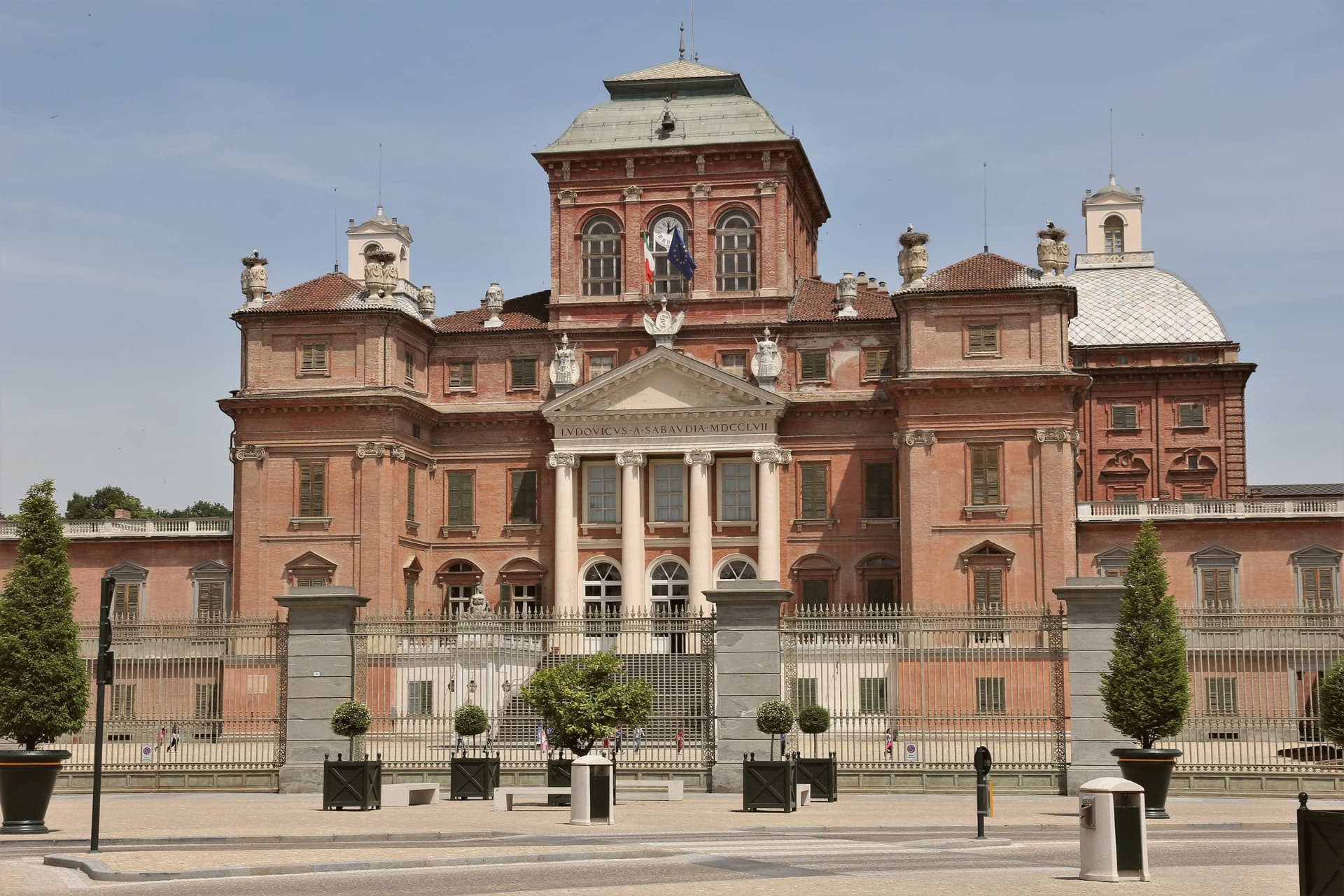
Racconigi sits at 262 metres on the Po plain, 35 kilometres south of Torino. The town passed in turn through the hands of the marquises of Saluzzo, the princes of Acaia and the Savoia-Carignano, and it was this last line that shaped what stands today.
Duke Carlo Emanuele I granted the estate in 1630 to his nephew Tommaso Francesco, founder of the Carignano branch, and the fortress that resulted was later opened out into a country residence set within its own designed landscape rather than confined behind walls. The park was remade twice, first on French lines in 1755, then reworked eighty years later by a German landscaper into the lakes, canals and follies that surround the building now.
The centre for stork reintroduction occupies a farmhouse next to this park, so the estate and the breeding site share ground rather than sitting apart in different parts of town. The old centre, between the castle and the station, is where the smaller scale of daily Racconigi meets the scale of the estate that gives the town its name recognition.
What holds these pieces together is that Racconigi's identity was built from the outside in: a noble residence and its grounds first, a town organised around servicing and adjoining it second.
We confirmed you can reach this one by train.
What to see in Racconigi
- Castello Reale di Racconigi. Eleventh-century fortified core remodelled by Guarino Guarini in the late seventeenth century, its pagoda-roofed central pavilion the mark of that conversion, restored continuously since 1980.
- Parco Reale. 170-hectare romantic park laid out in 1755 by the French gardener Molard on Le Nôtre's designs, redrawn in 1835 by Xavier Kurten with lakes, canals and follies.
- Centro Anatidi e Cicogne LIPU. Farmhouse site beside the park where the reintroduction programme was run, now the country's largest stork colony descending from the birds released there.
How to get to Racconigi
There is a railway station in the town, so you can arrive without a car and never need one while you are here. Torino is roughly 49 minutes away by road.
Our tip
April through June is the best window: castle and Parco Reale on long opening hours, the storks on the nests in the LIPU centre, mild temperatures on the plain south of Torino. July and August touch the mid-thirties and afternoons in the park are hard work; the castle stays cool. September and October are the second strong window, vendemmia on the surrounding plain, fewer visitors than spring.
Bra
Why visit Bra
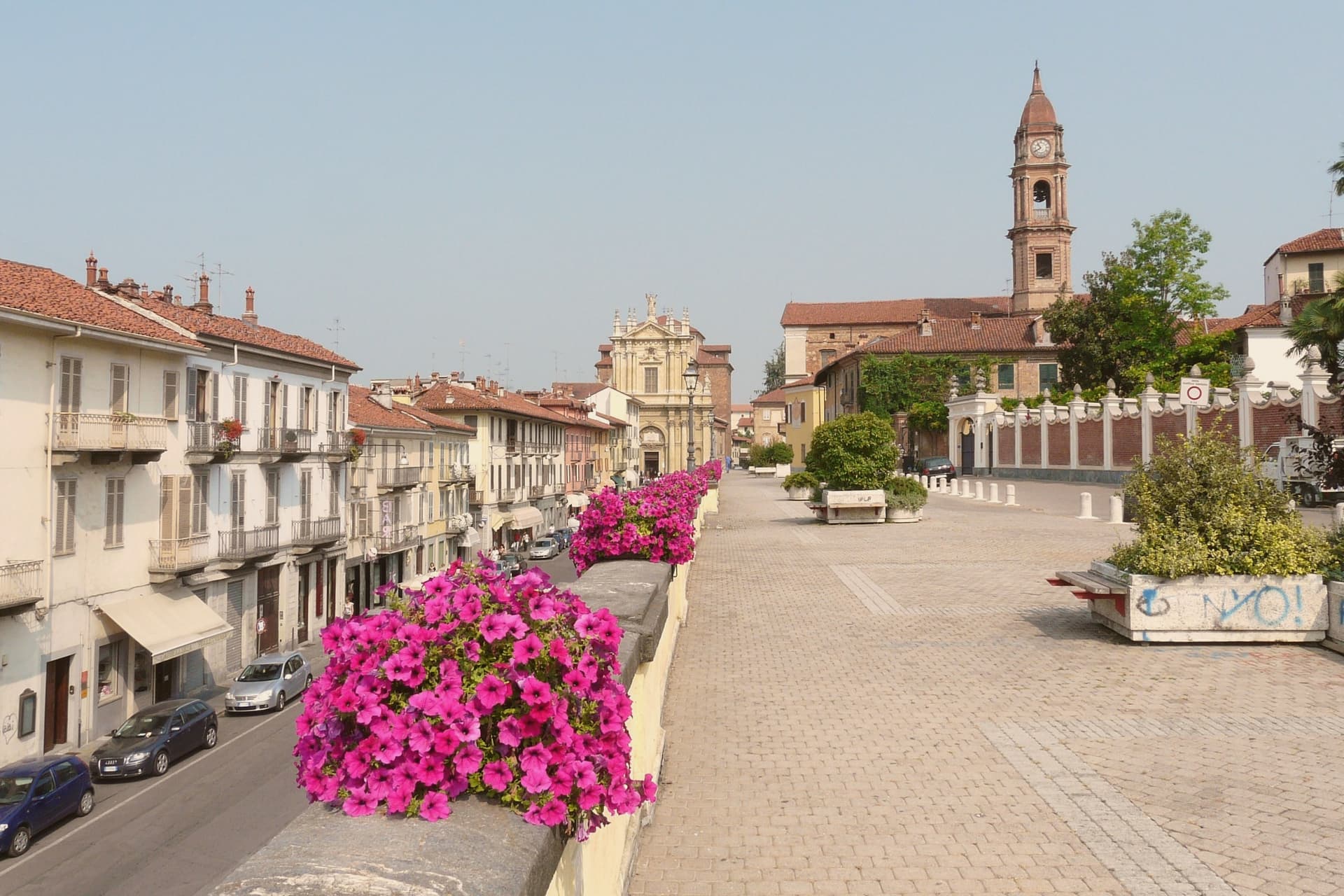
Bra sits at 290 meters in the Roero hills, fifty kilometers southeast of Torino, on the north edge of the Langhe-Roero-Monferrato UNESCO wine landscape. The old center, with its porticoed Corso Garibaldi and Via Cavour, is the working core of town; above it a nineteenth-century pavilion looks out over the surrounding hills, and below, on the Tanaro, a frazione occupies the site of a Roman colony inside a former Savoy royal estate.
Carlo Petrini founded Slow Food here in 1986 in response to a McDonald's planned next to the Spanish Steps in Rome, and the movement's headquarters has stayed in town since. In 1999 Bra was one of the four founding cities of Cittaslow, the small-town quality-of-life network.
The biennial Cheese fair, the largest event in the world for raw-milk cheeses, fills the old center in odd-numbered Septembers, alongside the town's own DOP cheese and its ground veal sausage, eaten raw by local custom. A town this size holding a global food movement, a gastronomic university, and a Roman site within its own borders is not an accident of promotion: it reflects a place that has treated eating and its history as civic matters worth building institutions around.
We confirmed you can reach this one by train.
What to see in Bra
- La Zizzola. Octagonal pavilion on the hill above town, reached as the best panoramic point over the Langhe and Roero.
- Palazzo Mathis. Fourteenth-century palazzo on the central piazza with frescoed main floor and eighteenth-century oil-painted door covers, now used for exhibitions.
- Palazzo Traversa. Fifteenth-century building housing the Museo di Archeologia, Storia e Arte, with finds from the Roman colony of Pollentia.
How to get to Bra
There is a railway station in the town, so you can arrive without a car and never need one while you are here. Torino is roughly 54 minutes away by road.
Our tip
April through June and September into October are the months Bra runs cleanest. The Roero hills colour up around the town, the cellars hold tastings, and the Cheese fair takes the centro storico in September of odd years. July and August get hot in the Tanaro plain below, and the porticoes on Corso Garibaldi become the cool part of town between four and seven in the afternoon. Bra's - Bra falls in September.
Alba
Why visit Alba
Alba sits at 172 meters on the right bank of the Tanaro, the regional capital of the Langhe and the centre of one of Italy's most concentrated wine and food economies. The Roman city of Alba Pompeia stood on the same site, and the Piazza Risorgimento, locally called Piazza Duomo, is laid out on the line of the old Roman forum.
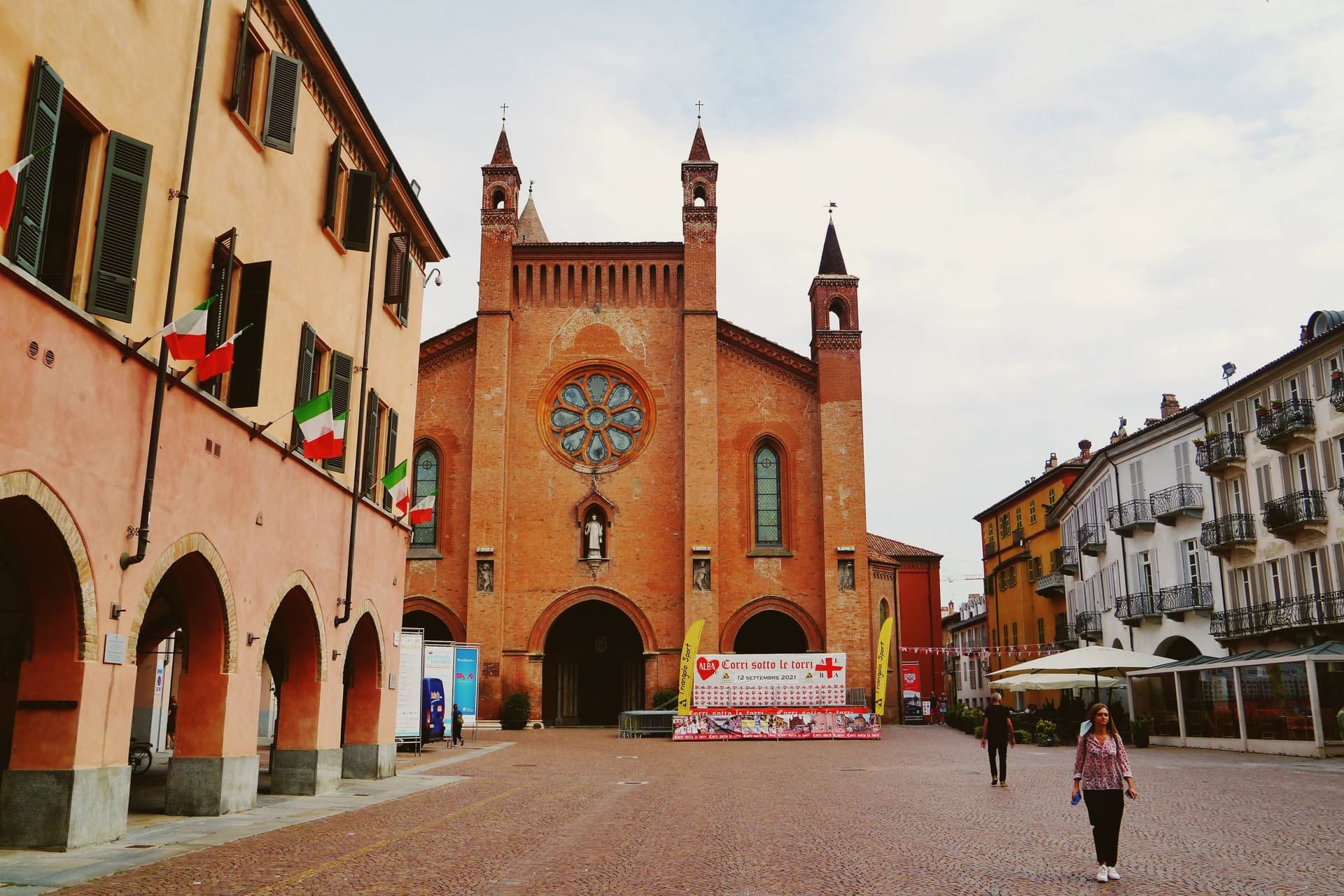
The Duomo di San Lorenzo dates to the twelfth century and carries a late Gothic red-brick façade and a vaulted nave. In the medieval centuries the town was known as the city of a hundred towers; a few dozen survive, the tallest along Via Cavour.
The Fiera Internazionale del Tartufo Bianco runs across October and November, the oldest white truffle fair in the country. The Palio degli Asini on the first Sunday of October recalls a 1275 dispute with Asti.
The town is the headquarters of Ferrero, the family company that invented Nutella, and the home of Beppe Fenoglio, whose Partisan novels are set in these same hills.
We confirmed you can reach this one by train.
What to see in Alba
- Duomo di San Lorenzo. Twelfth-century cathedral with a late Gothic red-brick façade, vaulted nave and 16th-century inlaid wooden choir, on the line of the Roman forum.
- Piazza Risorgimento. Central square on the site of the Roman forum, framed by the Duomo, the Palazzo Comunale and the surviving medieval brick towers.
- Torri medievali. Roughly forty of the original hundred or more brick towers still rise above the rooftops, most clustered along Via Cavour and Via Vittorio Emanuele.
How to get to Alba
There is a railway station in the town, so you can arrive without a car and never need one while you are here. Torino is roughly 58 minutes away by road.
Our tip
April through June are the green months in the Langhe hills, with mild evenings and vineyards in full leaf. July and August touch the mid-thirties; the centro storico empties between two and five in the afternoon. September and October are the heart of the year: harvest in the surrounding cantine, the Palio degli Asini on the first Sunday of October, and the opening weekends of the white truffle fair. Festa Patronale Madonna della Moretta falls in September.
More from Anywhere Italy
- The 7 best towns you can reach by train that have a serious restaurant within 90 minutes of Torino
- The best towns you can reach by train within an hour of Turin
- The best hill towns within an hour of Turin
 The best mountain towns in Piemonte
- The best towns that eat well within an hour of Turin
 The best hidden hill towns you can reach by train within 90 minutes of Torino