
The best towns that eat well within an hour of Turin
Piedmontese cooking rewards patience, and the country around Turin is where it is still cooked at length. Tajarin cut fine as thread and dressed in butter, agnolotti del plin pinched by hand, vitello tonnato, bagna cauda kept warm over a flame through a long winter lunch, hazelnut cake with a glass of Moscato. The hills are worked ones, vines on the south slopes and hazel groves above them, with brick and stone houses the colour of the soil they stand on. Autumn is the season everything points towards, when the fog sits in the valleys and the white truffle arrives, though the boiled meat trolley and the winter cardoon are reason enough to come in January.
Most people eat in Turin itself, and reasonably so: the porticoed cafés, the historic restaurants around Piazza Carignano, the Quadrilatero at dinner. The city is a genuine food capital and its best tables book out weeks ahead, particularly in truffle season when the whole region's produce is pulled towards it. What you get is excellent and expensive, served to a room where most of the accents are not local.
The same hills that supply those kitchens are half an hour to an hour away by car, and the cooking there is closer to its source and cheaper. Wine towns above the Tanaro, hill villages in the Monferrato, an old market town on the plain, a royal estate on the city's edge. Fewer people eat out here, but the guides have followed the food, and each of these towns holds a table with a name attached to it.
Of the 11 communes we have mapped in a one-hour drive of Turin, 7 qualify as towns that eat well: each holds a table a guide put its name to. The smallest, Verduno, has 567 residents.
Two more lists worth reading alongside this one: The best hill towns within an hour of Turin and The best towns you can reach by train within an hour of Turin.
Verduno
Why visit Verduno
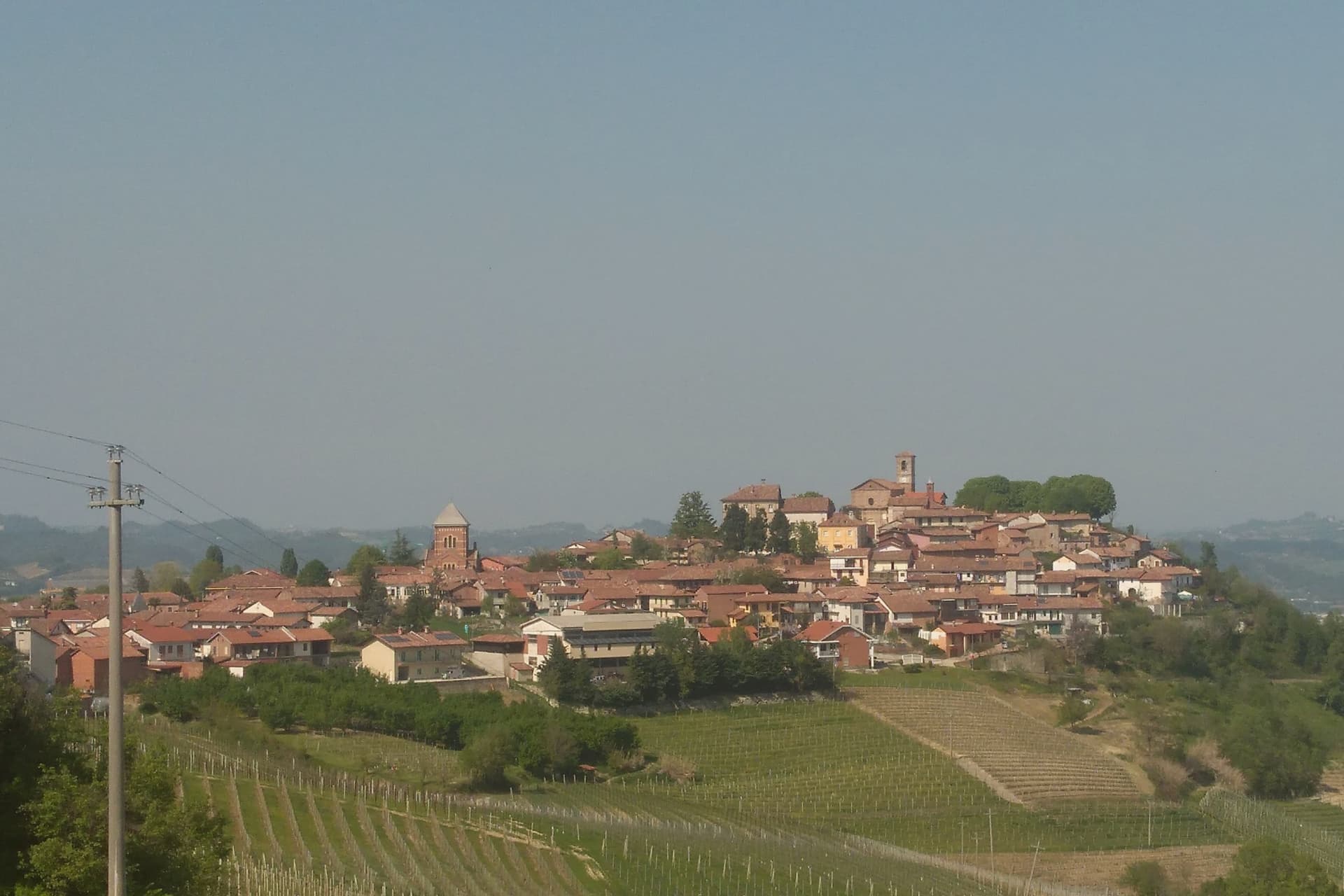
Verduno sits fifty kilometers south of Torino on a Langhe ridge above the Tanaro, its vineyards the only ones among the eleven Barolo communes to lean partly toward the river plain rather than folding back into the hills. That position, facing the water and the Alps beyond it, sets the village apart from the rest of the DOCG even before the wine is considered.
The other thing that sets it apart is Pelaverga Piccolo, a native black grape cultivated commercially in only three Langhe communes: Verduno, La Morra and Roddi. It yields a light ruby red with strawberry, rose and a distinct white-pepper finish, and the first single-variety Pelaverga vineyard on these slopes was planted in 1972.
Between the castle on the ridge and the vine on the plain-facing slope, Verduno holds two things most of its neighbors do not: a wine that is Barolo's own, structurally, and a wine that belongs to almost nowhere else.
La Sbornia a Verduno, Real Castello have been named by a guide.
What to see in Verduno
- Castello di Verduno. The castle stands on the Langhe ridge and passed to the Burlotto family in 1909, who still work it as a winery producing Barolo and Pelaverga.
- Centro storico. Small hilltop village arranged around the castle and the parish church, with views across the Tanaro and the northern Barolo vineyards.
- Vigneti di Pelaverga. Indigenous Pelaverga Piccolo plantings on the Verduno slopes, including the first single-variety Pelaverga vineyard planted in 1972.
How to get to Verduno
There is a railway station in the town, so you can arrive without a car and never need one while you are here. Torino is roughly 60 minutes away by road.
Our tip
April through June is the green window in the Langhe, hillsides striped between Nebbiolo and Pelaverga vines, mild evenings on the Verduno ridge. September and October are the harvest months: Pelaverga first, Nebbiolo last, with the surrounding cantine open for tastings and walking through the rows possible without crowds. July and August touch the low thirties on the hills; the centro storico thins after lunch and the cellar tastings move under stone vaults to stay cool.
Cocconato
Why visit Cocconato
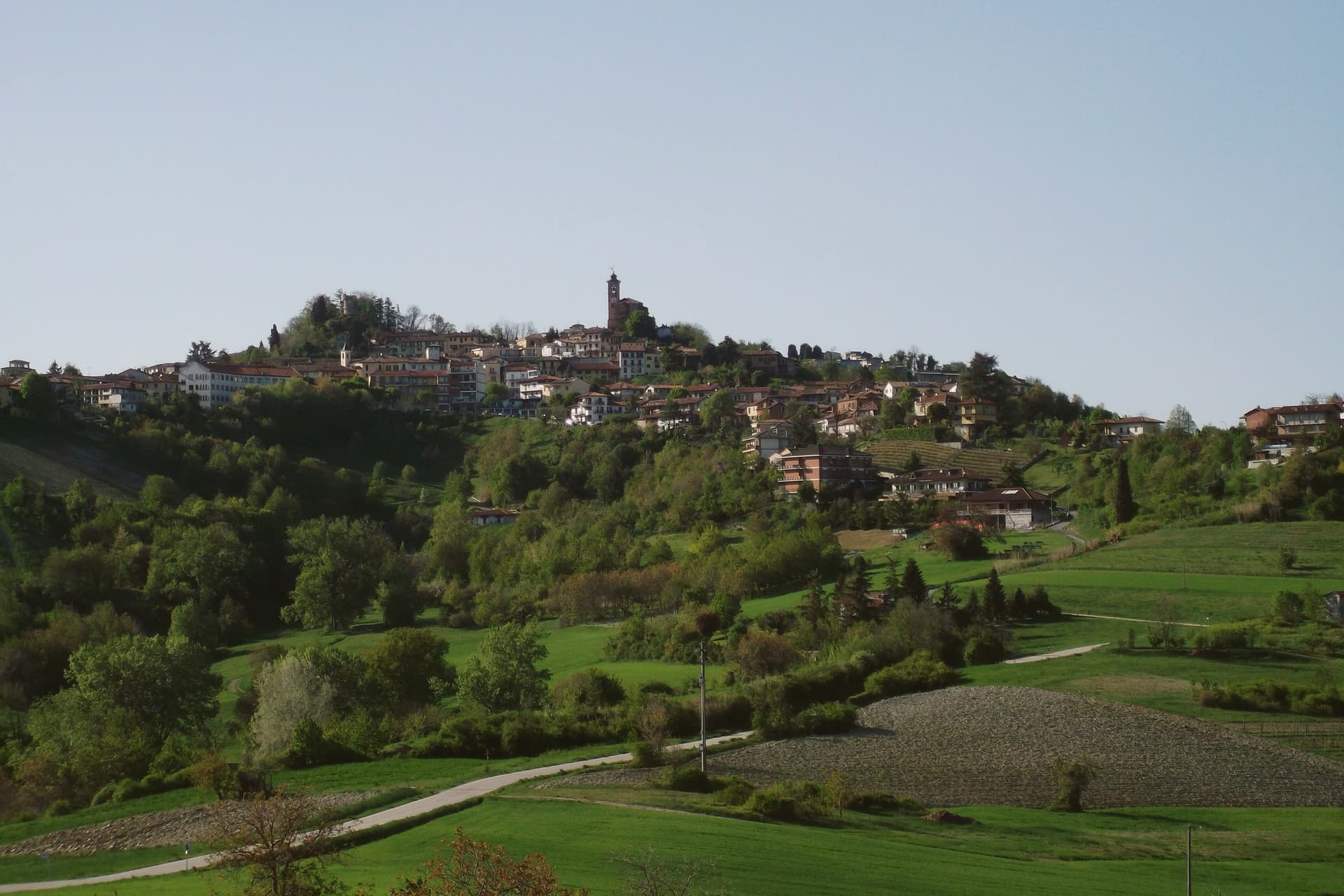
Cocconato sits thirty kilometers east of Torino, on a ridge whose south-facing slope catches enough sun to keep olives, palms and mimosas alive this far north, the reason locals call the area the Riviera del Monferrato. From the tenth century the ridge was held by the Radicati counts, a Manfredian family, as an imperial fief for four hundred years, until 1586: the centro storico that survives is their seat, not a later reconstruction.
The town's two anchors sit close together but answer to different authorities. The civic palace, built in the fifteenth century, faces the seventeenth-century parish church of Santa Maria della Consolazione across the upper piazza, government and religion holding opposite ends of the same small square.
Beyond the built center, the ridge opens onto a belvedere looking south across vineyards toward the Alta Langa and, on clear days, the Monviso massif. Since 1970 the six frazioni of Airali, Brina, Colline Magre, San Carlo, Torre and Tuffo have raced their donkeys in the Palio degli Asini, a modern rivalry laid over an old administrative one.
Cocconato is the only commune in the province of Asti to hold the Bandiera Arancione, a fitting distinction for a ridge that has been organizing the same handful of parts, fief, palace, church, frazioni, for centuries.
Cantina Nicola have been named by a guide.
What to see in Cocconato
- Palazzo Comunale. Pointed-arch porticoes and terracotta-framed windows on the Late Gothic facade, still the building the ridge town organizes itself around.
- Chiesa di Santa Maria della Consolazione. Seventeenth-century parish church anchoring the upper piazza, the religious counterweight to the medieval civic palace below it.
- Centro storico. Medieval ridge town that was the seat of the Radicati counts from the tenth century until 1586, well preserved on the south-facing slope.
How to get to Cocconato
There is a railway station in the town, so you can arrive without a car and never need one while you are here. Torino is roughly 57 minutes away by road.
Our tip
April through June and September through October are the months that earn Cocconato its Riviera nickname: dry warm days on the ridge, vineyards in green or gold, and the palms in the lower gardens visibly out of season. July and August are warm and busy, with Cocco Wine at the end of summer drawing crowds into the centro storico. November through March is the quiet half of the year.
La Morra
Why visit La Morra
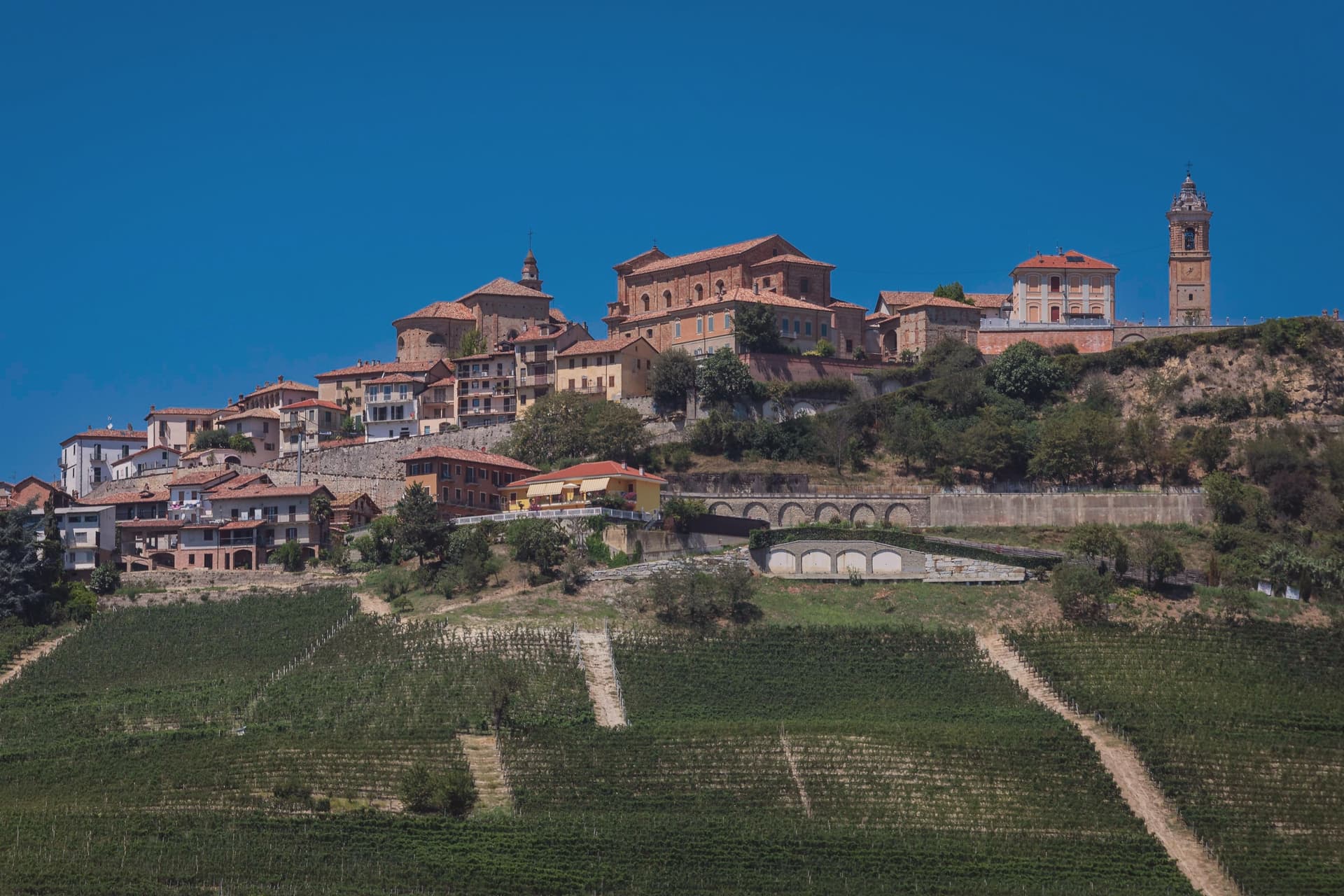
La Morra sits at 513 meters on the western edge of the Barolo zone, fifty kilometers southeast of Torino, the highest of the eleven communes and the one with the widest view over the rest of them. The village itself gathers around the square and the tower; the working part of it, the crus, spreads downhill and outward, Brunate and Cerequio among them, with the Cantina Comunale pouring producers from across that spread under one roof in the old Marchesi di Barolo cellars.
A kilometer outside the centro, below the village, the former abbey sits in the Marcenasco cru with its wine museum, and Renato Ratti bought his first parcel near it in 1965, drawing the first cru map of the zone a decade later. The village is compact and fixed in place; the vineyards around it are what the whole zone is measured against.
Osteria Veglio, Coltivare, Osteria Arborina and 5 more have been named by a guide.
What to see in La Morra
- Belvedere di Piazza Castello. The highest point of the village, with the 18th-century bell tower rising above the terrace.
- Cappella del Barolo (Cappella delle Brunate). A small vineyard chapel among the vine rows of the cru, its two faces given over entirely to the artists' repainting, interior and exterior alike.
- Cantina Comunale di La Morra. Municipal wine cellar founded 1973 in the 18th-century palace of the Marchesi di Barolo, pouring 70+ local producers.
How to get to La Morra
Torino is roughly 59 minutes away by road.
Our tip
April through June bring green vines, mild evenings and the long views the Belvedere is built for. September and October are harvest, when the cellars open and the hills turn copper. July and August push past thirty degrees and the centro thins between two and six, though the elevation keeps nights cooler than Alba.
Ivrea
Why visit Ivrea
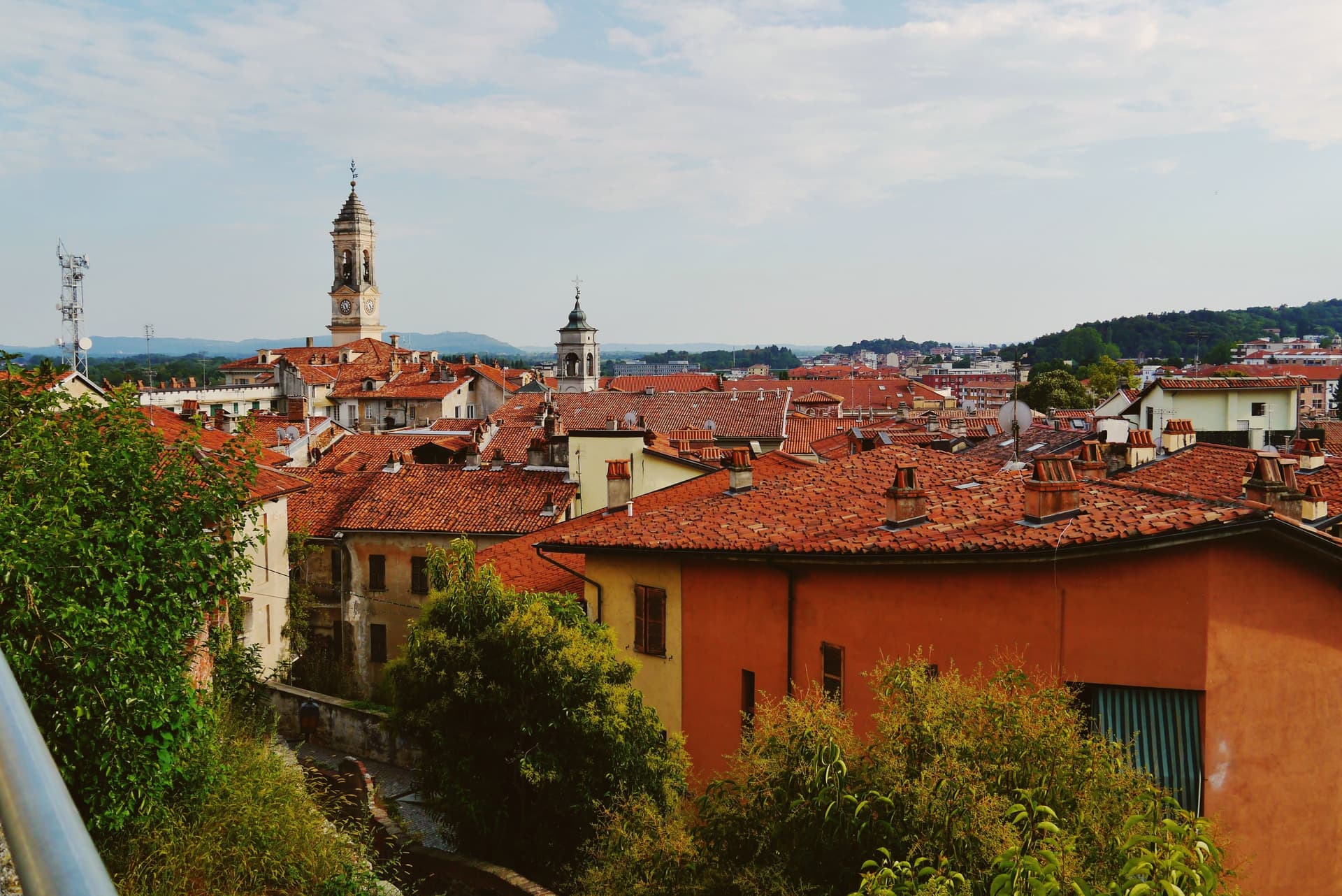
Ivrea sits at 267 meters where the town meets the river that drains the Aosta valley before it reaches the Po, the Dora Baltea, guarding the Alpine routes into Gaul that made the site worth fortifying in the first place. The medieval town grew upward from that Roman garrison into a seat of regional power, and centuries later the same streets became the frame for an industrial experiment: Camillo Olivetti opened a typewriter factory here in 1908, and his son Adriano rebuilt the town around its workers, threading glass-walled plants, housing, schools, libraries, and cultural centers into the landscape rather than beside it.
The Cinque Laghi lie north of the center, five small lakes left by the Balteo glacier, a different register of water from the Dora Baltea that carried the Roman and industrial town below. The layers do not so much replace each other as sit stacked: a Roman garrison town, a medieval capital, and a twentieth-century factory city occupy the same ground on the same river, and the carnival each February, with its reenacted revolt, is the one moment the town stages its own long memory in public.
La Mugnaia have been named by a guide.
What to see in Ivrea
- Castello di Ivrea. Fourteenth-century red-brick castle of the Savoy on the hill above the centro storico, with four towers and views over the Dora Baltea.
- Duomo di Santa Maria Assunta. Ninth-century cathedral on the site of a Roman temple, with Romanesque crypt and bell tower, the religious anchor of medieval Ivrea.
- MAAM - Museo a Cielo Aperto dell'Architettura Moderna. Open-air museum of the ICO factories and the Talponia underground housing, walkable ground for tracing how the glass-walled plants and worker facilities sit against the town.
How to get to Ivrea
There is a railway station in the town, so you can arrive without a car and never need one while you are here. Torino is roughly 56 minutes away by road.
Our tip
April through October is the open season. May and June green the morainic hills around the Cinque Laghi and the Olivetti factory tours run on full schedule. September and October are dry and quiet, the time to walk the UNESCO industrial route without summer heat.
Bra
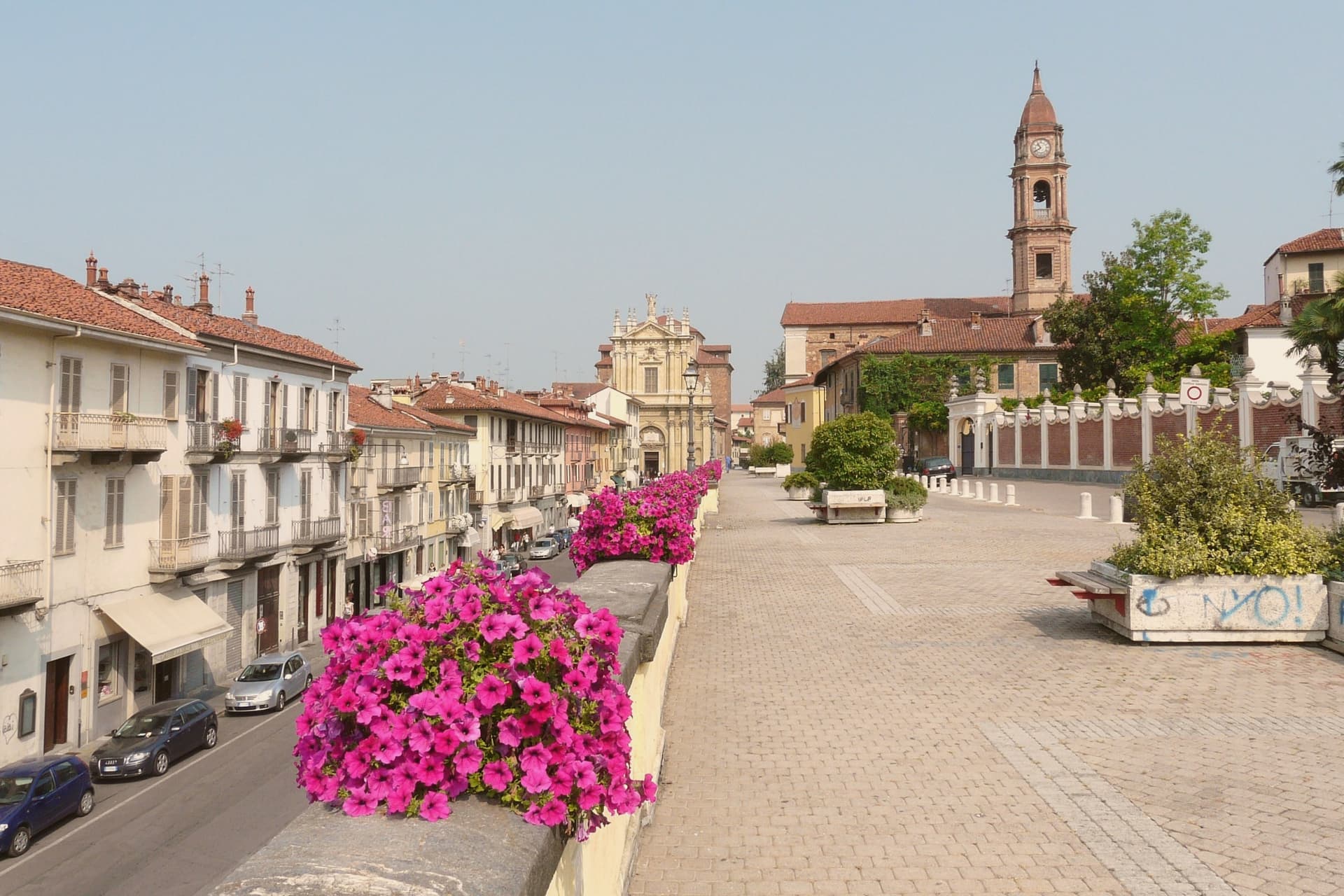
Why visit Bra
Bra sits at 290 meters in the Roero hills, fifty kilometers southeast of Torino, on the north edge of the Langhe-Roero-Monferrato UNESCO wine landscape. The old center, with its porticoed Corso Garibaldi and Via Cavour, is the working core of town; above it a nineteenth-century pavilion looks out over the surrounding hills, and below, on the Tanaro, a frazione occupies the site of a Roman colony inside a former Savoy royal estate.
Carlo Petrini founded Slow Food here in 1986 in response to a McDonald's planned next to the Spanish Steps in Rome, and the movement's headquarters has stayed in town since. In 1999 Bra was one of the four founding cities of Cittaslow, the small-town quality-of-life network.
The biennial Cheese fair, the largest event in the world for raw-milk cheeses, fills the old center in odd-numbered Septembers, alongside the town's own DOP cheese and its ground veal sausage, eaten raw by local custom. A town this size holding a global food movement, a gastronomic university, and a Roman site within its own borders is not an accident of promotion: it reflects a place that has treated eating and its history as civic matters worth building institutions around.
Caffè Pasticceria Converso, Battaglino, Osteria La Pimpinella and 3 more have been named by a guide.
What to see in Bra
- La Zizzola. Octagonal pavilion on the hill above town, reached as the best panoramic point over the Langhe and Roero.
- Palazzo Mathis. Fourteenth-century palazzo on the central piazza with frescoed main floor and eighteenth-century oil-painted door covers, now used for exhibitions.
- Palazzo Traversa. Fifteenth-century building housing the Museo di Archeologia, Storia e Arte, with finds from the Roman colony of Pollentia.
How to get to Bra
There is a railway station in the town, so you can arrive without a car and never need one while you are here. Torino is roughly 54 minutes away by road.
Our tip
April through June and September into October are the months Bra runs cleanest. The Roero hills colour up around the town, the cellars hold tastings, and the Cheese fair takes the centro storico in September of odd years. July and August get hot in the Tanaro plain below, and the porticoes on Corso Garibaldi become the cool part of town between four and seven in the afternoon. Bra's - Bra falls in September.
Alba
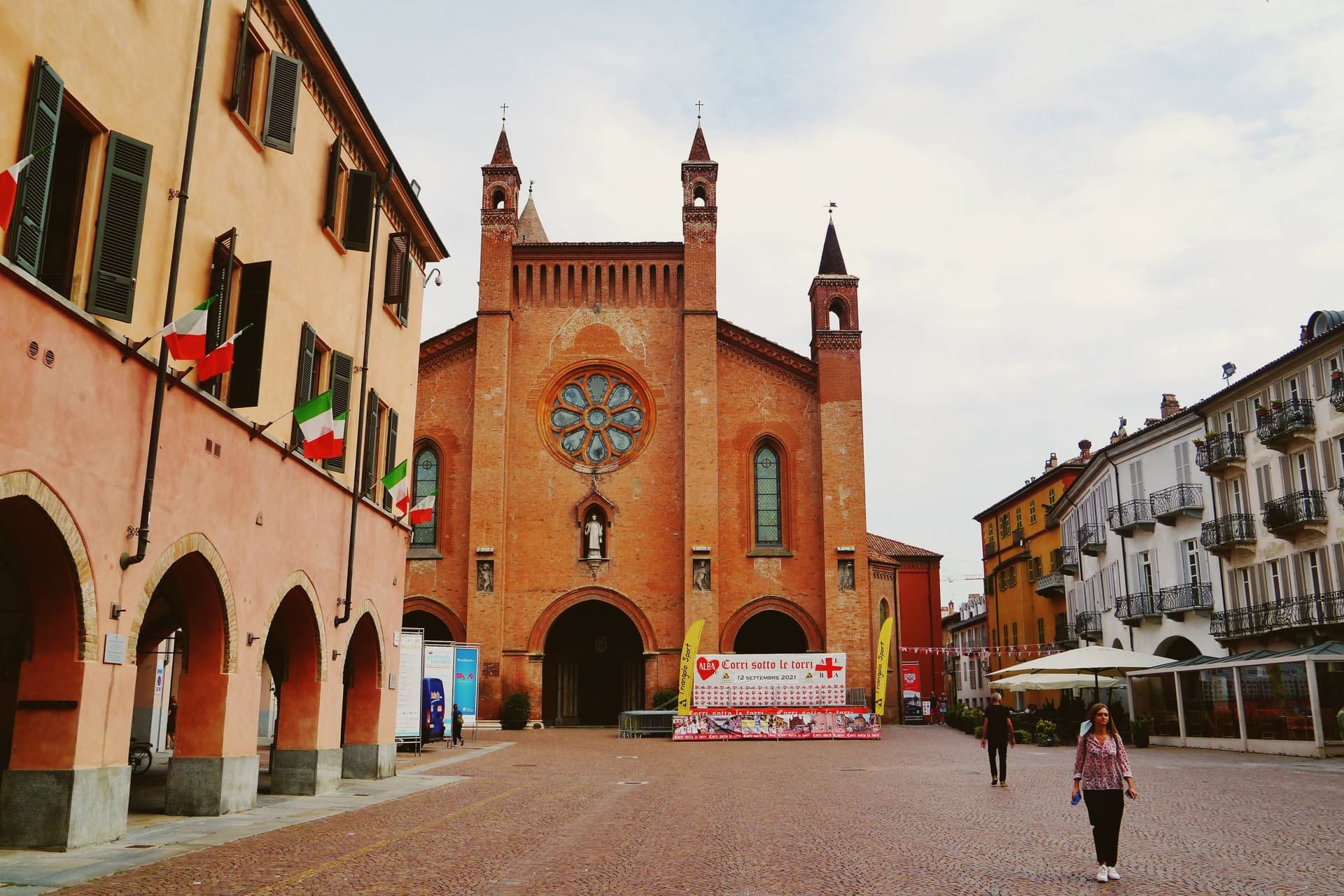
Why visit Alba
Alba sits at 172 meters on the right bank of the Tanaro, the regional capital of the Langhe and the centre of one of Italy's most concentrated wine and food economies. The Roman city of Alba Pompeia stood on the same site, and the Piazza Risorgimento, locally called Piazza Duomo, is laid out on the line of the old Roman forum.
The Duomo di San Lorenzo dates to the twelfth century and carries a late Gothic red-brick façade and a vaulted nave. In the medieval centuries the town was known as the city of a hundred towers; a few dozen survive, the tallest along Via Cavour.
The Fiera Internazionale del Tartufo Bianco runs across October and November, the oldest white truffle fair in the country. The Palio degli Asini on the first Sunday of October recalls a 1275 dispute with Asti.
The town is the headquarters of Ferrero, the family company that invented Nutella, and the home of Beppe Fenoglio, whose Partisan novels are set in these same hills.
Piazza Duomo, Locanda del Pilone, Ventuno.1 and 10 more have been named by a guide.
What to see in Alba
- Duomo di San Lorenzo. Twelfth-century cathedral with a late Gothic red-brick façade, vaulted nave and 16th-century inlaid wooden choir, on the line of the Roman forum.
- Piazza Risorgimento. Central square on the site of the Roman forum, framed by the Duomo, the Palazzo Comunale and the surviving medieval brick towers.
- Torri medievali. Roughly forty of the original hundred or more brick towers still rise above the rooftops, most clustered along Via Cavour and Via Vittorio Emanuele.
How to get to Alba
There is a railway station in the town, so you can arrive without a car and never need one while you are here. Torino is roughly 58 minutes away by road.
Our tip
April through June are the green months in the Langhe hills, with mild evenings and vineyards in full leaf. July and August touch the mid-thirties; the centro storico empties between two and five in the afternoon. September and October are the heart of the year: harvest in the surrounding cantine, the Palio degli Asini on the first Sunday of October, and the opening weekends of the white truffle fair. Festa Patronale Madonna della Moretta falls in September.
Venaria Reale
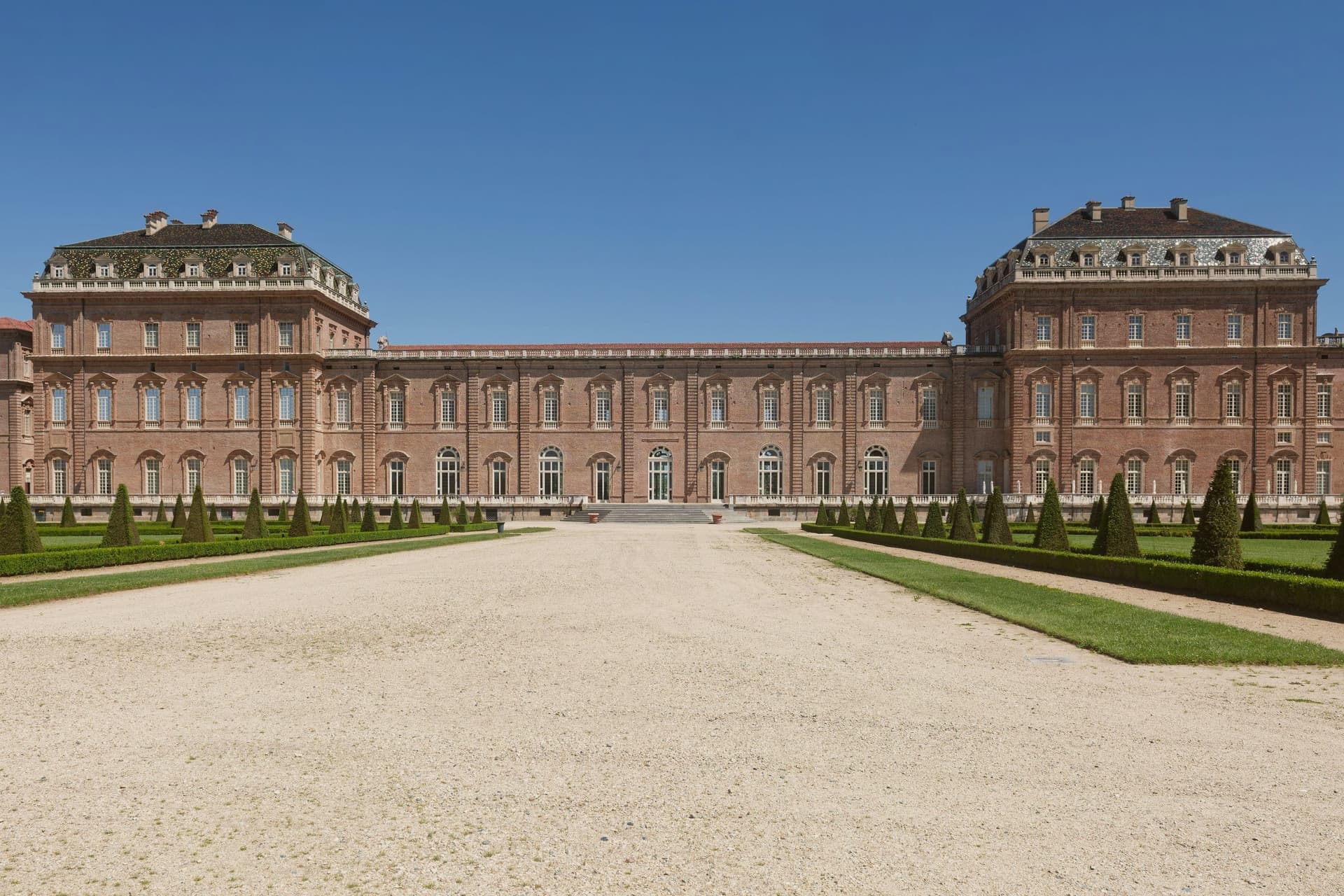
Why visit Venaria Reale
Venaria Reale sits at 269 meters fifteen kilometers northwest of Torino, on the lowland that ran into the Savoy hunting forests of the Mandria. The modern name comes from the Latin ars venatoria, hunting.
In 1658 Duke Carlo Emanuele II commissioned court architect Amedeo di Castellamonte to build a residence for hunting parties and court leisure, with a coordinated plan for palace, park, hunting wood and adjoining village. In 1716 Filippo Juvarra enlarged the complex with the Galleria Grande, the Cappella di Sant'Uberto, the Citroniera and the Scuderia, lifting the Reggia to one of the major baroque set pieces of Europe.
The Savoy Residences entered the UNESCO list in 1997. After two centuries as a military barracks the palace was restored across eight years from 1999 to 2007, in the largest cultural restoration project in European Union history, with 1,800 operators on site.
The Reggia now opens eighty thousand square meters of floor surface and sixty hectares of gardens, with the three thousand fenced hectares of the Parco della Mandria beyond.
Dolce Stil Novo alla Reggia, Il Convito della Venaria have been named by a guide.
What to see in Venaria Reale
- Reggia di Venaria. UNESCO baroque palace begun in 1658 by Amedeo di Castellamonte for Duke Carlo Emanuele II, with 80,000 m² of floors and 60 hectares of gardens.
- Galleria Grande. Filippo Juvarra's barrel-vaulted gallery of 1716, one of the longest enfilades of baroque court architecture in Europe.
- Cappella di Sant'Uberto. Royal chapel designed by Juvarra inside the palace, completed in the second decade of the eighteenth century for the hunting court.
How to get to Venaria Reale
There is a railway station in the town, so you can arrive without a car and never need one while you are here. Torino is roughly 28 minutes away by road.
Our tip
April through June is the best window for the gardens of the Reggia and the long walks through the Parco della Mandria, with parterres in full bloom and the hunting park green. September and October bring cooler air over the gardens and the start of the autumn exhibition season inside the Galleria Grande. July and August touch the mid-thirties on the Torino plain; the palace interiors stay cool, the Citroniera and the chapel hold the heat at bay, but the gardens flatten in midday glare.
More from Anywhere Italy
- The best hill towns within an hour of Turin
- The best towns you can reach by train within an hour of Turin
- The best wine towns within an hour of Turin
 The 10 best hidden wine towns that eat well within 90 minutes of Torino
 The best towns with a World Heritage site that eat well in Piemonte
- The 7 best towns you can reach by train that have a serious restaurant within 90 minutes of Torino