
With events
Sagre and feste in Molise
5 towns
Each town page lists what happens there and the month it happens in, with the source. Always check with the town before you travel.
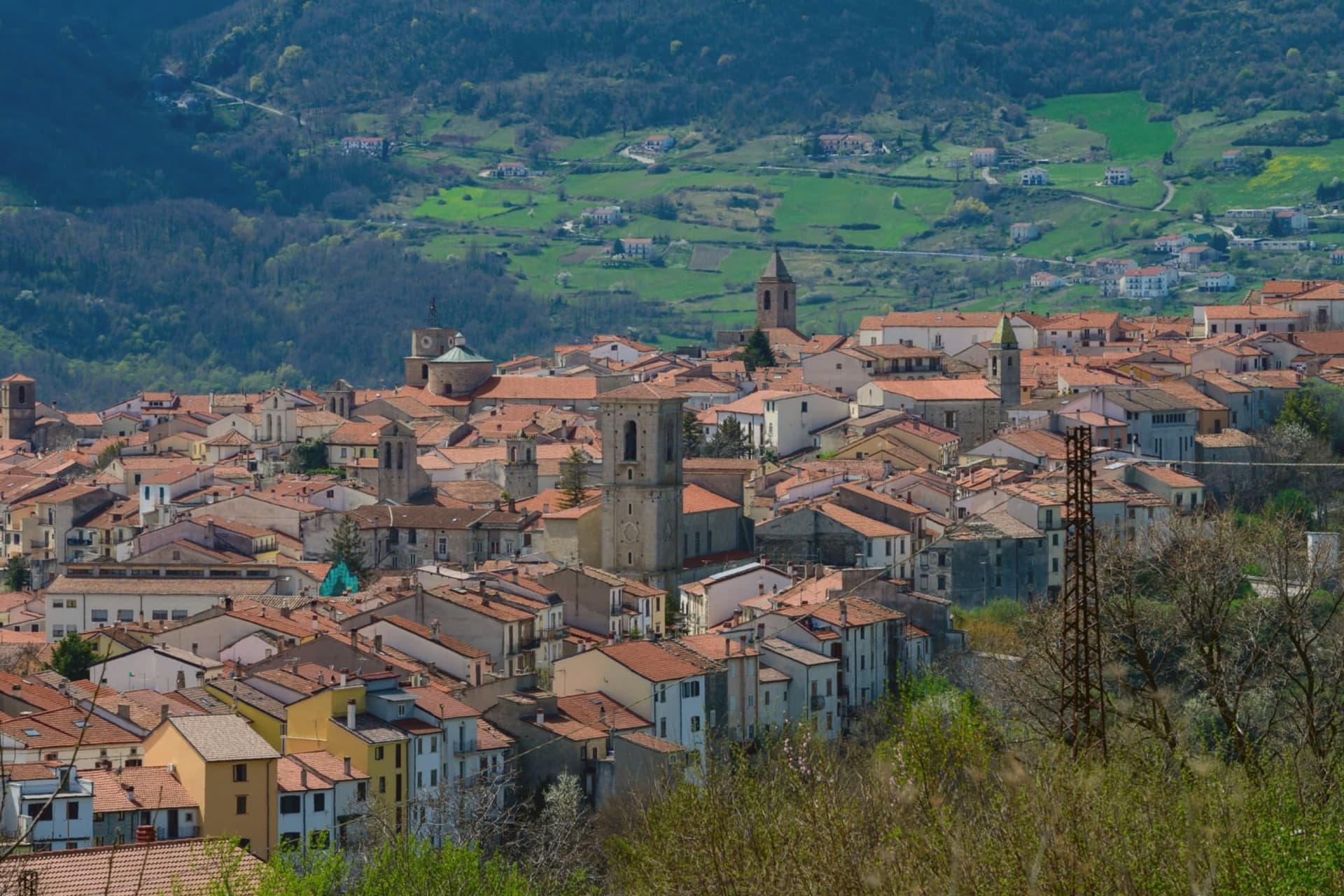
Agnone
Province: Isernia · 840 m
At 840 meters, town of the pontifical bell foundry and the fire procession that lights its streets every Christmas Eve.
Frosolone
Province: Isernia · 894 m
A 900-meter blade-making town in the Matese foothills, called Italy's Toledo for the knives and scissors forged here since the 1800s.
Campobasso
Province: Campobasso · 701 m
Molise's regional capital and the smallest in Italy, 47,000 residents at 701m on a wooded Apennine ridge, with a centro storico that climbs the hillside in stone-paved switchbacks.
Capracotta
Province: Isernia · 1,421 m
At 1,421 meters the second-highest commune in central Italy, holder of the world record for snowfall in 24 hours: 2.56 meters on 5 March 2015.
Termoli
Province: Campobasso · 15 m
Molise's only port, a walled promontory of fishermen's houses on the Adriatic, with the ferry pier for the Tremiti islands.
The slow-trip planner
Plan a slow trip across the towns travelers skip.
Answer five questions. We will shape a geographically coherent slow trip from the 1,000 Italian towns most travelers skip. Yours to save and share.
From elsewhere in Italy
Five more towns to discover
Visso
Province: Macerata
The northern Sibillini gate at 607 meters where the Nera meets the Ussita, holding one of two surviving manuscripts of Leopardi's L'Infinito.
Goriano Sicoli
Province: L'Aquila
At 720 meters in the Subequana valley, a medieval village drawn by M.C. Escher in 1929 keeps a May ritual folklorists trace to Demeter.
Ugento
Province: Lecce
A Messapian-Roman town five kilometers from the Ionian, where a Baroque castle sits on the walls of the ancient city of Ozan.
Fontanellato
Province: Parma
A Parma-plain town built around the Rocca Sanvitale, the moated fortress at its center.
Pescina
Province: L'Aquila
A Marsica town at 735 meters, on the rim of the drained Fucino basin, that lost five thousand of six thousand people in a single morning in 1915.