
Campania · Caserta
Vairano Patenora
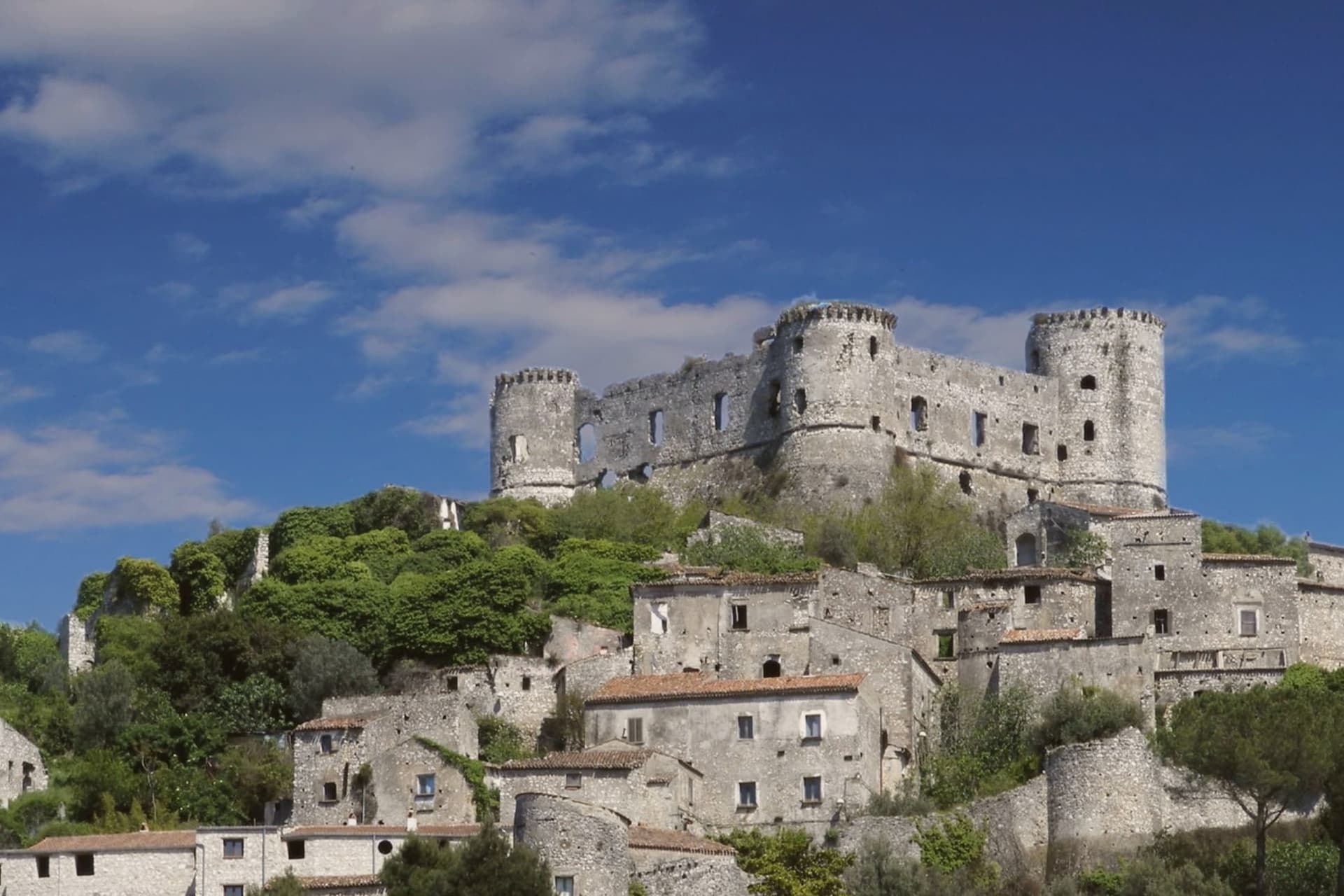
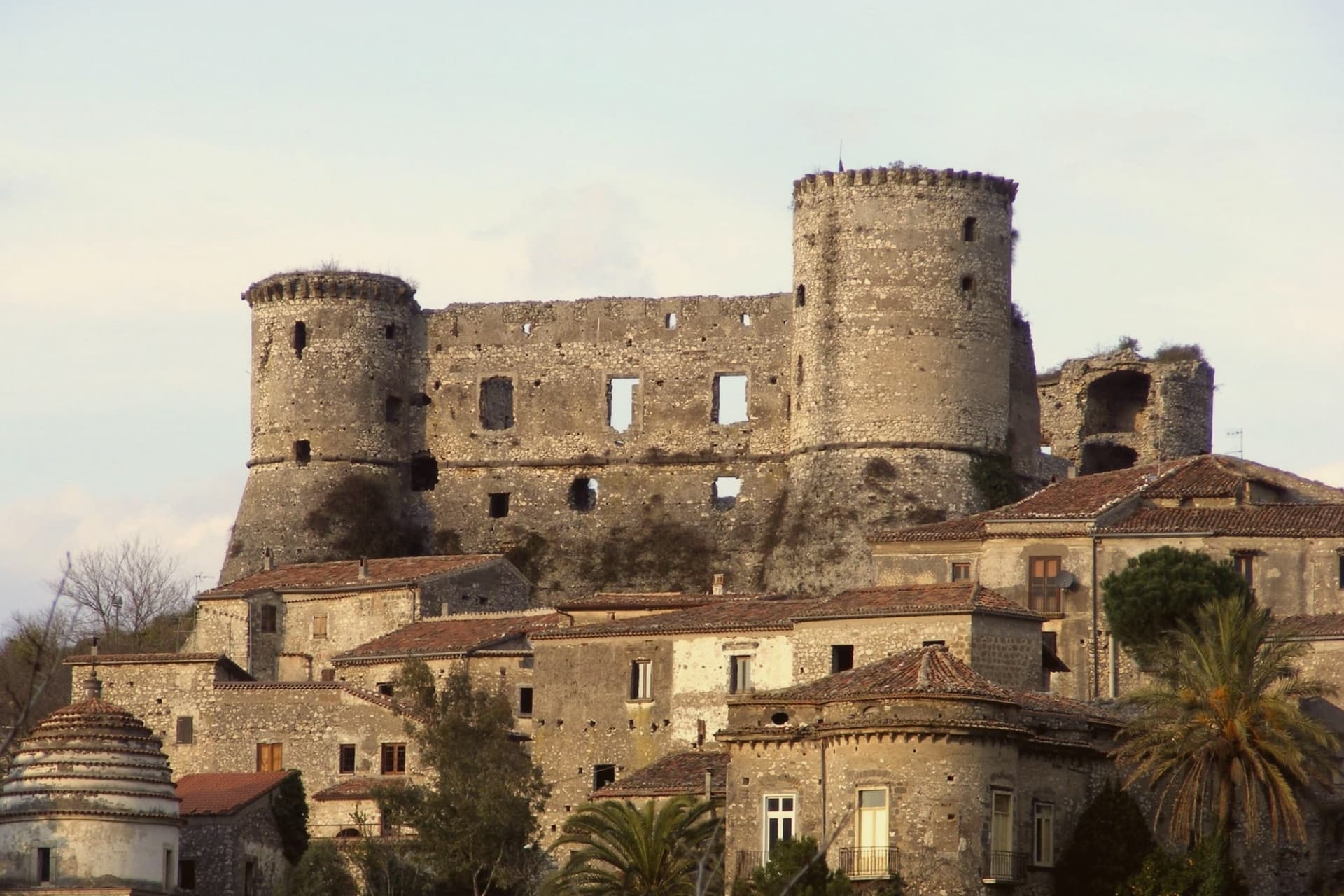
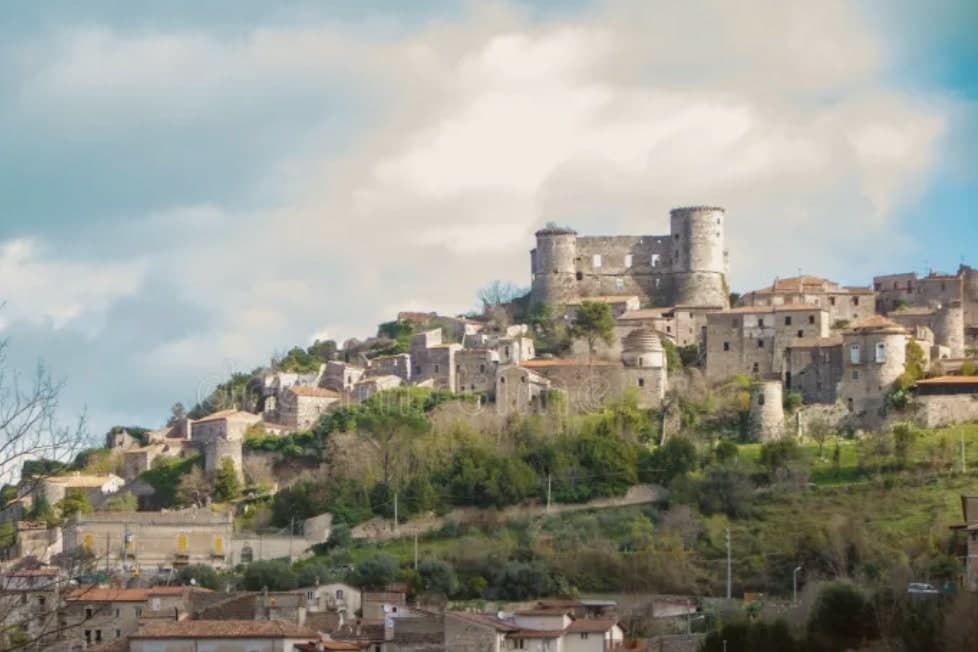
A roofless Aragonese castle with four round towers stands over a walled stone borgo in the Volturno valley, on the road that carried emperors and popes between Rome and Naples.
- Best time
- Apr–Oct
- By car
- 59 min from Naples
- By train
- Station in the comune
- Population
- 6,327
Known for
THE RUINED CASTLE
Aragonese over Norman, open to the sky, and the reason the town is photographed.
THE ROAD NORTH
The Volturno valley route between Rome and Naples ran past here, which is why so many rulers slept in the castle.
SAN BARTOLOMEO
The patron. Local tradition has him appearing to a Saracen band in 1195 and talking them out of sacking the town.
When to visit
Best · Apr–Oct
- J12°
- F14°
- M16°
- A19°
- M23°
- J29°
- J33°
- A33°
- S27°
- O22°
- N17°
- D14°
- Best
- Hot or crowded
- Quiet
- Mostly closed
Daytime averages, 2020–2024. Weather data by Open-Meteo.com.
The festa: Bartolomeo apostolo, 24 August
Why come
The castle is a shell and that is the point of coming. Innico II d'Avalos built it between 1491 and 1503 on the footings of the Norman one, four round towers with the largest at the south-east corner, and the inside has fallen in: you can still read the floor levels off the walls, the kitchens, the prisons, the old cistern. Below it the medieval borgo runs downhill in grey stone, and its wall once carried fourteen cylindrical towers and three gates.
People have been passing through here for a very long time. The Samnites held the hills, the Romans took them in 290 BC, the Normans put up the first castle, and Frederick II, Charles II of Anjou and Pope Gregory X all stayed in it. Two miles out, the Abbazia della Ferrara was built by a Cistercian monk between 1171 and 1179 and keeps a thirteenth-century fresco of a funeral. The town below sits in flat, farmed country between the Matese and the Roccamonfina park, with a small volcanic lake on the Presenzano boundary.
The Sunday letter
Vairano Patenora is on our list. Its letter is still to come.
We are writing about all 1,000 of these towns, one at a time, in a free letter every Sunday: the photo, the food, the festa. That is our mission. Sign up and you will be there when Vairano Patenora comes up. By Peter & Sophia, from Pietrasanta.
The button takes you to the letter's own page on Substack, where you leave your email. About the letter
Read on
Vairano Patenora in our articles
 The 7 best hill towns that eat well in Campania7 towns, Vairano Patenora among them.
 The best hidden hill towns you can reach by train in Campania7 towns, Vairano Patenora among them.
 The best towns known for their meat within two hours of Naples7 towns, Vairano Patenora among them.
 The best hill towns that eat well within 90 minutes of Napoli8 towns, Vairano Patenora among them.
How to get there
From Naples / Salerno (NAP), about 54 minutes by car.
Rome (FCO) is about 2h 33m away.
By car from the centre of Naples 59 minutes or Salerno 1h 23m.
There is a railway station in the comune, so you can arrive without a car.
Coming by train into Napoli Centrale? Vairano Patenora is about 59 minutes away by road.
What to see
Castello aragonese
Built 1491 to 1503 by Innico II d'Avalos on the Norman and Swabian footings. Four round towers; the interior is ruined, but the floor divisions, kitchens, prisons and cistern are still legible.
The borgo walls
The medieval circuit once ran to fourteen cylindrical towers on battered bases, opened by three gates: porta Oliva, porta di Mezzo and porta Castello.
Abbazia della Ferrara
A Cistercian abbey of 1171 to 1179 that housed Frederick II and the future Pope Celestine V, holding a thirteenth-century fresco of the funeral of Malgerio Sorel.
Monte Catreola and Montauro
The two hills above the valley, 587 and 465 metres, in Mediterranean scrub. Bronze age camp remains and a hilltop wall circuit have been found on them.
The slow-trip planner
Building a trip? Find where Vairano Patenora fits in a slow Italy circuit.
Answer five questions. We will shape a geographically coherent slow trip from the 1,000 Italian towns most travelers skip. Yours to save and share.
We recommend
Where to eat
Not our picks, but places the guides put their name to: a Michelin star, a Gambero Rosso fork, a Slow Food snail, a Michelin Key for the hotels. Worth a table, a counter, or a night when you pass through.
Vairo del VolturnoRistorante
Vairo del Volturno carries a spot in the Michelin Guide.
Living here
- Population 6,327
- In-betweeni
- Pharmacy in town
- High school within a 30-minute drive
- Train station in the comune
- Nearest airport Naples / Salerno, 54 min drive
- Regional capital Napoli, 59 min drive
Common questions
- What is Vairano Patenora known for?
- Vairano Patenora is a roofless Aragonese castle with four round towers stands over a walled stone borgo in the Volturno valley, on the road that carried emperors and popes between Rome and Naples.
- Where is Vairano Patenora?
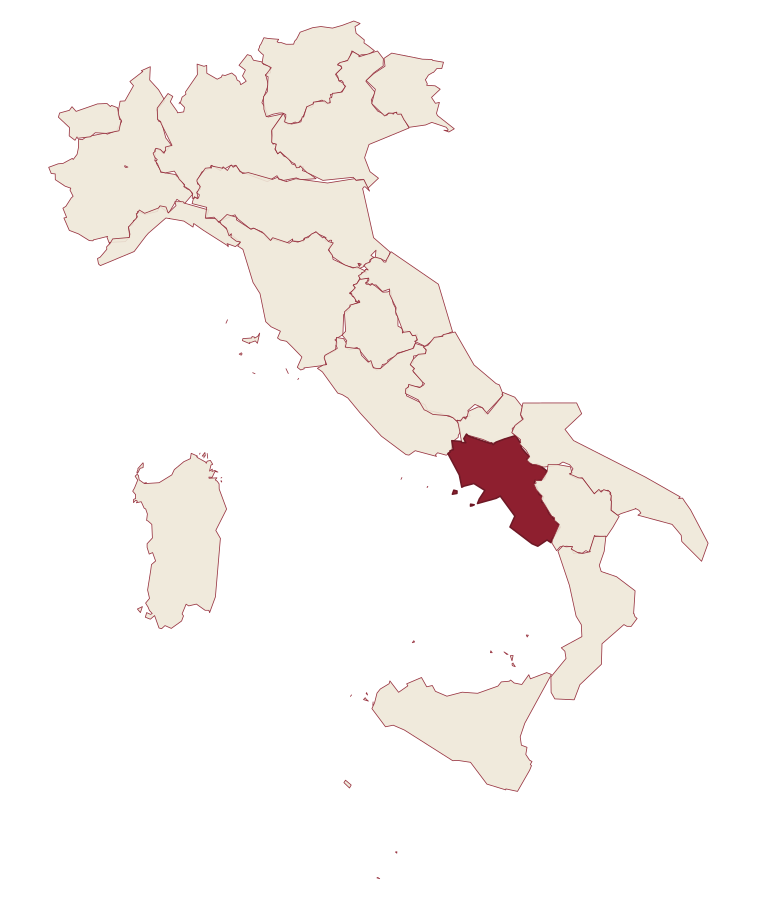
- Vairano Patenora is a comune in the province of Caserta, in Campania, at 168 meters above sea level.
- What is the nearest airport to Vairano Patenora?
- Naples / Salerno (NAP), about 54 minutes by car.
- Can you get to Vairano Patenora without a car?
- Yes. There is a railway station in the comune, so you can arrive by train.
- How long is the drive from Naples to Vairano Patenora?
- About 59 minutes by car.
- When is the best time to visit Vairano Patenora?
- Best in Apr–Oct. July is the warmest month, averaging 33 degrees, and May the wettest, with about 14 rain days.
- Is there a sagra or a festival in Vairano Patenora?
- The town keeps its patron saint's day: Bartolomeo apostolo, 24 August.
- Which other towns are like Vairano Patenora?
- Alife, Longiano and Brisighella.
- How many people live in Vairano Patenora?
- 6,327 at the 2023 count.
Tags & datadesignations · numbers · sources
Recognised as
The numbers
- Elevation: 168 m
- Population: 6,327
- Surface area: 43.52 km²
These figures were compiled from public directories: ISTAT, OpenStreetMap and Wikidata, and from the official listings of the guides named on this page. Town details change; verify with official sources before you travel.
Similar
Towns like Vairano Patenora
Alife
Province: Caserta
both inland, away from the coast · both between 3,000 and 10,000 people
Longiano
Province: Forlì-Cesena
both inland, away from the coast · both between 3,000 and 10,000 people
Brisighella
Province: Ravenna
both inland, away from the coast · both between 3,000 and 10,000 people
Corigliano d'Otranto
Province: Lecce
both inland, away from the coast · both between 3,000 and 10,000 people
Specchia
Province: Lecce
both inland, away from the coast · both between 3,000 and 10,000 people
Caiazzo
Province: Caserta
both inland, away from the coast · both between 3,000 and 10,000 people
🥜 Città della Nocciola
More Città della Nocciola towns in Campania
Lapio
Province: Avellino
An 1,428-resident Irpinia hilltop borgo at 590m in the hills east of Avellino, recognised by a rare four-signal combination (Città del Vino + Olio + Miele + Nocciola) for the whole local agricultural ecosystem.
Mercogliano
Province: Avellino
A 550-meter Irpinia town on the slope of Partenio, gateway to the Montevergine Sanctuary 1,270 meters above.
Montesarchio
Province: Benevento
Ancient Caudium at 300 meters, a Roman defeat still attached to the name two thousand years later.
Nola
Province: Napoli
The Campanian plain town where Augustus died in AD 14 and Giordano Bruno was born in 1548, famous for the June Festa dei Gigli.
Pompei
Province: Napoli
The Roman city buried by Vesuvius in 79 AD, dug back up since 1748, and a modern town around Bartolo Longo's 1876 sanctuary.