
The 7 best hill towns that eat well in Campania
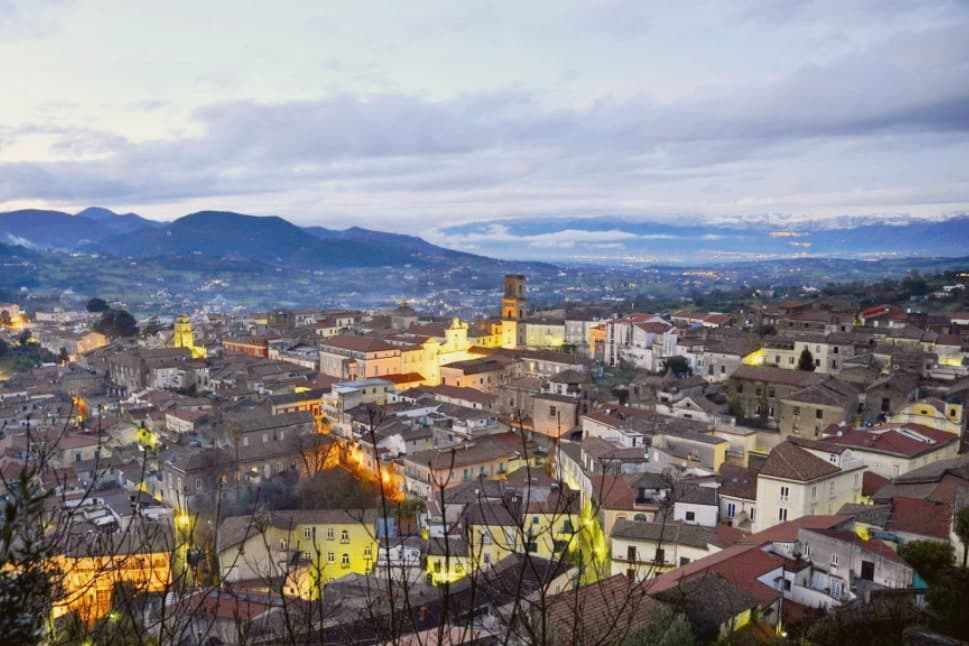
Campania away from the water is tuff stone and vines. The hill towns are built from the same soft yellow volcanic rock the Romans quarried, stacked into houses that hold cool through August, and below them run valleys planted with Aglianico, Falanghina and hazelnut. The food follows the geology: buffalo mozzarella from the plain, pork from the Sannio, wild greens in spring, chestnuts and mushrooms once the weather turns in autumn. Pizza here is not a coastal invention borrowed inland, it is worked over by bakers who grew up with the ovens, and the best of them draw people up from the city for supper.
Almost everyone who comes to Campania eats on the coast or in the centre of Naples, and with good reason. The pizzerias of the Centro Storico, the lemon terraces above Amalfi, the fish grilled along the Sorrentine peninsula: these are among the most famous meals in Italy, and the queues match. In high summer the Amalfi Coast road moves at walking pace, and a table with a sea view is booked weeks out. The quality is real. The crowd is real too.
The same vines, the same buffalo herds and the same ovens carry on inland, up into the hills of Benevento, Caserta and Avellino, where fewer people go and a booking is usually possible the same week. These are working towns with markets, cathedrals and medieval quarters, and the kitchens cook for locals first. Each one on this list is an inland hill settlement, and each has a table a dining guide has thought worth naming.
Of the 67 communes we have mapped in Campania, 7 qualify as hill towns that eat well: each is an inland hill settlement, and a dining guide has named a table in each. The smallest, Caiazzo, has 5,205 residents.
If you are still choosing, we have also written The best hill towns that eat well within 90 minutes of Napoli and The best hill towns within 75 minutes of Naples.
Caiazzo
Why visit Caiazzo
Caiazzo sits at 200 meters on a small hill above the Volturno, forty kilometres north of Naples, between the Matese foothills and the Caserta plain. The town is older than the surrounding province: Caiatia was already a Samnite then Roman centre, and the medieval cathedral preserves a Lombard crypt under its eleventh-century floor.
What pulls visitors today is not the cathedral but a pizzeria. In 2012 Franco Pepe, third-generation baker, opened Pepe in Grani in an eighteenth-century palazzo on Vico San Giovanni Battista, working long-fermented doughs with local Pallagrello flour, Conciato Romano cheese and Caiazzo olive oil.
Tre spicchi from Gambero Rosso for ten straight years and a Michelin world-best ranking in 2018 turned the centro storico into a destination that handles 800 pizzas a day. Caiazzo is a Cittaslow, a Città del Vino for Pallagrello and Casavecchia, and a Città dell'Olio.
Pepe in Grani have been named by a guide.
What to see in Caiazzo
- Cattedrale di Santa Maria Assunta. Eleventh-century cathedral with a Lombard crypt beneath the floor, baroque interior and the relics of San Stefano Minicillo, patron of Caiazzo.
- Castello di Caiazzo. Medieval castle of Lombard origin on the highest point of the centro storico, remodelled under the Normans and later princes of Caiazzo.
- Pepe in Grani. Franco Pepe's pizzeria in an eighteenth-century palazzo on Vico San Giovanni Battista, ranked best in the world by Michelin in 2018.
How to get to Caiazzo
There is a railway station in the town, so you can arrive without a car and never need one while you are here. Napoli is roughly 53 minutes away by road.
Our tip
April through June and September into October are the cleanest months in Caiazzo, when the Volturno valley is green and the Pepe in Grani tables are easier to book at lunch. July and August push the Caserta plain past thirty-five degrees and the centro storico empties between two and six in the afternoon. Harvest runs September and October for Pallagrello and Casavecchia and pulls weekend wine visitors.
Vairano Patenora
Why visit Vairano Patenora
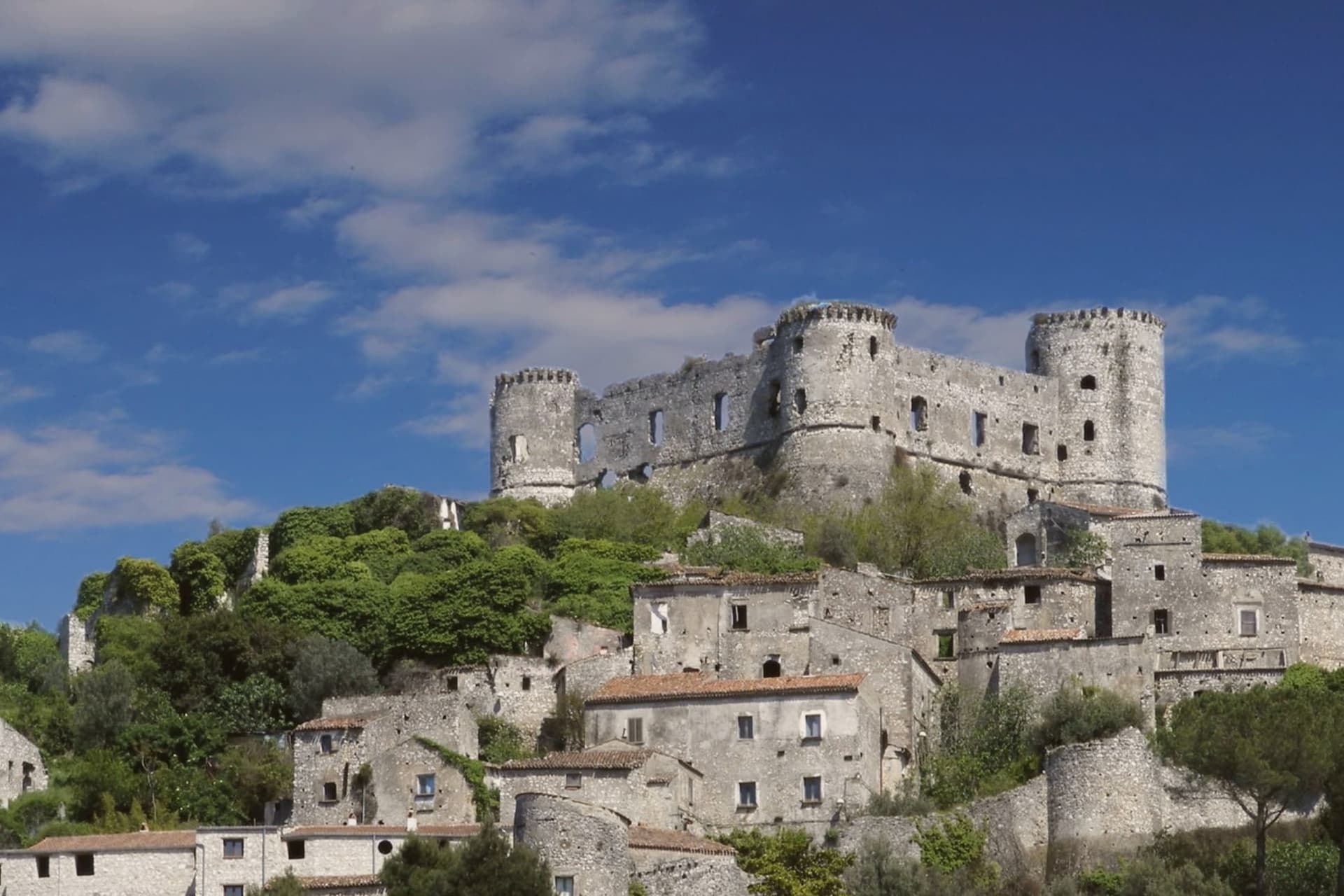
The castle is a shell and that is the point of coming. Innico II d'Avalos built it between 1491 and 1503 on the footings of the Norman one, four round towers with the largest at the south-east corner, and the inside has fallen in: you can still read the floor levels off the walls, the kitchens, the prisons, the old cistern.
Below it the medieval borgo runs downhill in grey stone, and its wall once carried fourteen cylindrical towers and three gates. People have been passing through here for a very long time.
The Samnites held the hills, the Romans took them in 290 BC, the Normans put up the first castle, and Frederick II, Charles II of Anjou and Pope Gregory X all stayed in it. Two miles out, the Abbazia della Ferrara was built by a Cistercian monk between 1171 and 1179 and keeps a thirteenth-century fresco of a funeral.
The town below sits in flat, farmed country between the Matese and the Roccamonfina park, with a small volcanic lake on the Presenzano boundary.
Vairo del Volturno have been named by a guide.
What to see in Vairano Patenora
- Castello aragonese. Built 1491 to 1503 by Innico II d'Avalos on the Norman and Swabian footings. Four round towers; the interior is ruined, but the floor divisions, kitchens, prisons and cistern are still legible.
- The borgo walls. The medieval circuit once ran to fourteen cylindrical towers on battered bases, opened by three gates: porta Oliva, porta di Mezzo and porta Castello.
- Abbazia della Ferrara. A Cistercian abbey of 1171 to 1179 that housed Frederick II and the future Pope Celestine V, holding a thirteenth-century fresco of the funeral of Malgerio Sorel.
How to get to Vairano Patenora
There is a railway station in the town, so you can arrive without a car and never need one while you are here. Napoli is roughly 59 minutes away by road.
Our tip
April to October is the season down here at 168 metres, and July and August are hot in the valley in a way the hill towns further east are not. Spring is the best of it, when the scrub on Catreola and Montauro is green and the castle can be walked around without the heat. The feast of San Bartolomeo falls on 24 August.
Sant'Agata de' Goti
Why visit Sant'Agata de' Goti
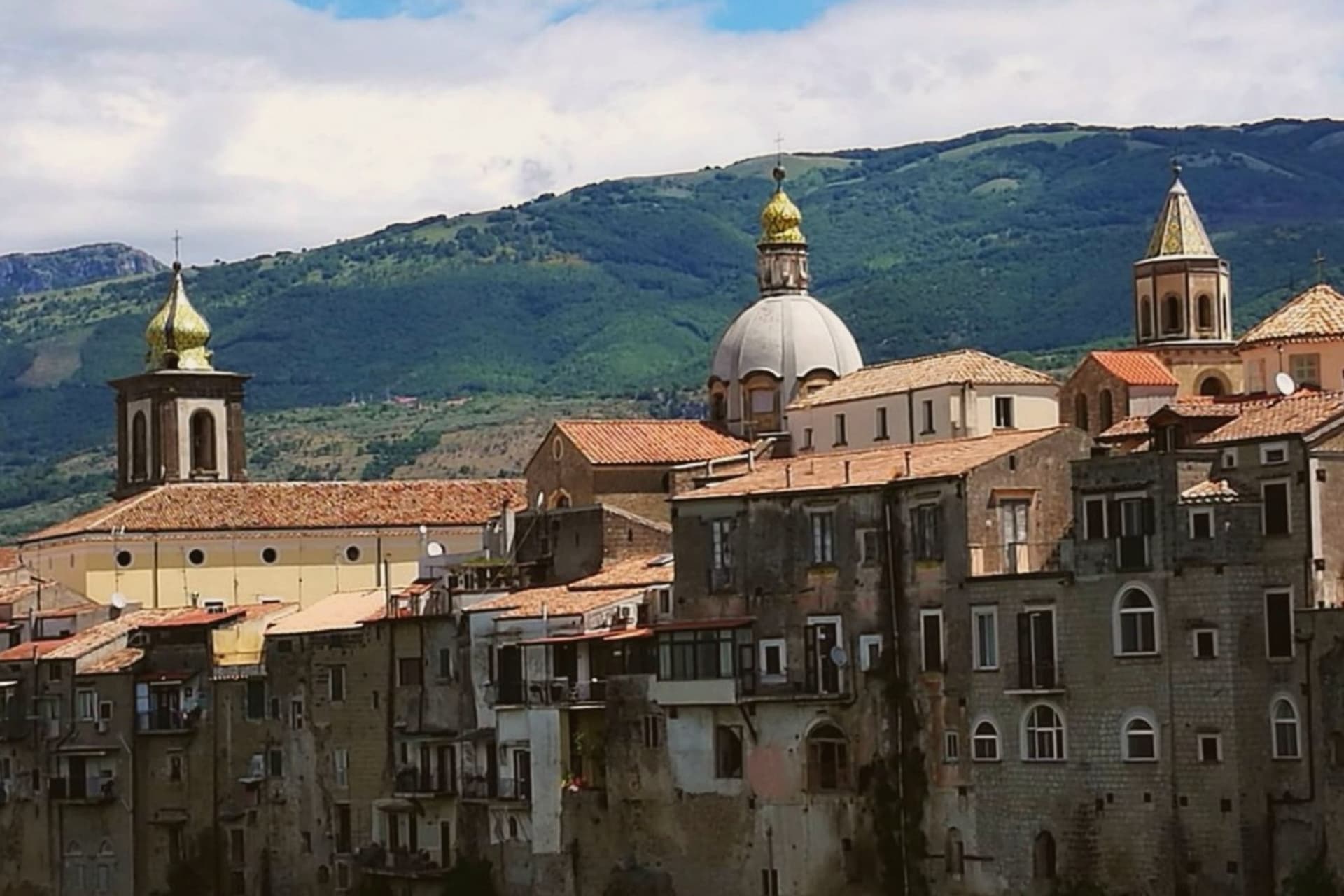
Sant'Agata de' Goti sits at 156 meters on a tuff spur between the Martorano and Riello gorges, thirty-five kilometers northeast of Naples and west of Monte Taburno. The houses on the edge of the centro are built flush with the cliff, their back walls forming a vertical face above the Isclero river thirty meters below.
The Samnites founded Saticula here in the sixth century BC; the current name comes from the Goths who held the town in the sixth century AD, then from Saint Agatha of Sicily as titular of the cathedral. The Lombards of Benevento, the Normans, and the Angevins each rebuilt the castle on the western edge.
The Duomo dell'Assunta in the centro keeps a twelfth-century crypt under a Baroque rebuild. The commune is a Bandiera Arancione of the Touring Club Italiano, holds the Sant'Agata de' Goti Aglianico DOC and Falanghina DOC, and is part of the Città della Nocciola network for the Nocciola di Avellino DOP grown around it.
Agape, Antico Borgo have been named by a guide.
What to see in Sant'Agata de' Goti
- Castello Ducale. Medieval fortress on the western edge of the cliff, rebuilt by the Lombards, the Normans and the Angevins, now a residence with restored rooms.
- Duomo dell'Assunta. Tenth-century cathedral with a twelfth-century crypt under a Baroque rebuild, columns reused from a Roman temple of Demeter.
- Chiesa dell'Annunziata. Late Gothic church with a fifteenth-century fresco of the Annunciation and a wooden ceiling carved with the symbols of Christ's passion.
How to get to Sant'Agata de' Goti
Napoli is roughly 51 minutes away by road.
Our tip
April through early June and September into October are the strongest months. The valley around Sant'Agata greens, the Aglianico and Falanghina vineyards bud and ripen, and the cliff houses stay cool when the floor of the gorge heats up. July and August can pass thirty-five degrees on the Isclero plain, though the centro on the tuff catches more breeze. Sagra Sansilvestrese a Sant'Agata De' Goti falls in August.
Mercogliano
Why visit Mercogliano
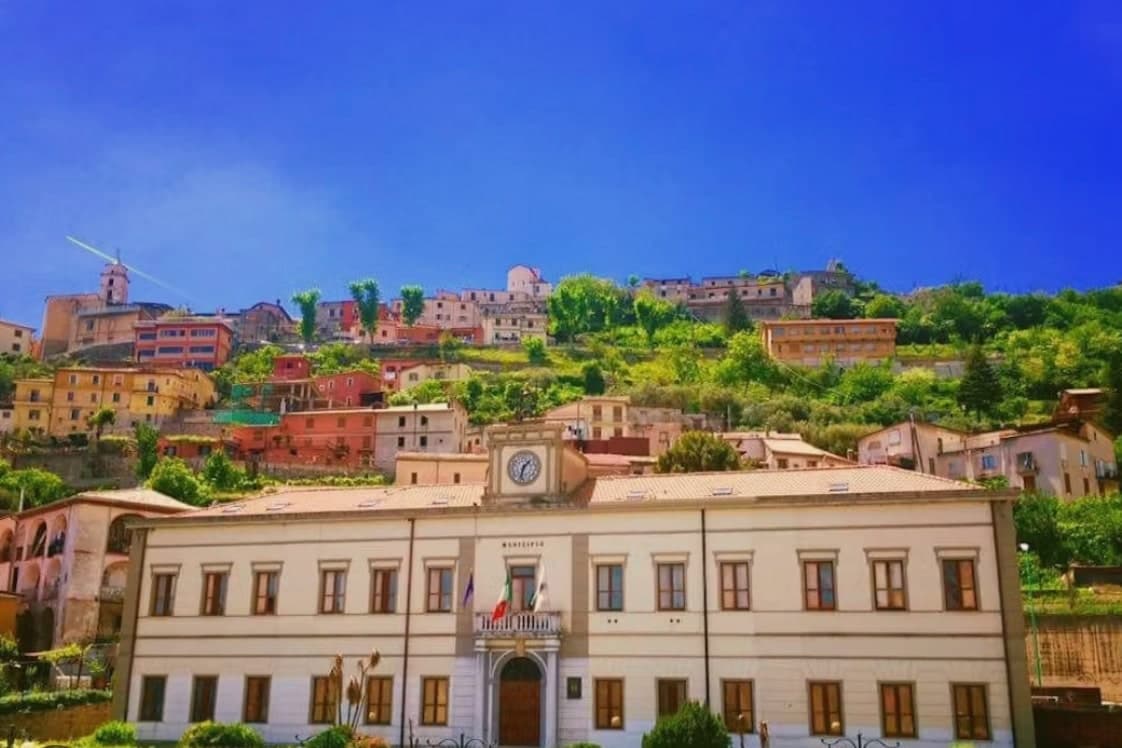
Mercogliano sits five kilometers from Avellino, on the western flank of the Partenio massif. The town itself is residential, much rebuilt after the 1980 Irpinia earthquake, and functions mainly as the base from which the mountain above it is reached.
Below the funicular stands the old Loreto abbey complex, once the administrative center of the Montevergine monks, and in the lower town the parish church of Santa Maria delle Grazie serves as the gathering point each year for pilgrims setting out on foot up the mountain, the same route the funicular now shortens to a few minutes. Higher up, at the sanctuary, the Madonna of Montevergine is venerated as the Black Madonna, Mamma Schiavona.
The chestnut woods that surround the town produce the Avella hazelnut and several DOP chestnut varieties, and most visitors passing through are pilgrims or hikers heading for the mountain rather than people staying in town. The layout is vertical rather than sprawling: a working lower town feeding a devotional upper one, with the abbey, the church and the cable line marking the stages between them.
I Santi have been named by a guide.
What to see in Mercogliano
- Santuario di Montevergine. Founded by William of Vercelli in 1124. The icon inside draws over a million pilgrims a year, with a Candelora procession on February 2 that fills the mountain above the town.
- Abbazia del Loreto. Eighteenth-century Baroque abbey complex at the base of the funicular, former administrative seat of the Montevergine congregation.
- Funicolare di Montevergine. The main route up the mountain since the donkey path closed, carrying pilgrims and hikers past the abbey toward the sanctuary.
How to get to Mercogliano
Napoli is roughly 53 minutes away by road.
Our tip
April through June and September through October are the best months on the mountain: temperatures bearable at 1,270 meters, the funicular running on its full schedule, pilgrim numbers manageable. July and August are warm in town and crowded at the sanctuary, with August 15 the peak pilgrimage day for the Assumption. February 2 is the Candelora, the second-biggest sanctuary day of the year, when the femminielli procession arrives from Napoli.
Nola
Why visit Nola
Nola sits at 34 meters on the plain between Vesuvius and the Apennines, twenty kilometers east of Napoli. It was an Oscan and Samnite town before Rome, and the place where Augustus died in AD 14, in the same house his father had died in.
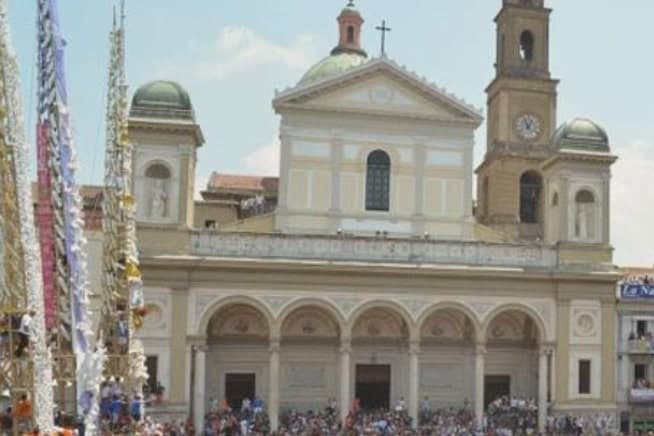
Giordano Bruno was born here in 1548, the Nolano who called his philosophy nolana before he was burned at the Campo de' Fiori in 1600. The town is best known today for the Festa dei Gigli, a UNESCO Intangible Heritage celebration on the Sunday before June 22 in which eight twenty-five-meter wooden obelisks, each weighing over a ton, are carried through the streets by teams of one hundred bearers.
The festival honors Paolino di Nola, the fifth-century bishop whose return from captivity in North Africa it commemorates. Outside the festival, Nola is a working town of warehouses and commerce.
Re Santi e Leoni, Le Baccanti, Rear Restaurant and 2 more have been named by a guide.
What to see in Nola
- Cattedrale di Nola. Cathedral of the Assunta and San Paolino, twentieth-century rebuilt after fire, with relics of the patron bishop who returned from Africa.
- Festa dei Gigli. UNESCO Intangible Heritage festival in June: eight 25-meter wooden obelisks carried through the streets by teams of one hundred bearers.
- Anfiteatro Romano di Nola. Roman amphitheater excavated on the southern edge of town, where Augustus was honored with funeral games in AD 14.
How to get to Nola
There is a railway station in the town, so you can arrive without a car and never need one while you are here. Napoli is roughly 28 minutes away by road.
Our tip
April through June covers the green months and culminates in the Festa dei Gigli on the Sunday before June 22, the one weekend when Nola fills with hundreds of thousands of visitors. September and October are warm and quieter, with the wine and hazelnut harvests in nearby Irpinia bringing activity to the markets. July and August are hot and humid on the plain.
Benevento
Why visit Benevento
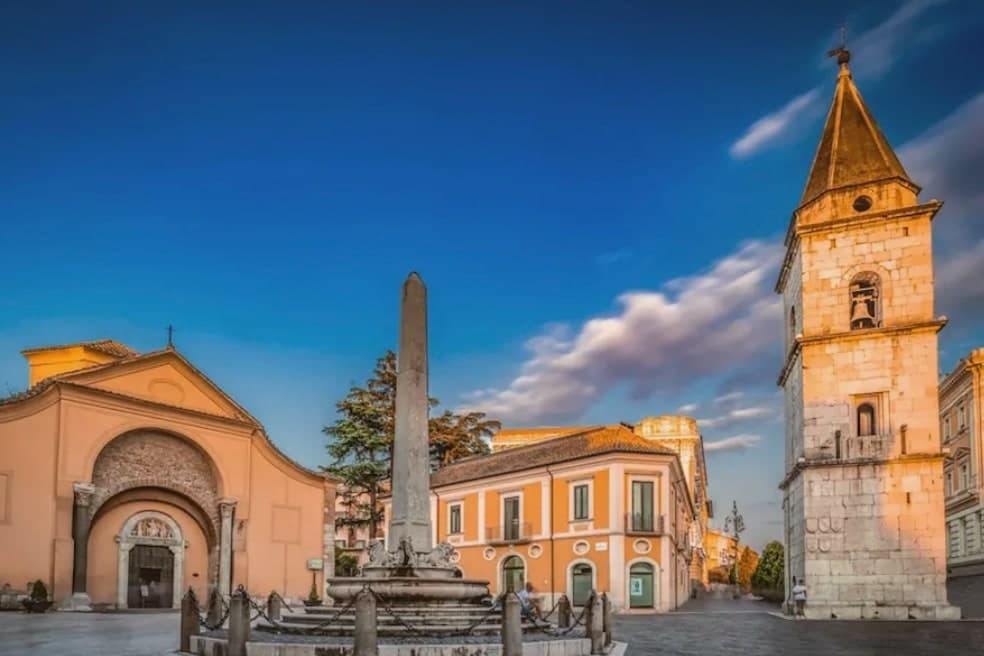
Benevento sits at 130 meters at the confluence of the Calore and Sabato rivers, fifty-five kilometers northeast of Naples, the historic capital of the Sannio. The Lombard Duchy of Benevento was founded in 571, well before the small circular church that survives from around 760, and the city centre still carries that double layer of Roman provincial capital and Lombard duchy seat.
Walking from the cathedral down Corso Garibaldi, past the cloister sculptures set against the medieval wall, ends at the triumphal arch, so the route itself moves from the Lombard and medieval town toward the point where the Roman road left for Brindisi. The countryside around the city is Aglianico del Taburno wine and the herbal liqueur distilled here since 1860.
What holds the city together is this sequence along one line of streets: two civic identities, Roman and Lombard, laid end to end and still walkable in that order.
Albori Ristorante & Bar, Alimenta, Sapori Ristorante have been named by a guide.
What to see in Benevento
- Arco di Traiano. The marble reliefs facing the road show Trajan's domestic policy, those facing the town his military campaigns, a pairing read as deliberate rather than decorative. The Via Traiana ran from this point to Brindisi.
- Chiesa di Santa Sofia. The circular plan is unusual for the period, and the interior keeps traces of the original Lombard fabric beneath later additions. It stands apart from the rectangular churches common elsewhere in the city.
- Teatro Romano. Roman theatre begun under Hadrian and completed under Caracalla, capacity for ten thousand spectators, still used for summer performances.
How to get to Benevento
There is a railway station in the town, so you can arrive without a car and never need one while you are here. Salerno is roughly 84 minutes away by road.
Our tip
April through June and September into October are the city's dry months, with mild evenings along the Calore and the Roman amphitheatre's summer programme starting in June. July and August push the inland Sannio past thirty-five degrees, and the old town empties between three and six in the afternoon while the riverbanks become the local refuge. November through March is wet, foggy at dawn, with rain a constant in February.
Caserta
Why visit Caserta
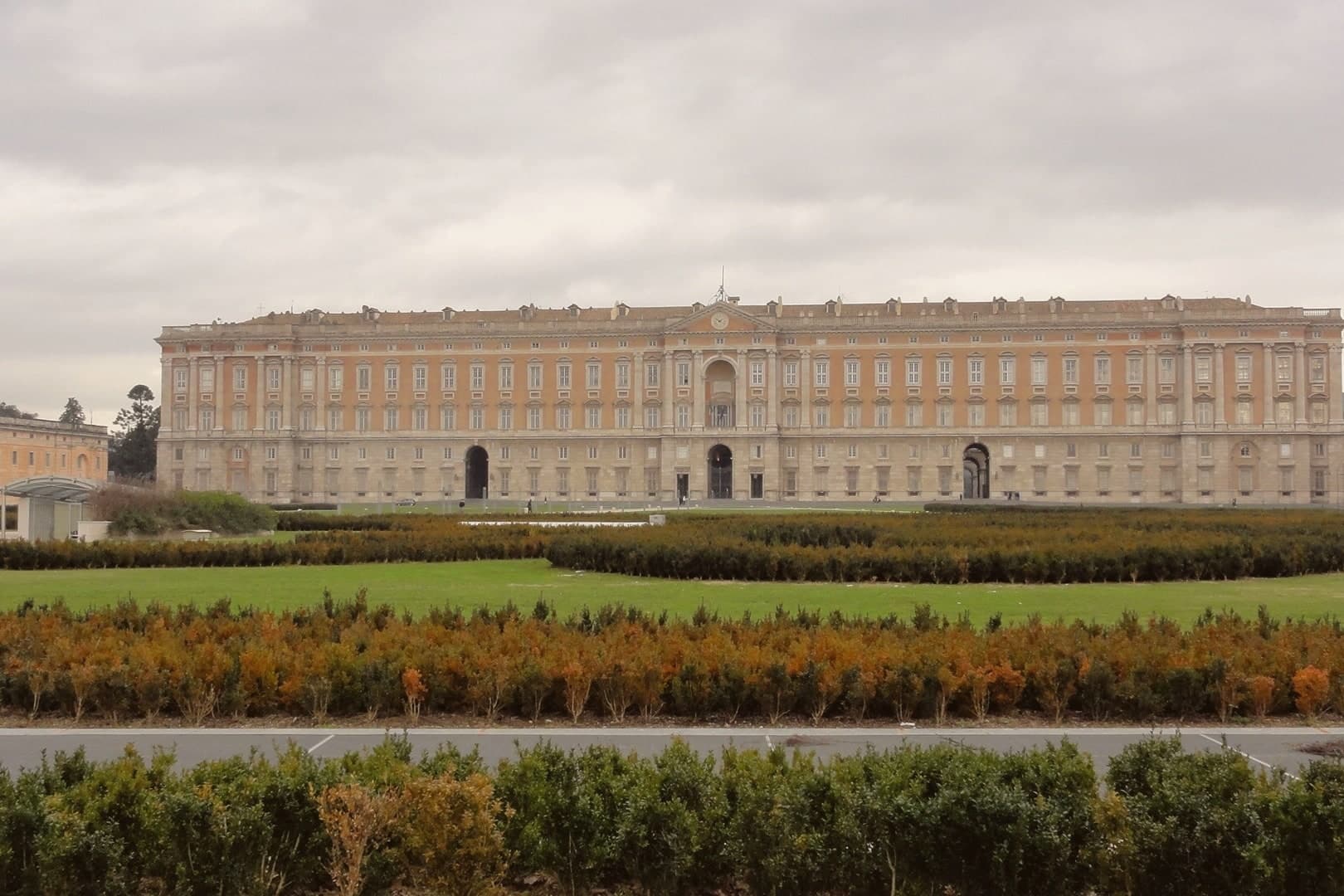
Caserta sits at 68 meters on the Campanian plain, 25 kilometers north of Naples at the foot of the Tifatini hills. The city exists because Charles III of Bourbon decided in 1750 to build a palace that would rival Versailles and the Royal Palace of Madrid, far enough inland to be safe from naval bombardment.
Luigi Vanvitelli laid the first stone in 1752: five floors, 1,200 rooms, 1,742 windows, 34 staircases. The gardens stretch three kilometers from the back façade to a cascade fed by the Carolino Aqueduct, also Vanvitelli's design.
The complex was listed by UNESCO in 1997 together with the silk village of San Leucio, the utopian industrial colony Ferdinand IV built on a hill four kilometers away. Up the road, Casertavecchia, the medieval village abandoned when the Bourbons moved everyone down to the plain, keeps its 12th-century Romanesque cathedral at 401 meters.
The modern city below is a working provincial capital, not a tourist town.
Le Colonne, Sunrise Restaurant, Antica Locanda and 2 more have been named by a guide.
What to see in Caserta
- Reggia di Caserta. Bourbon royal palace begun in 1752 by Luigi Vanvitelli, five floors, 1,200 rooms, UNESCO-listed since 1997 with the park and the Carolino Aqueduct.
- Parco Reale e Giardino Inglese. Three-kilometer formal park ending in a cascade, with an English Garden added by Maria Carolina in 1786, the first of its kind in Italy.
- Casertavecchia. Medieval hilltop village at 401 meters, 10 km from the city, abandoned when the Bourbons relocated the population to the plain.
How to get to Caserta
There is a railway station in the town, so you can arrive without a car and never need one while you are here. Napoli is roughly 38 minutes away by road.
Our tip
April through June and September through October are the comfortable months on the plain. The Reggia gardens are at their best in May, when the parterres bloom and the cascade runs full. July and August push into the high thirties; Vanvitelli's three-kilometer walk from palace to cascade becomes a heat exposure rather than a pleasure, though the shuttle bus runs. Sagra della Mulignana Imbuttunata falls in September.
More from Anywhere Italy
 The best hill towns that eat well within 90 minutes of Napoli
 The best hill towns within 75 minutes of Naples
- The best hill towns you can reach by train in Campania
 The best wine towns that eat well in Campania
 The best hidden hill towns within 90 minutes of Napoli
- The best hill towns you can reach by train within 90 minutes of Napoli