
The best towns known for their meat within two hours of Naples
Once the road leaves the Bay of Naples and climbs towards the Volturno, the register of Campanian and Molisan food changes. Fish gives way to podolica cattle grazing thin upland pasture, to lamb from the Matese, to pork worked into salami and hung in cellars cut from limestone. The towns here are built of grey volcanic tuff and river stone, with butchers' counters that double as the local noticeboard and trattorie where the second course is the reason people came. Autumn is the season that suits it best, when the chestnuts are in and the grill is lit indoors, though a spring lamb in these hills is worth the drive on its own.
Most people who travel out of Naples for food go to the coast or to Pompeii, then back to the city for pizza on Via dei Tribunali, where the queues run down the street and the tables turn every twenty minutes. It is good, and it is also the single most concentrated food tourism in southern Italy. The Amalfi Coast takes the rest, with lemon groves and set menus priced for the view. Very little of that traffic ever turns inland.
The meat country continues past all of it, up the Volturno valley and into the Matese, across into Molise and down to the Garigliano near the Lazio border. Each of the towns here sits inside the production zone of a protected meat, which is a dull way of saying the animal was raised nearby and the butcher knows the farm. Fewer people go, the prices reflect it, and the drive from Naples is shorter than the reputation of these places would suggest.
Of the 74 communes we have mapped in a 120-minute drive of Naples, 7 qualify as towns known for their meat: each sits inside the production zone of a protected meat. The smallest, Letino, has 631 residents.
Elsewhere in the catalogue: The best hidden hill towns within 90 minutes of Napoli and The best hill towns you can reach by train within 90 minutes of Napoli.
Letino
Why visit Letino
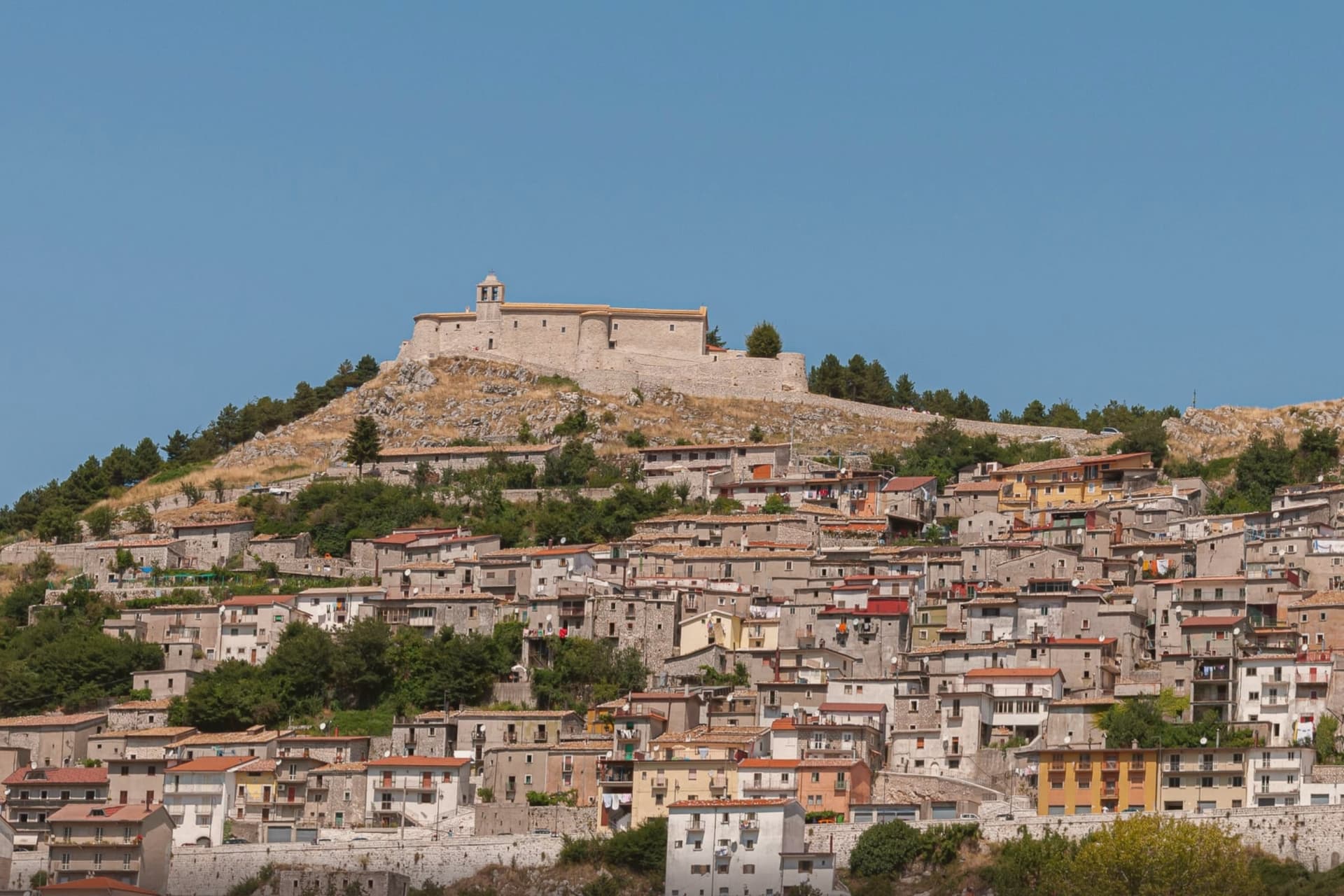
Letino sits in the Matese, a mountain settlement whose elevation shapes everything else about it: thin roads up, a short growing season, a village built to a scale that stops where the rock starts. The town's parts sit on a vertical axis rather than a horizontal one.
The castle occupies the high rock above the settlement, the artificial lake lies in the basin below it, and the karst river connects the two by running above ground for a stretch before vanishing underground entirely, so the visible landscape is only part of what is actually there. The insurrection of 1877 lasted days: the group marched in during a council session, burned tax records in the square, distributed arms to peasants and ordered the lands divided before it was over.
That the whole episode fit inside a handful of days, in a village this small and this high, is why the local museum still keeps it as its own subject rather than a footnote to regional history. The lake itself is not natural; it was built for a hydroelectric plant in the early twentieth century, which means the calmest-looking feature of the town is the newest and the most engineered.
What Letino adds up to is a place where altitude, water and a brief political rupture all left permanent marks on a settlement too small to absorb any of them quietly.
What to see in Letino
- Castello di Letino. Castle on a rock above the village at roughly 1,200 meters, walls dating to the 1600s, hosting the Sanctuary of the Madonna del Castello.
- Lago di Letino. Artificial lake (also called Lago Caùto) of 1.1 km², built in the early 1900s for the Prata Sannita hydroelectric plant.
- Grotte del Caùto. Karst cave system carved by the Lete river, explored since the 1920s, with two parallel galleries averaging 89 meters apart.
How to get to Letino
Napoli is roughly 110 minutes away by road.
Our tip
May through October is the open season at 961 meters in the Matese: warm days, cold nights, and the trails to the Castle, the Lago and the Grotte del Caùto walkable. June and September are the best months for the cave system, which runs cold year-round. July and August stay tolerable up here while Caserta city bakes; the lake fills with day-trippers from the lowland.
Caiazzo
Why visit Caiazzo
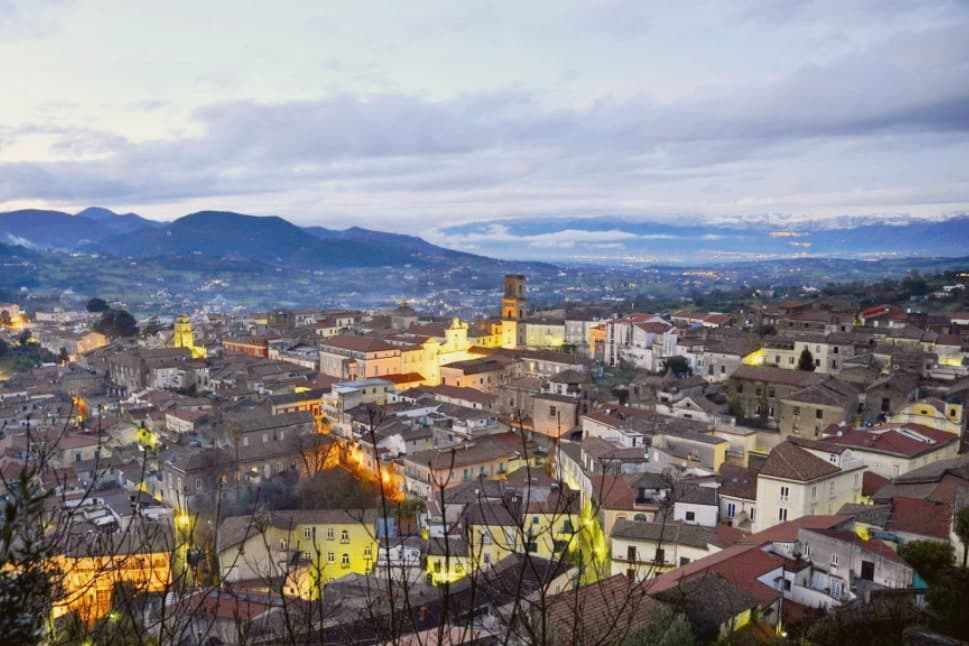
Caiazzo sits at 200 meters on a small hill above the Volturno, forty kilometres north of Naples, between the Matese foothills and the Caserta plain. The town is older than the surrounding province: Caiatia was already a Samnite then Roman centre, and the medieval cathedral preserves a Lombard crypt under its eleventh-century floor.
What pulls visitors today is not the cathedral but a pizzeria. In 2012 Franco Pepe, third-generation baker, opened Pepe in Grani in an eighteenth-century palazzo on Vico San Giovanni Battista, working long-fermented doughs with local Pallagrello flour, Conciato Romano cheese and Caiazzo olive oil.
Tre spicchi from Gambero Rosso for ten straight years and a Michelin world-best ranking in 2018 turned the centro storico into a destination that handles 800 pizzas a day. Caiazzo is a Cittaslow, a Città del Vino for Pallagrello and Casavecchia, and a Città dell'Olio.
Pepe in Grani have been named by a guide.
What to see in Caiazzo
- Cattedrale di Santa Maria Assunta. Eleventh-century cathedral with a Lombard crypt beneath the floor, baroque interior and the relics of San Stefano Minicillo, patron of Caiazzo.
- Castello di Caiazzo. Medieval castle of Lombard origin on the highest point of the centro storico, remodelled under the Normans and later princes of Caiazzo.
- Pepe in Grani. Franco Pepe's pizzeria in an eighteenth-century palazzo on Vico San Giovanni Battista, ranked best in the world by Michelin in 2018.
How to get to Caiazzo
There is a railway station in the town, so you can arrive without a car and never need one while you are here. Napoli is roughly 53 minutes away by road.
Our tip
April through June and September into October are the cleanest months in Caiazzo, when the Volturno valley is green and the Pepe in Grani tables are easier to book at lunch. July and August push the Caserta plain past thirty-five degrees and the centro storico empties between two and six in the afternoon. Harvest runs September and October for Pallagrello and Casavecchia and pulls weekend wine visitors.
Vairano Patenora
Why visit Vairano Patenora
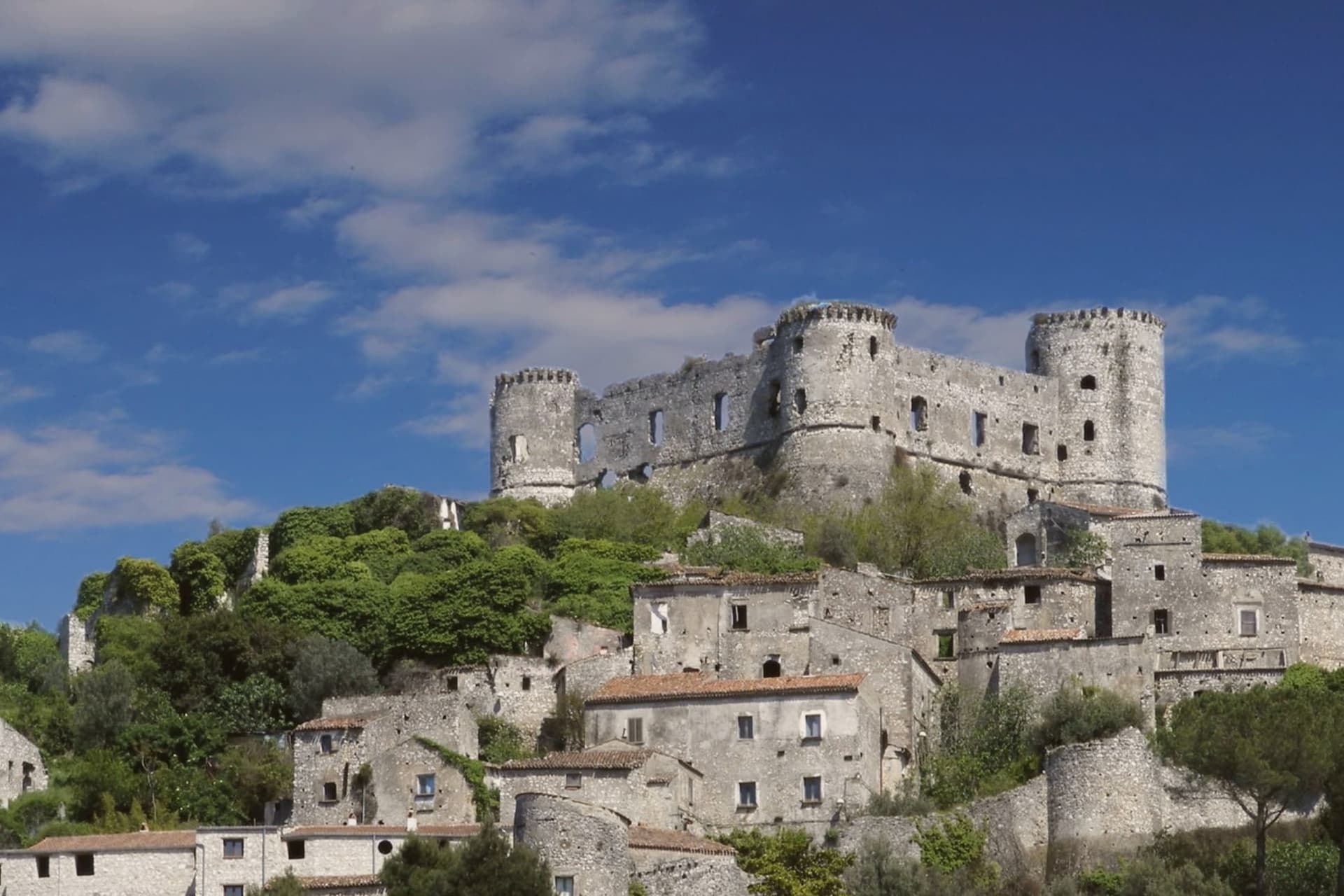
The castle is a shell and that is the point of coming. Innico II d'Avalos built it between 1491 and 1503 on the footings of the Norman one, four round towers with the largest at the south-east corner, and the inside has fallen in: you can still read the floor levels off the walls, the kitchens, the prisons, the old cistern.
Below it the medieval borgo runs downhill in grey stone, and its wall once carried fourteen cylindrical towers and three gates. People have been passing through here for a very long time.
The Samnites held the hills, the Romans took them in 290 BC, the Normans put up the first castle, and Frederick II, Charles II of Anjou and Pope Gregory X all stayed in it. Two miles out, the Abbazia della Ferrara was built by a Cistercian monk between 1171 and 1179 and keeps a thirteenth-century fresco of a funeral.
The town below sits in flat, farmed country between the Matese and the Roccamonfina park, with a small volcanic lake on the Presenzano boundary.
Vairo del Volturno have been named by a guide.
What to see in Vairano Patenora
- Castello aragonese. Built 1491 to 1503 by Innico II d'Avalos on the Norman and Swabian footings. Four round towers; the interior is ruined, but the floor divisions, kitchens, prisons and cistern are still legible.
- The borgo walls. The medieval circuit once ran to fourteen cylindrical towers on battered bases, opened by three gates: porta Oliva, porta di Mezzo and porta Castello.
- Abbazia della Ferrara. A Cistercian abbey of 1171 to 1179 that housed Frederick II and the future Pope Celestine V, holding a thirteenth-century fresco of the funeral of Malgerio Sorel.
How to get to Vairano Patenora
There is a railway station in the town, so you can arrive without a car and never need one while you are here. Napoli is roughly 59 minutes away by road.
Our tip
April to October is the season down here at 168 metres, and July and August are hot in the valley in a way the hill towns further east are not. Spring is the best of it, when the scrub on Catreola and Montauro is green and the castle can be walked around without the heat. The feast of San Bartolomeo falls on 24 August.
Alife
Why visit Alife
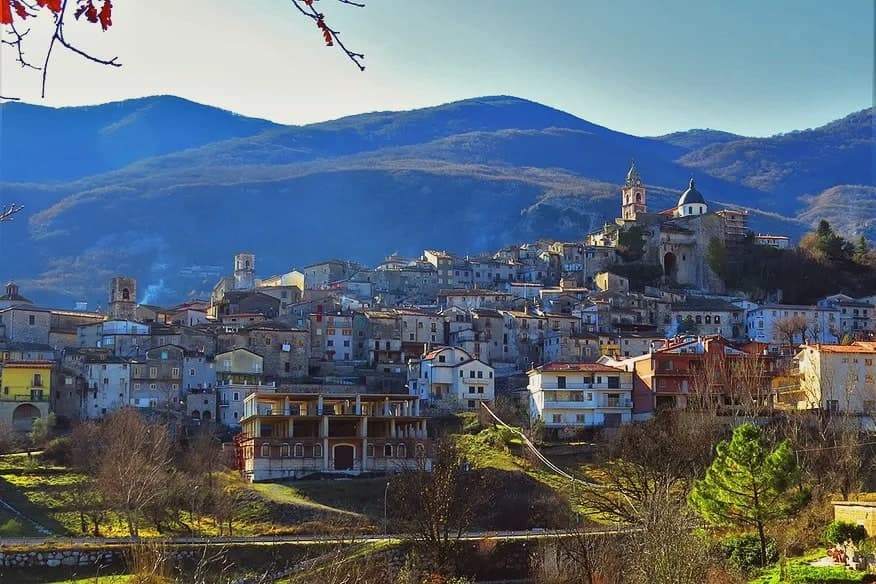
Alife sits at 110 meters at the southern foot of the Matese, the rectangular Roman walls still tracing the original plan of the 326 BC Latin colony founded after the Samnite Wars. The circuit runs 1.9 kilometres, with towers every 39 meters and four monumental gates on the cardo and decumano.
Inside the walls lies the largely buried Roman amphitheatre, 48 by 38 meters, the fourth largest in Italy after Rome, Pompeii and Capua. The Cryptoporticum, a 100-meter underground gallery, has been kept legible by recent excavation.
The town gives its name to the Cipolla di Alife, a heirloom red onion documented locally since Roman times and still cultivated on the irrigated plain along the Volturno. Modern Alife sits inside the Parco Regionale del Matese and along the Via Francigena del Sud, with extra-virgin olive oil and Pallagrello and Casavecchia wines on the surrounding slopes.
What to see in Alife
- Mura romane di Alife. Rectangular Roman walls running 1.9 kilometres, with towers every 39 meters and four monumental gates on the original cardo and decumano of the 326 BC colony.
- Anfiteatro Romano. Largely buried amphitheatre of 48 by 38 meters, the fourth largest in Italy after Rome, Pompeii and Capua, dating to the early imperial period.
- Criptoportico Romano. Underground gallery more than 100 meters long, well preserved beneath the centro storico, kept open after recent archaeological excavation.
How to get to Alife
There is a railway station in the town, so you can arrive without a car and never need one while you are here. Napoli is roughly 76 minutes away by road.
Our tip
April through June and September into October are the open months along the Matese foothills, when the Volturno plain is green and the Roman walls walk at a reasonable temperature. July and August push the inland Caserta past thirty-five degrees and the amphitheatre site closes mid-afternoon to protect visitors and stone. The Sagra della Cipolla di Alife happens in mid-September and pulls weekend visitors from Naples and Caserta. Sagra della pannocchia e dell'agricoltura alifana falls in September.
Minturno
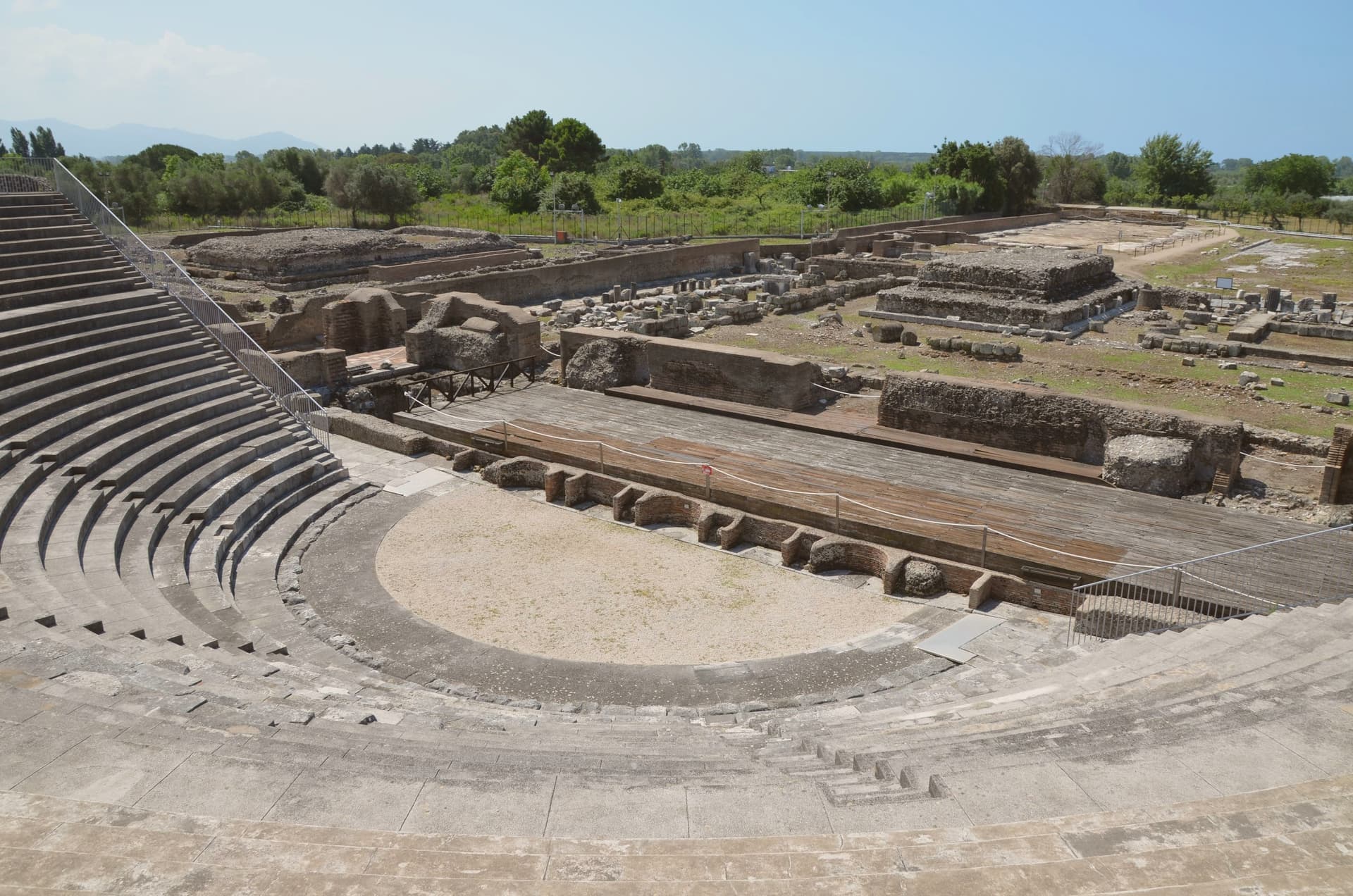
Why visit Minturno
Minturno sits on a hill at 140 meters above the right bank of the Garigliano, with the Scauri and Marina coast running down from it to the Tyrrhenian. The two halves of the comune answer different needs and different centuries: the river mouth held the Roman colony and its flat, engineered plain, while the hill above took over as the medieval settlement once malaria and Saracen raids made the lowland unsafe to live on.
The castle at the center of the upper town carries that shift in its own fabric, with a ninth-century core built up over time by later lords. The coast has its own separate history again, flattened in 1943-44 as a battlefield on the German defensive line and rebuilt afterward around the bathing village of Scauri.
Olive country runs inland behind all of this, and the comune belongs to the Città dell'Olio network. What the town amounts to, then, is three settlements stacked in time rather than one: a Roman river port, a medieval hill town built in retreat from it, and a rebuilt postwar coast, each still legible in its own part of the comune.
What to see in Minturno
- Parco Archeologico di Minturnae. Theater, forum, aqueduct and amphitheater standing together at the river mouth, on the stretch of the Via Appia that once ran through the colony.
- Castello Baronale. Hilltop castle in the centro storico, its core built in the ninth century and expanded in stages by the Caetani and the Carafa through the medieval period.
- Basilica di San Pietro Apostolo. Basilica in the upper town holding a cosmatesque pulpit and Easter candlestick, both worked in the twelfth and thirteenth centuries.
How to get to Minturno
There is a railway station in the town, so you can arrive without a car and never need one while you are here. Napoli is roughly 79 minutes away by road.
Our tip
May through September is the season on the Garigliano coast. June and September give the best balance of warm sea and emptier beaches; July and August fill with Roman and Neapolitan weekenders and the seaside road slows. October is still warm enough to swim on calm days, and the inland olive harvest in late October and November is the busiest moment in the upper town.
Isernia
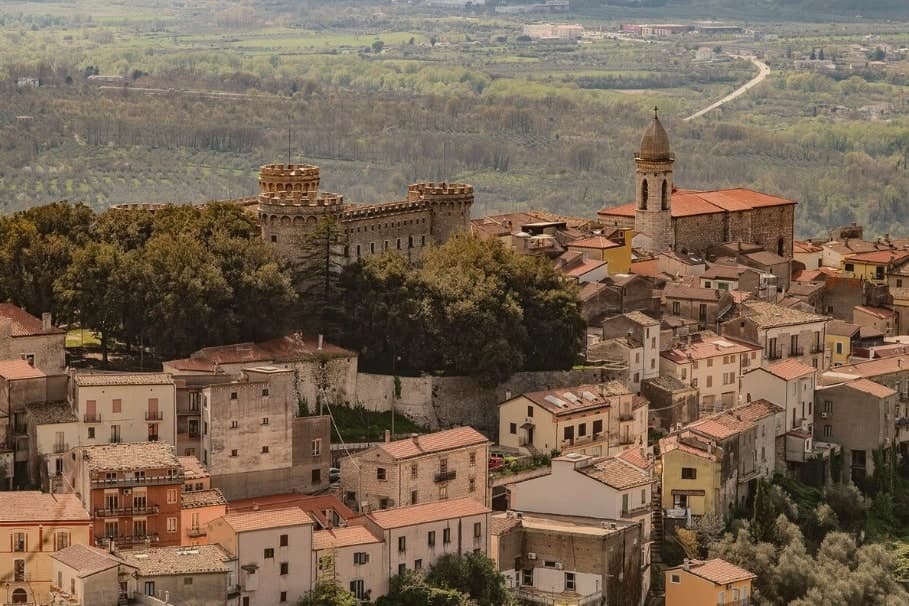
Why visit Isernia
Isernia stands on a narrow rock spine between two rivers, 423 meters above sea level, in the upper Volturno valley. The hill is one of the oldest inhabited places in Europe.
The archaeological site of Isernia La Pineta has yielded tools and animal bones dated to about 700,000 years ago and the milk tooth of a child who lived 583,000 years ago. The Pentri Samnites built Aesernia here in the seventh century BC; Rome took it in 295 BC and founded a Latin colony in 264 BC.
The medieval city replaced the Roman streets with its own grid, and in 1240 the public Fontana Fraterna went up in the centro storico, six water jets behind a stone arcade made of repurposed Roman blocks. The Cattedrale di San Pietro Apostolo, built from 1349 on the foundations of a Samnite-era temple, sits a short walk away.
Isernia carries the Città del Tartufo mark for the white truffle harvested in the surrounding woods.
Ausa, Distinto Ristorante, Existo Osteria Molisana and 3 more have been named by a guide.
What to see in Isernia
- Museo Nazionale del Paleolitico (Isernia La Pineta). Archaeological site and museum showing tools and bones dated to 700,000 years ago, one of the oldest human sites in Europe.
- Fontana Fraterna. Thirteenth-century public fountain with six water jets behind a stone arcade, made of repurposed Roman blocks.
- Cattedrale di San Pietro Apostolo. Cathedral begun in 1349 on the foundations of a third-century-BC Italic temple, seat of the Bishop of Isernia-Venafro.
How to get to Isernia
There is a railway station in the town, so you can arrive without a car and never need one while you are here. Napoli is roughly 103 minutes away by road.
Our tip
April through October is the open season. Spring brings the Volturno valley green and the truffle hills back into walkable shape. June and September are the cleanest months for the centro storico.
Benevento
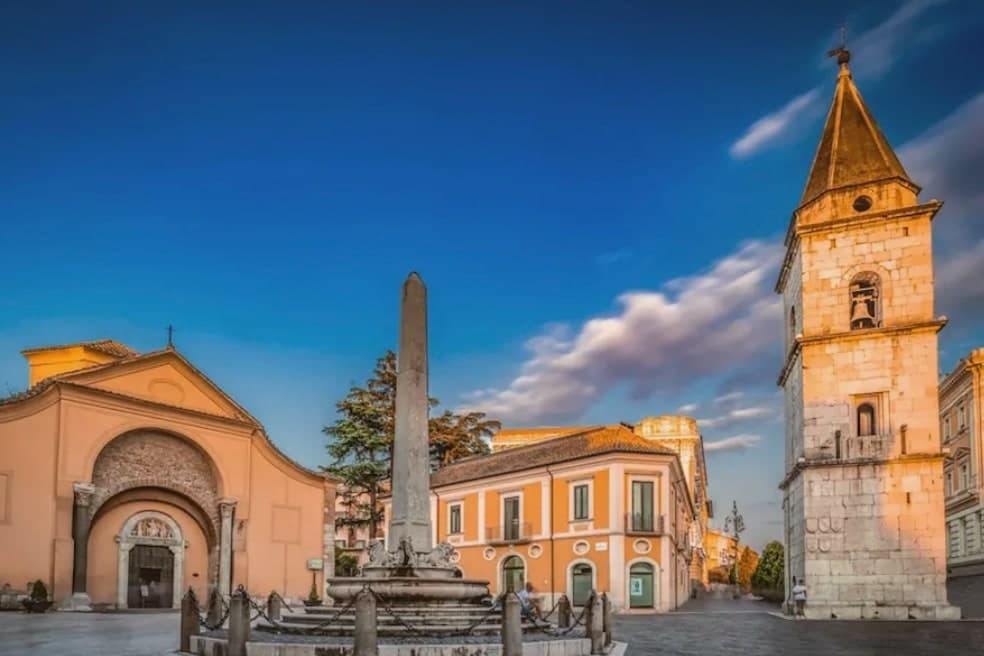
Why visit Benevento
Benevento sits at 130 meters at the confluence of the Calore and Sabato rivers, fifty-five kilometers northeast of Naples, the historic capital of the Sannio. The Lombard Duchy of Benevento was founded in 571, well before the small circular church that survives from around 760, and the city centre still carries that double layer of Roman provincial capital and Lombard duchy seat.
Walking from the cathedral down Corso Garibaldi, past the cloister sculptures set against the medieval wall, ends at the triumphal arch, so the route itself moves from the Lombard and medieval town toward the point where the Roman road left for Brindisi. The countryside around the city is Aglianico del Taburno wine and the herbal liqueur distilled here since 1860.
What holds the city together is this sequence along one line of streets: two civic identities, Roman and Lombard, laid end to end and still walkable in that order.
Albori Ristorante & Bar, Alimenta, Sapori Ristorante have been named by a guide.
What to see in Benevento
- Arco di Traiano. The marble reliefs facing the road show Trajan's domestic policy, those facing the town his military campaigns, a pairing read as deliberate rather than decorative. The Via Traiana ran from this point to Brindisi.
- Chiesa di Santa Sofia. The circular plan is unusual for the period, and the interior keeps traces of the original Lombard fabric beneath later additions. It stands apart from the rectangular churches common elsewhere in the city.
- Teatro Romano. Roman theatre begun under Hadrian and completed under Caracalla, capacity for ten thousand spectators, still used for summer performances.
How to get to Benevento
There is a railway station in the town, so you can arrive without a car and never need one while you are here. Salerno is roughly 84 minutes away by road.
Our tip
April through June and September into October are the city's dry months, with mild evenings along the Calore and the Roman amphitheatre's summer programme starting in June. July and August push the inland Sannio past thirty-five degrees, and the old town empties between three and six in the afternoon while the riverbanks become the local refuge. November through March is wet, foggy at dawn, with rain a constant in February.
More from Anywhere Italy
 The best hidden hill towns within 90 minutes of Napoli
- The best hill towns you can reach by train within 90 minutes of Napoli
 The best olive oil towns within two hours of Naples
 The best hidden hill towns you can reach by train in Campania
- The 7 best hill towns that eat well in Campania
- The best hill towns you can reach by train in Campania