
Sicily · Messina
San Marco d'Alunzio
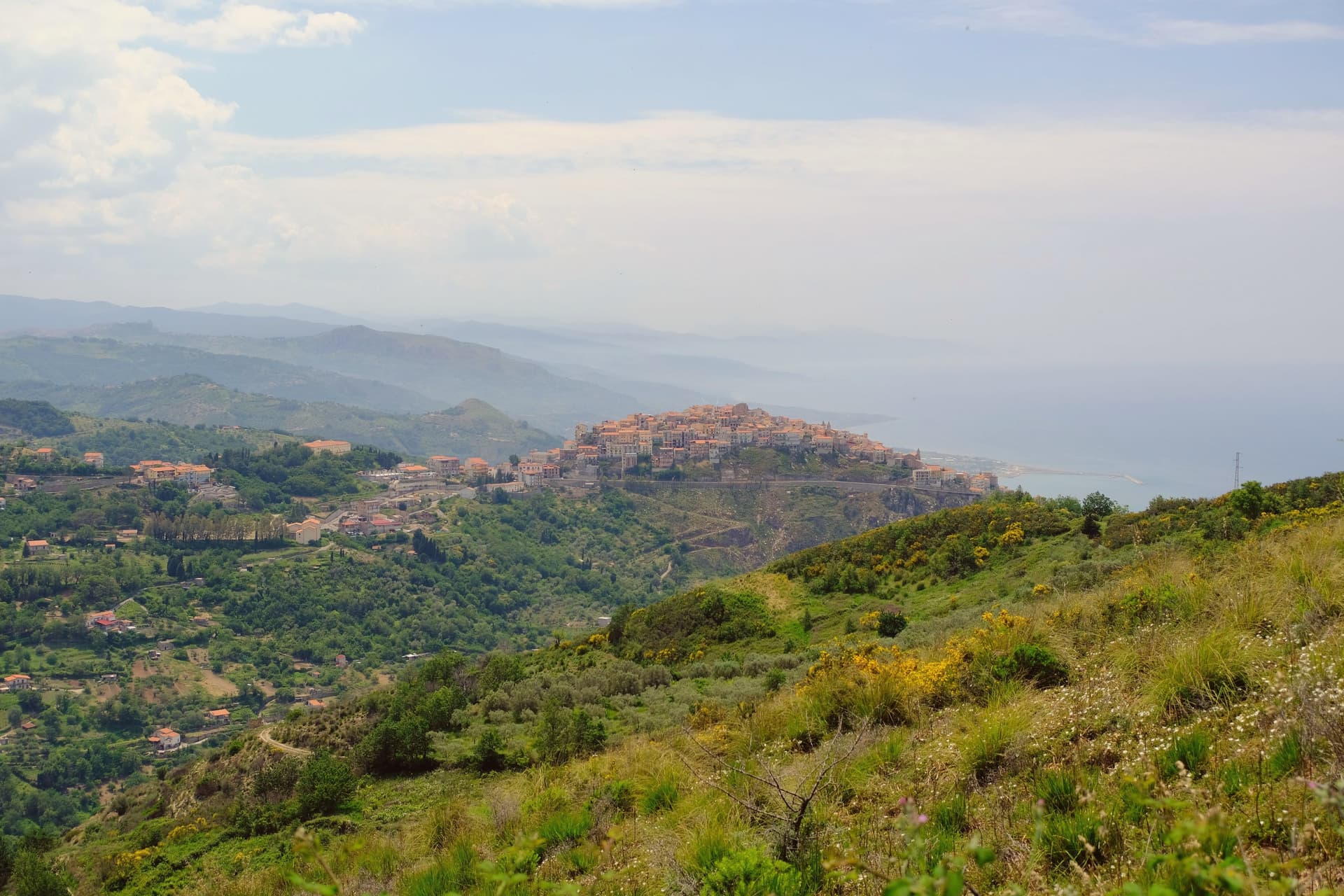
A hilltop borgo at 540 meters in pink Aluntina marble, founded by the Greeks and later Robert Guiscard's first Sicilian base.
- Best time
- Apr–Jun, Sep–Nov
- By car
- 1 h 53 min from Palermo
- Population
- 1,778
Known for
ALUNTINA MARBLE
Pink local marble quarried for centuries and used in the Aracoeli church, the central fountain and the interior of the Messina town hall.
FIRST NORMAN CASTLE
Robert Guiscard built his first Sicilian castle here in 1061 and used the town as the base for the eleventh-century Norman conquest of the island.
TEMPIO DI ERCOLE
Greek temple foundations from the fourth century BC support the Chiesa di San Marco, the layered Greek-Norman-Christian spine of the borgo.
When to visit
Best · Apr–Jun, Sep–Nov
- J11°
- F12°
- M13°
- A15°
- M20°
- J24°
- J27°
- A27°
- S24°
- O21°
- N17°
- D13°
- Best
- Hot or crowded
- Quiet
- Mostly closed
Daytime averages, 2020–2024. Weather data by Open-Meteo.com.
The festa: Marco, 31 July
Why come
The borgo sits on Mt. Castro, five kilometers from the Tyrrhenian coast. The Greeks founded it as Alontion, prosperous enough to mint its own currency, and the settlement they built has never fully left: what they raised became the base for what came after, layer on layer, rather than being cleared away for it.
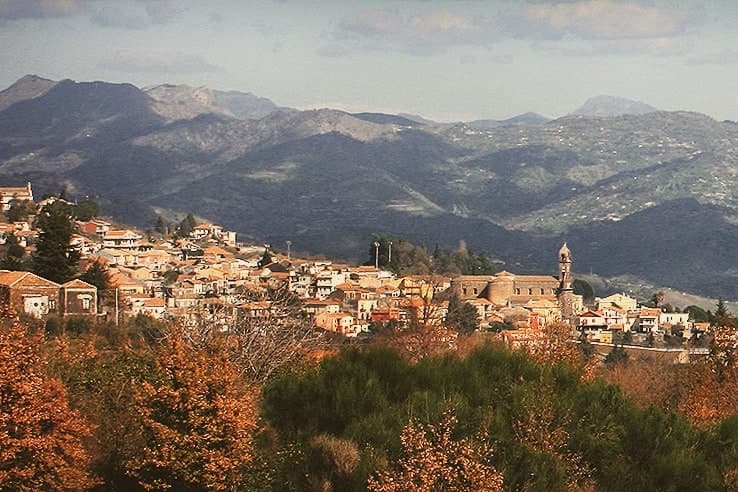
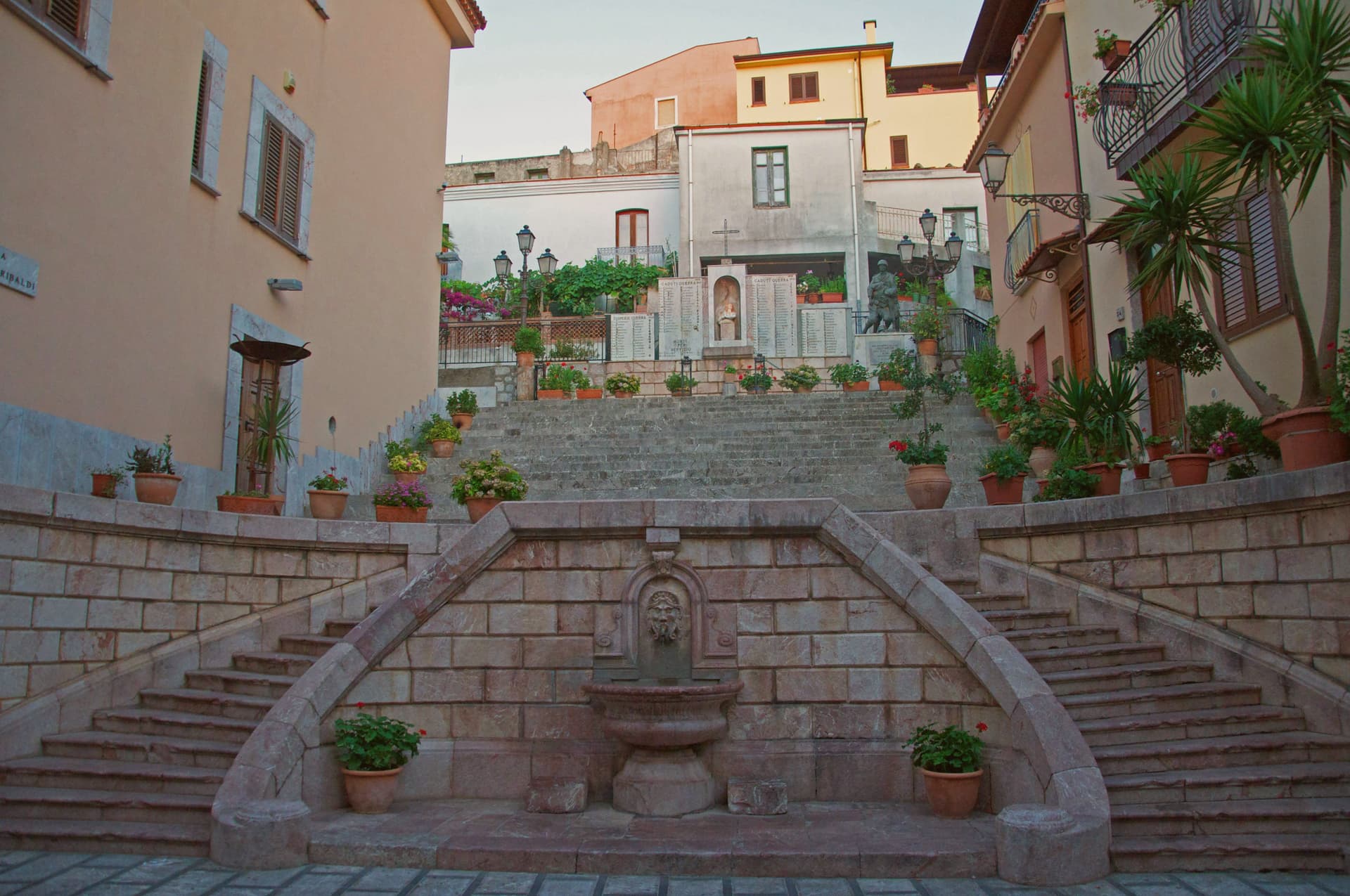
The upper town holds the ruins on Monte Rotondo, the lookout that gave the Normans command of the coast below. The historic center, walled and compact, holds twenty-two churches and is listed among the Borghi più belli d'Italia. Through all of it runs the same pink stone, quarried on the surrounding hills, cut for church interiors, piazza fountains and, beyond the town itself, for the interior of the Messina town hall. A place built repeatedly from its own ground: Greek temple, Norman stronghold and marble borgo standing on the same hill in the same rose-colored rock.
The Sunday letter
San Marco d'Alunzio is on our list. Its letter is still to come.
We are writing about all 1,000 of these towns, one at a time, in a free letter every Sunday: the photo, the food, the festa. That is our mission. Sign up and you will be there when San Marco d'Alunzio comes up. By Peter & Sophia, from Pietrasanta.
Read on
San Marco d'Alunzio in our articles
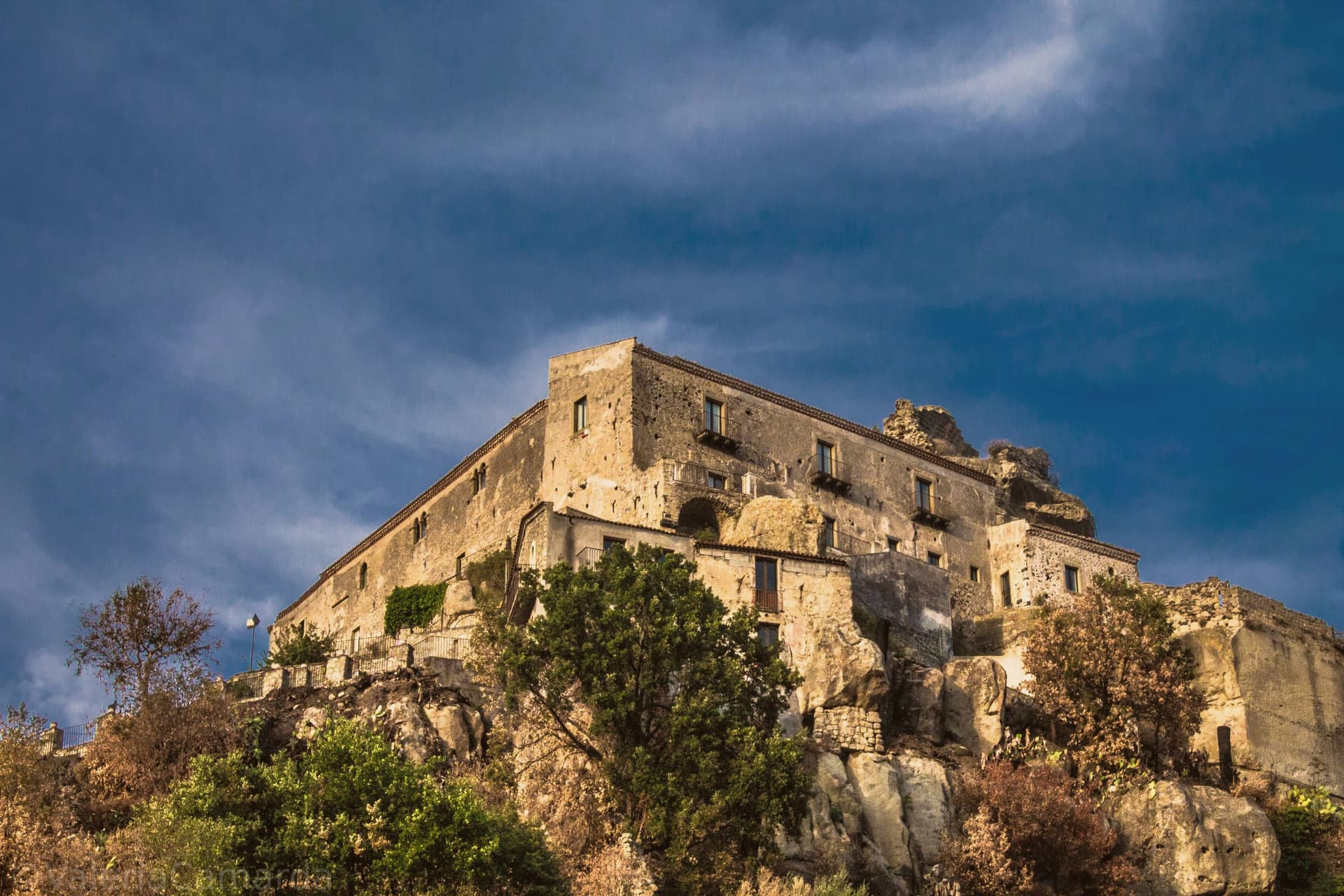
 The best small towns inside a nature park in Sicilia7 towns, San Marco d'Alunzio among them.
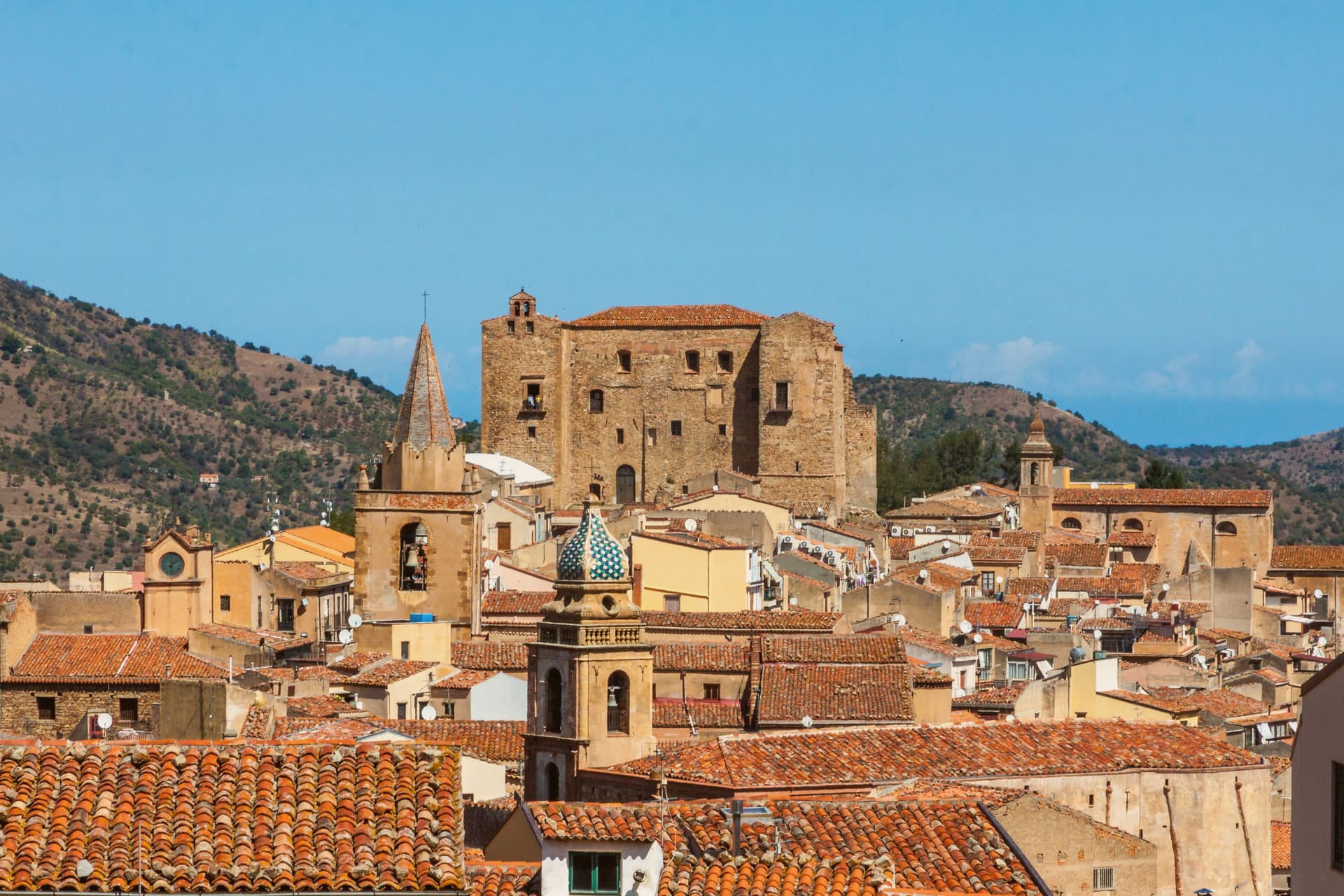
 The best towns inside a nature park that eat well in Sicilia7 towns, San Marco d'Alunzio among them.
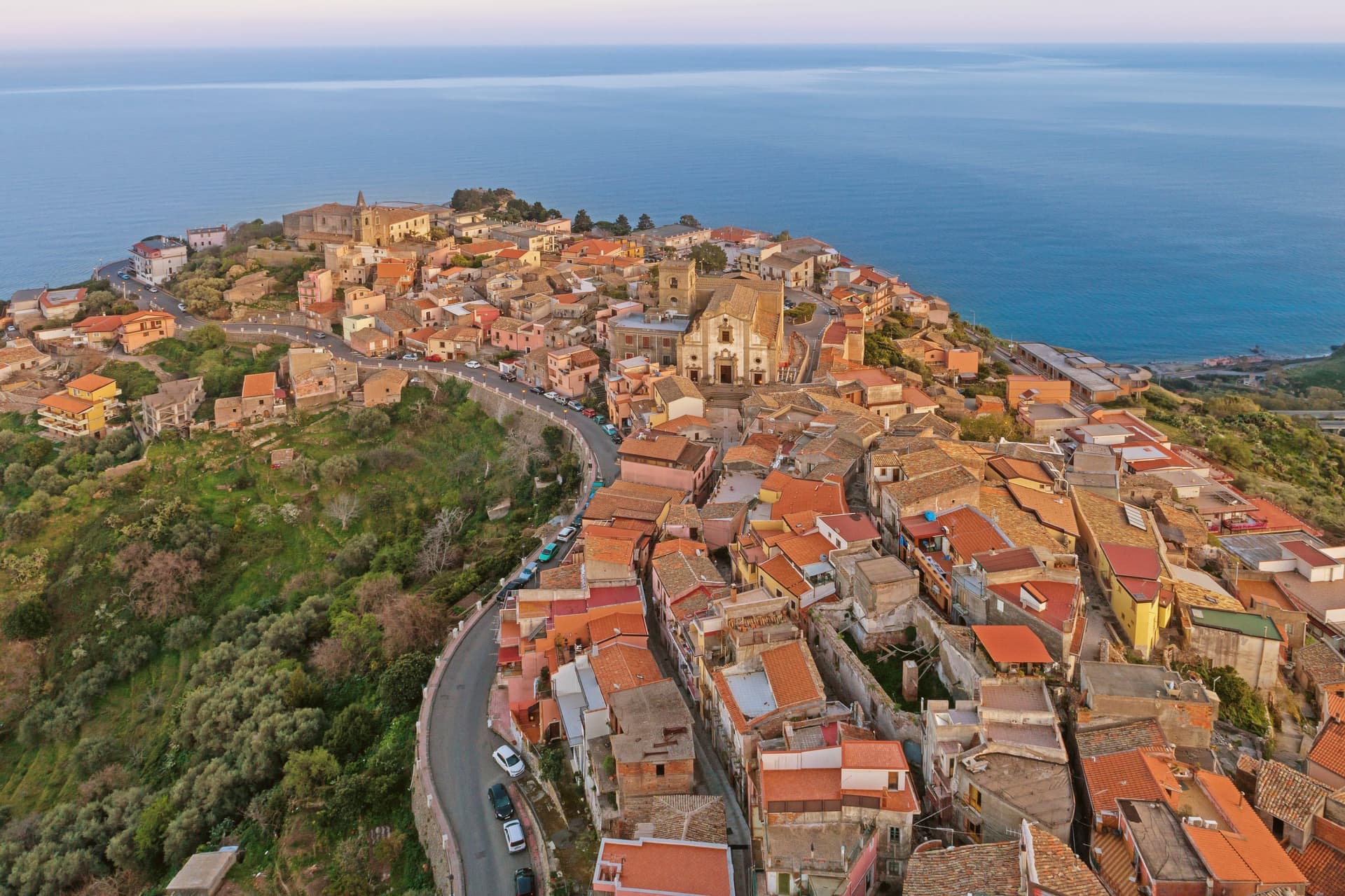
 The best towns that eat well within two hours of Palermo7 towns, San Marco d'Alunzio among them.
 The prettiest villages in the province of Messina7 towns, San Marco d'Alunzio among them.
How to get there
From Catania (CTA), about 2h 35m by car.
By car from the centre of Palermo 2 hours.
Coming by train into Messina Centrale? San Marco d'Alunzio is about 1h 27m away by road.
What to see
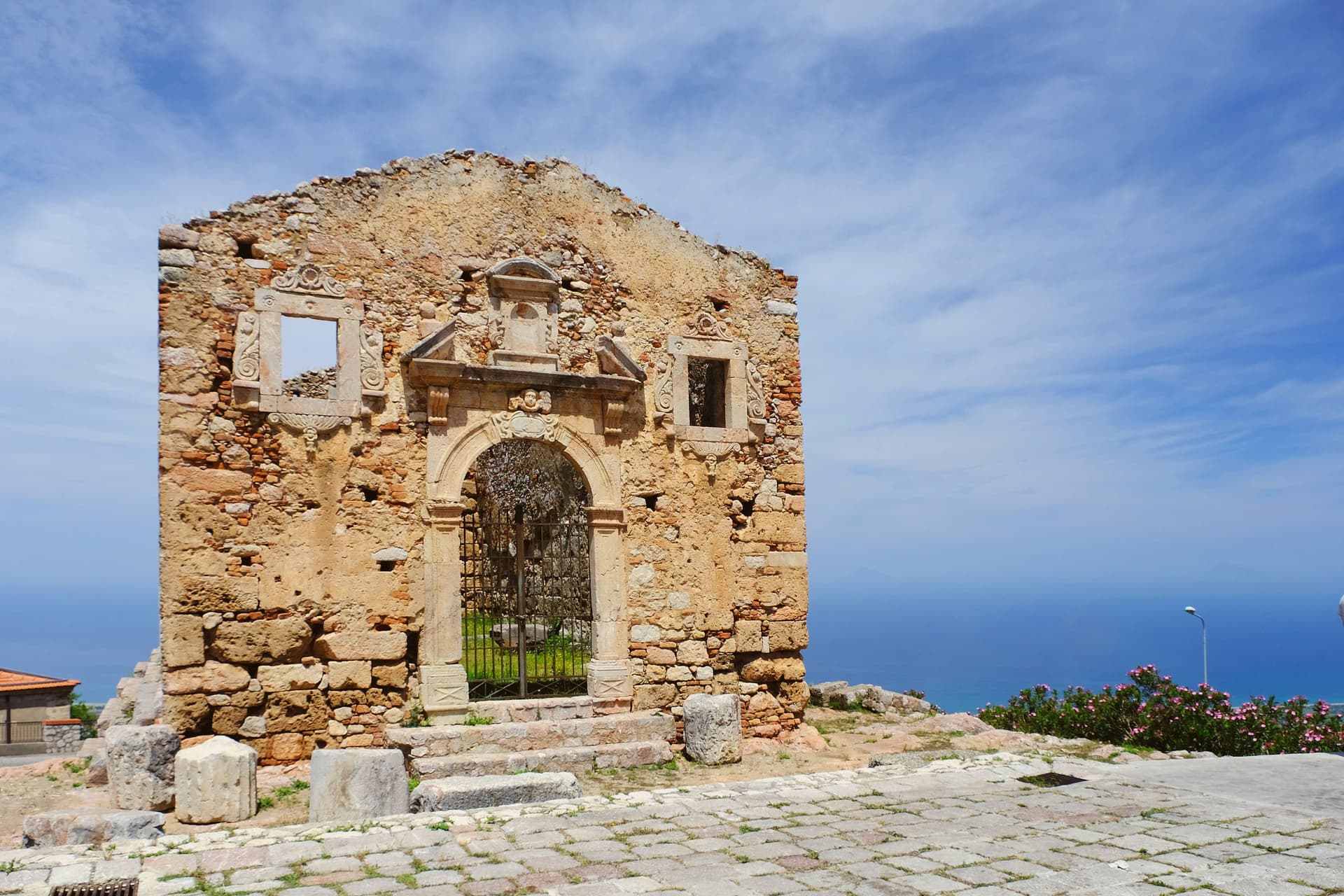
Tempio di Ercole
The foundations sit beneath the Chiesa di San Marco, making it the oldest visible structure in the borgo, its stones absorbed into the later church above.
Ruderi del Castello Normanno
Ruins on Monte Rotondo above the village, standing as the lookout point over the Tyrrhenian coast.
Chiesa di Santa Maria delle Grazie (Aracoeli)
Renaissance church built entirely in the local rose-colored stone, with elaborate marble carvings inside the chapel.
Piazza Aluntina
Central piazza with a monumental fountain in the same pink stone, the social heart of the rebuilt town.
Museo della Cultura e delle Arti Figurative Bizantine
Byzantine art museum housed in the former monastery of the Benedettine, with frescoes and icons from the Greek-Sicilian tradition.
The slow-trip planner
Building a trip? Find where San Marco d'Alunzio fits in a slow Italy circuit.
Answer five questions. We will shape a geographically coherent slow trip from the 1,000 Italian towns most travelers skip. Yours to save and share.
We recommend
Where to eat
Not our picks, but places the guides put their name to: a Michelin star, a Gambero Rosso fork, a Slow Food snail, a Michelin Key for the hotels. Worth a table, a counter, or a night when you pass through.
Demenna Luogo di RistoroRistorante
Demenna Luogo di Ristoro holds one Gambero Rosso fork (76/100).
Living here
- Population 1,778
- Remotei
- Pharmacy in town
- High school within a 30-minute drive
- Nearest airport Catania, 2 h 35 min drive
- Regional capital Palermo, 1 h 53 min drive
Common questions
- What is San Marco d'Alunzio known for?
- San Marco d'Alunzio is a hilltop borgo at 540 meters in pink Aluntina marble, founded by the Greeks and later Robert Guiscard's first Sicilian base.
- Where is San Marco d'Alunzio?
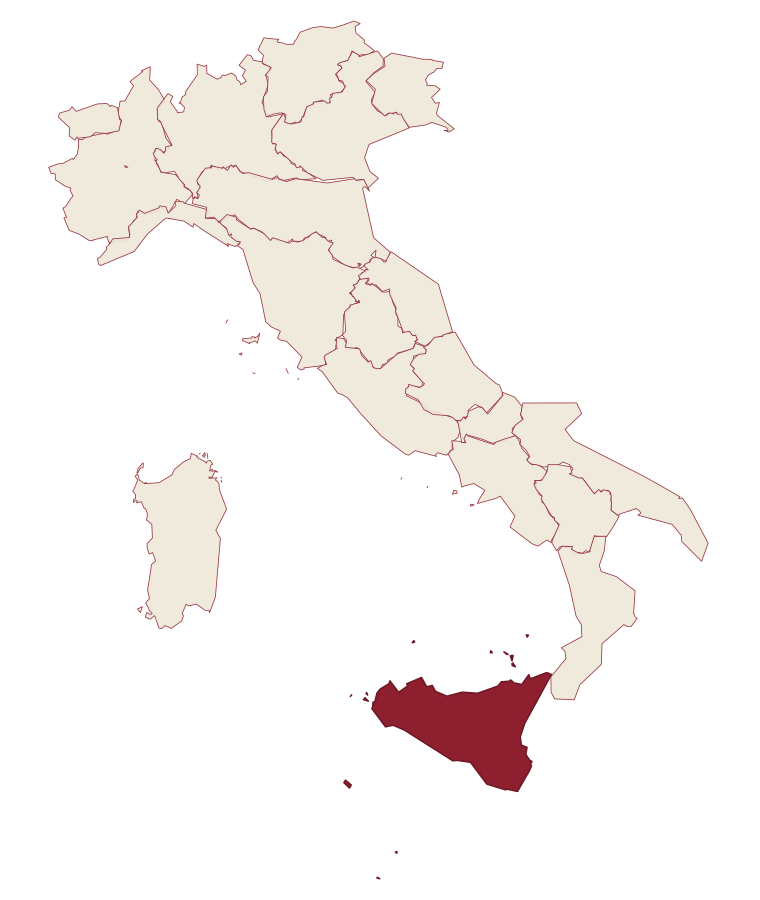
- San Marco d'Alunzio is a comune in the province of Messina, in Sicily.
- What is the nearest airport to San Marco d'Alunzio?
- Catania (CTA), about 2h 35m by car.
- How long is the drive from Palermo to San Marco d'Alunzio?
- About 2 hours by car.
- When is the best time to visit San Marco d'Alunzio?
- Best in Apr–Jun, Sep–Nov. August is the warmest month, averaging 27 degrees, and November the wettest, with about 16 rain days.
- Is there a sagra or a festival in San Marco d'Alunzio?
- The town keeps its patron saint's day: Marco, 31 July.
- Which other towns are like San Marco d'Alunzio?
- Sant'Alfio, Ferla and Mezzojuso.
- How many people live in San Marco d'Alunzio?
- 1,778 at the 2023 count.
Tags & datadesignations · numbers · sources
Recognised as
The numbers
- Elevation: 540 m
- Population: 1,778
- Surface area: 26.14 km²
These figures were compiled from public directories: ISTAT, OpenStreetMap and Wikidata, and from the official listings of the guides named on this page. Town details change; verify with official sources before you travel.
Similar
Towns like San Marco d'Alunzio
Sant'Alfio
Province: Catania
both inland in Sicily · both under 3,000 people
Ferla
Province: Siracusa
both inland in Sicily · both under 3,000 people
Mezzojuso
Province: Palermo
both inland in Sicily · both under 3,000 people
Novara di Sicilia
Province: Messina
both inland in Sicily · both under 3,000 people
Castiglione di Garfagnana
Province: Lucca
both under 3,000 people · both hill towns
Fornelli
Province: Isernia
both under 3,000 people · both hill towns
🎨 Borghi più belli d'Italia
More Borghi più belli d'Italia towns in Sicily
Agira
Province: Enna
Birthplace of the Greek historian Diodorus Siculus and burial site of 490 Canadian soldiers of the 1943 campaign.
Buccheri
Province: Siracusa
The highest village in the province of Syracuse, world capital of Tonda Iblea olive oil at the 2015 Sol d'Oro.
Calascibetta
Province: Enna
A promontory town at 691 meters facing Enna across a ravine, founded in the ninth century as a Muslim camp to besiege Byzantine Henna.
Castelmola
Province: Messina
A rock village at 529 meters directly above Taormina, the upper acropolis of ancient Tauromenium with a Norman castle and a 1947 almond-wine bar.
Castiglione di Sicilia
Province: Catania
A hill town on the north flank of Etna at 621 meters, base camp for the Alcantara valley and the volcano's most serious red wines.