
The best cheese towns within two hours of Bologna
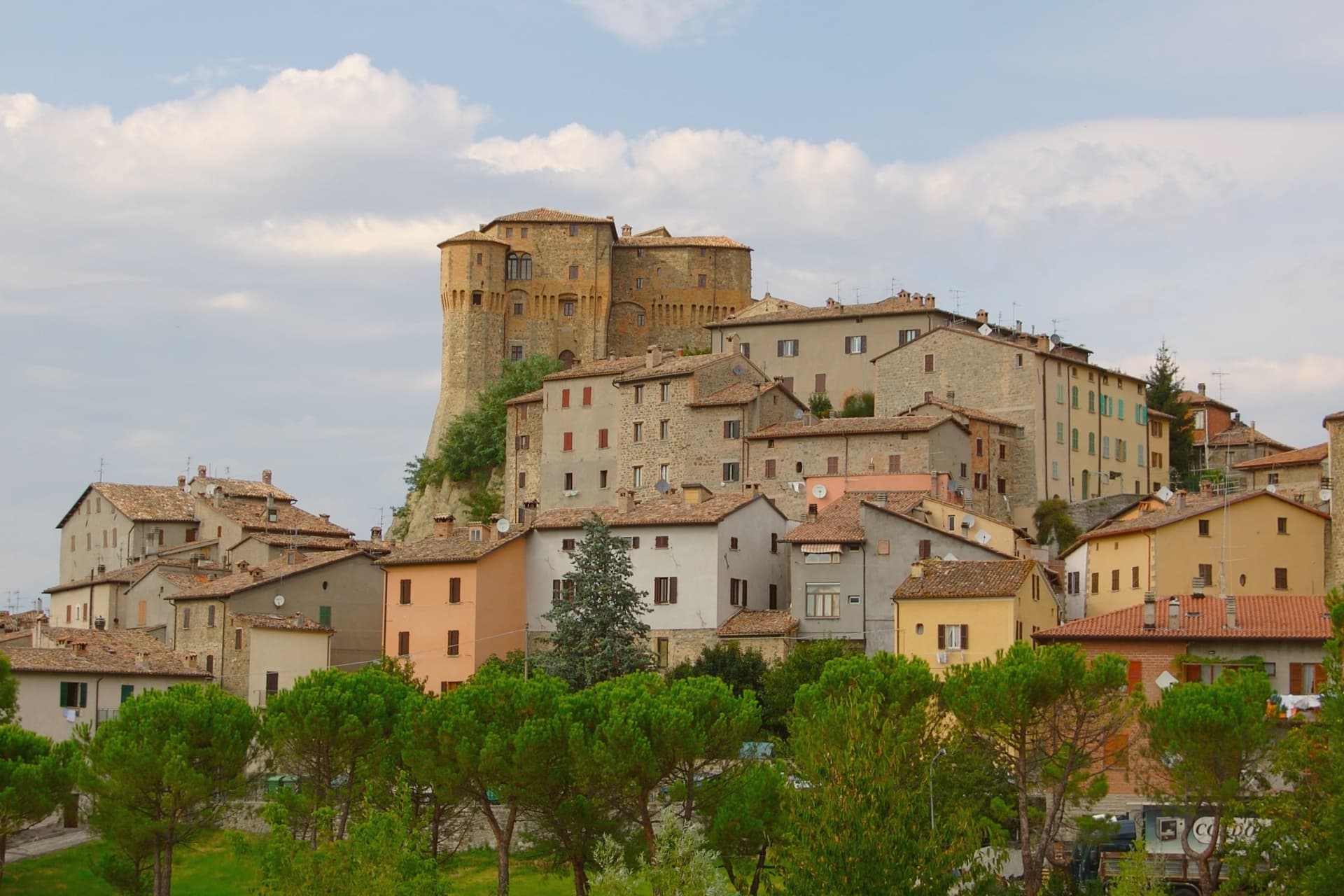
Cheese here is a matter of geography. The flat Po country north of Bologna, with its fog and its irrigated fodder, makes the hard grainy wheels that age in stacked warehouses; the clay hills to the south make soft, sour, spreadable Squacquerone that goes into piadina still warm; the sandstone ridges further inland bury cheese in tufa pits through the autumn and open them in November, when the whole town smells of it. The seasons matter. Spring milk and autumn milk taste different, and the people selling it will tell you so before you ask. The building stone changes with the cheese, brick and terracotta on the plain, pale sandstone and rough render in the hills.
Most visitors do their cheese-tasting in Parma, or on a dairy tour booked out of Bologna's own centre, and the mornings there run to a timetable: the copper vats at dawn, the brining room, the shop at the end. It is well organised and it is worth doing once. It is also, in high season, the same coach party moving from room to room, and the wheel you are photographed beside has been photographed several hundred times that week.
The production zones are much larger than the tour circuit. They stretch across the plain towards Mantua and up into the Apennine foothills, through market towns and ridge villages where the same protected cheeses are made and sold without anybody arranging a viewing platform. Fewer people go. The towns in this list all fall inside one of those zones, and each has a reason of its own to stop, a fortress, a thermal spring, a painted wall, a November fair.
Of the 87 communes we have mapped in a 120-minute drive of Bologna, 6 qualify as cheese towns: each sits inside the production zone of a protected cheese. The smallest, Sant'Agata Feltria, has 1,949 residents.
If you are still choosing, we have also written The best towns known for what they grow within 45 minutes of Bologna and The best wine towns within 75 minutes of Rimini.
Sant'Agata Feltria
Why visit Sant'Agata Feltria
Sant'Agata Feltria sits at 607 meters in the upper Valmarecchia, in the historic Montefeltro region eighty-five kilometers north of Perugia and twenty inland from the Adriatic. The outcrop behind the centro carries overhanging walls on three quarters of its perimeter and a thirty-meter drop from summit to base, and its fortress is tenth-century in origin, rebuilt in the fifteenth century for the Fregoso family of Genoa, who gave it their name and held it until the seventeenth century.
Before them the town belonged in turn to the Malatesta of Rimini and the Montefeltro of Urbino, each leaving their mark on a settlement whose stone houses cluster below the fortress along the main street, past the convent of San Girolamo. Inside the borgo, the theater opened in 1605 is one of the oldest still-active theaters in Italy.
Every Sunday in October the centro hosts the white truffle fair, running since 1985, the reason the town carries the Città del Tartufo designation. A hill town this small, held by three ruling families and still staging theater in a four-century-old hall, has kept more of its layered past standing than its size would suggest.
What to see in Sant'Agata Feltria
- Rocca Fregoso. Sandstone fortress on the Sasso del Lupo, rebuilt by Francesco di Giorgio Martini in 1474, with overhanging walls on three sides and a thirty-meter drop.
- Teatro Angelo Mariani. Wooden theater opened in 1605 inside the medieval Palazzo Comunale, one of the oldest active theaters in Italy, named for the conductor born here in 1821.
- Chiesa Collegiata. Sixteenth-century collegiate church with a Baroque interior, housing relics of Sant'Agata and the venerated wooden image known as the Madonna del Soccorso.
How to get to Sant'Agata Feltria
Rimini is roughly 57 minutes away by road.
Our tip
April through June brings green hills and clear views over the Valmarecchia toward the San Marino ridge. July and August touch thirty-two degrees and the borgo empties between two and five, though evenings at six hundred meters cool quickly. September brings the porcini and the run-up to the truffle fair; the four Sundays in October are the busiest weekends of the year, with the centro full of stalls and trucks from the surrounding farms.
San Leo
Why visit San Leo
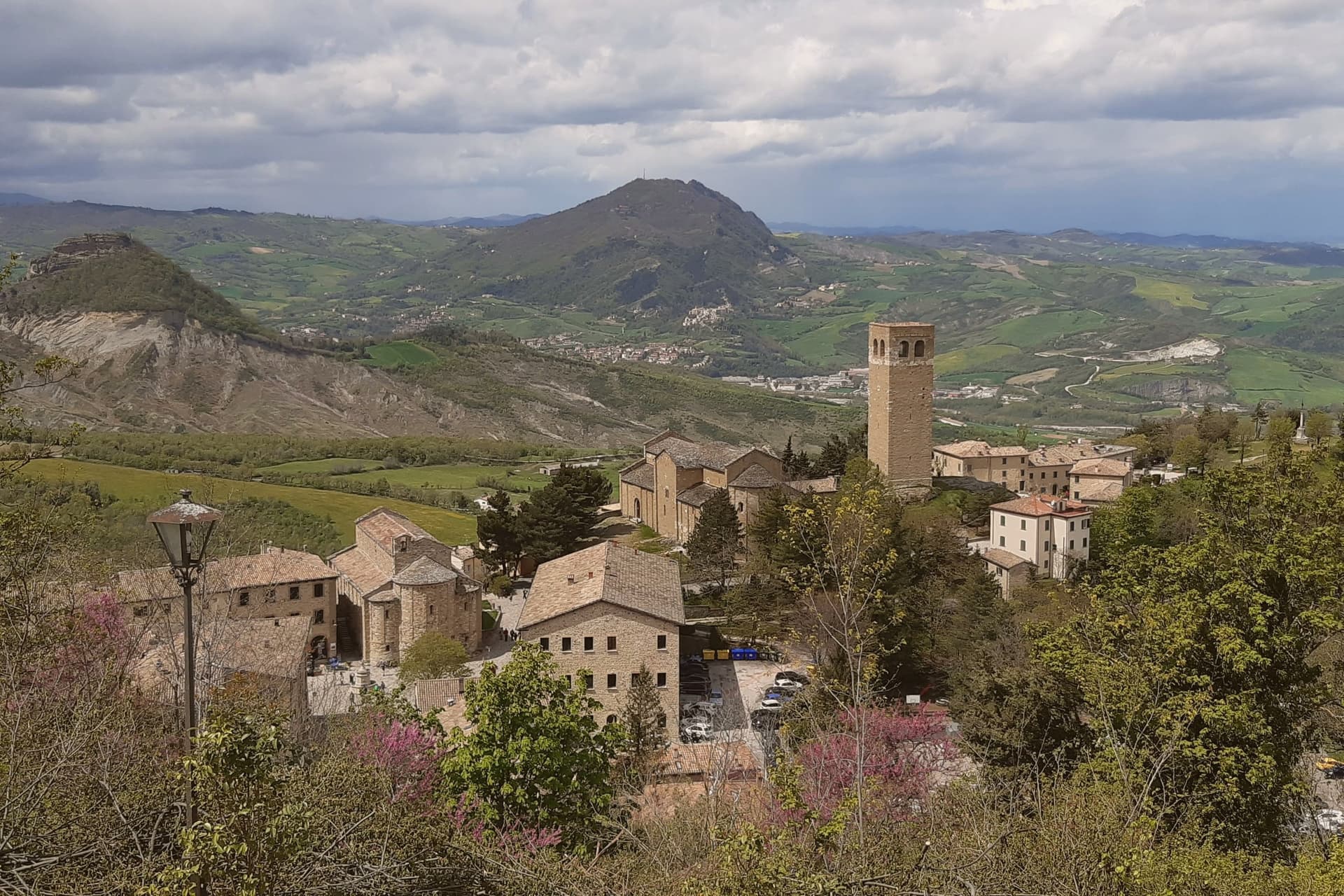
San Leo does not look quite real from below: a medieval town built on a single limestone outcrop rising straight out of the rolling Montefeltro hills southwest of Rimini, reached by one switchback road carved into the cliff face. The geography is the entire historical reason the town exists in its present form.
Saint Francis came in 1213 and received the gift of Mount La Verna from Count Orlando Cattani as a hermitage. The Hohenstaufen rebuilt an earlier fortress on the same rock in the 13th century, before the Renaissance-era rebuild that stands today, the work of Federico da Montefeltro's military architect between 1479 and 1502.
The fortress's notoriety came in 1791, when the Papal States turned it into a high-security prison for political dissidents. The most famous of them was an alchemist, occultist and Freemason who was the talk of late-Enlightenment Europe: held here by the Holy Office from 1791, he was dead in his cell by 1795 under circumstances never fully explained, and the cell itself still stands, windowless, with a single opening high above the floor once used to pass in food and remove waste.
Beyond the fortress on its rock, the town's religious core sits on the central piazza below: a 9th-century parish church, the oldest Romanesque building in Romagna, raised on reused Roman columns, stands beside a 12th-century sandstone Duomo built over a Lombard crypt. Together they anchor the lower town the way the fortress anchors the outcrop above it.
A 12th-century bell tower nearby gives the same panoramic sweep the fortress does, across the Montefeltro toward the Adriatic and toward San Marino, 12 km east and visible from both terraces. This is borderland: Emilia-Romagna, Marche and the Republic of San Marino meet here, and the kitchen mixes all three, piadina romagnola, passatelli in brodo, gnocchi al sugo di lepre and cappelletti, washed down with Sangiovese di Romagna or the local Albana DOCG white.
The town holds both the Borghi più belli d'Italia inscription and the Bandiera Arancione mark, and as with other hilltop fortress towns, the population has thinned with time, from 5,500 residents in 1951 to 2,820 today. What the rock has always offered, defensibility, isolation, a commanding view, is also what has slowly emptied it: the same vertical geography that made San Leo impossible to take is what makes it hard to keep living in.
What to see in San Leo
- Forte di San Leo (Francesco di Giorgio Martini, 1479–1502). Rebuilt by Federico da Montefeltro's military architect directly on top of the outcrop, reached by the single switchback road cut into the cliff. Cagliostro's cell is visitable inside. The defining sight of the town.
- Pieve di Santa Maria Assunta + Duomo. The parish church and the adjacent Duomo sit side by side on the central piazza, the older building raised on reused Roman columns, the Duomo built in sandstone over a Lombard crypt with a single nave.
- Torre Civica + panorama. 12th-c bell tower with the panoramic view across the Montefeltro toward the Adriatic + San Marino (12 km east, visible from the same terrace).
How to get to San Leo
Rimini is roughly 37 minutes away by road.
Our tip
San Leo is best April–June and September–October — the Forte and the Pieve are open year-round, but the single switchback road up the cliff is unpleasant in heavy rain and can close briefly in winter snow. October is the harvest in the Sangiovese hills around the Montefeltro. Summer is dry and the panoramic view at sunset toward San Marino is the season's highlight.
Dozza
Why visit Dozza
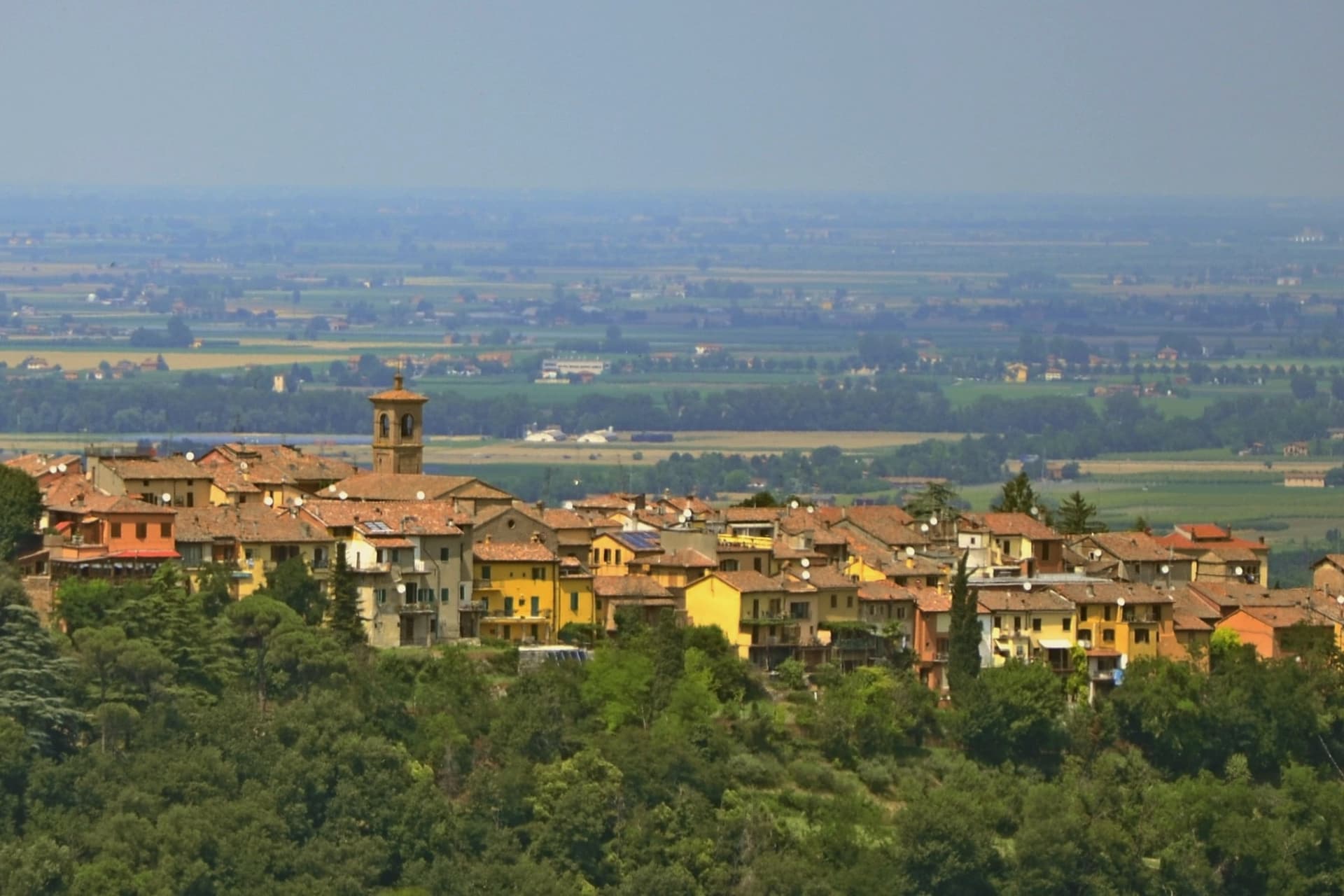
Dozza sits on a low ridge at 190 meters above the Sellustra valley, six kilometers from Imola and twenty-five southeast of Bologna. The medieval village runs along a single curved spine of stone houses, with the Rocca Sforzesca closing the upper end.
Caterina Sforza rebuilt the fortress at the end of the fifteenth century on the remains of earlier Bolognese defences; the Malvezzi-Campeggi family turned it into a palazzo in the late sixteenth century, and the cellars now hold the Enoteca Regionale dell'Emilia-Romagna, which curates the wines of the whole region. The Biennale del Muro Dipinto began in 1960, when the opening of the Rocca to the public was paired with a contemporary-painting competition that worked directly on the village walls.
Over sixty years later, more than 100 murals cover the borgo, repainted and added to every other year by invited Italian and international artists. The municipality holds Borghi più belli and Bandiera Arancione recognition.
Population 6,582.
What to see in Dozza
- Rocca Sforzesca. Late fifteenth-century fortress rebuilt by Caterina Sforza, transformed into a palazzo by the Malvezzi-Campeggi family at the end of the 1500s.
- Muro Dipinto. Over 100 murals on the house walls of the medieval village, repainted and added to every two years since the first Biennale in 1960.
- Enoteca Regionale dell'Emilia-Romagna. Regional wine cellar inside the Rocca's underground levels, curating about 800 labels from across the region's DOC and DOCG zones.
How to get to Dozza
Bologna is roughly 37 minutes away by road.
Our tip
April through June and September through October are the working months in Dozza. The murals look best in oblique morning or late-afternoon light, and the Sellustra valley below stays green into early summer. The Biennale del Muro Dipinto runs in September of odd-numbered years and is when the borgo is fullest, with painters working on scaffolding through the whole month.
Castel San Pietro Terme
Why visit Castel San Pietro Terme
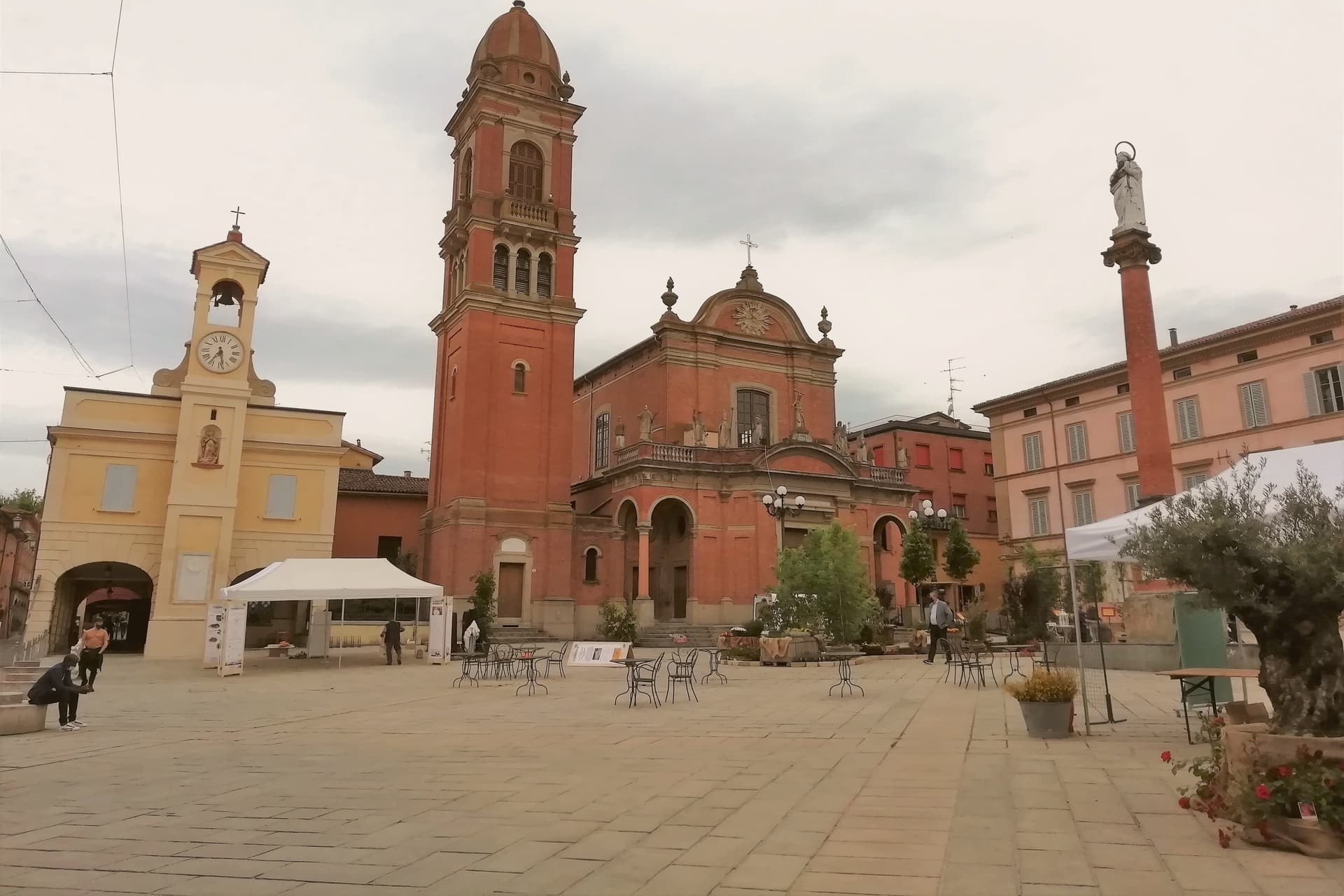
The town sits on the Sillaro river, which marks the historic border between Emilia and Romagna, twenty kilometers east of Bologna on the Via Emilia. It was founded as a Bolognese castrum in 1200, and the walled core still follows that original plan, with the river bridge on one edge and the road toward Imola leading out past the walls to the pilgrimage shrine beyond.
Castel San Pietro also joined the Città dell'Olio network for its hillside olive cultivation, a rural counterpart to the spa and civic life inside the walls. The Conservatorio Santa Caterina, founded in 1741, is one of the older female educational institutions still active in the region, sitting inside the same historic core as the gateway and the town hall.
The town reads as two things held together: a walled medieval seat on a border river, and a spa destination whose waters predate the walls by decades. Both draw on what was already there long before either was built up for visitors.
Il Grifone, Osteria La Civichella, Gastarea have been named by a guide.
What to see in Castel San Pietro Terme
- Cassero. The gateway stands at the southern edge of the old walls, its stone face marking what was once the main entry into the castrum. Inside, the civic theater now occupies the space, so the structure that once controlled access to the town now hosts its audiences.
- Terme di Castel San Pietro. The complex draws on sulphurous, ferruginous and salt-bromine-iodide springs, with the first establishment opened in 1870. The waters run year-round from the same sources used centuries before the modern building existed.
- Santuario del Crocifisso del Piratello. Pilgrimage shrine on the Via Emilia toward Imola, built around a fifteenth-century crucifix and decorated by Innocenzo da Imola. It drew pilgrim traffic from across northern Emilia, standing apart from the walled town on the road out toward Romagna.
How to get to Castel San Pietro Terme
There is a railway station in the town, so you can arrive without a car and never need one while you are here. Bologna is roughly 39 minutes away by road.
Our tip
Castel San Pietro Terme runs all twelve months because the thermal water does. Spring and autumn are the easier months for walking the centro storico and the Sillaro valley, with mild light and the olive groves on the hill above town green or harvest-coloured. June through August touches the low thirties and humid, but the spa runs longer hours in summer and the riverside frazione of Osteria Grande stays cool.
Mantova
Why visit Mantova
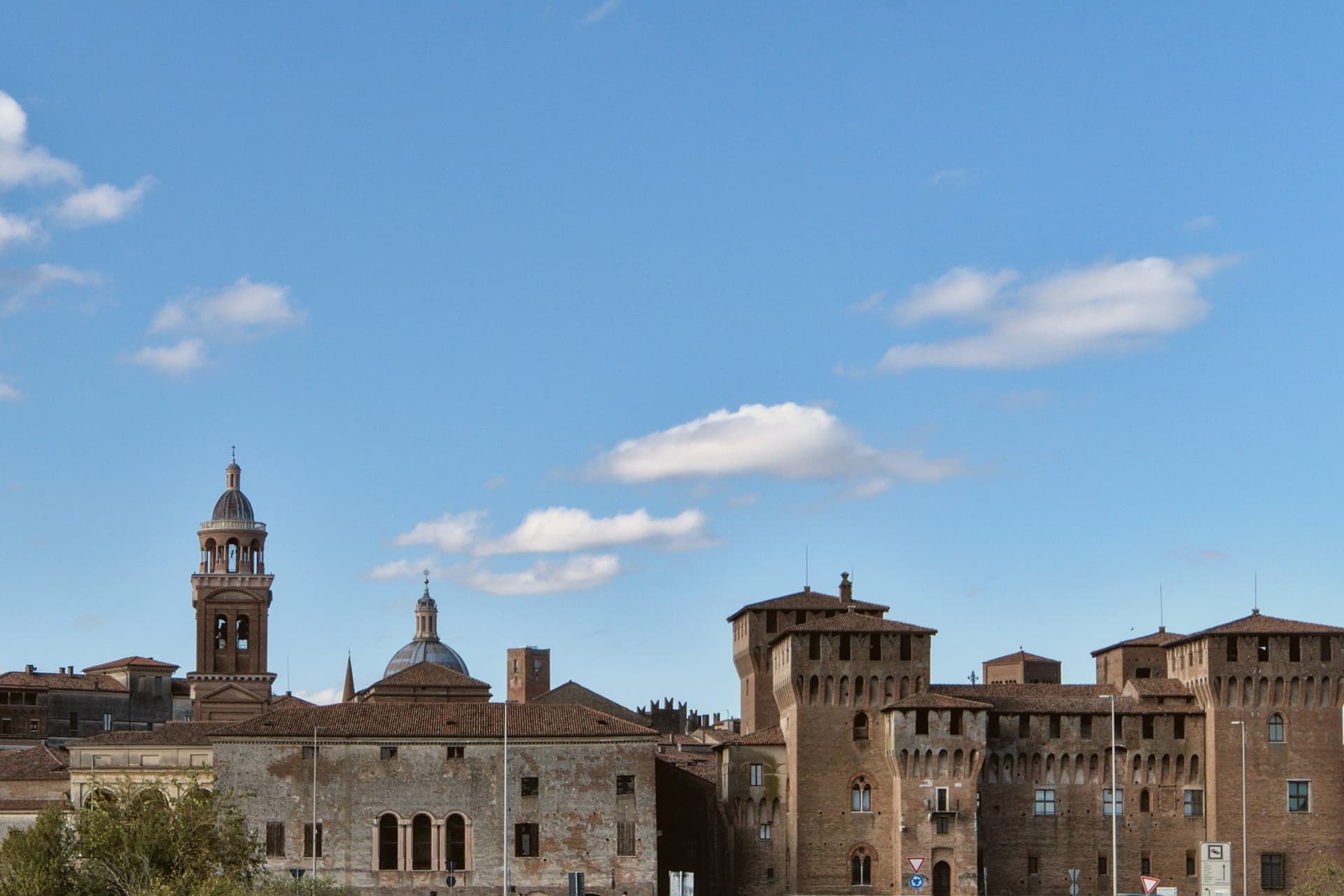
Mantova sits at 19 meters on a peninsula in the Mincio, halfway between Milan and Venice. In the twelfth century the river was dammed into three artificial lakes, Superiore, di Mezzo and Inferiore, which still ring the city on three sides and worked as its defence for six centuries.
From 1328 to 1707 it was the seat of the Gonzaga. The Palazzo Ducale they assembled across that span covers 34,000 square meters between Piazza Sordello and Lago di Mezzo, with over a thousand rooms; the Camera degli Sposi, frescoed by Andrea Mantegna between 1465 and 1474, is the heart of that complex.
Outside the walls, Federico II Gonzaga commissioned Giulio Romano to build Palazzo Te between 1525 and 1535: a pleasure villa with the Sala dei Giganti, whose painted Olympus collapses on the viewer from every wall. Mantua and Sabbioneta were jointly inscribed by UNESCO in 2008.
The city was Italian Capital of Culture in 2016.
Lo Scalco Grasso, Sücar Brüsc, Il Cigno and 2 more have been named by a guide.
What to see in Mantova
- Palazzo Ducale. Gonzaga ducal complex of 34,000 square meters between Piazza Sordello and Lago di Mezzo, with over a thousand rooms across four centuries of additions.
- Camera degli Sposi. Frescoed chamber by Andrea Mantegna inside the Palazzo Ducale, painted between 1465 and 1474, with an illusionistic oculus on the ceiling.
- Palazzo Te. Suburban pleasure villa built between 1525 and 1535 by Giulio Romano for Federico II Gonzaga, with the Sala dei Giganti and Sala di Amore e Psiche.
How to get to Mantova
There is a railway station in the town, so you can arrive without a car and never need one while you are here. Verona is roughly 39 minutes away by road.
Our tip
April through June and September into October are the months Mantova works best. The lakes hold light all day, the Palazzo Ducale is walkable without summer queues, and the surrounding bike paths to Peschiera del Garda run sixty kilometers along the Mincio. July and August get humid and still on the plain, with mosquitoes off the lakes and afternoons that empty the centro storico. Festival della sbrisolona e dei dolci italiani falls in October.
Imola
Why visit Imola
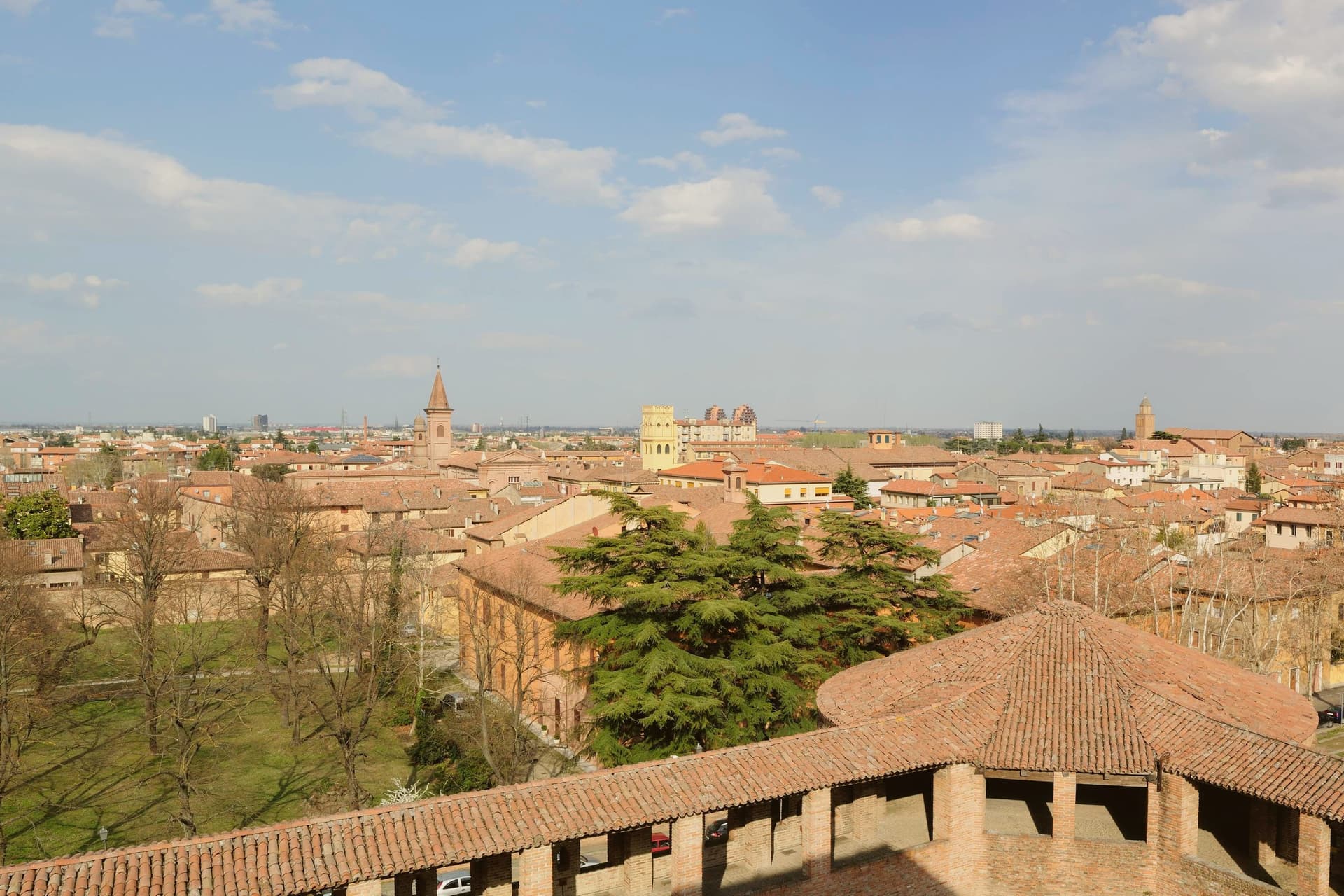
Imola is two cities sharing a name. The medieval one is a quietly handsome Romagna brick town 35 km southeast of Bologna along the Via Emilia, with the Rocca Sforzesca (rebuilt by Caterina Sforza in 1473–1499 — the Tigress of Forlì, who held this fortress through the Borgia siege of 1500) anchoring the centro.
The Palazzo Tozzoni museum, the 11th-century Cattedrale di San Cassiano with its crypt of the city's patron, the Palazzo Sersanti on the central piazza, and the medieval grid of porticoed brick streets all read as a smaller-scale Bologna. The OTHER Imola is the Autodromo Enzo e Dino Ferrari — the 4.9-km F1 circuit on the south bank of the Santerno, built 1953 and named for Enzo Ferrari and his son Dino after Dino's death.
It hosted the San Marino Grand Prix every May from 1981 to 2006 (and again 2020–present), and is the circuit where Ayrton Senna died in 1994 at the Tamburello corner — a memorial still stands there. The Emilia Romagna Grand Prix in April–May is the city's biggest tourist event of the year.
Outside race weekends the circuit is a public park; locals jog the track. The food is Romagna: piadina romagnola (the city is Città dell'Olio, and the local Brisighella Nostrana di Brisighella DOP olive oil is what dresses it), passatelli in brodo, cappelletti, Sangiovese di Romagna from the surrounding hills, and the local nocino walnut liqueur made by every grandmother in the foothills.
San Domenico, Semplice have been named by a guide.
What to see in Imola
- Rocca Sforzesca. Caterina Sforza's 1499 four-towered brick fortress at the centro's edge — the Tigress of Forlì held it against Cesare Borgia in 1500. Museum of arms and ceramics inside.
- Autodromo Enzo e Dino Ferrari. The 4.9-km F1 circuit on the Santerno. Senna memorial at Tamburello. Open as a public park outside race weekends — locals jog the track.
- Cattedrale di San Cassiano + crypt. 11th-c cathedral with the city patron's crypt; the Madonna del Piratello pilgrimage church just outside the walls is a major regional sanctuary.
How to get to Imola
There is a railway station in the town, so you can arrive without a car and never need one while you are here. Forlì is roughly 34 minutes away by road.
Our tip
Imola is best April–June and September–October. The Emilia Romagna Grand Prix (last weekend April / first weekend May) fills every hotel for 80 km — wonderful if you're going, brutal if you're not. Summer is hot and sticky. Baccanale Imola falls in October.
More from Anywhere Italy
- The best towns known for what they grow within 45 minutes of Bologna
 The best wine towns within 75 minutes of Rimini
 The best hot-spring towns within 90 minutes of Bologna
 The best towns that eat well within an hour of Bologna
 The best towns you can reach by train within 45 minutes of Bologna
- The best hot-spring towns within two hours of Padua