
Lazio · Frosinone
San Donato Val di Comino
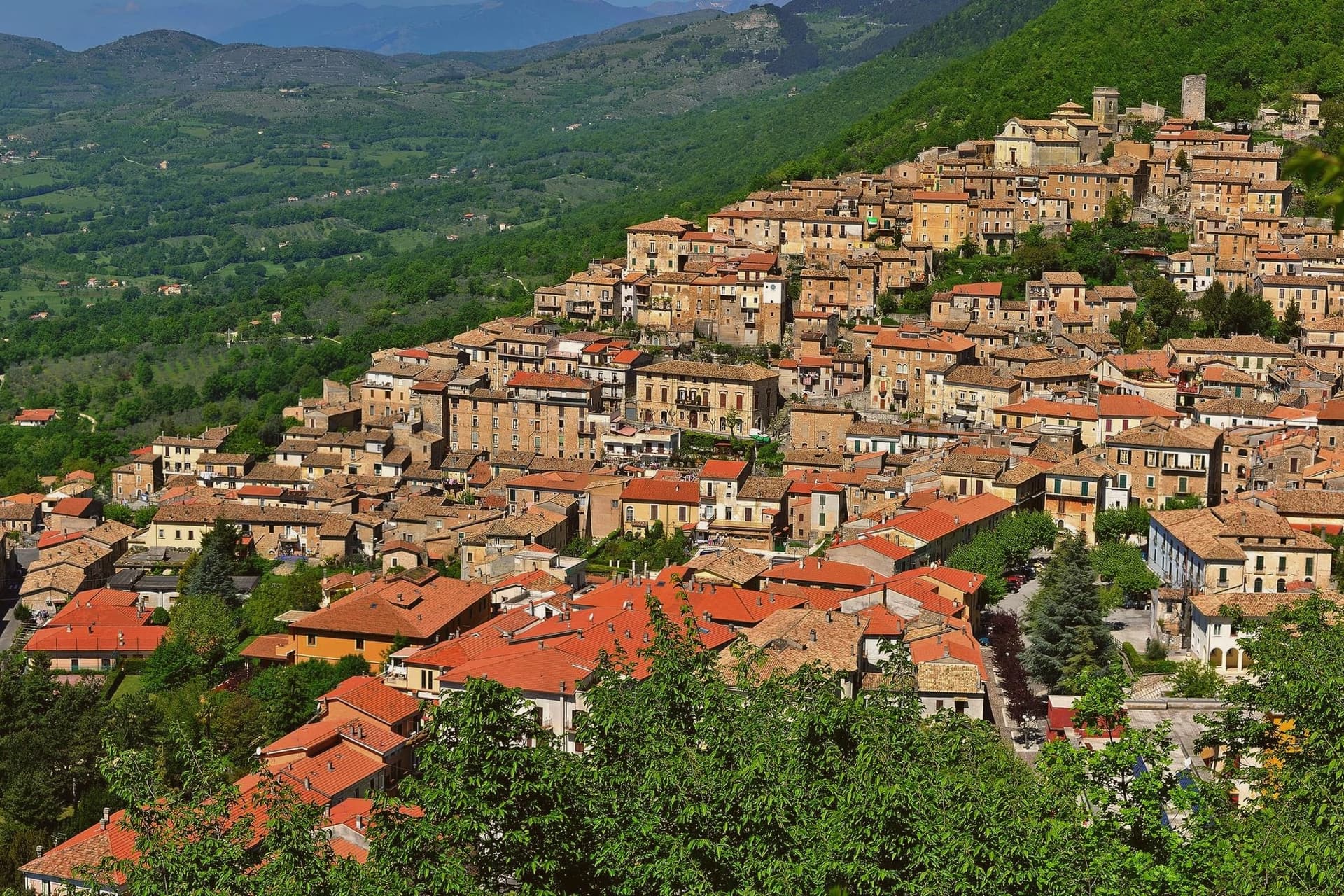
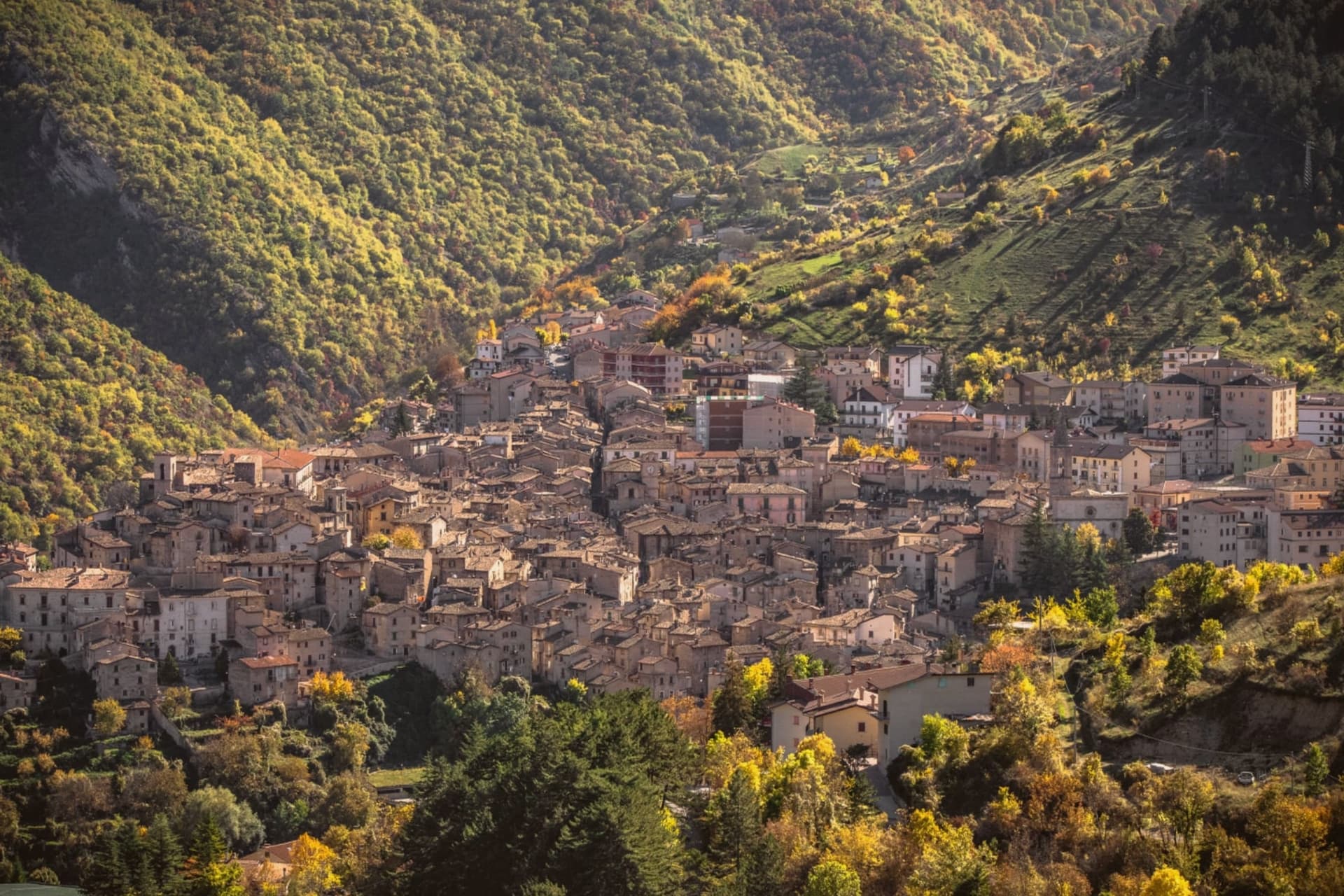
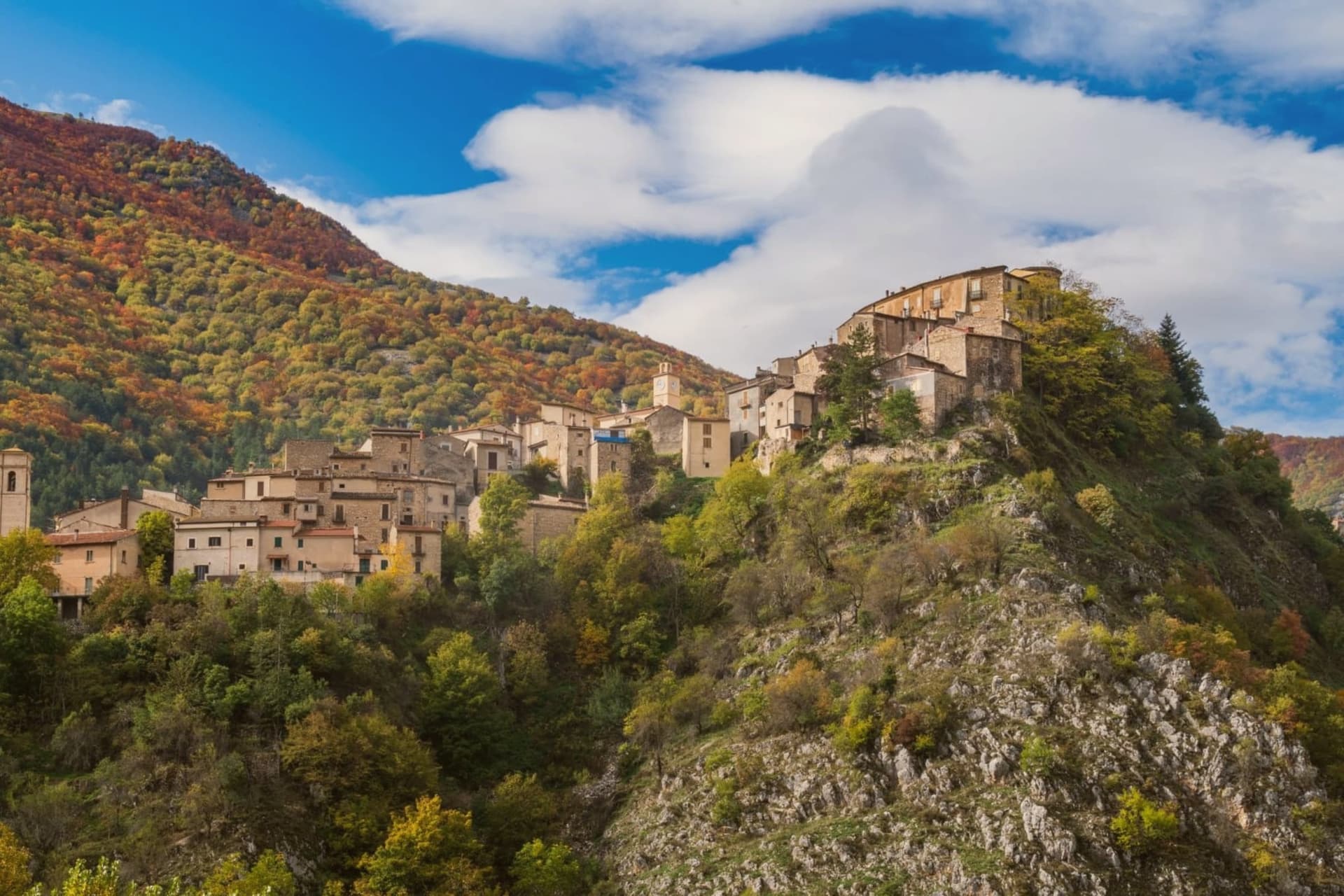
A medieval village at 728 meters at the gateway to Forca d'Acero, the pass into the Abruzzo National Park.
- Best time
- May–Oct
- By car
- 1 h 51 min from Naples
- Population
- 1,888
Known for
FORCA D'ACERO
Pass at 1,538 meters above the village, the most photographed beech forest in central Italy in October.
CASA DELLA MEMORIA
Center documenting the 1940 internment of foreign Jews and the medieval Jewish community of the village.
PARK GATEWAY
Last Lazio village before the Abruzzo, Lazio and Molise National Park, the access point for the Camosciara trails.
When to visit
Best · May–Oct
- J8°
- F10°
- M11°
- A14°
- M19°
- J24°
- J29°
- A28°
- S23°
- O18°
- N13°
- D9°
- Best
- Hot or crowded
- Quiet
- Mostly closed
Daytime averages, 2020–2024. Weather data by Open-Meteo.com.
The festa: Donato d'Arezzo, 7 August
Why come
San Donato Val di Comino sits at 728 meters on the eastern wall of the Val di Comino, the last Lazio village before the Forca d'Acero pass crosses into Abruzzo at 1,538 meters. The Samnite town of Cominium stood near here until the Romans destroyed it in 293 BC. The current village formed around the Church of San Donato in the 12th century.
The Jewish community here is among the better-documented in southern Italy: forced to wear the badge in the 13th century, expelled and readmitted through the medieval period, and in 1940 the village became one of the internment locations chosen by the Fascist regime for foreign Jews, a story documented in the Casa della Memoria. The position at the foot of the Forca d'Acero pass makes the village the standard starting point for climbing into the beech forests and the Pescasseroli plateau on the Abruzzo side.
The Sunday letter
San Donato Val di Comino is on our list. Its letter is still to come.
We are writing about all 1,000 of these towns, one at a time, in a free letter every Sunday: the photo, the food, the festa. That is our mission. Sign up and you will be there when San Donato Val di Comino comes up. By Peter & Sophia, from Pietrasanta.
Read on
San Donato Val di Comino in our articles
How to get there
From Naples / Salerno (NAP), about 1h 46m by car.
Rome (FCO) is about 2h 31m away.
By car from the centre of Naples 1h 51m or Pescara 2 hours.
What to see
Centro storico
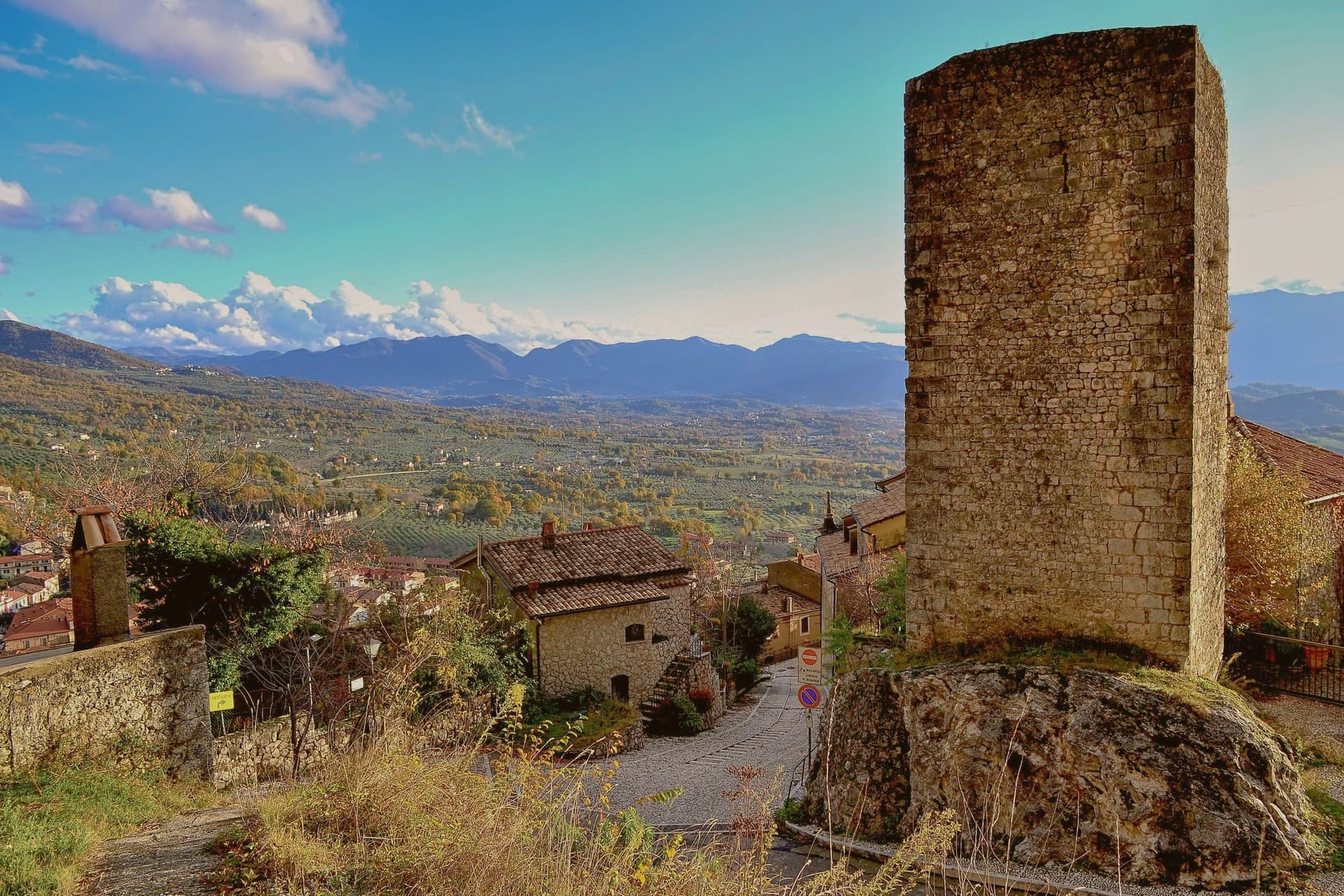
Medieval village at 728 meters, built around the Church of San Donato from the 12th century, encircled by Bourbon-era walls.
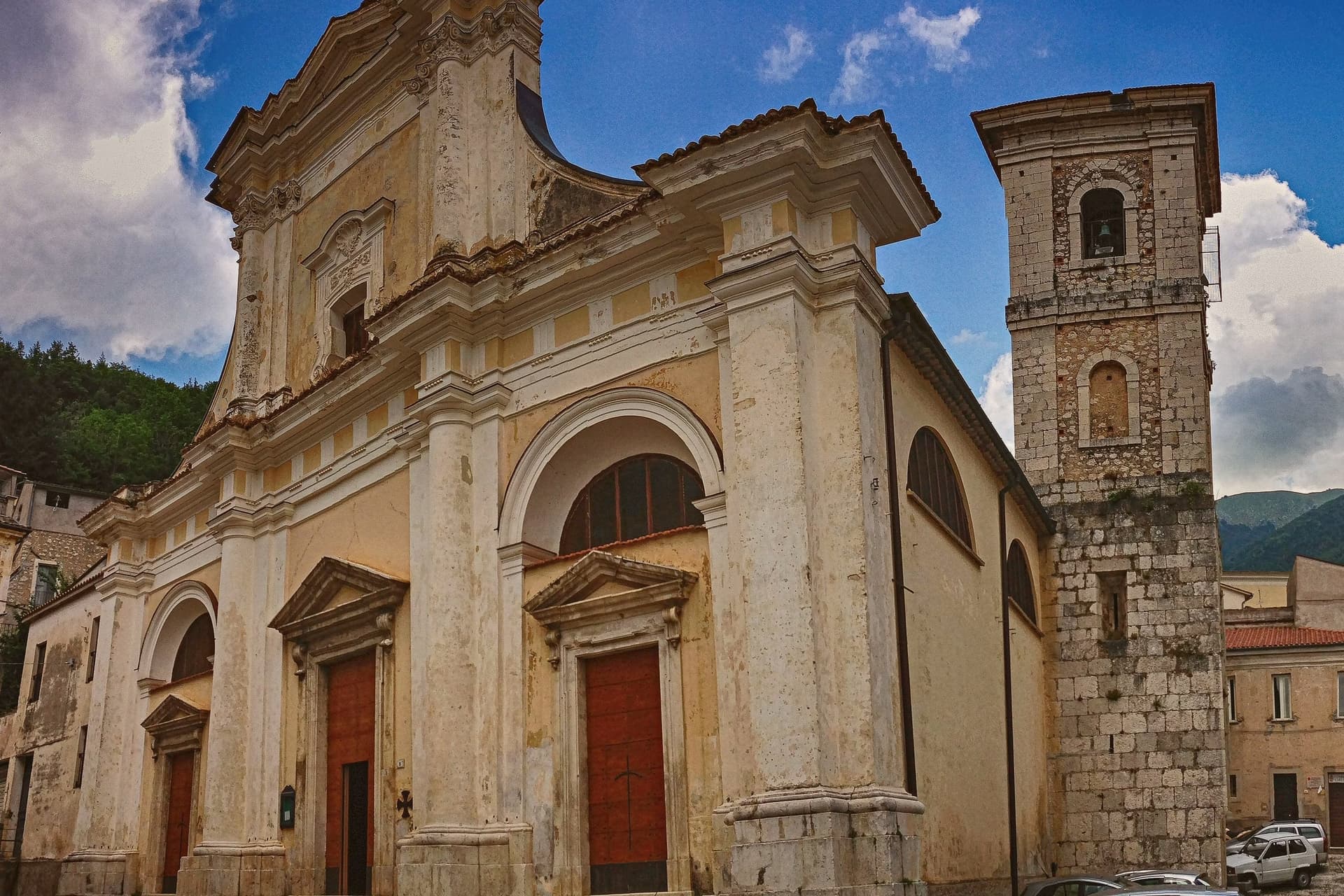
Chiesa di San Donato
Parish church on the site of the 12th-century original, the nucleus around which the village formed.
Casa della Memoria
Documentation center on the 1940 internment camp for foreign Jews and on the village's medieval Jewish community.
Forca d'Acero
Mountain pass at 1,538 meters above the village, the road into the Parco Nazionale d'Abruzzo and the famous autumn beech forest.
Parco Nazionale d'Abruzzo, Lazio e Molise
Italy's second-oldest national park, with trails from the village toward Camosciara, Opi and Pescasseroli.
The slow-trip planner
Building a trip? Find where San Donato Val di Comino fits in a slow Italy circuit.
Answer five questions. We will shape a geographically coherent slow trip from the 1,000 Italian towns most travelers skip. Yours to save and share.
We recommend
Where to eat
Not our picks, but places the guides put their name to: a Michelin star, a Gambero Rosso fork, a Slow Food snail, a Michelin Key for the hotels. Worth a table, a counter, or a night when you pass through.
Osteria FiccanasoTrattoria
Osteria Ficcanaso holds one Gambero Rosso prawn.
Living here
- Population 1,888
- In-betweeni
- Pharmacy: none mapped
- High school within a 30-minute drive
- Nearest airport Naples / Salerno, 1 h 46 min drive
- Regional capital Roma, 2 h 0 min drive
Common questions
- What is San Donato Val di Comino known for?
- San Donato Val di Comino is a medieval village at 728 meters at the gateway to Forca d'Acero, the pass into the Abruzzo National Park.
- Where is San Donato Val di Comino?
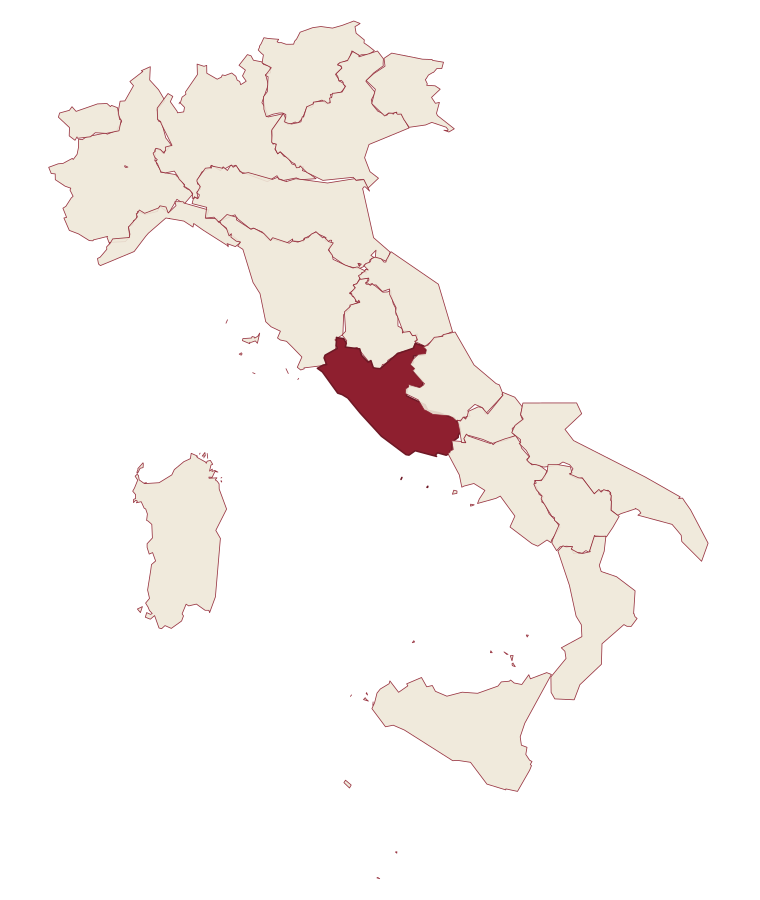
- San Donato Val di Comino is a comune in the province of Frosinone, in Lazio.
- What is the nearest airport to San Donato Val di Comino?
- Naples / Salerno (NAP), about 1h 46m by car.
- How long is the drive from Naples to San Donato Val di Comino?
- About 1h 51m by car.
- When is the best time to visit San Donato Val di Comino?
- Best in May–Oct. July is the warmest month, averaging 29 degrees, and May the wettest, with about 15 rain days.
- Is there a sagra or a festival in San Donato Val di Comino?
- The town keeps its patron saint's day: Donato d'Arezzo, 7 August.
- Which other towns are like San Donato Val di Comino?
- Picinisco, Frosolone and San Pancrazio.
- How many people live in San Donato Val di Comino?
- 1,888 at the 2023 count.
Tags & datadesignations · numbers · sources
Recognised as
The numbers
- Elevation: 728 m
- Population: 1,888
- Surface area: 37.64 km²
These figures were compiled from public directories: ISTAT, OpenStreetMap and Wikidata, and from the official listings of the guides named on this page. Town details change; verify with official sources before you travel.
Similar
Towns like San Donato Val di Comino
Picinisco
Province: Frosinone
both mountain-valley towns · both under 3,000 people
Frosolone
Province: Isernia
both mountain-valley towns · both under 3,000 people
San Pancrazio
Province: Bolzano
both mountain-valley towns · both under 3,000 people
Caccuri
Province: Crotone
both mountain-valley towns · both under 3,000 people
Bleggio Superiore
Province: Trento
both mountain-valley towns · both under 3,000 people
Fortezza
Province: Bolzano
both mountain-valley towns · both under 3,000 people
🟠 Bandiera Arancione
More Bandiera Arancione towns in Lazio
Arpino
Province: Frosinone
The Volscian-Roman hill town in the Liri valley that produced Marius and Cicero, with a pre-Roman acropolis above the modern center.
Bassiano
Province: Latina
The highest village in the province of Latina at 562 meters, birthplace of Aldo Manuzio, who shrank the book to pocket size.
Bolsena
Province: Viterbo
A medieval town at 350 meters on the eastern shore of Europe's largest volcanic lake, where a Bohemian priest reported a Eucharistic miracle in 1263.
Bomarzo
Province: Viterbo
The Tuscia village below a garden built by a grieving condottiero for his dead wife, all stone monsters and no apology for it.
Calcata
Province: Viterbo
A tufa-cliff village forty kilometers north of Rome, condemned and abandoned in the 1930s, then occupied by artists and never left.