
Calabria · Crotone
Caccuri
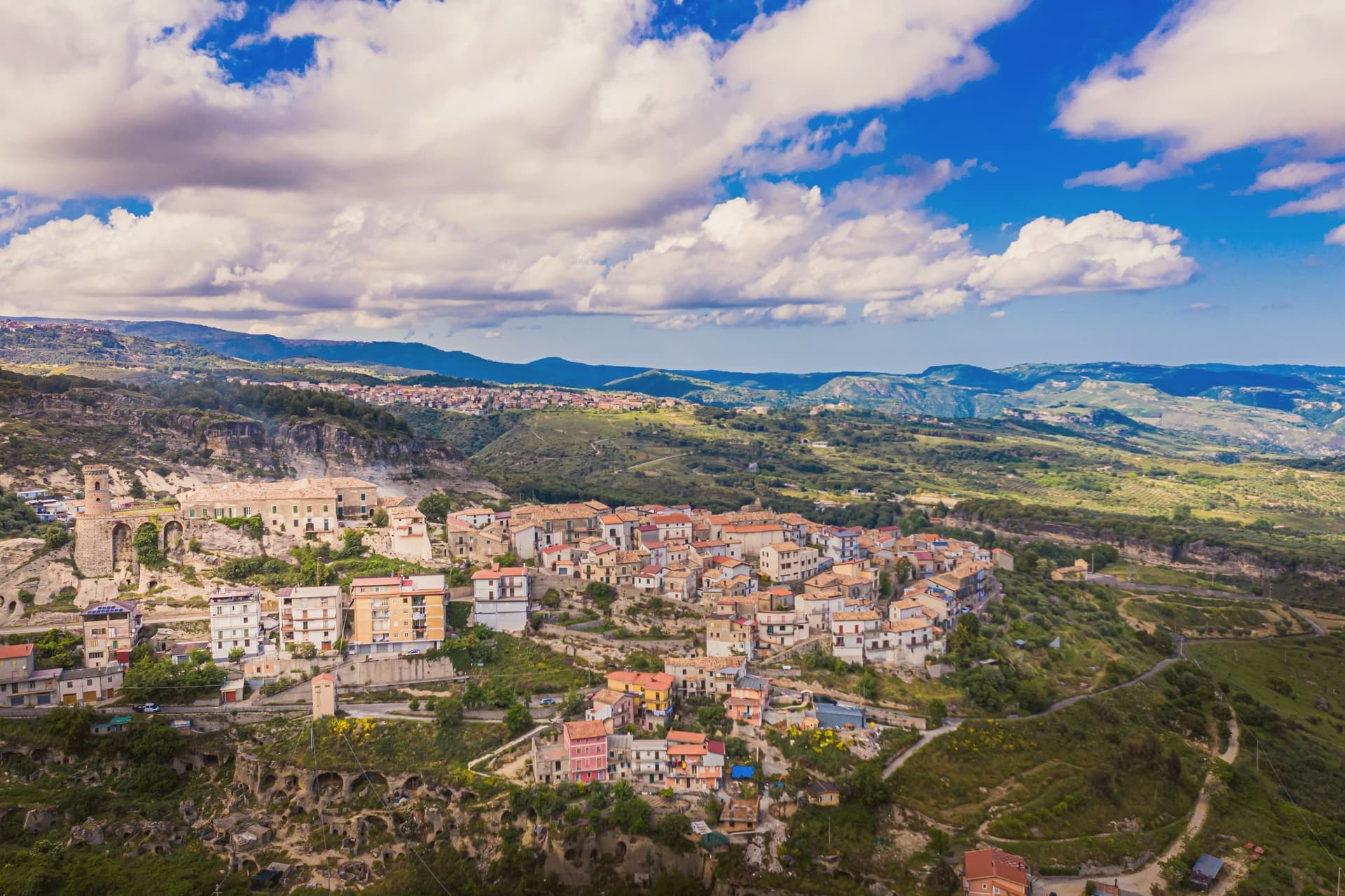
A 646-meter Presila borgo dominated by a sixth-century Byzantine castle with a cylindrical tower built in 1882, birthplace of Renaissance statesman Cicco Simonetta.
- Best time
- May–Oct
- By car
- 3 h 56 min from Salerno
- Population
- 1,538
Known for
CASTELLO
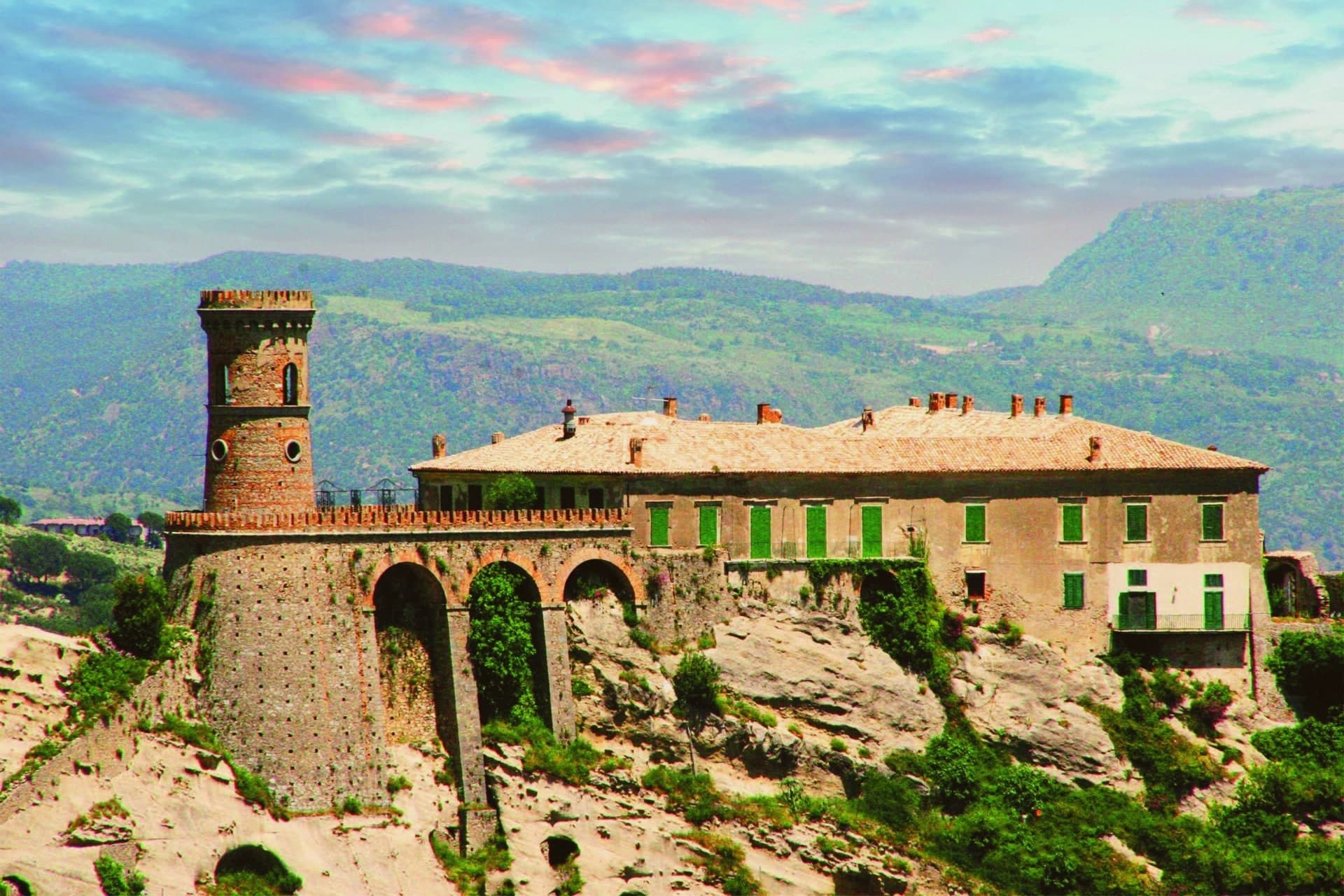
Sixth-century Byzantine fortress with the 1882 Mastrigli Tower on its ravelin, the symbol of the commune.
PREMIO LETTERARIO
National Italian essay prize held every year from 6 to 10 August in the medieval centro storico, drawing writers and critics.
CICCO SIMONETTA
Renaissance statesman, secretary to Francesco Sforza of Milan, born in Caccuri in the early fifteenth century.
PECORINO CROTONESE
The commune lies inside the Pecorino Crotonese DOP production zone.
When to visit
Best · May–Oct
- J10°
- F12°
- M13°
- A16°
- M21°
- J27°
- J31°
- A30°
- S25°
- O21°
- N16°
- D12°
- Best
- Hot or crowded
- Quiet
- Mostly closed
Daytime averages, 2020–2024. Weather data by Open-Meteo.com.
The festa: San Rocco, 16 August
Why come
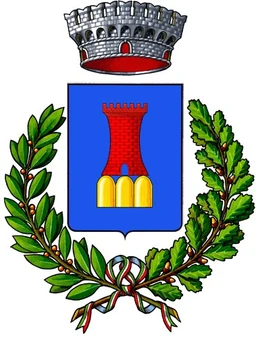
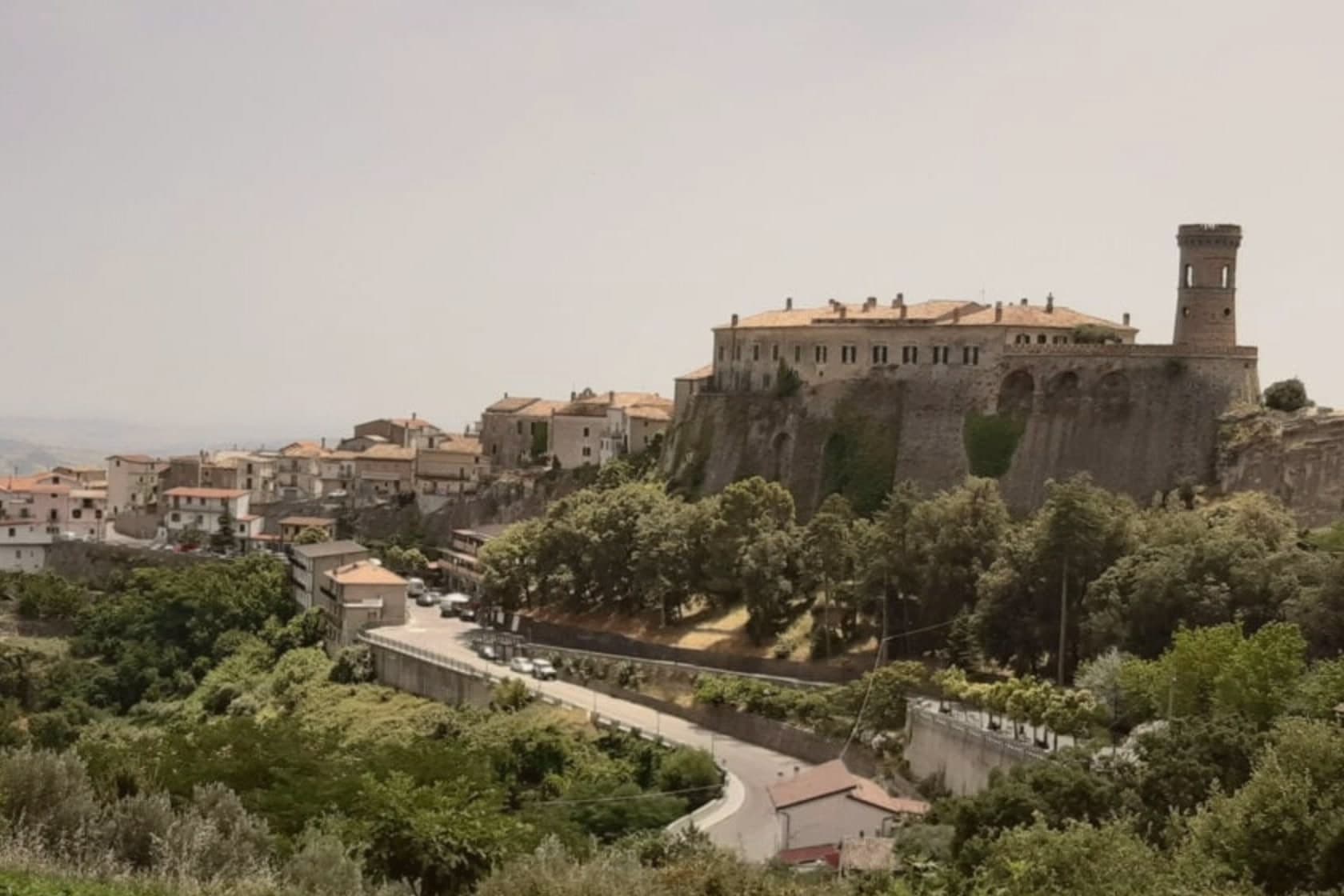
Caccuri sits at 646 meters in the Presila, the eastern foothills of the Sila, on a rocky spur surrounded by olive groves. The Byzantines built the castle in the sixth century as a lookout to control the Neto valley below; the structure has been remodeled many times since, becoming a ducal palace under the Cavalcanti, the Spinelli, and finally the Barracco. The cylindrical Mastrigli Tower on the ravelin, designed by Roman architect Adolfo Mastrigli and finished in 1882, has become the symbol of the town and appears on its coat of arms.
Cicco Simonetta, secretary to Francesco Sforza of Milan and a key Renaissance statesman, was born here in the early fifteenth century. Every August from the 6th to the 10th the village hosts the Premio Letterario di Caccuri, an Italian essay prize that brings writers and intellectuals to the medieval streets. The sacred Holy Week drama I Giudei is staged roughly every seven years; the last performance was in 2011.
The Sunday letter
Caccuri is on our list. Its letter is still to come.
We are writing about all 1,000 of these towns, one at a time, in a free letter every Sunday: the photo, the food, the festa. That is our mission. Sign up and you will be there when Caccuri comes up. By Peter & Sophia, from Pietrasanta.
How to get there
From Lamezia / Reggio (SUF), about 2 hours by car.
Naples / Salerno (NAP) is about 4h 40m away.
By car from the centre of Salerno 4 hours, Bari 4h 38m or Naples 4h 40m.
What to see
Castello di Caccuri
Sixth-century Byzantine fortress remodeled as a ducal palace by the Cavalcanti, Spinelli and Barracco families, on a rocky spur above the village.
Torre Mastrigli
Cylindrical tower on the castle ravelin, designed by Adolfo Mastrigli and completed in 1882, now the symbol of Caccuri and its coat of arms.
Centro storico medievale
Network of stone streets and alleys converging toward the castle, preserved largely intact from the medieval layout.
Chiesa Madre
Mother church of the village, holding the religious traditions of the Holy Week sacred drama I Giudei.
The slow-trip planner
Building a trip? Find where Caccuri fits in a slow Italy circuit.
Answer five questions. We will shape a geographically coherent slow trip from the 1,000 Italian towns most travelers skip. Yours to save and share.
Living here
- Population 1,538
- In-betweeni
- Pharmacy: none mapped
- High school within a 30-minute drive
- Nearest airport Lamezia / Reggio, 2 h 2 min drive
- Regional capital Catanzaro, 1 h 33 min drive
Thermal baths in town: Vasche di fanghi termali Bruciarello.
Common questions
- What is Caccuri known for?
- Caccuri is a 646-meter Presila borgo dominated by a sixth-century Byzantine castle with a cylindrical tower built in 1882, birthplace of Renaissance statesman Cicco Simonetta.
- Where is Caccuri?
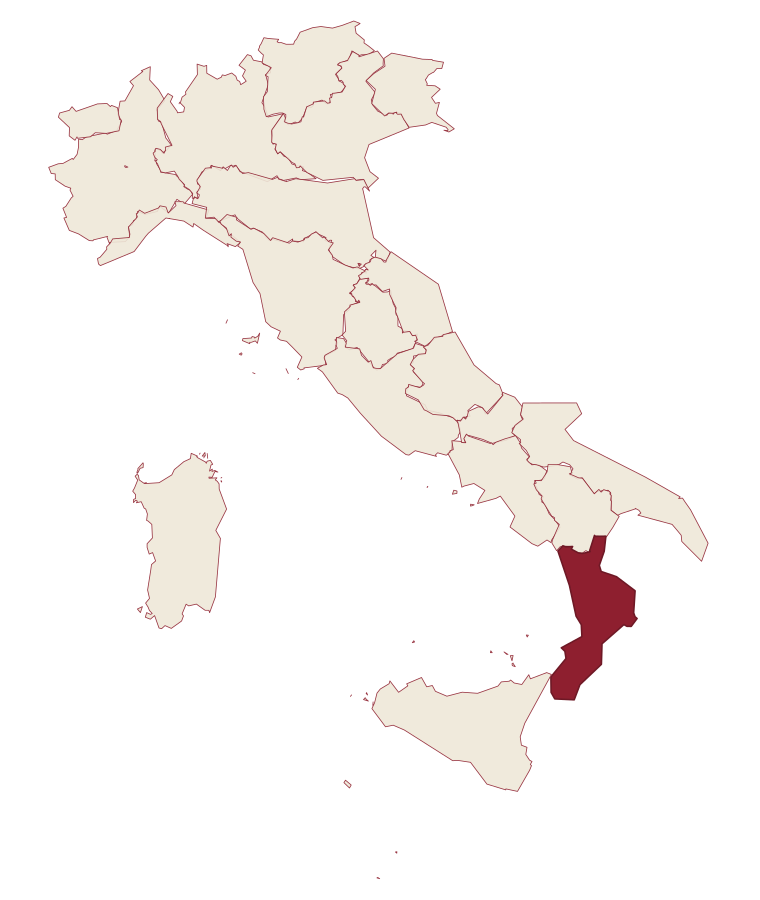
- Caccuri is a comune in the province of Crotone, in Calabria, at 646 meters above sea level.
- What is the nearest airport to Caccuri?
- Lamezia / Reggio (SUF), about 2 hours by car.
- How long is the drive from Salerno to Caccuri?
- About 4 hours by car.
- When is the best time to visit Caccuri?
- Best in May–Oct. July is the warmest month, averaging 31 degrees, and November the wettest, with about 12 rain days.
- Is there a sagra or a festival in Caccuri?
- The town keeps its patron saint's day: San Rocco, 16 August.
- Which other towns are like Caccuri?
- Serrastretta, Bleggio Superiore and San Pancrazio.
- How many people live in Caccuri?
- 1,538 at the 2023 count.
Tags & datadesignations · numbers · sources
Recognised as
The numbers
- Elevation: 646 m
- Population: 1,538
- Surface area: 61.38 km²
These figures were compiled from public directories: ISTAT, OpenStreetMap and Wikidata, and from the official listings of the guides named on this page. Town details change; verify with official sources before you travel.
Similar
Towns like Caccuri
Serrastretta
Province: Catanzaro
both mountain-valley towns · both under 3,000 people
Bleggio Superiore
Province: Trento
both mountain-valley towns · both under 3,000 people
San Pancrazio
Province: Bolzano
both mountain-valley towns · both under 3,000 people
San Donato Val di Comino
Province: Frosinone
both mountain-valley towns · both under 3,000 people
Picinisco
Province: Frosinone
both mountain-valley towns · both under 3,000 people
Fortezza
Province: Bolzano
both mountain-valley towns · both under 3,000 people
🎨 Borghi più belli d'Italia
More Borghi più belli d'Italia towns in Calabria
Aiello Calabro
Province: Cosenza
A hilltop borgo at 502 meters in the Tyrrhenian hinterland of Cosenza, ruled for two centuries by the Cybo-Malaspina from Massa Carrara.
Aieta
Province: Cosenza
An eagle's-nest village in the western Pollino, with one of the few sixteenth-century Renaissance palazzi standing in Calabria.
Altomonte
Province: Cosenza
A hill town in the Esaro valley built around the highest Gothic-Angevin church in Calabria.
Badolato
Province: Catanzaro
A medieval borgo of thirteen churches at 240 meters above the Ionian, which took in 350 Kurdish refugees in 1997 and started its own slow rebirth.
Bova
Province: Reggio di Calabria
The capital of the Bovesìa, a 416-resident Aspromonte hilltop borgo at 820m and the cultural centre of the Grecanic minority, where the Calabrian-Greek dialect descended from Byzantine-era Greek is still spoken by elders.