
Emilia-Romagna · Forlì-Cesena
Portico e San Benedetto
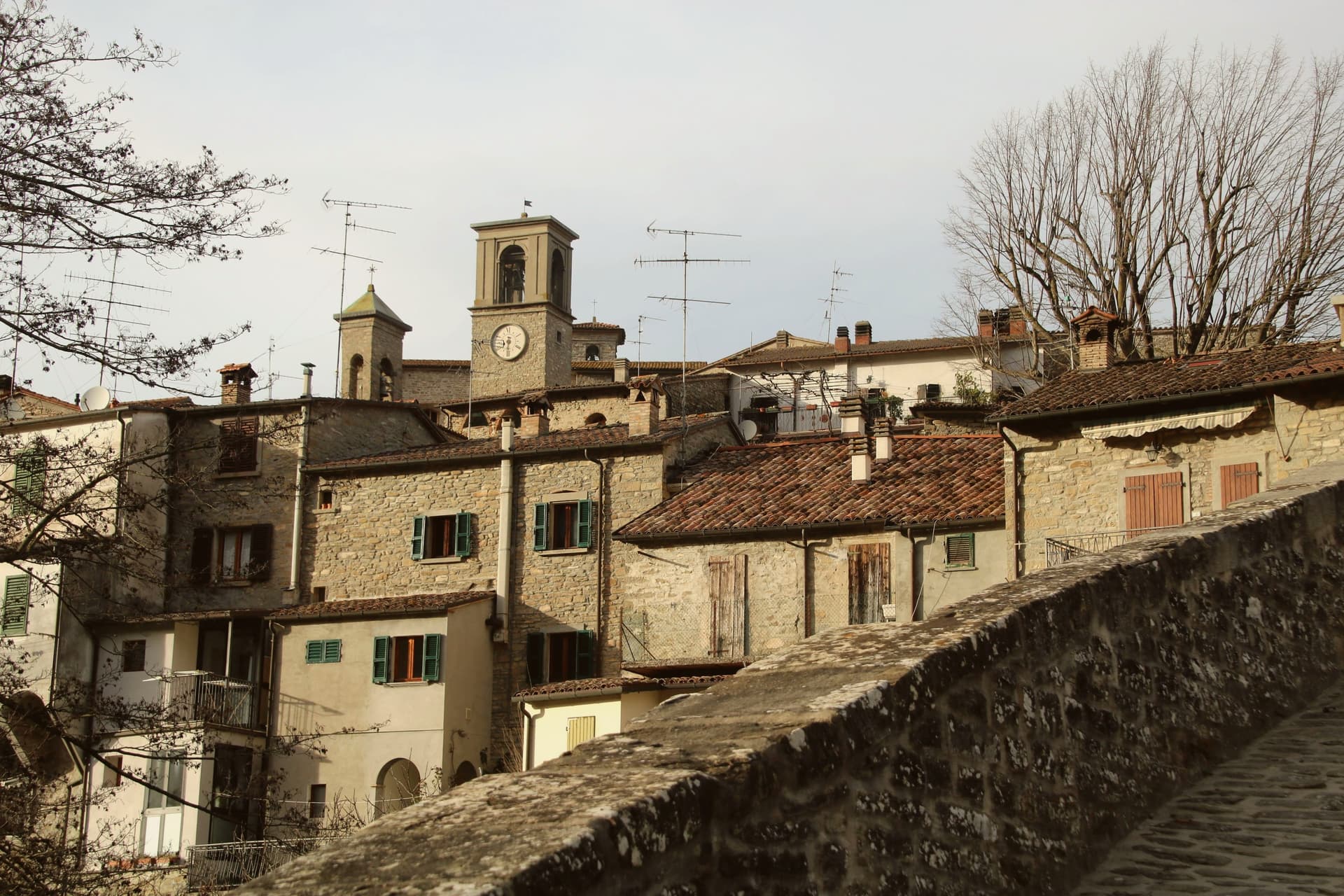
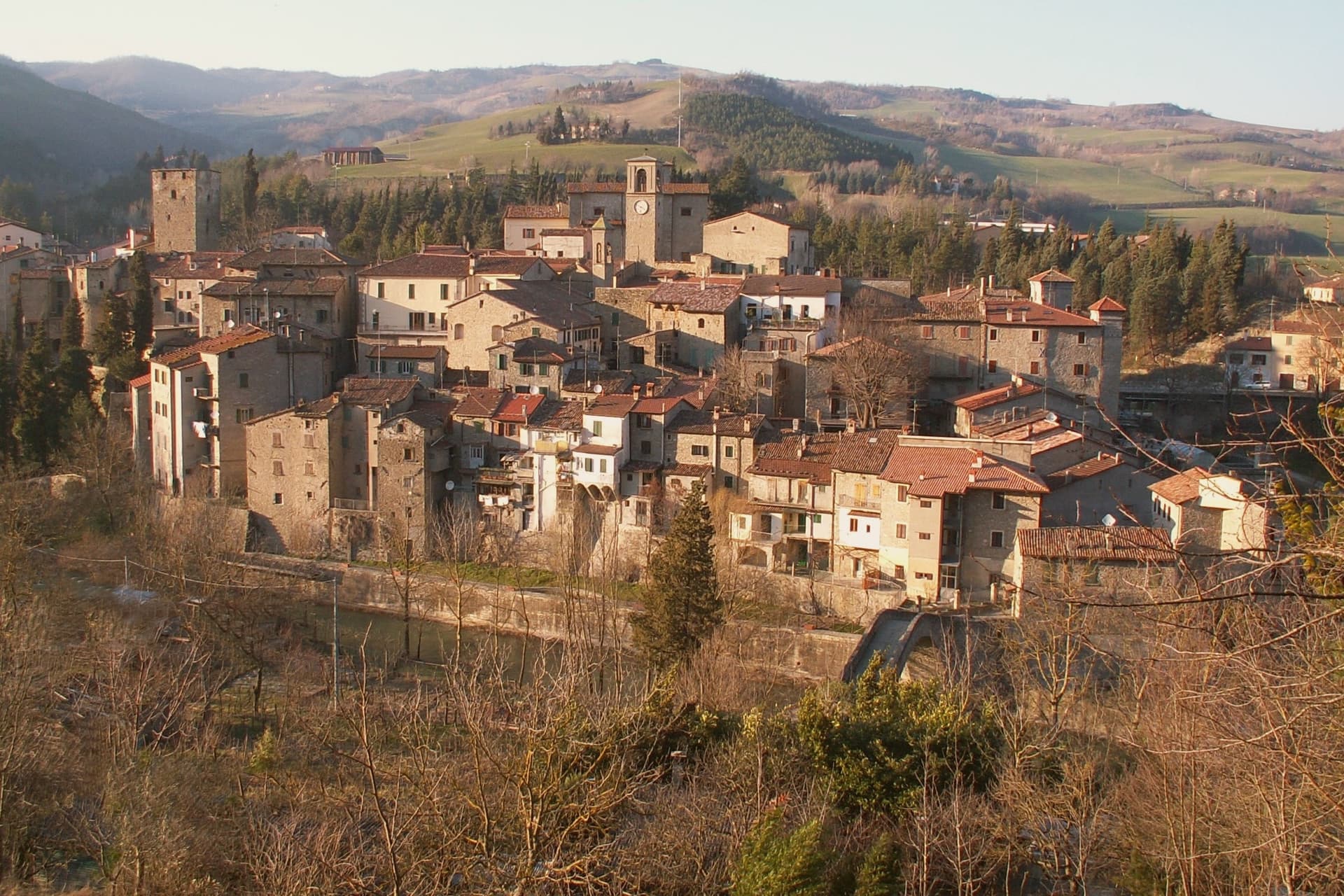
A three-tier medieval borgo on the Montone river, capital of Florence's Romagna territories from 1386.
- Best time
- Apr–Oct
- By car
- 1 h 12 min from Florence
- Population
- 723
Known for
DANTE'S BEATRICE
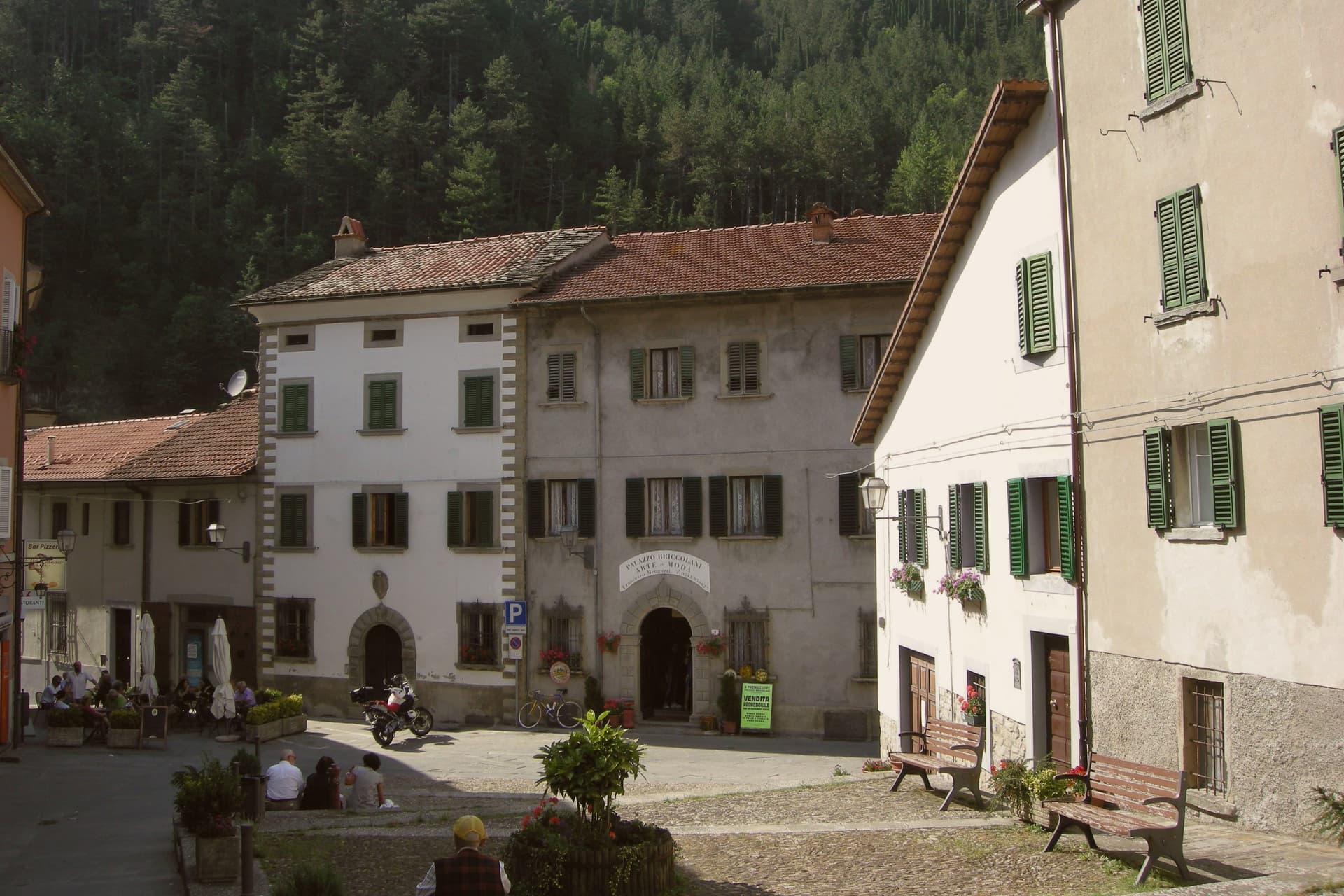
Palazzo Portinari preserves the tradition that Beatrice's family lived here, on the medieval road between Florence and Romagna.
ACQUACHETA
Waterfall on the Acquacheta torrent, named by Dante in Inferno XVI, twelve kilometers up the Montone from Portico.
FLORENTINE CAPITAL
Capital of the Republic of Florence's Romagna territories from 1386, the reason for the three-tier medieval urban structure.
When to visit
Best · Apr–Oct
- J9°
- F12°
- M13°
- A16°
- M20°
- J26°
- J30°
- A29°
- S24°
- O20°
- N13°
- D11°
- Best
- Hot or crowded
- Quiet
- Mostly closed
Daytime averages, 2020–2024. Weather data by Open-Meteo.com.
The festa: Giacomo il Maggiore, 25 July
Why come
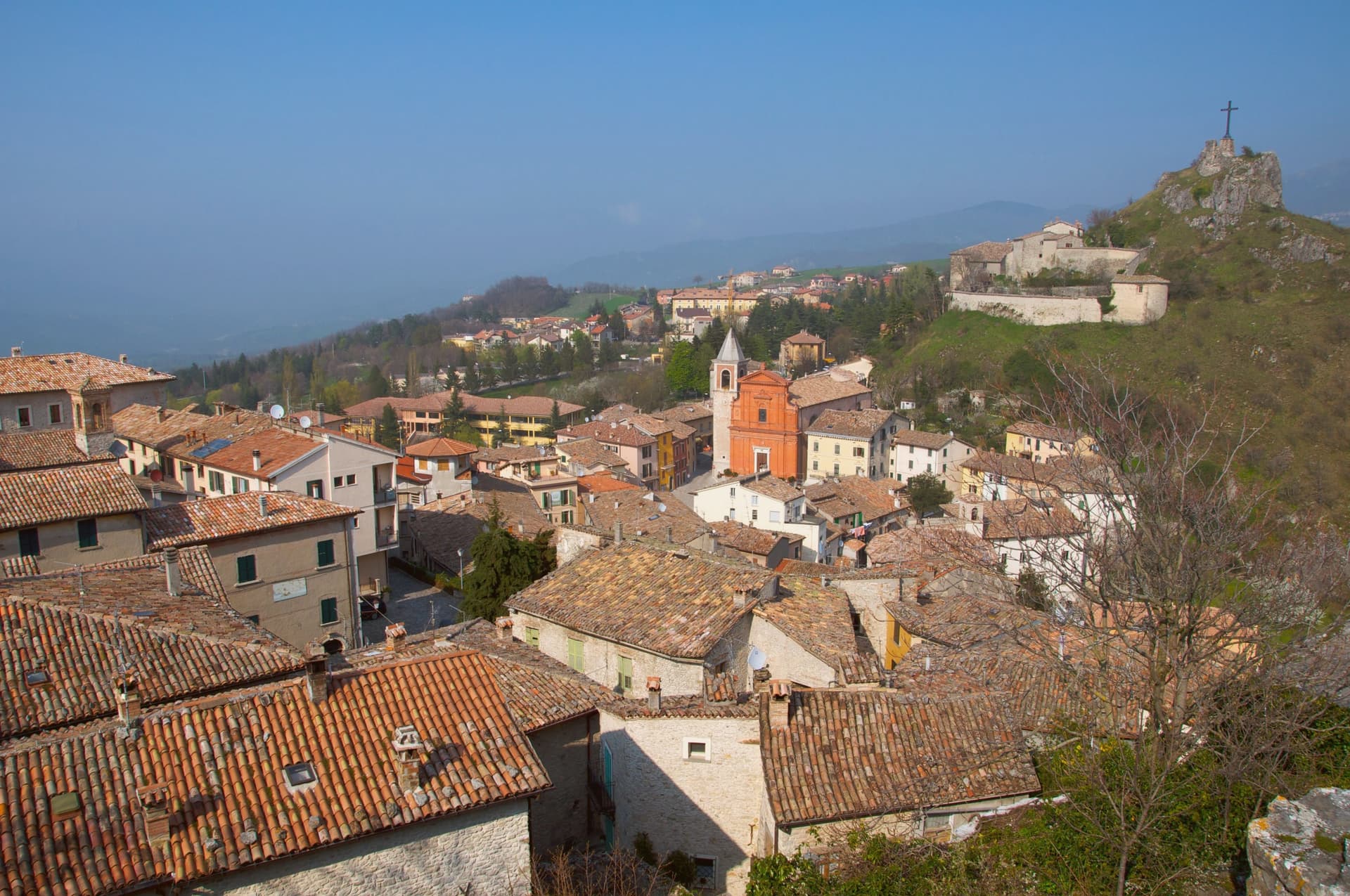
The Tuscan-Romagnolo Apennines place the borgo forty-five kilometers north of Florence and sixty southeast of Bologna, on the Montone river. The upper part holds the castle and the parish church, the middle the noble palazzi along Via Roma, the lower the artisan houses built vertically over four floors: a layout that follows the slope down from fortress to workshop. Twelve kilometers upriver, the frazione of San Benedetto in Alpe holds the ruins of the abbey and the waterfall, joining the seat of Florentine administration to a stretch of the same valley given over to monastic settlement and to the poem that named its sound.
The municipality lies inside the Parco Nazionale delle Foreste Casentinesi and carries the Bandiera Arancione. What holds the two ends of the valley together is the Montone itself: one town built in tiers to govern the river's lower course, one abbey and one waterfall marking its upper reaches, twelve kilometers and several centuries apart but read here as a single territory.
The Sunday letter
Portico e San Benedetto is on our list. Its letter is still to come.
We are writing about all 1,000 of these towns, one at a time, in a free letter every Sunday: the photo, the food, the festa. That is our mission. Sign up and you will be there when Portico e San Benedetto comes up. By Peter & Sophia, from Pietrasanta.
Read on
Portico e San Benedetto in our articles
 The best hidden towns with a food festival in Emilia-Romagna7 towns, Portico e San Benedetto among them.
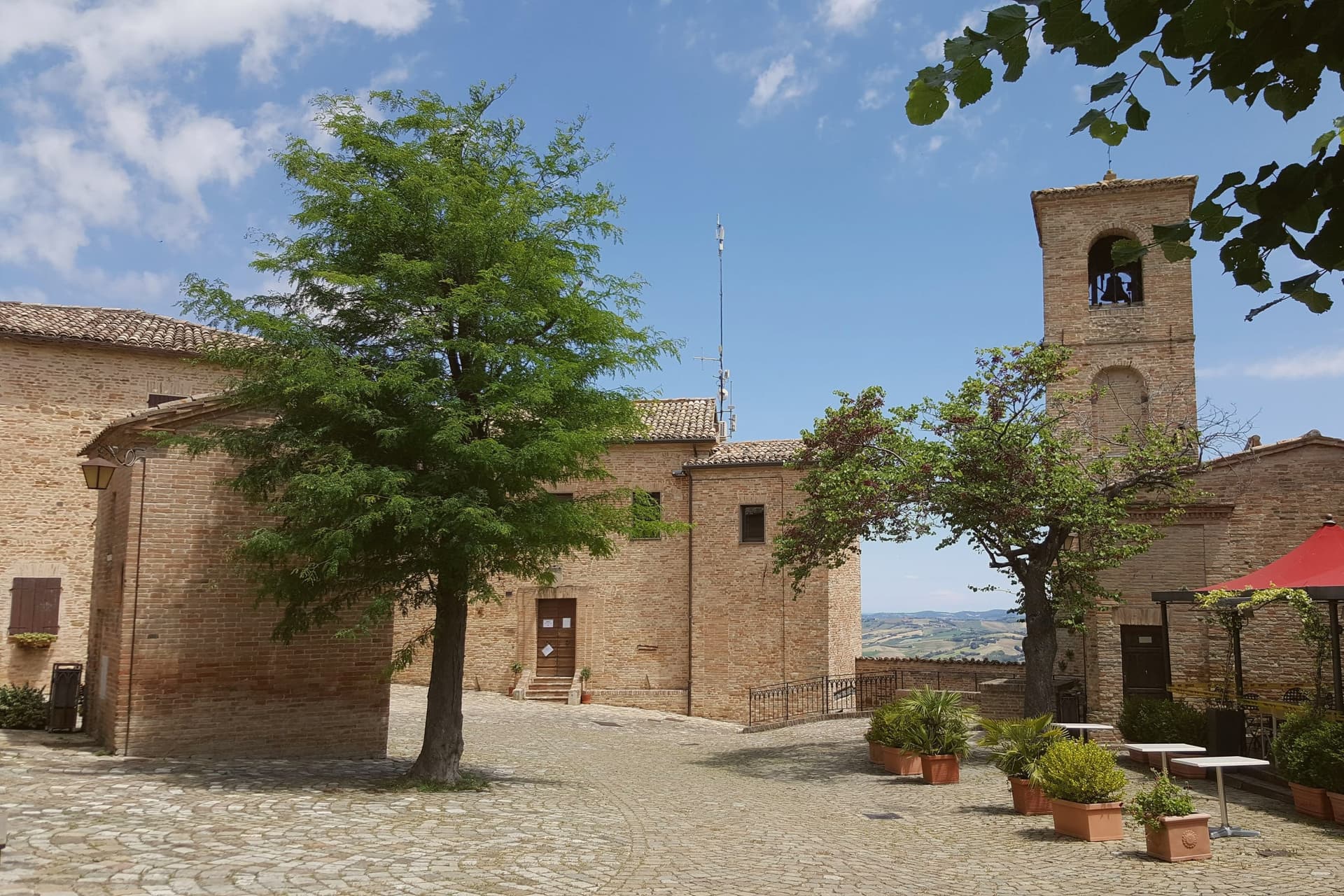 The best small towns that eat well in Emilia-Romagna7 towns, Portico e San Benedetto among them.
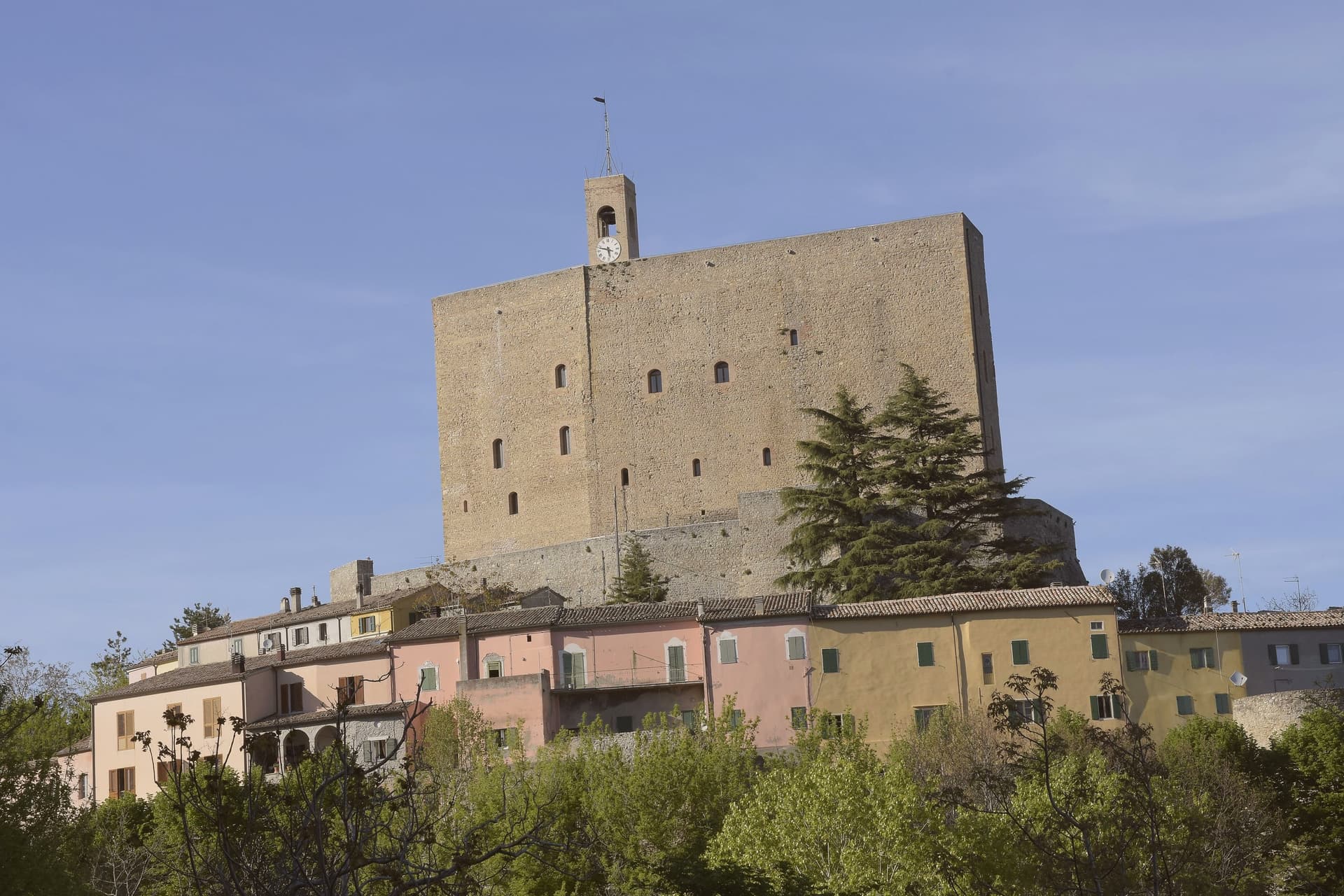 The best hill towns that eat well in Emilia-Romagna8 towns, Portico e San Benedetto among them.
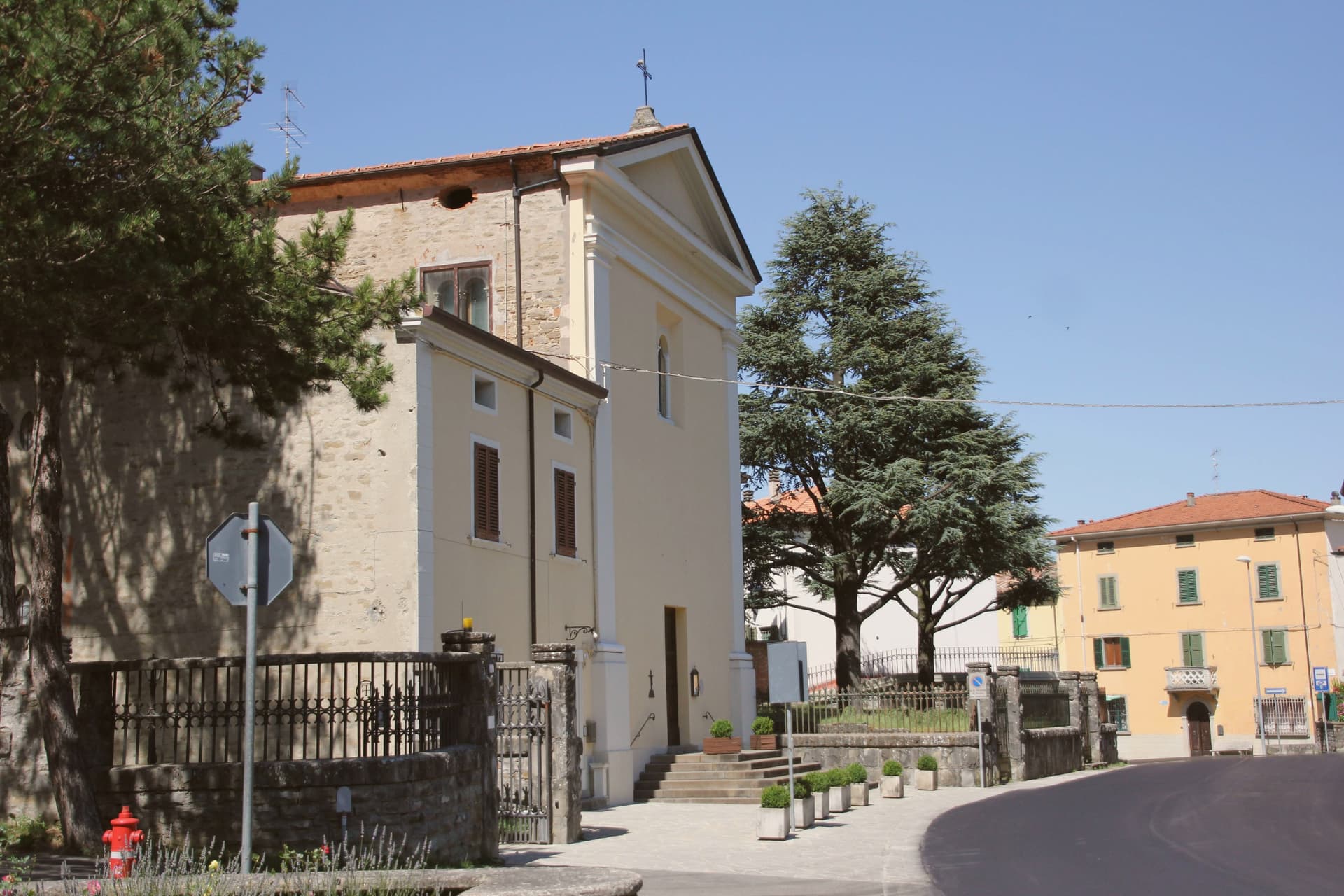
 The best towns with a food festival in Emilia-Romagna10 towns, Portico e San Benedetto among them.
How to get there
From Bologna (BLQ), about 1h 35m by car.
Rimini (RMI) is about 1h 38m away.
By car from the centre of Florence 1h 12m.
Coming by train into Forlì? Portico e San Benedetto is about 40 minutes away by road.
What to see
Centro storico di Portico
The slope divides into castle quarter above, noble palazzi along Via Roma at mid-level, and artisan houses built vertically below.
Palazzo Portinari
Fourteenth-century palace on Via Roma, by tradition the residence of Folco Portinari's family.
Cascata dell'Acquacheta
The torrent falls among rocks near San Benedetto in Alpe, the muffled roar the detail Dante fixed in Inferno XVI.
Abbazia di San Benedetto in Alpe
Tenth-century Benedictine abbey at 485 meters in the upper Montone valley, where San Romualdo stayed before founding Camaldoli.
Ponte della Maestà
Stone bridge over the Montone at the entrance to Portico, medieval in origin and rebuilt several times after Apennine floods.
The slow-trip planner
Building a trip? Find where Portico e San Benedetto fits in a slow Italy circuit.
Answer five questions. We will shape a geographically coherent slow trip from the 1,000 Italian towns most travelers skip. Yours to save and share.
We recommend
Where to eat
Not our picks, but places the guides put their name to: a Michelin star, a Gambero Rosso fork, a Slow Food snail, a Michelin Key for the hotels. Worth a table, a counter, or a night when you pass through.
Al Vecchio ConventoRistorante
One Gambero Rosso fork (79/100), at Al Vecchio Convento.
Through the year
What happens here
Feasts and festivals that come back year after year. We give the month rather than the date, because the date moves and the month rarely does. Check with the source before you plan a journey around one.
Sagra della Tagliatellafood festival
usually held in August. Sagre in Romagna
Living here
- Population 723
- In-betweeni
- Pharmacy in town
- Nearest high school over ~30 minutes away
- Nearest airport Bologna, 1 h 35 min drive
- Regional capital Bologna, 1 h 37 min drive
Common questions
- What is Portico e San Benedetto known for?
- Portico e San Benedetto is a three-tier medieval borgo at 309 meters on the Montone river, capital of Florence's Romagna territories from 1386.
- Where is Portico e San Benedetto?
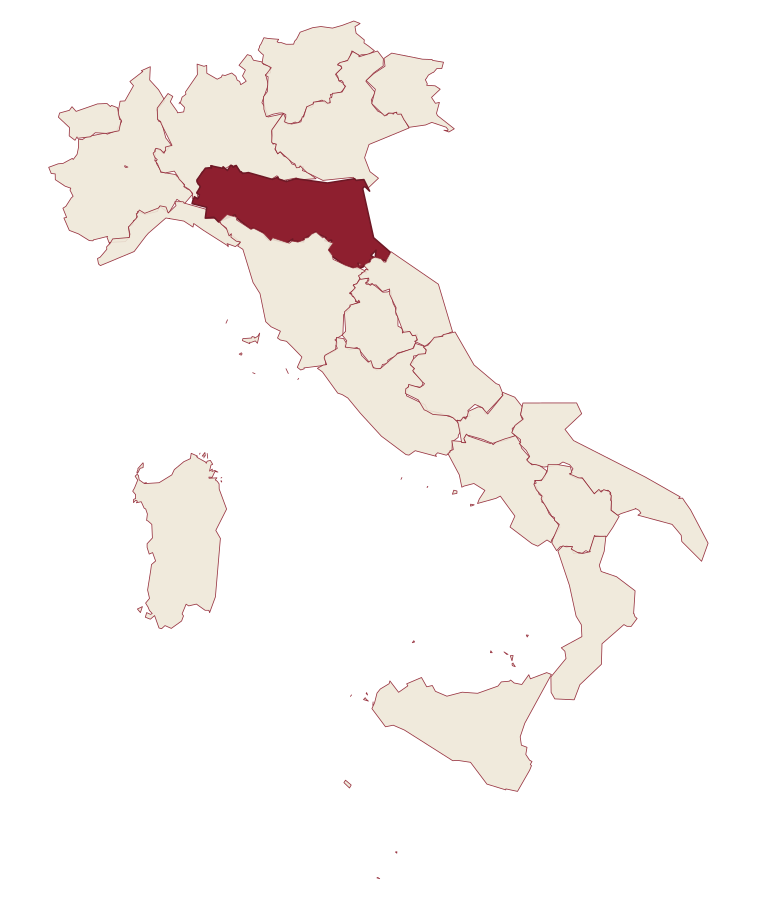
- Portico e San Benedetto is a comune in the province of Forlì-Cesena, in Emilia-Romagna.
- What is the nearest airport to Portico e San Benedetto?
- Bologna (BLQ), about 1h 35m by car.
- How long is the drive from Florence to Portico e San Benedetto?
- About 1h 12m by car.
- When is the best time to visit Portico e San Benedetto?
- Best in Apr–Oct. July is the warmest month, averaging 30 degrees, and May the wettest, with about 16 rain days.
- Is there a sagra or a festival in Portico e San Benedetto?
- Yes. Sagra della Tagliatella. August is when the first of them falls.
- Which other towns are like Portico e San Benedetto?
- Montegridolfo, Guardialfiera and Corfinio.
- How many people live in Portico e San Benedetto?
- 723 at the 2023 count.
Tags & datadesignations · numbers · sources
Recognised as
The numbers
- Elevation: 309 m
- Population: 723
- Surface area: 61.05 km²
These figures were compiled from public directories: ISTAT, OpenStreetMap and Wikidata, and from the official listings of the guides named on this page. Town details change; verify with official sources before you travel.
Similar
Towns like Portico e San Benedetto
Montegridolfo
Province: Rimini
both inland, away from the coast · both under 1,000 people
Guardialfiera
Province: Campobasso
both inland, away from the coast · both under 1,000 people
Corfinio
Province: L'Aquila
both inland, away from the coast · both under 1,000 people
Capestrano
Province: L'Aquila
both inland, away from the coast · both under 1,000 people
Roccacasale
Province: L'Aquila
both inland, away from the coast · both under 1,000 people
Roccamorice
Province: Pescara
both inland, away from the coast · both under 1,000 people
🟠 Bandiera Arancione
More Bandiera Arancione towns in Emilia-Romagna
Bagno di Romagna
Province: Forlì-Cesena
A 491-meter thermal town at the head of the Savio valley, drawing on springs that have run at 47 degrees since Roman times.
Bobbio
Province: Piacenza
A 272-meter Trebbia-valley town built around an abbey founded in 614, named Borgo dei Borghi by RAI in 2019.
Brisighella
Province: Ravenna
A Lamone-valley borgo at 115 meters under three selenite hills crowned by a fortress, a clock tower, and a sanctuary.
Busseto
Province: Parma
A 40-meter town where Giuseppe Verdi grew up, with a 300-seat opera house in the Rocca he refused to enter.
Castell'Arquato
Province: Piacenza
A 224-meter hilltop borgo in the Val d'Arda, kept intact since the tenth century and crowned by Luchino Visconti's 1342 fortress.