
Veneto · Treviso
Pieve di Soligo
The market town between the Soligo and Lierza rivers in the Prosecco UNESCO zone, birthplace of the twentieth-century poet Andrea Zanzotto.
- Best time
- Apr–Oct
- By car
- 1 h from Venice
- Population
- 11,535
Known for
ANDREA ZANZOTTO
The poet born here in 1921 and died in 2011, one of the major Italian voices of the twentieth century; the town runs the annual Premio Pieve Zanzotto.
PROSECCO CONSORTIUM
Villa Brandolini holds the seat of the Consorzio di Tutela del Prosecco Superiore DOCG, regulating production across fifteen UNESCO-listed communes.
TWO RIVERS
The Soligo and Lierza meet in the commune; the flat valley floor between them carries the market town and the hill slopes rising north hold the Prosecco vineyards.
When to visit
Best · Apr–Oct
- J8°
- F10°
- M13°
- A17°
- M21°
- J26°
- J29°
- A29°
- S24°
- O19°
- N13°
- D9°
- Best
- Hot or crowded
- Quiet
- Mostly closed
Daytime averages, 2020–2024. Weather data by Open-Meteo.com.
The festa: Maria Maddalena, 22 July
Why come
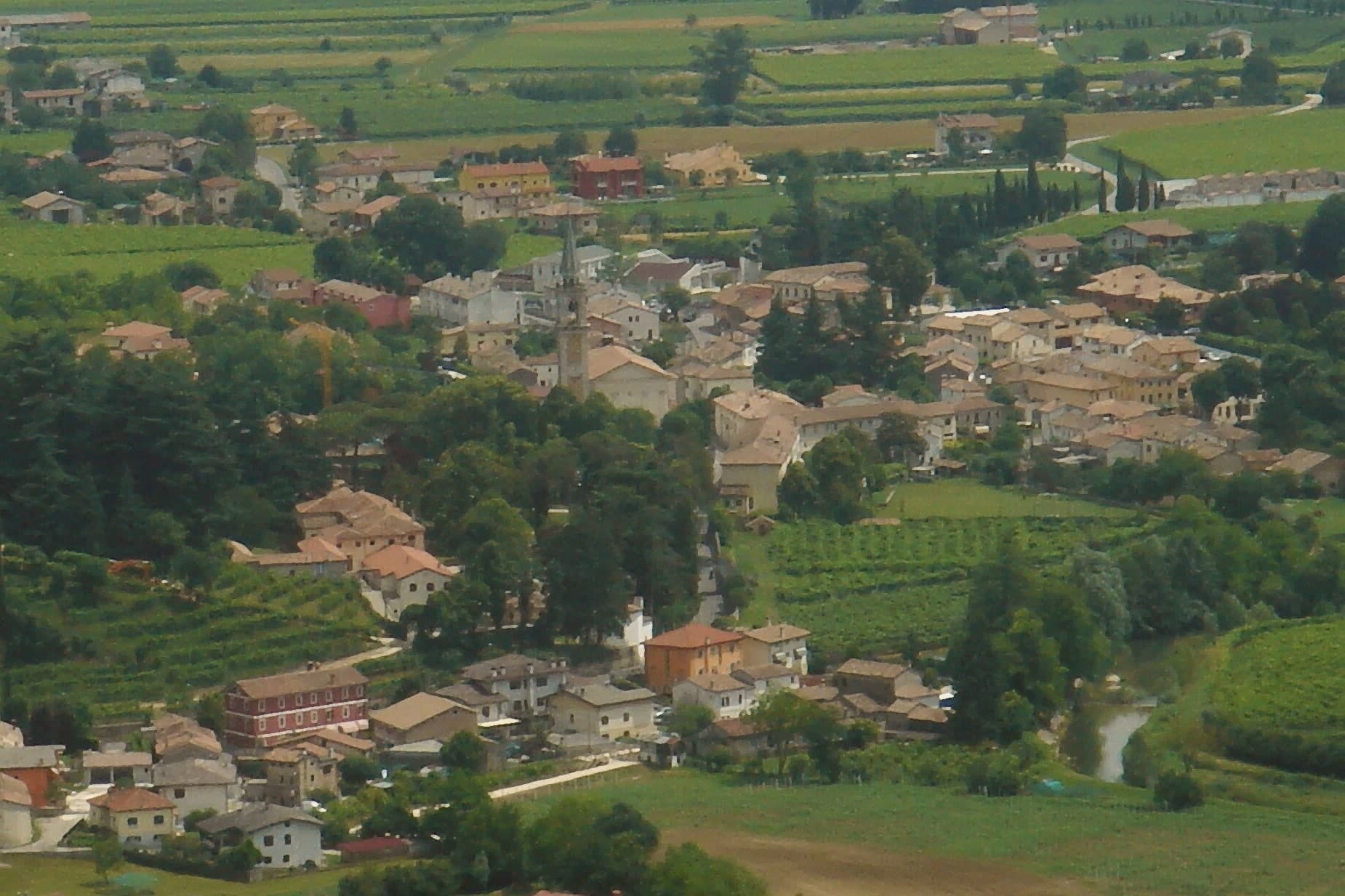
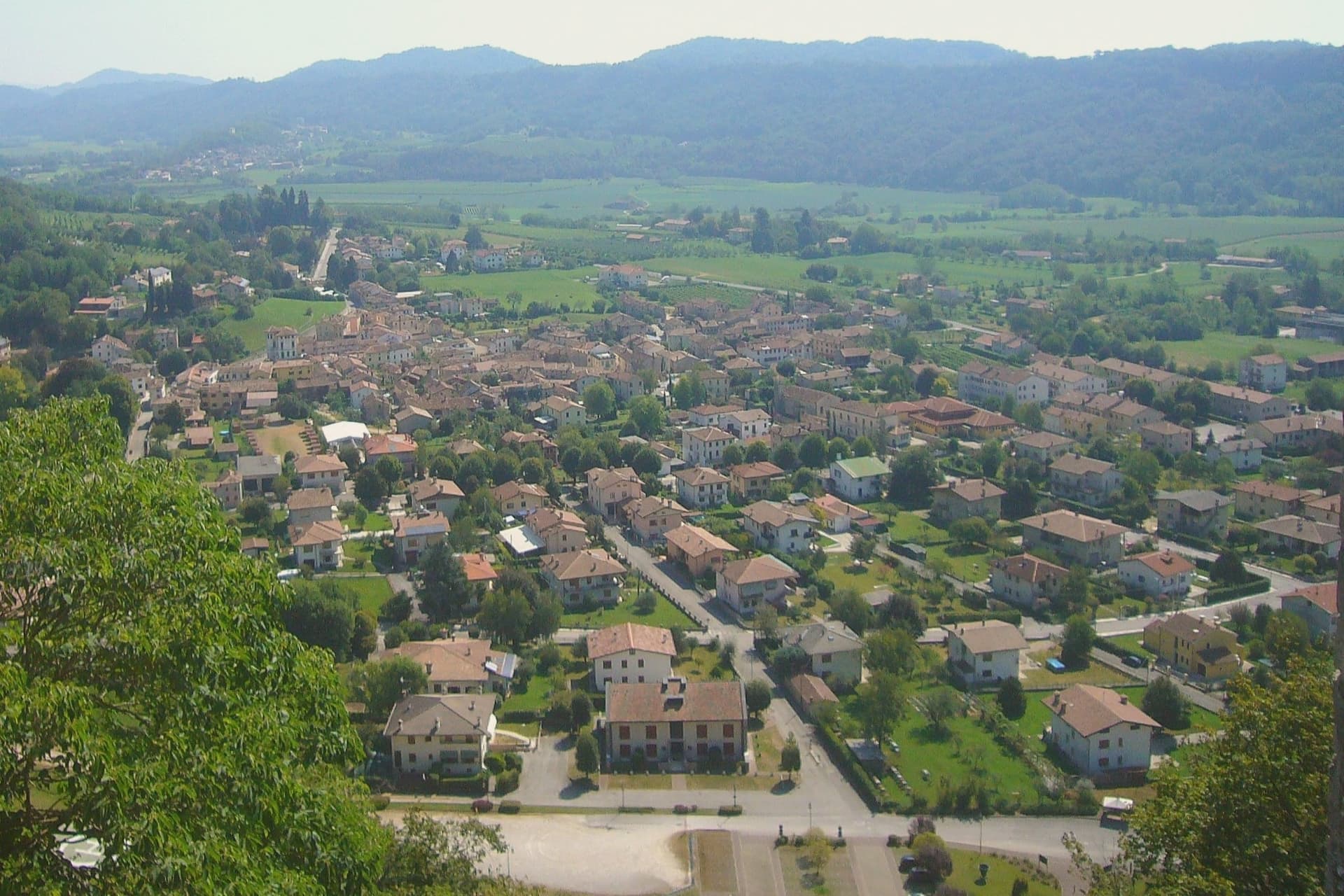
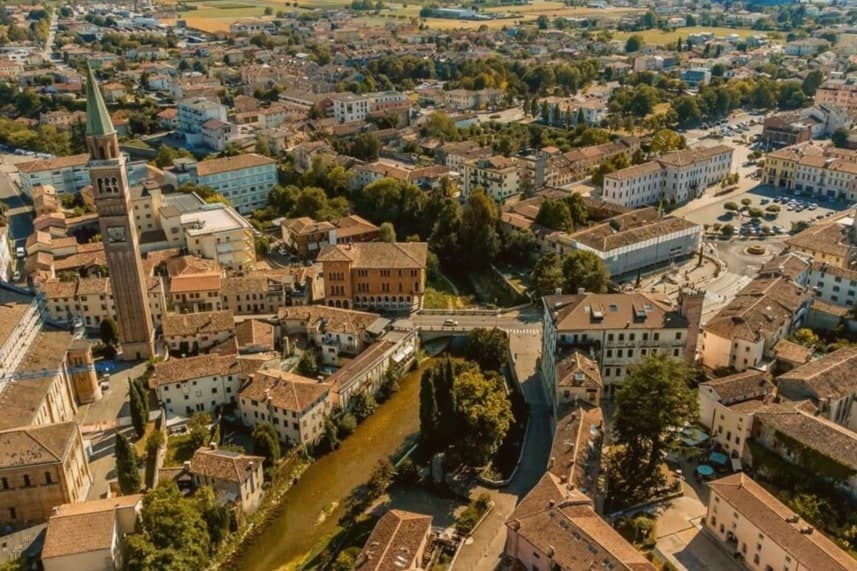
Pieve di Soligo sits, fifty-five kilometers north of Venice, where the Soligo and Lierza rivers meet on the commune's flat valley floor. The territory splits roughly two-thirds level ground to one-third hillside, the lower edge of a hogback landscape that rises toward the vineyard slopes to the north. The market town occupies the flat stretch between the two watercourses; the upper village, where the old paved street of Cal Santa runs, sits apart from the newer centro that has grown around the cathedral and its campanile.
An eighteenth-century country estate on the edge of town, with Venetian stuccoes and a private chapel, now serves an administrative function tied to the wine that covers the northern hills, while the Solighetto frazione keeps its own smaller eighteenth-century parish church, campanile detached from the nave, with a garden that shares the Brandolini name. The poet born and later died in the town gave his late work a mapped version of the upper village, renaming its street in verse. Between the rivers below and the vineyard hills above, the commune reads as a working valley floor with a market town at its center, its administrative reach over regional wine production and its literary claim both rooted in the same small geography.
The Sunday letter
Pieve di Soligo is on our list. Its letter is still to come.
We are writing about all 1,000 of these towns, one at a time, in a free letter every Sunday: the photo, the food, the festa. That is our mission. Sign up and you will be there when Pieve di Soligo comes up. By Peter & Sophia, from Pietrasanta.
Read on
Pieve di Soligo in our articles
 The best hidden hill towns within 90 minutes of Venezia6 towns, Pieve di Soligo among them.
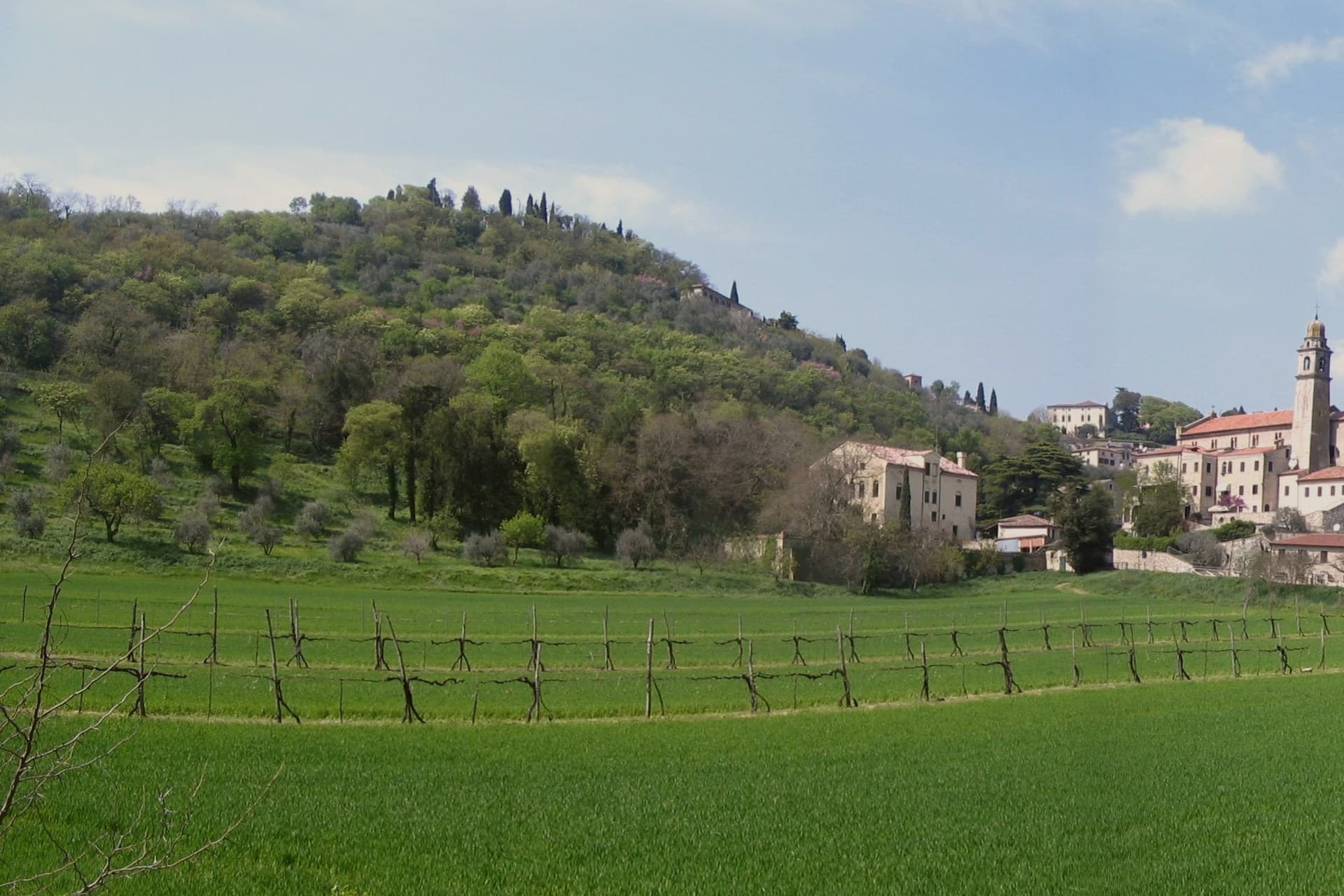 The best hill towns within 75 minutes of Venice6 towns, Pieve di Soligo among them.
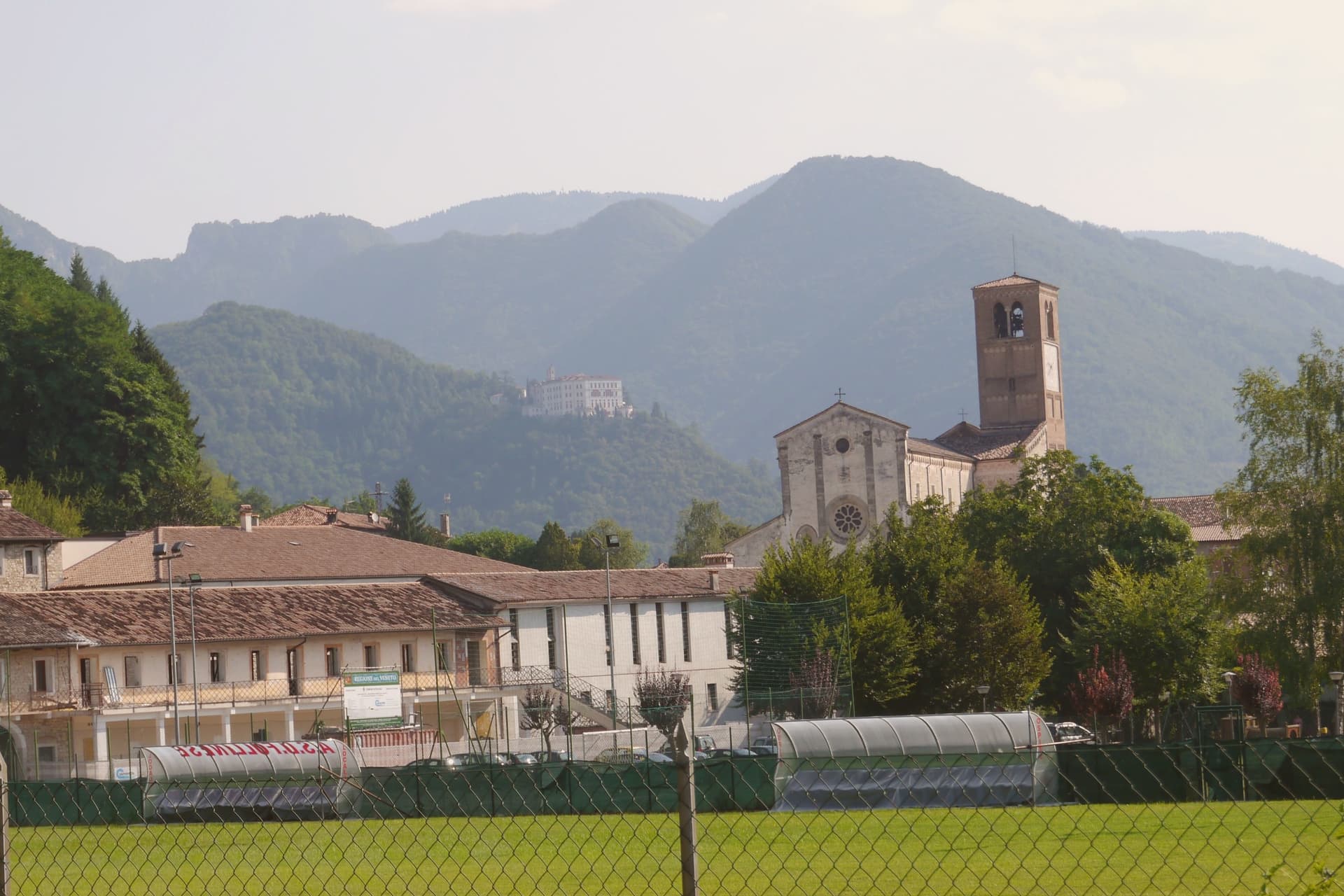 The best wine towns within 75 minutes of Venice6 towns, Pieve di Soligo among them.
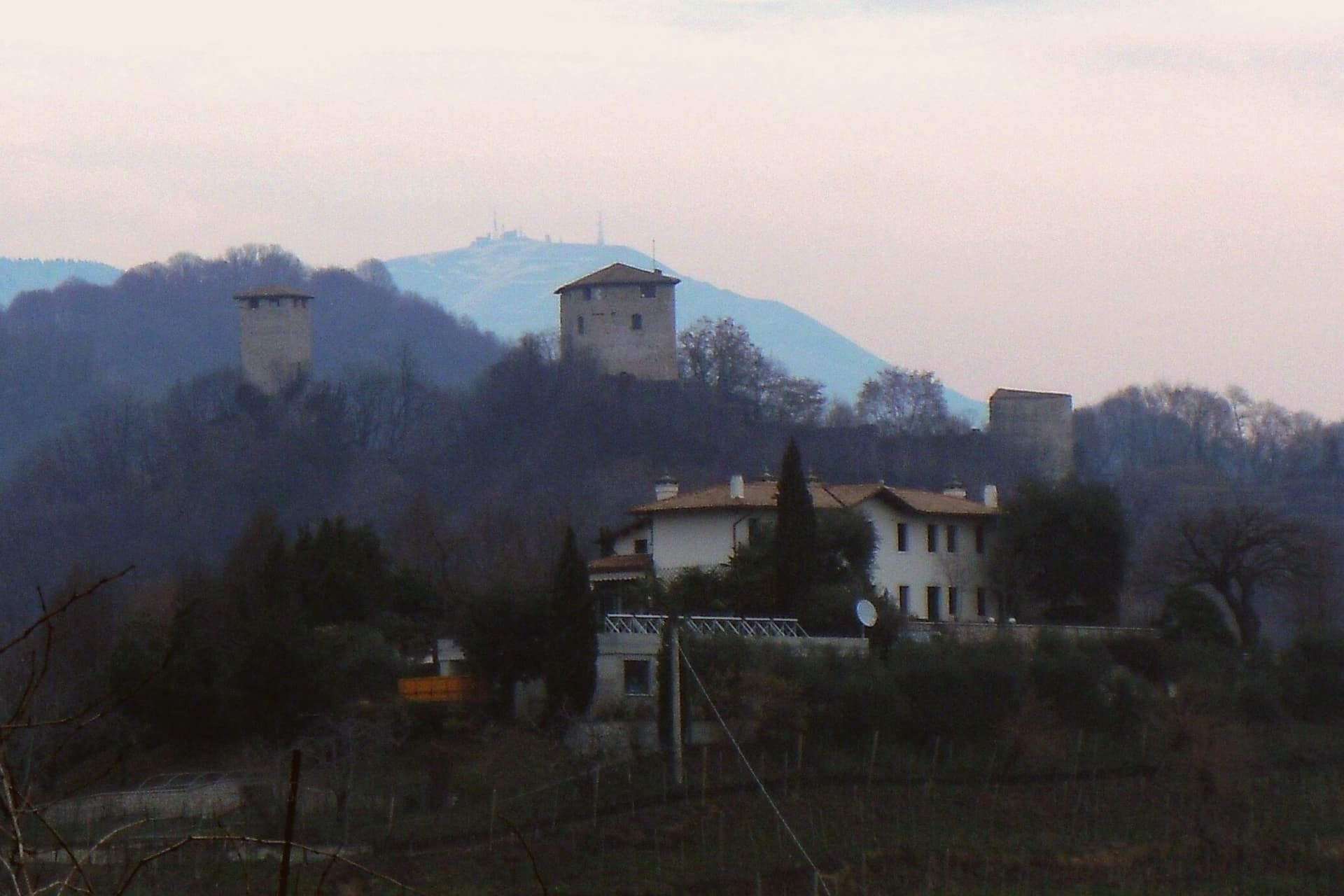 The 7 best hidden towns with a World Heritage site in Veneto7 towns, Pieve di Soligo among them.
How to get there
From Venice (TSF), about 48 minutes by car.
Verona (VRN) is about 2h 16m away.
By car from the centre of Padua 1h 19m or Udine 1h 38m.
Coming by train into Venezia Santa Lucia? Pieve di Soligo is about 1 hour away by road.
What to see
Villa Brandolini
Eighteenth-century country estate with Venetian stucco interiors and a private chapel, now headquarters of the Consorzio di Tutela del Prosecco Superiore DOCG.
Duomo di Santa Maria Assunta
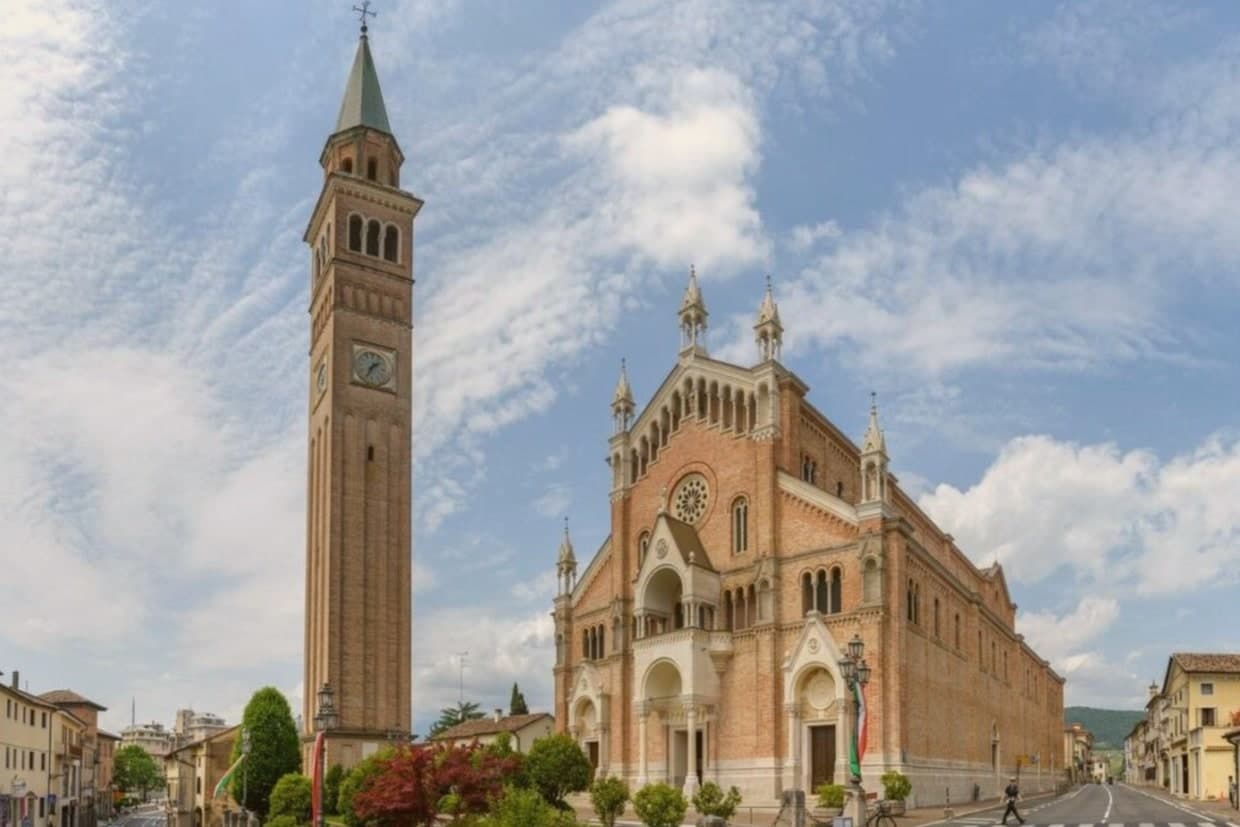
Neo-Romanesque cathedral with neo-Gothic elements designed by Domenico Rupolo, consecrated in 1924, with a 75-meter campanile over the centro.
Colline del Prosecco
UNESCO World Heritage hogback hills on the northern edge of the commune, inscribed in 2019, with Prosecco Superiore DOCG vineyards between 150 and 300 meters.
Cal Santa
Old paved street in the upper village, the topical place of Andrea Zanzotto's late poetry and renamed in his work as Contrada Zauberkraft.
Chiesa di Solighetto
Eighteenth-century parish church in the Solighetto frazione, with a campanile separated from the nave and the small Villa Brandolini Rota gardens.
The slow-trip planner
Building a trip? Find where Pieve di Soligo fits in a slow Italy circuit.
Answer five questions. We will shape a geographically coherent slow trip from the 1,000 Italian towns most travelers skip. Yours to save and share.
We recommend
Where to eat
Not our picks, but places the guides put their name to: a Michelin star, a Gambero Rosso fork, a Slow Food snail, a Michelin Key for the hotels. Worth a table, a counter, or a night when you pass through.
Da LinoRistorante
Da Lino has one Gambero Rosso fork (75/100) to its name.
Through the year
What happens here
Feasts and festivals that come back year after year. We give the month rather than the date, because the date moves and the month rarely does. Check with the source before you plan a journey around one.
Pieve di Serafood festival
usually held in July. TrevisoInfo - Feste e Sagre in Provincia di Treviso
Festa di San Tiziano a Pieve di Soligopatron saint's feast
usually held across August and September. TrevisoInfo - Feste e Sagre in Provincia di Treviso
Living here
- Population 11,535
- Commuter belti
- Pharmacy in town
- High school within a 30-minute drive
- Nearest airport Venice, 48 min drive
- Regional capital Venezia, 1 h 4 min drive
Common questions
- What is Pieve di Soligo known for?
- Pieve di Soligo is the market town between the Soligo and Lierza rivers in the Prosecco UNESCO zone, birthplace of the twentieth-century poet Andrea Zanzotto.
- Where is Pieve di Soligo?
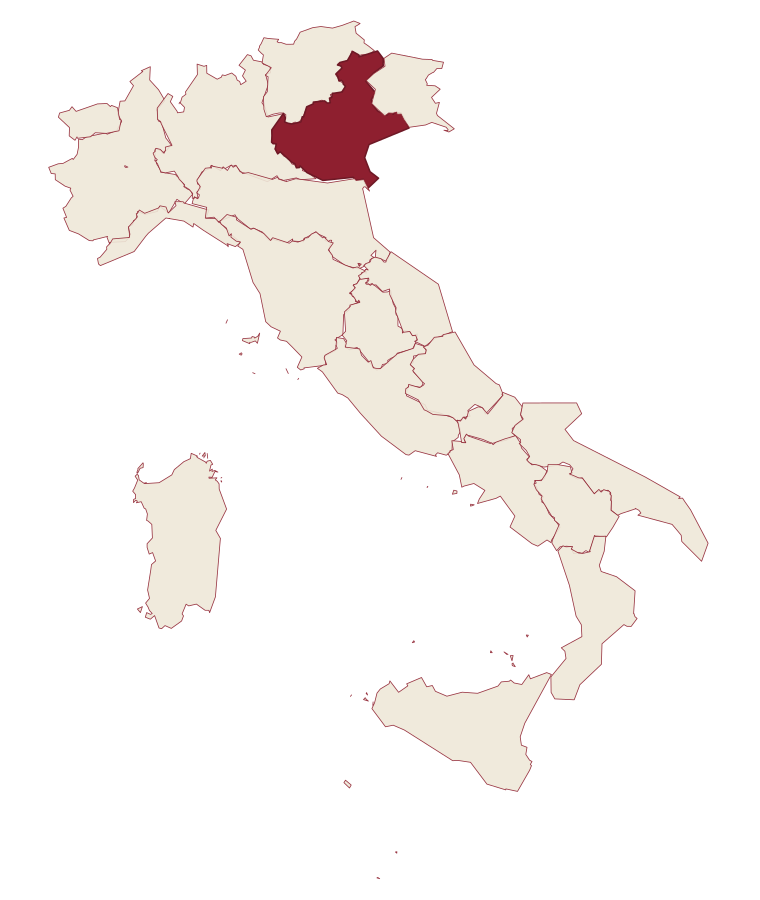
- Pieve di Soligo is a comune in the province of Treviso, in Veneto, at 132 meters above sea level.
- What is the nearest airport to Pieve di Soligo?
- Venice (TSF), about 48 minutes by car.
- How long is the drive from Padua to Pieve di Soligo?
- About 1h 19m by car.
- When is the best time to visit Pieve di Soligo?
- Best in Apr–Oct. July is the warmest month, averaging 29 degrees, and May the wettest, with about 14 rain days.
- Is there a sagra or a festival in Pieve di Soligo?
- Yes. Pieve di Sera and Festa di San Tiziano a Pieve di Soligo. July is when the first of them falls.
- Which other towns are like Pieve di Soligo?
- Marostica, Vittorio Veneto and Spilimbergo.
- How many people live in Pieve di Soligo?
- 11,535 at the 2023 count.
Tags & datadesignations · numbers · sources
Recognised as
The numbers
- Elevation: 132 m
- Population: 11,535
- Surface area: 19.02 km²
These figures were compiled from public directories: ISTAT, OpenStreetMap and Wikidata, and from the official listings of the guides named on this page. Town details change; verify with official sources before you travel.
Featured on
Pieve di Soligo appears on this themed pick from our Collections:
Similar
Towns like Pieve di Soligo
Marostica
Province: Vicenza
both inland, away from the coast · both over 10,000 people
Vittorio Veneto
Province: Treviso
both inland, away from the coast · both over 10,000 people
Spilimbergo
Province: Pordenone
both inland, away from the coast · both over 10,000 people
Cerreto Guidi
Province: Firenze
both inland, away from the coast · both over 10,000 people
Ovada
Province: Alessandria
both inland, away from the coast · both over 10,000 people
Vinci
Province: Firenze
both inland, away from the coast · both over 10,000 people
🏛️ UNESCO
More UNESCO towns in Veneto
Cison di Valmarino
Province: Treviso
A Prosecco hills borgo at 261 meters under the dolomite rock of CastelBrando, the largest inhabited castle complex in Europe.
Conegliano
Province: Treviso
The Prosecco capital at 65 meters, birthplace of the painter Cima and home of Italy's first oenology school, opened in 1876.
Farra di Soligo
Province: Treviso
An 8,477-resident comune in the Conegliano-Valdobbiadene DOCG zone, with the three medieval Torri di Credazzo crowning a hilltop above its vineyards and Cittaslow plus Città del Vino status alongside it.
Follina
Province: Treviso
A Prosecco-hills borgo at 191 meters around the Cistercian Abbey of Santa Maria, with a cloister finished in 1268.
Padova
Province: Padova
The university town that gave Giotto a chapel and the world a science of plants, with two UNESCO inscriptions inside one set of walls.