
The prettiest villages in the province of Cuneo
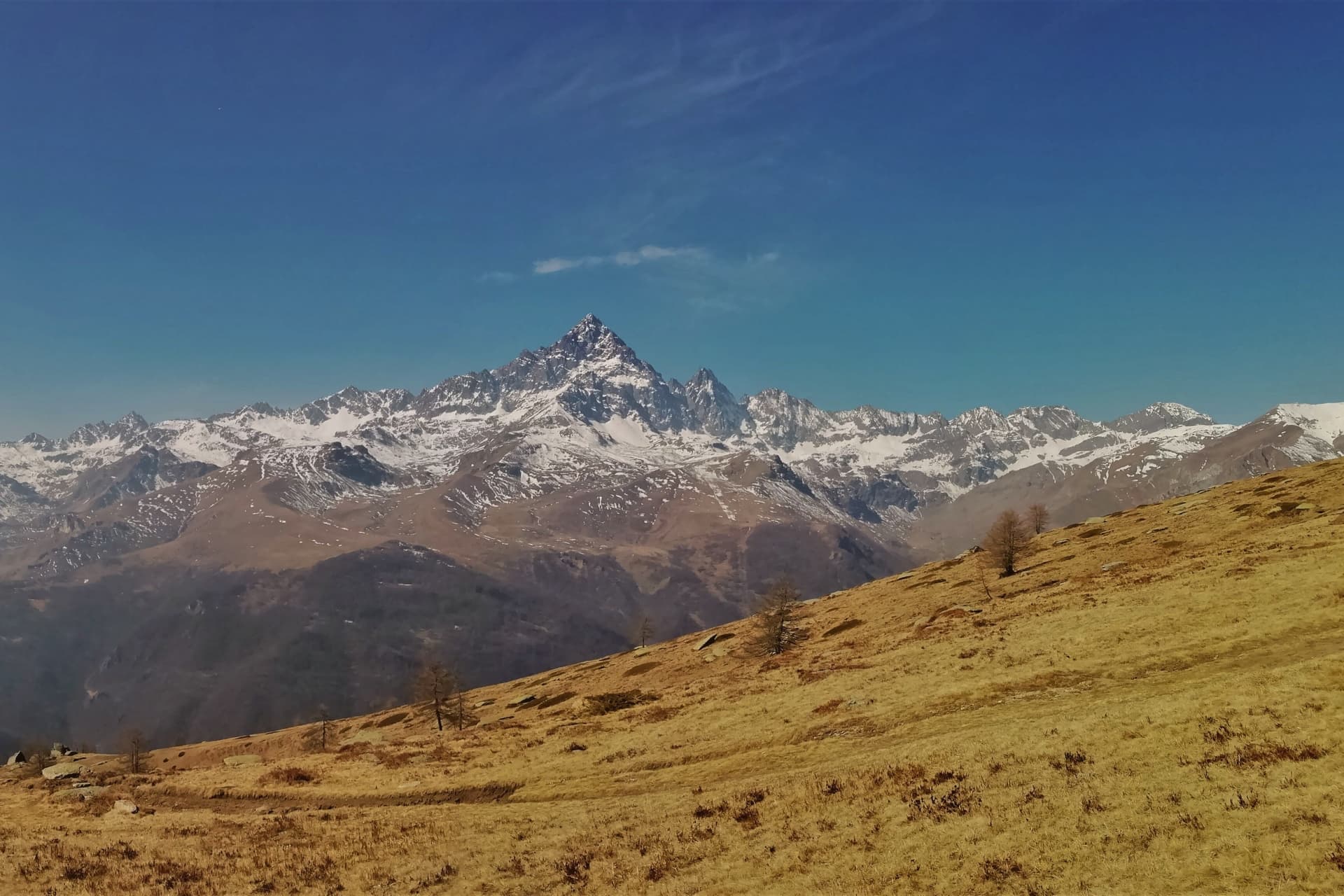
The province of Cuneo runs from vine-combed hills to the high walls of the Maritime and Cottian Alps, and the villages change material as it climbs: brick and tufa towers over the Langhe, then grey stone and slate roofs in the valleys under Monviso. Autumn is the season most people want, when fog sits in the Tanaro basin, the Nebbiolo comes in and white truffle turns up over hand-cut tajarin. Kitchens here work with hazelnuts, veal in tuna sauce, ravioli del plin and Castelmagno melted into risotto. In winter the same province offers snow and thermal water at Vinadio, and in spring the pastures above Sampeyre carry cattle back up the valleys.
Most visitors take the Langhe from Alba, market town, truffle capital, base for the wine tours, and it is busy for good reasons: the fair in autumn fills every hotel bed for miles, the restaurant bookings go months ahead, and the road out towards La Morra carries a slow procession of hire cars at sunset. Bra and Cherasco absorb some of the overflow, Turin sends day-trippers down the motorway, and the cellars nearest the main roads see coach parties by lunchtime. None of that is a reason to skip Alba. It is a reason to sleep elsewhere.
The hills do not stop at the end of the tourist route, and neither do the valleys. Vineyard ridges continue south into the Alta Langa, where villages sit on their own crest with a castle, a parish church and a view over the Bormida, and the province keeps going up until it reaches balconies facing the north face of Monviso. Fewer people go to these places, which is mostly a matter of where the tour buses can turn around. Each of the villages below has passed the assessment of the national association of Italy's most beautiful villages.
Of the 23 communes we have mapped in the province of Cuneo, 6 qualify as prettiest villages: each has passed the assessment of the national association of Italy's most beautiful villages. The smallest, Ostana, has 85 residents.
Elsewhere in the catalogue: The prettiest villages within 90 minutes of Torino and The prettiest villages that eat well in Piemonte.
Ostana
Why visit Ostana
Ostana sits at 1,280m on the south-facing slope of the upper Po valley, in the Occitan linguistic island that runs across the upper valleys of Cuneo and Torino provinces, a dialect still spoken by maybe 50,000 people. In 1921 the village had 1,200 residents working rye, pasture and chestnut at altitude; by 1985 that had fallen to 25, with over 60 houses in ruin and the village close to abandoned, near-officially so.
The reversal began in 1985 when the newly elected mayor, an architect named Giacomo Lombardo, set a 30-year masterplan in motion: rebuild the ruined houses in their original 17th-19th-century stone-and-larch style, draw in residents through Occitan culture, and reposition the village as both an alpine architecture showcase and a cultural centre for that language. It worked on its own terms.
By 2024 the population had climbed back to 85, still small but stable, the demographic curve reversed rather than merely slowed, and the 60-plus restored houses carry insulation modern enough to meet Class A energy ratings behind their traditional stone and larch. The cultural centre, combining library, restaurant and events space, has anchored the new community life since 2012.
The village holds the Borghi piu belli d'Italia inscription despite its tiny population, and architectural press across Europe has taken to citing the case as a model for alpine village rebirth generally. The upper village of restored houses and the lower functions of trail junction and literary festival now depend on each other: walkers on the long-distance trail that crosses the village, and on the former royal hunting trail alongside it, pass through a place that would have had nothing to offer them forty years ago, and the writers who come each year for the minority-language literary prize, now in its fifteenth year and drawing entrants from Occitan to Sardinian to Maori to Welsh, stay in houses that were rubble within living memory.
The food is Occitan-alpine: gnocchi con bagna cauda, cunsa di bietole, raviolas di rapa, raclette and fontina mountain cheese, with Barolo and Barbaresco from the Langhe 60 km east. Like other alpine villages, Ostana goes quiet in winter, its high season running June to September.
What the demographic curve and the rebuilding record show together is a village that did not simply survive its emptying out but rebuilt itself around the very things, language and landscape, that might otherwise have been lost with it.
What to see in Ostana
- Monviso direct view (3,841m). Belvedere terraces across the centro line up on the pyramid face-on, the angle that made the village's postcard reputation.
- Restored 17th-19th-c stone borgo. Larch-and-stone houses standing where ruins stood a generation ago, the insulation invisible behind old materials. Streets built for a population many times the current one, now filled in more slowly.
- Occitan culture + Premio Ostana. The Occitan dialect is audible in the village rather than archived, and the Premio Ostana, Scritture in Lingua Madre, brings minority-language writers here once a year.
How to get to Ostana
Torino is roughly 94 minutes away by road.
Our tip
Ostana is alpine-seasonal — June through September is the high season for trails + alpine activities + the Premio Ostana literary festival (late June). May and October are shoulder for cooler hiking. Winter is Alpine at 1,280m with heavy snow possible Nov-April, ski touring + winter walks but most services scaled back.
Barolo
Why visit Barolo
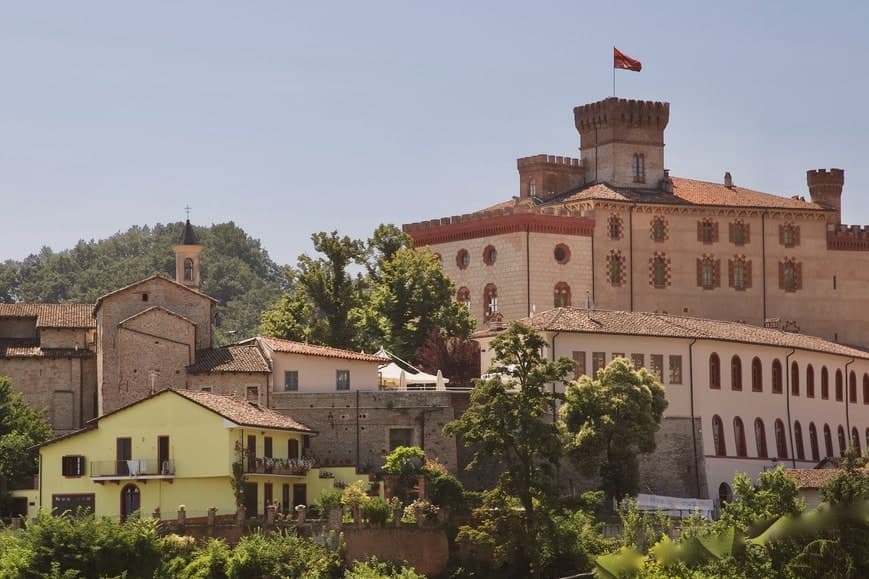
Barolo sits at 301 meters on a Langhe hilltop fifty-five kilometers south of Torino, in the heart of the DOCG appellation that takes its name. The Castello Falletti rises from the centre of the village; its oldest walls date to the eleventh century, when Berengar I of Italy granted local lords permission to fortify against Hungarian and Saracen raids.
The Falletti family took the castle in 1325 and held it for five centuries. In the 1830s the Marchesi Tancredi and Giulia Falletti, working with Camillo Benso di Cavour and the French enologist Louis Oudart, pushed the Nebbiolo of these hills toward dry, age-worthy production for the first time.
The village bought the castle by public subscription in 1970. Since 2010 it has housed the WiMu, a wine museum laid out by François Confino.
The Cannubi cru, on the next hill, is the oldest officially named vineyard parcel in the appellation, recognised on a 1752 wine label. Barolo is one of eleven communes inside the DOCG zone and part of the UNESCO Langhe-Roero and Monferrato landscape inscribed in 2014.
What to see in Barolo
- Castello Falletti. 11th-century castle expanded by the Falletti from 1325, bought by the comune in 1970, now home to the WiMu wine museum since 2010.
- WiMu - Museo del Vino. Wine museum inside the castle, designed by François Confino, with the Regional Wine Library of Barolo in the cellars.
- Vigneto Cannubi. Historic cru on the hill east of the village, recognised on a 1752 wine label as the oldest officially named parcel in the Barolo appellation.
How to get to Barolo
Torino is roughly 63 minutes away by road.
Our tip
April through June and September into October are the best months in the Langhe. The hills are green or gold depending on the season, the cantine run a full visiting calendar, and the Castello Falletti stays cool enough for the long museum walk. July and August are hot on the south-facing slopes and the village empties between two and five.
Monforte d'Alba
Why visit Monforte d'Alba
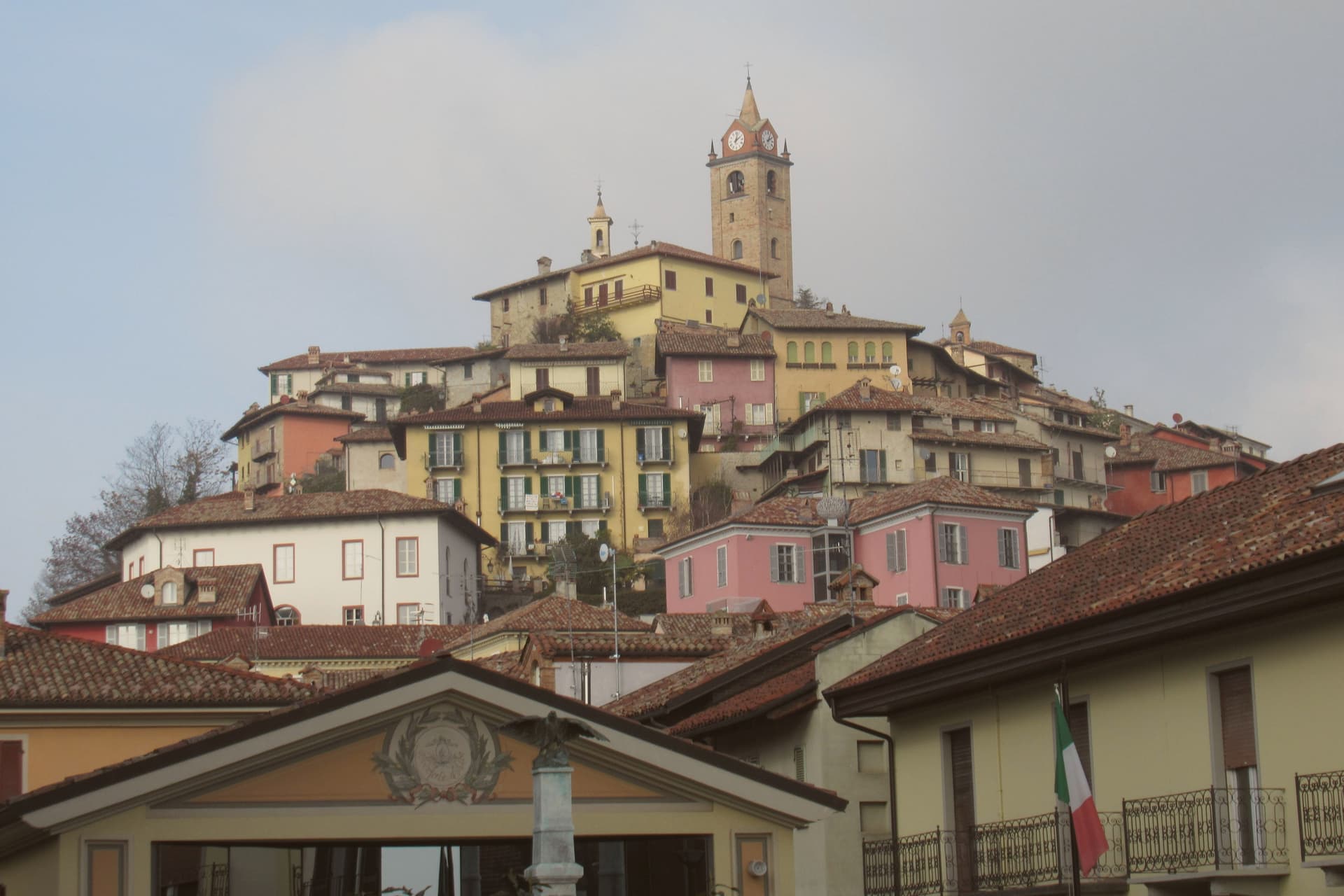
Monforte d'Alba sits at 480 meters in the southeastern corner of the Barolo zone, sixty kilometers from Torino. The name is from Latin mons fortis, fortified hill, and the medieval village climbed steep enough to make it nearly impregnable.
In 1028, Archbishop Ariberto d'Intimiano of Milan had the inhabitants of a heretical community here, later identified as Cathars, captured and burned in Milan to halt the spread of their teaching. Monforte is one of the eleven Barolo communes and accounts for some of the most structured, tannic wines in the zone, particularly from the Bussia and Ginestra crus.
At the top of the village, the Auditorium Horszowski occupies what was once the main square: an open-air natural amphitheater of 800 seats named for the pianist Mieczysław Horszowski, who opened it with a concert in 1986. The Monfortinjazz festival has run here every summer since 1976.
What to see in Monforte d'Alba
- Auditorium Horszowski. Open-air amphitheater for 800 carved into the old village square in 1986, named for the pianist who opened it that year.
- Centro storico. Steep medieval village climbing to the old piazza, with Renaissance palazzi and the surviving bell tower of Sant'Agostino.
- Chiesa di Santa Elisabetta. Baroque oratory beside the Palazzo Scarampi at the top of the village, framing the back wall of the Horszowski stage.
How to get to Monforte d'Alba
Torino is roughly 68 minutes away by road.
Our tip
April through June bring green vines and mild evenings, with the Horszowski programming a few early concerts before the main season. July and August are Monfortinjazz, when the amphitheater fills and the centro stays busy past midnight; daytime heat pushes past thirty degrees but the elevation cools the nights. September and October are harvest and truffle weeks, with Alba twenty kilometers north pulling buyers across the zone.
Garessio
Why visit Garessio
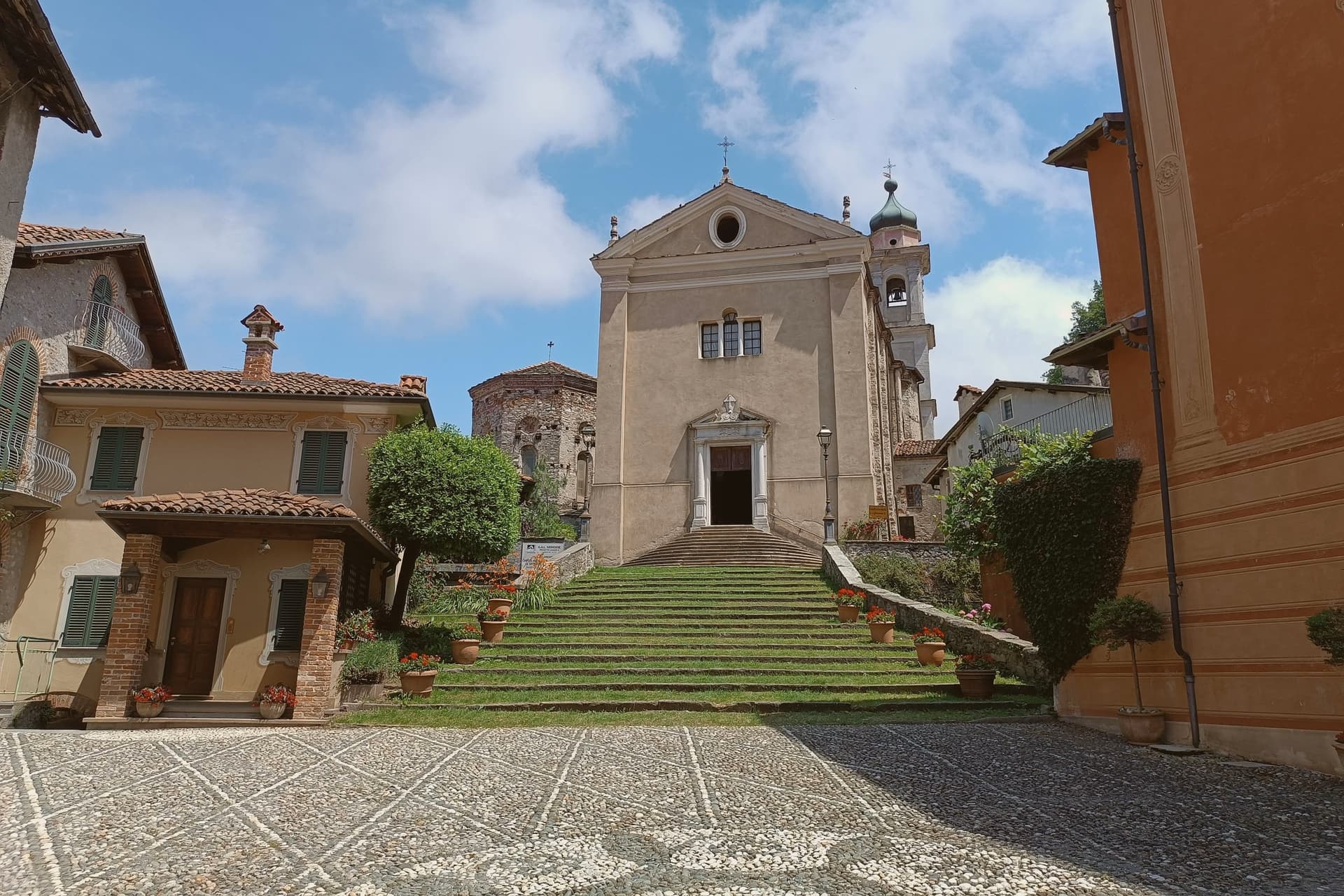
Garessio sits in the upper Tanaro valley, on the watershed where Piemonte meets Liguria. The town is built across four historic quarters, Borgo Maggiore, Borgo Ponte, Borgo Poggiolo, and the borgo that gives its name to the hillside sanctuary and spring above it, each with its own piazza and parish.
The arrangement follows the old traffic of the salt road: Mediterranean salt came up over the Ligurian Alps from Albenga, was repacked in the fortified core, and continued north toward Piemonte and the Po valley. The Savoy family later kept a hunting lodge on the wooded slopes above town, a former Carthusian charterhouse turned retreat, showing a second life for the valley once trade had moved on.
A town built to move salt and later chosen for a royal retreat and a bottling brand: the same slopes have been worked, defended, and rested in by turns, without ever losing the shape of the four quarters that founded it.
What to see in Garessio
- Borgo Maggiore. The medieval core, fortified around 1100 as a ricetto, with three surviving gates, Porta Rose, Porta Jhape, and Porta Liazoliorum, and remnants of the defensive walls.
- Reggia di Valcasotto. Former Carthusian charterhouse converted to a Savoy hunting lodge in the nineteenth century, on the wooded slopes above the town.
- Santuario di Valsorda. Hillside sanctuary above Borgo Valsorda, the town's pilgrimage site, with views over the Tanaro valley.
How to get to Garessio
There is a railway station in the town, so you can arrive without a car and never need one while you are here. Torino is roughly 95 minutes away by road.
Our tip
May through October is the open season. Spring brings the Tanaro running full and the chestnut woods turning green; September and October are dry, with the salt-road footpaths at their clearest. July and August are warm but never coastal-hot at 621 meters; the river keeps the valley cool at night. Cheers Music & Beer Festival falls in August.
Neive
Why visit Neive
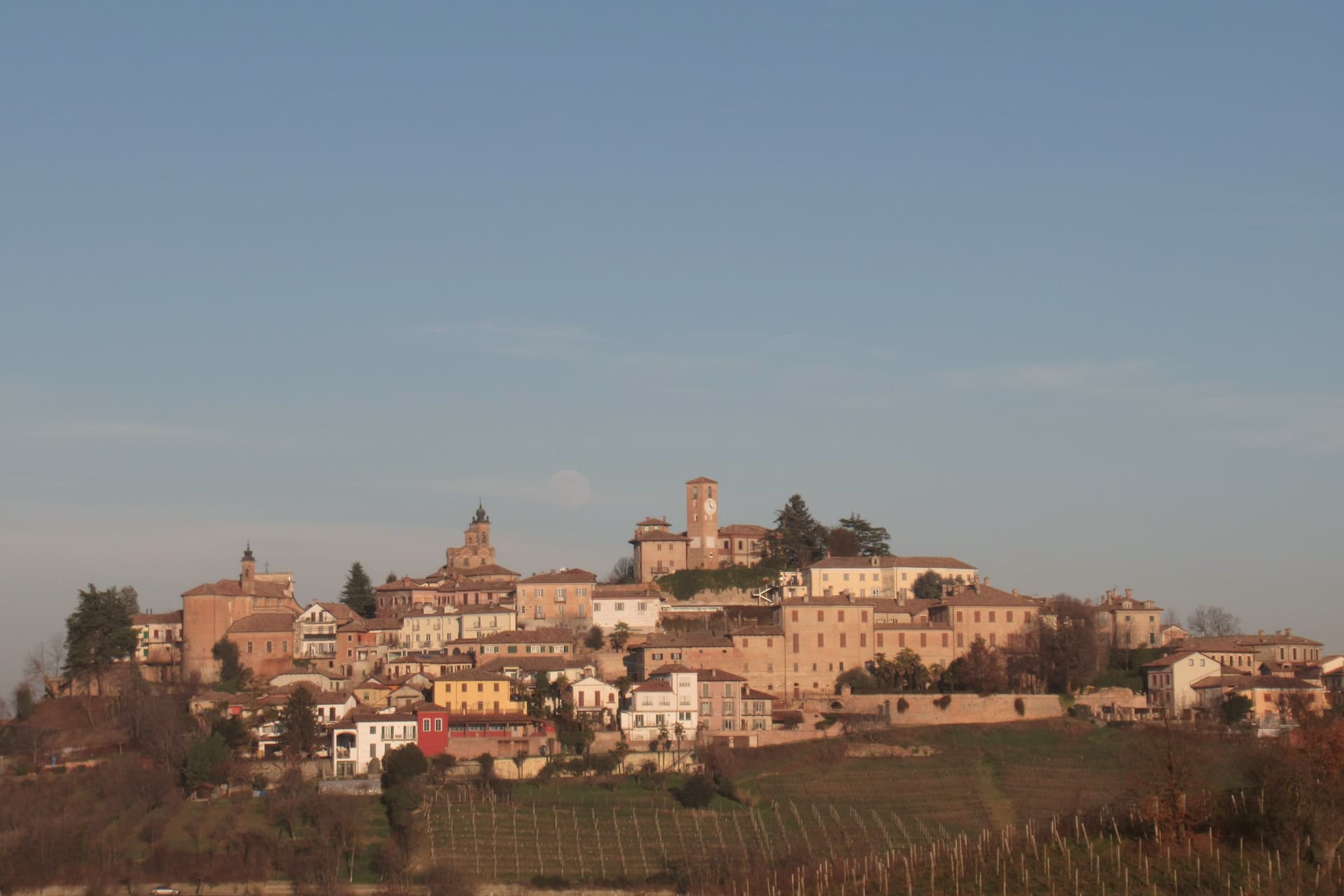
Neive sits at 308 meters on a Langhe ridge, fifty kilometers southeast of Torino and eight kilometers from Alba. The name traces to the gens Naevia, a Roman family that held the land in antiquity.
The medieval village was fought over between Asti and Alba; its castle was destroyed in 1276 and rebuilt repeatedly through the Middle Ages. The Torre dell'Orologio dates from 1224 and embeds a Roman funeral plaque to Valeria Terza in its wall, a deliberate piece of spolia from the older settlement.
Neive is one of three Barbaresco communes (with Barbaresco and Treiso) and is the one locals call the township of four wines: Barbera, Dolcetto, Moscato and Nebbiolo all produced in commercial volume from the same hills. The centro storico is Borghi più belli, eight centuries of layered building stacked tightly enough that the old gates still mark the entry to the village.
What to see in Neive
- Torre dell'Orologio. Civic tower of 1224 with a Roman funeral plaque to Valeria Terza set in its wall, the symbol of Neive's centro storico.
- Centro storico. Hilltop Borghi più belli village stacked across eight centuries, with surviving medieval gates and Renaissance palazzi.
- Palazzo del Municipio. White Baroque civic palace on the main piazza, decorated with arch motifs and standing beside the Torre dell'Orologio.
How to get to Neive
Torino is roughly 66 minutes away by road.
Our tip
April through June bring green vines and mild evenings on the ridge. September and October are harvest, with the Alba truffle fair eight kilometers away pulling buyers across the Langhe; the centro fills on weekends. July and August can push past thirty degrees and the village empties between two and six in the afternoon, though the elevation makes evenings tolerable.
Guarene
Why visit Guarene
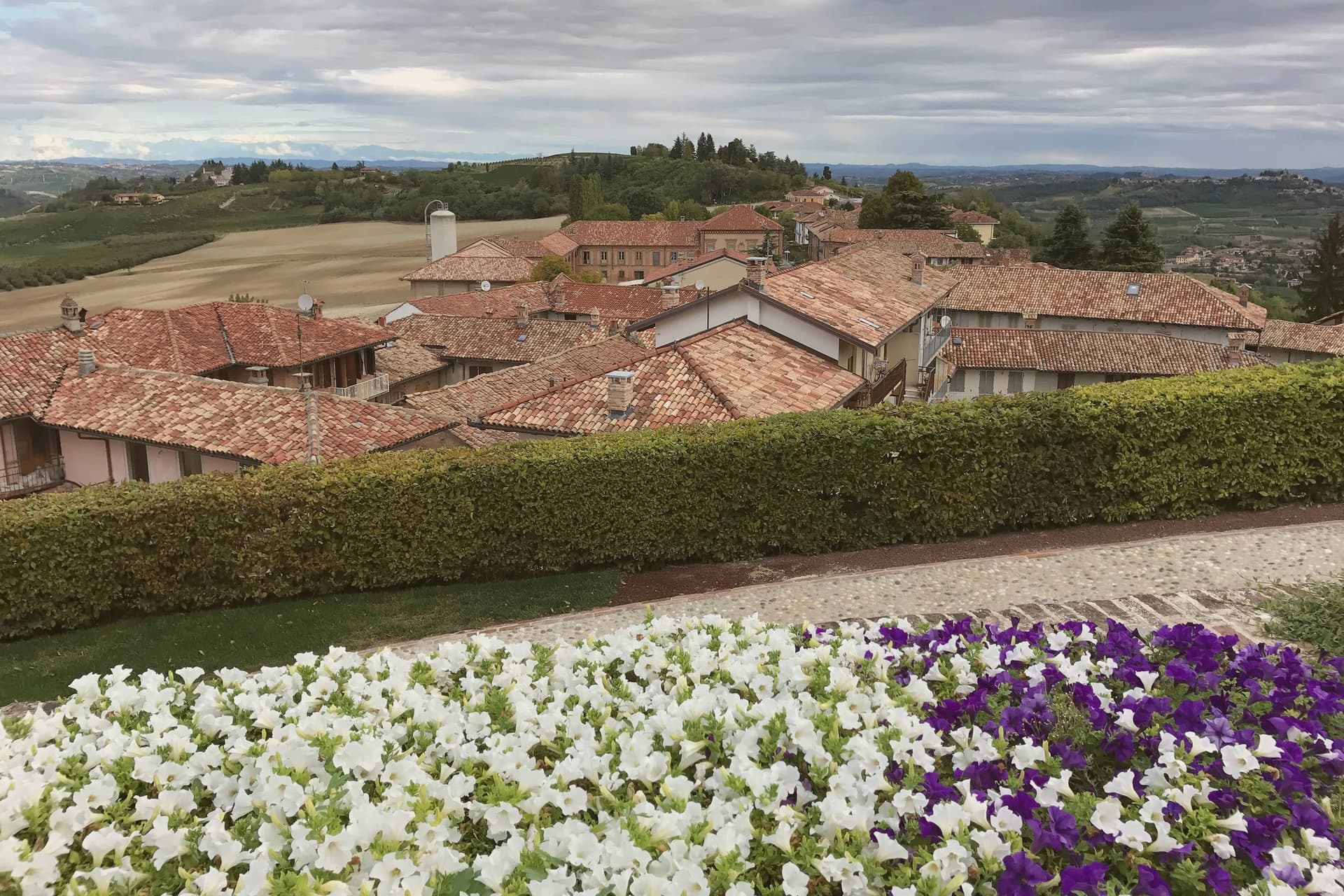
Guarene sits at 360 meters on the left bank of the Tanaro, the last hill of the Roero before the river crosses to Alba and the Langhe. The Roero family, powerful Asti bankers, took the village in 1379 and held it until the line ended with Count Alessandro in 1899.
Count Carlo Giacinto Roero rebuilt the medieval fortress between 1726 and his death, turning it into a baroque summer residence; his sons completed the work and hosted the king and queen of Sardinia here in 1773. The castle is now a Relais & Châteaux hotel with a small museum.
On the slope below the village, the Fondazione Sandretto Re Rebaudengo opened Palazzo Re Rebaudengo in 1997 as its first contemporary art space; the foundation added an open-air sculpture park in 2019 with works by Carsten Höller, Marguerite Humeau, and Paul Kneale set among pear orchards and Nebbiolo rows. The hill carries four institutional signals at once, the highest density of any Roero commune.
What to see in Guarene
- Castello di Guarene. Eighteenth-century baroque castle rebuilt 1726 by Count Carlo Giacinto Roero from a medieval fortress, now a Relais & Châteaux hotel.
- Palazzo Re Rebaudengo. Fondazione Sandretto Re Rebaudengo's first contemporary art space, opened 1997 in an eighteenth-century palazzo in the village.
- Parco d'arte Sandretto Re Rebaudengo. Open-air sculpture park opened 2019 with works by Carsten Höller, Marguerite Humeau, and Paul Kneale among Nebbiolo rows and pear orchards.
How to get to Guarene
Torino is roughly 62 minutes away by road.
Our tip
April through October is the season. May and June green the Roero hills and the castle gardens open. September and October bring the harvest and Arneis bottling; the Tartufo Bianco d'Alba fair in October fills the surrounding villages.
More from Anywhere Italy
 The prettiest villages within 90 minutes of Torino
- The prettiest villages that eat well in Piemonte
 The best small towns with a serious restaurant in the province of Cuneo
- The best wine towns in the province of Cuneo
- The best cheese towns within two hours of Turin
- The 10 best hidden wine towns that eat well within 90 minutes of Torino