
The 6 best towns you can get around without steps in Marche
90 towns visited, 910 to go. Follow along, free: Subscribe on Substack
Marche runs from long flat sand on the Adriatic to river valleys of brick and travertine, and much of it is built at a gradient a wheelchair or a pushchair can actually manage. The seafront promenades are wide and level, laid with tile and asphalt rather than rough stone, and the beach clubs put out matting to the water in summer. Inland, the older centers are brick, with arcades that shelter the pavement in July and again in the wet weeks of November. Eating well here is unfussy: brodetto with its many kinds of fish on the coast, olive all'ascolana, tagliatelle with a slow pork sauce, verdicchio and pecorino from the hills behind.
The default Marche stop is Urbino, up on its double hill, and it is worth the climb for the Palazzo Ducale and Raphael's birthplace. It is also a town of ramps that are really staircases in disguise, with coach parties funnelled up the same steep approach from spring through to the end of September. Anyone who needs a level route, or is pushing one, spends the day negotiating the slope rather than looking at the paintings. The crowding is concentrated because almost everyone arrives on the same few summer days.
The same coast and the same valleys carry on either side of that, and the towns along them are flatter. These are the Marche comuni that hold the national accessibility award for step-free routes and adapted services, from the sand at Senigallia and Porto San Giorgio to the brick arcades of Grottammare's lower town, the Metauro at Mercatello, the plain below Mondolfo and the old ironworking streets of Sassoferrato. Fewer people go to any of them. They are easier to cross, and the food is no worse.
Of the 63 communes we have mapped in Marche, 6 qualify as towns you can get around without steps: each holds the national accessibility award for step-free routes and adapted services. The smallest, Mercatello sul Metauro, has 1,326 residents.
Two more lists worth reading alongside this one: The 9 best beach towns in Marche and The best coastal towns you can reach by train in Marche.
Why visit Mercatello sul Metauro
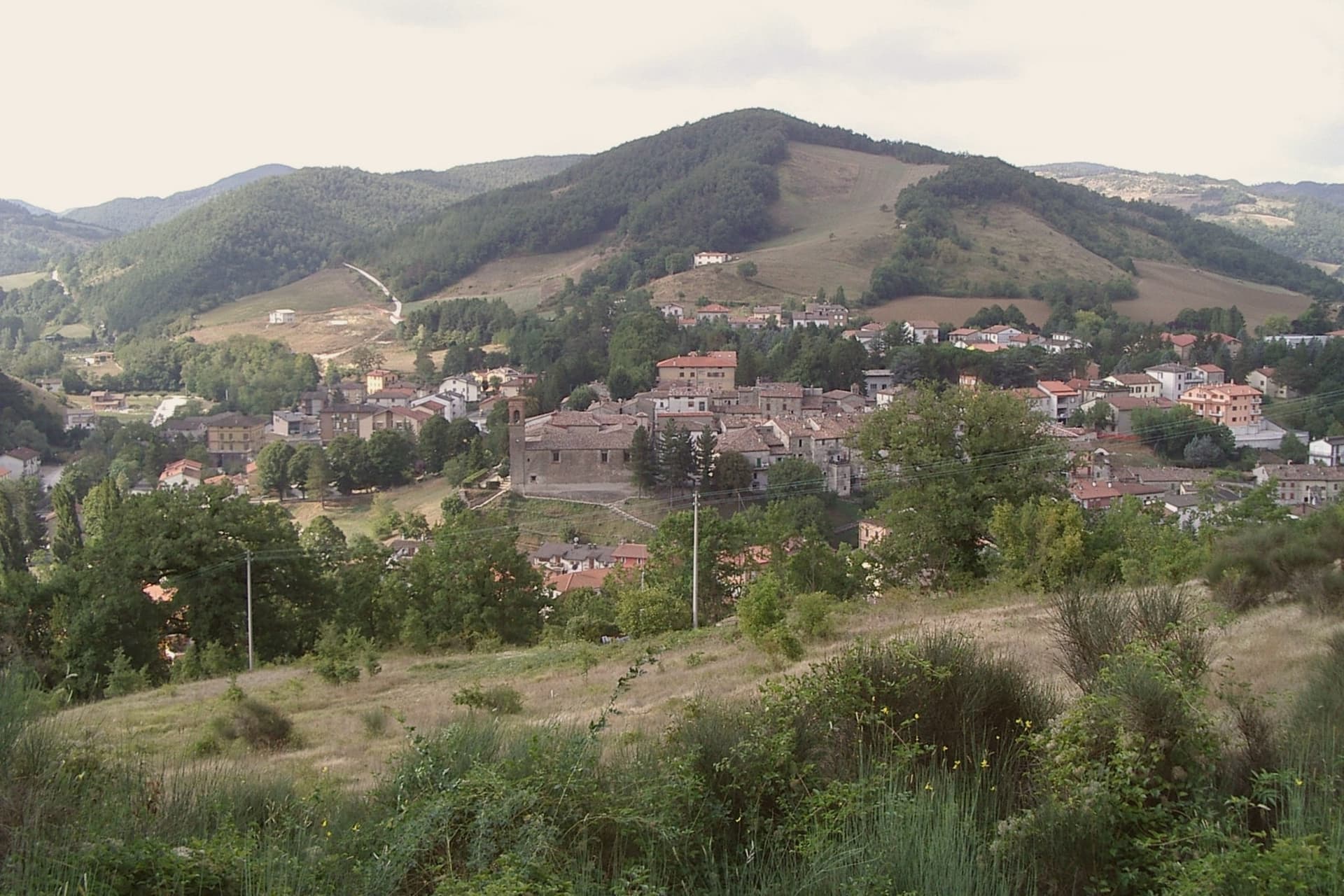
The upper Metauro valley here sits within the Massa Trabaria, the medieval district that supplied beams for Roman and papal building, and the site itself has older layers still. Etruscans and then Romans held the ground, where it stood between the municipia of Tiferno Metaurense and Tiferno Tiberino under the name Pieve d'Ico.
The town became an autonomous commune in 1235 under a bull of Pope Gregory IX, and within fifty years walls had risen around it and the name had changed to Mercatello sul Metauro. The pieve, exempt from any bishop since 1180 and answering only to the Holy See, sits on the square along with the town hall, forming the axis around which the walled center still reads as a single composition.
That square and its buildings earned the borgo its place among the Borghi più belli d'Italia in 2018. What the valley setting, the papal bull, the walls and the exempt pieve add up to is a town whose shape and status were fixed almost in a single generation, tied to a jurisdiction and a building material trade that both reached well beyond its own small perimeter, and have changed little since.
What to see in Mercatello sul Metauro
- Pieve Collegiata dei Santi Pietro e Paolo. Romanesque church whose facade was rebuilt in 1927 on the 1363 plan. Under Holy See dependence its jurisdiction reached forty-seven churches and chapels scattered through the surrounding valley.
- Piazza Garibaldi. Main square of the medieval borgo, faced by the pieve, the town hall and the seventeenth-century Palazzo Gasparini.
- Mura medievali. Thirteenth-century walls built within fifty years of the 1235 charter, still defining the perimeter of the centro storico.
How to get to Mercatello sul Metauro
Rimini is about 1 h 30 min away by road.
Our tip
April through October is the working season for Mercatello sul Metauro. The upper Metauro valley turns green from April, the walls and the pieve open every day, and the woodland trails of the surrounding Massa Trabaria forests open for slow walks. June through August touches the low thirties in the valley but the 429-meter elevation keeps the borgo a few degrees cooler than the lowland.
Why visit Sassoferrato
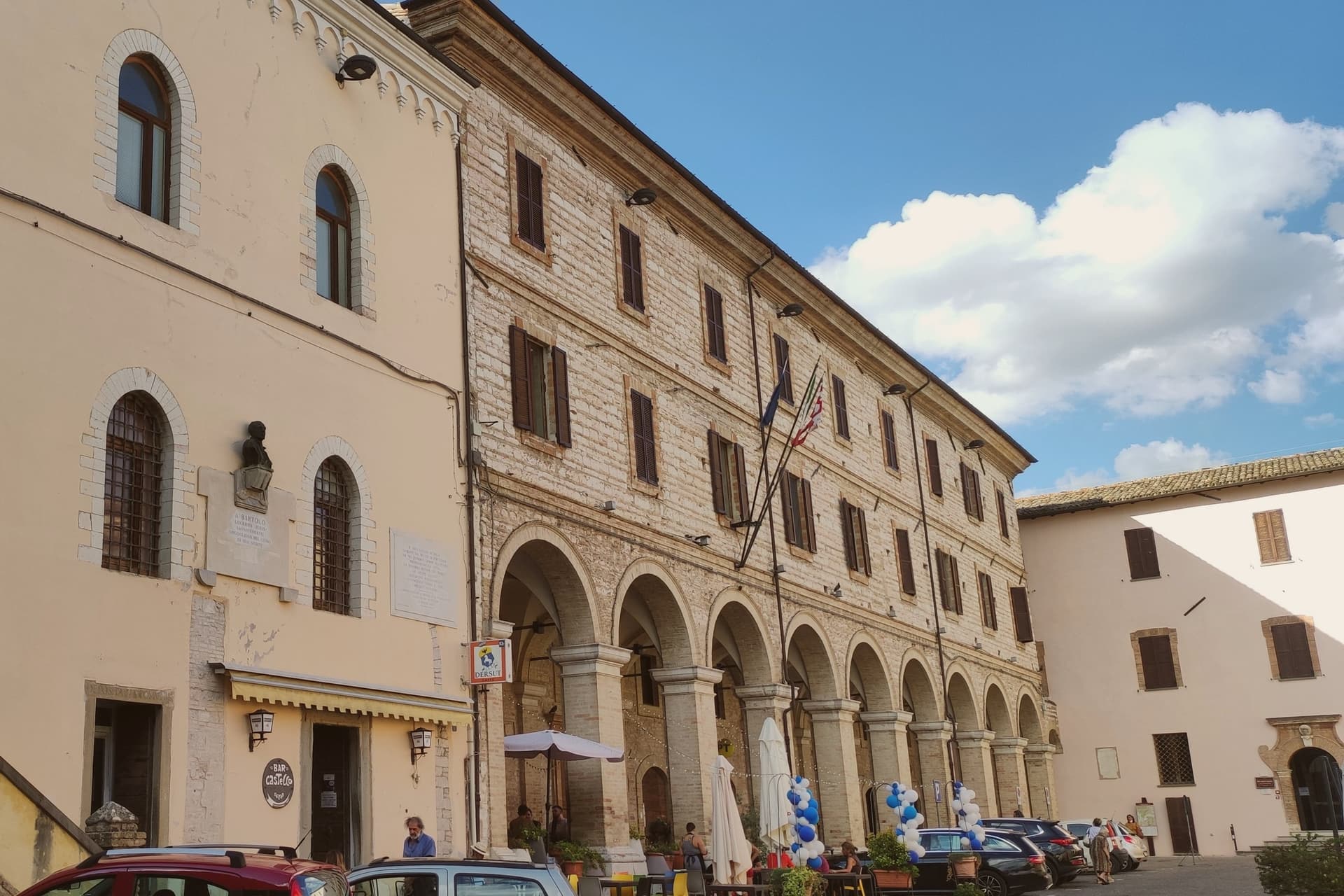
Sassoferrato sits on the eastern slope of the Apennines on two levels: the Borgo at around 310 meters and the Castello at 400 meters, dominated by the Rocca built in 1365 by order of Cardinal Albornoz. A kilometer south of the modern town lies Sentinum, the Roman city next to which the consuls Publius Decius Mus and Fabius Maximus Rullianus defeated a coalition of Samnites, Etruscans, Umbrians and Senone Gauls in 295 BC, in the decisive battle of the Third Samnite War that allowed Rome to unify central Italy.
The archaeological park preserves the cardo and decumanus, the urban baths, a second extramural bath complex and the ruins of a metalworking shop. The Civic Archaeological Museum inside the Palazzo dei Priori, built 1355, holds the finds from Sentinum, including a Byzantine Saint Demetrius mosaic icon on wooden support.
Giovanni Battista Salvi, called Il Sassoferrato, was born here in 1609; Palazzo Oliva holds a collection of his Raphaelesque devotional paintings. The town gives its name to the Battle of the Nations historical reenactment, held each August.
What to see in Sassoferrato
- Rocca Albornoz. Fourteenth-century fortress built 1365 by order of Cardinal Albornoz, dominating the upper Castello district at 400 meters.
- Parco Archeologico di Sentinum. Roman city a kilometer south of town, with the cardo and decumanus, the urban baths and the extramural bath complex still visible.
- Museo Civico Archeologico. Inside the 1355 Palazzo dei Priori, holding the finds from Sentinum and the Byzantine Saint Demetrius mosaic icon on wooden support.
How to get to Sassoferrato
Perugia is about 1 h 14 min away by road.
Our tip
April through June and September into October are the best months for Sassoferrato. The Sentino valley turns green from April, the archaeological park at Sentinum opens its full guided program through the warmer months, and the Palio di Sant'Ugo and Battaglia delle Nazioni reenactment fill the streets each August. July and August touch the high twenties at 386 meters but the two-level position keeps the Castello cooler than the Borgo and the lower river.
Why visit Mondolfo
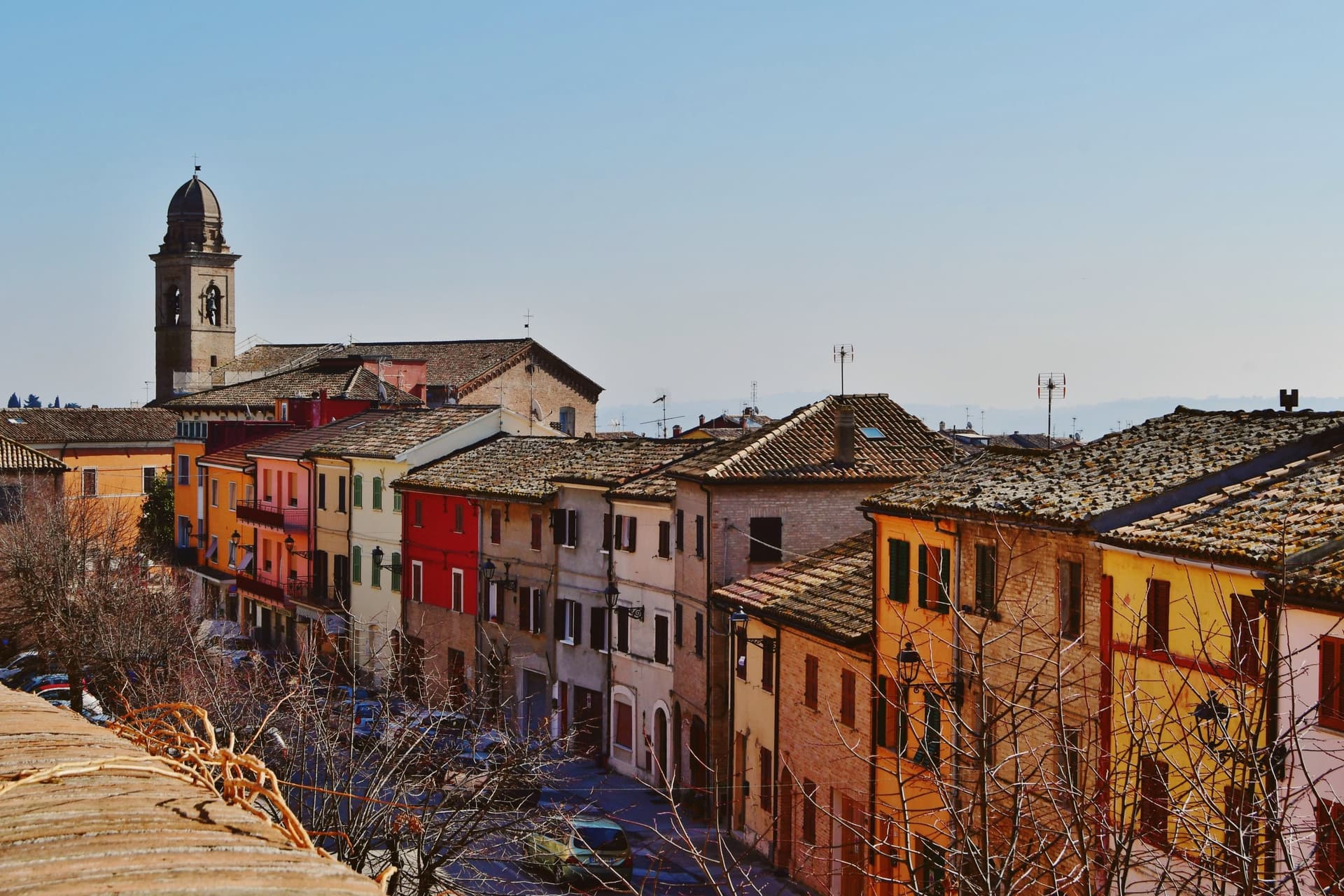
Mondolfo sits at 144 meters on a ridge above the Adriatic between Pesaro and Senigallia, with the coastal frazione on the beach four kilometers below. A Byzantine castle stood here in the sixth and seventh centuries, and the present settlement formed around it in the early eleventh, when the Montoffo feudal family gave the town its name.
The Malatesta took the castle in the fourteenth century, then Sigismondo Pandolfo Malatesta lost it to Pope Pius II in 1463, at which point the walls and bastion that still anchor the southwest corner were rebuilt. The friary and church at the heart of the old town were rebuilt twice, first by Antonio di Pietro da Vercelli in 1466 and again under Domenico da Como in 1593.
Mondolfo joined the Borghi più belli d'Italia and holds recognitions for both its coast and its farmland. The town is a single history in two elevations: the ridge held the castle and later the fortified center, while the shore below, reached across the four kilometers of farmland now recognized for its management, grew into the seafront community that carries the coastal recognitions today.
What began as a Byzantine strongpoint and passed through Malatesta and papal hands still reads as a hill town looking down at its own beach.
What to see in Mondolfo
- Mura Roveresche. Roughly 600 meters of fifteenth-century walls and the south-west bastion, redesigned by the Della Rovere for early artillery defense after 1463.
- Complesso Monumentale di Sant'Agostino. Augustinian friary and church from the late thirteenth century, rebuilt in 1466 and again in 1593, now home to the civic museum and the Sant'Agostino complex.
- Centro storico. Walled hill borgo with narrow streets, the Palazzo del Comune and the Chiesa di Santa Giustina at the heart of the perimeter.
How to get to Mondolfo
It has its own railway station. Ancona is about 44 min away by road. The full route from Bologna.
Our tip
May through September is the main window for Mondolfo. The Marotta seafront opens from late spring, the Bandiera Blu lido water clears from June, and the hill borgo above stays a few degrees cooler than the beach. July and August fill the lungomare with the worst of the coast traffic; the walled borgo above keeps quieter.
Why visit Porto San Giorgio
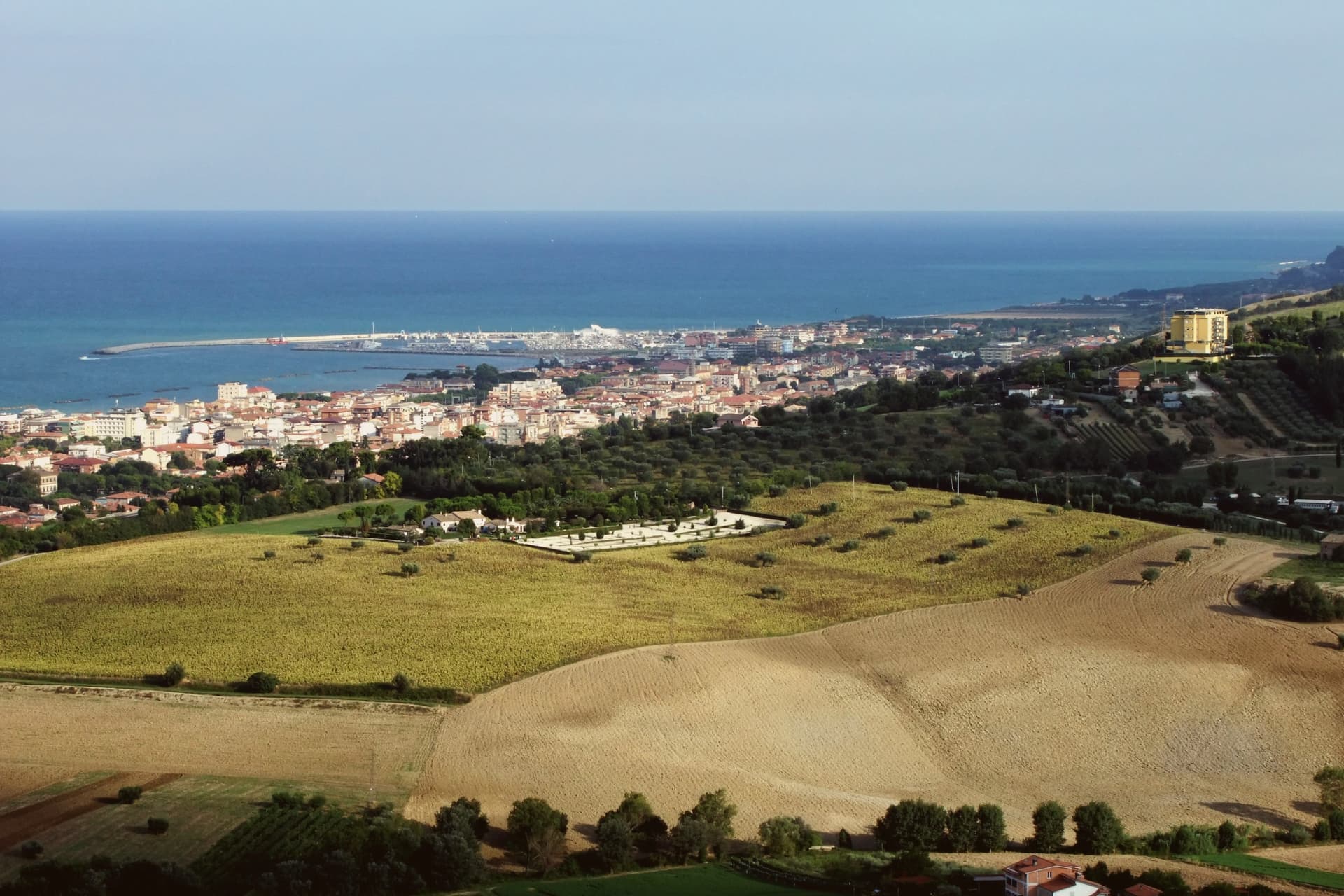
The town sits on the central Adriatic between Ancona and Pescara, the working port and the holiday beach of the Fermo valley. The lower town by the water was settled as the harbor of the older inland Fermo, and the castle that still stands above the harbor was built in 1267 by Lorenzo Tiepolo, then Fermo's podestà.
The historic center sits slightly back from the sea, holding the 1818 civic theater and a small but lively summer calendar of seafood festivals, while the seafront itself runs a different register: marina, beach, and the Liberty-era promenade under date palms and umbrella pines, laid out parallel to the sand behind the row of bathing stations. What the layout adds up to is a town divided cleanly by function rather than by age: an inland-facing historic core that keeps the theater and the festival calendar, and a shoreline built in layers from the 13th-century defensive castle down through the Liberty-era promenade to the modern marina and beach, each addition sitting seaward of the last.
What to see in Porto San Giorgio
- Rocca Tiepolo. Brick castle with a squat profile and surviving towers, built by Lorenzo Tiepolo to defend the port. It stands as the historic anchor of the seafront, the oldest fixed point on a shoreline otherwise given over to modern bathing establishments.
- Spiaggia (Bandiera Blu). The Bandiera Blu beach runs two kilometers of fine sand on a gentle shelf, lined with classic Adriatic stabilimenti balneari. One of the central Adriatic's reliable family beaches.
- Porto turistico. The marina holds moorings alongside a working fishing fleet that still lands its catch at dawn, so pleasure craft and working boats share the same water.
How to get to Porto San Giorgio
It has its own railway station. Ancona is about 48 min away by road.
Our tip
April through October is the season on the central Adriatic. May and September are the best months: warm sea, the beach stabilimenti running but not at capacity, and the seafront promenade comfortable in the afternoon light. July and August are full: Porto San Giorgio is a popular regional beach destination, the marina at capacity, the fishing-festival calendar at full output.
Why visit Grottammare
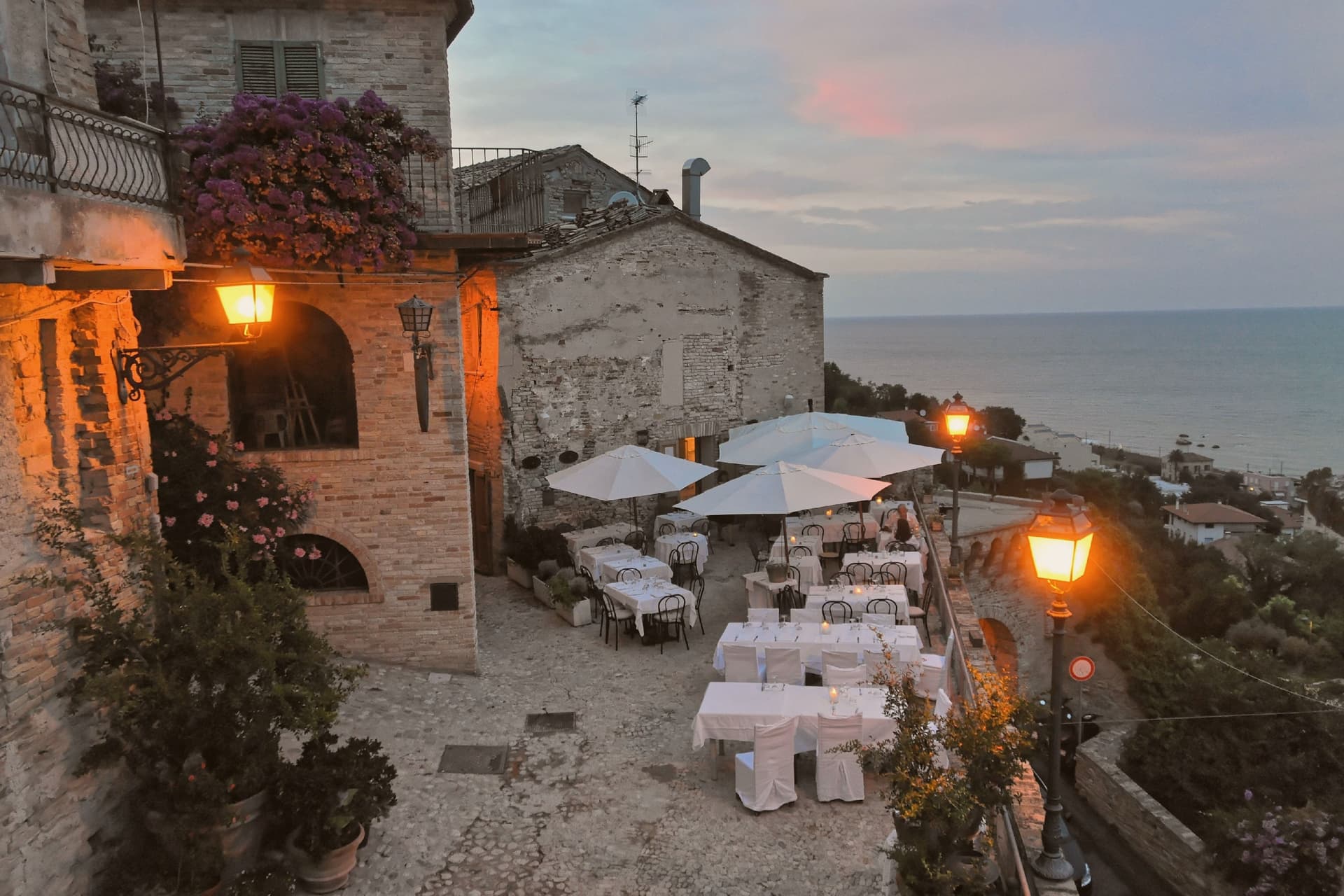
Grottammare sits on the Ascoli Piceno coast at the mouth of the Tesino. The town splits into two nuclei that never merged: a lungomare on the Adriatic, laid out with palms and Liberty villas in the late nineteenth century, and an older settlement on the hill above, reached by climbing away from the water rather than along it.
Felice Peretti was born in that upper settlement on 13 December 1521, in a house on what became the borgo's central square. He left, rose through the church, and returned as Pope Sixtus V only in monument: two churches he commissioned for his birthplace after 1585, one built beside the house itself and one now holding the collection of objects he sent back from Rome.
The upper town still carries its eleventh-century walls and the traces of an earlier fortress on the Incasato spur, and it has been named among the Borghi più belli d'Italia. The coast below has its own separate recognitions, for water quality and for the management of the hills behind it.
The two halves read as a single biography split in space: the hill holds the birth and the memory, the shore holds the later invention of the town as a seaside resort, and neither nucleus explains itself without the other.
What to see in Grottammare
- Paese Alto (Borgo Antico). Brick lanes climb the Incasato hill inside the eleventh-century walls, past the remains of a fortified spur that looks down over the seafront below.
- Chiesa di Santa Lucia. On the central square of the upper town, next to the house of Peretti's birth, a plain sixteenth-century commission from a native son grown powerful.
- Museo Sistino. Inside the Chiesa di San Giovanni Battista, the liturgical objects on display came back to the town only after the local boy had become pope.
How to get to Grottammare
It has its own railway station. Pescara is about 1 h away by road.
Our tip
May through September is the main window for Grottammare. The Bandiera Blu seafront is open from late spring, the palms on Lungomare De Gasperi catch full light from June, and the Paese Alto stays a few degrees cooler than the beach. July and August touch the low thirties on the coast; the upper town shaded lanes are the cool retreat.
Why visit Senigallia
Senigallia sits at the mouth of the Misa river on the Adriatic, twenty-five kilometers north of Ancona. The centro storico gathers along the river's right bank, where the arcades face the water, while the fortress stands apart as the town's layered military record, built up over two centuries by successive rulers rather than in one campaign.
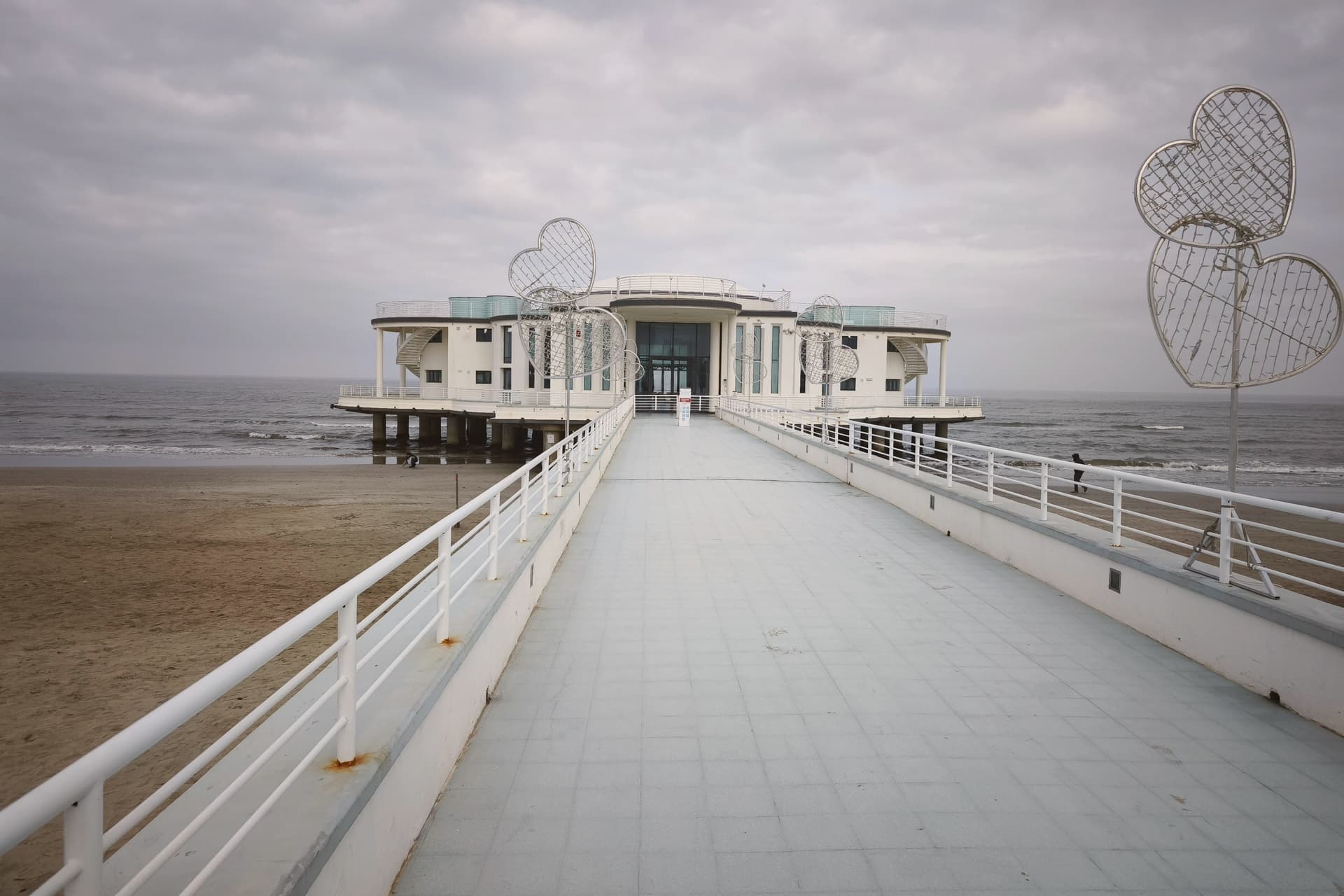
The beach runs south from this old core as a separate register of the town entirely, thirteen kilometers of it, with the pier pavilion marking the center of that beachfront and the restaurant anchoring its southern end. The photographer worked in the town all his life, and the permanent section of his prints sits inland in the Palazzo del Duca rather than anywhere near the coast he might have photographed.
The market arcade, built in the nineteenth century, still does the ordinary work of feeding the town between the historic river frontage and the modern beach economy. Senigallia reads, then, as three towns joined at the river mouth: a fortified old center, a nineteenth-century civic one, and a twentieth-century coastline, each still doing the job it was built for.
What to see in Senigallia
- Spiaggia di Velluto. The Bandiera Blu beach, working spine of the town's summer, its sand fine enough underfoot to explain the name.
- Rocca Roveresca. Layered fortress combining Albornoz's fourteenth-century Rocchetta, the 1450 Malatesta keep and the Della Rovere completion by Laurana and Pontelli.
- Rotonda a Mare. Art-deco pier pavilion completed 1933, set on iron piles above the water at the center of the beachfront, restored and used for exhibitions and weddings.
How to get to Senigallia
It has its own railway station. Ancona is about 41 min away by road. The full route from Bologna.
Our tip
May through September is the Senigallia window: the beach bagni open from late May, the Caterraduno radio festival fills late June, the Summer Jamboree rockabilly week runs through early August, and the September sea stays warm through the start of school. July and August touch the high twenties with humid Adriatic evenings; the Velvet Beach and the Rotonda a Mare passeggiata pull the largest crowds of the year. April, May and October are quieter, cooler months for the Rocca Roveresca tours and the Giacomelli rooms at Palazzo del Duca.
More from Anywhere Italy
- The 9 best beach towns in MarcheMarcheclean beach9 towns · smallest 3,741 residents
- The best coastal towns you can reach by train in MarcheMarchecoastalby train6 towns · smallest 12,899 residents
- The best coastal towns within 90 minutes of AnconaNear Anconacoastalwithin 90 min6 towns · smallest 3,741 residents · closest 28 min away
- The best towns with a serious restaurant that eat well within 90 minutes of AnconaNear Anconawithin 90 minserious restauranteats well10 towns · smallest 3,741 residents · closest 30 min away
- The 8 best towns you can reach by train that eat well within 90 minutes of AnconaNear Anconaby trainwithin 90 mineats well8 towns · smallest 7,369 residents · closest 28 min away
- The 8 prettiest villages that eat well in MarcheMarcheeats wellprettiest villages8 towns · smallest 3,634 residents