
Lazio · Viterbo
Capodimonte
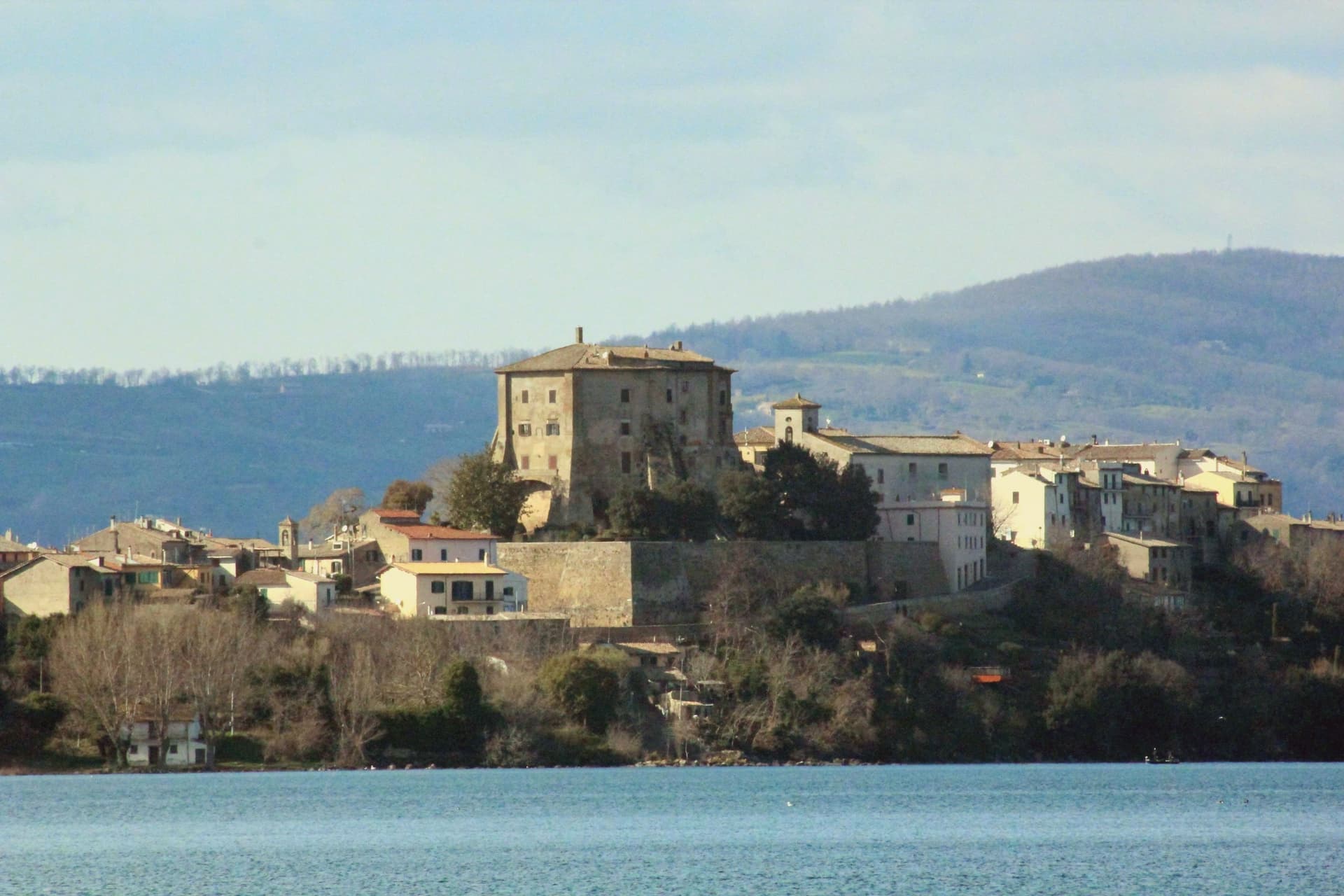
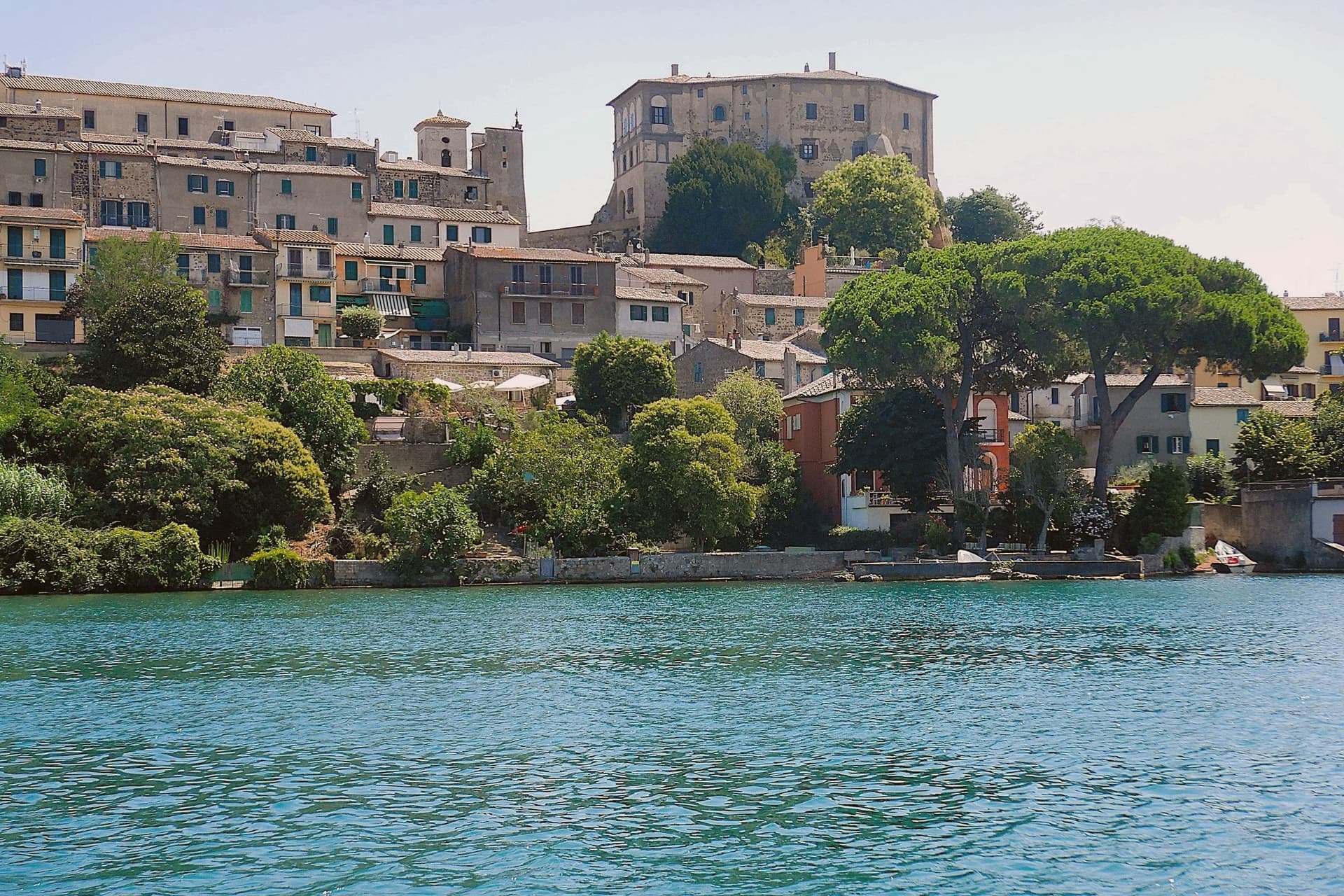
The lakefront Farnese stronghold on a peninsula jutting into Europe's largest volcanic crater lake, with an extra-virgin olive oil tradition recognized by Città dell'Olio.
- Best time
- Apr–Jun, Sep–Oct
- By car
- 1 h 49 min from Rome
- Population
- 1,667
Known for
LAGO DI BOLSENA
Europe's largest volcanic crater lake, 370,000 years old and 151m deep. Capodimonte sits on a peninsula jutting into it.
FARNESE STRONGHOLD
Antonio da Sangallo the Younger built the octagonal Rocca in 1513 for the Farnese family, who ran the lake's northern shore from here.
ISLA BISENTINA OFFSHORE
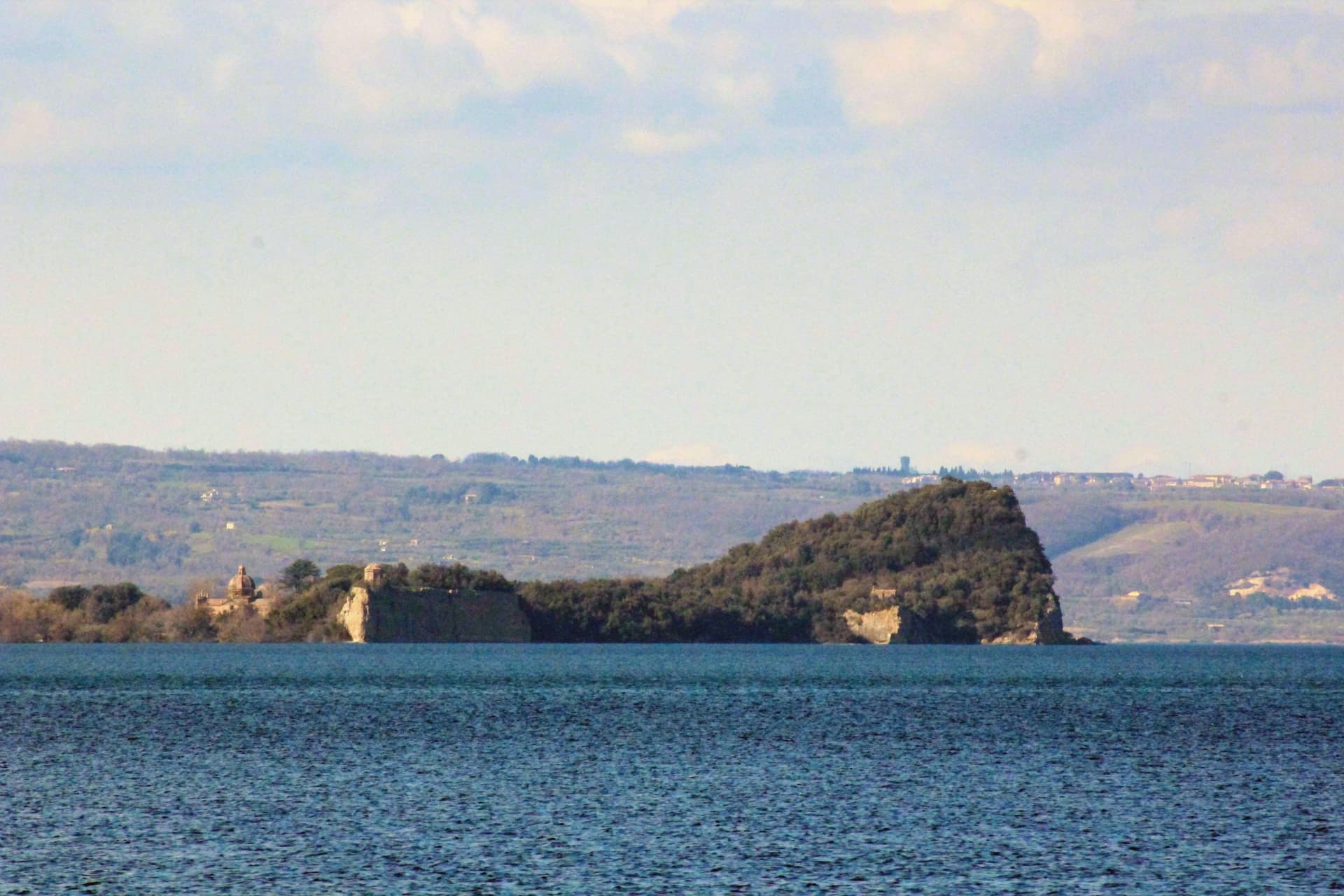
The lake's only historically-inhabited island, 2 km away. Seven Renaissance chapels and Farnese tombs. Guided visits Saturdays in summer.
CITTÀ DELL'OLIO
Tuscia DOP Sabina-style oil from the surrounding hills. Several small frantoi within 10 km.
When to visit
Best · Apr–Jun, Sep–Oct
- J10°
- F12°
- M14°
- A17°
- M22°
- J27°
- J31°
- A31°
- S25°
- O20°
- N15°
- D11°
- Best
- Hot or crowded
- Quiet
- Mostly closed
Daytime averages, 2020–2024. Weather data by Open-Meteo.com.
The festa: San Sebastiano, 20 January
Why come
Capodimonte is a 1,700-resident lakeside borgo on the southwestern shore of the lake, formed 370,000 years ago when the Vulsini volcanic complex collapsed inward. The town sits on a low peninsula that juts into the water, and the centro is built around that geography: the fortress anchors the point of land, the gardens run beside it, and the shore curves away on both sides into the pebble beaches used for swimming. From the peninsula's tip the view opens across the water toward the larger of Bolsena's two islands, still privately owned but open for guided visits, while the smaller Isola Martana nearby is uninhabited.
Capodimonte is also a Città dell'Olio, and the Tuscia hills behind the town produce a DOP Sabina-style olive oil pressed in small frantoi within 10 km. The lake itself is deep and clean, warm enough for swimming from May to October, and bream and coregone from its water turn up on every local table. The Via Francigena pilgrimage route passes 8 km east.
The Etruscan necropolis at Vulci is 30 minutes west, and the painted tombs of Tarquinia an hour southwest, both UNESCO sites, while Civita di Bagnoregio, the dying city on its tufa pinnacle, lies 25 km north. The town's identity comes from that position on the water: a fortified point of land looking out at an island that was once its own private world, with the surrounding hills supplying the oil that still runs through the local economy.
The Sunday letter
Capodimonte is on our list. Its letter is still to come.
We are writing about all 1,000 of these towns, one at a time, in a free letter every Sunday: the photo, the food, the festa. That is our mission. Sign up and you will be there when Capodimonte comes up. By Peter & Sophia, from Pietrasanta.
Read on
Capodimonte in our articles
How to get there
From Rome (FCO), about 2 hours by car.
Ancona / Pescara (AOI) is about 3h 21m away.
By car from the centre of Perugia 2 hours or Siena 2h 18m.
What to see
Palazzo Farnese (Rocca Farnese)
The fortress built for Pope Paul III's family stands over formal Italian gardens, partially open for visits. Its octagonal plan is unusual among lakeside strongholds of the period.
Isola Bisentina
Reached from the peninsula's tip, the island holds seven Renaissance chapels, a Franciscan convent and the Farnese tombs, a quiet cluster of buildings for a place that was long the only inhabited island on the lake.
Lago di Bolsena swimming + beaches
Clean and warm from May to October, with short pebble strands on either side of the Capodimonte peninsula.
Tuscia olive oil + frantoi
Small frantoi within 10 km press the local oil and offer tastings, a working landscape rather than a showcase one.
Coregone + lake whitefish
The lake's signature fish appears on every Capodimonte trattoria menu, grilled or in pasta, and is always paired with a local Est! Est!! Est!!! from Montefiascone next door.
The slow-trip planner
Building a trip? Find where Capodimonte fits in a slow Italy circuit.
Answer five questions. We will shape a geographically coherent slow trip from the 1,000 Italian towns most travelers skip. Yours to save and share.
We recommend
Where to eat
Not our picks, but places the guides put their name to: a Michelin star, a Gambero Rosso fork, a Slow Food snail, a Michelin Key for the hotels. Worth a table, a counter, or a night when you pass through.
Pepe NeroRistorante
Pepe Nero carries a Gambero Rosso listing, plus a spot in the Michelin Guide.
Living here
- Population 1,667
- Commuter belti
- Pharmacy: none mapped
- High school within a 30-minute drive
- Nearest airport Rome, 2 h 6 min drive
- Regional capital Roma, 1 h 49 min drive
Common questions
- What is Capodimonte known for?
- Capodimonte is the lakefront Farnese stronghold on a peninsula jutting into Europe's largest volcanic crater lake, with an extra-virgin olive oil tradition recognized by Città dell'Olio.
- Where is Capodimonte?
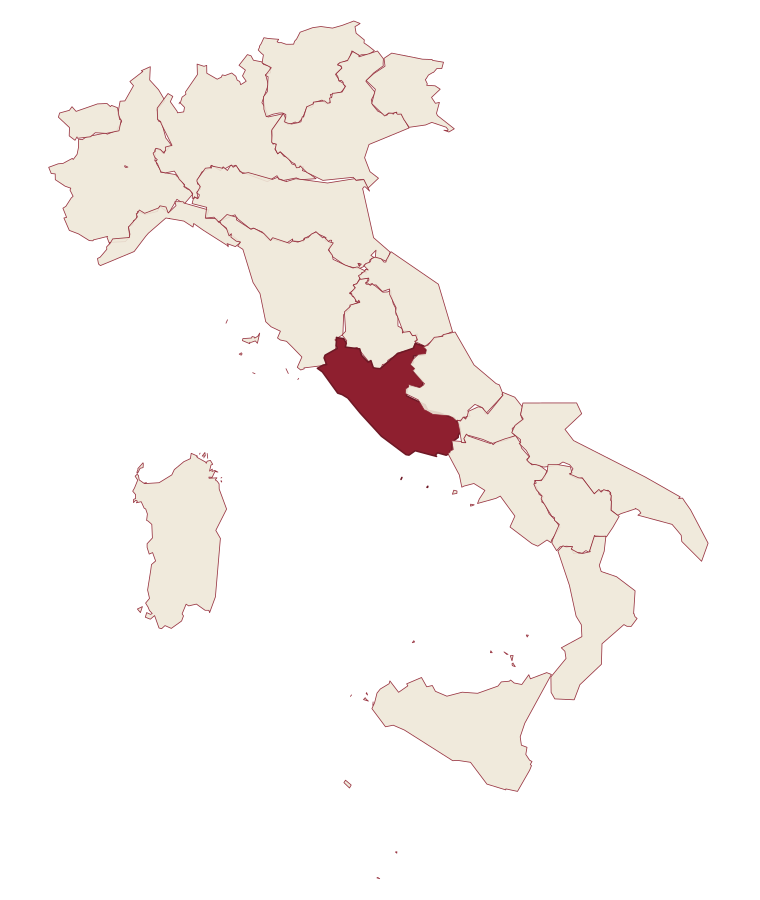
- Capodimonte is a comune in the province of Viterbo, in Lazio, at 364 meters above sea level.
- What is the nearest airport to Capodimonte?
- Rome (FCO), about 2 hours by car.
- How long is the drive from Perugia to Capodimonte?
- About 2 hours by car.
- When is the best time to visit Capodimonte?
- Best in Apr–Jun, Sep–Oct. July is the warmest month, averaging 31 degrees, and December the wettest, with about 13 rain days.
- Is there a sagra or a festival in Capodimonte?
- The town keeps its patron saint's day: San Sebastiano, 20 January.
- Which other towns are like Capodimonte?
- Bomarzo, Bassano in Teverina and Nemi.
- How many people live in Capodimonte?
- 1,667 at the 2023 count.
Tags & datadesignations · numbers · sources
Recognised as
The numbers
- Elevation: 364 m
- Population: 1,667
- Surface area: 61.29 km²
These figures were compiled from public directories: ISTAT, OpenStreetMap and Wikidata, and from the official listings of the guides named on this page. Town details change; verify with official sources before you travel.
Similar
Towns like Capodimonte
Bomarzo
Province: Viterbo
both under 3,000 people · both hill towns
Bassano in Teverina
Province: Viterbo
both under 3,000 people · both hill towns
Nemi
Province: Roma
both under 3,000 people · both hill towns
Allerona
Province: Terni
both under 3,000 people · both hill towns
Arrone
Province: Terni
both under 3,000 people · both hill towns
Seneghe
Province: Oristano
both under 3,000 people · both hill towns
🫒 Città dell'Olio
More Città dell'Olio towns in Lazio
Boville Ernica
Province: Frosinone
A Ciociaria hilltop town with eighteen intact medieval towers, ringed by a walled circuit that has stood since the tenth century.
Casperia
Province: Rieti
A Sabina hill village named Aspra in Virgil's Aeneid, called that until 1947, ringed by walls from 1282.
Castro dei Volsci
Province: Frosinone
A Ciociaria hilltop borgo at 385 meters in the Sacco valley, named for the pre-Roman Volsci.
Isola del Liri
Province: Frosinone
The Ciociaria town with a 27-meter waterfall in its centro storico and a paper-mill past once called the Manchester of Italy.
Minturno
Province: Latina
A coastal comune at the mouth of the Garigliano, built on the Roman colony of Minturnae.