
Aosta Valley · Aosta Valley
Bard
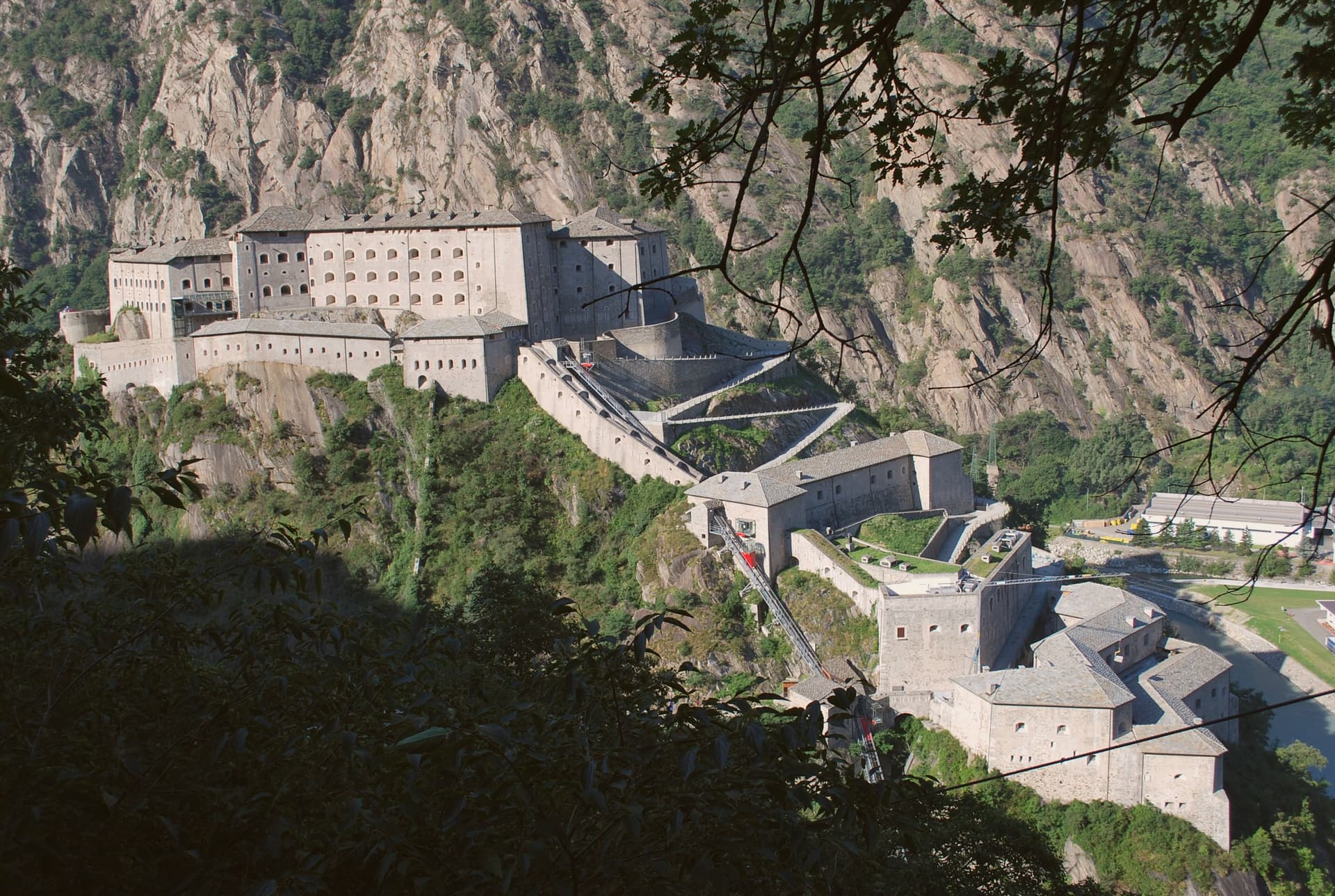
A 108-person village under the largest Savoy fortress in the Alps.
- Best time
- Apr–Oct
- By car
- 1 h 12 min from Turin
- By train
- Station in the comune
- Population
- 108
Known for
FORTE DI BARD
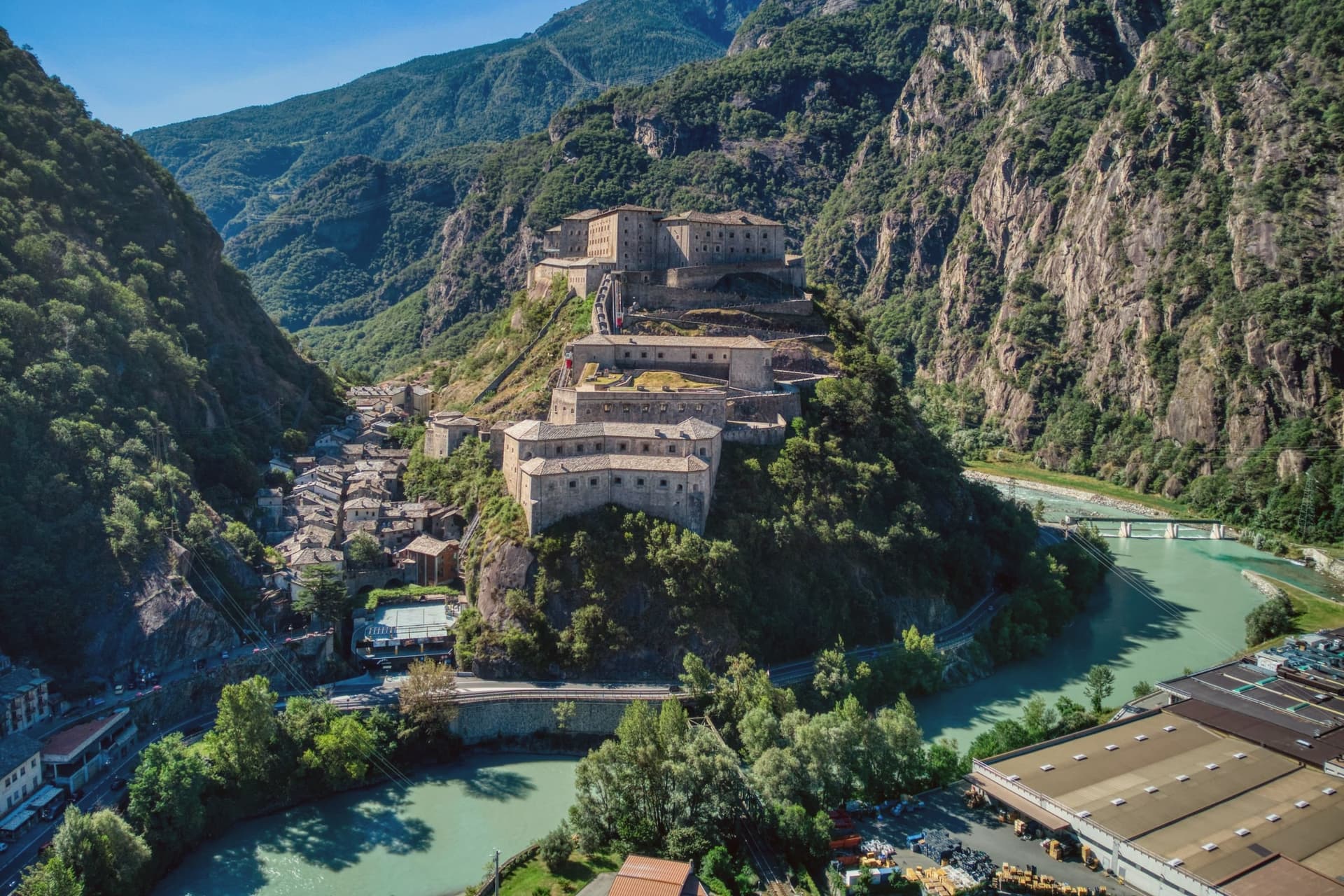
Three-tier Savoy fortress rebuilt 1830-1838 between 400 and 467 metres above the village, now Museo delle Alpi and exhibition complex.
1800 SIEGE
Around 400 Austro-Piedmontese soldiers held the older fort for two weeks against Napoleon's 40,000-strong Army of Reserve, delaying the descent on the Po Valley.
108 RESIDENTS
One of Italy's smallest Borghi più Belli, a single medieval street with fifteenth- and sixteenth-century mansions and roughly a hundred people.
When to visit
Best · Apr–Oct
- J9°
- F11°
- M12°
- A16°
- M20°
- J24°
- J27°
- A27°
- S22°
- O17°
- N12°
- D9°
- Best
- Hot or crowded
- Quiet
- Mostly closed
Daytime averages, 2020–2024. Weather data by Open-Meteo.com.
The festa: Assunzione di Maria, 15 August
Why come
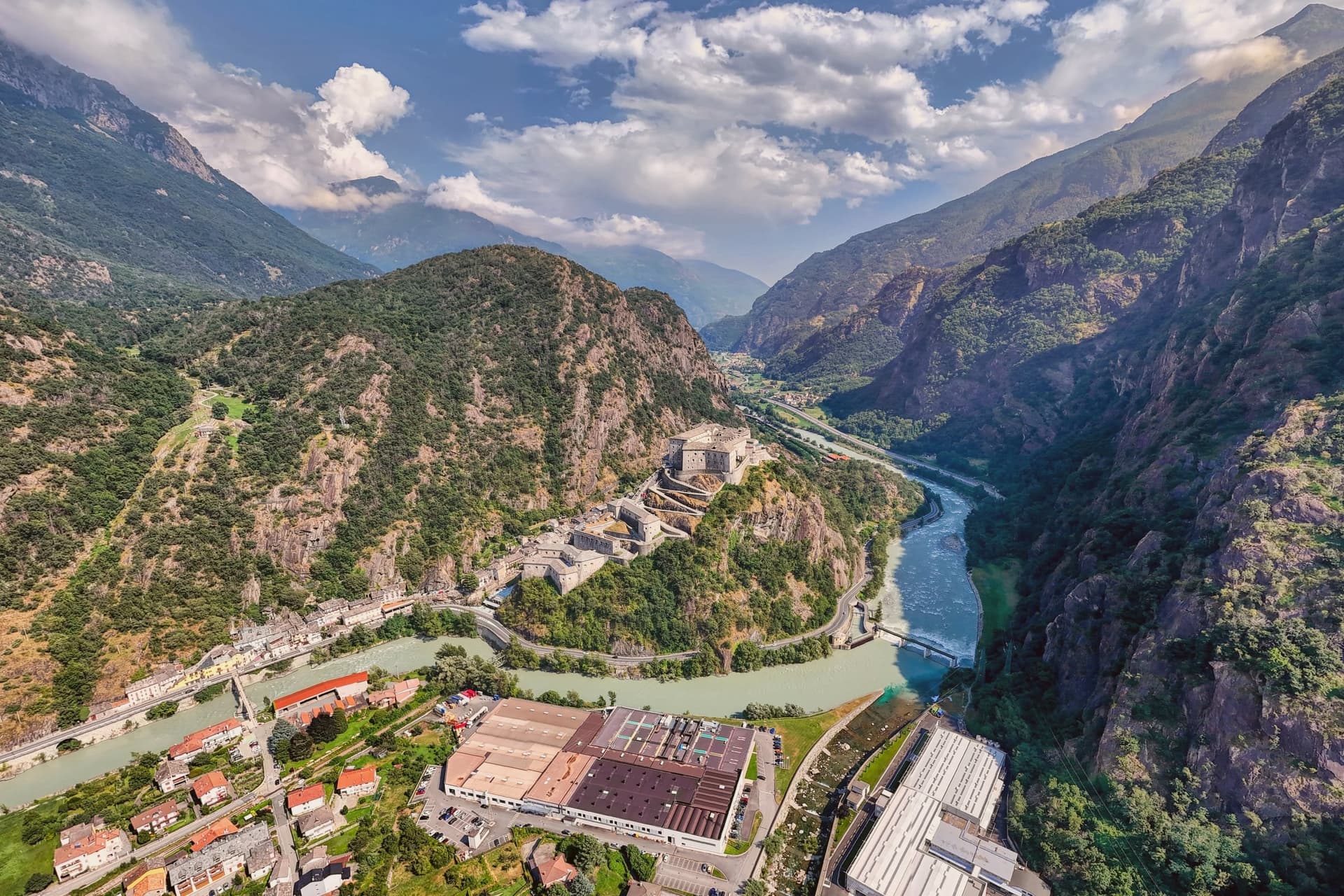
Bard sits at the entrance of the Aosta Valley, its single medieval street wedged between the Dora Baltea river and the rocky prominence that carries the fortress above it. The rock has held fortifications since at least the tenth century, when a castle stood on the site of a fifth-century structure attributed to Theodoric. That older fort was destroyed after the 1800 siege, and Charles Albert of Savoy rebuilt the current three-tier complex on the same ground between 1830 and 1838.
The village below is compact by design: one main street, noble houses from the fifteenth and sixteenth centuries, and a parish church rebuilt several times over the medieval core. The rock and the river leave no room for the town to spread, so fortress and village occupy the same narrow footprint, one stacked above the other rather than side by side. What the place adds up to is a defensive chokepoint that never had space to become anything but a single street and the walls above it.
The Sunday letter
Bard is on our list. Its letter is still to come.
We are writing about all 1,000 of these towns, one at a time, in a free letter every Sunday: the photo, the food, the festa. That is our mission. Sign up and you will be there when Bard comes up. By Peter & Sophia, from Pietrasanta.
Read on
Bard in our articles
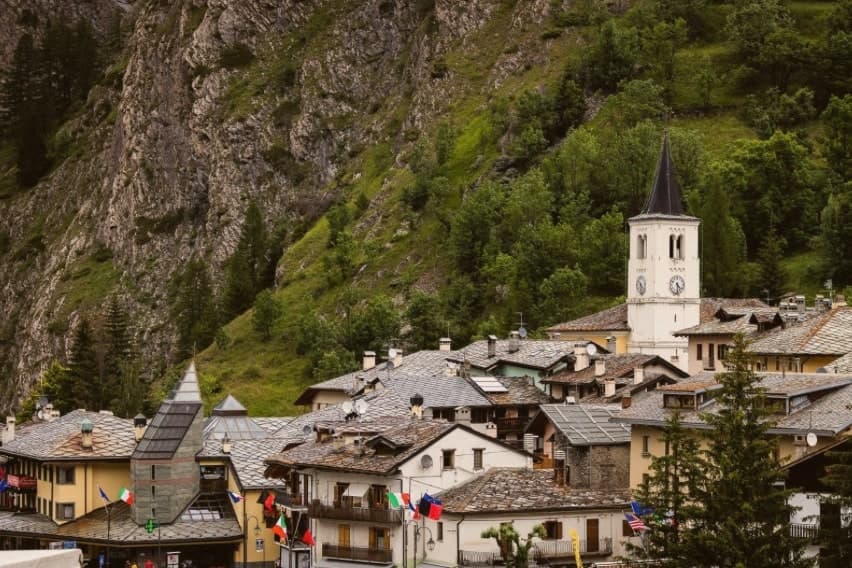
 The 6 best hidden towns you can reach by train that eat well within 90 minutes of Torino6 towns, Bard among them.
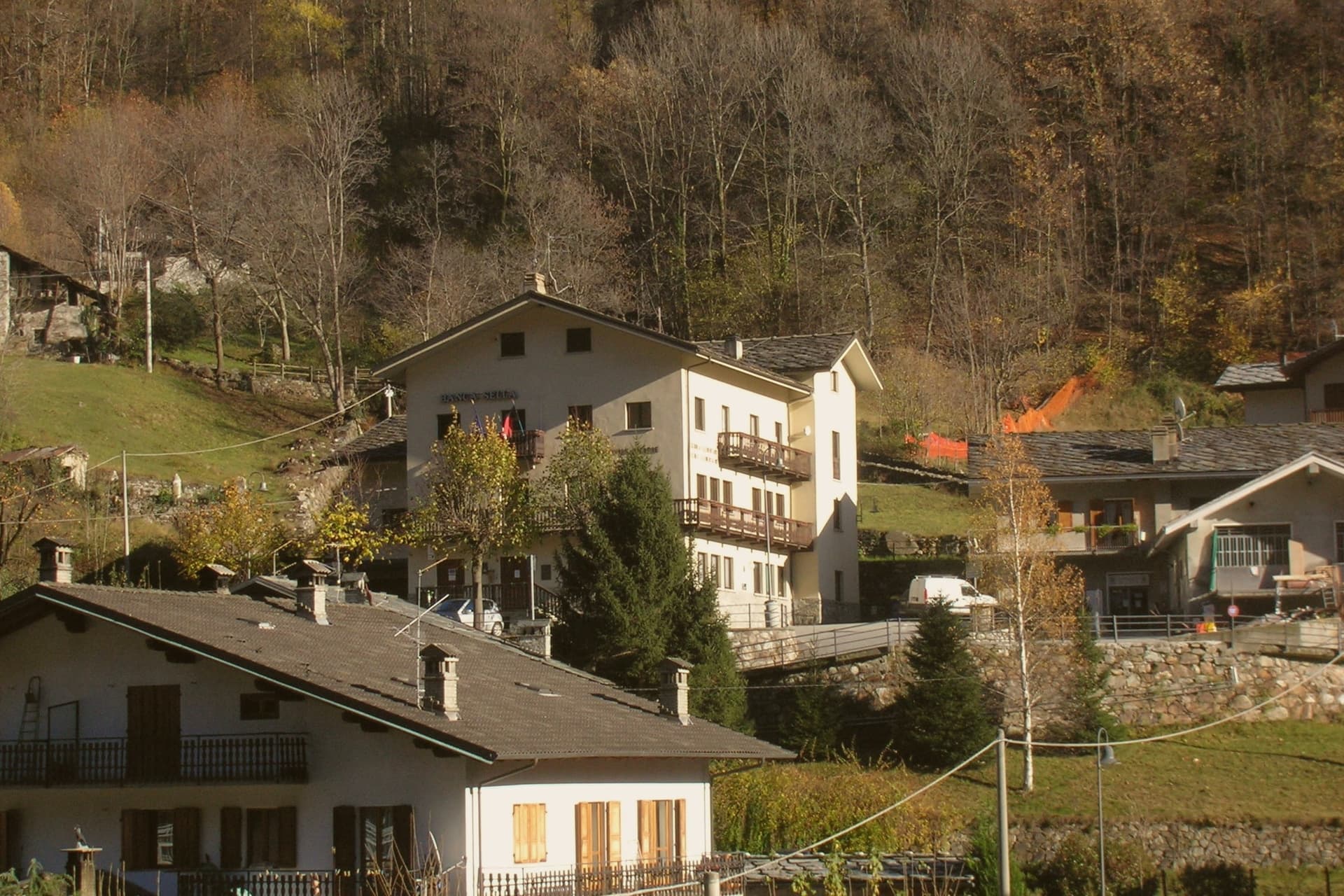
 The best towns that eat well in the province of Valle d'Aosta/Vallée d'Aoste8 towns, Bard among them.
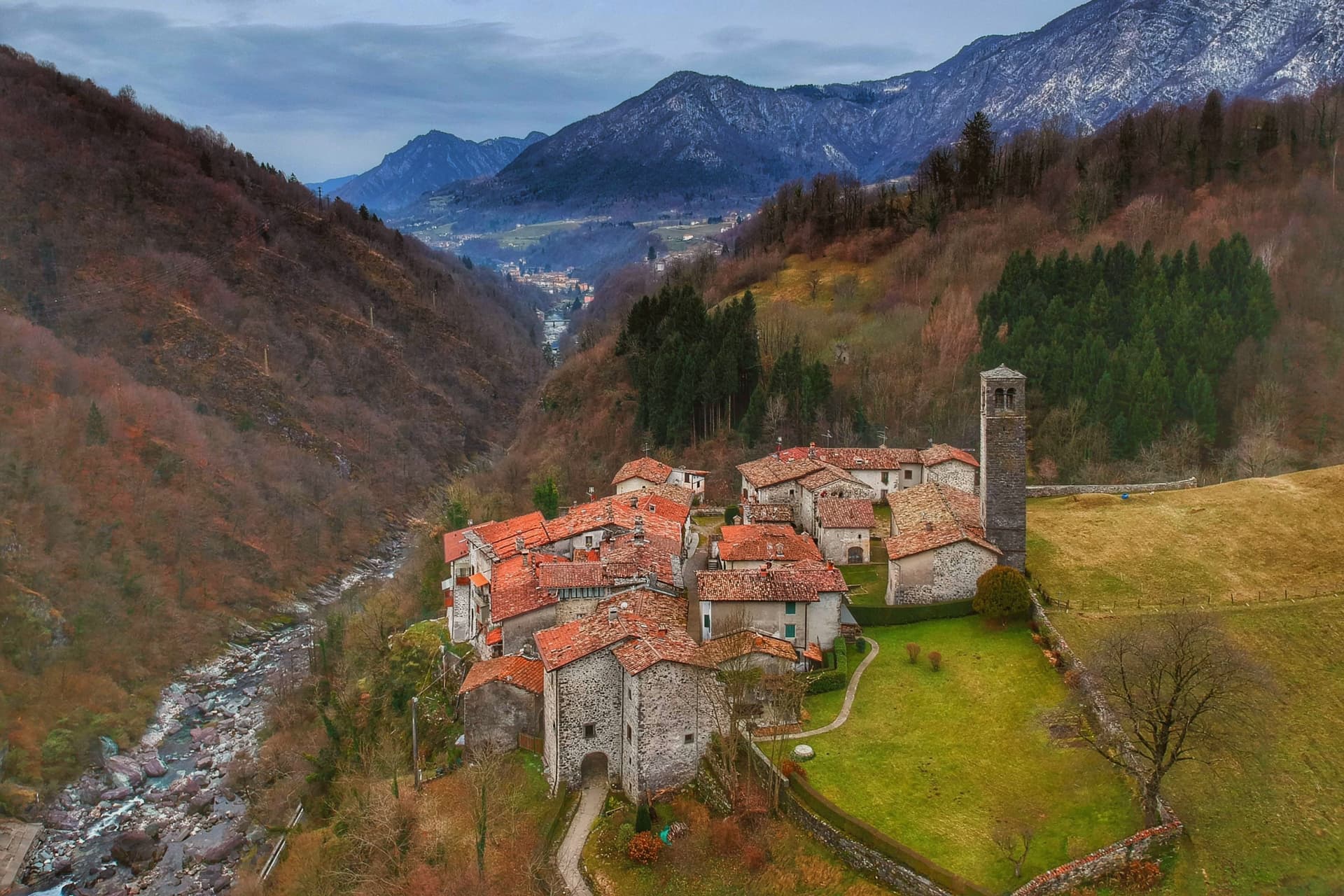
 The prettiest villages within 90 minutes of Torino8 towns, Bard among them.
 10 Borghi più belli d'Italia that stay empty anyway10 towns, Bard among them.
How to get there
From Turin (TRN), about 1h 9m by car.
Milan (BGY) is about 2h 24m away.
By car from the centre of Genoa 2h 33m.
There is a railway station in the comune, so you can arrive without a car.
Coming by train into Torino Porta Susa? Bard is about 1h 9m away by road.
What to see
Forte di Bard
Three terraced levels climb the fortress rock above the village. The current structure replaced an older fort that Napoleon ordered demolished after taking it.
Museo delle Alpi
Permanent museum inside the fortress, dedicated to the Alps as a geographical, cultural and human space, with rotating contemporary art exhibitions.
Borgo medievale di Bard
Medieval village stretched along a single main street, lined with fifteenth- and sixteenth-century mansions and noble houses below the fortress rock.
Palazzo Nicole
Sixteenth-century mansion on the main street, with bullet holes from the 1800 siege still visible on its façade.
Chiesa parrocchiale dell'Assunzione
Parish church of the borgo, dedicated to the Assumption of Mary, rebuilt several times above the medieval village core.
The slow-trip planner
Building a trip? Find where Bard fits in a slow Italy circuit.
Answer five questions. We will shape a geographically coherent slow trip from the 1,000 Italian towns most travelers skip. Yours to save and share.
We recommend
Where to eat
Not our picks, but places the guides put their name to: a Michelin star, a Gambero Rosso fork, a Slow Food snail, a Michelin Key for the hotels. Worth a table, a counter, or a night when you pass through.
Ad GalliasRistorante
Ad Gallias carries a Gambero Rosso listing.
Through the year
What happens here
Feasts and festivals that come back year after year. We give the month rather than the date, because the date moves and the month rarely does. Check with the source before you plan a journey around one.
Marché au Fortmarket
usually held across October and November. sagritaly.com
Living here
- Population 108
- In-betweeni
- Pharmacy: none mapped
- High school within a 30-minute drive
- Train station in the comune
- Nearest airport Turin, 1 h 9 min drive
- Regional capital Aosta, 52 min drive
Common questions
- What is Bard known for?
- Bard is a 108-person village under the largest Savoy fortress in the Alps.
- Where is Bard?
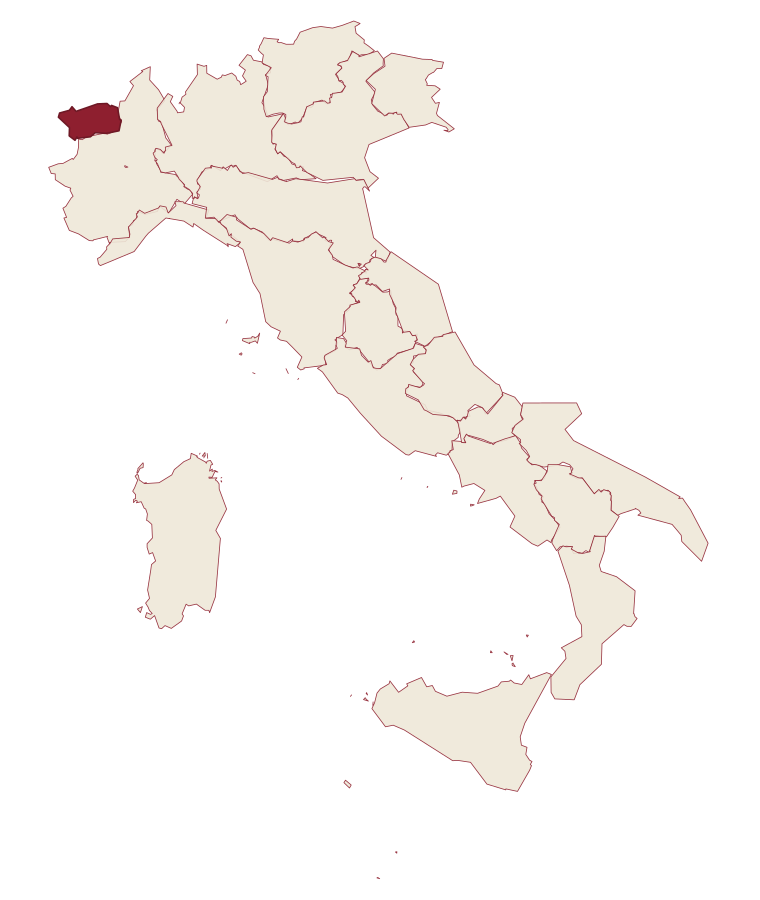
- Bard is a comune in the province of Aosta Valley, in Aosta Valley, at 400 meters above sea level.
- What is the nearest airport to Bard?
- Turin (TRN), about 1h 9m by car.
- Can you get to Bard without a car?
- Yes. There is a railway station in the comune, so you can arrive by train.
- How long is the drive from Genoa to Bard?
- About 2h 33m by car.
- When is the best time to visit Bard?
- Best in Apr–Oct. August is the warmest month, averaging 27 degrees, and May the wettest, with about 17 rain days.
- Is there a sagra or a festival in Bard?
- Yes. Marché au Fort. October is when the first of them falls.
- Which other towns are like Bard?
- Verduno, Mombaldone and Vallo di Nera.
- How many people live in Bard?
- 108 at the 2023 count.
Tags & datadesignations · numbers · sources
Recognised as
The numbers
- Elevation: 400 m
- Population: 108
- Surface area: 3.03 km²
These figures were compiled from public directories: ISTAT, OpenStreetMap and Wikidata, and from the official listings of the guides named on this page. Town details change; verify with official sources before you travel.
Similar
Towns like Bard
Verduno
Province: Cuneo
both inland, away from the coast · both under 1,000 people
Mombaldone
Province: Asti
both inland, away from the coast · both under 1,000 people
Vallo di Nera
Province: Perugia
both inland, away from the coast · both under 1,000 people
Castelvecchio di Rocca Barbena
Province: Savona
both inland, away from the coast · both under 1,000 people
Montesegale
Province: Pavia
both inland, away from the coast · both under 1,000 people
Percile
Province: Roma
both inland, away from the coast · both under 1,000 people
🎨 Borghi più belli d'Italia
More Borghi più belli d'Italia towns
Anversa degli Abruzzi
Province: L'Aquila
At 604 meters above the Sagittario Gorges, a cliff village built around a Norman castle rebuilt by the Counts of Sangro.
Campli
Province: Teramo
A 393-meter town under the Monti della Laga, held by the Farnese for two centuries, with a Scala Santa carrying papal indulgence.
Caramanico Terme
Province: Pescara
A 650-meter Majella spa village at the confluence of the Orfento and Orta rivers.
Casoli
Province: Chieti
A 378-meter hill town above the Aventino under the Maiella, with a pentagonal Norman tower that once hosted a court of artists.
Castel del Monte
Province: L'Aquila
At 1,346 meters under Monte Bolza facing Rocca Calascio, the capital of shepherds, whose wool reached the Medici and whose witches return each August.