
The prettiest villages within 90 minutes of Torino
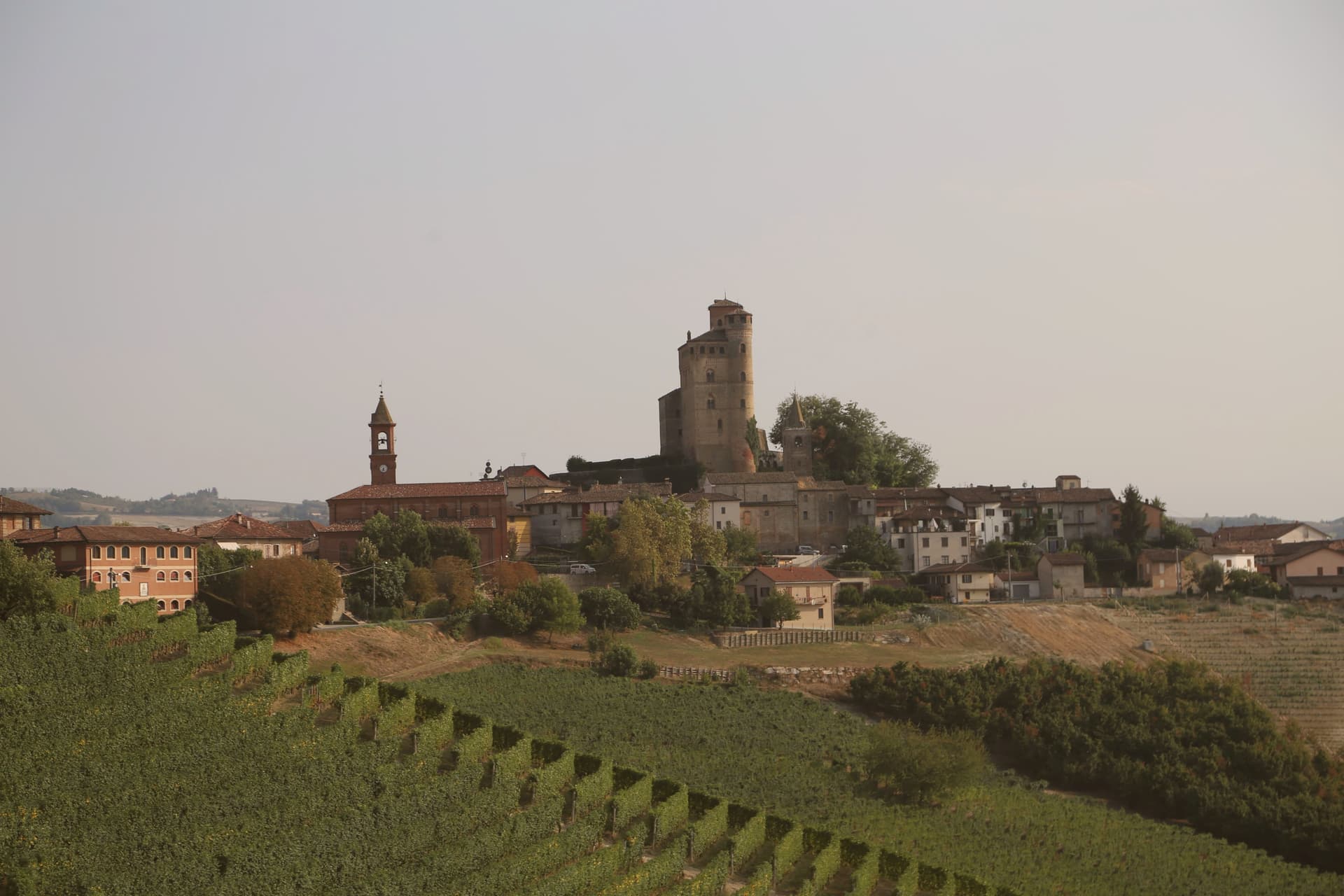
Piedmont rewards short drives. Leave Torino and within the hour the plain buckles into the Langhe and the Roero, hills striped with Nebbiolo and Barbera, the vines going copper and rust through October while the fog sits in the valley bottoms until midday. The villages up on the ridges are built of warm brick and pale tufo, with a castle or a bell tower marking each crest so you can read the landscape by its skyline. Then there is the other direction, north towards the Aosta valley, where the houses turn to grey stone and slate roofs and the chestnut woods climb behind them. Autumn brings white truffle, hazelnuts, agnolotti del plin and bagna cauda; winter brings the fires lit in small osterie that still cook bollito.
Most visitors give Piedmont a single day and spend it in Torino itself, under the Mole Antonelliana, along the arcades of Via Roma, in the historic cafes around Piazza San Carlo. It is a serious city and the Egyptian Museum alone justifies the stop, which is why the same streets fill every weekend and every bridge holiday. Alba absorbs much of the overflow in truffle season, when the fair turns the old centre into a slow-moving crowd. Both are worth the time. Both are also where everyone already is.
The hills do not stop at the edge of the famous names. The same ridges, the same cellars, the same view over the vine rows continue into smaller villages a few bends further on, and the same stone architecture runs north into the mountain valleys where fortresses guard the road. The places gathered here have each passed the national assessment of Italy's most beautiful villages, and fewer people make the detour to reach them. Most are close enough to Torino to visit for lunch and be back by evening.
Of the 34 communes we have mapped within 90 minutes of Torino, 8 qualify as prettiest villages: each has passed the national assessment of Italy's most beautiful villages. The smallest, Bard, has 108 residents.
If you are still choosing, we have also written The best small wine towns within 90 minutes of Torino and The prettiest villages in the province of Cuneo.
Bard
Why visit Bard
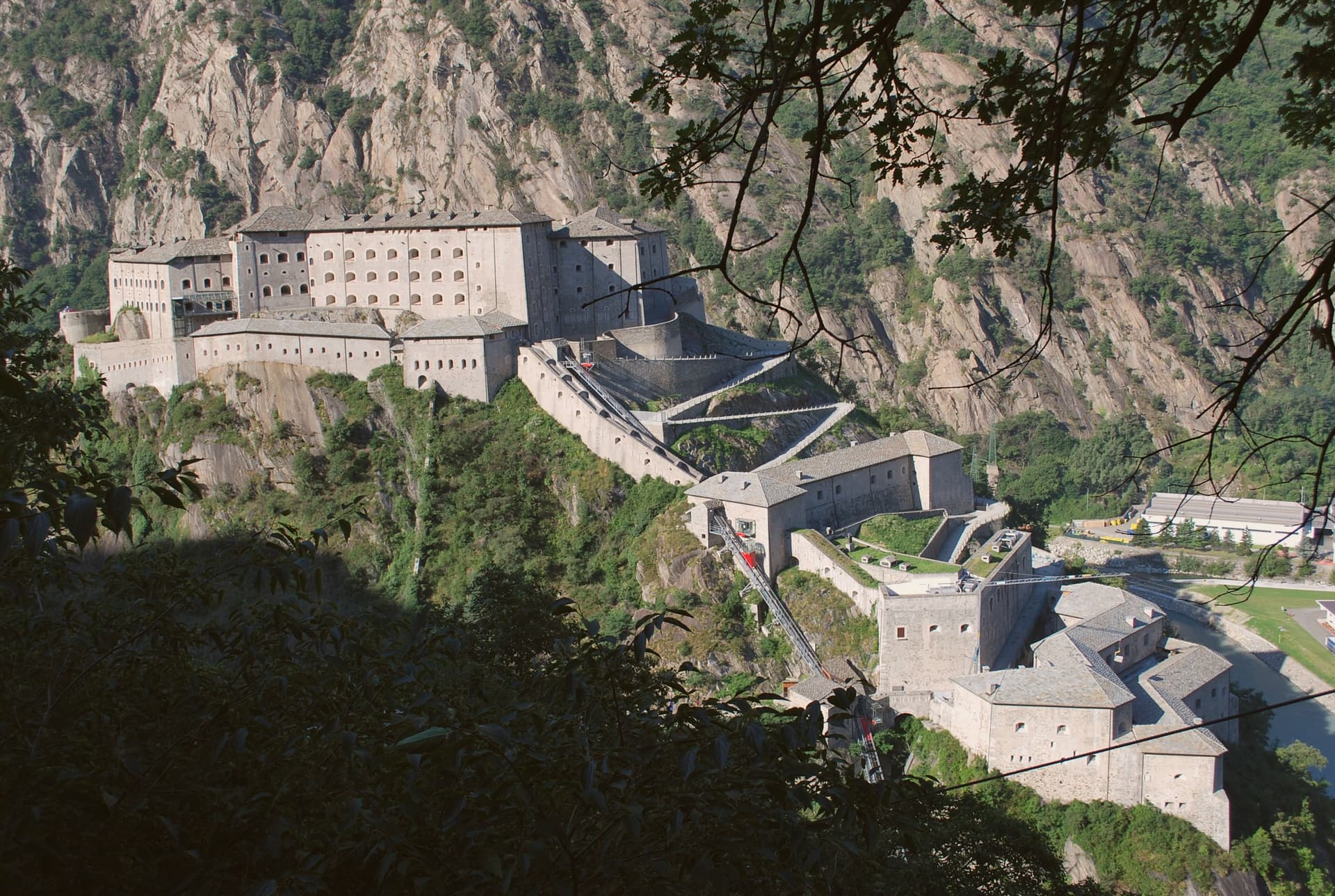
Bard sits at the entrance of the Aosta Valley, its single medieval street wedged between the Dora Baltea river and the rocky prominence that carries the fortress above it. The rock has held fortifications since at least the tenth century, when a castle stood on the site of a fifth-century structure attributed to Theodoric.
That older fort was destroyed after the 1800 siege, and Charles Albert of Savoy rebuilt the current three-tier complex on the same ground between 1830 and 1838. The village below is compact by design: one main street, noble houses from the fifteenth and sixteenth centuries, and a parish church rebuilt several times over the medieval core.
The rock and the river leave no room for the town to spread, so fortress and village occupy the same narrow footprint, one stacked above the other rather than side by side. What the place adds up to is a defensive chokepoint that never had space to become anything but a single street and the walls above it.
What to see in Bard
- Forte di Bard. Three terraced levels climb the fortress rock above the village. The current structure replaced an older fort that Napoleon ordered demolished after taking it.
- Museo delle Alpi. Permanent museum inside the fortress, dedicated to the Alps as a geographical, cultural and human space, with rotating contemporary art exhibitions.
- Borgo medievale di Bard. Medieval village stretched along a single main street, lined with fifteenth- and sixteenth-century mansions and noble houses below the fortress rock.
How to get to Bard
There is a railway station in the town, so you can arrive without a car and never need one while you are here. Torino is roughly 72 minutes away by road.
Our tip
April through June is the gentlest season at the mouth of the valley, with the Forte di Bard exhibitions in full programme and the Dora Baltea running high from the snowmelt. September and October bring the autumn calendar at the fortress and cool, clear walking weather. July and August are warm and busier with day visitors arriving from the A5 motorway exit. Marché au Fort falls in October.
Fontainemore
Why visit Fontainemore
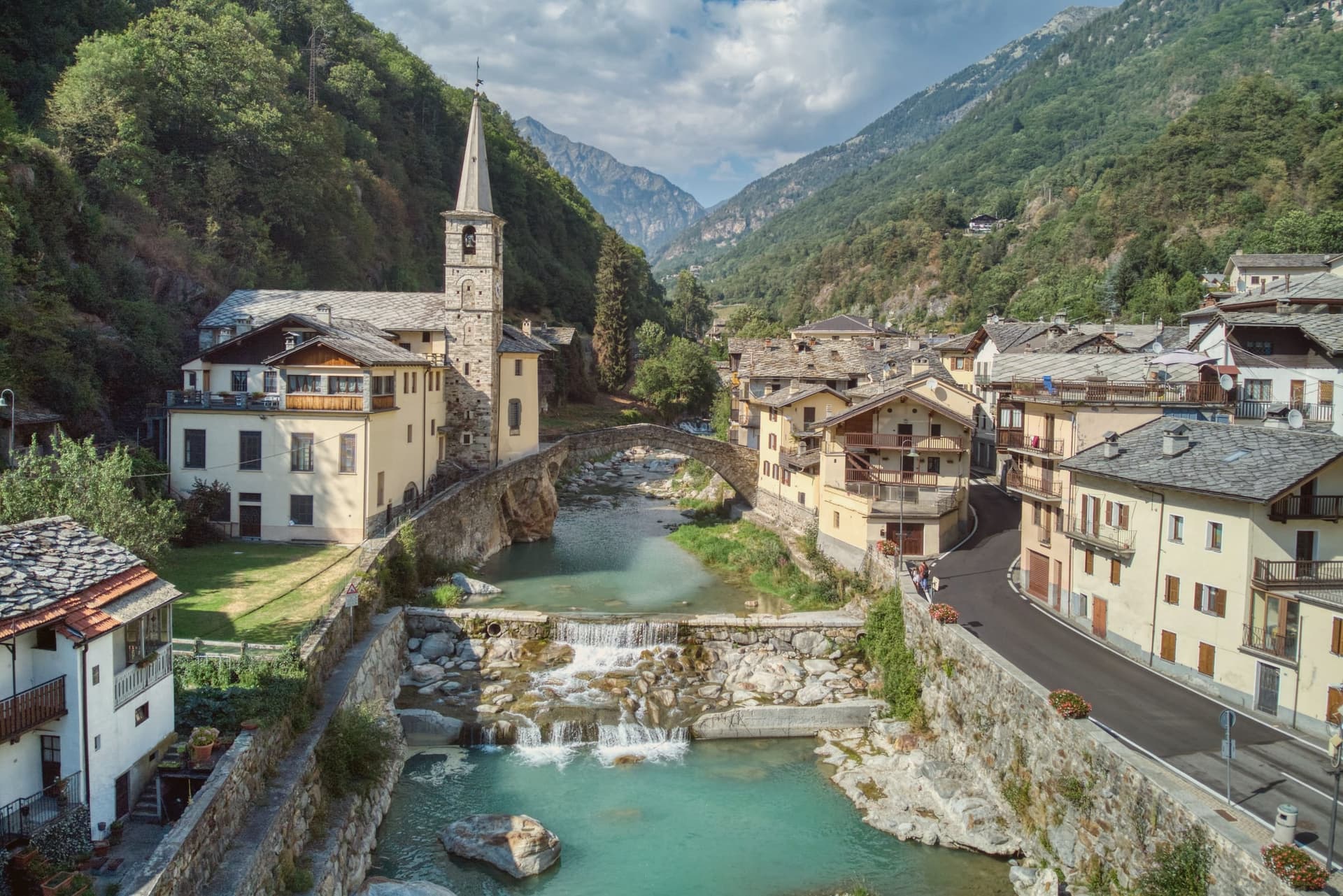
Fontainemore is the easternmost commune of the Aosta Valley, set against the Mont Mars Nature Reserve in the middle of the Lys Valley. The Lys was settled in the Middle Ages by Walser communities from the upper valley, who left fragments of patois further upstream along with their building style.
The toponym comes from either Fontaine de Saint-Maur or Fontaine de la mort, the second tied to local legend rather than record. The historic centre and the parish church sit close together at the valley floor, the working part of the village grouped around its bridge, while the reserve and the pilgrimage track rise above toward the pass.
Fontainemore was admitted to Borghi più Belli d'Italia in September 2023. The village reads as a settlement shaped as much by the route passing over it as by the valley it sits in: a crossing point first, a destination after.
What to see in Fontainemore
- Ponte medievale sul Lys. The arch clears the river next to the parish church and carries a footpath rather than road traffic, having outlasted its original use.
- Chiesa parrocchiale di San Giovanni Battista. Dedicated to John the Baptist, the church has stood as the religious centre of the village since the late Middle Ages, set right beside the bridge.
- Centro storico. The rows sit tight together: haylofts, stalls and houses under one layout, balconies still carrying flowers against the stone and wood.
How to get to Fontainemore
Torino is roughly 82 minutes away by road.
Our tip
May through October is the open window. May greens the lower slopes and reopens the Mont Mars reserve trails, June and July bring high-summer hiking and the longest days, and September and October give the autumn colour and chestnut harvest along the lower Lys. August is warm by Valdostan standards and the village fills with returning families.
Barolo
Why visit Barolo
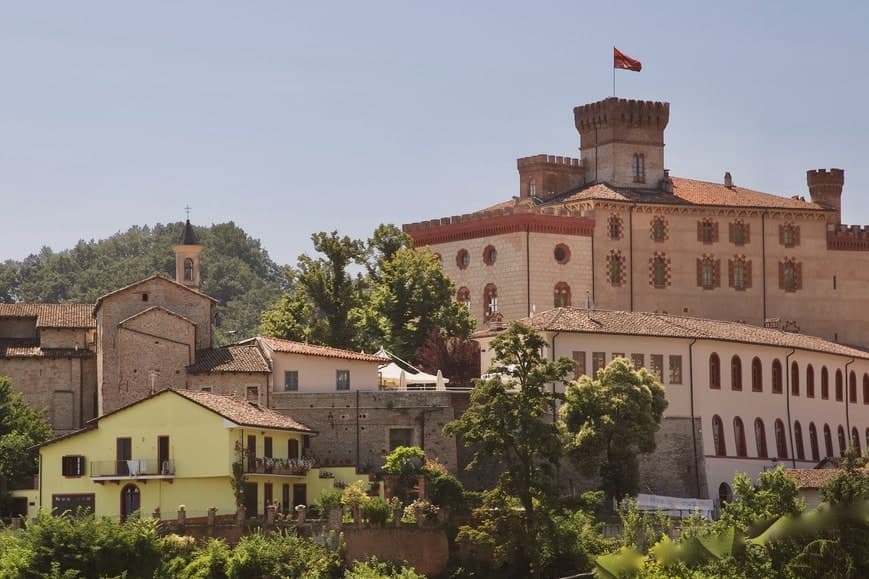
Barolo sits at 301 meters on a Langhe hilltop fifty-five kilometers south of Torino, in the heart of the DOCG appellation that takes its name. The Castello Falletti rises from the centre of the village; its oldest walls date to the eleventh century, when Berengar I of Italy granted local lords permission to fortify against Hungarian and Saracen raids.
The Falletti family took the castle in 1325 and held it for five centuries. In the 1830s the Marchesi Tancredi and Giulia Falletti, working with Camillo Benso di Cavour and the French enologist Louis Oudart, pushed the Nebbiolo of these hills toward dry, age-worthy production for the first time.
The village bought the castle by public subscription in 1970. Since 2010 it has housed the WiMu, a wine museum laid out by François Confino.
The Cannubi cru, on the next hill, is the oldest officially named vineyard parcel in the appellation, recognised on a 1752 wine label. Barolo is one of eleven communes inside the DOCG zone and part of the UNESCO Langhe-Roero and Monferrato landscape inscribed in 2014.
What to see in Barolo
- Castello Falletti. 11th-century castle expanded by the Falletti from 1325, bought by the comune in 1970, now home to the WiMu wine museum since 2010.
- WiMu - Museo del Vino. Wine museum inside the castle, designed by François Confino, with the Regional Wine Library of Barolo in the cellars.
- Vigneto Cannubi. Historic cru on the hill east of the village, recognised on a 1752 wine label as the oldest officially named parcel in the Barolo appellation.
How to get to Barolo
Torino is roughly 63 minutes away by road.
Our tip
April through June and September into October are the best months in the Langhe. The hills are green or gold depending on the season, the cantine run a full visiting calendar, and the Castello Falletti stays cool enough for the long museum walk. July and August are hot on the south-facing slopes and the village empties between two and five.
Cocconato
Why visit Cocconato
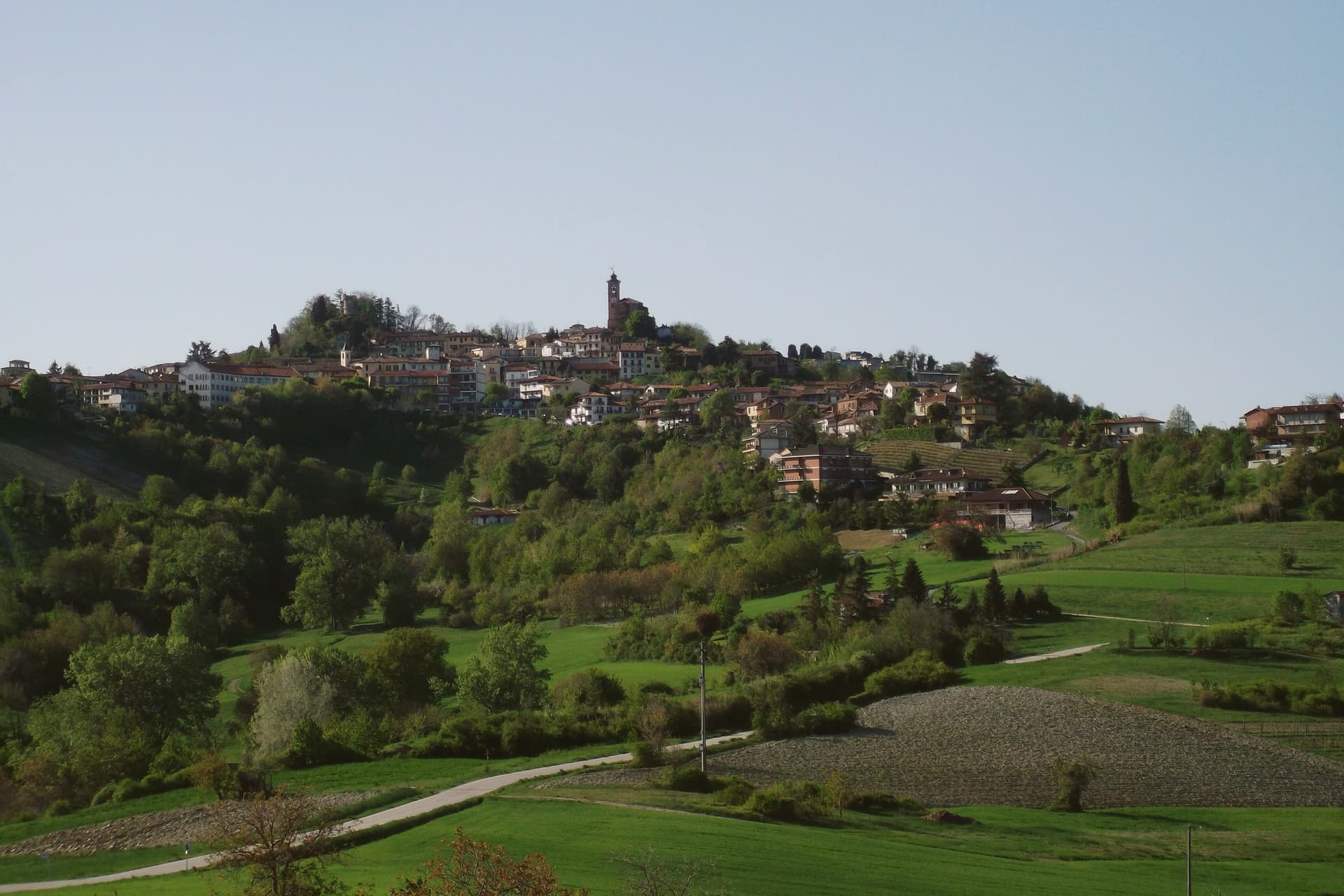
Cocconato sits thirty kilometers east of Torino, on a ridge whose south-facing slope catches enough sun to keep olives, palms and mimosas alive this far north, the reason locals call the area the Riviera del Monferrato. From the tenth century the ridge was held by the Radicati counts, a Manfredian family, as an imperial fief for four hundred years, until 1586: the centro storico that survives is their seat, not a later reconstruction.
The town's two anchors sit close together but answer to different authorities. The civic palace, built in the fifteenth century, faces the seventeenth-century parish church of Santa Maria della Consolazione across the upper piazza, government and religion holding opposite ends of the same small square.
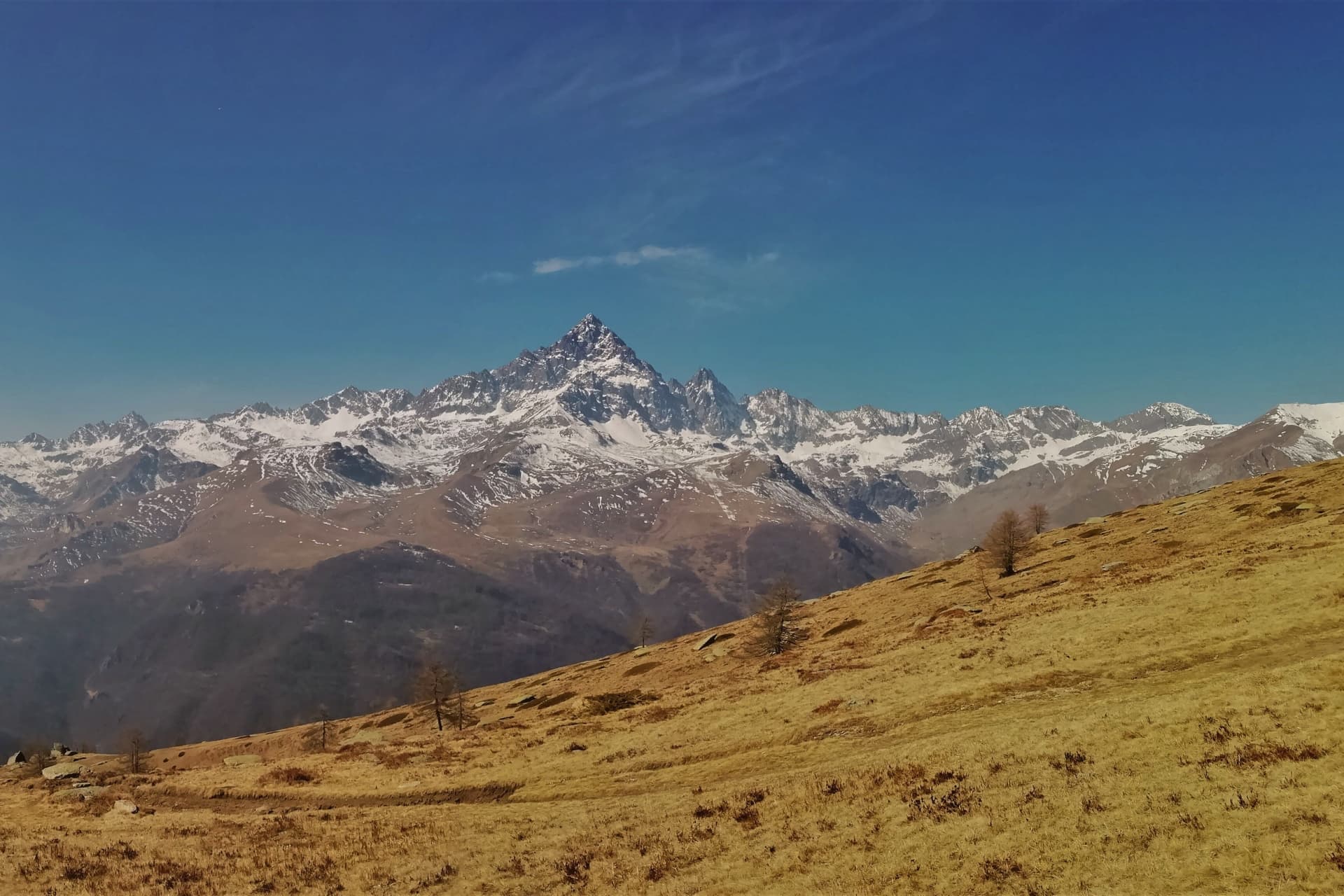
Beyond the built center, the ridge opens onto a belvedere looking south across vineyards toward the Alta Langa and, on clear days, the Monviso massif. Since 1970 the six frazioni of Airali, Brina, Colline Magre, San Carlo, Torre and Tuffo have raced their donkeys in the Palio degli Asini, a modern rivalry laid over an old administrative one.
Cocconato is the only commune in the province of Asti to hold the Bandiera Arancione, a fitting distinction for a ridge that has been organizing the same handful of parts, fief, palace, church, frazioni, for centuries.
What to see in Cocconato
- Palazzo Comunale. Pointed-arch porticoes and terracotta-framed windows on the Late Gothic facade, still the building the ridge town organizes itself around.
- Chiesa di Santa Maria della Consolazione. Seventeenth-century parish church anchoring the upper piazza, the religious counterweight to the medieval civic palace below it.
- Centro storico. Medieval ridge town that was the seat of the Radicati counts from the tenth century until 1586, well preserved on the south-facing slope.
How to get to Cocconato
There is a railway station in the town, so you can arrive without a car and never need one while you are here. Torino is roughly 57 minutes away by road.
Our tip
April through June and September through October are the months that earn Cocconato its Riviera nickname: dry warm days on the ridge, vineyards in green or gold, and the palms in the lower gardens visibly out of season. July and August are warm and busy, with Cocco Wine at the end of summer drawing crowds into the centro storico. November through March is the quiet half of the year.
Monforte d'Alba
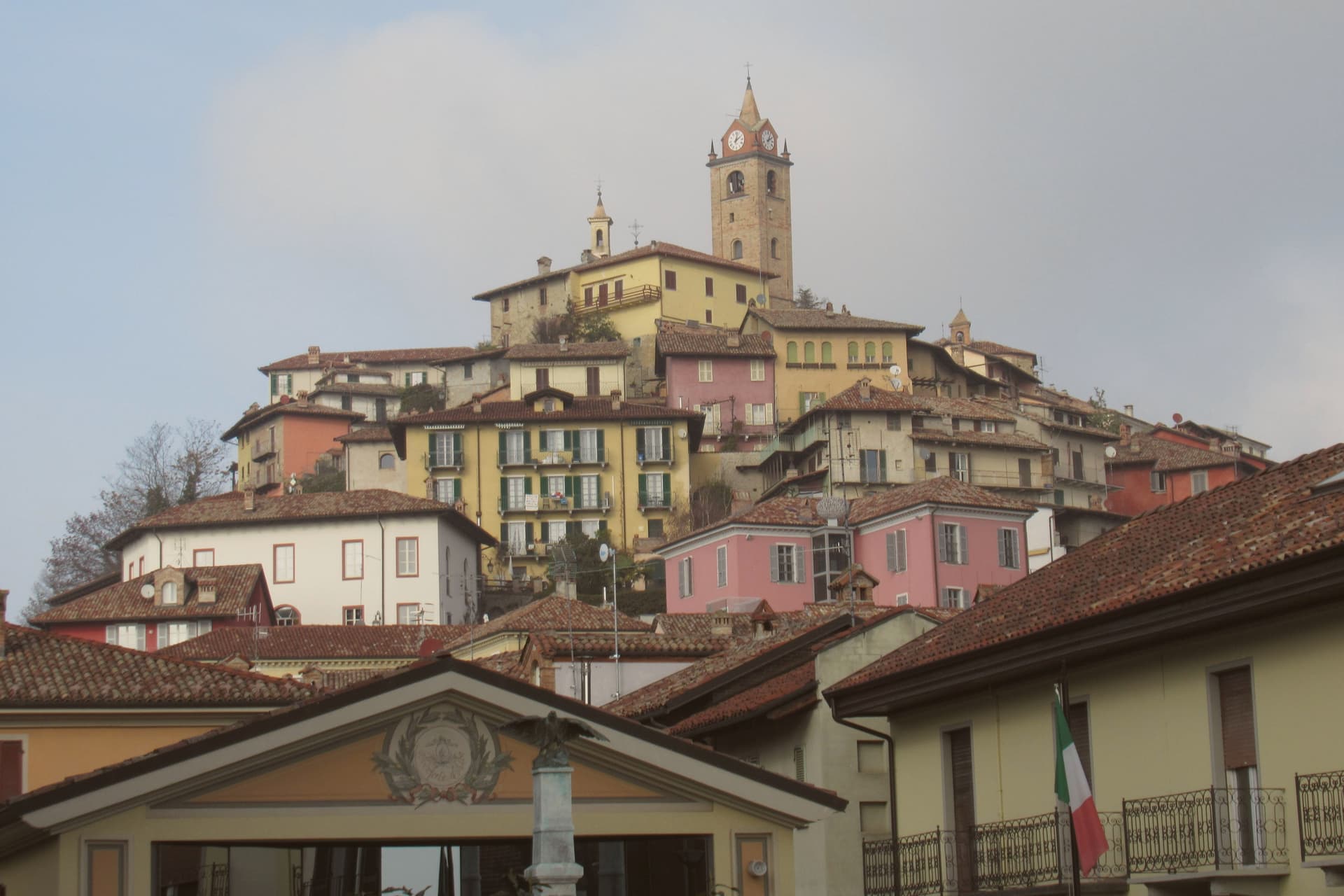
Why visit Monforte d'Alba
Monforte d'Alba sits at 480 meters in the southeastern corner of the Barolo zone, sixty kilometers from Torino. The name is from Latin mons fortis, fortified hill, and the medieval village climbed steep enough to make it nearly impregnable.
In 1028, Archbishop Ariberto d'Intimiano of Milan had the inhabitants of a heretical community here, later identified as Cathars, captured and burned in Milan to halt the spread of their teaching. Monforte is one of the eleven Barolo communes and accounts for some of the most structured, tannic wines in the zone, particularly from the Bussia and Ginestra crus.
At the top of the village, the Auditorium Horszowski occupies what was once the main square: an open-air natural amphitheater of 800 seats named for the pianist Mieczysław Horszowski, who opened it with a concert in 1986. The Monfortinjazz festival has run here every summer since 1976.
What to see in Monforte d'Alba
- Auditorium Horszowski. Open-air amphitheater for 800 carved into the old village square in 1986, named for the pianist who opened it that year.
- Centro storico. Steep medieval village climbing to the old piazza, with Renaissance palazzi and the surviving bell tower of Sant'Agostino.
- Chiesa di Santa Elisabetta. Baroque oratory beside the Palazzo Scarampi at the top of the village, framing the back wall of the Horszowski stage.
How to get to Monforte d'Alba
Torino is roughly 68 minutes away by road.
Our tip
April through June bring green vines and mild evenings, with the Horszowski programming a few early concerts before the main season. July and August are Monfortinjazz, when the amphitheater fills and the centro stays busy past midnight; daytime heat pushes past thirty degrees but the elevation cools the nights. September and October are harvest and truffle weeks, with Alba twenty kilometers north pulling buyers across the zone.
Neive
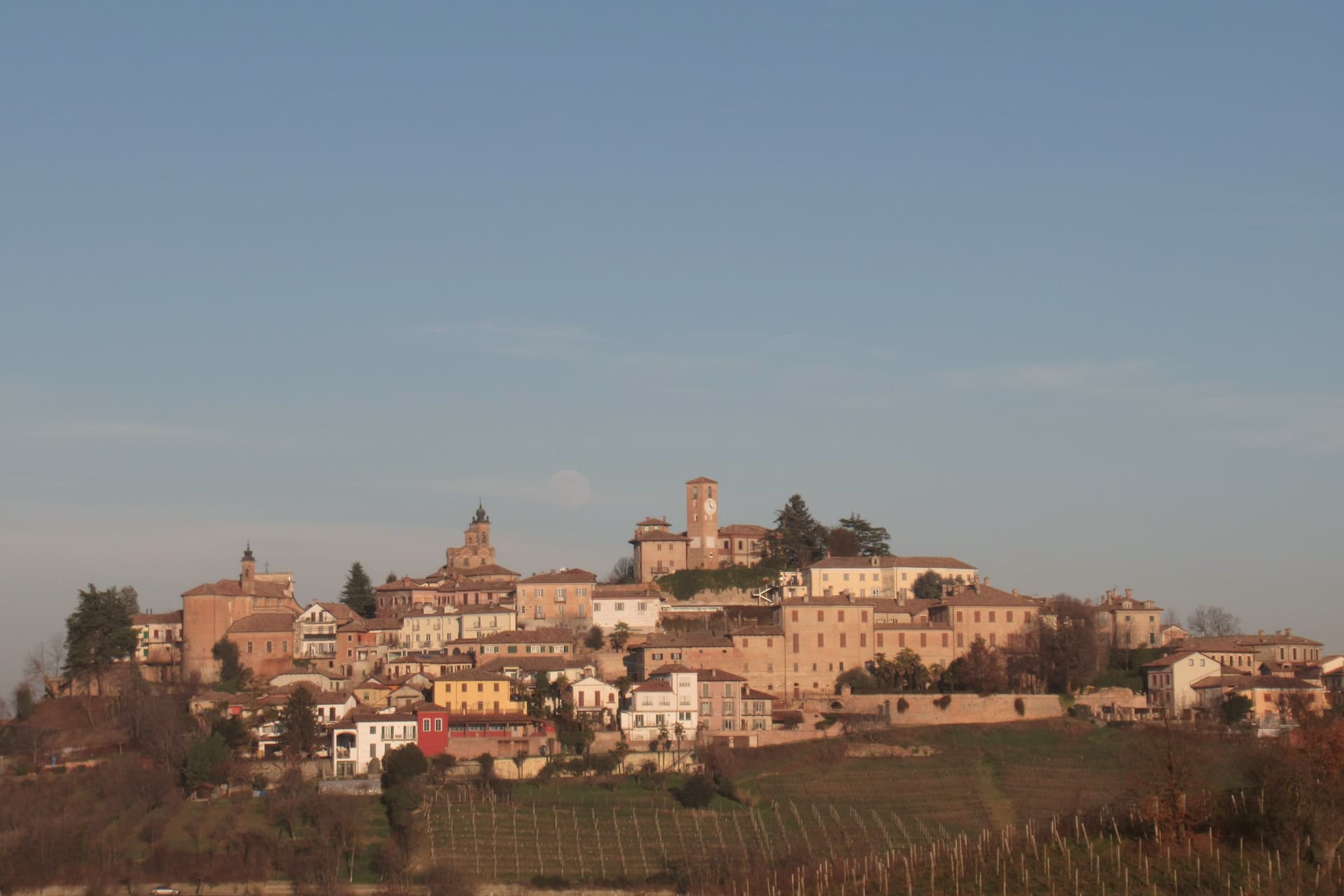
Why visit Neive
Neive sits at 308 meters on a Langhe ridge, fifty kilometers southeast of Torino and eight kilometers from Alba. The name traces to the gens Naevia, a Roman family that held the land in antiquity.
The medieval village was fought over between Asti and Alba; its castle was destroyed in 1276 and rebuilt repeatedly through the Middle Ages. The Torre dell'Orologio dates from 1224 and embeds a Roman funeral plaque to Valeria Terza in its wall, a deliberate piece of spolia from the older settlement.
Neive is one of three Barbaresco communes (with Barbaresco and Treiso) and is the one locals call the township of four wines: Barbera, Dolcetto, Moscato and Nebbiolo all produced in commercial volume from the same hills. The centro storico is Borghi più belli, eight centuries of layered building stacked tightly enough that the old gates still mark the entry to the village.
What to see in Neive
- Torre dell'Orologio. Civic tower of 1224 with a Roman funeral plaque to Valeria Terza set in its wall, the symbol of Neive's centro storico.
- Centro storico. Hilltop Borghi più belli village stacked across eight centuries, with surviving medieval gates and Renaissance palazzi.
- Palazzo del Municipio. White Baroque civic palace on the main piazza, decorated with arch motifs and standing beside the Torre dell'Orologio.
How to get to Neive
Torino is roughly 66 minutes away by road.
Our tip
April through June bring green vines and mild evenings on the ridge. September and October are harvest, with the Alba truffle fair eight kilometers away pulling buyers across the Langhe; the centro fills on weekends. July and August can push past thirty degrees and the village empties between two and six in the afternoon, though the elevation makes evenings tolerable.
Guarene
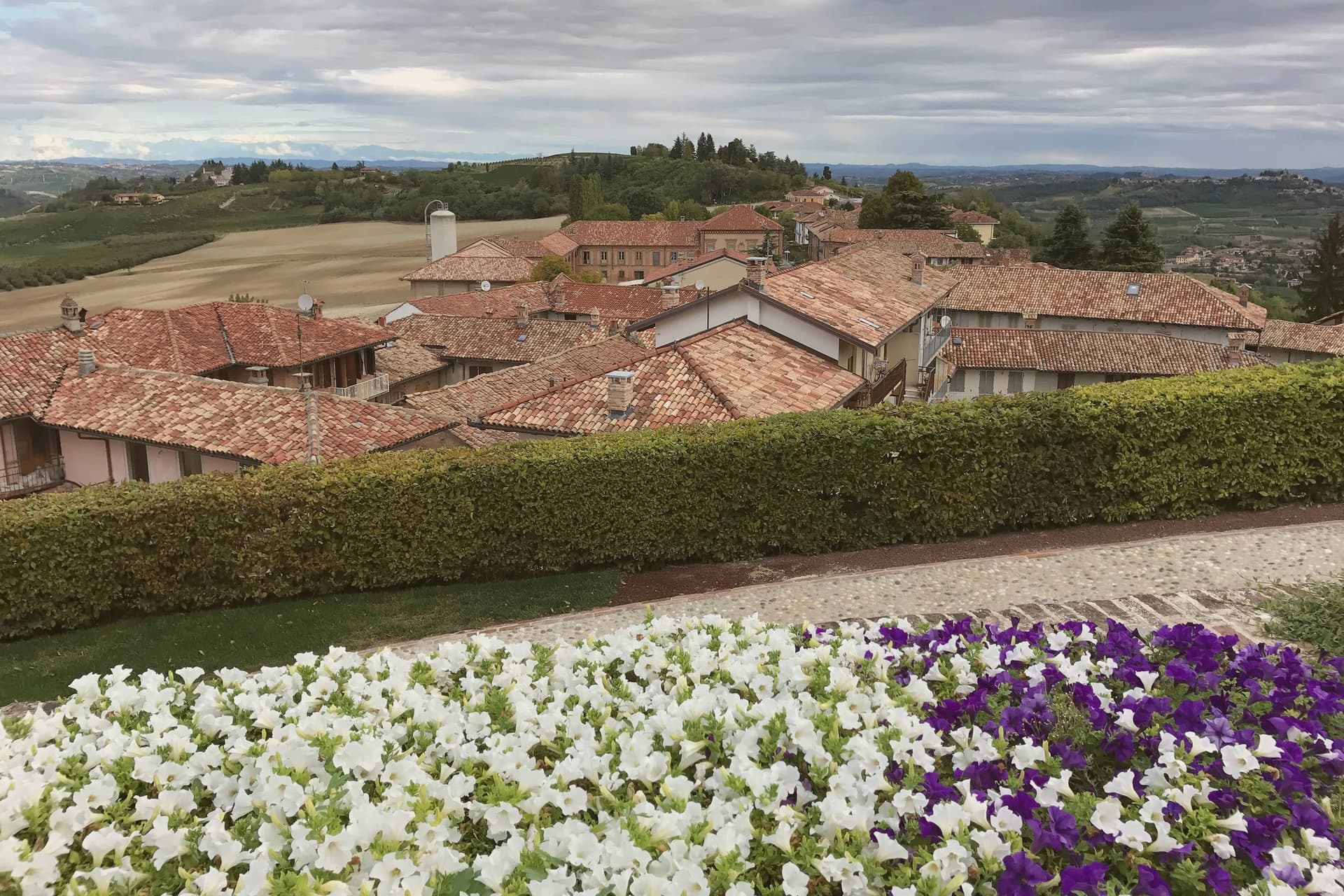
Why visit Guarene
Guarene sits at 360 meters on the left bank of the Tanaro, the last hill of the Roero before the river crosses to Alba and the Langhe. The Roero family, powerful Asti bankers, took the village in 1379 and held it until the line ended with Count Alessandro in 1899.
Count Carlo Giacinto Roero rebuilt the medieval fortress between 1726 and his death, turning it into a baroque summer residence; his sons completed the work and hosted the king and queen of Sardinia here in 1773. The castle is now a Relais & Châteaux hotel with a small museum.
On the slope below the village, the Fondazione Sandretto Re Rebaudengo opened Palazzo Re Rebaudengo in 1997 as its first contemporary art space; the foundation added an open-air sculpture park in 2019 with works by Carsten Höller, Marguerite Humeau, and Paul Kneale set among pear orchards and Nebbiolo rows. The hill carries four institutional signals at once, the highest density of any Roero commune.
What to see in Guarene
- Castello di Guarene. Eighteenth-century baroque castle rebuilt 1726 by Count Carlo Giacinto Roero from a medieval fortress, now a Relais & Châteaux hotel.
- Palazzo Re Rebaudengo. Fondazione Sandretto Re Rebaudengo's first contemporary art space, opened 1997 in an eighteenth-century palazzo in the village.
- Parco d'arte Sandretto Re Rebaudengo. Open-air sculpture park opened 2019 with works by Carsten Höller, Marguerite Humeau, and Paul Kneale among Nebbiolo rows and pear orchards.
How to get to Guarene
Torino is roughly 62 minutes away by road.
Our tip
April through October is the season. May and June green the Roero hills and the castle gardens open. September and October bring the harvest and Arneis bottling; the Tartufo Bianco d'Alba fair in October fills the surrounding villages.
Castagnole delle Lanze
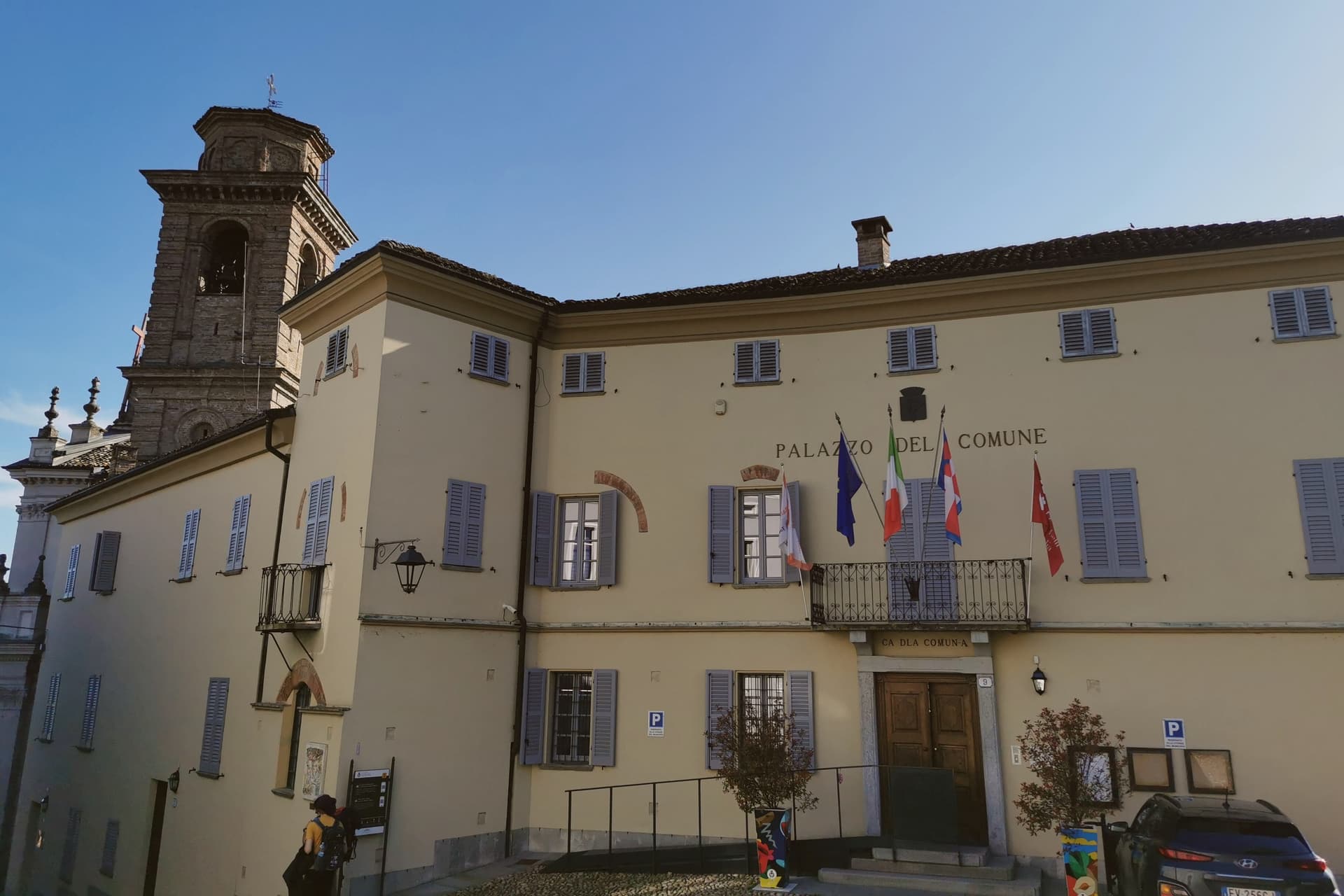
Why visit Castagnole delle Lanze
Fifteen kilometers south of Asti, Castagnole delle Lanze lies in the UNESCO Vineyard Landscape of Piedmont, on ground once crossed by a Roman road branching off the Via Aemilia between Acqui and Pollenzo. In the Middle Ages the lands belonged to the counts of Loreto, with Manfredo I the count most tied to the community; their castle, probably destroyed in 1255 when the contado fell, has not survived, and from the thirteenth century the town passed under the Comune of Asti.
The main square and Piazza Balbo hold the two churches that anchor the lower town, while the Parco della Rimembranza occupies the highest ground of the village, looking over the Tinella and Tanaro valleys. What remains is a settlement built in layers: a Roman route, a lost medieval castle, a pair of Baroque churches, and a nineteenth-century tower, each belonging to a different century and none of them replacing the one before it.
What to see in Castagnole delle Lanze
- Chiesa di San Pietro in Vincoli. Parish church of 1681 on the main square, Ligurian-Piedmontese Baroque with a twin-bell-tower façade.
- Chiesa dei Battuti Bianchi. Confraternity church of 1668 in Piazza Balbo, deconsecrated and now used as a space for cultural events.
- Torre di San Robert. Built by Count Paolo Ballada di San Robert, the tower stands at the top of the Parco della Rimembranza and still functions as a lookout over the surrounding hills.
How to get to Castagnole delle Lanze
There is a railway station in the town, so you can arrive without a car and never need one while you are here. Torino is roughly 72 minutes away by road.
Our tip
April through June brings the vines into leaf and the Tinella valley into clear light, with the Torre di San Robert opening on weekends. September and October are harvest, the high season for the Langhe-Monferrato hills and the time the Adotta un filare initiative runs its tastings. July and August get hot on the south-facing slopes; mornings in the Parco della Rimembranza and evenings on the main piazza are the cooler hours. Borgo diVino tour falls in October.
More from Anywhere Italy
 The best small wine towns within 90 minutes of Torino
 The prettiest villages in the province of Cuneo
- The prettiest villages that eat well in Piemonte
- The best hidden hill towns you can reach by train within 90 minutes of Torino
- The 10 best hidden wine towns that eat well within 90 minutes of Torino
- The 6 best hidden towns you can reach by train that eat well within 90 minutes of Torino