
The best small wine towns in Campania
Campania makes wine on ground that remembers eruptions. Aglianico ripens late on the hills of Irpinia, harvested when the mornings have already turned cold and the chestnut woods are going copper, and the results are dark, tannic and built to sit in a cellar for a long time. Greco comes off pale volcanic slopes near the Sabato valley, Fiano from higher, cooler terraces, and on the Amalfi side the vines run along stone-walled pergolas above the sea, tended by hand because no machine could reach them. The villages that grow all this are built of tufo and local grey stone, with cantinas dug into the rock beneath the houses, and the autumn table runs to lamb, wild greens, pasta with ragù held over a low flame all afternoon, and hard sheep's cheese cut in wedges.
Almost everyone who comes to Campania for the food and drink goes to Naples first, then Pompeii, then a boat to Capri, and the coast road between them is solid with cars from spring to the end of summer. It is a good route and the reasons for its popularity are honest ones, but it puts the whole region's reputation on a narrow strip that is mostly about lemons, pizza and sea views. The wine on those tables comes from somewhere else. The towns it comes from are barely a name on the back label.
Follow the grape inland and the landscape keeps going. Past Naples the hills climb toward Avellino and Benevento, terraced and quiet, and the same coast that carries the tour buses folds into valleys where the vines are still trained on chestnut poles. These are the smaller places, the ones with a cooperative cantina, a single enoteca and a harvest festival in October, all of them members of the national association of wine-producing towns. Fewer people go, which is most of the point.
Of the 66 communes we have mapped in Campania, 15 qualify as wine towns: each belongs to the national association of wine-producing towns. This list is the small ones, 8 in all, ordered smallest first. The smallest, Furore, has 688 residents.
Elsewhere in the catalogue: The 8 best wine towns within 90 minutes of Salerno and The best wine towns within 90 minutes of Naples.
Furore
Why visit Furore
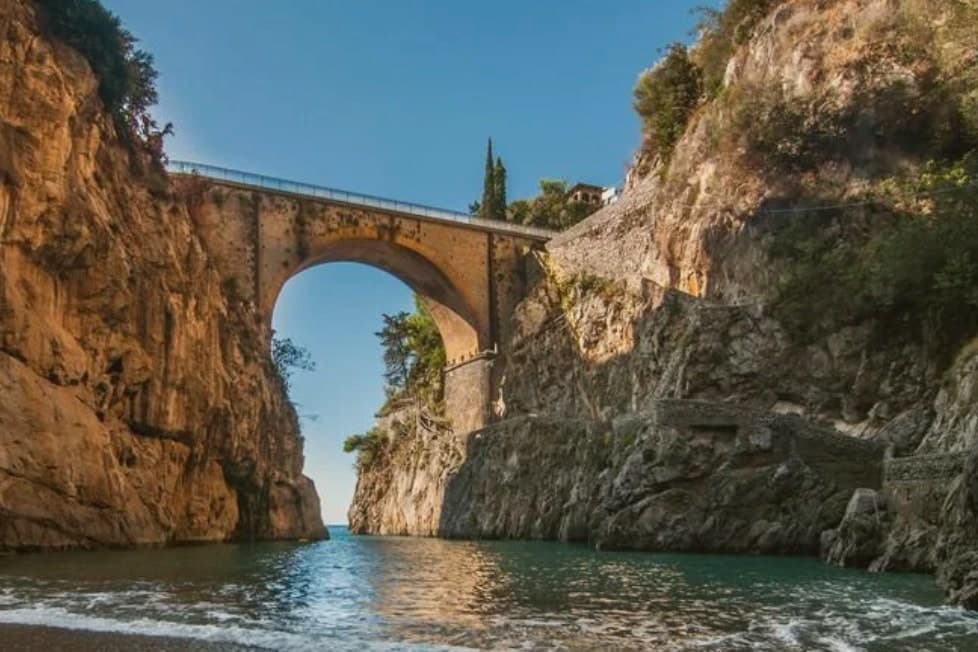
Furore stretches up the cliff between Praiano and Conca dei Marini on the UNESCO-listed Costiera Amalfitana, six hundred and eighty-eight people across houses that don't share a single piazza. The main settlement sits at 300 meters in the upper Vallone del Furore; the commune drops to sea level at the Fiordo di Furore, a narrow ria carved by the Schiato torrent that flows down from Agerola at 550 meters.
The historian Matteo Camera traced the name to the roar storms make through the gorge. Since the late 1980s the painter Silvio Vetrano's project Il Paese Dipinto has invited artists each September to paint murals on the village walls, which is why Furore is sometimes called the painted village or the village that doesn't exist.
The commune is a Borgo più bello d'Italia and a Città del Vino: the Fiorduva white from the Marisa Cuomo winery is grown on terraces above the fjord.
The comune belongs to the national association of wine-producing towns.
What to see in Furore
- Fiordo di Furore. Narrow ria cut by the Schiato torrent, southern Italy's only fjord, with a stone bridge crossed by the SS163 and a pebble beach below.
- Il Paese Dipinto. Open-air mural circuit started in 1980 by Silvio Vetrano, with new works added each September by invited Italian and international artists.
- Chiesa di Sant'Elia Profeta. Parish church on the upper part of the village, with a majolica-tiled dome and a small square overlooking the terraces below.
How to get to Furore
Salerno is roughly 36 minutes away by road.
Our tip
May, June, September and early October are the strongest months on this stretch of the Amalfi Coast. The sea climbs past twenty degrees, the SS163 buses run on a working timetable, and the Fiordo di Furore beach is accessible without a queue. July and August are full: the day-trippers come up from Amalfi and the small parking pockets on the SS163 fill before nine.
Tufo
Why visit Tufo
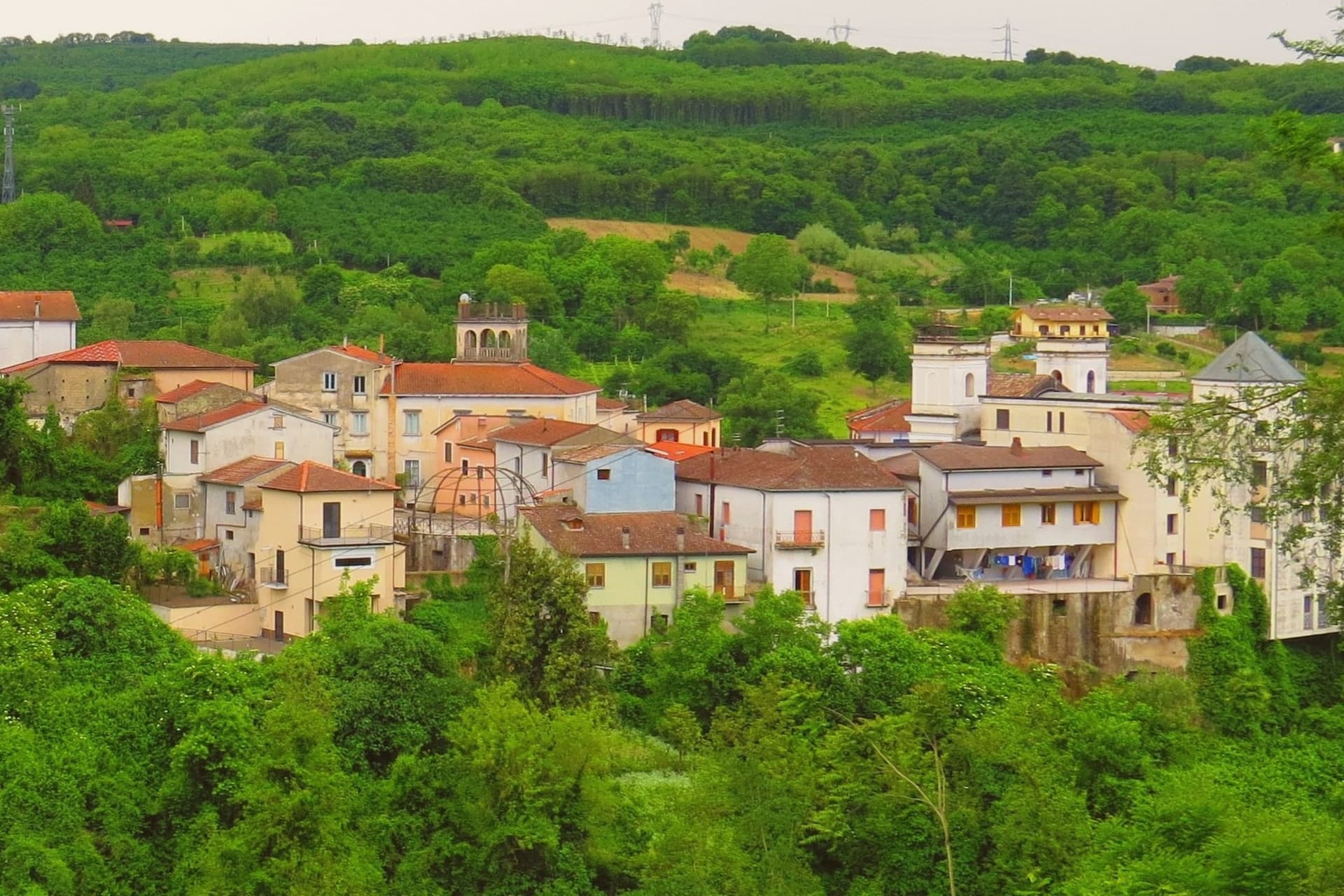
The name Tufo comes from the volcanic tuff stone the hill is built on, the same stone that runs through the slopes below and gives the local wine its mineral edge. The village sits on top of that stone at 250 meters, with the cellars at its foot and the vineyards spreading out around both.
Sulfur was mined in shafts cut into the cliffs beneath the village, work that shaped the local economy for over a century before it stopped. Most visitors are wine buyers, not tourists.
They drive in for a tasting, walk the steep main street to the medieval castle on top, and leave by dinner. The village stays quiet after they go.
What the stone gave the place economically it also gave it physically: a hill town built from the same rock that flavors what it grows, mined until the ground itself ran out of use.
The comune belongs to the national association of wine-producing towns.
What to see in Tufo
- Castello di Tufo. Medieval fortress on the top of the hill, rebuilt after the 1732 and 1980 earthquakes that damaged the village below.
- Cantine di Marzo. The cellars sit at the foot of the village, where Greco di Tufo has been produced commercially since the family took up winemaking here.
- Ex Miniere di Zolfo. Abandoned mines in the cliffs below the village, their shafts left the rock marked with rust-colored scars after closure.
How to get to Tufo
There is a railway station in the town, so you can arrive without a car and never need one while you are here. Salerno is roughly 55 minutes away by road.
Our tip
April through June covers the green months in Irpinia: vine leaves unfurling on the slopes, mild evenings on the main street. September through early October is harvest, when the cellars open more often than usual and the village smells of crushed Greco. July and August get hot in the valley, though 250 meters keeps the worst of it off.
Lapio
Why visit Lapio
The name of the grape behind the local wine, 'Apianum', comes from the Roman word for bee, api, because the grape was said to be sweet enough to draw them. It has been grown across the Irpinia hills east of Avellino since at least the 1st century AD, though it only became a serious modern DOCG from the 1990s onward, thanks to producers here and in Montefredane, Summonte, and the neighbouring villages.
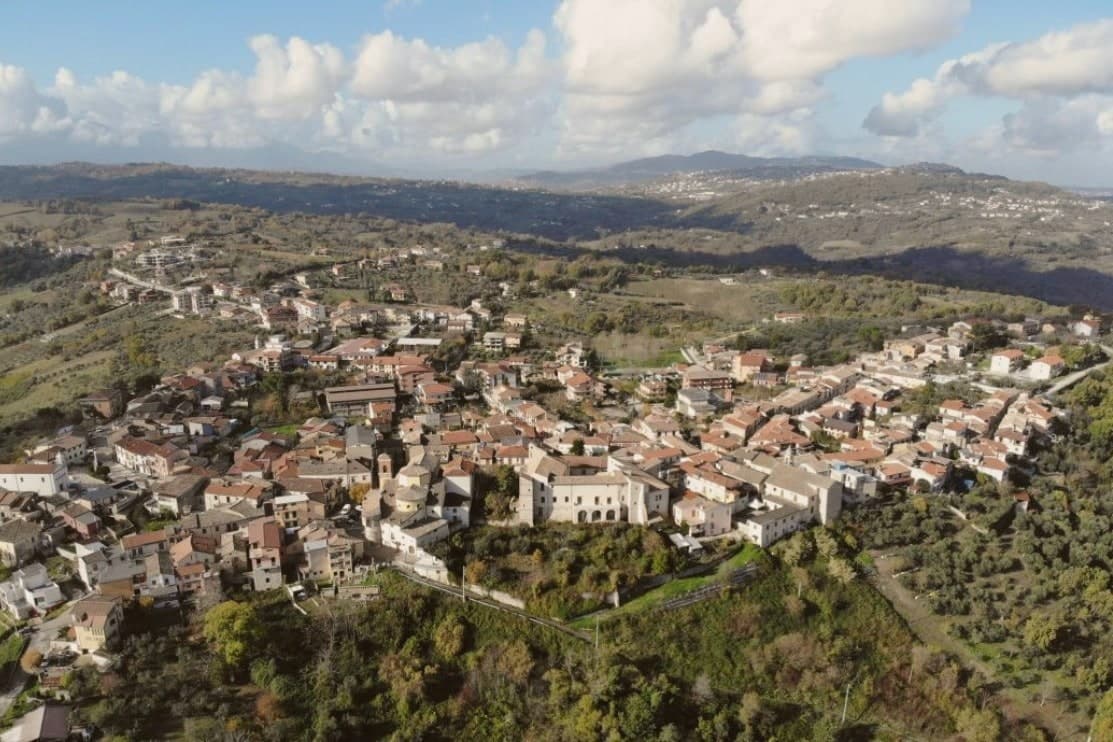
The comune itself sits at 590m on a hilltop, its narrow stone-paved vicoli climbing from the central piazza up to the castle at the high point, past the Chiesa Madre di San Pietro Apostolo and the Convento dei Cappuccini just outside the walls. The four Città designations held here, del Vino, dell'Olio, del Miele, della Nocciola, are not scattered honours but a single picture: Fiano and Aglianico from the vineyards, Irpinia DOP oil from the terraces, chestnut and multifloral honey from the Apennine forests above town, and the hazelnut trade that makes Avellino province the second-largest producer in Italy after Cuneo.
Beyond the comune: Avellino 24 km west, Mirabella Eclano with its Roman Forum and Carro di San Pellegrino procession 15 km north, and the Partenio and Sannio mountains immediately east, whose forests supply both the honey and the local game. The food follows the same logic: pasta al ragù di castrato, brodo di tagliolini con scarola, Caciocavallo Podolico matured 12 or more months on Apennine pastures, torrone tenero made with hazelnuts and honey, and the wine with all of it.
Depopulation has cut the town from 2,400 residents in 1951 to 1,428 today, but the surrounding land, vine, olive, forest, and hazelnut grove, still accounts for nearly everything the place is known for.
The comune belongs to the national association of wine-producing towns.
What to see in Lapio
- Fiano di Avellino DOCG cellars. Lapio is one of the historic cru villages, 'Apianum' grape since Roman times, modern DOCG only since 1990s. 10+ cellars in the comune + immediate neighbours open for tastings.
- Castello Filangieri. 11th-c Norman castle rebuilt by the Filangieri family in the 16th c. Anchors the high point of the medieval centro with the panoramic view across the Sabato river valley + the Partenio massif.
- Centro storico + Chiesa Madre. Intact stone-paved vicoli climbing from the central piazza to the castle. The 15th-c Chiesa Madre di San Pietro Apostolo + the Convento dei Cappuccini just outside the walls.
How to get to Lapio
There is a railway station in the town, so you can arrive without a car and never need one while you are here. Salerno is roughly 59 minutes away by road.
Our tip
Lapio is best May–June and September–October. The Festa del Fiano in late September is the year's headline. October is harvest in both the Fiano vineyards and the surrounding hazelnut orchards.
Taurasi
Why visit Taurasi
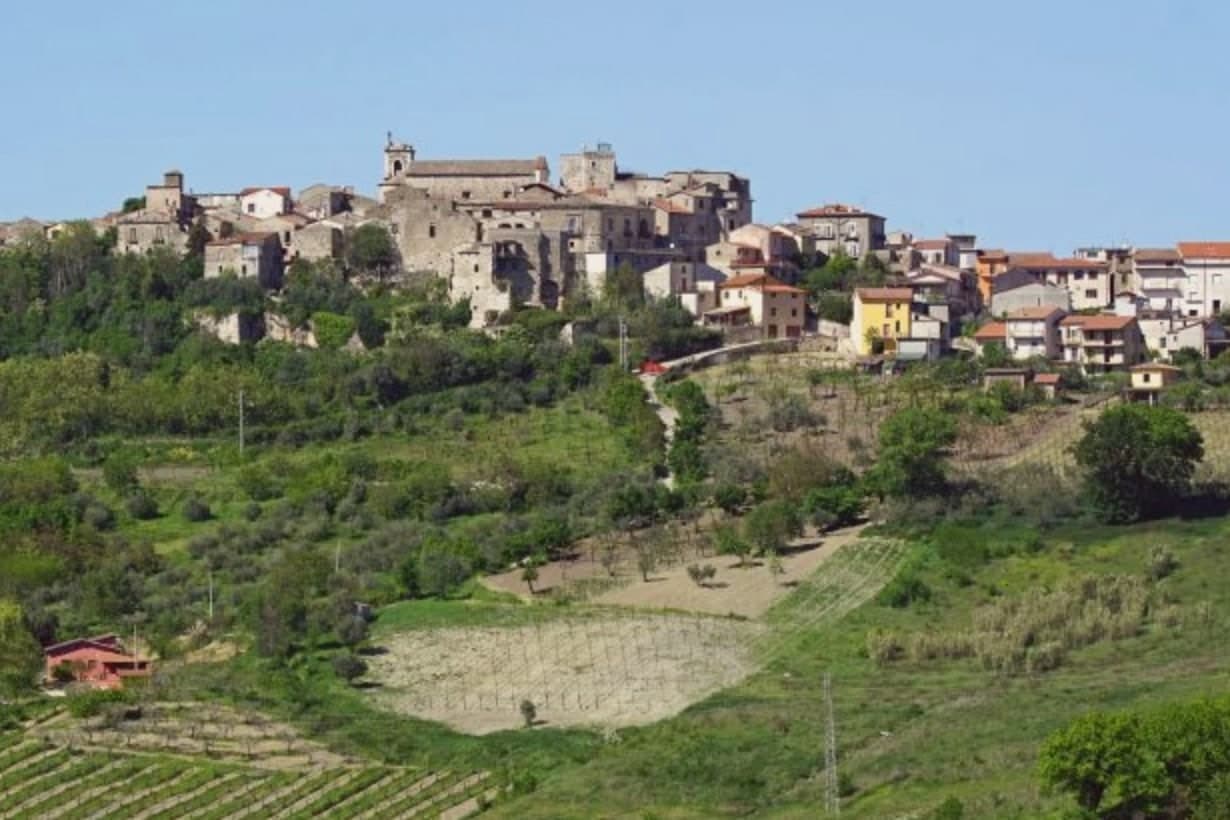
Taurasi sits at four hundred meters on a hill in the Media Valle del Calore, in the Irpinia of the Avellino province, forty kilometers inland from Salerno. The castle above the town was built in the seventh century by the Lombards, destroyed by Saracen raids between 900 and 910, rebuilt and extended by the Normans in the twelfth century with a square keep, and partly destroyed again by Alfonso d'Aragona's troops in 1461.
The Gesualdo, Filangieri, Ludovisi and Carafa families took it in turn through the early modern period, each leaving their mark on a structure that was never allowed to settle into a single style. The upper ridge holds the castle and its history of damage and repair.
The lower town holds the parish church and its patronal feast, the daily religious life set apart from the fortress above. Between them, the medieval center keeps three gates and the noble palaces that once answered to whichever family held the keep.
Around all of it, the vineyards run down the slopes, the same ground that has outlasted every family that held the castle above it. What the place adds up to is a hill town where the fortress changed hands over and over while the vines below kept producing, so the wine, not the castle, became the more durable claim to distinction.
The comune belongs to the national association of wine-producing towns.
What to see in Taurasi
- Castello Marchionale. The keep stands on the upper ridge, its stone showing the patchwork of repeated rebuilding across centuries of raids and sieges. The square Norman keep is the most legible surviving structure.
- Enoteca Regionale. Regional wine cellar inside the castle, with a Percorso Tau sensory route through the Taurasi, Fiano di Avellino and Greco di Tufo appellations.
- Centro storico. Medieval village with three surviving gates, Porta Sant'Angelo, Porta Piccola and Porta Maggiore, and noble palaces with corner towers.
How to get to Taurasi
Salerno is roughly 74 minutes away by road.
Our tip
April through June and September into October are the working months for Taurasi. The Aglianico vines bud in late spring, the slopes turn through copper into November after harvest. The vendemmia falls in late October, the latest in southern Italy because Aglianico ripens slowly.
Ravello
Why visit Ravello
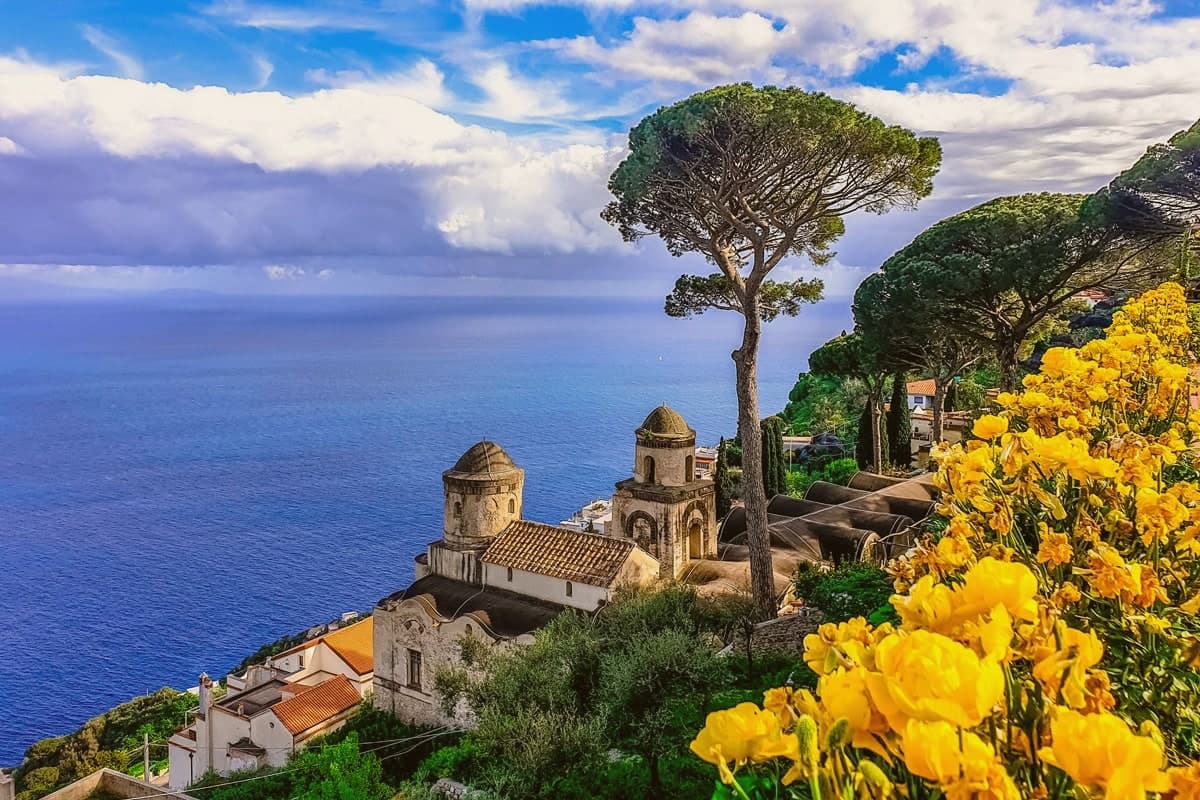
Ravello sits on a spur above the Amalfi Coast, between the valleys of the Dragone and the Reginna Minor, 782 stairs up from Atrani at sea level. The village grew rich in the 12th and 13th centuries as a satellite of the Amalfi maritime republic, when patrician families like the Rufolo, Confalone and d'Afflitto built their houses on the ridge to escape the coastal raids.
The upper village holds the older churches and the social life of the piazza; the villas that made the town's later reputation sit toward the cliff edge, their gardens and belvederes facing the water. One villa's garden was seen by Richard Wagner in 1880 and identified by him with Klingsor's enchanted garden in his opera Parsifal, and he wrote the opera's second act on the strength of it.
The Ravello Festival began playing orchestral concerts in that same garden in 1953, the year the council decided to use Wagner's visit to rebuild a postwar economy. The town's shape, ridge above, stairs down to the coast, patrician houses turned toward the sea, is the record of why families climbed here in the first place and what they built once they had reason to stay.
The comune belongs to the national association of wine-producing towns.
What to see in Ravello
- Villa Rufolo. Patrician residence built 1270 with Moorish cloister and terraced gardens; setting for the Ravello Festival concerts and the second act of Wagner's Parsifal.
- Villa Cimbrone. Cliff-edge villa restored after 1904 by Lord Grimthorpe, ending in the Terrazza dell'Infinito, a marble belvedere over the Gulf of Salerno.
- Duomo di Ravello. Cathedral on Piazza Vescovado, founded 1086, with the bronze portal cast by Barisano da Trani in 1179 and the marble pulpit signed by Niccolò di Bartolomeo da Foggia in 1272.
How to get to Ravello
Salerno is roughly 33 minutes away by road.
Our tip
May, June, September and early October are the months Ravello reads best. The temperature on the ridge runs three to five degrees cooler than on the coast below, the festival concerts on the Villa Rufolo belvedere run from late June through August, and the gardens are full without the day-tripper bus queues of high summer. July and August fill the SITA bus from Amalfi and the road up the Dragone valley, and the festival's evening concerts under the stars are the reason most overnight visitors come.
Cerreto Sannita
Why visit Cerreto Sannita
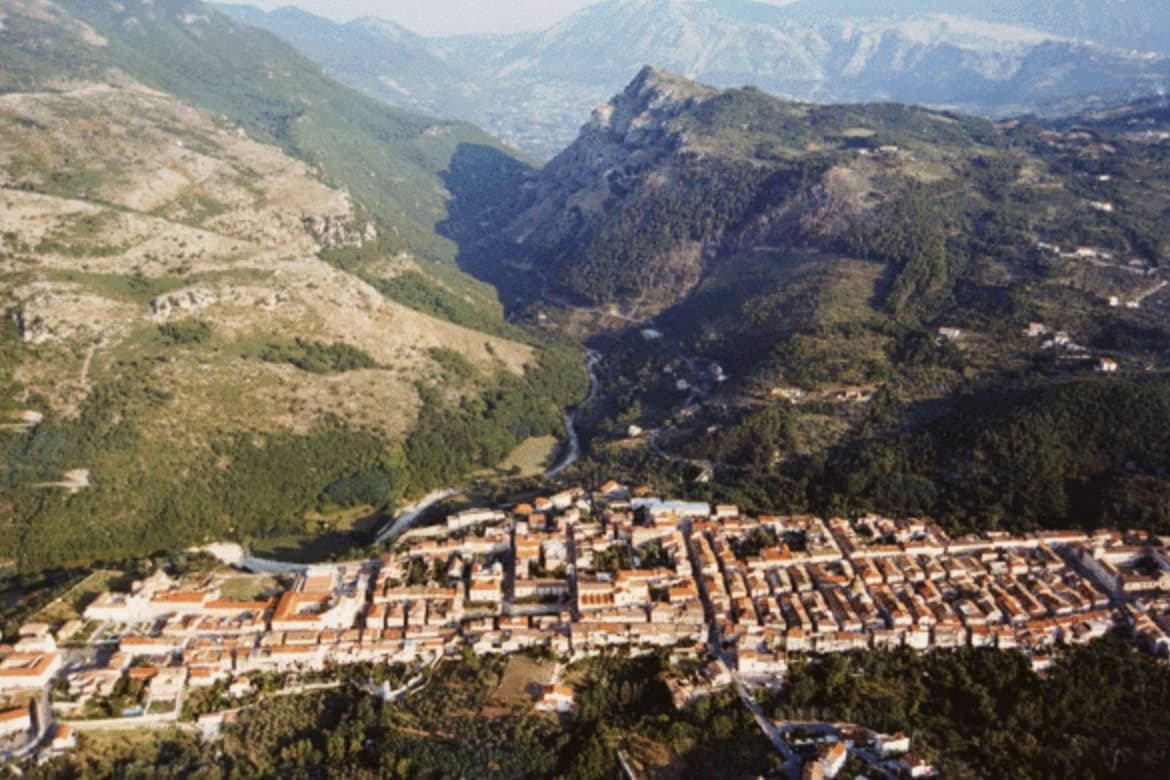
Cerreto Sannita sits at 290 meters in the Titerno valley of the Sannio, fifty-five kilometers northeast of Naples, with the Matese massif rising behind. The town was rebuilt at the order of Count Marzio Carafa, his brother Marino, and Bishop Giovanni Battista de Bellis, and the resulting grid runs orthogonally around a central piazza, a rare case of late-baroque urban planning in southern Italy.
The other anchor is ceramics, an industry the town has long shared with its neighbour. Workshops in both places have produced majolica since at least the sixteenth century, and the State Art Institute revived the craft in the mid-twentieth.
Workshops still turn out ceremonial plates, lobed jugs, apothecary jars and riggiole tiles painted with wind-rose and garland motifs. The town is a Bandiera Arancione, a Cittaslow, and one of Italy's official Città della Ceramica.
What results is a town whose street plan and whose craft both trace back to the same recovery: one rebuilt the ground it stands on, the other kept its hands busy on top of it.
The comune belongs to the national association of wine-producing towns.
What to see in Cerreto Sannita
- Cattedrale della Santissima Trinità. Baroque facade and tiled dome at the centre of the new town plan, standing where the piazza anchors the orthogonal grid.
- Museo Civico e della Ceramica Cerretese. Civic museum dedicated to four centuries of local majolica, with ceremonial plates, riggiole tiles and apothecary jars from Cerreto and San Lorenzello workshops.
- Chiesa di San Martino. Late seventeenth-century church with painted majolica floor of Cerreto tiles, one of the best preserved riggiole pavements in the Sannio.
How to get to Cerreto Sannita
Napoli is roughly 85 minutes away by road.
Our tip
April through June and September into October are the dry, walkable months in the Titerno valley, when the Matese is still green and the ceramic workshops keep regular hours. July and August push the valley into the mid-thirties; the orthogonal centro storico holds shade well enough, but afternoons go quiet between two and six. November through March is winter on the Matese flank, with cold rain and occasional snow above the town and several workshops on reduced hours.
Tramonti
Why visit Tramonti
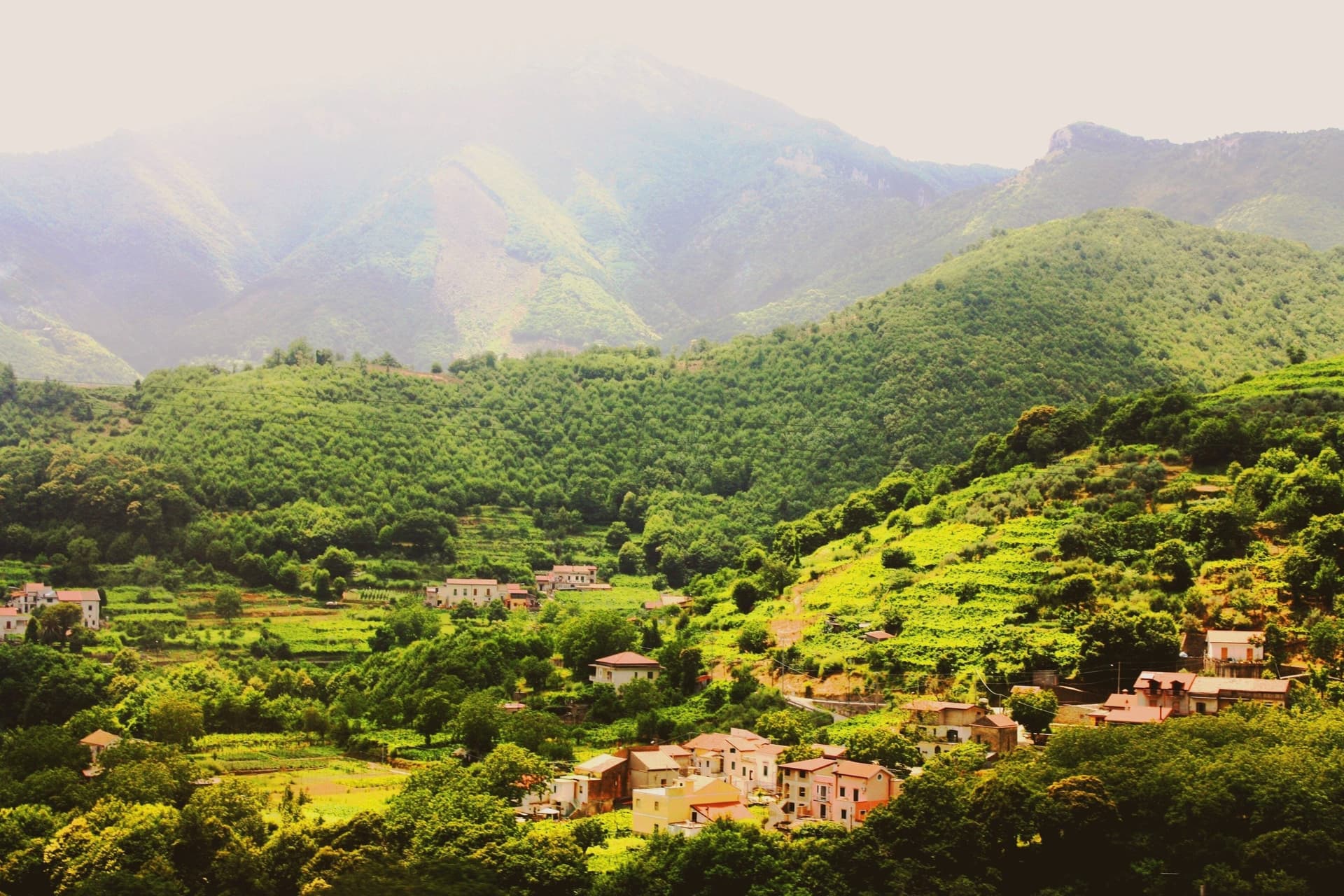
Tramonti is the Amalfi Coast that does not face the sea. The comune covers thirteen hamlets on the inland Lattari slopes above Maiori, with the seat of Polvica at 321 meters and the higher frazioni climbing past six hundred, each linked by old mule tracks rather than a single main street.
It was an important town of the Maritime Republic of Amalfi between 839 and around 1200, sitting on the inland side of the ridge that divides the coast from the Sorrento peninsula and, by way of the Valico di Chiunzi, from the Sarno valley beyond. Two exports carried the village name further than the village itself: fiordilatte mozzarella from the high pastures, and the long-fermented pizza dough that emigrants took north in the post-war years to found most of the historic pizzerias of Piedmont and Lombardy.
The slopes fall within the UNESCO Amalfi Coast site and the Monti Lattari Park, with chestnut forest and limoncello distilleries on every road. A comune this scattered, with its parishes on separate ridges and its produce known abroad before the place itself, reads less like one town than a federation of hamlets that happened to share a name.
The comune belongs to the national association of wine-producing towns.
What to see in Tramonti
- Convento di San Francesco. Fourteenth-century Franciscan convent at Polvica with cloister and a rare wooden Christ, founded by Beata Margherita Cigala in 1474.
- Costa d'Amalfi Tramonti DOC vineyards. Terraced parcels climbing the Lattari slopes at a pitch among the steepest viticultures in Italy, worked by hand where machinery cannot stand.
- Thirteen frazioni of Tramonti. Hamlets scattered up the ridges between 250 and 700 meters, each with its own parish and traditions, connected by old mule tracks.
How to get to Tramonti
Salerno is roughly 38 minutes away by road.
Our tip
May through September is the Amalfi calendar, with the inland Lattari side cooler than the coastal road and the vineyard work running into harvest in late September and October. July and August see day-trippers walking up from Maiori for cooler air and lunch; the road to Valico di Chiunzi takes the overflow from Ravello and Amalfi. The chestnut harvest falls in October and November and Pizza a Metro festivals happen in late summer.
Centola
Why visit Centola
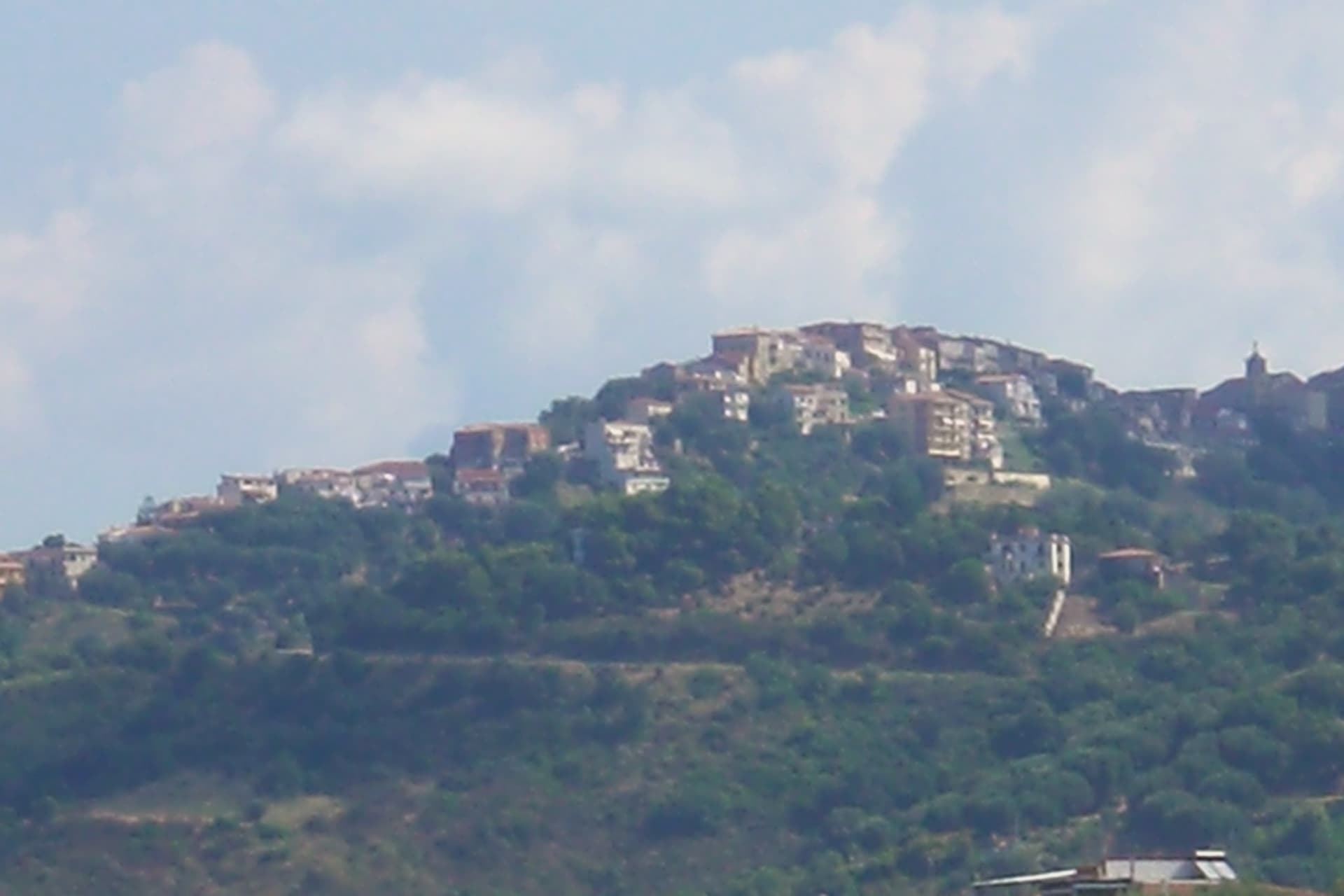
Centola sits inside the Cilento, Vallo di Diano and Alburni National Park, with four frazioni stretched between hill and shore. The hilltop centro began as a refuge for survivors of ancient Molpa, the coastal city destroyed by the Byzantine general Belisarius in 547 AD; the name likely traces to centum illuc, the hundred who fled uphill.
Centola joined the Cilento revolt of 1828 and adopted the Proclamation of Palinuro, then lost most of its population to emigration across the Americas after Unification. The commune holds a Bandiera Blu on the Palinuro coast and belongs to Città del Vino.
The hilltop and the cape are seven kilometers apart with seventy meters of climb between them, a short distance that nonetheless separates two different lives: one built by people who ran from the water, the other built on people coming back to it for the beach and the caves. What was once a flight inland has become, centuries later, a pull back toward the coast it fled.
The comune belongs to the national association of wine-producing towns.
What to see in Centola
- Centro storico di Centola. Hilltop old town above the Mingardo valley, founded by survivors who climbed from the coast after it was sacked; the streets sit apart from the shore below, reached by a climb of some seventy meters over the distance between.
- Palinuro. The seaside frazione at the cape, sitting where the Lambro and Mingardo rivers meet the sea, its marina the departure point for boats along the promontory.
- Ruderi di Molpa. Remains of the ancient coastal settlement destroyed by Belisarius in 547 AD, on the promontory above the Mingardo mouth, the origin point of the hilltop town itself.
How to get to Centola
Salerno is roughly 115 minutes away by road.
Our tip
May, June, September and early October are the months Palinuro was built for. Water temperature crosses twenty degrees, the boat tours to the Grotta Azzurra run all day, and the centro on the hill stays cool when the marina fills. July and August are the south Italian high season: the beaches fill, the SP562 backs up between Palinuro and Marina di Camerota, and prices climb.
More from Anywhere Italy
- The 8 best wine towns within 90 minutes of Salerno
- The best wine towns within 90 minutes of Naples
- The best small towns you can reach by train in Campania
- The best wine towns that eat well in Campania
- The 7 best wine towns you can reach by train in Campania
- The best towns known for what they grow within 45 minutes of Salerno