
The best wine towns within 90 minutes of Napoli
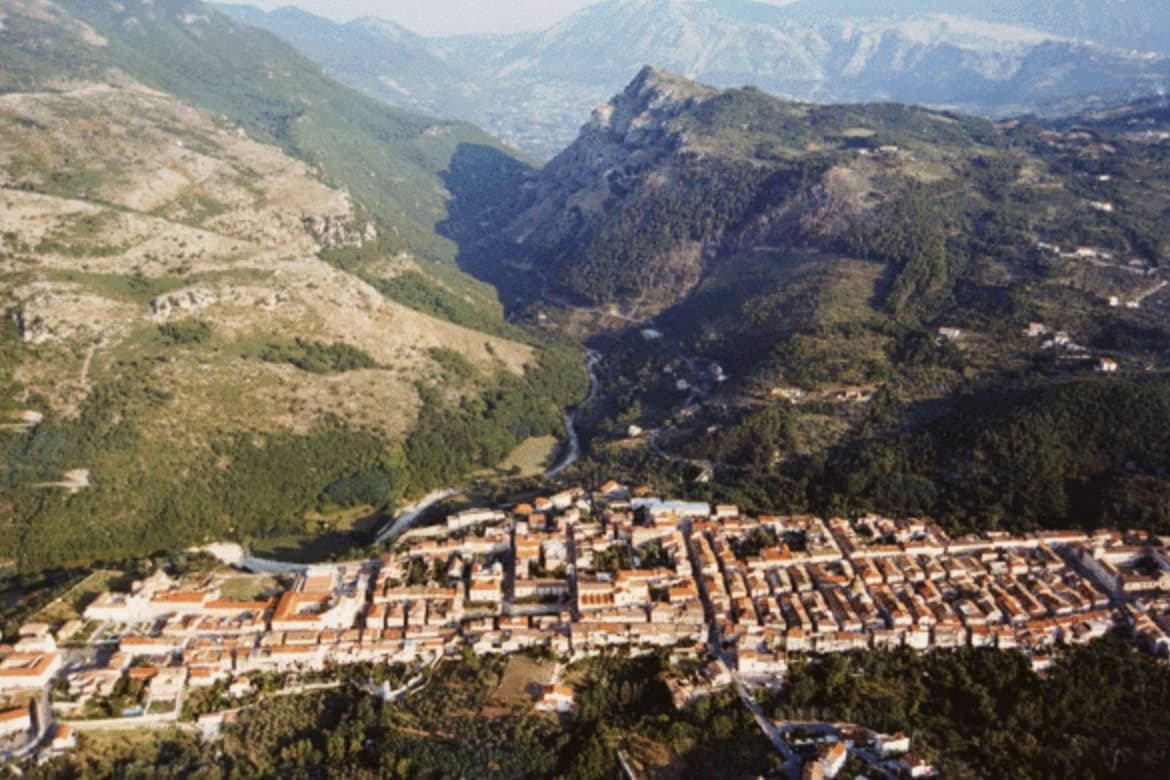
The land behind Napoli is made of volcanic ash and limestone, and it grows grapes that taste of both. Aglianico goes dark and tannic on the slopes above the Volturno and the Calore, Falanghina stays saline and sharp, and Greco holds its acidity into the warm autumns. The towns here are built from tufa blocks the colour of wet sand, cut from the same ground that feeds the vines, with cellars dug straight down beneath the houses. Come in October and the smell of fermenting must sits in the streets, along with roasting chestnuts and the pork the Caserta hills are known for.
Most wine travellers in Campania head for Avellino and the Irpinia road, which is reasonable, because Taurasi is one of the great red wines of southern Italy and the Greco di Tufo and Fiano di Avellino zones sit within a short drive of each other. The cellars there are geared for visitors, with tasting rooms, English-speaking staff and booking forms. That efficiency draws coaches, and in harvest season the better-known estates run to a timetable. The wine is worth it. The queue is a queue.
The same volcanic ground and the same grapes carry on well past Irpinia, north into the Sannio and the Matese foothills, west into the Campi Flegrei where vines grow on old crater rims within sight of the bay. Fewer people go, and the tasting is more likely to happen at a kitchen table than a counter. These towns hold membership of the national wine towns association, which means the vineyards are part of how the place governs itself rather than a sideline. All of them are within reach of Napoli in a morning.
Of the 21 communes we have mapped within 90 minutes of Napoli, 7 qualify as wine towns: each belongs to the national association of wine towns. The smallest, Cerreto Sannita, has 3,607 residents.
Two more lists worth reading alongside this one: The best hidden hill towns within 90 minutes of Napoli and The 7 best wine towns you can reach by train in Campania.
Cerreto Sannita
Why visit Cerreto Sannita
Cerreto Sannita sits at 290 meters in the Titerno valley of the Sannio, fifty-five kilometers northeast of Naples, with the Matese massif rising behind. The town was rebuilt at the order of Count Marzio Carafa, his brother Marino, and Bishop Giovanni Battista de Bellis, and the resulting grid runs orthogonally around a central piazza, a rare case of late-baroque urban planning in southern Italy.
The other anchor is ceramics, an industry the town has long shared with its neighbour. Workshops in both places have produced majolica since at least the sixteenth century, and the State Art Institute revived the craft in the mid-twentieth.
Workshops still turn out ceremonial plates, lobed jugs, apothecary jars and riggiole tiles painted with wind-rose and garland motifs. The town is a Bandiera Arancione, a Cittaslow, and one of Italy's official Città della Ceramica.
What results is a town whose street plan and whose craft both trace back to the same recovery: one rebuilt the ground it stands on, the other kept its hands busy on top of it.
The comune belongs to the national association of wine-producing towns.
What to see in Cerreto Sannita
- Cattedrale della Santissima Trinità. Baroque facade and tiled dome at the centre of the new town plan, standing where the piazza anchors the orthogonal grid.
- Museo Civico e della Ceramica Cerretese. Civic museum dedicated to four centuries of local majolica, with ceremonial plates, riggiole tiles and apothecary jars from Cerreto and San Lorenzello workshops.
- Chiesa di San Martino. Late seventeenth-century church with painted majolica floor of Cerreto tiles, one of the best preserved riggiole pavements in the Sannio.
How to get to Cerreto Sannita
Napoli is roughly 85 minutes away by road.
Our tip
April through June and September into October are the dry, walkable months in the Titerno valley, when the Matese is still green and the ceramic workshops keep regular hours. July and August push the valley into the mid-thirties; the orthogonal centro storico holds shade well enough, but afternoons go quiet between two and six. November through March is winter on the Matese flank, with cold rain and occasional snow above the town and several workshops on reduced hours.
Atina
Why visit Atina
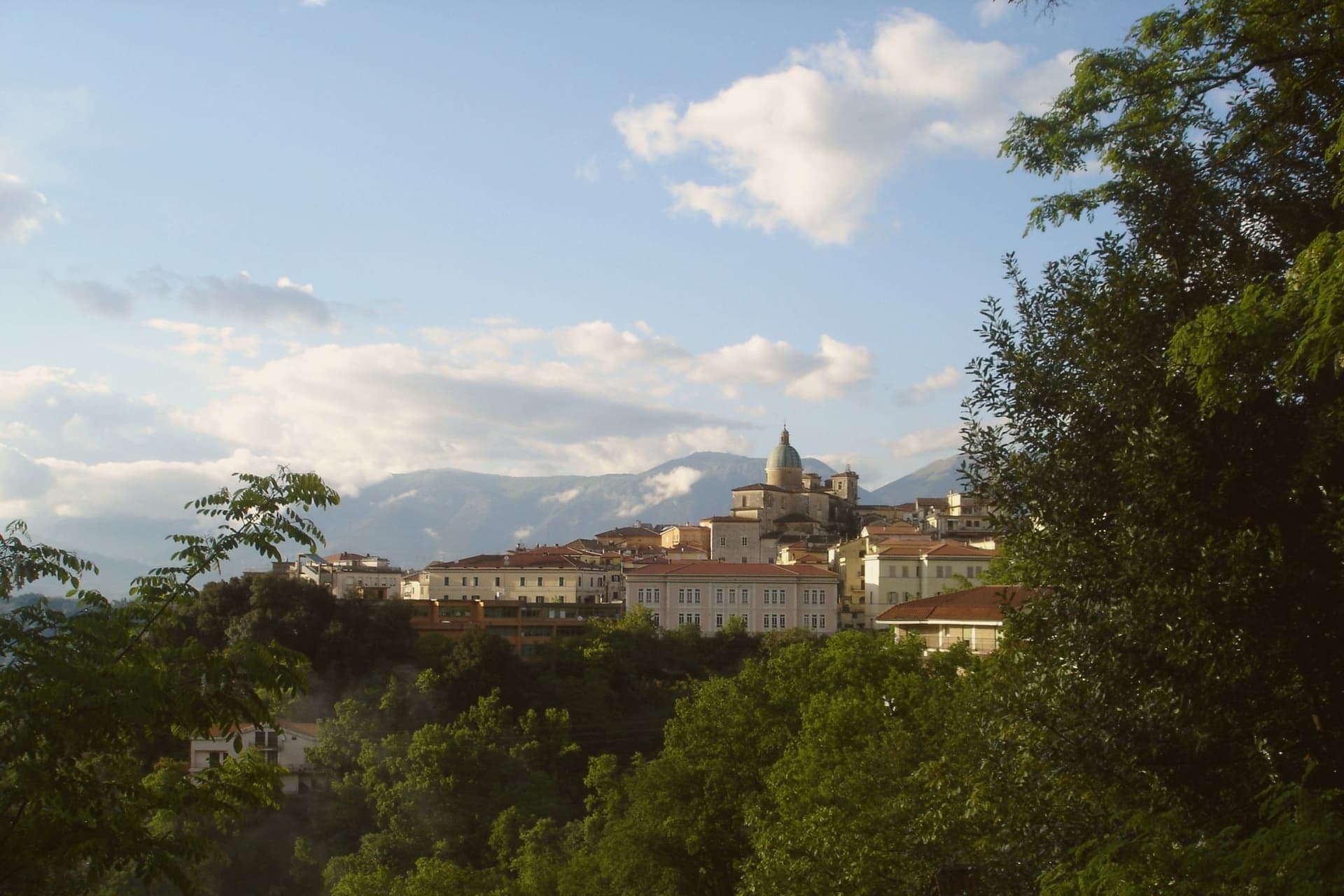
Atina sits at 500 meters in the province of Frosinone, at the foot of the Meta and Mainarde ranges. The Volsci held the ground first, then the Samnites built their defenses here, and Cicero, born fourteen kilometers away in Arpino, mentions the town in his De Lege Agraria.
The old town is built directly over that earlier settlement, its streets gathered around Piazza Garibaldi with the ducal palace on one side and the cathedral closing the other end. Below the hill, the Val di Comino opens toward the Mainarde and Ernici, the upper reach of the Liri-Garigliano valley.
Atina anchors the upper valley while the valley floor beneath it grows the Cabernet blend that carries the town's name as a DOC. Fifteen kilometers downhill, past the vineyards, the Lago di Posta Fibreno sits with its floating island, a detail Pliny the Elder recorded.
What holds this place together is the relation between height and floor: a fortified ridge that watched the routes from Cassino, and the valley bottom below it that now grows the grapes.
The comune belongs to the national association of wine-producing towns.
What to see in Atina
- Mura poligonali. The walls survive in stretches below the medieval ridge, massive uncut blocks fitted without mortar, still visible where the modern town has not built over them.
- Palazzo Cantelmo (Ducale). Faces Piazza Garibaldi at the center of the old town, the seat of the Cantelmo dukes now given over to municipal offices.
- Cattedrale di Santa Maria Assunta. Closes one end of the historic center, its current form the result of rebuilding after repeated earthquake damage.
How to get to Atina
Napoli is roughly 86 minutes away by road.
Our tip
April through October is the open season for Atina: vineyards in leaf in May, the Cabernet harvest in late September, mild dry air through October. July and August are warm in the valley below but cooler at 500 meters; the centro storico holds shade through the afternoon. November through March is quiet.
Caiazzo
Why visit Caiazzo
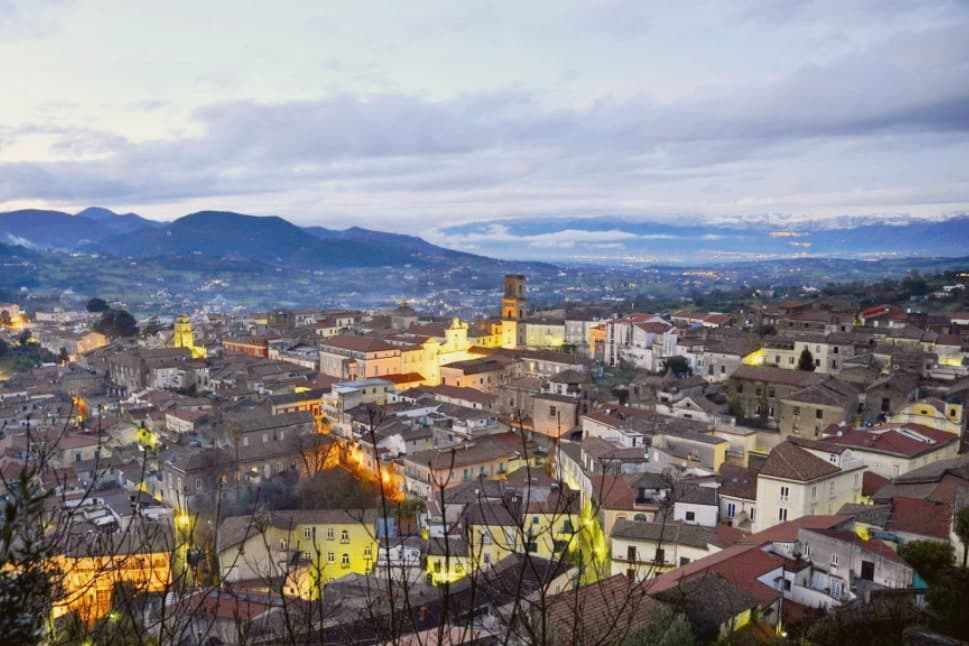
Caiazzo sits at 200 meters on a small hill above the Volturno, forty kilometres north of Naples, between the Matese foothills and the Caserta plain. The town is older than the surrounding province: Caiatia was already a Samnite then Roman centre, and the medieval cathedral preserves a Lombard crypt under its eleventh-century floor.
What pulls visitors today is not the cathedral but a pizzeria. In 2012 Franco Pepe, third-generation baker, opened Pepe in Grani in an eighteenth-century palazzo on Vico San Giovanni Battista, working long-fermented doughs with local Pallagrello flour, Conciato Romano cheese and Caiazzo olive oil.
Tre spicchi from Gambero Rosso for ten straight years and a Michelin world-best ranking in 2018 turned the centro storico into a destination that handles 800 pizzas a day. Caiazzo is a Cittaslow, a Città del Vino for Pallagrello and Casavecchia, and a Città dell'Olio.
The comune belongs to the national association of wine-producing towns.
What to see in Caiazzo
- Cattedrale di Santa Maria Assunta. Eleventh-century cathedral with a Lombard crypt beneath the floor, baroque interior and the relics of San Stefano Minicillo, patron of Caiazzo.
- Castello di Caiazzo. Medieval castle of Lombard origin on the highest point of the centro storico, remodelled under the Normans and later princes of Caiazzo.
- Pepe in Grani. Franco Pepe's pizzeria in an eighteenth-century palazzo on Vico San Giovanni Battista, ranked best in the world by Michelin in 2018.
How to get to Caiazzo
There is a railway station in the town, so you can arrive without a car and never need one while you are here. Napoli is roughly 53 minutes away by road.
Our tip
April through June and September into October are the cleanest months in Caiazzo, when the Volturno valley is green and the Pepe in Grani tables are easier to book at lunch. July and August push the Caserta plain past thirty-five degrees and the centro storico empties between two and six in the afternoon. Harvest runs September and October for Pallagrello and Casavecchia and pulls weekend wine visitors.
Alife
Why visit Alife
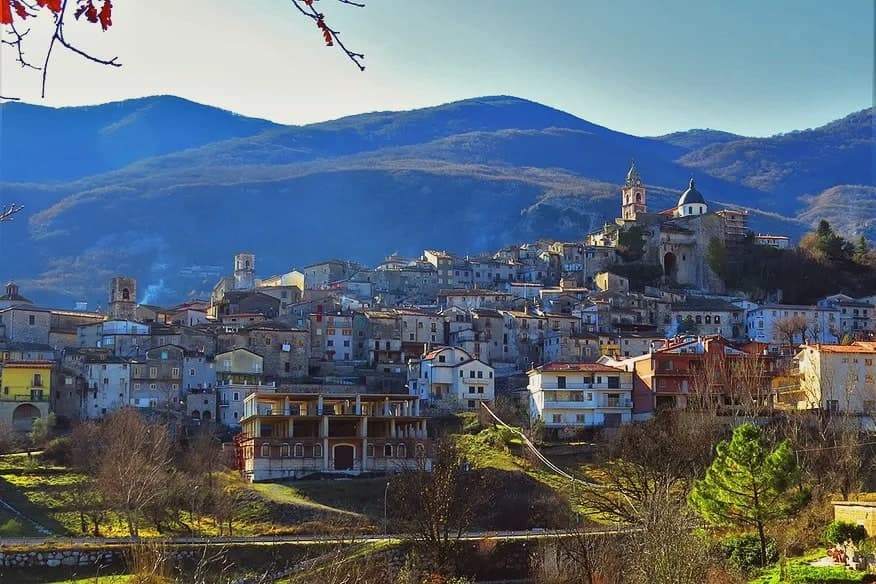
Alife sits at 110 meters at the southern foot of the Matese, the rectangular Roman walls still tracing the original plan of the 326 BC Latin colony founded after the Samnite Wars. The circuit runs 1.9 kilometres, with towers every 39 meters and four monumental gates on the cardo and decumano.
Inside the walls lies the largely buried Roman amphitheatre, 48 by 38 meters, the fourth largest in Italy after Rome, Pompeii and Capua. The Cryptoporticum, a 100-meter underground gallery, has been kept legible by recent excavation.
The town gives its name to the Cipolla di Alife, a heirloom red onion documented locally since Roman times and still cultivated on the irrigated plain along the Volturno. Modern Alife sits inside the Parco Regionale del Matese and along the Via Francigena del Sud, with extra-virgin olive oil and Pallagrello and Casavecchia wines on the surrounding slopes.
The comune belongs to the national association of wine-producing towns.
What to see in Alife
- Mura romane di Alife. Rectangular Roman walls running 1.9 kilometres, with towers every 39 meters and four monumental gates on the original cardo and decumano of the 326 BC colony.
- Anfiteatro Romano. Largely buried amphitheatre of 48 by 38 meters, the fourth largest in Italy after Rome, Pompeii and Capua, dating to the early imperial period.
- Criptoportico Romano. Underground gallery more than 100 meters long, well preserved beneath the centro storico, kept open after recent archaeological excavation.
How to get to Alife
There is a railway station in the town, so you can arrive without a car and never need one while you are here. Napoli is roughly 76 minutes away by road.
Our tip
April through June and September into October are the open months along the Matese foothills, when the Volturno plain is green and the Roman walls walk at a reasonable temperature. July and August push the inland Caserta past thirty-five degrees and the amphitheatre site closes mid-afternoon to protect visitors and stone. The Sagra della Cipolla di Alife happens in mid-September and pulls weekend visitors from Naples and Caserta. Sagra della pannocchia e dell'agricoltura alifana falls in September.
Sant'Agata de' Goti
Why visit Sant'Agata de' Goti
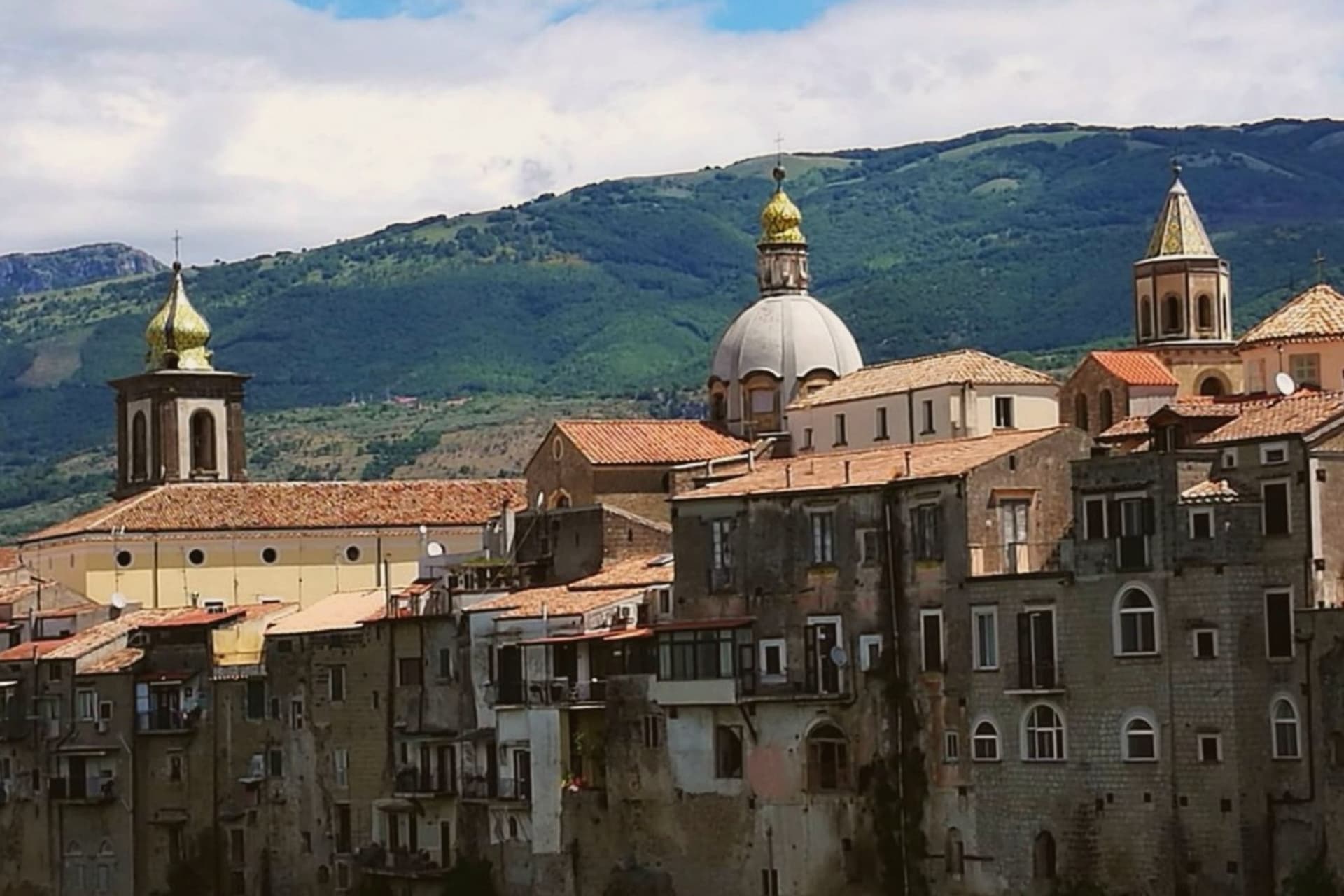
Sant'Agata de' Goti sits at 156 meters on a tuff spur between the Martorano and Riello gorges, thirty-five kilometers northeast of Naples and west of Monte Taburno. The houses on the edge of the centro are built flush with the cliff, their back walls forming a vertical face above the Isclero river thirty meters below.
The Samnites founded Saticula here in the sixth century BC; the current name comes from the Goths who held the town in the sixth century AD, then from Saint Agatha of Sicily as titular of the cathedral. The Lombards of Benevento, the Normans, and the Angevins each rebuilt the castle on the western edge.
The Duomo dell'Assunta in the centro keeps a twelfth-century crypt under a Baroque rebuild. The commune is a Bandiera Arancione of the Touring Club Italiano, holds the Sant'Agata de' Goti Aglianico DOC and Falanghina DOC, and is part of the Città della Nocciola network for the Nocciola di Avellino DOP grown around it.
The comune belongs to the national association of wine-producing towns.
What to see in Sant'Agata de' Goti
- Castello Ducale. Medieval fortress on the western edge of the cliff, rebuilt by the Lombards, the Normans and the Angevins, now a residence with restored rooms.
- Duomo dell'Assunta. Tenth-century cathedral with a twelfth-century crypt under a Baroque rebuild, columns reused from a Roman temple of Demeter.
- Chiesa dell'Annunziata. Late Gothic church with a fifteenth-century fresco of the Annunciation and a wooden ceiling carved with the symbols of Christ's passion.
How to get to Sant'Agata de' Goti
Napoli is roughly 51 minutes away by road.
Our tip
April through early June and September into October are the strongest months. The valley around Sant'Agata greens, the Aglianico and Falanghina vineyards bud and ripen, and the cliff houses stay cool when the floor of the gorge heats up. July and August can pass thirty-five degrees on the Isclero plain, though the centro on the tuff catches more breeze. Sagra Sansilvestrese a Sant'Agata De' Goti falls in August.
Montesarchio
Why visit Montesarchio
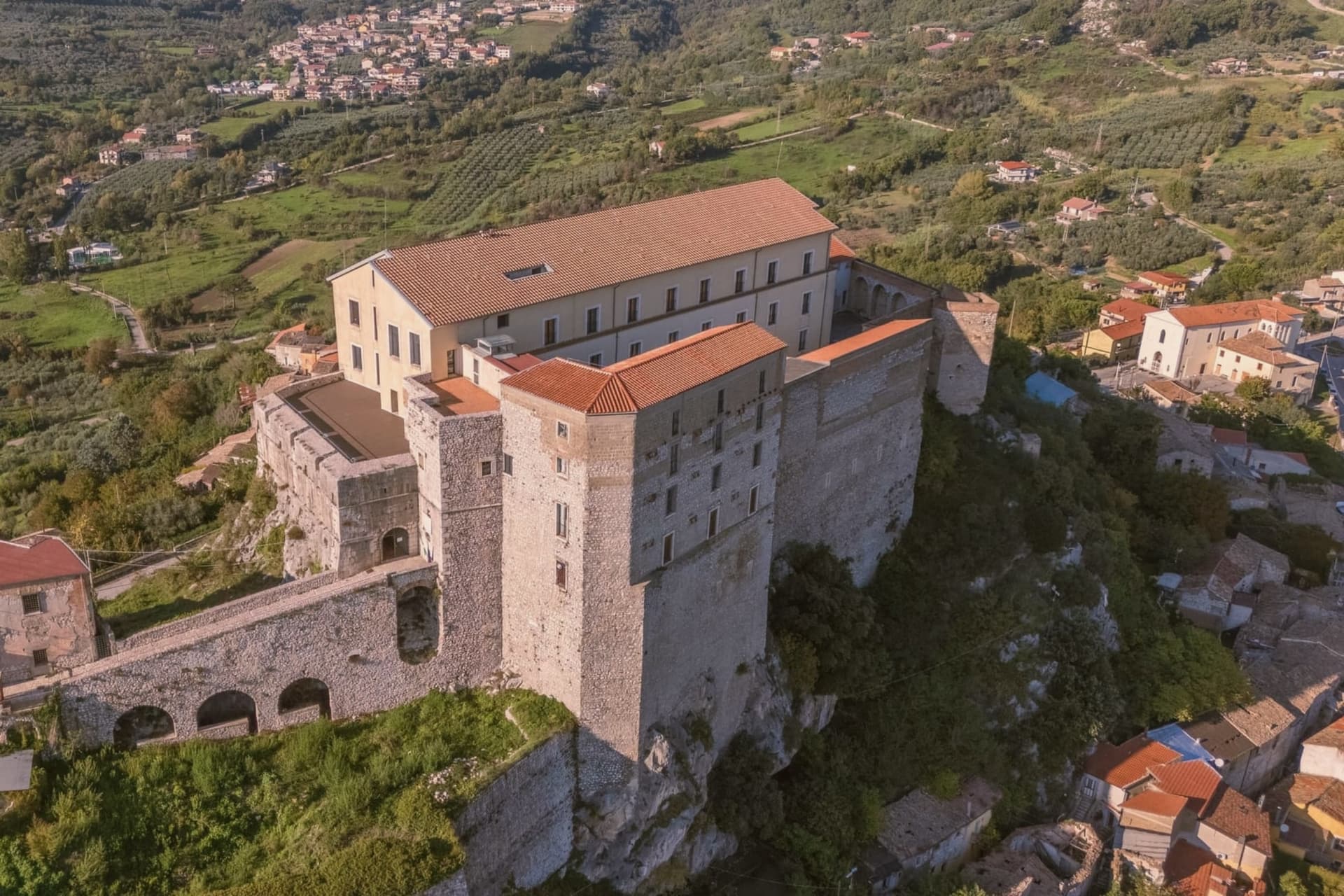
Montesarchio sits at 300 meters at the foot of Monte Taburno, eighteen kilometers southwest of Benevento. The Latin name is Caudium, an ancient Samnite city on the road from Beneventum to Capua, and the surrender at the pass below it was so unprecedented that the Roman Senate refused to ratify the treaty that followed.
The medieval town climbed the hill above the valley around its castle and tower, and that upper cluster still marks the highest and oldest part of the centro, with the newer town spreading below it into the Valle Caudina. The commune is a Borgo più bello d'Italia, a Città del Vino, and a Città della Nocciola.
What holds the place together is the vertical relationship between valley floor and hilltop: a road town and a battle site below, a fortified refuge and lookout above, the second built to guard what the first could not.
The comune belongs to the national association of wine-producing towns.
What to see in Montesarchio
- Castello di Montesarchio. Medieval fortress on the hill above the town, restored and reopened in 2007 as part of the Museo Archeologico Nazionale del Sannio Caudino.
- Torre di Montesarchio. Cylindrical fifteenth-century tower next to the castle at 420 meters, the highest point of the centro and visible across the Valle Caudina.
- Museo Archeologico Nazionale del Sannio Caudino. Archaeological museum inside the castle, holding the krater as its centerpiece among the wider Samnite and Roman finds of the valley.
How to get to Montesarchio
There is a railway station in the town, so you can arrive without a car and never need one while you are here. Napoli is roughly 68 minutes away by road.
Our tip
April through early June and September into October are the months for Montesarchio. The Valle Caudina greens and the trails up Monte Taburno open without the haze of late summer. July and August can climb past thirty-five degrees on the floor of the valley, though the castle and tower at 420 meters cool earlier in the evening.
Pozzuoli
Why visit Pozzuoli
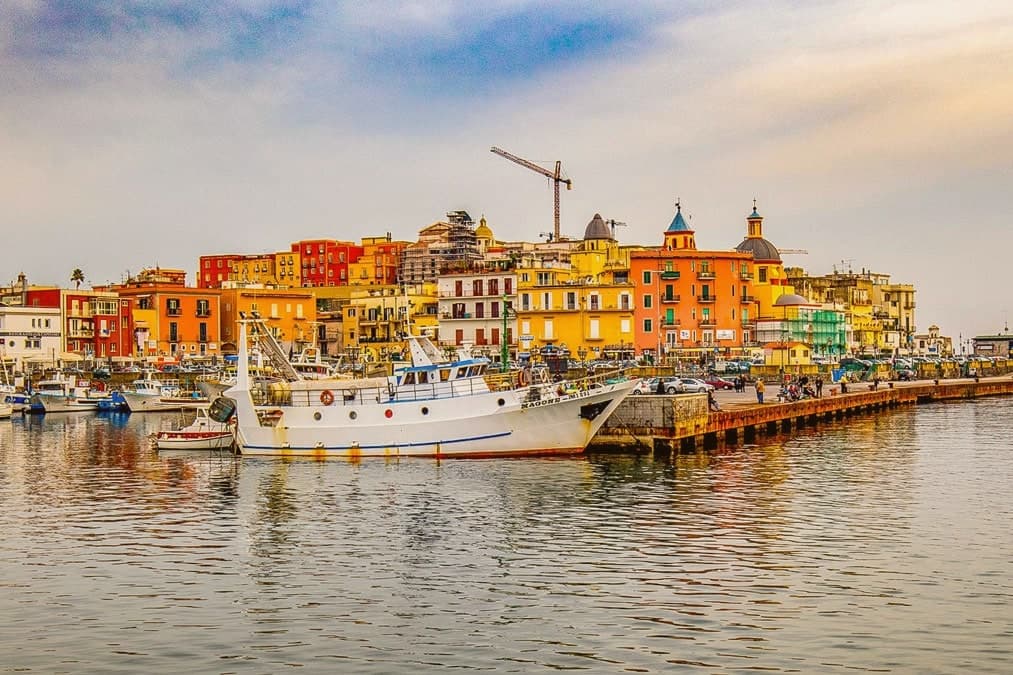
Pozzuoli sits at twenty-eight meters on the rim of the Campi Flegrei caldera, fifteen kilometers west of Napoli. Greek refugees from Samos founded the city in 531 BC as Dicearchia; Rome took it in 195 BC and renamed it Puteoli, a name the port kept through its centuries as Rome's busiest gateway by sea.
The old town and the working town are not the same ground. Rione Terra, the headland acropolis, was the city center for both the Greek and Roman settlements before it was evacuated in 1970 and reopened only piece by piece since.
The rest of Pozzuoli has grown around and below it, on a caldera that does not hold still: the crater above town still vents sulfur, and the crust beneath the whole area continues its slow rise and fall, watched closely enough that the alert level was raised again in 2023. A port city built its wealth on ground that was always going to move under it, and the town's oldest quarter has spent the last half century learning to live with that fact rather than escape it.
The comune belongs to the national association of wine-producing towns.
What to see in Pozzuoli
- Anfiteatro Flavio. The cage chambers and lift machinery beneath the arena floor survive largely intact, giving a rare view of how the underground works of a Roman amphitheater actually functioned.
- Macellum (Tempio di Serapide). A market building long misread as a temple to Serapis. The three marked columns still stand at the center of the floor, close enough to touch.
- Rione Terra. The headland acropolis and original old town, evacuated in 1970 after a bradyseismic crisis and reopened only in stages since.
How to get to Pozzuoli
There is a railway station in the town, so you can arrive without a car and never need one while you are here. Napoli is roughly 25 minutes away by road.
Our tip
May through September is the working season for Pozzuoli, with June and September the easiest months. Sea temperatures rise into the mid-twenties, and the open-air sites stay accessible without afternoon heat closures. July and August are hot and crowded; the Anfiteatro and Macellum work best in the first morning slots.
More from Anywhere Italy
- The best hidden hill towns within 90 minutes of Napoli
 The 7 best wine towns you can reach by train in Campania
- The best hill towns that eat well within 90 minutes of Napoli
- The best hill towns you can reach by train within 90 minutes of Napoli
 The best wine towns that eat well in Campania
- The best hidden hill towns you can reach by train in Campania