
The best towns you can reach by train within 45 minutes of Brescia
Brescia's railway station is one of the better places in Lombardy to stand with a regional ticket and no plan. West, the line runs into Franciacorta, where the sparkling wine cellars sit under low moraine hills and the vines come right down to the level crossings. East, it climbs towards the olive terraces and lemon houses of Garda, past towns built from grey Botticino limestone and pale river stone. Late spring and September are the good months: lake water still warm, tables outside, sardines from Iseo dried and served with polenta, casoncelli in butter and sage on every trattoria menu on the plain.
Most people arriving in this part of Lombardy point themselves at Sirmione, which is understandable. It has the Scaliger castle rising straight out of the water, the Roman villa at the tip of the peninsula, thermal springs, and a lake view in every direction. It also has coach parks, a single narrow bridge into the old town, and a summer crush that starts at the gate and does not let up until October. What you get for the effort is real, but you share it with a very large crowd.
The same lakes and the same hills carry on past that. The shoreline continues round to quieter harbours and steamer piers, the Franciacorta hills roll into walled brick towns on the plain with moats and towers and almost no queue, and the whole lot is served by trains that stop everywhere. These are those stops: smaller places on the water, on the ridge, or behind medieval walls, with a station you can actually arrive at.
Of the 14 communes we have mapped in a 45-minute drive of Brescia, 6 qualify as towns you can reach by train: we confirmed a station you can arrive at. The smallest, Sarnico, has 6,745 residents.
Elsewhere in the catalogue: The best towns inside a nature park that you can reach by train in Lombardia and The best towns with a serious restaurant that you can reach by train in Lombardia.
Sarnico
Why visit Sarnico
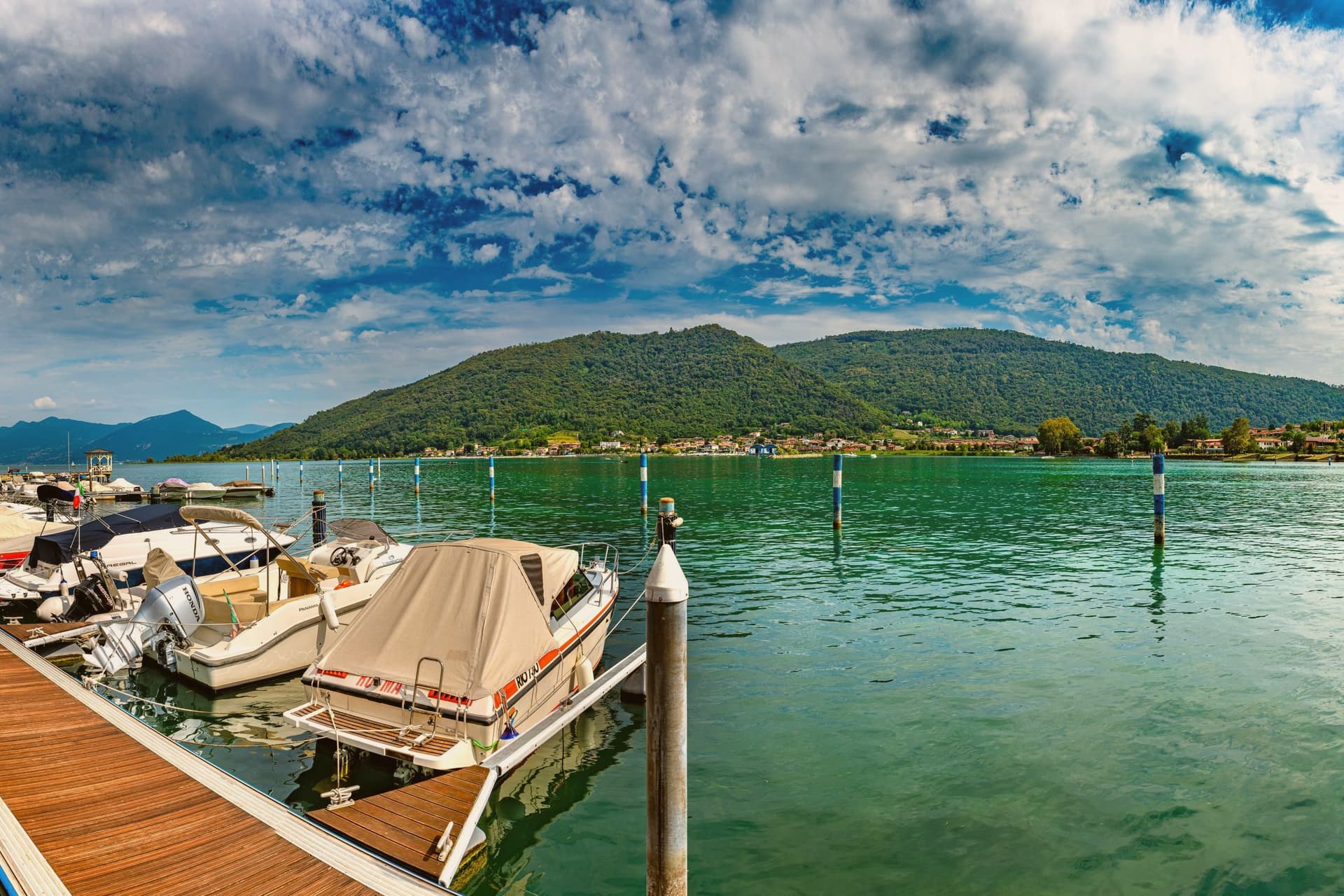
Sarnico sits at the southern end of Lago d'Iseo, where the Oglio river drains the lake toward the Po valley, twenty-five kilometers east of Bergamo. A document from 861 records the emperor Ludwig II donating the local piscaria to the monastery of Santa Giulia in Brescia, which makes Sarnico's fishing trade older than most things on the lake.
The medieval centro storico still reads as a market town. The second layer arrived in the early twentieth century, when the Faccanoni family commissioned Giuseppe Sommaruga to build a string of Liberty villas along the shore road toward Predore.
Villa Faccanoni, Villa Surre and the family mausoleum are among the most coherent stretches of Italian Art Nouveau outside Milan. The Riva shipyard, founded here in 1842, still builds wooden motor yachts on the lakefront.
Most weekenders come from Bergamo and Brescia for the lake; the buildings are why architecture students come.
We confirmed you can reach this one by train.
What to see in Sarnico
- Villa Faccanoni. Giuseppe Sommaruga's 1907 Liberty villa on the lakefront, one of the finest Art Nouveau buildings in Lombardia.
- Villa Surre. Sommaruga villa built for Luigi Faccanoni on the road toward Predore, a complete early-modernist composition.
- Centro Storico. Medieval lakeside core with porticoed lanes, the old fish market site, and the lungolago promenade.
How to get to Sarnico
There is a railway station in the town, so you can arrive without a car and never need one while you are here. Bergamo is roughly 32 minutes away by road.
Our tip
April through June and September through October are the calmest months on Lago d'Iseo: mild temperatures, low water traffic, and the Faccanoni villas open for guided visits. July and August bring weekenders from Bergamo, Brescia and Milano, and the ferries run full. The Wine Festival in late spring fills the piazza. Gli Ambulanti di Forte dei Marmi falls in August.
Soncino
Why visit Soncino
Soncino sits on the Oglio river at the point where the provinces of Cremona, Brescia, and Bergamo meet, a position on the Lombard frontier that kept the town militarized through the medieval centuries and explains the walls and the fortress alike. Inside the circuit, the town's religious center predates its military architecture: the parish church at the heart of the centro storico served the borough from the twelfth century, while the frescoed church nearby belongs to the later Renaissance layer of building.
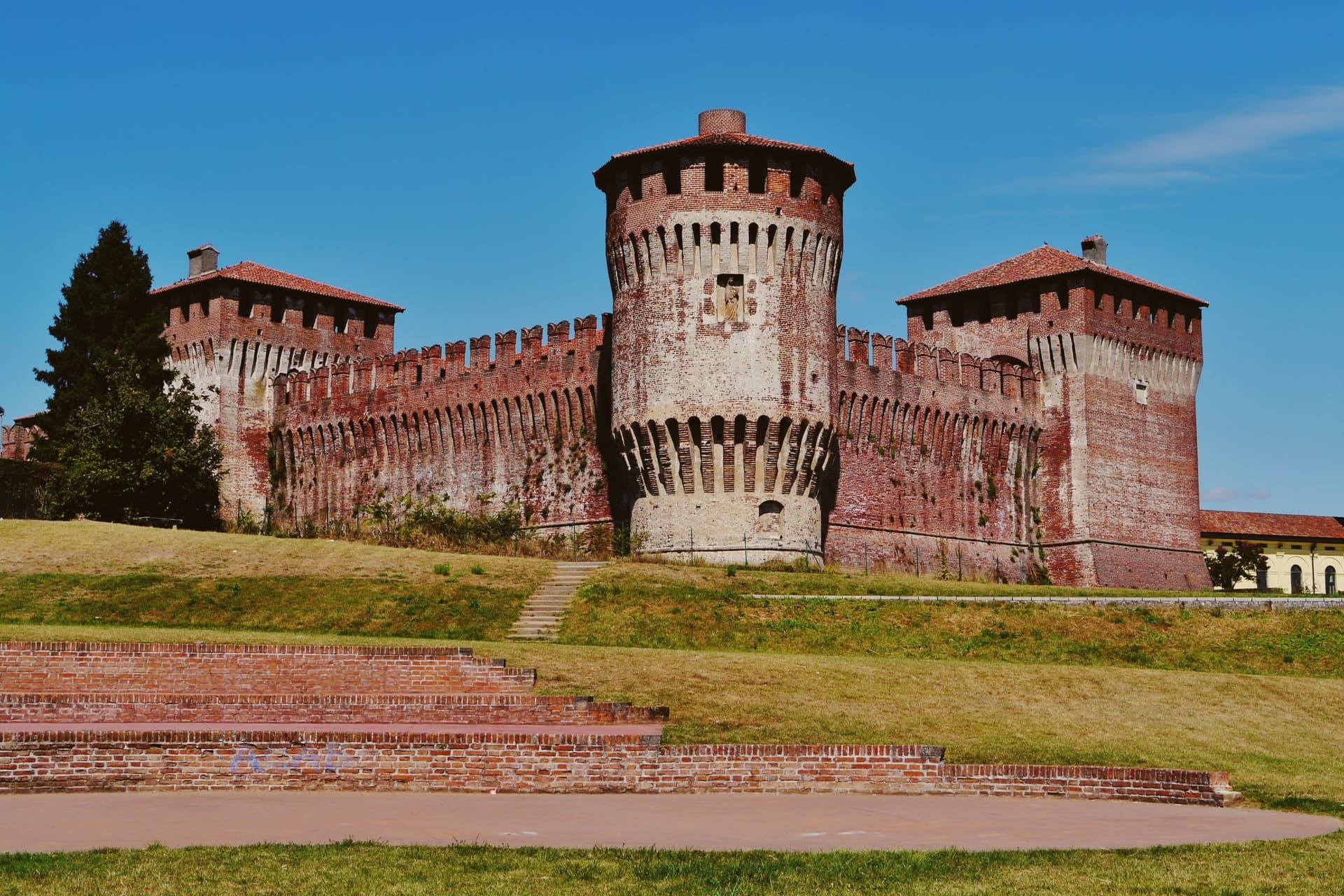
The fortress itself, raised in brick rather than stone, took only two years to complete and is unusually whole for its age. The other thread running through the town is the press, worked by a family who later carried the town's name across Europe when they dispersed, leaving behind the house where they worked and, in it, the object that made the town briefly a center of Hebrew printing.
What Soncino adds up to, then, is a frontier garrison town whose walls and castle speak to centuries of defense, cut through by one short episode of printing that gave it a different kind of reach entirely.
We confirmed you can reach this one by train.
What to see in Soncino
- Rocca Sforzesca. Built by Galeazzo Maria Sforza in the space of two years, using brick rather than stone to speed the work. The keep and towers stand largely as built, with little of the wear or later rebuilding common to castles of the period.
- Casa degli Stampatori. The house where the printers worked still stands, its rooms now given over to the Museo della Stampa, tracing the mechanics of the press rather than the book it produced.
- Chiesa di Santa Maria delle Grazie. Late fifteenth-century church whose interior is covered floor to ceiling in Lombard Renaissance frescoes, a density of painted surface unusual for a town this size.
How to get to Soncino
There is a railway station in the town, so you can arrive without a car and never need one while you are here. Brescia is roughly 38 minutes away by road.
Our tip
April through June and September into October are the right months. The Rocca and the Pieve are open, the frescoes at Santa Maria delle Grazie read cleanly in shoulder-season light, and the Oglio walk is dry. July and August reach thirty-three degrees with valley humidity; the borgo empties between two and six. Sagra delle Radici falls in October.
Iseo
Why visit Iseo
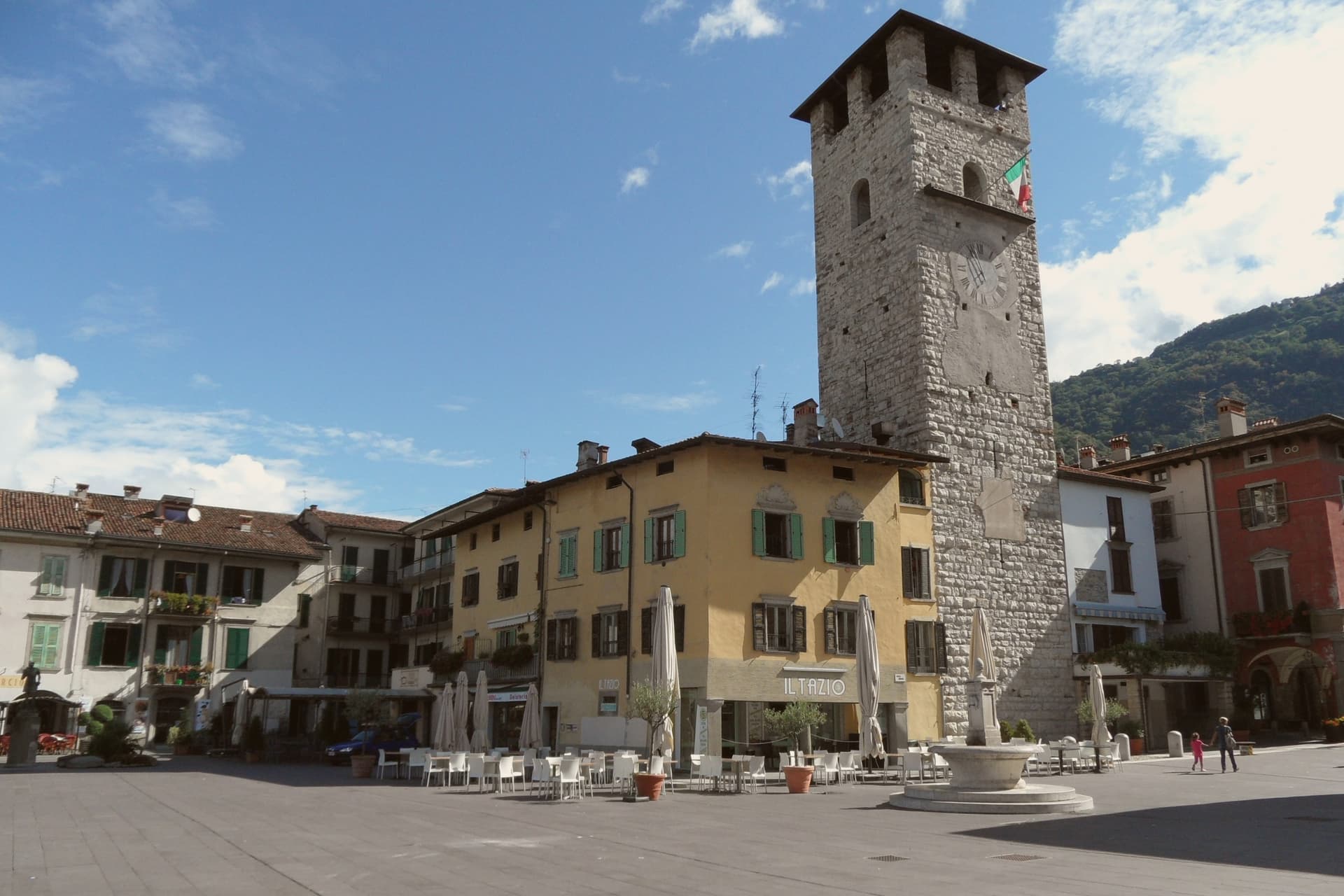
Iseo sits at 198 meters on the southeast shore of Lake Iseo, the fourth-largest lake in Lombardia, fed by the Oglio. The town was founded around a monastery in the 900s and grew under the Sozzi, the Isei, and finally the Oldofredi.
From 1428 to 1797 Iseo was part of the Republic of Venice. The lakefront and the vineyards to the south form the town's two working halves: one facing the water and the ferries that cross it, the other rising into the Franciacorta hills where the metodo classico grapes are grown.
Ferries from the lakefront connect to Monte Isola, the largest lake island in southern Europe, and to Sarnico across the water in Bergamo province. A lake town that turned its inland edge to wine and its waterfront to the island: the two directions, water and vineyard, still define how the town is used.
We confirmed you can reach this one by train.
What to see in Iseo
- Castello Oldofredi. The stone fortress stands above the lakefront, its walls facing the water rather than the town center, a reminder that it was built to watch the lake approach.
- Pieve di Sant'Andrea. Founded by Bishop Vigilio, the church keeps its bell tower set into the middle of the façade rather than beside or behind it, an arrangement rare among Lombard Romanesque buildings.
- Piazza Garibaldi. Main lakeside square with the first Italian statue of Garibaldi, erected in 1883, the year after his death.
How to get to Iseo
There is a railway station in the town, so you can arrive without a car and never need one while you are here. Brescia is roughly 28 minutes away by road.
Our tip
April through October runs Iseo's lake season. April and May open the ferries to Monte Isola, the Franciacorta wineries reopen for tastings, and the lakefront fills on weekends. June through August is the peak window: warm enough to swim, hot enough that the centro empties between 14:00 and 17:00, and the lake breeze keeps evenings comfortable.
Peschiera del Garda
Why visit Peschiera del Garda
Peschiera sits at 68 meters on the Mincio at the point where the river leaves Lake Garda, twenty-five kilometers west of Verona. The Romans called it Ardelica.
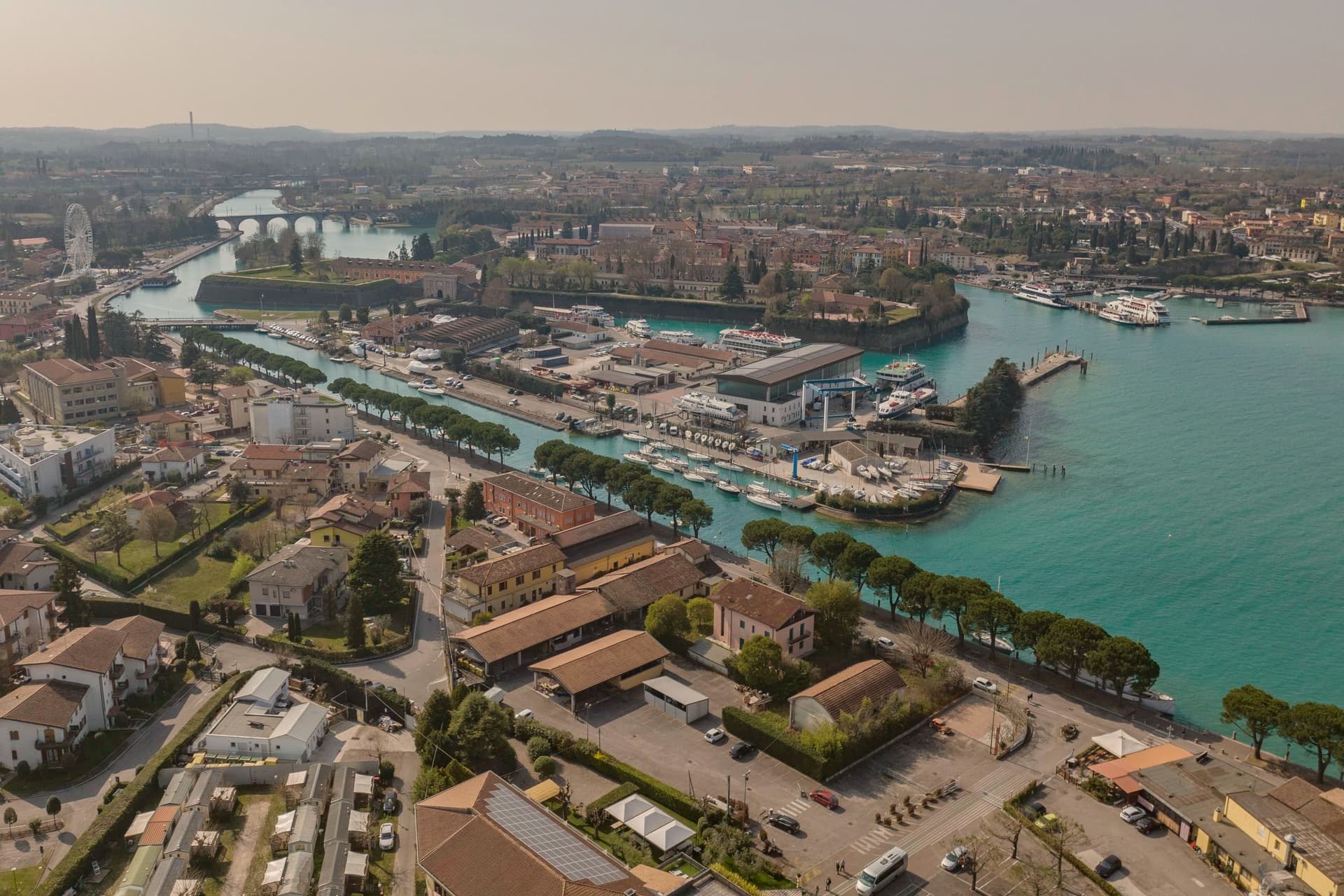
The town the Republic of Venice rebuilt in 1549 was set on the medieval walls' corners, with a moat fed by the river, and the design came from Guidobaldo della Rovere before its execution on site. Austria took the town in 1815 and folded it into a wider system with Verona, Mantua and Legnago, the four together holding Lombardy-Venetia until 1866; Peschiera held the northwest corner of that arrangement, the point closest to the lake.
The fortress and the marsh settlement belong to different periods and different UNESCO listings, one Bronze Age and lakeside, one sixteenth-century and defensive, but both sit on the same stretch of water where the Mincio gathers itself before running south. The river itself is the town's organizing fact: it leaves the lake, splits into three canals to cross the walls, and rejoins below the railway bridge.
What Peschiera adds up to is a place built twice on the same threshold, where a lake becomes a river and a river becomes a border worth fortifying.
We confirmed you can reach this one by train.
What to see in Peschiera del Garda
- Mura veneziane. Pentagonal fortress designed by Michele Sanmicheli for Venice from 1549, with five bastions, a moat fed by the Mincio and three water gates.
- Canali del Mincio. Three canals cross the fortress and rejoin below the railway bridge; the central one runs through the main square inside the walls.
- Piazza Ferdinando di Savoia. Main square inside the walls, bordered by the Palazzo del Comando, the Voltoni arches over the Mincio and the Caserma Catterin.
How to get to Peschiera del Garda
There is a railway station in the town, so you can arrive without a car and never need one while you are here. Verona is roughly 30 minutes away by road.
Our tip
April through June and September through October are the strongest months in Peschiera. The fortress walls, the moat and the Mincio canals are at their clearest in spring and autumn, and the lakefront south of the walls fills with sailing and ferry traffic. July and August push past thirty degrees and the southern Garda concentrates much of the lake's day-trip volume; the parking lots around the railway station queue from midmorning.
Lonato del Garda
Why visit Lonato del Garda
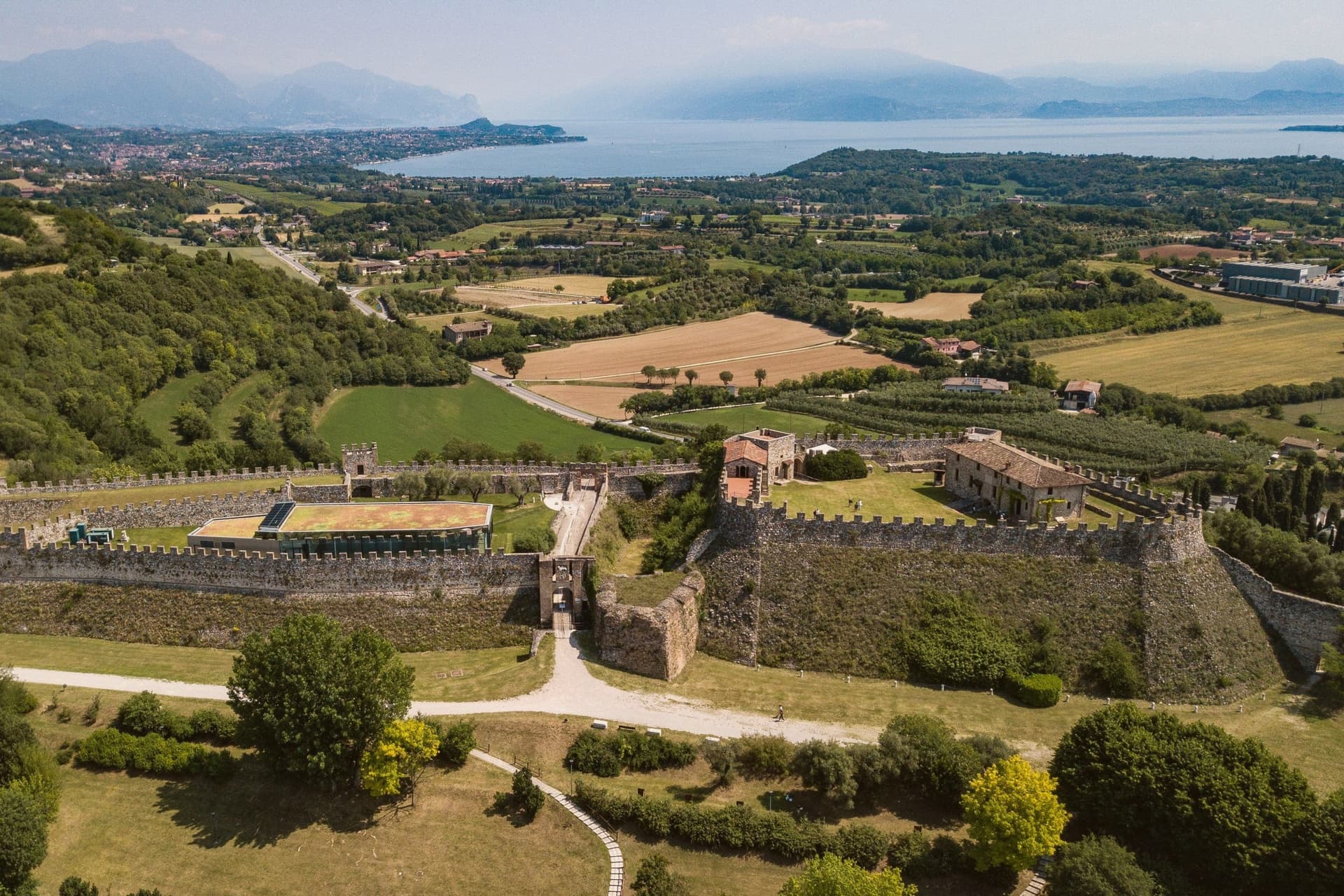
Lonato del Garda sits on a low morainic hill on the southwestern side of Lake Garda, between Brescia and the Mincio, halfway between Milan and Venice. The castle was raised on the recognition that this rise commanded the surrounding plain, a position the wife of Bernabò Visconti judged worth fortifying.
The Venetian rectors who later governed the town from their seat below the hill were themselves administering territory for a republic that reached this far inland from the lagoon, a detail the building's later life as a private museum has mostly obscured. That seat passed in 1906 to a Brescian senator and his wife, who furnished it room by room rather than converting it into something else, which is why it now reads as a residence rather than an institution.
South of the centre the ground flattens into the vineyards of the Lugana zone, the same morainic soil finishing out toward the lake's edge. The town, then, is a hill town in shape only at its summit: castle above, rectors' house and church at the level below, and the flat wine country taking over where the moraine runs out toward the water.
We confirmed you can reach this one by train.
What to see in Lonato del Garda
- Rocca di Lonato. The upper structure stands 180 metres long, with the so-called Quartier Generale below it. The walls carry the reshaping of the 15th and 16th centuries over the original 1376 order from Regina della Scala.
- Casa del Podestà. Rooms furnished as left by their restorer, with paintings, sculpture and majolica alongside the library, including a notable collection of incunabula.
- Duomo di San Giovanni Battista. Late Baroque collegiate church in the centre, a single nave with sculpted altars and a frescoed dome.
How to get to Lonato del Garda
There is a railway station in the town, so you can arrive without a car and never need one while you are here. Brescia is roughly 32 minutes away by road.
Our tip
April through October is the working season for southern Garda, and Lonato runs on it. May and June open the Rocca and the Casa del Podestà to long visits and bring the Lugana vineyards into bloom. July and August bring lake heat and weekend crowds from Brescia and Verona, but the hill keeps temperatures three or four degrees cooler than down at the water.
Bergamo
Why visit Bergamo
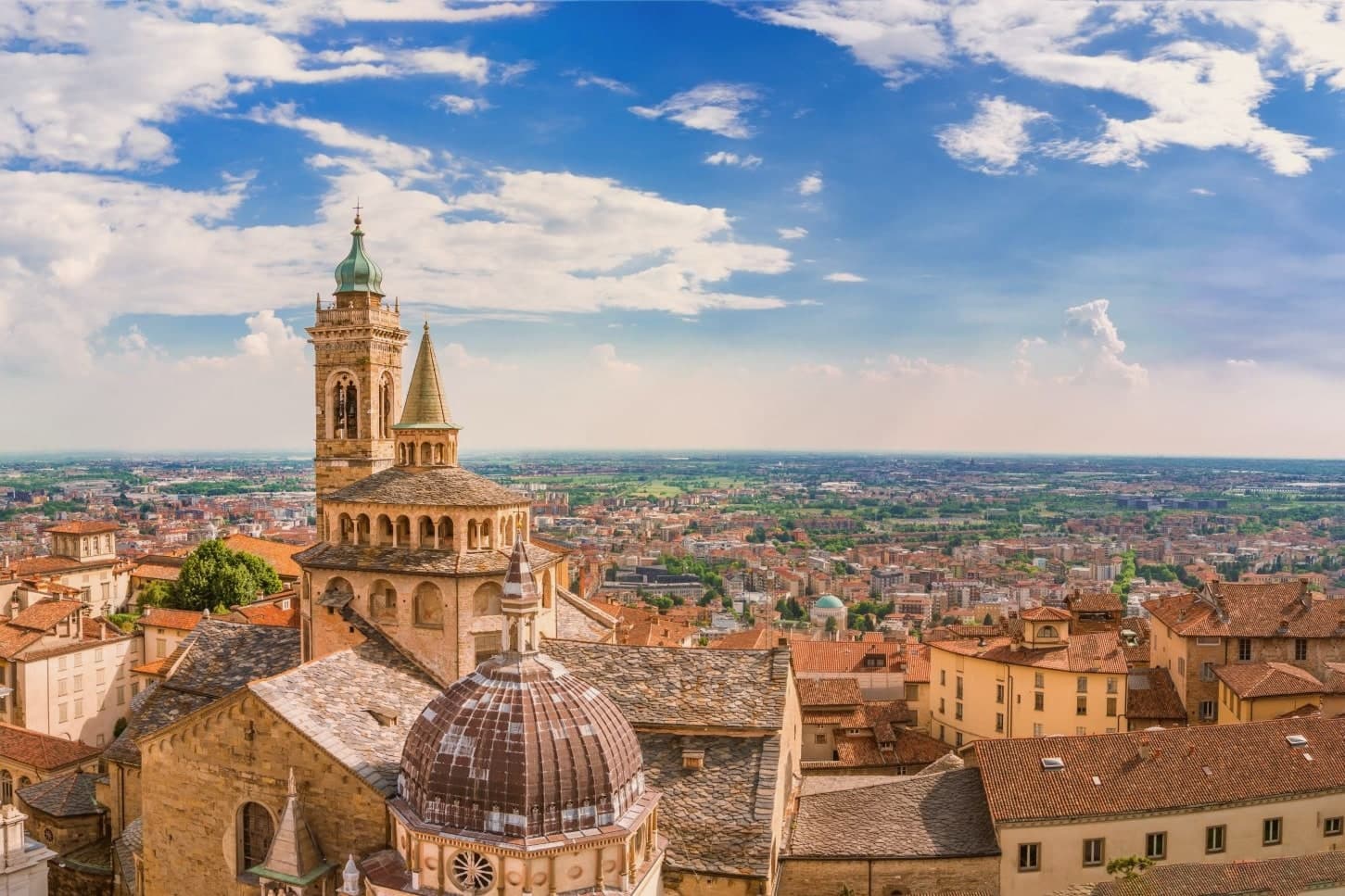
Bergamo's upper town occupies a spur of the Bergamasque foothills, and the lower town spreads onto the plain that runs southwest toward Milan. The walls that ring the hilltop cost the old town more than 250 buildings, including the original cathedral of Sant'Alessandro, demolished to clear ground for the defenses.
The circuit was built as part of a much larger Venetian project, inscribed together with the fortifications at Peschiera, Palmanova and sites on the Dalmatian coast: one defensive system spread across the Republic's frontier, of which this hilltop was the western anchor. The two halves of the city keep their own centuries.
The walled hilltop holds its medieval and Renaissance fabric inside the fortifications, reached by a funicular that has run the same route since the nineteenth century. The lower city is the newer half, built up through the nineteenth and twentieth centuries on the flat ground below.
Bergamo works as a place because that separation stayed intact instead of being built over: a fortified hill town and a modern city sharing one name but occupying two distinct centuries.
We confirmed you can reach this one by train.
What to see in Bergamo
- Mura Venete. Eight bastions and four gates carry the circuit around the ridge of Città Alta, the walkway open along most of its length with views down over the lower town and the plain.
- Piazza Vecchia. Ringed by the Palazzo della Ragione, the Campanone tower, the Contarini fountain and the Biblioteca Mai, this is the square at the top of the funicular climb, the meeting point of Città Alta's streets.
- Basilica di Santa Maria Maggiore. The Romanesque exterior gives no hint of the Baroque interior inside, gilded and heavy with stucco, where the composer's tomb sits among the furnishings.
How to get to Bergamo
There is a railway station in the town, so you can arrive without a car and never need one while you are here. Bergamo is roughly 3 minutes away by road.
Our tip
April through June and September into October are the months Bergamo works best. Città Alta is walkable, the walls open at dawn, and the Accademia Carrara is uncrowded on weekday mornings. July and August are hot on the plain and full on the hill; the funicular waits stretch on weekends.
More from Anywhere Italy
 The best towns inside a nature park that you can reach by train in Lombardia
- The best towns with a serious restaurant that you can reach by train in Lombardia
 The best lake towns within two hours of Parma
 The best towns with a World Heritage site within 90 minutes of Brescia
 The best towns you can reach by train within 45 minutes of Verona
- The best wine towns within an hour of Brescia