
The best towns with a serious restaurant that you can reach by train in Lombardia
Lombardia is a region of butter, rice and freshwater fish, and the cooking changes as sharply as the land does. In the north the Valtellina works in buckwheat, bitto cheese and air-dried beef, with pizzoccheri arriving in a pan still spitting sage. Around the lakes it is perch fillets with rice, missoltini dried in the sun, olive oil from a latitude that should not support olives. Down on the Po plain the kitchens turn to pumpkin tortelli, stewed donkey, mostarda and a hard, sweet crumble of a cake, and the plain is at its best in autumn fog when the rice fields have gone to stubble.
Almost everyone eats in Milan. That is where the guide stars cluster, where the tasting menus are booked months out, where the risotto giallo is served in rooms designed to be photographed. It makes sense: the trains all converge there, the airports feed it, and a serious dinner is easy to slot between the Duomo and a night flight. The result is that the region's reputation for high cooking stops at the ring road, and the tables are priced accordingly.
The rail network that makes Milan easy also runs out across the whole region, and it keeps going past the point where the crowds get off. Lines climb the Valtellina to the terraced vineyards, run along the eastern shore of Como and the western shore of Garda, cross the rice plain to the Mincio, and stop in small towns that happen to hold a kitchen someone has spent a career on. These are those towns: a serious restaurant at one end, a platform at the other, and no car needed in between.
Of the 65 communes we have mapped in Lombardia, 10 qualify as towns with a serious restaurant you can reach by train: each holds a restaurant listed by the most demanding of the guides, and we have confirmed each is reachable without a car. The smallest, Varenna, has 693 residents.
Two more lists worth reading alongside this one: The best hidden towns with a serious restaurant that you can reach by train in Lombardia and The best small towns with a serious restaurant in Lombardia.
Varenna
Why visit Varenna
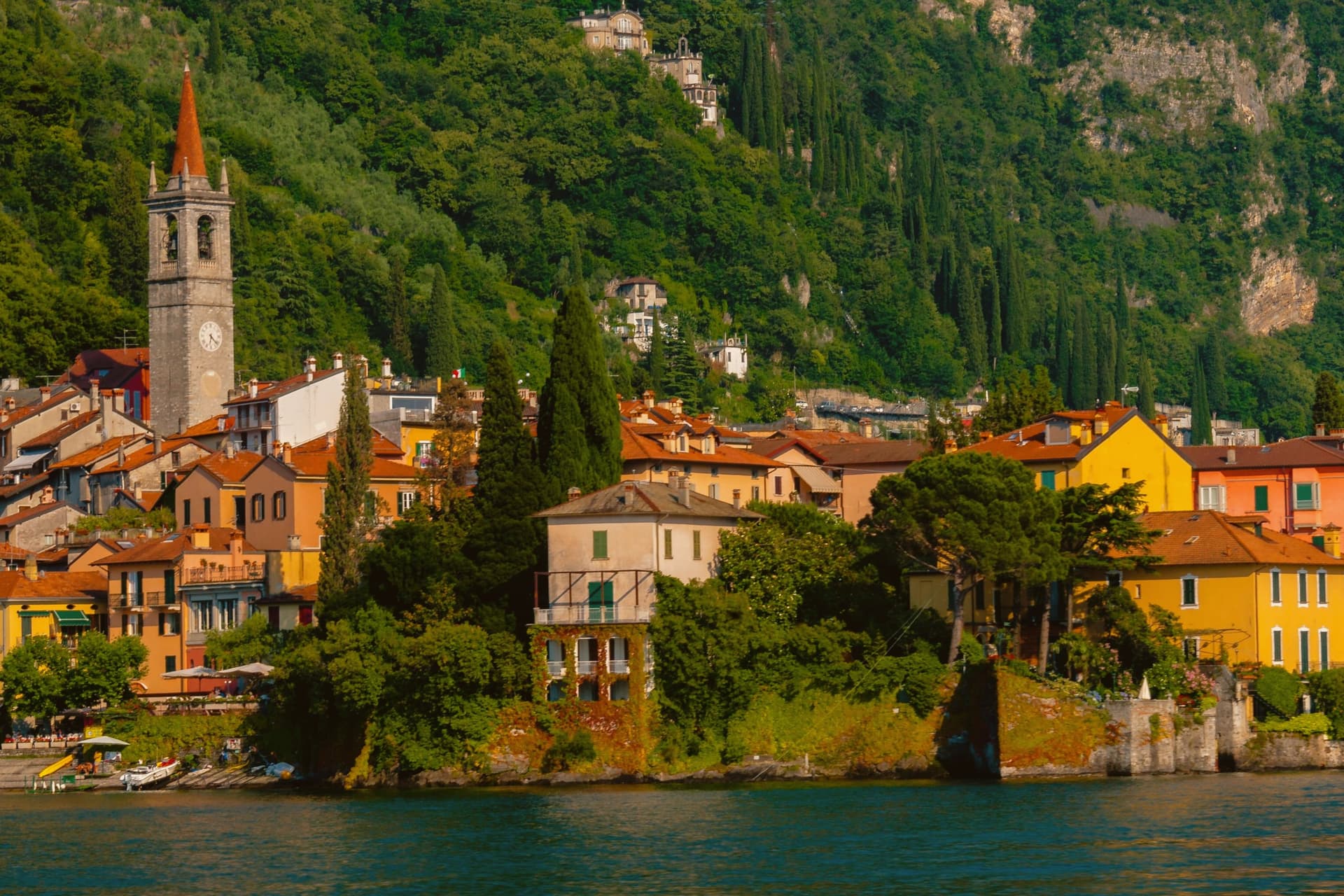
Varenna sits on the eastern shore of Lake Como at the point where the lake forks into the Como and Lecco branches, opposite Bellagio and Menaggio. Local fishermen founded the village in 769.
In 1126 it was destroyed by Como during the wars between the lake's communes, and in 1169 it absorbed the refugees from the destroyed Isola Comacina. The streets fall in a steep grid toward the water, with the lakefront passerella running between the houses and the lake.
The Castello di Vezio, above the village on a spur reached by a 30-minute climb, was a Lombard watchpost reused through the Middle Ages. Villa Monastero, on the lakefront, started in the 12th century as a Cistercian convent and now runs a two-kilometer botanical garden along the shore.
The frazione of Fiumelatte hosts one of the shortest rivers in Italy, 250 meters from spring to lake.
We confirmed you can reach this one by train.
What to see in Varenna
- Castello di Vezio. Lombard-era watchpost on a spur above the village, reached by a 30-minute climb with 160 meters of elevation gain.
- Villa Monastero. Former 12th-century Cistercian convent on the lakefront, now a museum and convention center with a 2-kilometer botanical garden along the shore.
- Villa Cipressi. Sixteenth-to-nineteenth-century lakefront villa next to Villa Monastero, with terraced gardens descending to the water.
How to get to Varenna
There is a railway station in the town, so you can arrive without a car and never need one while you are here. Monza is roughly 62 minutes away by road.
Our tip
April through October is the working season. The ferries from Bellagio and Menaggio run frequently, the villa gardens open in late March, and the lake stays mild enough to swim from June onward. July and August are crowded: 693 residents host thousands of day visitors, and the lakefront fills with photo tripods at sunset.
Cassinetta di Lugagnano
Why visit Cassinetta di Lugagnano
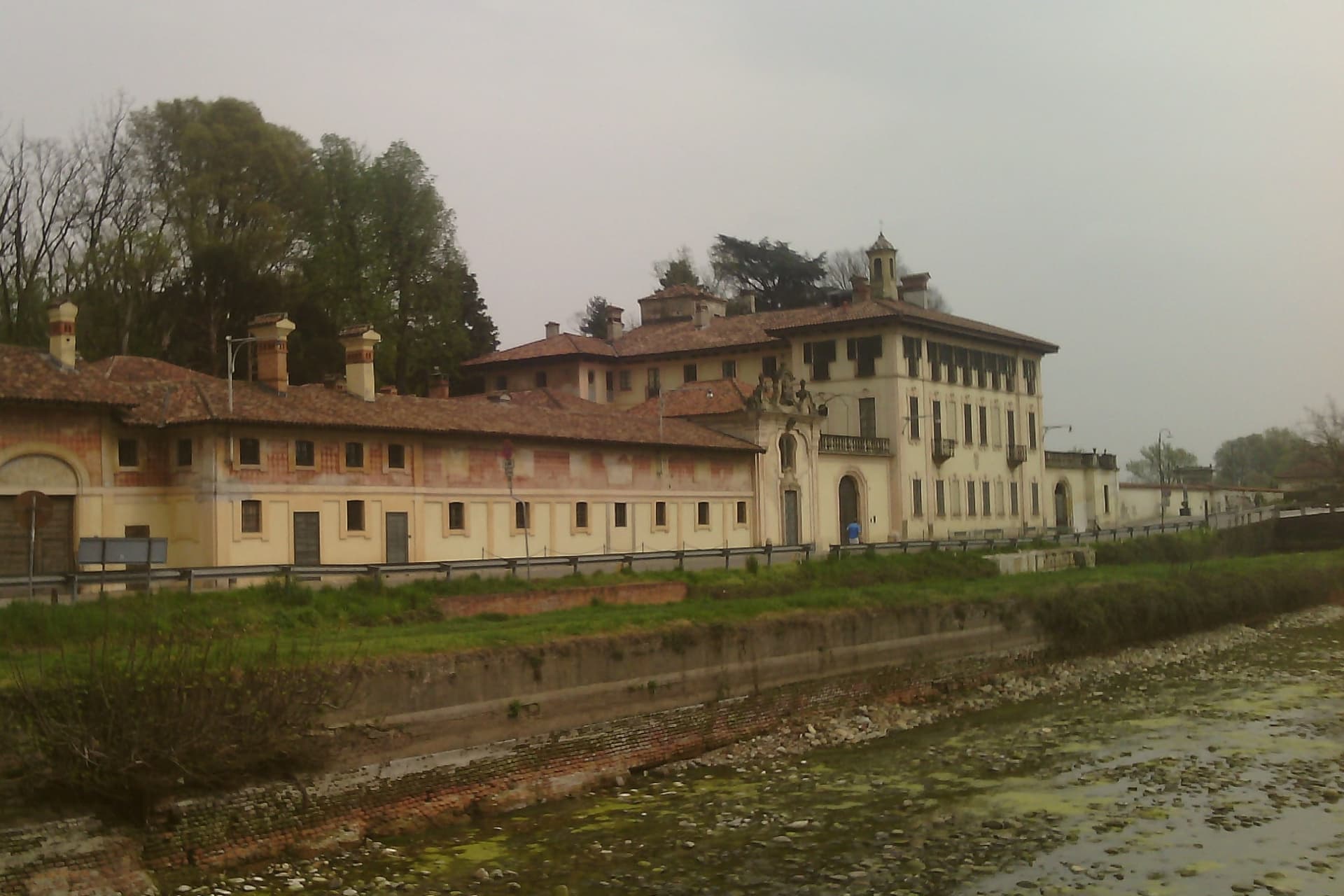
The commune was formed from two older settlements on opposite banks of the canal: Lugagnano, Roman in origin and once called Lucanianus, and Cassinetta, dating to the fourteenth century. The humpbacked bridge that joins them carries the 1584 statue of San Carlo Borromeo.
The town sits at 120 meters, twenty kilometers west of Milan and just outside Abbiategrasso, on the route the Naviglio Grande traces between Milan and the Lago Maggiore, the reason Milanese nobility chose this stretch of water for their country houses from the sixteenth century on. That same 2007 decision to refuse new building and force reuse of existing stock brought the town into the Borghi più belli and Comuni Virtuosi networks.
A town built by families adding country houses along a single waterway, then choosing, four centuries later, to stop building and preserve what stands.
We confirmed you can reach this one by train.
What to see in Cassinetta di Lugagnano
- Villa Visconti Castiglioni Maineri. Formal Italian garden fronting the canal, partly attributed to Ruggero Bascapè.
- Villa Negri-Morosini. Country villa of the Negri-Morosini family on the canal bank, with frescoed interior rooms and outbuildings around a courtyard.
- Villa Trivulzio. Trivulzio family country residence, one link in the chain of aristocratic retreats strung along the water.
How to get to Cassinetta di Lugagnano
There is a railway station in the town, so you can arrive without a car and never need one while you are here. Novara is roughly 37 minutes away by road.
Our tip
April through June and September into October are the months Cassinetta works best. The Naviglio runs full, the towpaths to Abbiategrasso and Robecco sul Naviglio are open to walkers and cyclists, and the villas keep regular visiting hours during the open garden seasons. July and August are humid on the plain; mosquitoes off the canal pick up in late afternoon and the towpath sun gets heavy without shade.
Teglio
Why visit Teglio
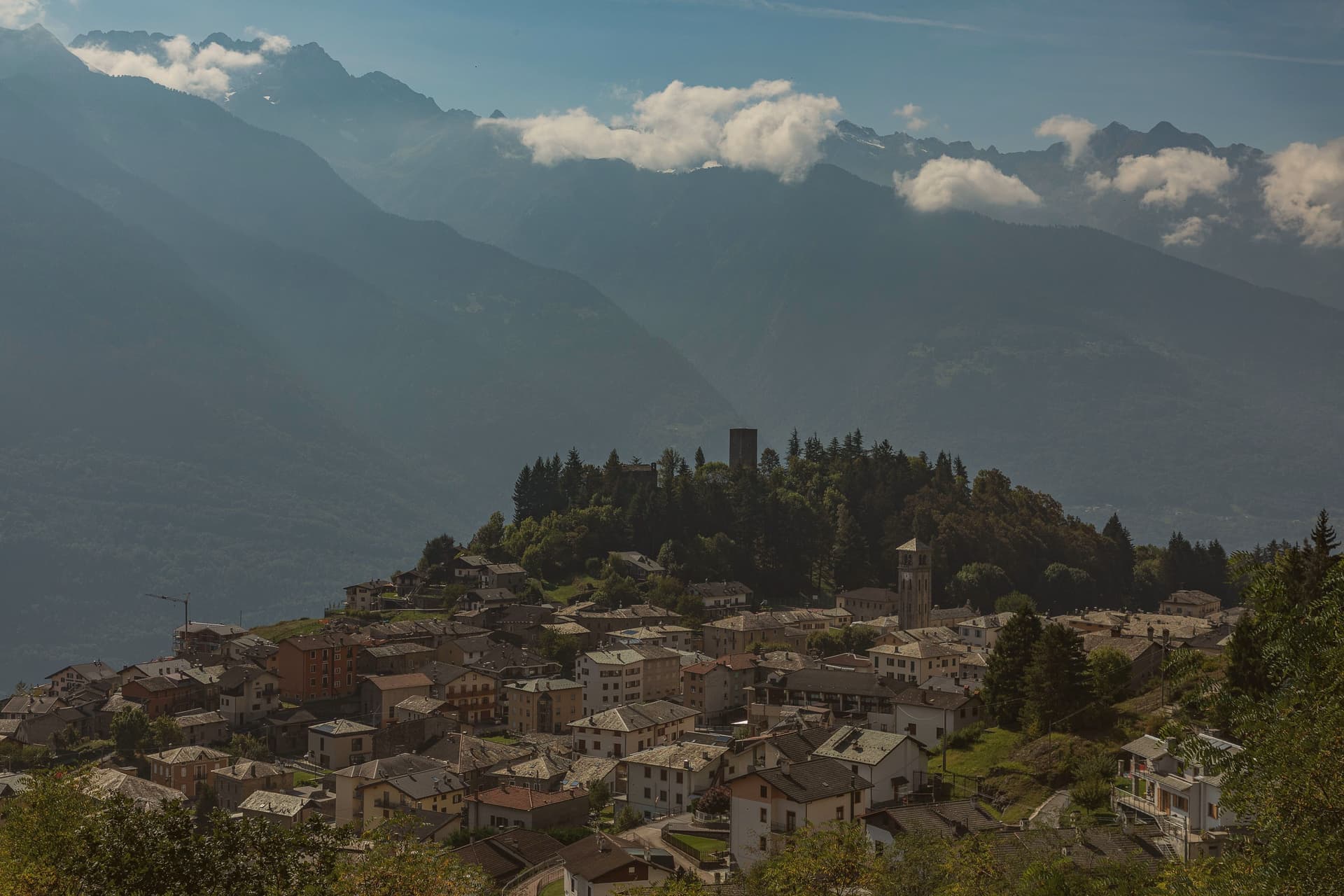
Teglio sits on the south-facing slope of the Valtellina, terraced vineyards dropping toward the Adda below the village and pine forest climbing behind it to the Orobie ridge. The Latin Tellina Vallis, valley of Teglio, gave the whole Valtellina its name, and the comune's own records reach back to the 9th century, when the village held the strategic centre of the valley.
The upper village keeps that older, defensive character; the vineyards and the valley floor below are where the food and wine culture of the place plays out, the two halves of the town facing different directions in what they do. Pizzoccheri, buckwheat tagliatelle with savoy cabbage, potato, garlic-and-butter sauce and casera cheese, has its official home here, and Teglio holds Cittaslow status on the strength of that food culture together with the terraced viticulture below the village.
A hill town that named a valley, still turned toward the river and the vines that keep its economy going, while its height and its records point back to why it was worth holding in the first place.
We confirmed you can reach this one by train.
What to see in Teglio
- Palazzo Besta. The courtyard cycle depicts Virgil's Aeneid; the upper salons hold further biblical and mythological scenes. The Antiquarium Tellinum inside holds Iron Age and Roman material from the valley.
- Accademia del Pizzocchero. The body that certifies trattorie and holds the recipe to its original form: buckwheat tagliatelle with savoy cabbage, potato, and a butter-garlic sauce alongside the cheese.
- Vigneti terrazzati della Valtellina. South-facing terraces stepping down toward the Adda, part of a viticultural landscape under UNESCO candidacy, producing Sforzato and Inferno Nebbiolo.
How to get to Teglio
There is a railway station in the town, so you can arrive without a car and never need one while you are here. Brescia is roughly 142 minutes away by road.
Our tip
May through October is the open season at 856 metres — Palazzo Besta open daily, terraced vineyards green, and the Valtellina wine route in full operation. June and September are the best months for both architecture and wine: long warm light, fewer tourists than peak summer, and the Sforzato and Inferno harvests just preparing in September. July-August stay temperate at this elevation and the trattorie are at full pizzocchero output.
Pizzighettone
Why visit Pizzighettone
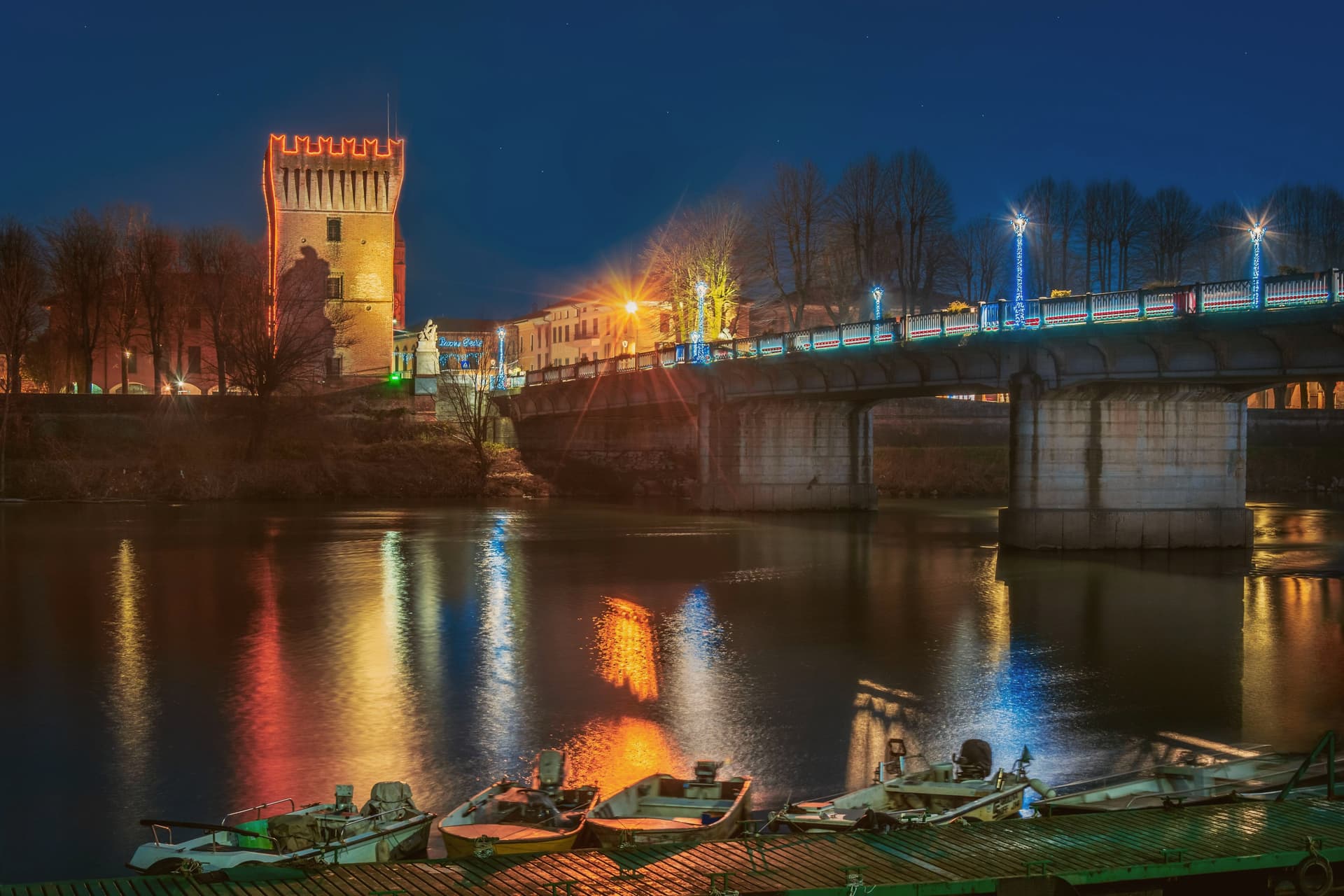
Pizzighettone sits on the river Adda in the Po valley at 46 metres above sea level, half an hour west of Cremona and an hour southeast of Milan. The Adda cuts the town in two: Pizzighettone proper on the east bank, the smaller Gera on the west, joined by a single bridge.
The 16th-century walls run two kilometres around the historic centre, twelve metres tall and three and a half thick, and they hold a network of guardhouses called Casematte that visitors can walk through with a guide. The Torre del Guado, part of the older Rocca fortress, held the captured King Francis I of France for roughly fifty days in 1525 after his defeat at Pavia, before the Spanish transferred him to Madrid.
Most of the medieval Rocca was demolished after Italian unification; the tower is one of two that survived. The Bandiera Arancione recognises the walls and the colourful interior of the Chiesa di San Bassiano in Gera.
We confirmed you can reach this one by train.
What to see in Pizzighettone
- Mura e Casematte. 16th-century walls, two km long, twelve m tall, with a network of vaulted Casematte guardhouses open to visits.
- Torre del Guado. Surviving tower of the Rocca, where Francis I of France was imprisoned in 1525 after his capture at the Battle of Pavia.
- Chiesa di San Bassiano. Parish church in the Gera quarter, known for its richly painted interior, claimed locally as the most colourful church in Italy.
How to get to Pizzighettone
There is a railway station in the town, so you can arrive without a car and never need one while you are here. Piacenza is roughly 30 minutes away by road.
Our tip
Pizzighettone runs on the Po valley calendar. April through June and again in September and October are the working months, when the walls dry out, the Casematte tours run regularly, and the Adda lowers from its winter levels. July and August are heavy: humidity sits in the valley, the river attracts mosquitoes, and afternoon temperatures push past thirty-five. Fasulìn de l'öc cun le cùdeghe falls in October.
Laveno-Mombello
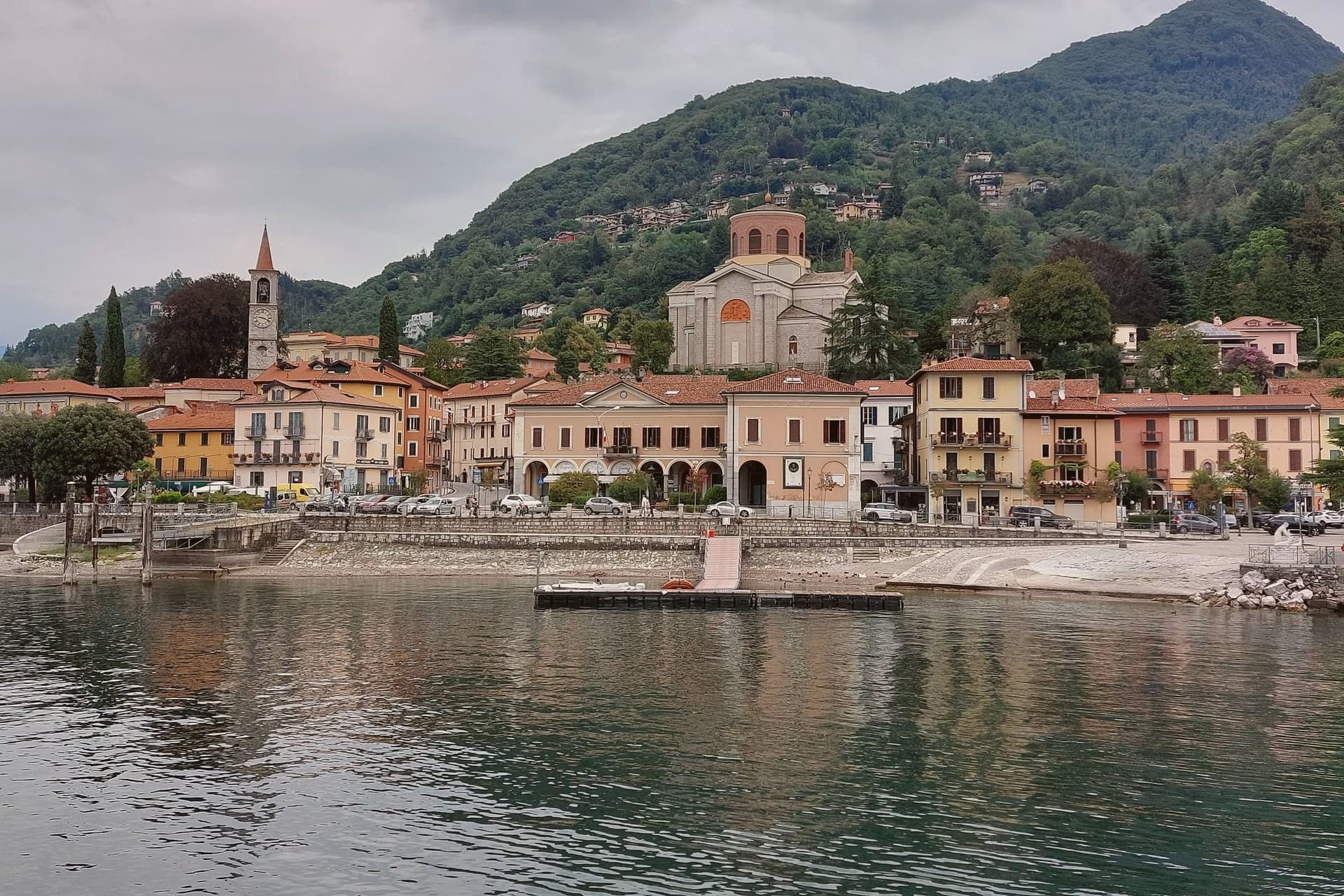
Why visit Laveno-Mombello
Laveno-Mombello sits on Lake Maggiore's eastern shore in the province of Varese, where a limestone wall drops directly to the water at the town's back. The ferry here crosses to Verbania and the Borromean Islands on the opposite shore, making the town as much a hinge point between Lombardia and Piemonte as a destination in itself.
Cerro, the lakefront hamlet folded into the town, kept the workshops after the ceramics factories closed in the 1990s, and its Palazzo Perabò now holds the museum that charts that industry from 1856 forward. South along the shore, a fifteen-minute drive reaches the monastery built into the cliff face, reachable by stairs, lift or boat where the road does not reach directly.
The town's shape follows the lake and the rock in equal measure: industry and transit at the shoreline, the mountain rising straight behind it, and the monastery holding on to the cliff a short way south as if the same geology that made Laveno a port also made it a place for building into stone.
We confirmed you can reach this one by train.
What to see in Laveno-Mombello
- MIDeC – Museo Internazionale Design Ceramico. Ceramics design museum in the sixteenth-century Palazzo Perabò at Cerro, covering Laveno production from 1856 to the 1990s.
- Sasso del Ferro. Limestone summit reached by the bucket funicular, with a terrace looking across Lake Maggiore to Lago d'Orta and the southern Alps.
- Santa Caterina del Sasso. Fourteenth-century monastery clinging to a cliff above Lake Maggiore, fifteen minutes south, reached by stairs, lift or boat.
How to get to Laveno-Mombello
There is a railway station in the town, so you can arrive without a car and never need one while you are here. Novara is roughly 74 minutes away by road.
Our tip
April through October covers the working calendar. The Sasso del Ferro funicular runs most days from spring through autumn, weather permitting, and is unreliable in winter. May, June, September and October are the calmest weeks on the eastern shore.
Iseo
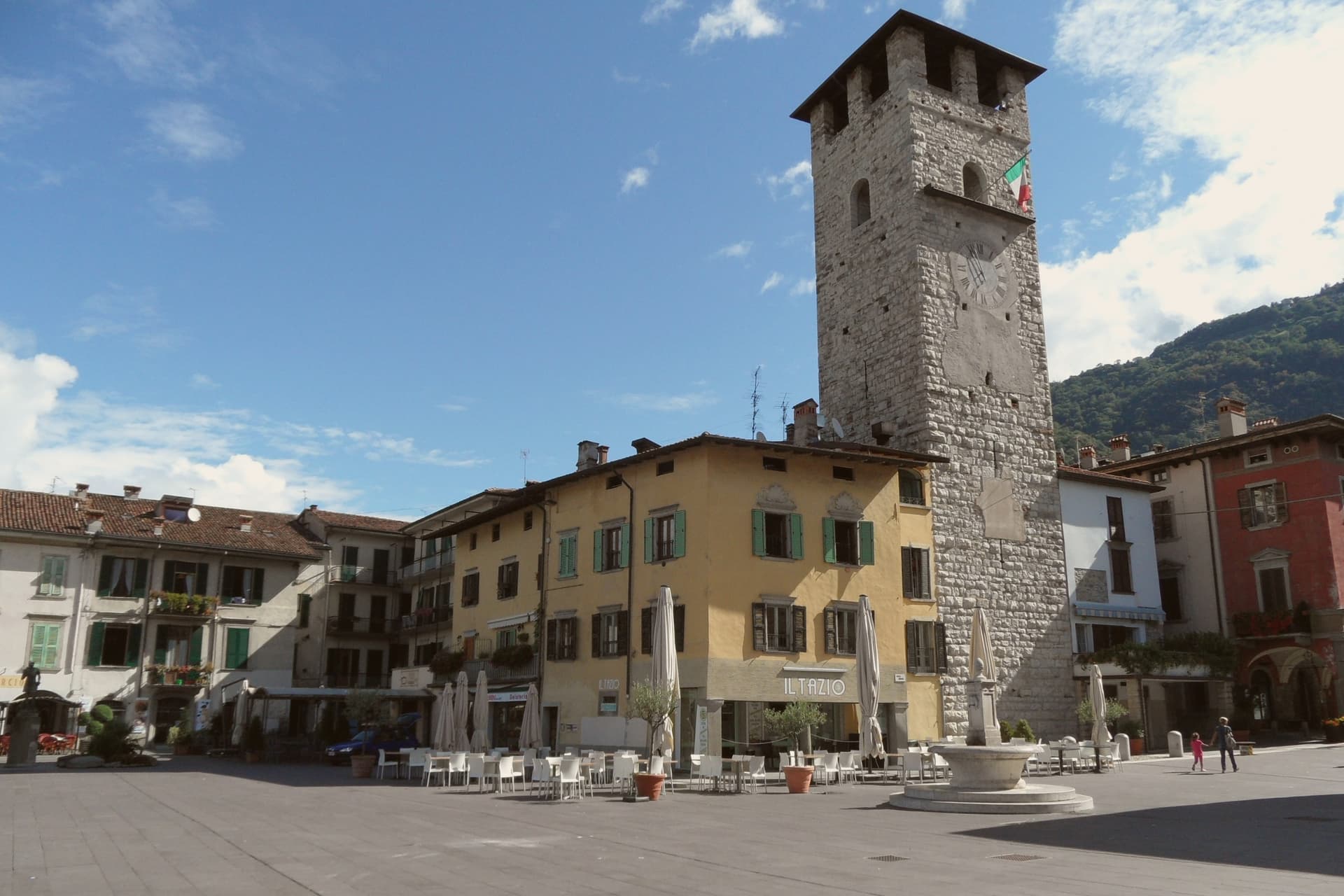
Why visit Iseo
Iseo sits at 198 meters on the southeast shore of Lake Iseo, the fourth-largest lake in Lombardia, fed by the Oglio. The town was founded around a monastery in the 900s and grew under the Sozzi, the Isei, and finally the Oldofredi.
From 1428 to 1797 Iseo was part of the Republic of Venice. The lakefront and the vineyards to the south form the town's two working halves: one facing the water and the ferries that cross it, the other rising into the Franciacorta hills where the metodo classico grapes are grown.
Ferries from the lakefront connect to Monte Isola, the largest lake island in southern Europe, and to Sarnico across the water in Bergamo province. A lake town that turned its inland edge to wine and its waterfront to the island: the two directions, water and vineyard, still define how the town is used.
We confirmed you can reach this one by train.
What to see in Iseo
- Castello Oldofredi. The stone fortress stands above the lakefront, its walls facing the water rather than the town center, a reminder that it was built to watch the lake approach.
- Pieve di Sant'Andrea. Founded by Bishop Vigilio, the church keeps its bell tower set into the middle of the façade rather than beside or behind it, an arrangement rare among Lombard Romanesque buildings.
- Piazza Garibaldi. Main lakeside square with the first Italian statue of Garibaldi, erected in 1883, the year after his death.
How to get to Iseo
There is a railway station in the town, so you can arrive without a car and never need one while you are here. Brescia is roughly 28 minutes away by road.
Our tip
April through October runs Iseo's lake season. April and May open the ferries to Monte Isola, the Franciacorta wineries reopen for tastings, and the lakefront fills on weekends. June through August is the peak window: warm enough to swim, hot enough that the centro empties between 14:00 and 17:00, and the lake breeze keeps evenings comfortable.
Lonato del Garda
Why visit Lonato del Garda
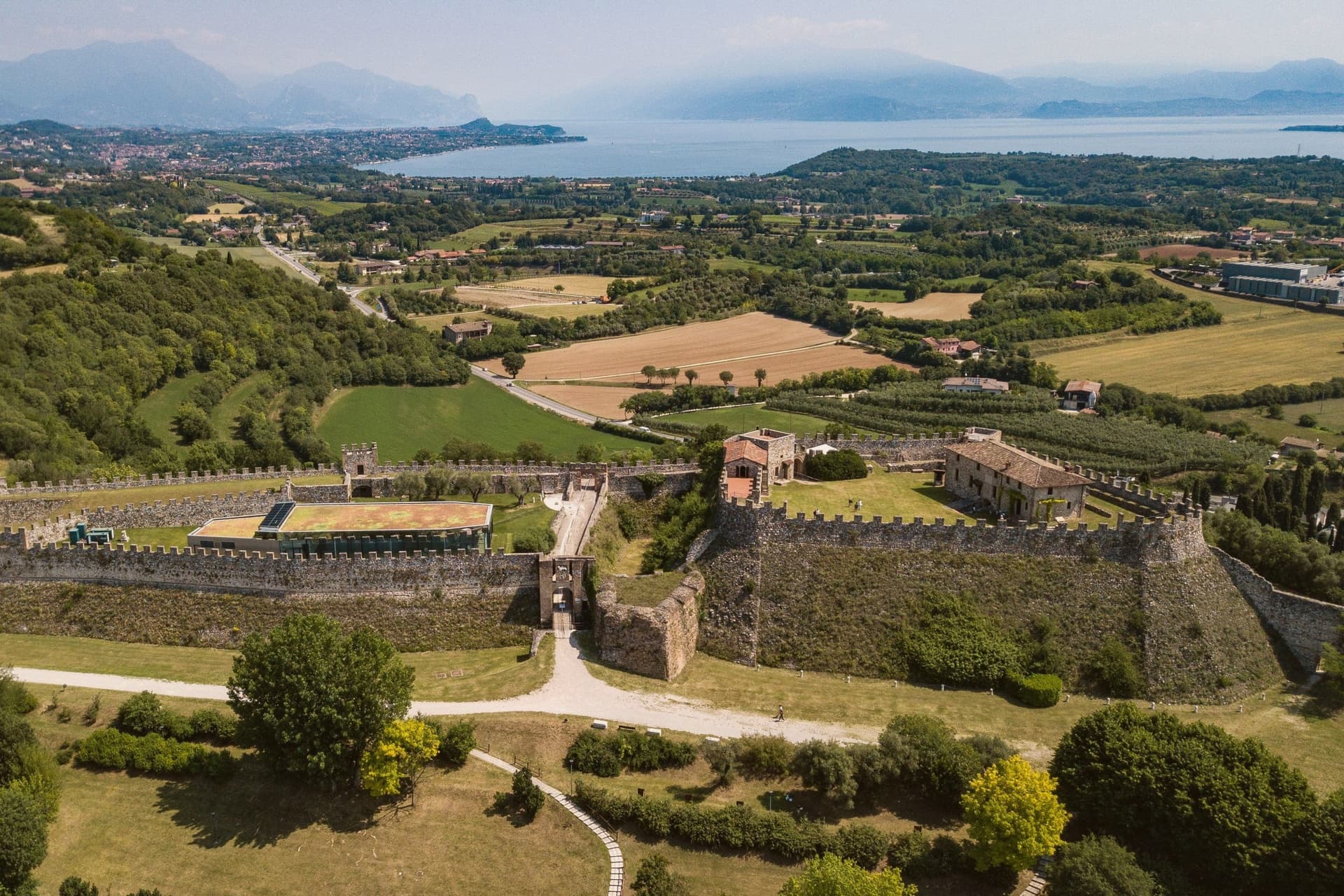
Lonato del Garda sits on a low morainic hill on the southwestern side of Lake Garda, between Brescia and the Mincio, halfway between Milan and Venice. The castle was raised on the recognition that this rise commanded the surrounding plain, a position the wife of Bernabò Visconti judged worth fortifying.
The Venetian rectors who later governed the town from their seat below the hill were themselves administering territory for a republic that reached this far inland from the lagoon, a detail the building's later life as a private museum has mostly obscured. That seat passed in 1906 to a Brescian senator and his wife, who furnished it room by room rather than converting it into something else, which is why it now reads as a residence rather than an institution.
South of the centre the ground flattens into the vineyards of the Lugana zone, the same morainic soil finishing out toward the lake's edge. The town, then, is a hill town in shape only at its summit: castle above, rectors' house and church at the level below, and the flat wine country taking over where the moraine runs out toward the water.
We confirmed you can reach this one by train.
What to see in Lonato del Garda
- Rocca di Lonato. The upper structure stands 180 metres long, with the so-called Quartier Generale below it. The walls carry the reshaping of the 15th and 16th centuries over the original 1376 order from Regina della Scala.
- Casa del Podestà. Rooms furnished as left by their restorer, with paintings, sculpture and majolica alongside the library, including a notable collection of incunabula.
- Duomo di San Giovanni Battista. Late Baroque collegiate church in the centre, a single nave with sculpted altars and a frescoed dome.
How to get to Lonato del Garda
There is a railway station in the town, so you can arrive without a car and never need one while you are here. Brescia is roughly 32 minutes away by road.
Our tip
April through October is the working season for southern Garda, and Lonato runs on it. May and June open the Rocca and the Casa del Podestà to long visits and bring the Lugana vineyards into bloom. July and August bring lake heat and weekend crowds from Brescia and Verona, but the hill keeps temperatures three or four degrees cooler than down at the water.
Sondrio
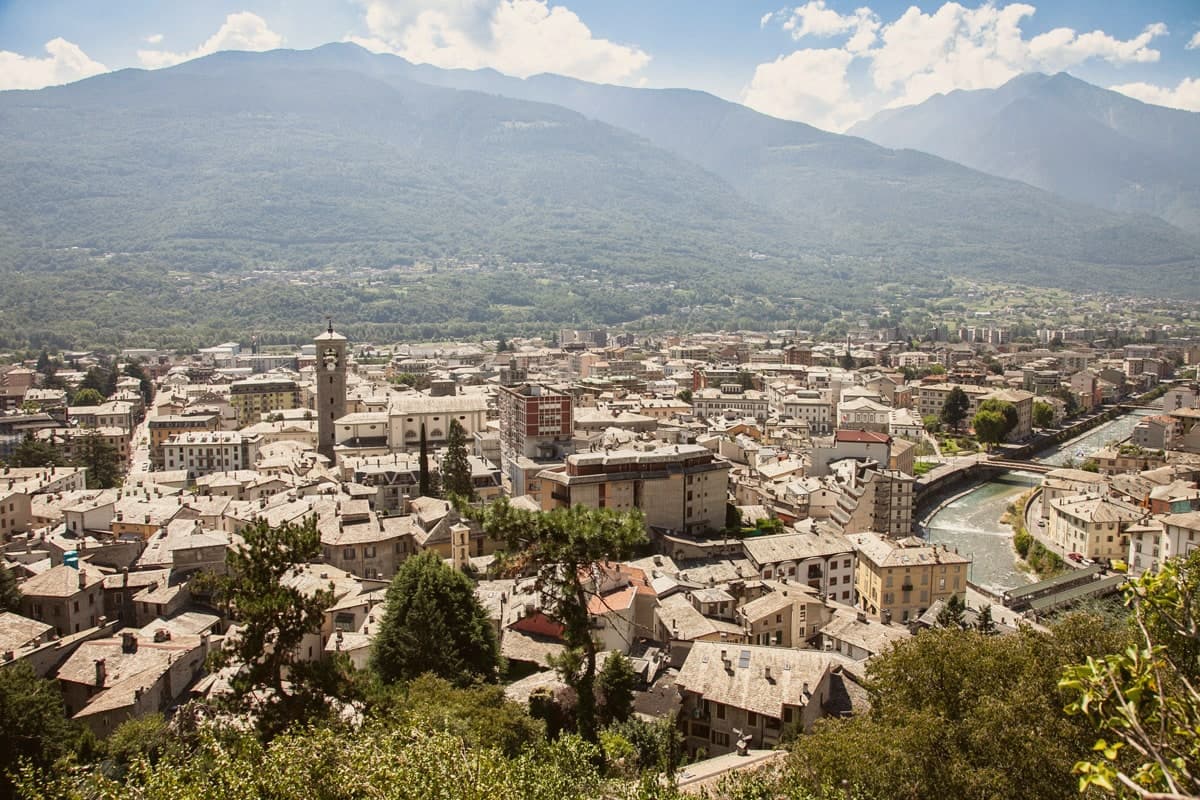
Why visit Sondrio
Sondrio sits at 307 meters on the floor of the upper Adda valley, the administrative heart of Valtellina and its terraced wine country. The Romans built a military camp here.
The Lombards renamed it Sundrium, meaning the exclusive property of free men. From the late 16th century until 1797 the city was the capital of Valtellina under the Three Grey Leagues of the Grisons, an Alpine canton across the Splügen Pass that ran the valley from Chur.
Castel Masegra, an 11th-century Capitanei stronghold on a rock above the centro storico, is the only urban castle that survived the demolitions of the 17th century and now houses the CAST mountain museum. The terraced vineyards above the city, between 300 and 800 meters, produce Sassella and Grumello, the two Nebbiolo subzones that define Valtellina Superiore DOCG.
Most of the work on those terraces is still done by hand.
We confirmed you can reach this one by train.
What to see in Sondrio
- Castel Masegra. Eleventh-century hilltop castle of the Capitanei family, the only urban fortress to survive 17th-century demolitions, now home to the CAST mountain museum.
- Collegiata dei Santi Gervasio e Protasio. The town's main church, with a baroque nave and a neoclassical façade, standing at the edge of the old centro.
- Piazza Garibaldi. The principal square, surrounded by neoclassical buildings, with a central monument to Giuseppe Garibaldi and the city's main cafés and shops.
How to get to Sondrio
There is a railway station in the town, so you can arrive without a car and never need one while you are here. Monza is roughly 116 minutes away by road.
Our tip
April through June and September through October are the cleanest months in Sondrio. The vineyards above the city are green or gold, the Adda runs full from snowmelt, and the air is clear enough to see the Bernina range from Piazza Garibaldi. July and August get hot in the valley floor, and the city empties into the higher Valmalenco.
Mantova
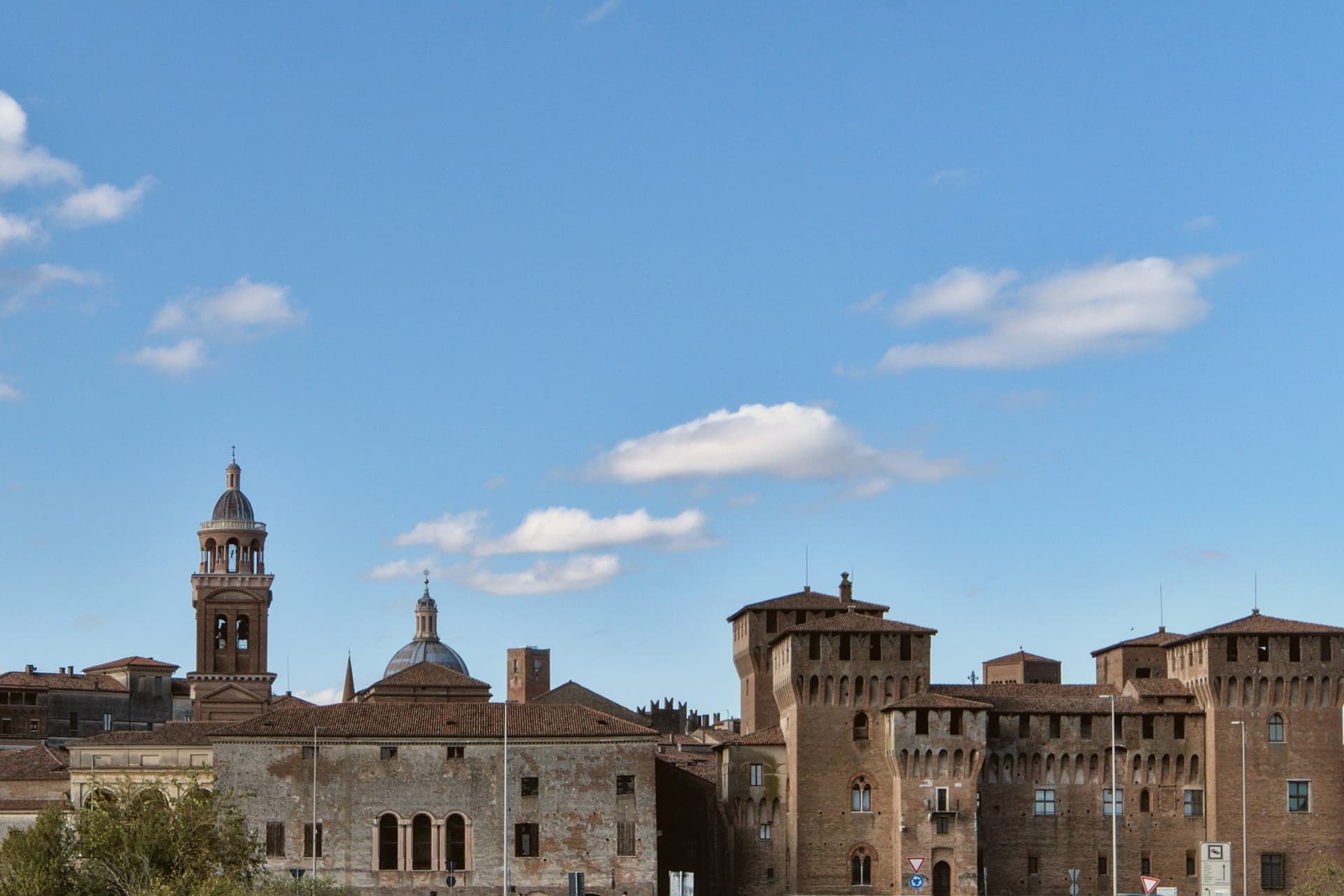
Why visit Mantova
Mantova sits at 19 meters on a peninsula in the Mincio, halfway between Milan and Venice. In the twelfth century the river was dammed into three artificial lakes, Superiore, di Mezzo and Inferiore, which still ring the city on three sides and worked as its defence for six centuries.
From 1328 to 1707 it was the seat of the Gonzaga. The Palazzo Ducale they assembled across that span covers 34,000 square meters between Piazza Sordello and Lago di Mezzo, with over a thousand rooms; the Camera degli Sposi, frescoed by Andrea Mantegna between 1465 and 1474, is the heart of that complex.
Outside the walls, Federico II Gonzaga commissioned Giulio Romano to build Palazzo Te between 1525 and 1535: a pleasure villa with the Sala dei Giganti, whose painted Olympus collapses on the viewer from every wall. Mantua and Sabbioneta were jointly inscribed by UNESCO in 2008.
The city was Italian Capital of Culture in 2016.
We confirmed you can reach this one by train.
What to see in Mantova
- Palazzo Ducale. Gonzaga ducal complex of 34,000 square meters between Piazza Sordello and Lago di Mezzo, with over a thousand rooms across four centuries of additions.
- Camera degli Sposi. Frescoed chamber by Andrea Mantegna inside the Palazzo Ducale, painted between 1465 and 1474, with an illusionistic oculus on the ceiling.
- Palazzo Te. Suburban pleasure villa built between 1525 and 1535 by Giulio Romano for Federico II Gonzaga, with the Sala dei Giganti and Sala di Amore e Psiche.
How to get to Mantova
There is a railway station in the town, so you can arrive without a car and never need one while you are here. Verona is roughly 39 minutes away by road.
Our tip
April through June and September into October are the months Mantova works best. The lakes hold light all day, the Palazzo Ducale is walkable without summer queues, and the surrounding bike paths to Peschiera del Garda run sixty kilometers along the Mincio. July and August get humid and still on the plain, with mosquitoes off the lakes and afternoons that empty the centro storico. Festival della sbrisolona e dei dolci italiani falls in October.
Bergamo
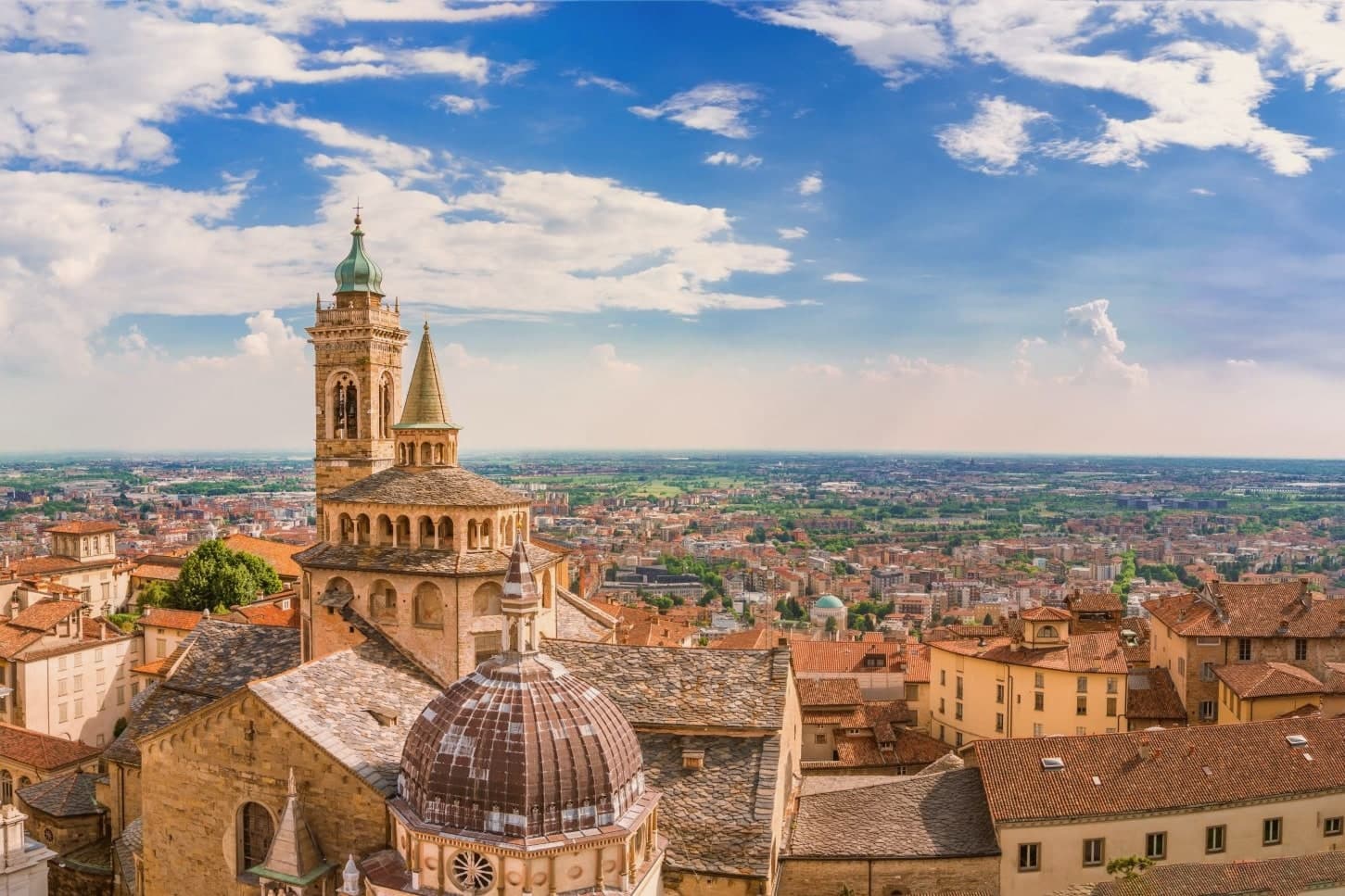
Why visit Bergamo
Bergamo's upper town occupies a spur of the Bergamasque foothills, and the lower town spreads onto the plain that runs southwest toward Milan. The walls that ring the hilltop cost the old town more than 250 buildings, including the original cathedral of Sant'Alessandro, demolished to clear ground for the defenses.
The circuit was built as part of a much larger Venetian project, inscribed together with the fortifications at Peschiera, Palmanova and sites on the Dalmatian coast: one defensive system spread across the Republic's frontier, of which this hilltop was the western anchor. The two halves of the city keep their own centuries.
The walled hilltop holds its medieval and Renaissance fabric inside the fortifications, reached by a funicular that has run the same route since the nineteenth century. The lower city is the newer half, built up through the nineteenth and twentieth centuries on the flat ground below.
Bergamo works as a place because that separation stayed intact instead of being built over: a fortified hill town and a modern city sharing one name but occupying two distinct centuries.
We confirmed you can reach this one by train.
What to see in Bergamo
- Mura Venete. Eight bastions and four gates carry the circuit around the ridge of Città Alta, the walkway open along most of its length with views down over the lower town and the plain.
- Piazza Vecchia. Ringed by the Palazzo della Ragione, the Campanone tower, the Contarini fountain and the Biblioteca Mai, this is the square at the top of the funicular climb, the meeting point of Città Alta's streets.
- Basilica di Santa Maria Maggiore. The Romanesque exterior gives no hint of the Baroque interior inside, gilded and heavy with stucco, where the composer's tomb sits among the furnishings.
How to get to Bergamo
There is a railway station in the town, so you can arrive without a car and never need one while you are here. Bergamo is roughly 3 minutes away by road.
Our tip
April through June and September into October are the months Bergamo works best. Città Alta is walkable, the walls open at dawn, and the Accademia Carrara is uncrowded on weekday mornings. July and August are hot on the plain and full on the hill; the funicular waits stretch on weekends.
More from Anywhere Italy
- The best hidden towns with a serious restaurant that you can reach by train in Lombardia
 The best small towns with a serious restaurant in Lombardia
- The 9 best towns with a serious restaurant that sit inside a nature park in Lombardia
 The 10 best small towns you can reach by train in Lombardia
 The best wine towns in Lombardia
 The best towns you can reach by train within 45 minutes of Brescia