
The 9 best towns with a serious restaurant that sit inside a nature park in Lombardia
Lombardia is a region of protected edges: the Mincio unspooling through reedbeds and water lilies south of the lakes, the olive terraces on the western shore of Garda held in place by dry stone, the larch and stone pine of the Alpine valleys where the snow sits late. The building material changes as you move, pale river brick in the lowlands, grey lake stone under stucco further north, timber and slate at altitude. So does the food. Freshwater eel, pike in salsa, tortelli filled with pumpkin and amaretto, buckwheat pizzoccheri with sage and mountain cheese, and lake olive oil pressed at the northern limit of where olives will grow.
Most people looking for a good dinner in Lombardia go to Milan, and it is a fair choice: the city has more starred kitchens than anywhere else in Italy and a booking system that fills them months out. It also means competing for tables with the fashion calendar, the furniture fair and a continuous flow of business travel, and eating a long way from anything green. Around Como the same pressure applies in a smaller space, with the shoreline road solid through summer.
The protected land carries on well past the city, and so do the kitchens. These are towns that sit inside the boundary of a regional nature park, on the water or in the hills, where a restaurant the most demanding guide inspectors rate is a short walk from a lakeside path, a river marsh or a high pasture. Fewer people plan a trip around them. The season is longer than you would think, autumn for the river towns, deep winter for the mountains, spring for the olive terraces.
Of the 65 communes we have mapped in Lombardia, 9 qualify as towns with a serious restaurant inside a nature park: each holds a restaurant listed by the most demanding of the guides, and each sits inside a regional nature park. The smallest, Varenna, has 693 residents.
If you are still choosing, we have also written The best lake towns inside a nature park in Lombardia and The 8 best towns inside a nature park in the province of Brescia.
Varenna
Why visit Varenna
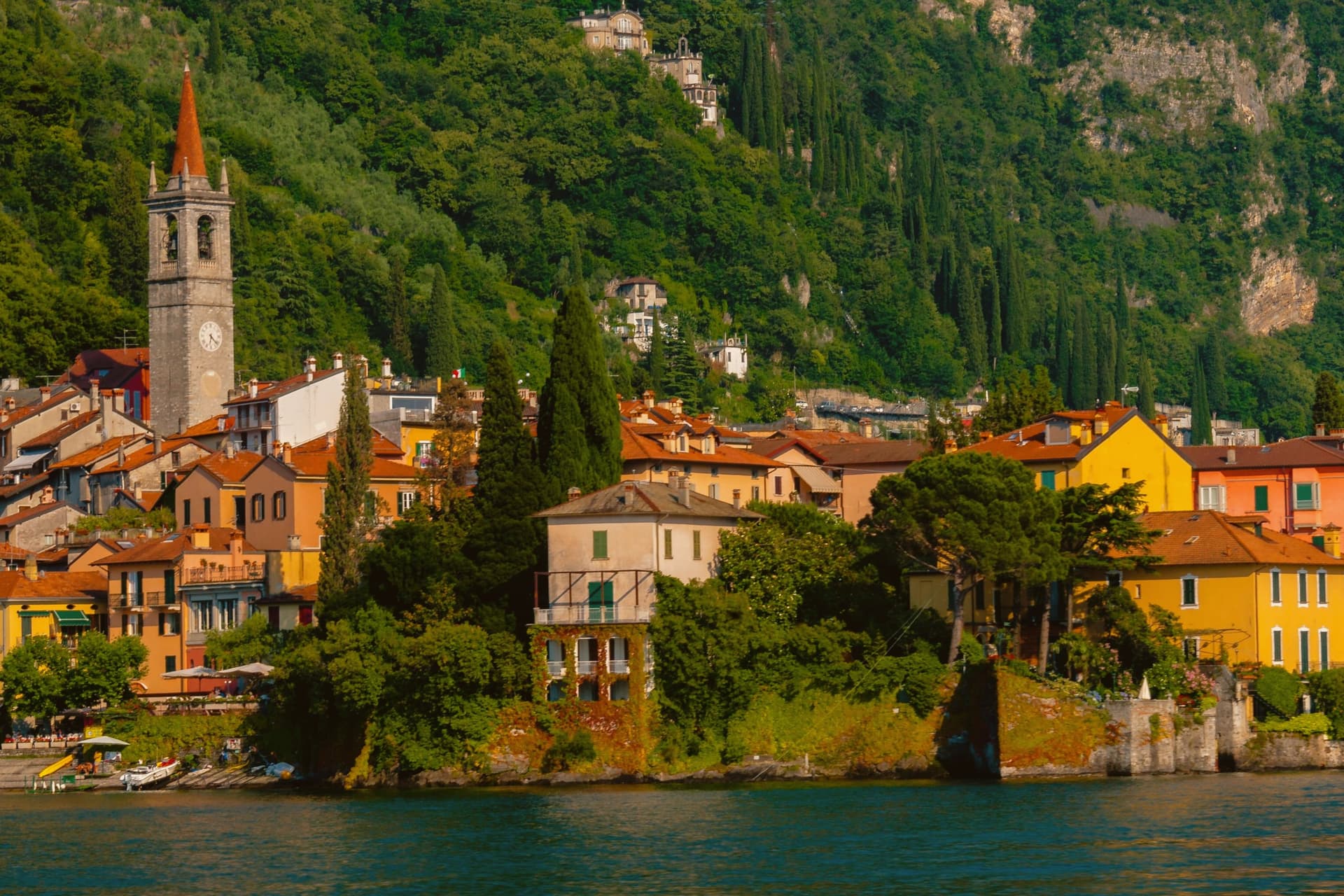
Varenna sits on the eastern shore of Lake Como at the point where the lake forks into the Como and Lecco branches, opposite Bellagio and Menaggio. Local fishermen founded the village in 769.
In 1126 it was destroyed by Como during the wars between the lake's communes, and in 1169 it absorbed the refugees from the destroyed Isola Comacina. The streets fall in a steep grid toward the water, with the lakefront passerella running between the houses and the lake.
The Castello di Vezio, above the village on a spur reached by a 30-minute climb, was a Lombard watchpost reused through the Middle Ages. Villa Monastero, on the lakefront, started in the 12th century as a Cistercian convent and now runs a two-kilometer botanical garden along the shore.
The frazione of Fiumelatte hosts one of the shortest rivers in Italy, 250 meters from spring to lake.
Hosteria del Platano, Visteria have been named by a guide.
What to see in Varenna
- Castello di Vezio. Lombard-era watchpost on a spur above the village, reached by a 30-minute climb with 160 meters of elevation gain.
- Villa Monastero. Former 12th-century Cistercian convent on the lakefront, now a museum and convention center with a 2-kilometer botanical garden along the shore.
- Villa Cipressi. Sixteenth-to-nineteenth-century lakefront villa next to Villa Monastero, with terraced gardens descending to the water.
How to get to Varenna
There is a railway station in the town, so you can arrive without a car and never need one while you are here. Monza is roughly 62 minutes away by road.
Our tip
April through October is the working season. The ferries from Bellagio and Menaggio run frequently, the villa gardens open in late March, and the lake stays mild enough to swim from June onward. July and August are crowded: 693 residents host thousands of day visitors, and the lakefront fills with photo tripods at sunset.
Limone sul Garda
Why visit Limone sul Garda
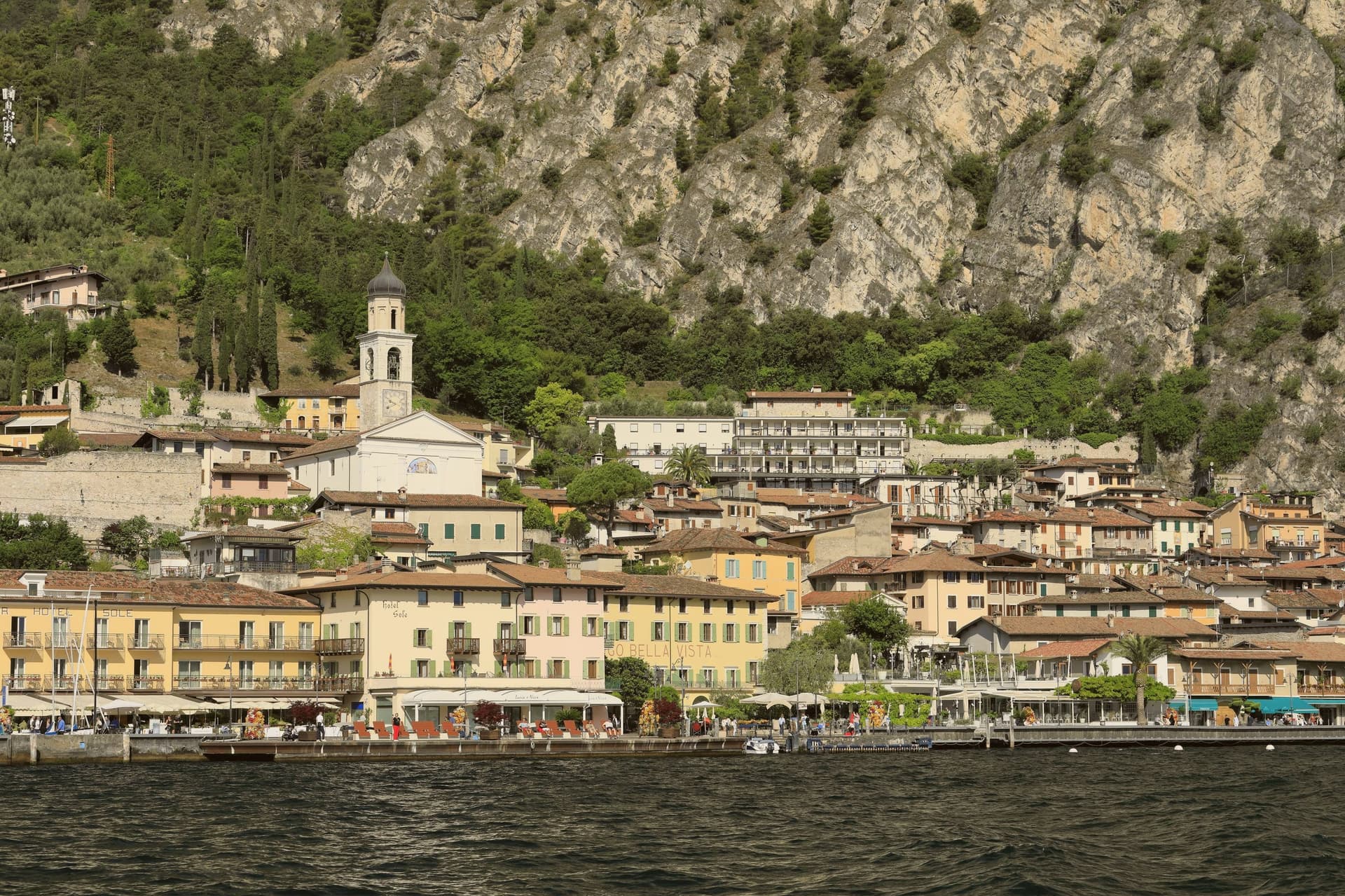
Limone sul Garda sits on the western shore of Lake Garda at the foot of vertical limestone cliffs, the northernmost commercial lemon-growing town in the world at almost 46 degrees north. The Latin limes, meaning border, gave the place its name; the Bettoni counts gave it its industry.
From the seventeenth century, limonaie, stone-pillared greenhouses heated and covered through winter, allowed lemons to be exported to Austria, Germany, Poland and Russia. The road to Riva del Garda, the Gardesana Occidentale, was carved into the cliff and finished in 1932; until then the town reached the outside world by boat or mule track.
In 1974 a Milanese pharmacologist traced a mutant apolipoprotein, ApoA-1 Milano, to a single eighteenth-century resident, Giovanni Pomarelli. Roughly forty of his descendants in town carry the variant, which suppresses cardiovascular disease and helps a handful of residents past one hundred.
Senso Lake Garda Alfio Ghezzi have been named by a guide.
What to see in Limone sul Garda
- Limonaia del Castèl. Restored seventeenth-century lemon greenhouse on stone pillars above the lake, demonstrating the heated wooden cover that protected the trees through winter.
- Chiesa di San Benedetto. Eighteenth-century parish church on the lake front, with a single nave and Baroque altars rebuilt over an older medieval foundation.
- Centro storico. Tight grid of stone alleys between the old harbour and the cliff, with narrow porticoes that survive from the pre-road fishing and citrus village.
How to get to Limone sul Garda
Trento is roughly 57 minutes away by road.
Our tip
April through June and September into October are the months that suit Limone. The lake holds spring temperatures, the lemons flower, the cliff above the town keeps morning shade until noon. July and August fill the lakefront and the cycle path, with peak crowds on weekends drawn from Verona, Milano and German-speaking Europe.
Gardone Riviera
Why visit Gardone Riviera
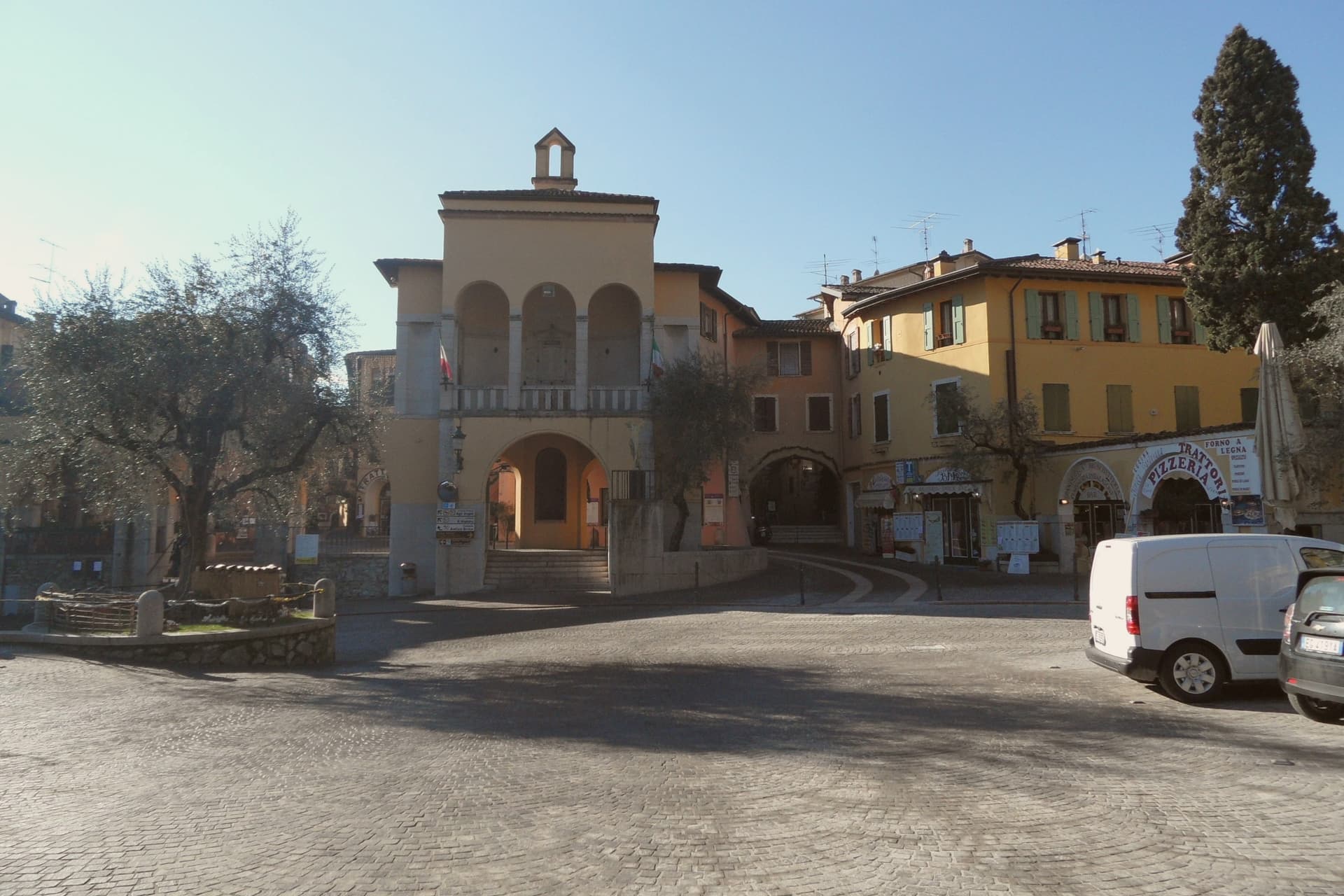
Gardone Riviera sits at 71 meters on the western shore of Lake Garda, in the province of Brescia. The lake here runs deep against the wall of Monte Pizzocolo, and the climate stays mild enough that lemons, olives and bamboo grow within walking distance of each other.
The town divides between the lakefront and the hill above it. Along the water, Gardone Sotto holds the promenade and harbour; above the centro storico, the ground rises toward the estate grounds and, further up, toward the garden that has drawn on the same mild hillside climate since the start of the twentieth century.
The boathouse on the estate holds a torpedo boat from a 1918 wartime raid, alongside the villa called the Prioria, an amphitheatre and a circular mausoleum. The garden above town spent six decades being arranged, one man working a single hillside into bamboo groves, alpine ravines, Japanese ponds and waterfalls.
The lakefront promenade carries the Bandiera Blu. What holds the town together is that division of altitude: a working lakefront below, and above it two hillside projects, one architectural and one botanical, each built slowly and by a single hand over decades on the same slope.
Il Fagiano, Osteria Antico Brolo, Villa Fiordaliso and 2 more have been named by a guide.
What to see in Gardone Riviera
- Vittoriale degli Italiani. Nine-hectare hillside estate occupied by Gabriele D'Annunzio from 1922 to 1938, with villa, amphitheatre, mausoleum and the cruiser Puglia.
- Nave Puglia. Protected cruiser of the Regia Marina set into the slope above the lake, gifted to D'Annunzio in 1923 and assembled on land at the Vittoriale.
- Giardino Botanico Hruska (Heller Garden). Botanical garden begun around 1901 by Arturo Hruska, with bamboo, Japanese ponds, alpine ravines and waterfalls on a single hillside.
How to get to Gardone Riviera
Brescia is roughly 53 minutes away by road.
Our tip
April through June and September into October are the months western Garda works best. The Vittoriale grounds are walkable, the Heller Garden is in full bloom, and the ferry between Salò and Riva del Garda runs regular service. July and August fill the lakefront with day-trippers and the Vittoriale amphitheatre hosts its summer opera season; afternoons get warm but the lake breeze holds steady.
Livigno
Why visit Livigno
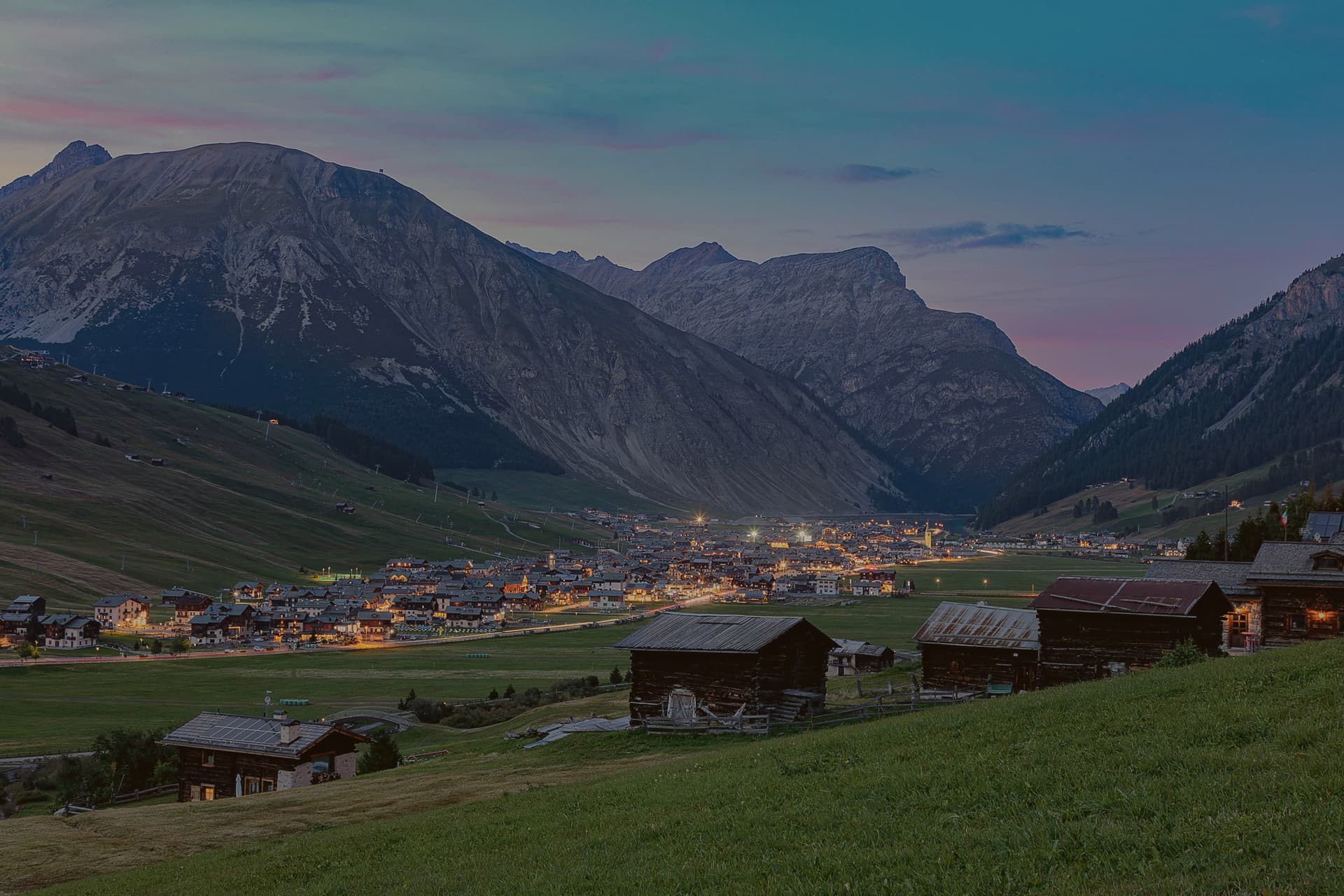
Livigno sits at 1,816 meters in a high valley between the Stelvio National Park and Switzerland's Engadine, one of the few Italian communes whose waters drain north to the Black Sea rather than south to the Mediterranean. The name probably comes from an old German word for avalanche; the last one to hit the village killed seven people in 1951.
Until the 1970s this was a farming village of shepherds and small farms. The duty-free status, first granted by Austria around 1840 and confirmed by Italy in 1960, is what changed it.
Today the slopes of Carosello 3000 on one side of the valley and Mottolino on the other carry the ski traffic that arrives by the busload from Milan and the rest of Europe. Saint Mary's parish church, rebuilt at the end of the 19th century around its older predecessor, still anchors the centre.
The duty-free shops along Via Plan handle the rest of the visitor economy.
Al Persef, Camana Veglia, Stua Noa Fine Dining and 3 more have been named by a guide.
What to see in Livigno
- Chiesa di Santa Maria Nascente. Late 19th-century parish church built around the older church it replaced, so that services continued during construction.
- Chiesa di San Rocco. Small votive church built at the start of the 16th century as protection against plague, on the edge of the historic settlement.
- Chiesa della Madonna di Caravaggio. Country church holding ex voto paintings and a picture traditionally attributed to Caravaggio.
How to get to Livigno
Bolzano is roughly 152 minutes away by road.
Our tip
December through March is the ski season Livigno was built for: 1,816 meters guarantees snow, the duty-free shops stay open late, and the two ski areas run at capacity. June through September is the second season. Trails climb into the Stelvio park, the valley keeps temperatures under 25 degrees even in August, and bike traffic replaces ski traffic on Mottolino.
Toscolano-Maderno
Why visit Toscolano-Maderno
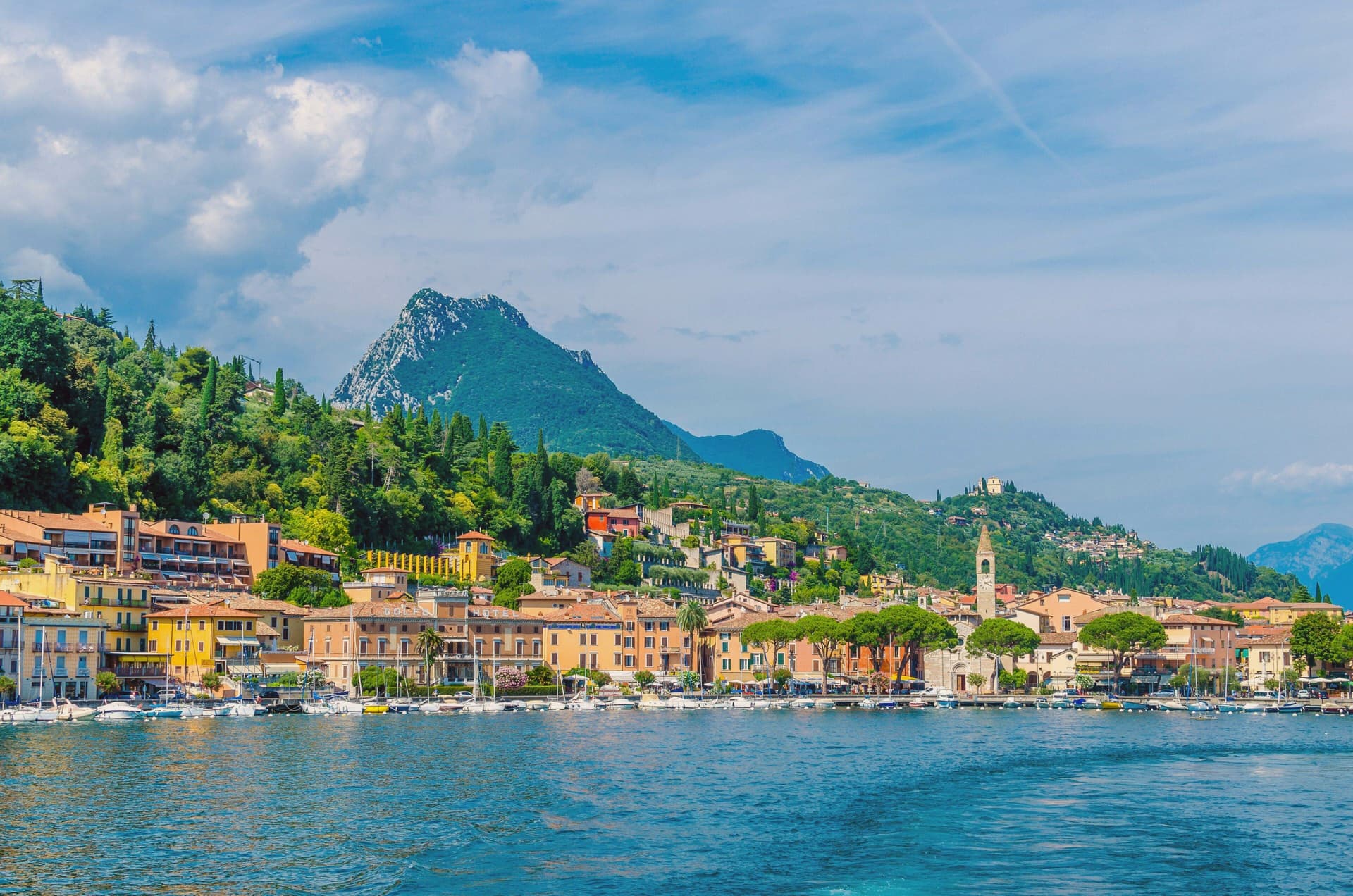
Toscolano-Maderno sits on a wide flat fan on the western shore of Lake Garda, where two old villages, Toscolano and Maderno, face each other across the river that gives the valley its name. They were stitched into a single commune only in 1928, and the split is still legible on the ground: Maderno holds the older administrative and religious weight, Toscolano the industrial valley behind it.
Maderno was once the capital of the Magnifica Patria della Riviera di Salò, until Beatrice della Scala moved the seat to Salò in the 14th century. The town's administrative standing never returned, but paper filled the gap.
Mills had already been working the Toscolano river since around 1300, and by the 15th and 16th centuries they were supplying the printers of the Venetian Republic, their sheets marked with an ox-head watermark and sent out as far as royal libraries. What is left today is a town whose center of gravity moved once, from government to manufacture, and left physical evidence of both: an old civic and religious core in Maderno, an industrial valley cut into the hillside behind Toscolano, and a shoreline that now does the plain work of a lake town, swimming and the ferry crossing, once the mills and the magistrates had both gone quiet.
Il Cortiletto have been named by a guide.
What to see in Toscolano-Maderno
- Basilica di Sant'Andrea. Carved portals on the marble facade, the interior kept plain by comparison. It stands over the foundations of the pagan temple it replaced, at the edge of the older quarter of Maderno.
- Chiesa dei Santi Pietro e Paolo. The parish church of Toscolano, rebuilt in 1584 over the remains of an earlier church on the same spot. The frescoed interior is the draw, not the exterior.
- Villa romana dei Nonii. The mosaic floors survive in the open air, set into the lakeside park rather than behind glass, giving a sense of the villa's original footprint.
How to get to Toscolano-Maderno
Brescia is roughly 56 minutes away by road.
Our tip
April through October is Toscolano-Maderno's open season. May and June bring the lake into swimming temperature and the paper-mill valley out of its winter mud. July and August are warm and crowded with German and Austrian families on the lungolago; the ferry to Torri del Benaco runs full.
Salò
Why visit Salò
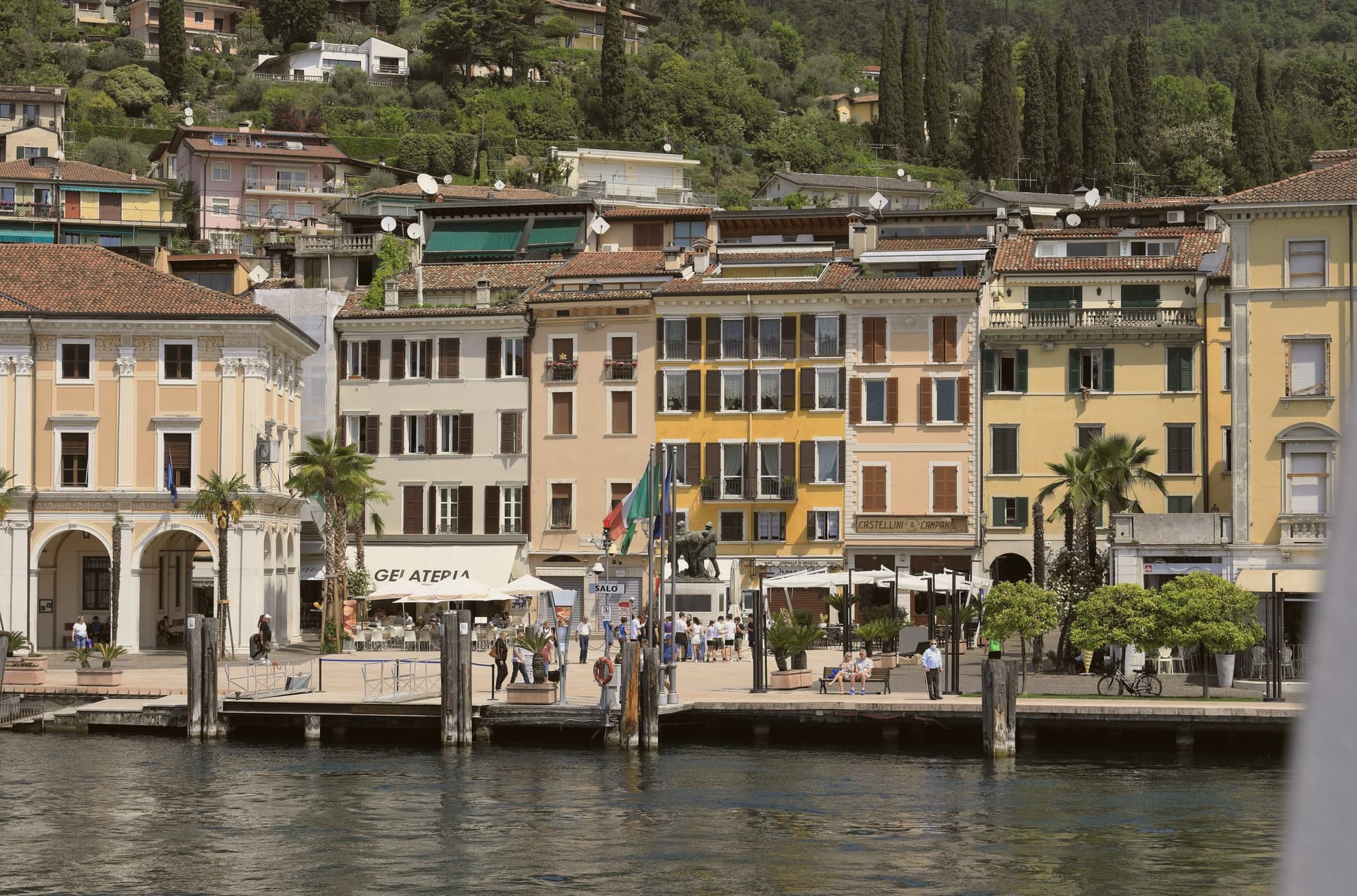
Salò sits at 65 meters on the deepest gulf of Lake Garda, between the Brescia hills and the western lakeshore. Ancient Romans founded the colony of Pagus Salodium here; the modern commune separated from Brescia at the end of the 13th century.
From 1334 to 1797, Salò was the capital of the Magnifica Patria, a federation of town councils along the western lakeshore and the Valsabbia, first known as Riperia Lacus Gardae Brixiensis: a name for the same stretch of shore the promenade now runs along. The cathedral's builders left the façade unfinished, a state it remains in above the lakefront where the palace once housed that federation's council.
In 1943-1945 the town lent its name to Mussolini's last German-backed state, headquartered in villas commandeered along that same lakefront. Today Salò runs on tourism, lake events, and the MuSa museum, which opened in 2015 in the former church of Santa Giustina and carries the town's history from the Romans who founded it through the republic that later took its name.
A federation's capital, a commandeered wartime seat, a single waterfront: three centuries of Salò's public life have all faced the same three kilometers of water.
Villa Arcadio, Felter alle Rose, Il Bagnolo Eco Lodge and 3 more have been named by a guide.
What to see in Salò
- Duomo di Santa Maria Annunziata. The cathedral's façade was left unfinished, and the rose window dates to 1506-1508. Inside, the scale of the nave explains its old claim to being the largest church on the lake.
- MuSa. Civic museum opened in 2015 in the former church of Santa Giustina, covering Salò and its territory from Roman times through the Italian Social Republic.
- Lungolago. The promenade runs between the central pier and the gulf's southern point, three kilometers of open water on one side and the town's lakefront villas on the other.
How to get to Salò
Brescia is roughly 41 minutes away by road.
Our tip
April through October is the long Garda season. April and May bring camellias along the lungolago, the lake stays mild, and the western coast road is open without the August traffic. June through August is peak season, with hot days, swimming weather, and the lakefront cafés full from morning to midnight.
Curtatone
Why visit Curtatone
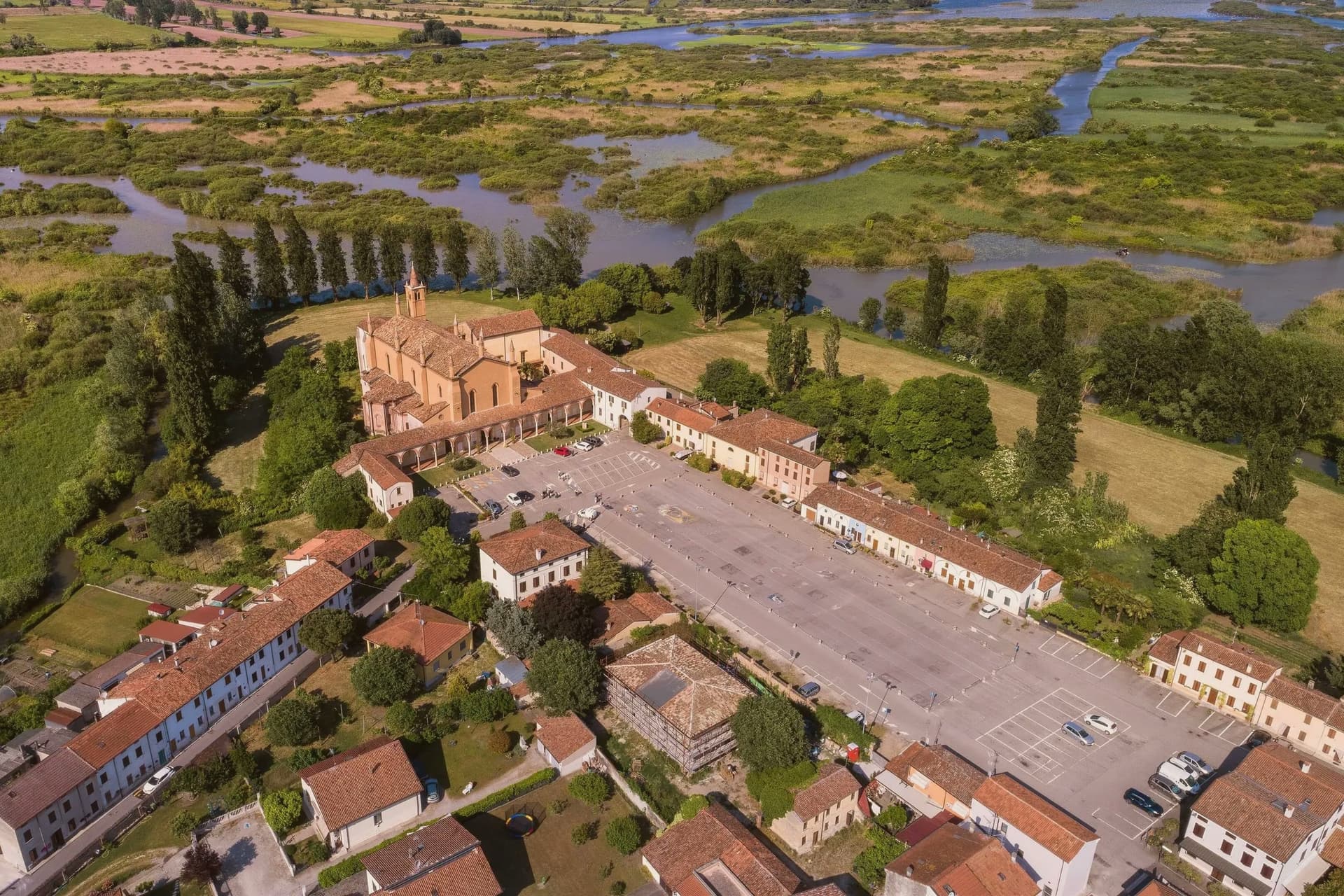
Curtatone is a Mantova commune of eight frazioni in the Parco del Mincio, with its seat at Montanara and its most visited fraction at Grazie. The Santuario della Beata Vergine delle Grazie was commissioned in 1406 by Francesco I Gonzaga and stands on the edge of the Mincio's lower bend, surrounded by lotus flowers that bloom across the river in July and August.
On 29 May 1848, Tuscan and Neapolitan volunteers held this stretch of ground against Austrian forces under Radetzky long enough for the Piedmontese army to reorganize at Goito the following day. The battle is remembered nationally as Curtatone e Montanara.
Every year around Ferragosto the Antichissima Fiera delle Grazie fills the square in front of the sanctuary; since 1973 the fair has hosted the Incontro Nazionale dei Madonnari, with over a hundred chalk artists working through the night on the pavement around the church.
Locanda delle Grazie, La Locanda delle Grazie have been named by a guide.
What to see in Curtatone
- Santuario della Beata Vergine delle Grazie. 1406 Gonzaga sanctuary on the Mincio bend, with a unique wooden ex-voto wall lining the nave, and the burial of Baldassarre Castiglione.
- Parco del Mincio. Riverine nature reserve around Grazie, with lotus flower expanses that bloom mid-July through August on the lower Mincio.
- Monument to the Battle of Curtatone and Montanara. Memorial to the 1848 stand by Tuscan and Neapolitan volunteers against Austrian forces under Radetzky on 29 May.
How to get to Curtatone
Verona is roughly 48 minutes away by road.
Our tip
April through June and September into October are the months Po-valley humidity stays bearable. April brings the Mincio in full water and the wetland birds along the parco. The lotus flowers around Grazie bloom from mid-July into August, a brief overlap with the heaviest summer heat, when temperatures climb past thirty-three degrees and the air thickens.
Mantova
Why visit Mantova
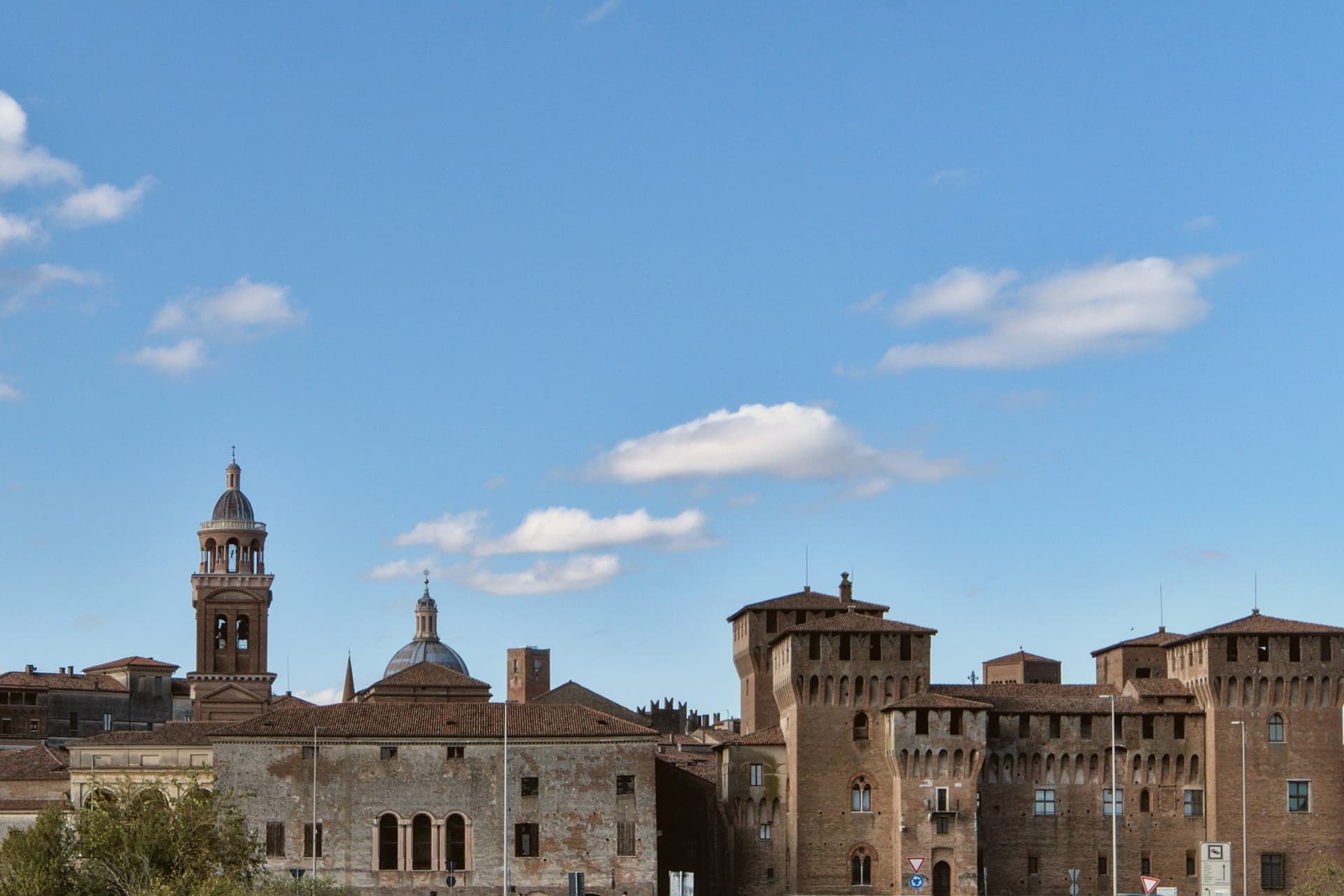
Mantova sits at 19 meters on a peninsula in the Mincio, halfway between Milan and Venice. In the twelfth century the river was dammed into three artificial lakes, Superiore, di Mezzo and Inferiore, which still ring the city on three sides and worked as its defence for six centuries.
From 1328 to 1707 it was the seat of the Gonzaga. The Palazzo Ducale they assembled across that span covers 34,000 square meters between Piazza Sordello and Lago di Mezzo, with over a thousand rooms; the Camera degli Sposi, frescoed by Andrea Mantegna between 1465 and 1474, is the heart of that complex.
Outside the walls, Federico II Gonzaga commissioned Giulio Romano to build Palazzo Te between 1525 and 1535: a pleasure villa with the Sala dei Giganti, whose painted Olympus collapses on the viewer from every wall. Mantua and Sabbioneta were jointly inscribed by UNESCO in 2008.
The city was Italian Capital of Culture in 2016.
Lo Scalco Grasso, Sücar Brüsc, Il Cigno and 2 more have been named by a guide.
What to see in Mantova
- Palazzo Ducale. Gonzaga ducal complex of 34,000 square meters between Piazza Sordello and Lago di Mezzo, with over a thousand rooms across four centuries of additions.
- Camera degli Sposi. Frescoed chamber by Andrea Mantegna inside the Palazzo Ducale, painted between 1465 and 1474, with an illusionistic oculus on the ceiling.
- Palazzo Te. Suburban pleasure villa built between 1525 and 1535 by Giulio Romano for Federico II Gonzaga, with the Sala dei Giganti and Sala di Amore e Psiche.
How to get to Mantova
There is a railway station in the town, so you can arrive without a car and never need one while you are here. Verona is roughly 39 minutes away by road.
Our tip
April through June and September into October are the months Mantova works best. The lakes hold light all day, the Palazzo Ducale is walkable without summer queues, and the surrounding bike paths to Peschiera del Garda run sixty kilometers along the Mincio. July and August get humid and still on the plain, with mosquitoes off the lakes and afternoons that empty the centro storico. Festival della sbrisolona e dei dolci italiani falls in October.
Bergamo
Why visit Bergamo
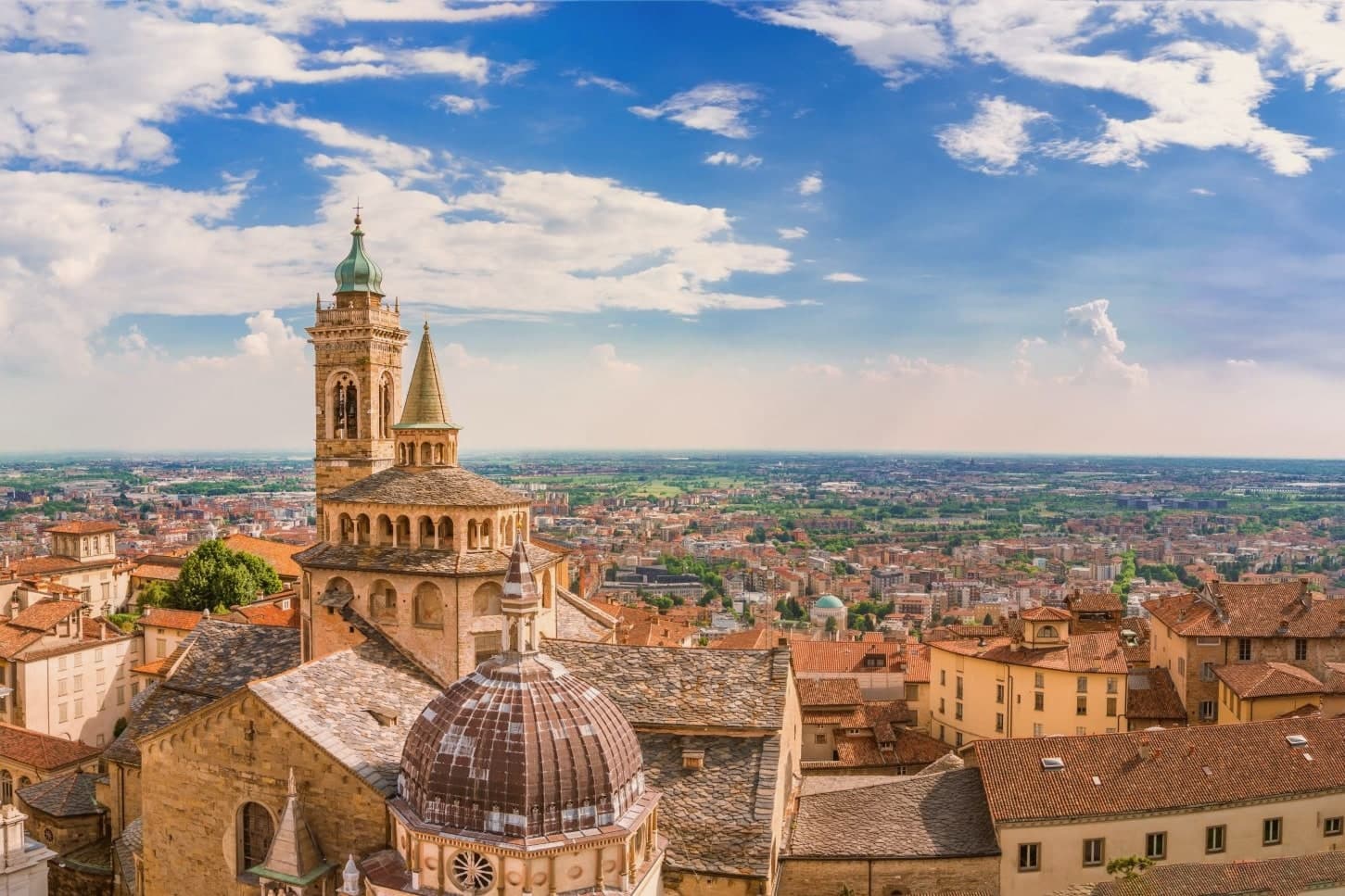
Bergamo's upper town occupies a spur of the Bergamasque foothills, and the lower town spreads onto the plain that runs southwest toward Milan. The walls that ring the hilltop cost the old town more than 250 buildings, including the original cathedral of Sant'Alessandro, demolished to clear ground for the defenses.
The circuit was built as part of a much larger Venetian project, inscribed together with the fortifications at Peschiera, Palmanova and sites on the Dalmatian coast: one defensive system spread across the Republic's frontier, of which this hilltop was the western anchor. The two halves of the city keep their own centuries.
The walled hilltop holds its medieval and Renaissance fabric inside the fortifications, reached by a funicular that has run the same route since the nineteenth century. The lower city is the newer half, built up through the nineteenth and twentieth centuries on the flat ground below.
Bergamo works as a place because that separation stayed intact instead of being built over: a fortified hill town and a modern city sharing one name but occupying two distinct centuries.
Caffè Del Tasso, Pasticceria bar Cavour 1880, Villa Elena and 11 more have been named by a guide.
What to see in Bergamo
- Mura Venete. Eight bastions and four gates carry the circuit around the ridge of Città Alta, the walkway open along most of its length with views down over the lower town and the plain.
- Piazza Vecchia. Ringed by the Palazzo della Ragione, the Campanone tower, the Contarini fountain and the Biblioteca Mai, this is the square at the top of the funicular climb, the meeting point of Città Alta's streets.
- Basilica di Santa Maria Maggiore. The Romanesque exterior gives no hint of the Baroque interior inside, gilded and heavy with stucco, where the composer's tomb sits among the furnishings.
How to get to Bergamo
There is a railway station in the town, so you can arrive without a car and never need one while you are here. Bergamo is roughly 3 minutes away by road.
Our tip
April through June and September into October are the months Bergamo works best. Città Alta is walkable, the walls open at dawn, and the Accademia Carrara is uncrowded on weekday mornings. July and August are hot on the plain and full on the hill; the funicular waits stretch on weekends.
More from Anywhere Italy
- The best lake towns inside a nature park in Lombardia
 The 8 best towns inside a nature park in the province of Brescia
- The best small towns inside a nature park in Lombardia
- The best towns inside a nature park that you can reach by train in Lombardia
 The best small towns with a serious restaurant in Lombardia
- The best towns with a serious restaurant that you can reach by train in Lombardia