
Lombardy · Milano
Gorgonzola
The town that gave its name to the cheese, a 21,000-resident commune 24 km east of Milan and the documented birthplace of Gorgonzola DOP since AD 879, now the eastern terminus of Milan's M2 metro line.
- Best time
- Apr–Jun, Sep–Oct
- By car
- 32 min from Milan
- By train
- Station in the comune
- Population
- 21,092
Known for
GORGONZOLA DOP NAMESAKE
Documented cheese-producing centre since AD 879, when the abbey found the Penicillium veining by accident in the summer milk surplus. Annual Sagra mid-September.
Visconti's 1457 canal to Milan, now a cycling greenway. The classic east-Milan weekend ride.
M2 METRO TERMINUS
Eastern end of Milan's green line. 32 minutes from Cadorna. Easy half-day from central Milan.
BONARDA + LOMBARD KITCHEN
Risotto alla milanese, polenta uncia, ossobuco, the Gorgonzola itself, Bonarda from the Oltrepò Pavese 60 km south.
When to visit
Best · Apr–Jun, Sep–Oct
- J8°
- F12°
- M15°
- A18°
- M22°
- J27°
- J30°
- A30°
- S25°
- O19°
- N12°
- D8°
- Best
- Hot or crowded
- Quiet
- Mostly closed
Daytime averages, 2020–2024. Weather data by Open-Meteo.com.
Why come
The commune sits in the Milan metropolitan periphery, its centre a short walk from the water. The canal that runs through it was built between 1457 and 1463 under Filippo Maria Visconti to connect the Adda river to Milan, and the town grew along its banks as a stop on that route rather than as a self-contained settlement. By the 11th century 'gorgonzola' was already traded across the Po valley; by the 14th the cheese had a documented brand identity; by the 19th it was exported in industrial quantities to Britain via the new Milan-Treviglio railway.
Gorgonzola DOP itself is no longer produced inside the comune. The modern DOP zone covers all of Lombardia and Piemonte and is concentrated around Novara and Lecco. What remains here is the symbolic centre: the abbey where the accidental find happened in the surplus summer milk, the small museum that keeps the chain of dates, and the September fair that draws producers from both regions back to the place their cheese is named for.
The centro storico, the abbey ruins at the town's edge, and the canal towpath form the three fixed points of the town, close enough to walk between in an afternoon: the church anchors the piazza, the ruins mark where the monks once cooled their surplus milk in caves, and the water ties the two together on its way toward Milan. The food follows the same Lombard-northeast line as the history: risotto alla milanese, polenta uncia, ossobuco, the cheese itself in its sweet or aged forms, and Bonarda from the Oltrepò Pavese to the south. A town that exported its name centuries before it stopped producing the thing itself, and that now keeps the record of that history closer than the cheese itself.
The Sunday letter
Gorgonzola is on our list. Its letter is still to come.
We are writing about all 1,000 of these towns, one at a time, in a free letter every Sunday: the photo, the food, the festa. That is our mission. Sign up and you will be there when Gorgonzola comes up. By Peter & Sophia, from Pietrasanta.
Read on
Gorgonzola in our articles
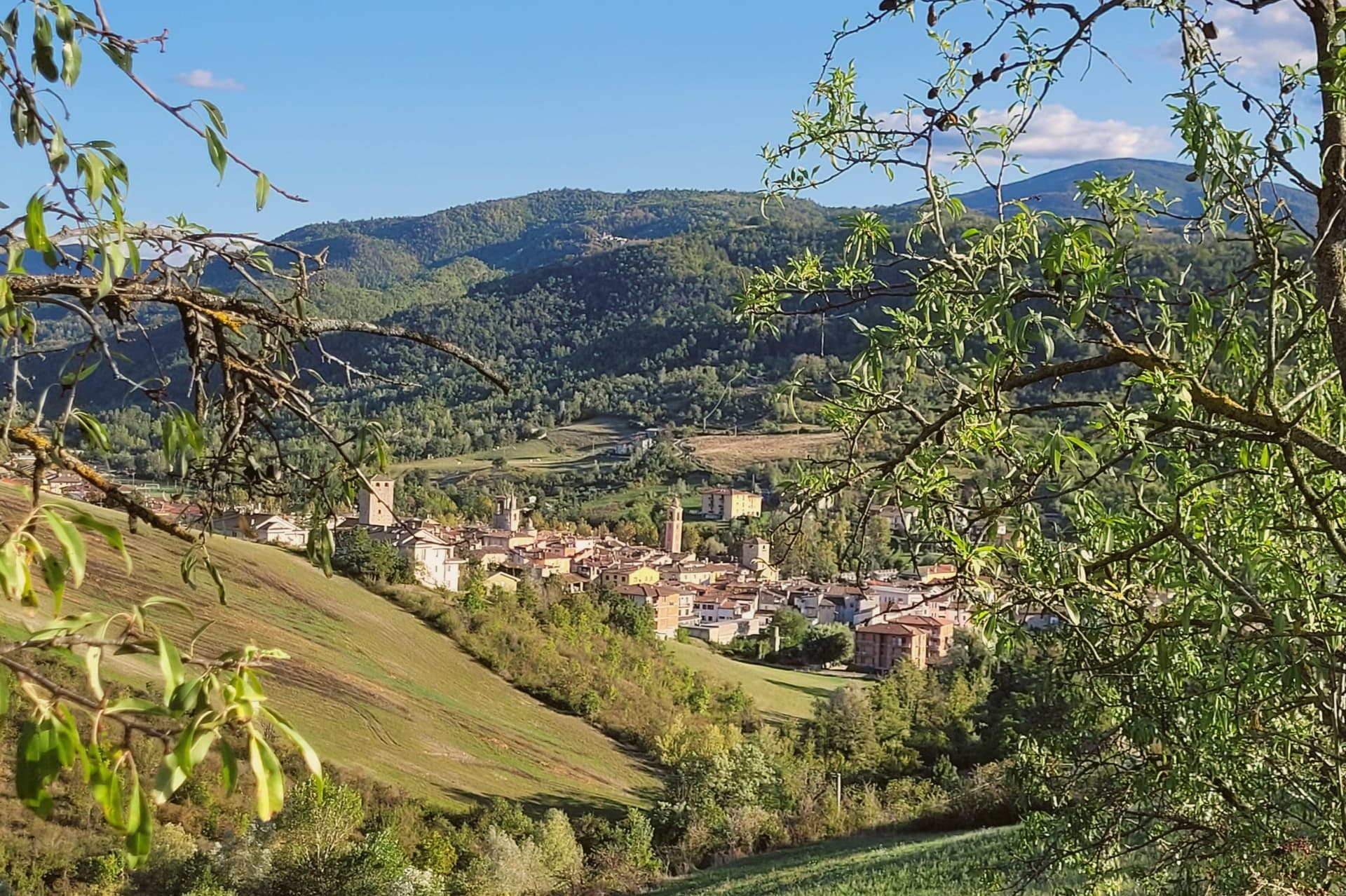
 The best towns inside a nature park that you can reach by train in Lombardia6 towns, Gorgonzola among them.
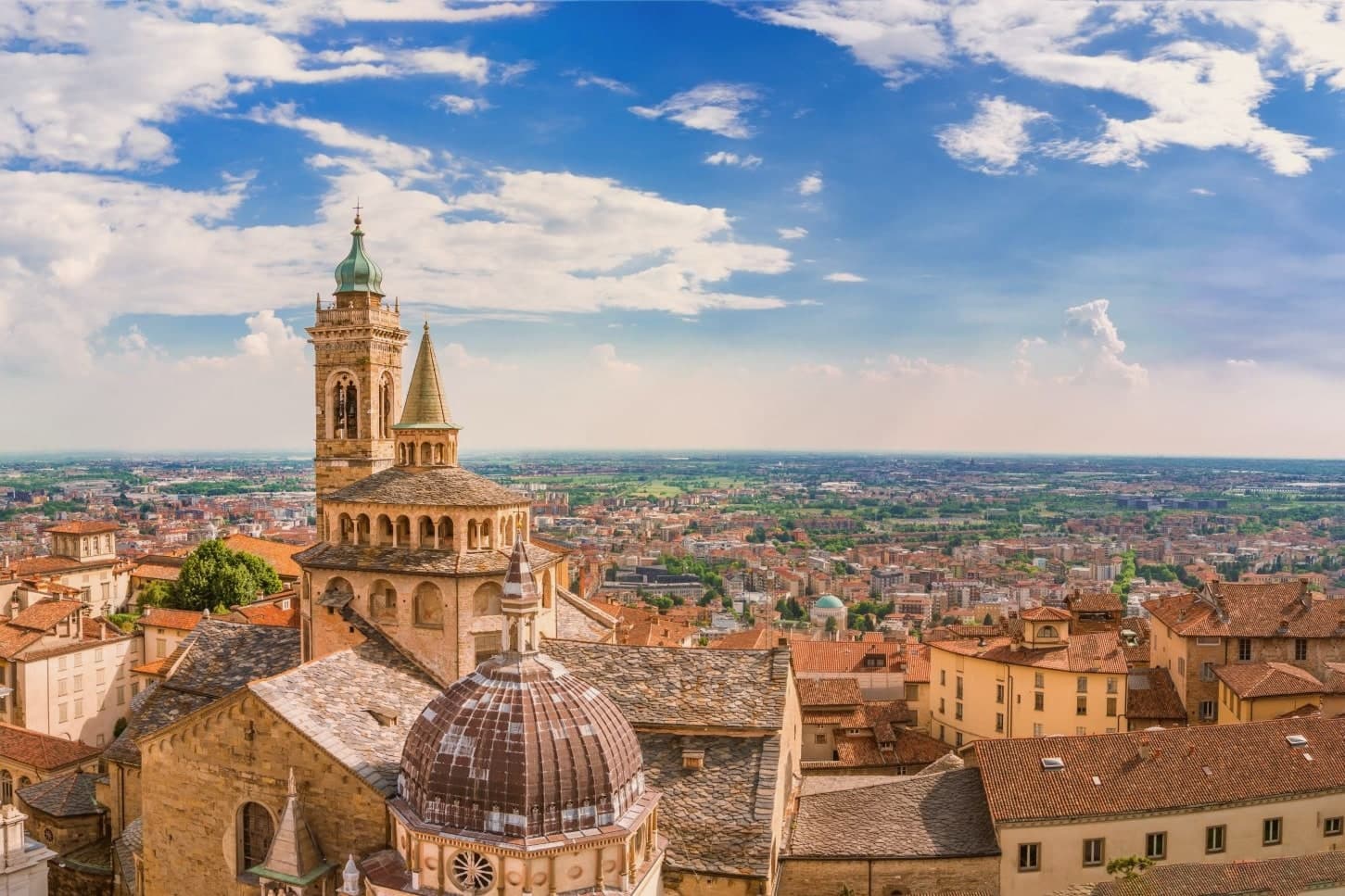
 The best towns with a food festival in Lombardia7 towns, Gorgonzola among them.
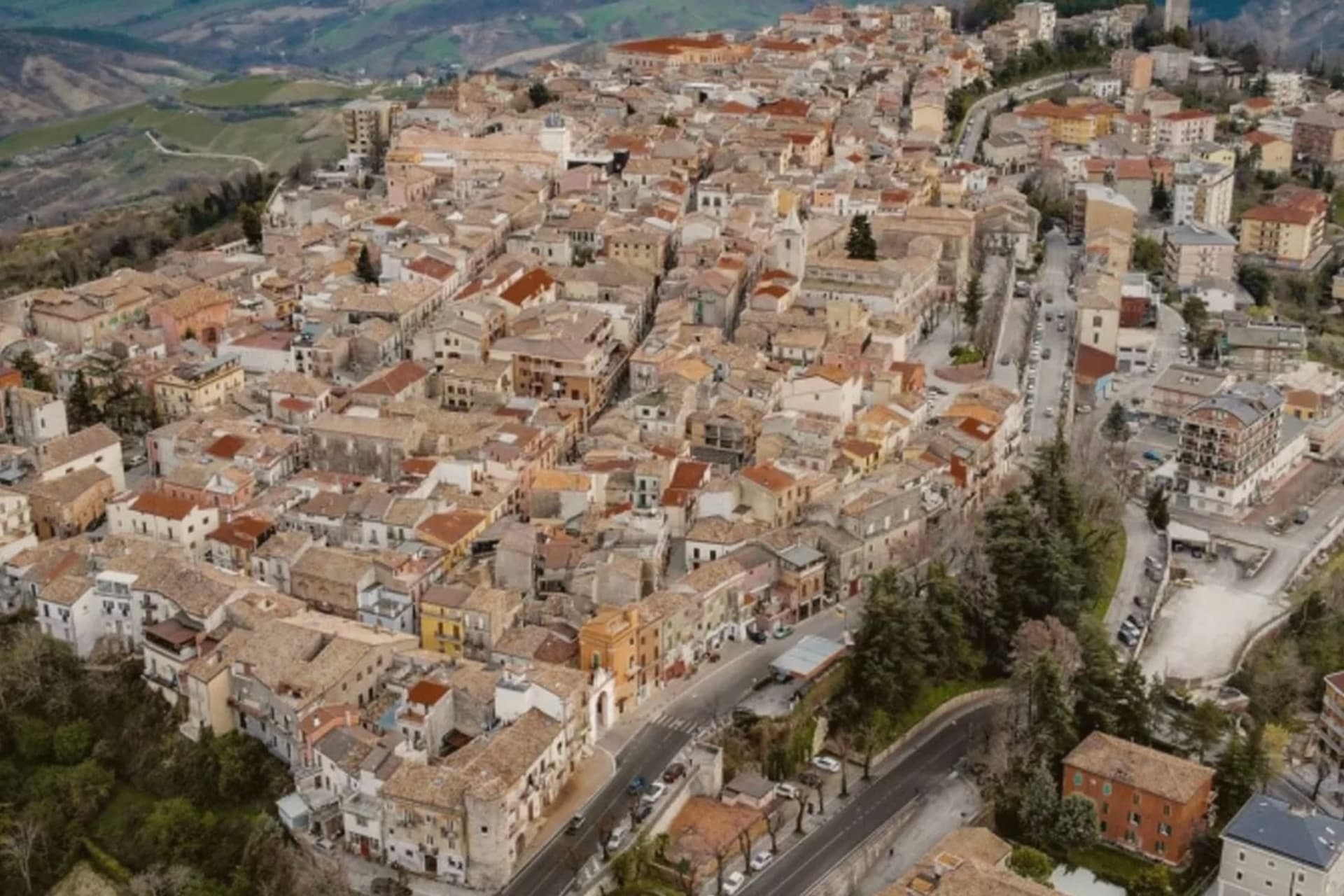
 10 towns closer to Milan than Milan's suburbs10 towns, Gorgonzola among them.
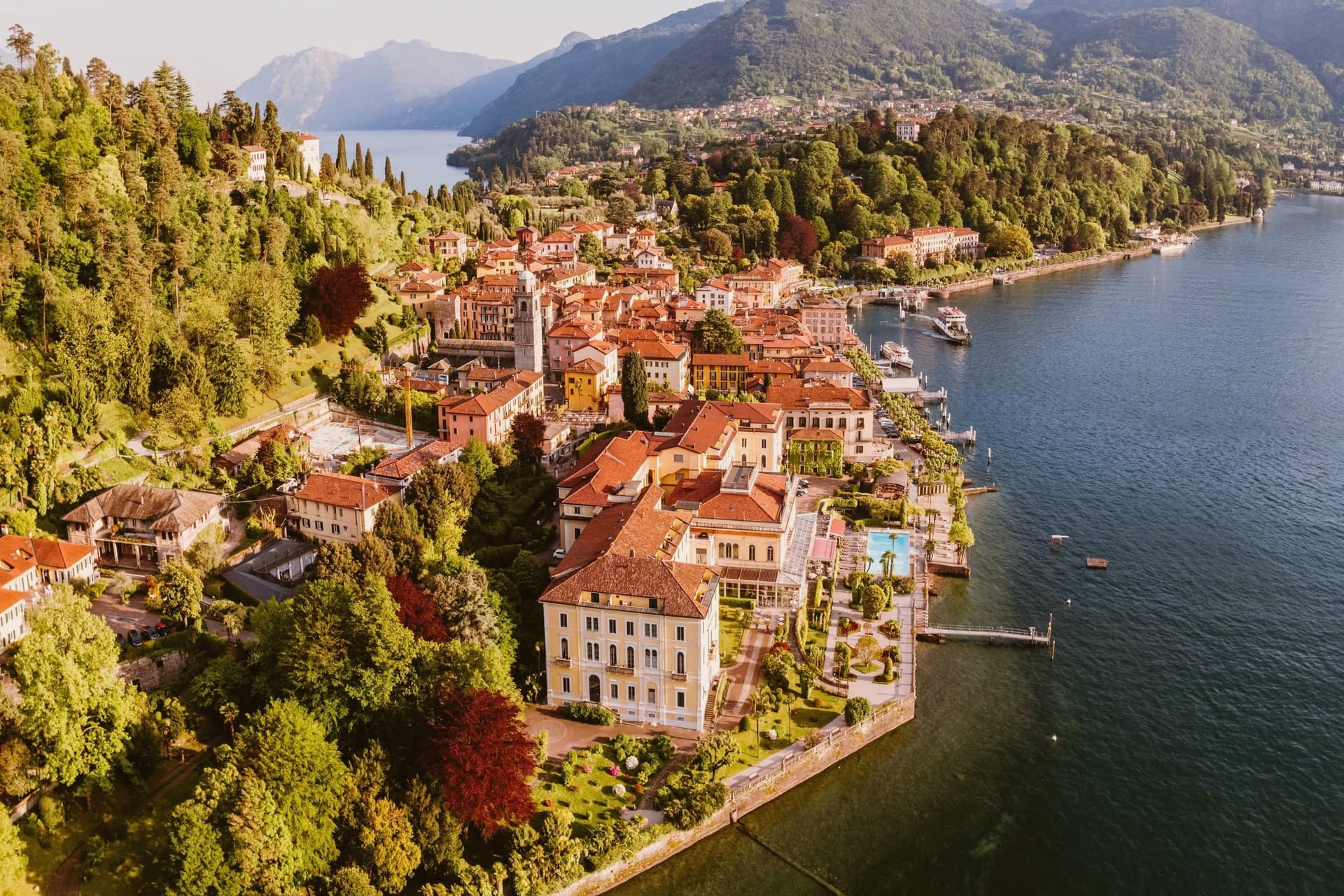
 Every town in our catalogue you can reach by train, all of them, by region452 towns, Gorgonzola among them.
How to get there
From Milan (BGY), about 37 minutes by car.
Verona (VRN) is about 1h 39m away.
By car from the centre of Brescia 57 minutes or Parma 1h 31m.
There is a railway station in the comune, so you can arrive without a car.
Coming from Milan, Verona or Turin?
Coming by train into Monza? Gorgonzola is about 22 minutes away by road.
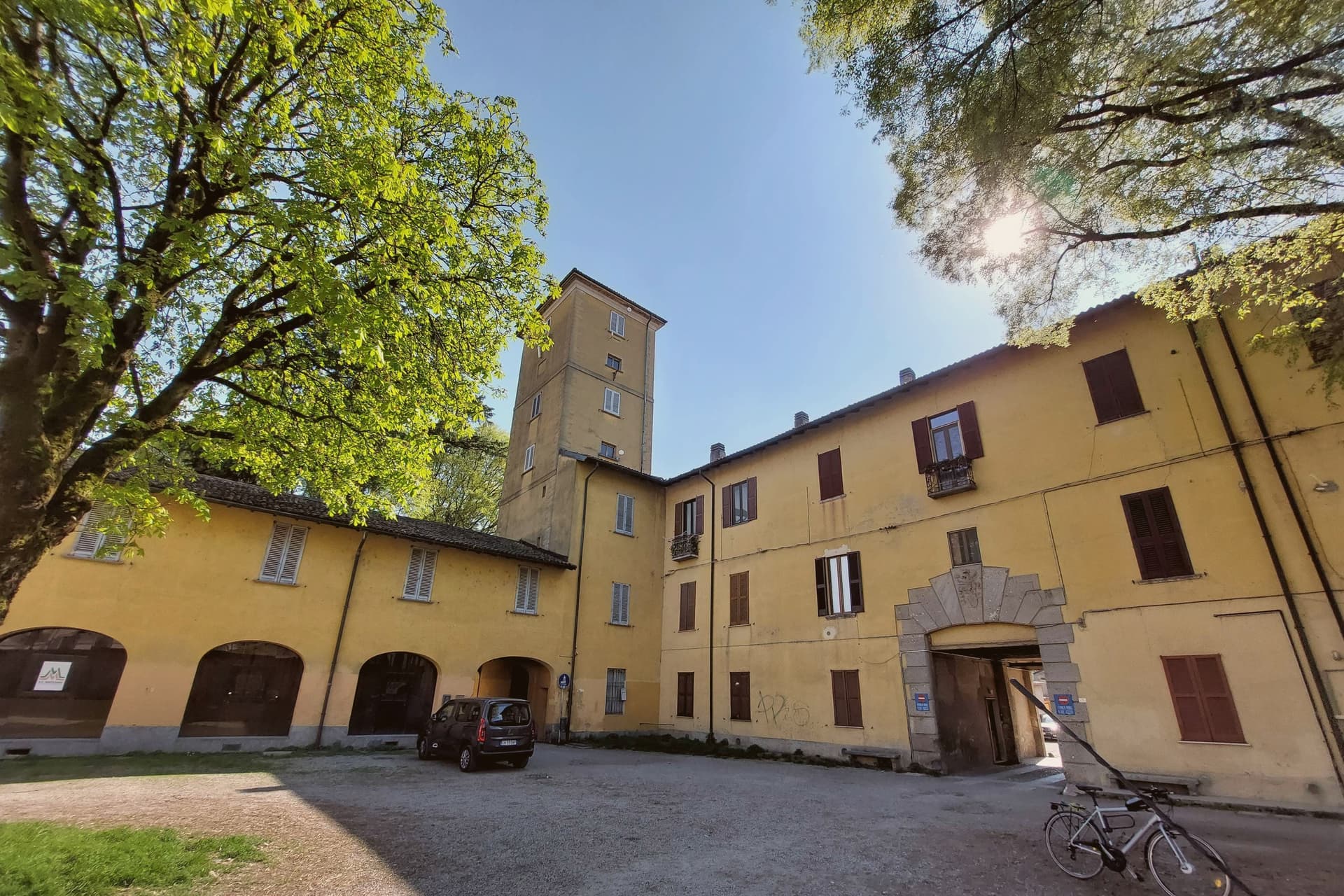
What to see
Museo del Gorgonzola + Sagra
Small museum tracing the cheese's history through documents and objects. Annual Sagra del Gorgonzola in mid-September gathers 25+ DOP producers from across Lombardia and Piemonte for tastings.
Naviglio della Martesana (Greenways)
A navigable 38-km stretch of water running through the town, now a Greenways-protected cycling path. The towpath is flat and shaded in places, and the water level stays close to the fields it passes.
Chiesa Prepositurale + Abbey ruins
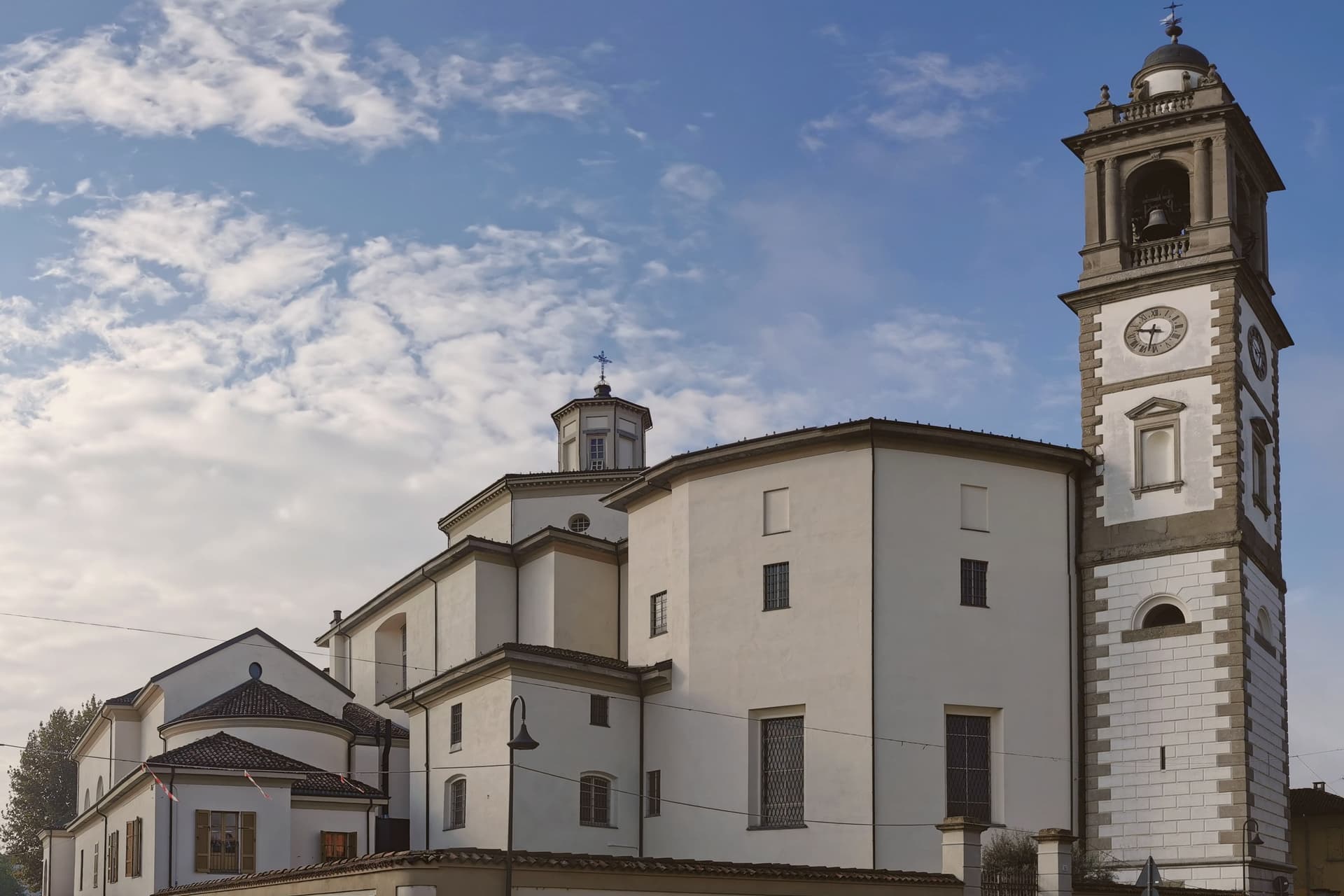
1820 neoclassical parish church on the central piazza. The Abbey of San Pietro's 11th-century ruins sit at the edge of town, the site where the monks aged the original cheese in cool caves.
M2 metro from Milan
A half-day out of Milan covers cheese tasting, a walk along the canal, and the museum, all reachable on foot from the same station.
The slow-trip planner
Building a trip? Find where Gorgonzola fits in a slow Italy circuit.
Answer five questions. We will shape a geographically coherent slow trip from the 1,000 Italian towns most travelers skip. Yours to save and share.
Through the year
What happens here
Feasts and festivals that come back year after year. We give the month rather than the date, because the date moves and the month rarely does. Check with the source before you plan a journey around one.
Sagra Nazionale del Gorgonzolafood festival
usually held in September. itinerarinelgusto.it
Living here
- Population 21,092
- Commuter belti
- Pharmacy in town
- High school within a 30-minute drive
- Train station in the comune
- Nearest airport Milan, 37 min drive
- Regional capital Milano, 32 min drive
Common questions
- What is Gorgonzola known for?
- Gorgonzola is the town that gave its name to the cheese, a 21,000-resident commune 24 km east of Milan and the documented birthplace of Gorgonzola DOP since AD 879, now the eastern terminus of Milan's M2 metro line.
- Where is Gorgonzola?
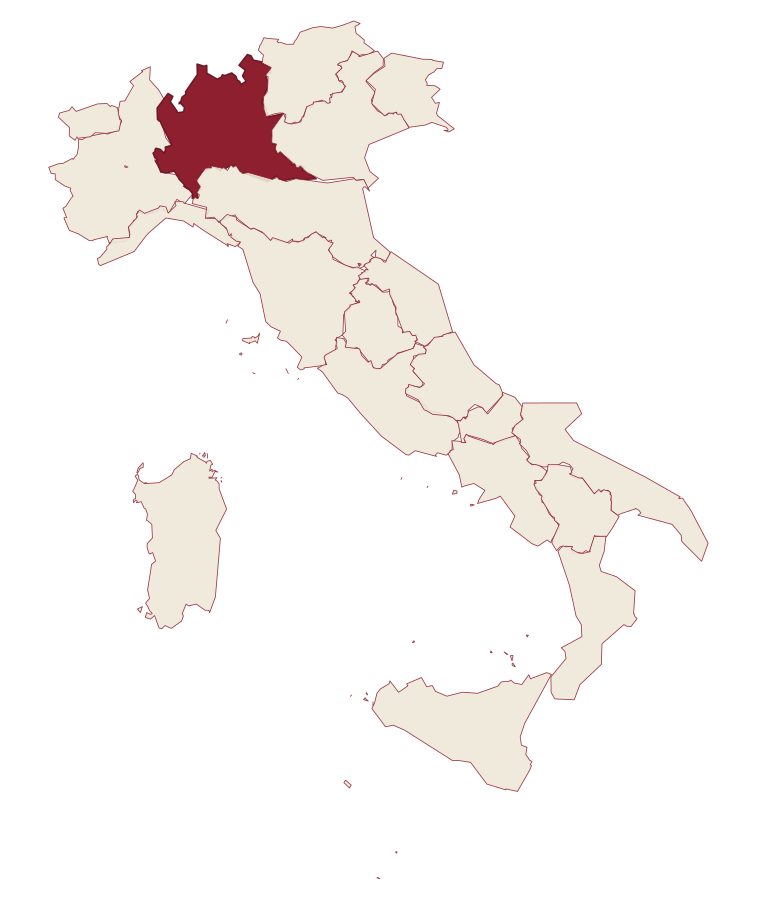
- Gorgonzola is a comune in the province of Milano, in Lombardy, at 132 meters above sea level.
- What is the nearest airport to Gorgonzola?
- Milan (BGY), about 37 minutes by car.
- Can you get to Gorgonzola without a car?
- Yes. There is a railway station in the comune, so you can arrive by train.
- How long is the drive from Brescia to Gorgonzola?
- About 57 minutes by car.
- When is the best time to visit Gorgonzola?
- Best in Apr–Jun, Sep–Oct. August is the warmest month, averaging 30 degrees, and May the wettest, with about 17 rain days.
- Is there a sagra or a festival in Gorgonzola?
- Yes. Sagra Nazionale del Gorgonzola. September is when the first of them falls.
- Which other towns are like Gorgonzola?
- Santarcangelo di Romagna, Collecchio and Mantova.
- How many people live in Gorgonzola?
- 21,092 at the 2023 count.
Tags & datadesignations · numbers · sources
Recognised as
The numbers
- Elevation: 132 m
- Population: 21,092
- Surface area: 10.58 km²
These figures were compiled from public directories: ISTAT, OpenStreetMap and Wikidata, and from the official listings of the guides named on this page. Town details change; verify with official sources before you travel.
Similar
Towns like Gorgonzola
Santarcangelo di Romagna
Province: Rimini
both in the Po valley · both over 10,000 people
Collecchio
Province: Parma
both in the Po valley · both over 10,000 people
Mantova
Province: Mantova
both in the Po valley · both over 10,000 people
Casale Monferrato
Province: Alessandria
both in the Po valley · both over 10,000 people
Curtatone
Province: Mantova
both in the Po valley · both over 10,000 people
Spilamberto
Province: Modena
both in the Po valley · both over 10,000 people
🌳 Parco Regionale
More Parco Regionale towns in Lombardy
Bergamo
Province: Bergamo
A two-city Lombard capital where a Venetian walled hilltown sits 85 meters above its modern twin on the plain, 45 kilometers northeast of Milan.
Castione della Presolana
Province: Bergamo
A high-valley commune at 870 meters under the limestone peak the Bergamasque call the Queen of the Orobie.
Cimbergo
Province: Brescia
A village of 533 at 851 meters above the Oglio, with castle ruins on a spur and UNESCO petroglyphs on the slopes below.
Curtatone
Province: Mantova
A commune of eight frazioni west of Mantova, anchored by the Grazie sanctuary and the 1848 battle that delayed Radetzky's advance.
Gardone Riviera
Province: Brescia
A western Garda lakeshore town whose hillside holds an estate turned into a monument to one man's self-image.