
The prettiest villages you can reach by train in Sicilia
Sicily builds its villages out of whatever the island gives it: black lava blocks on the flanks of Etna, honey-coloured tufa in the southeast, pale limestone on the headlands above the Tyrrhenian. Spring is when the interior looks best, the wheat still green and the almond blossom gone over, and autumn brings the grape harvest, the first pressed olive oil and pistachios from Bronte sold by the sack. The food changes with the province, from swordfish and caper salads on the coast to ricotta-filled pastry and slow-cooked pork inland. Regional trains run the coastal lines and reach further into the hills than most visitors assume, and where the rail stops, buses climb the rest.
The standard Sicilian route is Palermo, Taormina, Siracusa, Agrigento, connected by a hire car and compressed into a week. Taormina in particular carries a heavy load in summer, its Greek theatre and Corso Umberto packed from morning ferry arrivals to late evening, and the Valley of the Temples at Agrigento sees coach parties arriving before the heat sets in. These are extraordinary places and the crowds are earned. They also leave little room for the slower business of sitting in a piazza while the shops reopen.
The same lava soil, the same baroque stonework and the same sea keep going past those stops. Along the Ionian line and the north coast, and up the branch lines into the Iblei and the Belice valley, there are villages assessed as among the most beautiful in Italy where the visitor count is a fraction of what Taormina handles in a morning. Each of the places gathered here has passed that national assessment, and we have confirmed each can be reached without a car.
Of the 61 communes we have mapped in Sicilia, 6 qualify as prettiest villages you can reach by train: each has passed the national assessment of Italy's most beautiful villages, and we have confirmed each is reachable without a car. The smallest, Savoca, has 1,724 residents.
If you are still choosing, we have also written The best hidden towns you can reach by train that eat well in Sicilia and The prettiest villages inside a nature park in Sicilia.
Savoca
Why visit Savoca
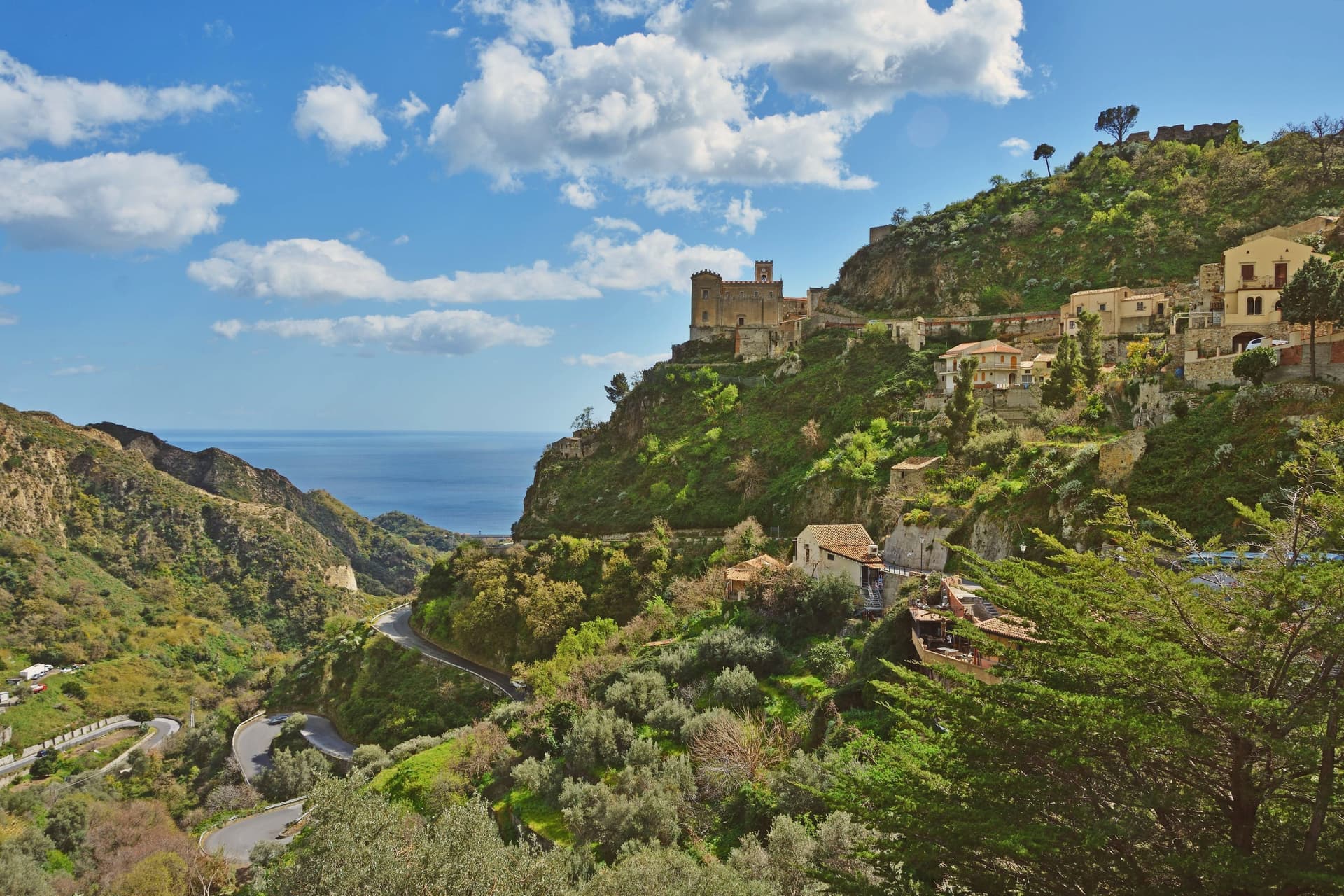
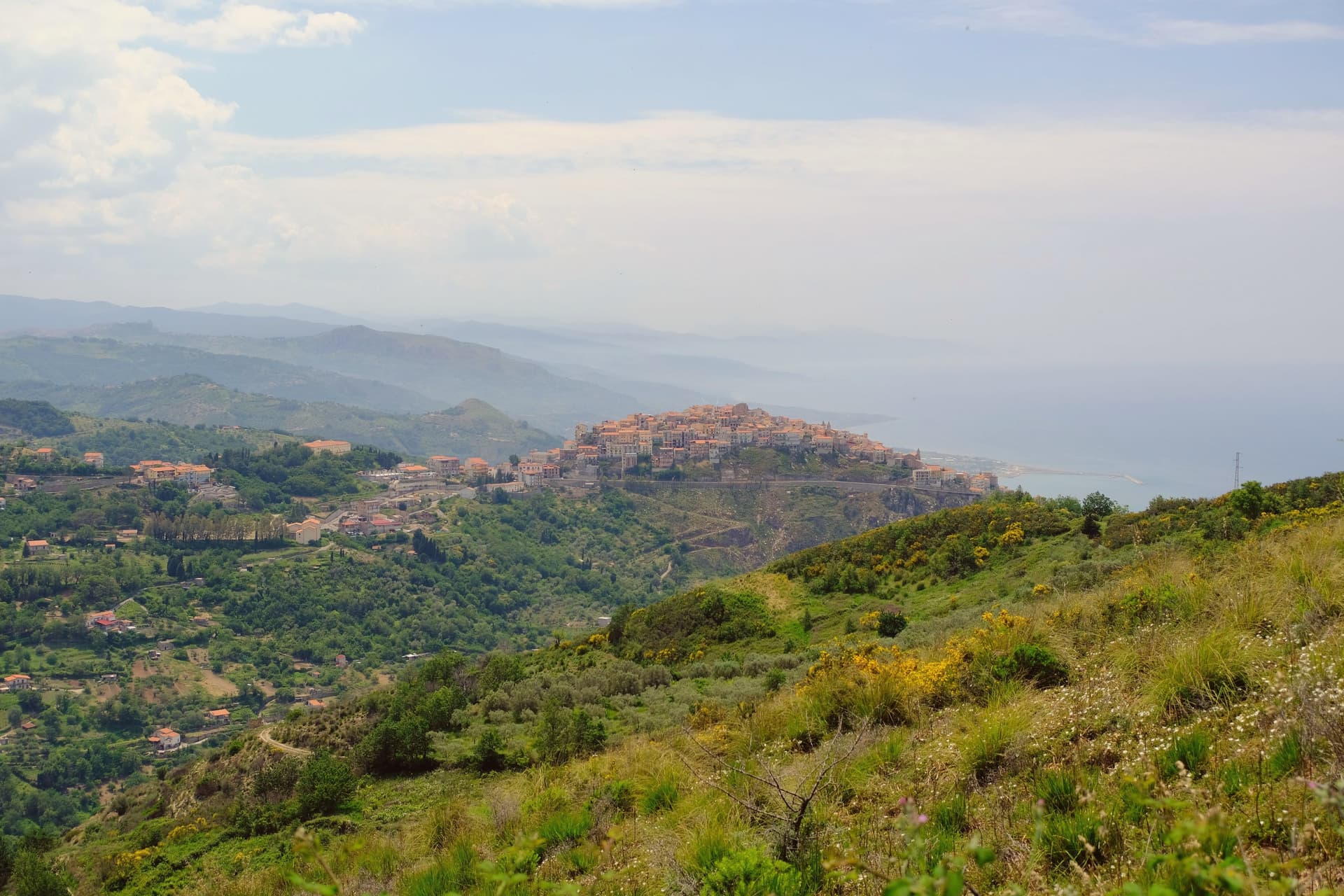
Savoca sits fifteen kilometers north of Taormina, on a hill above the Ionian coast. The centro storico runs along the ridge in stepped lanes and balconied stone houses, with the Capuchin convent below it at the lower edge of the village and the castle ruin above at the highest point, the two anchoring the village from bottom to top.
The convent's crypt holds thirty-seven mummified bodies of notables from the eighteenth and nineteenth centuries, preserved in a colatoio that desiccated the corpses with vinegar and salt. In the summer of 1971, Francis Ford Coppola and Mario Puzo arrived to film the Sicilian scenes of The Godfather here, after the original Corleone in Palermo province was judged too modern for the camera.
The village's shape, a compact ridge with a church at one end and a bar in the lower piazza, gave the film both its wedding location and its courtship scene without need for another set. What draws people now is largely what drew Coppola then: a village small enough to read in a single walk, old enough to need no dressing.
We confirmed you can reach this one by train.
What to see in Savoca
- Chiesa di San Nicolò. Thirteenth-century church suspended on a rock promontory at the top of the village. The Godfather's wedding scene between Michael and Apollonia was filmed here.
- Bar Vitelli. Eighteenth-century palazzo and family bar in the lower piazza, still operating as it did when it stood in for Apollonia's father's bar in The Godfather.
- Cripta dei Frati Cappuccini. Crypt of the Capuchin convent below the centro storico, its ventilated chamber holding the mummified bodies of local notables.
How to get to Savoca
There is a railway station in the town, so you can arrive without a car and never need one while you are here. Messina is roughly 39 minutes away by road.
Our tip
May through October are the months Savoca is busy. The Godfather pilgrims arrive year-round, but the village photographs best in spring and autumn, when the Ionian below is clear and the hill stays cool. July and August are warm; the centro storico is shaded in late afternoon, and the climb up to Pentefur is best at dawn.
Castiglione di Sicilia
Why visit Castiglione di Sicilia
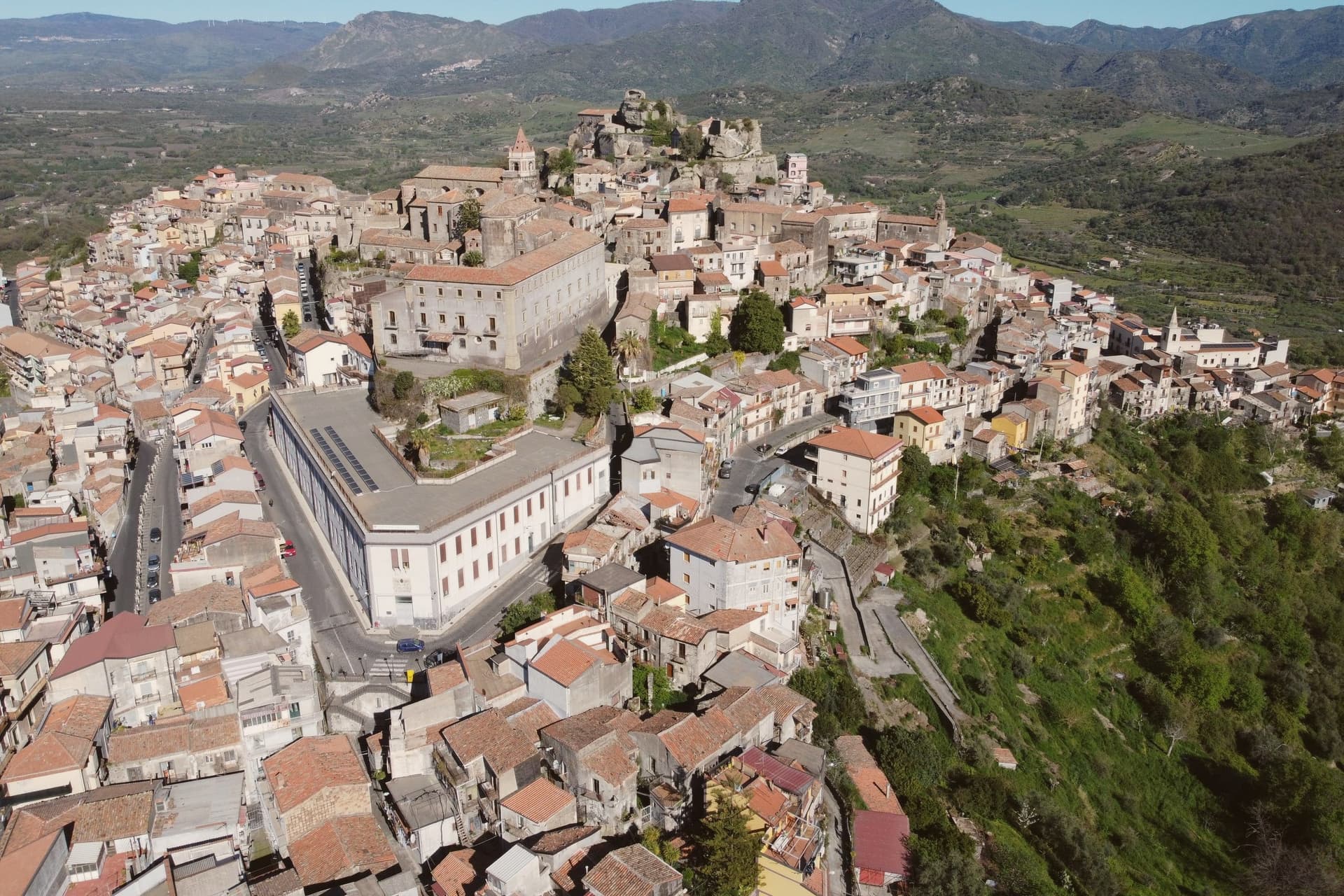
The town looks down the Alcantara river valley between Randazzo and Taormina, its position fixed by Norman count Roger I, who documented it in 1092 as Castrileonis, the great castle. That name still fits the territory more than the town itself: the commune's boundary runs uphill from the historic centre all the way to the summit of Etna, taking in the north-east crater, so the same municipality holds a huddle of streets at 621 meters and a stretch of active volcano above it.
The hills below the centre are the heart of the Etna DOC. Nerello Mascalese and Nerello Cappuccio grow on the volcanic soils around the village, with Carricante carrying the whites, and bottles from Cottanera, Passopisciaro, Tenuta delle Terre Nere and the Alcantara producers all ship from here.
Twenty minutes downhill the Alcantara has cut its gorges through the same lava that feeds those vineyards, basalt walls shaped by water where the fields above are shaped by the grape. Town, castle, vineyard and gorge read as one continuous volcanic system, worked over centuries into a fortress, a wine region and a river cut.
We confirmed you can reach this one by train.
What to see in Castiglione di Sicilia
- Castello di Lauria. The fortress stands on its basalt outcrop above the town, its walls carrying the weight of two rebuildings by Ruggero di Lauria's crews. The rooms now hold the Enoteca Regionale for eastern Sicily, so the same stone that once watched for approach up the valley now stores the bottles made from the vines below it.
- Cuba Bizantina di Santa Domenica. Small Byzantine cube-shaped church, seventh to ninth century, in the rural outskirts of the commune, one of the oldest surviving structures in the Etna area.
- Gole dell'Alcantara. Basalt gorges carved by the Alcantara river through prismatic lava columns, around twenty minutes downhill from the centro storico.
How to get to Castiglione di Sicilia
There is a railway station in the town, so you can arrive without a car and never need one while you are here. Catania is roughly 49 minutes away by road.
Our tip
May through October are the working months on Etna nord. Vineyard tours start in June, harvest runs late September through mid-October on the higher contrade, and the slopes turn red and gold into early November. July and August on Etna are bearable at 621 meters: nights drop to seventeen degrees, far cooler than Catania.
Sambuca di Sicilia
Why visit Sambuca di Sicilia
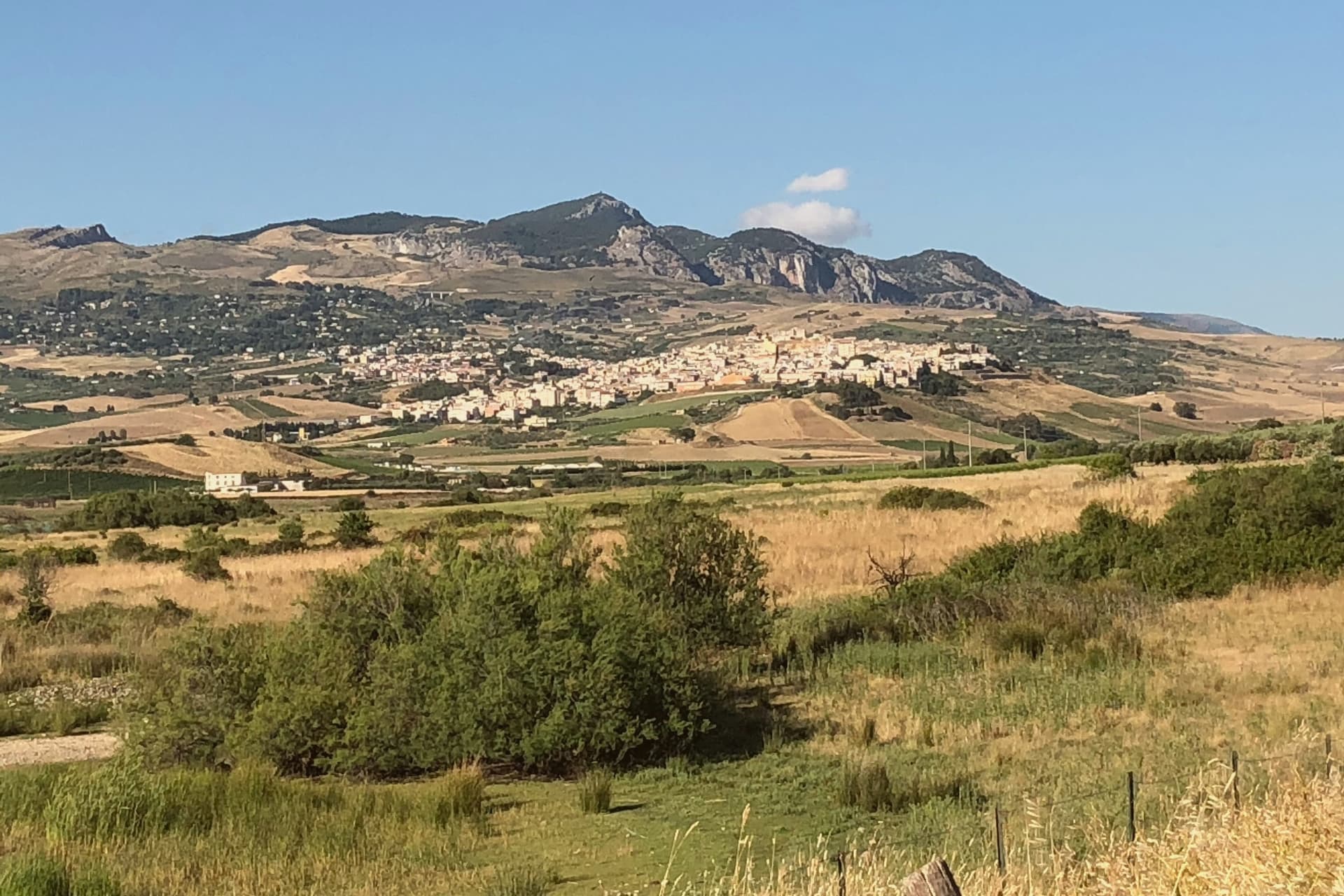
The town sits at 350 meters on a hill above the Belice valley, sixty-eight kilometers southwest of Palermo, overlooking the Sicani hills and the reservoir below. Frederick II conquered the town, then still called Zabut, in the thirteenth century, and it carried that Arab name as Sambuca Zabut until 1923, when the suffix was officially dropped.
The upper town holds the old Arab core, its stone houses and courtyards laid along the alleys founded by the emir, while the lower ground toward the reservoir carries the fortress that once took his name and now stands part underwater, and the vineyards that supply the Menfi DOC. Earthquake damage in 1968 reached the upper town and required rebuilding the mother church on the central piazza.
The name, the water, and the stone all trace back to the same ninth-century founding: a town that took an Arab ruler's name, kept it for over a thousand years, and only shed it in the twentieth century, while the fortress he built still marks the water's edge below.
We confirmed you can reach this one by train.
What to see in Sambuca di Sicilia
- Li Setti Vaneddi. Narrow stone lanes opening into inner courtyards at the core of the Arab quarter, still recognizable underfoot as the same grid laid out by the emir.
- Castello di Mazzallakkar. Square fortress with four corner towers, standing half-submerged at the southern edge of Lake Arancio since the reservoir was filled.
- Lago Arancio. Reservoir fed by the Carboj river, formed in 1952 and used today for sport fishing and irrigation of the surrounding vineyards.
How to get to Sambuca di Sicilia
There is a railway station in the town, so you can arrive without a car and never need one while you are here. Palermo is roughly 81 minutes away by road.
Our tip
April through June and September through November are the right windows for Sambuca. The inland Sicani hills hold dry heat in summer, regularly past thirty-five degrees in July and August, and the centro storico shuts itself down between two and five in the afternoon. October is harvest in the surrounding vineyards and the air clears enough to see Monte Adranone from the upper piazza.
Palazzolo Acreide
Why visit Palazzolo Acreide
The Greek city was founded by Syracuse in 664 BC as an inland defensive outpost, set to guard the Iblei plateau on the route between Syracuse and Gela. That siting explains why the town carries a Greek substrate no other Val di Noto town has: the theatre, the quarries turned catacombs, and the rock sanctuary all belong to the outpost, not to the later town built above it.
The quarries themselves, the latomie, were cut for stone and only afterward pressed into service as Christian burial places, and the surrounding city walls and necropolis extend the ancient site well past the theatre alone. The 1693 earthquake destroyed the medieval settlement outright, collapsing three-quarters of its buildings and killing sixty percent of the population.
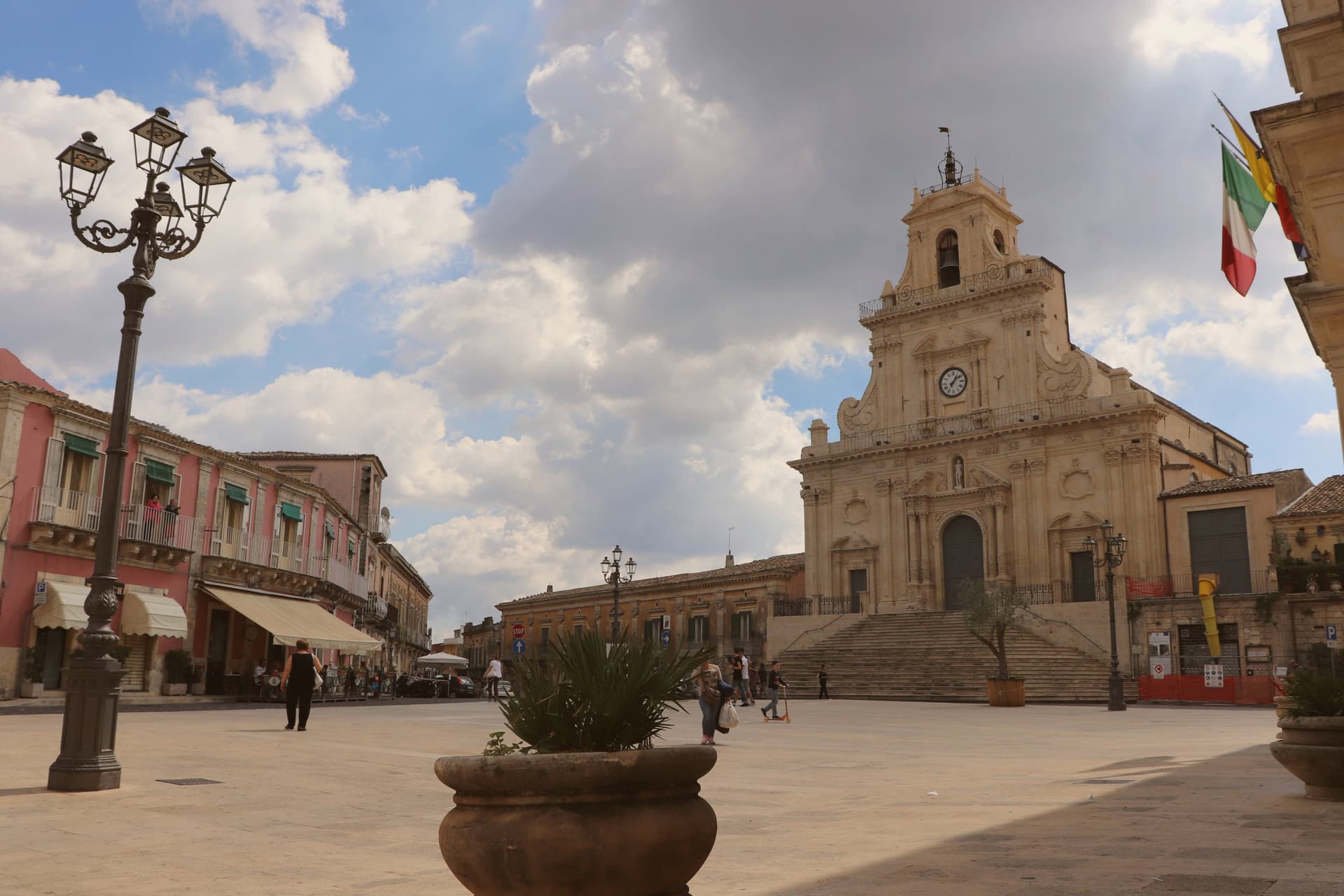
The rebuilding over the following fifty years laid out wide, regular streets and raised palazzi in honey-coloured limestone, with churches given concave façades and elaborate stairways. Beyond the two great set-pieces already named, the Basilica di San Pietro and the Palazzo Iudica-Cafici with its stone-carved balconies round out the Baroque core that UNESCO's inscription emphasizes, and together the two churches, the basilica, and the palazzo form the honey-coloured centre that sits directly above the buried Greek outpost.
Palazzolo also holds a place on the Borghi più belli d'Italia list, and its table carries the same plateau character noted above, extended by pasta with broccolo siciliano and ricotta salata alongside the sausage and truffle. The Festa di San Paolo in late June, with fireworks on the night of the 28th and 29th, is the year's main event.
What sits on the plateau today is a town built twice: once as a Greek outpost guarding a route, once by survivors rebuilding after the ground gave way, and the lower ancient layer and the upper Baroque layer have never fully merged into one story.
We confirmed you can reach this one by train.
What to see in Palazzolo Acreide
- Teatro Greco di Akrai. 600 seats cut into the hillside, acoustics intact, the theatre is still used for summer Greek-drama festivals staged in its original setting rather than a reconstruction.
- I Santoni (Cybele rock sanctuary). The figures sit carved directly into the cliff face, cult images of Cybele set into rock rather than housed in a museum, just outside the modern centre.
- Chiesa di San Sebastiano + Chiesa di San Paolo (UNESCO). Concave façades, curved staircases climbing to the doors, organ-equipped twin towers. Built roughly a decade apart in the rebuilding years, they read as a matched pair from the street below.
How to get to Palazzolo Acreide
There is a railway station in the town, so you can arrive without a car and never need one while you are here. Siracusa is roughly 47 minutes away by road.
Our tip
Palazzolo Acreide is best April–June and September–October. The Iblei plateau at 670m stays much cooler than Sicily's coast — summer 28-30°C vs the coast's 35°C+. The Festa di San Paolo (28-29 June) with its fireworks is the year's headline. Agrimontana – I Sapori degli Iblei falls in October.
Cefalù
Why visit Cefalù
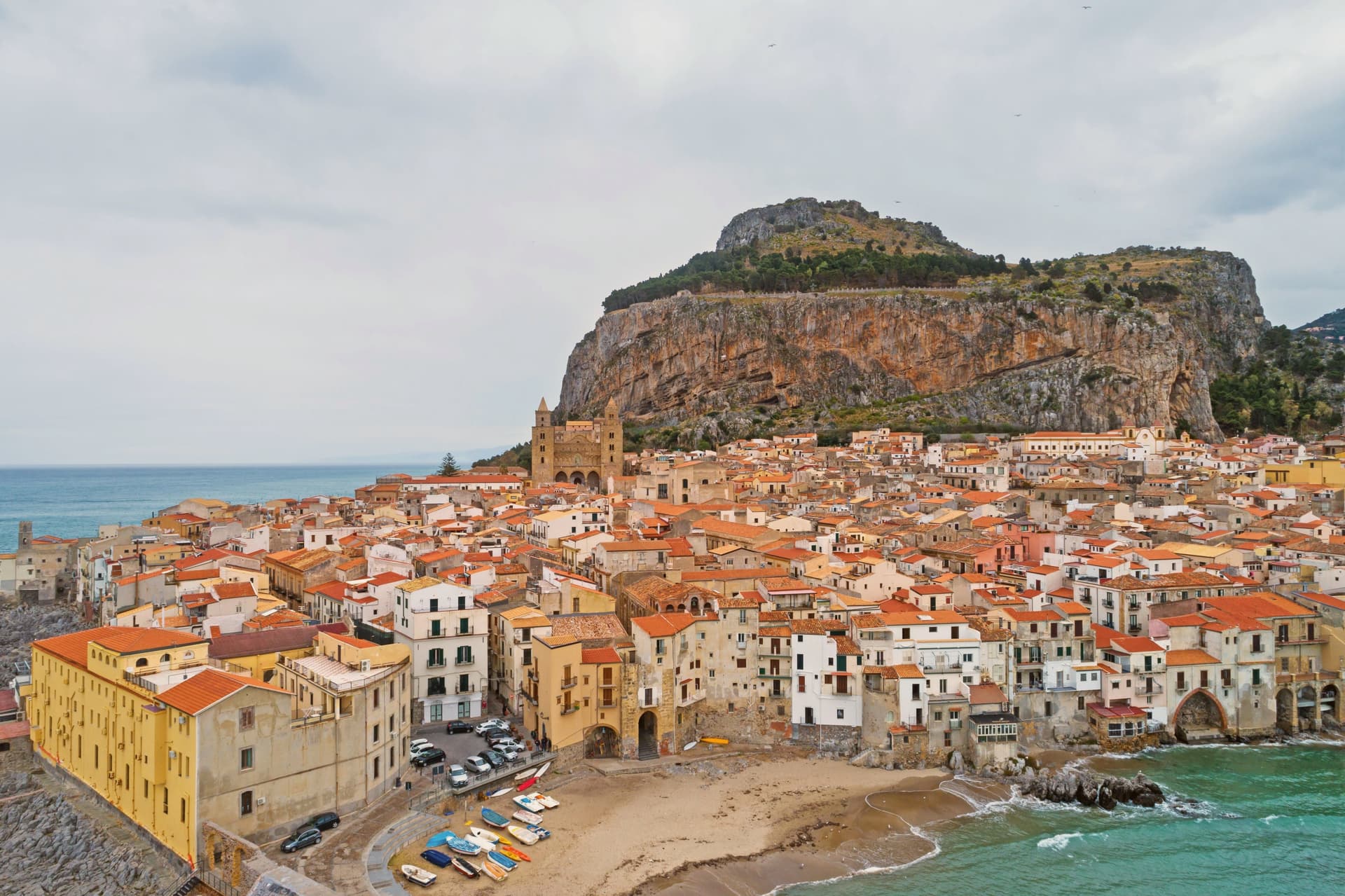
Cefalù sits 70 kilometers east of Palermo where the Madonie meet the Tyrrhenian, the old town built on a strip of land between the sea and the headland that gave the place its name. The Greeks called it Kephaloidion in the fourth century BC.
Roger II refounded the town at the foot of the rock in 1131 and began the cathedral the same year; tradition holds he vowed to build it after surviving a storm offshore. Its mosaics were executed by masters he brought from Constantinople.
The old town keeps the cathedral, the museum, and the working port within the same short walk, the stone lanes running straight down from the Duomo's square to the sea and the lavatoio fed by its own spring along the way. The beach runs below on one side, the rock rises behind on the other, and the harbor still works at the foot of it.
A small coastal town, built once by the Greeks and refounded by a Norman king against the same rock, still reads as one place rather than several eras stacked on top of each other.
We confirmed you can reach this one by train.
What to see in Cefalù
- Duomo di Cefalù. Twin-towered cathedral built by Roger II, its west front facing a narrow square hemmed by the old town. Inside, the mosaic apse is reached down a nave still laid out to Norman proportions, the Arab-Norman UNESCO listing covering both the fabric and the decoration.
- La Rocca. The trail switchbacks up bare limestone above the roofs, past the megalithic sanctuary walls before reaching the castle ruins, where the town, the harbor, and the coastline in both directions open out below.
- Museo Mandralisca. Private nineteenth-century collection in an eighteenth-century palazzo, holding the Portrait of an Unknown Sailor and Greek vases from Lipari.
How to get to Cefalù
There is a railway station in the town, so you can arrive without a car and never need one while you are here. Palermo is roughly 63 minutes away by road.
Our tip
May, June, September and October are the windows for Cefalù. The Tyrrhenian is warm enough to swim from mid-May, the cathedral and the climb up La Rocca are bearable in the morning, and the town isn't yet at full crowd. July and August fill the beach and the lungomare past capacity, with Palermo and northern European holidaymakers; the cathedral keeps its mosaics behind a steady queue. Festa SS. Salvatore a Cefalù falls in August.
Erice
Why visit Erice
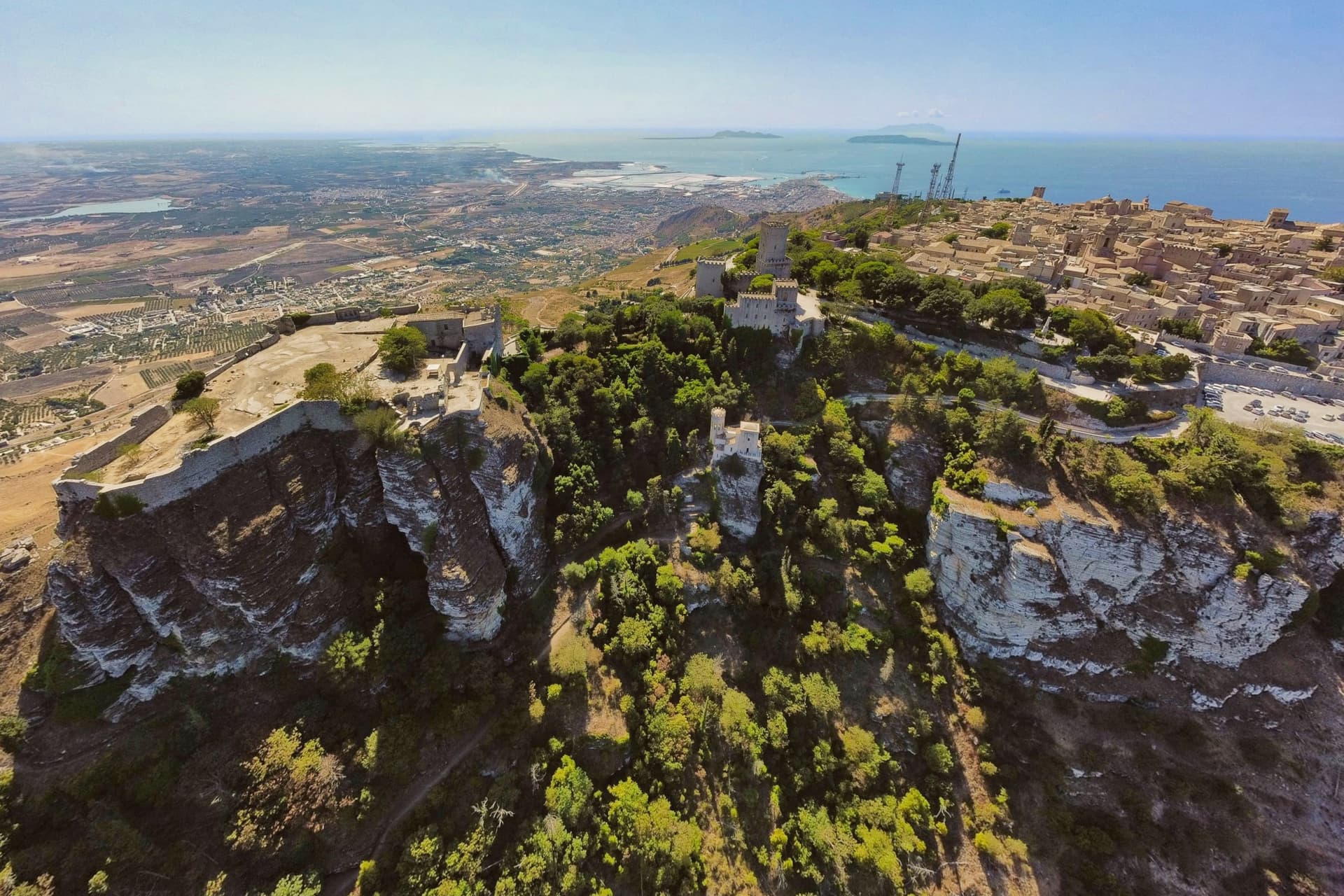
Erice sits at 751 meters on the summit of Monte San Giuliano, directly above Trapani and the salt pans of the Mediterranean coast. The Elymians, the pre-Greek Sicilian people whose language is still undeciphered, founded the city; the Phoenicians worshipped Astarte here, the Greeks Aphrodite, the Romans Venus Erycina.
The temple stood on the castle rock from at least the fifth century BC. The Normans built the Castello di Venere on the same ground in the twelfth century, reusing the temple stones; the fortress and the Balio towers still crown the eastern cliff.
The historic centre keeps a perfect medieval plan of stone-paved lanes and over sixty churches inside the triangular walls. Since 1963 the Ettore Majorana Foundation has run physics schools and international conferences from four restored monasteries; one of the early hosts was the former residence of the Sicilian viceroy.
The view from the Balio reaches Trapani, the Egadi Islands and, on clear days, Tunisia.
We confirmed you can reach this one by train.
What to see in Erice
- Castello di Venere. Norman castle of the twelfth century, built on the site of the temple of Venus Erycina, reusing the temple's stone.
- Torri del Balio. Three medieval towers on the eastern cliff connected to the castle, with the public gardens of the Balio in between.
- Duomo dell'Assunta (Chiesa Matrice). Mother church built in 1314 by Frederick III of Aragon, with a Gothic portal and a detached campanile that doubled as a watchtower.
How to get to Erice
There is a railway station in the town, so you can arrive without a car and never need one while you are here. Palermo is roughly 91 minutes away by road.
Our tip
April through June and September into November are the right months for the mountaintop. The light is clear, the temperature stays under twenty-five degrees, and the view from the Balio reaches the Egadi Islands and sometimes Tunisia. July and August see fog rolling in off the sea in the morning, then heat in the afternoon when the cloud burns off.
More from Anywhere Italy
- The best hidden towns you can reach by train that eat well in Sicilia
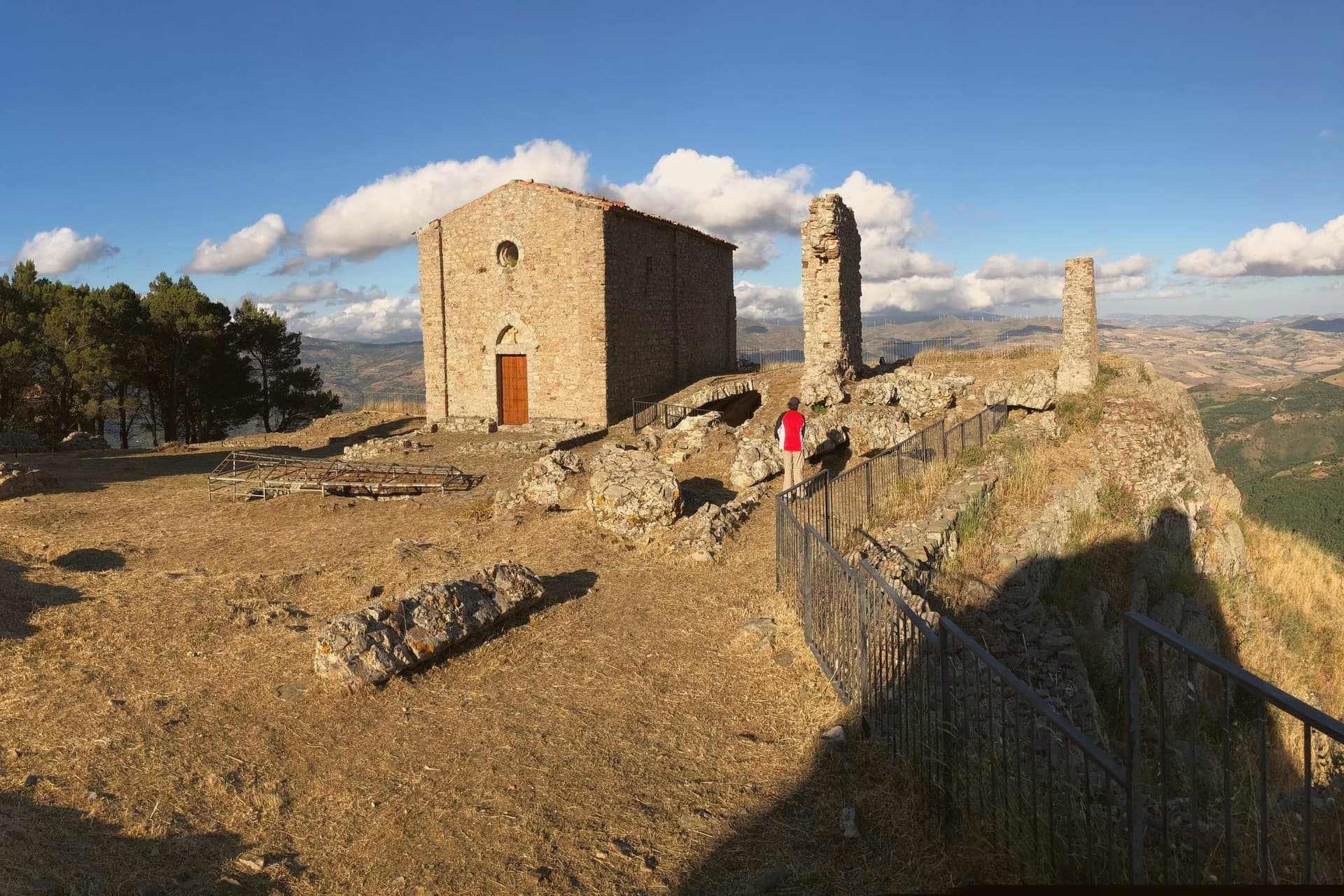 The prettiest villages inside a nature park in Sicilia
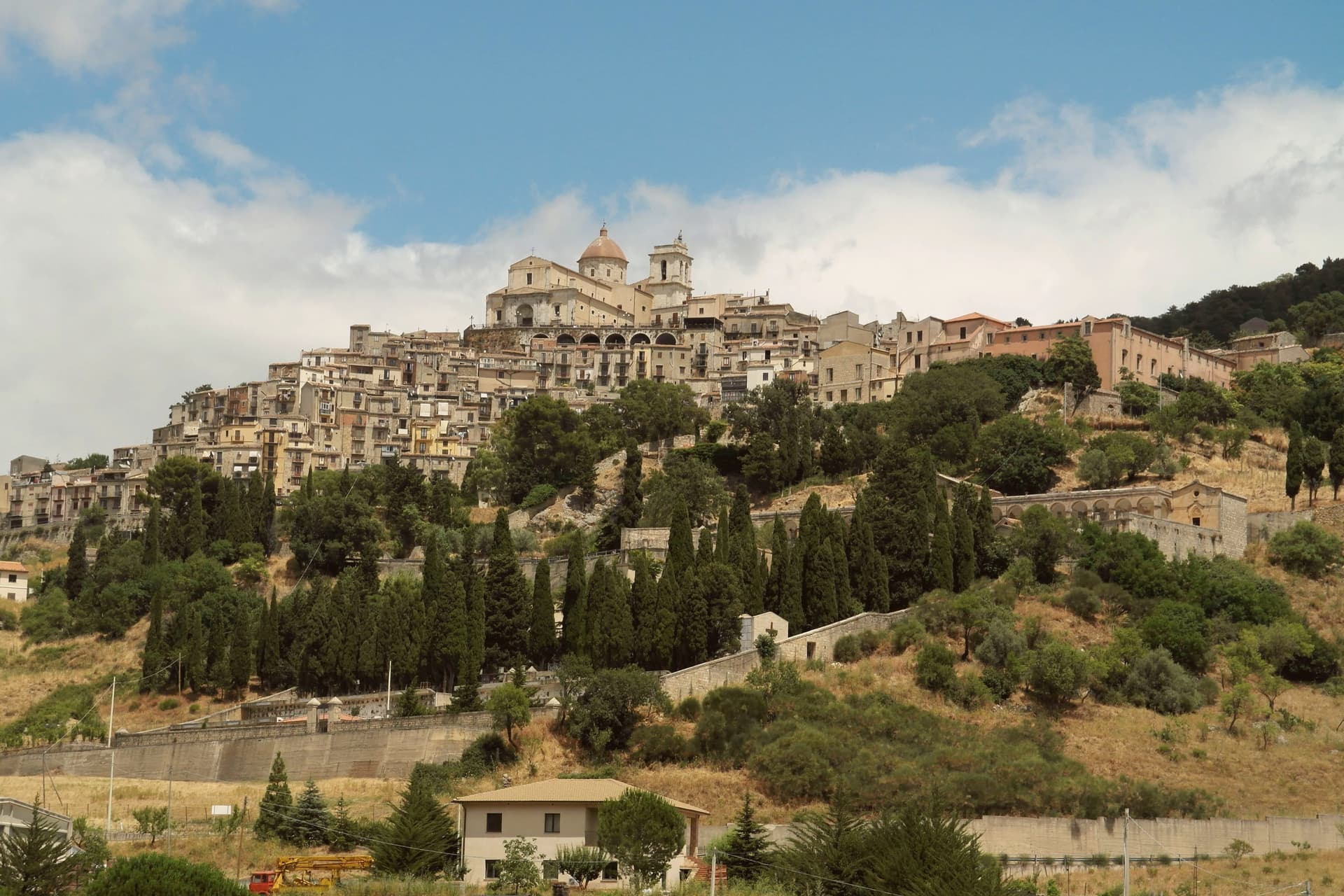 The 9 best towns inside a nature park that you can reach by train in Sicilia
- The best coastal towns you can reach by train in Sicilia
 The best towns inside a nature park that eat well in Sicilia
- The best towns you can reach by train within 90 minutes of Palermo