
The 9 best towns inside a nature park that you can reach by train in Sicilia
Sicilia keeps its wildest ground close to its inhabited ground. On the Madonie the beech woods start where the last stone house ends, and the ash trees are still cut for manna in high summer. Around Etna the black lava terraces carry pistachio, apples and nerello mascalese vines, and the houses are built from the same dark rock that produced them, squared off and left rough. Autumn is the season that suits all of it: mushrooms and chestnuts in the mountain towns, the grape harvest below the volcano, and evenings cool enough for a plate of pasta with sardines or a slice of testa di turco to make sense again.
Most visitors treat the interior as something to drive past on the way to the Valley of the Temples at Agrigento, or they base themselves in Palermo and Catania and take the coach up to Rifugio Sapienza for the crater walk. The temples are extraordinary and the summit excursion is worth doing once, but both funnel thousands of people through a single car park on the same schedule, and the queue for the cable car in August is its own kind of landscape. The old towns of the interior see a fraction of that traffic, partly because people assume they are unreachable without a car.
They are not. The Palermo to Messina line and the Circumetnea between them put stations within reach of parks that cover a good part of the island's mountain country, and buses fill the last stretch up to the higher villages. The same woods, the same volcanic soil, the same festivals and the same bread continue well past the famous stops, into towns where the park office and the bar share a piazza. These are the places on that map.
Of the 61 communes we have mapped in Sicilia, 9 qualify as towns inside a nature park you can reach by train: each sits inside a regional nature park, and we have confirmed each is reachable without a car. The smallest, Petralia Sottana, has 2,475 residents.
Elsewhere in the catalogue: The best towns inside a nature park that eat well in Sicilia and The best hidden towns you can reach by train that eat well in Sicilia.
Petralia Sottana
Why visit Petralia Sottana
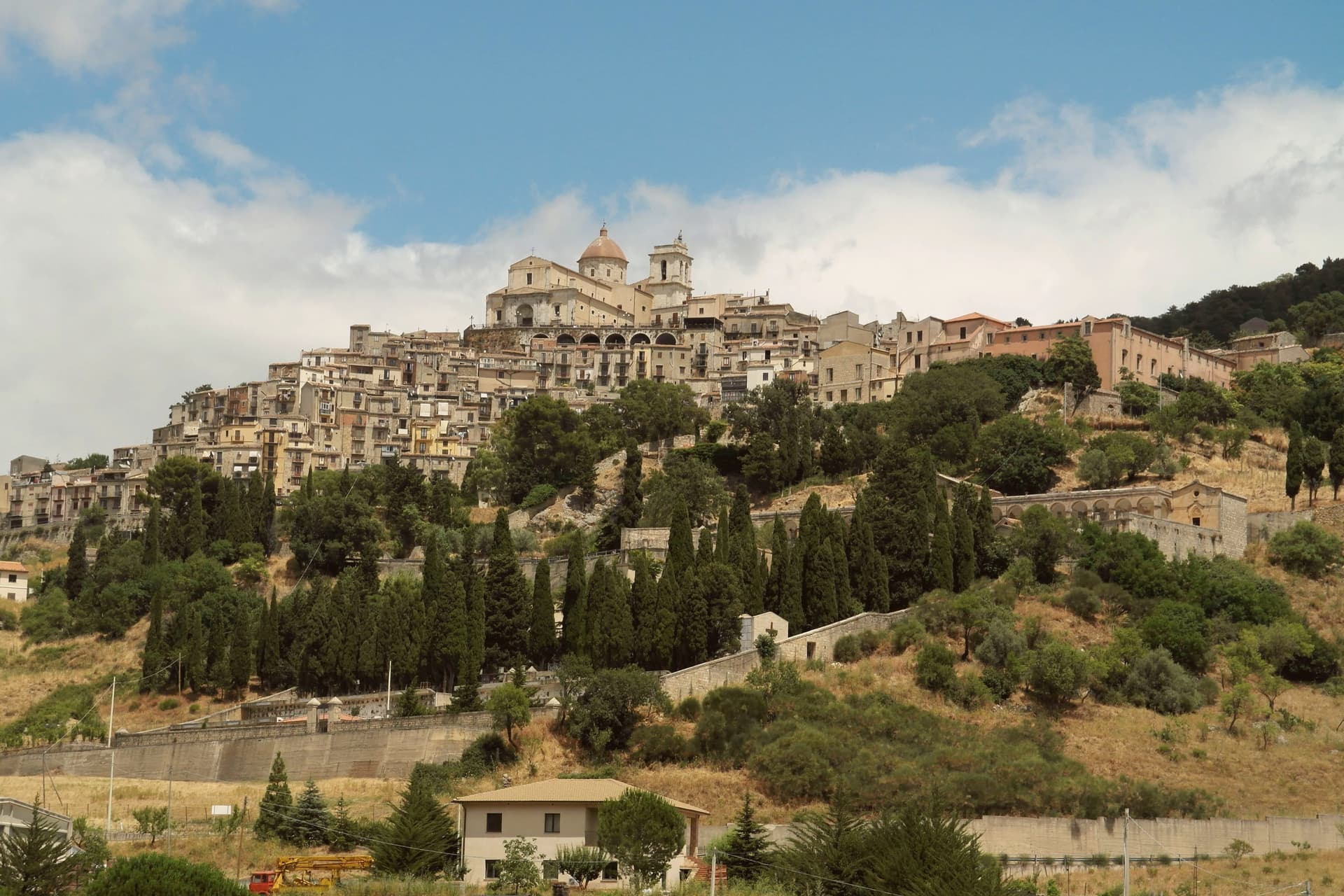
Petralia Sottana sits at 1,000 meters in the heart of the Madonie, the second-highest range in Sicily after Etna. The town is the only commune in Sicily to hold a Bandiera Arancione from the Italian Touring Club, and the headquarters of the Parco delle Madonie are inside its territory.
The two Petralie, Sottana and Soprana, share a Roman and Byzantine origin and were rebuilt under the Normans on opposite slopes of the same ridge; Sottana, the lower of the two, became the administrative centre of the surrounding mountain villages. The Chiesa Madre, also known as the Chiesa Maria Santissima Assunta, is the largest place of worship in the Madonie, seventeenth-century and rebuilt around an earlier core in the Pusterna district.
The Chiesa di Santa Maria di Loreto, founded in 1484 and remade in the seventeenth century, has majolica spires that mark the south end of the centro. Piazza del Popolo holds the Neo-Gothic Palazzo Pottino, the marble Quattro Cannoli fountain of Billiemi stone, and the Oratorio delle Anime Purganti.
We confirmed you can reach this one by train.
What to see in Petralia Sottana
- Chiesa Madre (Maria Santissima Assunta). Seventeenth-century mother church on Piazza Umberto, the largest place of worship in the Madonie, in the ancient Pusterna district.
- Chiesa di Santa Maria di Loreto. Church founded in 1484 and rebuilt in the seventeenth century, with majolica spires and a marble altarpiece attributed to Giandomenico Gagini.
- Piazza del Popolo. Central square with the Neo-Gothic Palazzo Pottino of the Marquises of Eschifaldo, the Oratorio delle Anime Purganti and the Quattro Cannoli fountain.
How to get to Petralia Sottana
There is a railway station in the town, so you can arrive without a car and never need one while you are here. Palermo is roughly 104 minutes away by road.
Our tip
June through September are the Madonie hiking months. Pizzo Carbonara stays cool above 1,500 meters even in August, and the trails radiate from Petralia Sottana into the beech and holm-oak woods of the park. December through March is the second season: at 1,000 meters the town gets reliable snow, and the Piano Battaglia ski station above the village runs the only working lifts in western Sicily. Ballo Pantomima della Cordella a Petralia Sottana falls in August.
Castiglione di Sicilia
Why visit Castiglione di Sicilia
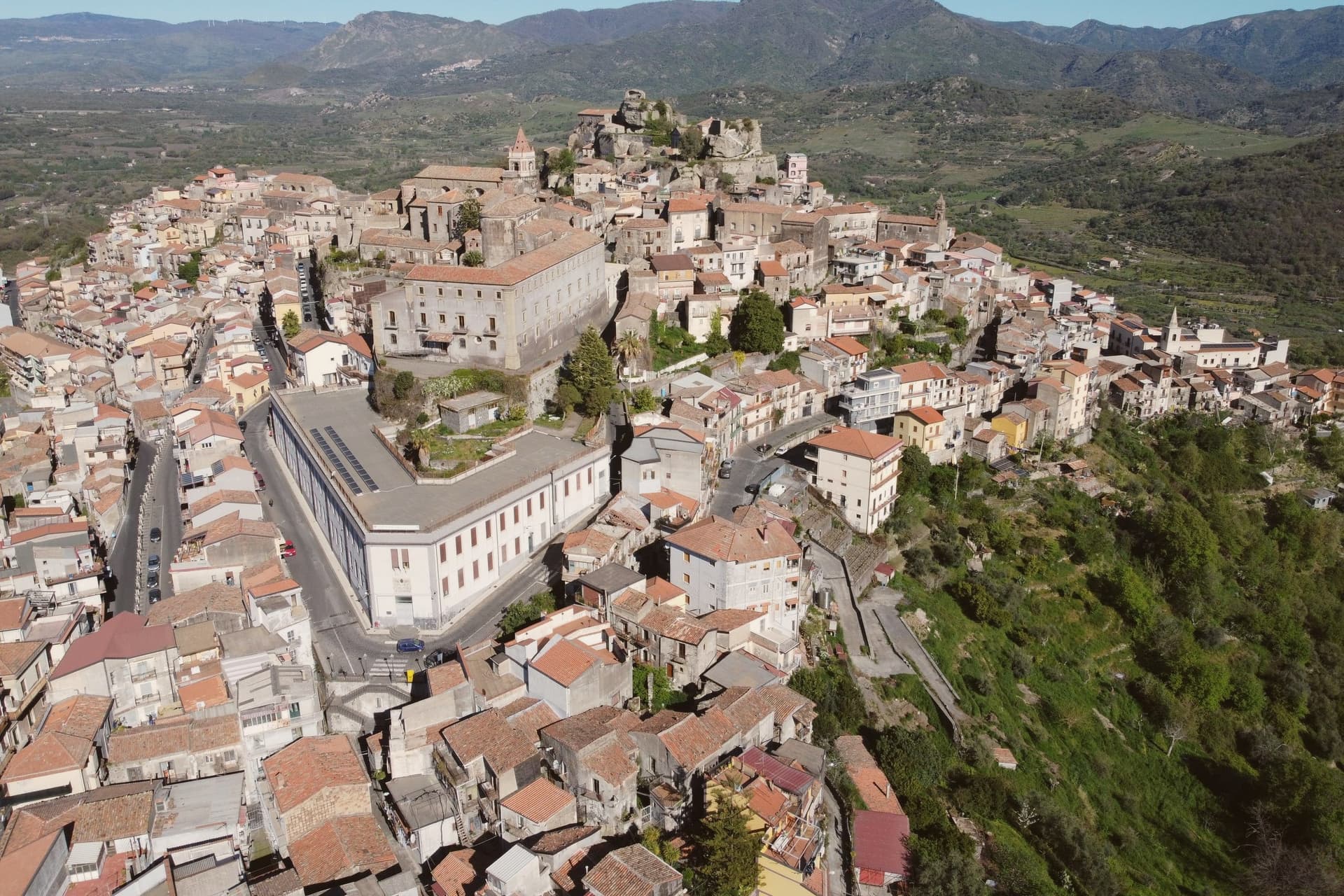
The town looks down the Alcantara river valley between Randazzo and Taormina, its position fixed by Norman count Roger I, who documented it in 1092 as Castrileonis, the great castle. That name still fits the territory more than the town itself: the commune's boundary runs uphill from the historic centre all the way to the summit of Etna, taking in the north-east crater, so the same municipality holds a huddle of streets at 621 meters and a stretch of active volcano above it.
The hills below the centre are the heart of the Etna DOC. Nerello Mascalese and Nerello Cappuccio grow on the volcanic soils around the village, with Carricante carrying the whites, and bottles from Cottanera, Passopisciaro, Tenuta delle Terre Nere and the Alcantara producers all ship from here.
Twenty minutes downhill the Alcantara has cut its gorges through the same lava that feeds those vineyards, basalt walls shaped by water where the fields above are shaped by the grape. Town, castle, vineyard and gorge read as one continuous volcanic system, worked over centuries into a fortress, a wine region and a river cut.
We confirmed you can reach this one by train.
What to see in Castiglione di Sicilia
- Castello di Lauria. The fortress stands on its basalt outcrop above the town, its walls carrying the weight of two rebuildings by Ruggero di Lauria's crews. The rooms now hold the Enoteca Regionale for eastern Sicily, so the same stone that once watched for approach up the valley now stores the bottles made from the vines below it.
- Cuba Bizantina di Santa Domenica. Small Byzantine cube-shaped church, seventh to ninth century, in the rural outskirts of the commune, one of the oldest surviving structures in the Etna area.
- Gole dell'Alcantara. Basalt gorges carved by the Alcantara river through prismatic lava columns, around twenty minutes downhill from the centro storico.
How to get to Castiglione di Sicilia
There is a railway station in the town, so you can arrive without a car and never need one while you are here. Catania is roughly 49 minutes away by road.
Our tip
May through October are the working months on Etna nord. Vineyard tours start in June, harvest runs late September through mid-October on the higher contrade, and the slopes turn red and gold into early November. July and August on Etna are bearable at 621 meters: nights drop to seventeen degrees, far cooler than Catania.
Sambuca di Sicilia
Why visit Sambuca di Sicilia
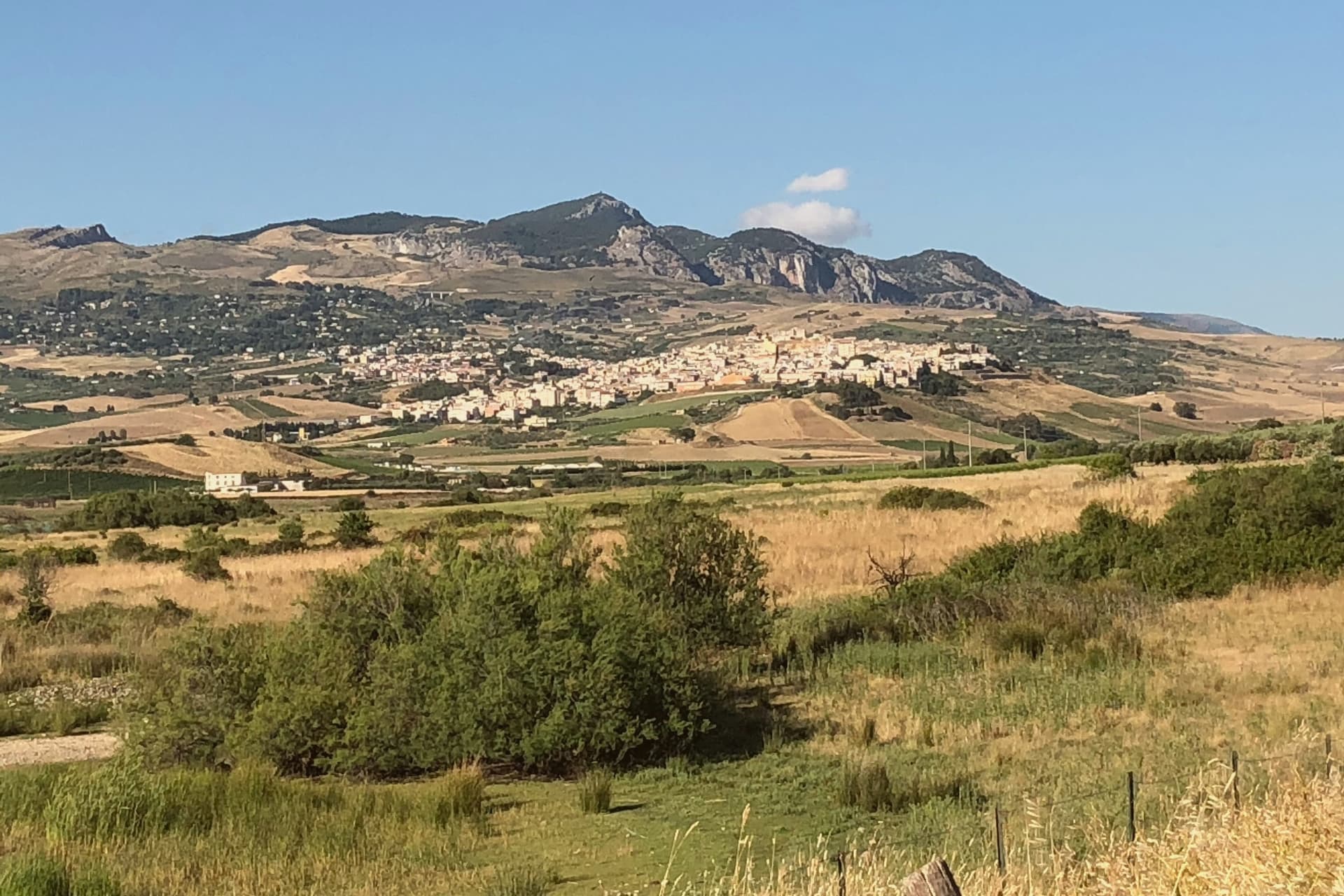
The town sits at 350 meters on a hill above the Belice valley, sixty-eight kilometers southwest of Palermo, overlooking the Sicani hills and the reservoir below. Frederick II conquered the town, then still called Zabut, in the thirteenth century, and it carried that Arab name as Sambuca Zabut until 1923, when the suffix was officially dropped.
The upper town holds the old Arab core, its stone houses and courtyards laid along the alleys founded by the emir, while the lower ground toward the reservoir carries the fortress that once took his name and now stands part underwater, and the vineyards that supply the Menfi DOC. Earthquake damage in 1968 reached the upper town and required rebuilding the mother church on the central piazza.
The name, the water, and the stone all trace back to the same ninth-century founding: a town that took an Arab ruler's name, kept it for over a thousand years, and only shed it in the twentieth century, while the fortress he built still marks the water's edge below.
We confirmed you can reach this one by train.
What to see in Sambuca di Sicilia
- Li Setti Vaneddi. Narrow stone lanes opening into inner courtyards at the core of the Arab quarter, still recognizable underfoot as the same grid laid out by the emir.
- Castello di Mazzallakkar. Square fortress with four corner towers, standing half-submerged at the southern edge of Lake Arancio since the reservoir was filled.
- Lago Arancio. Reservoir fed by the Carboj river, formed in 1952 and used today for sport fishing and irrigation of the surrounding vineyards.
How to get to Sambuca di Sicilia
There is a railway station in the town, so you can arrive without a car and never need one while you are here. Palermo is roughly 81 minutes away by road.
Our tip
April through June and September through November are the right windows for Sambuca. The inland Sicani hills hold dry heat in summer, regularly past thirty-five degrees in July and August, and the centro storico shuts itself down between two and five in the afternoon. October is harvest in the surrounding vineyards and the air clears enough to see Monte Adranone from the upper piazza.
Cammarata
Why visit Cammarata
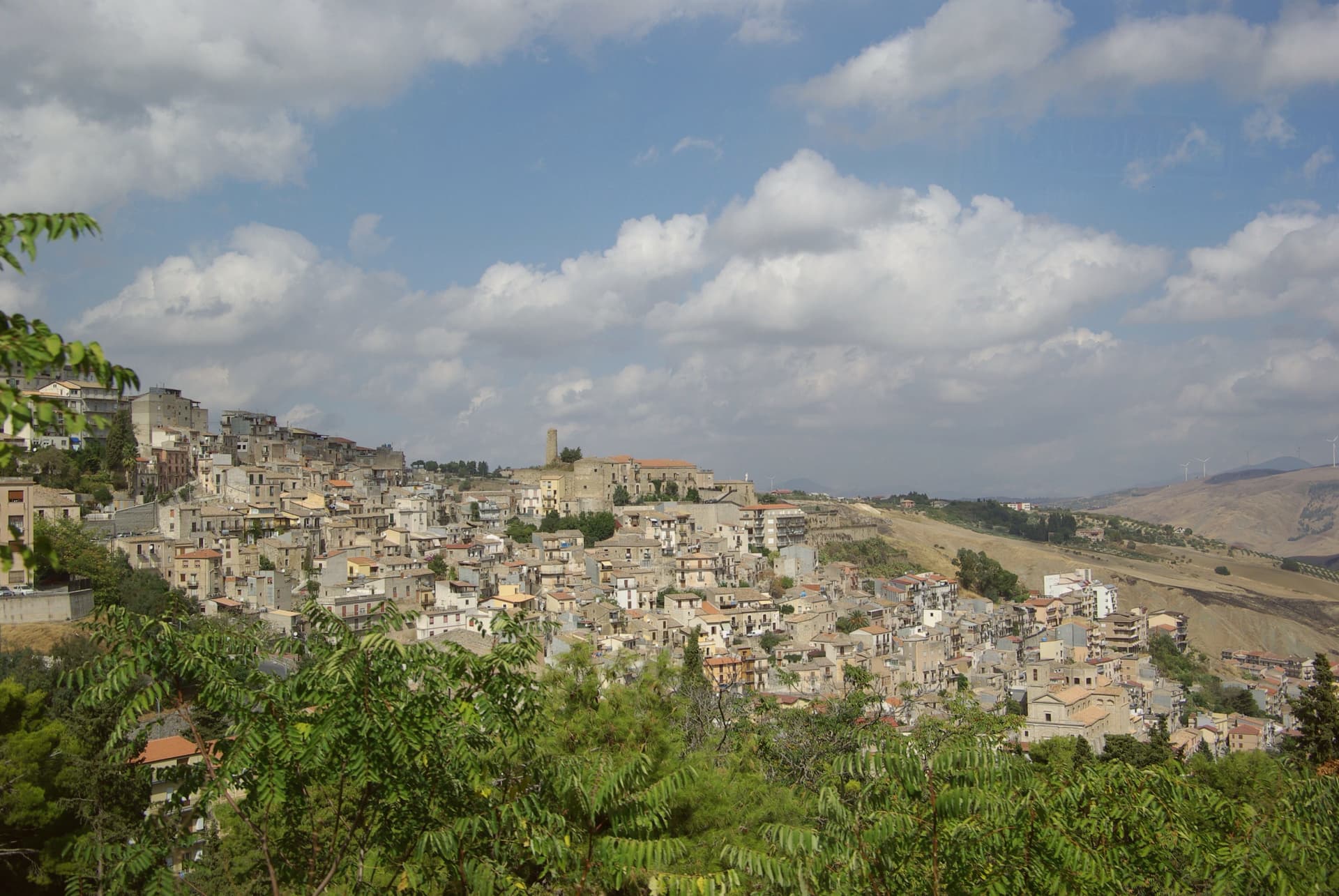
The town sits at 700 meters on the northeastern flank of the mountain, and the name comes from the Greek kàmara, vaulted room, after the limestone caves that perforate the slopes. That geology sits under a settlement built up the incline in stepped lanes, so the town and the peak above it read as one continuous rise rather than two separate things.
King Roger I laid siege in 1087 and gave the conquered town to his relative Lucy of Hauteville, who took the title Lucia di Cammarata. The Chiesa Madre, rebuilt in the seventeenth century on twelfth-century foundations, holds a Madonna della Catena by Pietro D'Asaro and a sixteenth-century organ, and the mountain itself carries a regional nature reserve of downy oak and holm oak forest, golden eagles, and ridge trails to the summit.
Cammarata is paired physically with San Giovanni Gemini next door. The two towns share the mountain as a watershed, a saint, and a working economy of grain, oil and sheep, which means the peak is not scenery at the edge of town but the shared resource that organizes both places, their water, their pasture, and their names.
We confirmed you can reach this one by train.
What to see in Cammarata
- Chiesa Madre di San Nicolò di Bari. Seventeenth-century mother church on twelfth-century foundations, with a Madonna della Catena by Pietro D'Asaro and a sixteenth-century organ.
- Monte Cammarata. Downy oak and holm oak cover the slopes below the summit, with ridge trails running up through the reserve and views over the Sicani range.
- Ruderi del Castello. Remains of the medieval fortification on the rock above the centro storico, taken by Roger I in 1087.
How to get to Cammarata
There is a railway station in the town, so you can arrive without a car and never need one while you are here. Palermo is roughly 88 minutes away by road.
Our tip
April through June and September into November are the months that work on the Sicani slopes. Wildflowers in spring, dry gold in autumn, and the air at 700 meters stays cool while Agrigento on the coast burns. July and August routinely cross thirty-four degrees and the centro storico empties between noon and five.
Castelbuono
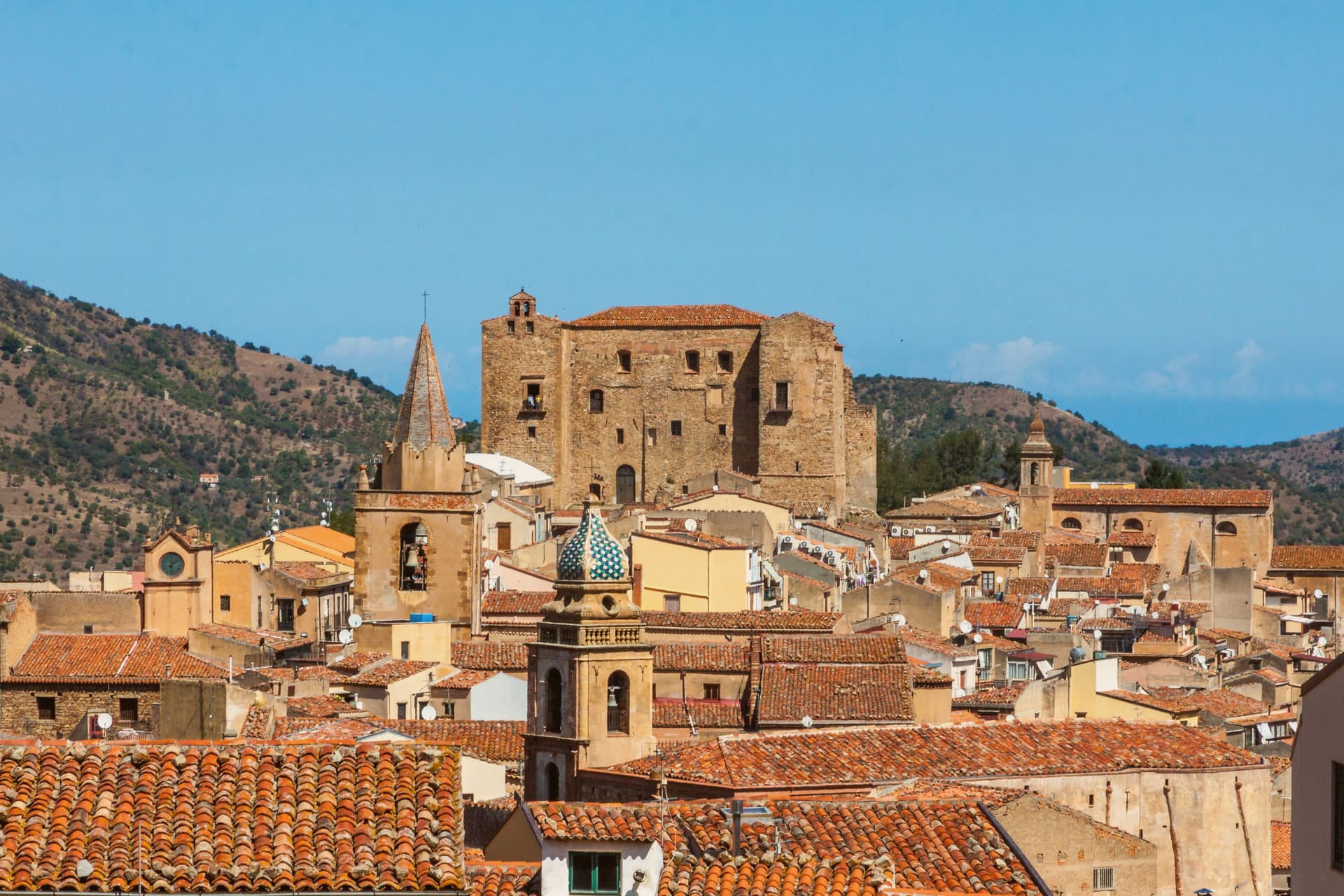
Why visit Castelbuono
Castelbuono sits at 423 meters on the northern slope of the Madonie, an hour inland from Cefalù and the Tyrrhenian coast. The town developed in the fourteenth century around the castle built by Count Francesco I Ventimiglia in 1317 on a pre-existing twelfth-century watchtower; the Ventimiglia were among the most influential families in medieval Sicily, and their court held here for generations.
The castle today houses the Museo Civico Francesco Minà Palumbo, with natural history, sacred art and archaeology from the Madonie territory. The Matrice Vecchia, the old mother church begun in 1362 under Francesco II Ventimiglia, mixes Roman-Gothic, Catalan-Gothic and Chiaramontane elements, with a 1520 polyptych attributed to Antonello De Saliba (nephew of Antonello da Messina) on the main altar and a fully frescoed crypt below the presbytery.
The town keeps the last working manna industry in Europe, the sweet sap collected by cutting Madonie ash trees in summer. Pasticceria Fiasconaro, founded here in 1953, now ships panettone and Ypsigro lines worldwide and opened a flagship in Manhattan in 2025.
In August the village runs the Ypsigrock indie festival, one of Italy's longest-running.
We confirmed you can reach this one by train.
What to see in Castelbuono
- Castello dei Ventimiglia. Fourteenth-century castle built in 1317 by Francesco I Ventimiglia on a twelfth-century watchtower, now home to the Museo Civico Francesco Minà Palumbo.
- Chiesa Matrice Vecchia. Mother church begun in 1362, mixing Roman-Gothic, Catalan-Gothic and Chiaramontane styles, with a 1520 polyptych by Antonello De Saliba.
- Cripta della Matrice Vecchia. Crypt under the presbytery of the old mother church, walls fully frescoed with the life, Passion and Resurrection of Christ.
How to get to Castelbuono
There is a railway station in the town, so you can arrive without a car and never need one while you are here. Palermo is roughly 74 minutes away by road.
Our tip
April through June and September through November are the working months in Castelbuono. The chestnut and beech woods of the Madonie turn in October. The Ypsigrock indie festival fills the centro for four days in mid-August, the only week the town runs at coastal capacity. Festeggiamenti in onore di Sant'Anna a Castelbuono falls in July.
Randazzo
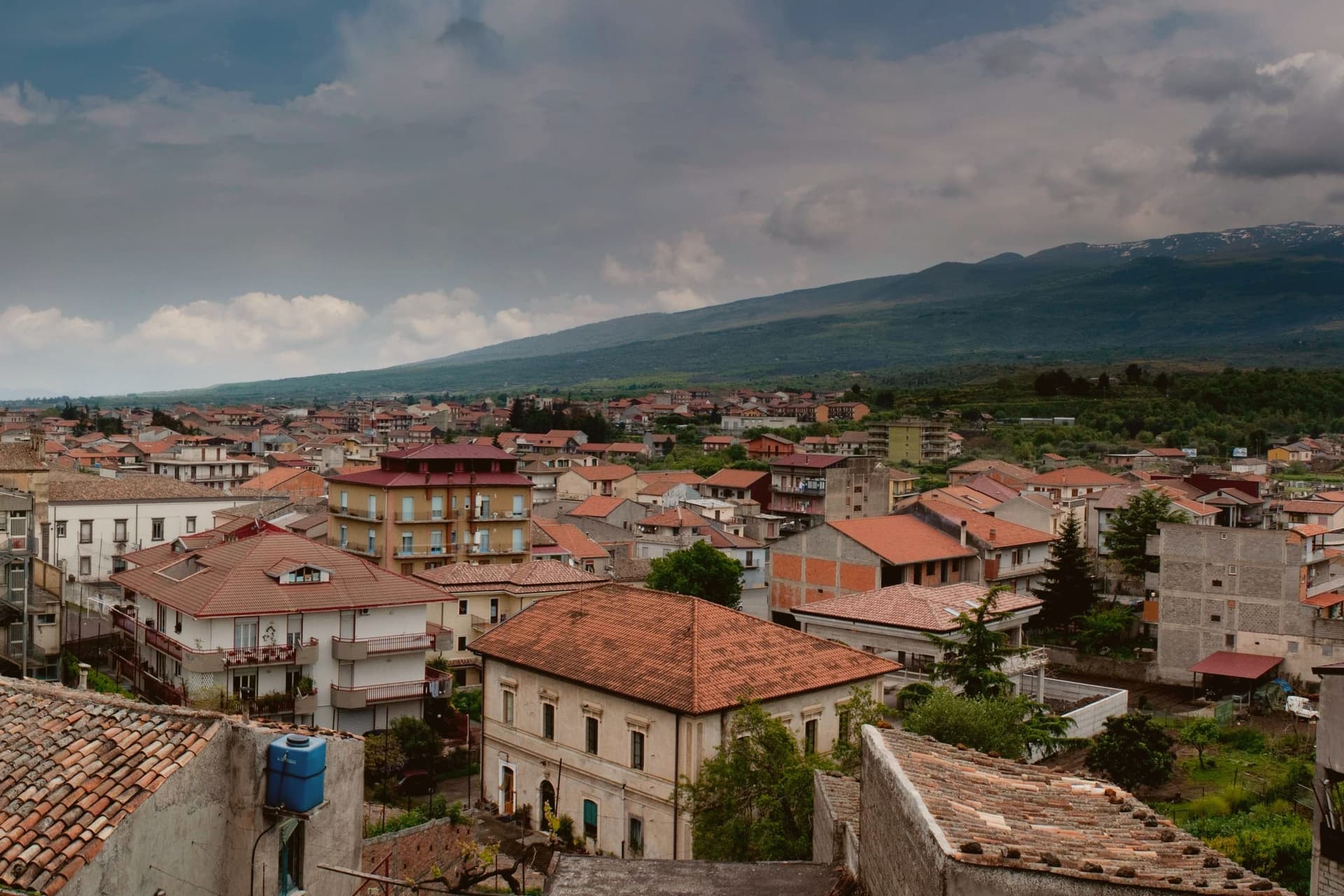
Why visit Randazzo
Randazzo sits at 750 meters on the northern foot of Etna, seventy kilometers northwest of Catania along the Alcantara valley. Byzantine in origin, Swabian and medieval in character, the town has three great churches that mark its three historic quarters, once inhabited by communities that spoke different tongues: the Latins in Santa Maria, the Greeks in San Nicolò, and the Lombards in San Martino.
In 1210 Frederick II of Hohenstaufen and his young wife Constance of Aragon sheltered here from the plague in Palermo; Randazzo became, after Palermo and Messina, one of the most populous towns on the island. The architecture is lava: Santa Maria Assunta, begun in the thirteenth century, has a façade entirely in black volcanic stone with three polygonal apses shaped as towers and Catalan-Gothic side portals.
The forty-one-meter bell tower of San Martino, called one of the most beautiful in Sicily, has stood since the thirteenth century.
We confirmed you can reach this one by train.
What to see in Randazzo
- Basilica di Santa Maria Assunta. Thirteenth-century basilica in black lava stone with three polygonal apses shaped as towers and fifteenth-century Catalan-Gothic side portals.
- Chiesa di San Martino. Church of Swabian origin from the thirteenth century with a forty-one-meter bell tower in four storeys, anchor of the Lombard quarter.
- Chiesa di San Nicolò. Largest of the three quarter churches, repeatedly rebuilt; the fourteenth-century bell tower fell in the 1693 earthquake.
How to get to Randazzo
There is a railway station in the town, so you can arrive without a car and never need one while you are here. Catania is roughly 60 minutes away by road.
Our tip
May through October is the open season. At 750 meters Randazzo stays cooler than the Catanese coast even in August; the harvest in the Etna Nord vineyards runs September into October. November through April is quiet; snow falls on the upper slopes through winter and the town gets occasional dustings.
Taormina
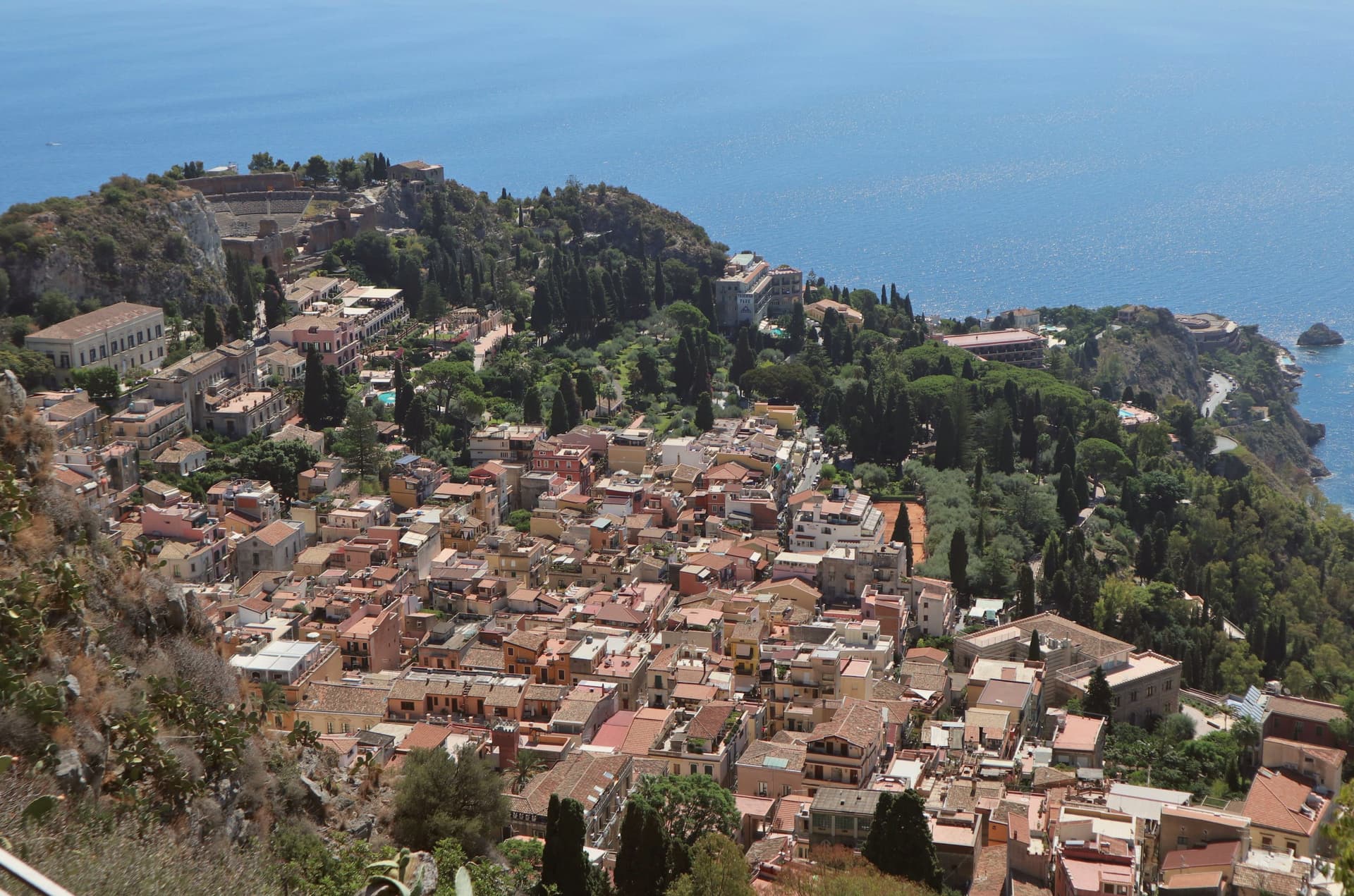
Why visit Taormina
The town sits at 204 meters on the rock above the coast, on the Ionian shore halfway between Messina and Catania. The Siculi welcomed the survivors of the Greek colony of Naxos in 358 BC after Dionysius of Syracuse destroyed it, and Andromachus refounded them as Tauromenium on the height above.
Augustus later made it a Roman colony, deporting much of the population and resettling it with Roman families. The centro sits below the fortress and above the sea: the Arab-Norman stronghold occupies the rock at 397 meters, while further up the hillside the frazione of Castelmola hangs at 884, both looking down on the same stretch of coast the theatre faces.
The small island reserve lies at the opposite end of that vertical arrangement, at sea level below the cliff, reached by cable car or path from the town above. A place built in tiers, from the beach at the base to the fortress on the rock to the village above that, all of it oriented toward the same view of the volcano and the water that made a nineteenth-century travel writer's description enough to start a tourist route still followed today.
We confirmed you can reach this one by train.
What to see in Taormina
- Teatro Antico. The stone rows face south, so the audience looks past the stage wall to Etna rather than toward it. 109 meters in diameter, the remodelling under Roman rule widened the space for spectacle beyond Greek drama.
- Palazzo Corvaja. Fourteenth-century Sicilian-Gothic palace at the entrance to Corso Umberto, on the site of the Roman forum and the Arab cube of the citadel.
- Castello di Monte Tauro. Arab-Norman fortress at 397 meters on the rock above the centro, reached on foot from Via Circonvallazione.
How to get to Taormina
There is a railway station in the town, so you can arrive without a car and never need one while you are here. Catania is roughly 45 minutes away by road.
Our tip
May, June, September and October are the working months in Taormina. Late spring keeps the air clear over Etna and the cruise season has not yet peaked. Taormina Arte runs concerts and opera at the Teatro Antico from June through August; the same weeks bring the highest crowds on Corso Umberto.
Cefalù
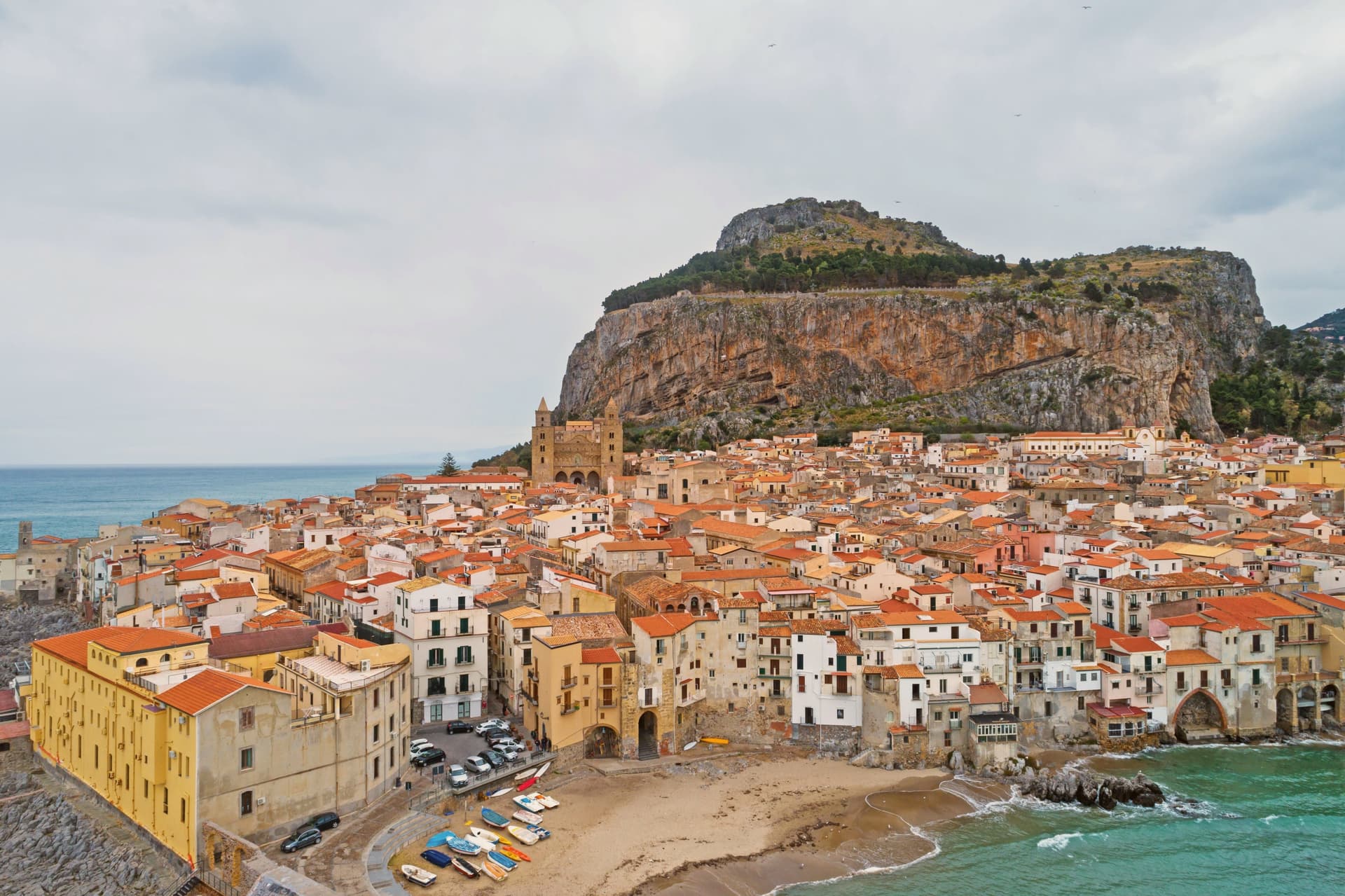
Why visit Cefalù
Cefalù sits 70 kilometers east of Palermo where the Madonie meet the Tyrrhenian, the old town built on a strip of land between the sea and the headland that gave the place its name. The Greeks called it Kephaloidion in the fourth century BC.
Roger II refounded the town at the foot of the rock in 1131 and began the cathedral the same year; tradition holds he vowed to build it after surviving a storm offshore. Its mosaics were executed by masters he brought from Constantinople.
The old town keeps the cathedral, the museum, and the working port within the same short walk, the stone lanes running straight down from the Duomo's square to the sea and the lavatoio fed by its own spring along the way. The beach runs below on one side, the rock rises behind on the other, and the harbor still works at the foot of it.
A small coastal town, built once by the Greeks and refounded by a Norman king against the same rock, still reads as one place rather than several eras stacked on top of each other.
We confirmed you can reach this one by train.
What to see in Cefalù
- Duomo di Cefalù. Twin-towered cathedral built by Roger II, its west front facing a narrow square hemmed by the old town. Inside, the mosaic apse is reached down a nave still laid out to Norman proportions, the Arab-Norman UNESCO listing covering both the fabric and the decoration.
- La Rocca. The trail switchbacks up bare limestone above the roofs, past the megalithic sanctuary walls before reaching the castle ruins, where the town, the harbor, and the coastline in both directions open out below.
- Museo Mandralisca. Private nineteenth-century collection in an eighteenth-century palazzo, holding the Portrait of an Unknown Sailor and Greek vases from Lipari.
How to get to Cefalù
There is a railway station in the town, so you can arrive without a car and never need one while you are here. Palermo is roughly 63 minutes away by road.
Our tip
May, June, September and October are the windows for Cefalù. The Tyrrhenian is warm enough to swim from mid-May, the cathedral and the climb up La Rocca are bearable in the morning, and the town isn't yet at full crowd. July and August fill the beach and the lungomare past capacity, with Palermo and northern European holidaymakers; the cathedral keeps its mosaics behind a steady queue. Festa SS. Salvatore a Cefalù falls in August.
Giarre
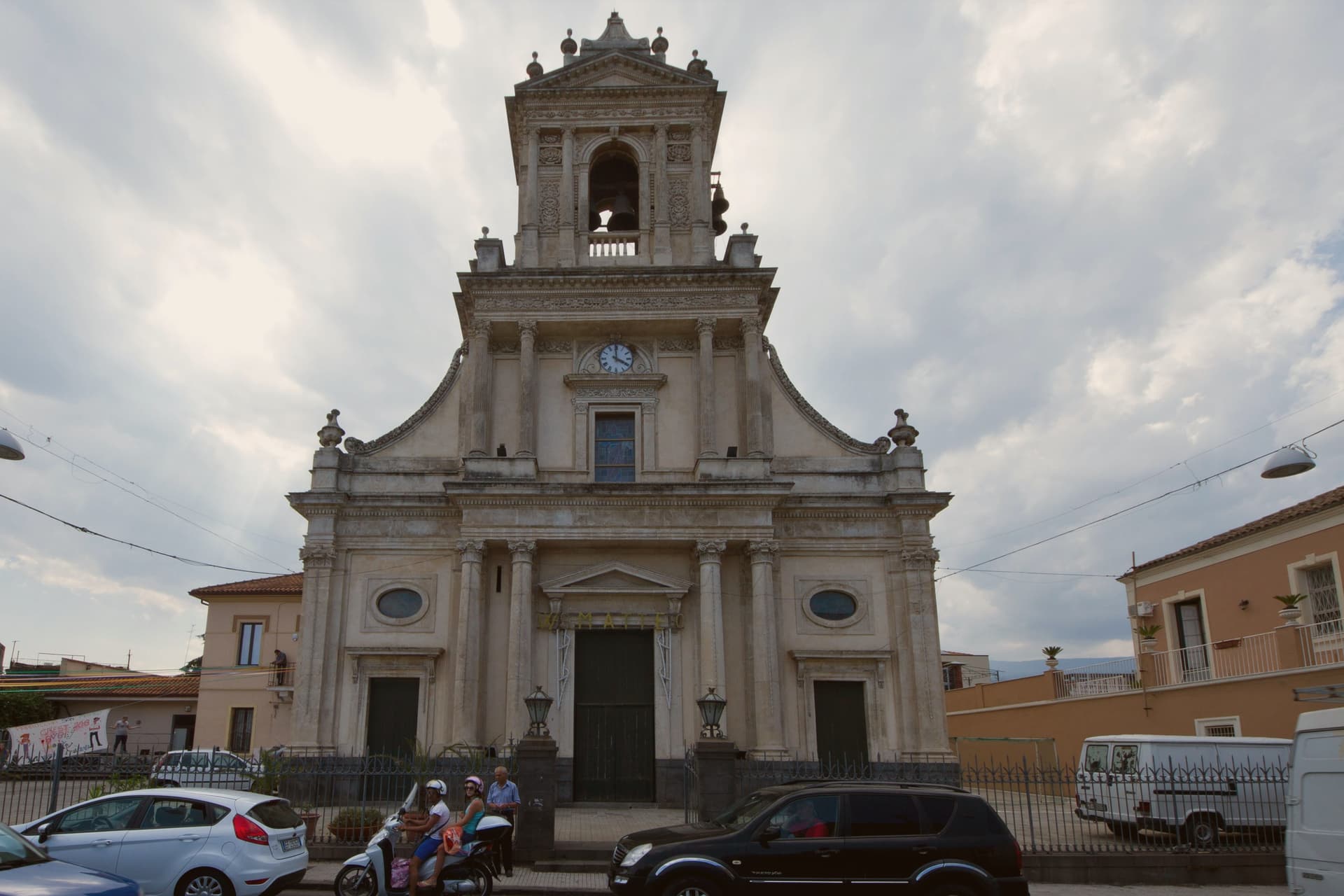
Why visit Giarre
Giarre sits on the lower eastern slope of Etna at eighty metres, thirty kilometres north of Catania and three from the sea at Riposto. From the late sixteenth century until 1815 it was a village of the county of Mascali; it separated after the abolition of feudalism and built itself a town centre in the decades that followed.
The Duomo di Sant'Isidoro Agricola, begun in 1794 and opened for worship in 1818, is the result: a neoclassical mother church in white stone, with a large central nave, two lateral naves, a transept, and a dome with lantern. The two bell towers, designed by the Neapolitan architect Pietro Valente, were begun in 1859 and finished only in 1890.
Inside, the church holds one of the most substantial collections of sacred silverware in eastern Sicily. From 1939 to 1945 Giarre was merged with Riposto under the fascist name Jonia.
The two towns still form a single conurbation along the coast.
We confirmed you can reach this one by train.
What to see in Giarre
- Duomo di Sant'Isidoro Agricola. Neoclassical mother church begun in 1794, two bell towers by Pietro Valente, and one of eastern Sicily's largest collections of sacred silverware.
- Piazza Duomo. The main square at the centre of the historic grid, with the duomo facing the foothill of Etna to the west.
- Corso Italia. The principal axis of the town, running between the duomo and the open country towards Riposto and the sea.
How to get to Giarre
There is a railway station in the town, so you can arrive without a car and never need one while you are here. Catania is roughly 26 minutes away by road.
Our tip
April through June, then September and October, are when Giarre is at its best: clear views of Etna from the duomo square, citrus blossom on the slopes above town, and the coast at Riposto still calm. July and August are hot and crowded along the seafront, though the upper town keeps cooler at eighty metres. November through March is the quiet season, with rain off the Ionian and snow on the volcano. Festival Etneo del Porcino falls in September.
More from Anywhere Italy
 The best towns inside a nature park that eat well in Sicilia
- The best hidden towns you can reach by train that eat well in Sicilia
 The prettiest villages inside a nature park in Sicilia
- The best towns inside a nature park in the province of Palermo
- The best towns you can reach by train that eat well within 90 minutes of Catania
- The best towns you can reach by train within 90 minutes of Palermo