The best wine towns within 90 minutes of Naples
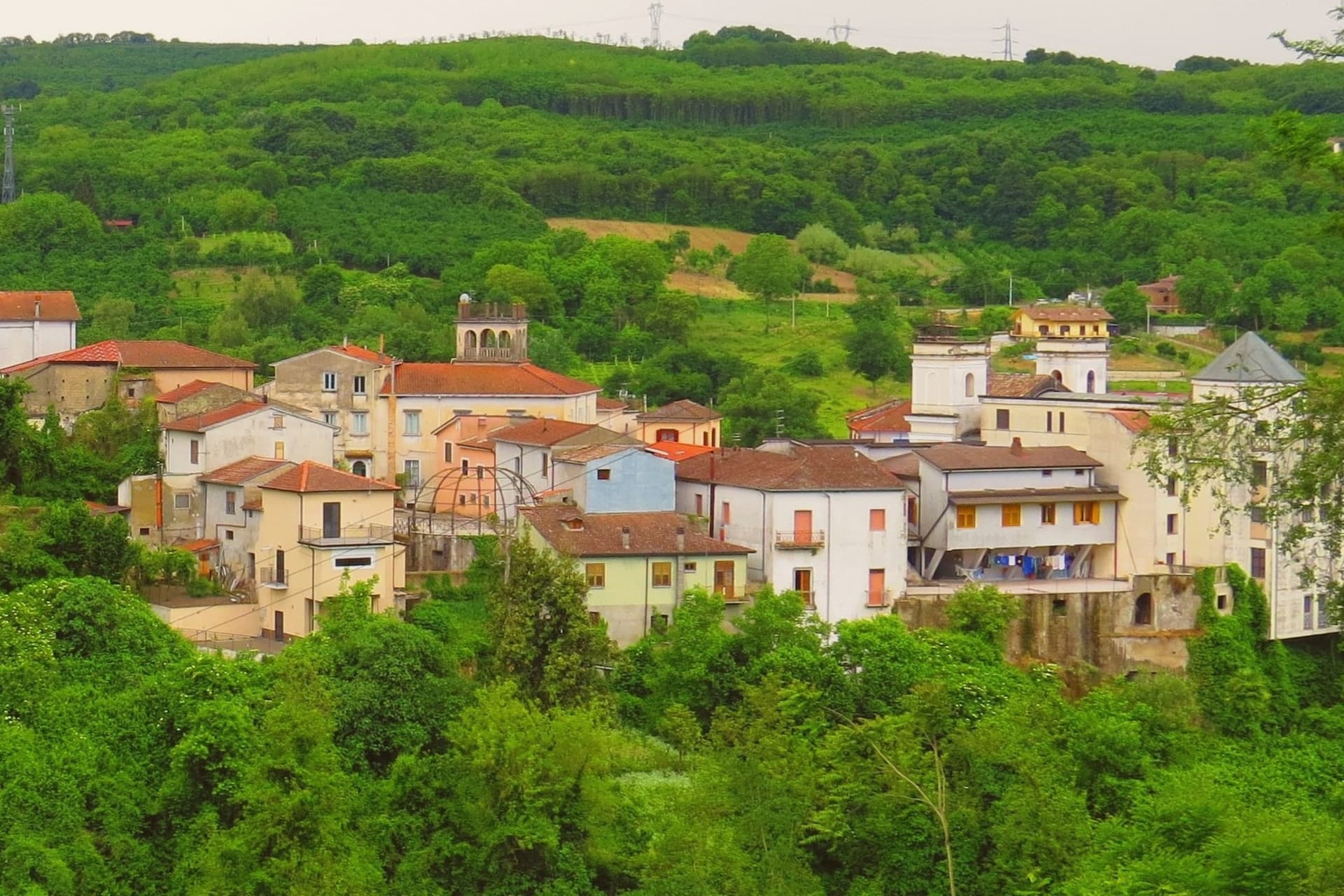
East of Naples the coast drops away and the land climbs into Irpinia and the Sannio, where the Apennines keep the nights cold and the harvest late. Aglianico often comes in during late October, sometimes into November, which is why the reds here have the tannin and acid of a much cooler place than the Bay of Naples suggests. Villages sit on ridges of tufo, the pale volcanic stone that gives one of the local whites its name and gives the houses their grey-gold walls. Autumn is the season: chestnuts roasting in the squares, hazelnuts from the slopes above Avellino, lamb and beans, cellars open because everyone is working.
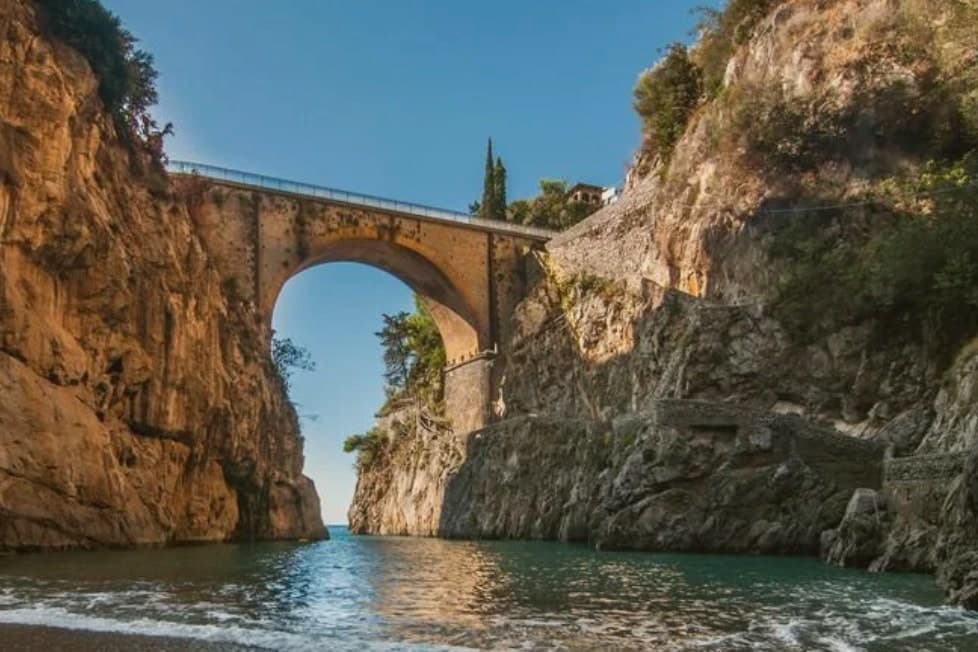
Most people drinking Campanian wine do it in Naples itself, at a table in the centro storico with Vesuvius somewhere behind the rooftops, and the wine list arrives already decided. The Amalfi Coast takes the rest, where terraced vines above Furore are photographed far more often than they are visited, and where a tasting means a booking and a queue. Both are worth the time. Neither has much to do with where the grapes actually grow.
The vineyards are inland, an hour or so up the autostrada, in production zones that carry Italy's strictest wine protections and very little tourist traffic. These are the towns inside those zones: hill villages with cooperative cellars, family growers, a Roman bridge or a Lombard castle, and no coach park. The same wine, closer to the vine, with fewer people in the room.
Of the 38 communes we have mapped in a 90-minute drive of Naples, 6 qualify as wine towns: each sits inside the production zone of a protected wine. The smallest, Tufo, has 772 residents.
Two more lists worth reading alongside this one: The 8 best wine towns within 90 minutes of Salerno and The 7 best wine towns you can reach by train in Campania.
Tufo
Why visit Tufo
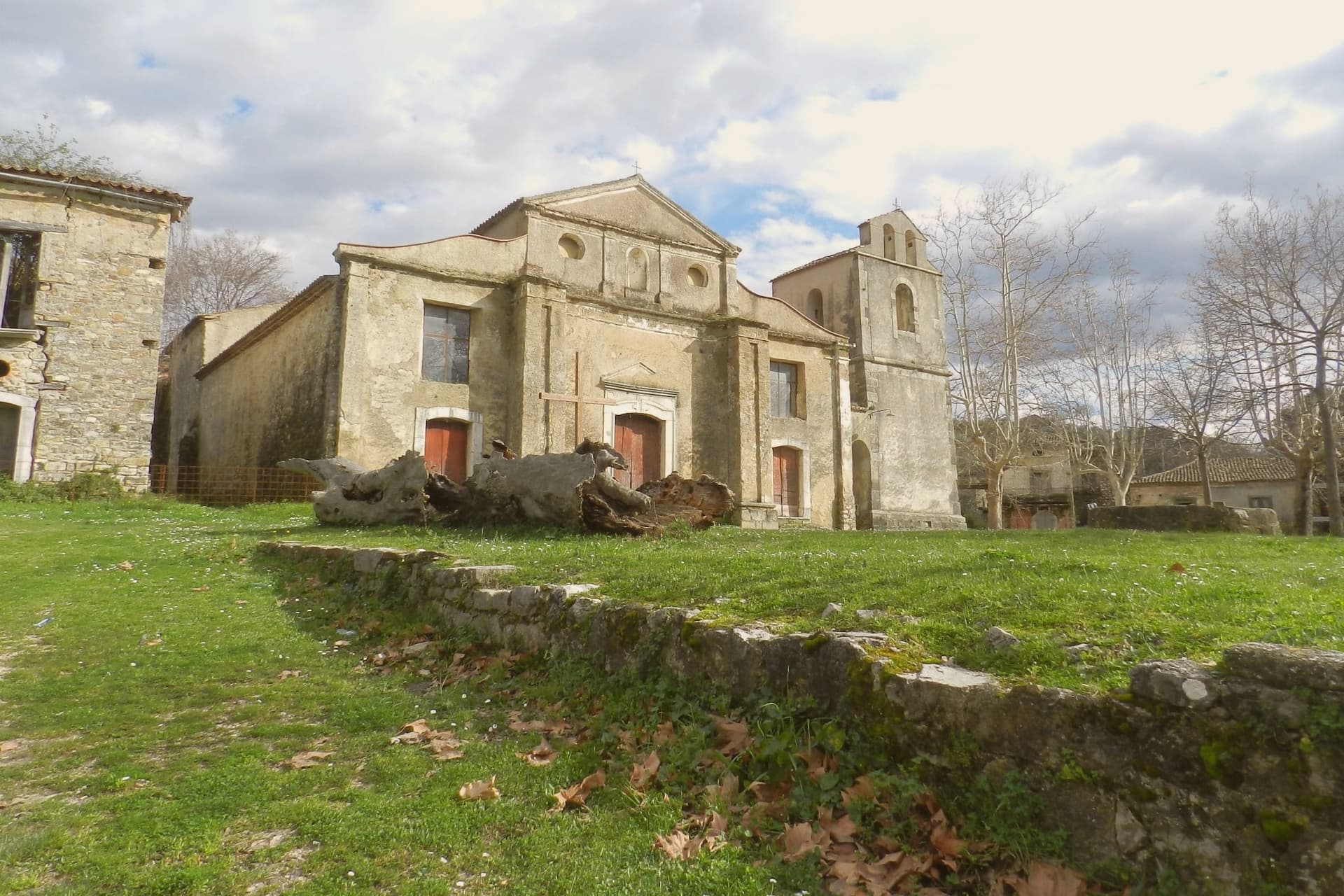
The name Tufo comes from the volcanic tuff stone the hill is built on, the same stone that runs through the slopes below and gives the local wine its mineral edge. The village sits on top of that stone at 250 meters, with the cellars at its foot and the vineyards spreading out around both.
Sulfur was mined in shafts cut into the cliffs beneath the village, work that shaped the local economy for over a century before it stopped. Most visitors are wine buyers, not tourists.
They drive in for a tasting, walk the steep main street to the medieval castle on top, and leave by dinner. The village stays quiet after they go.
What the stone gave the place economically it also gave it physically: a hill town built from the same rock that flavors what it grows, mined until the ground itself ran out of use.
What to see in Tufo
- Castello di Tufo. Medieval fortress on the top of the hill, rebuilt after the 1732 and 1980 earthquakes that damaged the village below.
- Cantine di Marzo. The cellars sit at the foot of the village, where Greco di Tufo has been produced commercially since the family took up winemaking here.
- Ex Miniere di Zolfo. Abandoned mines in the cliffs below the village, their shafts left the rock marked with rust-colored scars after closure.
How to get to Tufo
There is a railway station in the town, so you can arrive without a car and never need one while you are here. Salerno is roughly 55 minutes away by road.
Our tip
April through June covers the green months in Irpinia: vine leaves unfurling on the slopes, mild evenings on the main street. September through early October is harvest, when the cellars open more often than usual and the village smells of crushed Greco. July and August get hot in the valley, though 250 meters keeps the worst of it off.
Lapio
Why visit Lapio
The name of the grape behind the local wine, 'Apianum', comes from the Roman word for bee, api, because the grape was said to be sweet enough to draw them. It has been grown across the Irpinia hills east of Avellino since at least the 1st century AD, though it only became a serious modern DOCG from the 1990s onward, thanks to producers here and in Montefredane, Summonte, and the neighbouring villages.
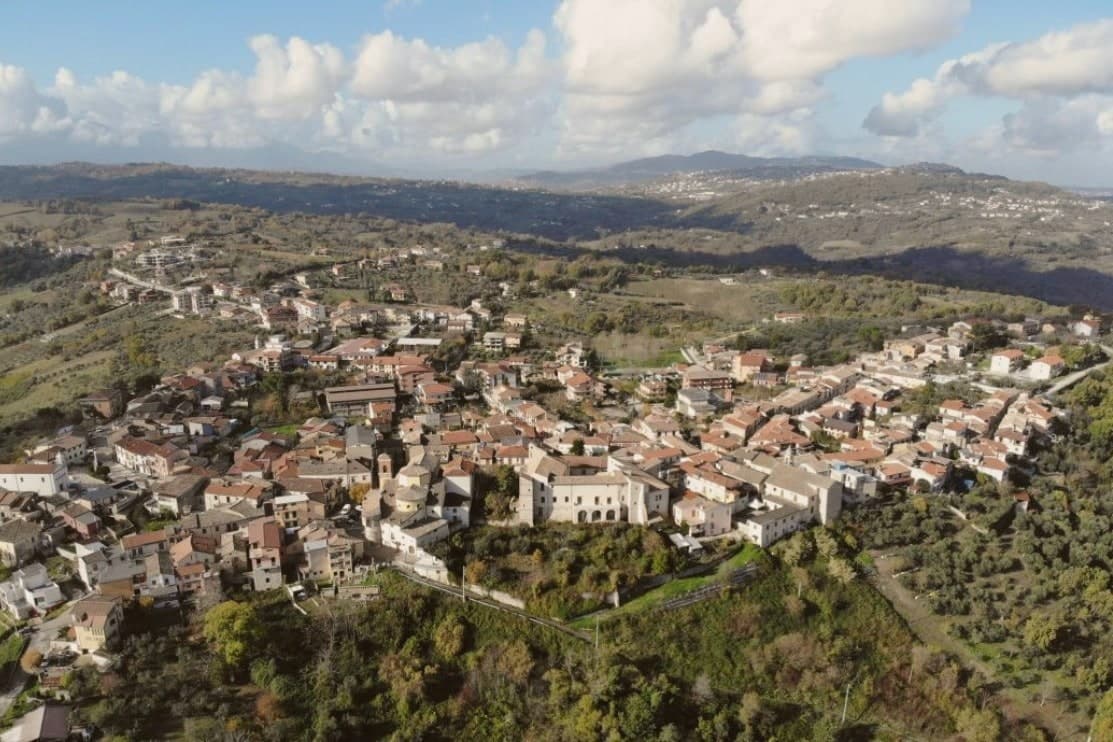
The comune itself sits at 590m on a hilltop, its narrow stone-paved vicoli climbing from the central piazza up to the castle at the high point, past the Chiesa Madre di San Pietro Apostolo and the Convento dei Cappuccini just outside the walls. The four Città designations held here, del Vino, dell'Olio, del Miele, della Nocciola, are not scattered honours but a single picture: Fiano and Aglianico from the vineyards, Irpinia DOP oil from the terraces, chestnut and multifloral honey from the Apennine forests above town, and the hazelnut trade that makes Avellino province the second-largest producer in Italy after Cuneo.
Beyond the comune: Avellino 24 km west, Mirabella Eclano with its Roman Forum and Carro di San Pellegrino procession 15 km north, and the Partenio and Sannio mountains immediately east, whose forests supply both the honey and the local game. The food follows the same logic: pasta al ragù di castrato, brodo di tagliolini con scarola, Caciocavallo Podolico matured 12 or more months on Apennine pastures, torrone tenero made with hazelnuts and honey, and the wine with all of it.
Depopulation has cut the town from 2,400 residents in 1951 to 1,428 today, but the surrounding land, vine, olive, forest, and hazelnut grove, still accounts for nearly everything the place is known for.
What to see in Lapio
- Fiano di Avellino DOCG cellars. Lapio is one of the historic cru villages, 'Apianum' grape since Roman times, modern DOCG only since 1990s. 10+ cellars in the comune + immediate neighbours open for tastings.
- Castello Filangieri. 11th-c Norman castle rebuilt by the Filangieri family in the 16th c. Anchors the high point of the medieval centro with the panoramic view across the Sabato river valley + the Partenio massif.
- Centro storico + Chiesa Madre. Intact stone-paved vicoli climbing from the central piazza to the castle. The 15th-c Chiesa Madre di San Pietro Apostolo + the Convento dei Cappuccini just outside the walls.
How to get to Lapio
There is a railway station in the town, so you can arrive without a car and never need one while you are here. Salerno is roughly 59 minutes away by road.
Our tip
Lapio is best May–June and September–October. The Festa del Fiano in late September is the year's headline. October is harvest in both the Fiano vineyards and the surrounding hazelnut orchards.
Taurasi
Why visit Taurasi
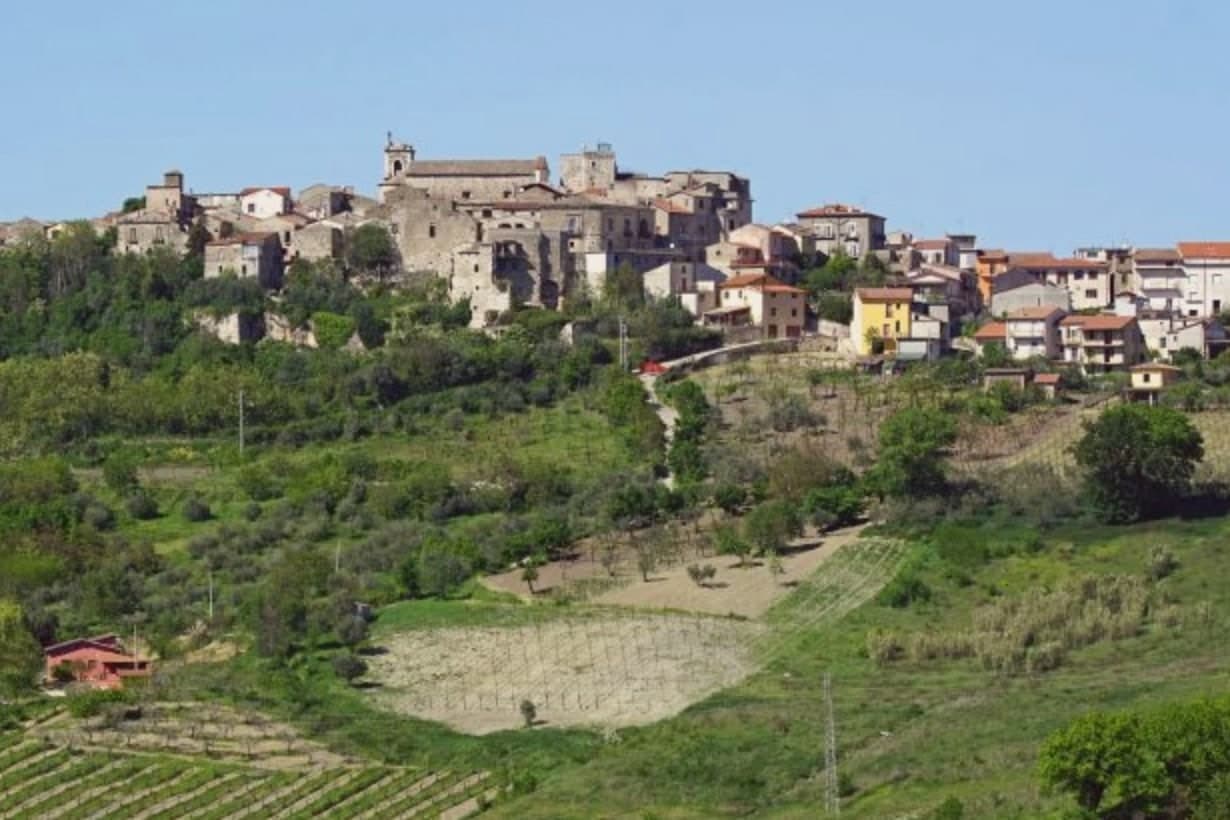
Taurasi sits at four hundred meters on a hill in the Media Valle del Calore, in the Irpinia of the Avellino province, forty kilometers inland from Salerno. The castle above the town was built in the seventh century by the Lombards, destroyed by Saracen raids between 900 and 910, rebuilt and extended by the Normans in the twelfth century with a square keep, and partly destroyed again by Alfonso d'Aragona's troops in 1461.
The Gesualdo, Filangieri, Ludovisi and Carafa families took it in turn through the early modern period, each leaving their mark on a structure that was never allowed to settle into a single style. The upper ridge holds the castle and its history of damage and repair.
The lower town holds the parish church and its patronal feast, the daily religious life set apart from the fortress above. Between them, the medieval center keeps three gates and the noble palaces that once answered to whichever family held the keep.
Around all of it, the vineyards run down the slopes, the same ground that has outlasted every family that held the castle above it. What the place adds up to is a hill town where the fortress changed hands over and over while the vines below kept producing, so the wine, not the castle, became the more durable claim to distinction.
What to see in Taurasi
- Castello Marchionale. The keep stands on the upper ridge, its stone showing the patchwork of repeated rebuilding across centuries of raids and sieges. The square Norman keep is the most legible surviving structure.
- Enoteca Regionale. Regional wine cellar inside the castle, with a Percorso Tau sensory route through the Taurasi, Fiano di Avellino and Greco di Tufo appellations.
- Centro storico. Medieval village with three surviving gates, Porta Sant'Angelo, Porta Piccola and Porta Maggiore, and noble palaces with corner towers.
How to get to Taurasi
Salerno is roughly 74 minutes away by road.
Our tip
April through June and September into October are the working months for Taurasi. The Aglianico vines bud in late spring, the slopes turn through copper into November after harvest. The vendemmia falls in late October, the latest in southern Italy because Aglianico ripens slowly.
Mercogliano
Why visit Mercogliano
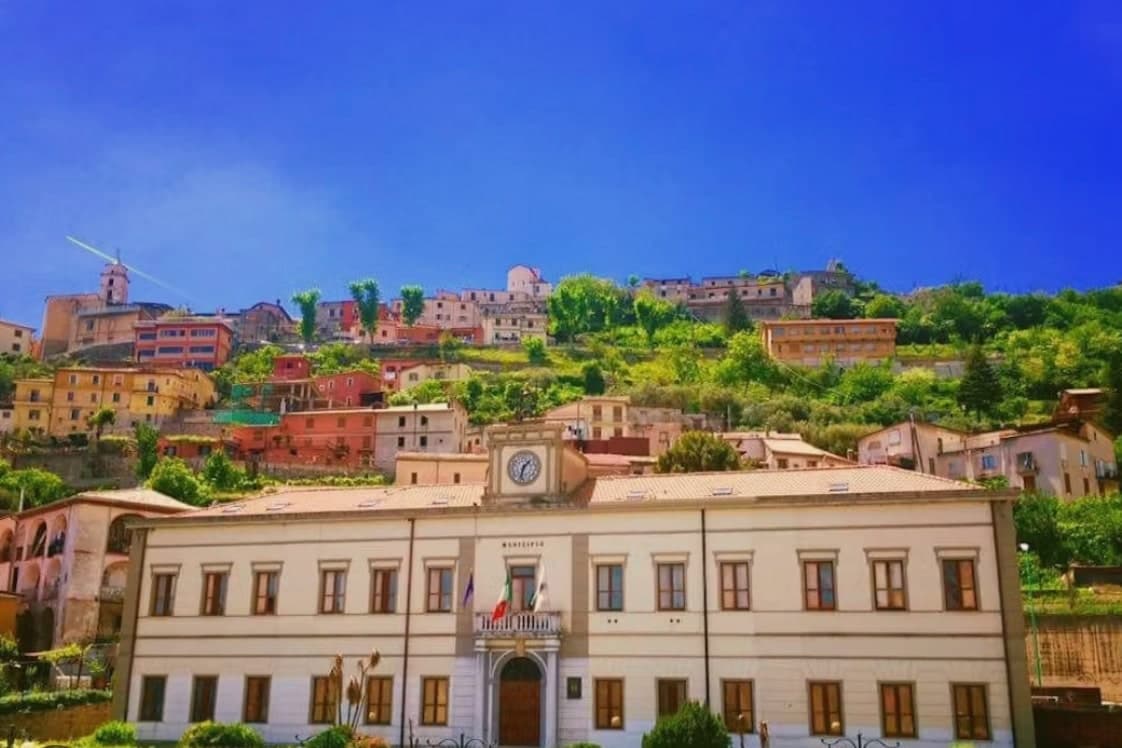
Mercogliano sits five kilometers from Avellino, on the western flank of the Partenio massif. The town itself is residential, much rebuilt after the 1980 Irpinia earthquake, and functions mainly as the base from which the mountain above it is reached.
Below the funicular stands the old Loreto abbey complex, once the administrative center of the Montevergine monks, and in the lower town the parish church of Santa Maria delle Grazie serves as the gathering point each year for pilgrims setting out on foot up the mountain, the same route the funicular now shortens to a few minutes. Higher up, at the sanctuary, the Madonna of Montevergine is venerated as the Black Madonna, Mamma Schiavona.
The chestnut woods that surround the town produce the Avella hazelnut and several DOP chestnut varieties, and most visitors passing through are pilgrims or hikers heading for the mountain rather than people staying in town. The layout is vertical rather than sprawling: a working lower town feeding a devotional upper one, with the abbey, the church and the cable line marking the stages between them.
I Santi have been named by a guide.
What to see in Mercogliano
- Santuario di Montevergine. Founded by William of Vercelli in 1124. The icon inside draws over a million pilgrims a year, with a Candelora procession on February 2 that fills the mountain above the town.
- Abbazia del Loreto. Eighteenth-century Baroque abbey complex at the base of the funicular, former administrative seat of the Montevergine congregation.
- Funicolare di Montevergine. The main route up the mountain since the donkey path closed, carrying pilgrims and hikers past the abbey toward the sanctuary.
How to get to Mercogliano
Napoli is roughly 53 minutes away by road.
Our tip
April through June and September through October are the best months on the mountain: temperatures bearable at 1,270 meters, the funicular running on its full schedule, pilgrim numbers manageable. July and August are warm in town and crowded at the sanctuary, with August 15 the peak pilgrimage day for the Assumption. February 2 is the Candelora, the second-biggest sanctuary day of the year, when the femminielli procession arrives from Napoli.
Montesarchio
Why visit Montesarchio
Montesarchio sits at 300 meters at the foot of Monte Taburno, eighteen kilometers southwest of Benevento. The Latin name is Caudium, an ancient Samnite city on the road from Beneventum to Capua, and the surrender at the pass below it was so unprecedented that the Roman Senate refused to ratify the treaty that followed.
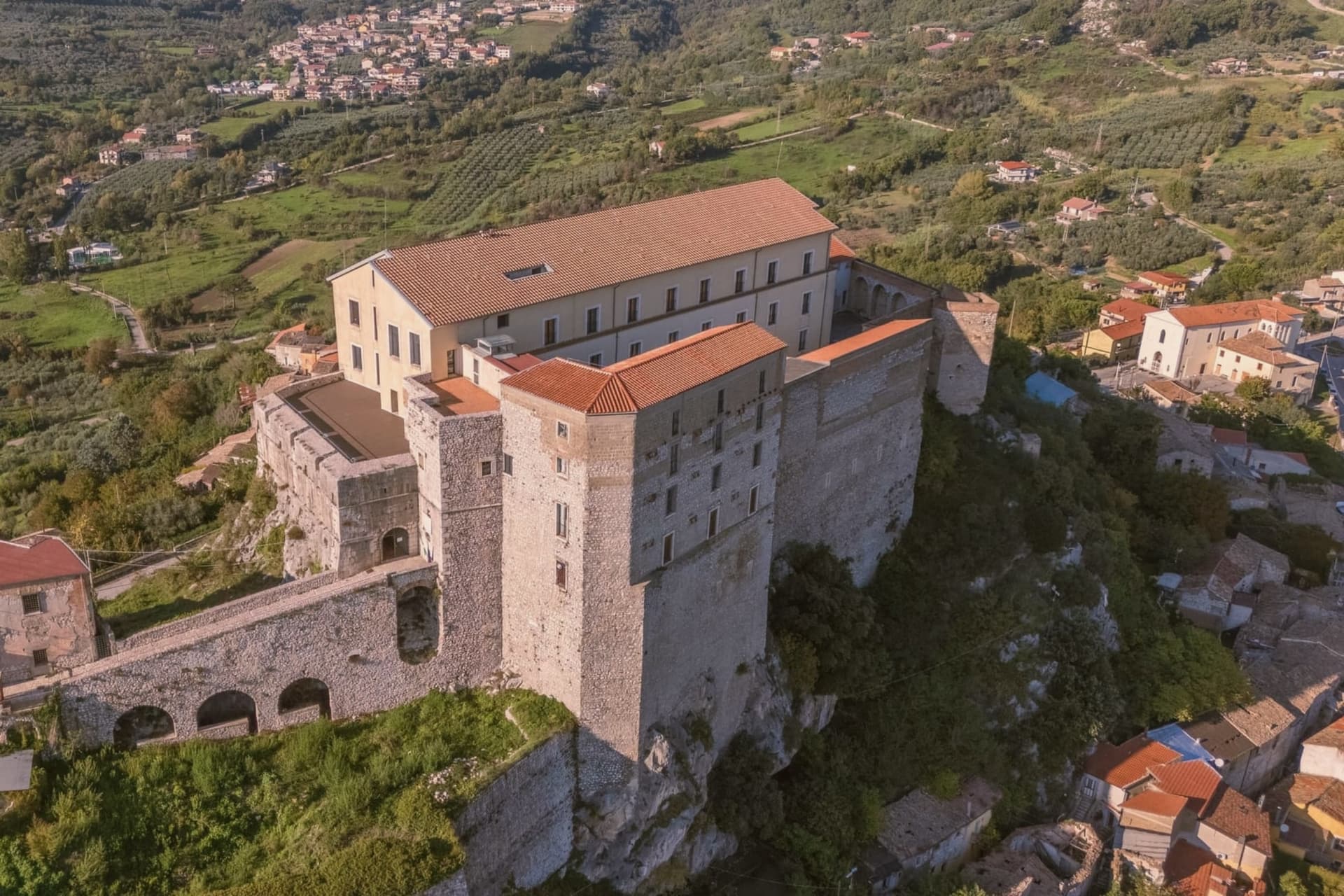
The medieval town climbed the hill above the valley around its castle and tower, and that upper cluster still marks the highest and oldest part of the centro, with the newer town spreading below it into the Valle Caudina. The commune is a Borgo più bello d'Italia, a Città del Vino, and a Città della Nocciola.
What holds the place together is the vertical relationship between valley floor and hilltop: a road town and a battle site below, a fortified refuge and lookout above, the second built to guard what the first could not.
What to see in Montesarchio
- Castello di Montesarchio. Medieval fortress on the hill above the town, restored and reopened in 2007 as part of the Museo Archeologico Nazionale del Sannio Caudino.
- Torre di Montesarchio. Cylindrical fifteenth-century tower next to the castle at 420 meters, the highest point of the centro and visible across the Valle Caudina.
- Museo Archeologico Nazionale del Sannio Caudino. Archaeological museum inside the castle, holding the krater as its centerpiece among the wider Samnite and Roman finds of the valley.
How to get to Montesarchio
There is a railway station in the town, so you can arrive without a car and never need one while you are here. Napoli is roughly 68 minutes away by road.
Our tip
April through early June and September into October are the months for Montesarchio. The Valle Caudina greens and the trails up Monte Taburno open without the haze of late summer. July and August can climb past thirty-five degrees on the floor of the valley, though the castle and tower at 420 meters cool earlier in the evening.
Benevento
Why visit Benevento
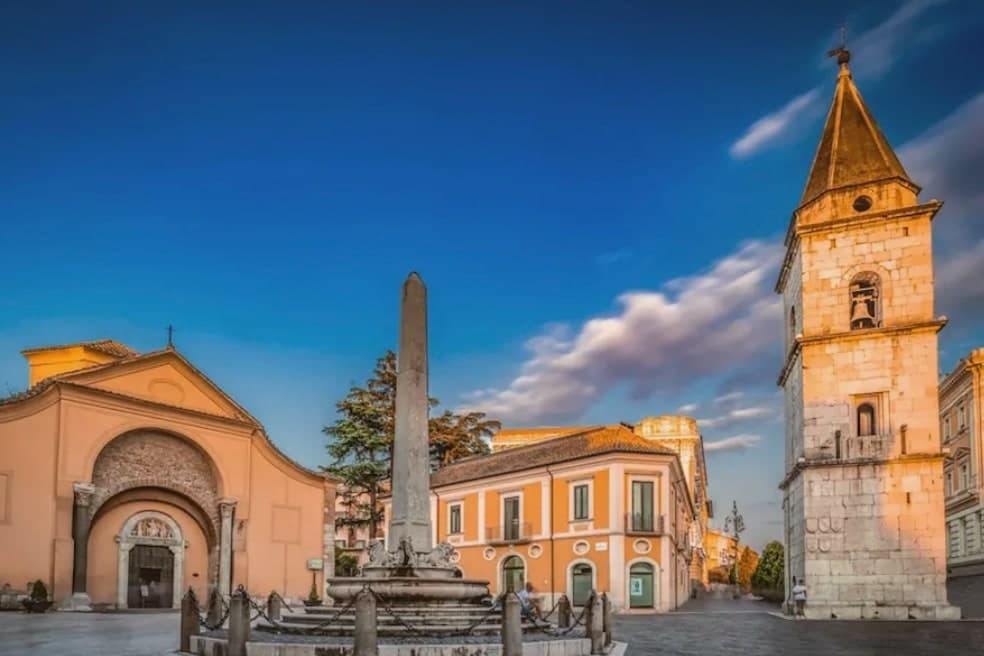
Benevento sits at 130 meters at the confluence of the Calore and Sabato rivers, fifty-five kilometers northeast of Naples, the historic capital of the Sannio. The Lombard Duchy of Benevento was founded in 571, well before the small circular church that survives from around 760, and the city centre still carries that double layer of Roman provincial capital and Lombard duchy seat.
Walking from the cathedral down Corso Garibaldi, past the cloister sculptures set against the medieval wall, ends at the triumphal arch, so the route itself moves from the Lombard and medieval town toward the point where the Roman road left for Brindisi. The countryside around the city is Aglianico del Taburno wine and the herbal liqueur distilled here since 1860.
What holds the city together is this sequence along one line of streets: two civic identities, Roman and Lombard, laid end to end and still walkable in that order.
Albori Ristorante & Bar, Alimenta, Sapori Ristorante have been named by a guide.
What to see in Benevento
- Arco di Traiano. The marble reliefs facing the road show Trajan's domestic policy, those facing the town his military campaigns, a pairing read as deliberate rather than decorative. The Via Traiana ran from this point to Brindisi.
- Chiesa di Santa Sofia. The circular plan is unusual for the period, and the interior keeps traces of the original Lombard fabric beneath later additions. It stands apart from the rectangular churches common elsewhere in the city.
- Teatro Romano. Roman theatre begun under Hadrian and completed under Caracalla, capacity for ten thousand spectators, still used for summer performances.
How to get to Benevento
There is a railway station in the town, so you can arrive without a car and never need one while you are here. Salerno is roughly 84 minutes away by road.
Our tip
April through June and September into October are the city's dry months, with mild evenings along the Calore and the Roman amphitheatre's summer programme starting in June. July and August push the inland Sannio past thirty-five degrees, and the old town empties between three and six in the afternoon while the riverbanks become the local refuge. November through March is wet, foggy at dawn, with rain a constant in February.