
The best small towns with a medieval festival in Toscana
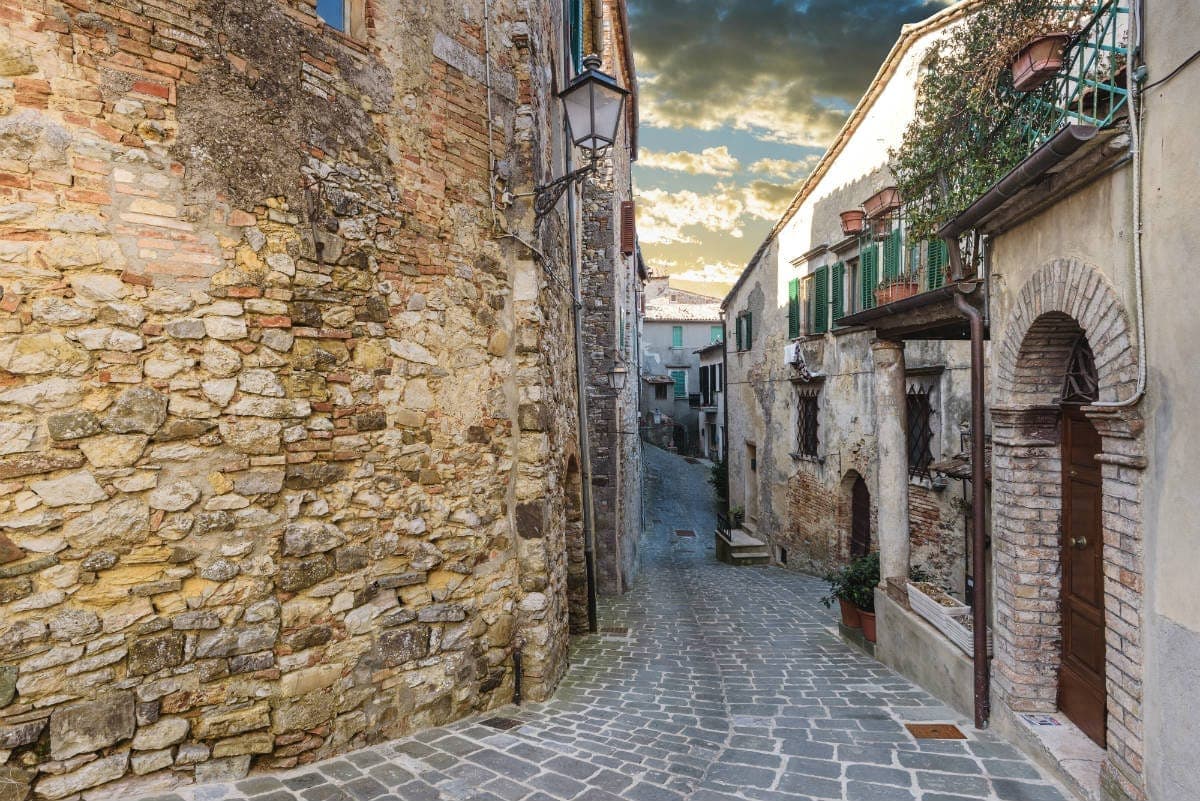
Medieval Tuscany is a matter of material as much as history: travertine and volcanic stone, tufa cut from the hillside, streets that climb to a rocca and stop. In late spring and again in high summer, the smaller towns bring out drums, flags, crossbows and the long trestle tables where the contrade feed everyone before the procession. The food follows the season and the altitude, chestnut flour and pecorino in the Garfagnana, pici and wild boar around the Val d'Orcia, olive oil pressed on the coastal hills of the Maremma. Costumes are sewn locally and reused, and the re-enactments repeat in the same month every year, so the calendar is worth planning around.
Most people who want this go to Siena for the Palio, and it earns the attention: two runnings each summer, a piazza packed to its edges, a city that stops working. Arezzo's Giostra del Saracino and the Calcio Storico in Florence pull the same crowds for the same reasons. Accommodation prices double, the trains are full, and the day of the event has to be booked months out. What you get is spectacle at scale, watched shoulder to shoulder with a very large number of other visitors.
The costumes, the archery, the drumming and the contrada rivalries continue across the rest of the region, in towns where the whole thing still runs for the benefit of the people who live there. On Monte Amiata, in the Val d'Orcia, in the Garfagnana above Lucca and on the hills behind the Maremma coast, small comuni stage recurring re-enactments in full period dress, often with a dinner in the piazza and a torch-lit procession afterwards. These are the towns in this list. Fewer people go, and you can usually still get a table.
Of the 84 communes we have mapped in Toscana, 31 qualify as towns with a medieval festival: each stages a recurring historical re-enactment in costume. This list is the small ones, 9 in all, ordered smallest first. The smallest, Radicofani, has 1,060 residents.
If you are still choosing, we have also written The best hidden towns with a medieval festival in the province of Siena and The best small towns with a food festival in Toscana.
San Casciano dei Bagni
Why visit San Casciano dei Bagni
San Casciano dei Bagni sits at 582 meters at the southern edge of the province of Siena, above 42 hot springs that average 42 degrees Celsius. The baths were used continuously from Etruscan through Roman times and again from the Renaissance, when visitors came from across Europe.
In 2022, an excavation that began in 2019 at the ancient sanctuary turned up 24 bronze votive statues protected by mud, with around 6,000 coins in gold, silver and bronze. The find was the largest of its kind in fifty years; most surviving Etruscan votive material is terracotta.
The 1,500 residents live on a basalt outcrop above the Roman thermal complex, in a centro storico of stone houses and three small churches. The borgo joined the Borghi più belli network in 2014 and remains one of the smallest communes in Toscana to carry both that label and Bandiera Arancione.
The re-enactment here is Palio di San Cassiano di San Casciano dei Bagni, usually held in August.
What to see in San Casciano dei Bagni
- Santuario Ritrovato. Etruscan-Roman thermal sanctuary excavated since 2019, where 24 bronze votives and around 6,000 coins were recovered in 2022.
- Bagno Grande. The principal natural pool of the 42 hot springs, used from the second century BC through the Renaissance and reopened to the public.
- Collegiata di San Leonardo. Romanesque parish church in the centro storico, restored in the seventeenth century, with a baptismal font carved from local travertine.
How to get to San Casciano dei Bagni
Perugia is roughly 68 minutes away by road.
Our tip
The thermal pools make the calendar different here. Winter is the season many visitors prefer, when the 42-degree water steams against cold air and snow occasionally dusts the basalt outcrop. April through June and September into October are the most balanced months: warm hill light, the dry-stone walls of the borgo at their best, the sanctuary excavations open to guided tours. Sagra del Ciaffagnone di San Casciano dei Bagni falls in June.
Cetona
Why visit Cetona
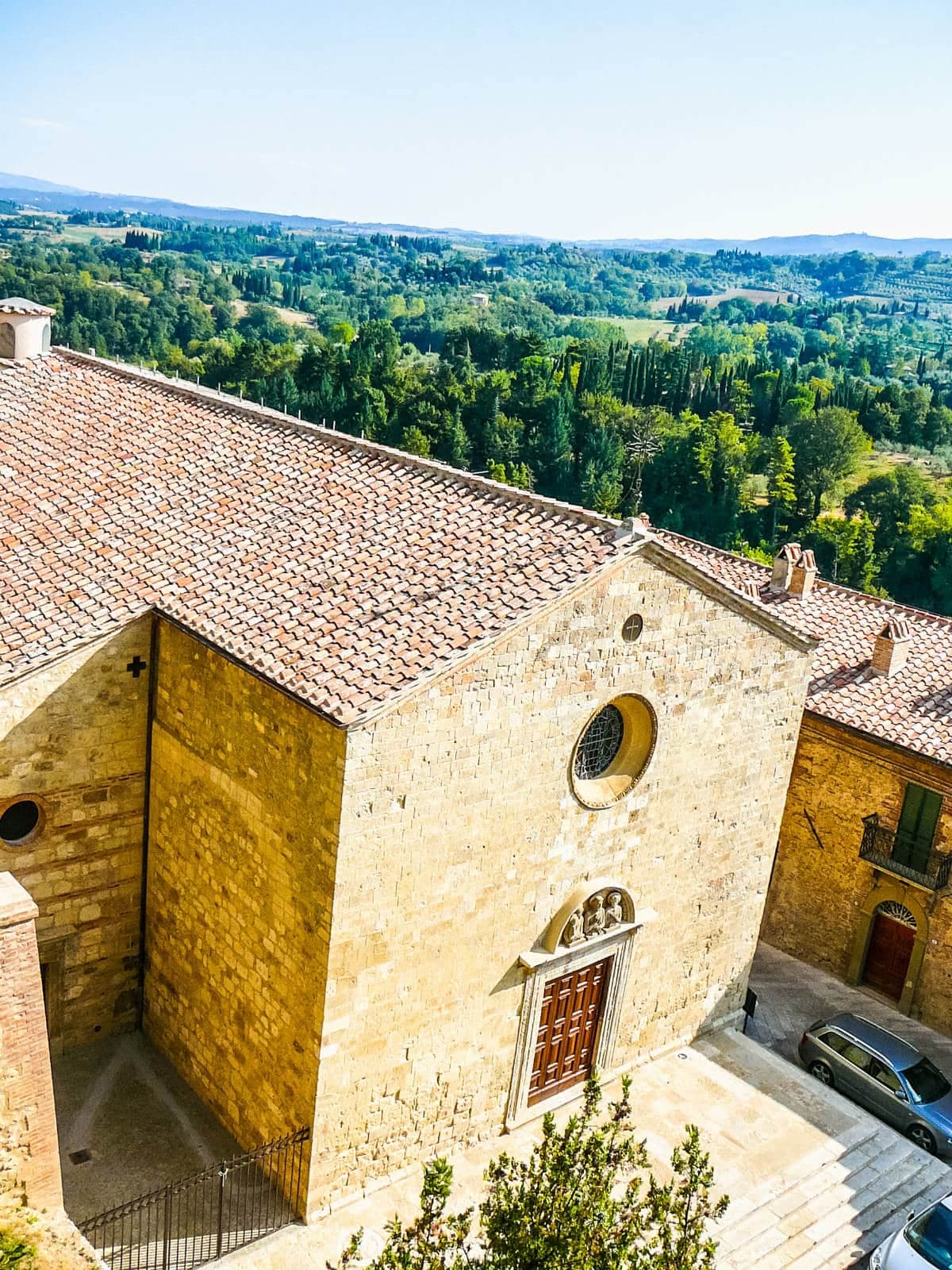
The town sits on the western flank of a ridge at the meeting point of Toscana, Umbria and Lazio, where the mountain divides the Val d'Orcia from the Val di Chiana. The medieval comune passed between Siena, Orvieto and Perugia before falling to Siena in the late fourteenth century, and it was Cosimo I who later sold it whole to a marchese.
The fortress at the top of the grid and the square laid out below it are two halves of the same Renaissance move: a private residence replacing a garrison at the summit, a flat civic stage opened up at the base. Above the town, in the woods, the hermitage and the caves belong to a much older layer, human use of the mountain reaching back to the Mesolithic, long before any comune or marchese laid claim to it.
What the town adds up to is a settlement built in tiers: a prehistoric mountain, a contested medieval center, and a Renaissance overlay that reorganized the base of the hill without touching what stood above it.
The re-enactment here is Corsa delle brocche a Cetona, usually held in July.
What to see in Cetona
- Piazza Garibaldi. Elliptical square at the foot of the medieval grid, flat and open where the streets above it climb steeply. The civic stage of the borgo, still the first thing that orients a visitor.
- Rocca di Cetona. Fortress at the top of the centro storico, its walls and keep still standing though the interior became a private residence rather than a garrison.
- Convento di San Francesco. Franciscan convent below the borgo, founded in 1212, with a single-nave church and a small cloister still in religious use.
How to get to Cetona
Perugia is roughly 78 minutes away by road.
Our tip
April through June and September into October are the months Cetona keeps its calmest pace, the wooded slopes of Monte Cetona green or rust depending on the half. July and August are hot in the centro storico but the mountain trails above 800 meters stay cool. The Mostra del Tartufo, dedicated to the local white truffles, runs the second weekend of November in Piazza Garibaldi. Sagra del Bico di Cetona falls in June.
Lucignano
Why visit Lucignano
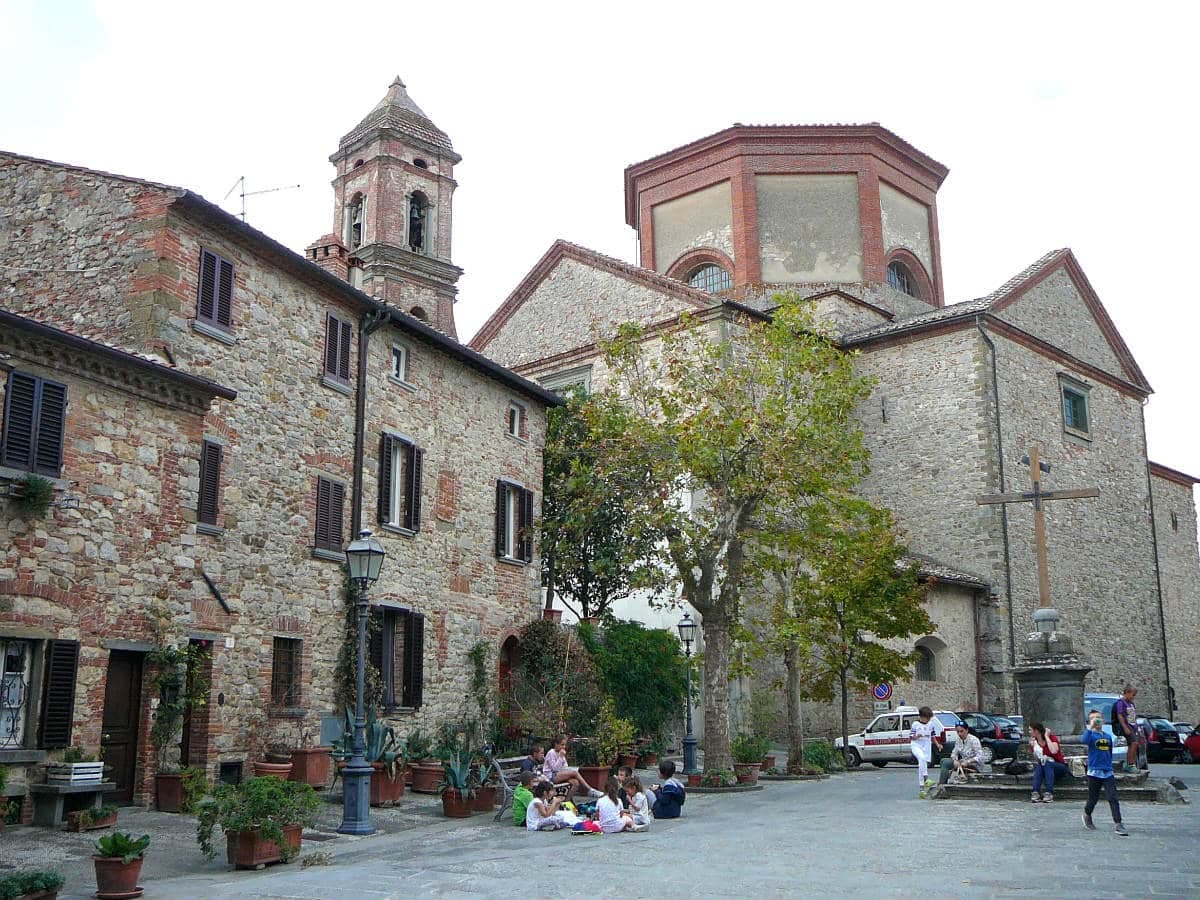
Lucignano sits at 400 meters on a hill in the Valdichiana, halfway between Siena and Arezzo, built on a tight elliptical plan of four concentric rings of streets. Its position made it one of the most contested settlements of medieval Toscana: Siena, Arezzo, Florence and Perugia all fought over it between 1200 and 1500.
The current walls and three gates date to a Sienese reconstruction of 1371. In the Museo Civico inside the Palazzo Comunale stands the Albero d'Oro, a 260-centimeter Gothic gold-and-coral reliquary in the shape of a tree, begun by Ugolino di Vieri in 1350 and finished by Gabriello d'Antonio in 1471.
Local tradition turned it into the Albero dell'Amore, a marriage charm. The Collegiata di San Michele Arcangelo dominates the highest ring of the borgo, and the elliptical plan is best read from the air, which is why drone footage of Lucignano keeps appearing in articles about medieval Tuscan urbanism.
The re-enactment here is Memorie dal passato a Lucignano, usually held in September.
What to see in Lucignano
- Albero d'Oro. 260-cm Gothic reliquary in the shape of a tree, gold, coral and enamel, begun by Ugolino di Vieri in 1350 and completed by Gabriello d'Antonio in 1471.
- Centro storico ellittico. Four concentric rings of streets inside elliptical walls, the most complete example of medieval Tuscan elliptical town planning.
- Collegiata di San Michele Arcangelo. Eighteenth-century church on the highest ring of the borgo, with a Vasari façade adjustment and a baroque organ inside the medieval shell.
How to get to Lucignano
There is a railway station in the town, so you can arrive without a car and never need one while you are here. Perugia is roughly 65 minutes away by road.
Our tip
April through June and September into October are the months Lucignano keeps its balance, the Valdichiana green or gold depending on the half and the centro storico cool inside its elliptical walls. The Maggiolata, a flower festival between the four quarters of the borgo, runs across the last two Sundays of May. July and August push the valley past thirty and the centro storico thins after lunch. Sagra della Filiera del Tartufo Marzuolo falls in March.
Radicofani
Why visit Radicofani
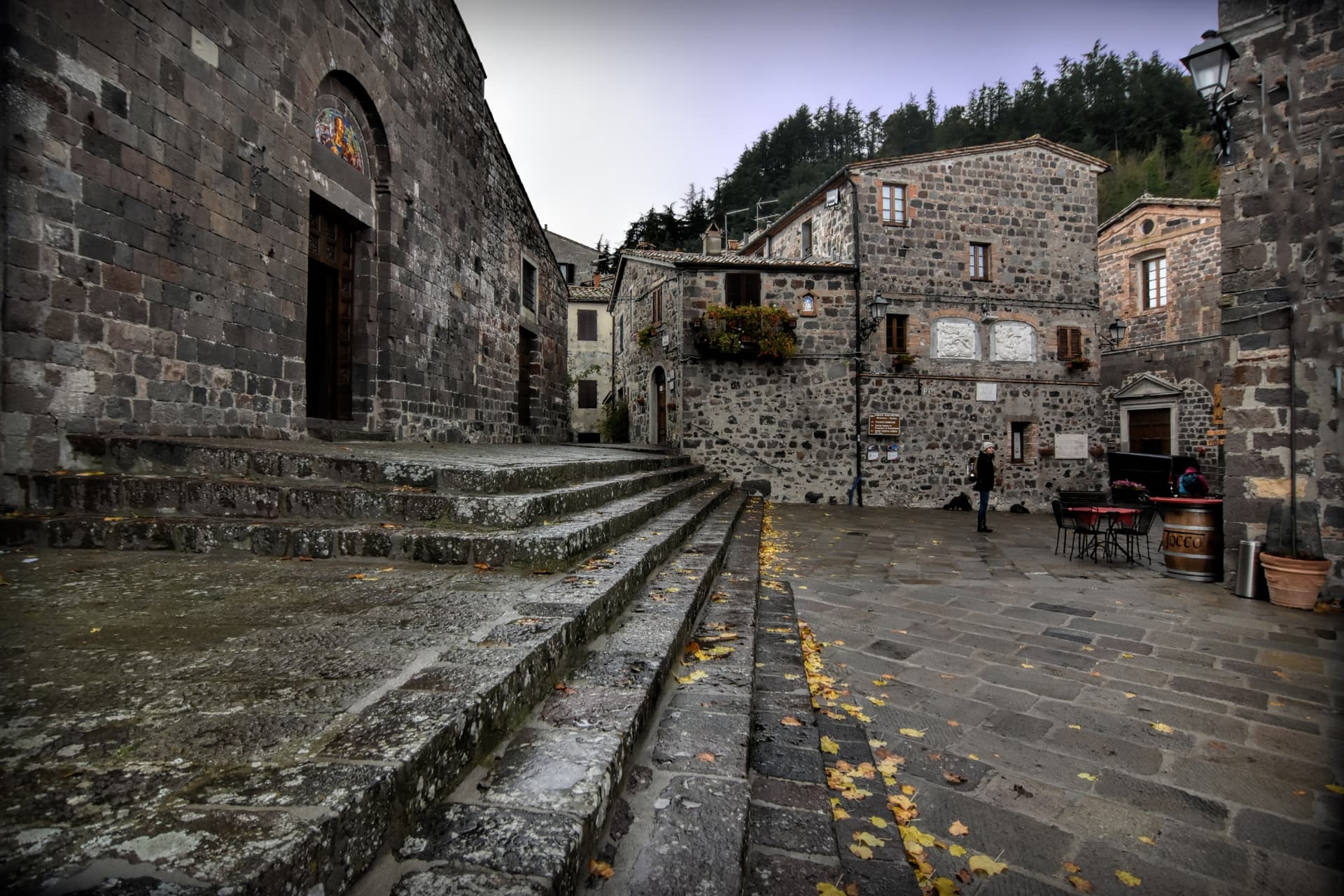
Radicofani sits where the rolling clay hills of the Val d'Orcia give way, abruptly, to a volcanic cone: the town rises straight off the plain rather than sitting among gentler slopes, which is why the rock is visible from Pienza, Montalcino, the Cassia road and points as far off as Lago Trasimeno, 60 km away, and why it reads as a landmark rather than a village from any distance. The medieval centro climbs in the same volcanic-basalt stone as the rock beneath it, narrowing as it rises, so that the streets themselves seem to funnel a visitor upward toward the fortress that caps the summit.
That fortress began under the Aldobrandeschi in the 12th century, was expanded by the outlaw and Ghibelline noble who made the rock his raiding base from 1297 to 1303, robbing pilgrims and churchmen on the road below and returning the richest captives to Pope Boniface VIII with gallows-humour notes attached, a story Dante folds into Purgatorio VI and Boccaccio into the Decameron's tenth day. The Sienese extended it again in the 14th century, the Medici in the 16th after Cosimo I bought the territory in 1556, and a powder-magazine explosion in 1735 took off the upper levels, leaving the restored lower fortress and its terrace standing today.
Below the village, at its foot rather than within its walls, sits the old stagecoach inn, a separate register of the town's history: not the fortress and its outlaw but the machinery of travel and hospitality that grew up beneath it to serve the pilgrim road running from Canterbury to Rome, hosting Montaigne, Dickens and Grand Tour travellers moving between Florence and Rome from 1500 to 1850. The town's church, the Romanesque Pieve di San Pietro, and its companion the Chiesa di Sant'Agata, with its Della Robbia altarpiece, belong to the centro itself rather than to the rock above it.
Surroundings widen the picture: Pienza, also UNESCO-listed, lies 30 km north, Montalcino 35 km northwest, and the extinct volcano immediately west offers a cooler, wooded counterpoint of chestnut and beech forest to the bare rock the town is built on, with thermal baths built around a pool 20 km north. The food follows the same Val d'Orcia line as its neighbors: pici with hare ragù, pecorino di Pienza, lardo di Colonnata and finocchiona, with Brunello di Montalcino and Vino Nobile di Montepulciano within easy reach.
The Festa Medievale in mid-July recreates the outlaw court that once ruled the summit, and the Festa del Fagiolo in early August celebrates the local cannellini bean. Like other Val d'Orcia hilltop villages, the population has fallen hard, from 2,800 in 1951 to 1,060 today.
The three marks the town carries together, UNESCO, Bandiera Arancione and the pilgrim route, are not separate honors so much as three ways of naming the same fact: a place built for defense and passage that has outlasted both purposes and now stands mostly for itself.
The re-enactment here is Festa degli antichi mestieri a Radicofani, usually held in June.
What to see in Radicofani
- Rocca di Radicofani. 12th-c Aldobrandeschi origin, expanded by the Sienese in the 14th century and by the Medici in the 16th, after Cosimo I bought the territory in 1556. A 1735 powder-magazine explosion destroyed the upper levels. The restored lower fortress and its panoramic terrace give the most expansive single view in southern Tuscany.
- Via Francigena + Posta Medicea. The inn stands at the foot of the village, on the pilgrim road from Canterbury to Rome, where it once put up travellers moving between Florence and Rome for three and a half centuries, among them Montaigne and Dickens.
- UNESCO Val d'Orcia centro. An intact medieval centro climbing in volcanic-basalt stone toward the fortress above it. The Pieve di San Pietro is Romanesque; the Chiesa di Sant'Agata holds a Della Robbia altarpiece.
How to get to Radicofani
Perugia is roughly 91 minutes away by road.
✷ We have written about Radicofani
“When the film industry needed a picture of heaven, of the fields a dead hero walks home to, they came and shot it here, and that is the truest thing anyone has ever said about the Val d'Orcia. It is not a place. It is the afterlife as imagined by people who lived in cities. It is how the country looks to men who never spent an hour in it, dreamed up by Florentine bankers five hundred years ago and maintained, beautifully, ever since.”
Read our piece on Radicofani →Val d'Orcia | The Postcard Is Constructed
Our tip
Radicofani is best May–September. The Festa Medievale mid-July (Ghino di Tacco pageant) + Festa del Fagiolo early August are the year's headline events. Summer is hot in the Val d'Orcia but the 814m altitude keeps Radicofani 5-7°C cooler than the lower valleys. Festa degli antichi mestieri a Radicofani falls in June.
Castiglione di Garfagnana
Why visit Castiglione di Garfagnana
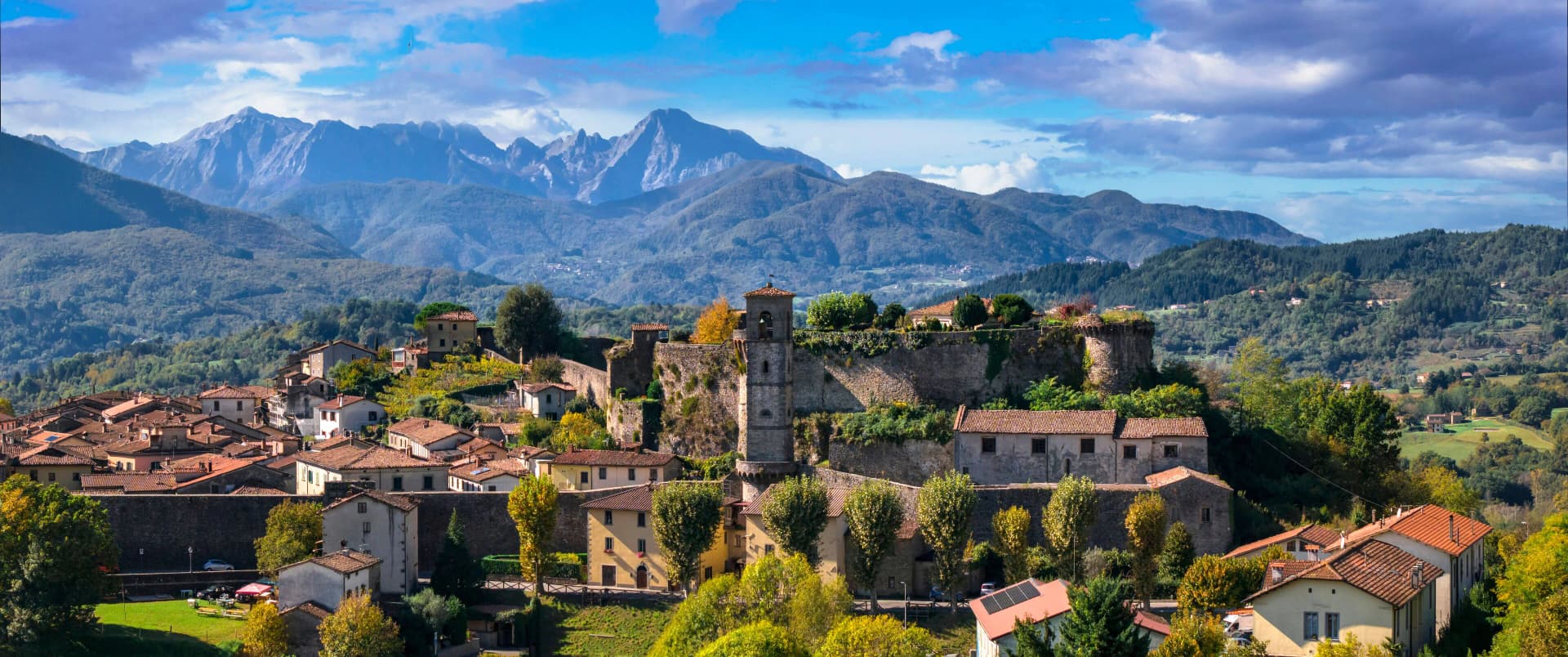
Castiglione di Garfagnana sits at 540 meters on the road to the San Pellegrino pass, in the upper Serchio valley, surrounded by chestnut woods and the Apuan and Apennine ridges. The Romans built a castrum here, the Castrum Leonis, to command the route between Lucca and Modena; what stands now is the thirteenth-century walled town, with three Torrioni and a Rocca that still anchor the south flank.
Through the fifteenth and sixteenth centuries, while the rest of the Garfagnana fell to the Este of Ferrara and was administered by Ariosto from nearby Castelnuovo, Castiglione held for the Republic of Lucca. The Estensi besieged it in 1603 and 1613 without taking it.
The Pieve di San Pietro Apostolo, the oldest church in the borgo, was first built in 723 by two Lombard brothers and rebuilt in the twelfth century. In winter the trattorie serve chestnut polenta with boiled pork bones, the standard cold-weather dish of the valley.
The re-enactment here is Festa Medievale di Castiglione di Garfagnana, usually held in August.
What to see in Castiglione di Garfagnana
- Rocca medievale. Thirteenth-century fortress with three Torrioni, the symbol of Castiglione and the anchor of the medieval walls.
- Mura medievali. Well-preserved thirteenth-century walls with large defensive towers ringing the borgo, intact for most of their length.
- Pieve di San Pietro Apostolo. Oldest church in town, first built in 723 by two Lombard brothers and rebuilt in the twelfth century by Bishop Guido III of Lucca.
How to get to Castiglione di Garfagnana
Pisa is roughly 95 minutes away by road.
✷ We have written about Castiglione di Garfagnana
“There are two ways to drive from Aulla to Lucca. The first is the one everyone takes: the coast, the A12, the cruise control, ninety minutes of the same Tyrrhenian to your right. The second is the one we took with Daniel, on a clear day in November, and it is two and a half hours longer if you stop, but it is in a different country.”
Read our piece on Castiglione di Garfagnana →Apuan Roadtrip | A Steak, a Friend, and the Long Way Down to Lucca
Our tip
May through September is the high season in the Garfagnana, the chestnut woods and the Apennine passes open and warm in the day, cool at night. June and July bring the long evening light at 540 meters; August is busy but never coastal-hot. October is the chestnut harvest, the dish of polenta di castagne starts to appear on menus, the Sagra della Castagna runs the third weekend. Festa Medievale di Castiglione di Garfagnana falls in August.
Pienza
Why visit Pienza
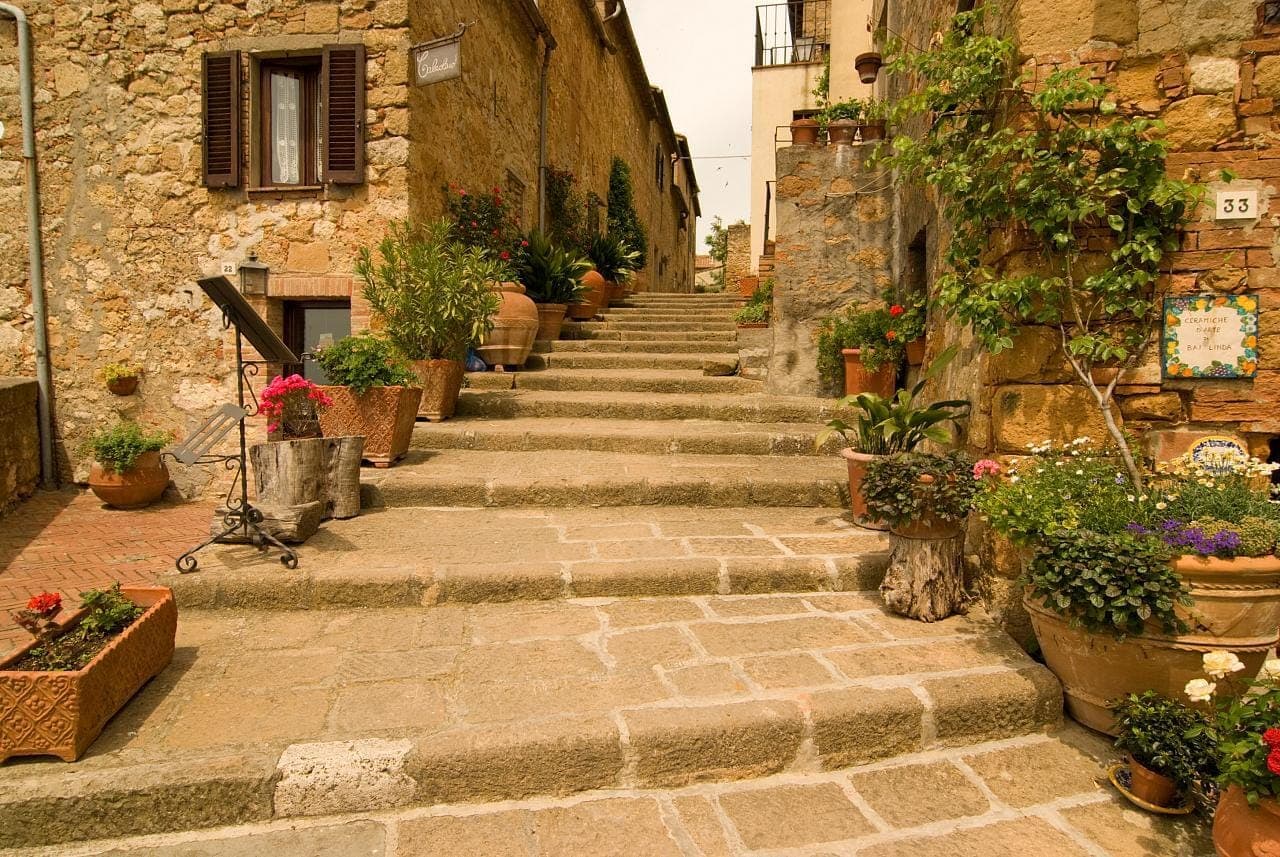
Pienza sits at 491 meters on a long ridge in the Val d'Orcia, an hour and a half south of Siena. The village was called Corsignano until 1462.
Enea Silvio Piccolomini was born here in 1405 and became Pope Pius II in 1458; the following year he ordered the Florentine architect Bernardo Rossellino to rebuild his birthplace as a Renaissance ideal city. The work took three years.
The square at the center, the cathedral on the cliff side, the palace built for the pope's family, the cardinal's palace facing it, and the town hall opposite the cathedral were all designed and built as a single composition rather than assembled piece by piece over time. Pius consecrated the cathedral on 29 August 1462, two years before his death, and the whole arrangement has survived almost unchanged since.
What stands in Pienza today is less a collection of monuments than the physical record of one commission carried out in one stretch of years.
The re-enactment here is Festa rinascimentale e corsa di Pio a Pienza, usually held in September.
What to see in Pienza
- Piazza Pio II. Trapezoidal Renaissance square laid out by Bernardo Rossellino, with the Duomo, Palazzo Piccolomini, Palazzo Borgia and Palazzo Comunale facing each other.
- Duomo di Pienza. Latin-cross cathedral with three apsidal chapels, built on the cliff edge, its Renaissance façade also by Rossellino.
- Palazzo Piccolomini. Renaissance palace for the pope's family, begun 1459, with an internal courtyard and a hanging garden overlooking the Val d'Orcia.
How to get to Pienza
Perugia is roughly 98 minutes away by road.
Our tip
April through June and September into October are the months when the Val d'Orcia sits at its best, green or gold depending on the wheat cycle, and the Piazza Pio II is open for photographs without the day-tripper buses. July and August push past thirty-three degrees and the Corso Rossellino fills with tour groups between ten and four. The Fiera del Cacio, the cheese festival, takes the first Sunday in September, when the streets fill with stalls of pecorino producers from the Pienza ridge. Festa del Cacio di Pienza falls in September.
San Quirico d'Orcia
Why visit San Quirico d'Orcia
San Quirico d'Orcia sits at 409 meters on a low rise in the Val d'Orcia, the rolling clay-and-tufa landscape inscribed by UNESCO in 2004 as a cultural landscape shaped by fourteenth and fifteenth-century Sienese governance. The town was a stage on Sigeric the Serious's tenth-century Via Francigena from Canterbury to Rome and has remained a working stop on the route ever since.
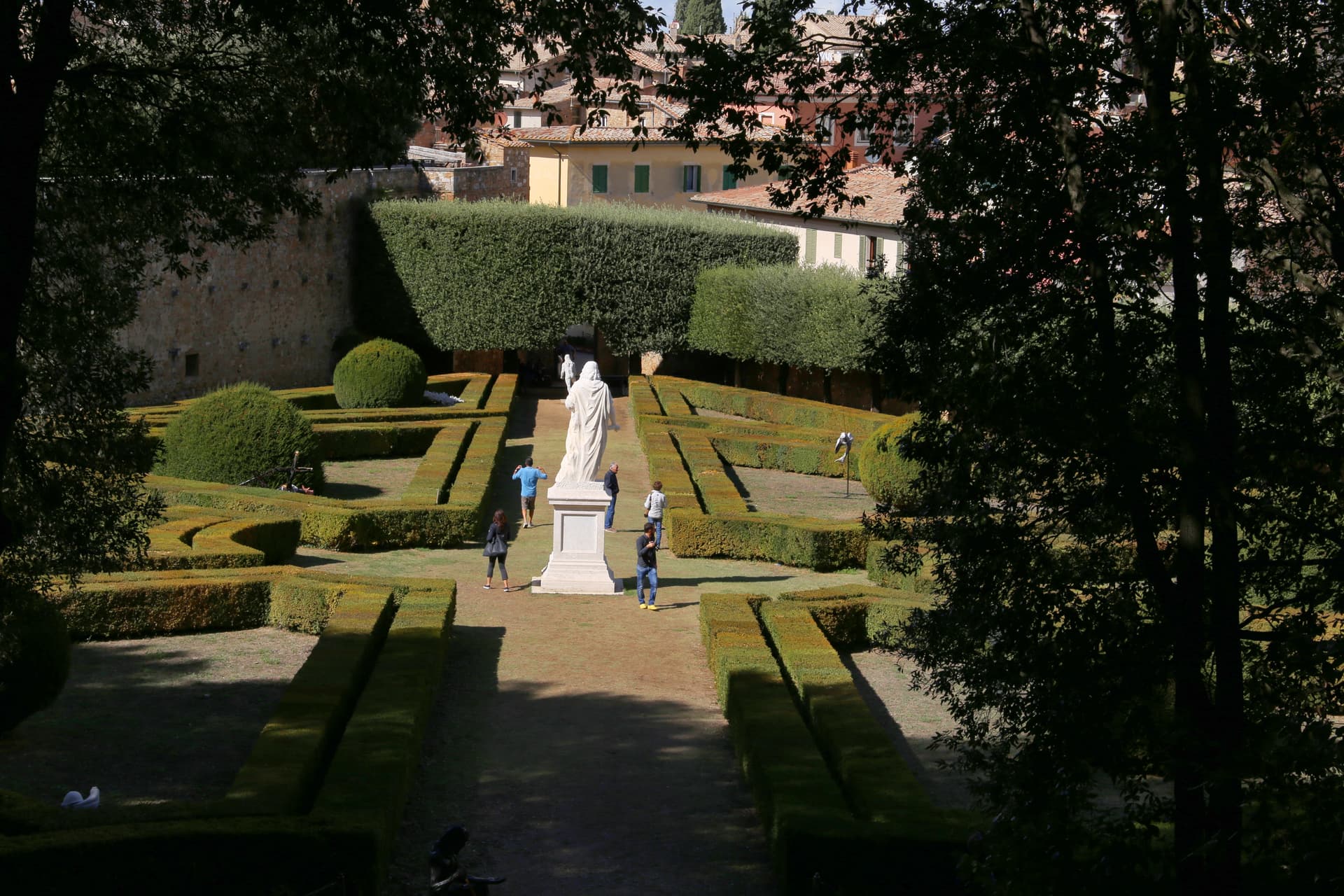
The Collegiata dei Santi Quirico e Giulitta was built at the end of the twelfth century over an eighth-century baptistery; the lateral portal added in 1288 is attributed to Giovanni Pisano, then working on the Siena cathedral. The Horti Leonini, the geometric boxwood garden laid out by Diomede Leoni around 1580 inside the town walls, hosts the Forme nel Verde sculpture exhibition every summer since 1971.
Bagno Vignoni, the frazione five kilometers down the road, has a thermal pool at the center of its piazza, used since Etruscan times. Few comuni this small carry UNESCO, thermal and Francigena signals at once.
The re-enactment here is Festa del Barbarossa a San Quirico d'Orcia, usually held in June.
What to see in San Quirico d'Orcia
- Collegiata dei Santi Quirico e Giulitta. Romanesque parish church built late twelfth century over an eighth-century baptistery, with the 1288 lateral portal attributed to Giovanni Pisano.
- Horti Leonini. Italianate boxwood garden laid out by Diomede Leoni around 1580 inside the town walls, hosting the Forme nel Verde sculpture exhibition since 1971.
- Bagno Vignoni. Frazione five kilometers south, with a sixteenth-century thermal pool at the center of its piazza, fed by springs used since Etruscan times.
How to get to San Quirico d'Orcia
Perugia is roughly 96 minutes away by road.
Our tip
April through June and September into October are the gold months in the Val d'Orcia: green wheat in spring, ochre stubble by autumn, low light that defines the cypress ridges. The Festa del Barbarossa runs the third Sunday of June with archery, jousts and crossbow contests between the town quarters. July and August are hot and busy; the centro storico fills with day-trippers from Pienza and Montalcino. Festa del Barbarossa a San Quirico d'Orcia falls in June.
Suvereto
Why visit Suvereto
Suvereto sits at 127 meters on the inland edge of the Val di Cornia, twelve kilometers from the Tyrrhenian coast. The name comes from the Latin suberetum, a wood of cork oaks, and the surrounding forests still hold them.
The Rocca Aldobrandesca, first documented in 973, occupies the highest point of the borgo; the Aldobrandeschi family who controlled it also ruled large sections of southern Toscana and the Maremma. The town reached its golden age in the thirteenth century, when Frederick II granted it a charter of freedoms in 1216 and the Palazzo Comunale was built.
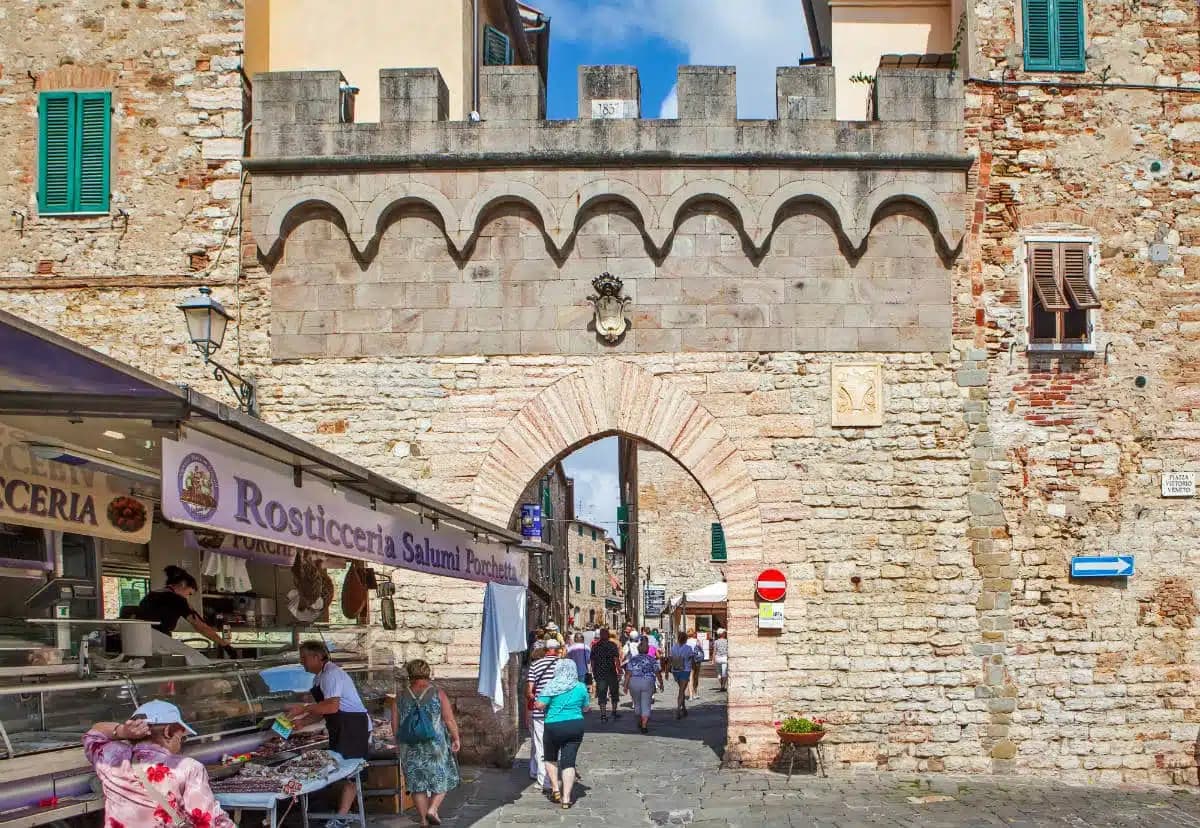
The centro storico is a tight grid of stone vicoli that runs uphill from the Romanesque Pieve di San Giusto to the fortress. Suvereto carries five institutional signals at once, a rare combination in the province of Livorno, and the surrounding wine country falls under the Val di Cornia DOC and Suvereto DOCG appellations.
The re-enactment here is Palio dell'Imperatore, usually held in August.
What to see in Suvereto
- Rocca Aldobrandesca. Fortress at the highest point of the borgo, documented from 973, expanded in the twelfth century and partly restored as an open archaeological site.
- Pieve di San Giusto. Eleventh-century Romanesque parish church at the foot of the borgo, with a sandstone façade and a single nave divided by stone columns.
- Palazzo Comunale. Thirteenth-century town hall with a double external staircase and Ghibelline merlons, one of the earliest surviving civic palaces of the Maremma.
How to get to Suvereto
Livorno is roughly 84 minutes away by road.
✷ We have written about Suvereto
“That is the thing the young man on the beach did not see, and the man who lives here cannot stop seeing. This is an industrial coast wearing a beach towel. Run it back far enough and the whole of it, the swamp and the steel and the slag and the white water, is one long story about iron, and the holiday is the costume the story put on after the work ran out.”
Read our piece on Suvereto →The Iron Coast | The Wrong Sea
Our tip
April through June and September into October are the dry months in the Val di Cornia, when the cork forests behind the town hold their light and the wine harvest runs in September. The Sagra del Cinghiale, celebrating the wild boar of the surrounding hills, runs across two weekends in December and draws a different crowd. July and August are hot at 127 meters and most visitors descend to the Tyrrhenian coast in the afternoon. Palio dell'Imperatore falls in August.
Piancastagnaio
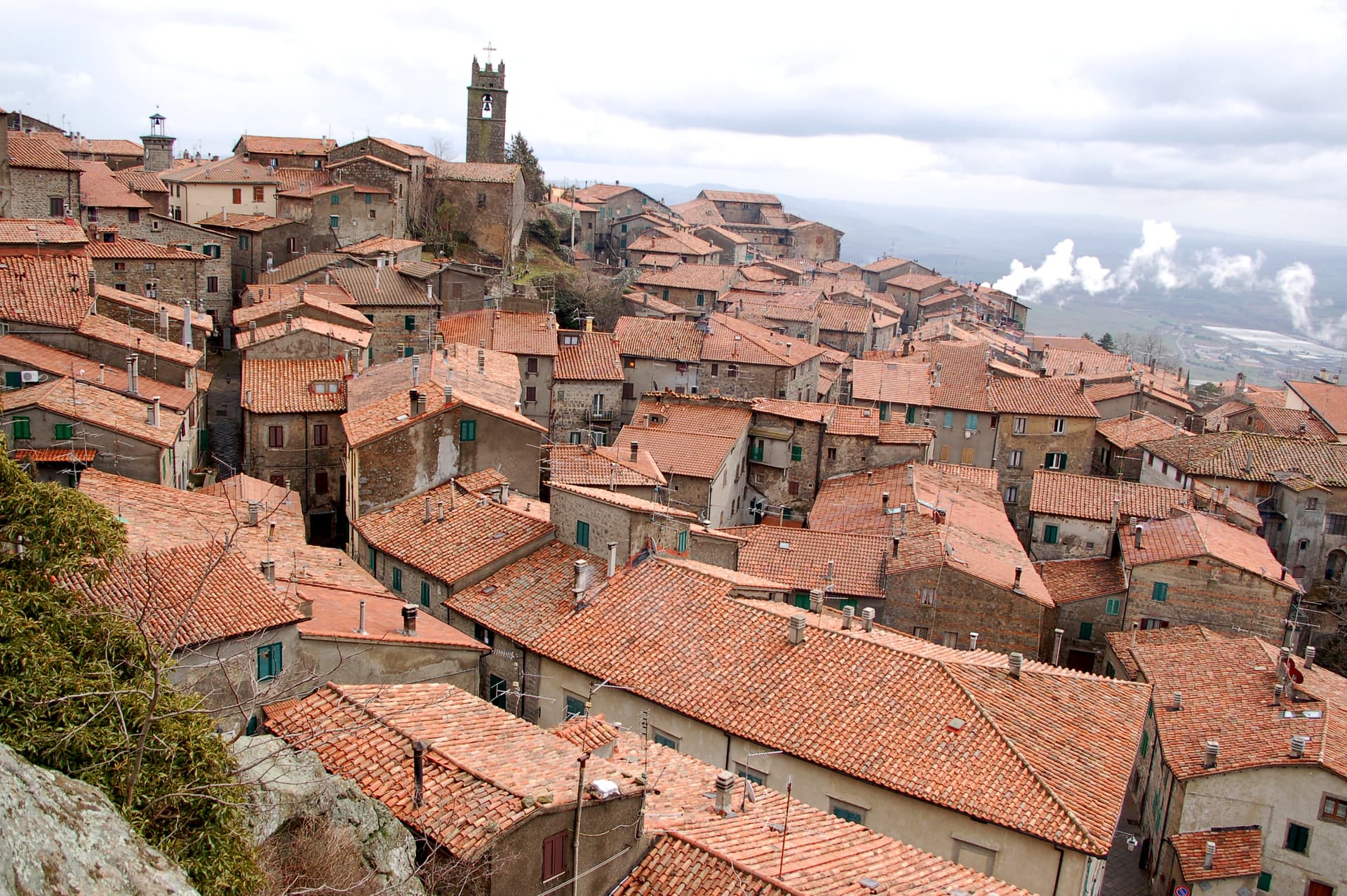
Why visit Piancastagnaio
The name means plain of the chestnut, and the forest that still climbs the slope above the town is what fed it for most of its history: sweet chestnut, sessile oak, beech. The town itself sits at 772 meters, built around a twelfth-century keep that passed to Siena in 1418 and to the Medici in 1559, and the palazzo built into its old defenses in the sixteenth century reads as the Medici layer set directly against the Aldobrandeschi one.
Contrade named Borgo, Castello, Coro and Voltaia divide the centro storico for the August race, while the mining museum keeps the record of an industry, cinnabar and mercury, that ran on the mountain from Etruscan times until it closed in 1982 and that has otherwise left the town to the chestnut trade. What Piancastagnaio adds up to is a place where a volcano's slope has supplied, in turn, timber and food, ore, and a festival calendar, and where the built town still carries each of those histories as a separate, legible layer rather than a single blended one.
The re-enactment here is Palio delle Contrade di Piancastagnaio, usually held in August.
What to see in Piancastagnaio
- Rocca Aldobrandesca. Twelfth-century Aldobrandeschi keep at the heart of the centro storico, with a square tower and surviving curtain wall.
- Palazzo Bourbon del Monte. Sixteenth-century Medici-era palazzo built into the medieval defenses, with a courtyard loggia and ceremonial hall.
- Museo Minerario di Sant'Anna. Mining museum on the cinnabar and mercury extraction of Monte Amiata, active from the Etruscans until the mine closed in 1982.
How to get to Piancastagnaio
Perugia is roughly 135 minutes away by road.
Our tip
May through September is the season on the southern Amiata slope. The chestnut woods are open, the air at 772 meters stays cool against the Maremma heat below, and the trails to the volcano summit run from town. The Palio delle Contrade is the second weekend in August, the only date most outsiders know. Crastatone di Piancastagnaio falls in the season.
More from Anywhere Italy
- The best hidden towns with a medieval festival in the province of Siena
 The best small towns with a food festival in Toscana
 The best small olive oil towns in the province of Siena
- The best towns with a food festival in the province of Siena
- The best small olive oil towns with a serious restaurant in Toscana
 The best mountain towns in Toscana