
The best medieval festivals in Umbria
An Italian historical re-enactment is not a costume parade. The town divides into its medieval quarters, each one cooks and drinks in its own tavern for a week, and the crafts on show are worked rather than displayed. In Umbria the setting does most of the work, because the streets these things happen in have not been rebuilt.
The festivals people travel for are the famous ones. Siena has the Palio, Arezzo has the Giostra del Saracino, and both sell out their towns for the weekend.
Umbria runs its own, in places where you can still get a table. The same walls, the same trades, the same competitive edge between quarters, and a crowd made mostly of people who live there.
Of the 48 Umbrian communes in our catalogue, these are the ones holding a recurring historical re-enactment we could verify against a named source, all of them under 15,000 residents. Months are given because the exact dates move; check locally before you travel.
Two more lists worth reading alongside this one: The best hidden hill towns with a medieval festival within 90 minutes of Perugia and The 10 prettiest hidden villages you can reach by train in Umbria.
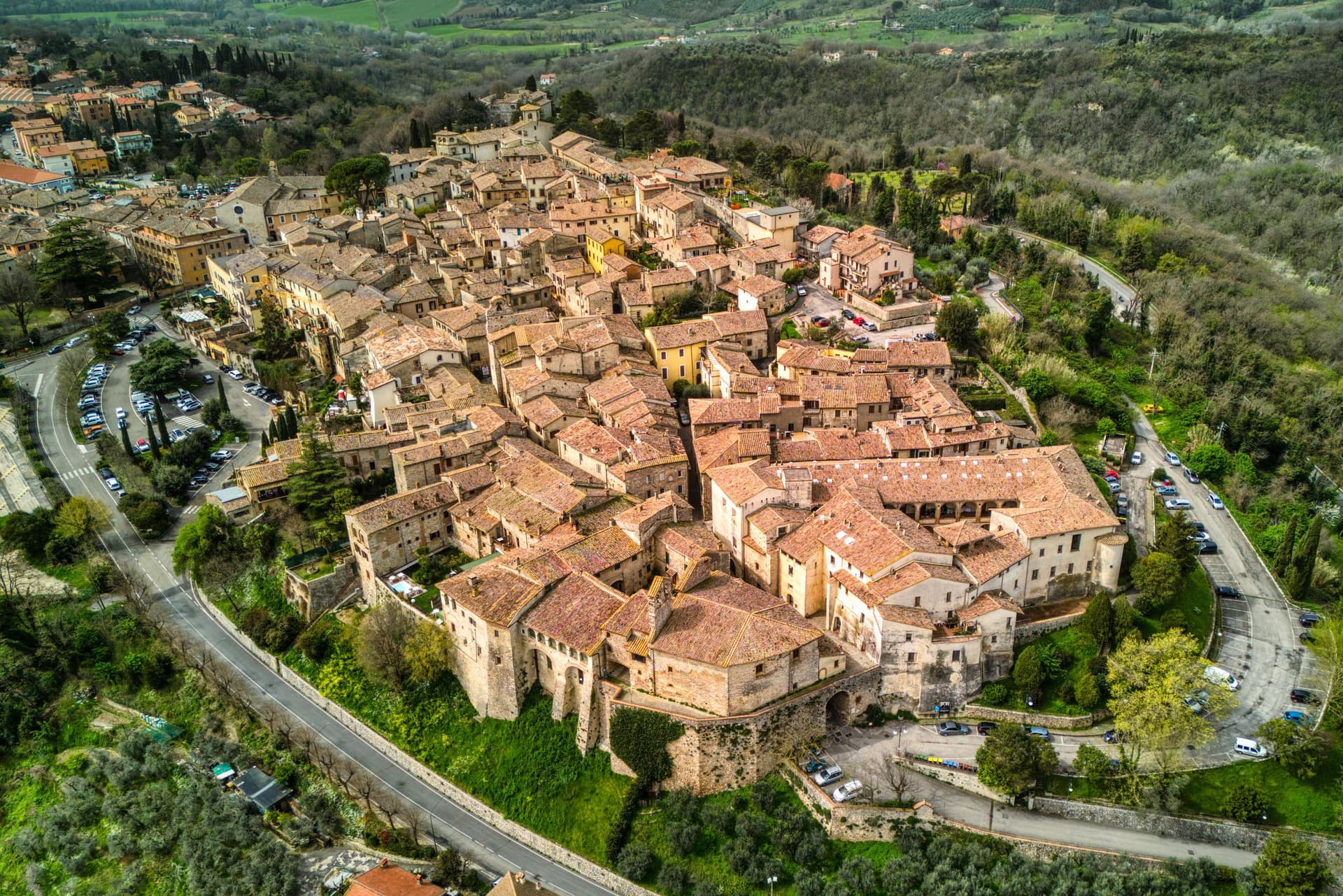
San Gemini
Why visit San Gemini
San Gemini sits at 337 meters on the southern slope of the Monti Martani, ten kilometers northwest of Terni. The archaeological park to the north preserves a stretch of polygonal Roman paving, a gate or honorary arch, an amphitheater, mosaic floors and the remains of an aqueduct, all part of a municipium abandoned probably after an earthquake.
The mineral springs rise just outside the populated centre, close enough that the town and the water source share the same ground without sharing a single street. The walled core steps down the slope in two halves that still define the town's rhythm: the district built around the old fortified height and the district gathered around the main square, each fielding its own team when the joust between them runs its course every year.
The cathedral, rebuilt in the nineteenth century but keeping a portal a great deal older, and the Gothic church on the square, each anchor their own end of the settlement. The Corpus Domini Infiorata blankets the procession route with petal mosaics nine weeks after Easter.
A hill town this size holding a Roman ruin, a bottled spring and a rivalry that still stages a joust suggests a place where the past was never cleared away to make room for the present, only built alongside it.
The re-enactment here is Giostra dell'Arme, usually held across September and October.
What to see in San Gemini
- Parco Archeologico di Carsulae. Roman municipium four kilometers north of San Gemini, with the Via Flaminia paving, the Arco di San Damiano, amphitheater and aqueduct remains.
- Chiesa di San Francesco. Thirteenth-century Gothic church on the main square, single nave with pointed arches, alongside Palazzo Canova.
- Duomo di San Gemine. Originally twelfth-century late Gothic cathedral, rebuilt in the nineteenth century by Livoni with consultation from Antonio Canova, keeping a fifteenth-century portal.
How to get to San Gemini
There is a railway station in the town, so you can arrive without a car and never need one while you are here. Terni is roughly 16 minutes away by road.
Our tip
April through June and September into October are the dependable months. The Infiorata di Corpus Domini covers the procession route with petal mosaics nine weeks after Easter, usually early June. The Giostra dell'Arme runs over two weeks at the end of September into early October, the rioni in fifteenth-century costume, the joust in the main piazza. Giostra dell'Arme falls in September.
Bevagna
Why visit Bevagna
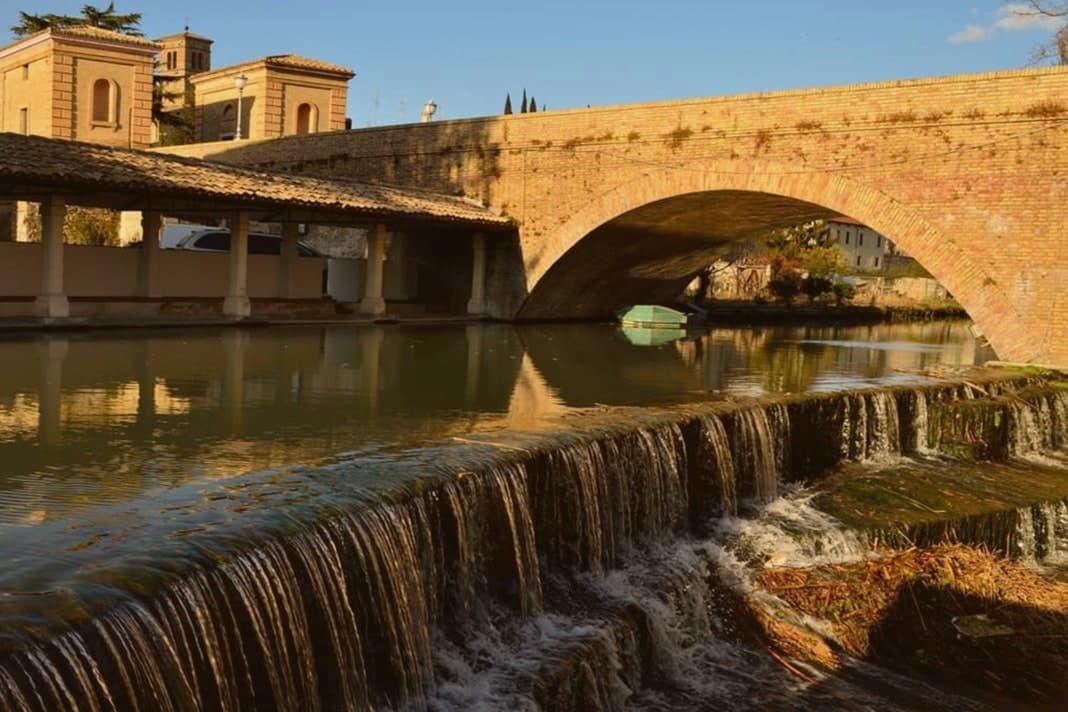
Bevagna sits on the floor of the Umbrian valley at 225 meters, where the Clitunno meets the Timia. Ancient Mevania, the name means she who stands in the middle, was a Roman mansio on the Via Flaminia, listed in the Antonine Itinerary.
A black-and-white mosaic of the 2nd century AD survives almost intact in the frigidarium of the Roman baths, twelve meters by seven, octopuses and dolphins in the center, tritons and sea-horses on the short sides. Piazza Silvestri at the heart of the centro storico holds two Romanesque churches that face each other at odd angles, San Michele Arcangelo and San Silvestro, built within years of each other in the late 12th century.
The Mercato delle Gaite each June turns the town into the year 1300 for ten days, four quarters competing on medieval trades and tavern menus, no anachronisms allowed. The Sagrantino slopes of Montefalco are nine kilometers up the road.
The re-enactment here is La Notte Medievale, usually held in September.
What to see in Bevagna
- Piazza Silvestri. Twelfth-century civic square ringed by the Palazzo dei Consoli, the churches of San Silvestro and San Michele, and the fountain of 1896.
- Chiesa di San Michele Arcangelo. Romanesque collegiate church built by Binello and Rodolfo at the end of the 12th century, on the main square.
- Chiesa di San Silvestro. Romanesque parish church across the piazza, signed and dated 1195 by Binello, the same builder as San Michele.
How to get to Bevagna
Perugia is roughly 39 minutes away by road.
Our tip
April through June and September into October are the months for Bevagna. The valley fills with green, the Sagrantino vines run on the slopes above town, and the rose festival fills the gardens around the walls in May. The Mercato delle Gaite runs the second half of June and is the single most concentrated weekend on the Umbrian medieval calendar. Sagra della Lumaca falls in August.
Nocera Umbra
Why visit Nocera Umbra
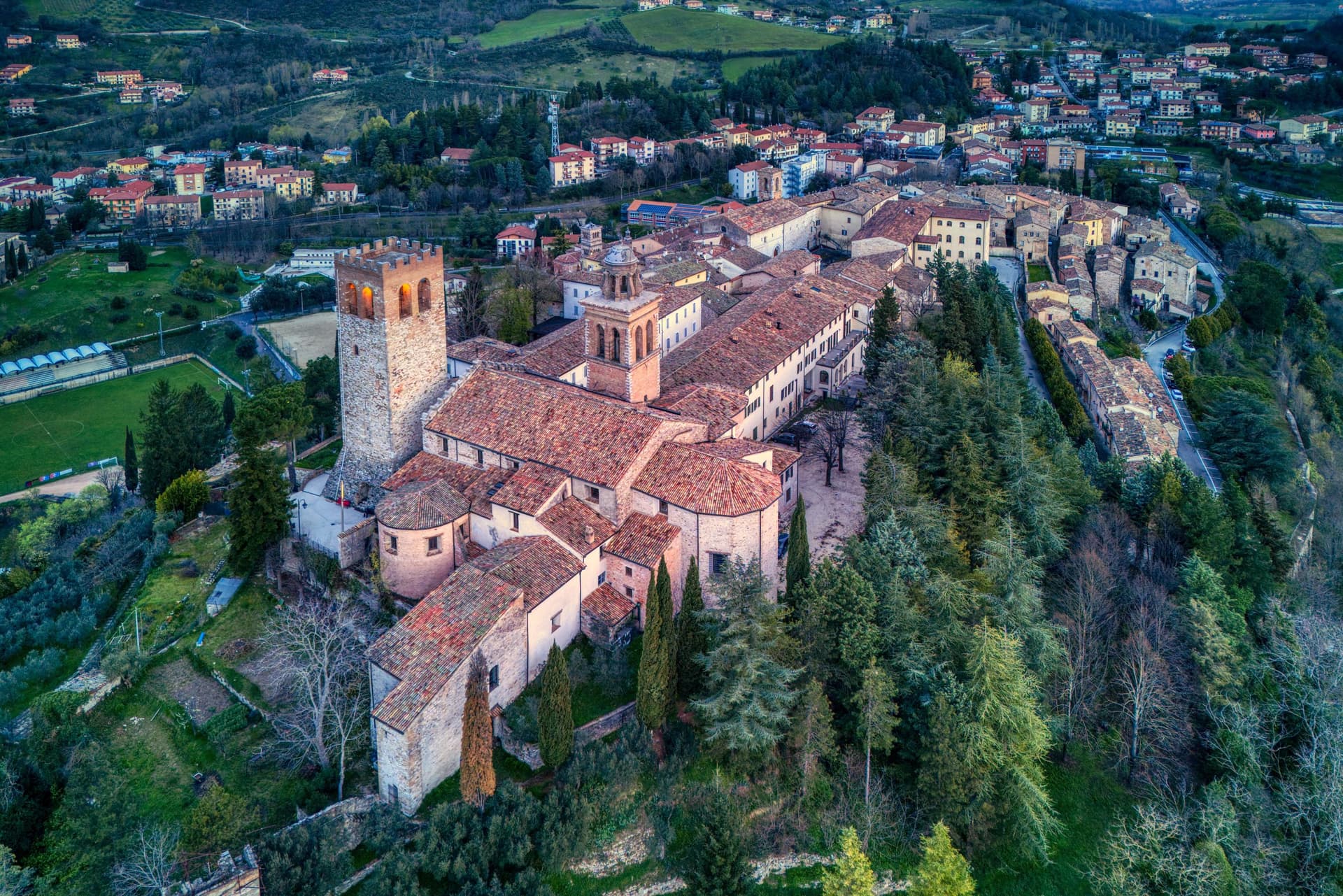
Nocera Umbra sits fifteen kilometers north of Foligno. The Romans called it Nuceria; the town has held its own bishopric since the early Middle Ages and was contested between Perugia, Spoleto and the Trinci of Foligno through the medieval period, a tug of war between larger powers that left it walled and defensible on its slope rather than absorbed by any one of them.
The centro storico climbs to a summit where the tower, the cathedral and the former Rocca stand together, the civic and the religious and the military crowded onto the same high ground. Below, five kilometers down from that core, the springs form a separate pole of the town's life, functional rather than defensive, drawing visitors for water rather than for stone.
The Bandiera Arancione recognition was reconfirmed after reconstruction, a marker that the rebuilding did not just replace what fell but held the town to the standard it met before the quake.
The re-enactment here is Palio dei Quartieri, usually held in August.
What to see in Nocera Umbra
- Campanaccio (Torre Civica). Eleventh-century square tower at the highest point of the borgo. Only part of one side remained standing after 1997; the rest is reconstruction, stone matched to stone.
- Pinacoteca e Museo Civico. Civic gallery in the deconsecrated Chiesa di San Francesco with works by Niccolò Alunno, Matteo da Gualdo, and the school of Cimabue.
- Cattedrale di Santa Maria Assunta. Cathedral at the summit of the centro storico, partially damaged and restored, set beside the tower and the former Rocca.
How to get to Nocera Umbra
There is a railway station in the town, so you can arrive without a car and never need one while you are here. Perugia is roughly 57 minutes away by road.
Our tip
April through June and September into October are the months locals prefer. The slopes around the centro storico hold light well into the evening and the Bagni di Nocera springs are at their easiest to walk. July and August push temperatures into the low thirties, manageable at this elevation; the Pinacoteca and the cathedral stay cool through the afternoon. Palio dei Quartieri falls in August.
Passignano sul Trasimeno
Why visit Passignano sul Trasimeno
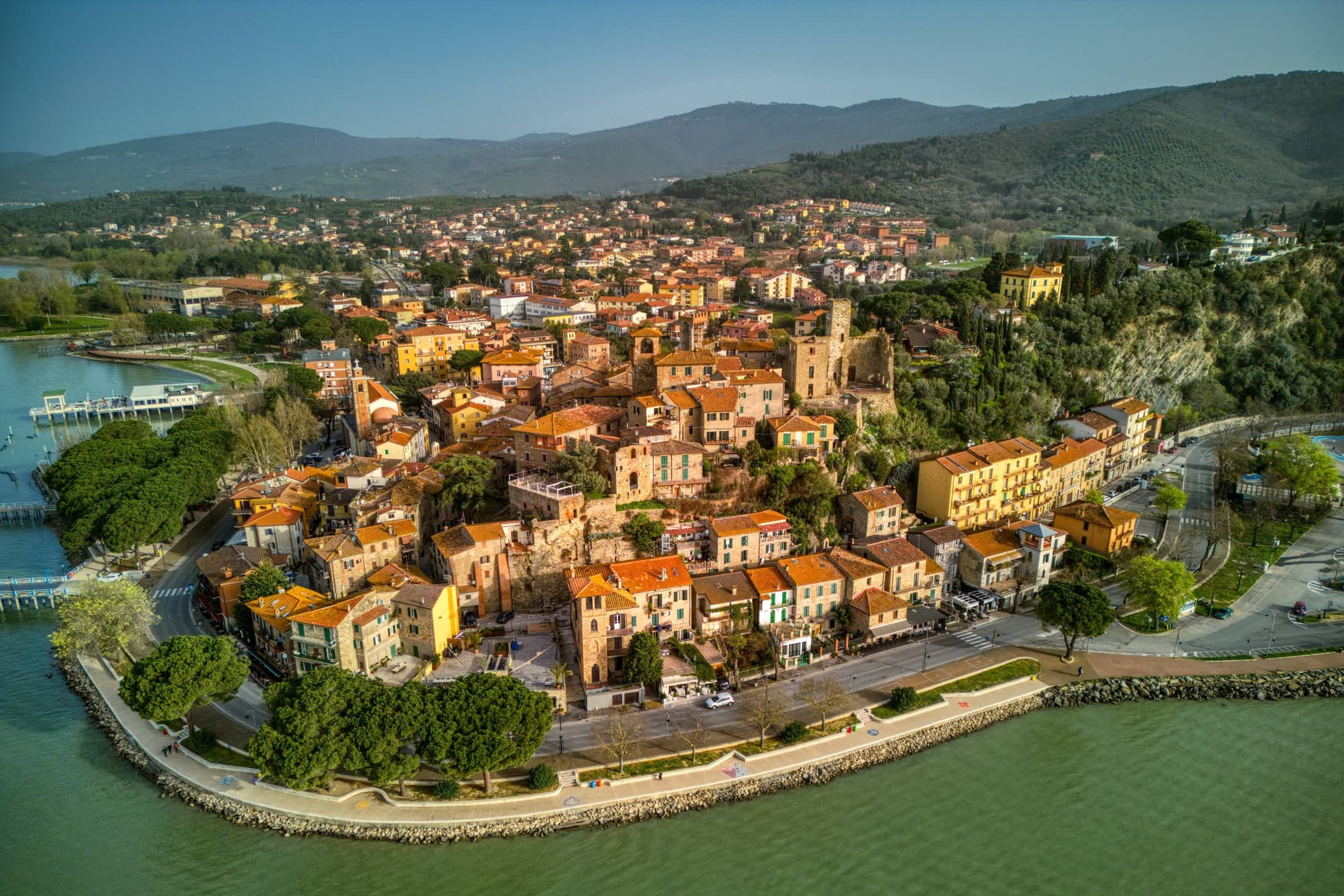
Passignano sul Trasimeno sits on a low promontory on the northern shore of Lake Trasimeno, twenty kilometers northwest of Perugia, separated from the lake only by the road that links Perugia to Tuscany. The Umbri held the ground first, then the Etruscans pushed them east of the Tiber; the Romans turned the spur into a watchtower controlling the pass between northern and central Italy.
In 217 BC Hannibal trapped Gaius Flaminius's army of 25,000 in the narrow road between Tuoro and Passignano, killing about 15,000 Romans in the morning fog of June 21, one of the worst defeats in Roman history. The Rocca, built around 850 by the marquises of Tuscany and conquered by Perugia in 1187, holds a quadrangular plan around a 32-meter keep that survived a 1778 partial demolition.
The Festa della Padella, held in late August, fries lake fish for the village in a four-and-a-half-meter pan on the shore. The Borgo dei Borghi finalist designation arrived in the 2010s.
The re-enactment here is Festa dei Barbari - Castel Rigone, usually held across July and August.
What to see in Passignano sul Trasimeno
- Rocca di Passignano. Quadrangular fortress built around 850 by the marquises of Tuscany with a 32-meter central keep, partly demolished in 1778.
- Chiesa di San Bernardino. Sixteenth-century church near the Rocca with a Renaissance interior and views down to the lake from its portico.
- Centro di Documentazione Annibale e Battaglia del Trasimeno. Small documentation centre on the Battle of Lake Trasimene of 217 BC and Hannibal's ambush of Gaius Flaminius.
How to get to Passignano sul Trasimeno
There is a railway station in the town, so you can arrive without a car and never need one while you are here. Perugia is roughly 28 minutes away by road.
✷ We have written about Passignano sul Trasimeno
“The lake is like a sanatorium compared to the sea. It’s relaxed. It’s calm. It’s silent. To find this level of almost disturbing quietness, you either go up into the mountains, or you really need to know your way around the sea to find that particular spot not overrun by vacationers and beach people. In Trasimeno, this is easy. Even the most popular towns like Castiglione or Passignano sit in quiet harmony with the stillness of the water.”
Read our piece on Passignano sul Trasimeno →Lago Trasimeno | Never Compete with the Sea
Our tip
April through June and September into October are the months the lake works. The water warms enough by late May for swimming off the Lido and the ferry to Isola Maggiore runs to a steady schedule. July and August are crowded; the Festa della Padella in late August is the loudest weekend of the year. Festa dei Barbari - Castel Rigone falls in July.
Città della Pieve
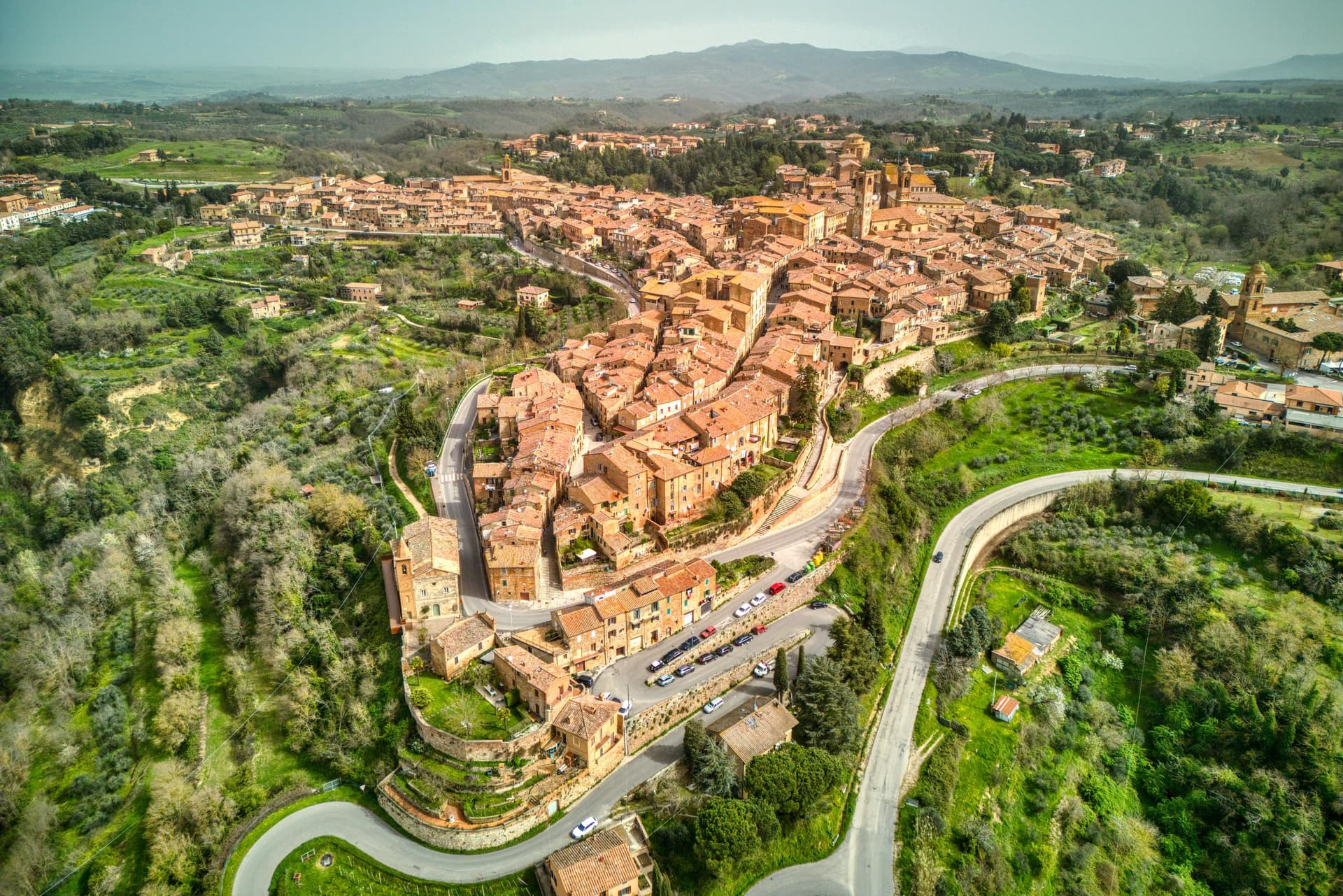
Why visit Città della Pieve
Città della Pieve sits on a hill at 508 meters between Umbria and Tuscany, about 260 meters above the Valdichiana and within sight of Lake Trasimeno. The town is built almost entirely of the local red brick that has been fired here since the Middle Ages, which gives the centro storico a uniform terracotta color.
Pietro Vannucci, known as Perugino, was born here around 1448 and returned in 1504 to fresco the Adoration of the Magi inside the Oratorio di Santa Maria dei Bianchi, one of the largest works he ever painted. The Cathedral of San Gervasio holds two more Perugino panels from 1510 and 1514.
Pope Clement VIII elevated the town from Castel della Pieve in 1600, restoring its episcopal seat. Vicolo Baciadonne, eighty centimeters wide, threads between two brick walls and is regularly cited as the narrowest alley in Italy.
The re-enactment here is Palio dei Terzieri, usually held in August.
What to see in Città della Pieve
- Cattedrale dei Santi Gervasio e Protasio. Cathedral on the main piazza with two Perugino panels, the Madonna and Child with Saints of 1514 and the Baptism of Christ of 1510.
- Oratorio di Santa Maria dei Bianchi. Confraternity oratory holding Perugino's Adoration of the Magi, frescoed in 1504 and considered one of his largest single works.
- Torre del Pubblico. Twelfth-century civic tower in Lombard Romanesque style, thirty-nine meters tall, set next to the cathedral on Piazza Plebiscito.
How to get to Città della Pieve
There is a railway station in the town, so you can arrive without a car and never need one while you are here. Perugia is roughly 47 minutes away by road.
Our tip
April through June and September into October are the months locals prefer. The Valdichiana below stays green or gold depending on the half, and the brick of the centro storico holds the late light well. The Infiorata in June covers the main streets in petal carpets for Corpus Domini, drawing the year's largest crowd. Palio dei Terzieri falls in August.
Deruta
Why visit Deruta
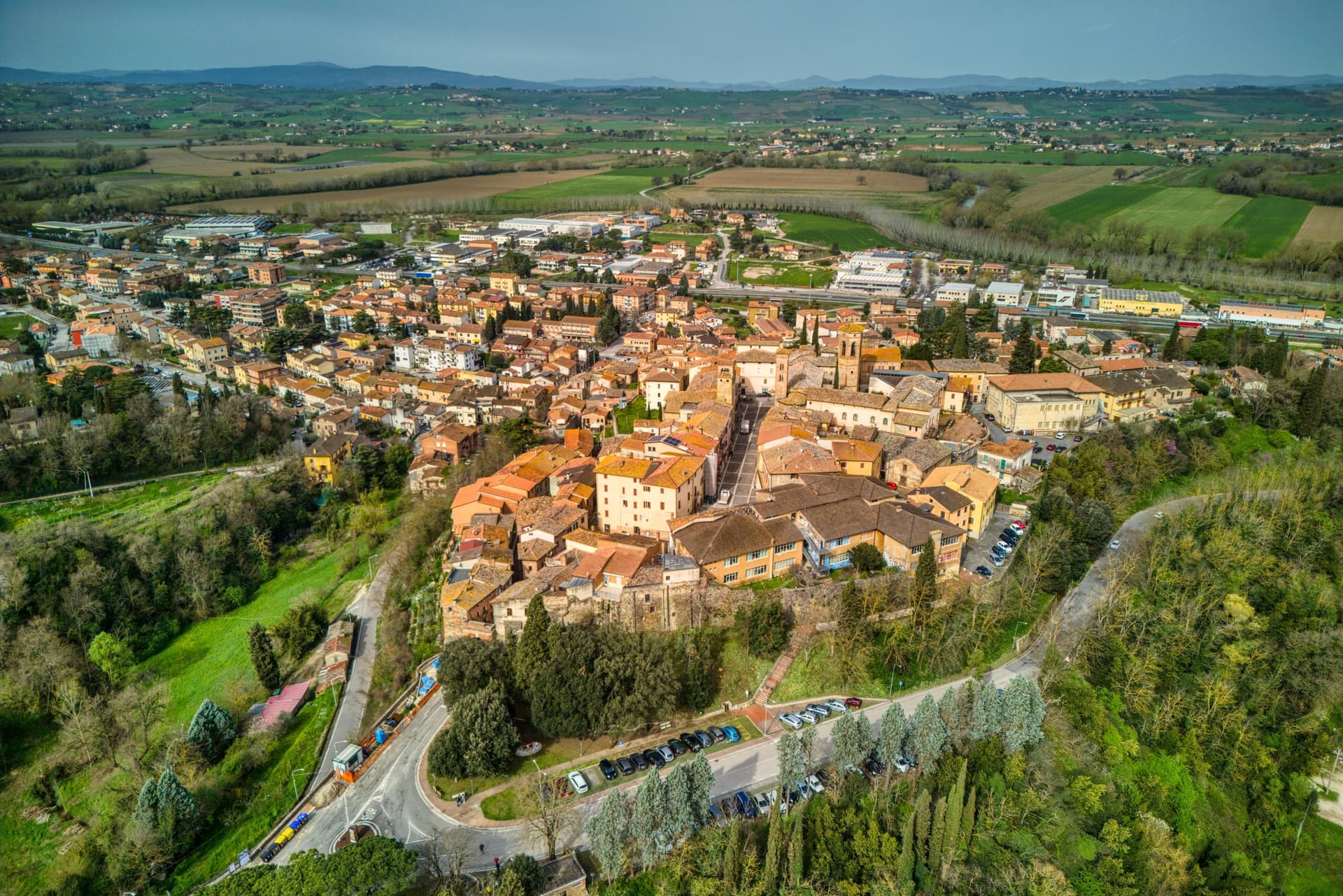
Deruta sits fifteen kilometers south of Perugia, its hill rising above the Tiber on the river's left bank. The walled medieval core, organized around Piazza dei Consoli, occupies the high ground, while the lower town spreads along the old road linking Perugia to Rome.
That road is where the workshops cluster, most of them family businesses running three or four generations deep, and it is also the route that carries traffic five kilometers south to the pilgrimage church, its walls built up over four centuries from votive tiles left by travelers on the same stretch of road. The first documented kilns appear in the archaeological record in the late thirteenth century, and by the early sixteenth the town's workshops had developed the lustro finish that gave Deruta wares their metallic shine, along with the Bella Donna plates that paired painted portraits with flattering banderoles naming the women depicted.
That convent complex, once a working monastery, now holds both the ceramics museum and, next door, the civic gallery with its Perugino and Alunno panels, so the town's religious architecture, its art collection, and its ceramics history sit under the same roof by accident of reuse rather than design. The upper town's churches and museums hold the record of what Deruta made and believed; the lower town's workshops are still making it.
The re-enactment here is Palio della Brocca, usually held across August and September.
What to see in Deruta
- Museo Regionale della Ceramica. Holds over 6,000 pieces from medieval to modern, arranged through the convent's old cloister and cells.
- Chiesa di San Francesco. Consecrated 1388 after earthquake reconstruction, Sienese 14th-century frescoes inside, Domenico Alfani Raphael-school panel above an altar.
- Pinacoteca Comunale. Civic gallery with Perugino's Eterno and Saints Romano e Rocco, plus two altarpieces by Niccolò Alunno from the surrounding churches.
How to get to Deruta
There is a railway station in the town, so you can arrive without a car and never need one while you are here. Perugia is roughly 19 minutes away by road.
Our tip
April through June and September into October are the months locals prefer. The Tiber valley stays mild and the workshops keep regular hours, with kilns running on weekdays and tastings open on weekends. The Festa della Ceramica in late August opens the cellars and the older workshops to the public. Palio della Brocca falls in August.
Amelia
Why visit Amelia
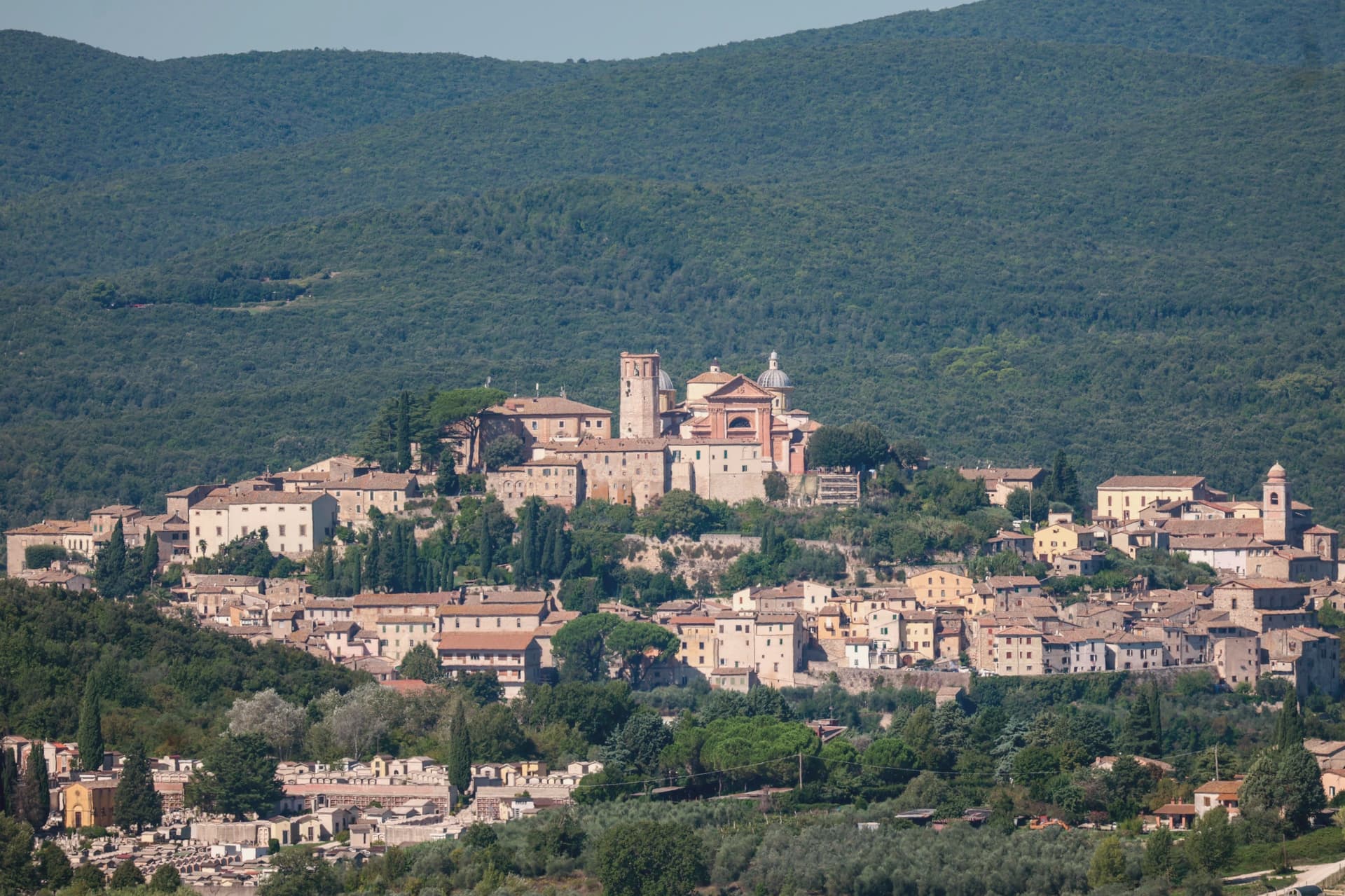
Amelia sits on a hill between the Tiber and the Nera, sixty kilometers south of Perugia and close to the Lazio border. The walls that ring the town predate the Roman conquest, and when Amelia later became a Roman municipium, the town built outward and downward at once: terraces and roads above ground, and below the main square, a system of parallel cisterns cut to hold the settlement's water.
The gate on the old Via Amerina still marks the approach from outside, its current travertine form the result of sixteenth-century rework. Just beyond it, a bronze cuirassed general over two meters tall lay buried until 1963, when it surfaced and was moved into the town's archaeological museum.
The cathedral at the upper end of the centro storico carries its own layer of history, re-dedicated in the ninth century under a pope, and stands apart from the defensive and civic works that dominate the rest of the town's fabric. Amelia joined the Cittaslow network in 2004, and each summer the chamber-music festival founded in 1968 turns the town's attention outward to a different country's repertoire.
The town's layers sit on top of each other rather than beside each other: pre-Roman defense, Roman engineering, medieval faith, and a modern festival calendar all occupying the same small hill in sequence.
The re-enactment here is Palio dei Colombi, usually held in July.
What to see in Amelia
- Mura poligonali. Up to 6 meters high in places, the blocks fitted without mortar along the line that still defines the edge of the old town.
- Cisterne romane. The chambers measure 57.5 by 19.6 meters and sit directly beneath the paving of Piazza Matteotti, invisible from the square above.
- Duomo di Santa Firmina. Cathedral re-dedicated to Saint Firmina around 872 under Pope Adrian II, at the upper end of the centro storico.
How to get to Amelia
Terni is roughly 33 minutes away by road.
Our tip
April through June and September into October are the working months: dry air, light on the polygonal walls, evenings on the Cittaslow corso. The Festival delle Nazioni runs late August into early September and draws audiences from Rome and beyond. July and August reach the mid-thirties; at 406 meters the centro storico breathes better than the Terni basin but afternoons still empty. Palio dei Colombi falls in July.
More from Anywhere Italy
 The best hidden hill towns with a medieval festival within 90 minutes of Perugia
 The 10 prettiest hidden villages you can reach by train in Umbria
 The prettiest villages with a medieval festival within 90 minutes of Perugia
 The best towns with a medieval festival that you can reach by train within 90 minutes of Perugia
 The best hidden towns inside a nature park in the province of Perugia
- The best hidden hill towns you can reach by train in the province of Perugia