
The best hill towns in the province of L'Aquila
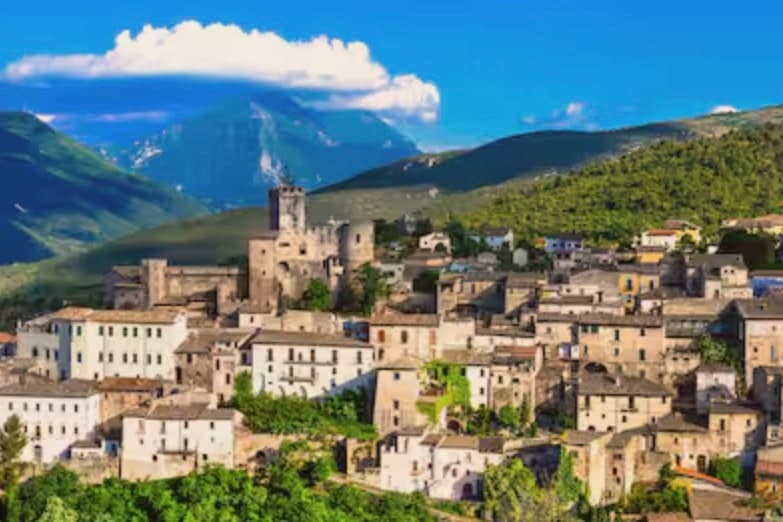
Inland Abruzzo builds upwards because the ground gives it no choice. These are settlements of pale limestone and river stone stacked on slopes above the Aterno, the Tirino and the Sagittario, with lanes that turn into steps and houses whose back walls are the rock itself. The food follows the altitude: lamb, saffron grown on the Navelli plain, red garlic, mountain pecorino, confetti from Sulmona's sugar workshops, and the heavy winter pastas that suit a place where snow sits on the Maiella until spring. Autumn is the season that flatters it most, when the vineyards below the walls turn and the light comes in low across the basins.
Most visitors to this province drive straight for the Gran Sasso, up to Campo Imperatore and the ruined tower at Rocca Calascio, then across to Santo Stefano di Sessanio, and the run has become a fixed circuit. It is worth doing, and the reason it fills up in August is that the scenery earns the reputation. Coaches park where the asphalt ends, the few bars in the walled villages work at capacity, and the photograph everyone wants is taken from the same spot on the same ridge. On a summer weekend the emptiness people came for is somewhere else.
The same mountains and the same stone carry on south and west, down the Peligna valley towards the Liri and along the edge of the Sirente-Velino range. Fewer people go, partly because the towns are smaller and partly because they sit off the main tourist road rather than on it, but the castles, the Romanesque churches, the saffron fields and the sheep tracks are all still there. These are the hill towns in the province of L'Aquila that reward a detour of a morning or a long lunch.
Of the 42 communes we have mapped in the province of L'Aquila, 8 qualify as hill towns: each is an inland hill settlement built on ground too steep to spread. The smallest, Ofena, has 420 residents.
Two more lists worth reading alongside this one: The best small hill towns inside a national park in Abruzzo and The best hill towns you can reach by train in Abruzzo.
Ofena
Why visit Ofena
Ofena lies fifty kilometers inland from Pescara, in a basin closed to the south by the Gran Sasso wall. The Vestini, an Italic people, held their city of Aufinum here before Rome, and the basin sat on the Via Claudia Nova.
Archaeological remains from that period include large buildings, mosaics and tombs. The walled medieval village grew inside the same basin, its streets, baronial palazzo and eighteenth-century Palazzo Cataldi Madonna set against the older ground of the earlier settlement beneath them.
The heat that the wall traps against the basin floor, the same heat that gave the place its name, is what has kept vines on these slopes since among the earliest recorded plantings of the region's grape, and it is what still draws a wine estate to work the amphitheater at the foot of the glacier above the town. Basin, wall, and vine slope are one and the same geography, read three different ways.
What to see in Ofena
- Centro storico. Compact walled medieval village inside its original perimeter, with the baronial palazzo at the centre and late medieval houses along narrow stone streets. Home today to the 420 remaining residents.
- Chiesa di San Nicola di Bari. Parish church in the centro storico, the religious anchor of the medieval settlement, rebuilt over several centuries.
- Convento di San Francesco. Franciscan convent at the edge of the village, with the Monastero dei Cappuccini further out, both marking the early modern religious life of the basin.
How to get to Ofena
Pescara is roughly 60 minutes away by road.
Our tip
April through October is the working window for the vineyards, but the Forno's heat makes July and August punishing in the basin itself. May, June, September and October are the comfortable months, with the Gran Sasso wall snow-tipped against the green slopes below. Harvest runs late September into October and brings the small population back into the streets.
Roccacasale
Why visit Roccacasale
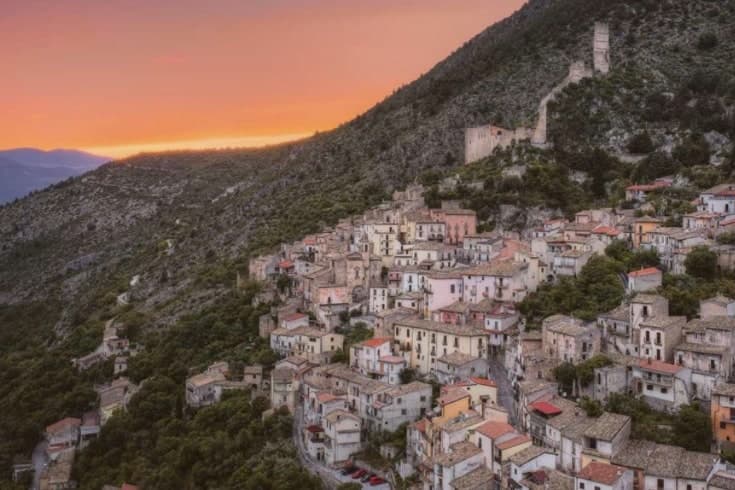
Roccacasale sits at 450 meters, overlooking the Peligna valley and the town of Sulmona below. The settlement coalesced as a defensive borgo on the slopes directly under a rocca built before the year 1000 to guard the entrance to the Sangro valley and the Cinquemiglia plain against Saracen and Byzantine raids.
In 1318 part of the territory passed to Giacomo Cantelmo. The Cantelmo family held the castle through the Renaissance, then in the late sixteenth century it passed to the barons whose name it still carries.
In 1803, in the wake of the Napoleonic wars, the French army destroyed it. The terraced houses of the borgo and the hilltop ruin above them still trace that original relationship, defended village below, stronghold above, unchanged in plan since the medieval period.
The commune lies inside the Maiella National Park, its territory reaching from the valley floor up the ridge toward hermitage sites once occupied by a hermit pope. What remains is a settlement whose whole layout, from the walled church to the terraces to the shattered walls on the hill, still reads as a single defensive idea built to watch two valleys at once.
What to see in Roccacasale
- Castello De Sanctis. Ruins standing directly above the borgo, reachable by the path climbing from the terraced houses to the hilltop where the walls still crown the slope.
- Chiesa di Sant'Michele Arcangelo. Parish church inside the ancient walls, consecrated 1579, with a baroque interior restored in the nineteenth century.
- Borgo medievale. Stone houses arranged on terraces directly below the ruined castle, original medieval plan preserved.
How to get to Roccacasale
There is a railway station in the town, so you can arrive without a car and never need one while you are here. Pescara is roughly 52 minutes away by road.
Our tip
April through June and September through October are the best windows. The Morrone trails open in late spring and the slopes above the village hold wildflowers through June. October brings the Peligna valley harvest and clear light on the castle ruins.
Castelvecchio Subequo
Why visit Castelvecchio Subequo
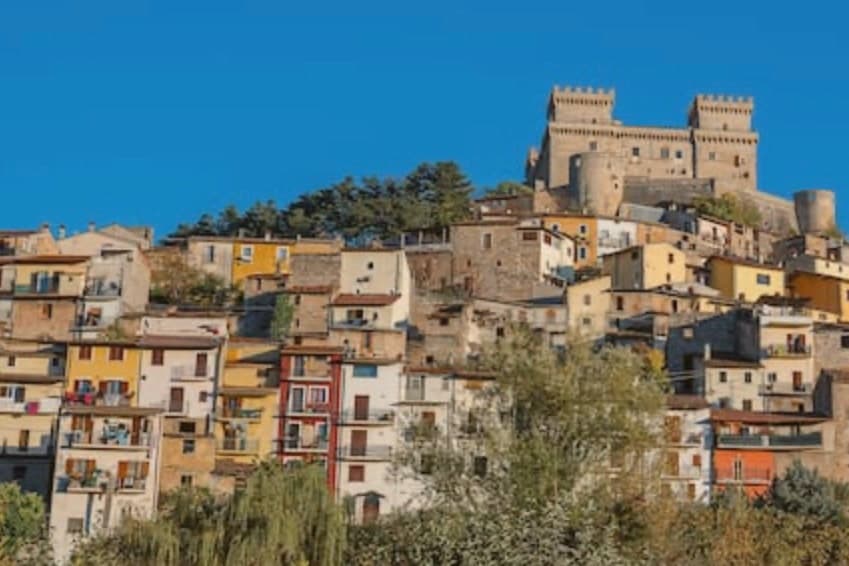
The village sits on a rocky spur of Monte Putano, in the Subequana valley, on the footprint of Roman Superaequum, a municipal town of the Paeligni recorded by Pliny. Under the Lombards it was known as Onuffolo, and the Latin name returned under the Normans.
The upper spur carries the ruined medieval castle that gave the place its present name, old castle, while the lower town grew up around the Franciscan convent after Francis of Assisi passed through the valley between 1216 and 1222 and was given a small church by the Counts of Celano. Pope Celestine V stayed here in 1294, and the village has come to be called the little Assisi of Abruzzo.
Between the Roman ruins below ground, the rock-cut catacombs among the oldest in the region, the castle above the roofs, and the convent that still draws the town's identity around it, the place reads as a settlement built in layers, each era leaving its marker rather than replacing what came before.
What to see in Castelvecchio Subequo
- Convento di San Francesco. A national monument since 1902. The Giottesque frescoes cover the life of the saint across the interior, and the fabric of the building has stood since the Counts of Celano handed over the ground it sits on.
- Museo d'Arte Sacra. Reliquaries, a 1403 altar cross, and the silver Pasquarella sculpture, also a gift of the Counts of Celano, kept in the convent's own museum rooms.
- Catacombe paleocristiane. Cut directly into rock, this cemetery ranks among the earliest physical evidence of Christianity anywhere in Abruzzo.
How to get to Castelvecchio Subequo
Pescara is roughly 65 minutes away by road.
Our tip
April through October is the strong stretch for Castelvecchio Subequo. The Subequana valley warms early, the convent runs visiting hours through the high season, and the trails up Monte Sirente clear of snow by late May. July and August are hot in the valley and the village empties between three and six in the afternoon.
Capestrano
Why visit Capestrano
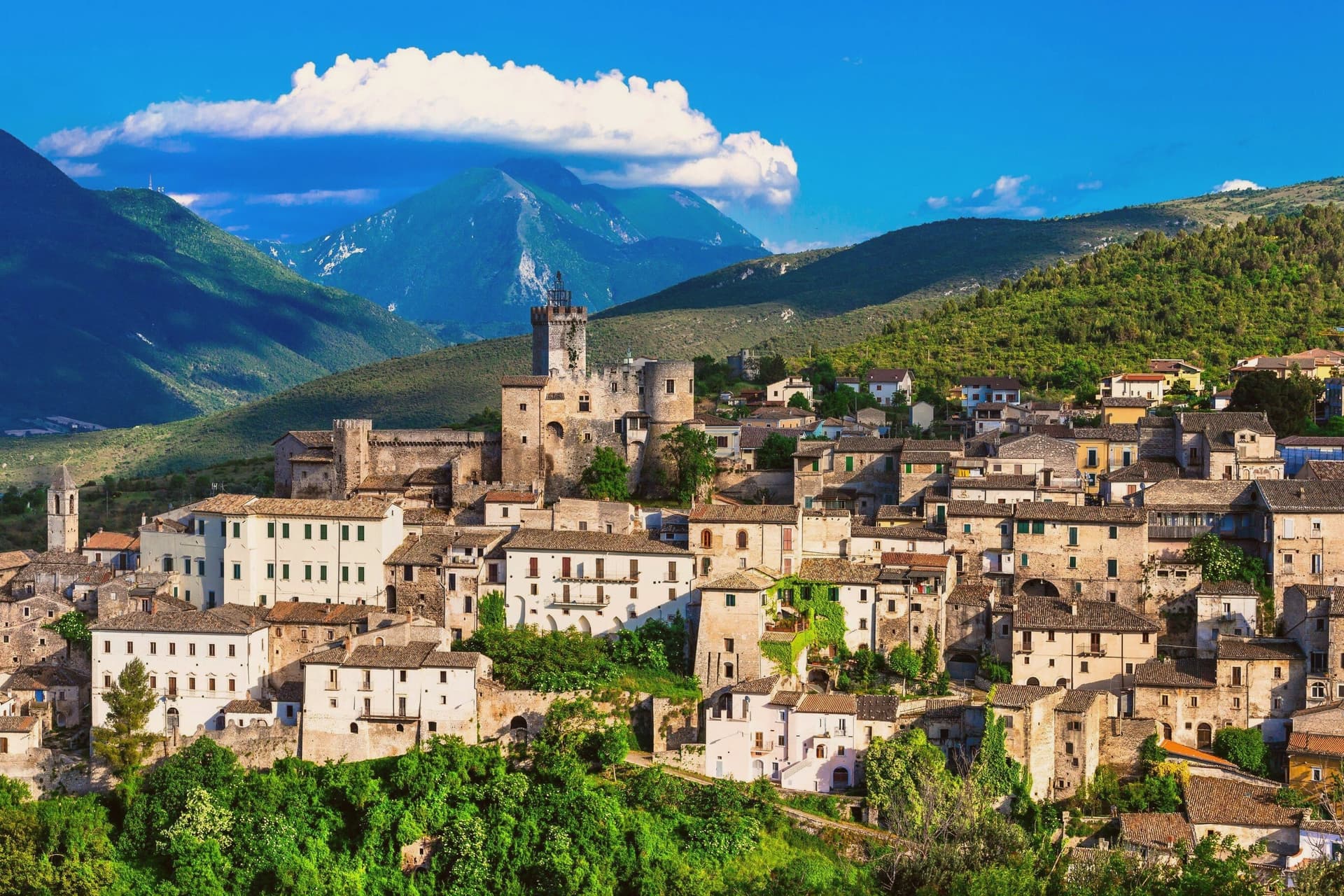
Capestrano sits at 465 meters on a hill above the Tirino river valley, eight hundred residents inside the borders of the Gran Sasso National Park. In September 1934 a farmer working a field at nearby Cinturelli unearthed a 2.1-meter limestone statue of a helmeted warrior, now identified as a 6th-century BC depiction of an early Italic king of the Vestini tribe, sculpted by Aninis.
The Warrior of Capestrano was moved to the National Archaeological Museum of the Abruzzi in Chieti, and the discovery triggered excavations that produced thirty-three tombs and a companion piece known as the Lady of Capestrano. The town itself is dominated by the Castello Piccolomini, built in the 13th century by the Medici and later passed to the Piccolomini family.
Below the town, the springs of the Tirino feed one of the cleanest short rivers in Italy. The Abbey of San Pietro ad Oratorium stands four kilometers away, a 9th-century foundation rebuilt by the Lombards.
What to see in Capestrano
- Castello Piccolomini. 13th-century castle on the hill next to the Tirino river, later owned by the Medici and the Piccolomini families.
- Abbazia di San Pietro ad Oratorium. Lombard-era abbey four kilometers from town, founded in the 8th century and rebuilt with characteristic stone masonry.
- Sito di Cinturelli. Field where the Warrior of Capestrano was unearthed in 1934, alongside thirty-three Italic tombs and the Lady of Capestrano statue.
How to get to Capestrano
Pescara is roughly 50 minutes away by road.
Our tip
April through June is the green season in Capestrano, when the Tirino runs fast and the almond trees in the valley flower early. September and October are dry and gold, the months for walking the abbey ruins and the field at Cinturelli where the Warrior was found. July and August are hot in the valley below 500 meters, though the town itself stays cooler than Pescara on the coast.
Corfinio
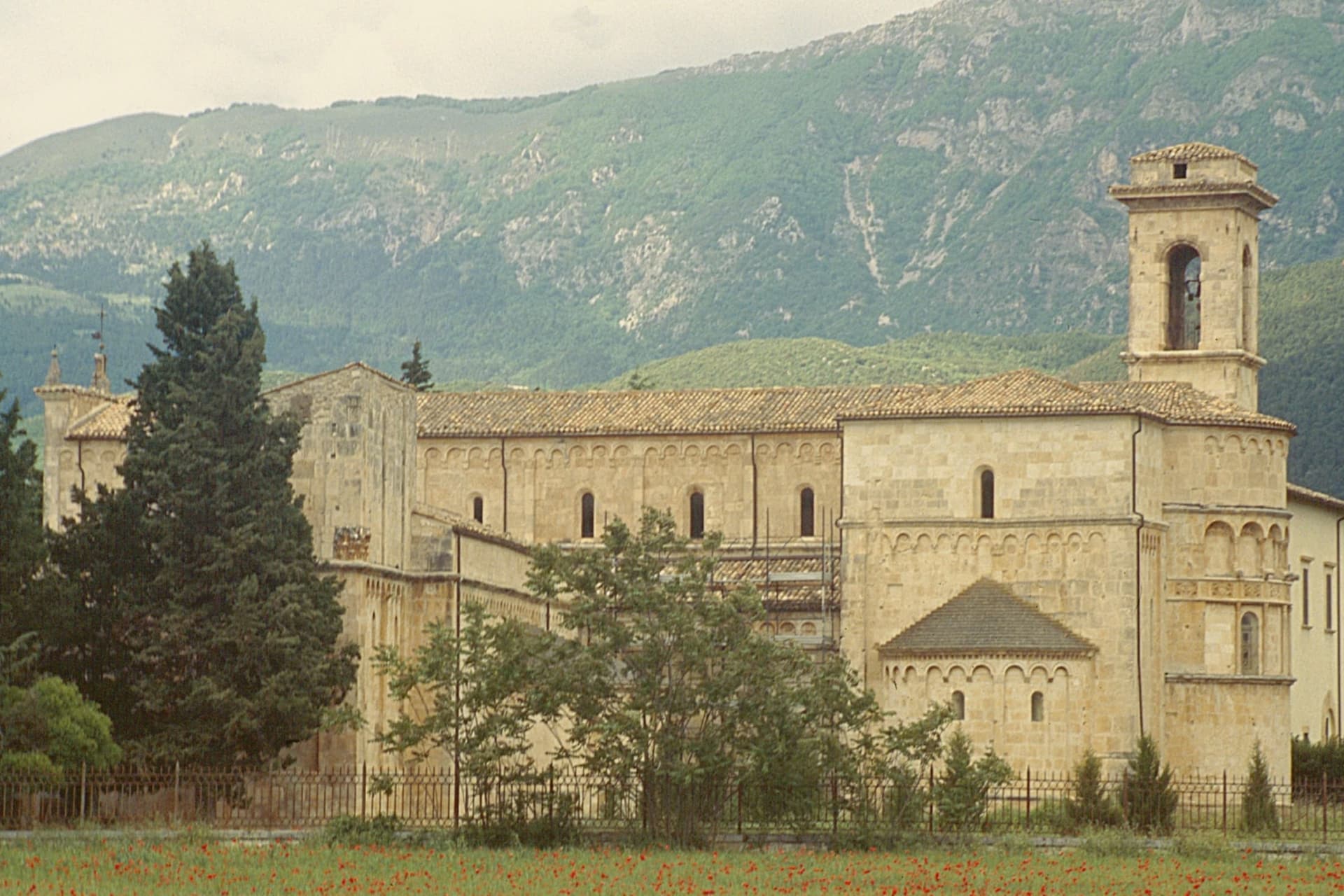
Why visit Corfinio
Corfinio is a village of fewer than a thousand people on the floor of the Peligna valley at 346 meters, surrounded by the Maiella to the east and the Morrone to the north. Underneath it lies Corfinium, the city the Italic socii chose in 91 BC as the capital of their revolt against Rome.
They renamed it Italica, struck silver coins with the legend ITALIA, built a new forum, and were defeated within four years. The Romans demoted the place; the bishopric of Valva eventually replaced it in the Middle Ages.
What remains above ground is the Basilica Valvense di San Pelino, an eleventh-century Romanesque church just outside the present village, with a separate twelfth-century oratory of Sant'Alessandro built on the cemetery where Pelino was martyred in the fourth century. The archaeological museum holds the coins and the inscriptions.
Corfinio sits inside the Maiella National Park.
What to see in Corfinio
- Basilica Valvense di San Pelino. Eleventh-century Romanesque cathedral renovated by Bishop Trasmondo between 1075 and 1102, one of the finest in Abruzzo.
- Oratorio di Sant'Alessandro. Twelfth-century chapel adjoining the basilica, built on the early Christian cemetery where Saint Pelino was martyred in the fourth century.
- Area archeologica di Corfinium. Remains of the Italic and Roman city that served as the Social War capital under the name Italica, including forum traces and necropolis.
How to get to Corfinio
Pescara is roughly 47 minutes away by road.
Our tip
April through June is when the Peligna valley is at its best, the slopes green and the air still cool enough for archaeological walks. September and October are the second window, with cooler days and grape harvest in the surrounding farms. July and August can push past thirty-five degrees on the valley floor; the basilica stays cool, the open digs do not.
Morino
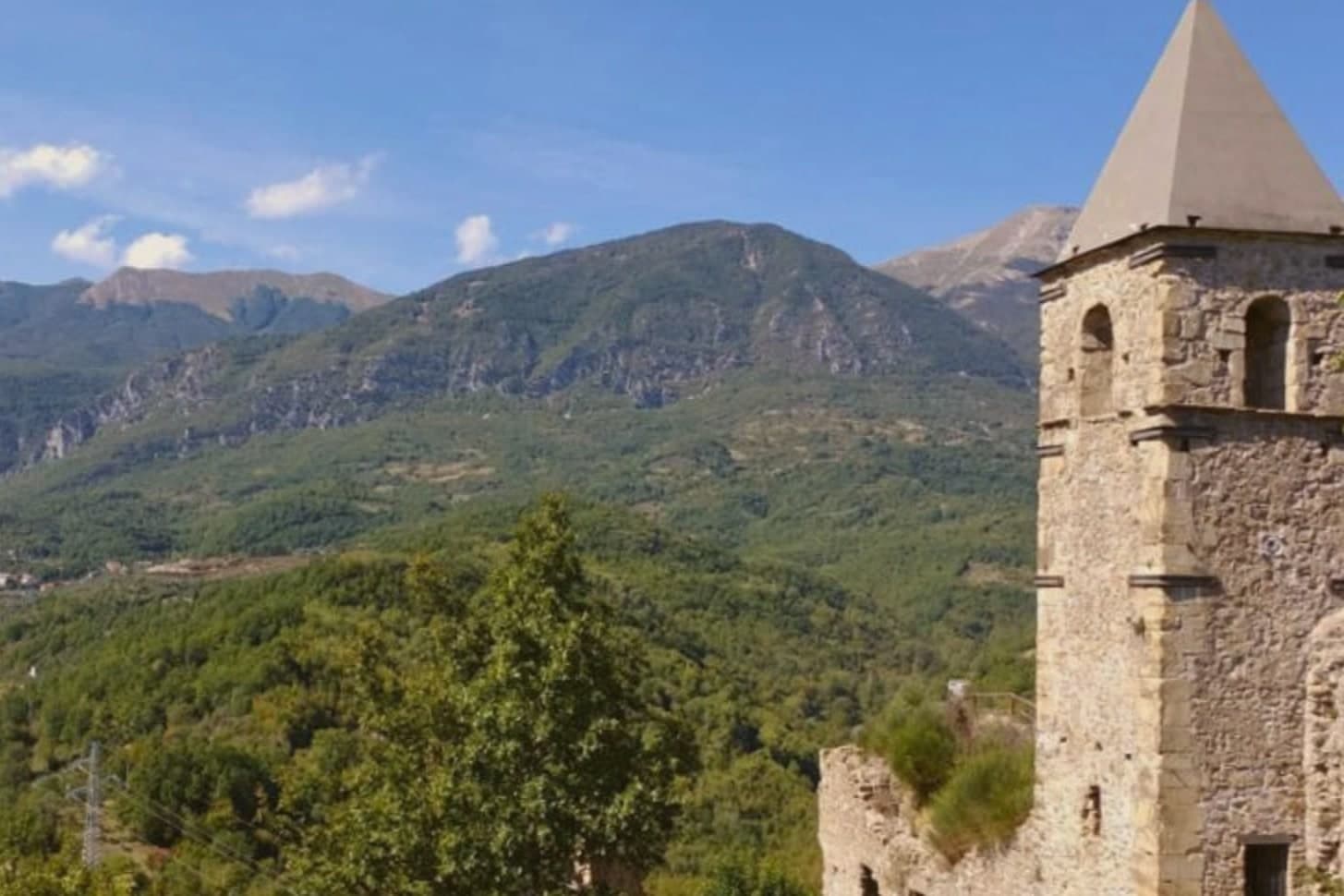
Why visit Morino
The Liri river cuts a long corridor south from Avezzano along the Lazio border, and Morino sits partway down it, the main village at 440 meters with its hamlets strung along the slopes above. Rendinara, the highest of these, sits at 914 meters on the flank of Monte Pizzo Deta, closer to the mountain pastures than to the valley floor where the parish church and the rest of the settlement lie.
The commune is a member of the Città del Castagno network, and the roscette chestnuts, peeled and boiled with wild fennel, come from the same slopes that carry the reserve's beech and chestnut cover upward toward the peak. The valley's low villages, its high hamlet, and its chestnut woods all answer to the same terrain: a river corridor walled in by mountains that push settlement upward in places and leave the water, higher still, to do the rest.
What to see in Morino
- Riserva Naturale Zompo lo Schioppo. Protected reserve established 1987 around the waterfall, with beech forests, chestnut groves, and trails climbing toward Monte Pizzo Deta.
- Cascata di Zompo lo Schioppo. The Romito stream drops off a limestone cliff above the village. The name is dialect: zompo means leap, schioppo the gunshot crack of the water striking rock below.
- Rendinara. Mountain hamlet on the slopes of Monte Pizzo Deta, the highest inhabited frazione of the commune, reached by the Val Roveto road above the main village.
How to get to Morino
Roma is roughly 122 minutes away by road.
Our tip
April through October works for Morino. The waterfall runs strongest in spring meltwater months, May and June, and the chestnut woods turn in October. July and August can be warm in the valley but the reserve stays shaded under beech canopy and stream temperatures hold.
Balsorano
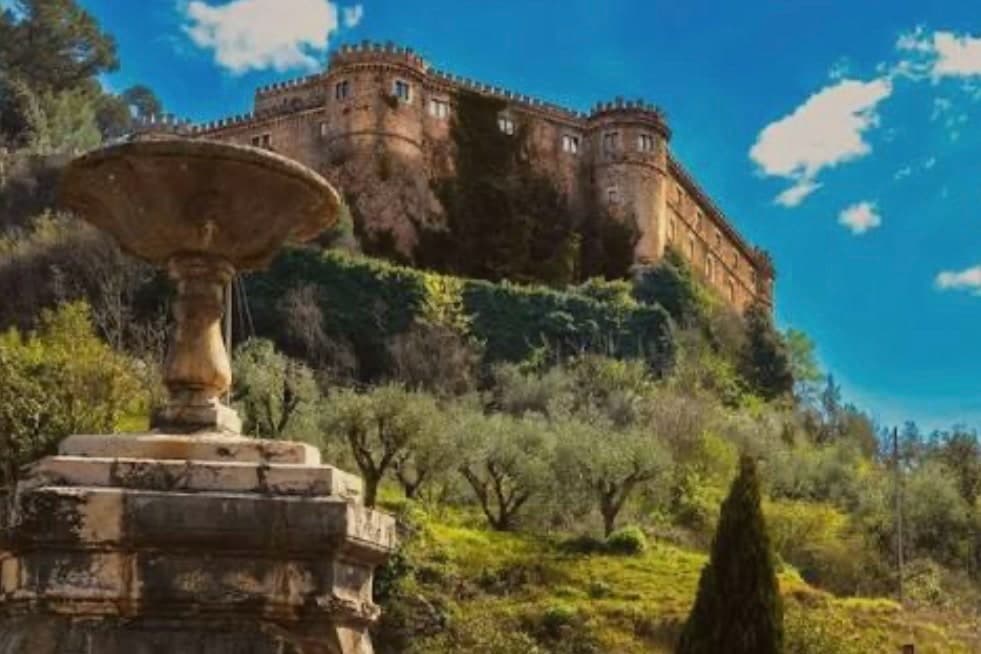
Why visit Balsorano
Balsorano sits along the Liri river at the southern edge of Marsica, first documented in the 10th century. Through the Middle Ages and into the early modern period it was held by the Piccolomini barons, whose fortress still stands on the ridge above the town.
The valley running south from it toward Lazio is the lower stretch of a longer stretch of river country, its floor given over to chestnuts and olives and crossed by the highway that follows the water south. The town itself is really two places.
The old village, gathered below the castle since the Middle Ages, was flattened by the 1915 earthquake and left as ruins on the slope. What functions as Balsorano today was built a kilometer north afterward, a plain reconstruction with none of the older settlement's history.
The castle above them both survived the quake that leveled everything around it, which is the plainest fact about the place: the fortress outlasted the town it once ruled, and the town that replaced the old one had to start over at a distance from where the barons had put it.
What to see in Balsorano
- Castello Piccolomini. Irregular fortress with circular corner towers, built by Antonio Piccolomini, nephew of Pope Pius II, on a ridge over the valley. The rooms now serve as a hotel.
- Balsorano Vecchio. Ruins of the medieval village on the slope below the castle, left standing since the earthquake and visible from the fortress walls.
- Balsorano Nuovo. The rebuilt center where the comune's population now lives, its streets laid out fresh rather than following the old village's plan.
How to get to Balsorano
There is a railway station in the town, so you can arrive without a car and never need one while you are here. Latina is roughly 101 minutes away by road.
Our tip
April through October is the workable window. The valley warms early, the chestnut groves around the castle hold their leaves into late October, and the hotel inside Castello Piccolomini runs full season. July and August are hot in the Liri valley and can push past 35 degrees on the lower ridges.
Sulmona
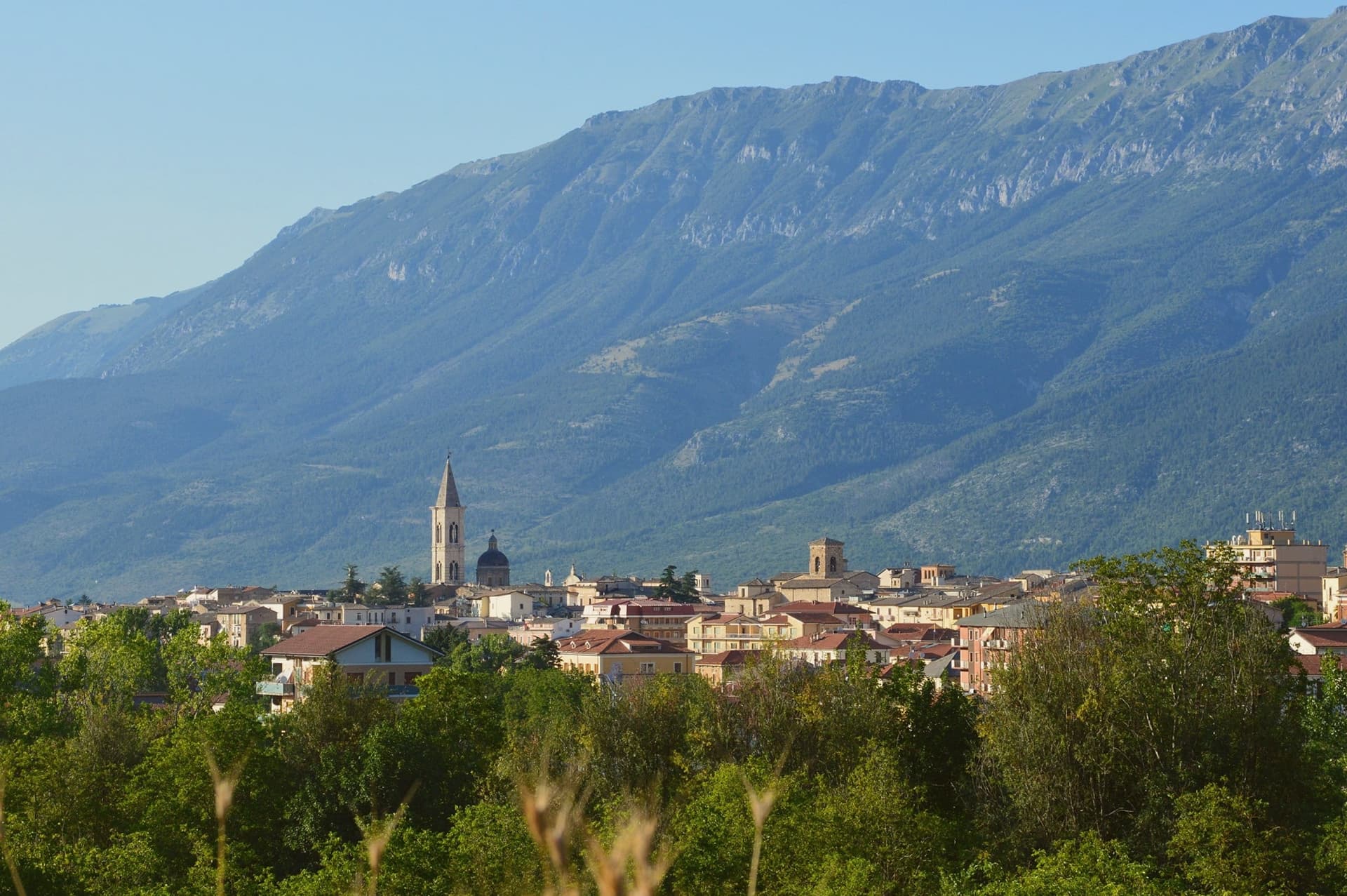
Why visit Sulmona
Sulmona sits at 405 meters in the Valle Peligna, at the confluence of the Gizio and Vella rivers, ringed by the Maiella, the Morrone and the Genzana ranges. The Roman poet Ovid was born here in 43 BC and never stopped writing about the salubrity of its water, a claim still made by the town.
Under Frederick II in the 13th century, Sulmona became the capital of the imperial province of Abruzzo and got the aqueduct of Manfred of Swabia, which still defines the long side of Piazza Garibaldi. The town survived two earthquakes, in 1349 and 1456, and emerged as the home of confetti, the sugared-almond confection given at weddings and baptisms.
Confetti Pelino, the best-known house, has been producing in town since 1783. Every July, the Giostra Cavalleresca brings out the city's seven boroughs in Renaissance procession from the Cathedral of San Panfilo, ending in a ring-jousting tournament in Piazza Garibaldi.
What to see in Sulmona
- Piazza Garibaldi. The town's main piazza, dominated on its long side by the 13th-century aqueduct of Manfred of Swabia, host of the July Giostra Cavalleresca.
- Cattedrale di San Panfilo. Cathedral of the city's patron, the oldest church in Sulmona, starting point of the Giostra historical procession.
- Palazzo dell'Annunziata. Late-Gothic and Renaissance palace on Corso Ovidio with three different facade phases visible, now housing the civic museum.
How to get to Sulmona
There is a railway station in the town, so you can arrive without a car and never need one while you are here. Pescara is roughly 57 minutes away by road.
Our tip
April through June is the green season in the Valle Peligna, when the Maiella above the town still holds snow. The last week of July brings the Giostra Cavalleresca, the town's biggest annual gathering. August is hot, mid-thirties at midday, and the centro storico empties between two and six.
More from Anywhere Italy
- The best small hill towns inside a national park in Abruzzo
- The best hill towns you can reach by train in Abruzzo
- The best small hill towns you can reach by train in Abruzzo
- The best towns you can reach by train that sit inside a national park in Abruzzo
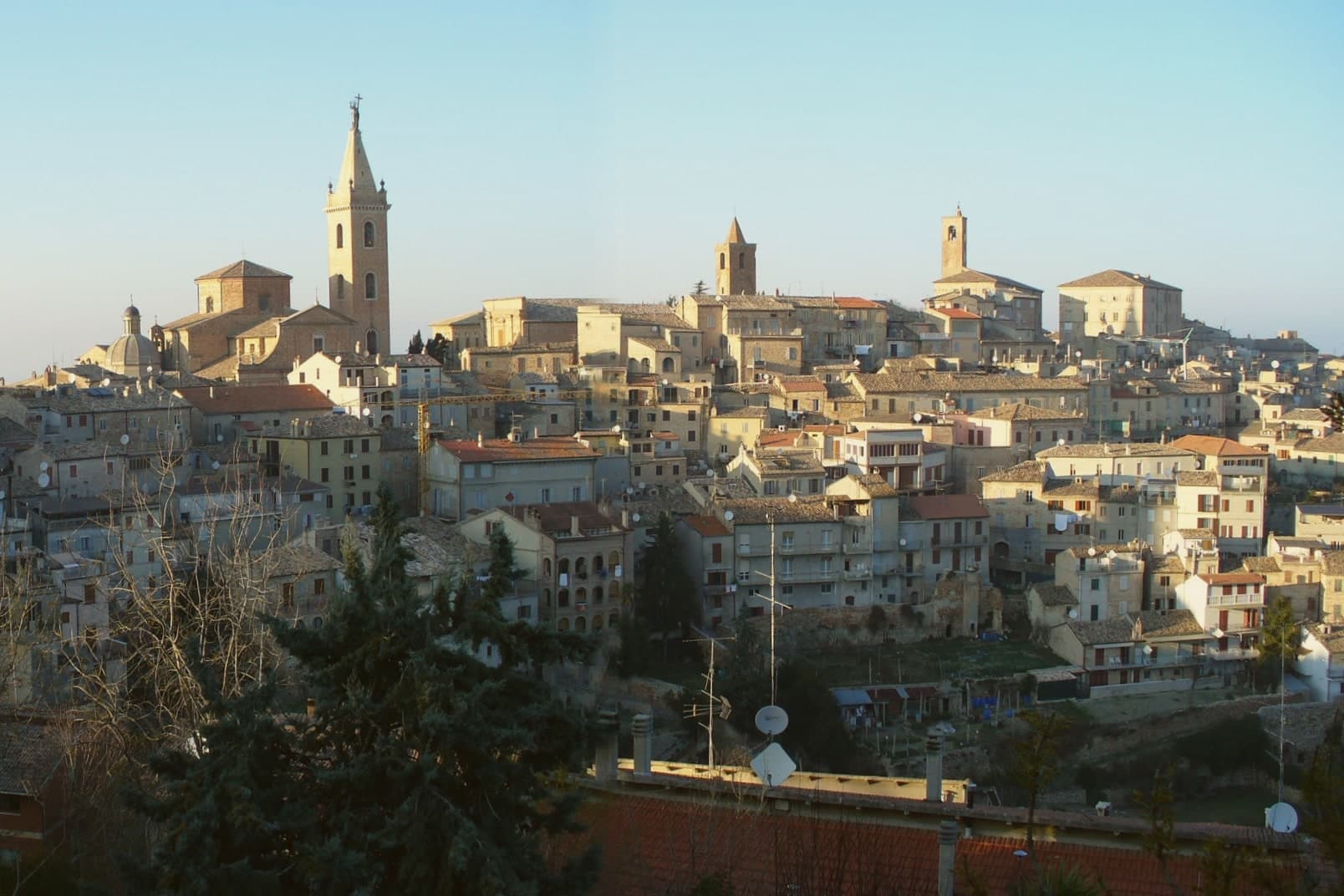 The 8 best hill towns that eat well within 90 minutes of Pescara
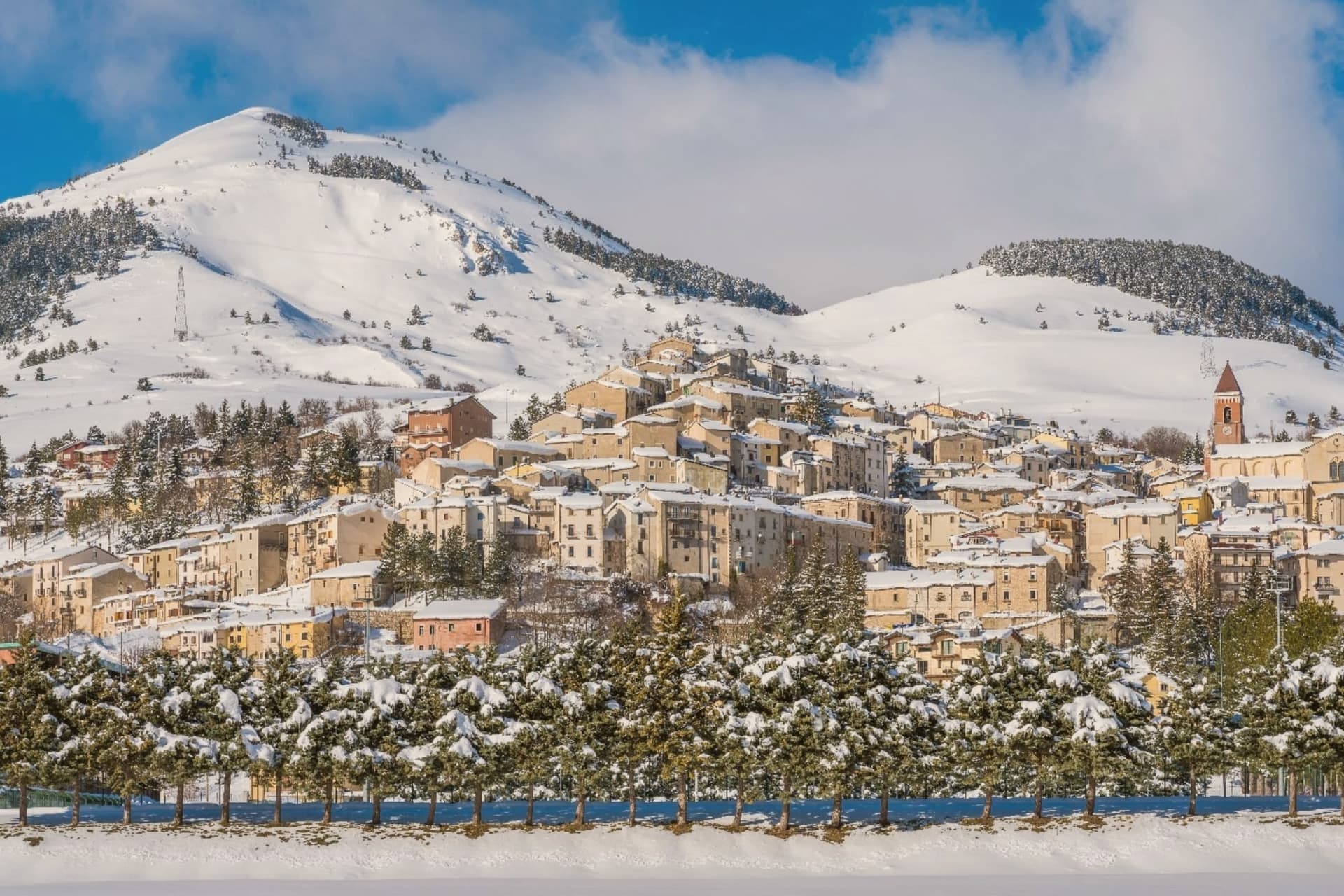 The best towns that eat well in the province of L'Aquila