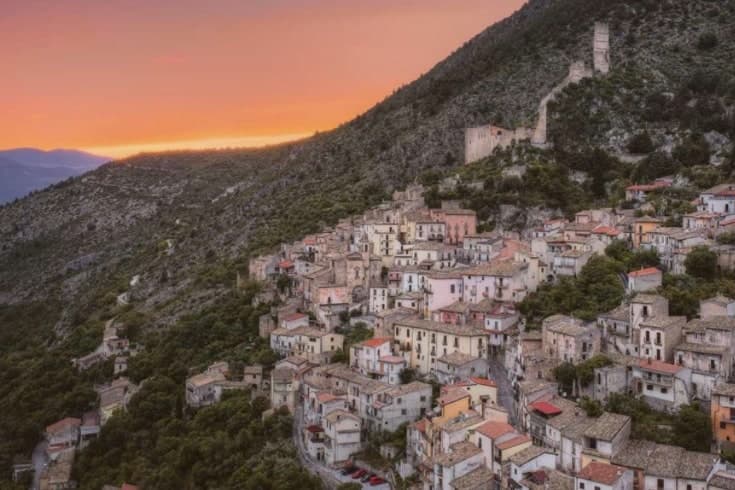
The 6 best hill towns with a food festival in Abruzzo
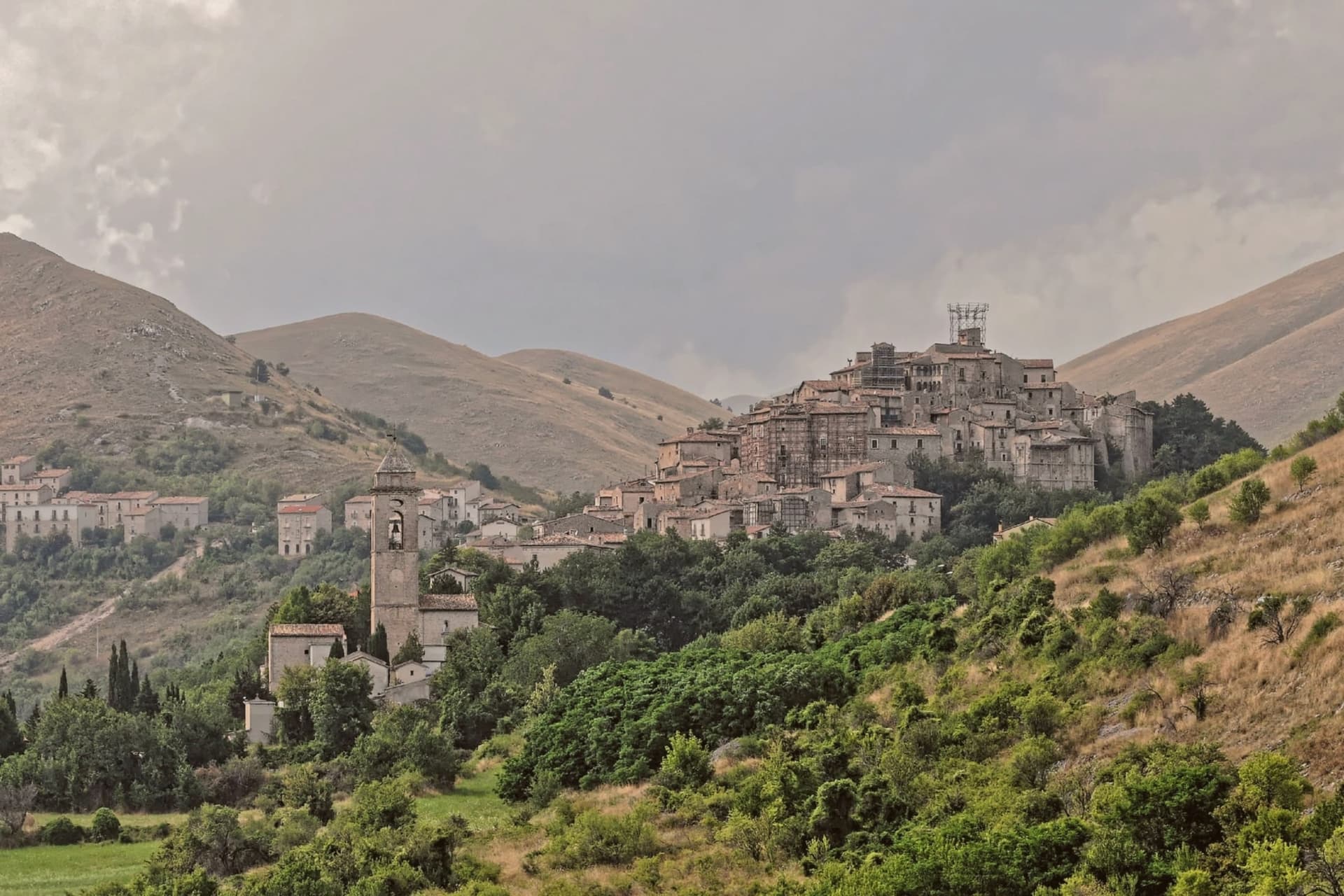
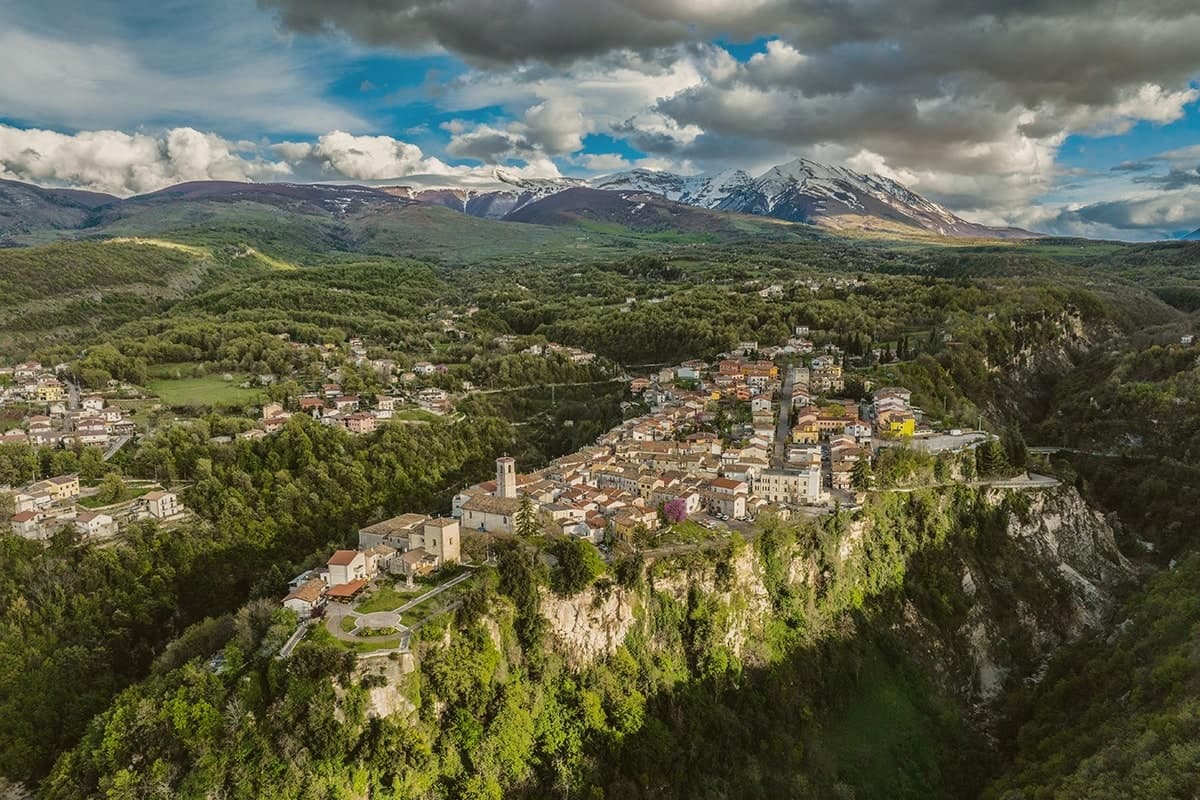
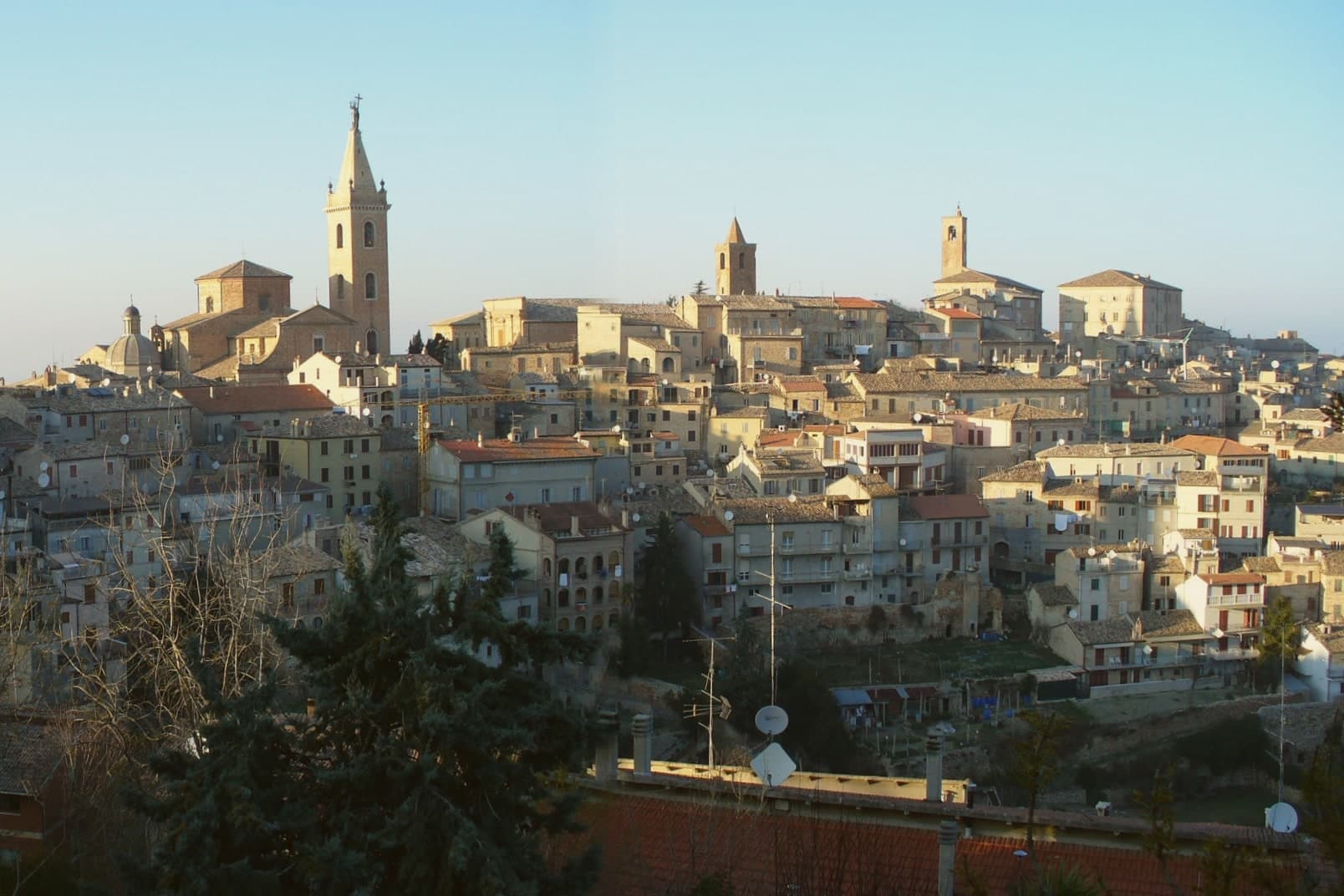
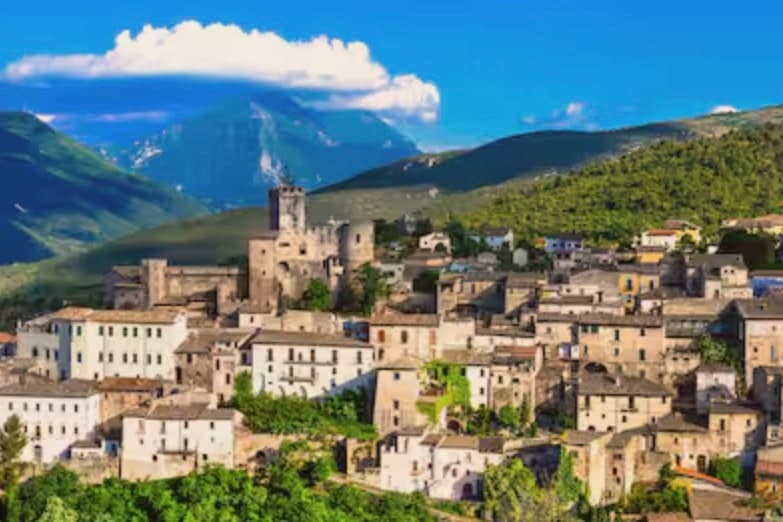
Abruzzo's food is a hill food. The ingredients come from stony ground between the Apennines and the sea: sheep for arrosticini and pecorino, pork for the porchetta that sits under a paper napkin at every sagra table, olives pressed within sight of the trees, Montepulciano and Trebbiano from vineyards that run down towards the Adriatic. The towns above them are built of pale local stone and brick, with loggias, a piazza wide enough to set out trestle tables, and a church at the top of the climb. Late summer and autumn are when it all comes out, when the grape harvest and the olive pressing and the truffle season overlap and the calendar fills with festivals named after one thing to eat.
Most visitors to Abruzzo aim at the mountains or the coast. The Gran Sasso and the Parco Nazionale d'Abruzzo take the walkers, the wolves and the wildflower photographs, while the beach towns along the Adriatic take everyone else in August, when the seafront car parks fill by mid-morning. Both are worth the time, and both are busy for good reasons. The result is that the inland belt between them, the hills where the food is actually grown and cooked, gets driven through rather than stopped in.
The same vines, the same flocks and the same ovens carry on past the park boundary and behind the beaches. These are the smaller hill towns where the festival is still run by the local association rather than a tourist board, where the ingredient is grown in the fields below the walls, and where the date comes round the same week every year. Fewer people go, and the tables are longer for it.
Of the 73 communes we have mapped in Abruzzo, 6 qualify as hill towns with a food festival: each is an inland hill settlement, and each holds a recurring food festival built around one local ingredient. The smallest, Controguerra, has 2,192 residents.
Elsewhere in the catalogue: The best towns that live slowly in Abruzzo and The best small towns with a food festival in Abruzzo.
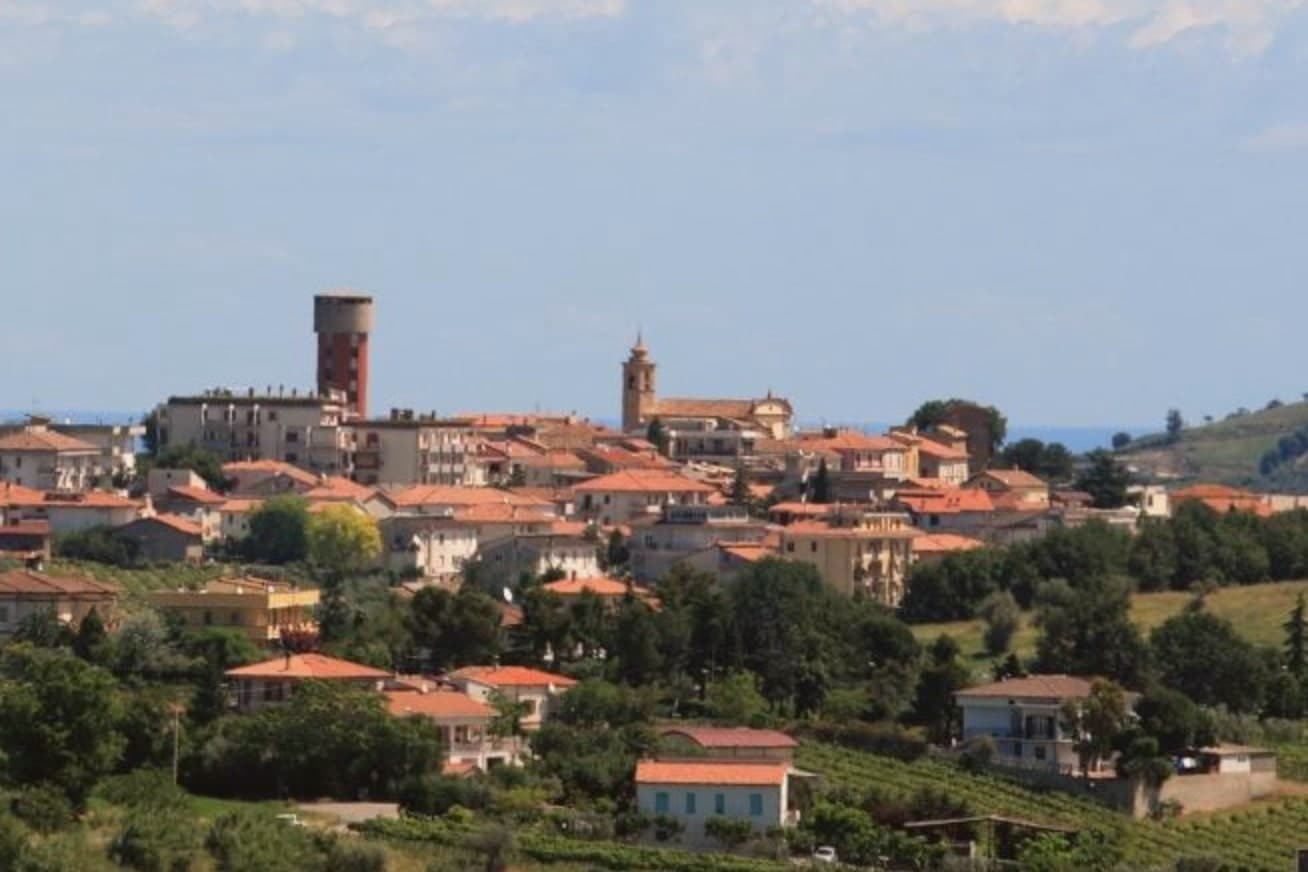
Controguerra
Why visit Controguerra
The village sits fifteen kilometers from the Adriatic, at the northern edge of Abruzzo, where the valley bends toward the river and the sea. The wine zone that carries the town's name reaches beyond it, spread across five communes sharing the same elbow of land between river and coast.
The reds run at least sixty percent Montepulciano, with Merlot, Cabernet Franc and Cabernet Sauvignon allowed up to fifteen percent; the whites are sixty percent Trebbiano with at least fifteen percent Passerina; the spumante sets Trebbiano against Chardonnay, Verdicchio and Pecorino. The old center holds to its ridge above the valley while the vines and olive groves that support both the wine and oil designations spread on the slopes below, the same ground doing double duty.
The place works because the name on the bottle and the name on the map are the same thing, a small hilltop settlement whose slow-food charter governs an area small enough that vineyard and piazza are never far apart.
What to see in Controguerra
- Centro storico. Small hilltop medieval centre on a ridge above the valley, with brick palazzi and the parish church on the central piazza.
- Chiesa di San Salvatore. Parish church on the main piazza, the religious anchor of the medieval ridge village, with a rebuilt eighteenth-century interior.
- Cantine del Controguerra DOC. Family cellars open by appointment, pouring Montepulciano-based reds, Trebbiano-Passerina whites and Pecorino spumante from the same slopes the town gives its name to.
How to get to Controguerra
There is a railway station in the town, so you can arrive without a car and never need one while you are here. Pescara is roughly 56 minutes away by road.
Our tip
April through October is the working season for vineyards and oil. May and September are the best months for cellar visits, with mild light and the vineyards in full leaf. July and August can climb into the mid-thirties and the centro empties through the hot afternoon. Controguerra in festa falls in July.
Casoli
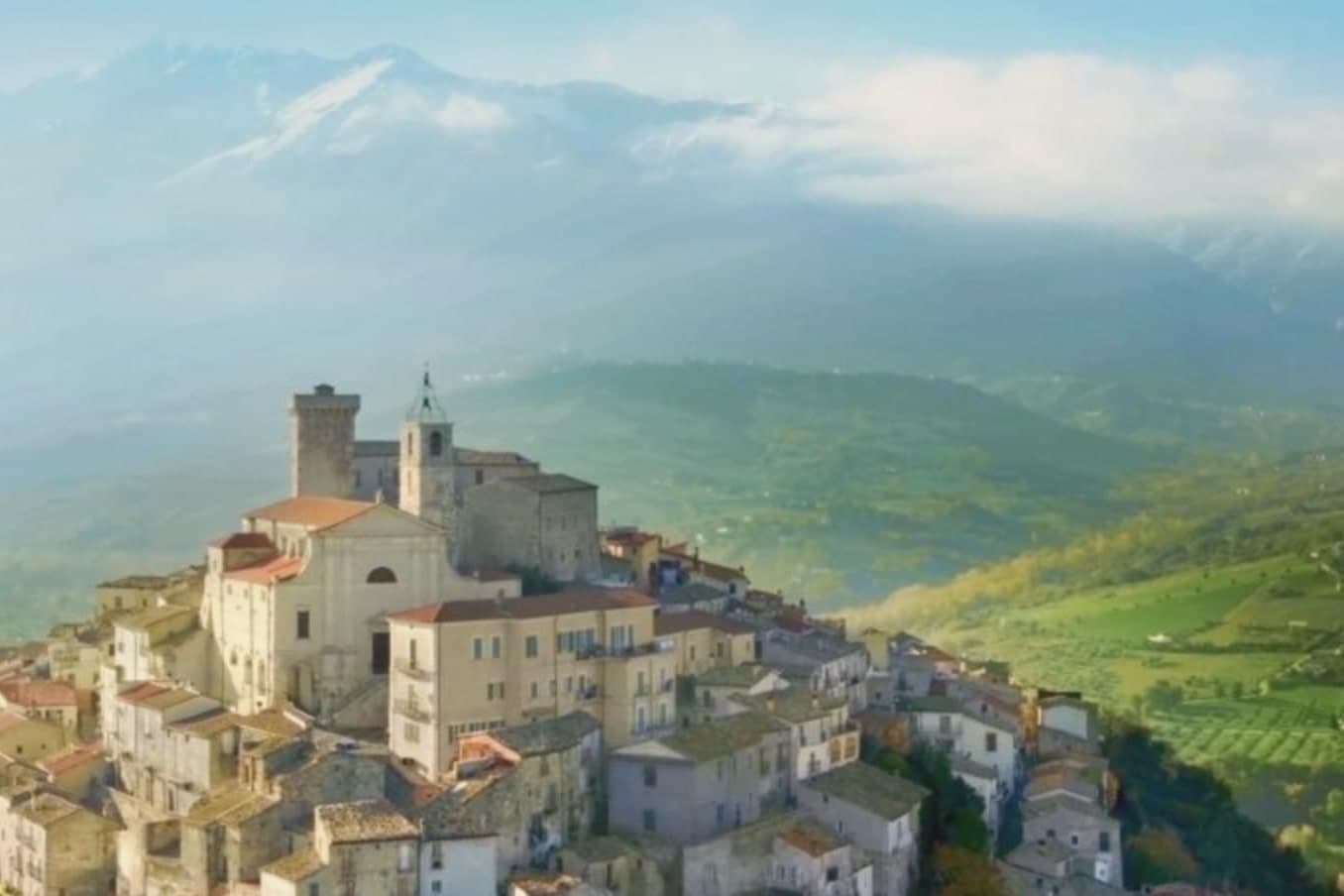
Why visit Casoli
Casoli occupies a steep isolated hill on the eastern flank of the Maiella, above the Aventino, a tributary of the Sangro. The tower at the summit was raised in the 12th century as a refuge for the inhabitants of the Roman town of Cluviae, when Saracens raided up the valley.
Around it grew the Castello Ducale, passed in turn from the Orsini in the 14th and 15th centuries to the Colonna, Carafa, Crispano and Filomarino, and finally to the d'Aquino, who became Dukes of Casoli in 1645. In 1900 the castle passed to a lawyer and parliamentarian from a local family, who hosted Gabriele D'Annunzio there along with Francesco Paolo Tosti, Francesco Paolo Michetti, Edoardo Scarfoglio, Matilde Serao and Guglielmo Marconi, in a gathering of artists and intellectuals around 1900-1910.
The castle was sold to the municipality in 1982. Outside the town, the Aventino was dammed in 1958 to form Lago di Casoli.
The town's shape still traces this history: a defensive tower grown into a ducal seat, a steep medieval core climbing toward it, and a river valley below that has been fought over, painted, written about and, eventually, dammed.
What to see in Casoli
- Castello Ducale (Masciantonio). 12th-century Norman pentagonal tower expanded by the Orsini, national monument since 1928, remodeled into a gathering place under Pasquale Masciantonio around 1900.
- Chiesa di Santa Maria Maggiore. Main parish church adjacent to the castle, with a Romanesque bell tower and Renaissance interior decoration, hosting the patron-saint feast.
- Centro storico. Steep medieval core climbing to the castle, with palazzi of the noble families who held the duchy and views east to the Adriatic on clear days.
How to get to Casoli
Pescara is roughly 59 minutes away by road.
Our tip
April through October is the productive window for Casoli. Spring is when the olive groves below the castle flower and the Maiella above stays snow-capped. May, June, and September are the most comfortable months. Festival delle Pallotte Cace e Ove a Casoli falls in June.
Campli
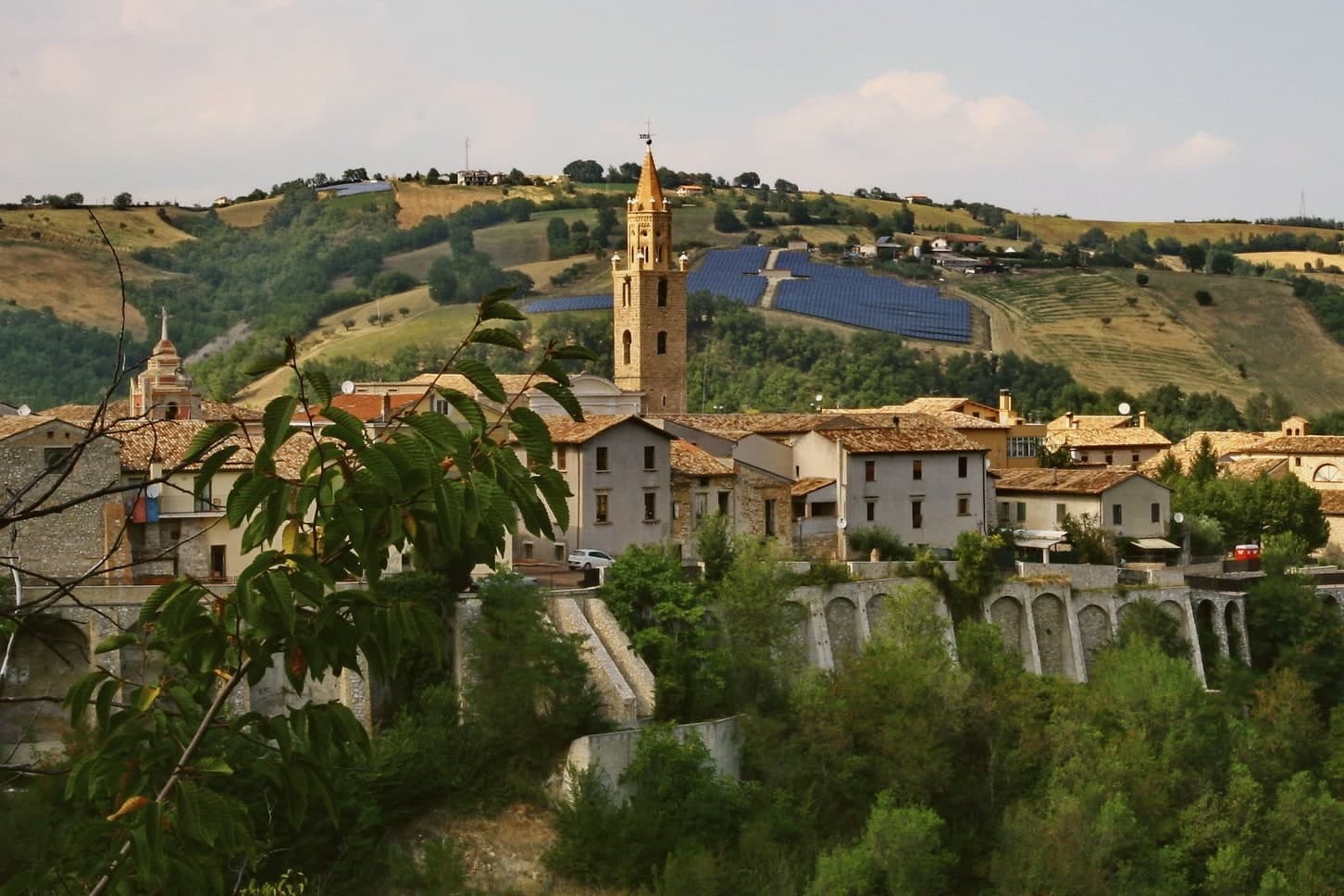
Why visit Campli
Campli occupies a triangle of land between the Siccagno and Fiumicino streams, a few kilometres from Teramo, under the Monti della Laga. The fief came to the Farnese as dowry: Margherita d'Austria, natural daughter of Charles V, brought it into her marriage with Ottavio Farnese, and the family held it from 1538 to 1734.
That rule left its mark across the centro storico, from the portico of the palazzo on the main square to the frescoes inside the collegiate church and the houses of the Massei and Speziale families. The porchetta tradition tied to the town predates all of it, traced to the Roman decuriones and later set down in municipal statute in the same century the fief was still under Farnese control.
Older still is the necropolis at Campovalano, a frazione of the town, where tombs run from the 11th century BC through the Roman period. Taken together, Campli is a small hill town where a Roman-era food custom, an Italic burial ground, and nearly two centuries of Farnese governance sit within walking distance of one another, each layer legible without displacing the one beneath it.
What to see in Campli
- Scala Santa. The staircase stands beside the Church of San Paolo, leading up to a Sancta Sanctorum chapel. It carries the same privilege as the staircase at San Giovanni in Laterano in Rome, and pilgrims still climb it on their knees.
- Collegiata di Santa Maria in Platea. 14th-century collegiate church with a carved wooden ceiling, Romanesque bell tower, and frescoes from the Farnese period.
- Palazzo Farnese (Palazzo del Parlamento). Renaissance palazzo on the main square with a portico, seat of the city government during two centuries of Farnese rule.
How to get to Campli
Pescara is roughly 60 minutes away by road.
Our tip
April through October is when Campli works best. Spring is when the hills around the centro storico turn green and the Scala Santa fills with Easter pilgrims. May and September are the most reliable months for the historic core. Italian Porchetta Festival falls in August.
Pianella
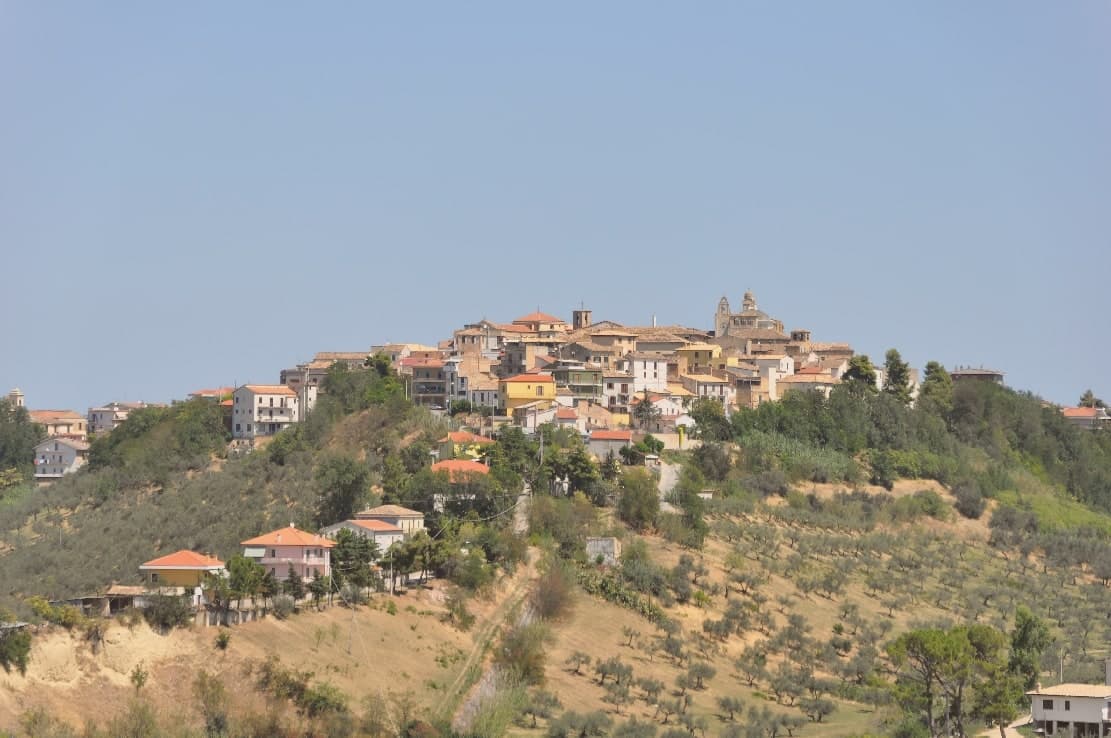
Why visit Pianella
Pianella sits at 236 meters between the Tavo and Pescara rivers, fifteen kilometers inland from Pescara. The first documented mention dates to 963, when Pandolfo, Prince of Capua, ordered the construction of the Basilica di Santa Maria Maggiore on the foundations of an old temple of Vesta.
Saracens, Normans, the Aquaviva, and the Orsini all passed through; in 1522 the village became a fief of Margherita d'Austria Farnese, and Ferdinand IV later granted it the title of Royal City. The local agricultural identity is older than all of that.
Pianella shares with Loreto Aprutino and Moscufo the so-called Golden Triangle of Abruzzo olive oil, producing the DOP Aprutino Pescarese, and it is the home of the dritta cultivar, a medium-early olive native to the Vestine area that gives a fruity, clear-flavored oil. The Cittaslow membership and the Città dell'Olio listing both run on that long agricultural history.
What to see in Pianella
- Basilica di Santa Maria Maggiore. Pre-Romanesque-Romanesque basilica founded in 963 by Pandolfo, Prince of Capua, built over an old temple of Vesta on the village hill.
- Centro storico. Medieval hill nucleus with traces of the Aquaviva and Orsini periods, surrounded by the surviving fragments of Farnese-era walls.
- Oliveti di varietà dritta. Hillside groves of the native dritta cultivar, basis of the DOP Aprutino Pescarese extra virgin olive oil produced by local frantoi.
How to get to Pianella
Pescara is roughly 28 minutes away by road.
Our tip
April through June is the green window in the Aprutino hills, with mild evenings and active grove work. September and October are the harvest and new-oil months, when the frantoi run nearly around the clock. July and August are hot at 236 meters between the two rivers, and the centro empties between four and seven in the afternoon. Festa della Birra falls in August.
Atri
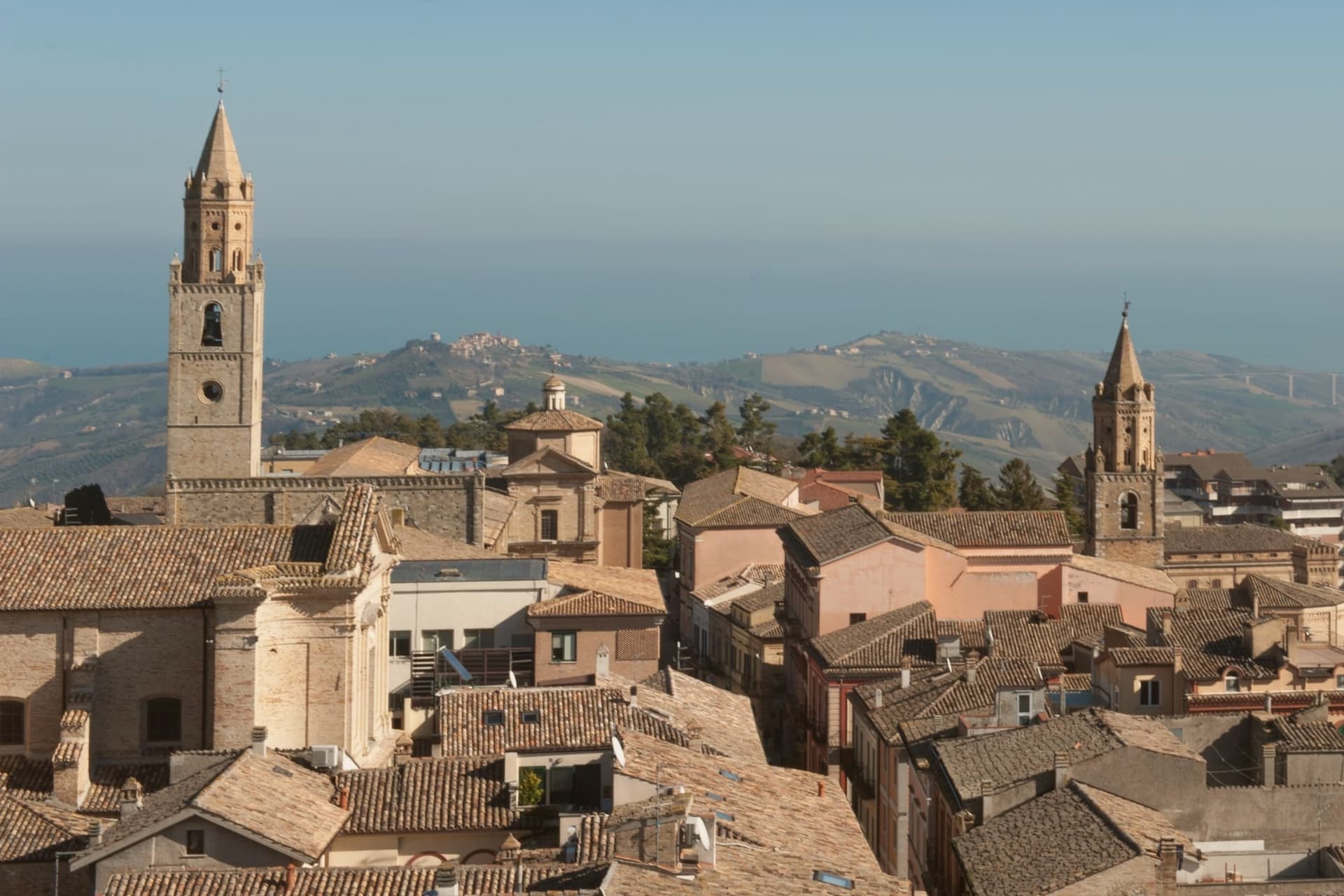
Why visit Atri
Atri sits at 442 meters on three hills ten kilometers from the Adriatic. The town was the pre-Roman Hadria, a Picene and then Italic settlement, refounded by Hadrian as Colonia Aelia Hadria.
The emperor's family came from here, and the Adriatic Sea takes its name from the same Hadria. The Co-Cathedral Basilica of Santa Maria Assunta was built in the 13th and 14th centuries on the site of an earlier 9th-century church, which itself stood on a Roman temple to Hercules.
Andrea de Litio painted the apse cycle of the Lives of Joachim, Anne and Mary between 1460 and 1481, the greatest fresco cycle of the Abruzzo Renaissance. The Acquaviva, dukes of Atri from the late 14th century, made the town their seat and commissioned heavily.
Below the upper town, the Calanchi di Atri reserve protects a 390-hectare badlands landscape carved by erosion. Atri is a member of the Città dell'Olio network for the surrounding olive groves.
What to see in Atri
- Cattedrale Basilica di Santa Maria Assunta. 13th-14th-century co-cathedral on the site of an earlier 9th-century church and a Roman temple to Hercules, with 1460-81 Andrea de Litio frescoes.
- Calanchi di Atri. 390-hectare badlands reserve south of town, eroded clay gullies rising from the Piomba valley at 104 meters to Colle della Giustizia at 468 meters.
- Palazzo Acquaviva. Seat of the dukes of Atri from the 14th century, with decorations commissioned by Isabella Piccolomini in the early 1500s.
How to get to Atri
Pescara is roughly 40 minutes away by road.
Our tip
April through June is the green season in the Atri hills, before the calanchi turn the heavy summer ochre. September and October are the dry, clear months, with the olive harvest beginning in mid-October. July and August are hot, with the upper town offering some breeze from the Adriatic ten kilometers away. Sagra degli Spaghetti al Pesto Casolano, delle Anguille e del Baccalà falls in August.
Città Sant'Angelo
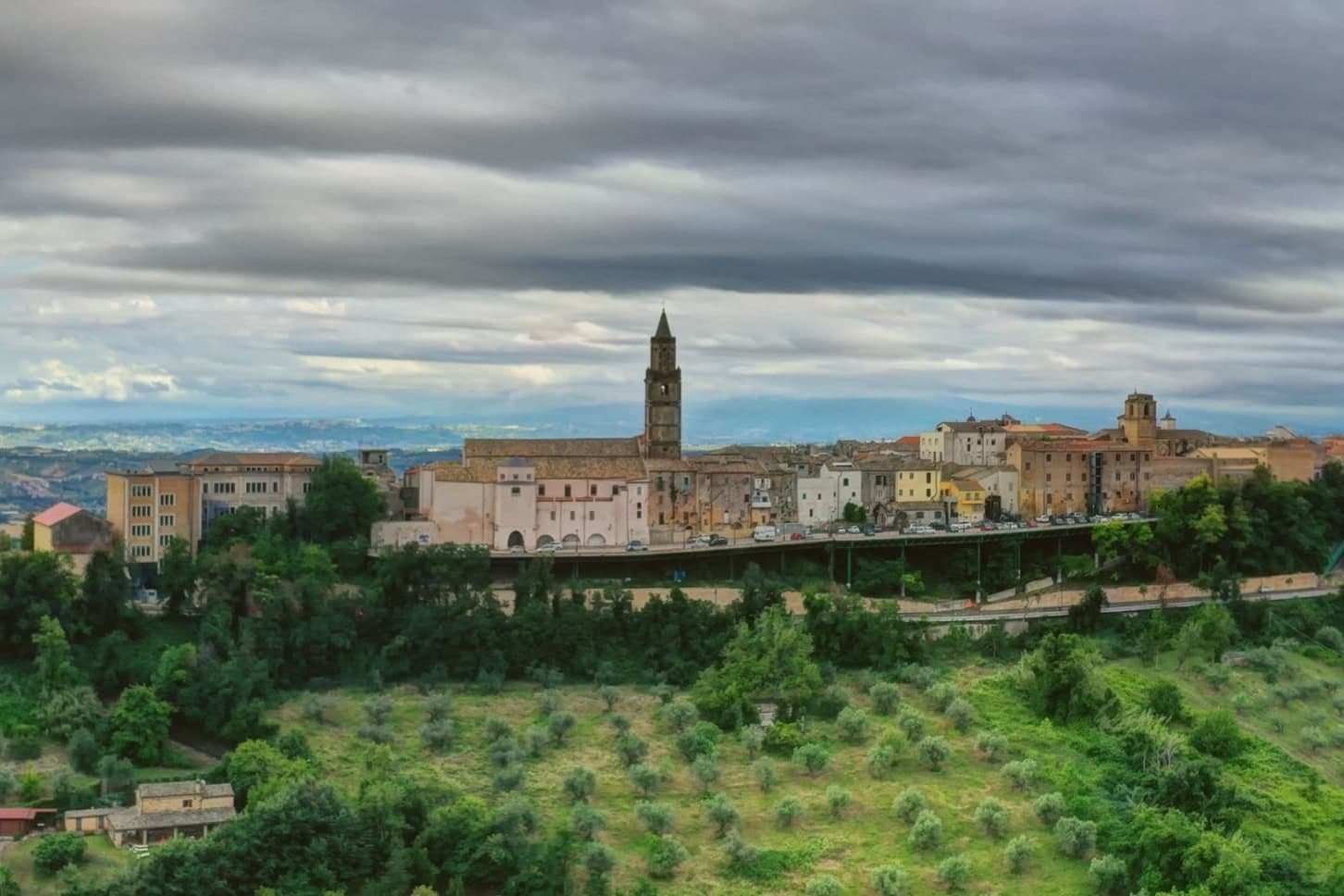
Why visit Città Sant'Angelo
Città Sant'Angelo sits on a ridge at 320 meters, fifteen kilometers from Pescara and a clear day's walk from the Adriatic. The Vestini, an Italic Sabine tribe, held this ground before Rome; the medieval town that grew up here was called Castrum Sancti Angeli in the twelfth century and given its current name in 1528.
By then it was one of the three major seats of the Penne-Atri diocese. The Collegiata di San Michele Arcangelo, rebuilt in the thirteenth century, runs forty-seven meters along its portico, the same length as the bell tower is tall.
Its double organ holds 1,218 pipes and was restored in 2023 after nearly sixty years of silence. The Corso Vittorio Emanuele still threads the ridge between olive groves and vineyards, and the town carries four institutional signals at once: Borghi più belli, Cittaslow, Città del Vino, Città dell'Olio.
Few inland communes this close to the coast hold all four.
What to see in Città Sant'Angelo
- Collegiata di San Michele Arcangelo. Thirteenth-century church with a forty-seven meter portico, a 1326 portal, and a double organ of 1,218 pipes restored in 2023.
- Campanile della Collegiata. Bell tower designed by Antonio da Lodi, finished in 1425, the same height as the portico is long.
- Centro storico. Linear medieval ridge town stretched along the Corso Vittorio Emanuele, with palazzi and small churches from the fourteenth to eighteenth centuries.
How to get to Città Sant'Angelo
Pescara is roughly 25 minutes away by road.
Our tip
April through June and September into October are the months when the ridge feels right. Olive harvest runs late October and the corso fills with mills. July and August push past thirty degrees and the centro storico empties between two and six in the afternoon, though the sea breeze fifteen kilometers east keeps evenings tolerable. Borgo diVino in tour a Città Sant'Angelo falls in June.