
The best towns that live slowly in Abruzzo
Abruzzo runs from Adriatic sand to the highest peaks in the Apennines, and the towns that matter here sit in between, on ridges of pale limestone and brick with the Maiella filling one window and the sea filling another. The food is mountain food eaten near the coast: lamb on skewers over charcoal, sheep's cheeses, chitarra pasta cut on a wire frame, olive oil pressed in the hills behind Chieti and Pescara, Montepulciano d'Abruzzo poured young and dark. Spring brings wild asparagus and long light on the olive terraces; autumn brings grapes, walnuts and mornings where the mountain has snow and the beach does not. Bells still order the day in places where the bar opens before the bakery, and the passeggiata is not staged for anyone.
Most visitors give Abruzzo a couple of days on the way somewhere else, and those days go to Gran Sasso and the Campo Imperatore plateau, or to the old centre of Sulmona for its confetti shops, or to the beach clubs strung along Pescara in August. The reasons are good ones. The plateau is one of the great empty landscapes in Italy and Pescara has the airport, the trains and the nightlife. It also means the same car parks fill, the same trattorie take the same coach bookings, and a region known for space starts to feel like a queue.
The hills either side of those routes carry on regardless, and so do the vineyards, the oil mills and the stone. The towns in this list have each committed to the international slow-living charter, which puts standards on traffic, noise, green space and how much of the local food actually comes from nearby. Some look down on the Adriatic from a ridge, one sits on the pine-backed shore itself, one is a wine commune on the Tronto border, and one is a market town under the Maiella known for its ironwork and its pastry. Fewer people go, and the food is no worse for it.
Of the 73 communes we have mapped in Abruzzo, 6 qualify as towns that live slowly: each has committed to the international slow-living charter, which sets standards for noise, traffic and local food. The smallest, Controguerra, has 2,192 residents.
Two more lists worth reading alongside this one: The 6 best hill towns with a food festival in Abruzzo and The best hill towns in the province of Pescara.
Controguerra
Why visit Controguerra
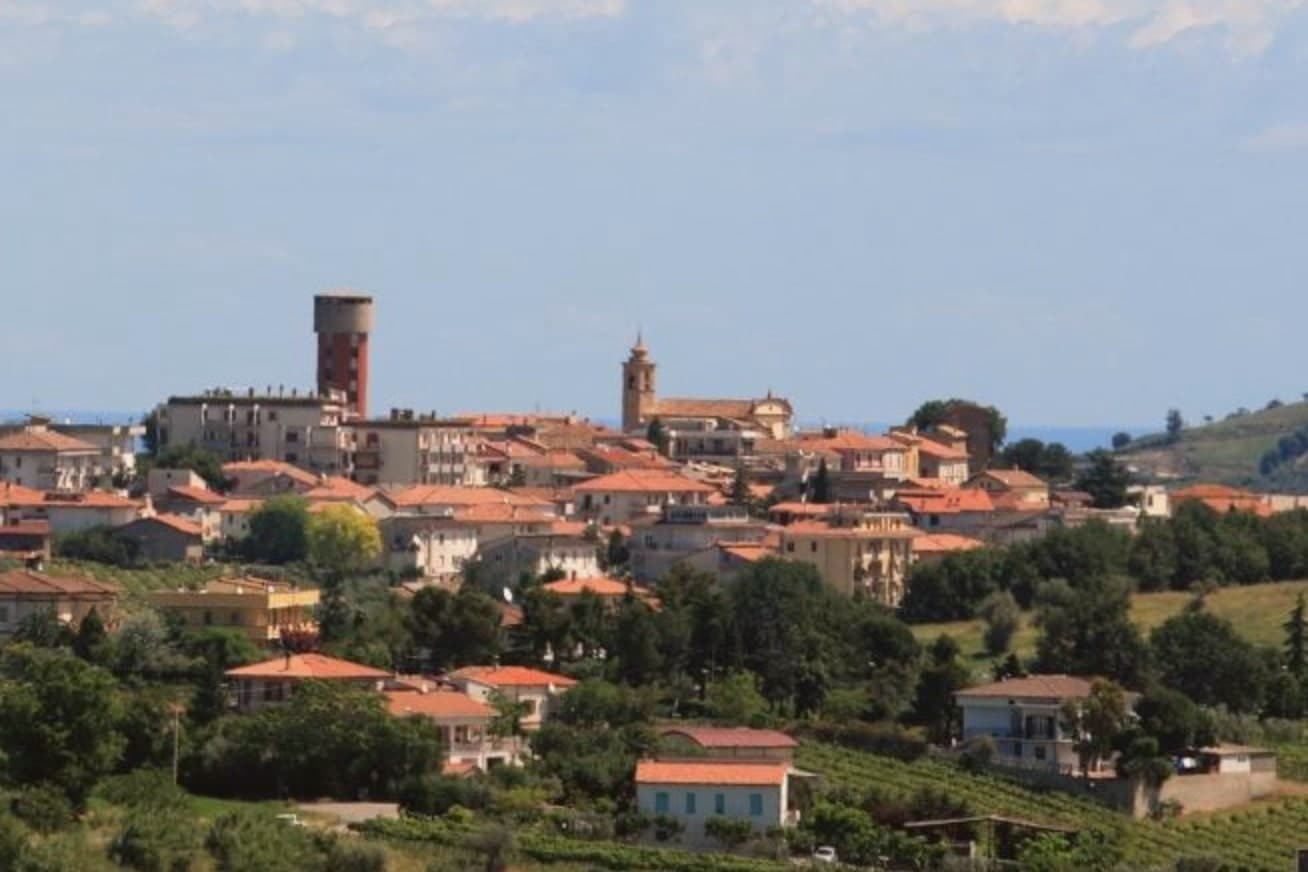
The village sits fifteen kilometers from the Adriatic, at the northern edge of Abruzzo, where the valley bends toward the river and the sea. The wine zone that carries the town's name reaches beyond it, spread across five communes sharing the same elbow of land between river and coast.
The reds run at least sixty percent Montepulciano, with Merlot, Cabernet Franc and Cabernet Sauvignon allowed up to fifteen percent; the whites are sixty percent Trebbiano with at least fifteen percent Passerina; the spumante sets Trebbiano against Chardonnay, Verdicchio and Pecorino. The old center holds to its ridge above the valley while the vines and olive groves that support both the wine and oil designations spread on the slopes below, the same ground doing double duty.
The place works because the name on the bottle and the name on the map are the same thing, a small hilltop settlement whose slow-food charter governs an area small enough that vineyard and piazza are never far apart.
What to see in Controguerra
- Centro storico. Small hilltop medieval centre on a ridge above the valley, with brick palazzi and the parish church on the central piazza.
- Chiesa di San Salvatore. Parish church on the main piazza, the religious anchor of the medieval ridge village, with a rebuilt eighteenth-century interior.
- Cantine del Controguerra DOC. Family cellars open by appointment, pouring Montepulciano-based reds, Trebbiano-Passerina whites and Pecorino spumante from the same slopes the town gives its name to.
How to get to Controguerra
There is a railway station in the town, so you can arrive without a car and never need one while you are here. Pescara is roughly 56 minutes away by road.
Our tip
April through October is the working season for vineyards and oil. May and September are the best months for cellar visits, with mild light and the vineyards in full leaf. July and August can climb into the mid-thirties and the centro empties through the hot afternoon. Controguerra in festa falls in July.
Guardiagrele
Why visit Guardiagrele
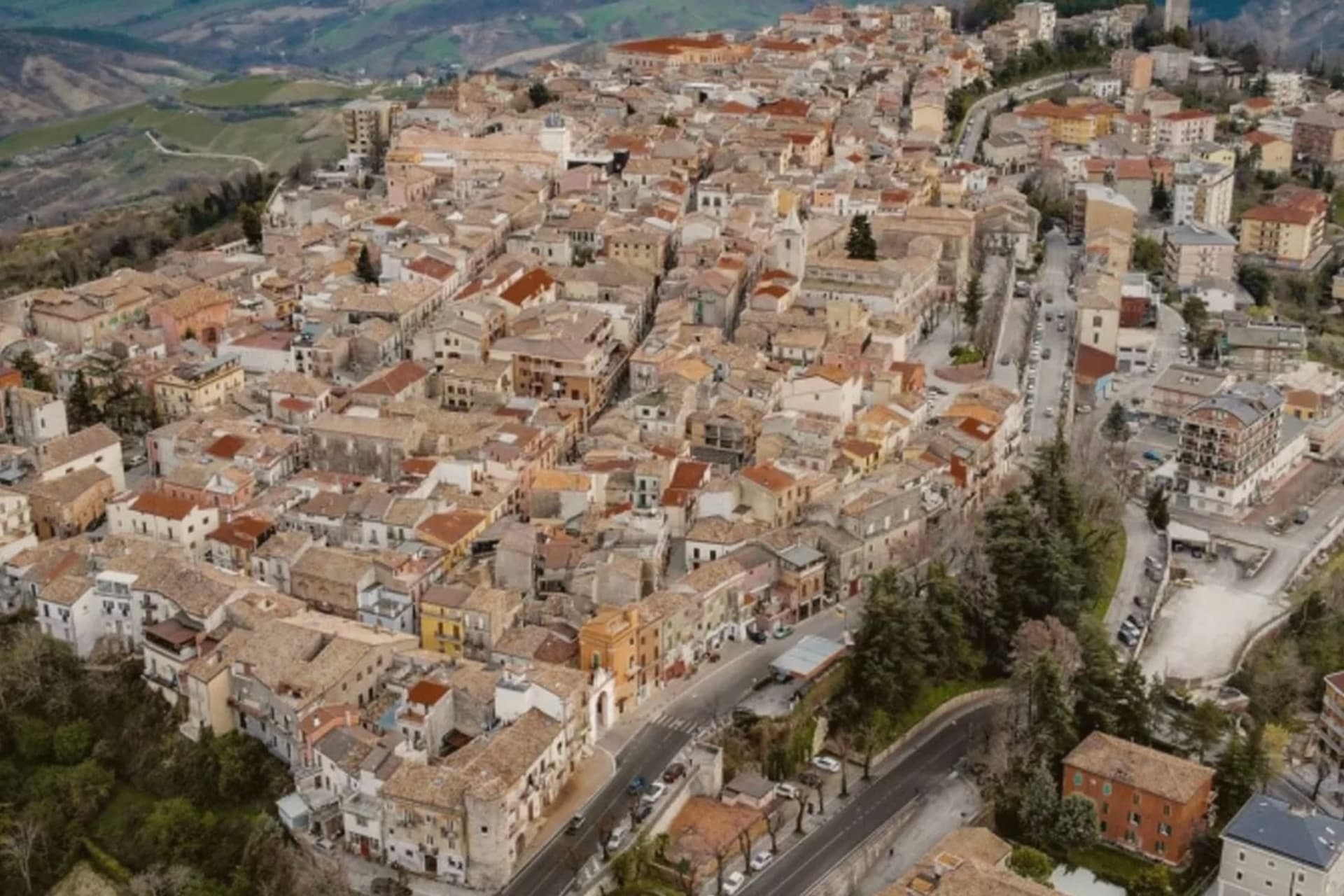
Guardiagrele sits at 576 meters on the eastern Majella foothills, thirty kilometers from Pescara. Gabriele D'Annunzio called it the terrazza d'Abruzzo for the views over the mountains and valleys from its piazzas.
Documented in an eleventh-century papal bull as a villa named Grele, the town grew through the fourteenth and fifteenth centuries as a stronghold of the Kingdom of Naples, with permission from the king to mint coins. It produced the late medieval goldsmith Nicola Gallucci, known as Nicola da Guardiagrele (c.1385-c.1462), trained on Gothic and Tuscan models including Lorenzo Ghiberti, who left work in cathedrals across Abruzzo.
The collegiate church of Santa Maria Maggiore, built at the start of the thirteenth century outside the walls and absorbed into the town in the centuries after, carries a fifteenth-century portal with a Coronation of the Virgin lunette by Nicola, now in the Duomo museum. Wrought-iron, copper and gold work still operate from workshops in the centro storico.
What to see in Guardiagrele
- Collegiata di Santa Maria Maggiore. Thirteenth-century collegiate church with a massive bell tower, fifteenth-century portal, and the Nicola da Guardiagrele Coronation lunette in its museum.
- Museo del Duomo. Cathedral museum holding Nicola da Guardiagrele's marble lunette, his goldwork, and liturgical objects from the surrounding Majella churches.
- Botteghe del rame e del ferro battuto. Active copper and wrought-iron workshops in the centro storico, the surviving craft tradition that produced Nicola Gallucci in the late fourteenth century.
How to get to Guardiagrele
There is a railway station in the town, so you can arrive without a car and never need one while you are here. Pescara is roughly 48 minutes away by road.
Our tip
April through October is the open season. May and September are the best months on the terrazza, with the Majella valleys in clear light and the copper workshops at full pace. July and August are warm but the elevation keeps the centro storico cooler than the coast.
Pianella
Why visit Pianella
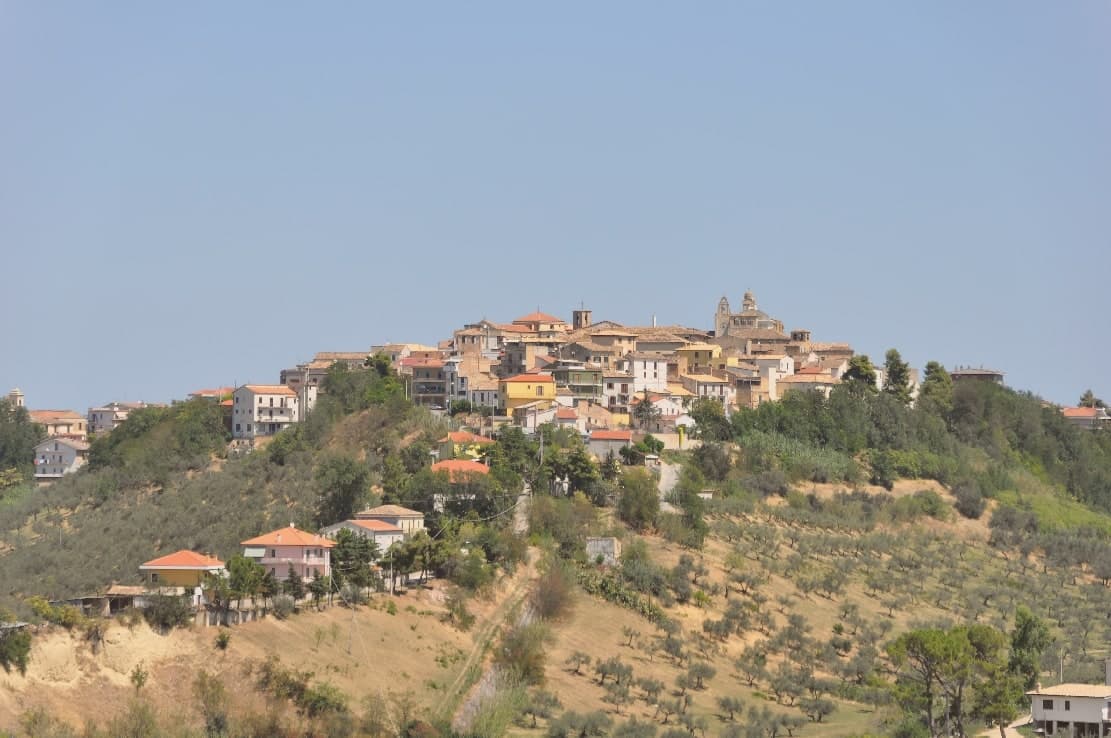
Pianella sits at 236 meters between the Tavo and Pescara rivers, fifteen kilometers inland from Pescara. The first documented mention dates to 963, when Pandolfo, Prince of Capua, ordered the construction of the Basilica di Santa Maria Maggiore on the foundations of an old temple of Vesta.
Saracens, Normans, the Aquaviva, and the Orsini all passed through; in 1522 the village became a fief of Margherita d'Austria Farnese, and Ferdinand IV later granted it the title of Royal City. The local agricultural identity is older than all of that.
Pianella shares with Loreto Aprutino and Moscufo the so-called Golden Triangle of Abruzzo olive oil, producing the DOP Aprutino Pescarese, and it is the home of the dritta cultivar, a medium-early olive native to the Vestine area that gives a fruity, clear-flavored oil. The Cittaslow membership and the Città dell'Olio listing both run on that long agricultural history.
What to see in Pianella
- Basilica di Santa Maria Maggiore. Pre-Romanesque-Romanesque basilica founded in 963 by Pandolfo, Prince of Capua, built over an old temple of Vesta on the village hill.
- Centro storico. Medieval hill nucleus with traces of the Aquaviva and Orsini periods, surrounded by the surviving fragments of Farnese-era walls.
- Oliveti di varietà dritta. Hillside groves of the native dritta cultivar, basis of the DOP Aprutino Pescarese extra virgin olive oil produced by local frantoi.
How to get to Pianella
Pescara is roughly 28 minutes away by road.
Our tip
April through June is the green window in the Aprutino hills, with mild evenings and active grove work. September and October are the harvest and new-oil months, when the frantoi run nearly around the clock. July and August are hot at 236 meters between the two rivers, and the centro empties between four and seven in the afternoon. Festa della Birra falls in August.
Penne
Why visit Penne
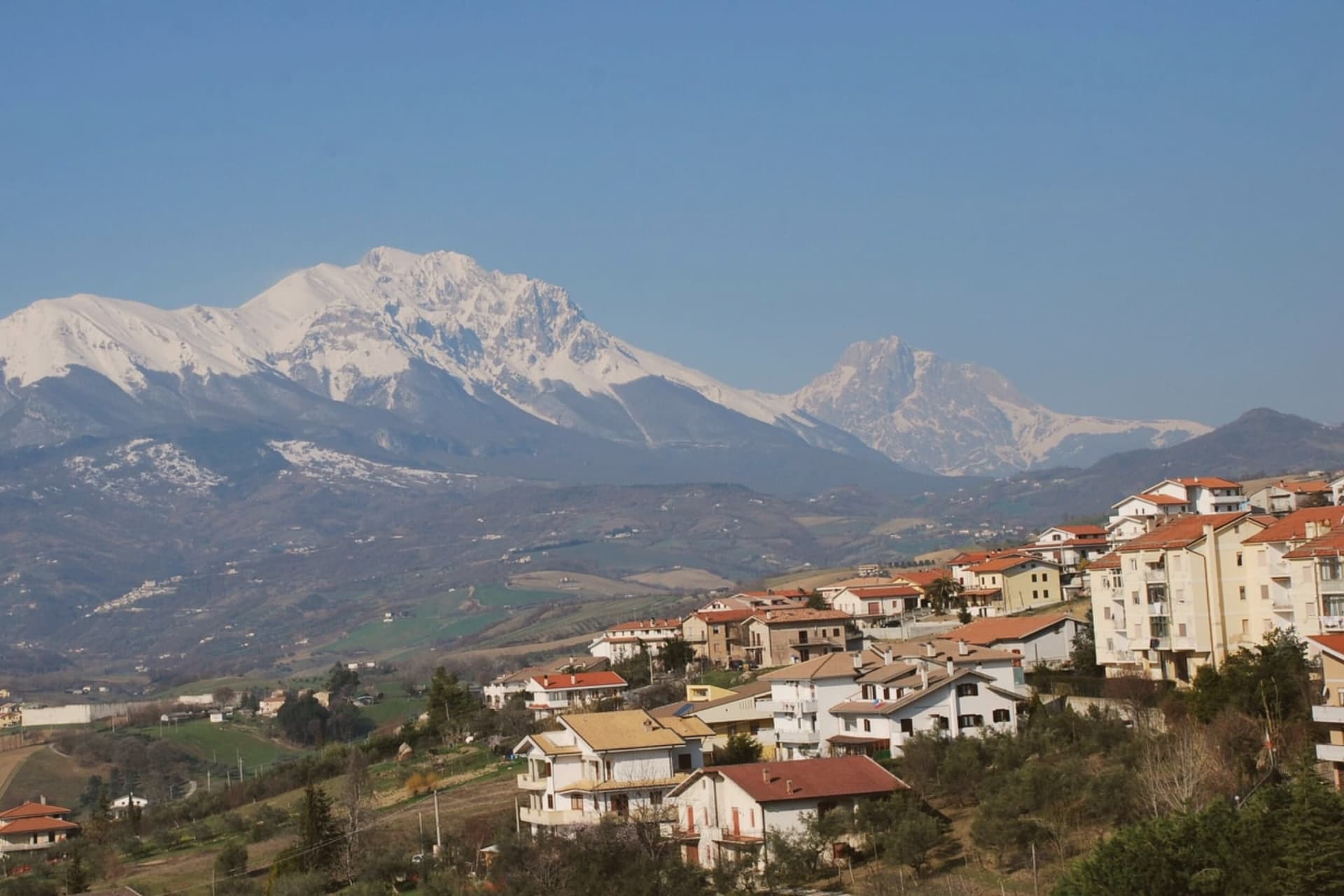
Penne sits at 438 meters on four hills between the Tavo and Fino rivers, twenty-five kilometers from the Adriatic. Of pre-Roman origin, the town was the capital of the Vestini Italic people no later than 300 BC; in around 89 BC the Vestini and other Italic tribes were defeated by Rome in the Social War.
The historic centre is built almost entirely of red brick. Streets, palazzi, churches and pavements all share the same warm tone, which earned Penne the nickname Città del Mattone, the City of Bricks, and the literary tag the small Siena.
The Duomo, dedicated to Saint Massimo of Aveia, stands on a tenth-century crypt; its terracotta façade was rebuilt after the war, but the crypt, the portal, the thirteenth-century rose window and the fifteenth-century bell tower belong to the original Romanesque-Gothic phase. Allied bombing levelled large parts of the town in the Second World War, and in 2006 Penne received the Silver Medal of Civic Merit for what its civilians suffered.
What to see in Penne
- Duomo (Cattedrale di San Massimo). Concathedral of the Pescara-Penne archdiocese built over a tenth-century crypt, with a thirteenth-century rose window and fifteenth-century bell tower.
- Museo Diocesano. Diocese museum inside the Duomo complex, holding liturgical objects, paintings and sculpture from across the Pescara-Penne network.
- Chiesa di Santa Maria in Colleromano. Twelfth-century church outside the historic core, one of the earliest religious buildings preserved in the Penne territory.
How to get to Penne
Pescara is roughly 49 minutes away by road.
Our tip
April through October is the strong stretch. May and September are the best months on the brick streets, when the late light glows on the walls and the olive harvest gives the corso its smell. July and August can climb past thirty-three degrees and the centro empties from two to six; the brick holds heat long into the night.
Pineto
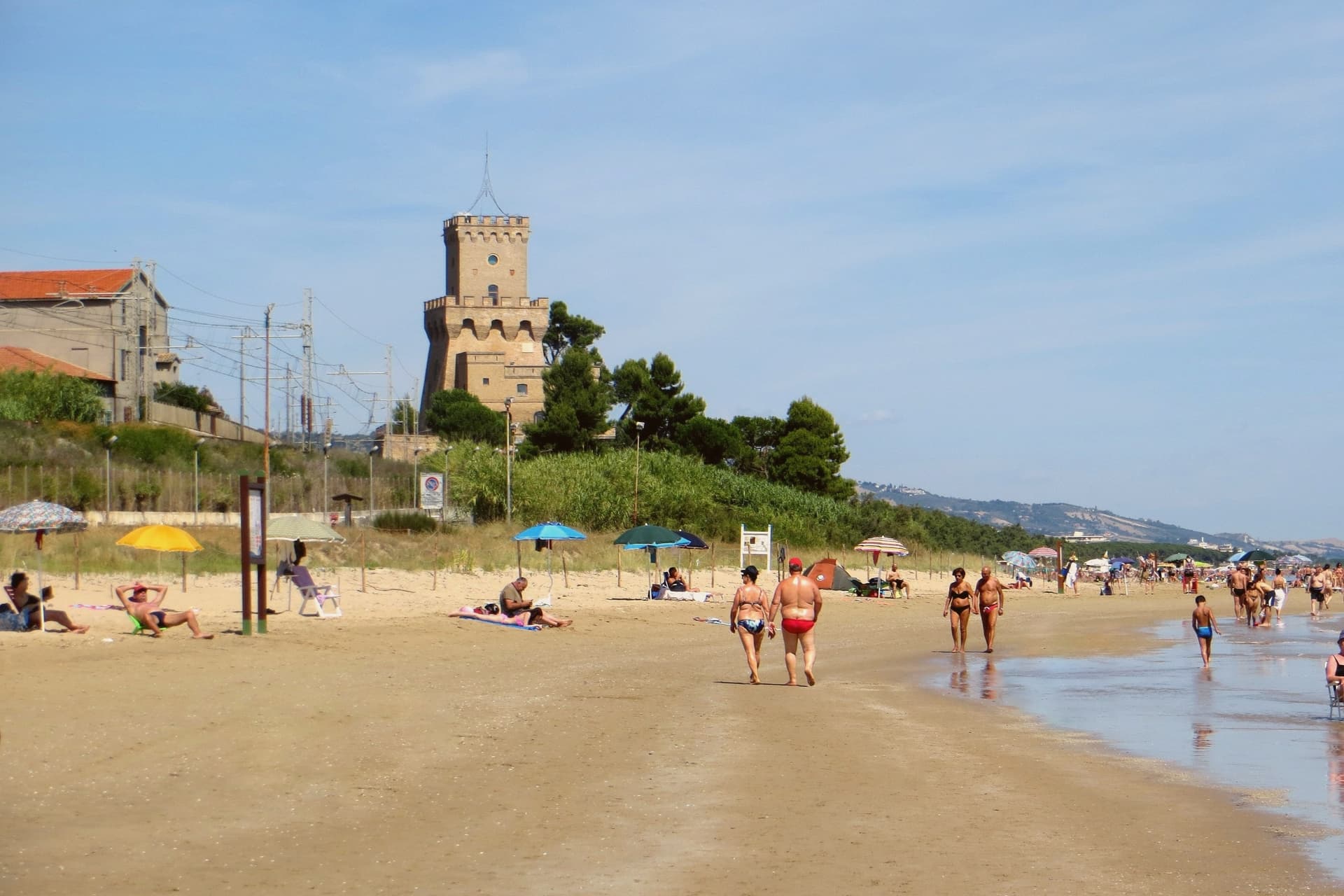
Why visit Pineto
Pineto sits at sea level, one of the Sette Sorelle, the seven Adriatic resorts of the Teramo coast. The town was planned in the 1920s by Luigi Filiani as a beach resort under pine forest, and renamed Pineto in 1925 after Gabriele D'Annunzio's poem La Pioggia nel Pineto.
In 1929 it replaced Mutignano, the older hill village above, as the capoluogo of the comune. Two kilometers south of the centre stands the Torre del Cerrano, built around 1568 by Charles V as a watchtower against Ottoman raiders.
In 2010 the tower and the stretch of sea in front of it became Abruzzo's first marine protected area, 3,431 hectares of coast and shallow water. The beach has held a Blue Flag in most years since 2007.
The pine canopy, planted to hold the dunes, still shades the seafront promenade as far north as the Vibrata river.
What to see in Pineto
- Torre del Cerrano. Sixteenth-century watchtower built around 1568 under Charles V against Ottoman raids, now the gateway to Abruzzo's first marine reserve.
- Area Marina Protetta Torre del Cerrano. 3,431 hectares of protected coast and shallow Adriatic water established in 2010, the first marine reserve in the region.
- Pineta Catucci. Coastal pine forest planted in the early twentieth century to hold the dunes, shading the seafront promenade and the bike path.
How to get to Pineto
There is a railway station in the town, so you can arrive without a car and never need one while you are here. Pescara is roughly 26 minutes away by road.
Our tip
May through September is the season. June and September are the best beach months, warm but not hot, with the marine reserve open for guided snorkelling and the bike path along the pineta in full use. July and August bring Italian summer crowds, especially from Pescara, and the seafront fills.
Città Sant'Angelo
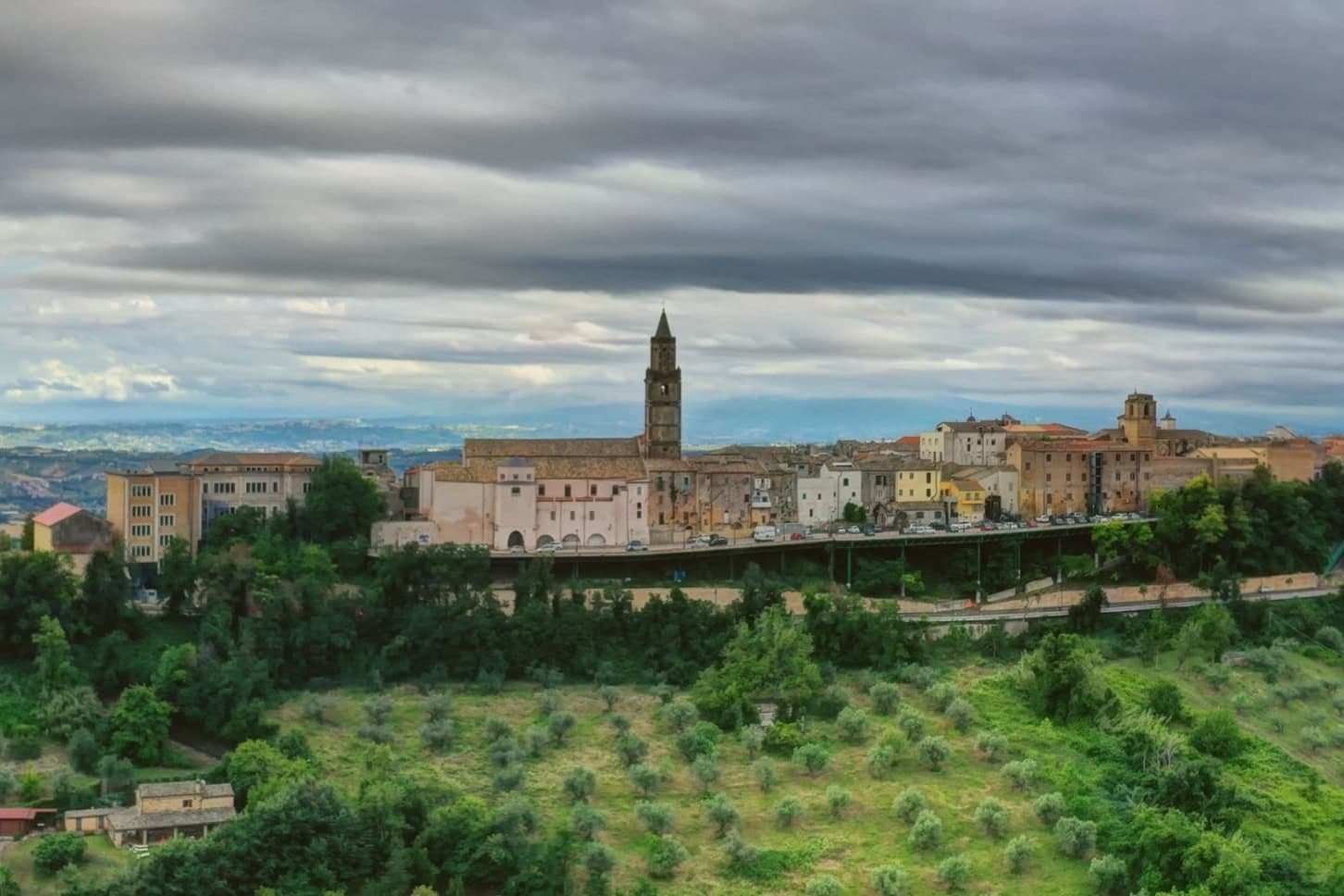
Why visit Città Sant'Angelo
Città Sant'Angelo sits on a ridge at 320 meters, fifteen kilometers from Pescara and a clear day's walk from the Adriatic. The Vestini, an Italic Sabine tribe, held this ground before Rome; the medieval town that grew up here was called Castrum Sancti Angeli in the twelfth century and given its current name in 1528.
By then it was one of the three major seats of the Penne-Atri diocese. The Collegiata di San Michele Arcangelo, rebuilt in the thirteenth century, runs forty-seven meters along its portico, the same length as the bell tower is tall.
Its double organ holds 1,218 pipes and was restored in 2023 after nearly sixty years of silence. The Corso Vittorio Emanuele still threads the ridge between olive groves and vineyards, and the town carries four institutional signals at once: Borghi più belli, Cittaslow, Città del Vino, Città dell'Olio.
Few inland communes this close to the coast hold all four.
What to see in Città Sant'Angelo
- Collegiata di San Michele Arcangelo. Thirteenth-century church with a forty-seven meter portico, a 1326 portal, and a double organ of 1,218 pipes restored in 2023.
- Campanile della Collegiata. Bell tower designed by Antonio da Lodi, finished in 1425, the same height as the portico is long.
- Centro storico. Linear medieval ridge town stretched along the Corso Vittorio Emanuele, with palazzi and small churches from the fourteenth to eighteenth centuries.
How to get to Città Sant'Angelo
Pescara is roughly 25 minutes away by road.
Our tip
April through June and September into October are the months when the ridge feels right. Olive harvest runs late October and the corso fills with mills. July and August push past thirty degrees and the centro storico empties between two and six in the afternoon, though the sea breeze fifteen kilometers east keeps evenings tolerable. Borgo diVino in tour a Città Sant'Angelo falls in June.
More from Anywhere Italy
- The 6 best hill towns with a food festival in Abruzzo
 The best hill towns in the province of Pescara
 The best hidden towns with a serious restaurant in Abruzzo
 The best hidden towns you can reach by train that have a serious restaurant in Abruzzo
 The best hill towns you can reach by train in Abruzzo
 The prettiest villages that eat well in Abruzzo