
The best hill towns in the province of Pescara
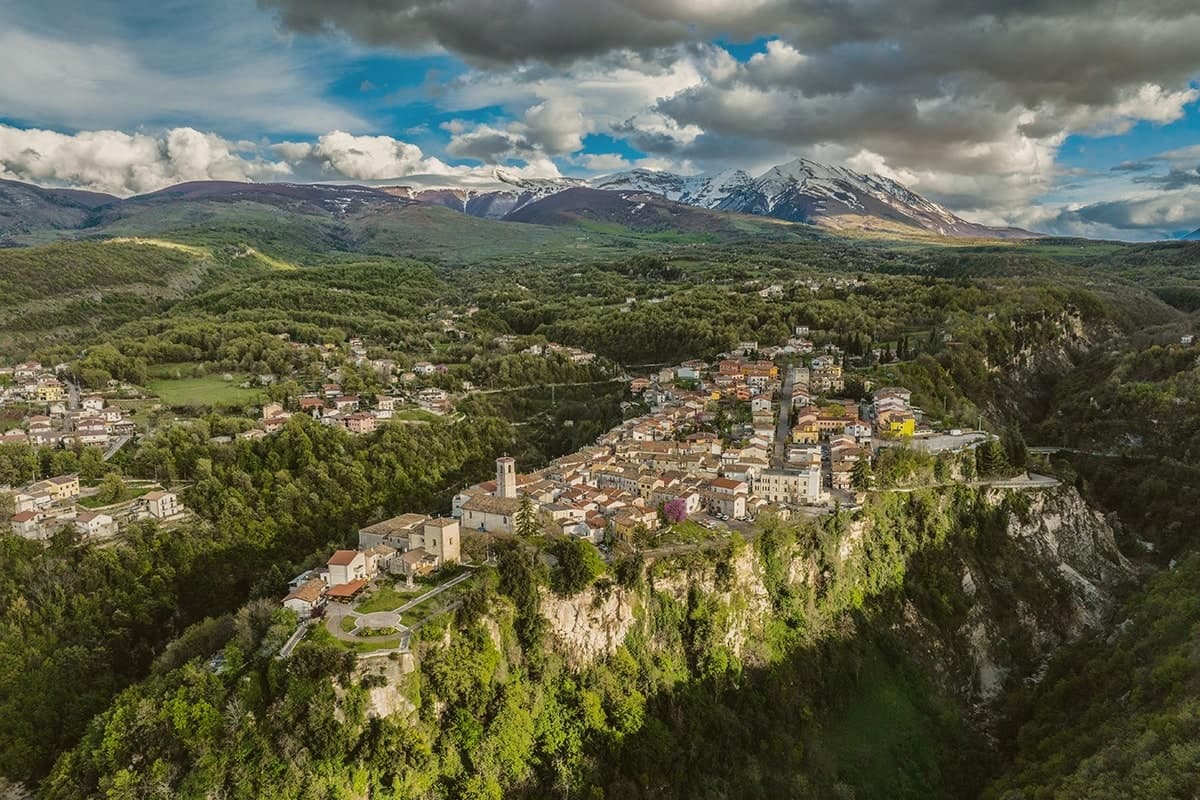
The province of Pescara stacks itself upwards the moment you leave the coast road. Hill towns here sit on spurs too narrow to spread, so the houses are built tight in brick and pale river stone, with belvederes at the end of every lane looking back at the sea on one side and the snow line of the Gran Sasso and the Majella on the other. The land in between is olive groves and vines, Montepulciano d'Abruzzo and Trebbiano, pecorino ageing in cellars, arrosticini of mutton grilled over long narrow braziers. Autumn is the season that suits it best, when the olive presses run and the mist sits below the towns rather than above them.
Most people who come to this stretch of Abruzzo stay on the sand. Pescara itself absorbs the traffic, its long beachfront and summer crowds strung out for kilometres, and the day trips run either to the fishing platforms of the Trabocchi coast or straight up into the Gran Sasso for the photograph of Rocca Calascio. All of it is reasonable, and all of it is busy in August, when the coastal towns double in size and the car parks fill by mid-morning.
The hills behind that coast keep going, though, and the good ground does not stop where the visitors do. The same olive oil, the same wine hills, the same hermitage-pocked flanks of the Majella carry on inland through towns that see far fewer people: ridge settlements with medieval cores, oil museums, Romanesque abbeys down in the valleys below them. The towns in this list are those places, close enough to the sea for a morning swim and high enough to be cool at night.
Of the 8 communes we have mapped in the province of Pescara, 7 qualify as hill towns: each is an inland hill settlement built on ground too steep to spread. The smallest, Roccamorice, has 878 residents.
Elsewhere in the catalogue: The best hill towns you can reach by train in Abruzzo and The 8 best hill towns that eat well within 90 minutes of Pescara.
Roccamorice
Why visit Roccamorice
Roccamorice sits at 520 meters on the western flank of the Majella massif, inside the boundaries of the national park. The village was founded around the year 1000 and stayed small, its fortunes shaped less by the settlement itself than by the limestone around it, where the rock has been hollowed into retreats since before the 11th century.
A hermit spent two years in one of them before his election as Pope, and the larger of the two hermitages, cut partly into a cliff face, was another of his retreats during the same years on the Majella. The trails to both hermitages start in the village, so the town functions as the low point from which the mountain is entered rather than a destination in itself.
That relation is repeated every August 25, when a statue is carried down from the rock to the parish church and, presumably, back again: the village receives what the mountain holds. The abdication that followed, an event Dante placed in his Inferno, is the one moment when a hermit's retreat from the world became a subject of it.
What to see in Roccamorice
- Eremo di San Bartolomeo in Legio. Pre-11th-century rock-cut hermitage at 700 meters under a 50-meter cliff, restored in 1250 by the future Pope Celestine V.
- Eremo di Santo Spirito a Majella. Larger hermitage partly cut into the limestone, reached by the same trails that climb from the village into the massif.
- Chiesa di Sant'Antonio Abate. Parish church of the village, end point of the August 25 procession carrying the statue of the hermitage's patron saint down from the rock.
How to get to Roccamorice
Pescara is roughly 60 minutes away by road.
Our tip
April through June and September through October are the months for the hermitage trails, when the limestone is dry and the upper Majella is accessible. July and August can be hot below 800 meters, though the higher hermitages stay cool in the rock. The August 25 procession of San Bartolomeo from the hermitage to the parish church is the village's main gathering.
Tocco da Casauria
Why visit Tocco da Casauria
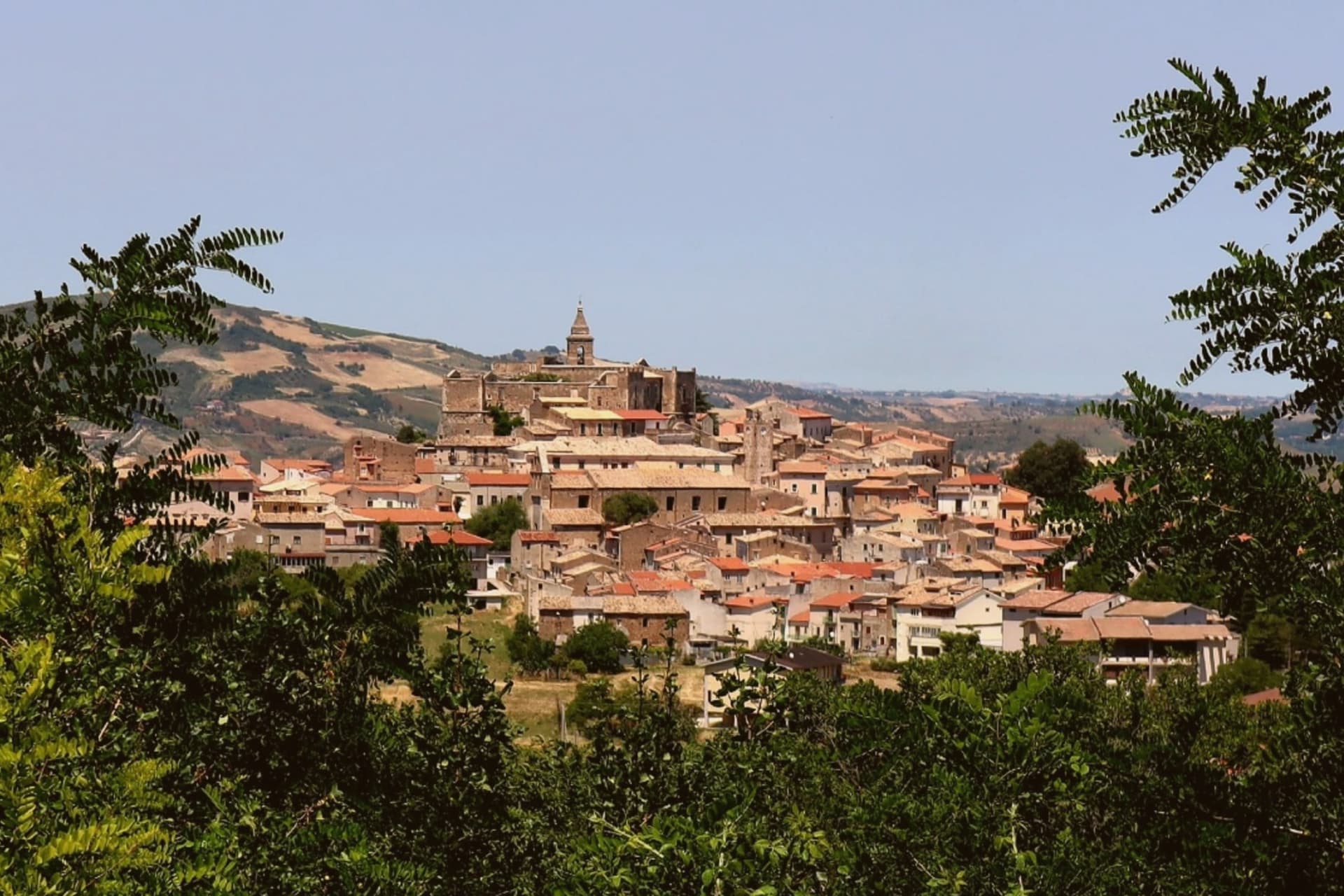
Tocco sits on a hill at 356 meters between the Pescara river and the Arolle stream, with the Maiella massif behind it. The town was founded around 872 under the authority of the abbey nearby, established in fulfilment of a vow made during an imprisonment in Benevento.
The abbey held the relics of Pope Clement I. The town was simply Tocco until 1861, when da Casauria was added to honour the abbey it grew up beside.
The centro storico is dominated by the Caracciolo Castle, rebuilt in Renaissance style after the 1456 earthquake, while the lower slopes toward the Pescara valley carry olive groves and Montepulciano vines, the produce that earned the town its place among the Città dell'Olio and Città del Vino. Centerba, the high-proof liqueur made from a hundred Maiella herbs, has been distilled here since the mid-19th century by the Toro family.
What holds the town together is the relationship between the abbey below and the settlement on the hill: a monastic foundation that gave the place its name, its early authority, and, centuries later, its liqueur trade and vineyards grew up in the valley it once governed.
What to see in Tocco da Casauria
- Abbazia di San Clemente a Casauria. A national monument since 1894, standing just outside the commune in Castiglione. Founded by Louis II, its bronze doors and their 72 panels remain the reason to make the detour.
- Castello Caracciolo. Built between 1187 and 1220 under Frederick II, destroyed by the 1456 earthquake and rebuilt in Renaissance style, dominating the centro storico.
- Chiesa di Sant'Eustachio. Main church of Tocco, built in the 18th century and named for the town's patron, with the statue of the saint inside.
How to get to Tocco da Casauria
There is a railway station in the town, so you can arrive without a car and never need one while you are here. Pescara is roughly 47 minutes away by road.
Our tip
April through October works best in Tocco. The hill catches breeze off the Maiella even in July, and the olive harvest in October fills the lower terraces with activity. Spring opens the abbey grounds and the Pescara valley vineyards.
Manoppello
Why visit Manoppello
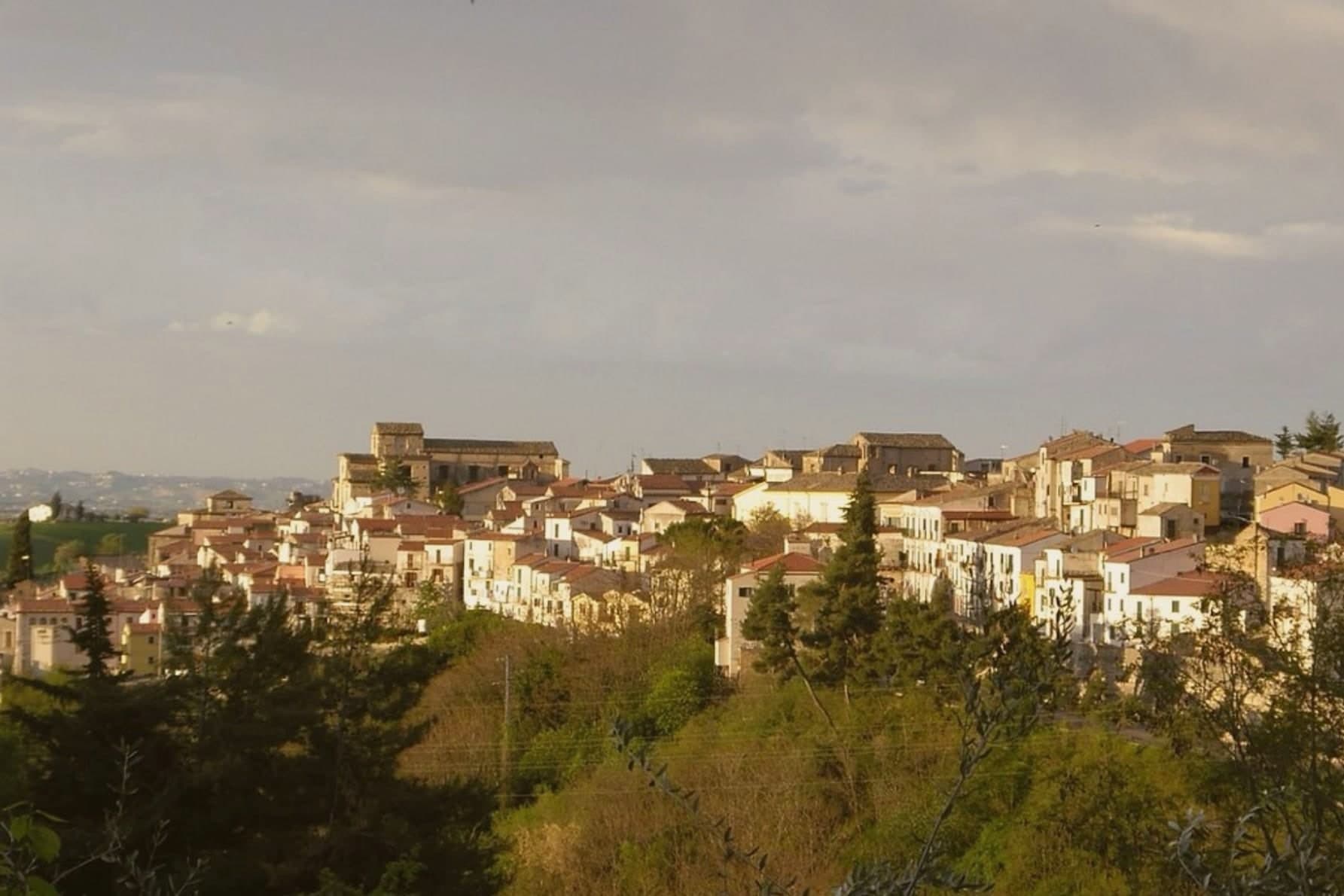
Manoppello sits on a hill on the right bank of the Pescara river, fifteen kilometers from the city of Pescara and at the foot of the Maiella massif. The old center holds the river's edge while the abbey stands apart from it, outside the town proper, on ground that carried a Roman temple before it carried a church.
The relic that gives the hill above the town its name arrived at the Capuchin convent in 1620, brought by the notary Donato Antonio de Fabritiis. The countryside around both church and abbey shares a building tradition, earth rammed into walls, common enough across the valley to have earned the commune its place in a network built to recognize it.
The town's geography is therefore layered rather than single: a river-bank settlement, a devotional site on the hill above it, an abbey standing separate on former Roman ground, and a farming countryside that built in earth rather than stone. Each part answers to a different age, and together they show a place that grew by accretion rather than around one center.
What to see in Manoppello
- Basilica del Volto Santo. Capuchin basilica on the hill above town, holding the veil reputed to be the Veil of Veronica, a translucent cloth bearing a faint image of a human face.
- Abbazia di Santa Maria Arabona. Cistercian abbey founded in 1197, standing outside the town on ground once occupied by a temple to Bona Dea, its choir carrying frescoes by Antonio Martini di Atri.
- Centro Storico. Medieval core on the right bank of the Pescara, built in the rammed-earth technique of the surrounding countryside.
How to get to Manoppello
There is a railway station in the town, so you can arrive without a car and never need one while you are here. Pescara is roughly 32 minutes away by road.
Our tip
April through June and September through October are the calm months in Manoppello, when the basilica is open without the high pilgrimage flow and the Maiella foothills turn green. July and August bring heat and the largest pilgrim numbers, especially around the August feast of the Volto Santo. November through March is quiet.
Loreto Aprutino
Why visit Loreto Aprutino
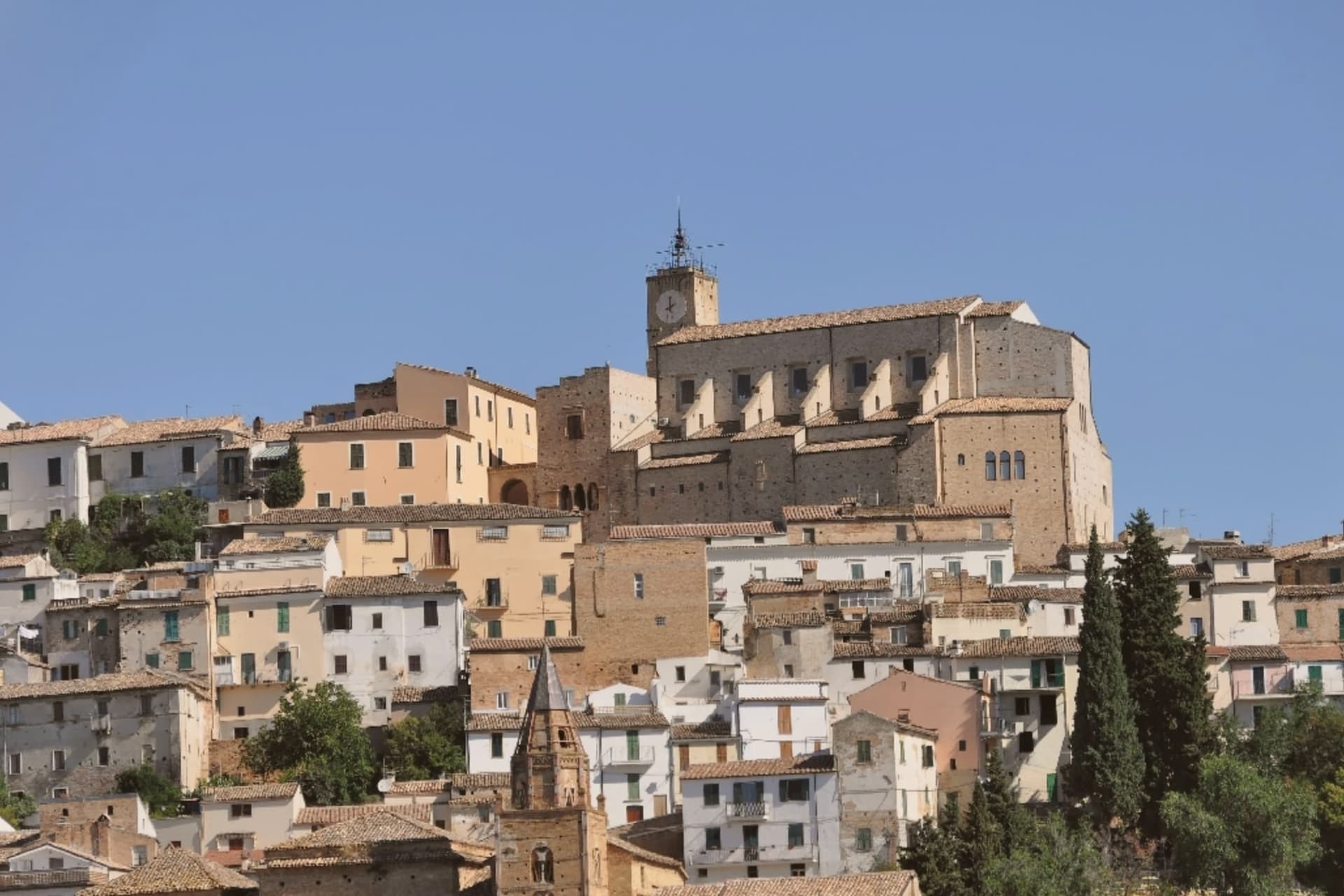
Loreto Aprutino sits at 290 meters on a hill twenty kilometers inland from Pescara, in the so-called Golden Triangle of Abruzzo olive oil that it shares with Pianella and Moscufo. Pre-Roman necropoleis at Colle-Fiorano and Farina-Cardito show a settlement long before the medieval town.
The Romanesque-Gothic church of Santa Maria in Piano, built around 1280, holds the Giudizio particolare delle anime, a wall fresco in encaustic technique that shows souls crossing a bridge thin as a human hair, falling into a river of boiling pitch if not saved; the Aquinas family commissioned the cycle. Castello Chiola dominates the ridge above the town, restored after Italian unification in 1863.
The olive-oil tradition runs to the fourth century BC; the local DOP is Aprutino Pescarese, and the town's Museo dell'Olio explains the chain from grove to bottle. The Acerbo Castelli ceramics collection covers majolica from the fifteenth to the nineteenth century.
What to see in Loreto Aprutino
- Chiesa di Santa Maria in Piano. Church from 1280 with the encaustic fresco Giudizio particolare delle anime, the bridge-of-hair Judgment commissioned by the Aquinas family.
- Castello Chiola. Medieval castle on the highest point of the ridge, restored after 1863, now a hotel and still the dominant skyline feature.
- Museo Acerbo delle Ceramiche di Castelli. Collection of Castelli majolica from the fifteenth to nineteenth century, the most prestigious ceramic tradition of Abruzzo.
How to get to Loreto Aprutino
There is a railway station in the town, so you can arrive without a car and never need one while you are here. Pescara is roughly 38 minutes away by road.
Our tip
April through June is the green window in the Aprutino hills, with mild evenings and active olive groves. September and October bring the harvest and the new-oil season; tasting tours run through both months. July and August are hot at 290 meters, and visitors usually move between the cool nave of Santa Maria in Piano and the shaded courtyards of the centro.
Pianella
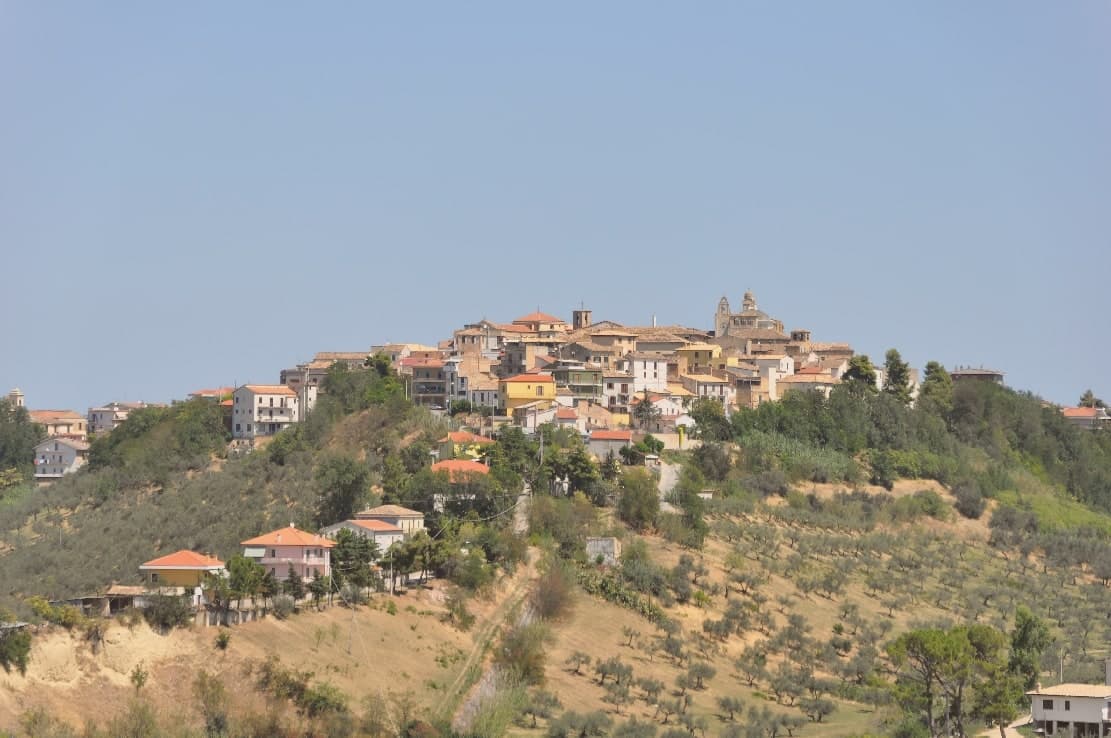
Why visit Pianella
Pianella sits at 236 meters between the Tavo and Pescara rivers, fifteen kilometers inland from Pescara. The first documented mention dates to 963, when Pandolfo, Prince of Capua, ordered the construction of the Basilica di Santa Maria Maggiore on the foundations of an old temple of Vesta.
Saracens, Normans, the Aquaviva, and the Orsini all passed through; in 1522 the village became a fief of Margherita d'Austria Farnese, and Ferdinand IV later granted it the title of Royal City. The local agricultural identity is older than all of that.
Pianella shares with Loreto Aprutino and Moscufo the so-called Golden Triangle of Abruzzo olive oil, producing the DOP Aprutino Pescarese, and it is the home of the dritta cultivar, a medium-early olive native to the Vestine area that gives a fruity, clear-flavored oil. The Cittaslow membership and the Città dell'Olio listing both run on that long agricultural history.
What to see in Pianella
- Basilica di Santa Maria Maggiore. Pre-Romanesque-Romanesque basilica founded in 963 by Pandolfo, Prince of Capua, built over an old temple of Vesta on the village hill.
- Centro storico. Medieval hill nucleus with traces of the Aquaviva and Orsini periods, surrounded by the surviving fragments of Farnese-era walls.
- Oliveti di varietà dritta. Hillside groves of the native dritta cultivar, basis of the DOP Aprutino Pescarese extra virgin olive oil produced by local frantoi.
How to get to Pianella
Pescara is roughly 28 minutes away by road.
Our tip
April through June is the green window in the Aprutino hills, with mild evenings and active grove work. September and October are the harvest and new-oil months, when the frantoi run nearly around the clock. July and August are hot at 236 meters between the two rivers, and the centro empties between four and seven in the afternoon. Festa della Birra falls in August.
Penne
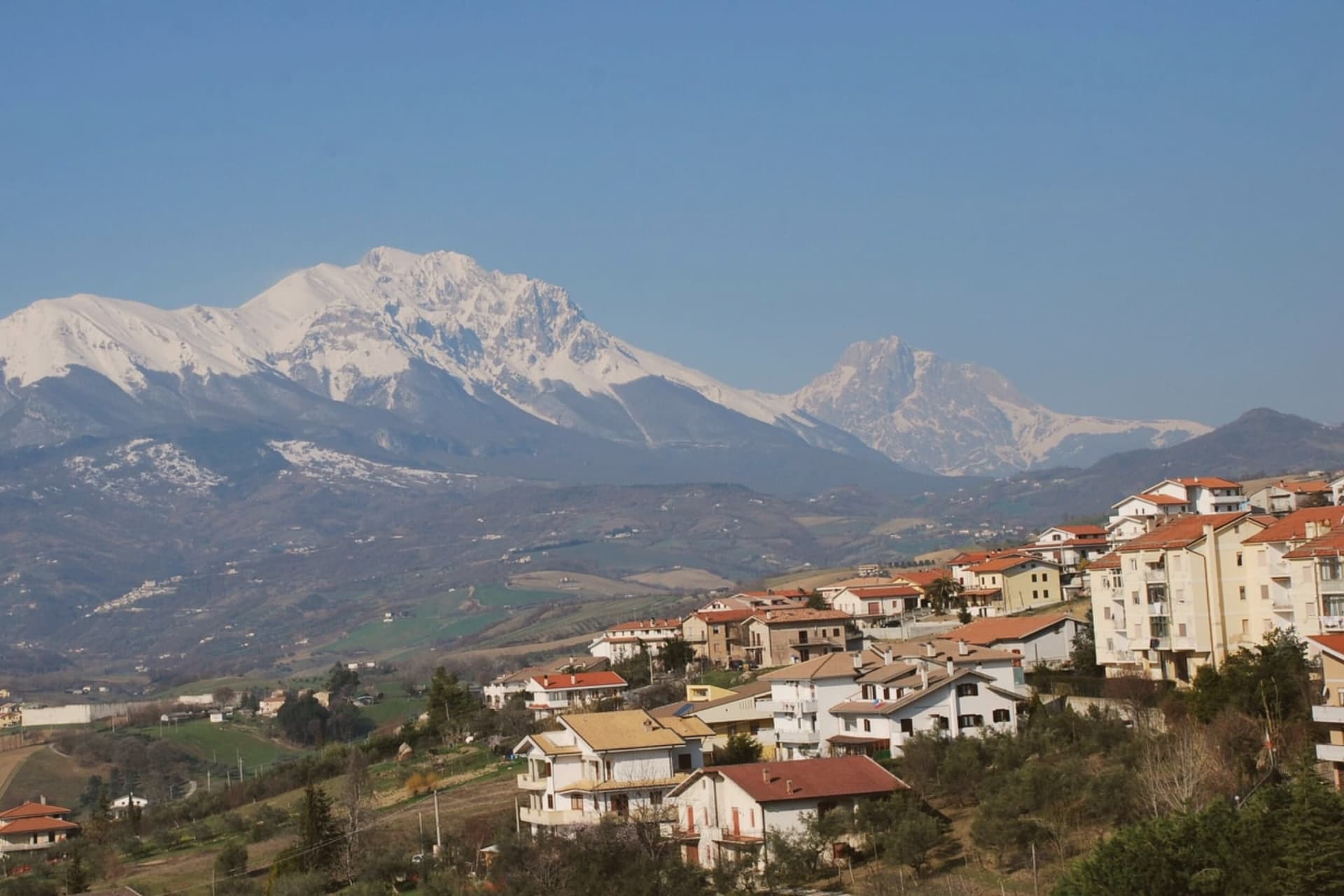
Why visit Penne
Penne sits at 438 meters on four hills between the Tavo and Fino rivers, twenty-five kilometers from the Adriatic. Of pre-Roman origin, the town was the capital of the Vestini Italic people no later than 300 BC; in around 89 BC the Vestini and other Italic tribes were defeated by Rome in the Social War.
The historic centre is built almost entirely of red brick. Streets, palazzi, churches and pavements all share the same warm tone, which earned Penne the nickname Città del Mattone, the City of Bricks, and the literary tag the small Siena.
The Duomo, dedicated to Saint Massimo of Aveia, stands on a tenth-century crypt; its terracotta façade was rebuilt after the war, but the crypt, the portal, the thirteenth-century rose window and the fifteenth-century bell tower belong to the original Romanesque-Gothic phase. Allied bombing levelled large parts of the town in the Second World War, and in 2006 Penne received the Silver Medal of Civic Merit for what its civilians suffered.
What to see in Penne
- Duomo (Cattedrale di San Massimo). Concathedral of the Pescara-Penne archdiocese built over a tenth-century crypt, with a thirteenth-century rose window and fifteenth-century bell tower.
- Museo Diocesano. Diocese museum inside the Duomo complex, holding liturgical objects, paintings and sculpture from across the Pescara-Penne network.
- Chiesa di Santa Maria in Colleromano. Twelfth-century church outside the historic core, one of the earliest religious buildings preserved in the Penne territory.
How to get to Penne
Pescara is roughly 49 minutes away by road.
Our tip
April through October is the strong stretch. May and September are the best months on the brick streets, when the late light glows on the walls and the olive harvest gives the corso its smell. July and August can climb past thirty-three degrees and the centro empties from two to six; the brick holds heat long into the night.
Città Sant'Angelo
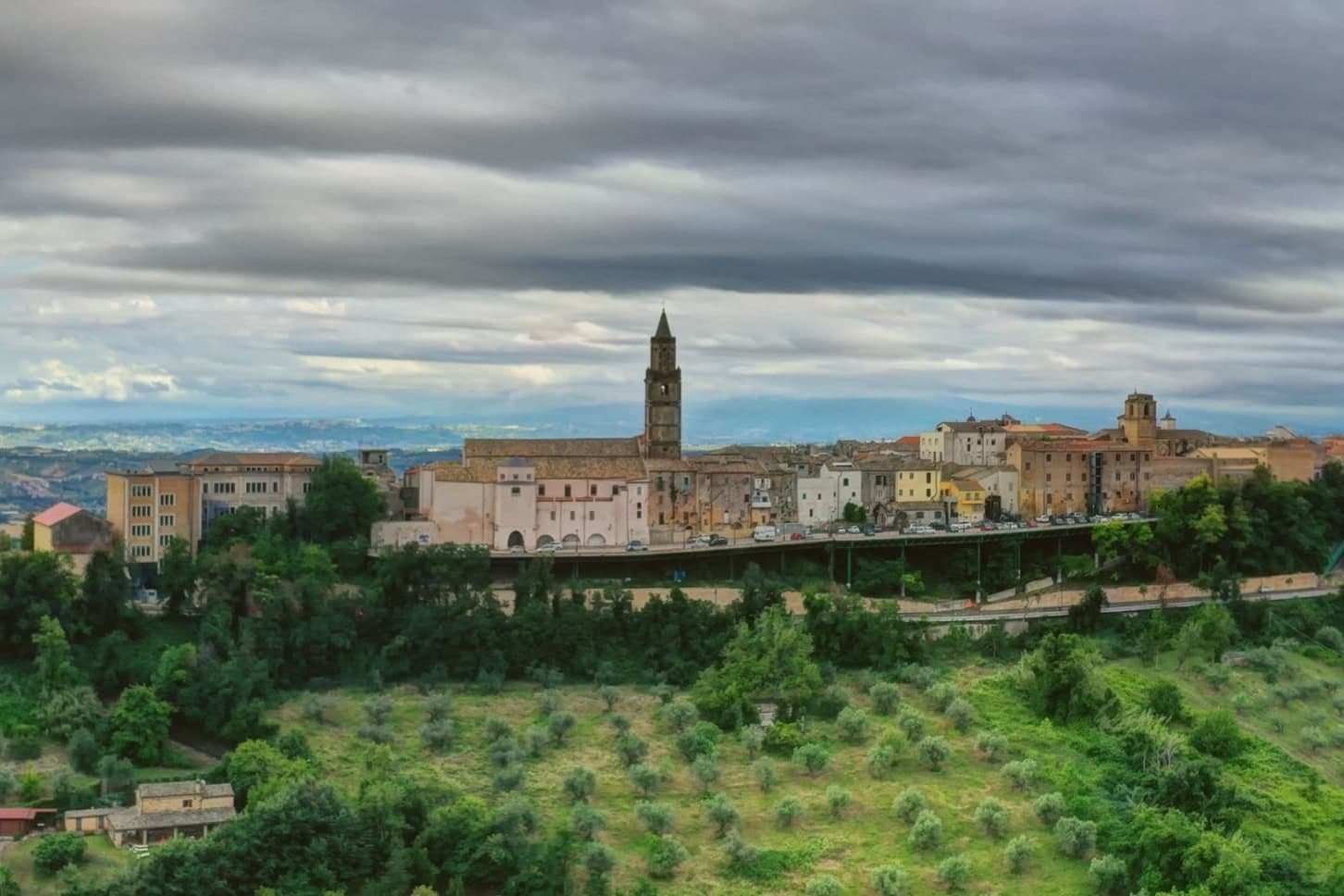
Why visit Città Sant'Angelo
Città Sant'Angelo sits on a ridge at 320 meters, fifteen kilometers from Pescara and a clear day's walk from the Adriatic. The Vestini, an Italic Sabine tribe, held this ground before Rome; the medieval town that grew up here was called Castrum Sancti Angeli in the twelfth century and given its current name in 1528.
By then it was one of the three major seats of the Penne-Atri diocese. The Collegiata di San Michele Arcangelo, rebuilt in the thirteenth century, runs forty-seven meters along its portico, the same length as the bell tower is tall.
Its double organ holds 1,218 pipes and was restored in 2023 after nearly sixty years of silence. The Corso Vittorio Emanuele still threads the ridge between olive groves and vineyards, and the town carries four institutional signals at once: Borghi più belli, Cittaslow, Città del Vino, Città dell'Olio.
Few inland communes this close to the coast hold all four.
What to see in Città Sant'Angelo
- Collegiata di San Michele Arcangelo. Thirteenth-century church with a forty-seven meter portico, a 1326 portal, and a double organ of 1,218 pipes restored in 2023.
- Campanile della Collegiata. Bell tower designed by Antonio da Lodi, finished in 1425, the same height as the portico is long.
- Centro storico. Linear medieval ridge town stretched along the Corso Vittorio Emanuele, with palazzi and small churches from the fourteenth to eighteenth centuries.
How to get to Città Sant'Angelo
Pescara is roughly 25 minutes away by road.
Our tip
April through June and September into October are the months when the ridge feels right. Olive harvest runs late October and the corso fills with mills. July and August push past thirty degrees and the centro storico empties between two and six in the afternoon, though the sea breeze fifteen kilometers east keeps evenings tolerable. Borgo diVino in tour a Città Sant'Angelo falls in June.
More from Anywhere Italy
 The best hill towns you can reach by train in Abruzzo
 The 8 best hill towns that eat well within 90 minutes of Pescara
 The best towns that live slowly in Abruzzo
 The best wine towns in Abruzzo
- The 6 best hill towns with a food festival in Abruzzo
- The best small hill towns inside a national park in Abruzzo