
The 8 best hill towns that eat well within 90 minutes of Pescara
The hills between the Adriatic and the Gran Sasso are built from pale stone and brick, stacked on ridges above olive terraces and Montepulciano d'Abruzzo vineyards, and they are where Abruzzo and the southern Marche keep their kitchens. This is arrosticini country, skewers of castrato turned over a long narrow brazier, eaten standing up with bread and a glass of something red and cold. It is also saffron from the Navelli plain, sheep's cheese aged in caves, chitarra pasta cut on a wire frame, sugared almonds, and anise. Autumn is the season that rewards the drive, when the grape harvest is in and the truffle appears on menus that change weekly.
Most people who land in this part of Italy stay on the coast. Pescara's beachfront runs for kilometres of tidy sand and umbrella rows, the seafood is good, the trains are easy, and in August the whole thing is full. South of the city the Costa dei Trabocchi has become the other fixed point, its fishing platforms photographed from a cycle path that fills every summer weekend. Both are worth their reputation. Both mean queueing for a table.
The same producers supply the hills, and the hills are half an hour inland. Climb away from the sea and the towns thin out, the rents drop, and the restaurants that a national dining guide has singled out turn out to be family dining rooms on a ridge road rather than terraces above the sand. These are the smaller places, each with a named table, each within an easy drive of Pescara airport or station.
Of the 61 communes we have mapped within 90 minutes of Pescara, 8 qualify as hill towns that eat well: each is an inland hill settlement, and a dining guide has named a table in each. The smallest, Ripatransone, has 4,072 residents.
Two more lists worth reading alongside this one: The best hidden towns with a serious restaurant that eat well within 90 minutes of Pescara and The prettiest small villages that eat well within 90 minutes of Pescara.
Ripatransone
Why visit Ripatransone
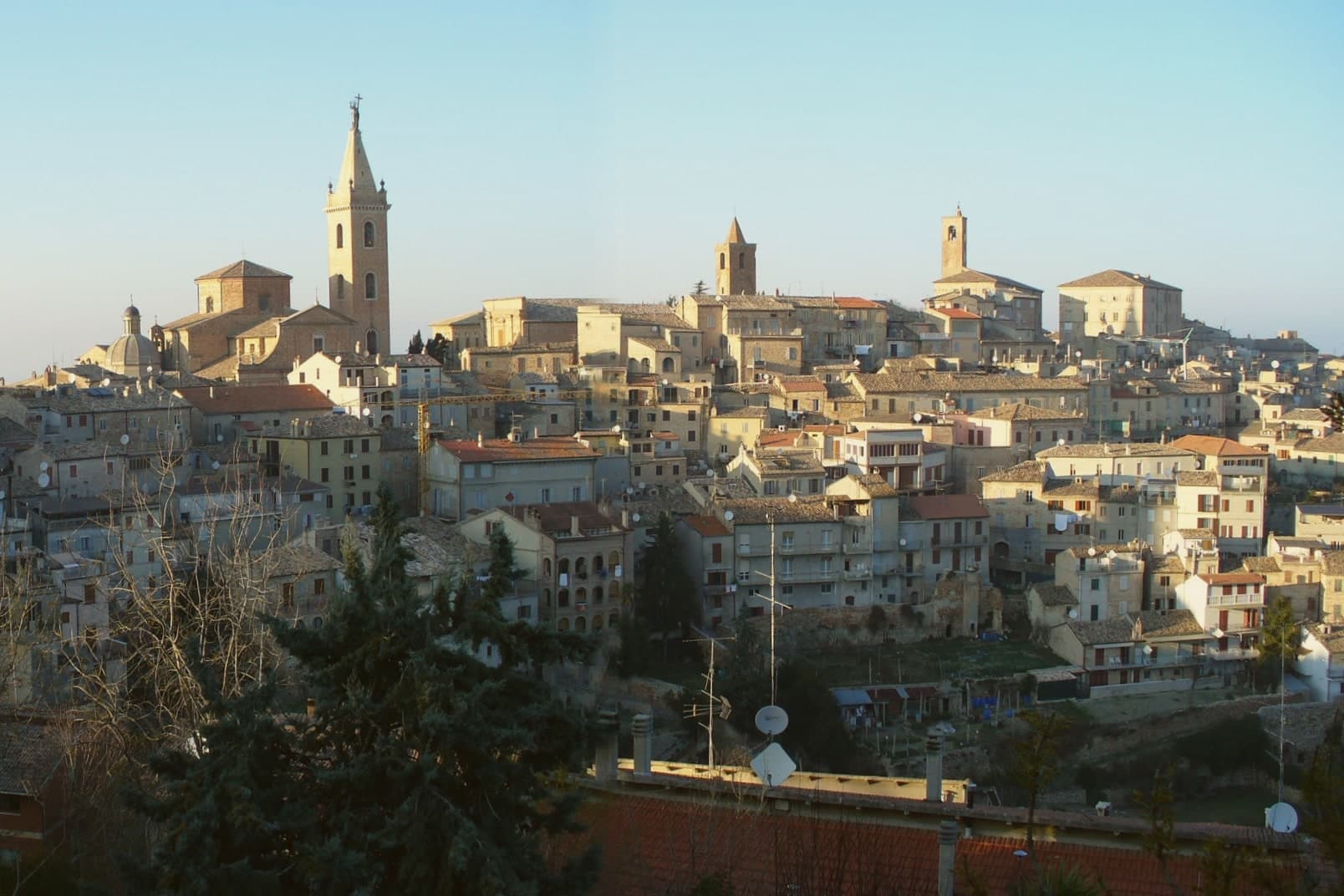
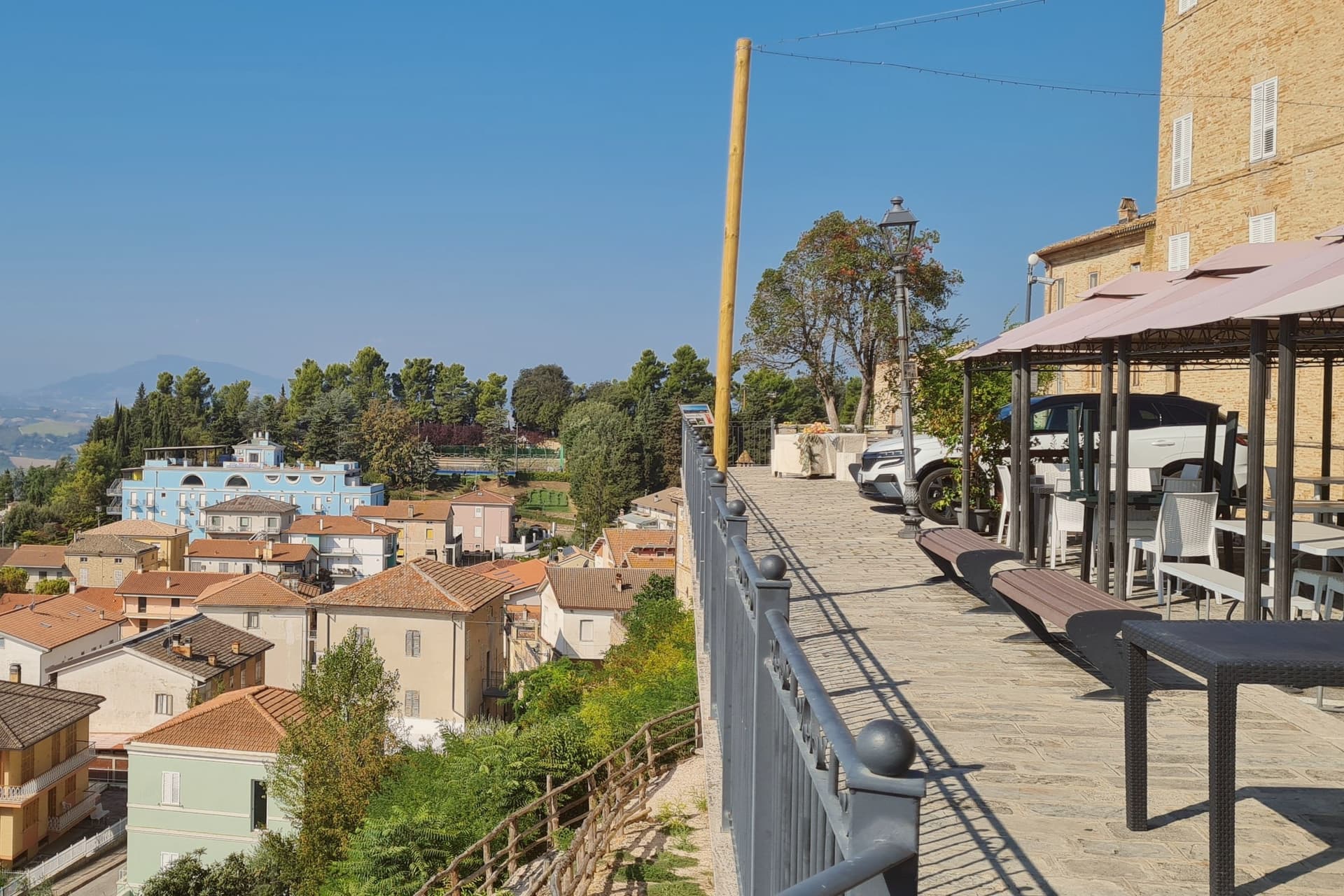
Ripatransone sits at 494 meters on a ridge between the Tesino and Menocchia valleys, twenty kilometers from Ascoli Piceno and seven from the Adriatic, with views from the Sibillini and Gran Sasso to the coast that earned it the nickname Belvedere del Piceno. The hill has been inhabited since prehistory and was settled by the Umbri and then the Piceni; after centuries of Roman quiet a medieval town grew here from a circle of castles unified in 1096.
Pope Pius V raised it to City and diocesan see in 1571. The name combines ripa, cliff, with Transone, the first feudal lord.
The Vicolo più stretto d'Italia, the narrowest alley in Italy at 43 centimeters and 32 at its tightest point, runs between two stone houses near Via Margherita: shoulders go sideways. The Cavallo di Fuoco, a wooden horse covered in fireworks that gallops across the main piazza on the Sunday after Easter, has run since 1682.
Iervasciò, Trattoria da Rita have been named by a guide.
What to see in Ripatransone
- Vicolo più stretto d'Italia. The narrowest alley in Italy, 43 centimeters wide and 32 at its tightest point, between two stone houses near Via Margherita.
- Piazza XX Settembre. The main square of the centro storico, with the Palazzo del Podestà, the Cathedral of San Gregorio Magno and the medieval Torre Civica.
- Cattedrale di San Gregorio Magno. Cathedral built between the seventeenth and eighteenth centuries on the site of an earlier church, raised to cathedral status by Pope Pius V in 1571.
How to get to Ripatransone
Pescara is roughly 70 minutes away by road.
Our tip
April through June and September into October are the working months for Ripatransone. The Tesino and Menocchia valleys turn green from April, the Cavallo di Fuoco runs on the Sunday after Easter, and the autumn light brings the clearest views from the ridge across to the Sibillini and the sea. July and August touch the low thirties; the ridge breeze keeps the centro storico cooler than the coastal plain seven kilometers below. Festival Frittella di Zia Maria falls in September.
Offida
Why visit Offida
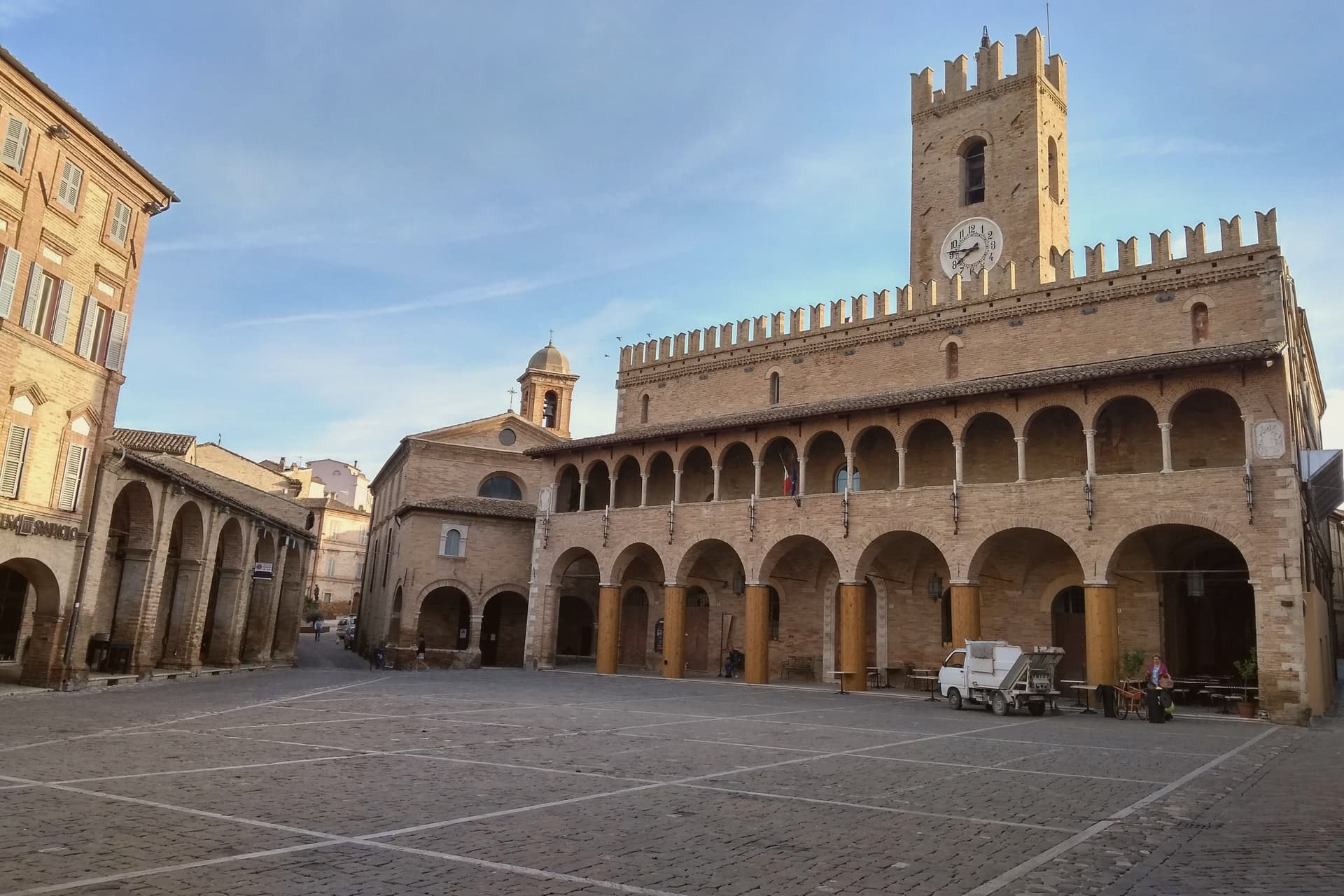
Offida sits at 293 meters on a cliff between the Tesino and Tronto valleys, twenty-three kilometers from Ascoli Piceno. The Chiesa di Santa Maria della Rocca rises on a rock spur at the western edge of the village, surrounded on three sides by cliffs that drop into two valleys: a Romanesque-Gothic temple in brick and travertine, raised by Master Albertino in 1330 on an older Benedictine foundation, with a double row of trilobed arches around the apse.
Inside, the apse and transept hold the fresco cycle of the Master of Offida, an anonymous monk painter who carried Giotto's lesson through the Rimini school, with the Marriage of Saint Catherine and Saint Christopher dated by inscription to 1367. Bobbin lace, merletto a tombolo, has been worked in town since the fifteenth century; the Museo del Merletto in Palazzo De Castellotti holds the collection.
The Carnevale Storico, with the Bove finto run and the Vlurd fire bundles, dates from before Lent in early February.
Osteria Ophis, Blob Caffè & Ristorante have been named by a guide.
What to see in Offida
- Chiesa di Santa Maria della Rocca. Romanesque-Gothic brick-and-travertine church raised in 1330 by Master Albertino on a rock spur west of town, with the Master of Offida fresco cycle dated 1367 in the transept.
- Museo del Merletto a Tombolo. Inside Palazzo De Castellotti, with the lace collection, tools, historical documents and demonstrations of the bobbin-lace work practiced in town since the fifteenth century.
- Palazzo Comunale. Civic palace on the long Piazza del Popolo, with a portico, the Teatro Serpente Aureo and the access to the Museo del Merletto and the archaeological museum.
How to get to Offida
Pescara is roughly 74 minutes away by road.
Our tip
April through June and September into October are the best months for Offida. The hills around the town turn green by April and gold through the September harvest, the wine cellars run open tastings between vendemmia and St. Martin, and the Pecorino and Passerina vineyards stand out along the ridges. Sagra del Chichìripieno falls in August.
Loreto Aprutino
Why visit Loreto Aprutino
Loreto Aprutino sits at 290 meters on a hill twenty kilometers inland from Pescara, in the so-called Golden Triangle of Abruzzo olive oil that it shares with Pianella and Moscufo. Pre-Roman necropoleis at Colle-Fiorano and Farina-Cardito show a settlement long before the medieval town.
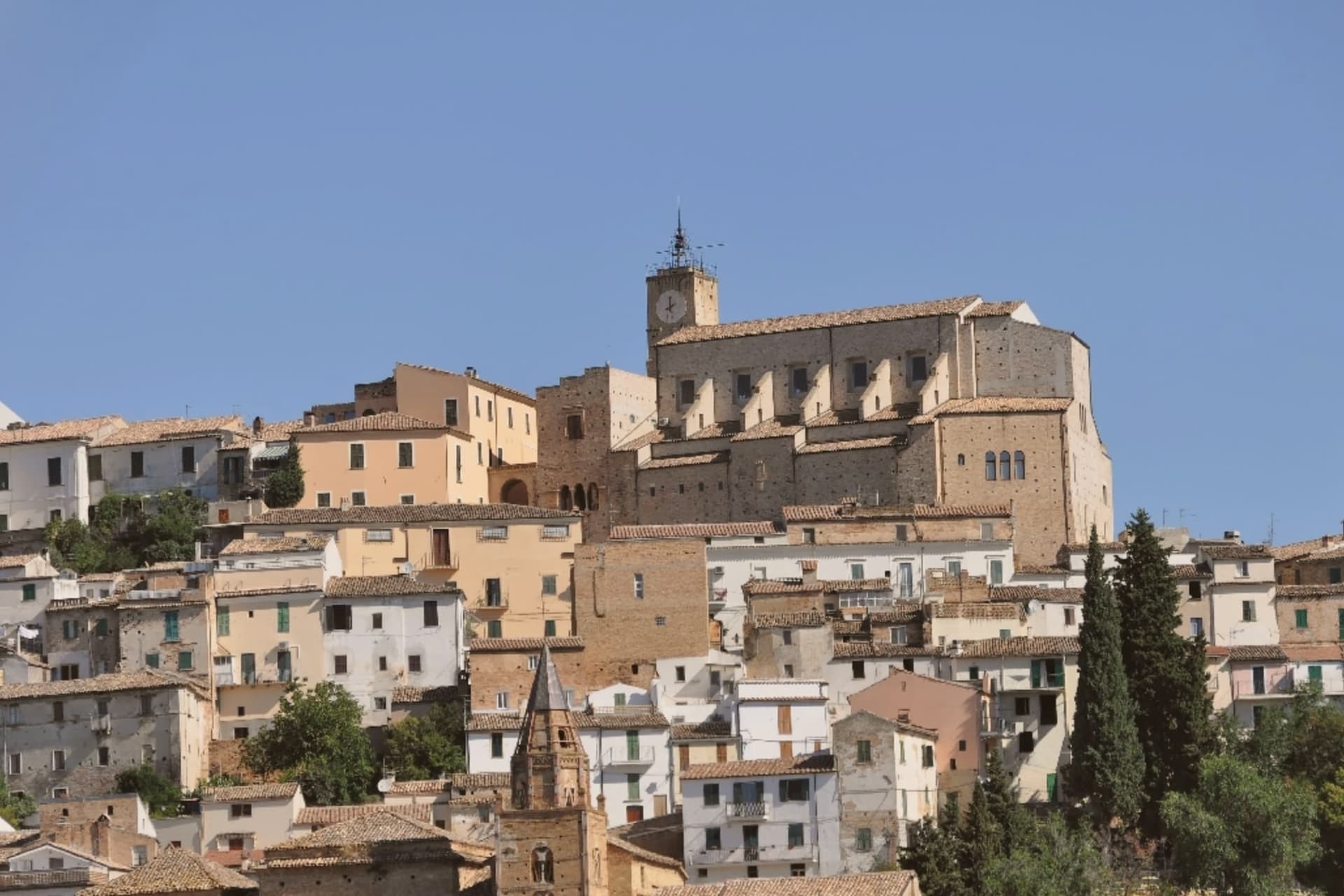
The Romanesque-Gothic church of Santa Maria in Piano, built around 1280, holds the Giudizio particolare delle anime, a wall fresco in encaustic technique that shows souls crossing a bridge thin as a human hair, falling into a river of boiling pitch if not saved; the Aquinas family commissioned the cycle. Castello Chiola dominates the ridge above the town, restored after Italian unification in 1863.
The olive-oil tradition runs to the fourth century BC; the local DOP is Aprutino Pescarese, and the town's Museo dell'Olio explains the chain from grove to bottle. The Acerbo Castelli ceramics collection covers majolica from the fifteenth to the nineteenth century.
La Bilancia have been named by a guide.
What to see in Loreto Aprutino
- Chiesa di Santa Maria in Piano. Church from 1280 with the encaustic fresco Giudizio particolare delle anime, the bridge-of-hair Judgment commissioned by the Aquinas family.
- Castello Chiola. Medieval castle on the highest point of the ridge, restored after 1863, now a hotel and still the dominant skyline feature.
- Museo Acerbo delle Ceramiche di Castelli. Collection of Castelli majolica from the fifteenth to nineteenth century, the most prestigious ceramic tradition of Abruzzo.
How to get to Loreto Aprutino
There is a railway station in the town, so you can arrive without a car and never need one while you are here. Pescara is roughly 38 minutes away by road.
Our tip
April through June is the green window in the Aprutino hills, with mild evenings and active olive groves. September and October bring the harvest and the new-oil season; tasting tours run through both months. July and August are hot at 290 meters, and visitors usually move between the cool nave of Santa Maria in Piano and the shaded courtyards of the centro.
Guardiagrele
Why visit Guardiagrele
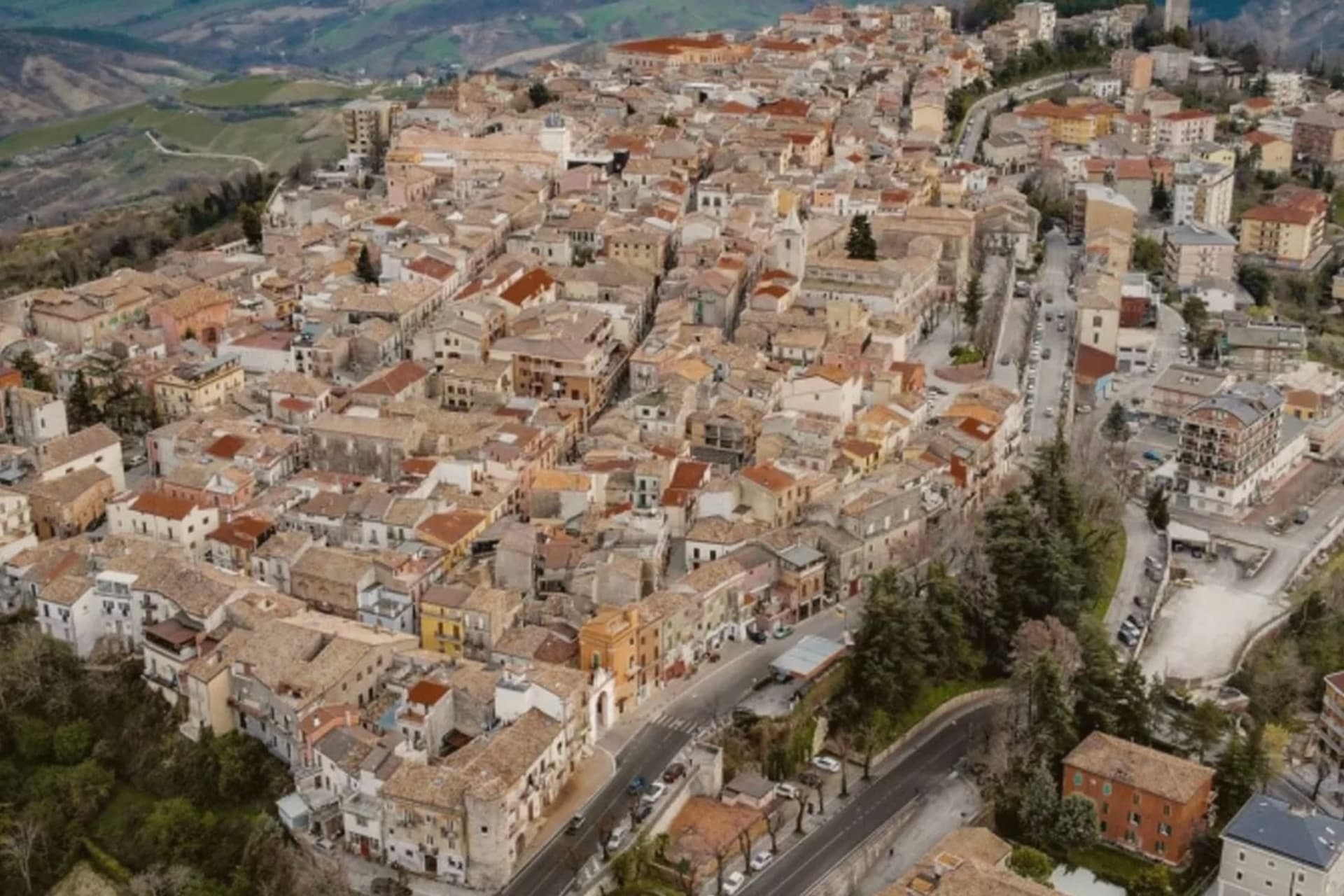
Guardiagrele sits at 576 meters on the eastern Majella foothills, thirty kilometers from Pescara. Gabriele D'Annunzio called it the terrazza d'Abruzzo for the views over the mountains and valleys from its piazzas.
Documented in an eleventh-century papal bull as a villa named Grele, the town grew through the fourteenth and fifteenth centuries as a stronghold of the Kingdom of Naples, with permission from the king to mint coins. It produced the late medieval goldsmith Nicola Gallucci, known as Nicola da Guardiagrele (c.1385-c.1462), trained on Gothic and Tuscan models including Lorenzo Ghiberti, who left work in cathedrals across Abruzzo.
The collegiate church of Santa Maria Maggiore, built at the start of the thirteenth century outside the walls and absorbed into the town in the centuries after, carries a fifteenth-century portal with a Coronation of the Virgin lunette by Nicola, now in the Duomo museum. Wrought-iron, copper and gold work still operate from workshops in the centro storico.
Villa Maiella, La Grotta dei Raselli have been named by a guide.
What to see in Guardiagrele
- Collegiata di Santa Maria Maggiore. Thirteenth-century collegiate church with a massive bell tower, fifteenth-century portal, and the Nicola da Guardiagrele Coronation lunette in its museum.
- Museo del Duomo. Cathedral museum holding Nicola da Guardiagrele's marble lunette, his goldwork, and liturgical objects from the surrounding Majella churches.
- Botteghe del rame e del ferro battuto. Active copper and wrought-iron workshops in the centro storico, the surviving craft tradition that produced Nicola Gallucci in the late fourteenth century.
How to get to Guardiagrele
There is a railway station in the town, so you can arrive without a car and never need one while you are here. Pescara is roughly 48 minutes away by road.
Our tip
April through October is the open season. May and September are the best months on the terrazza, with the Majella valleys in clear light and the copper workshops at full pace. July and August are warm but the elevation keeps the centro storico cooler than the coast.
Atri
Why visit Atri
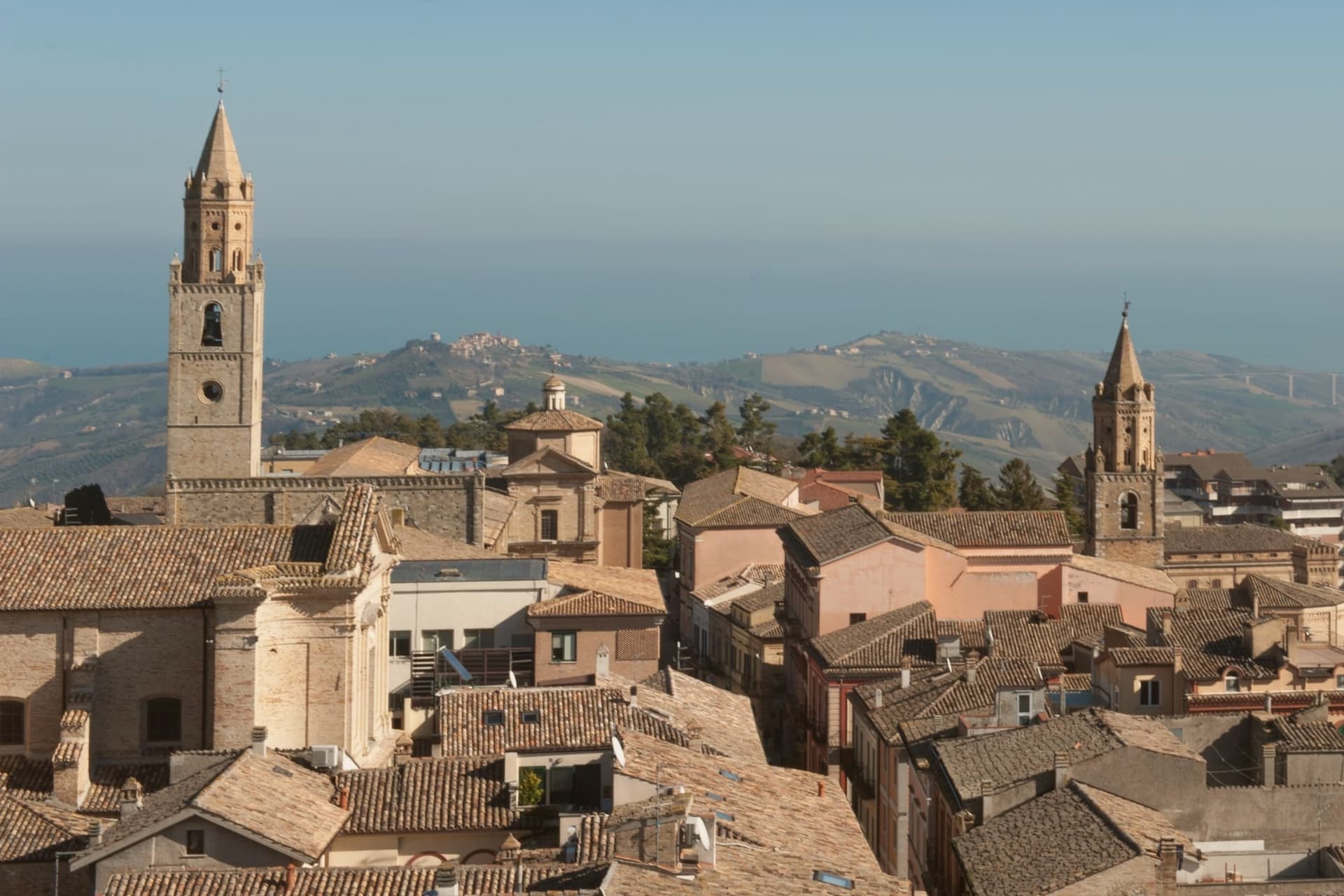
Atri sits at 442 meters on three hills ten kilometers from the Adriatic. The town was the pre-Roman Hadria, a Picene and then Italic settlement, refounded by Hadrian as Colonia Aelia Hadria.
The emperor's family came from here, and the Adriatic Sea takes its name from the same Hadria. The Co-Cathedral Basilica of Santa Maria Assunta was built in the 13th and 14th centuries on the site of an earlier 9th-century church, which itself stood on a Roman temple to Hercules.
Andrea de Litio painted the apse cycle of the Lives of Joachim, Anne and Mary between 1460 and 1481, the greatest fresco cycle of the Abruzzo Renaissance. The Acquaviva, dukes of Atri from the late 14th century, made the town their seat and commissioned heavily.
Below the upper town, the Calanchi di Atri reserve protects a 390-hectare badlands landscape carved by erosion. Atri is a member of the Città dell'Olio network for the surrounding olive groves.
Hostaria Zedi have been named by a guide.
What to see in Atri
- Cattedrale Basilica di Santa Maria Assunta. 13th-14th-century co-cathedral on the site of an earlier 9th-century church and a Roman temple to Hercules, with 1460-81 Andrea de Litio frescoes.
- Calanchi di Atri. 390-hectare badlands reserve south of town, eroded clay gullies rising from the Piomba valley at 104 meters to Colle della Giustizia at 468 meters.
- Palazzo Acquaviva. Seat of the dukes of Atri from the 14th century, with decorations commissioned by Isabella Piccolomini in the early 1500s.
How to get to Atri
Pescara is roughly 40 minutes away by road.
Our tip
April through June is the green season in the Atri hills, before the calanchi turn the heavy summer ochre. September and October are the dry, clear months, with the olive harvest beginning in mid-October. July and August are hot, with the upper town offering some breeze from the Adriatic ten kilometers away. Sagra degli Spaghetti al Pesto Casolano, delle Anguille e del Baccalà falls in August.
Città Sant'Angelo
Why visit Città Sant'Angelo
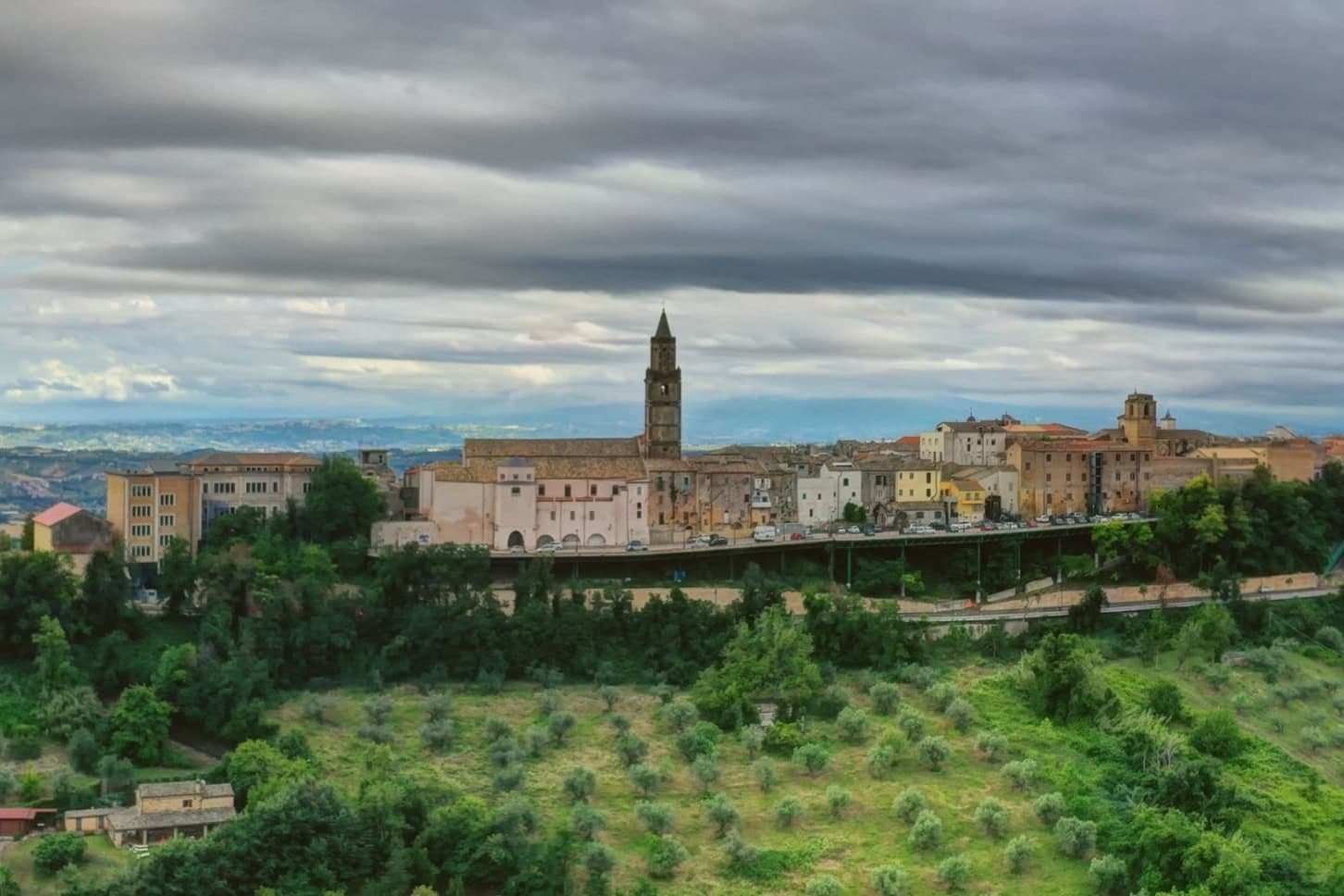
Città Sant'Angelo sits on a ridge at 320 meters, fifteen kilometers from Pescara and a clear day's walk from the Adriatic. The Vestini, an Italic Sabine tribe, held this ground before Rome; the medieval town that grew up here was called Castrum Sancti Angeli in the twelfth century and given its current name in 1528.
By then it was one of the three major seats of the Penne-Atri diocese. The Collegiata di San Michele Arcangelo, rebuilt in the thirteenth century, runs forty-seven meters along its portico, the same length as the bell tower is tall.
Its double organ holds 1,218 pipes and was restored in 2023 after nearly sixty years of silence. The Corso Vittorio Emanuele still threads the ridge between olive groves and vineyards, and the town carries four institutional signals at once: Borghi più belli, Cittaslow, Città del Vino, Città dell'Olio.
Few inland communes this close to the coast hold all four.
Rosarubra Zen have been named by a guide.
What to see in Città Sant'Angelo
- Collegiata di San Michele Arcangelo. Thirteenth-century church with a forty-seven meter portico, a 1326 portal, and a double organ of 1,218 pipes restored in 2023.
- Campanile della Collegiata. Bell tower designed by Antonio da Lodi, finished in 1425, the same height as the portico is long.
- Centro storico. Linear medieval ridge town stretched along the Corso Vittorio Emanuele, with palazzi and small churches from the fourteenth to eighteenth centuries.
How to get to Città Sant'Angelo
Pescara is roughly 25 minutes away by road.
Our tip
April through June and September into October are the months when the ridge feels right. Olive harvest runs late October and the corso fills with mills. July and August push past thirty degrees and the centro storico empties between two and six in the afternoon, though the sea breeze fifteen kilometers east keeps evenings tolerable. Borgo diVino in tour a Città Sant'Angelo falls in June.
Sulmona
Why visit Sulmona
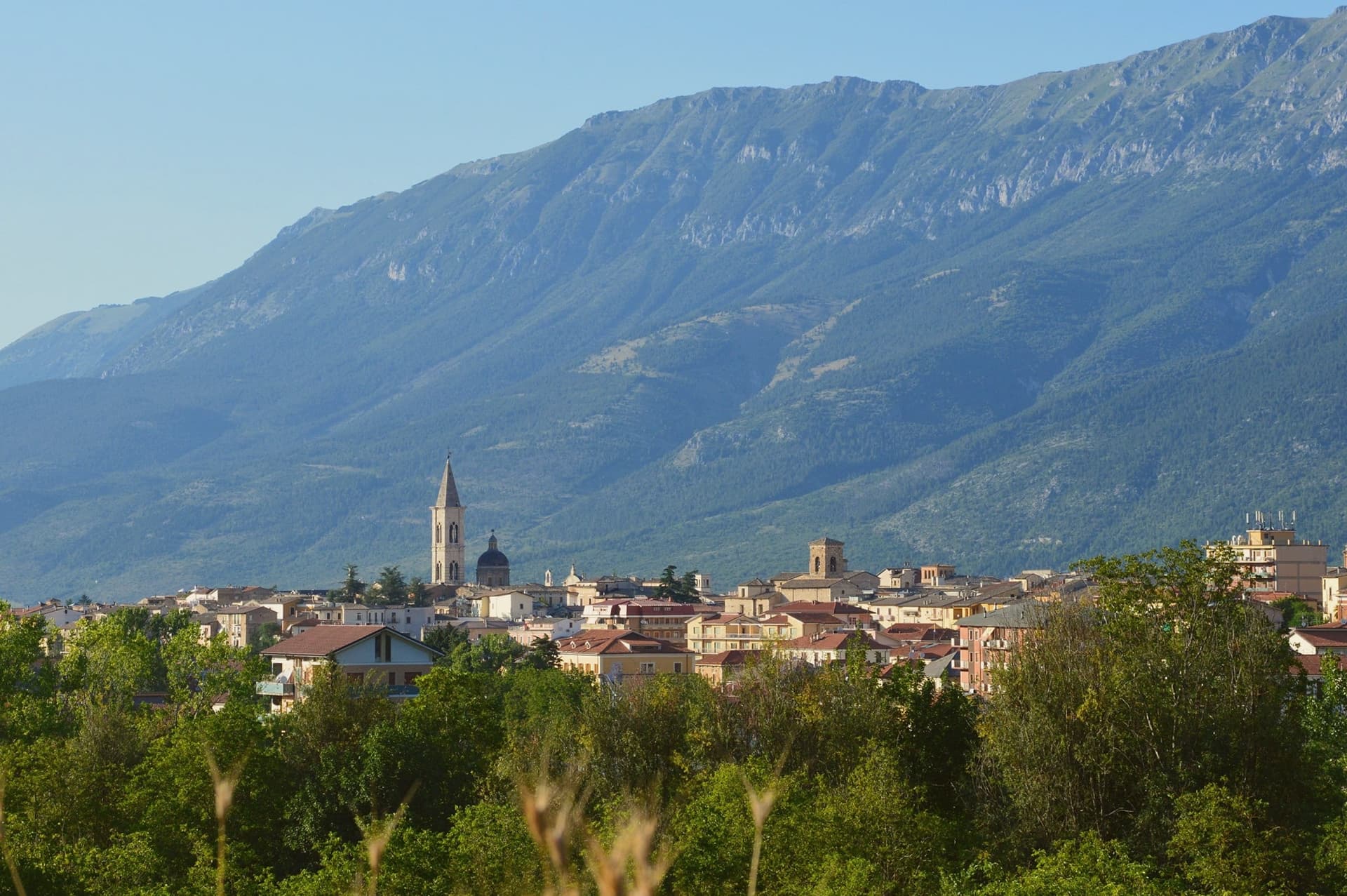
Sulmona sits at 405 meters in the Valle Peligna, at the confluence of the Gizio and Vella rivers, ringed by the Maiella, the Morrone and the Genzana ranges. The Roman poet Ovid was born here in 43 BC and never stopped writing about the salubrity of its water, a claim still made by the town.
Under Frederick II in the 13th century, Sulmona became the capital of the imperial province of Abruzzo and got the aqueduct of Manfred of Swabia, which still defines the long side of Piazza Garibaldi. The town survived two earthquakes, in 1349 and 1456, and emerged as the home of confetti, the sugared-almond confection given at weddings and baptisms.
Confetti Pelino, the best-known house, has been producing in town since 1783. Every July, the Giostra Cavalleresca brings out the city's seven boroughs in Renaissance procession from the Cathedral of San Panfilo, ending in a ring-jousting tournament in Piazza Garibaldi.
Clemente have been named by a guide.
What to see in Sulmona
- Piazza Garibaldi. The town's main piazza, dominated on its long side by the 13th-century aqueduct of Manfred of Swabia, host of the July Giostra Cavalleresca.
- Cattedrale di San Panfilo. Cathedral of the city's patron, the oldest church in Sulmona, starting point of the Giostra historical procession.
- Palazzo dell'Annunziata. Late-Gothic and Renaissance palace on Corso Ovidio with three different facade phases visible, now housing the civic museum.
How to get to Sulmona
There is a railway station in the town, so you can arrive without a car and never need one while you are here. Pescara is roughly 57 minutes away by road.
Our tip
April through June is the green season in the Valle Peligna, when the Maiella above the town still holds snow. The last week of July brings the Giostra Cavalleresca, the town's biggest annual gathering. August is hot, mid-thirties at midday, and the centro storico empties between two and six.
Ascoli Piceno
Why visit Ascoli Piceno
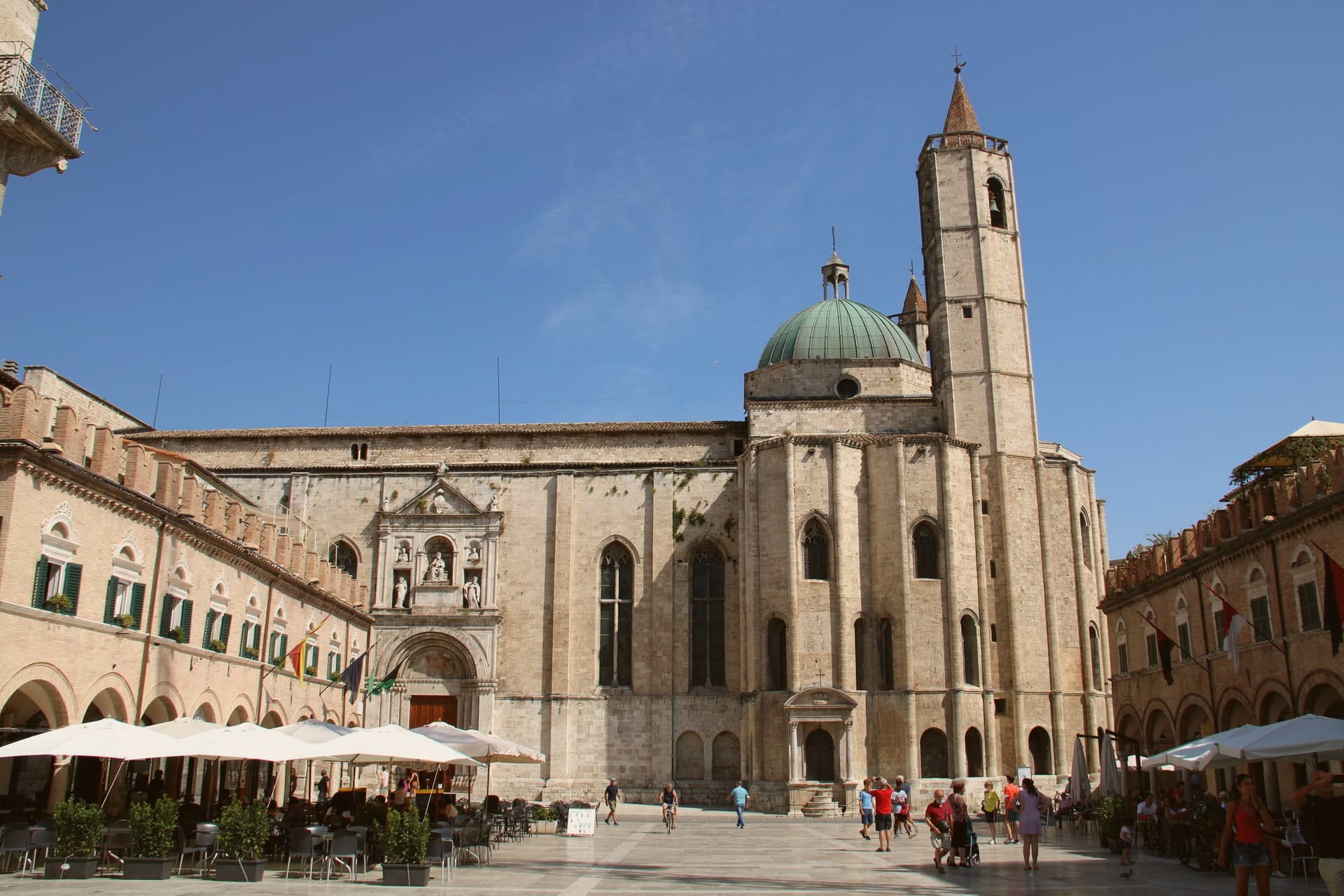
Ascoli Piceno sits at 154 meters at the confluence of the Tronto and the Castellano, the historic capital of the Piceni who held this part of the Marche before Rome. The town is built almost entirely from local travertine, which gives the centro storico its luminous pale surface and its mirror behavior under rain: Piazza del Popolo, paved in polished travertine slabs, is one of the most photographed squares in Italy.
In 91 BC the Ascolani killed the Roman delegation in their forum and triggered the Social War; the city was razed and rebuilt by Rome and the present grid still follows the Roman layout. The Quintana, run in costume in July and August, is a joust between the six sestieri, the city districts, the knight on horseback charging an effigy of an Arab warrior.
Anisetta Meletti, the local aniseed liqueur invented in 1907, is poured at the Caffè Meletti on the piazza.
Caffè Meletti, Tetsu have been named by a guide.
What to see in Ascoli Piceno
- Piazza del Popolo. Paved in polished travertine slabs and lined by Renaissance porticoes, the Palazzo dei Capitani and the Loggia dei Mercanti, one of the most photographed squares in Italy.
- Chiesa di San Francesco. Gothic basilica begun in the thirteenth century, three travertine portals, two bell-towers, the largest Marchigiana example of the Franciscan order's architecture.
- Cattedrale di Sant'Emidio. Cathedral on Piazza Arringo, with a fifth-century crypt holding the relics of Sant'Emidio, patron saint invoked against earthquakes.
How to get to Ascoli Piceno
There is a railway station in the town, so you can arrive without a car and never need one while you are here. Pescara is roughly 72 minutes away by road.
Our tip
April through June and September into October are the best months for Ascoli Piceno. The travertine is dry, the surrounding olive groves turn through the Ascolana tenera harvest from October, and the Tronto and Castellano walks along the city's south edge are open every day. July and August touch the mid-thirties; the centro storico empties between three and six in the afternoon but the Quintana weekends fill it again. Ascoliva Festival falls in August.
More from Anywhere Italy
 The best hidden towns with a serious restaurant that eat well within 90 minutes of Pescara
 The prettiest small villages that eat well within 90 minutes of Pescara
 The best towns with a food festival that eat well in Marche
- The best towns with a serious restaurant that you can reach by train within 90 minutes of Pescara
 The 6 best small hill towns that eat well in Marche
 The best hill towns in the province of Ascoli Piceno