
The 8 best small wine towns within 90 minutes of Pescara
90 towns visited, 910 to go. Follow along, free: Subscribe on Substack
The wine country behind Pescara changes character every twenty minutes of driving. Near the coast the vines sit on low clay hills above the Adriatic, and the reds are Montepulciano d'Abruzzo, dark and soft, poured with grilled lamb skewers and sheep's cheese. Further inland the ground rises, the air thins, and Pecorino and Trebbiano come out cold and sharp against fried scamorza. The towns themselves are built of pale brick and river stone, tight around a piazza with a bar, and autumn is the season everything smells of must and woodsmoke.
Most people arrive in Pescara, stay on the seafront, and treat the region as beach with a wine list. In summer the promenade fills, the fish restaurants take bookings weeks out, and the tasting people do is a carafe of house white with the sun going down over the sand. It is a good few days. It is also, more or less, the whole of Abruzzo wine as most visitors meet it, filtered through a resort city.
The hills producing that wine begin almost immediately behind the city and run in every direction, north into the Marche border country, south toward the Maiella, west to the stone villages under the Gran Sasso. The towns here are small, they belong to the national association of Italian wine towns, and each keeps a working relationship with its own growers rather than a tasting-room industry. Fewer people go. All of them sit within an easy drive of Pescara airport and station.
Of the 61 communes we have mapped within 90 minutes of Pescara, 11 qualify as wine towns: each belongs to the national association of wine towns. This list is the small ones, 8 in all, ordered smallest first. The smallest, Ofena, has 420 residents.
If you are still choosing, we have also written The best wine towns in Abruzzo and The best small olive oil towns within 90 minutes of Pescara.
Why visit Ofena
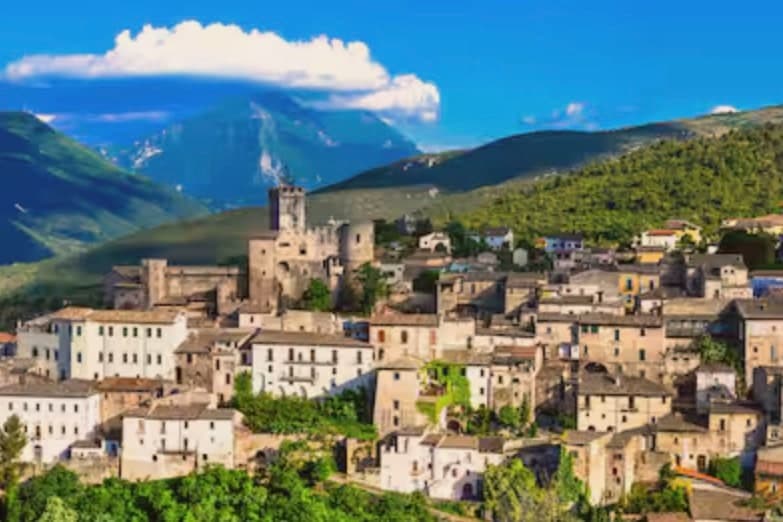
Ofena lies fifty kilometers inland from Pescara, in a basin closed to the south by the Gran Sasso wall. The Vestini, an Italic people, held their city of Aufinum here before Rome, and the basin sat on the Via Claudia Nova.
Archaeological remains from that period include large buildings, mosaics and tombs. The walled medieval village grew inside the same basin, its streets, baronial palazzo and eighteenth-century Palazzo Cataldi Madonna set against the older ground of the earlier settlement beneath them.
The heat that the wall traps against the basin floor, the same heat that gave the place its name, is what has kept vines on these slopes since among the earliest recorded plantings of the region's grape, and it is what still draws a wine estate to work the amphitheater at the foot of the glacier above the town. Basin, wall, and vine slope are one and the same geography, read three different ways.
The comune belongs to the national association of wine-producing towns.
What to see in Ofena
- Centro storico. Compact walled medieval village inside its original perimeter, with the baronial palazzo at the center and late medieval houses along narrow stone streets. Home today to the 420 remaining residents.
- Chiesa di San Nicola di Bari. Parish church in the centro storico, the religious anchor of the medieval settlement, rebuilt over several centuries.
- Convento di San Francesco. Franciscan convent at the edge of the village, with the Monastero dei Cappuccini further out, both marking the early modern religious life of the basin.
How to get to Ofena
Pescara is about 1 h away by road.
Our tip
April through October is the working window for the vineyards, but the Forno's heat makes July and August punishing in the basin itself. May, June, September and October are the comfortable months, with the Gran Sasso wall snow-tipped against the green slopes below. Harvest runs late September into October and brings the small population back into the streets.
Why visit Controguerra
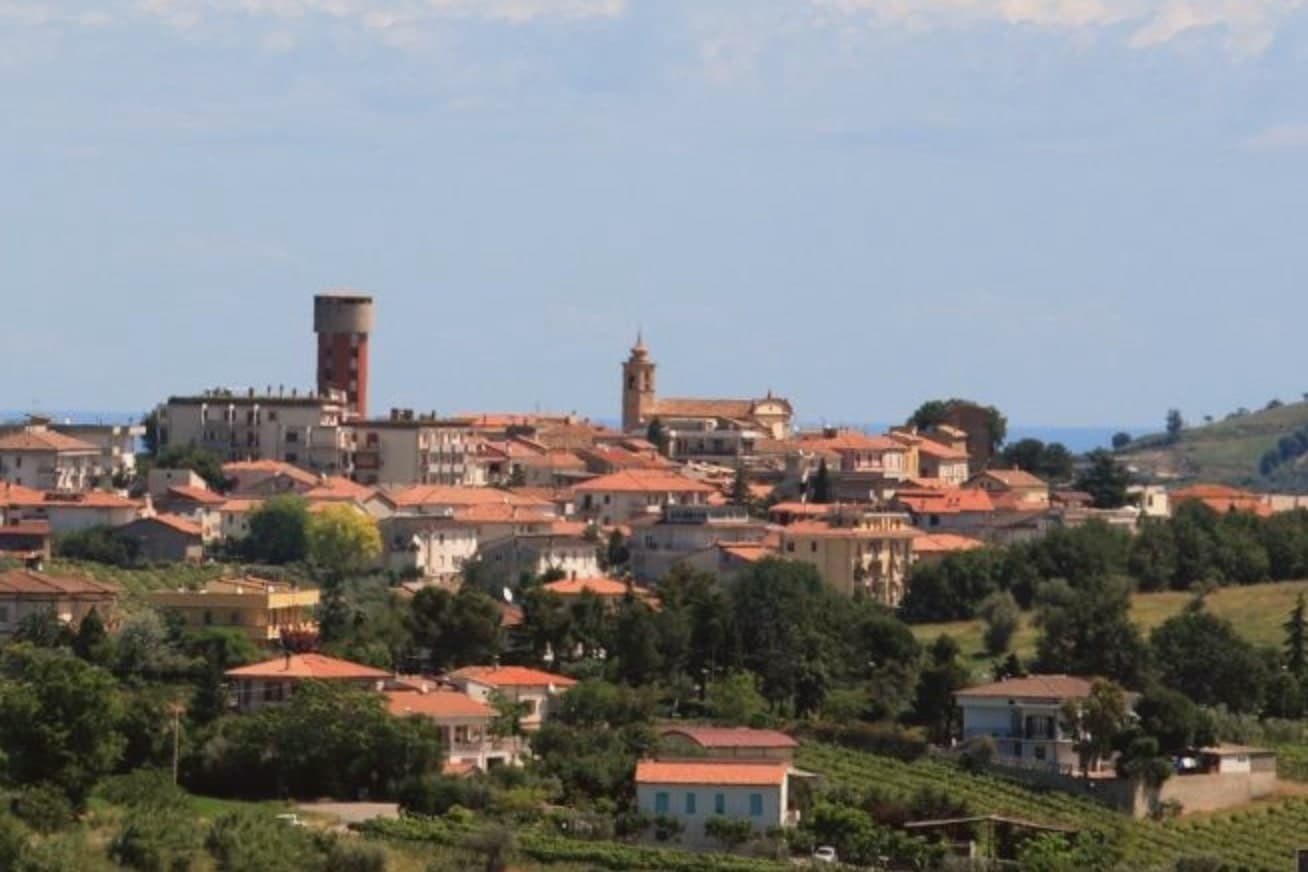
The village sits fifteen kilometers from the Adriatic, at the northern edge of Abruzzo, where the valley bends toward the river and the sea. The wine zone that carries the town's name reaches beyond it, spread across five communes sharing the same elbow of land between river and coast.
The reds run at least sixty percent Montepulciano, with Merlot, Cabernet Franc and Cabernet Sauvignon allowed up to fifteen percent; the whites are sixty percent Trebbiano with at least fifteen percent Passerina; the spumante sets Trebbiano against Chardonnay, Verdicchio and Pecorino. The old center holds to its ridge above the valley while the vines and olive groves that support both the wine and oil designations spread on the slopes below, the same ground doing double duty.
The place works because the name on the bottle and the name on the map are the same thing, a small hilltop settlement whose slow-food charter governs an area small enough that vineyard and piazza are never far apart.
The comune belongs to the national association of wine-producing towns.
What to see in Controguerra
- Centro storico. Small hilltop medieval center on a ridge above the valley, with brick palazzi and the parish church on the central piazza.
- Chiesa di San Salvatore. Parish church on the main piazza, the religious anchor of the medieval ridge village, with a rebuilt eighteenth-century interior.
- Cantine del Controguerra DOC. Family cellars open by appointment, pouring Montepulciano-based reds, Trebbiano-Passerina whites and Pecorino spumante from the same slopes the town gives its name to.
How to get to Controguerra
Pescara is about 56 min away by road. The full route from Rome.
Our tip
April through October is the working season for vineyards and oil. May and September are the best months for cellar visits, with mild light and the vineyards in full leaf. July and August can climb into the mid-thirties and the centro empties through the hot afternoon.
Why visit Rocca San Giovanni
Rocca San Giovanni stands on a rocky hill above the Adriatic between the mouths of the Sangro and Feltrino rivers. The village was founded by Oderisius I, abbot of the nearby abbey, who feared Norman advances on Chieti and built a fortified settlement as a defensive outpost for his monastery.
The relationship between the two places is vertical: the abbey holds the lower slope toward the water, three kilometers down, while the fortified village occupies the high ground it was built to defend, the walls still tracing that original defensive purpose. The coast beneath both is fished from timber platforms that give the shoreline its name, and the old railway bed that once ran along that shore has become a path connecting the beach, the abbey, and the hill town in a single line of movement.
The vineyards run the other direction, down from the hill toward the sea, so the whole territory reads as a set of descending bands: castle, monastery, rail line, water, each built to serve or watch the one below it.
The comune belongs to the national association of wine-producing towns.
What to see in Rocca San Giovanni
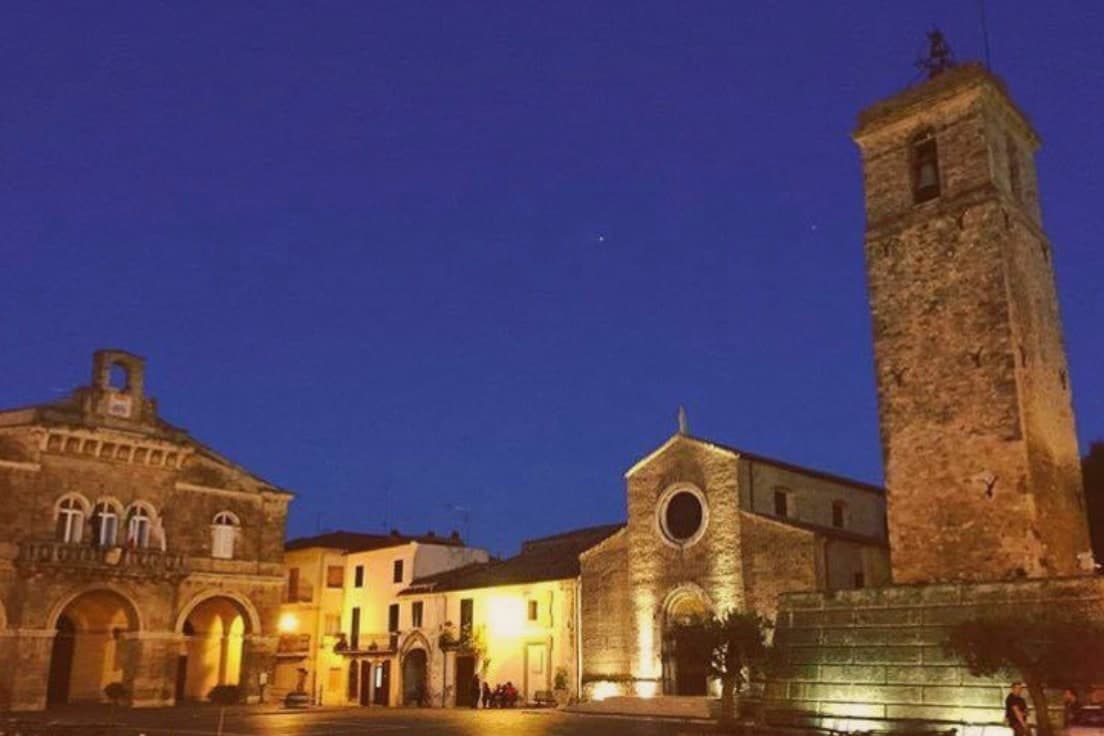
- Abbazia di San Giovanni in Venere. The abbey sits on a panoramic terrace above the Adriatic, one of Abruzzo's major religious sites, its Romanesque stone visible from the slope above long before the village walls come into view.
- Centro storico. The walled medieval core is listed among the Borghi più belli d'Italia, its streets narrow and contained within the old fortified perimeter built to watch the coast below.
- Chiesa di San Matteo Apostolo. Three-nave Romanesque parish church inside the walls, restored multiple times, with a nineteenth-century classical town hall alongside.
How to get to Rocca San Giovanni
Pescara is about 44 min away by road.
Our tip
May through September is the coastal season. The beaches below the village fill in July and August, but the centro storico above stays quieter. June and September are the best balance, when sea temperatures are good but the crowds thinner.
Why visit Tocco da Casauria
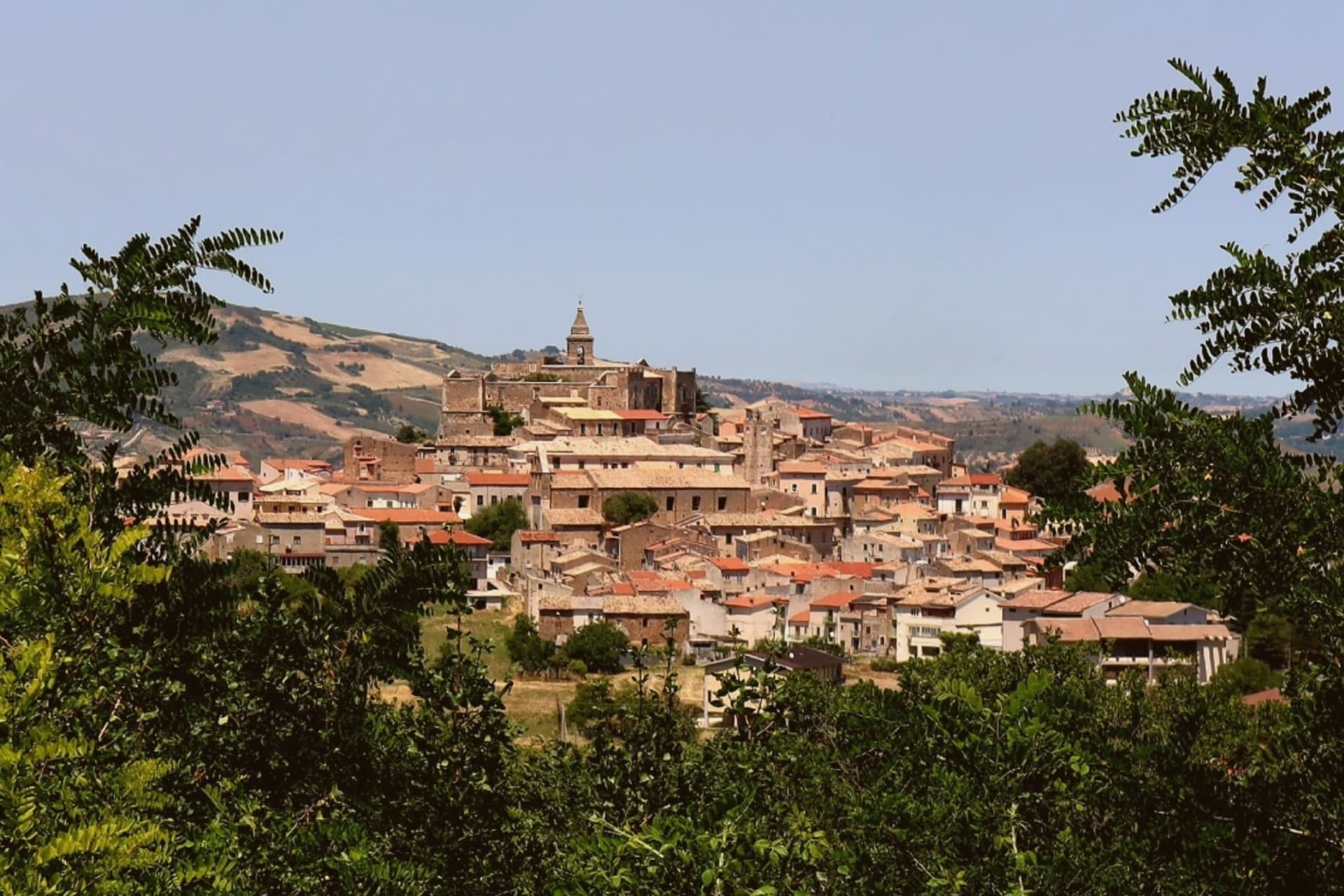
Tocco sits on a hill at 356 meters between the Pescara river and the Arolle stream, with the Maiella massif behind it. The town was founded around 872 under the authority of the abbey nearby, established in fulfillment of a vow made during an imprisonment in Benevento.
The abbey held the relics of Pope Clement I. The town was simply Tocco until 1861, when da Casauria was added to honor the abbey it grew up beside.
The centro storico is dominated by the Caracciolo Castle, rebuilt in Renaissance style after the 1456 earthquake, while the lower slopes toward the Pescara valley carry olive groves and Montepulciano vines, the produce that earned the town its place among the Città dell'Olio and Città del Vino. Centerba, the high-proof liqueur made from a hundred Maiella herbs, has been distilled here since the mid-19th century by the Toro family.
What holds the town together is the relationship between the abbey below and the settlement on the hill: a monastic foundation that gave the place its name, its early authority, and, centuries later, its liqueur trade and vineyards grew up in the valley it once governed.
The comune belongs to the national association of wine-producing towns.
What to see in Tocco da Casauria
- Abbazia di San Clemente a Casauria. A national monument since 1894, standing just outside the commune in Castiglione. Founded by Louis II, its bronze doors and their 72 panels remain the reason to make the detour.
- Castello Caracciolo. Built between 1187 and 1220 under Frederick II, destroyed by the 1456 earthquake and rebuilt in Renaissance style, dominating the centro storico.
- Chiesa di Sant'Eustachio. Main church of Tocco, built in the 18th century and named for the town's patron, with the statue of the saint inside.
How to get to Tocco da Casauria
Pescara is about 47 min away by road. The full route from Rome.
Our tip
April through October works best in Tocco. The hill catches breeze off the Maiella even in July, and the olive harvest in October fills the lower terraces with activity. Spring opens the abbey grounds and the Pescara valley vineyards.
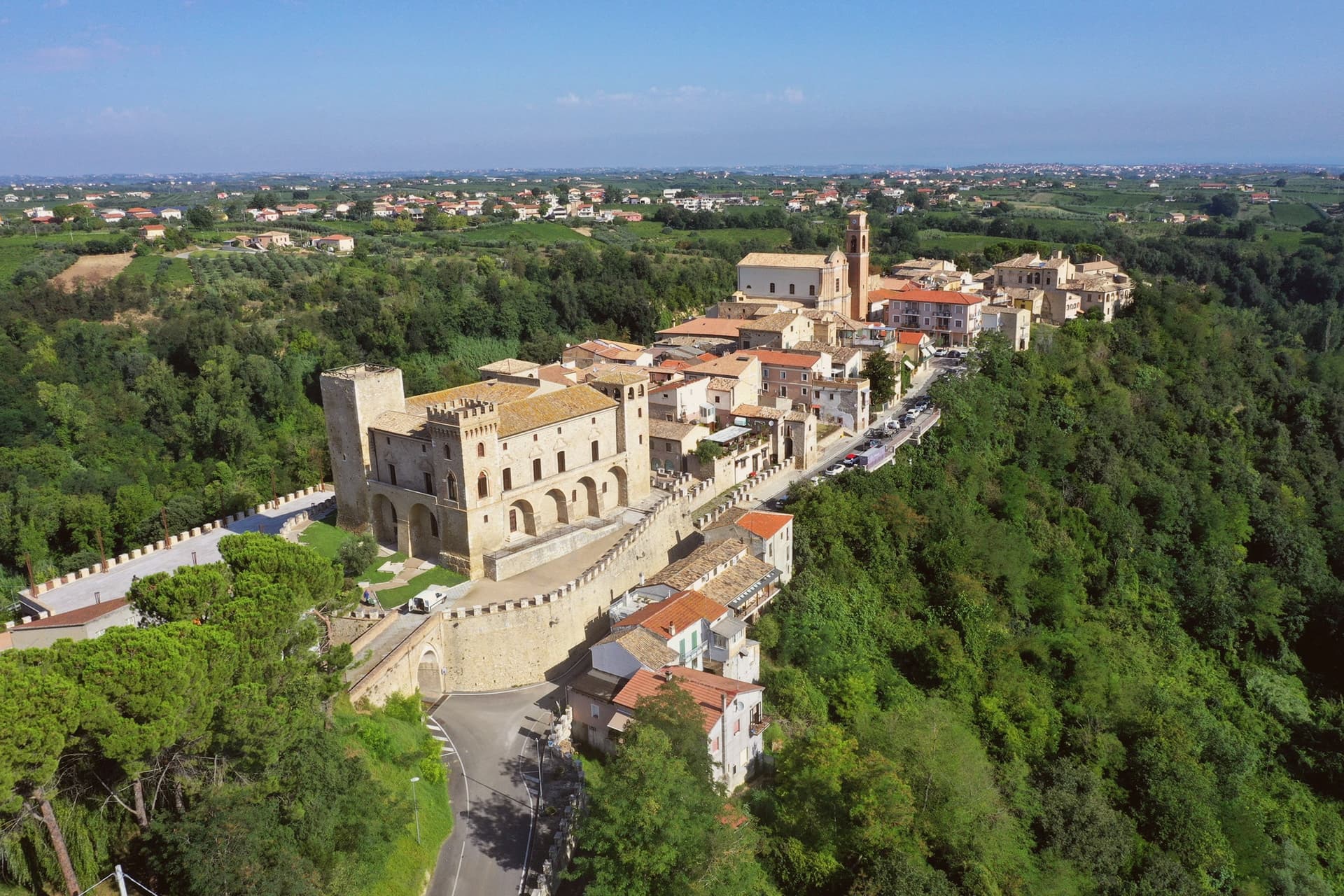
Why visit Crecchio
Crecchio is a hill town at 209 meters in the band of low ridges that runs from the Adriatic coast inland to the foothills of the Maiella. The Castello Ducale at its center is the reason it appears in textbooks.
On the night of 9 September 1943, after the armistice with the Allies was announced, King Vittorio Emanuele III, Queen Elena, and Crown Prince Umberto fled Rome and stopped at the De Riseis castle for a single night before reaching the port of Ortona and sailing for Brindisi. For those hours Crecchio was effectively the capital of Italy.
The castle was bombed by the Allies later in the war and reconstructed afterward, respecting its original Lombard, Norman, and Aragonese stratification. It now houses the Museo Archeologico dell'Abruzzo Bizantino e Altomedievale, which collects sixth- and seventh-century material from the surrounding territory.
The comune belongs to the national association of wine-producing towns.
What to see in Crecchio
- Castello Ducale De Riseis-D'Aragona. Lombard core from the eighth century, Norman and Aragonese reworkings, four corner towers, host to the fleeing royal family on 9 September 1943.
- Museo Archeologico dell'Abruzzo Bizantino e Altomedievale. Inside the castle, displays Lombard and Byzantine grave goods, ceramics, and weapons from the sixth and seventh centuries.
- Centro storico. Medieval walled core preserved around the castle, narrow lanes and stone houses descending toward the open valley.
How to get to Crecchio
Pescara is about 40 min away by road.
Our tip
April through June and September through October are the months that work. The hill catches breezes off the Adriatic twenty kilometers east, vineyards are green or coloring, and the castle terrace is comfortable late into the day. July and August are hot, with afternoon temperatures pushing thirty-five degrees on the valley floor below, though Crecchio's elevation gives some relief.
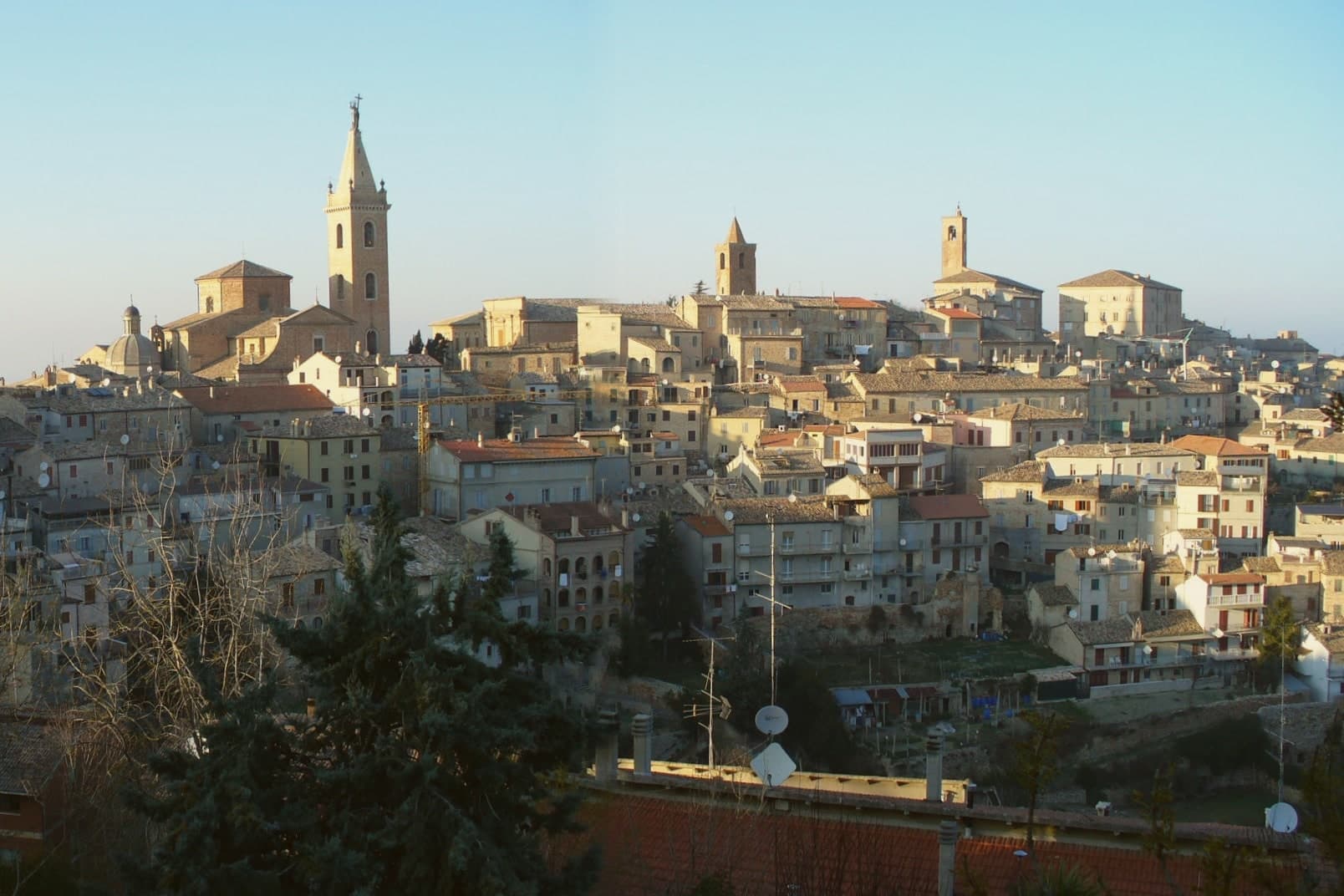
Why visit Ripatransone
Ripatransone sits at 494 meters on a ridge between the Tesino and Menocchia valleys, twenty kilometers from Ascoli Piceno and seven from the Adriatic, with views from the Sibillini and Gran Sasso to the coast that earned it the nickname Belvedere del Piceno. The hill has been inhabited since prehistory and was settled by the Umbri and then the Piceni; after centuries of Roman quiet a medieval town grew here from a circle of castles unified in 1096.
Pope Pius V raised it to City and diocesan see in 1571. The name combines ripa, cliff, with Transone, the first feudal lord.
The Vicolo più stretto d'Italia, the narrowest alley in Italy at 43 centimeters and 32 at its tightest point, runs between two stone houses near Via Margherita: shoulders go sideways. The Cavallo di Fuoco, a wooden horse covered in fireworks that gallops across the main piazza on the Sunday after Easter, has run since 1682.
The comune belongs to the national association of wine-producing towns.
What to see in Ripatransone
- Vicolo più stretto d'Italia. The narrowest alley in Italy, 43 centimeters wide and 32 at its tightest point, between two stone houses near Via Margherita.
- Piazza XX Settembre. The main square of the centro storico, with the Palazzo del Podestà, the Cathedral of San Gregorio Magno and the medieval Torre Civica.
- Cattedrale di San Gregorio Magno. Cathedral built between the seventeenth and eighteenth centuries on the site of an earlier church, raised to cathedral status by Pope Pius V in 1571.
How to get to Ripatransone
Pescara is about 1 h 10 min away by road.
Our tip
April through June and September into October are the working months for Ripatransone. The Tesino and Menocchia valleys turn green from April, the Cavallo di Fuoco runs on the Sunday after Easter, and the autumn light brings the clearest views from the ridge across to the Sibillini and the sea. July and August touch the low thirties; the ridge breeze keeps the centro storico cooler than the coastal plain seven kilometers below.
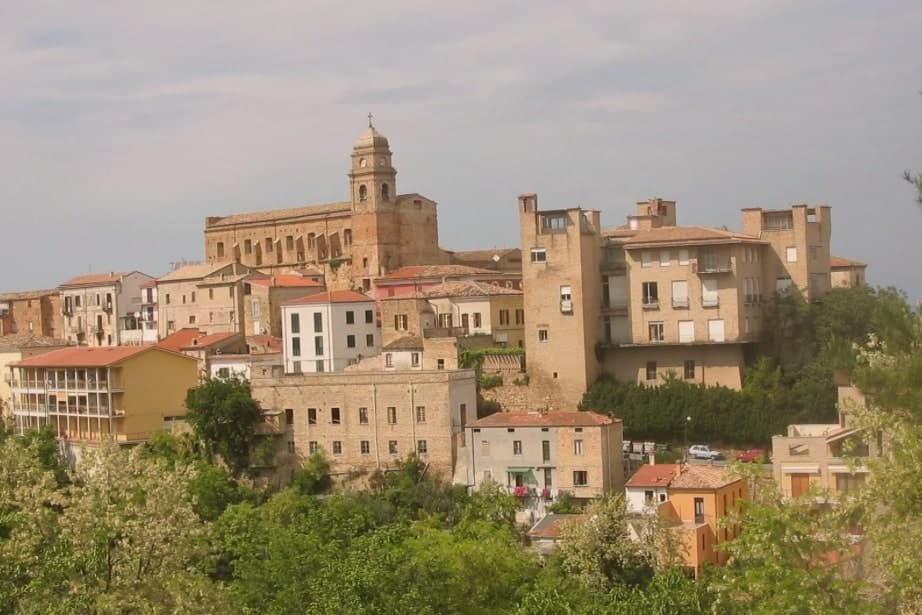
Why visit Miglianico
Miglianico sits at 125 meters in the foothills of the Apennines, fifteen kilometers from Pescara and from the Adriatic coast. The village grew up around a tenth-century rocca built to defend the locals from Saracen raids, and the Norman Baroni Valignani held it through the medieval period; their fortified family chapel later became the sanctuary on the hilltop, its current form shaped by an eighteenth-century interior and a twentieth-century extension.
The centro storico still carries that layered history: a fifteenth-century castle stands on the ruins of the old rocca, and a small votive church built against plague sits among the original parish structures, all within reach of the hill's edge where the vines take over. The wine designations grown on the surrounding slopes, Montepulciano d'Abruzzo DOC, Cerasuolo d'Abruzzo DOC, Trebbiano d'Abruzzo DOC and Terre di Chieti IGT, explain why the cooperative cellar sits at the center of the local economy and identity.
The patron feast on 27 July drew the painter Francesco Paolo Michetti to record its scenes, working here under Gabriele d'Annunzio's eye. What holds the village together, from the rocca's ruins to the sanctuary's extension to the vine rows below, is a place defended, rebuilt and cultivated on the same low hill for centuries, still oriented toward the horizon of vineyards it sits above.
The comune belongs to the national association of wine-producing towns.
What to see in Miglianico
- Santuario di San Pantaleone. Former Valignani family chapel raised to sanctuary status, with eighteenth-century decoration and a twentieth-century extension on the village hilltop.
- Castello Masci. Fifteenth-century castle in the centro storico, built on the ruins of the medieval Valignani rocca that defended the village from Saracen raids.
- Chiesa di San Rocco. Small votive church inside the old village, traditionally invoked against plague, one of the original parish structures.
How to get to Miglianico
Pescara is about 25 min away by road.
Our tip
May through September is the working season at 125 meters between the sea and the foothills. The vines run through bud, flower and veraison from May to August, and the patron feast of San Pantaleone on 27 July fills the streets around the sanctuary. June and September are the easiest months for the vineyard country, with mild evenings on the hill.
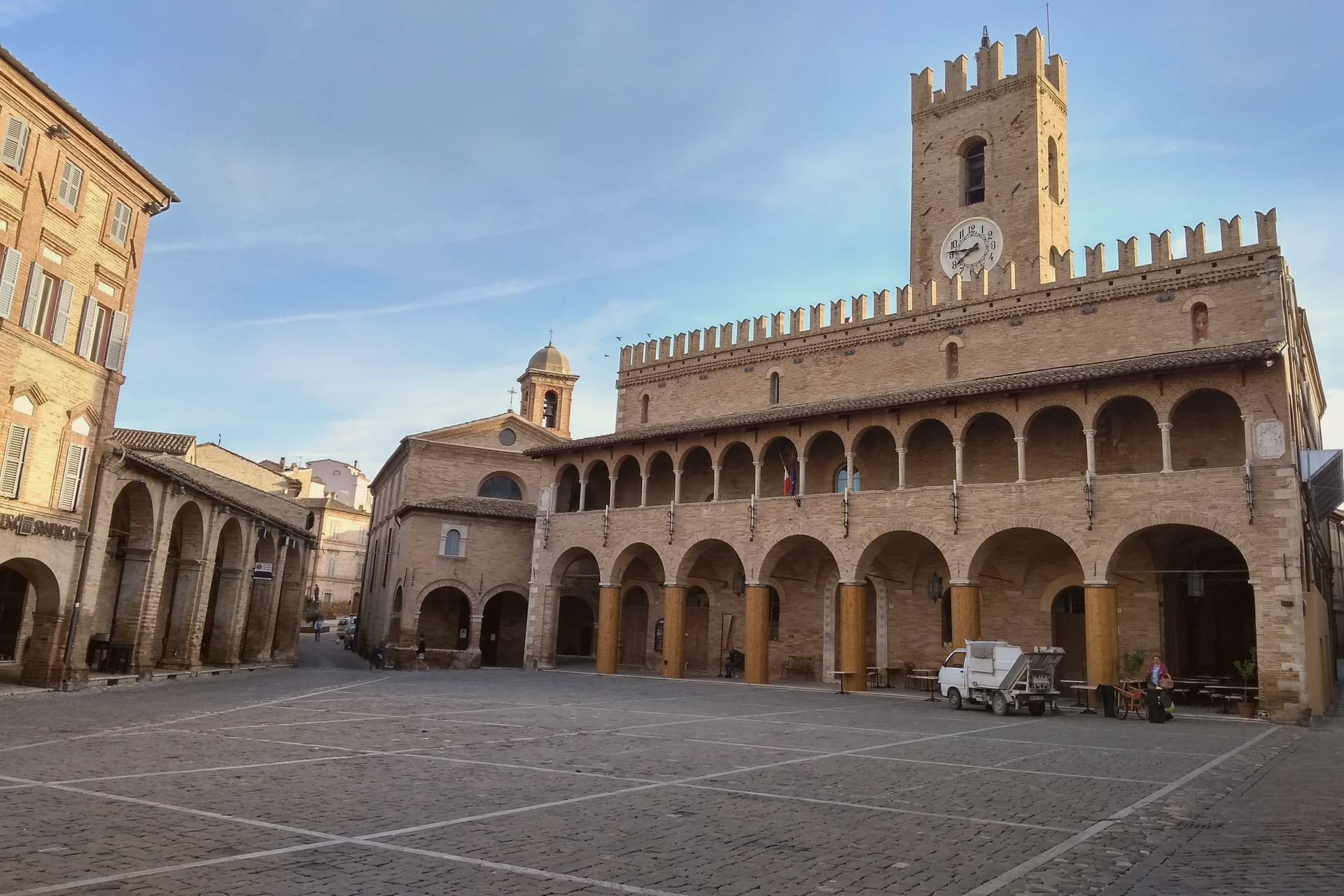
Why visit Offida
Offida sits at 293 meters on a cliff between the Tesino and Tronto valleys, twenty-three kilometers from Ascoli Piceno. The Chiesa di Santa Maria della Rocca rises on a rock spur at the western edge of the village, surrounded on three sides by cliffs that drop into two valleys: a Romanesque-Gothic temple in brick and travertine, raised by Master Albertino in 1330 on an older Benedictine foundation, with a double row of trilobed arches around the apse.
Inside, the apse and transept hold the fresco cycle of the Master of Offida, an anonymous monk painter who carried Giotto's lesson through the Rimini school, with the Marriage of Saint Catherine and Saint Christopher dated by inscription to 1367. Bobbin lace, merletto a tombolo, has been worked in town since the fifteenth century; the Museo del Merletto in Palazzo De Castellotti holds the collection.
The Carnevale Storico, with the Bove finto run and the Vlurd fire bundles, dates from before Lent in early February.
The comune belongs to the national association of wine-producing towns.
What to see in Offida
- Chiesa di Santa Maria della Rocca. Romanesque-Gothic brick-and-travertine church raised in 1330 by Master Albertino on a rock spur west of town, with the Master of Offida fresco cycle dated 1367 in the transept.
- Museo del Merletto a Tombolo. Inside Palazzo De Castellotti, with the lace collection, tools, historical documents and demonstrations of the bobbin-lace work practiced in town since the fifteenth century.
- Palazzo Comunale. Civic palace on the long Piazza del Popolo, with a portico, the Teatro Serpente Aureo and the access to the Museo del Merletto and the archaeological museum.
How to get to Offida
Pescara is about 1 h 14 min away by road.
Our tip
April through June and September into October are the best months for Offida. The hills around the town turn green by April and gold through the September harvest, the wine cellars run open tastings between vendemmia and St. Martin, and the Pecorino and Passerina vineyards stand out along the ridges. July and August touch the low thirties; the centro storico quietens through midday.
More from Anywhere Italy
- The best wine towns in AbruzzoAbruzzowinehidden9 towns · smallest 420 residents
- The best small olive oil towns within 90 minutes of PescaraNear Pescaraolive oilwithin 90 minsmall7 towns · smallest 420 residents · closest 47 min away
- The prettiest small villages that eat well within 90 minutes of PescaraNear Pescarawithin 90 mineats wellprettiest villagessmall7 towns · smallest 1,081 residents · closest 44 min away
- The 8 best hill towns that eat well within 90 minutes of PescaraNear Pescarahill townwithin 90 mineats well8 towns · smallest 4,072 residents · closest 25 min away
- The best hidden coastal towns within 90 minutes of PescaraNear Pescaracoastalwithin 90 minhidden7 towns · smallest 2,276 residents · closest 25 min away
- The best small hill towns inside a national park in AbruzzoAbruzzohill towninside a parksmall10 towns · smallest 420 residents