
The best small olive oil towns within 90 minutes of Pescara
Olive country begins almost as soon as the Pescara traffic thins. The road climbs past terraces of silver-grey trees held up by dry stone walls, through villages of pale limestone and brick where the church square doubles as the place vans park at harvest time. From late October the frantoi work long hours and the whole valley smells green and peppery, of cut grass and artichoke and the faint burn at the back of the throat that tells you the oil is fresh. Bread grilled over embers, rubbed with garlic, doused in new oil is the local test, and it is eaten standing up. Winter brings the mountain side of the same table: lamb, pulses, hard sheep's cheese, all of it built on the same bottle.
Most visitors to Abruzzo point the car at Sulmona for the confetti and the Peligna basin views, or head straight up into the Gran Sasso and Majella parks with a walking map. Both are worth the time, and both are busy in season, with coach parties in the historic centre and full car parks at the trailheads. The coast does the same thing in reverse each August, when the beach towns south of Pescara fill up and stay full. It leaves a lot of hill country in between with nobody much on the road.
The olive trees do not stop at the edge of the famous places. They run north into the Vibrata and Tronto hills, south towards the Trigno and Molise border, and inland to the dry sunny shelf below the Gran Sasso where the fruit ripens hard and late. The towns on this list sit along that line, each one signed up to the national association of olive-oil towns, each one small enough that the mill owner is likely to be in the bar. Come for the pressing and the rest of the year makes sense too.
Of the 61 communes we have mapped within 90 minutes of Pescara, 15 qualify as olive oil towns: each belongs to the national association of olive-oil towns. This list is the small ones, 7 in all, ordered smallest first. The smallest, Ofena, has 420 residents.
If you are still choosing, we have also written The best small hill towns you can reach by train in Abruzzo and The best hidden olive oil towns in Molise.
Ofena
Why visit Ofena
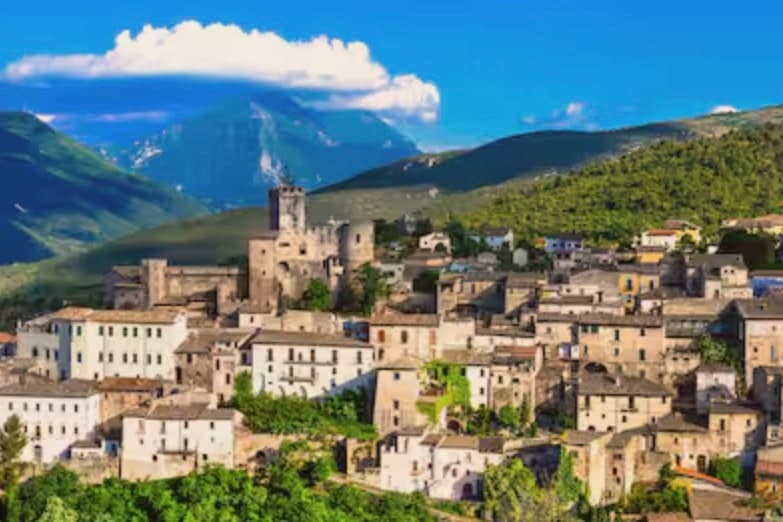
Ofena lies fifty kilometers inland from Pescara, in a basin closed to the south by the Gran Sasso wall. The Vestini, an Italic people, held their city of Aufinum here before Rome, and the basin sat on the Via Claudia Nova.
Archaeological remains from that period include large buildings, mosaics and tombs. The walled medieval village grew inside the same basin, its streets, baronial palazzo and eighteenth-century Palazzo Cataldi Madonna set against the older ground of the earlier settlement beneath them.
The heat that the wall traps against the basin floor, the same heat that gave the place its name, is what has kept vines on these slopes since among the earliest recorded plantings of the region's grape, and it is what still draws a wine estate to work the amphitheater at the foot of the glacier above the town. Basin, wall, and vine slope are one and the same geography, read three different ways.
What to see in Ofena
- Centro storico. Compact walled medieval village inside its original perimeter, with the baronial palazzo at the centre and late medieval houses along narrow stone streets. Home today to the 420 remaining residents.
- Chiesa di San Nicola di Bari. Parish church in the centro storico, the religious anchor of the medieval settlement, rebuilt over several centuries.
- Convento di San Francesco. Franciscan convent at the edge of the village, with the Monastero dei Cappuccini further out, both marking the early modern religious life of the basin.
How to get to Ofena
Pescara is roughly 60 minutes away by road.
Our tip
April through October is the working window for the vineyards, but the Forno's heat makes July and August punishing in the basin itself. May, June, September and October are the comfortable months, with the Gran Sasso wall snow-tipped against the green slopes below. Harvest runs late September into October and brings the small population back into the streets.
Roccavivara
Why visit Roccavivara
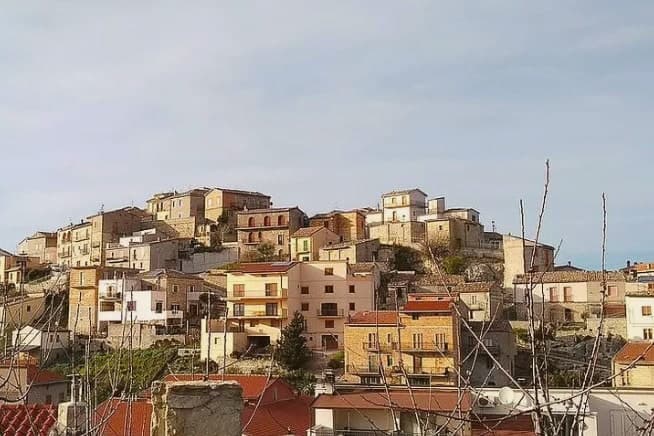
Roccavivara sits at 652 meters above the Trigno river in northern Molise, 30 kilometers north of Campobasso. Its name has two competing etymologies — either from Rocca Bonnarii, after a founder named Bonnario, or from the nearby Vivara contrada that still borders the commune.
The lower valley holds Roman-era remains from both republican and imperial periods, including a villa with a megalithic substructure at the San Fabiano locality. From 1268 the village was a feudo of Gualtiero di Vollers, later passing through the Cantelmo, Sangro, Carafa and Coppola families until the abolition of feudalism.
Today Roccavivara's anchor is the Santuario della Madonna del Canneto, a Romanesque sanctuary on the Trigno first documented in 706 AD when Duke Gisulfo I of Benevento donated it to the Benedictines of San Vincenzo al Volturno; by 1097 the church had passed to Montecassino. The current 11th-12th century building holds a rare 1223 ambone with six high-relief Benedictine monks and a 14th-century gothic statue known as the Madonna del Sorriso.
The town belongs to the Città dell'Olio network on the strength of its olive groves along the warm Trigno slopes.
What to see in Roccavivara
- Santuario della Madonna del Canneto. Romanesque sanctuary on the Trigno river, first mentioned in 706 AD. Holds a rare 1223 ambone with six Benedictine reliefs and a 14th-century gothic Madonna statue known as the Vergine del Sorriso.
- Chiesa di San Michele Arcangelo. 13th-century parish church in Largo Chiesa with a gothic pointed-arch portal, baroque interior altars added after 1575, and a Neapolitan late-baroque bell tower with curvilinear cuspid.
- Villa romana di San Fabiano. Roman villa from the 1st century AD with a megalithic substructure, in the lower valley of the Trigno where the agro shows continuous occupation from the republican to the imperial period.
How to get to Roccavivara
Pescara is roughly 89 minutes away by road.
Our tip
April through October is the open season in the Trigno valley: warm spring and autumn days, hot summers tempered by the river breeze, and the olive harvest running from late October through November. May and June bring wildflowers along the river and processions to the sanctuary. July and August are warmer but the elevation keeps evenings cool; mid-August often hosts patronal feasts in the village.
Archi
Why visit Archi
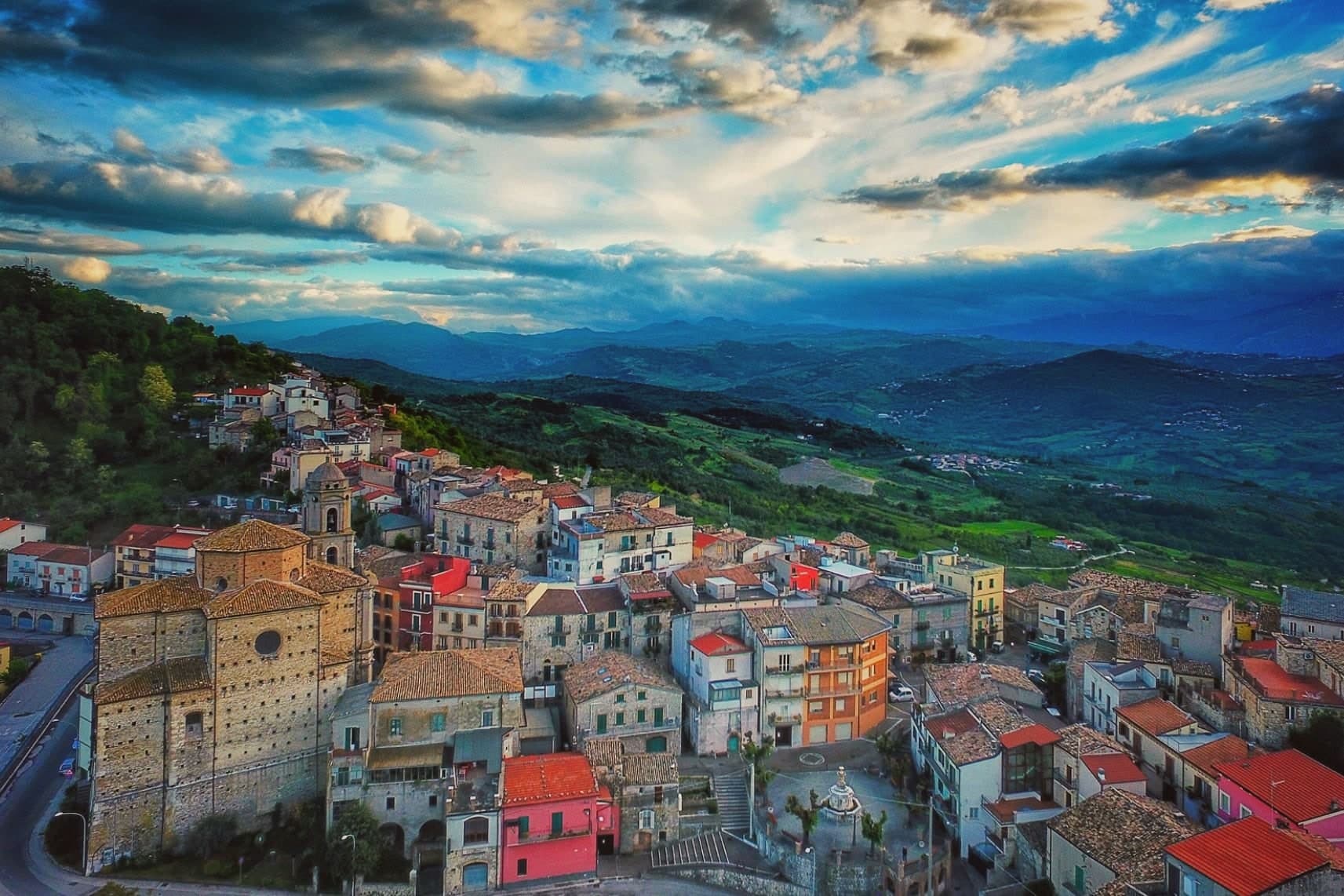
Archi sits at 492 meters on a rocky spur between the Val di Sangro and the Valle dell'Aventino, the geography that earned it the nickname Terrazza sul Sangro. The fortified borough is documented from the eleventh century, and the rocky position made it a stronghold of the Kingdom of Naples until the sixteenth century, held in turn by the del Balzo, Cantelmo, Colonna and Carafa families.
The medieval walls and ruins of the fifteenth-century castle, destroyed in the last war, are still visible at the spur's edge. Seventeenth and eighteenth-century palazzi line the streets between them.
The slopes below produce extra-virgin olive oil and summer truffles: Archi held its first Summer Truffle Trade Show in July 2013, and the network designation followed. Standing on the eastern edge of the centro storico, the view runs uninterrupted down both valleys to the Majella massif rising behind.
What to see in Archi
- Ruderi del Castello. Castle ruins reconstructed in the fifteenth century and destroyed in the Second World War, at the eastern tip of the rocky spur.
- Mura medievali. Sections of medieval city walls preserved along the perimeter of the centro storico, marking the fortified borough's original line.
- Palazzi storici. Seventeenth and eighteenth-century civil architecture along the main streets, the residences of fief-holding families and notables.
How to get to Archi
There is a railway station in the town, so you can arrive without a car and never need one while you are here. Pescara is roughly 58 minutes away by road.
Our tip
April through October is the working calendar. The summer truffle festival lands in July, with degustations under the medieval walls. September and October bring olive harvest and the slopes turn silver-green.
Controguerra
Why visit Controguerra
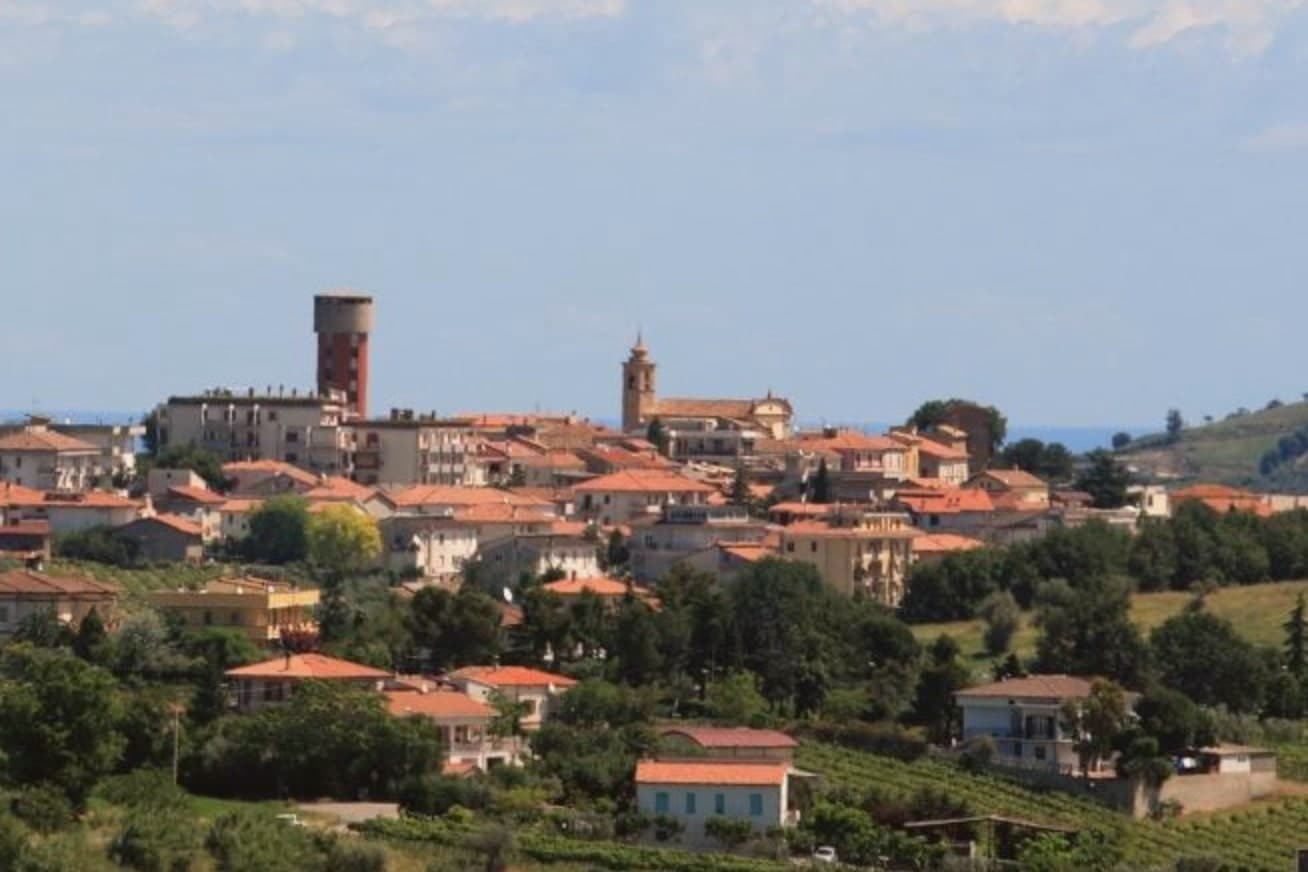
The village sits fifteen kilometers from the Adriatic, at the northern edge of Abruzzo, where the valley bends toward the river and the sea. The wine zone that carries the town's name reaches beyond it, spread across five communes sharing the same elbow of land between river and coast.
The reds run at least sixty percent Montepulciano, with Merlot, Cabernet Franc and Cabernet Sauvignon allowed up to fifteen percent; the whites are sixty percent Trebbiano with at least fifteen percent Passerina; the spumante sets Trebbiano against Chardonnay, Verdicchio and Pecorino. The old center holds to its ridge above the valley while the vines and olive groves that support both the wine and oil designations spread on the slopes below, the same ground doing double duty.
The place works because the name on the bottle and the name on the map are the same thing, a small hilltop settlement whose slow-food charter governs an area small enough that vineyard and piazza are never far apart.
What to see in Controguerra
- Centro storico. Small hilltop medieval centre on a ridge above the valley, with brick palazzi and the parish church on the central piazza.
- Chiesa di San Salvatore. Parish church on the main piazza, the religious anchor of the medieval ridge village, with a rebuilt eighteenth-century interior.
- Cantine del Controguerra DOC. Family cellars open by appointment, pouring Montepulciano-based reds, Trebbiano-Passerina whites and Pecorino spumante from the same slopes the town gives its name to.
How to get to Controguerra
There is a railway station in the town, so you can arrive without a car and never need one while you are here. Pescara is roughly 56 minutes away by road.
Our tip
April through October is the working season for vineyards and oil. May and September are the best months for cellar visits, with mild light and the vineyards in full leaf. July and August can climb into the mid-thirties and the centro empties through the hot afternoon. Controguerra in festa falls in July.
Tocco da Casauria
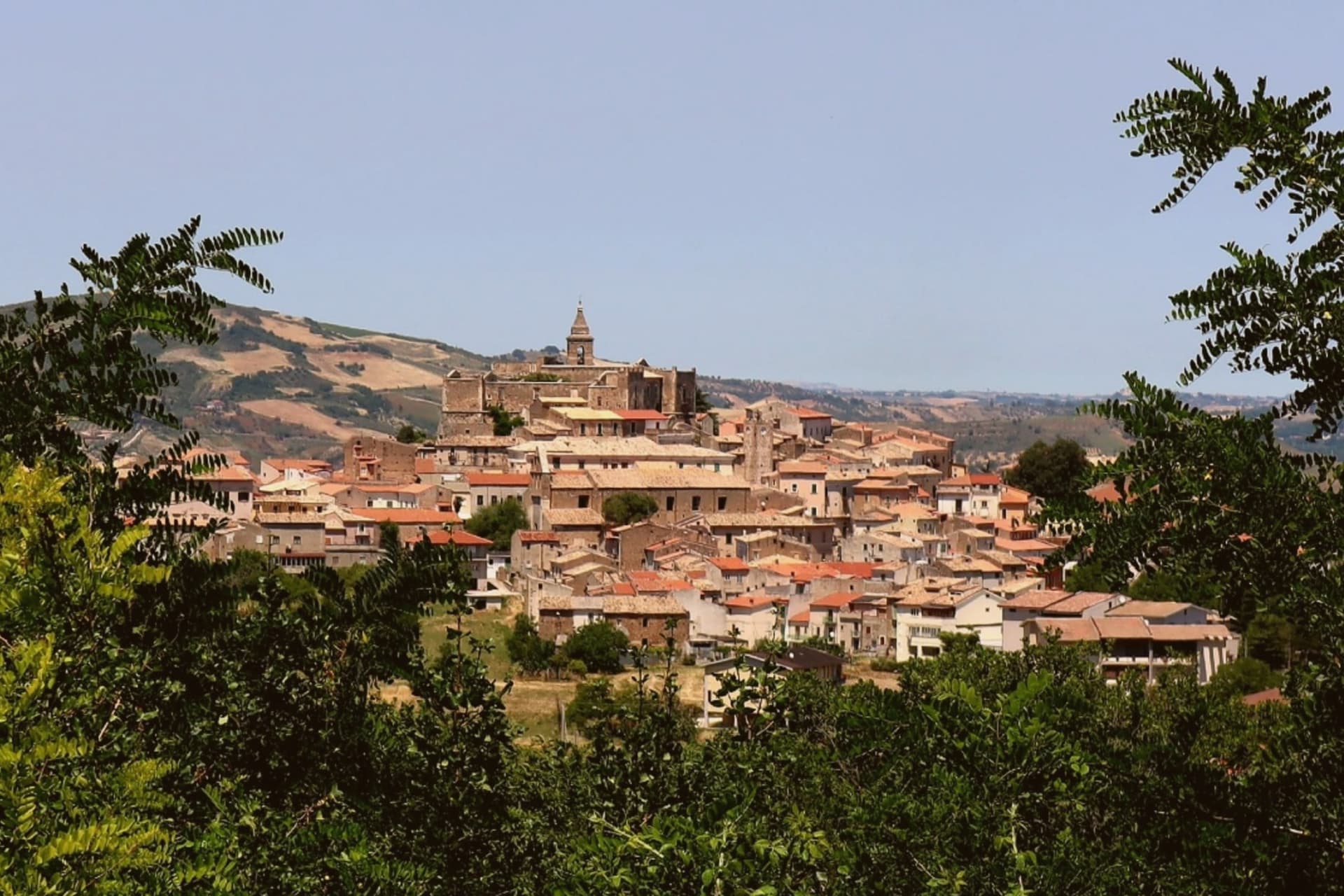
Why visit Tocco da Casauria
Tocco sits on a hill at 356 meters between the Pescara river and the Arolle stream, with the Maiella massif behind it. The town was founded around 872 under the authority of the abbey nearby, established in fulfilment of a vow made during an imprisonment in Benevento.
The abbey held the relics of Pope Clement I. The town was simply Tocco until 1861, when da Casauria was added to honour the abbey it grew up beside.
The centro storico is dominated by the Caracciolo Castle, rebuilt in Renaissance style after the 1456 earthquake, while the lower slopes toward the Pescara valley carry olive groves and Montepulciano vines, the produce that earned the town its place among the Città dell'Olio and Città del Vino. Centerba, the high-proof liqueur made from a hundred Maiella herbs, has been distilled here since the mid-19th century by the Toro family.
What holds the town together is the relationship between the abbey below and the settlement on the hill: a monastic foundation that gave the place its name, its early authority, and, centuries later, its liqueur trade and vineyards grew up in the valley it once governed.
What to see in Tocco da Casauria
- Abbazia di San Clemente a Casauria. A national monument since 1894, standing just outside the commune in Castiglione. Founded by Louis II, its bronze doors and their 72 panels remain the reason to make the detour.
- Castello Caracciolo. Built between 1187 and 1220 under Frederick II, destroyed by the 1456 earthquake and rebuilt in Renaissance style, dominating the centro storico.
- Chiesa di Sant'Eustachio. Main church of Tocco, built in the 18th century and named for the town's patron, with the statue of the saint inside.
How to get to Tocco da Casauria
There is a railway station in the town, so you can arrive without a car and never need one while you are here. Pescara is roughly 47 minutes away by road.
Our tip
April through October works best in Tocco. The hill catches breeze off the Maiella even in July, and the olive harvest in October fills the lower terraces with activity. Spring opens the abbey grounds and the Pescara valley vineyards.
Petacciato
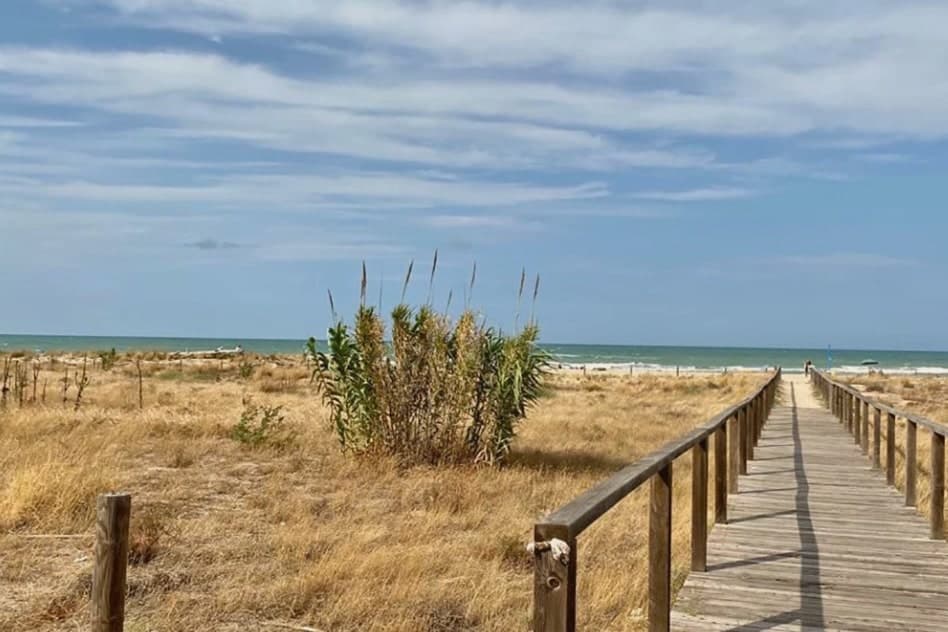
Why visit Petacciato
Petacciato stands at 225 meters on the last ridge before the Adriatic, with the Tremiti islands offshore and the Maiella visible to the north and the Gargano to the south on clear days. The centro storico keeps its medieval shape around the Chiesa di Santa Maria, built in tuff and sandstone between the eleventh and thirteenth centuries, originally dedicated to San Rocco and still holding three naves with three altars.
The Marina di Petacciato, a few kilometers below the village, runs a long sand beach lined with pine, with low dunes and shallow water that draws Italian families in July and August. The hills above produce the olive oil that earned the Città dell'Olio designation.
Petacciato was one of the lower-Molise villages Serafino Razzi listed in his sixteenth-century chronicle of Slav-founded communities, though the visible record today is Italian Romanesque and twentieth-century coastal.
What to see in Petacciato
- Chiesa di Santa Maria (già San Rocco). Romanesque church in tuff and sandstone, built between the eleventh and thirteenth centuries, with three naves and three altars.
- Centro storico. Medieval ridge village around the old church, with stone houses and the long Adriatic view east.
- Marina di Petacciato. Long sand beach below the village, pine-backed and low-duned, the main summer draw.
How to get to Petacciato
There is a railway station in the town, so you can arrive without a car and never need one while you are here. Pescara is roughly 83 minutes away by road.
Our tip
May through September is the working coast. June gives the cleanest water before the families arrive; July and August fill the Marina di Petacciato with the lower Adriatic crowd. The ridge village above stays a few degrees cooler than the beach and is the night-time refuge in August.
Ripatransone
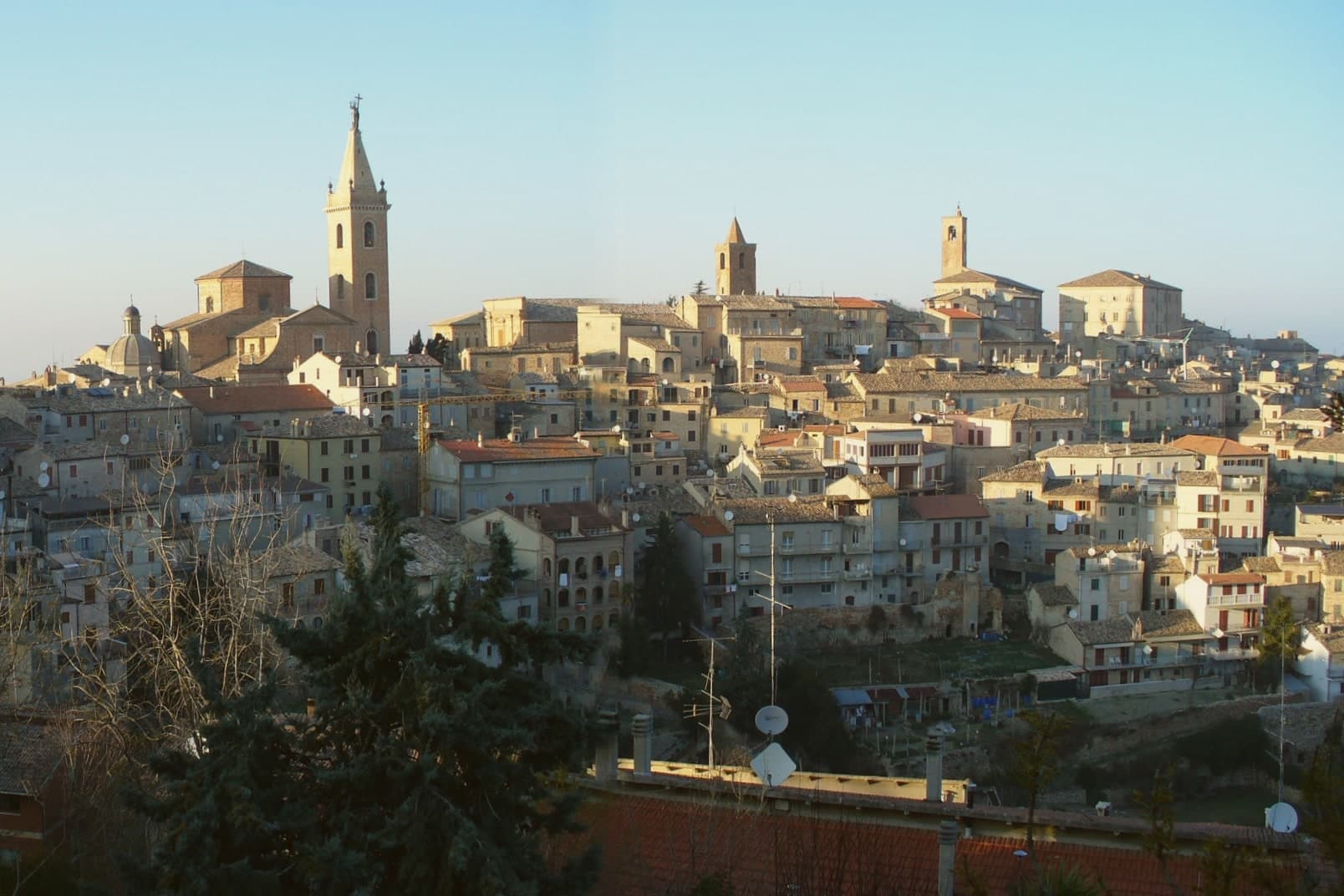
Why visit Ripatransone
Ripatransone sits at 494 meters on a ridge between the Tesino and Menocchia valleys, twenty kilometers from Ascoli Piceno and seven from the Adriatic, with views from the Sibillini and Gran Sasso to the coast that earned it the nickname Belvedere del Piceno. The hill has been inhabited since prehistory and was settled by the Umbri and then the Piceni; after centuries of Roman quiet a medieval town grew here from a circle of castles unified in 1096.
Pope Pius V raised it to City and diocesan see in 1571. The name combines ripa, cliff, with Transone, the first feudal lord.
The Vicolo più stretto d'Italia, the narrowest alley in Italy at 43 centimeters and 32 at its tightest point, runs between two stone houses near Via Margherita: shoulders go sideways. The Cavallo di Fuoco, a wooden horse covered in fireworks that gallops across the main piazza on the Sunday after Easter, has run since 1682.
Iervasciò, Trattoria da Rita have been named by a guide.
What to see in Ripatransone
- Vicolo più stretto d'Italia. The narrowest alley in Italy, 43 centimeters wide and 32 at its tightest point, between two stone houses near Via Margherita.
- Piazza XX Settembre. The main square of the centro storico, with the Palazzo del Podestà, the Cathedral of San Gregorio Magno and the medieval Torre Civica.
- Cattedrale di San Gregorio Magno. Cathedral built between the seventeenth and eighteenth centuries on the site of an earlier church, raised to cathedral status by Pope Pius V in 1571.
How to get to Ripatransone
Pescara is roughly 70 minutes away by road.
Our tip
April through June and September into October are the working months for Ripatransone. The Tesino and Menocchia valleys turn green from April, the Cavallo di Fuoco runs on the Sunday after Easter, and the autumn light brings the clearest views from the ridge across to the Sibillini and the sea. July and August touch the low thirties; the ridge breeze keeps the centro storico cooler than the coastal plain seven kilometers below. Festival Frittella di Zia Maria falls in September.
More from Anywhere Italy
 The best small hill towns you can reach by train in Abruzzo
- The best hidden olive oil towns in Molise
- The best olive oil towns in the province of Campobasso
- The best hill towns you can reach by train in Abruzzo
- The best wine towns in Abruzzo
- The 8 best wine towns you can reach by train within 90 minutes of Pescara