
The 7 best small towns that eat well in Veneto
Veneto eats better away from its cities than most people expect. On the Garda side there is lake trout and olive oil pressed from terraces just above the water, lemon and caper on the plate, wine from the moraine hills behind. Inland, the hills north of Treviso give radicchio that turns bitter and sweet at once, soppressa, sheep's cheese aged in the folds of the valley, and glass after glass of Prosecco poured in bars built from pale stone and stucco. Higher up, in the Dolomite valleys, the register shifts to barley soup, casunziei, game and larch panelling, and it is best in autumn when the woods turn and the kitchens open again.
The obvious move is Venice, and it is a serious eating city if you know where to stand. It is also the most visited place in Italy, which means the bacari nearest San Marco charge accordingly and the fish menus repeat themselves street after street. Verona takes the overflow, particularly in opera season, and the good tables there book out weeks ahead. None of this is a reason to avoid either city. It is a reason not to eat every meal in them.
The same lake, the same hills, the same mountains keep going. Garda has a quieter eastern shore where the road climbs into olive groves and chestnut woods. The Prosecco road runs west from Conegliano into small towns with abbeys, mills and dining rooms that guide inspectors have written up. Cadore sits at the far north with its own mountain cooking. The towns below are the smaller places along those routes, each with a table named by a national or international guide, and fewer people go to any of them.
Of the 41 communes we have mapped in Veneto, 26 qualify as towns that eat well: a national or international dining guide has named a table in each. This list is the small ones, 7 in all, ordered smallest first. The smallest, San Zeno di Montagna, has 1,464 residents.
Elsewhere in the catalogue: The prettiest villages that eat well in Veneto and The best small towns on Lake Garda's eastern shore.
San Zeno di Montagna
Why visit San Zeno di Montagna
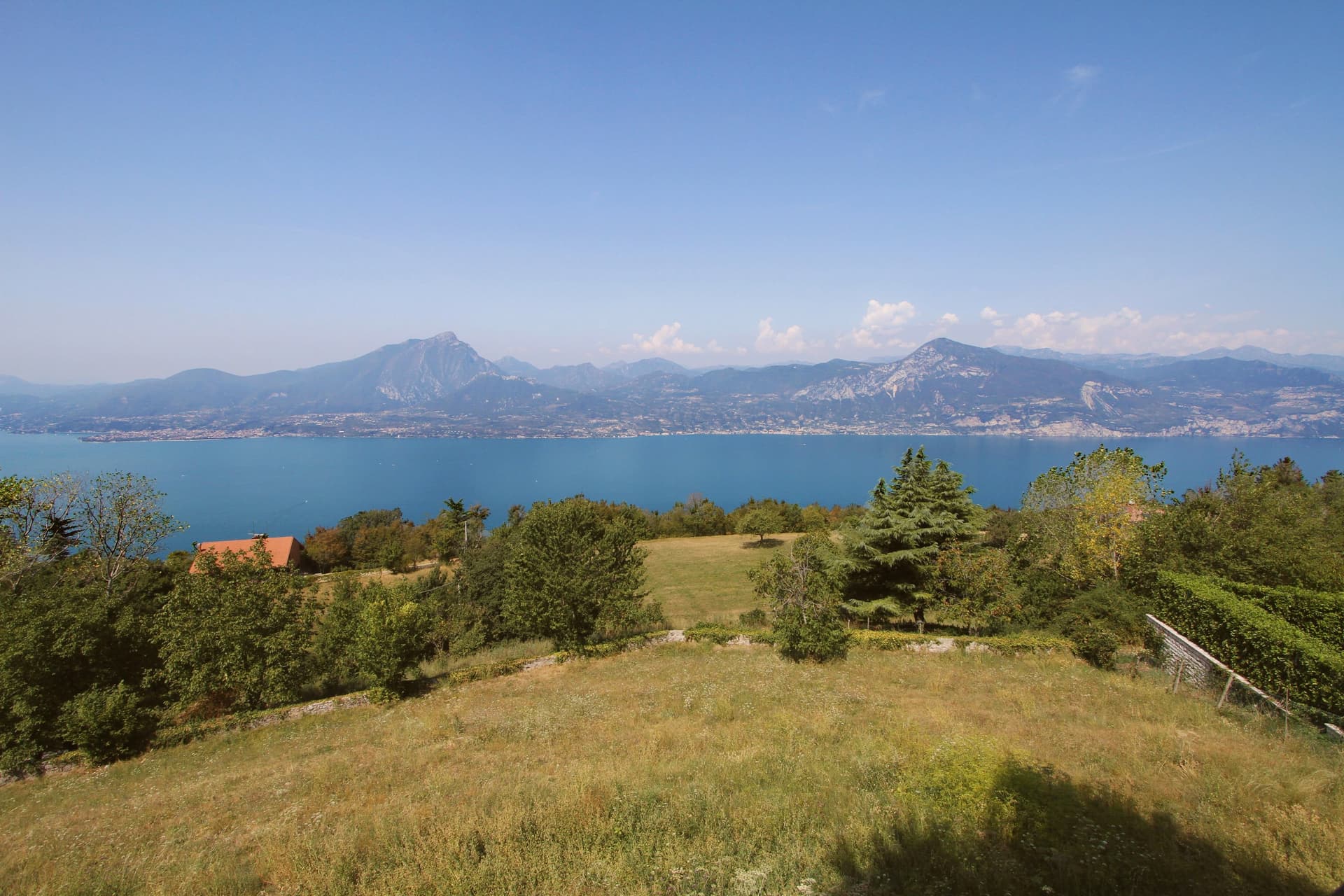
The village sits thirty kilometers northwest of Verona. It took its current name in 1871, after unification, borrowing the name of Verona's patron saint; before that it was called Montagna di Monte Baldo, a plainer name tied directly to the mountain above it.
Pastoralism here goes back to the Copper and Bronze ages, when small communities drove herds up from the plain in summer along routes that still cross the mountain. Sheep and goats gave way to cattle as the dominant economy in the seventeenth century.
The frazione of Prada, reached by cable car from the lakeshore, holds the longest of these pasture terraces, its Church of San Bartolomeo built for the shepherds who worked the ground seasonally rather than for a settled parish. Below, the chestnut groves that ring the village are a separate, older layer of the economy, worked at lower altitude while the herds went up.
What emerges is a village organized on a vertical axis: lake view at one elevation, chestnut groves at another, pasture and summer huts higher still, each belonging to a different rhythm of use rather than to a single center.
Taverna Kus have been named by a guide.
What to see in San Zeno di Montagna
- Balcone del Garda. The viewpoint that names the commune, a place to stand at the edge of the ridge and take in the water and the opposite shore at once.
- Monte Baldo. Regional park rising above the village, its slopes still worked as pasture, with the old herding paths climbing through it toward the grass terraces higher up.
- Prada. Three-kilometer grass terrace on the mountain, reachable by cable car from the lakeshore, with the Church of San Bartolomeo standing among the summer pasture huts.
How to get to San Zeno di Montagna
Verona is roughly 51 minutes away by road.
Our tip
April through June and September through October are the months the commune works best. The chestnut groves green up in spring, the Baldo opens for walking, and the lake below stays cool enough to swim in by June. October brings the Festa delle Castagne over three weekends, with roasted Marrone di San Zeno and the woods turning to ochre and rust.
San Vito di Cadore
Why visit San Vito di Cadore
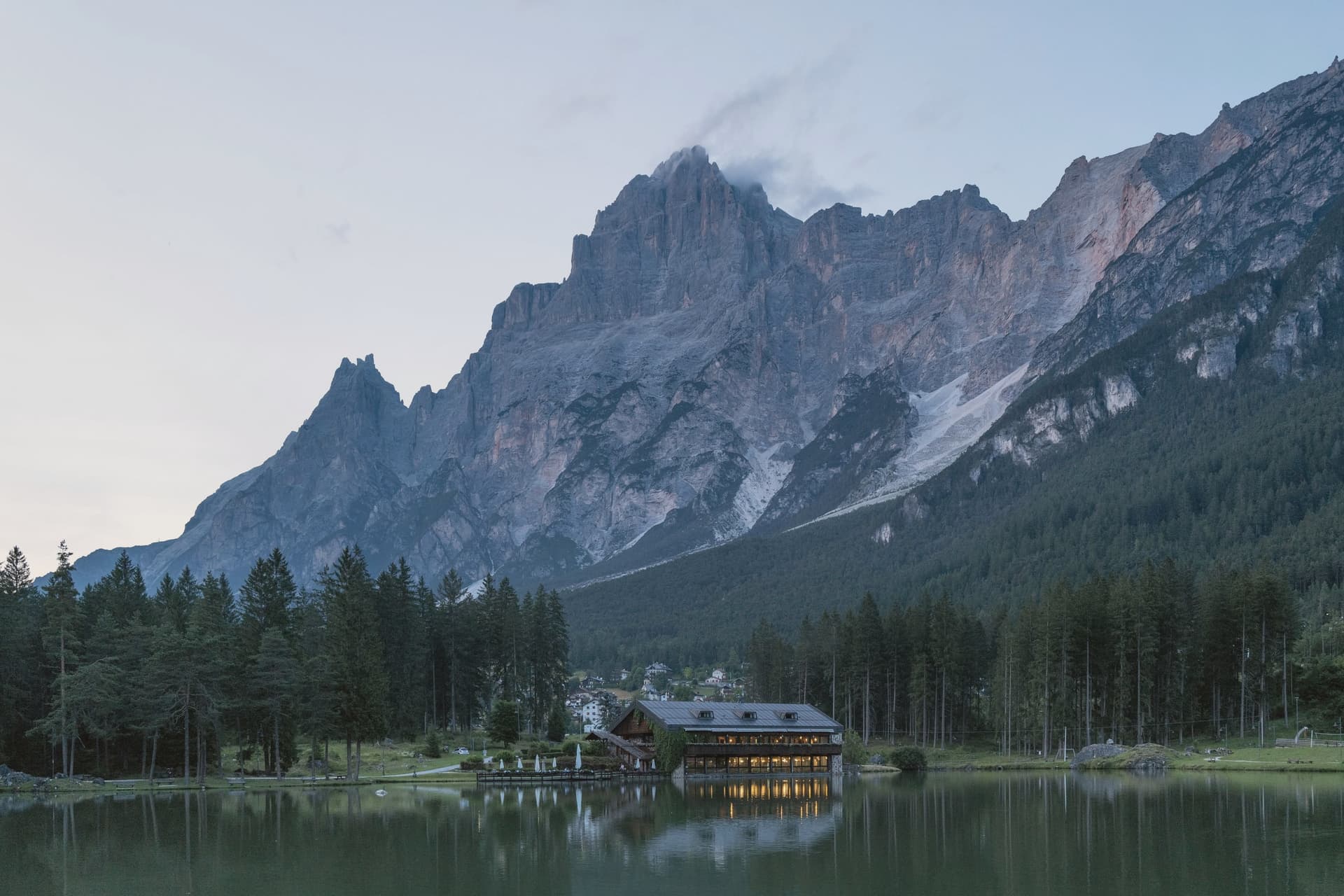
The village sits in the upper Boite valley, with the road from Belluno to Cortina running straight through the centro. Antelao closes the view to the east and the Pelmo faces it across the valley to the west, so the settlement reads as a single street pinned between two mountains rather than a place that spread outward on its own terms.
The commune appears in records from 1208, the date tied to the parish church, and the chapel at the south end of the village was added more than two centuries later, remodeled again in the sixteenth. Its altarpiece painter's family came from the next valley over, a detail that ties the church's decoration to the wider Cadore rather than to any outside workshop.
Tourism arrived in the mid-nineteenth century and grew steadily after the 1950s, and the marks of that later phase sit apart from the older core: Lago di Mosigo was cut from a marsh in 1929 and works as the summer center of the village, while the Lunga Via delle Dolomiti runs through the commune on a railway bed that stopped carrying trains and now carries the Greenways recognition. What holds the place together is the layering itself, a medieval religious core along the through road, a mountain on each side that never changes, and a twentieth-century lake and railway path built for people passing through rather than living there.
Baita Prà Solìo have been named by a guide.
What to see in San Vito di Cadore
- Chiesa della Madonna della Difesa. Late fifteenth-century Gothic chapel frescoed throughout, holding an altarpiece by Francesco Vecellio, Tiziano's younger brother. Stands at the village's south end.
- Chiesa dei Santi Vito, Modesto e Crescenzia. Parish church first documented in 1208, rebuilt in the eighteenth century with frescoed ceilings and wooden altars by local craftsmen.
- Lago di Mosigo. Artificial lake created in 1929 from a drained marsh, the village's summer center with a circular walking path and the Pelmo above it.
How to get to San Vito di Cadore
Venezia is roughly 128 minutes away by road.
Our tip
December through March is the winter season: skiing at San Vito and the connected Cortina domain, ice skating on the frozen Mosigo when it holds, and quiet evenings between hotels and the centro. The summer season runs June through September, walking in the Antelao and Pelmo basins, refuge dinners at Galassi and Venezia, and cycling the Lunga Via toward Cortina. April, May, October and November are the quiet months.
Brenzone sul Garda
Why visit Brenzone sul Garda
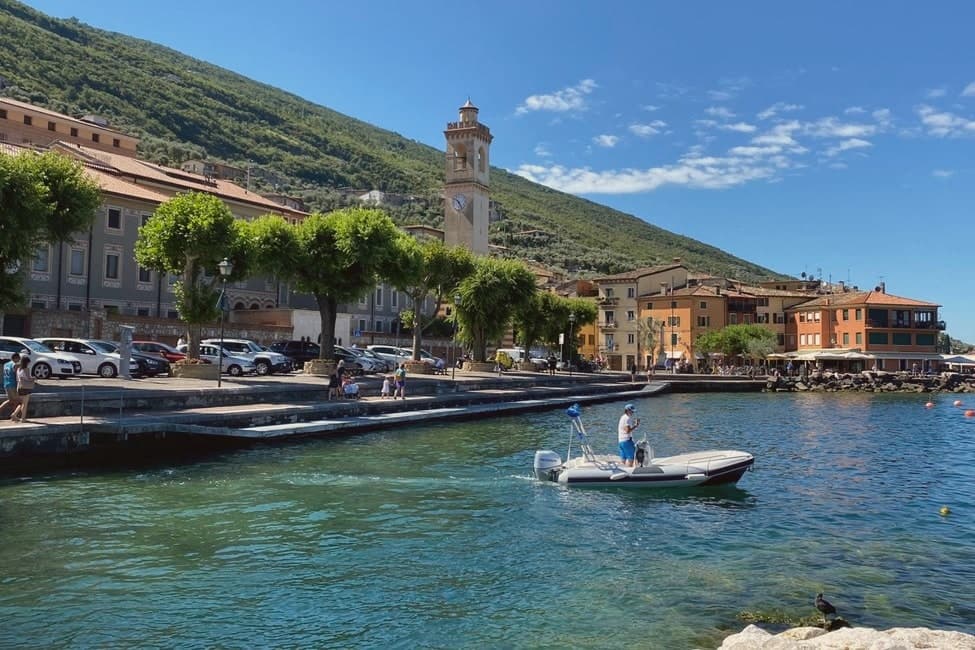
The comune sits on the eastern shore of Lake Garda at 75 meters, thirty-five kilometers northwest of Verona. It is not a town but a string of sixteen hamlets and small frazioni along the foot of the mountain: Assenza, Biaza, Campo, Castelletto, Castello, Magugnano which is the municipal seat, Marniga, Porto, Sommavilla and others, many named after the families who farmed the terraces above them.
Above the lake, fifteen minutes uphill on foot, sits the abandoned village, its stone houses reachable only by that path since the lakeside road below made the mid-slope route obsolete. Five permanent residents remain among the ruins.
The relation between the working shore strung with hamlets and the emptied village on the slope above is the story of the place: the road that connected the lake hamlets to each other was the same road that cut the mountain village off, and each half has stayed exactly where that change left it.
Nin, Al Pescatore have been named by a guide.
What to see in Brenzone sul Garda
- Campo di Brenzone. Reachable only on foot, with five permanent residents and stone houses standing in protected ruin.
- San Pietro in Vincoli, Campo. Church in the abandoned village, with frescoes by Giorgio da Riva dated 1358 still visible inside.
- Monte Baldo. Mountain ridge rising directly behind the lakeside hamlets to 2,218 meters at Cima Valdritta, with cable-car access from neighboring Malcesine.
How to get to Brenzone sul Garda
Verona is roughly 73 minutes away by road.
Our tip
April through October is the only real season. April and May bring the lake back to swimming temperature; the olive groves are flowering and Campo di Brenzone walkable on dry trails. June through August fills the lakefront with German and Austrian visitors; the lungolago path runs at full capacity on weekend afternoons.
Cison di Valmarino
Why visit Cison di Valmarino
Cison di Valmarino sits at 261 meters at the foot of CastelBrando, the medieval fortress that rises 370 meters above the village on a dolomite spur. The castle is one of the largest in Europe, with origins as a Roman watch post on the Via Claudia Augusta and an unbroken occupation that runs through the Da Camino, the Brandolini, and into the present-day hotel and conference complex that opened in the 1990s.
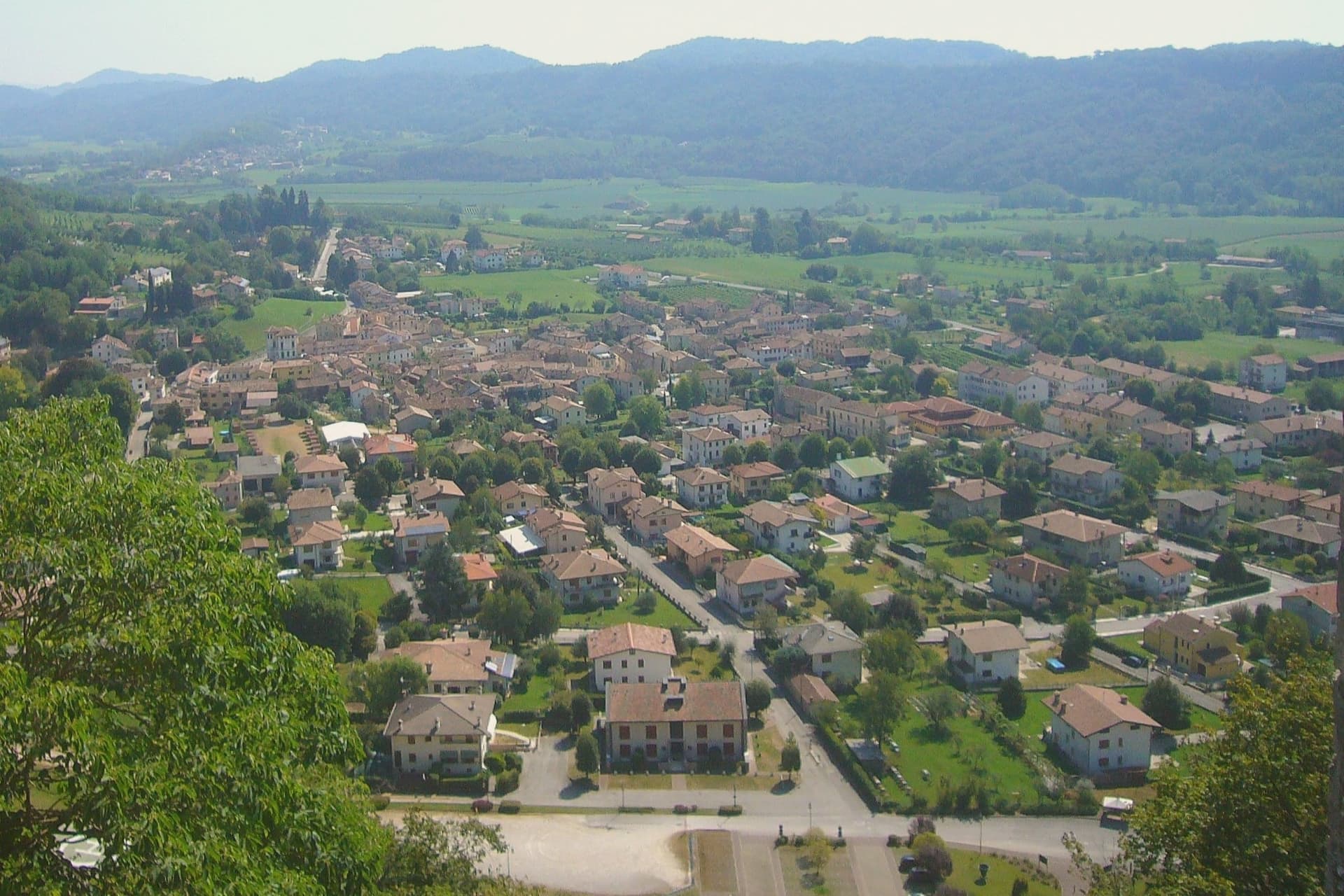
The borgo below kept the layout the Brandolini gave it after they took the fief from Venice in 1436. Via XXIV Maggio runs through stone houses with arched portals; Piazza Roma holds the eighteenth-century Loggia.
The municipal territory carries four institutional signals at once, the maximum cluster in the eastern Prosecco hills, and the parish church of Santa Maria Assunta anchors the upper village. The Artigianato Vivo fair fills the streets for ten days each August, with around three hundred craft stalls drawing fifty thousand visitors and ranking among the largest artisanal events in Veneto.
La Muda di San Boldo have been named by a guide.
What to see in Cison di Valmarino
- CastelBrando. Medieval fortress on a dolomite rock at 370 meters above the village, with Roman foundations and continuous occupation, now hotel and conference center.
- Piazza Roma. Main square of the borgo with the eighteenth-century Loggia and the Palazzo Barbi, the historic seat of municipal administration.
- Chiesa di Santa Maria Assunta. Parish church in the upper village, rebuilt in the eighteenth century on an earlier medieval structure, with frescoes from the Tiepolo school.
How to get to Cison di Valmarino
Venezia is roughly 79 minutes away by road.
Our tip
April through October is the working window. April and May fill the hills with green and the Prosecco vineyards with flowering vines; September and October bring harvest and the gold light the Rive di Rolle hamlet has built its reputation on. The Artigianato Vivo runs the second and third weeks of August, with around 300 stalls along Via XXIV Maggio and parking for the surrounding villages used to capacity.
Follina
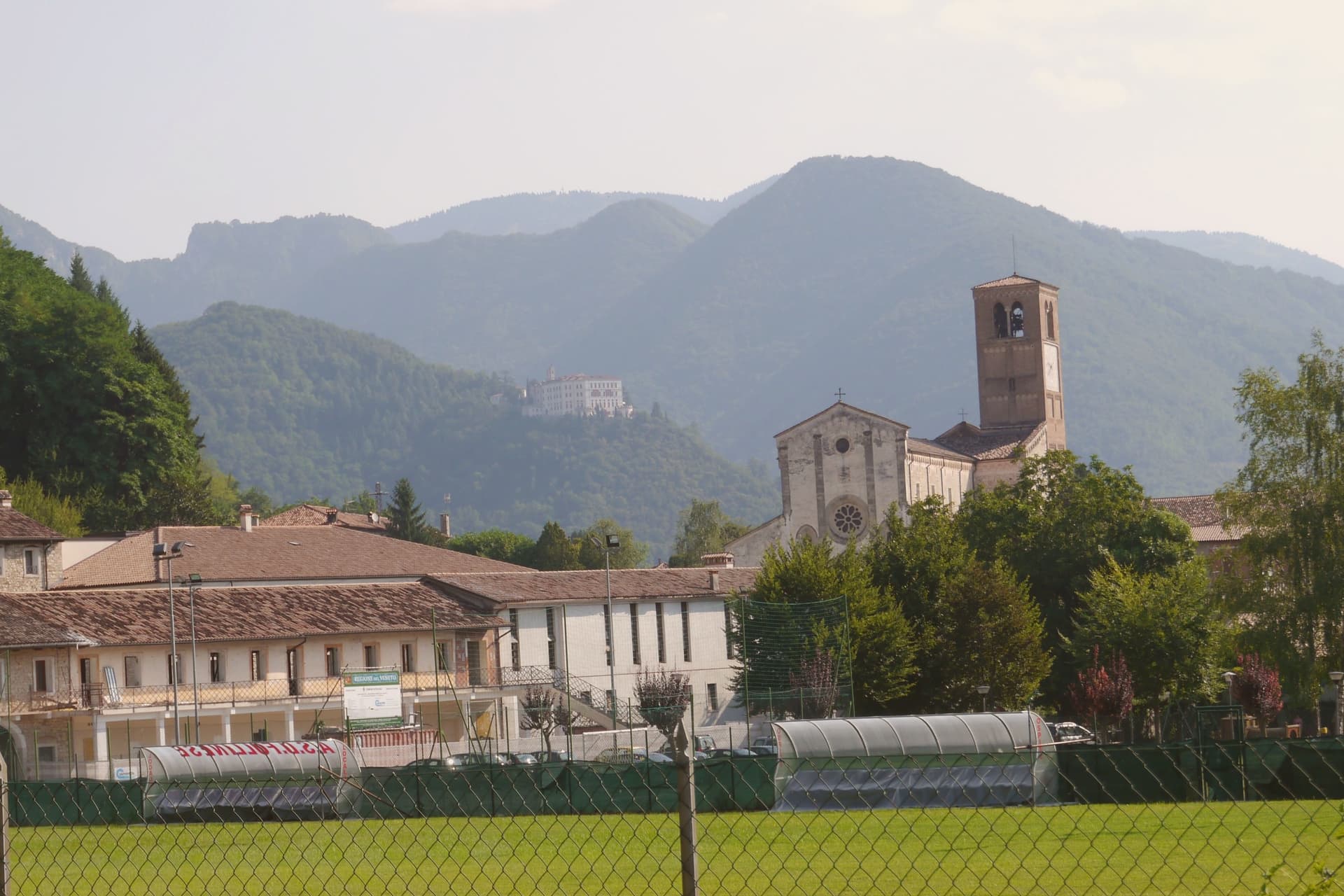
Why visit Follina
Follina sits at 191 meters where a stream cuts out of the Treviso Prealps into the upper Prosecco hills, sixty-five kilometers northwest of Padova. The name comes from follare, to full wool, and the Sanavalle stream powered fulling mills here from antiquity through the nineteenth century.
A monastic complex existed before the Cistercians arrived in the mid-twelfth century, likely a Benedictine house dependent on San Fermo di Verona. The Cistercians built the Abbey of Santa Maria from 1170; the cloister was completed in 1268.
The abbey is now a minor basilica and parish seat, a national monument since 1921, with frescoes of the Veneto-Byzantine school in the chapter house and a thirteenth-century stone Madonna inside the church. The Brandolini family, lords of nearby Cison di Valmarino, used Follina as a textile center through the Venetian period.
The borgo carries five institutional signals at once. The frazione of Pedeguarda holds the older parish church; the centro of Follina runs along the abbey wall and the stream that powered the mills.
La Corte, Osteria dai Mazzeri, Al Castelletto have been named by a guide.
What to see in Follina
- Abbazia di Santa Maria. Cistercian abbey built from 1170, with the cloister completed in 1268, raised to minor basilica and a national monument since 1921.
- Chiostro dell'Abbazia. Cistercian cloister of 1268, with twin colonnettes, sculpted capitals and a central well, intact in its medieval form.
- Sala del Capitolo. Abbey chapter house with frescoes of the Veneto-Byzantine school from the late thirteenth and early fourteenth centuries.
How to get to Follina
Venezia is roughly 73 minutes away by road.
Our tip
April through October is the working season. April and May bring the abbey gardens into bloom and the Prosecco hills into green; September and October bring harvest and the gold light the Rive belt is built on. July and August push into the low thirties and the centro empties in the afternoon, though the cloister stays cool.
Malcesine
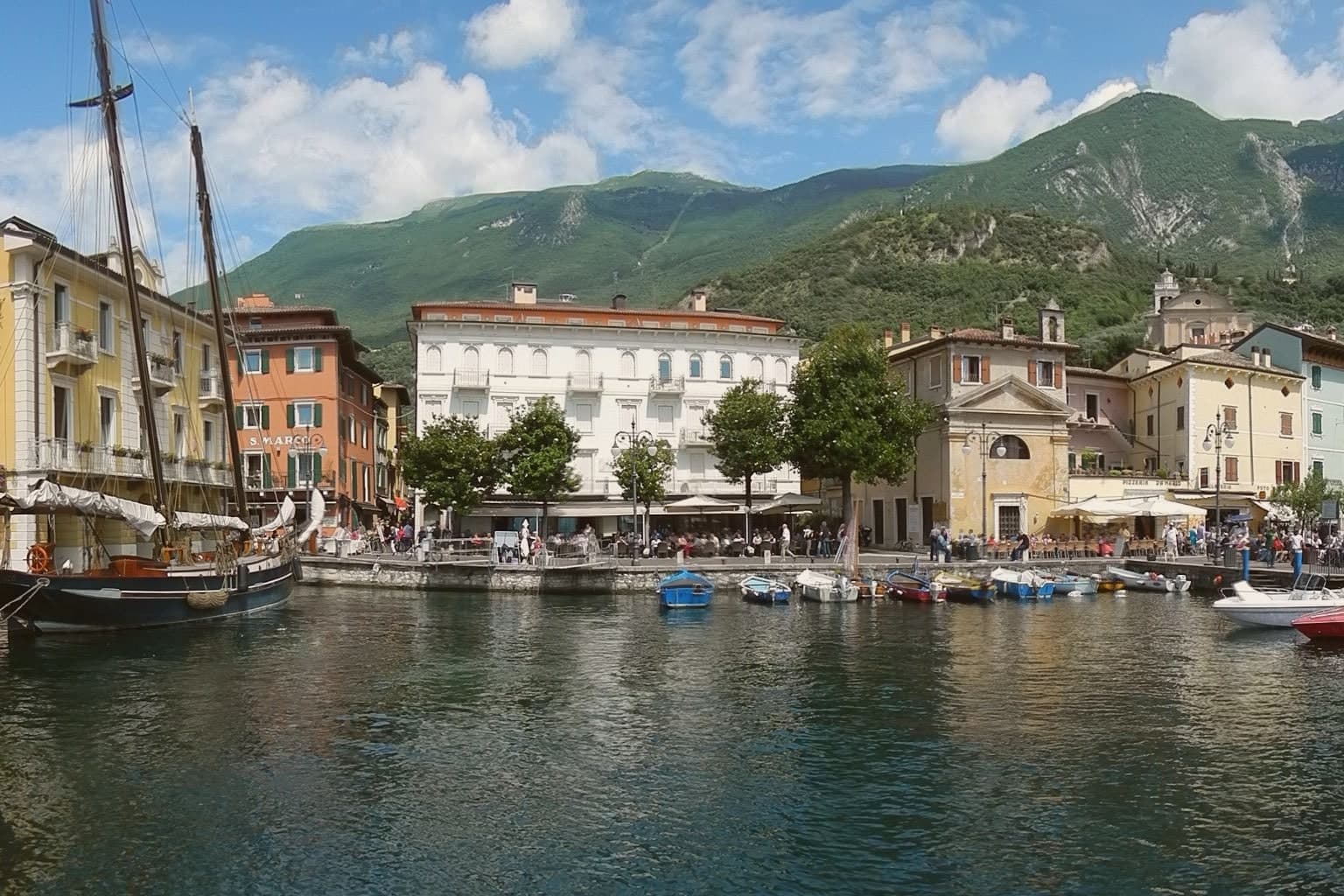
Why visit Malcesine
Malcesine sits at 89 meters on the eastern shore of Lake Garda, forty kilometers northwest of Verona and immediately south of Trentino-Alto Adige. The town strings together five lakeside frazioni between Navene and Cassone, pinched between the water and the slopes of Monte Baldo, which rises to 2,218 meters behind the rooftops.
The Castello Scaligero, built by the della Scala family of Verona in the thirteenth century around an older white-stone keep, is the defining building. On 14 September 1786 Johann Wolfgang Goethe was questioned in front of it on suspicion of being an Austrian spy after drawing sketches; he later devoted several pages to the episode in Italienische Reise.
The Monte Baldo cable car, opened in 1962 and rebuilt with rotating cabins in 2002, lifts walkers and paragliders to 1,750 meters in ten minutes. Olive groves along the lower slopes carry the Garda DOP olive oil designation.
Vecchia Malcesine have been named by a guide.
What to see in Malcesine
- Castello Scaligero. Thirteenth-century Scaliger fortress on a rock above the lake, with an older white-stone keep, the rooms where Goethe was held briefly in 1786 and a museum on Monte Baldo flora.
- Palazzo dei Capitani. Fifteenth-century Venetian palazzo on the lakefront, residence of the Captains of the Lake during the Republic of Venice, with a lakeside loggia and gardens.
- Monte Baldo. 2,218-meter ridge behind the town, reached by a two-stage cable car with rotating cabins; the summit is a botanical reserve known since the sixteenth century as Hortus Europae.
How to get to Malcesine
Trento is roughly 65 minutes away by road.
Our tip
April through June and September through October are the months Malcesine is built for. The cable car runs to Monte Baldo through clear spring and autumn air, the windsurfers fill Val di Sogno when the Ora picks up at midday, and the centro storico is busy but walkable. July and August push past thirty degrees on the lake and the village queues for the cable car from eight in the morning; many German and Austrian families have rented apartments here for generations.
Costermano sul Garda
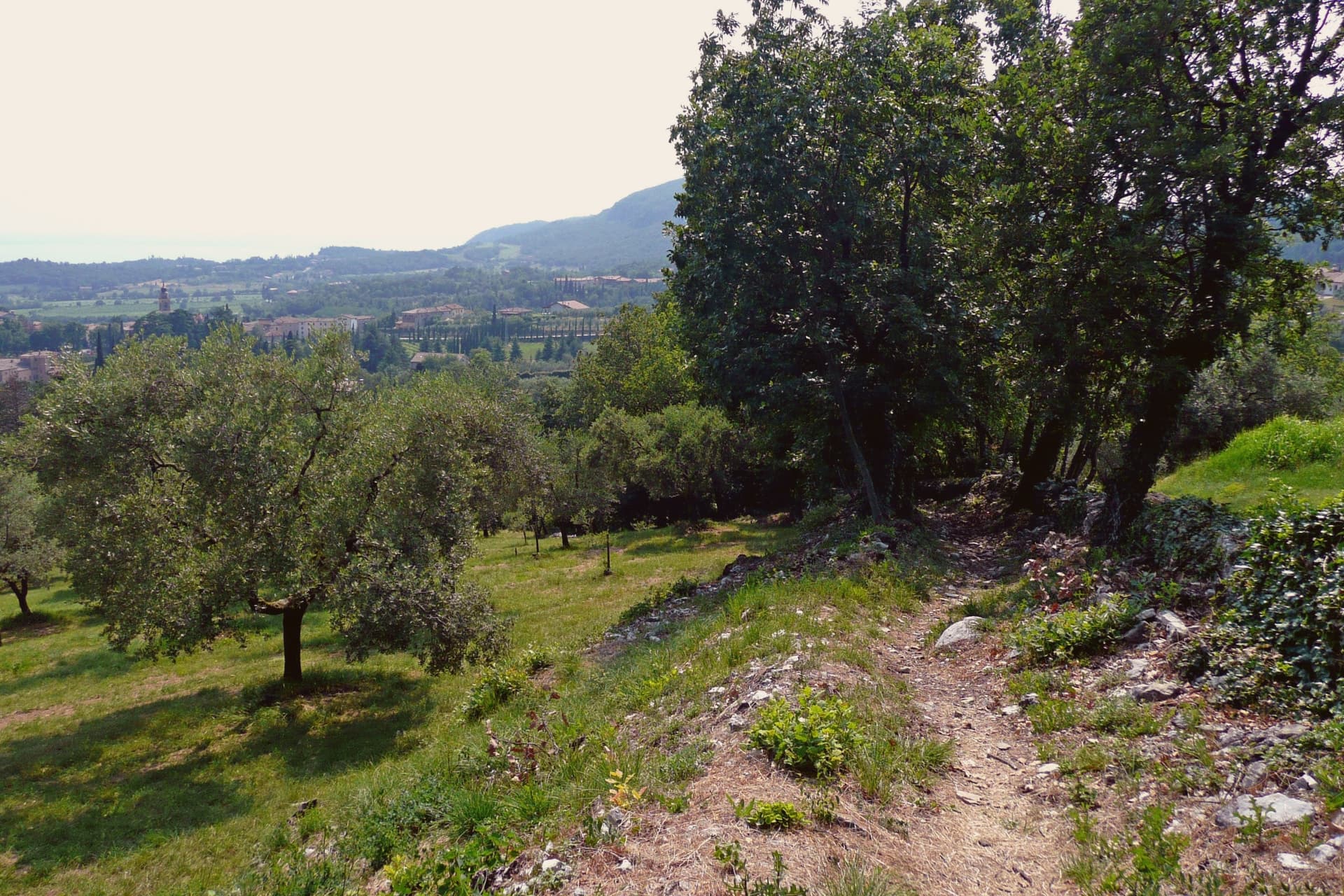
Why visit Costermano sul Garda
The commune sits on a moraine amphitheater twenty-five kilometers northwest of Verona. The hills were a feud of the Brescia monastery of Santa Giulia in the early Middle Ages, then passed through Scaliger and Venetian rule before joining Italy in 1866; the name sul Garda was added only in 2018, to anchor the town's tourism identity to the water it sits above rather than on.
That distinction matters here: this is not a lakefront village but a hill settlement looking down at the shore, its center, its cemetery hill, and its vineyard slopes arranged around the belvedere at Marciaga rather than around a harbor. The economy runs on olive oil and hillside vines, and on the holiday accommodation that has filled these slopes since the 1970s, but the single largest reason people come here is not agricultural.
The cemetery holds the dead of a war fought decades after the monastery's feud and centuries after the Scaliger lords, and it sits on the same morainal hill as the sanctuary, the parish church, and the vine rows, a place where the working landscape and the memorial landscape occupy the same short walk rather than separate zones.
La Casa degli Spiriti, Osteria dai Coghi have been named by a guide.
What to see in Costermano sul Garda
- Santuario della Madonna del Castello. Sanctuary on the spur of Marciaga, its fifteenth-century frescoes intact, with a terrace looking over Lake Garda and the eastern shore.
- Deutsche Soldatenfriedhof. The graves cover the hillside above the lake, laid out since 1967 for the dead of the Second World War, a place kept in silence rather than commentary.
- Chiesa di San Siro. Parish church rebuilt in the nineteenth century in the center of the village, its freestanding campanile visible from the surrounding slopes, with a sightline to Monte Baldo across the water.
How to get to Costermano sul Garda
There is a railway station in the town, so you can arrive without a car and never need one while you are here. Verona is roughly 34 minutes away by road.
Our tip
April through October is the working window. April and May bring the lake back to swimming temperature on the shore four kilometers below, and the morainal hills into wildflower. June through August fills the holiday rentals and the lakefront day-traffic from Garda and Bardolino; the hills stay a few degrees cooler than the shore.
More from Anywhere Italy
- The prettiest villages that eat well in Veneto
- The best small towns on Lake Garda's eastern shore
- The best lake towns that eat well within 90 minutes of Verona
 The prettiest small villages in Veneto
- The best towns with a serious restaurant that eat well within 90 minutes of Verona
 The best ski towns in Veneto