

Marche · Macerata
Treia
A Macerata hill town, the Roman municipium Trea, renamed by Pope Pius VI in 1790 after centuries as Montecchio.
Known for
DISFIDA DEL BRACCIALE
Ottocento street-game between four contrade revived in 1978, held the first Sunday of August across the centro storico.
ACCADEMIA GEORGICA
Giuseppe Valadier building on Piazza della Repubblica, home to an agronomic academy founded in the 1400s as the Accademia dei Sollevati.
ROMAN TREA
Pope Pius VI restored the Roman name in 1790 after a thousand years of the town being known as Montecchio.
When to visit
Best · Apr–Oct
- J11°
- F13°
- M14°
- A17°
- M23°
- J29°
- J32°
- A31°
- S26°
- O21°
- N15°
- D12°
- Best
- Hot or crowded
- Quiet
- Mostly closed
Daytime averages, 2020–2024. Weather data by Open-Meteo.com.
The festa: San Patrizio, 17 March
Why come
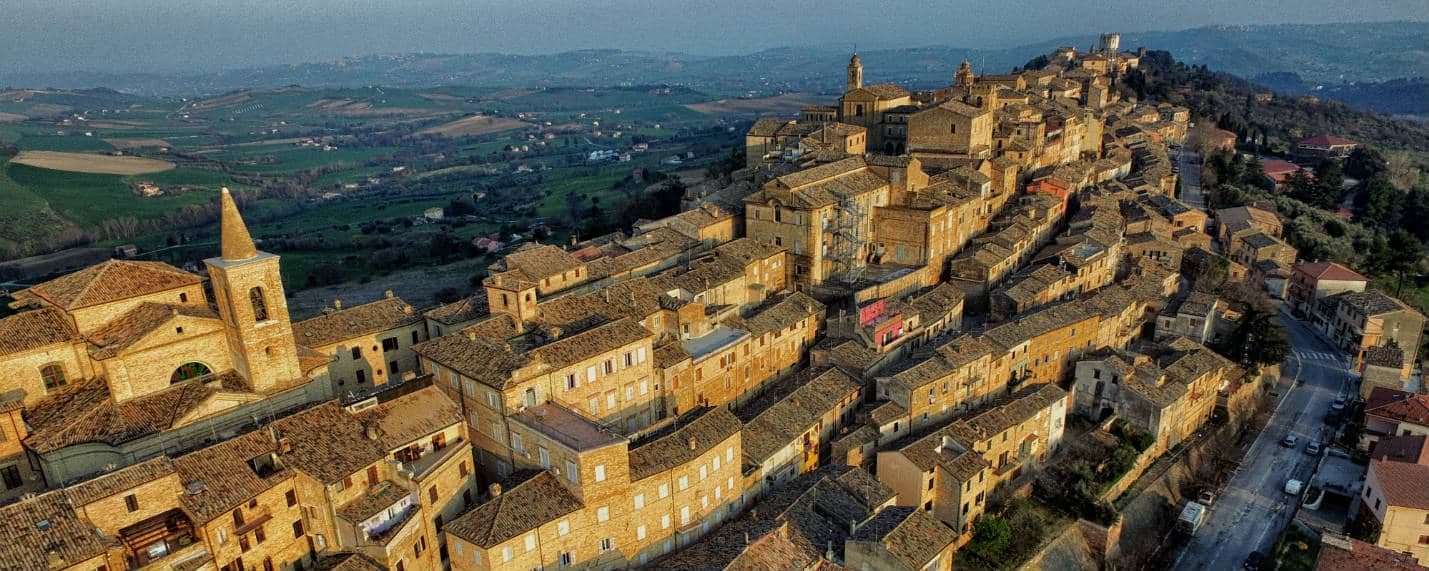
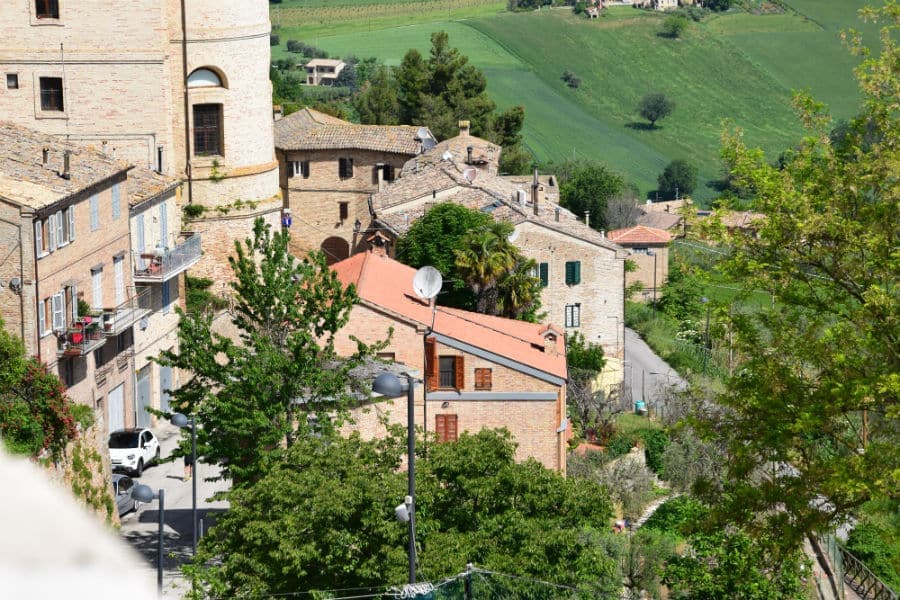
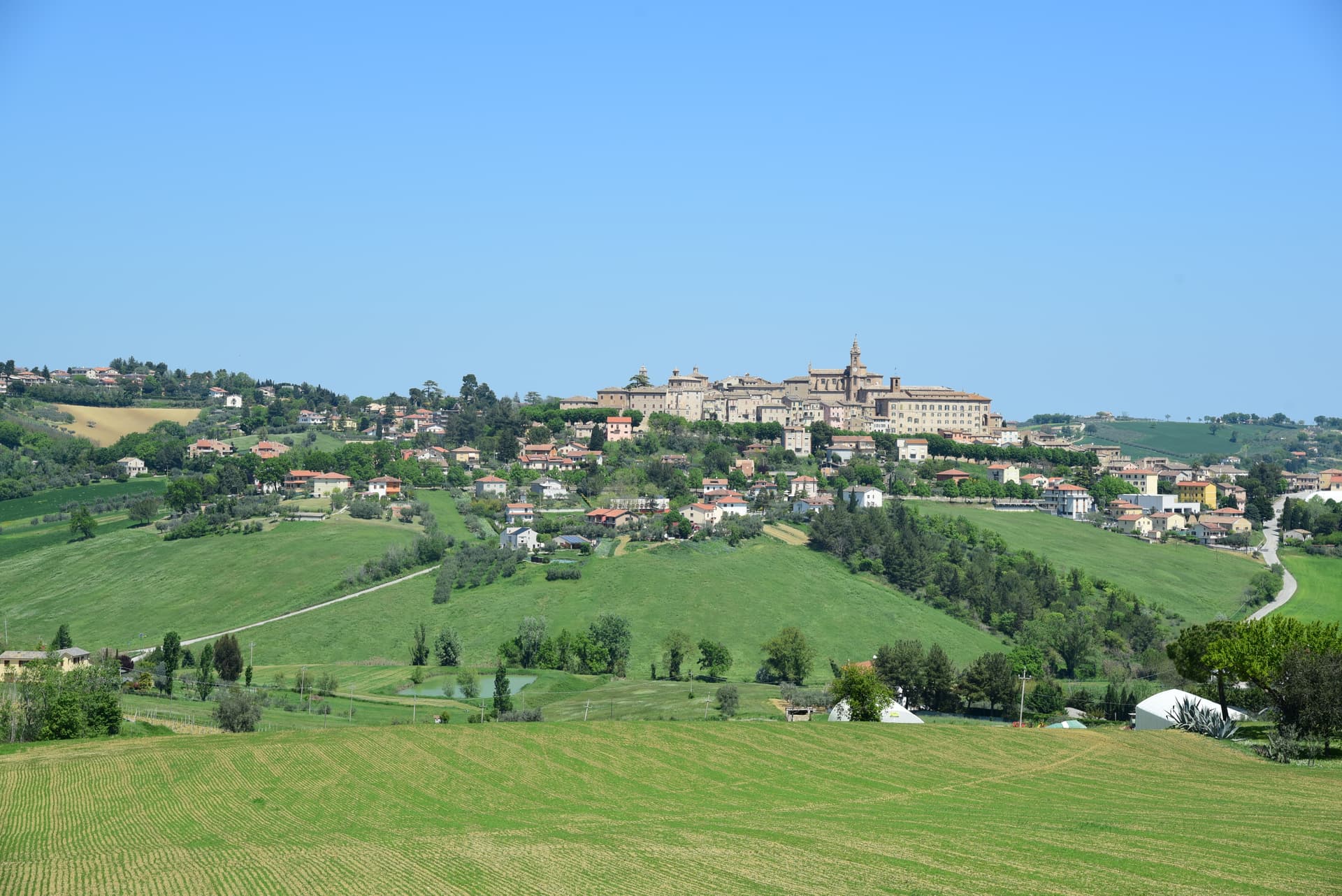
Treia stands in the hills between the Potenza and Chienti valleys, thirty-five kilometers from Ancona. The Roman town of Trea lay on the plateau below, a municipium founded shortly after 49 BC that flourished between Augustus and Antoninus Pius. Around the year 1000 the population moved up to the more defensible hilltop of Montecchio, and the older site emptied.
The new town stayed under the name Montecchio until 1790, when Pope Pius VI raised it to the rank of città and restored its Roman name. The Piazza della Repubblica, on the highest point of the ridge, is closed at one end by the Cattedrale della Santissima Annunziata and at the other by Giuseppe Valadier's small Accademia Georgica, the eighteenth-century home of an agronomic academy founded in the fifteenth as the Accademia dei Sollevati. The Disfida del Bracciale, an Ottocento street-game in which four contrade compete, has filled the centro storico every first Sunday of August since 1978.
The Sunday letter
We haven’t written Treia’s letter yet.
One town every Sunday, with the photo, the food, the festa. Be there when this one comes up. Free, by Peter & Sophia from Pietrasanta.
How to get there
From Ancona / Pescara (AOI), about 56 minutes by car.
Rimini (RMI) is about 2 hours away.
By car from Ancona 59 minutes or Perugia 1h 42m.
What to see
Piazza della Repubblica
Belvedere piazza on the highest point of the ridge, closed by the Cattedrale della Santissima Annunziata at one end and the Accademia Georgica at the other.
Accademia Georgica
Eighteenth-century Giuseppe Valadier building housing an academy founded in the 1400s, with 1,196 parchments of the municipal archive and over 15,000 volumes.
Santuario del Santissimo Crocifisso
Cesare Bazzani sanctuary completed in the early twentieth century on the site of an older parish church, holding a sixteenth-century Umbrian fresco and a thirteenth-century crucifix.
Chiesa di San Filippo Neri
Built 1766-1773 to designs by Carlo Augustoni, holding a crucifix possibly dating from the thirteenth century.
Sito archeologico di Trea
Roman municipium on the plateau below the modern town, with wall traces, funerary monuments and epigraphic finds from the first and second centuries AD.
The slow-trip planner
Building a trip? Find where Treia fits in a slow Italy circuit.
Answer five questions. We will shape a geographically coherent slow trip from the 1,000 Italian towns most travelers skip. Yours to save and share.
We recommend
Where to eat
Not our picks, but places the guides put their name to: a Michelin star, a Gambero Rosso fork, a Slow Food snail, a Michelin Key for the hotels. Worth a table, a counter, or a night when you pass through.
Il Casolare dei SegretiRistorante
A Michelin Bib Gourmand, at Il Casolare dei Segreti.
Through the year
What happens here
Feasts and festivals that come back year after year. We give the month rather than the date, because the date moves and the month rarely does. Check with the source before you plan a journey around one.
Disfida del Braccialehistorical re-enactment
usually held across July and August. lemarche.it
Sagra del Calcione e del Raviolofood festival
usually held in August. lemarche.it
Marchigiana Beef Festivalfood festival
usually held in September. sagritaly.com
Living here
- Population 9,013
- Commuter belti
- Pharmacy in town
- High school within a 30-minute drive
- Nearest airport Ancona / Pescara, 56 min drive
- Regional capital Ancona, 58 min drive
Tags & datadesignations · numbers · sources
Recognised as
- Borghi più belli d'Italia
- Città della Terra Cruda
The numbers
- Elevation: 342 m
- Population: 9,013
- Surface area: 93.54 km²
These figures were compiled from public directories — ISTAT, OpenStreetMap, Wikidata — and from the official listings of the guides named on this page. Town details change; verify with official sources before you travel.
Similar
Towns like Treia
Morrovalle
Province: Macerata
both inland, away from the coast · both between 3,000 and 10,000 people
Montecosaro
Province: Macerata
both inland, away from the coast · both between 3,000 and 10,000 people
Offida
Province: Ascoli Piceno
both inland, away from the coast · both between 3,000 and 10,000 people
Acquaviva Picena
Province: Ascoli Piceno
both inland, away from the coast · both between 3,000 and 10,000 people
Spello
Province: Perugia
both inland, away from the coast · both between 3,000 and 10,000 people
Trevi
Province: Perugia
both inland, away from the coast · both between 3,000 and 10,000 people
🎨 Borghi più belli d'Italia
More Borghi più belli d'Italia towns in Marche
Arcevia
Province: Ancona
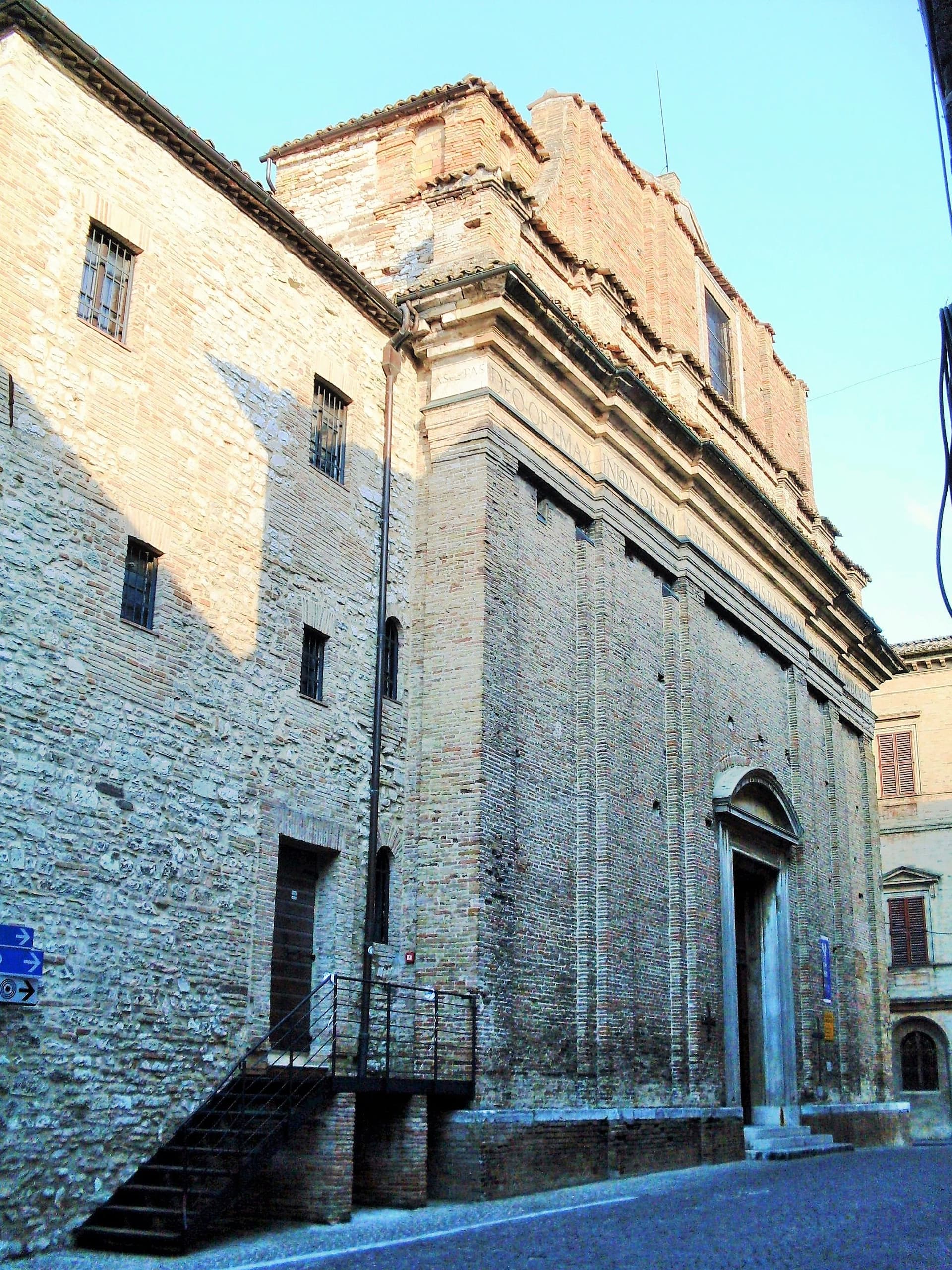
A hilltop borgo at 535 meters above the Misa and Nevola valleys, defended in the Middle Ages by a ring of nine satellite castles.
Cingoli
Province: Macerata
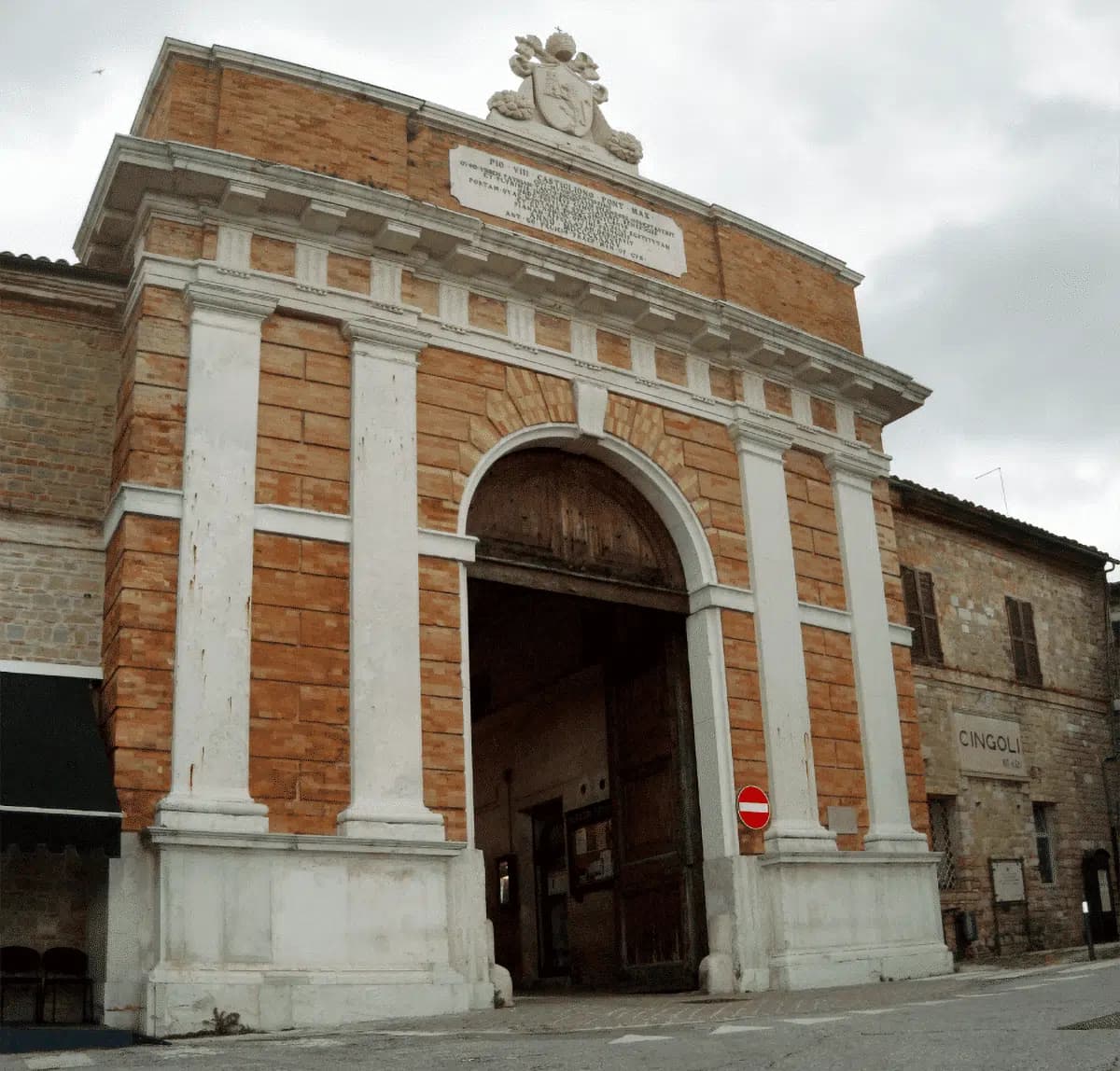
The Balcone delle Marche at 631 meters, a hilltop borgo where on clear days the view runs from the Sibillini to the Croatian coast.
Corinaldo
Province: Ancona
A walled hill borgo at 203 meters, ringed by 912 meters of intact medieval walls, and the birthplace of Saint Maria Goretti.
Esanatoglia
Province: Macerata
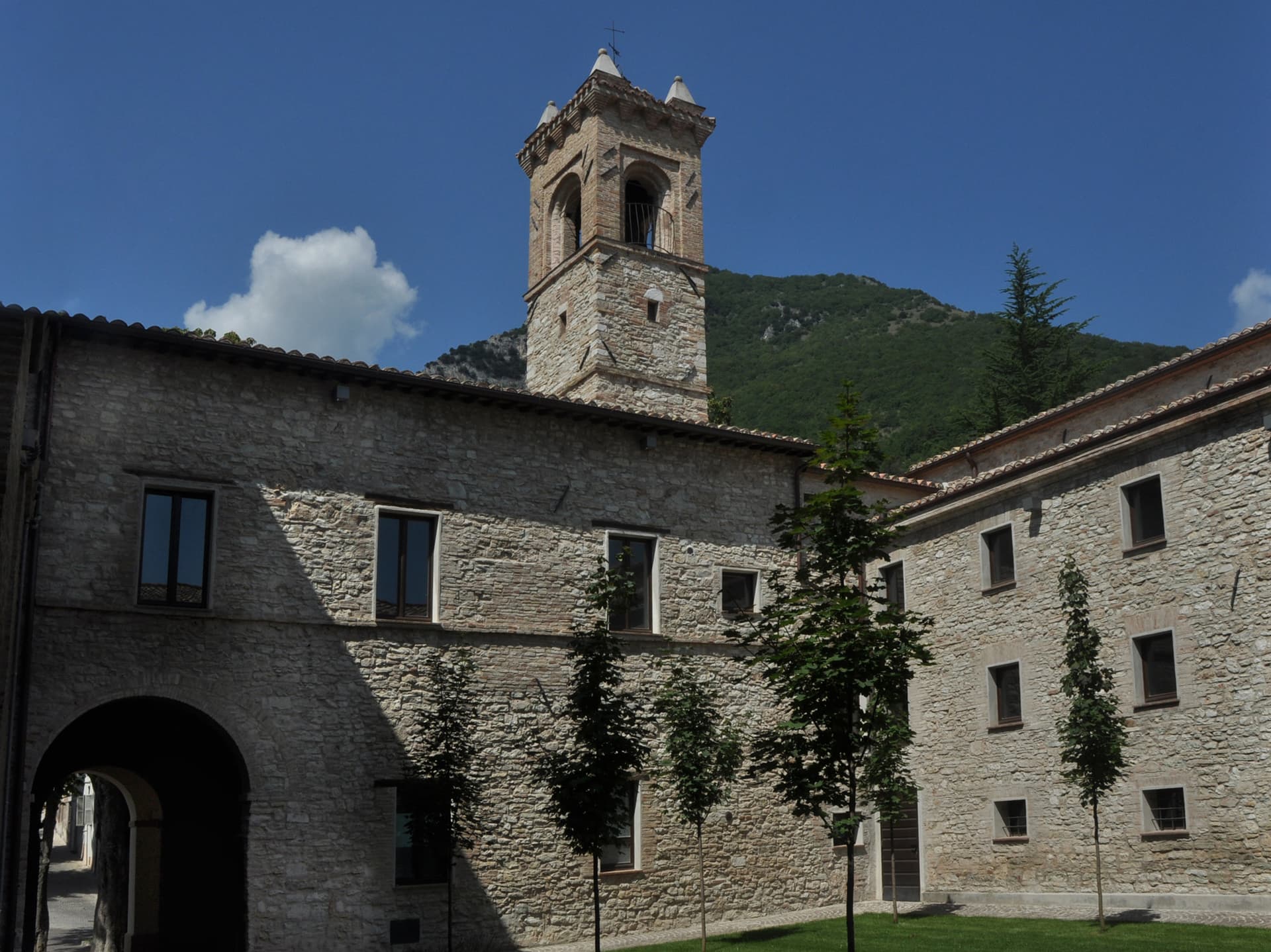
A medieval village of seven bell towers at 358 meters on the Marche-Umbria border, sitting at the source of the Esino river.
Fermo
Province: Fermo
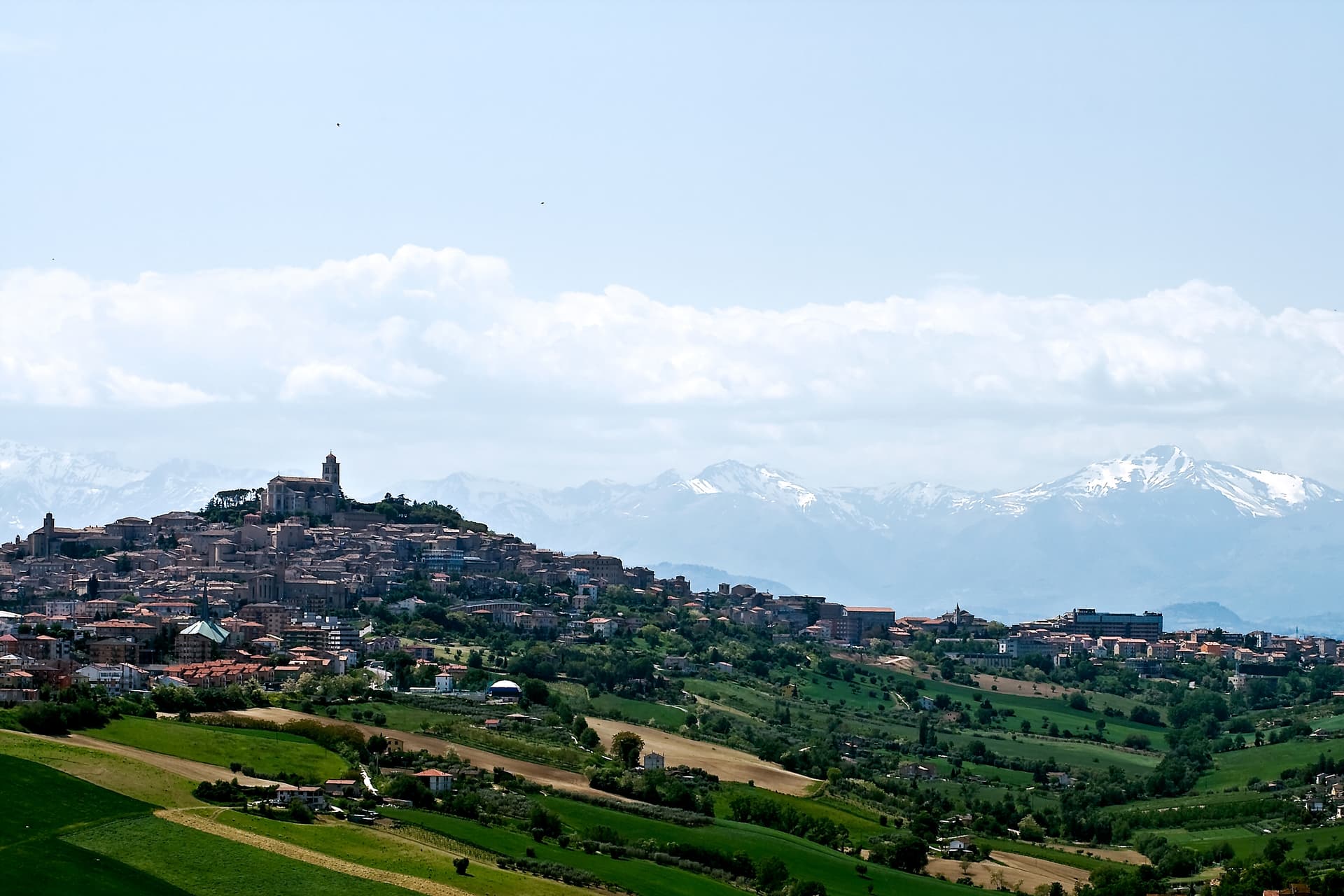
The provincial capital on the Sabulo hill at 319 meters, with 2,200 square meters of Augustan Roman cisterns running under the centro storico.