
Basilicata · Potenza
Rivello
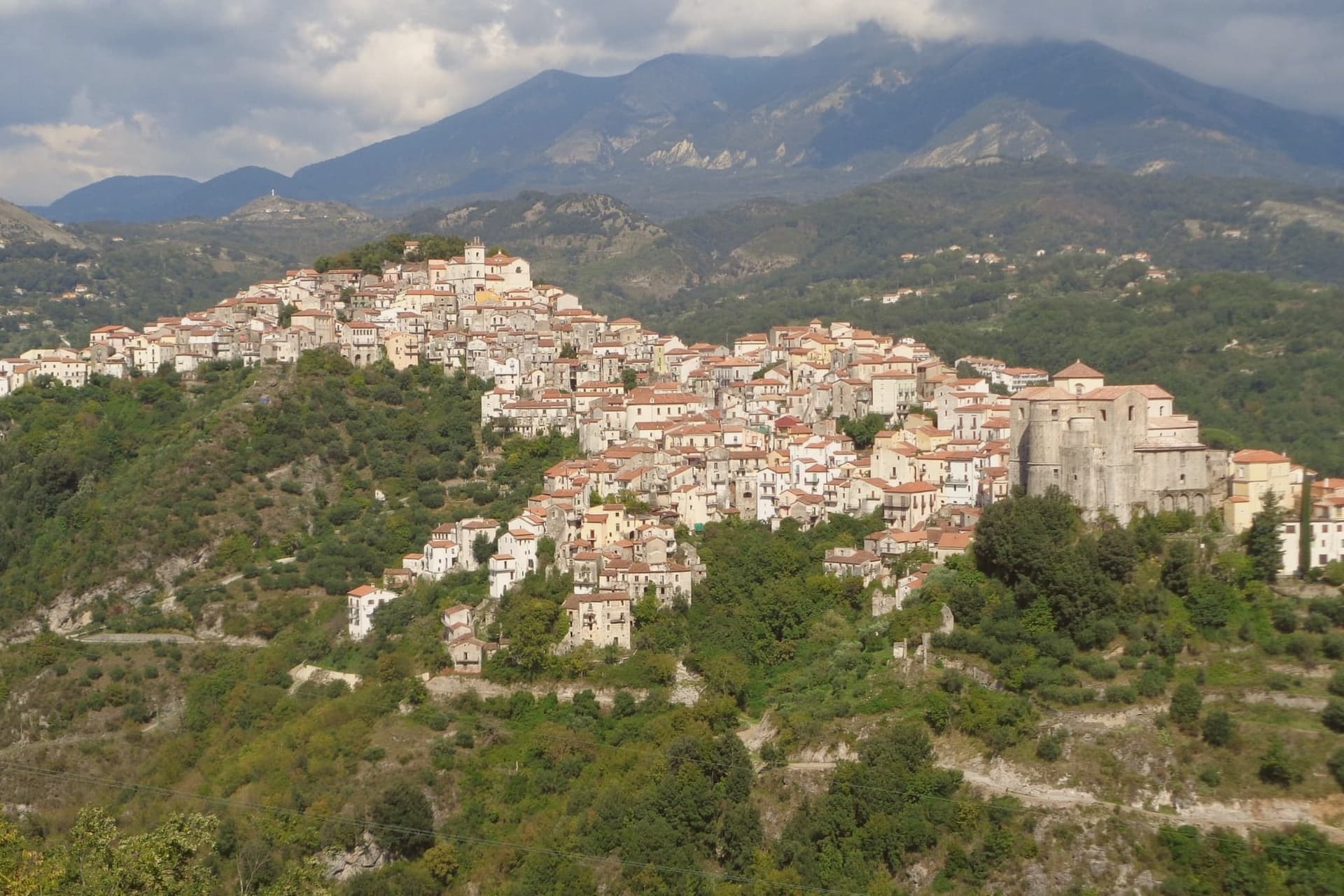
A 479-meter ridge above the Noce valley where Lombards and Byzantines lived side by side, holding Latin and Greek rites until the seventeenth century.
- Best time
- Apr–Oct
- By car
- 1 h 28 min from Salerno
- Population
- 2,523
Known for
TWO RITES
Latin and Greek liturgies practised in parallel until the seventeenth century in two separate parish churches on the same ridge.
TODISCO FRESCOES
The Convento di Sant'Antonio preserves a sixteenth-century cycle by Giovanni Todisco, including a 1559 Last Supper, still in situ.
SALUMI
Rivello's cured pork tradition, soppressata and capocollo, is a fixture of Lucanian charcuterie and locally produced in family workshops.
CANESTRATO DI MOLITERNO
The commune lies inside the Canestrato di Moliterno IGP production zone.
When to visit
Best · Apr–Oct
- J10°
- F11°
- M12°
- A14°
- M19°
- J23°
- J26°
- A27°
- S24°
- O19°
- N15°
- D12°
- Best
- Hot or crowded
- Quiet
- Mostly closed
Daytime averages, 2020–2024. Weather data by Open-Meteo.com.
The festa: Nicola di Bari, 6 December
Why come
Rivello sits on a ridge above the Noce valley, twenty kilometers inland from Maratea and the Tyrrhenian. The town was disputed between Lombards and Byzantines after the fall of Velia, and its name is read by some as Re-Velia, the place where Velian refugees regrouped. Both peoples settled here and never fully separated: the ridge organized itself into an upper town and a lower town, and for centuries each pole kept its own church, its own clergy, and its own rite, meeting at the market but not at the altar.
The eighteenth century was Rivello's prosperous moment, judging from the parish archives and the stone houses that climb the ridge from that period, including the Baroque work layered onto older Greek-rite foundations in the lower town. The Pollino park boundary runs nearby, and the belvedere at Passo la Colla looks down on the Gulf of Policastro, a reminder that the ridge, for all its inland feel, sits a short distance from the coast it once helped populate. What the town amounts to is a single street holding two histories that ran side by side for the better part of a millennium before finally merging.
The Sunday letter
Rivello is on our list. Its letter is still to come.
We are writing about all 1,000 of these towns, one at a time, in a free letter every Sunday: the photo, the food, the festa. That is our mission. Sign up and you will be there when Rivello comes up. By Peter & Sophia, from Pietrasanta.
Read on
Rivello in our articles
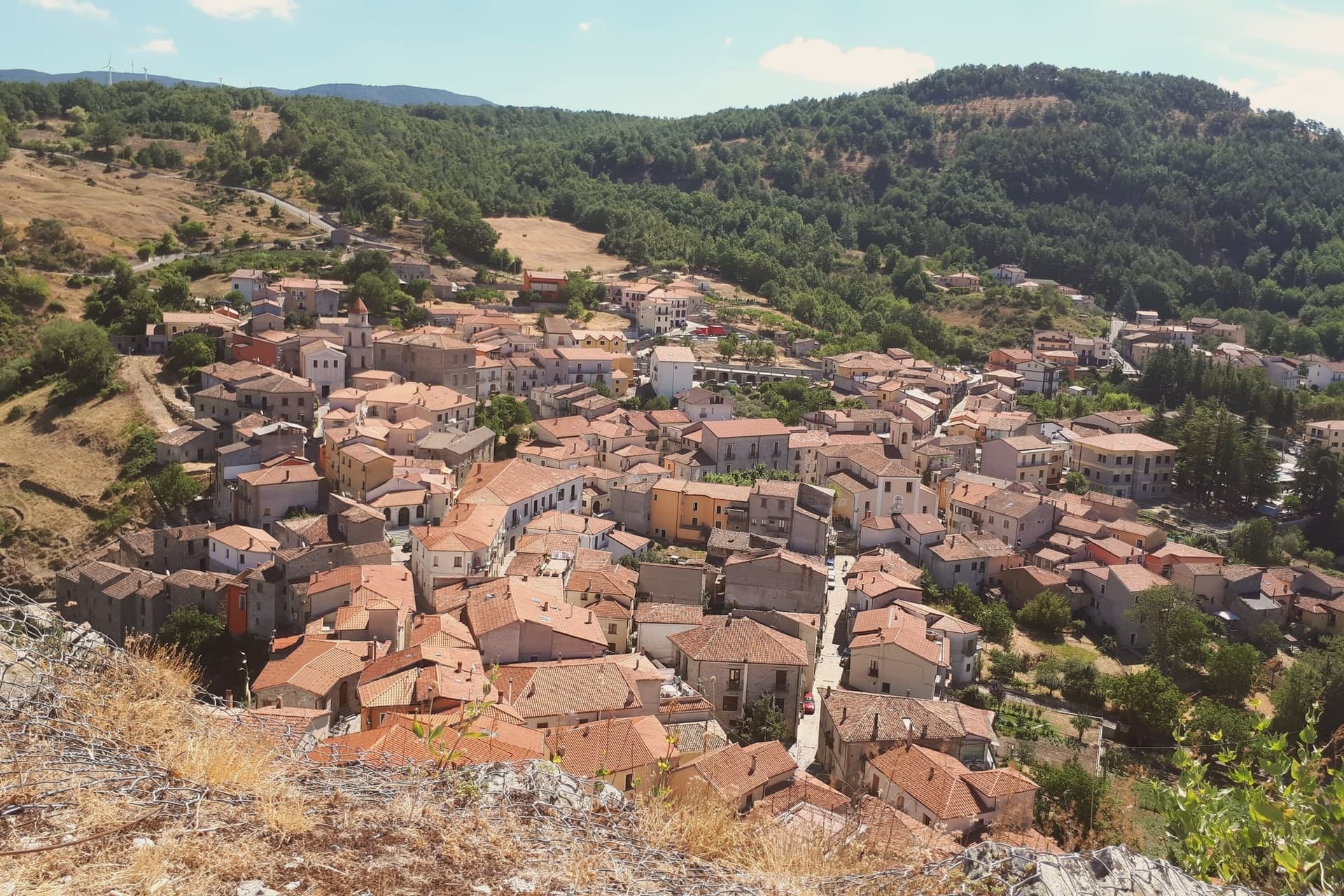
 The 7 prettiest villages in the province of Potenza7 towns, Rivello among them.
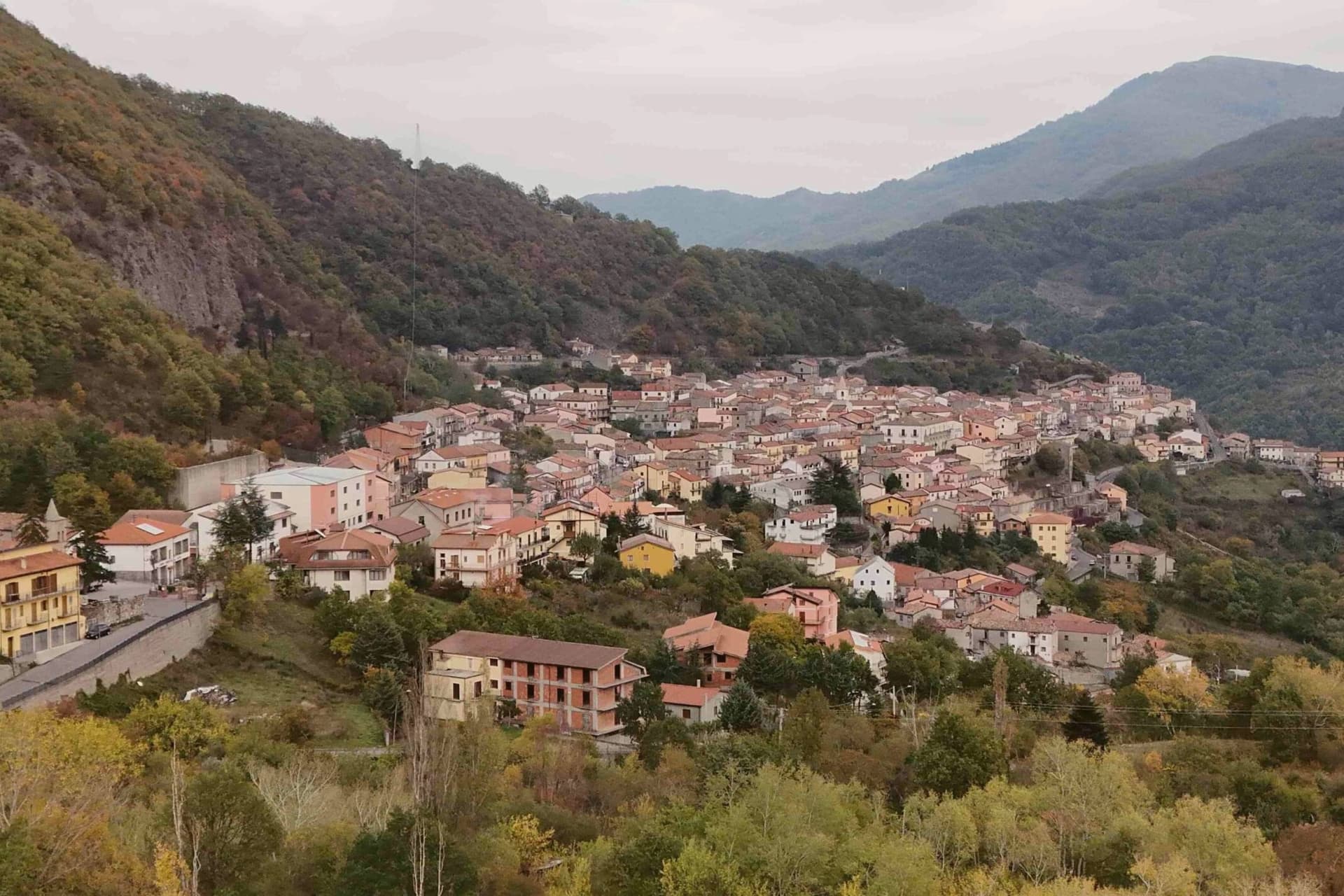
 The best cheese towns within 90 minutes of Salerno7 towns, Rivello among them.
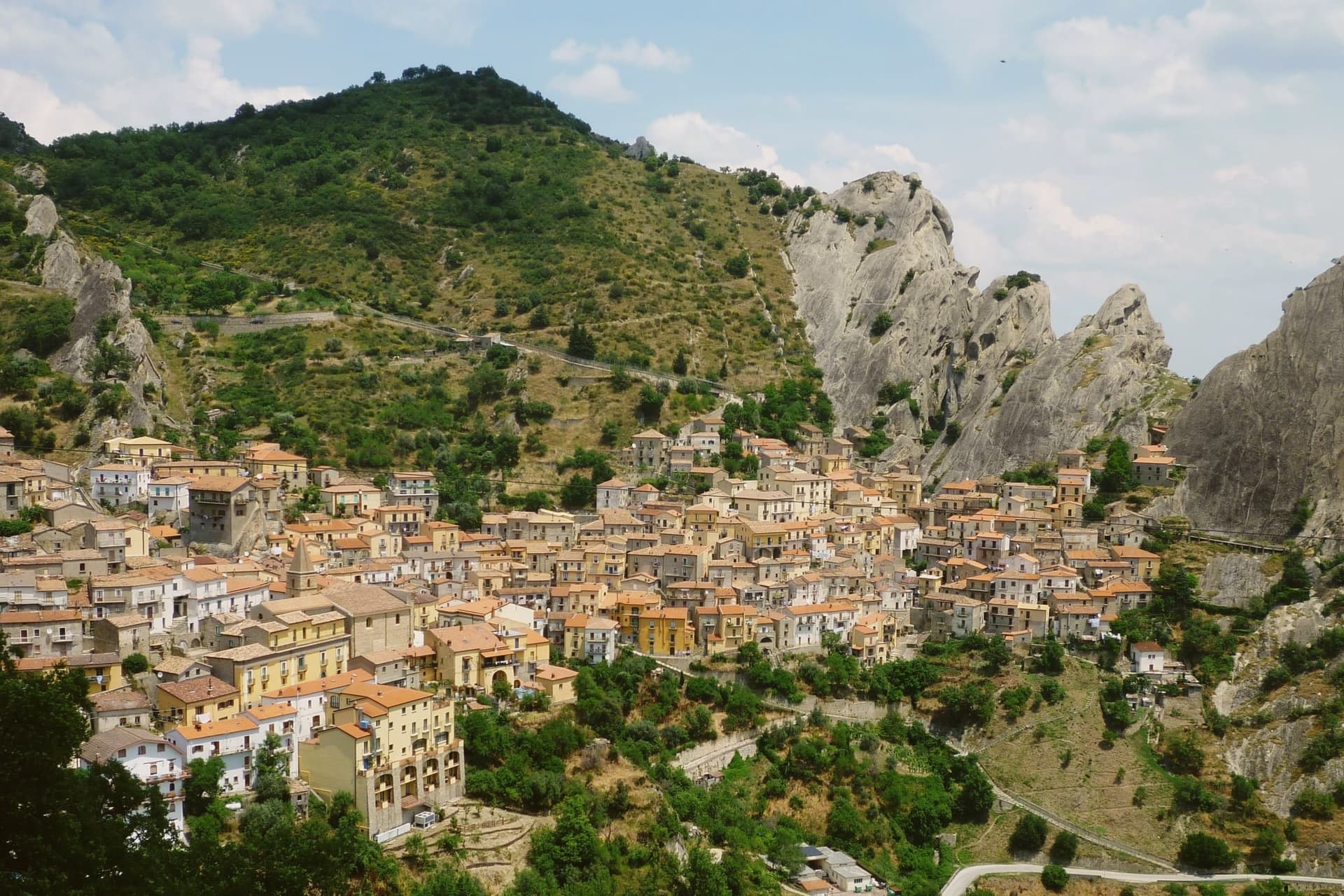
 The 8 best towns inside a national park in the province of Potenza8 towns, Rivello among them.
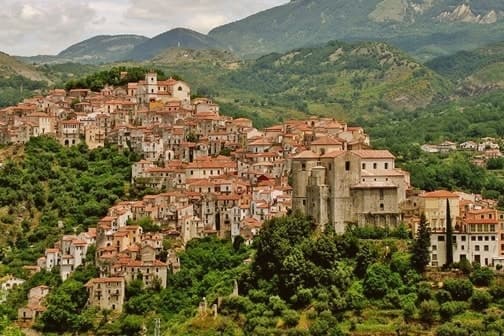
 The 8 prettiest small villages in Basilicata8 towns, Rivello among them.
How to get there
From Naples / Salerno (NAP), about 2h 12m by car.
Lamezia / Reggio (SUF) is about 2h 38m away.
By car from the centre of Salerno 1h 28m, Naples 2h 12m or Bari 3h 21m.
What to see
Convento di Sant'Antonio da Padova
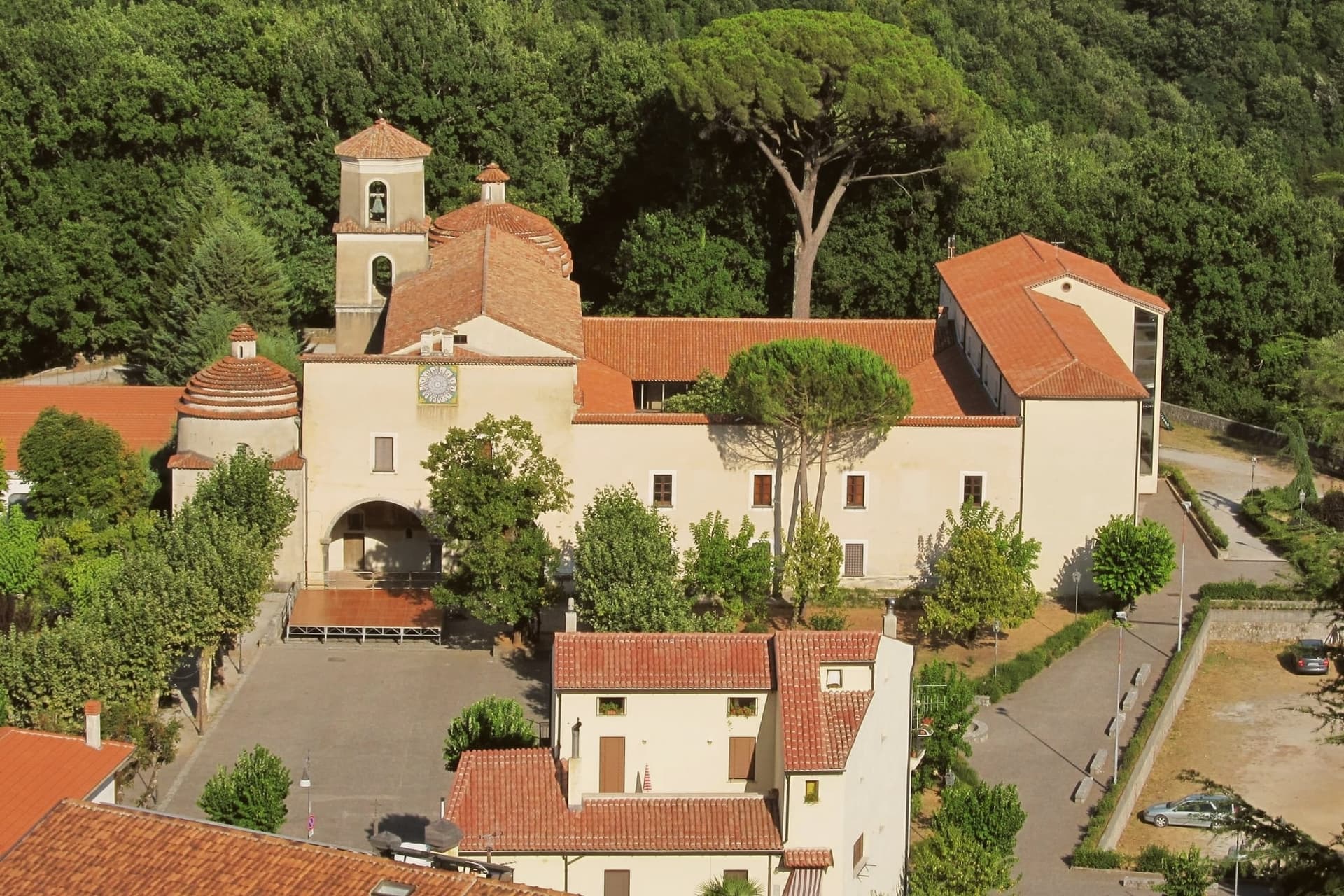
Sixteenth-century Franciscan complex built around a cloister, its frescoes by Giovanni Todisco and Giovanni De Gregorio covering the cloister walls and refectory.
Chiesa di Santa Maria Maggiore
Upper-town church, plainer in its stonework than its lower-town counterpart, standing at the pole of the ridge that held the Latin congregation.
Chiesa di San Nicola dei Greci
Lower-town church with Byzantine architectural elements still legible beneath an eighteenth-century reorganisation of the interior.
Chiesa di Santa Maria del Poggio
A tenth-century Greek-rite foundation set above the lower town, its original core wrapped in an eighteenth-century Baroque expansion.
Passo la Colla belvedere
Viewpoint west of the village over the Gulf of Policastro and the Tyrrhenian, marking the western edge of the commune.
Centro storico
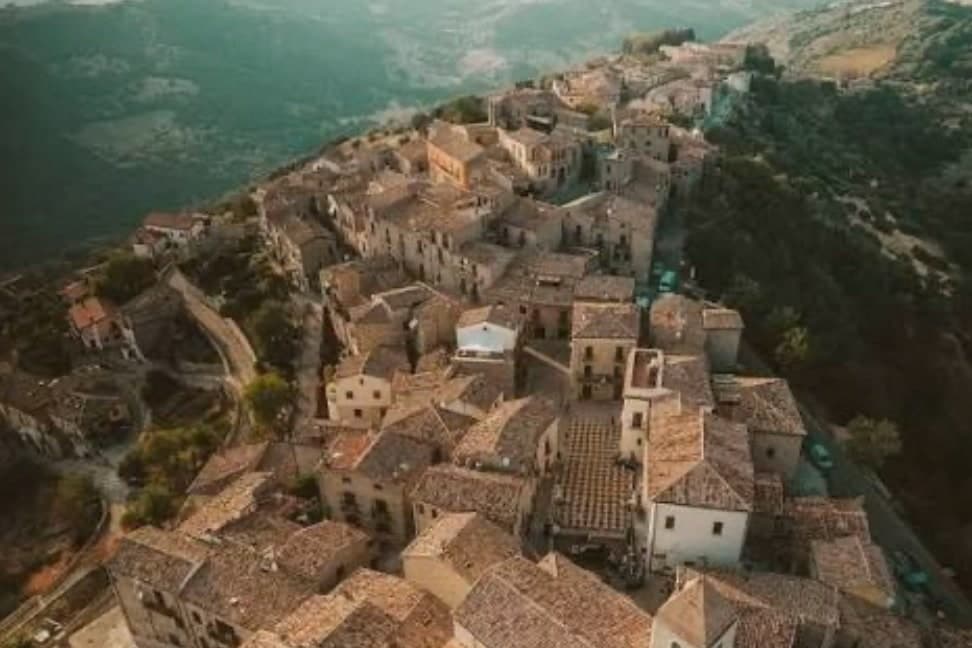
The ridge itself is the exhibit: a single street of stone houses connecting two historic poles that once answered to different liturgical calendars.
The slow-trip planner
Building a trip? Find where Rivello fits in a slow Italy circuit.
Answer five questions. We will shape a geographically coherent slow trip from the 1,000 Italian towns most travelers skip. Yours to save and share.
Living here
- Population 2,523
- Very remotei
- Pharmacy in town
- High school within a 30-minute drive
- Nearest airport Naples / Salerno, 2 h 12 min drive
- Regional capital Potenza, 1 h 24 min drive
Common questions
- What is Rivello known for?
- Rivello is a 479-meter ridge above the Noce valley where Lombards and Byzantines lived side by side, holding Latin and Greek rites until the seventeenth century.
- Where is Rivello?
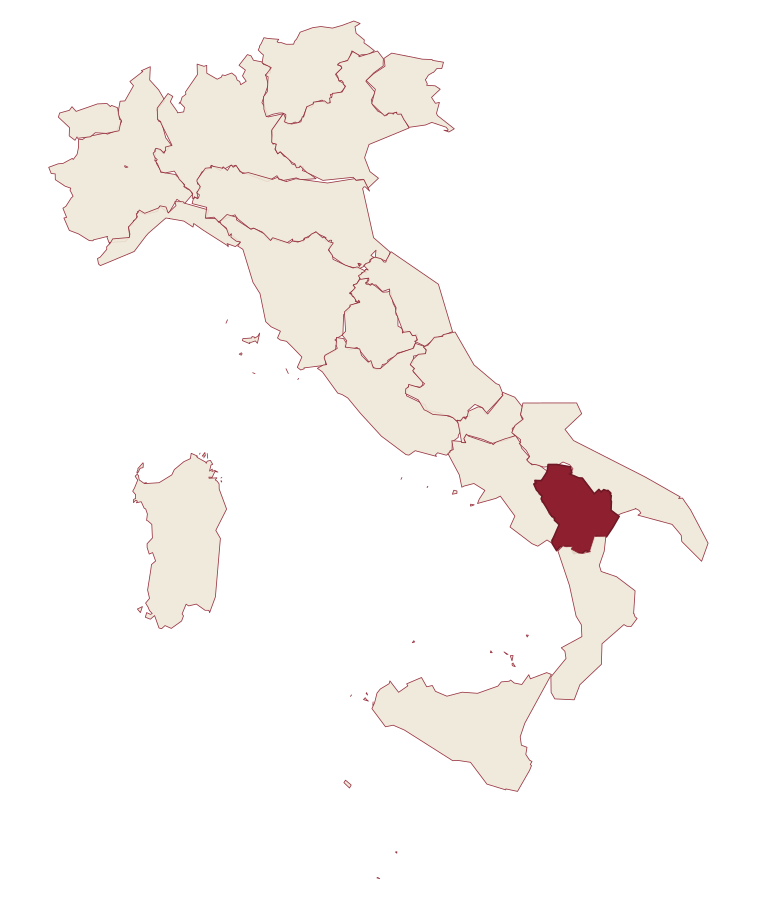
- Rivello is a comune in the province of Potenza, in Basilicata, at 479 meters above sea level.
- What is the nearest airport to Rivello?
- Naples / Salerno (NAP), about 2h 12m by car.
- How long is the drive from Salerno to Rivello?
- About 1h 28m by car.
- When is the best time to visit Rivello?
- Best in Apr–Oct. August is the warmest month, averaging 27 degrees, and November the wettest, with about 14 rain days.
- Is there a sagra or a festival in Rivello?
- The town keeps its patron saint's day: Nicola di Bari, 6 December.
- Which other towns are like Rivello?
- Laino Borgo, Sant'Angelo Le Fratte and Taurasi.
- How many people live in Rivello?
- 2,523 at the 2023 count.
Tags & datadesignations · numbers · sources
Recognised as
The numbers
- Elevation: 479 m
- Population: 2,523
- Surface area: 69.58 km²
These figures were compiled from public directories: ISTAT, OpenStreetMap and Wikidata, and from the official listings of the guides named on this page. Town details change; verify with official sources before you travel.
Similar
Towns like Rivello
Laino Borgo
Province: Cosenza
both inland, away from the coast · both under 3,000 people
Sant'Angelo Le Fratte
Province: Potenza
both inland, away from the coast · both under 3,000 people
Taurasi
Province: Avellino
both inland, away from the coast · both under 3,000 people
Fornelli
Province: Isernia
both inland, away from the coast · both under 3,000 people
Castelcivita
Province: Salerno
both inland, away from the coast · both under 3,000 people
Auletta
Province: Salerno
both inland, away from the coast · both under 3,000 people
🎨 Borghi più belli d'Italia
More Borghi più belli d'Italia towns in Basilicata
Acerenza
Province: Potenza
A walled ridge town at 833 meters in the north Lucanian hills, archbishopric since 1068 under a Romanesque cathedral begun in 1080.
Castelmezzano
Province: Potenza
A medieval village wedged into sandstone teeth at 750 meters, linked to Pietrapertosa by a 1,452-meter zipline since 2007.
Guardia Perticara
Province: Potenza
The stone village at 678 meters above the Sauro valley, rebuilt block by block in Gorgoglione sandstone after the 1980 earthquake.
Irsina
Province: Matera
A 548-meter Bradano-valley hill town, called Montepeloso until 1895, whose cathedral holds a Renaissance rarity.
Maratea
Province: Potenza
Basilicata's only commune on the Tyrrhenian, thirty-two kilometers of rocky coast overlooked by a marble Christ raised inland in 1965.