
Apulia · Bari
Putignano
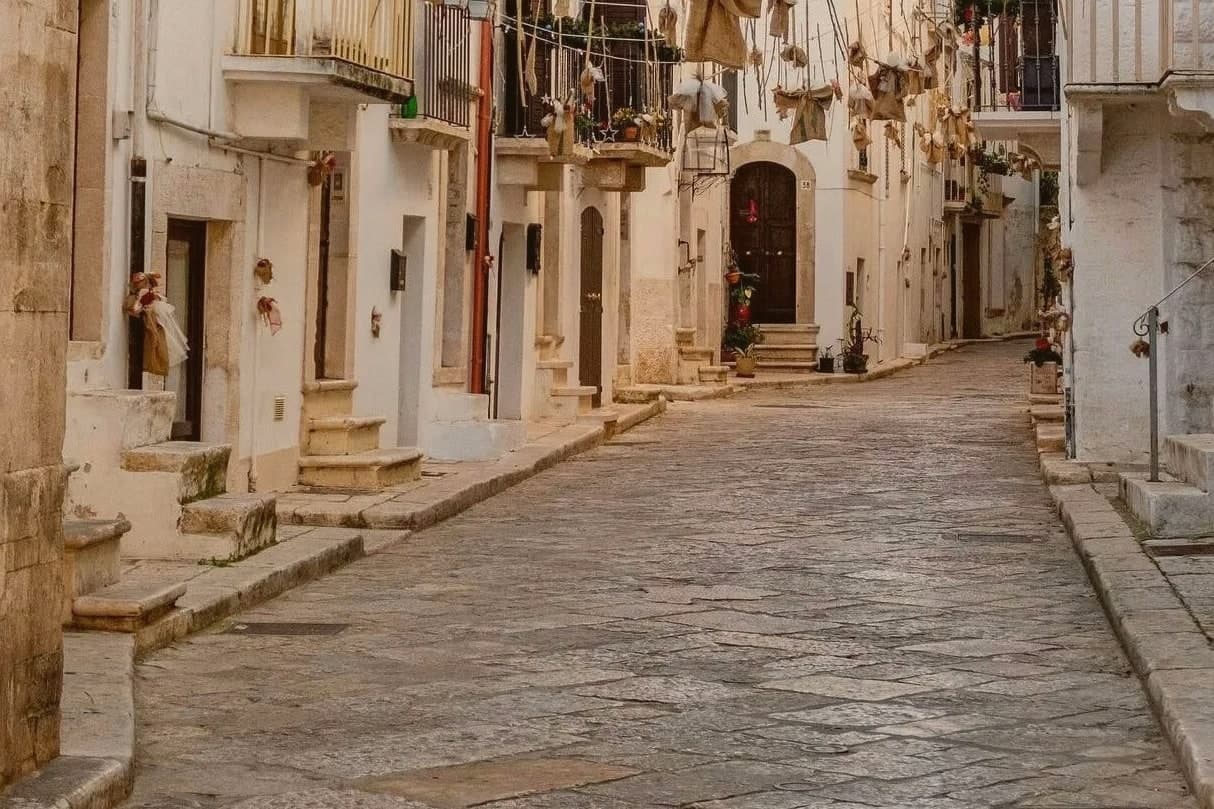
Putignano has run its carnival continuously since 1394, the longest unbroken run in Europe, staged in a Murgia town with a karst cave threaded beneath its own centro storico.
- Best time
- Feb–Jun, Sep–Oct
- By car
- 46 min from Bari
- By train
- Station in the comune
- Population
- 25,935
Known for
EUROPE'S OLDEST CARNIVAL
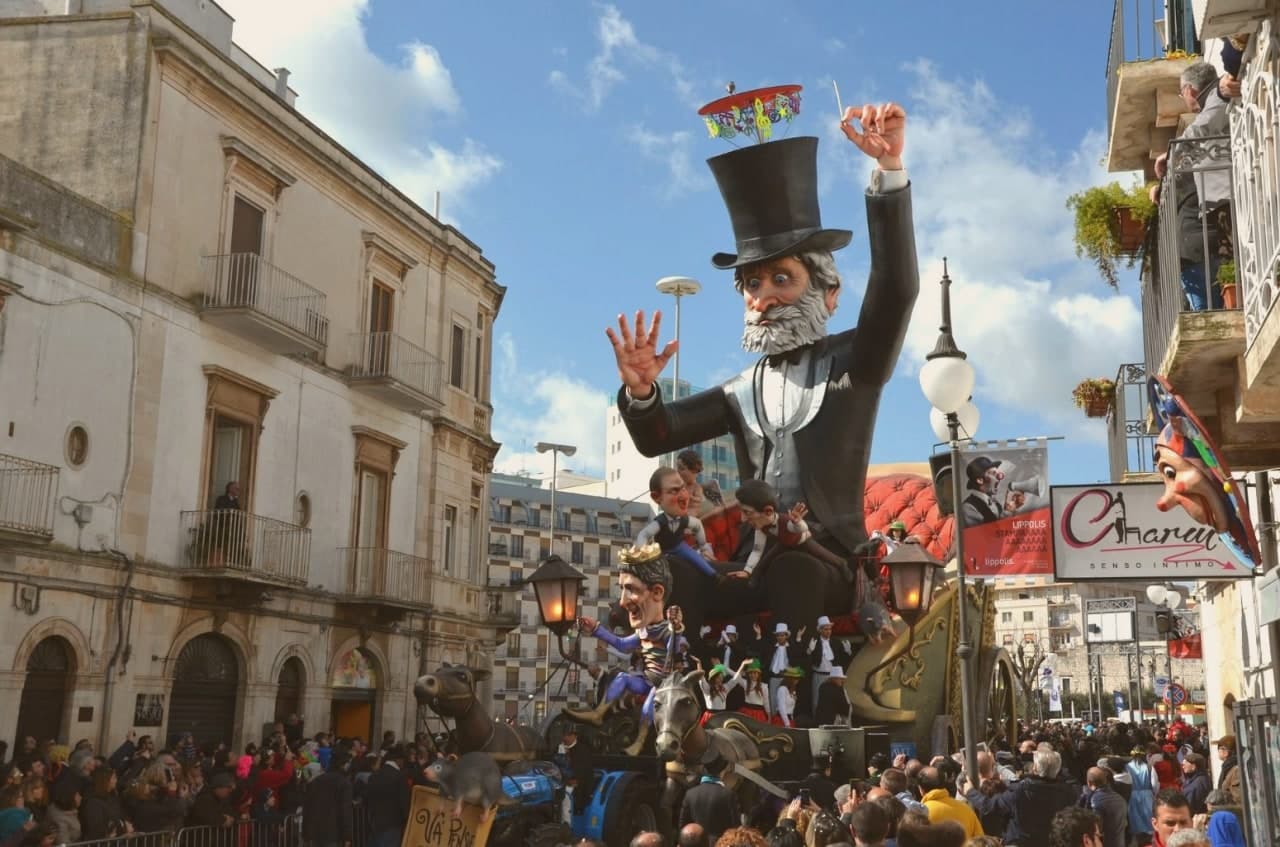
Continuous since 26 December 1394, 631 years of cartapesta processions, satire, and grotesque masks. One of the four longest-running in the world.
CARTAPESTA TRADITION
30+ active papier-mâché workshops build the allegorical floats year-round. The cartapesta artisan tradition is recognised as intangible heritage by the Puglia region.
GROTTA DEL TRULLO
Karst cave system with entrance inside the centro storico. Stalactites and a WWII refuge shelter. The town's distinctive geological feature.
MURGIA-PUGLIAN GATEWAY
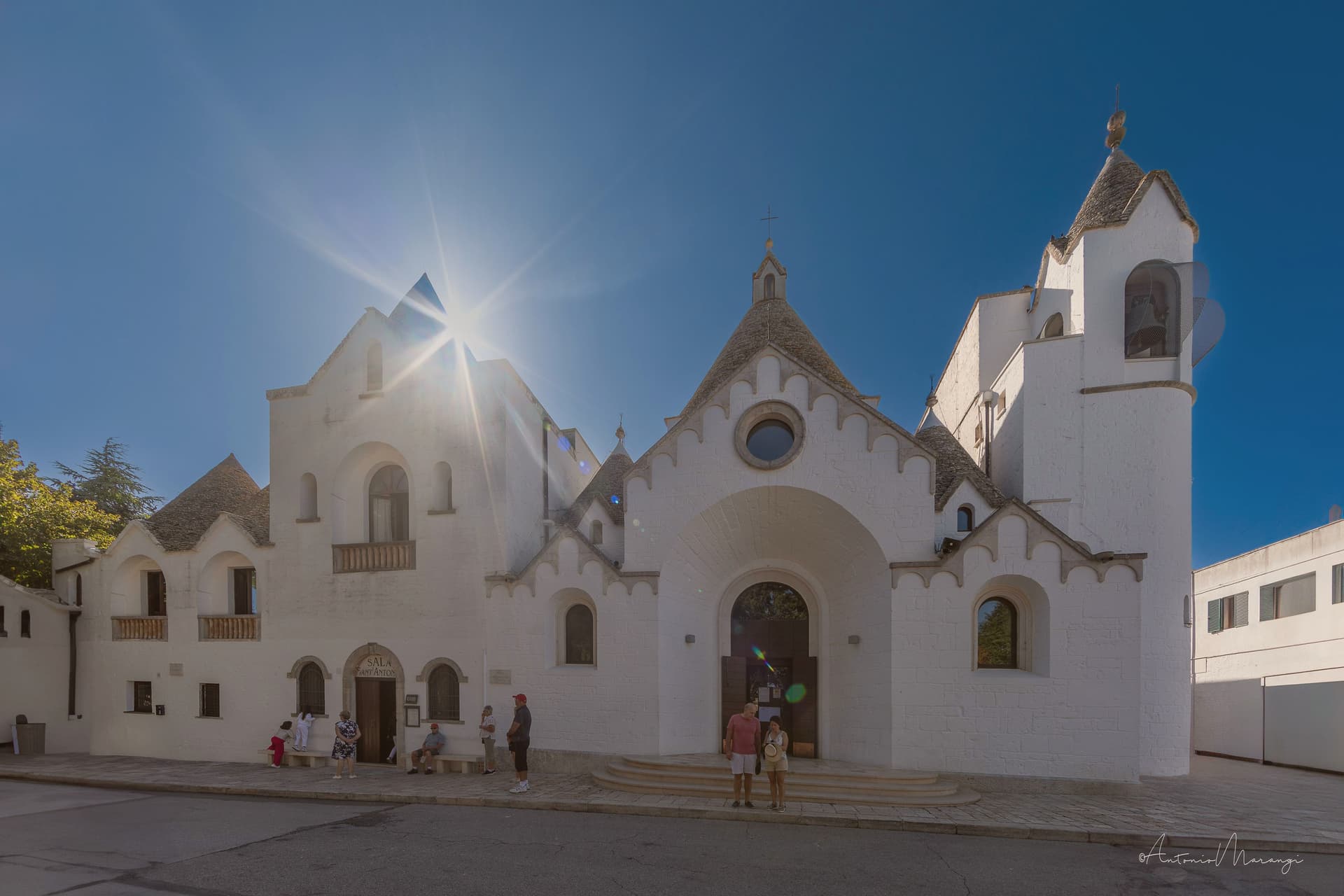
On the karst plateau between Bari and Lecce. Easy reach to Alberobello (15 km, UNESCO trulli), Martina Franca (capocollo and baroque), and the whole Valle d'Itria.
When to visit
Best · Feb–Jun, Sep–Oct
- J11°
- F12°
- M13°
- A17°
- M22°
- J28°
- J32°
- A31°
- S26°
- O21°
- N16°
- D12°
- Best
- Hot or crowded
- Quiet
- Mostly closed
Daytime averages, 2020–2024. Weather data by Open-Meteo.com.
The festa: Stefano, 3 August
Why come
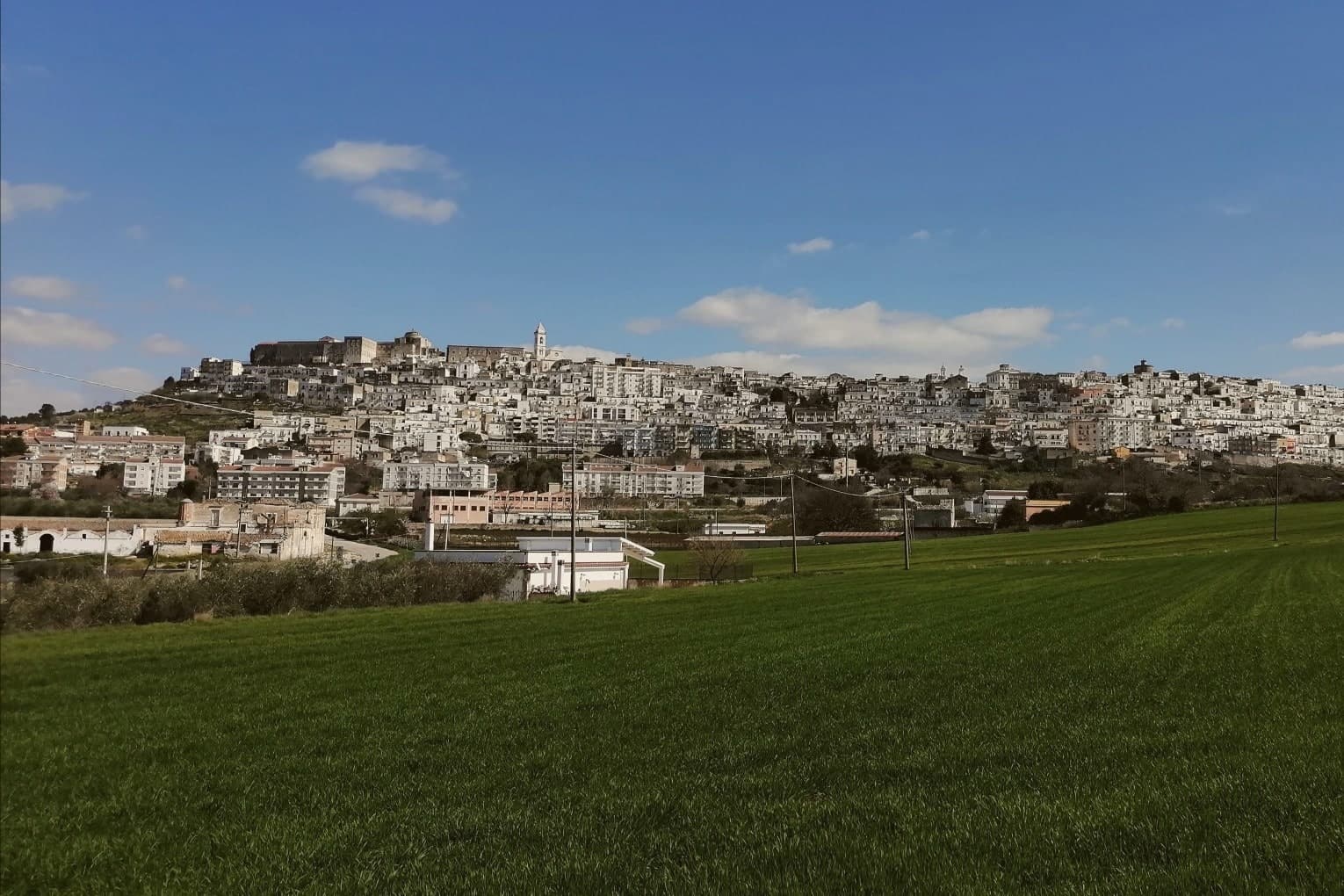
The town sits on the Murgia, the karst plateau between Bari and Lecce, home to just under 26,000 people. The carnival's origin is tied to a specific piece of geography: a Benedictine confraternity carried the relics of Santo Stefano inland from the coast at Monopoli to escape Saracen raids, arriving on 26 December 1394. Farmers moving grapevines in the same December procession began singing satirical verses, and that song is what survives today as le Propaggini, still the opening event every 26 December.
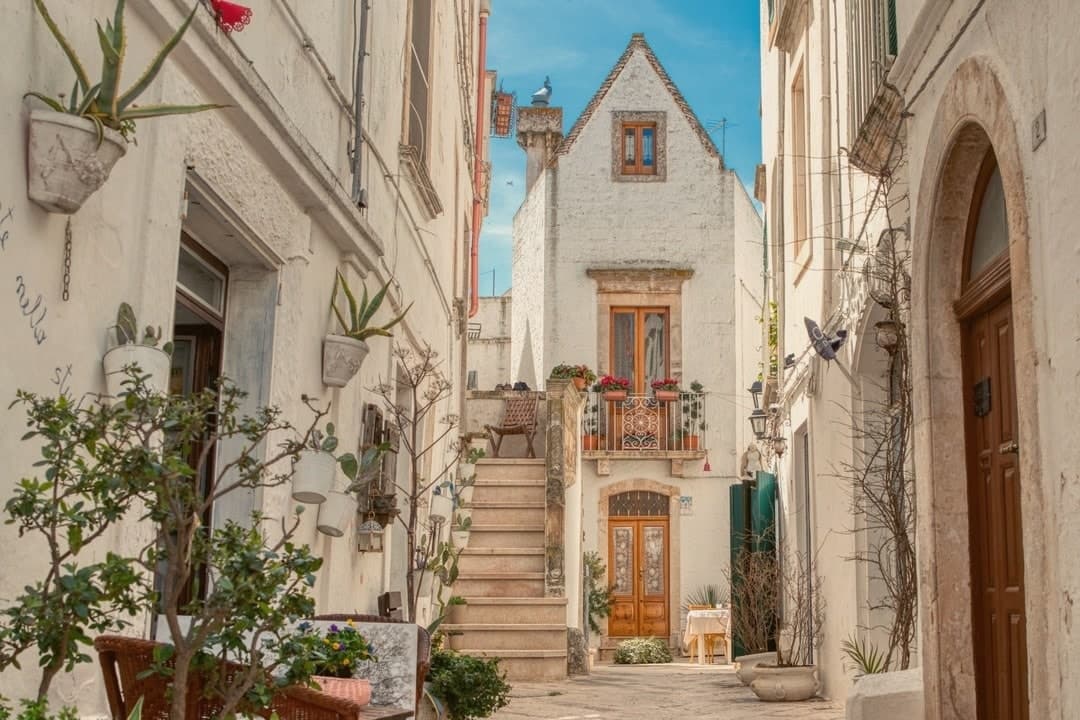
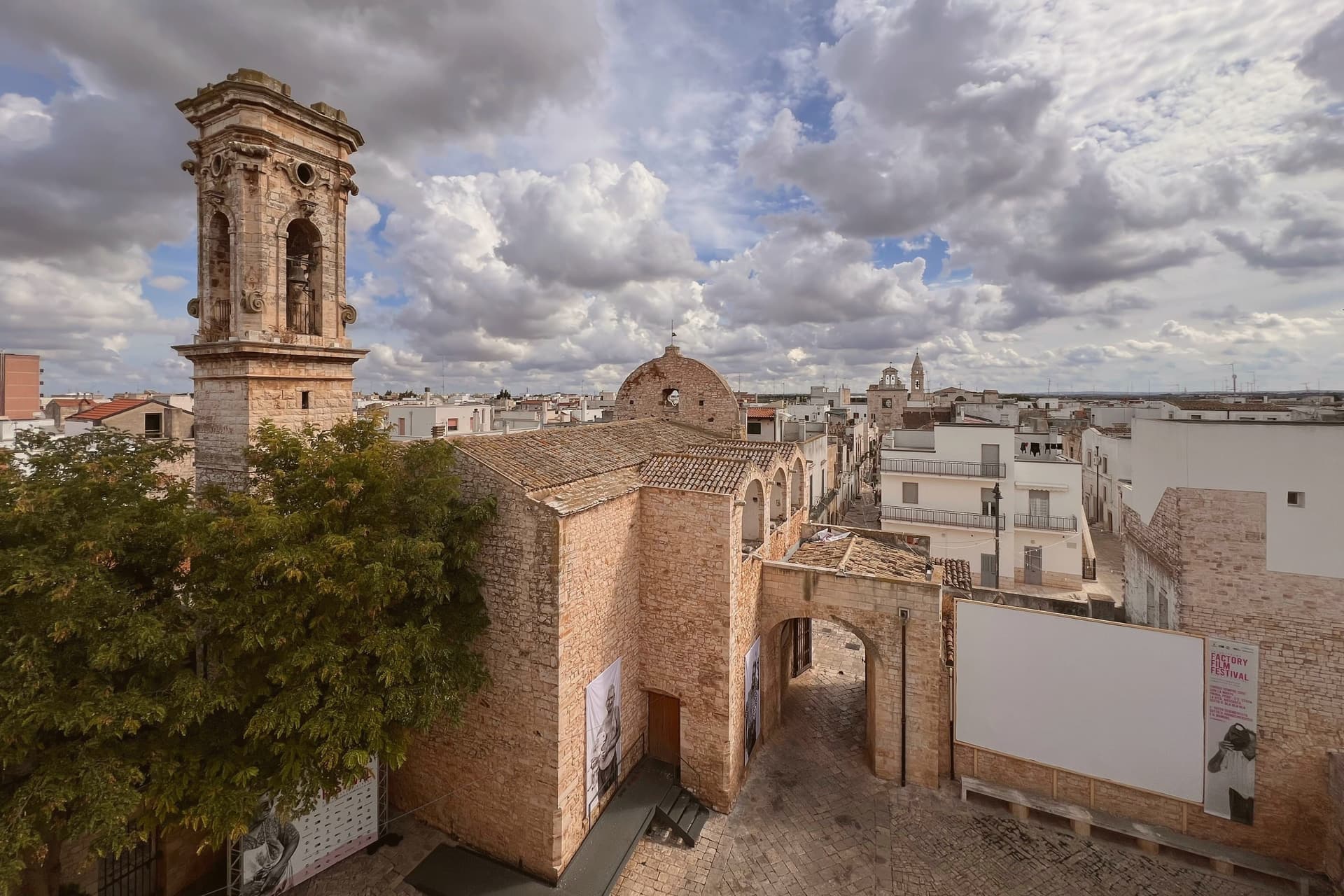
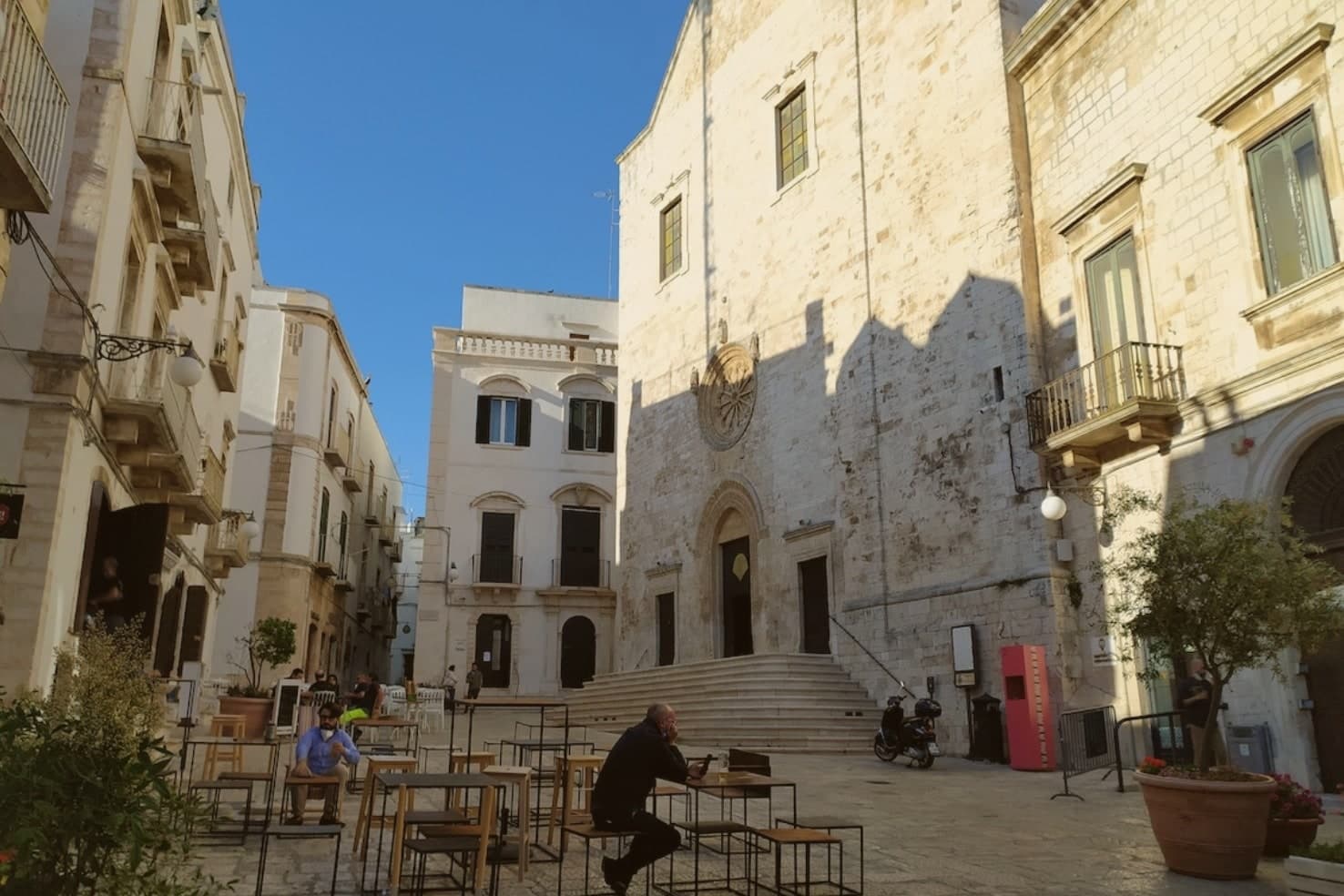
The carnival that grew from it ran across 631 years of plagues, wars, fascism, and pandemics without a break, which is the basis of its claim to being the oldest in Europe. Inside the centro storico the old and the underground meet directly: a karst cave system opens beneath a Trullo-roofed building right in the middle of town, its entrance inside the old centre rather than out on the plateau, with stalactites and a section that served as a WWII refuge shelter. The Chiesa Madre di San Pietro Apostolo, a restored Romanesque church with a 16th-century crypt, anchors the same central piazza as the Palazzo del Balì, and stretches of the medieval walls still hold their line nearby.
The kitchen draws on the same plateau and its neighbours: focaccia barese, orecchiette con cime di rapa, capocollo from the next town over, Primitivo di Manduria carried in from 80 km south, and farinella, the sweet polenta cake made with grape must and chickpea flour that belongs specifically to the carnival calendar. What holds the town together is continuity: a religious procession that turned into satire and has not stopped since, a centre small enough that the cave, the church, and the workshops all sit within a short walk of each other, and a plateau setting that feeds both the table and the traffic passing through toward Alberobello and the Valle d'Itria.
The Sunday letter
Putignano is on our list. Its letter is still to come.
We are writing about all 1,000 of these towns, one at a time, in a free letter every Sunday: the photo, the food, the festa. That is our mission. Sign up and you will be there when Putignano comes up. By Peter & Sophia, from Pietrasanta.
Read on
Putignano in our articles
 The best towns that eat well in the province of Bari6 towns, Putignano among them.
 The best cheese towns within two hours of Lecce8 towns, Putignano among them.
 The 9 best hill towns you can reach by train in the province of Bari9 towns, Putignano among them.
 The 10 best hill towns with a serious restaurant in Puglia10 towns, Putignano among them.
How to get there
From Bari / Brindisi (BRI), about 57 minutes by car.
Naples / Salerno (NAP) is about 3h 46m away.
By car from the centre of Bari 46 minutes, Lecce 1h 44m or Salerno 3h 26m.
There is a railway station in the comune, so you can arrive without a car.
Coming from Bari?
Coming by train into Bari Centrale? Putignano is about 48 minutes away by road.
What to see
Carnevale di Putignano (Dec 26 – Shrove Tuesday)
Five Sunday float processions run from January to Shrove Tuesday. Le Propaggini opens the calendar on 26 December, the Funerale del Carnevale closes it, and 365 bells ring out, one for each day until the next.
Cartapesta workshops + Museo del Carnevale
Many of the workshops are open for visits while the floats take shape. The museum documents the full run of carnival history, plague years, wars, and fascism included.
Grotta del Trullo
The cave sits under a Trullo-roofed building in the old centre, which is where its name comes from. Guided visits take in the stalactites and the section that served as a WWII refuge shelter.
Chiesa Madre di San Pietro Apostolo
Restored Romanesque parish church with a 16th-century crypt. Anchor of the central piazza, with the Palazzo del Balì opposite and a stretch of medieval walls still standing nearby.
Murgia-Puglian kitchen
Focaccia barese, orecchiette con cime di rapa, capocollo di Martina Franca, Primitivo di Manduria from 80 km south, and farinella, the sweet polenta cake tied to the carnival calendar.
The slow-trip planner
Building a trip? Find where Putignano fits in a slow Italy circuit.
Answer five questions. We will shape a geographically coherent slow trip from the 1,000 Italian towns most travelers skip. Yours to save and share.
We recommend
Where to eat
Not our picks, but places the guides put their name to: a Michelin star, a Gambero Rosso fork, a Slow Food snail, a Michelin Key for the hotels. Worth a table, a counter, or a night when you pass through.
Angelo SabatelliRistorante
Angelo Sabatelli carries one Michelin star, two Gambero Rosso forks (85/100), plus a place in L'Espresso's Top 300.
Botteghe AnticheTrattoria
Botteghe Antiche has two Gambero Rosso prawns and a Slow Food snail.
Through the year
What happens here
Feasts and festivals that come back year after year. We give the month rather than the date, because the date moves and the month rarely does. Check with the source before you plan a journey around one.
Carnevale di Putignanopatron saint's feast
usually held in February. SalentoVacanza - Eventi e Sagre in Puglia calendario
Living here
- Population 25,935
- Commuter belti
- Pharmacy in town
- High school within a 30-minute drive
- Train station in the comune
- Nearest airport Bari / Brindisi, 57 min drive
- Regional capital Bari, 46 min drive
Common questions
- What is Putignano known for?
- Putignano has run its carnival continuously since 1394, the longest unbroken run in Europe, staged in a Murgia town with a karst cave threaded beneath its own centro storico.
- Where is Putignano?
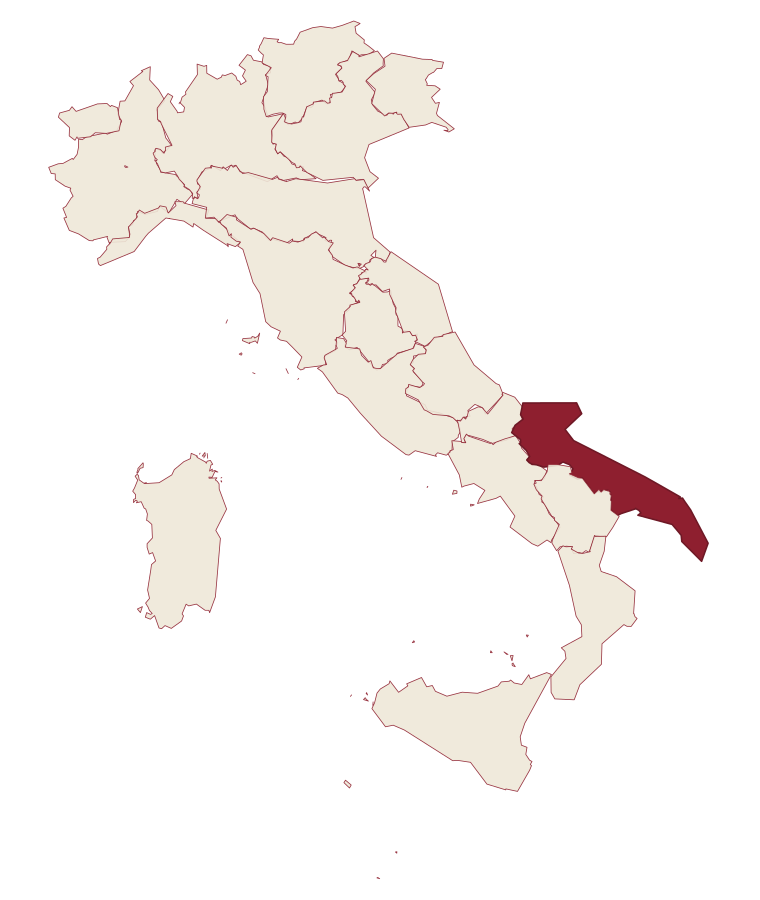
- Putignano is a comune in the province of Bari, in Apulia, at 372 meters above sea level.
- What is the nearest airport to Putignano?
- Bari / Brindisi (BRI), about 57 minutes by car.
- Can you get to Putignano without a car?
- Yes. There is a railway station in the comune, so you can arrive by train.
- How long is the drive from Bari to Putignano?
- About 46 minutes by car.
- When is the best time to visit Putignano?
- Best in Feb–Jun, Sep–Oct. July is the warmest month, averaging 32 degrees, and March the wettest, with about 10 rain days.
- Is there a sagra or a festival in Putignano?
- Yes. Carnevale di Putignano. February is when the first of them falls.
- Which other towns are like Putignano?
- Gravina in Puglia, Casamassima and Assisi.
- How many people live in Putignano?
- 25,935 at the 2023 count.
Tags & datadesignations · numbers · sources
The numbers
- Elevation: 372 m
- Population: 25,935
- Surface area: 100.16 km²
These figures were compiled from public directories: ISTAT, OpenStreetMap and Wikidata, and from the official listings of the guides named on this page. Town details change; verify with official sources before you travel.
Similar
Towns like Putignano
Gravina in Puglia
Province: Bari
both on the Murge · both over 10,000 people
Casamassima
Province: Bari
both over 10,000 people · both hill towns
Assisi
Province: Perugia
both over 10,000 people · both hill towns
Bra
Province: Cuneo
both over 10,000 people · both hill towns
Ariccia
Province: Roma
both over 10,000 people · both hill towns
Venaria Reale
Province: Torino
both over 10,000 people · both hill towns