
Sicily · Siracusa
Palazzolo Acreide
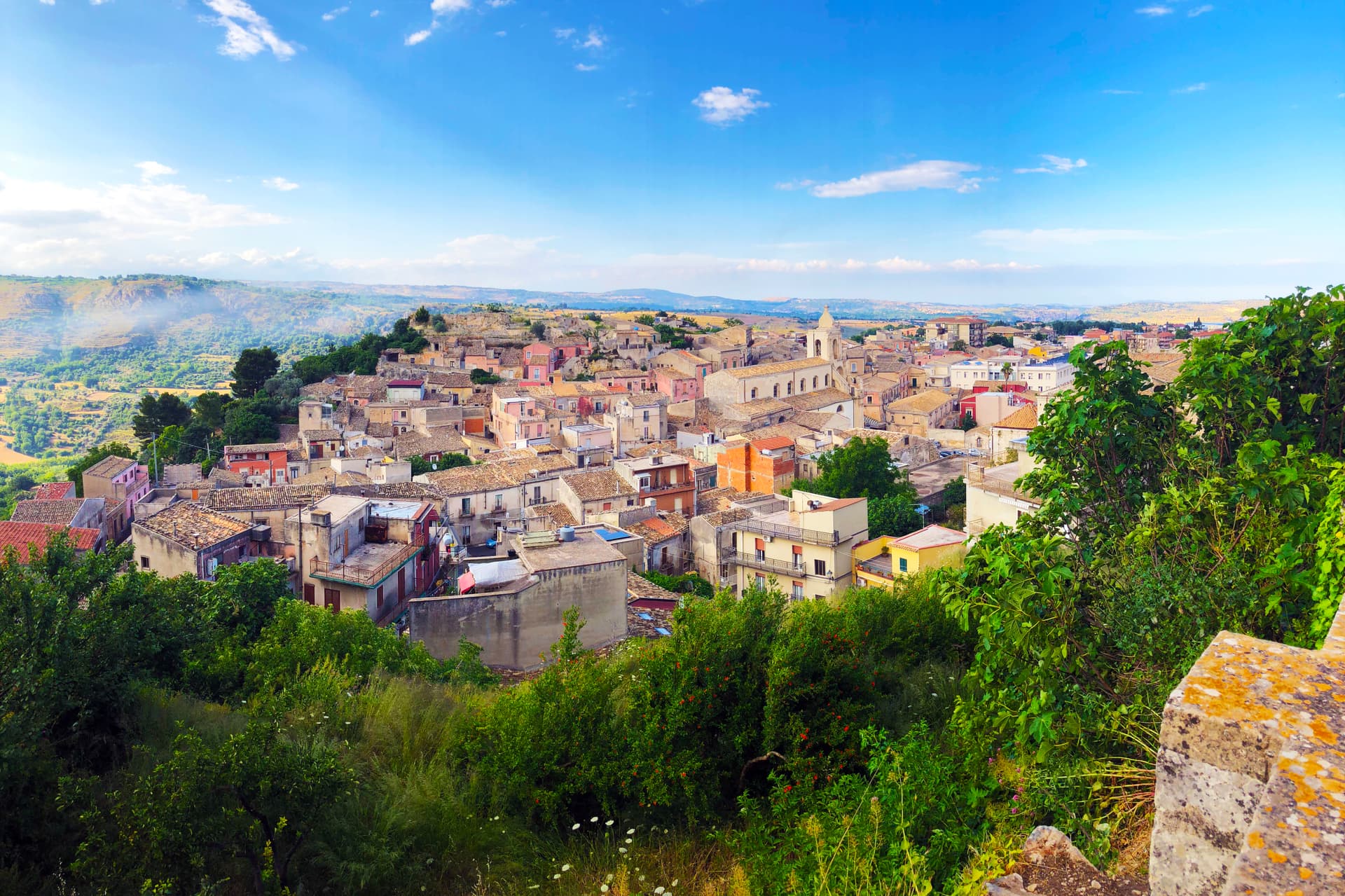
An 8,000-resident hilltop town on the Iblei plateau at 670m, rebuilt entirely in late Baroque after the 1693 earthquake and founded over the Greek Akrai colony in 664 BC, with a Greek theatre and a cluster of rock carvings unlike anything else nearby.
Known for
UNESCO VAL DI NOTO + GREEK AKRAI
Late-Baroque rebuild after the 1693 earthquake, sitting directly on top of the intact Greek colony of Akrai. Inscribed on the Val di Noto UNESCO listing in 2002, and the only one of the eight towns with a major Greek substrate beneath it.
I SANTONI CYBELE SANCTUARY
Twelve life-size rock-carved bas-relief figures of the Phrygian goddess Cybele, dated 4th-3rd century BC. The only sanctuary of its kind anywhere in the Greek-Roman Mediterranean.
CITTÀ DEL TARTUFO
Iblei plateau black truffle, harvested October to December, distinctive to this part of the region. Marked with a Slow Food festival in November.
SALSICCIA PALAZZOLESE
Fennel-spiced local sausage, registered as a Slow Food Presidium. The Sagra della Salsiccia in early August is the year's secondary food event.
When to visit
Best · Apr–Jun, Sep–Oct
- J11°
- F13°
- M13°
- A16°
- M22°
- J28°
- J32°
- A31°
- S26°
- O22°
- N17°
- D13°
- Best
- Hot or crowded
- Quiet
- Mostly closed
Daytime averages, 2020–2024. Weather data by Open-Meteo.com.
The festa: Paolo di Tarso, 29 June
Why come
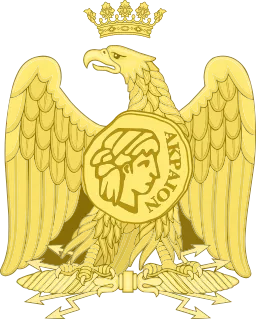
The Greek city was founded by Syracuse in 664 BC as an inland defensive outpost, set to guard the Iblei plateau on the route between Syracuse and Gela. That siting explains why the town carries a Greek substrate no other Val di Noto town has: the theatre, the quarries turned catacombs, and the rock sanctuary all belong to the outpost, not to the later town built above it. The quarries themselves, the latomie, were cut for stone and only afterward pressed into service as Christian burial places, and the surrounding city walls and necropolis extend the ancient site well past the theatre alone.
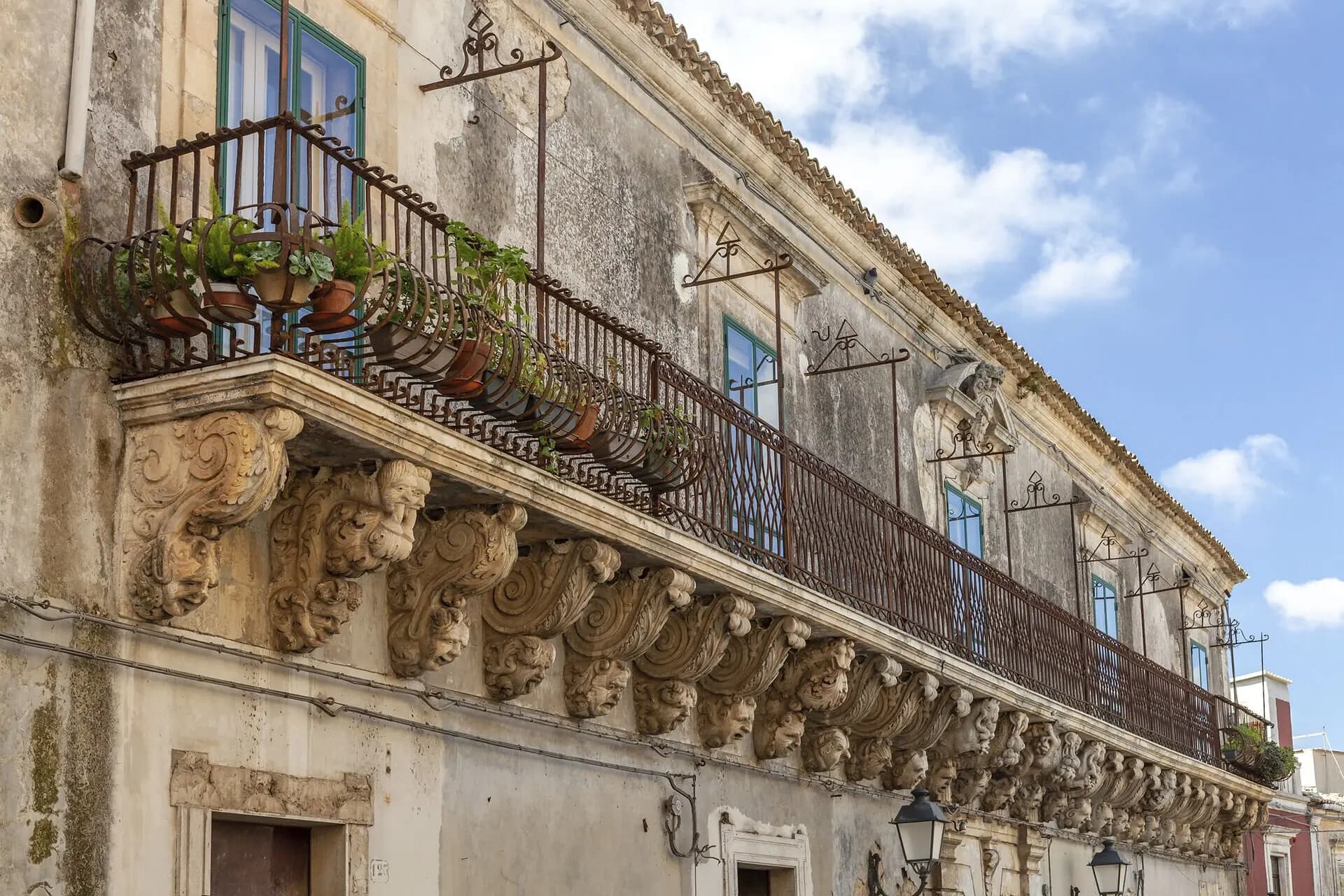
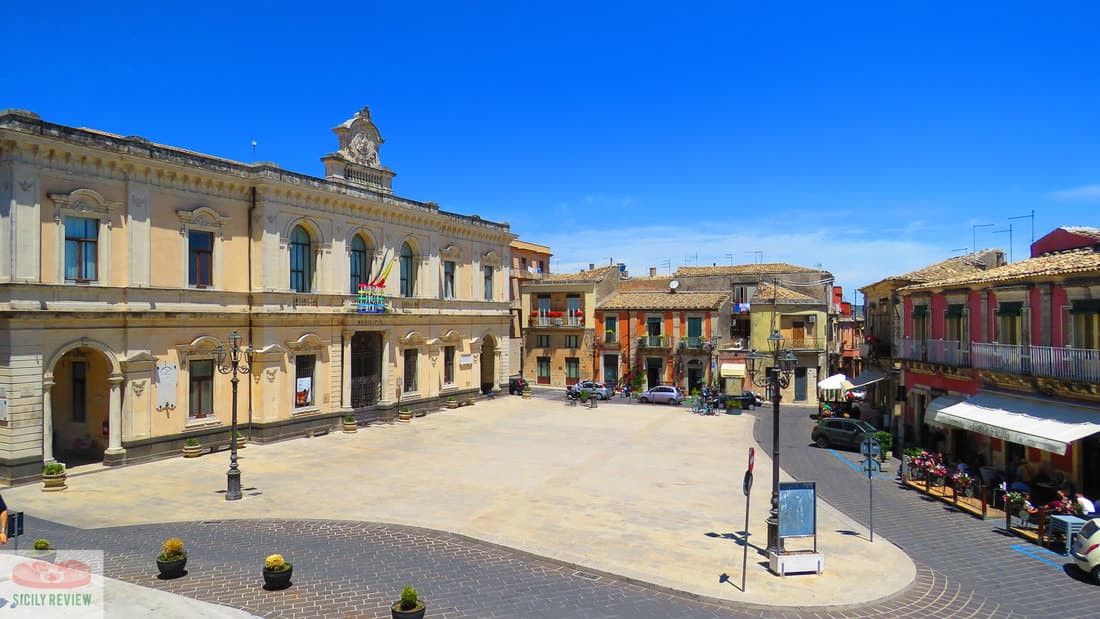
The 1693 earthquake destroyed the medieval settlement outright, collapsing three-quarters of its buildings and killing sixty percent of the population. The rebuilding over the following fifty years laid out wide, regular streets and raised palazzi in honey-coloured limestone, with churches given concave façades and elaborate stairways. Beyond the two great set-pieces already named, the Basilica di San Pietro and the Palazzo Iudica-Cafici with its stone-carved balconies round out the Baroque core that UNESCO's inscription emphasizes, and together the two churches, the basilica, and the palazzo form the honey-coloured centre that sits directly above the buried Greek outpost.
Palazzolo also holds a place on the Borghi più belli d'Italia list, and its table carries the same plateau character noted above, extended by pasta with broccolo siciliano and ricotta salata alongside the sausage and truffle. The Festa di San Paolo in late June, with fireworks on the night of the 28th and 29th, is the year's main event. What sits on the plateau today is a town built twice: once as a Greek outpost guarding a route, once by survivors rebuilding after the ground gave way, and the lower ancient layer and the upper Baroque layer have never fully merged into one story.
The Sunday letter
We haven’t written Palazzolo Acreide’s letter yet.
One town every Sunday, with the photo, the food, the festa. Be there when this one comes up. Free, by Peter & Sophia from Pietrasanta.
How to get there
From Catania (CTA), about 1h 16m by car.
By car from the centre of Palermo 3h 38m.
There is a railway station in the comune, so you can arrive without a car.
Coming by train into Siracusa? Palazzolo Acreide is about 46 minutes away by road.
What to see
Teatro Greco di Akrai
600 seats cut into the hillside, acoustics intact, the theatre is still used for summer Greek-drama festivals staged in its original setting rather than a reconstruction.
I Santoni (Cybele rock sanctuary)
The figures sit carved directly into the cliff face, cult images of Cybele set into rock rather than housed in a museum, just outside the modern centre.
Chiesa di San Sebastiano + Chiesa di San Paolo (UNESCO)
Concave façades, curved staircases climbing to the doors, organ-equipped twin towers. Built roughly a decade apart in the rebuilding years, they read as a matched pair from the street below.
Latomie + Akrai archaeological zone
Quarries were later reused as Christian catacombs. The surviving city walls and necropolis extend the site well beyond the theatre itself.
Salsiccia palazzolese + Iblei truffle
The sausage and the truffle are joined on local tables by Iblei DOP olive oil and Nero d'Avola from the hills surrounding the town.
The slow-trip planner
Building a trip? Find where Palazzolo Acreide fits in a slow Italy circuit.
Answer five questions. We will shape a geographically coherent slow trip from the 1,000 Italian towns most travelers skip. Yours to save and share.
We recommend
Where to eat
Not our picks, but places the guides put their name to: a Michelin star, a Gambero Rosso fork, a Slow Food snail, a Michelin Key for the hotels. Worth a table, a counter, or a night when you pass through.
AndreaRistorante
Andrea carries a Michelin Bib Gourmand, a Slow Food snail, plus a Gambero Rosso listing.
Estro RestaurantRistorante
One Gambero Rosso fork (78/100), at Estro Restaurant.
Lo Scrigno dei SaporiRistorante
Lo Scrigno dei Sapori carries a Slow Food snail.
Trattoria del GalloRistorante
A Slow Food snail, at Trattoria del Gallo.
Through the year
What happens here
Feasts and festivals that come back year after year. We give the month rather than the date, because the date moves and the month rarely does. Check with the source before you plan a journey around one.
Agrimontana – I Sapori degli Ibleifood festival
usually held in October. sagritaly.com
Living here
- Population 8,101
- Off the beaten pathi
- Pharmacy in town
- High school within a 30-minute drive
- Train station in the comune
- Nearest airport Catania, 1 h 16 min drive
- Regional capital Palermo, 3 h 38 min drive
Common questions
- What is Palazzolo Acreide known for?
- Palazzolo Acreide is an 8,000-resident hilltop town on the Iblei plateau at 670m, rebuilt entirely in late Baroque after the 1693 earthquake and founded over the Greek Akrai colony in 664 BC, with a Greek theatre and a cluster of rock carvings unlike anything else nearby.
- Where is Palazzolo Acreide?
- Palazzolo Acreide is a comune in the province of Siracusa, in Sicily.
- What is the nearest airport to Palazzolo Acreide?
- Catania (CTA), about 1h 16m by car.
- Can you get to Palazzolo Acreide without a car?
- Yes. There is a railway station in the comune, so you can arrive by train.
- How long is the drive from Palermo to Palazzolo Acreide?
- About 3h 38m by car.
- When is the best time to visit Palazzolo Acreide?
- Best in Apr–Jun, Sep–Oct. July is the warmest month, averaging 32 degrees, and September the wettest, with about 11 rain days.
- Is there a sagra or a festival in Palazzolo Acreide?
- Yes. Agrimontana – I Sapori degli Iblei. October is when the first of them falls.
- Which other towns are like Palazzolo Acreide?
- Cammarata, Lagonegro and Padula.
- How many people live in Palazzolo Acreide?
- 8,101 at the 2023 count.
Tags & datadesignations · numbers · sources
The numbers
- Elevation: 670 m
- Population: 8,101
- Surface area: 87.54 km²
These figures were compiled from public directories: ISTAT, OpenStreetMap and Wikidata, and from the official listings of the guides named on this page. Town details change; verify with official sources before you travel.
Featured on
Palazzolo Acreide appears on this themed pick from our Collections:
Similar
Towns like Palazzolo Acreide
Cammarata
Province: Agrigento
both between 3,000 and 10,000 people · both high up, between 600 and 1,000 metres
Lagonegro
Province: Potenza
both between 3,000 and 10,000 people · both high up, between 600 and 1,000 metres
Padula
Province: Salerno
both between 3,000 and 10,000 people · both high up, between 600 and 1,000 metres
Sterzing
Province: Bolzano
both between 3,000 and 10,000 people · both high up, between 600 and 1,000 metres
Agira
Province: Enna
both between 3,000 and 10,000 people · both high up, between 600 and 1,000 metres
Nicolosi
Province: Catania
both between 3,000 and 10,000 people · both high up, between 600 and 1,000 metres
🏛️ UNESCO
More UNESCO towns in Sicily
Caltagirone
Province: Catania
Sicily's ceramic capital at 611 meters on the Erei ridge, 142 majolica-tiled steps to Santa Maria del Monte and a Val di Noto UNESCO baroque rebuild.
Catania
Province: Catania
Sicily's second city and the cultural anchor of the Ionian coast, a UNESCO late-Baroque centro storico rebuilt in lava-black stone after the 1693 earthquake, sitting at the foot of Etna with a 17th-century elephant fountain (U Liotru) as its civic symbol.
Cefalù
Province: Palermo
A Norman cathedral at the foot of a 270-meter rock on the Tyrrhenian coast, founded in 1131.
Lipari
Province: Messina
The largest Aeolian island and the only municipality that administers six of the seven, with a clifftop castle citadel rising above two harbors.
Modica
Province: Ragusa
A vertical Baroque city in the Hyblean Mountains, rebuilt from the 1693 earthquake and home to a chocolate recipe brought from Aztec Mexico.