
Friuli-Venezia Giulia · Gorizia
Gorizia
Border city below the Julian Alps, split from its neighbor by a 1947 wall and rejoined only after decades of division.
- Best time
- Apr–Oct
- By car
- 41 min from Udine
- By train
- Station in the comune
- Population
- 33,506
Known for
GO! 2025
European Capital of Culture jointly held with Nova Gorica in 2025, the first cross-border title in the program's history.
THE IRON CURTAIN
Divided from Nova Gorica by a wall built in 1947, reunified at Piazza della Transalpina in 2004 after Slovenia entered the EU.
COUNTS OF GORIZIA
Independent county of Gorizia, ruled from the castle hill from 1127 to 1500, before passing to the Habsburgs for four centuries.
When to visit
Best · Apr–Oct
- J9°
- F11°
- M14°
- A17°
- M21°
- J26°
- J29°
- A29°
- S24°
- O19°
- N13°
- D9°
- Best
- Hot or crowded
- Quiet
- Mostly closed
Daytime averages, 2020–2024. Weather data by Open-Meteo.com.
The festa: Ilario di Aquileia, 16 March
Why come
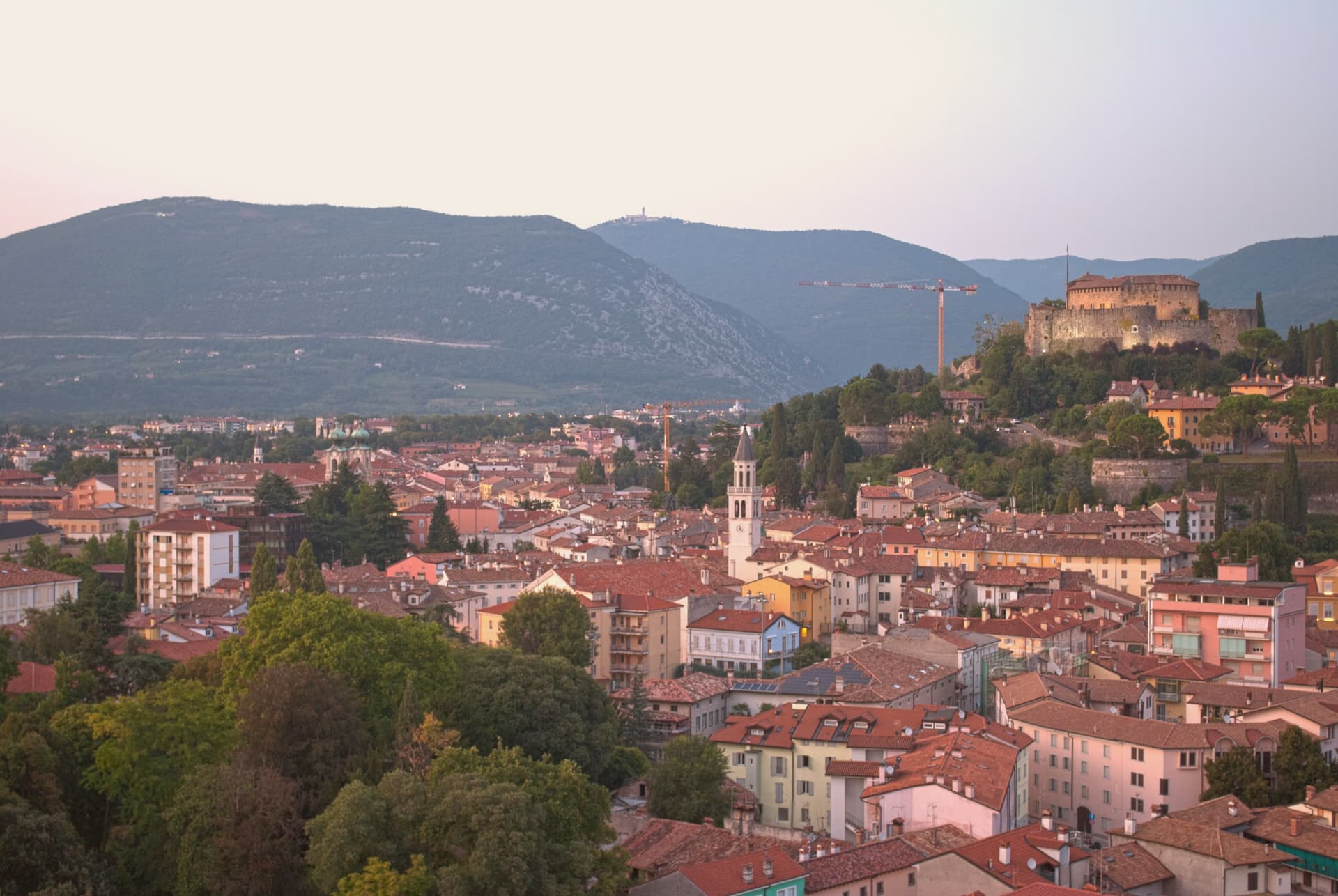
Gorizia sits at the foot of the Julian Alps, on the Slovenian border. The Counts of Gorizia held the town as an independent county from 1127 until 1500, when it passed to the Habsburgs, who kept it until 1918. Annexed to Italy after World War I, the city lost part of its territory to Yugoslavia in 1947, when a wall went up that became one of the symbols of the Iron Curtain, cutting the border square in front of the railway station the Austrians had built in 1906 into two halves.
Schengen lifted the border in 2007, and in 2025 Gorizia and Nova Gorica together held the joint cultural title that marked the year, the first cross-border holders in the program's history. The city itself divides between the medieval upper town, Borgo Castello, rising around the eleventh-century castle, and the plain below, where the Isontino stretches out to produce Collio and Carso wines. The rebozzato cafés on Corso Verdi still serve in Friulian, Italian, Slovenian, and German, a hangover from a border that has moved but never quite disappeared. A city built on a fault line, first political, then physical, now a shared cultural address for two towns that were once one and then were forced apart.
The Sunday letter
Gorizia is on our list. Its letter is still to come.
We are writing about all 1,000 of these towns, one at a time, in a free letter every Sunday: the photo, the food, the festa. That is our mission. Sign up and you will be there when Gorizia comes up. By Peter & Sophia, from Pietrasanta.
Read on
Gorizia in our articles
 The best hill towns that eat well in Friuli-Venezia Giulia6 towns, Gorizia among them.
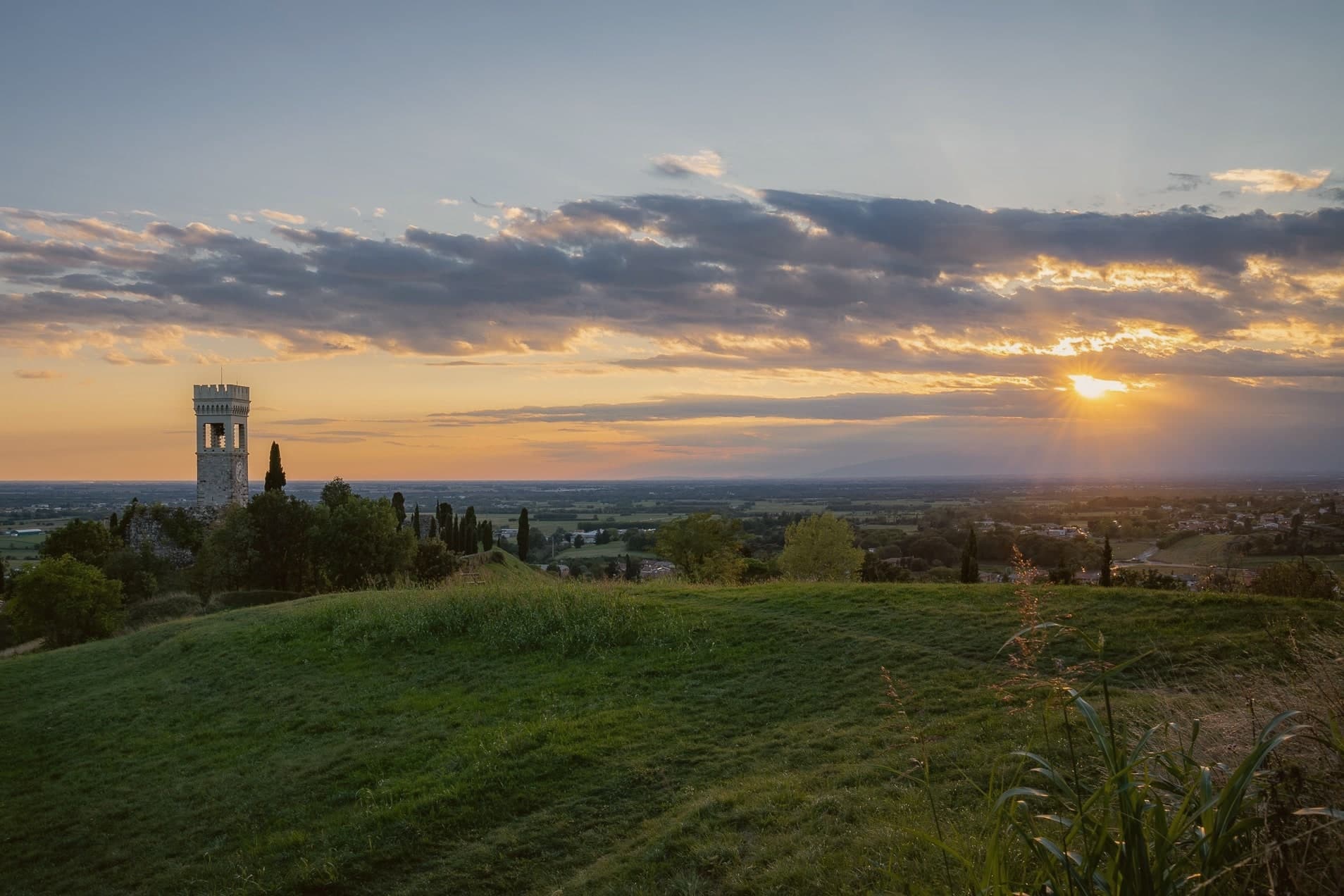 The best hill towns within 45 minutes of Udine6 towns, Gorizia among them.
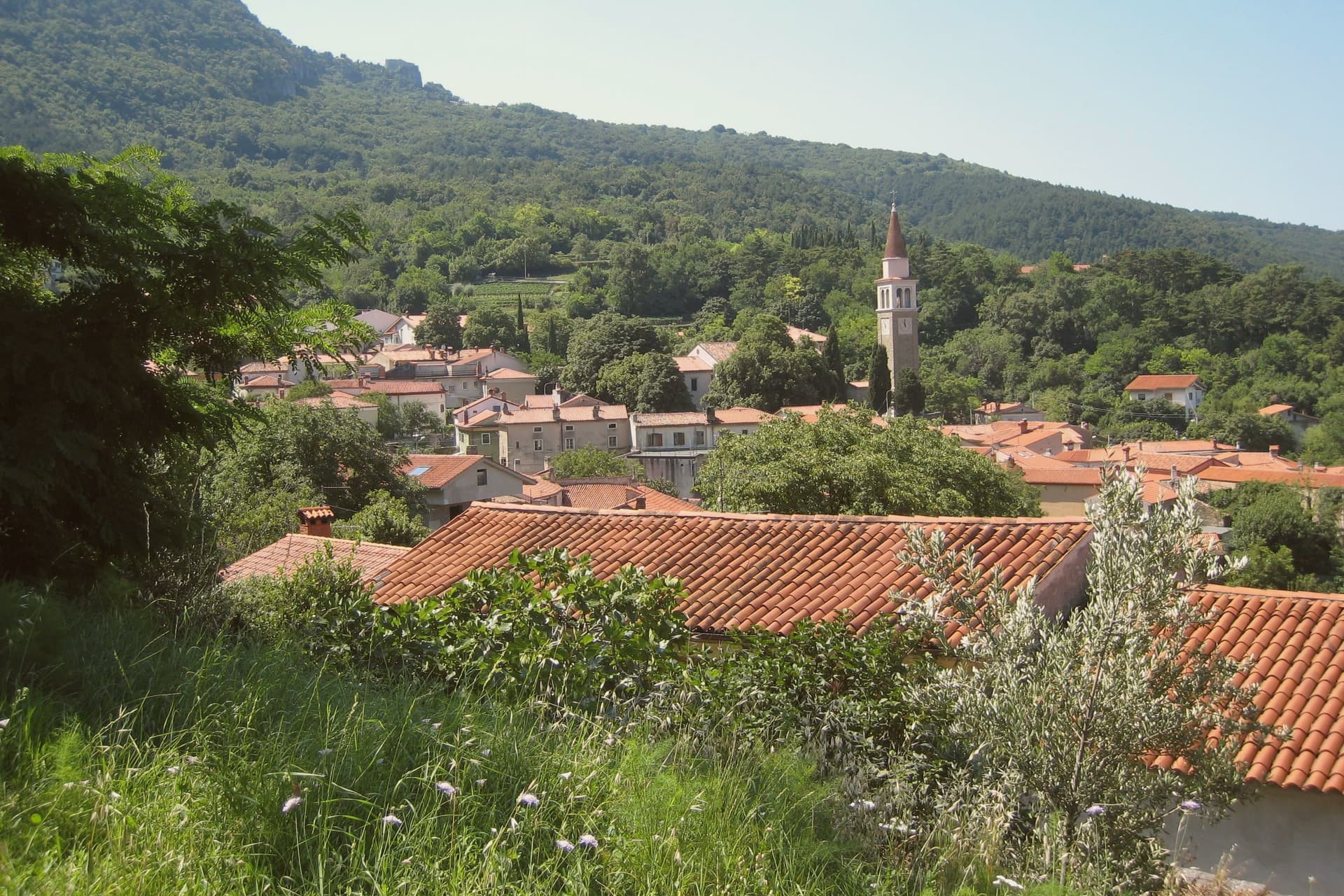 The best hill towns within 90 minutes of Trieste6 towns, Gorizia among them.
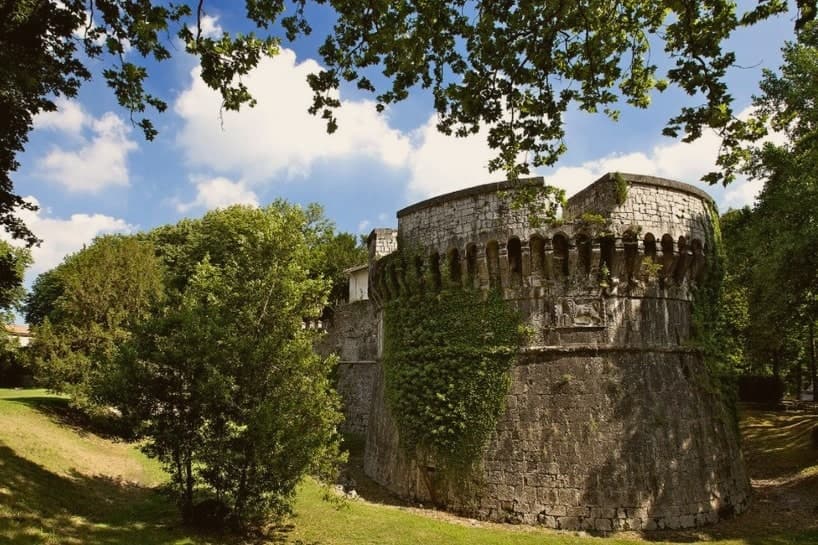 The best towns you can reach by train that eat well in Friuli-Venezia Giulia6 towns, Gorizia among them.
How to get there
From Venice (TSF), about 1h 34m by car.
Verona (VRN) is about 2h 47m away.
By car from the centre of Udine 41 minutes or Trieste 51 minutes.
There is a railway station in the comune, so you can arrive without a car.
Coming from Venice?
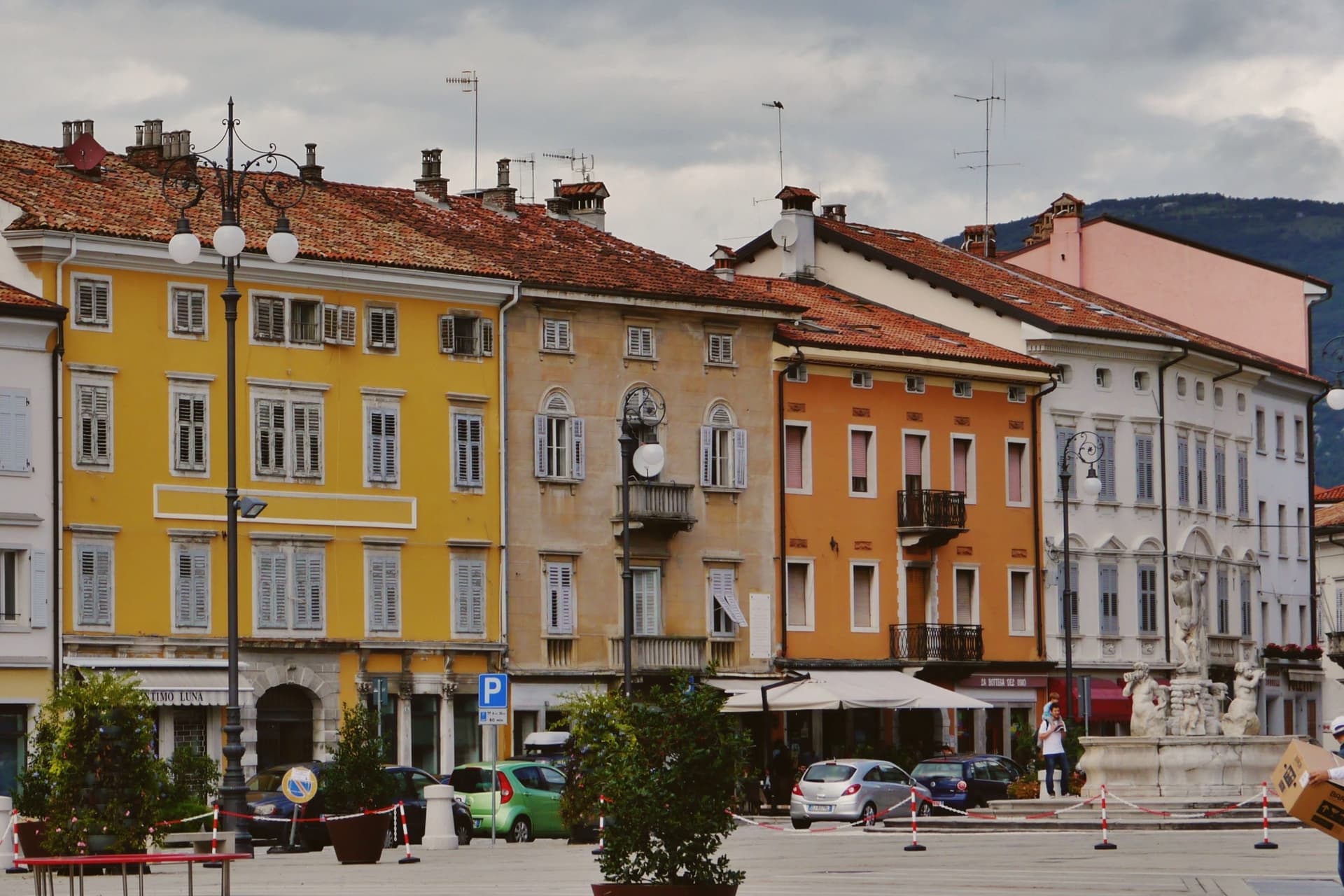
Coming by train into Trieste Centrale? Gorizia is about 49 minutes away by road.
What to see
Castello di Gorizia
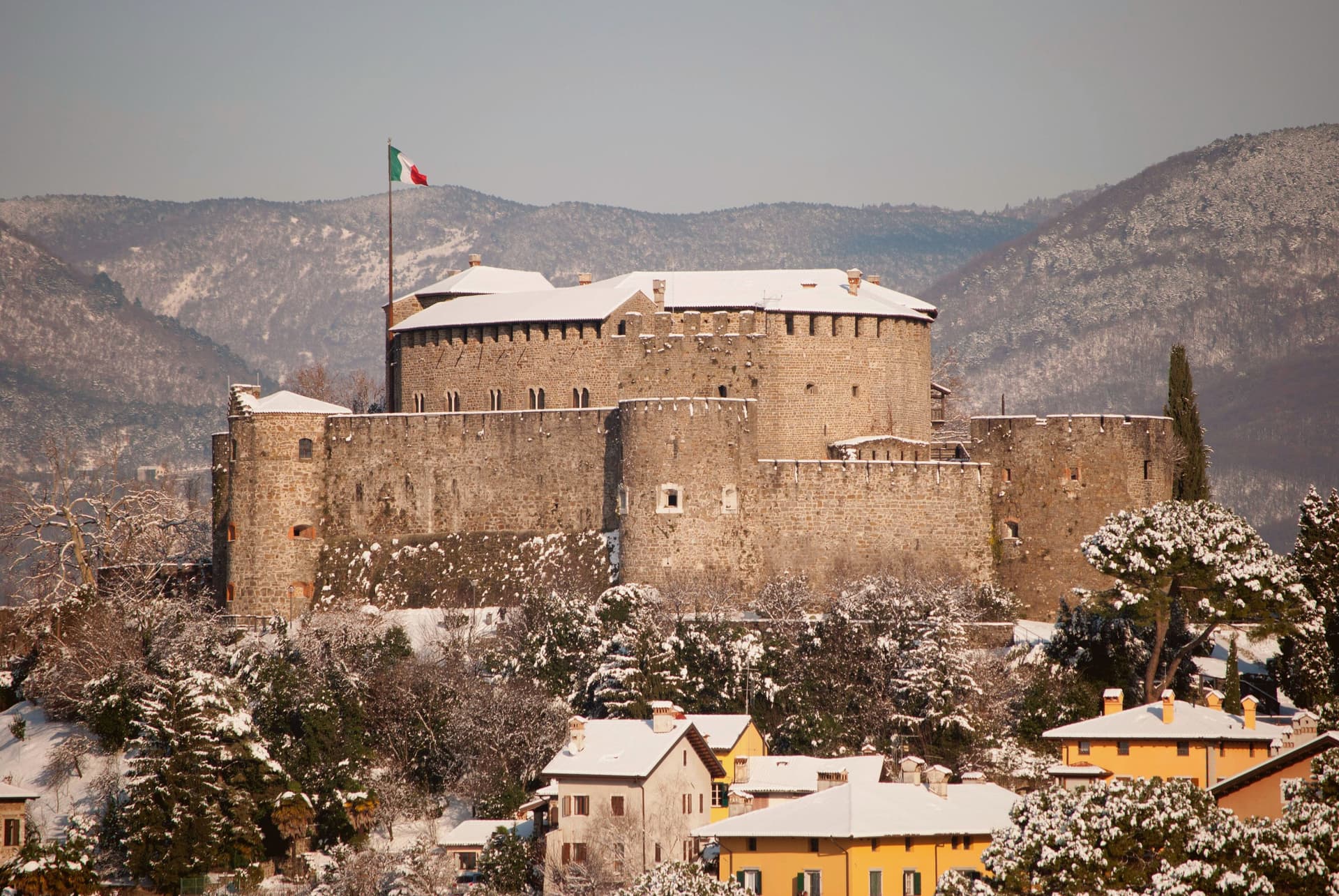
Eleventh-century castle on the hill above the city, restored after World War I damage, with museum rooms and ramparts open to walk.
Borgo Castello
Medieval upper town inside the castle ramparts, the original nucleus of the city before it spread onto the plain below.
Piazza della Transalpina (Trg Evrope)
Border square cut in two by the 1947 line, reunited in 2004, with the old dividing line still marked by a strip of pavement tile. Served as the inauguration stage of European Capital of Culture.
Cattedrale dei Santi Ilario e Taziano
Fourteenth-century cathedral rebuilt after World War I bombardment, holding works by Antonio Paroli and the Holy Shroud copy of 1647.
Musei Provinciali
Provincial museums in Palazzo Coronini and Palazzo Attems Petzenstein, covering Gorizia history, the Habsburg period, and the World War I Isonzo front.
The slow-trip planner
Building a trip? Find where Gorizia fits in a slow Italy circuit.
Answer five questions. We will shape a geographically coherent slow trip from the 1,000 Italian towns most travelers skip. Yours to save and share.
We recommend
Where to eat
Not our picks, but places the guides put their name to: a Michelin star, a Gambero Rosso fork, a Slow Food snail, a Michelin Key for the hotels. Worth a table, a counter, or a night when you pass through.
Alla LunaTrattoria
A Gambero Rosso listing, at Alla Luna.
Chincaglieria GastronomicaBistrot
Chincaglieria Gastronomica carries two Gambero Rosso tables.
RosenbarRistorante
A Slow Food snail, at Rosenbar.
Vecia GoriziaTrattoria
Vecia Gorizia holds one Gambero Rosso prawn.
Through the year
What happens here
Feasts and festivals that come back year after year. We give the month rather than the date, because the date moves and the month rarely does. Check with the source before you plan a journey around one.
Flavors of the Frontierfood festival
usually held in September. sagritaly.com
Living here
- Population 33,506
- A local hubi
- Pharmacy in town
- High school within a 30-minute drive
- Train station in the comune
- Nearest airport Venice, 1 h 34 min drive
- Regional capital Trieste, 51 min drive
Common questions
- What is Gorizia known for?
- Border city below the Julian Alps, split from its neighbor by a 1947 wall and rejoined only after decades of division.
- Where is Gorizia?
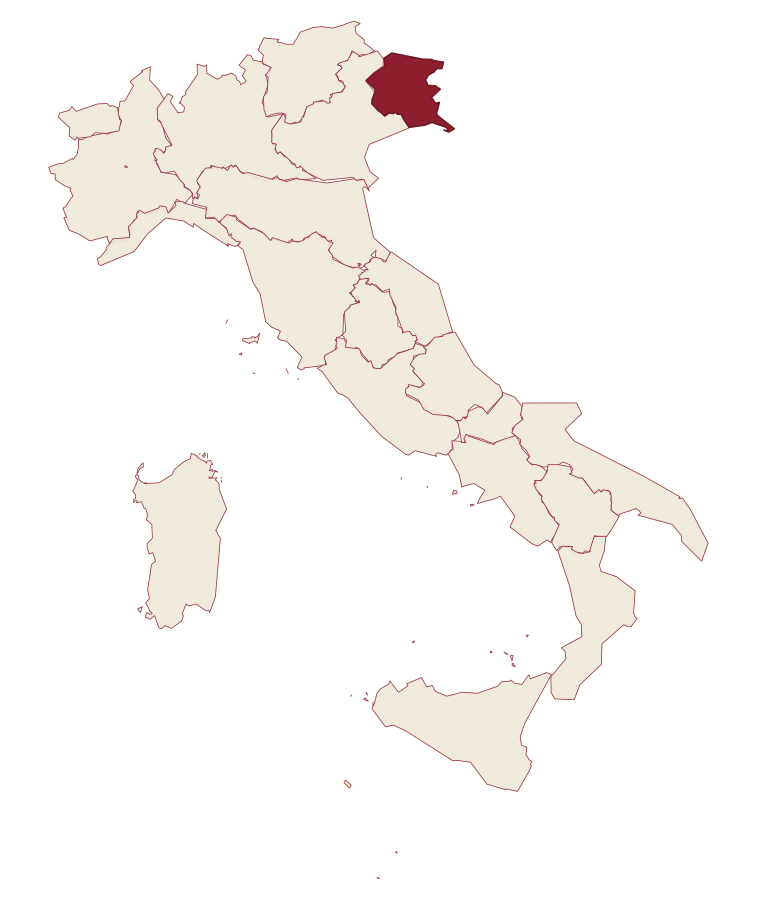
- Gorizia is a comune in the province of Gorizia, in Friuli-Venezia Giulia, at 84 meters above sea level.
- What is the nearest airport to Gorizia?
- Venice (TSF), about 1h 34m by car.
- Can you get to Gorizia without a car?
- Yes. There is a railway station in the comune, so you can arrive by train.
- How long is the drive from Udine to Gorizia?
- About 41 minutes by car.
- When is the best time to visit Gorizia?
- Best in Apr–Oct. July is the warmest month, averaging 29 degrees, and May the wettest, with about 16 rain days.
- Is there a sagra or a festival in Gorizia?
- Yes. Flavors of the Frontier. September is when the first of them falls.
- Which other towns are like Gorizia?
- Alba, Pontedera and Ascoli Piceno.
- How many people live in Gorizia?
- 33,506 at the 2023 count.
Tags & datadesignations · numbers · sources
Recognised as
The numbers
- Elevation: 84 m
- Population: 33,506
- Surface area: 41.26 km²
These figures were compiled from public directories: ISTAT, OpenStreetMap and Wikidata, and from the official listings of the guides named on this page. Town details change; verify with official sources before you travel.
Similar
Towns like Gorizia
Alba
Province: Cuneo
both inland, away from the coast · both over 10,000 people
Pontedera
Province: Pisa
both inland, away from the coast · both over 10,000 people
Ascoli Piceno
Province: Ascoli Piceno
both inland, away from the coast · both over 10,000 people
Lucca
Province: Lucca
both inland, away from the coast · both over 10,000 people
Terni
Province: Terni
both inland, away from the coast · both over 10,000 people
Trento
Province: Trento
both inland, away from the coast · both over 10,000 people
🍷 Città del Vino
More Città del Vino towns in Friuli-Venezia Giulia
Aquileia
Province: Udine
A village of 3,128 on a Roman capital of 100,000, where the largest paleochristian mosaic floor in the West runs under a Romanesque basilica.
Cervignano del Friuli
Province: Udine
The capital of Bassa Friulana on the Ausa river, an inland river port for Aquileia in 181 BC and a railway junction since 1860.
Cividale del Friuli
Province: Udine
The Lombard capital on the Natisone, founded as Forum Iulii by Julius Caesar, where an eighth-century chapel still holds six stucco saints.
Cormons
Province: Gorizia
The capital of the Collio wine zone at the foot of the Friulian-Slovenian hills.
Gradisca d'Isonzo
Province: Gorizia
A 1479 Venetian bastion on the right bank of the Isonzo, with seven towers, twenty-meter walls, and a Habsburg court inside.