
Veneto · Belluno
Borgo Valbelluna
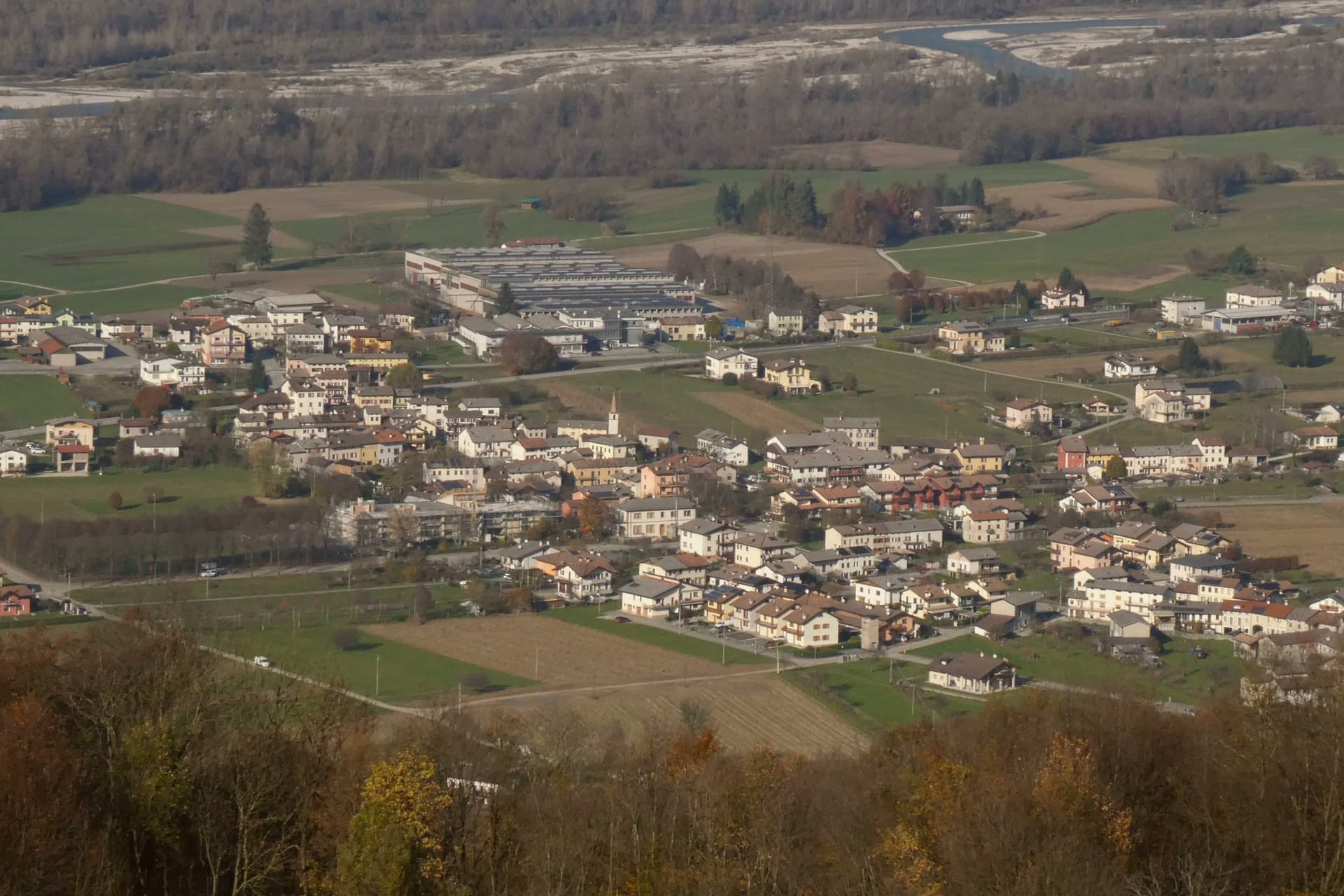
Veneto's youngest comune, a 13,410-resident fusion of three lower-Belluno towns formed in 2019, wrapped around an old borgo in the pre-Dolomite Piave valley.
- Best time
- May–Sep
- By car
- 1 h 34 min from Venice
- Population
- 13,410
Known for
MEL BPB + VENETIAN PIAZZA
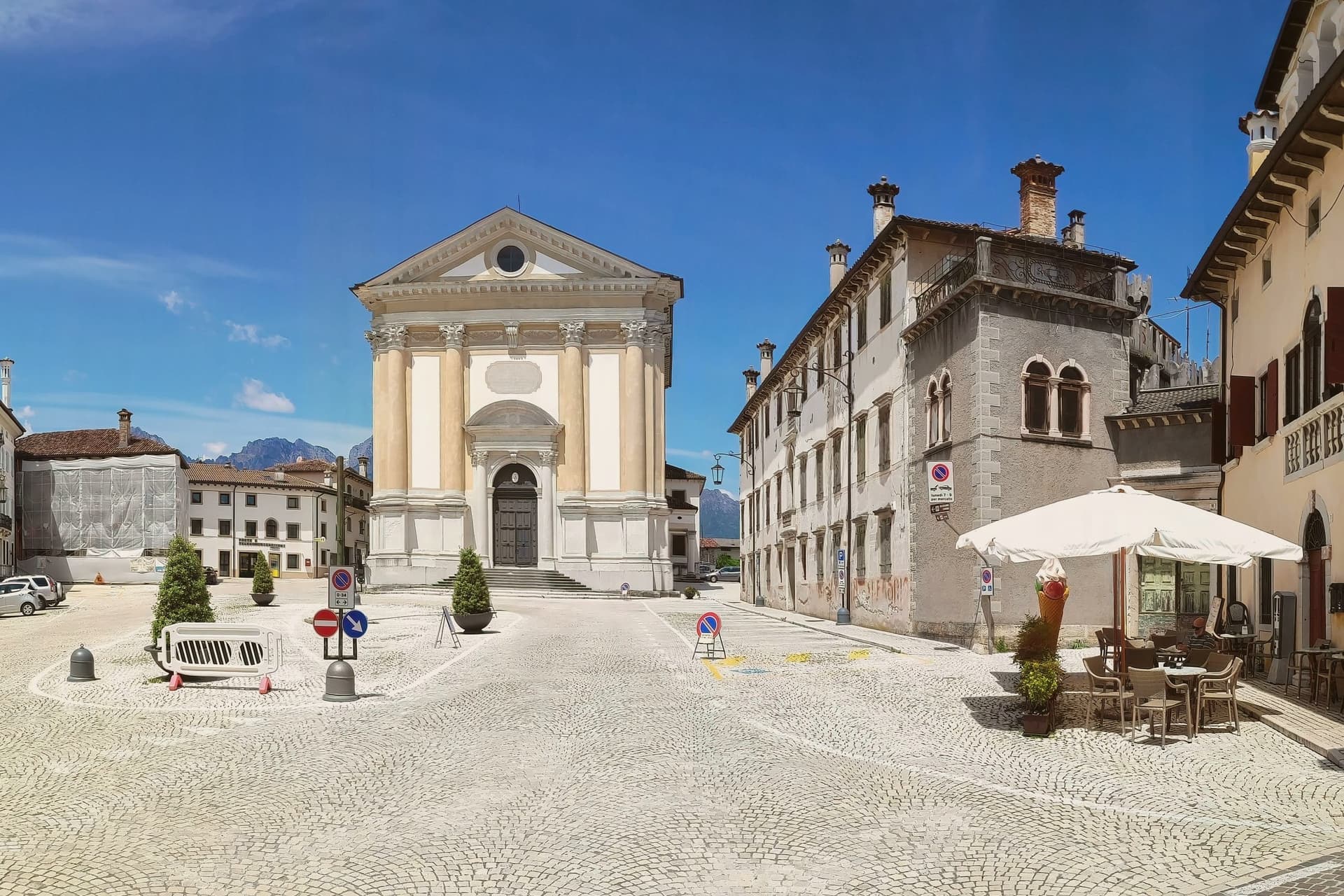
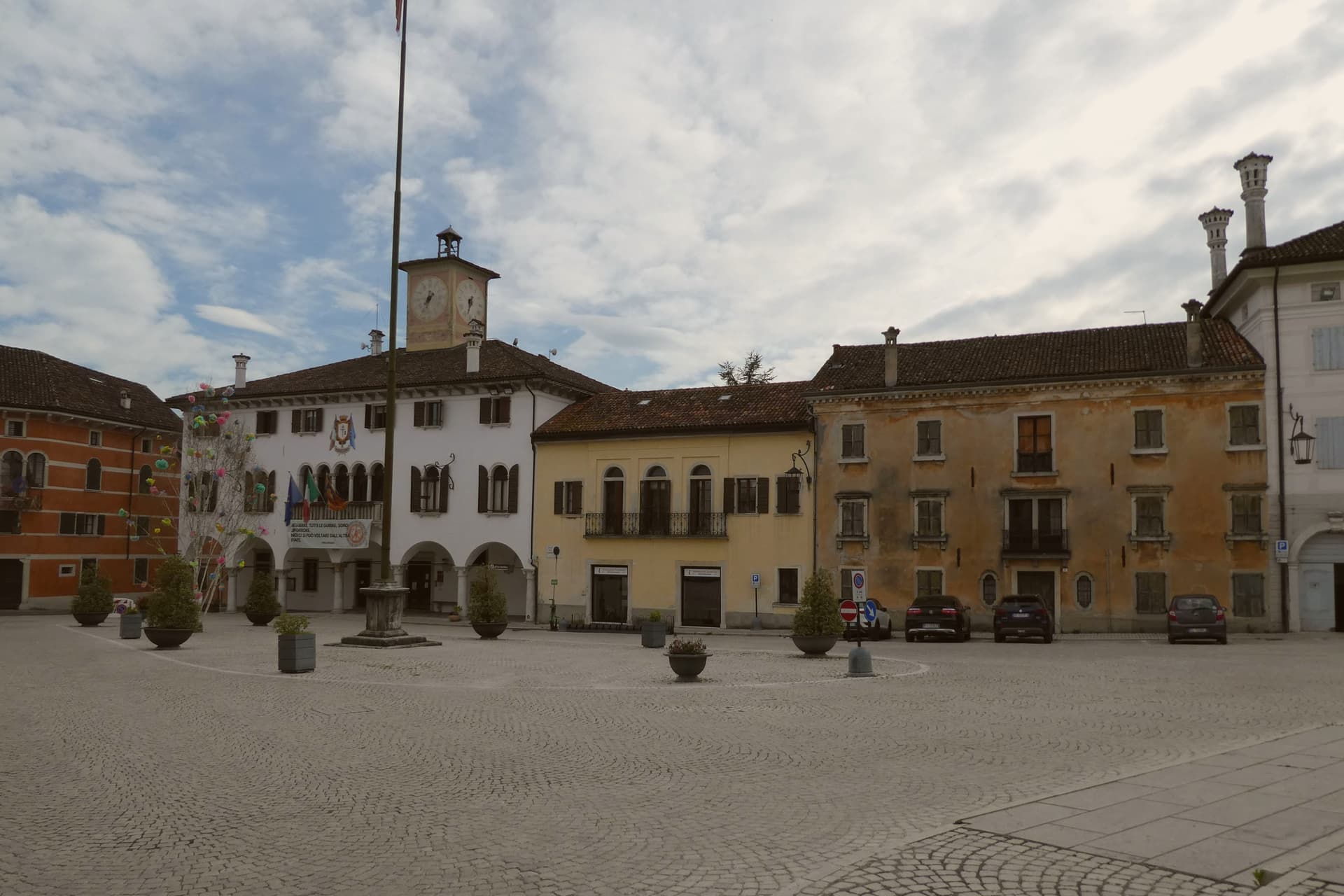
Borghi più belli d'Italia inscribed since its Venetian terraferma piazza survives intact from the 16th century, complete with the Palazzo delle Contesse and the Loggia Veneziana.
CASTELLO DI ZUMELLE
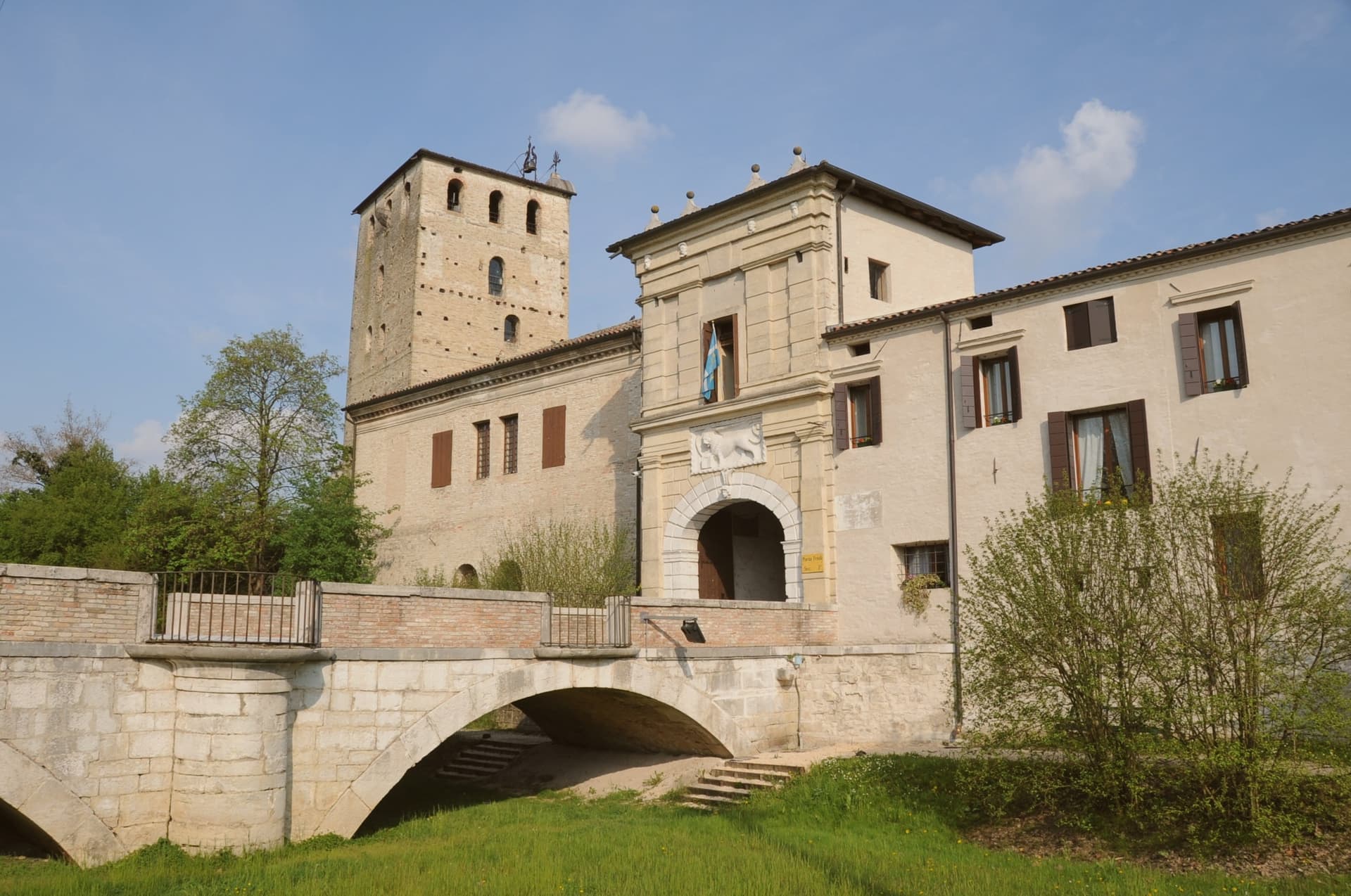
An 11th-century castle with the legend of the Zumelle twin sisters attached to it, now run as a museum and medieval-themed wedding venue.
PALEOVENETIAN NECROPOLIS
A 7th-4th century BC pre-Roman Venetic cemetery of 400+ tombs, the most important pre-Roman Venetic site in the upper Veneto.
DOLOMITI BELLUNESI GATEWAY
The Dolomiti Bellunesi National Park lies 20 km north, with the Valbelluna route running on into the upper Cordevole, Pelmo and Civetta massifs.
When to visit
Best · May–Sep
- J7°
- F10°
- M12°
- A15°
- M19°
- J24°
- J26°
- A26°
- S22°
- O17°
- N12°
- D8°
- Best
- Hot or crowded
- Quiet
- Mostly closed
Daytime averages, 2020–2024. Weather data by Open-Meteo.com.
Why come
The comune took shape on 30 January 2019, when Mel, Trichiana and Lentiai, three separate comuni in the lower Belluno province, were merged into one administrative body. The reasoning was the standard one for inland Veneto towns in the Piave valley: depopulation and the economics of scale. What the fusion produced is a comune with no single old centre, three former towns held together by a name invented in 2019.
Mel supplies what identity the new comune has. It sits in the gentle pre-Dolomite hills, 18 km southwest of Belluno, and the Veneto Republic governed here from 1404 to 1797, laying down the urban fabric that still stands. The Albrizzi, a family of Venetian nobility, held the local fief and made Mel their administrative seat, which is why the piazza reads as Venetian rather than purely local.
Trichiana and Lentiai contribute their own fragments to the comune: a forested ridge 5 km west of Mel carries an 11th-century castle with intact tower and walls and the legend of the Zumelle twin sisters, now a museum and wedding venue, and a 7th-4th century BC pre-Roman cemetery near Mel holds more than 400 tombs, the most important pre-Roman Venetic site in the upper Veneto. Lentiai in turn holds a Romanesque parish church with a Renaissance altarpiece inside it, a combination distinctive enough to be one of the upper Veneto's more unusual pairings. The wider comune is recognised as a Bandiera Arancione by the Touring Club.
Geography does more to hold the place together than history does. The Piave, a river bound up with Italian wartime memory, runs through the valley, and the former Italian-Austrian front line sat 5 km south of here. The Dolomiti Bellunesi National Park lies 20 km north, and the Valbelluna route continues from there into the upper Cordevole and Agordo valleys and on to the Pelmo and Civetta massifs, so the comune functions as a threshold between the flatter Piave valley and the mountains to the north rather than a destination in itself.
Food follows the same pre-Alpine pattern: pastin, schiz, polenta and venison, with Soligo and Vincheto whites, and the Festa di San Donato marking the local calendar each October. Put together, this is a comune whose administrative unity is recent and functional, while its actual centre of gravity, visual, cultural and historical, remains fixed on Mel.
The Sunday letter
Borgo Valbelluna is on our list. Its letter is still to come.
We are writing about all 1,000 of these towns, one at a time, in a free letter every Sunday: the photo, the food, the festa. That is our mission. Sign up and you will be there when Borgo Valbelluna comes up. By Peter & Sophia, from Pietrasanta.
Read on
Borgo Valbelluna in our articles
How to get there
From Venice (TSF), about 1h 18m by car.
Verona (VRN) is about 2h 33m away.
By car from the centre of Trento 1h 43m or Padua 1h 49m.
What to see
Mel centro storico (BPB) — Piazza Papa Luciani
The piazza itself: warm-orange Belluno limestone underfoot and on every façade, the Palazzo delle Contesse and the Loggia Veneziana standing alongside the Chiesa Arcipretale. It functions as the visual and cultural anchor for the whole merged comune, the one point all three former towns orient around.
Castello di Zumelle
The tower and walls stand intact on their forested ridge 5 km west of Mel. The site carries the twin-sisters legend and is worked today as a museum and a venue for medieval-themed weddings.
Necropoli Paleoveneta di Mel
The tombs themselves, more than 400 of them, with finds distributed between the local museum and Belluno's. What survives is the physical record: grave goods and cemetery layout rather than any single monument.
Pieve di Santa Maria di Lentiai
A 12th-century Romanesque parish church in the Lentiai frazione, holding a Cima da Conegliano altarpiece inside its plainer stone shell. The pairing of Romanesque structure with a Renaissance altarpiece is unusual for the upper Veneto.
Pastin + schiz + Belluno kitchen
Pastin, the fresh-meat patty, and schiz, the fried fresh cheese, served with polenta and venison. Soligo and Vincheto whites accompany the food, and the Festa di San Donato falls on the second Sunday of October.
The slow-trip planner
Building a trip? Find where Borgo Valbelluna fits in a slow Italy circuit.
Answer five questions. We will shape a geographically coherent slow trip from the 1,000 Italian towns most travelers skip. Yours to save and share.
Living here
- Population 13,410
- Commuter belti
- Pharmacy in town
- High school within a 30-minute drive
- Nearest airport Venice, 1 h 18 min drive
- Regional capital Venezia, 1 h 34 min drive
Common questions
- What is Borgo Valbelluna known for?
- Veneto's youngest comune, a 13,410-resident fusion of three lower-Belluno towns formed in 2019, wrapped around an old borgo in the pre-Dolomite Piave valley.
- Where is Borgo Valbelluna?
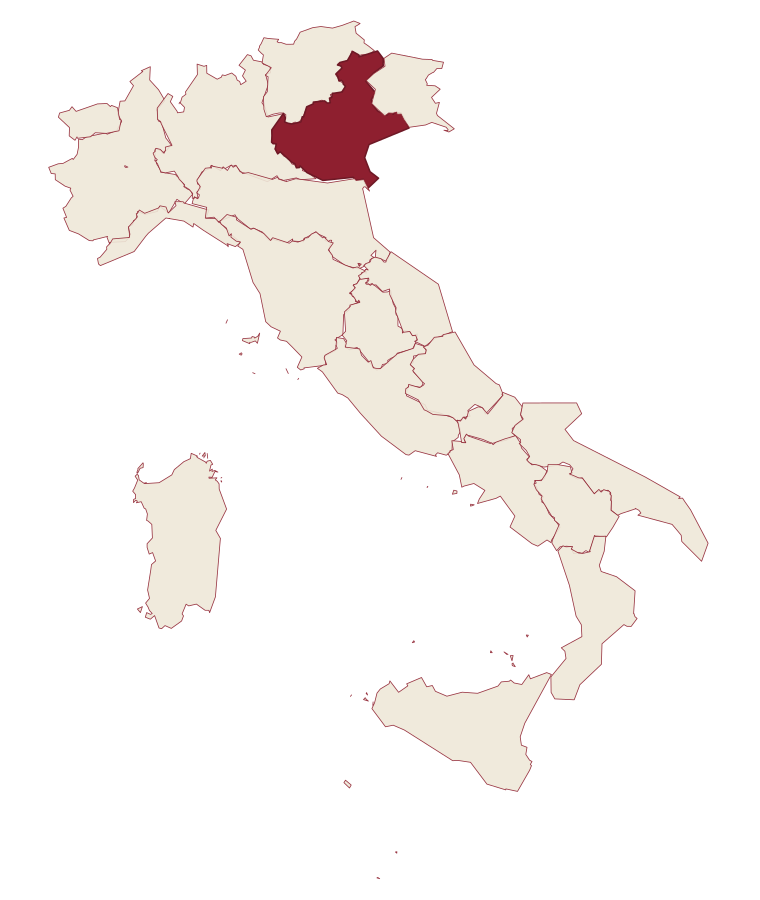
- Borgo Valbelluna is a comune in the province of Belluno, in Veneto, at 367 meters above sea level.
- What is the nearest airport to Borgo Valbelluna?
- Venice (TSF), about 1h 18m by car.
- How long is the drive from Trento to Borgo Valbelluna?
- About 1h 43m by car.
- When is the best time to visit Borgo Valbelluna?
- Best in May–Sep. July is the warmest month, averaging 26 degrees, and May the wettest, with about 18 rain days.
- Which other towns are like Borgo Valbelluna?
- Avigliana, Fiesole and Amelia.
- How many people live in Borgo Valbelluna?
- 13,410 at the 2023 count.
Tags & datadesignations · numbers · sources
Recognised as
The numbers
- Elevation: 367 m
- Population: 13,410
- Surface area: 167.69 km²
These figures were compiled from public directories: ISTAT, OpenStreetMap and Wikidata, and from the official listings of the guides named on this page. Town details change; verify with official sources before you travel.
Similar
Towns like Borgo Valbelluna
Avigliana
Province: Torino
both over 10,000 people · both hill towns
Fiesole
Province: Firenze
both over 10,000 people · both hill towns
Amelia
Province: Terni
both over 10,000 people · both hill towns
Omegna
Province: Verbano-Cusio-Ossola
both over 10,000 people · both hill towns
Magione
Province: Perugia
both over 10,000 people · both hill towns
Vallefoglia
Province: Pesaro e Urbino
both over 10,000 people · both hill towns
🎨 Borghi più belli d'Italia
More Borghi più belli d'Italia towns in Veneto
Arquà Petrarca
Province: Padova
The Euganean Hills village where Francesco Petrarca spent his last four years and died in 1374, renamed in his honor in 1868.
Asolo
Province: Treviso
A walled hill town at 205 meters that Caterina Cornaro ran as her court after trading Cyprus to Venice in 1489.
Cison di Valmarino
Province: Treviso
A Prosecco hills borgo at 261 meters under the dolomite rock of CastelBrando, the largest inhabited castle complex in Europe.
Follina
Province: Treviso
A Prosecco-hills borgo at 191 meters around the Cistercian Abbey of Santa Maria, with a cloister finished in 1268.
Malcesine
Province: Verona
The northernmost Veneto town on Lake Garda, where Goethe was nearly arrested for sketching the Castello Scaligero in September 1786.