
The best towns known for what they grow within two hours of Pisa
Inland from Pisa the land climbs quickly, and the crops climb with it. This is chestnut country, where the woods above the Serchio and the Magra were planted for flour rather than shade, and where the sweet dark bread and the porridge-thick polenta made from that flour are still sold in village shops. Lower down, on the terraces, farmers grow spelt, borlotti beans and the pale eight-row maize that makes the yellow flour of the Garfagnana. Houses are built of the grey sandstone the same hillsides give up, and autumn is the season the whole valley organises itself around, from the drying huts in October to the mills running through November.
Most travellers arriving at Pisa airport turn the other way, towards Lucca and Florence, or south to the vineyards of Chianti, where the food story is wine and the towns are busy by mid-morning from Easter onwards. There is nothing wrong with it, and the reasons are obvious: the roads are good, the restaurants are used to visitors, the produce arrives on the plate already explained. It is also where every hire car goes, which is why lunch takes an hour to order in August.
The hills that grow all of this do not stop at the edge of the famous bit. Follow the Serchio north past Lucca, or the Magra up through the Lunigiana towards the Cisa pass, and the growing zones continue into towns with markets, mills and small producers, but far fewer people looking at them. These are those towns, each one inside the production area of a protected fruit, grain or vegetable, and each within about two hours of Pisa.
Of the 75 communes we have mapped in a 120-minute drive of Pisa, 7 qualify as towns known for what they grow: each sits inside the production zone of a protected fruit or vegetable. The smallest, Mulazzo, has 2,284 residents.
Two more lists worth reading alongside this one: The best towns known for what they grow within two hours of Florence and The best olive oil towns within two hours of Parma.
Mulazzo
Why visit Mulazzo
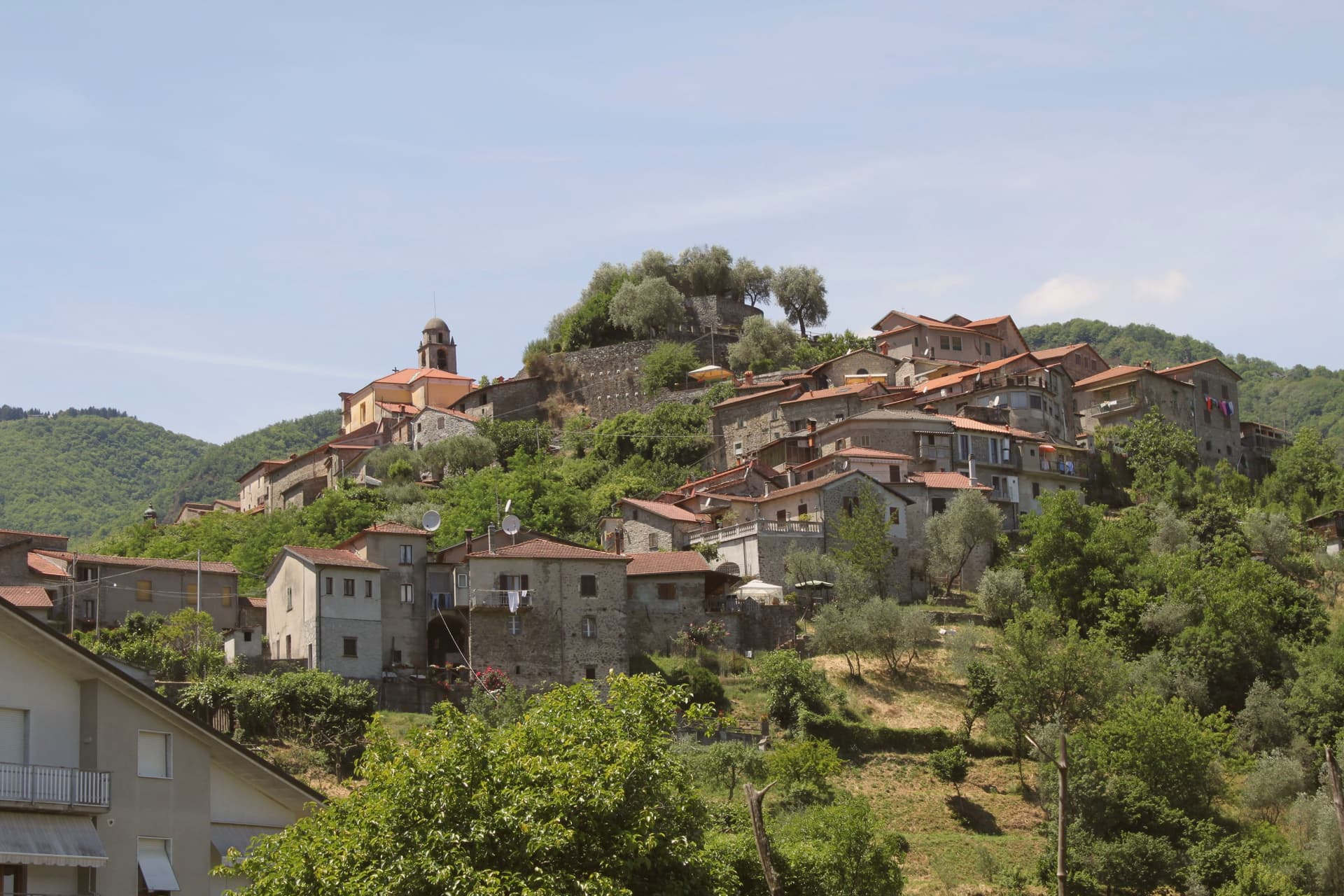
Mulazzo sits at 351 meters in the Lunigiana, the corner of Toscana that bends north toward Liguria and Emilia. The centro storico holds the tower and the parish church at the top of its stepped streets, the marquisate's old seat of power made physical in stone.
Three kilometers up the ridge, reached by climbing further into the hills, sits the frazione where the booksellers once lived, a separate settlement bound to the centro by the same ridge line but carrying its own, later history: villagers who left in the nineteenth century with panniers of books on their backs to sell across central and northern Italy. Ten kilometers off in the other direction, in Castevoli, a ruined castle marks where a separate branch of the family held its own patch of the same fiefdom.
The town's two settlements, the medieval seat and the book-trading frazione, describe a place shaped less by one center than by a hierarchy of them spread along a ridge, each with a distinct trade in memory: rule from above, books carried out on foot, stone left standing here and reduced to rubble there.
What to see in Mulazzo
- Torre di Dante. Medieval tower at the head of the borgo, once six stories and thirty meters. Demolished down to a sixth of its original height around 1750, what stands now is the stump of a much larger structure.
- Montereggio. Frazione three kilometers up the ridge, the only Italian member of the International Organisation of Book Towns, in honor of the village's bookselling diaspora.
- Centro Studi Alessandro Malaspina. Inside the tower, a study centre of documents and materials tracing the navigator's charting of the Pacific coast for the Spanish crown.
How to get to Mulazzo
Parma is roughly 95 minutes away by road.
Our tip
April through June and September into October are the months when the Lunigiana ridge is at its best, with green hills, low cloud, and the chestnut and oak forests turning. July and August stay cooler than the coast thirty kilometers south, but the centro empties around midday. The Montereggio book festival, in late August, is when the bookselling frazione fills again for a weekend with publishers and readers.
Licciana Nardi
Why visit Licciana Nardi
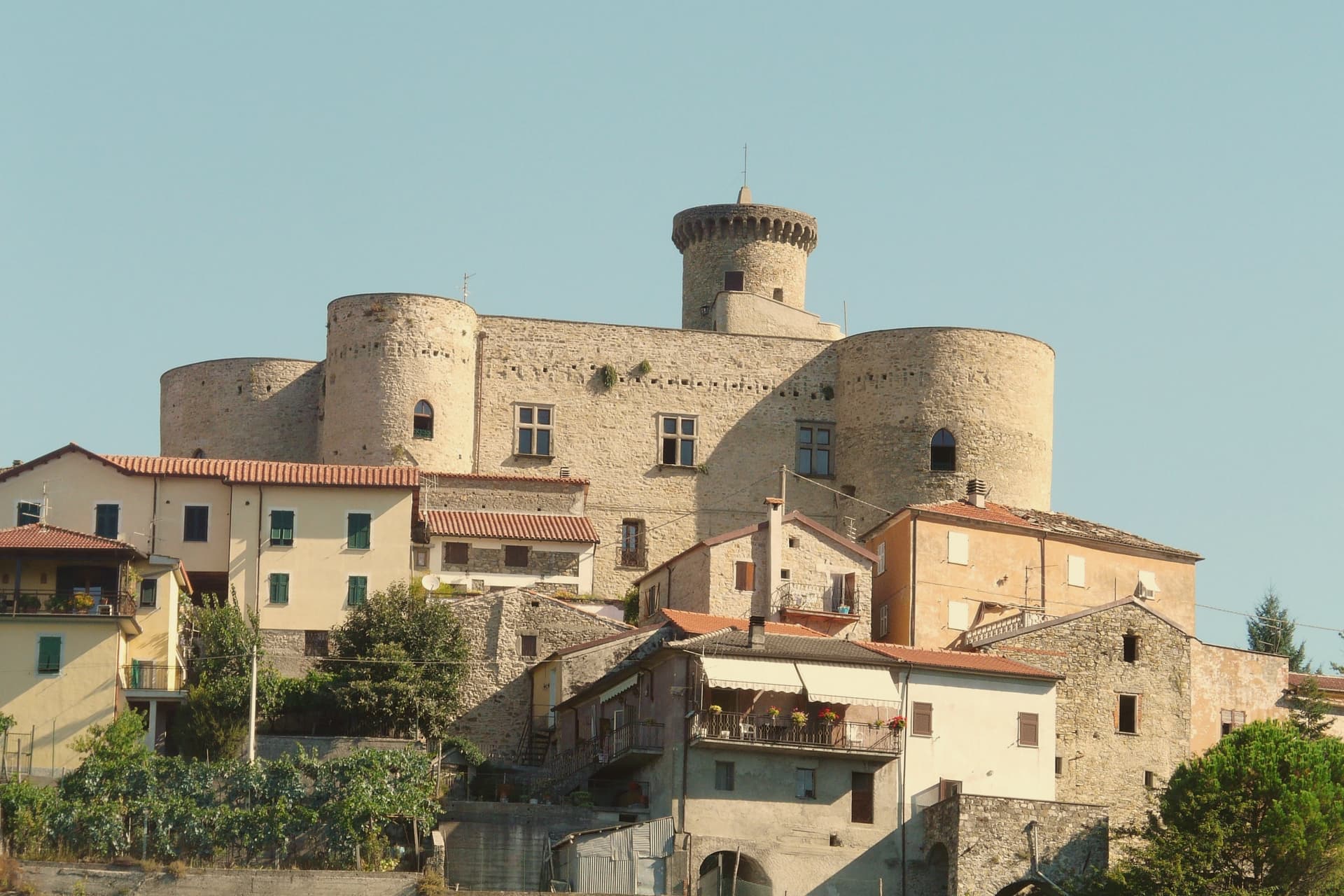
Licciana Nardi sits at 215 meters in the eastern Lunigiana, on the slopes of the Apennino Tosco-Emiliano National Park. The town is one of several Malaspina holdings in the valley, with a castle in the centro storico and another above Bastia, three kilometers up the ridge.
In 1933 the commune added the surname Nardi to its name in honor of Anacarsi Nardi, one of the Bandiera brothers' co-conspirators, shot by Bourbon firing squad in 1844 after the failed insurrection at Cosenza. The Apennine ridge above the town is part of the national park, with chestnut and beech forests, the Lagastrello pass, and trails connecting Lunigiana to the Garfagnana on the other side.
The local plate is panigacci, thin disks of unleavened dough cooked between terracotta plates and eaten with stracchino, salume, or pesto, a Lunigiana tradition shared with Pontremoli and the upper Magra villages.
What to see in Licciana Nardi
- Castello Malaspina di Licciana. Medieval Malaspina fortress in the centro storico, partly inhabited and partly visitable on request.
- Castello di Bastia. Smaller Malaspina castle in the frazione of Bastia, three kilometers up the ridge, with a fourteenth-century keep.
- Parco Nazionale dell'Appennino Tosco-Emiliano. Chestnut and beech forests on the ridge above the town, with the Lagastrello pass and trails into the Garfagnana.
How to get to Licciana Nardi
Pisa is roughly 79 minutes away by road.
Our tip
May through October is the season in the eastern Lunigiana. The ridge stays cooler than the lower valley, the chestnut woods are open, and the trails into the Apennine park run from Apella up to the Lagastrello pass. July and August are warm but breezy at altitude.
Pontremoli
Why visit Pontremoli
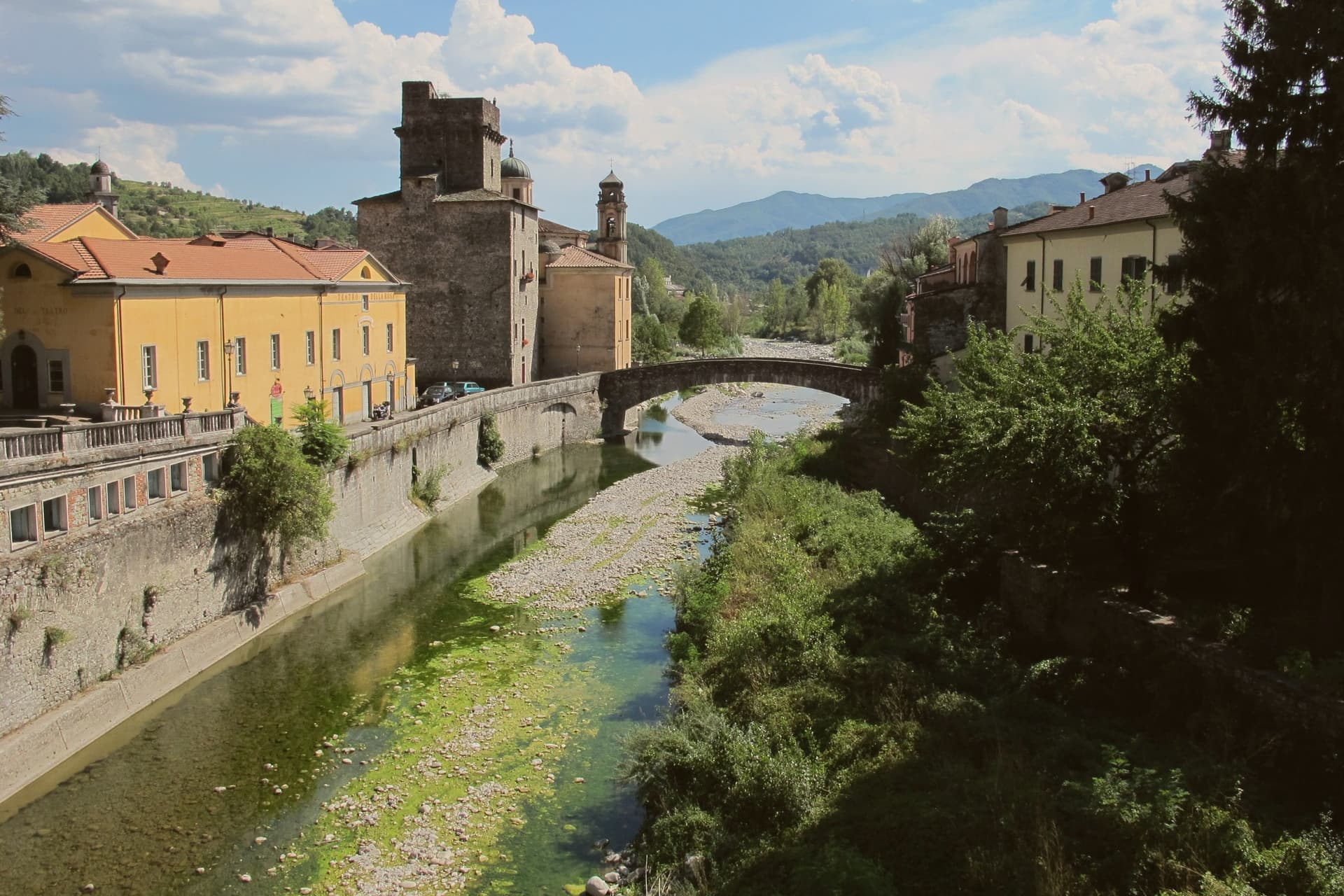
Pontremoli sits at 236 meters where the Magra and the Verde meet, the northern gate of Tuscany and the historic capital of Lunigiana. The Via Francigena crossed here on the descent from the Cisa pass, which is why the town's medieval bridges, the Ponte della Cresa and the Ponte del Casotto, still carry pilgrim traffic eight centuries later.
The Castello del Piagnaro above the centro storico holds the Museo delle Statue Stele Lunigianesi: anthropomorphic sandstone figures carved between 3000 and 200 BC, eighty of them recovered from the surrounding hills, unique to this corner of Italy. The Bancarella Prize, awarded by the town's traveling booksellers since 1953, made Pontremoli the only Italian commune where a literary prize was founded by the people who actually sell books rather than write them.
The local plate is testaroli, a Ligurian-Lunigiana flatbread cut into diamonds and eaten with pesto or olive oil.
What to see in Pontremoli
- Castello del Piagnaro. Tenth-century fortress on the hill above town, named for the slate roof tiles (piagne), housing the Museo delle Statue Stele.
- Museo delle Statue Stele Lunigianesi. Eighty anthropomorphic stone figures carved between 3000 and 200 BC, the densest concentration of Copper Age stele in Europe.
- Concattedrale di Santa Maria Assunta. Seventeenth-century baroque cathedral with a single nave and a domed presbytery, on Piazza del Duomo.
How to get to Pontremoli
There is a railway station in the town, so you can arrive without a car and never need one while you are here. Parma is roughly 81 minutes away by road.
Our tip
April through June brings the rivers full and the chestnut woods green. The Premio Bancarella runs in late July on Piazza della Repubblica, the busiest week of the year. August is hot but cooler than the coast, with festivals across the Lunigiana valley. Medievalis a Pontremoli falls in August.
Fosdinovo
Why visit Fosdinovo
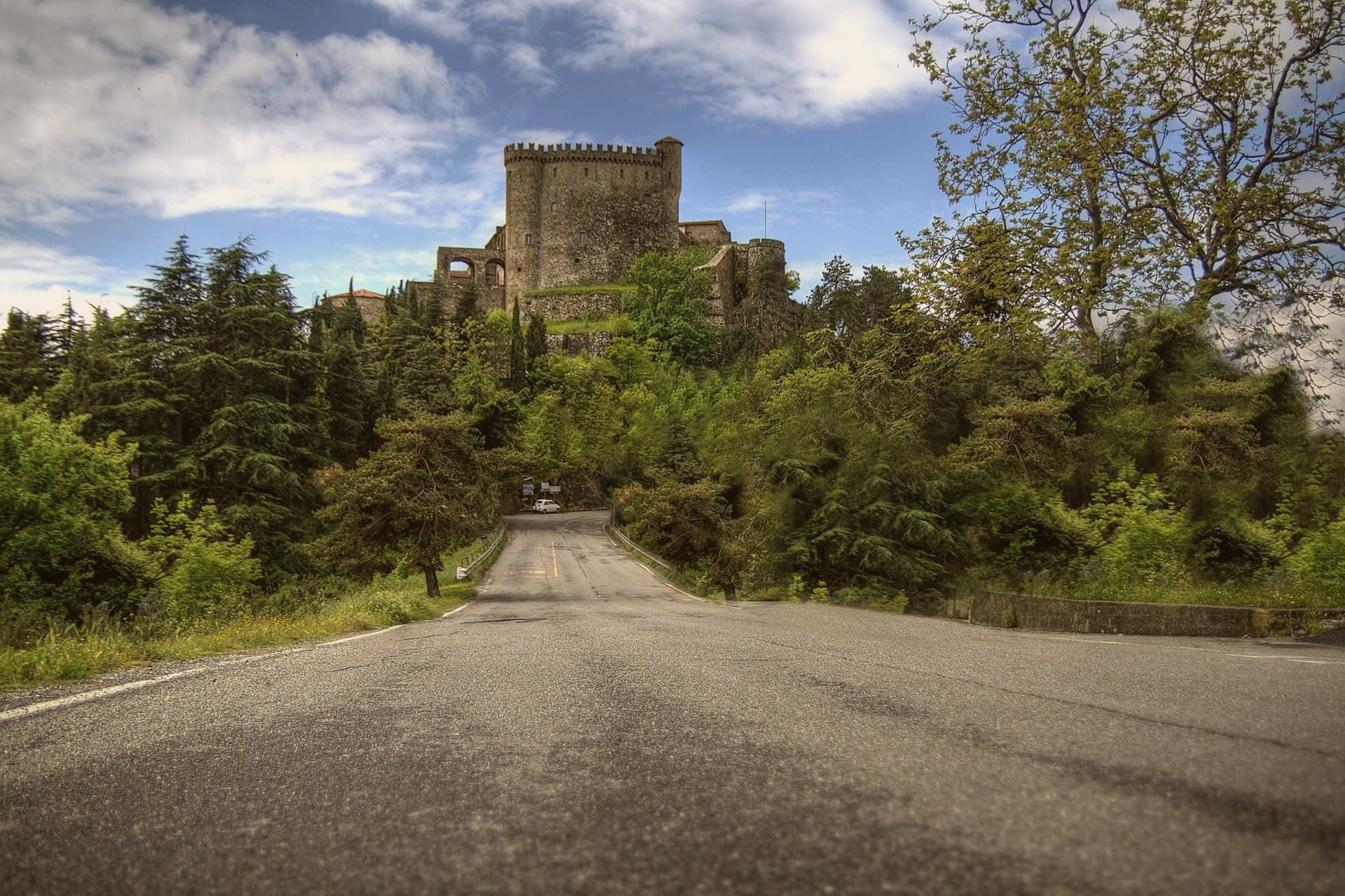
Fosdinovo sits at 500 meters on a ridge between the Apuan Alps and the Magra valley, with the Tyrrhenian visible on a clear day. The Castello Malaspina dominates the village: a fourteenth-century fortress on earlier foundations, continuously inhabited by the same family branch from 1340 until 1916, one of the longest unbroken castle dynasties in Europe.
Dante took shelter here in 1306, hosted by Moroello Malaspina, and the encounter became Canto VIII of the Purgatorio. The current owner is the same Malaspina line; the castle is open for guided tours that include the room where the poet is said to have slept.
The town sits at the southern edge of the Lunigiana, with the marble peaks of the Apuane behind and the Versilia coast in front. The Linea Gotica ran through these hills in 1944, and the Museo Audiovisivo della Resistenza in the centro storico documents what happened to the villages below.
Locanda de Banchieri, La Burlanda have been named by a guide.
What to see in Fosdinovo
- Castello Malaspina. Fourteenth-century fortress on earlier foundations, held by the same Malaspina branch from 1340 to 1916, with the Dante room open on guided tours.
- Museo Audiovisivo della Resistenza. Documentation center on the Gothic Line and the partisan war in the Apuane and Lunigiana, with films and oral histories.
- Centro storico. Walled village climbing the ridge below the castle, with stone houses and steep lanes between gardens facing the sea.
How to get to Fosdinovo
Pisa is roughly 70 minutes away by road.
✷ We have written about Fosdinovo
“We chose it the way you choose a card from a deck. We pulled up the map, ignored everything we recognized, scrolled north until the roads thinned out and the names stopped meaning anything to us, and there, behind the marble of Carrara, in a fold of the Apuane I had never heard of, was a borgo called Marciaso. There was one Airbnb.”
Read our piece on Fosdinovo →The Lunigiana | The Real Off the Beaten Path Italy
Our tip
April through June is the dry green window, with the Apuane still snow-streaked and the coast already warm below. July and August push the lowlands into the thirties; Fosdinovo at 500 meters stays a few degrees cooler and the breeze off the ridge holds. September and October are the second window, with the new oil from the lower slopes and the chestnuts higher up.
Castelnuovo di Garfagnana
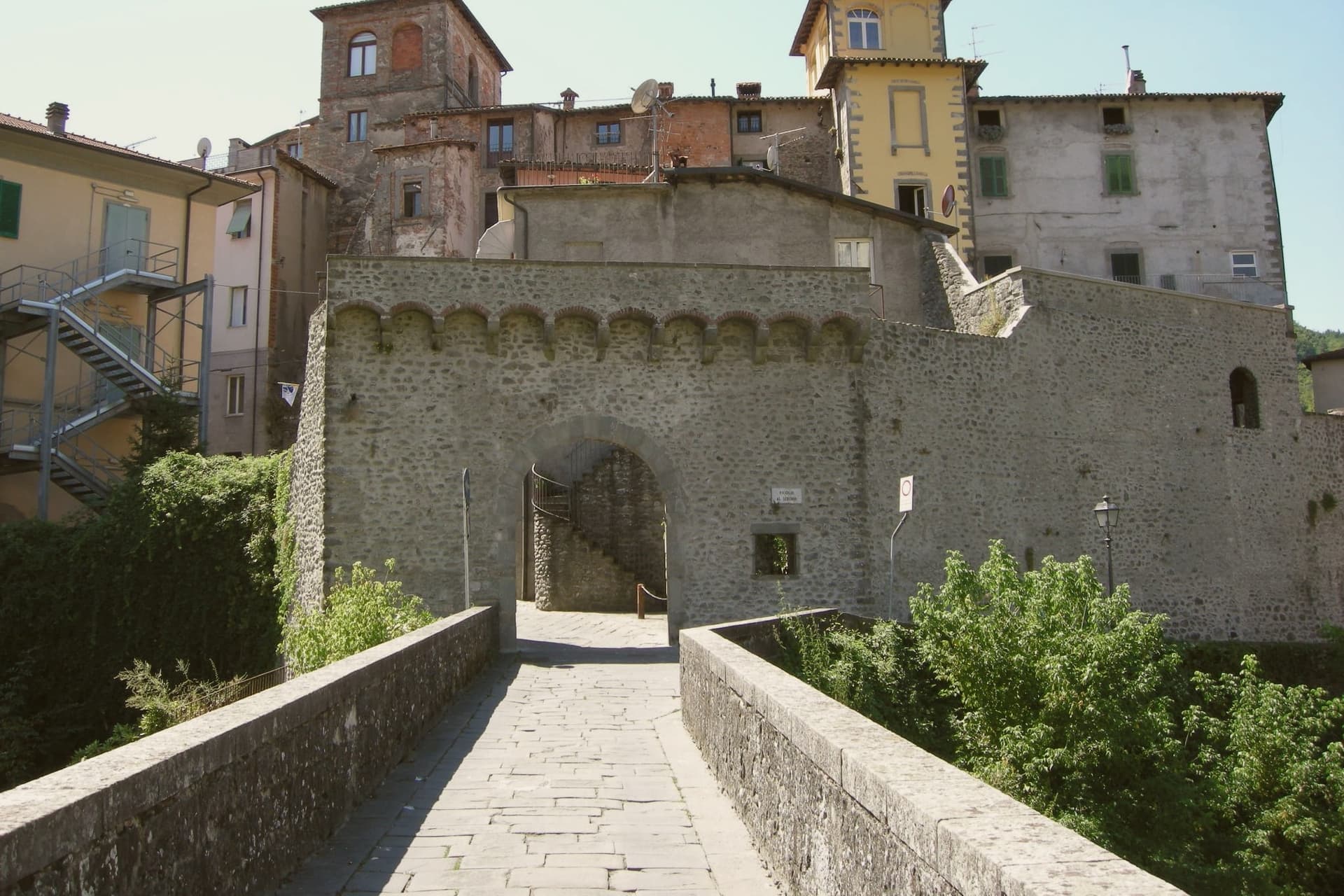
Why visit Castelnuovo di Garfagnana
Castelnuovo di Garfagnana is the historic capital of the Garfagnana, the deep mountain valley between the Apuane Alps and the Tuscan Apennine main ridge, 50 km north of Lucca along the Serchio river. The town sits where the Serchio meets the Turrite, and it anchors the valley both politically and economically: 5,600 residents, and the only real services, hospital, secondary schools, government offices, for the 30,000 people spread across the Garfagnana comuni around it.
The historic core is the fortress that now serves as the municipal museum, the building where the Este governor lived out his posting writing to friends about being stuck among bandits and chestnut-eaters even as he completed the final additions to his poem. Above the town, on the hill, stands the much larger Este fortress of 1579, built to control the trans-Apennine trade route and now a cultural centre and concert venue with the most photographed view of the Apuane peaks.
The two fortresses read together as a record of how the valley was held: one seat of government inside the town, one larger garrison commanding the pass above it. Castelnuovo is also the point of departure for the higher ground: the Apuane Regional Park, whose white-marble peaks are the same stone quarried at Carrara seen from the back, the Parco dell'Orecchiella further up, the show cave reached 45 minutes to the south, the Eremo di Calomini cliff-monastery, and over 200 km of marked Apennine trails.
The valley's food follows the same logic of scarcity turned to identity: alongside the farro and the chestnut dishes there is formentone otto file, a local maize cornbread, pecorino della Garfagnana, biroldo, a sweet-spiced blood sausage, and salt-cured prosciutto bazzone from the indigenous Garfagnana pig breed. A town built to govern a valley still does exactly that: the fortress on the hill and the one in the center were both instruments of control over a mountain pass, and the food still served in its bakeries and trattorie is what the same isolation once made necessary.
Bonini, Il Vecchio Mulino have been named by a guide.
What to see in Castelnuovo di Garfagnana
- Rocca Ariostesca. The fortress core of the town, now the municipal museum. Its rooms hold the record of the governor who complained about the posting even as he finished his poem here.
- Fortezza di Mont'Alfonso. Larger Este fortress on the hill above town (1579), built to control the trans-Apennine route. Now a cultural centre and concert venue with the great Apuane view.
- Farro della Garfagnana IGP + zuppa di farro. Terraced hillsides still grow the grain that shows up in every trattoria's soup bowl. Bags of it are sold at the Saturday market.
How to get to Castelnuovo di Garfagnana
There is a railway station in the town, so you can arrive without a car and never need one while you are here. Pisa is roughly 84 minutes away by road.
✷ We have written about Castelnuovo di Garfagnana
“There are two ways to drive from Aulla to Lucca. The first is the one everyone takes: the coast, the A12, the cruise control, ninety minutes of the same Tyrrhenian to your right. The second is the one we took with Daniel, on a clear day in November, and it is two and a half hours longer if you stop, but it is in a different country.”
Read our piece on Castelnuovo di Garfagnana →Apuan Roadtrip | A Steak, a Friend, and the Long Way Down to Lucca
Our tip
Castelnuovo di Garfagnana is mountain-seasonal — June through September is the sweet spot, when the trails are clear, the festivals run (Sagra del Farro late August, San Pellegrino in Alpe pilgrimages), and the high refugi are open. October is chestnut and porcini season — the best food month. Winter is alpine — heavy snow possible above 800m, several ski-touring options, but the borgo itself stays accessible.
Fivizzano
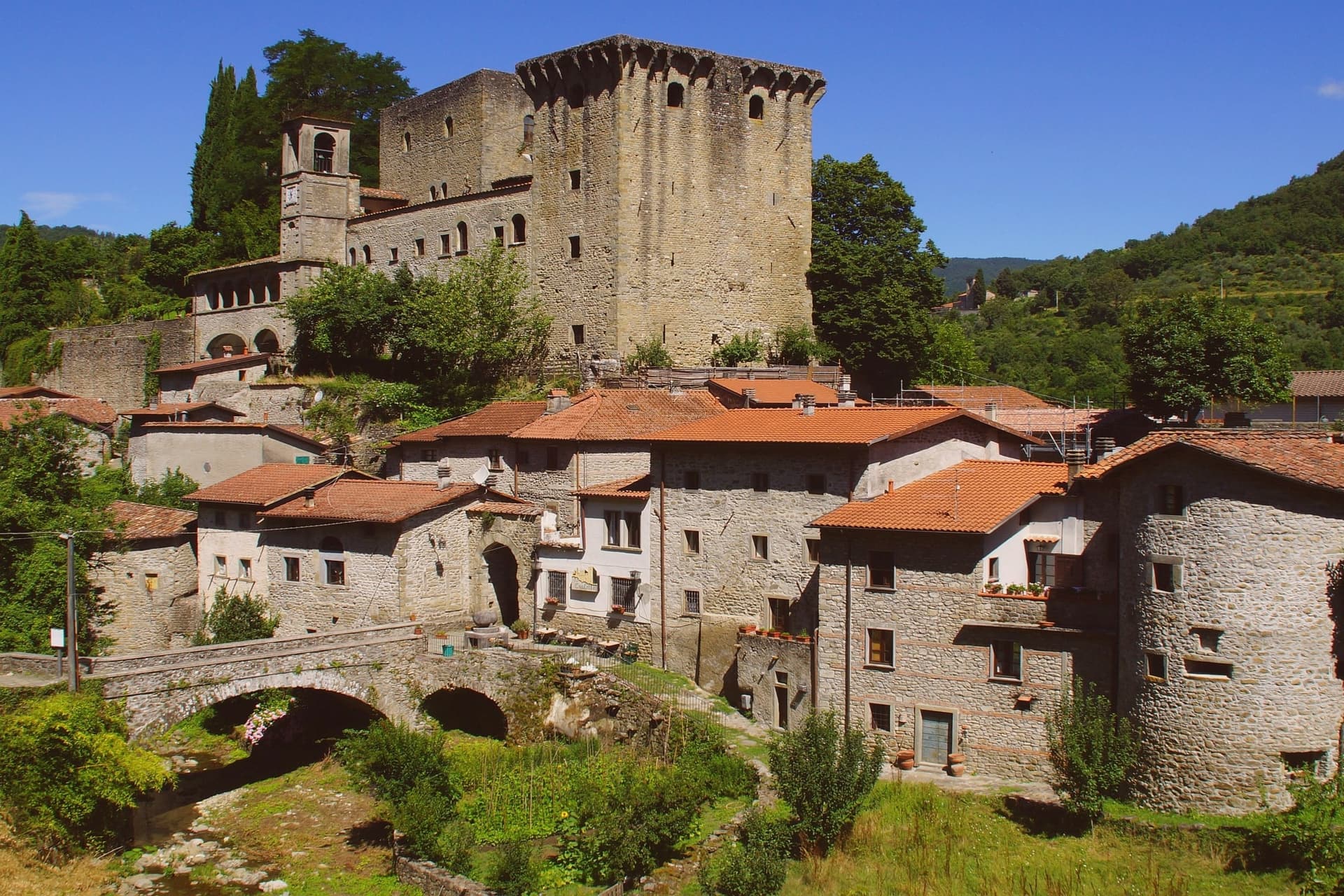
Why visit Fivizzano
Fivizzano-capoluogo is a quietly handsome, small Lunigiana centro of 7,000 residents on the SS63 between La Spezia and Reggio Emilia: a medieval Medici-era piazza with the Fontana Medicea of 1576, porticoes, a parish church. Fine, walkable, worth an hour.
The commune around it is the actual subject: 264 km² and 92 frazioni spread across the upper Lunigiana mountains inside the Parco Nazionale dell'Appennino Tosco-Emiliano, and several of those hamlets are individually destination-grade. Equi Terme sits in a deep, narrow gorge under vertical limestone walls, the kind of setting that makes the thermal water and the cave system feel like a single geological event rather than separate attractions.
Verrucola stands apart from it, a fortified hilltop borgo rather than a gorge-bottom spa town, its scale small enough that the whole place can be seen from the courtyard Cascella once used as his studio. Gassano and the smaller hamlets, Bottignana, Ceserano, Pieve San Paolo, Pognana, Soliera Apuana, Tenerano, are strung across the ridges between them, stone-house centri with the Apuane at their backs, each one a fragment of the same mountain commune rather than a satellite of the town below.
The food carries the same regional logic across every hamlet: testaroli and panigacci unique to this valley, torta d'erbi, pasta with porcini, lardo di Colonnata from the nearby Apuane quarries, and Lunigiana DOP olive oil from the lower-valley groves, with the mid-July pasta festival at the Fivizzano centre pulling the scattered frazioni back together for one event. Depopulation has been heavy, as in most ultraperiferico Apennine communes: 13,000 residents in 1951, 7,000 today, some smaller frazioni down to 20 or 30 winter residents.
What this adds up to is a commune held together less by its capoluogo than by the mountains and the park that surround it, a single administrative territory made of places that would each stand alone if they were anywhere else.
What to see in Fivizzano
- Equi Terme (frazione) — thermal springs + Grotta. 11 sulphurous thermal springs sit in a vertical limestone gorge at Equi Terme, feeding the Grotta di Equi karst cave system, 3 km of tunnels with prehistoric cave-bear remains found inside. The Terme di Equi spa has used the spring water for sulphur therapy since the Etruscans, and the Solco di Equi trail runs the length of the gorge on foot.
- Verrucola (frazione) — Fortezza dei Malaspina. The fortress is small enough to take in on foot in minutes, its stone walls close around a courtyard open to the public. Pietro Cascella lived and worked inside it until 2008, and the rooms he used now hold the museum.
- Gassano + Lunigiana frazioni. Gassano is the panoramic perched hamlet on a ridge facing the Apuane. Bottignana, Ceserano, Pieve San Paolo, Pognana, Soliera Apuana, Tenerano: all small mountain hamlets with stone-house centri and Apennine and Apuane views.
How to get to Fivizzano
There is a railway station in the town, so you can arrive without a car and never need one while you are here. Pisa is roughly 95 minutes away by road.
Our tip
Fivizzano commune is mountain-seasonal — May through September is the sweet spot, when the frazioni are accessible by car, the trails are clear, and the Equi Terme spa and cave are open without booking pressure. October is chestnut and porcini season — the best food month in the Lunigiana. Winter is Apennine — heavy snow possible in the upper frazioni, several roads close. Disfida degli arcieri di Fivizzano falls in July.
Barga
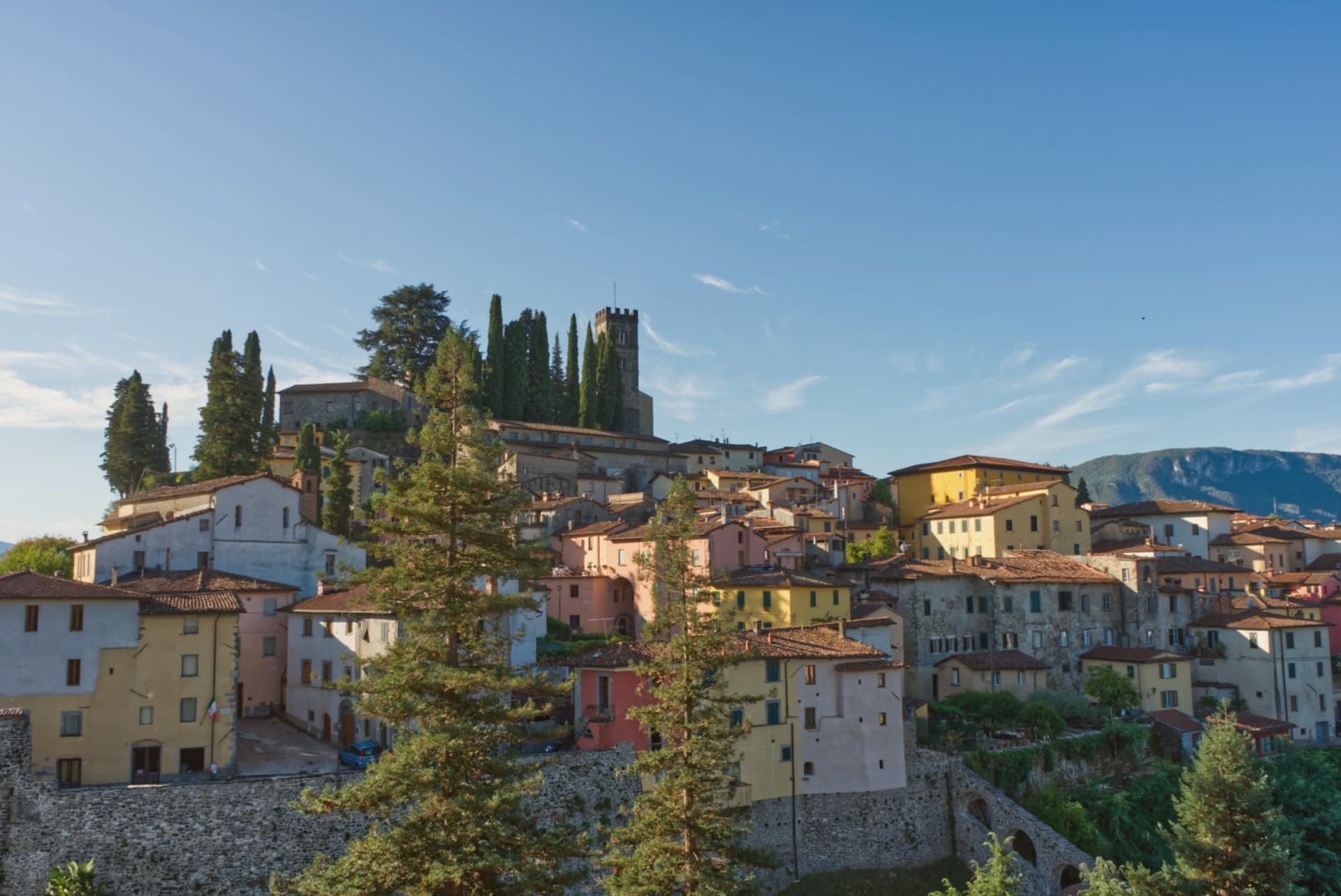
Why visit Barga
The town sits on the Colle Remeggio above the Serchio river, the Apennine ridge rising to the east as a counterpart to the Apuan Alps on the western side of the valley. The walled centro storico climbs the hill from Porta Reale, its stone houses narrowing as the streets rise toward the highest terrace, where the collegiate church stands.
The Colle di Caprona, a separate rise from the walled town itself, holds the house where Pascoli lived out his last years and the chapel where he is buried. The town also carries a Scottish thread: a wave of late nineteenth-century emigration sent generations of Barga families into the chip shop trade in Glasgow, and their descendants' festival now fills the streets every August with fish and chips rather than any dish more expected of the Tuscan hills.
A hill town built in stone around a Romanesque church, with a poet's house on one rise and a Glasgow-born sagra filling its streets each summer, holds more than its size would suggest.
What to see in Barga
- Duomo di San Cristoforo. The church climbs from the eleventh century into the sixteenth, four red marble columns of the pulpit resting on stone lions. It occupies the highest terrace of the town, above the streets that lead up to it.
- Casa Museo Giovanni Pascoli. The house is preserved with its original furnishings and library, the chapel next door holding the poet's tomb.
- Centro storico. Walled medieval town climbing the hill, narrow streets of stone houses leading from Porta Reale up to the church on the highest terrace.
How to get to Barga
There is a railway station in the town, so you can arrive without a car and never need one while you are here. Pisa is roughly 74 minutes away by road.
✷ We have written about Barga
“We were trying to get to Garfagnana. It was July, the coast was unlivable, we pointed the car at the Serchio Valley with a vague idea of chestnut forests and cool air, and somewhere on the road up we took a turn we should not have taken and ended up at the gate of a town I had never heard of. Barga was today's accident.”
Read our piece on Barga →Barga | The Scottish Accent
Our tip
April through June and September into October are the working months in the middle Serchio valley: green pasture, mild days at 410 meters, walking weather to the Apuan ridges. The Opera Barga festival fills the Teatro dei Differenti in July with chamber concerts. The Sagra del Pesce e Patate runs for two weeks in August and brings Glasgow-Barga families home.
More from Anywhere Italy
 The best towns known for what they grow within two hours of Florence
- The best olive oil towns within two hours of Parma
 The best hill towns within 90 minutes of Pisa
- The best olive oil towns within 90 minutes of Pisa
 The 8 best towns you can reach by train in the province of Lucca
 The best mountain towns in Toscana