
The best wine towns within 90 minutes of Milan
Leave Milan in the morning and the plain gives way to hills within the hour, terraced with rows that turn copper in late October. Cellars here are cut into sandstone and tufo, and the tasting rooms smell of damp cement and old barrel wood. The wines change with the geology: steely white Cortese in the south of Piedmont, austere Nebbiolo on iron-red slopes near the Alps, Barbera and Croatina in the Lombard hills below Pavia. Autumn is the obvious season, with agnolotti, salame di Varzi, bagna cauda and boiled meats appearing on menus, though April vine-tying and the quiet of a snowy January have their own appeal.
Most people who want vineyards near Milan drive further, to Barolo and the Langhe, where the hilltop villages have become the standard weekend for anyone with a Michelin list and a rental car. The wine is extraordinary and the reputation earned, which is exactly why the tasting rooms are booked out weeks ahead in harvest season and the roads above Alba back up on Sundays. Franciacorta gets the same treatment from Milanese day-trippers hunting sparkling wine. Prices reflect the demand, and so do the crowds.
The same hills keep going, though, past the famous names and the coach parks. North of the Po the Monferrato ridges run on for miles of vines and brick farmhouses. South of Alessandria, Gavi and Ovada make serious wine with far fewer visitors, and the Oltrepò Pavese hills above Voghera hold small stone villages surrounded by rows. These are the towns on that continuation, all within reach of Milan for a day, and all inside a protected wine's production zone.
Of the 45 communes we have mapped in a 90-minute drive of Milan, 7 qualify as wine towns: each sits inside the production zone of a protected wine. The smallest, Montesegale, has 258 residents.
Two more lists worth reading alongside this one: The best hill towns within 90 minutes of Milan and The best wine towns within 90 minutes of Genoa.
Montesegale
Why visit Montesegale
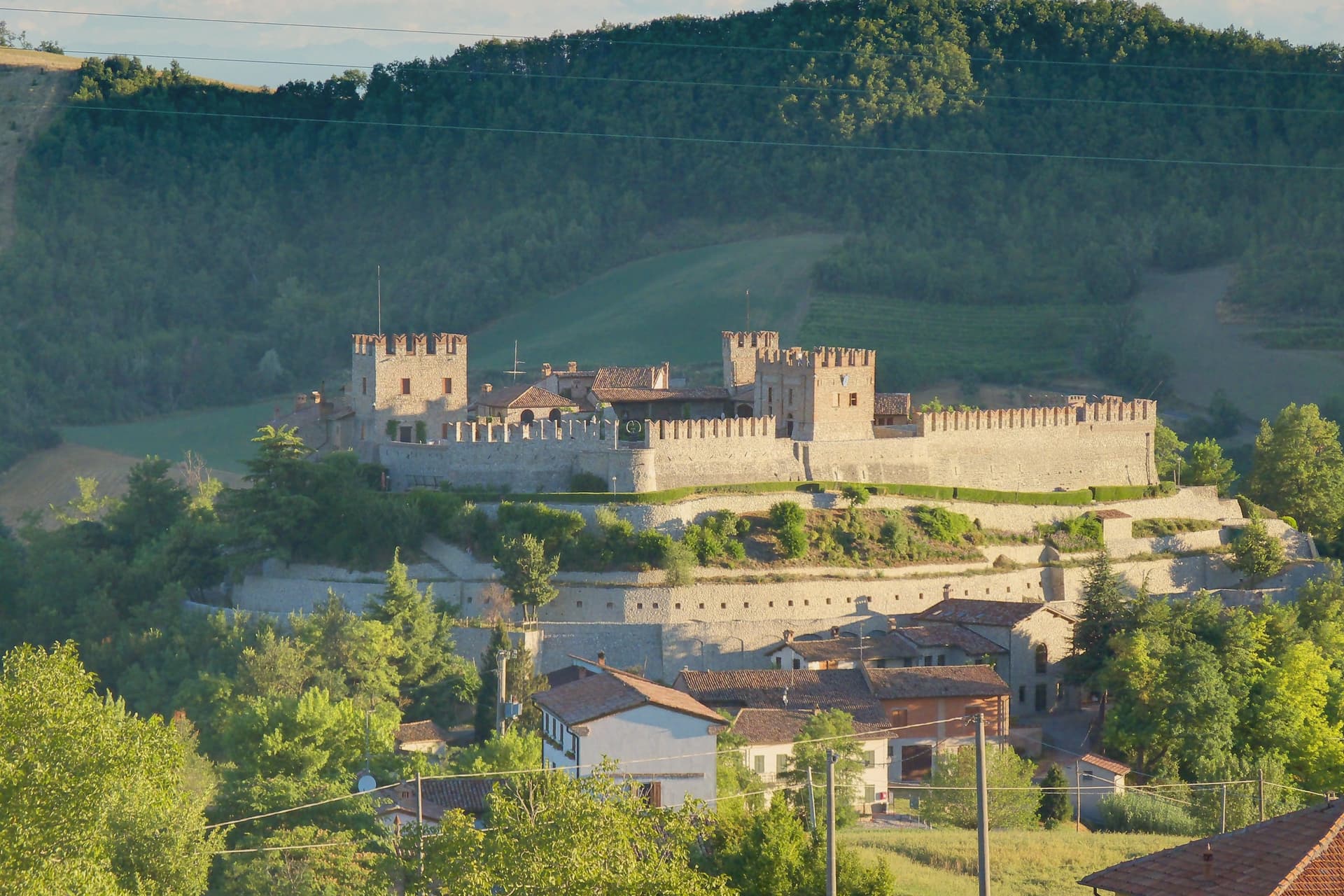
The village takes its position from the hill above the Val Ardivestra, the stream valley that separates its wheat fields and vineyards from the wider Oltrepò Pavese around it. The first historical record dates to the eleventh century, under the bishop of Tortona.
In 1164, Federico Barbarossa transferred the fief to the Counts Palatines of Lomello, whose Gambarana branch took it over in 1311 and held the title of Lords of Montesegale until feudalism ended in 1797. The upper part of the settlement is still organized around the castle those lords built and rebuilt, while the parish church sits below it, a later, separate addition from 1700 serving the working village rather than its lords.
The Borghi Autentici and Città del Pane designations recognize that working character directly: a handful of bakeries, the local Salame di Varzi country, and a wine-and-grain landscape that has changed use only in the castle itself, where the seat of feudal power now holds a contemporary art collection instead of a garrison.
What to see in Montesegale
- Castello dei Conti Gambarana. The fortress dominates the village from its hilltop, reshaped across successive building phases before the seventeenth-century restoration that gave it its present form. The Counts Palatines of Lomello line held it through the Gambarana branch until feudalism ended in 1797.
- Chiesa dei Santi Cosma e Damiano. Parish church built in 1700 below the castle, dedicated to the twin physician saints, with a single nave and Baroque altar.
- Centro storico. Small hill village around the castle, with stone houses, narrow lanes and the steep approach road from the Ardivestra valley below.
How to get to Montesegale
Piacenza is roughly 64 minutes away by road.
Our tip
April through October is the workable window. May, June and September are the strongest: vines in leaf, oak woods green, the castle approach open and dry. July and August push past thirty degrees on the Pavese hills; the village empties between two and six in the afternoon.
Fortunago
Why visit Fortunago
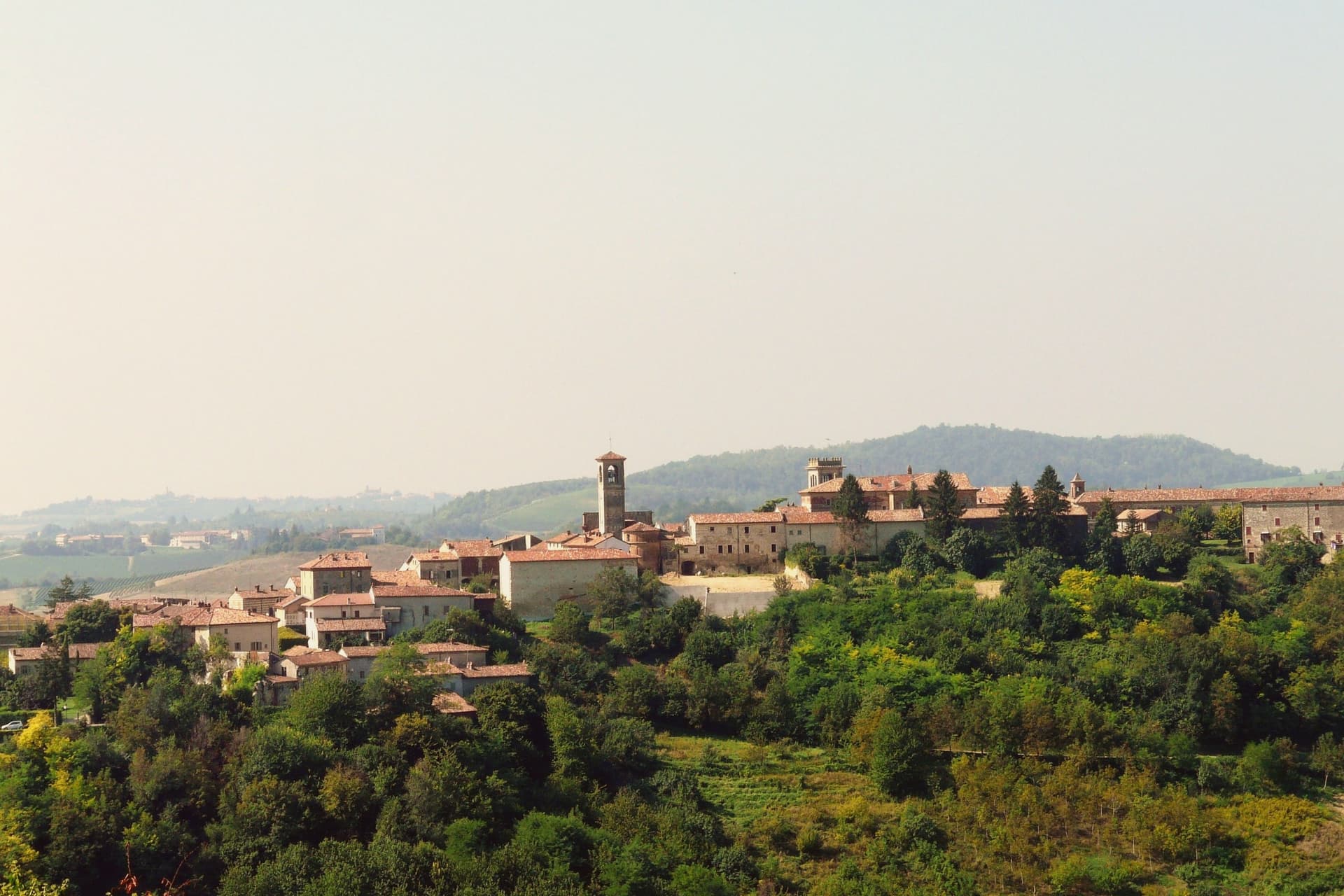
The name Fortunago comes from the Celtic Fortunacus, a settlement marked above a watercourse. The village sits in the Apennine half of the Oltrepò Pavese, the wedge of Pavia province that crosses the Po and presses south toward Liguria, with Varzi to the south and Pinot Nero vineyards to the east.
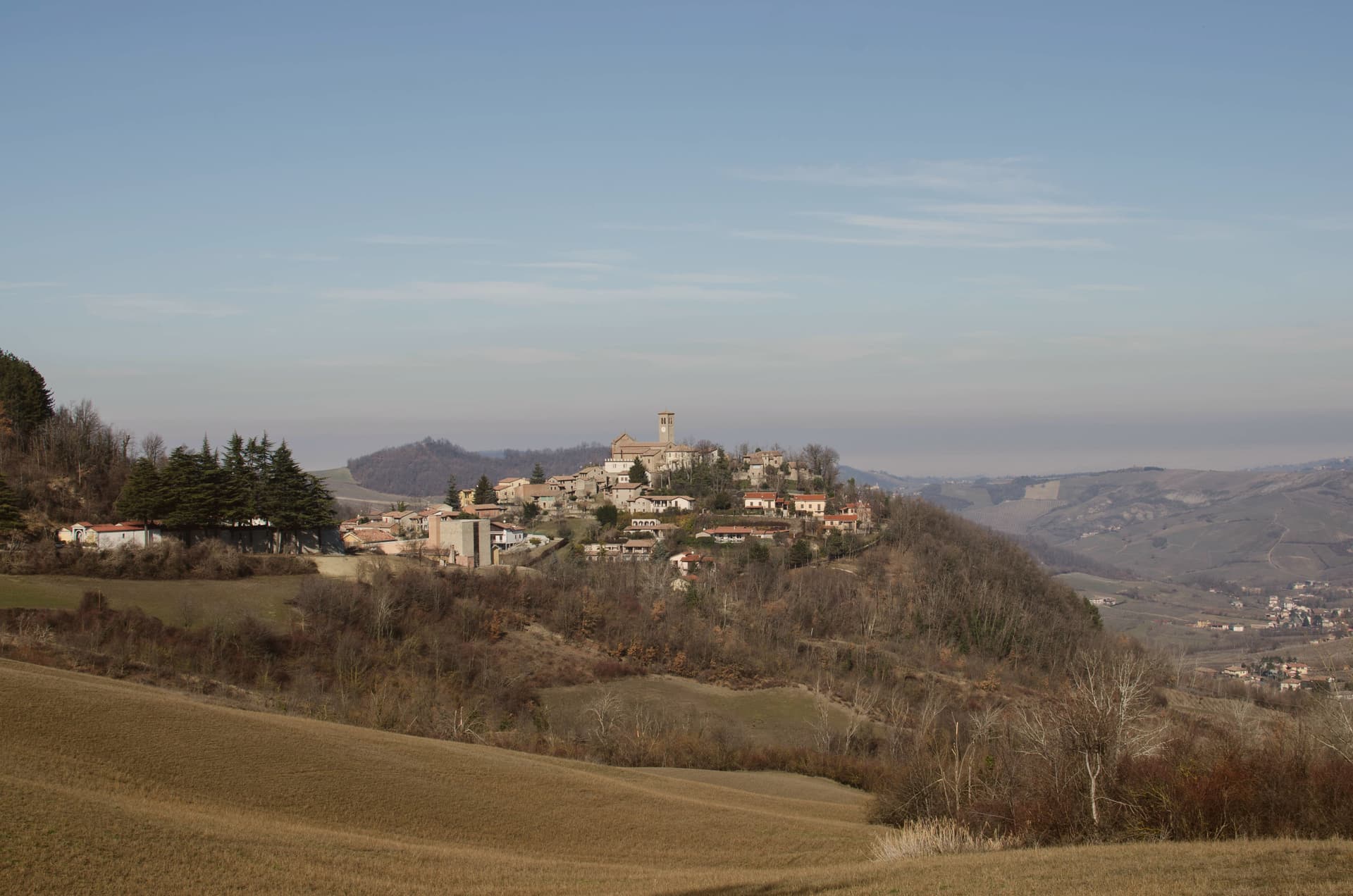
The centro storico climbs the ridge in a single line: the oratory on the lower slope, the church at the upper end, the tower and wall on the rise just past it, so that walking through the village is walking up through its history in order, watercourse settlement, medieval defense, then parish seat. Above it all the hills carry oak and chestnut wood and a pasture plateau at 600 meters.
What holds the place together is the stone itself: the same exposed façades, wooden shutters and porphyry paving run from the lower oratory to the upper church, restored as one piece rather than as separate monuments, which is why the village reads as a whole settlement rather than a scatter of old buildings.
What to see in Fortunago
- Chiesa di San Giorgio. Tempera triptych on wood signed Pesina inside, the church dominating the upper end of the village and visible above the rooftops.
- Torre del castello. One tower and a run of wall, all that stands of the fortress that once held the rise above the church.
- Oratorio di Sant'Antonio Abate. Chapel dedicated to the Virgin of Sorrows, set on the slope below the centro storico, away from the village's main religious building.
How to get to Fortunago
Piacenza is roughly 62 minutes away by road.
Our tip
April through October is the active season. May and June bring wildflowers across the high pasture plateau above the village and the first salumi festas. July and August are warm but not oppressive at this altitude, with evenings dropping into the high teens.
Gavi
Why visit Gavi
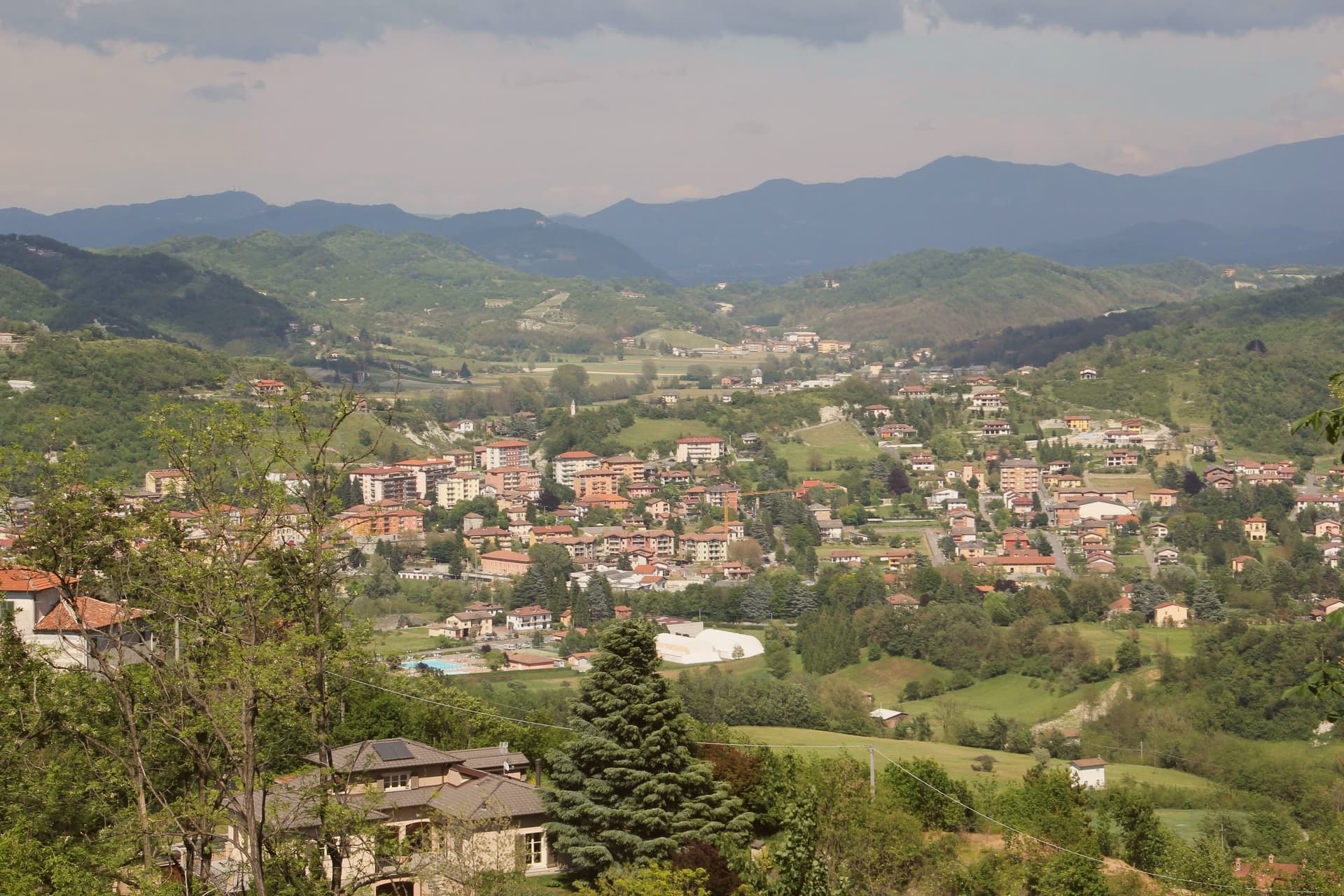
Gavi sits at 233 meters where the Lemme stream meets the Rio Neirone, the southern edge of Piemonte before the Apennines drop to Genova. The first record of vines here is a 972 tribute paid to the Republic of Genoa, three Genoese pounds of wine.
The medieval town clusters along the narrow valley below the Forte di Gavi, a polygonal star fortress built and expanded by the Genoese between 1540 and 1673 on the foundations of a tenth-century castle. The fort fell to French-Savoyard troops in 1625 and was retaken in twenty-one days; under the Savoy it became a prison, then a prisoner-of-war camp for Austro-Hungarian and later Allied soldiers in both world wars.
Cortese di Gavi was made DOC in 1974 and DOCG in 1998. Wine from vines inside the commune may be labeled Gavi di Gavi, and the consortium maintains a separate denomination for grapes grown in the historic center.
La Gallina, Locanda La Raia have been named by a guide.
What to see in Gavi
- Forte di Gavi. Polygonal star fortress on the hill above the town, built by the Genoese 1540 to 1673, later a Savoy prison and WWI/WWII POW camp.
- Chiesa di San Giacomo Maggiore. Romanesque parish church in the medieval center, with twelfth-century stonework and a baroque interior.
- Centro storico. Stone-house old town along the Lemme stream, arcaded streets and small piazzas framed by terraced vineyards.
How to get to Gavi
Genova is roughly 54 minutes away by road.
Our tip
April through October is the year. May and June bring green hills and the Lemme running clear; September and October are dry, with the harvest and the first cool nights. July and August touch the high twenties; the Forte di Gavi closes its tower walks in the afternoon heat. Gavi sotto il Forte falls in July.
Gattinara
Why visit Gattinara
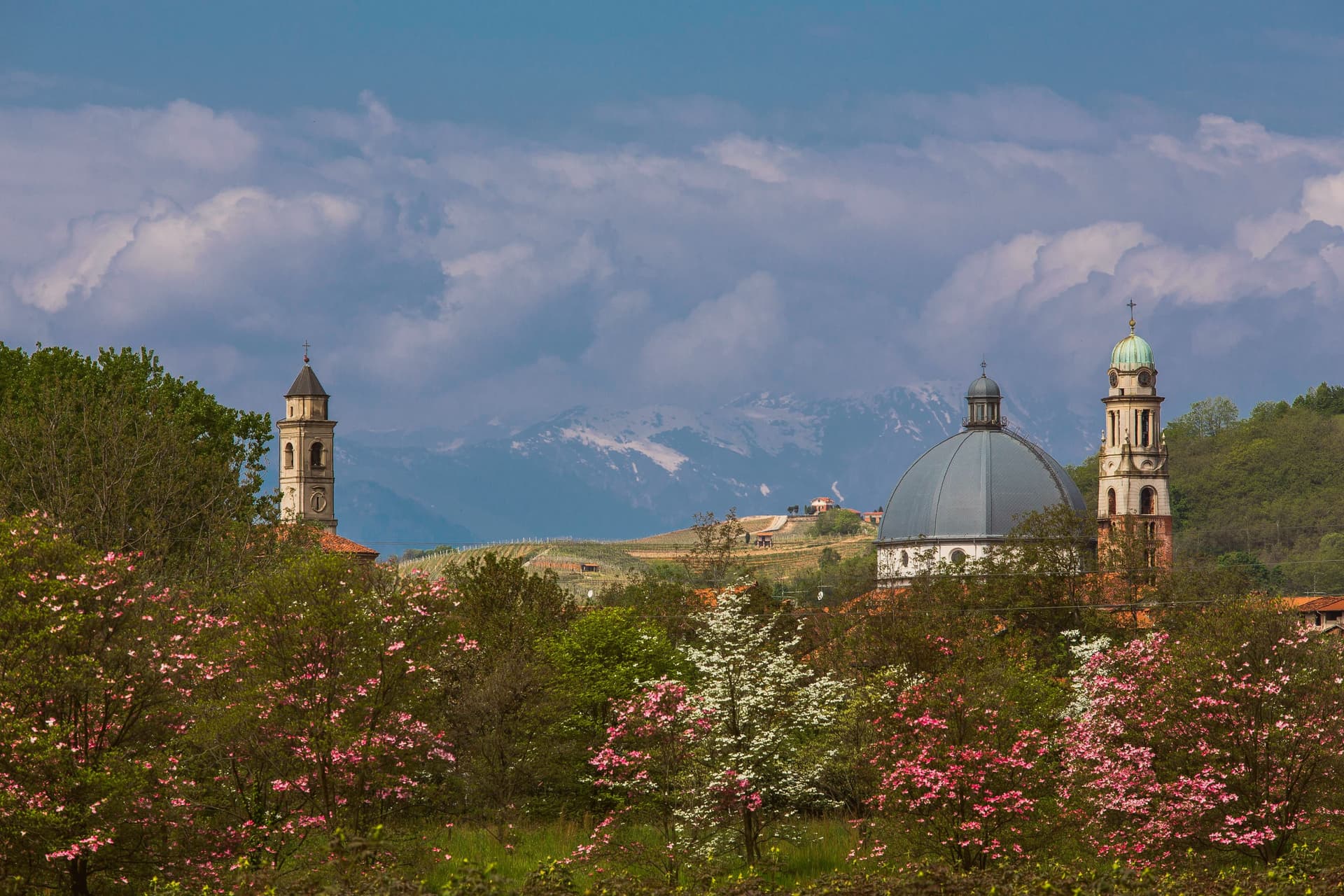
Gattinara sits on the right bank of the Sesia, north of Vercelli, in the Alto Piemonte wine zone where Nebbiolo is called Spanna. The hills behind the town are volcanic, the surface gravel pushed up when Africa met Europe and built Monte Rosa sixty million years ago.
Romans planted vineyards here in the second century BC. In 1242, the commune of Vercelli established a borgofranco that became the modern town.
In the early sixteenth century Cardinal Mercurino Arborio di Gattinara, Grand Chancellor to Emperor Charles V, served the local wine at his diplomatic dinners in Spain and Flanders; it stayed a court favorite for decades. The Torre delle Castelle, tenth-century watchtower above the vineyards, still stands on the ridge.
Gattinara became Italy's twentieth DOCG in 1990. The wine is at least ninety percent Nebbiolo, aged three years in wood for the riserva, and the bottles age longer than most Barolo because the volcanic minerality slows everything down.
Cucine Nervi, Osteria Contemporanea have been named by a guide.
What to see in Gattinara
- Torre delle Castelle. Tenth-century watchtower on the ridge above the vineyards, part of a fortified system that guarded the wine hills.
- Castello di San Lorenzo. Medieval fortress on the hill, paired with the Torre delle Castelle as the upper defensive line.
- Chiesa di San Pietro. Parish church in the historic center, the religious anchor of the borgofranco founded in 1242.
How to get to Gattinara
There is a railway station in the town, so you can arrive without a car and never need one while you are here. Novara is roughly 45 minutes away by road.
Our tip
April through June and September through October are the best months. The vineyards green up by Easter and the wine roads through the hills are walkable without heat. Harvest in late September pulls visitors to the cellars.
Iseo
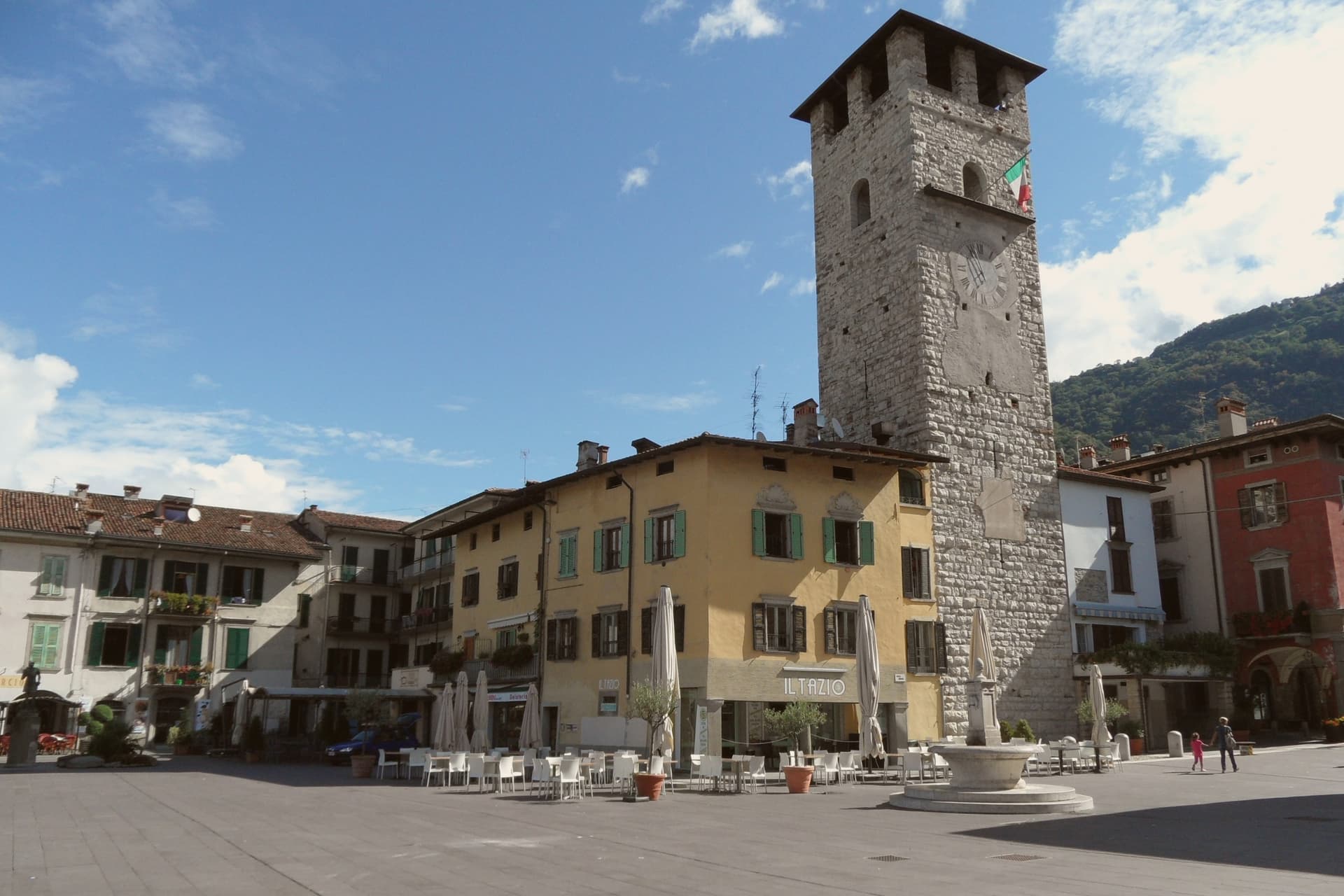
Why visit Iseo
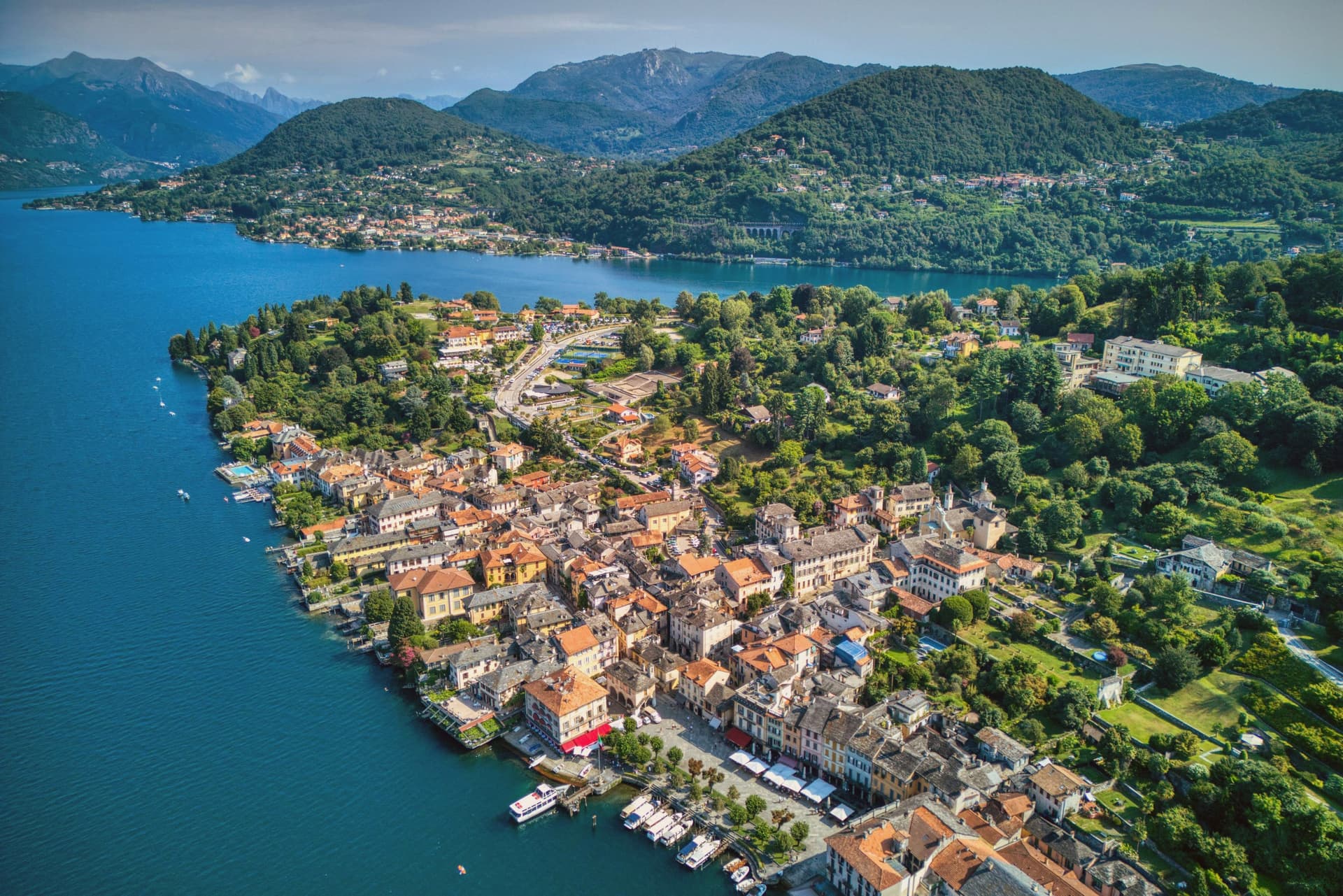
Iseo sits at 198 meters on the southeast shore of Lake Iseo, the fourth-largest lake in Lombardia, fed by the Oglio. The town was founded around a monastery in the 900s and grew under the Sozzi, the Isei, and finally the Oldofredi.
From 1428 to 1797 Iseo was part of the Republic of Venice. The lakefront and the vineyards to the south form the town's two working halves: one facing the water and the ferries that cross it, the other rising into the Franciacorta hills where the metodo classico grapes are grown.
Ferries from the lakefront connect to Monte Isola, the largest lake island in southern Europe, and to Sarnico across the water in Bergamo province. A lake town that turned its inland edge to wine and its waterfront to the island: the two directions, water and vineyard, still define how the town is used.
Radicì, Izé Restaurant dell'Hotel Araba Fenice, Trattoria del Muliner 1964 and 1 more have been named by a guide.
What to see in Iseo
- Castello Oldofredi. The stone fortress stands above the lakefront, its walls facing the water rather than the town center, a reminder that it was built to watch the lake approach.
- Pieve di Sant'Andrea. Founded by Bishop Vigilio, the church keeps its bell tower set into the middle of the façade rather than beside or behind it, an arrangement rare among Lombard Romanesque buildings.
- Piazza Garibaldi. Main lakeside square with the first Italian statue of Garibaldi, erected in 1883, the year after his death.
How to get to Iseo
There is a railway station in the town, so you can arrive without a car and never need one while you are here. Brescia is roughly 28 minutes away by road.
Our tip
April through October runs Iseo's lake season. April and May open the ferries to Monte Isola, the Franciacorta wineries reopen for tastings, and the lakefront fills on weekends. June through August is the peak window: warm enough to swim, hot enough that the centro empties between 14:00 and 17:00, and the lake breeze keeps evenings comfortable.
Ovada
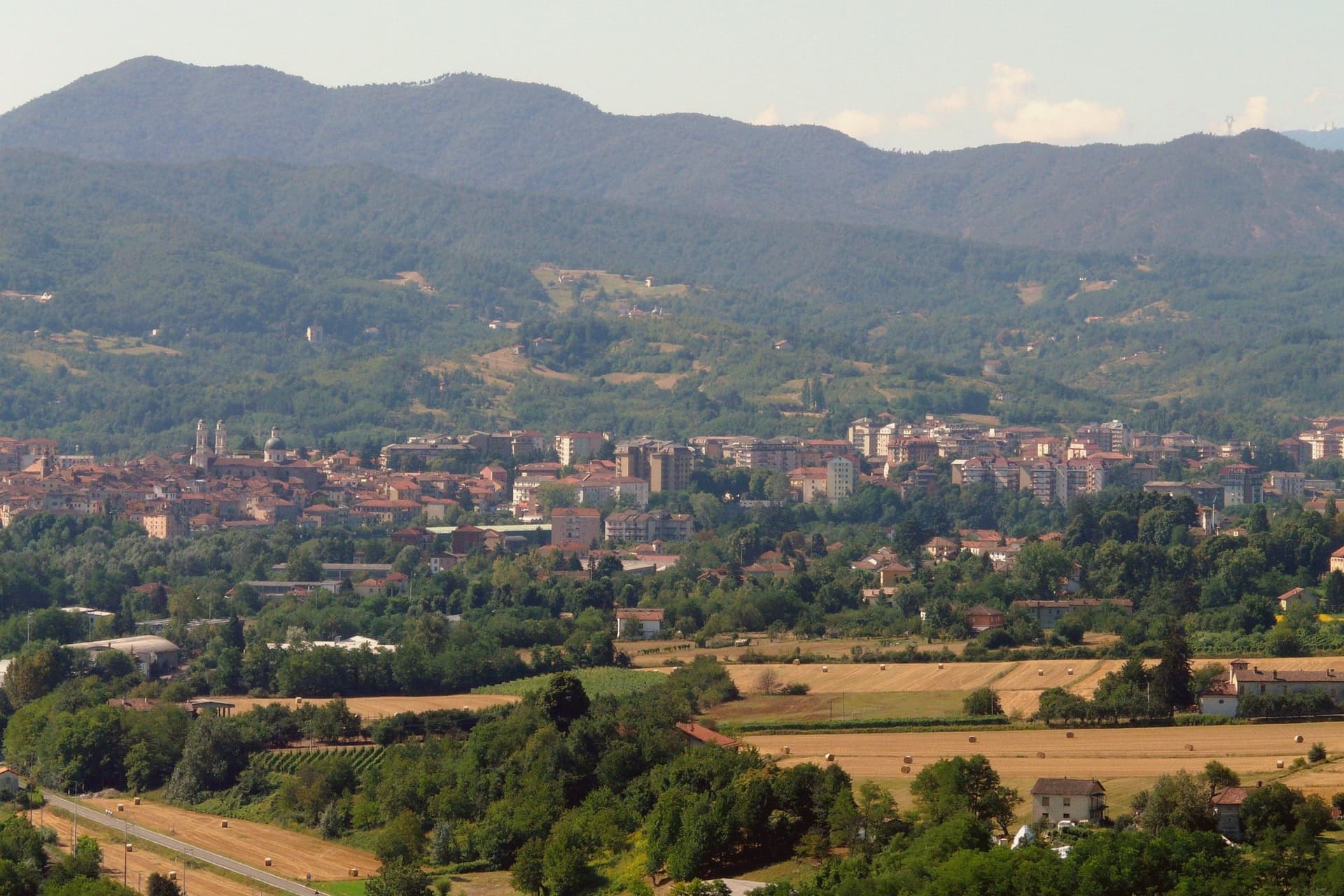
Why visit Ovada
Ovada sits at 186 meters at the confluence of the Orba and the Stura, in the southern Monferrato hills, 35 kilometres north of Genova on the old salt road between the port and the Po plain. The painted façades and the tall narrow houses still show the imprint of the Republic of Genoa, which held the town through the Middle Ages alongside the Marquises of Monferrato.
Dolcetto from the Ovadese hills was already commercialised in the Lombard period (seventh and eighth century) and was the first Dolcetto in Piemonte to win DOC status, in 1972; the DOCG for Ovada Superiore came in 2008. The Chiesa Parrocchiale di Nostra Signora Assunta, with its two twin bell towers, was designed by Gio Antonio Delfrate after the Genoese Basilica di Santa Maria delle Vigne, built from 1772 to 1781 and consecrated in 1801.
The Capuchin church was built from 1640 after a plague vow of 1631 and suppressed under Napoleon in 1810. Ovada carries Città del Vino.
L'Archivolto - Osteria Nostrale have been named by a guide.
What to see in Ovada
- Chiesa Parrocchiale di Nostra Signora Assunta. Twin-bell-tower parish church built 1772–1781 by Gio Antonio Delfrate, modelled on Santa Maria delle Vigne in Genova, consecrated 1801.
- Loggia di San Sebastiano. Medieval loggia, the original parish church of Ovada dedicated to Santa Maria, now used as a venue for cultural events.
- Chiesa dell'Immacolata Concezione (Cappuccini). Capuchin church begun in 1640 after a 1631 plague vow, single nave with two side chapels, suppressed in 1810 under Napoleon's ecclesiastical decree.
How to get to Ovada
There is a railway station in the town, so you can arrive without a car and never need one while you are here. Genova is roughly 47 minutes away by road.
Our tip
April through June is the green window in the Ovadese hills, vines breaking bud and the rivers running off the Ligurian Apennines. July and August touch the mid-thirties; the centro storico thins after lunch and the Orba pools become bathing spots for residents. September and October are the harvest months, the entire Ovada DOCG zone working through vendemmia, and the cantine open for tasting.
Casale Monferrato
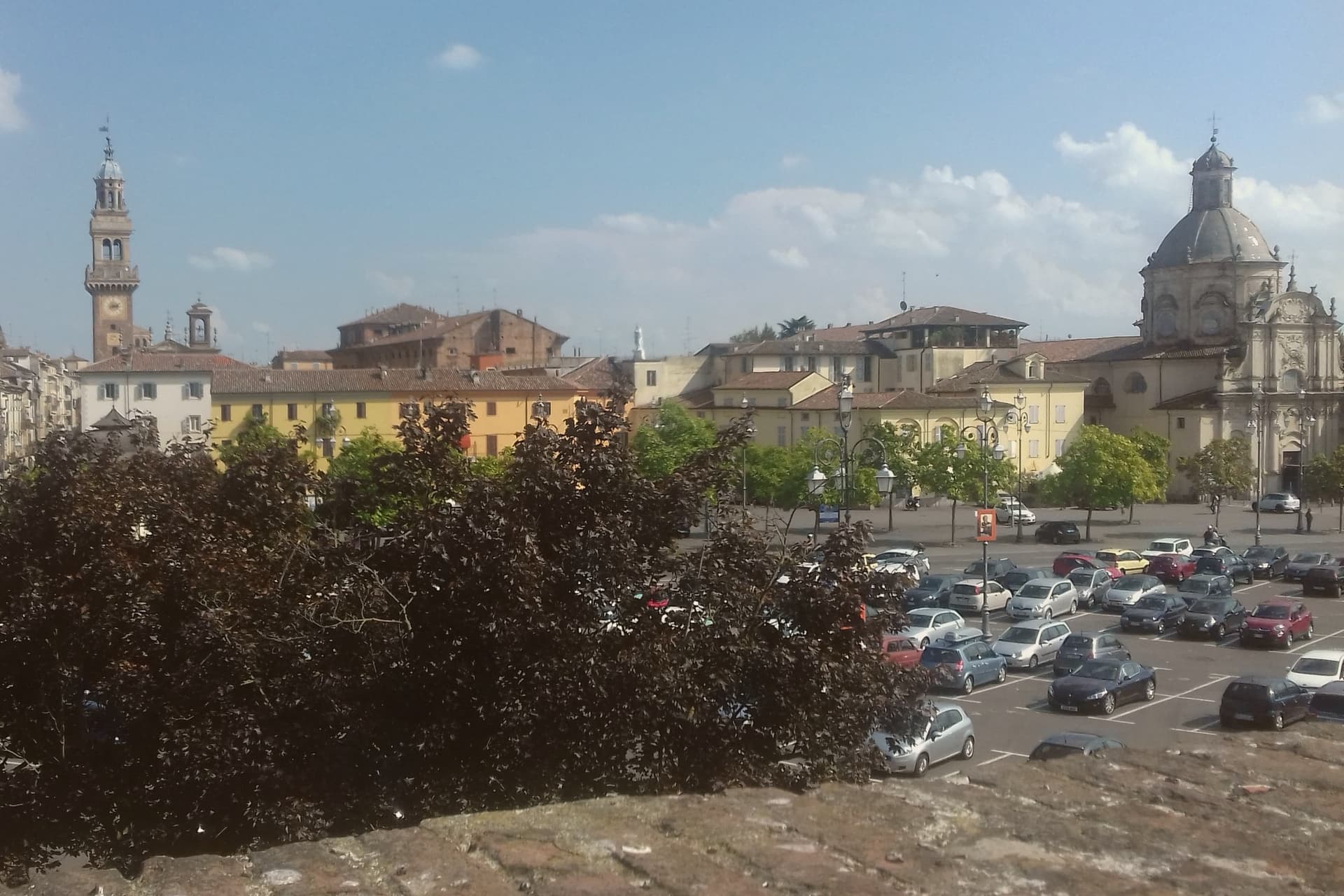
Why visit Casale Monferrato
Casale Monferrato sits at 116 meters on the right bank of the Po, sixty kilometers east of Torino, at the foot of the Monferrato hills. Casale fell to the Marquess of Montferrat in 1292 and rose as capital of the Marchesato in the fifteenth and sixteenth centuries, on the strategic edge of the Po Valley.
The Duomo di Sant'Evasio is its oldest stone: consecrated on January 7, 1107 by Pope Paschal II on the site of a Roman temple to Jupiter and a Liutprandian-era church to Saint Lawrence, the basilica is one of the most important Romanesque-Lombard cathedrals in Piedmont, with five naves and a matroneum of trifore and quadrifore galleries. The Castello dei Paleologi, raised in 1352 by Giovanni II Paleologo, runs an asymmetric hexagonal plan with circular corner towers and a dry moat.
The Sinagoga, completed in 1595 in the old Jewish quarter, holds a gilded Piedmontese Baroque interior and a museum of Jewish history. The town is also the historic capital of Italian cement and Krumiri biscuits.
Osteria Bar Sport, Accademia Ristorante, Faletta 1881 and 1 more have been named by a guide.
What to see in Casale Monferrato
- Duomo di Sant'Evasio. Romanesque-Lombard cathedral consecrated 1107 by Pope Paschal II, with five naves, barrel and cross vaults, and a matroneum of trifore galleries.
- Castello dei Paleologi. 1352 castle by Giovanni II Paleologo, asymmetric hexagonal plan with circular corner towers and a dry moat, now used for exhibitions.
- Sinagoga di Casale Monferrato. 1595 synagogue in the old Jewish quarter, gilded Piedmontese Baroque interior, restored 1968 with a Jewish history museum on the upper floor.
How to get to Casale Monferrato
There is a railway station in the town, so you can arrive without a car and never need one while you are here. Novara is roughly 41 minutes away by road.
Our tip
April through June and September into October are the months Casale opens up. The Po valley clears of winter fog, the Monferrato vineyards leaf or harvest, and the Duomo's matroneum holds light it does not get in winter. July and August are hot and still on the river plain; the Paleologi castle's underground passages and the synagogue's gilded hall hold cool, but most days the town empties between two and five. Mercatino dell'antiquariato di Casale Monferrato falls in August.
More from Anywhere Italy
- The best hill towns within 90 minutes of Milan
 The best wine towns within 90 minutes of Genoa
- The best hill towns within 90 minutes of Piacenza
 The best towns with a serious restaurant that eat well within 90 minutes of Novara
 The 6 best hill towns in the province of Alessandria
 The best cheese towns within 90 minutes of Milan