
The best towns with a World Heritage site within two hours of Genoa
The land within easy reach of Genoa changes character fast. Schist and coloured plaster on the coast, drystone terraces holding the vines above the sea, then inland the low clay hills of Monferrato and Roero where the rows run to the horizon and the autumn air smells of fermenting must and white truffle. The eating follows the geography: anchovies, focaccia and pesto near the water, tajarin, brasato and hazelnut cake once you are over the Apennine watershed. Spring and October are the workable seasons, when the coastal paths are open and the wine towns are busy with harvest rather than with visitors.
Most people who land in Genoa point themselves at Portofino, and the road out along the Golfo del Tigullio carries the whole of that decision in July and August. It is a beautiful harbour, and it is also a small one, priced and parked accordingly, with queues for the boat and a lunch bill to match. Santa Margherita Ligure absorbs the overflow. None of that is a scandal, it is simply what happens when a famous name sits on a peninsula with one road in.
The listed sites, though, are scattered much wider than the postcard suggests. The same coast continues east into the gulf where Byron swam, the same terraced hillsides run up behind the villages, and inland the vineyard landscapes of Piedmont and the sacred mountains of the Alps and Apennines carry their own UNESCO listings in towns where the parking is free. These are the places in this list, close enough to Genoa for a day out, quiet enough to eat lunch without booking.
Of the 96 communes we have mapped in a 120-minute drive of Genoa, 6 qualify as towns with a World Heritage site: each holds a site UNESCO has listed. The smallest, Serralunga di Crea, has 503 residents.
Two more lists worth reading alongside this one: The best towns with a World Heritage site within 90 minutes of Pisa and The best hidden towns with a World Heritage site in Piemonte.
Serralunga di Crea
Why visit Serralunga di Crea
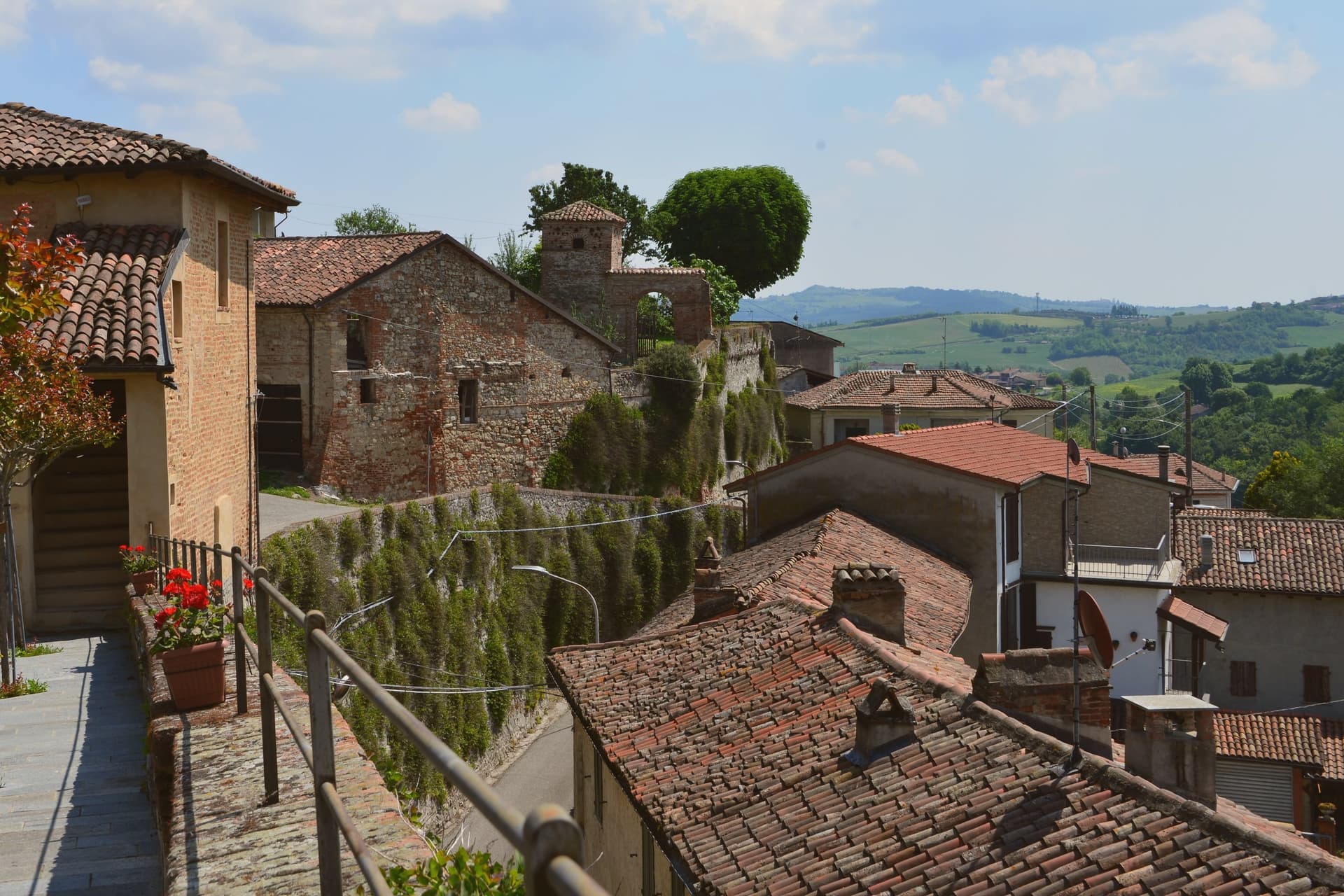
Serralunga di Crea sits in the Basso Monferrato hills forty-five kilometers east of Torino, on the highest of a series of ridges that look across the Po plain. The hill behind the village rises to 443 meters, and it is on this wooded height, rather than in the village itself, that the commune's main structures stand: the sanctuary at the centre, the ring of chapels around it, and the vineyards on the lower slopes beyond the reserve boundary.
The chapels were begun in 1589 by Costantino Massino on a plan of fifteen Rosary stations, expanded over the following two centuries to twenty-three chapels and five hermitages, so what stands today is the accumulation of a long building period rather than a single campaign. The vineyards that surround the hill carry a separate and later UNESCO recognition, from 2014, so the commune holds two world heritage lines on the same stretch of ground: one on the summit, one on the slopes around it.
The village below is small; the hill above is where its two distinctions both sit, layered rather than separate.
What to see in Serralunga di Crea
- Sacro Monte di Crea. Chapels and hermitages climb the wooded hill above the village along a Rosary-plan pilgrim route, each station set among trees with views opening intermittently over the ridge.
- Santuario di Nostra Signora di Crea. Marian sanctuary at the centre of the Sacro Monte, the building the whole climb of chapels was arranged around, traditionally founded by Saint Eusebius of Vercelli.
- Cappella del Paradiso. Final chapel of the Sacro Monte, summit of the climb, with over 300 statues in a polychrome celestial composition.
How to get to Serralunga di Crea
Novara is roughly 58 minutes away by road.
Our tip
April through June is the green window in the Basso Monferrato: hills coming into leaf, the climb up the Sacro Monte cool in the morning, and the panorama across the Po plain at its clearest. July and August touch the mid-thirties on the open ridges; the woods around the chapels stay cooler, but the late afternoon climb is hard work. September and October are the wine months, with Monferrato harvest in the surrounding cantine and pilgrim groups returning for the Rosary festivals.
Govone
Why visit Govone
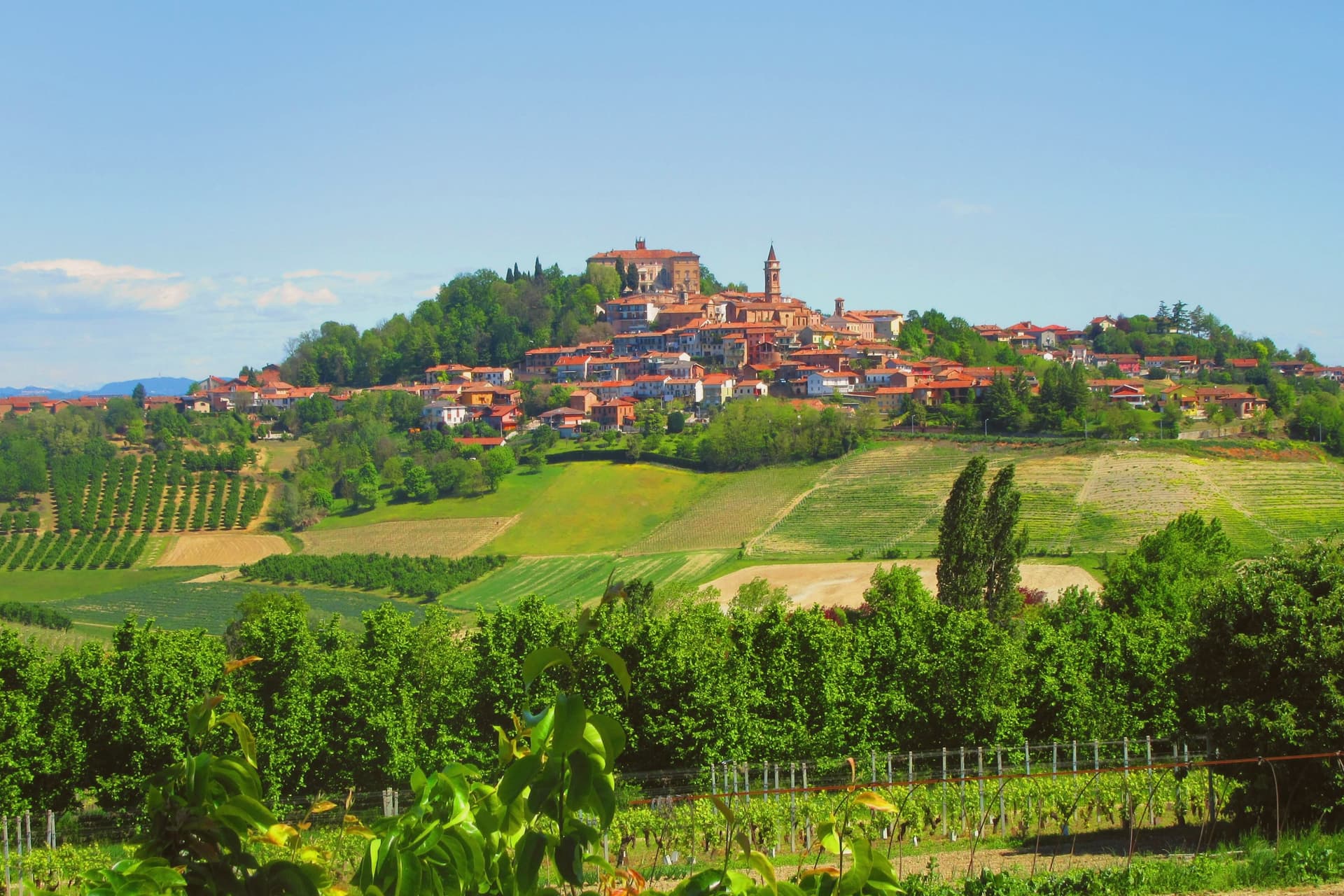
Govone sits at 301 meters on the eastern edge of the Roero, where the hills give way to the Tanaro plain that separates Roero from Langhe. The site began as a Solaro family palace before the Savoy bought it in 1792, holding it as a summer residence for the royal house until 1870.
In 1997 UNESCO added it to the Residences of the Royal House of Savoy list, alongside thirteen other Savoy palaces. Rousseau's time here as a household tutor for Count Ottavio Solaro predates the castle's Savoy ownership by decades, a reminder that the building's Solaro-era life ran long before it became a royal fixture.
The bell tower of the parish church sits on the ridge below the castle, so the village reads as a single climb: houses and church on the slope, the residence and its terraced garden at the top, looking across the Tanaro to the Langhe hills. The castle now works as the town hall, its noble floor open for tours the rest of the year and its rooms given over to the Christmas market for six weeks each winter.
A Solaro country house, absorbed into Savoy state ceremony, now runs as civic offices for most of the year and a holiday market for the rest, which is a fair summary of how a minor royal residence keeps itself in use once the monarchy that built it is gone.
What to see in Govone
- Castello Reale di Govone. The two-flight grand staircase carries the eye up past the telamones brought from Venaria Reale, and the noble floor is open for guided tours now that the building serves as the town hall.
- Giardino all'italiana. Formal terraced garden behind the castle, with views across the Tanaro to the Langhe hills.
- Chiesa di Santa Maria Annunziata. Parish church in the village, with eighteenth-century altarpieces and a bell tower on the ridge below the castle.
How to get to Govone
Torino is roughly 65 minutes away by road.
Our tip
April through October is the season. May and June bring the Roero into full color and the castle gardens open for guided tours. September and October are dry and the harvest fills the surrounding hills.
Vernazza
Why visit Vernazza
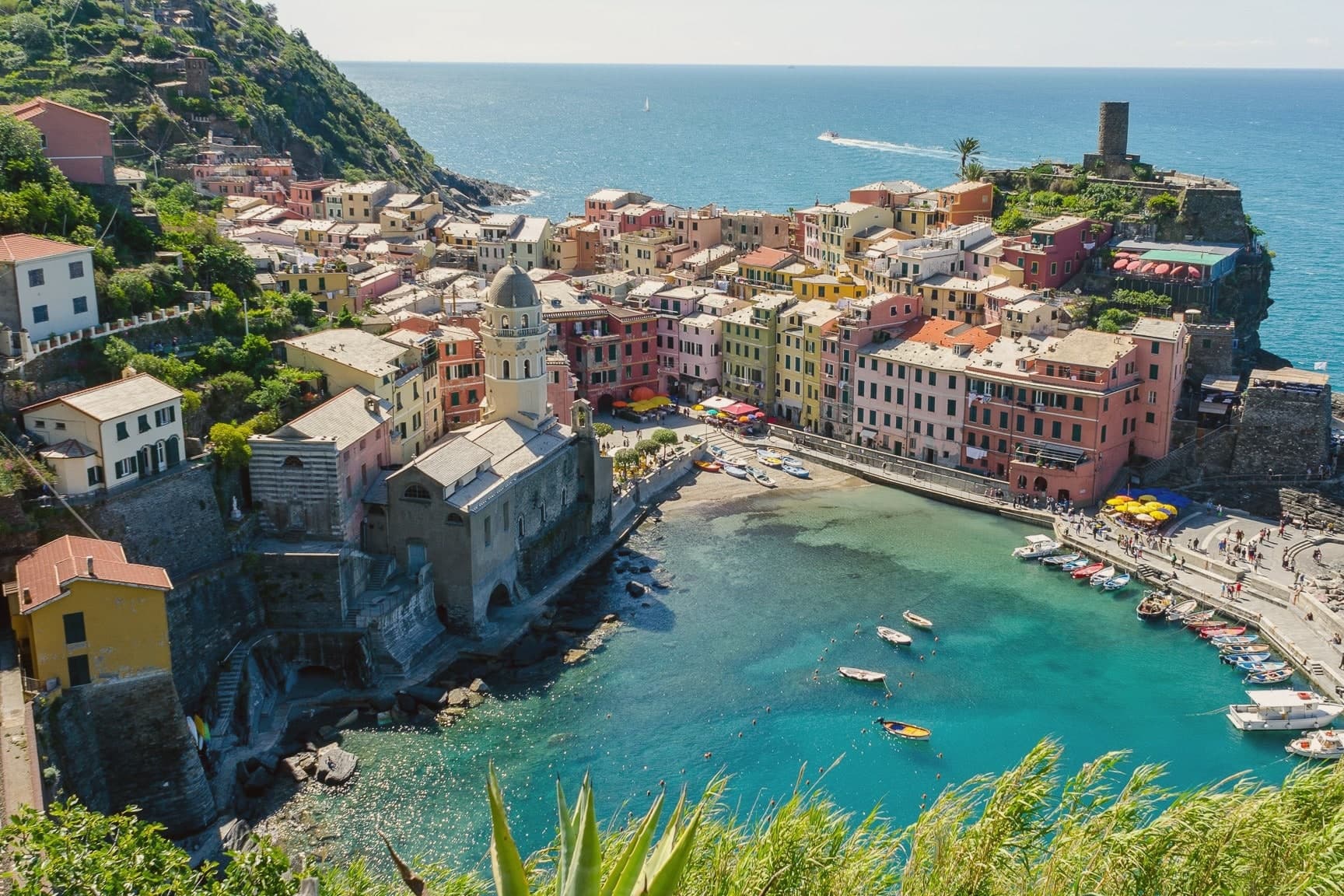
Vernazza sits at sea level, the middle of the five villages along this stretch of coast and the only one with a natural harbor. The houses stack vertically up the gorge of the Vernazzola torrent, painted in faded ochres and pinks, with the square at the harbor marking the seaward end of Via Roma and the social center of the village.
On 25 October 2011, a freak rainstorm dropped 22 inches of water in four hours. The torrent burst its culvert and buried the main street under four meters of mud and debris.
Three people died. The village was closed for months, and most of the houses on Via Roma had to be excavated to the second story before it reopened.
The harbor, the fortified height above it, and the terraced slopes behind form a single working shape: a landing place guarded from above and fed from the terraces, all of it packed into a gorge narrow enough that a few hours of rain could bury the street from end to end.
What to see in Vernazza
- Castello Doria. The keep and the Belforte tower stand over the harbor, built by the Doria as a defense against Saracen raids.
- Chiesa di Santa Margherita d'Antiochia. Fourteenth-century church on a rock platform at the edge of the harbor, documented from 1318, the gothic anchor of the village.
- Porto di Vernazza. The only natural harbor in the Cinque Terre, with a small pebble beach and a ferry pier serving the four other villages and Portovenere.
How to get to Vernazza
There is a railway station in the town, so you can arrive without a car and never need one while you are here. Genova is roughly 101 minutes away by road.
Our tip
April through June and September into October are the right months in the Cinque Terre. The terraces green in spring, the Sciacchetrà and Vermentino harvest runs from August into early September, and the autumn light on the painted houses is what most photographers come for. July and August are full beyond capacity: ferries, trains and trails all hit limits, the harbor square loses any quiet, and the village rationed entry on the worst weekends of 2023 and 2024. Giochi Di Santa Margherita falls in July.
Monterosso al Mare
Why visit Monterosso al Mare
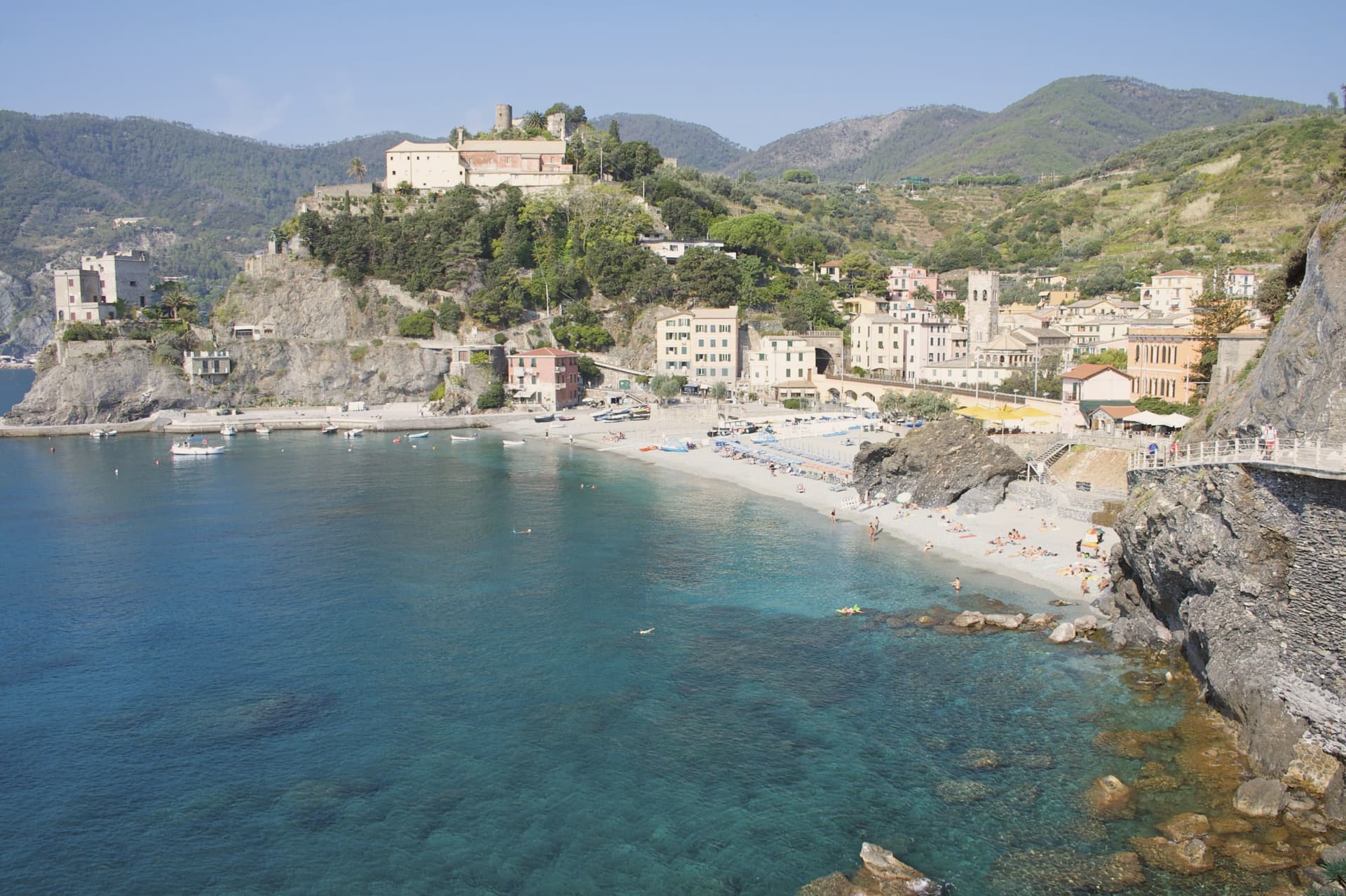
The village splits into two halves on either side of a headland: the older centro storico and, on the other side, the Fegina seafront where the railway runs behind the sand. The Capuchin convent looks out over both sides from that same headland, the hinge on which the whole layout turns.
Above the rooftops, at 464 meters, a hilltop sanctuary has stood on the same ground since 740, older than the village below it and the oldest Marian site in Liguria. The parish church down in the old town, banded in black and white marble, was built centuries later, so the two put a long stretch of the coast's religious history on display within sight of each other.
Montale's villa stood in Fegina, and the rocks and cliffs he carried into Ossi di seppia are the same ones visible from either half of the village. The geography here is the story: a headland dividing old from new, and a hillside holding the older of the two by several centuries.
What to see in Monterosso al Mare
- Chiesa di San Giovanni Battista. Parish church built 1282-1307 with a black-and-white-banded marble façade and a fresco of the baptism of Christ over the main portal.
- Santuario di Nostra Signora di Soviore. Hilltop sanctuary at 464 meters above the village, occupied by a church since 740, the oldest Marian site in Liguria.
- Convento dei Cappuccini. Seventeenth-century Capuchin convent on the San Cristoforo headland, separating the centro storico from Fegina.
How to get to Monterosso al Mare
There is a railway station in the town, so you can arrive without a car and never need one while you are here. Genova is roughly 78 minutes away by road.
✷ We have written about Monterosso al Mare
“The Cinque Terre are five towns with a national park around them and a marketing name that adds up to five. The copies without the name are a few miles away in either direction, and the experience they sell is the same experience, with the crowd divided by a hundred.”
Read our piece on Monterosso al Mare →Cinque Terre | How To Do It Right
Our tip
April through June and September through October are the workable months. The Sentiero Azzurro is open, the sea warms from late May, and the village still moves at a manageable pace. July and August are difficult: the Cinque Terre regional system caps walking-path tickets but the centro storico still saturates, and trains arrive standing-room from La Spezia. Festa del Limone falls in May.
Portovenere
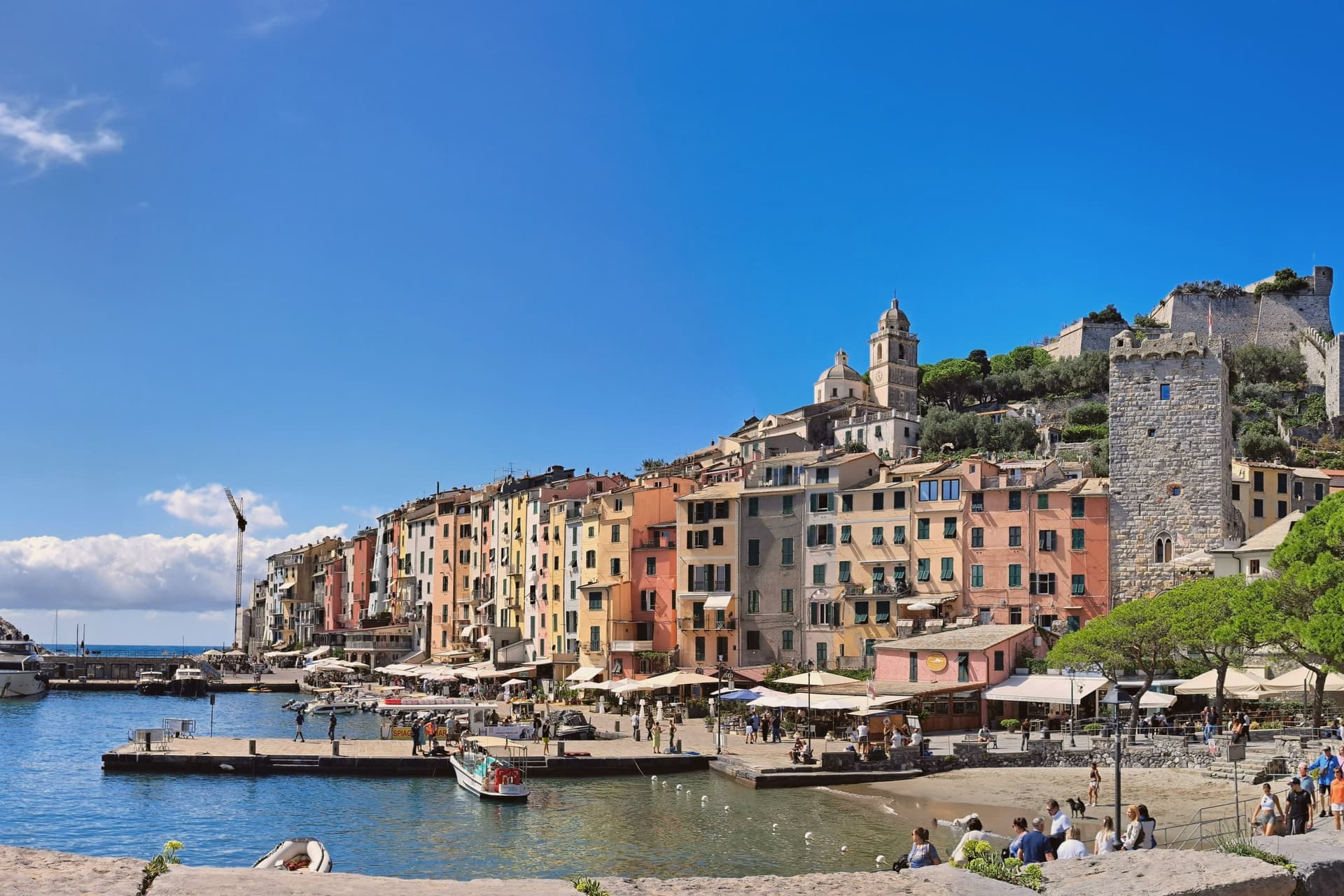
Why visit Portovenere
Portovenere closes the western mouth of the Gulf of La Spezia, three kilometers south of the city by water, facing the islands of Palmaria, Tino and Tinetto across open water. The Roman Portus Veneris dates to at least the first century BC, named for a temple to Venus on the promontory that now carries the striped church at the harbour mouth.
Genoa took control in 1113 and fortified the town as the southern anchor of its Riviera defences, opposite Pisan Lerici across the gulf: the fortress above the harbour and the church on the rock were built to face each other's rival coast rather than each other. The upper town holds the castle and its Romanesque parish church, rebuilt after a fire in 1340 damaged that quarter; the single medieval street below runs parallel to the harbour, its plan unchanged since Genoa first laid the town out in the twelfth century.
The promontory church stands apart from both, reachable along the water's edge, with the sea cave that took Byron's name cut into the rock beneath it. A fortified street, a hilltop castle and a temple site turned church: the town reads as a defensive line built along a single spine of rock, with the gulf doing the rest of the work UNESCO recognized in 1997.
What to see in Portovenere
- Chiesa di San Pietro. Consecrated 1198, black and white striped Gothic rebuild from 1256-1277, on the rocky promontory where the Roman temple of Venus stood.
- Castello Doria. First cited 1139, rebuilt 1161, expanded into the seventeenth century, the Genoese fortress above the harbour, prison under Napoleonic rule.
- Grotta dell'Arpaia. Sea cave below San Pietro, also called Byron's Grotto for the English poet who swam from here to Lerici across the gulf to visit Shelley.
How to get to Portovenere
Pisa is roughly 83 minutes away by road.
✷ We have written about Portovenere
“Most people spend a few hours in Portovenere between the ferry and the aperitivo. We gave it three weeks, and the town we got was the one the couple on the balcony lived in: vertical, repetitive, almost monastic, a town where the day is a staircase you climb the same way at the same hours, where the luxuries are a balcony the size of a doormat and an espresso stretched to thirty minutes because there is no reason on earth to drink it faster.”
Read our piece on Portovenere →Portovenere | The Slowest Coffee in Italy
Our tip
April through June and September to October are the working windows. Ferries to Palmaria run on full schedules from May onwards; the gulf is calm enough to swim by late May. July and August fill the carruggio and the Castello Doria, accommodation runs at three times shoulder rates, and the queue for the climb to San Pietro can reach an hour. Sagra Pansa E Stacca falls in June.
Pisa
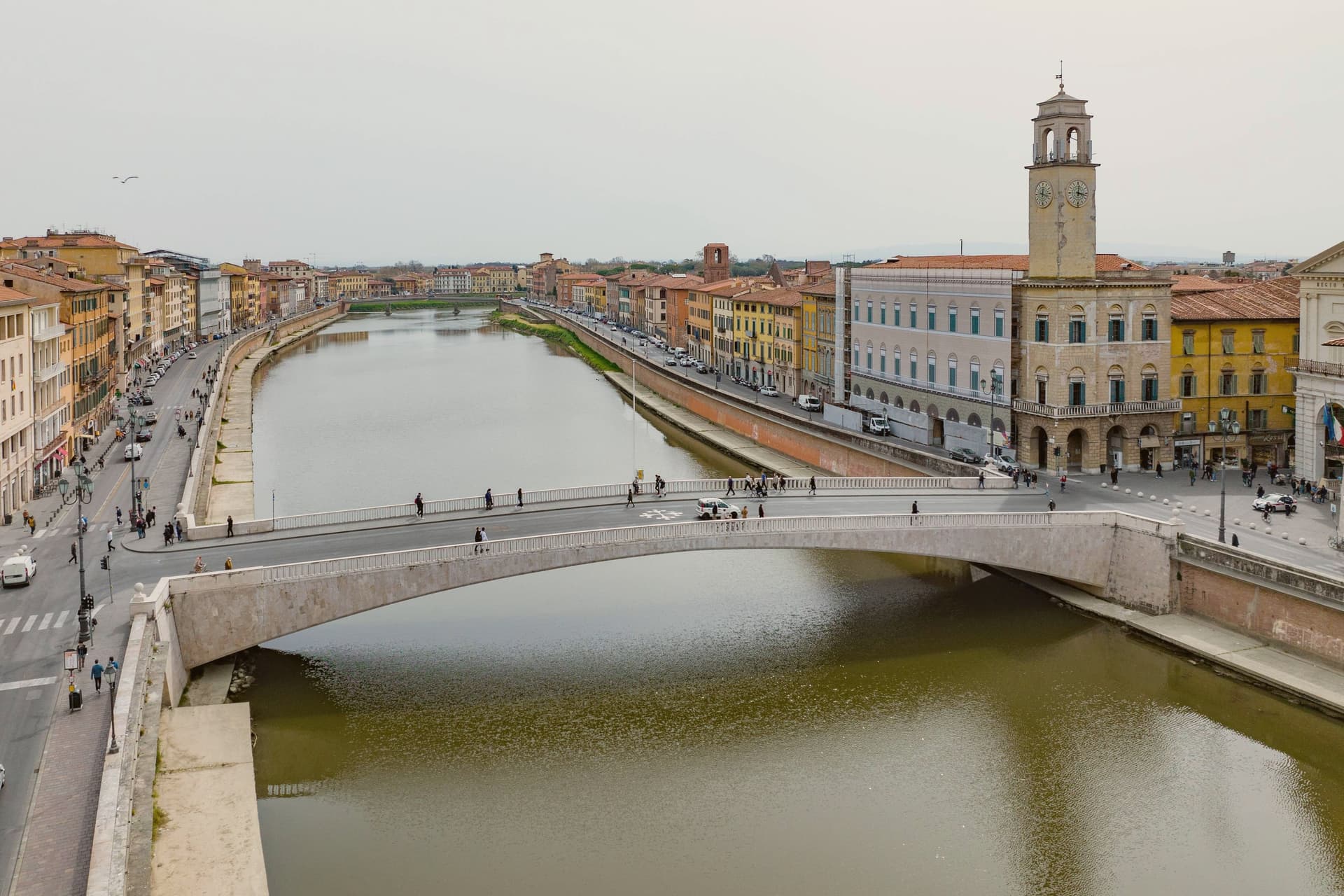
Why visit Pisa
The Arno reaches the Ligurian Sea twelve kilometers past the city, and the river is what built it: an Arsenal on its banks built galleys for the Crusades, and Mediterranean trade paid for the walled compound northwest of the centro. That compound, inscribed by UNESCO as one of the first Italian sites in 1987, gathers four buildings of the same Pisan Romanesque school in one field, the cathedral, the baptistery, the cemetery cloister and the bell tower, close enough to read as a single composition rather than a set of monuments visited separately.
The city has a second center away from that field. Piazza dei Cavalieri became the Medici political seat after the republic fell, and the university founded in 1343 keeps both squares populated with people who live and work there rather than pass through.
The Lungarni tie the two halves together physically, two quays following the river on both banks, lined with palazzi spanning the twelfth to the nineteenth century. What this adds up to is a town built in two unequal pieces: a religious and civic compound frozen at its medieval peak, and a working river city around it that never stopped adding centuries to its banks.
What to see in Pisa
- Torre Pendente. Finished 1372, two centuries after it began, the lean is visible from ground level without needing to climb it, south of vertical against the other three white buildings of the square.
- Duomo di Pisa. Pisan Romanesque cathedral begun 1064 by Buscheto, financed from the Mediterranean trade, with bronze doors by Bonanno Pisano and a pulpit by Giovanni Pisano.
- Battistero di San Giovanni. Largest baptistery in Italy at 54.86 meters tall, begun 1152, Romanesque base and Gothic upper level, with a pulpit by Nicola Pisano.
How to get to Pisa
There is a railway station in the town, so you can arrive without a car and never need one while you are here. Pisa is roughly 16 minutes away by road.
✷ We have written about Pisa
“It was a Tuesday in January, ten degrees, the kind of soft grey Tuscan winter rain that does not quite commit to being rain, and what we wanted, in a way that surprised both of us, was a bowl of Japanese noodle soup. The nearest place to get one was Pisa.”
Read our piece on Pisa →Pisa | Beyond the Tower
Our tip
May, June, September and October are the months when the Lungarni are at their best, the temperature stays in the twenties, and the lines at Piazza dei Miracoli compress by mid-afternoon. The Luminara di San Ranieri, on 16 June, lights the riverbank with eighty thousand candles and is the night the city sees most. July and August are hot and humid, with the day-tripper waves from cruise ships at Livorno filling the compound from morning. Gioco del Ponte falls in June.
More from Anywhere Italy
 The best towns with a World Heritage site within 90 minutes of Pisa
- The best hidden towns with a World Heritage site in Piemonte
- The 9 best hill towns with a World Heritage site in Piemonte
- The best towns with a World Heritage site within 75 minutes of Turin
 The best hidden coastal towns in the province of La Spezia
 The best small towns with a food festival in Liguria