
The best hidden towns with a World Heritage site in Piemonte
Piemonte keeps its heritage in odd corners. A ducal palace with an orangery and a formal park sits at the edge of a plain village, its brickwork the same warm red as the farmhouses around it. Above the northern lakes, chapels climb wooded hillsides in stages, terracotta figures inside them frozen mid-gesture, the paths between them cool even in August. Down at table it is agnolotti, tajarin with butter, bagna cauda when the weather turns, and Nebbiolo or Erbaluce depending on which side of the region you are standing on.
Most visitors to Piemonte arrive for two things: Turin, with its arcades and its royal museums, and the Langhe, where the vineyard slopes near Barolo and Alba carry a UNESCO listing of their own. Both deserve the attention they get. Both are busy from truffle season through to the vendemmia, when the wine road backs up behind coaches and every agriturismo within reach of Alba is booked out months ahead. The listings themselves are a good part of the reason, because a World Heritage stamp draws crowds faster than it explains itself.
The listings do not stop there. The royal residences of the House of Savoy are scattered across the plain and the foothills, not concentrated in the capital, and the sacred mountains are spread from Valsesia to the shore of Lago Maggiore. That is where the towns below are: smaller places, fewer people, the same protected buildings and painted chapels, usually with parking and a bar that still knows its regulars.
Of the 65 communes we have mapped in Piemonte, 12 qualify as towns with a World Heritage site: each holds or sits inside a UNESCO World Heritage site. This list is the hidden ones, 7 in all, ordered smallest first. The smallest, Serralunga di Crea, has 503 residents.
Elsewhere in the catalogue: The 9 best hill towns with a World Heritage site in Piemonte and The best towns with a World Heritage site within 75 minutes of Turin.
Serralunga di Crea
Why visit Serralunga di Crea
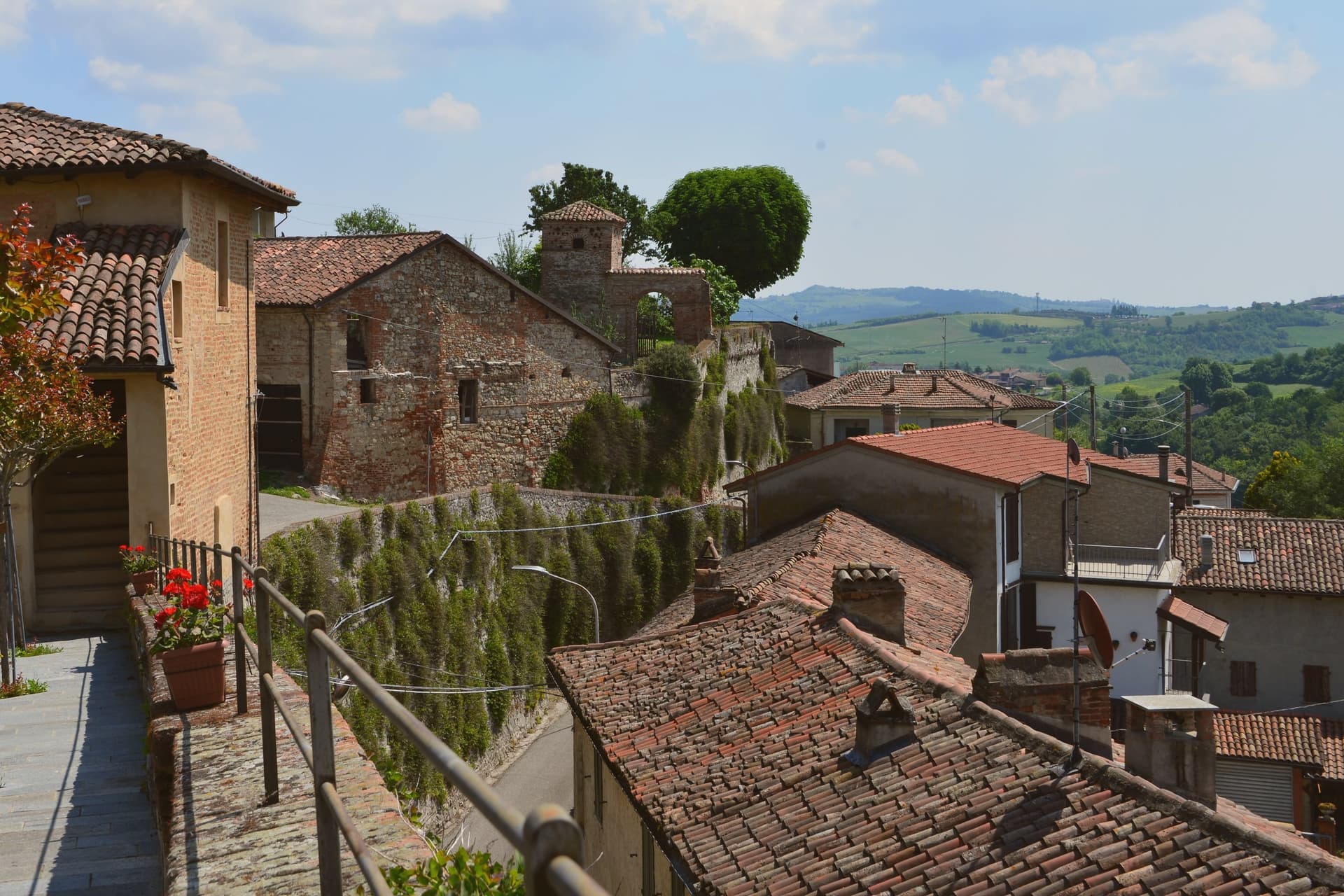
Serralunga di Crea sits in the Basso Monferrato hills forty-five kilometers east of Torino, on the highest of a series of ridges that look across the Po plain. The hill behind the village rises to 443 meters, and it is on this wooded height, rather than in the village itself, that the commune's main structures stand: the sanctuary at the centre, the ring of chapels around it, and the vineyards on the lower slopes beyond the reserve boundary.
The chapels were begun in 1589 by Costantino Massino on a plan of fifteen Rosary stations, expanded over the following two centuries to twenty-three chapels and five hermitages, so what stands today is the accumulation of a long building period rather than a single campaign. The vineyards that surround the hill carry a separate and later UNESCO recognition, from 2014, so the commune holds two world heritage lines on the same stretch of ground: one on the summit, one on the slopes around it.
The village below is small; the hill above is where its two distinctions both sit, layered rather than separate.
What to see in Serralunga di Crea
- Sacro Monte di Crea. Chapels and hermitages climb the wooded hill above the village along a Rosary-plan pilgrim route, each station set among trees with views opening intermittently over the ridge.
- Santuario di Nostra Signora di Crea. Marian sanctuary at the centre of the Sacro Monte, the building the whole climb of chapels was arranged around, traditionally founded by Saint Eusebius of Vercelli.
- Cappella del Paradiso. Final chapel of the Sacro Monte, summit of the climb, with over 300 statues in a polychrome celestial composition.
How to get to Serralunga di Crea
Novara is roughly 58 minutes away by road.
Our tip
April through June is the green window in the Basso Monferrato: hills coming into leaf, the climb up the Sacro Monte cool in the morning, and the panorama across the Po plain at its clearest. July and August touch the mid-thirties on the open ridges; the woods around the chapels stay cooler, but the late afternoon climb is hard work. September and October are the wine months, with Monferrato harvest in the surrounding cantine and pilgrim groups returning for the Rosary festivals.
Orta San Giulio
Why visit Orta San Giulio
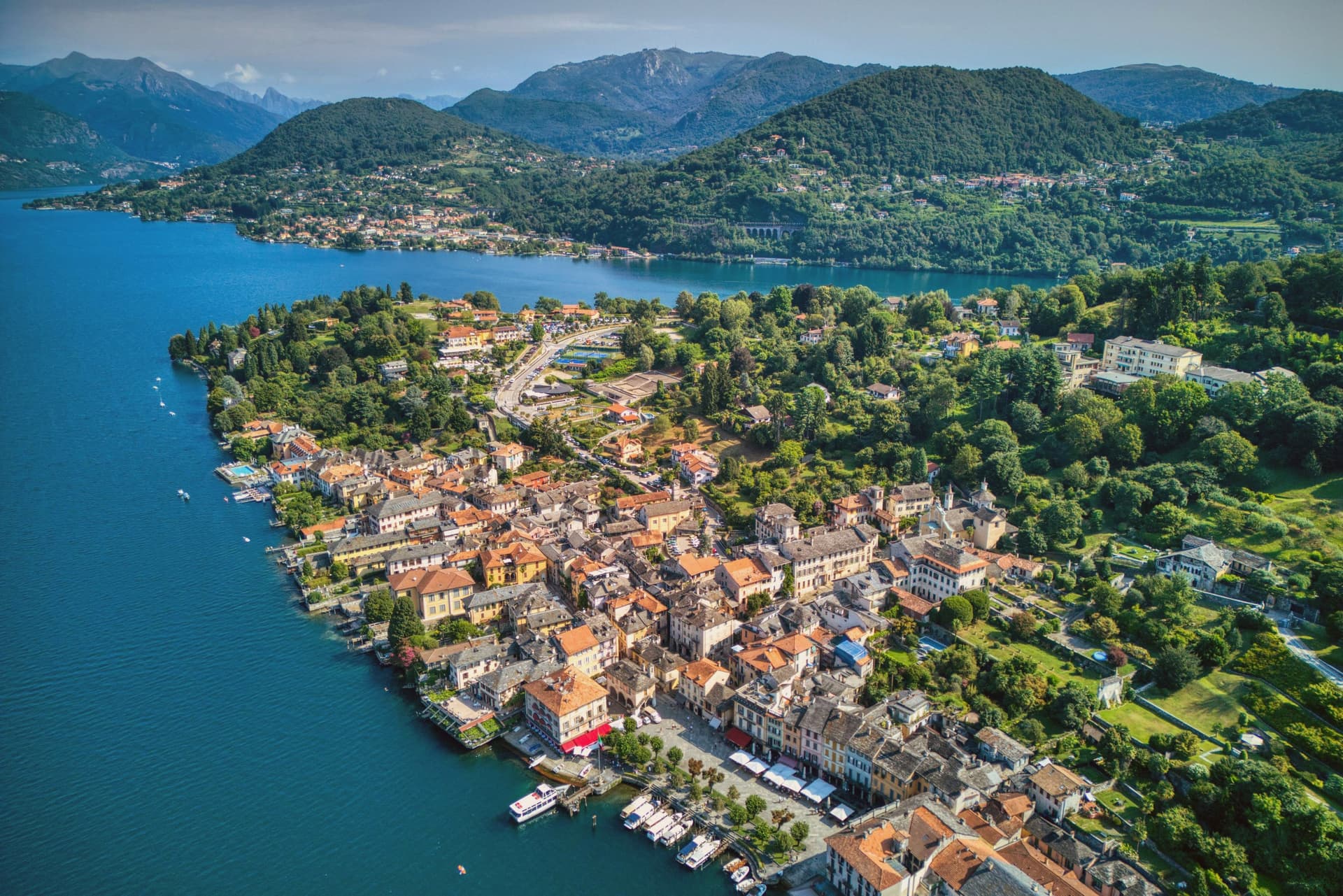
The town occupies a promontory pushed into the eastern shore of the lake, facing the small island 275 meters long and 140 meters wide. The two are close enough that the island reads as an extension of the town rather than a separate place, and a five-minute motorboat from the piazza is the only way across.
The old town holds three Tier-A signals at once: Borghi più belli, Bandiera Arancione, and the UNESCO inscription of 2003. The relationship between the three parts of the town explains how it works: the waterfront square and its lanes sit at lake level, facing the island directly across the water, while the hill above holds the devotional complex, reached by climbing away from the shore rather than along it.
Piazza Motta was also the seat of the Comunità della Riviera di San Giulio, an autonomous federation of lake towns that survived from the Middle Ages to the mid-eighteenth century, which is why the square, not the hill or the island, was built as a civic center. What results is a town in three registers at once: civic life at the water's edge, monastic life offshore, and devotional life on the hill above, each occupying its own ground and visible from the others.
What to see in Orta San Giulio
- Basilica di San Giulio. Serpentine ambo inside and a silver shrine dated 1697. Reached by boat, the basilica stands close to the water's edge, the focal point of the view from every point on the promontory.
- Piazza Motta and Palazzo della Comunità. The broletto's arcades face the water directly, and the square narrows toward the boat landing where the crossing to the island begins.
- Sacro Monte di Orta. The chapels climb the wooded hillside in sequence, each framing a scene, with the town and the lake opening up in views between them as the path gains height.
How to get to Orta San Giulio
There is a railway station in the town, so you can arrive without a car and never need one while you are here. Novara is roughly 46 minutes away by road.
Our tip
April through June brings the Sacro Monte chapels into the chestnut shade and the lake water warm enough for the open-air bars on Piazza Motta. July and August fill the ferry to the island and the piazza turns over by the hour; the centro pedestrian zone slows to a queue at lunch. September and October are the clearest window: low light on the basilica across the water, fewer day-trippers from Milano, and the Sacro Monte path almost empty after eleven.
Govone
Why visit Govone
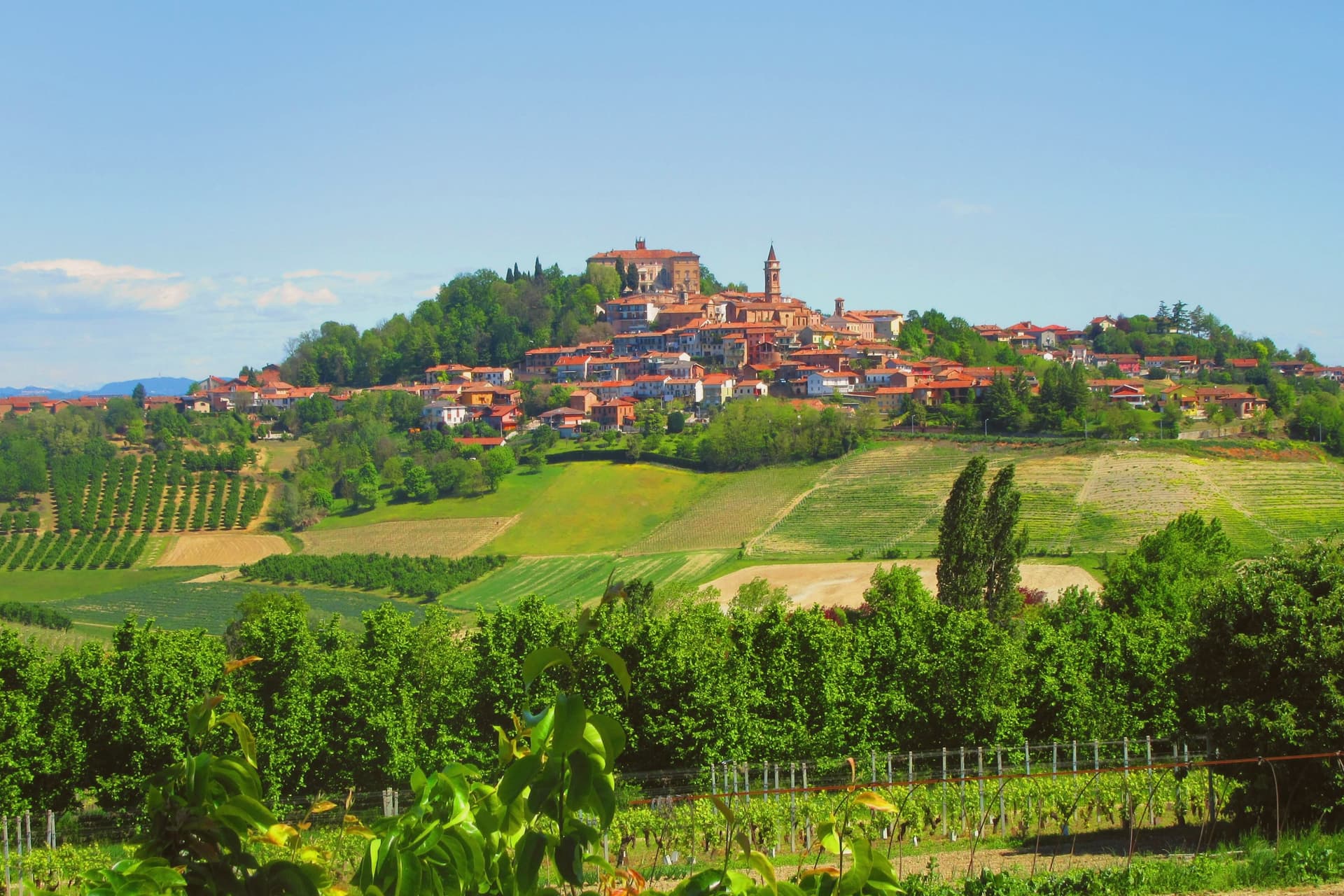
Govone sits at 301 meters on the eastern edge of the Roero, where the hills give way to the Tanaro plain that separates Roero from Langhe. The site began as a Solaro family palace before the Savoy bought it in 1792, holding it as a summer residence for the royal house until 1870.
In 1997 UNESCO added it to the Residences of the Royal House of Savoy list, alongside thirteen other Savoy palaces. Rousseau's time here as a household tutor for Count Ottavio Solaro predates the castle's Savoy ownership by decades, a reminder that the building's Solaro-era life ran long before it became a royal fixture.
The bell tower of the parish church sits on the ridge below the castle, so the village reads as a single climb: houses and church on the slope, the residence and its terraced garden at the top, looking across the Tanaro to the Langhe hills. The castle now works as the town hall, its noble floor open for tours the rest of the year and its rooms given over to the Christmas market for six weeks each winter.
A Solaro country house, absorbed into Savoy state ceremony, now runs as civic offices for most of the year and a holiday market for the rest, which is a fair summary of how a minor royal residence keeps itself in use once the monarchy that built it is gone.
What to see in Govone
- Castello Reale di Govone. The two-flight grand staircase carries the eye up past the telamones brought from Venaria Reale, and the noble floor is open for guided tours now that the building serves as the town hall.
- Giardino all'italiana. Formal terraced garden behind the castle, with views across the Tanaro to the Langhe hills.
- Chiesa di Santa Maria Annunziata. Parish church in the village, with eighteenth-century altarpieces and a bell tower on the ridge below the castle.
How to get to Govone
Torino is roughly 65 minutes away by road.
Our tip
April through October is the season. May and June bring the Roero into full color and the castle gardens open for guided tours. September and October are dry and the harvest fills the surrounding hills.
Ghiffa
Why visit Ghiffa
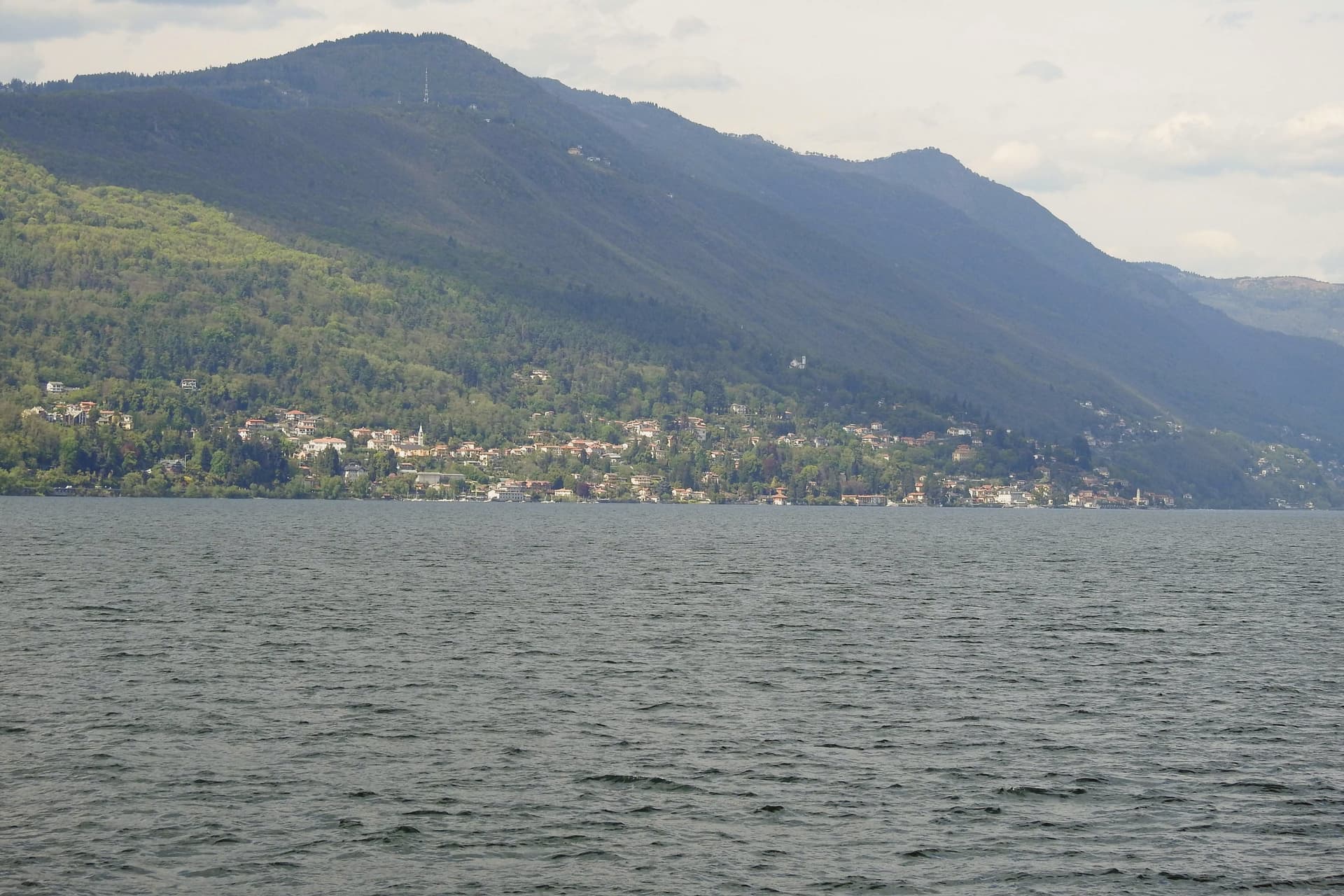
Ghiffa runs along the west shore of Lake Maggiore between Verbania and Cannobio, a strip of lakefront at 201 meters facing the Lombard side of the lake. Above the village, at 360 meters on the slope of Monte Carciago, the ground rises to the Sacro Monte della SS.
Trinità, inscribed by UNESCO in 2003 among the nine Sacri Monti of Piemonte and Lombardia. The village below and the sanctuary above form the two halves of Ghiffa: one built on the lake trade and the ferry crossings to the Lombard shore, the other set apart in woodland on the mountain.
From 1879 the Panizza hat factory turned Ghiffa into one of Europe's hat-making centers, and the trade employed most of the village for a century before the factory closed. What is left of that trade sits in the same lakefront ground the sanctuary looks down on: a village shaped as much by an industry that has ended as by the devotional complex that has outlasted it.
What to see in Ghiffa
- Sacro Monte della SS. Trinità. Sanctuary plus three chapels and porticoed Stations of the Cross set in a 200-hectare reserve, built around an older medieval chapel.
- Museo dell'Arte del Cappello. Lakefront museum in the former factory building, holding molds, stamps, and records from a century of Ghiffa hat-making, including the Borsalino style made and exported here.
- Riserva Naturale del Sacro Monte. Two hundred hectares of beech and chestnut woods around the sanctuary, with marked trails to Cappella del Porale at 470 meters.
How to get to Ghiffa
There is a railway station in the town, so you can arrive without a car and never need one while you are here. Novara is roughly 75 minutes away by road.
Our tip
April through October is the lake season. May and June bring the wisteria along the lakefront and clear days on the Sacro Monte. September and October are dry, with the sanctuary's chestnut woods turning and the ferry schedule still running.
Agliè
Why visit Agliè
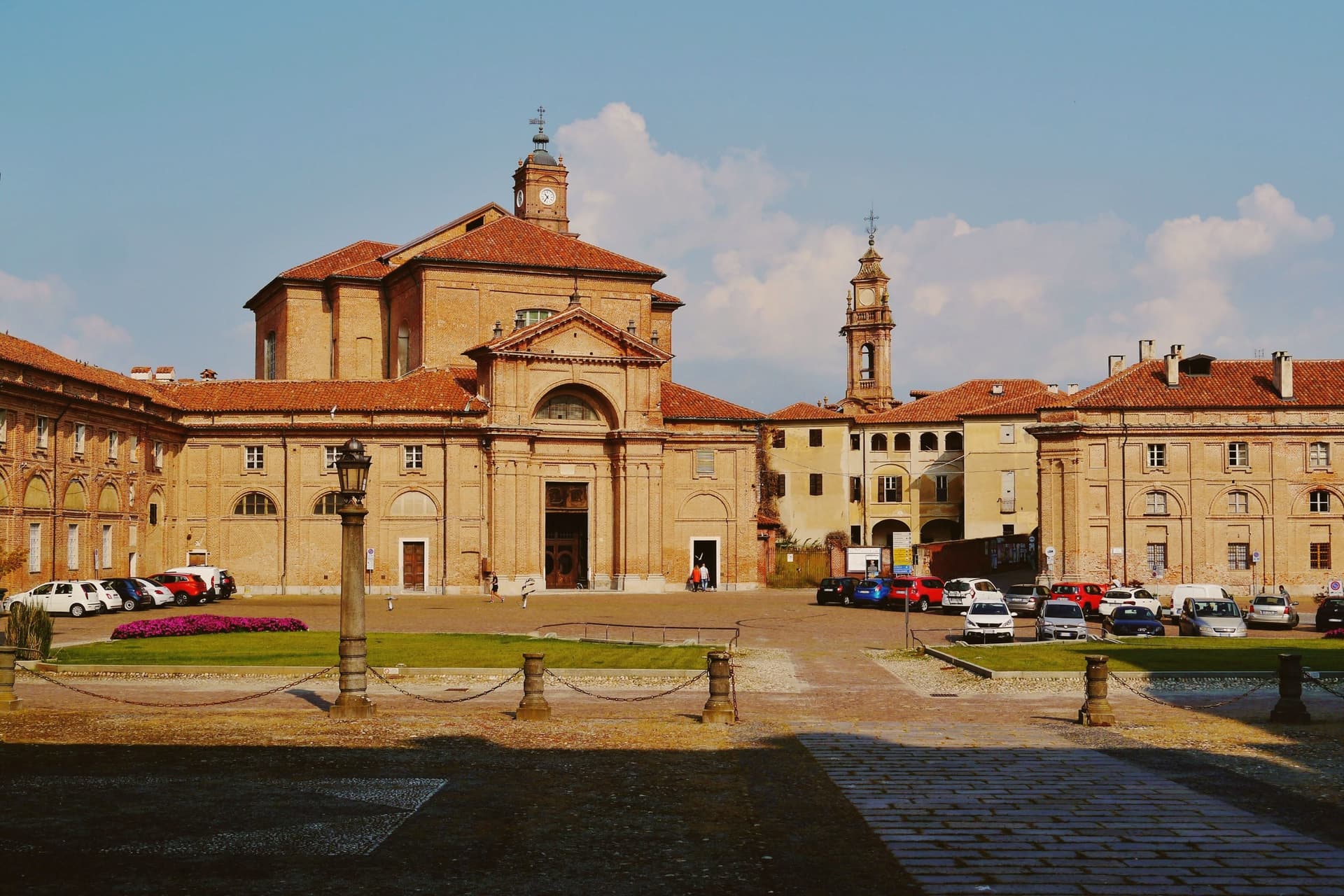
Agliè sits at 330 meters in the Canavese, thirty-five kilometers north of Torino on the foothills above the Po plain. The d'Agliè family held the fortified core from 1259, and the conversion to a Sabauda residence began in the mid-1600s under Count Filippo San Martino d'Agliè, favourite of the Regent Christine of France.
The castle later entered the UNESCO list of Savoy Residences, one of fourteen royal sites recognised together as a single serial property, and its gardens grew alongside it, enlarged in the nineteenth century with terraced Italian and English layouts. The town's other center of gravity lies apart from the castle, at a country house on the edge of the commune where a Crepuscolar poet kept his own quiet ground.
The centro storico adds a third note, a confraternity church faced in glazed terracotta from nearby Castellamonte. The town carries the Bandiera Arancione of the Touring Club, a place where a Savoy court seat, a poet's retreat, and a working parish church occupy the same small radius without competing for it.
What to see in Agliè
- Castello Ducale. The two parallel galleries framing the courtyard and the internal Chapel of San Massimo are the work Amedeo di Castellamonte added for Count Filippo San Martino, the piece that turned a fortified seat into a residence fit for the Savoy court.
- Giardini e Parco del Castello. The eighteenth-century basin stages an allegory in stone: the Dora Baltea meeting the Po, set among the terraced beds where Italian and English styles sit side by side.
- Chiesa di Santa Marta. Confraternity church in the centro storico, decorated with polychrome glazed terracottas from nearby Castellamonte.
How to get to Agliè
Torino is roughly 45 minutes away by road.
Our tip
April through June is the green window for the Canavese hills, when the castle gardens are in full leaf and the morning light works well on the long west façade. July and August are hot in the valley below and the gardens carry the heat; Agliè empties between two and five in the afternoon. September and October are the second peak, with vineyards in the surrounding frazioni turning over for harvest.
Varallo
Why visit Varallo
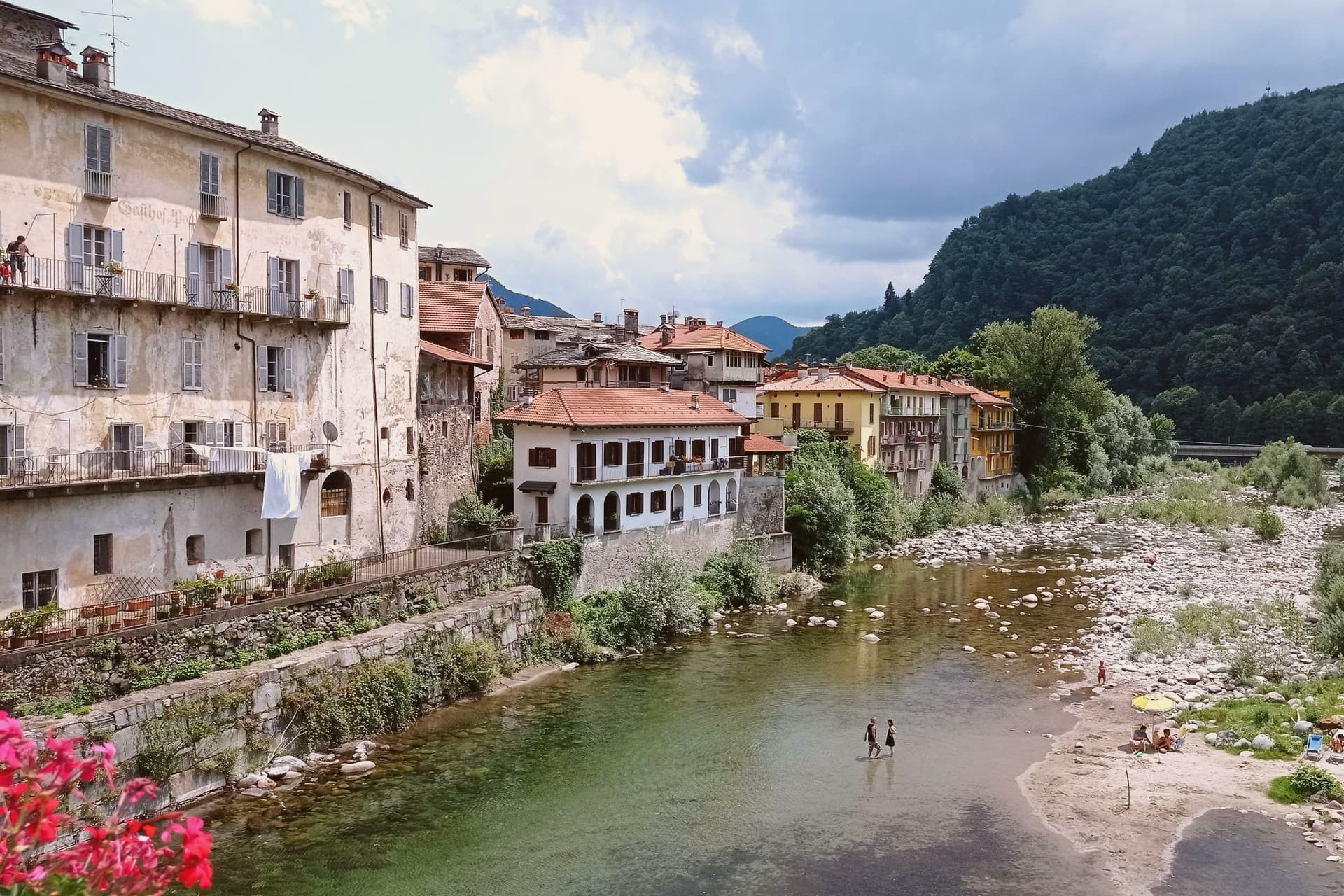
Varallo sits at 450 meters where the Mastallone joins the Sesia, the capital of Valsesia and the gateway to the high valleys under Monte Rosa. The lower town gathers along the river confluence, ordinary and administrative, while the devotional complex occupies the rock above it, reached now by cable car but originally by a path of ascent that was itself part of the pilgrimage.
The chapels were conceived as a reproduction of the geography of the Passion, laid out so that walking through them retraced a landscape rather than simply viewing scenes. The complex grew over four centuries to its present scale, with more than eight hundred statues and four thousand frescoed figures distributed across the chapels and the basilica at their center.
UNESCO inscribed the Sacri Monti of Piedmont and Lombardy as a single serial site in 2003. What results is a town split in function between a valley capital going about its administrative life and a hillside set apart for a single sustained act of devotional theater, the two joined by a short vertical crossing that pilgrims once made on foot.
What to see in Varallo
- Sacro Monte di Varallo. Forty-five chapels and more than eight hundred life-size statues laid out on the rock above town, founded by Bernardino Caimi as a substitute Holy Land for pilgrims.
- Basilica del Sacro Monte. Minor basilica at the heart of the upper complex, focal point of the chapel circuit and the pilgrim route to the painted Holy Land.
- Pinacoteca di Varallo. Civic painting collection in Palazzo dei Musei, including works by Gaudenzio Ferrari and his Valsesian school of sacred painting.
How to get to Varallo
There is a railway station in the town, so you can arrive without a car and never need one while you are here. Novara is roughly 67 minutes away by road.
Our tip
April through June brings green Valsesia slopes, the Sesia at full spring flow, and clear walking up to the chapels of the Sacro Monte. September and October are the strongest months, when the larch and beech around the basilica turn and the cooler air carries the painted statues better than summer haze. July and August touch the low thirties on the lower town; the climb to the summit through the wooded path is the right way to enter the chapels in heat.
Racconigi
Why visit Racconigi
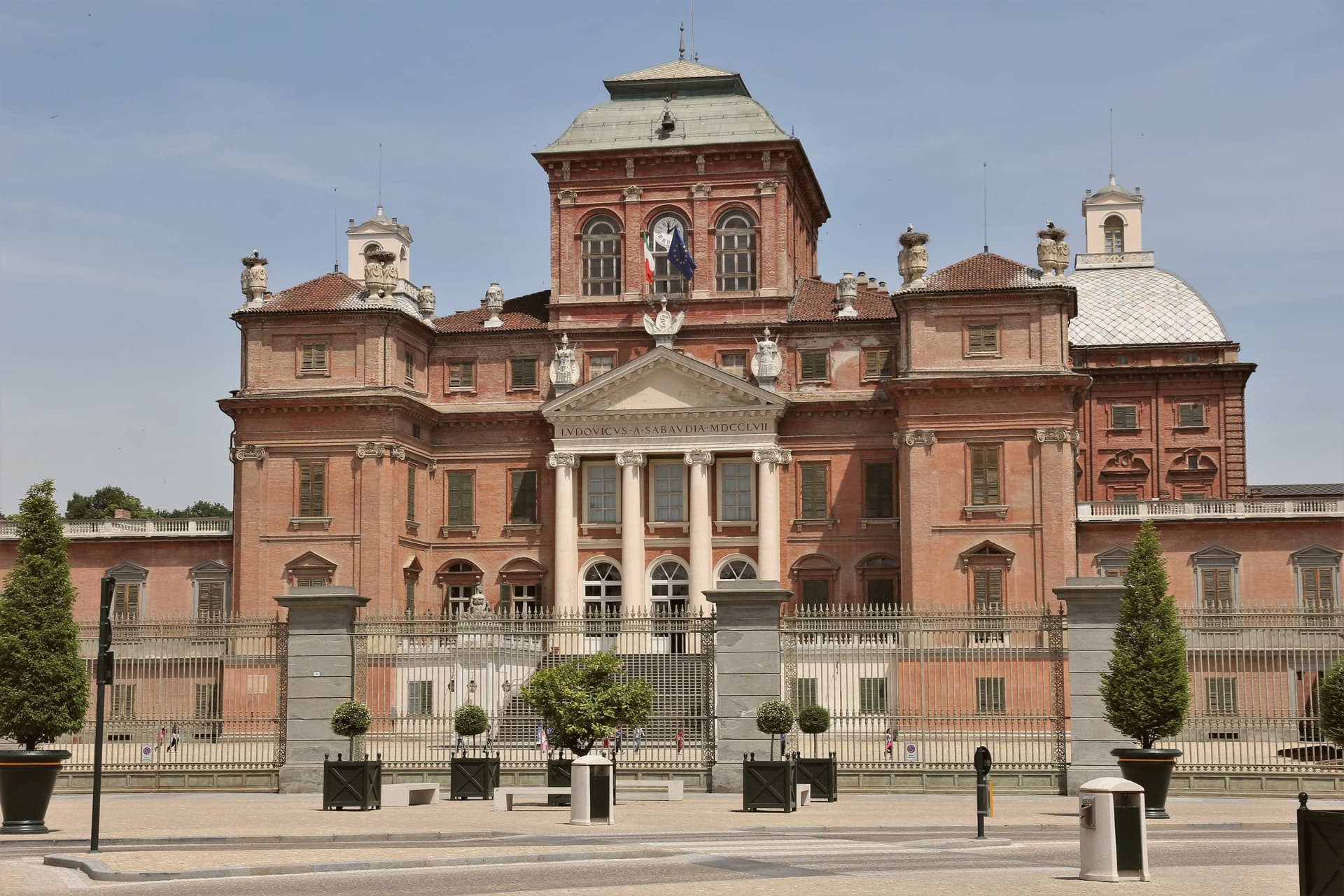
Racconigi sits at 262 metres on the Po plain, 35 kilometres south of Torino. The town passed in turn through the hands of the marquises of Saluzzo, the princes of Acaia and the Savoia-Carignano, and it was this last line that shaped what stands today.
Duke Carlo Emanuele I granted the estate in 1630 to his nephew Tommaso Francesco, founder of the Carignano branch, and the fortress that resulted was later opened out into a country residence set within its own designed landscape rather than confined behind walls. The park was remade twice, first on French lines in 1755, then reworked eighty years later by a German landscaper into the lakes, canals and follies that surround the building now.
The centre for stork reintroduction occupies a farmhouse next to this park, so the estate and the breeding site share ground rather than sitting apart in different parts of town. The old centre, between the castle and the station, is where the smaller scale of daily Racconigi meets the scale of the estate that gives the town its name recognition.
What holds these pieces together is that Racconigi's identity was built from the outside in: a noble residence and its grounds first, a town organised around servicing and adjoining it second.
What to see in Racconigi
- Castello Reale di Racconigi. Eleventh-century fortified core remodelled by Guarino Guarini in the late seventeenth century, its pagoda-roofed central pavilion the mark of that conversion, restored continuously since 1980.
- Parco Reale. 170-hectare romantic park laid out in 1755 by the French gardener Molard on Le Nôtre's designs, redrawn in 1835 by Xavier Kurten with lakes, canals and follies.
- Centro Anatidi e Cicogne LIPU. Farmhouse site beside the park where the reintroduction programme was run, now the country's largest stork colony descending from the birds released there.
How to get to Racconigi
There is a railway station in the town, so you can arrive without a car and never need one while you are here. Torino is roughly 49 minutes away by road.
Our tip
April through June is the best window: castle and Parco Reale on long opening hours, the storks on the nests in the LIPU centre, mild temperatures on the plain south of Torino. July and August touch the mid-thirties and afternoons in the park are hard work; the castle stays cool. September and October are the second strong window, vendemmia on the surrounding plain, fewer visitors than spring.
More from Anywhere Italy
- The 9 best hill towns with a World Heritage site in Piemonte
- The best towns with a World Heritage site within 75 minutes of Turin
- The best towns with a World Heritage site that eat well in Piemonte
- The best towns with a World Heritage site within 90 minutes of Milan
- The best towns with a World Heritage site within two hours of Genoa
 The best lake towns you can reach by train in Piemonte