
The best towns known for what they grow within 45 minutes of Bologna
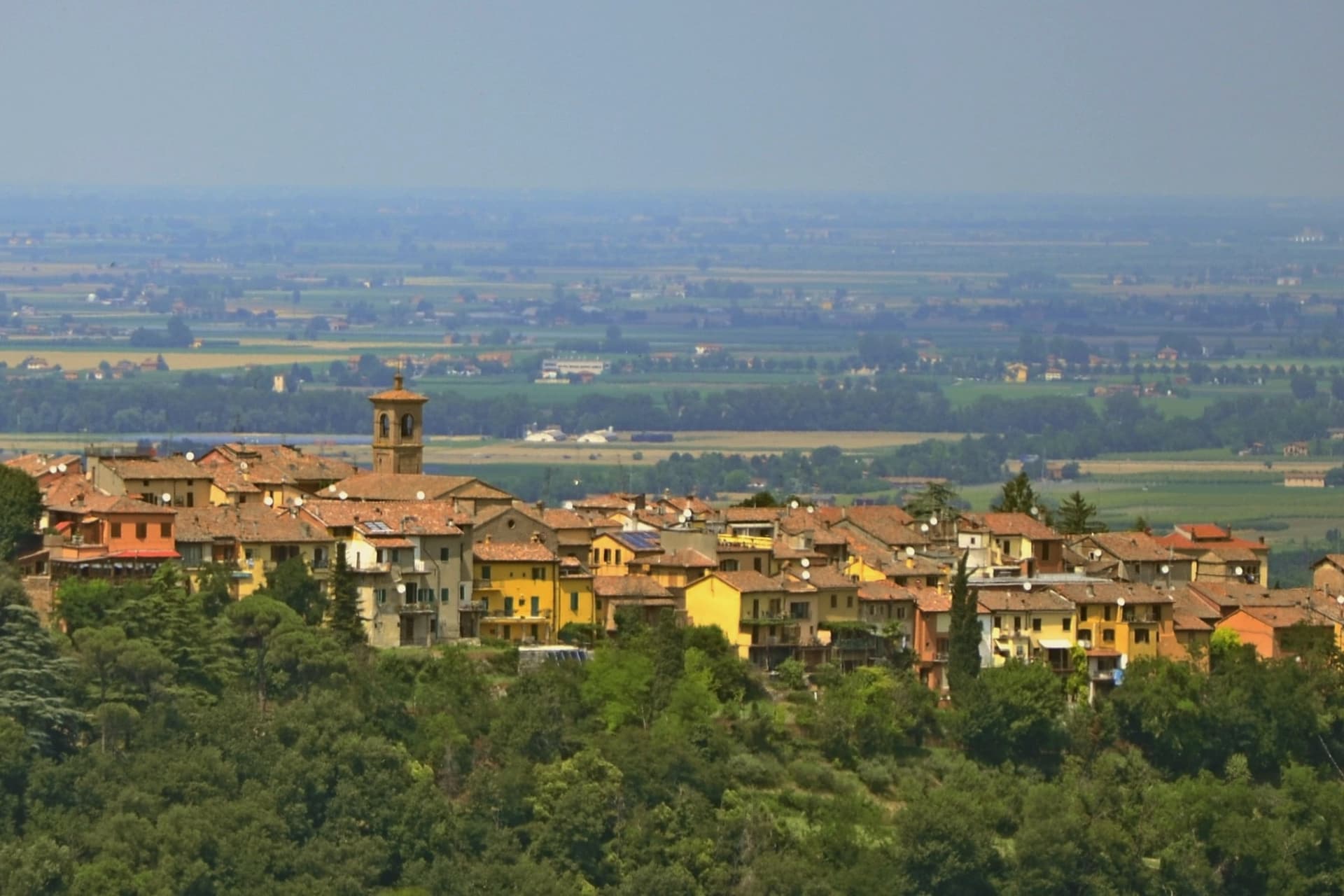
The land south and west of Bologna is farmed with unusual precision. Cherry orchards run in ordered lines across the terraces of Vignola and the Panaro valley, the trees flowering white in spring and picked by hand in early summer, while the low hills behind carry Trebbiano and Lambrusco vines whose must is cooked down and left to age in barrel lofts. The villages are brick, the colour of the clay they stand on, with porticoes and squat towers and a rocca at the top of most of them. Autumn brings grapes, chestnuts and new vinegar; May and June bring fruit stalls set up at the roadside, boxes stacked on the tailgate of a van.
Most visitors take the food route through the region as a set of names rather than a set of fields, which means Bologna and Parma, a queue outside a Prosciutto plant and a couple of hours in the market stalls of the Quadrilatero. It is good, and it is busy. The tasting rooms nearest the motorway exits work at volume, coach parties timed in half-hour slots, the same three products on every counter.
The zones themselves extend well past the cities, and they are legally drawn: a fruit or a vinegar can only carry its name if it was grown or aged inside them. The towns here sit inside those boundaries, on the ridge road between Modena and the Apennine foothills or along the via Emilia towards Imola, close enough to Bologna for a morning drive. Fewer people stop in them, though the orchards, the acetaie and the trattorie serving tortellini in brodo are the same ones supplying the famous tables.
Of the 7 communes we have mapped in a 45-minute drive of Bologna, 6 qualify as towns known for what they grow: each sits inside the production zone of a protected fruit or vegetable. The smallest, Dozza, has 6,582 residents.
If you are still choosing, we have also written The best towns known for what they grow within two hours of Florence and The best towns you can reach by train within 45 minutes of Bologna.
Dozza
Why visit Dozza
Dozza sits on a low ridge at 190 meters above the Sellustra valley, six kilometers from Imola and twenty-five southeast of Bologna. The medieval village runs along a single curved spine of stone houses, with the Rocca Sforzesca closing the upper end.
Caterina Sforza rebuilt the fortress at the end of the fifteenth century on the remains of earlier Bolognese defences; the Malvezzi-Campeggi family turned it into a palazzo in the late sixteenth century, and the cellars now hold the Enoteca Regionale dell'Emilia-Romagna, which curates the wines of the whole region. The Biennale del Muro Dipinto began in 1960, when the opening of the Rocca to the public was paired with a contemporary-painting competition that worked directly on the village walls.
Over sixty years later, more than 100 murals cover the borgo, repainted and added to every other year by invited Italian and international artists. The municipality holds Borghi più belli and Bandiera Arancione recognition.
Population 6,582.
What to see in Dozza
- Rocca Sforzesca. Late fifteenth-century fortress rebuilt by Caterina Sforza, transformed into a palazzo by the Malvezzi-Campeggi family at the end of the 1500s.
- Muro Dipinto. Over 100 murals on the house walls of the medieval village, repainted and added to every two years since the first Biennale in 1960.
- Enoteca Regionale dell'Emilia-Romagna. Regional wine cellar inside the Rocca's underground levels, curating about 800 labels from across the region's DOC and DOCG zones.
How to get to Dozza
Bologna is roughly 37 minutes away by road.
Our tip
April through June and September through October are the working months in Dozza. The murals look best in oblique morning or late-afternoon light, and the Sellustra valley below stays green into early summer. The Biennale del Muro Dipinto runs in September of odd-numbered years and is when the borgo is fullest, with painters working on scaffolding through the whole month.
Castelvetro di Modena
Why visit Castelvetro di Modena
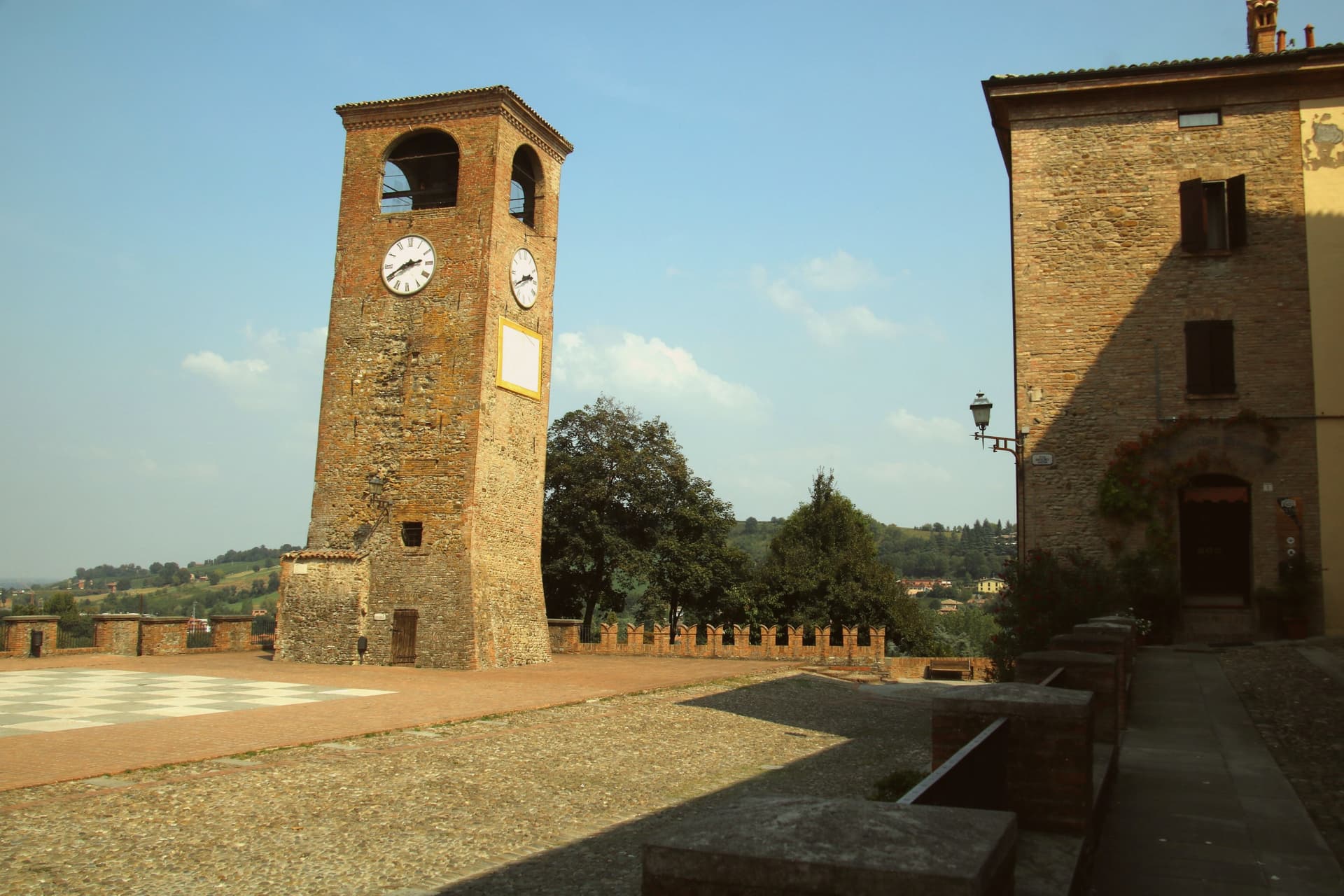
Castelvetro di Modena sits on a hill at 152 meters, eighteen kilometers southeast of Modena and at the northern edge of the Apennine foothills. The medieval centro storico rises around the Piazza Roma, paved in alternating white and black stones that earned it the name Piazza della Dama, the checkerboard piazza, framed by the four surviving towers of the old castle.
The Grasparossa grape grows on the clay slopes around the town, the sandy soil and the south-facing aspect producing the deepest, most tannic of the three main Lambruschi; Lambrusco Grasparossa di Castelvetro received DOC status in 1970. Above the piazza, the Palazzo Rinaldi houses the Museo del Vino and the Museo dell'Aceto Balsamico, the second tracing the same Modenese tradition that nearby Spilamberto codifies.
The municipality holds three institutional signals: Borghi più belli, Bandiera Arancione, Città del Vino. The Sagra dell'Uva e del Lambrusco runs the last weekend of September, when the streets fill with the chess players from the surrounding Lambrusco towns dressed as living pieces on the piazza.
Locanda del Feudo, Opera|02 have been named by a guide.
What to see in Castelvetro di Modena
- Piazza Roma. Checkerboard piazza paved in alternating white and black stones, framed by the four surviving towers of the medieval castle.
- Castello di Levizzano Rangone. Tenth-century fortified frazione four kilometers north, with a tower built in the 990s and a fully preserved medieval village.
- Museo del Vino. Wine museum inside the Palazzo Rinaldi, tracing the Grasparossa production cycle and the DOC zone established in 1970.
How to get to Castelvetro di Modena
There is a railway station in the town, so you can arrive without a car and never need one while you are here. Modena is roughly 28 minutes away by road.
Our tip
April through June and September through October are the Castelvetro months. The hills around the borgo turn green in spring and red in autumn when the Grasparossa vines colour up before the harvest. July and August are hot, thirty-five degrees in the valley, less in the hills above, and the cantine slow down. Sagra dell'Uva e del Lambrusco Grasparossa di Castelvetro falls in September.
Spilamberto
Why visit Spilamberto
Spilamberto sits at 69 meters on the right bank of the Panaro, fifteen kilometers southeast of Modena, on the line of the ancient Via Romea that ran from northern Europe to Rome. The town is documented from 776.
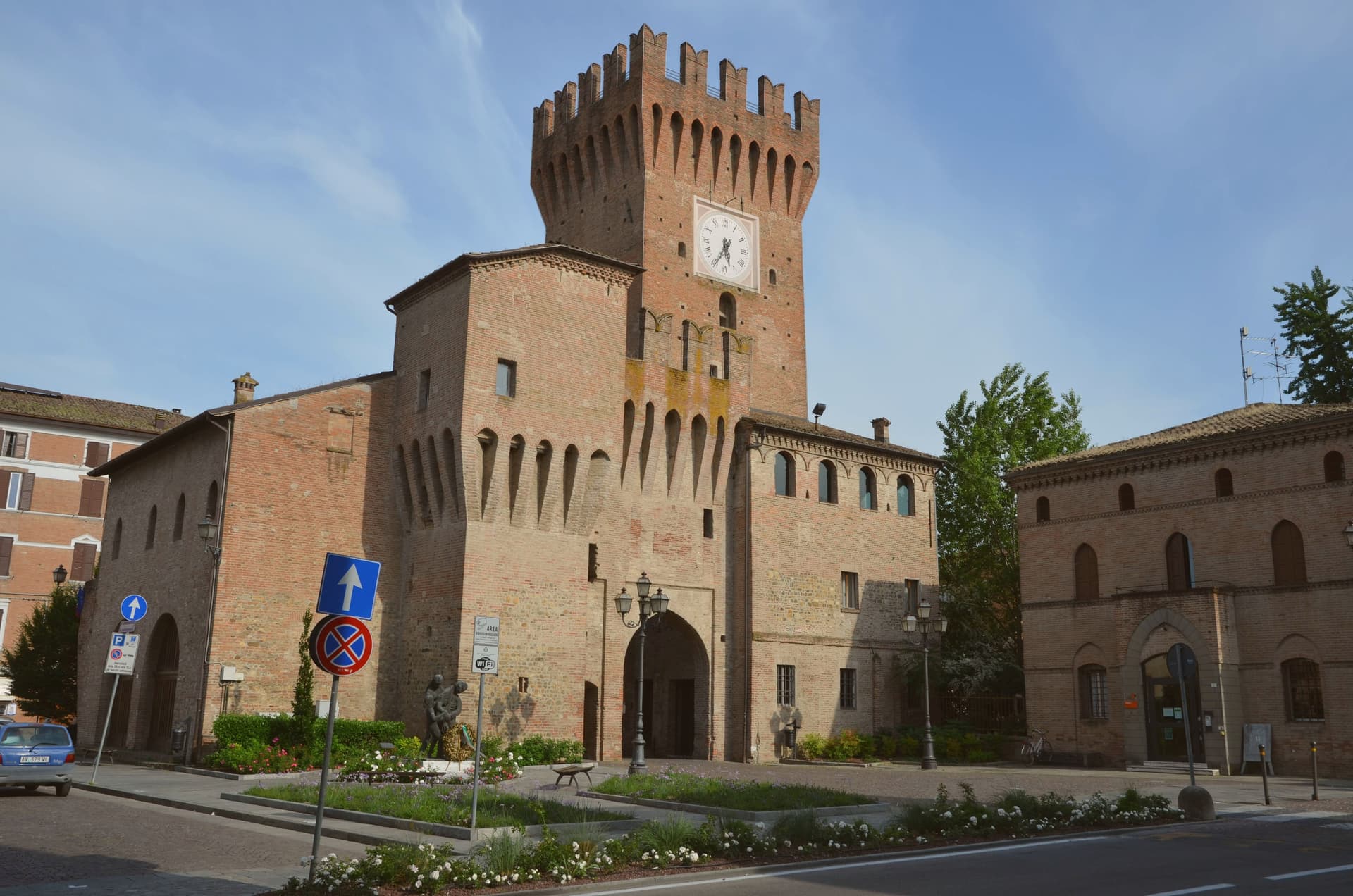
The Rangoni family of Modena held it for more than 650 years, and the fortress they built still anchors the centro storico, with the medieval bell tower at the edge of the borgo holding both an archaeological museum and the headquarters of the walnut liqueur order. In 1967 a group of local enthusiasts founded the Consorteria dell'Aceto Balsamico Tradizionale di Modena here, and it still certifies the twelve- and twenty-five-year-aged DOP product through annual blind tastings.
An eighteenth-century Este road that ran from Modena to Massa leaves the town heading south, a reminder that Spilamberto has always sat at a crossing point: the old route running through it toward the north and Rome, another road departing from it toward the south, the river marking its edge. A plain town that became, almost by local initiative rather than geography, the place where a regional product got its rules written down.
What to see in Spilamberto
- Rocca Rangoni. The fortress anchors the centro storico, its walls facing onto the streets that grew up around it rather than set apart from them.
- Torrione. Medieval bell tower at the edge of the borgo, housing the Antiquarium museum and the headquarters of the Ordine del Nocino Modenese.
- Museo dell'Aceto Balsamico Tradizionale. Museum at Villa Fabriani laying out the production cycle in physical form: the cooked must, the graduated run of casks, the attic rooms where fifty years of seasoning take place.
How to get to Spilamberto
There is a railway station in the town, so you can arrive without a car and never need one while you are here. Modena is roughly 24 minutes away by road.
Our tip
April through June and September through October are the months for Spilamberto. The Greenway del Panaro runs without crowds, the cantine open their tasting rooms, and the Mast Còt festival in October pulls together producers from the entire Modenese balsamic chain for two weekends of new-must boiling and old-cask tasting. July and August are heavy on the plain; thirty-five degrees and humidity that doesn't drop after dark.
Castel San Pietro Terme
Why visit Castel San Pietro Terme
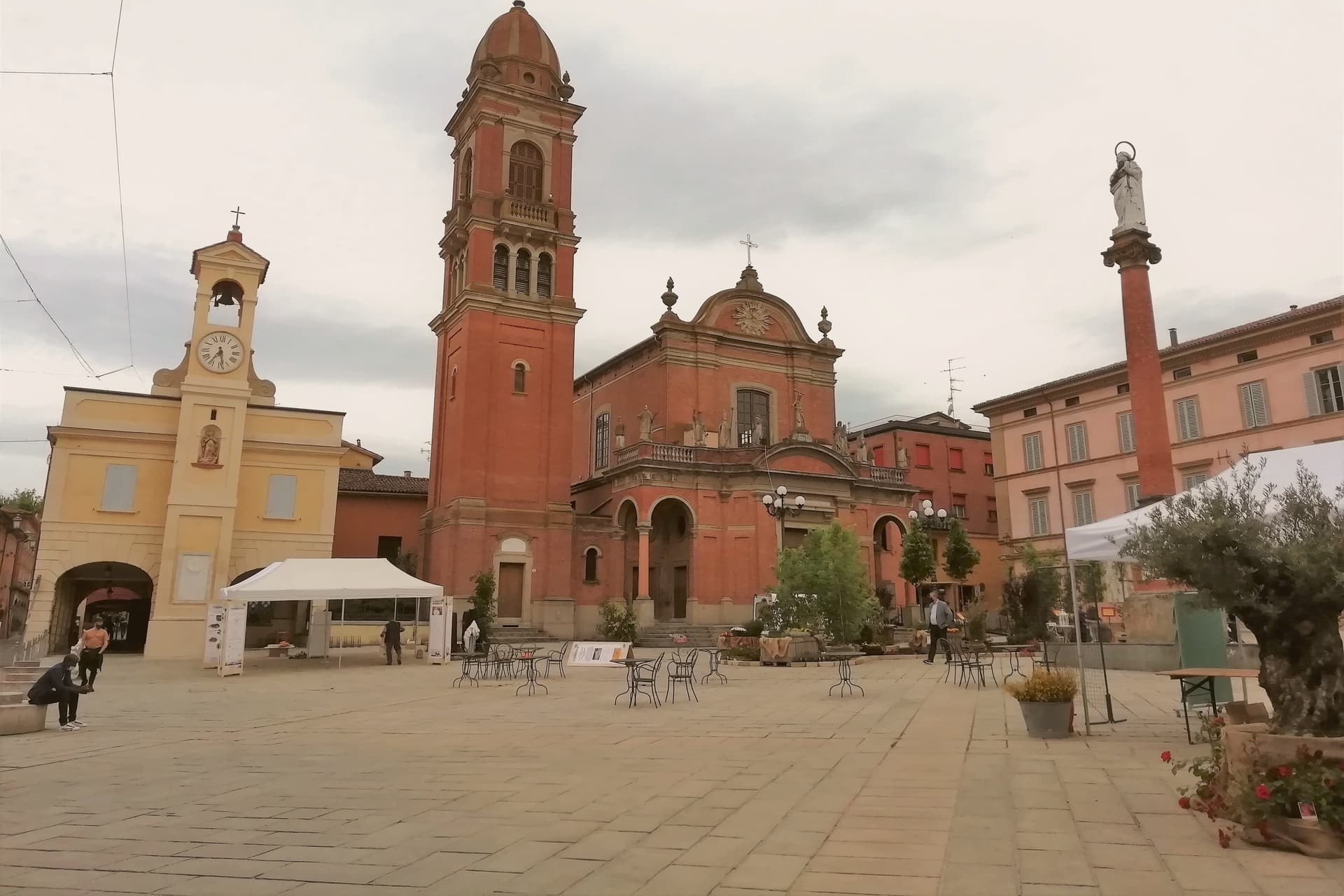
The town sits on the Sillaro river, which marks the historic border between Emilia and Romagna, twenty kilometers east of Bologna on the Via Emilia. It was founded as a Bolognese castrum in 1200, and the walled core still follows that original plan, with the river bridge on one edge and the road toward Imola leading out past the walls to the pilgrimage shrine beyond.
Castel San Pietro also joined the Città dell'Olio network for its hillside olive cultivation, a rural counterpart to the spa and civic life inside the walls. The Conservatorio Santa Caterina, founded in 1741, is one of the older female educational institutions still active in the region, sitting inside the same historic core as the gateway and the town hall.
The town reads as two things held together: a walled medieval seat on a border river, and a spa destination whose waters predate the walls by decades. Both draw on what was already there long before either was built up for visitors.
Il Grifone, Osteria La Civichella, Gastarea have been named by a guide.
What to see in Castel San Pietro Terme
- Cassero. The gateway stands at the southern edge of the old walls, its stone face marking what was once the main entry into the castrum. Inside, the civic theater now occupies the space, so the structure that once controlled access to the town now hosts its audiences.
- Terme di Castel San Pietro. The complex draws on sulphurous, ferruginous and salt-bromine-iodide springs, with the first establishment opened in 1870. The waters run year-round from the same sources used centuries before the modern building existed.
- Santuario del Crocifisso del Piratello. Pilgrimage shrine on the Via Emilia toward Imola, built around a fifteenth-century crucifix and decorated by Innocenzo da Imola. It drew pilgrim traffic from across northern Emilia, standing apart from the walled town on the road out toward Romagna.
How to get to Castel San Pietro Terme
There is a railway station in the town, so you can arrive without a car and never need one while you are here. Bologna is roughly 39 minutes away by road.
Our tip
Castel San Pietro Terme runs all twelve months because the thermal water does. Spring and autumn are the easier months for walking the centro storico and the Sillaro valley, with mild light and the olive groves on the hill above town green or harvest-coloured. June through August touches the low thirties and humid, but the spa runs longer hours in summer and the riverside frazione of Osteria Grande stays cool.
Vignola
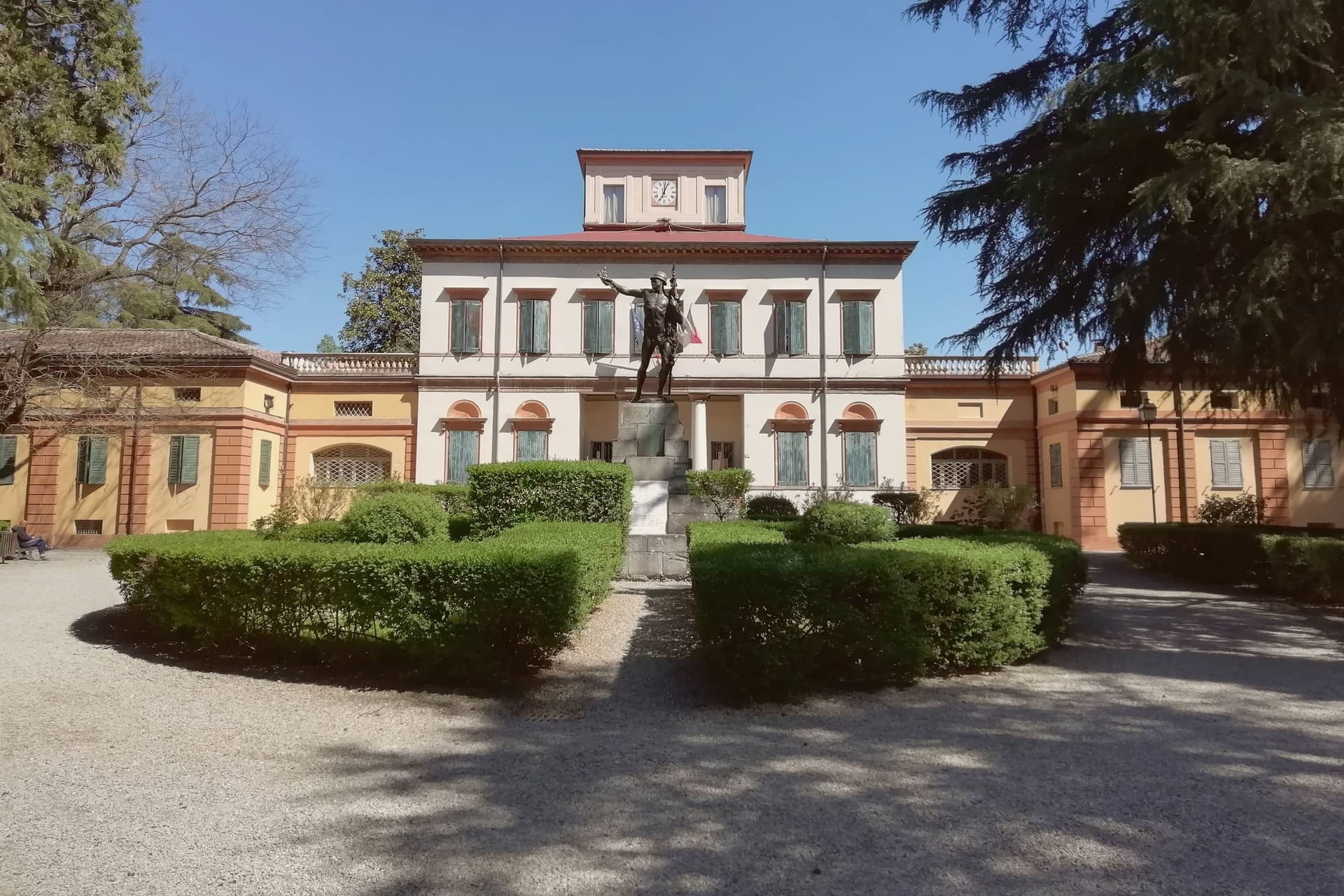
Why visit Vignola
Vignola sits at 125 meters on the right bank of the Panaro, twenty-five kilometers south of Bologna and twenty east of Modena, where the Modenese plain meets the Apennine foothills. The fortress there is documented from the eighth century, raised by the Abbot of Nonantola to guard the abbey's lands before the Contrari family rebuilt it in the fifteenth century as a fortified residence; in 1577 it passed to the Boncompagni-Ludovisi, who held it until 1965.
The palace beside it takes its second name from the family that acquired it, and from the architect born in the town in 1507, who died in 1573 after a career among the leading figures of late Renaissance architecture. The cherries that carry the town's name upriver and down are IGP-protected across twenty-eight communes stretching from Modena to Bologna, and the blossom that precedes the fruit each spring fills the Panaro valley below the walls.
A disused railway, now a greenway, threads through the same ground on its way between Mirandola and Bologna. The town's identity rests on this pairing of a fortified height above the river and an agricultural valley beneath it, one lineage of stone, one of orchards, both still legible in the place today.
What to see in Vignola
- Rocca di Vignola. Eighth-century origin, built to guard the lands of an abbey and later rebuilt as a fortified residence. The frescoed interiors and four corner towers stand over the river much as the rebuilding left them.
- Scala a Chiocciola di Palazzo Barozzi. The 106 steps rise with no central support, an engineering feat as much as a decorative one, tucked inside the palace next to the fortress.
- Palazzo Boncompagni. The palace passed to the family that gives it its name in the late sixteenth century and held the fortress until 1965. Its reception rooms carry frescoes alongside the staircase it is best known for.
How to get to Vignola
There is a railway station in the town, so you can arrive without a car and never need one while you are here. Modena is roughly 34 minutes away by road.
Our tip
April through June and September through October are the working months on the Panaro foothills. The first two weekends of April fill the centro with the Festa dei Ciliegi in Fiore, when the orchards along the river bloom. June brings cherries to market and the Panaro at high water.
Imola
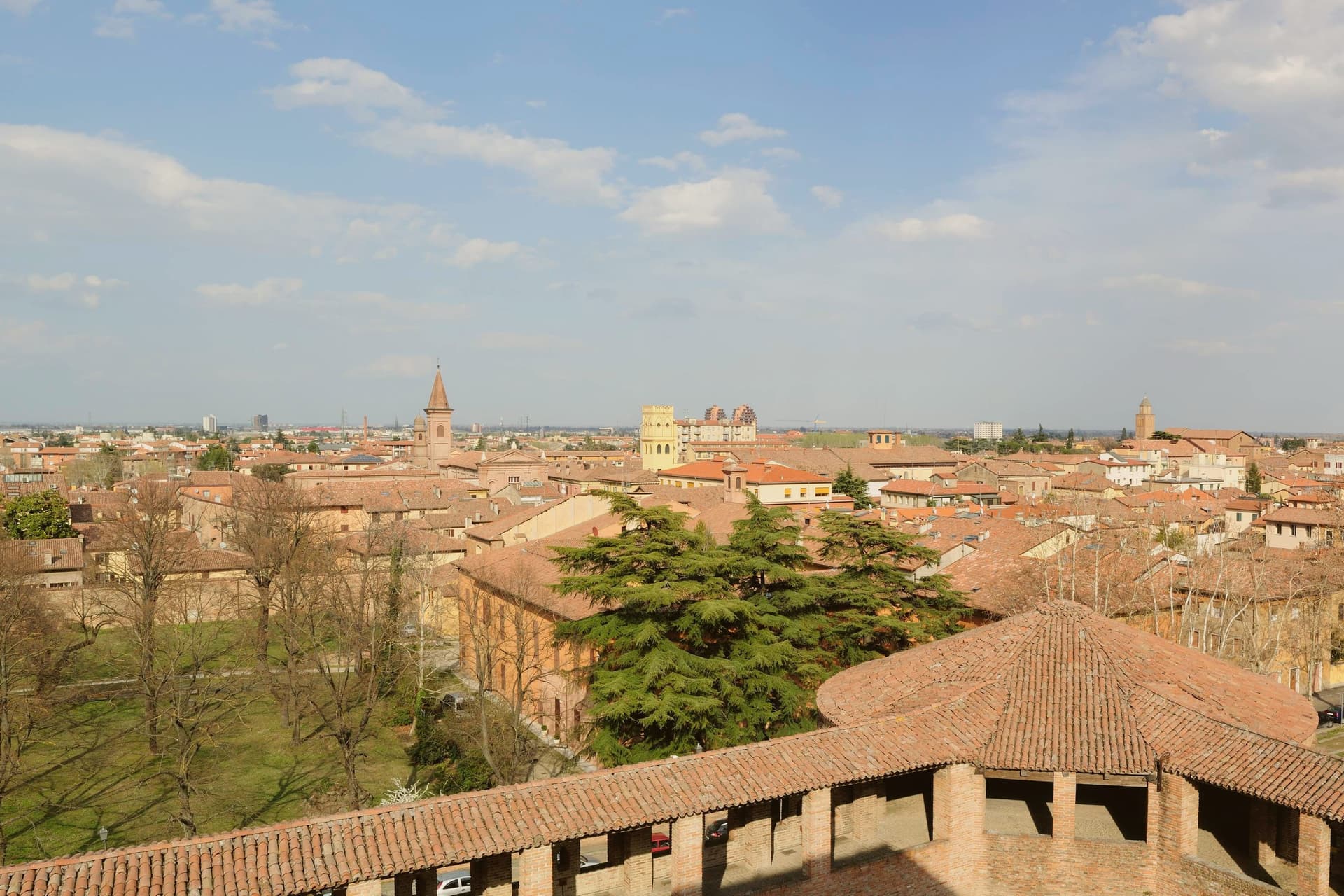
Why visit Imola
Imola is two cities sharing a name. The medieval one is a quietly handsome Romagna brick town 35 km southeast of Bologna along the Via Emilia, with the Rocca Sforzesca (rebuilt by Caterina Sforza in 1473–1499 — the Tigress of Forlì, who held this fortress through the Borgia siege of 1500) anchoring the centro.
The Palazzo Tozzoni museum, the 11th-century Cattedrale di San Cassiano with its crypt of the city's patron, the Palazzo Sersanti on the central piazza, and the medieval grid of porticoed brick streets all read as a smaller-scale Bologna. The OTHER Imola is the Autodromo Enzo e Dino Ferrari — the 4.9-km F1 circuit on the south bank of the Santerno, built 1953 and named for Enzo Ferrari and his son Dino after Dino's death.
It hosted the San Marino Grand Prix every May from 1981 to 2006 (and again 2020–present), and is the circuit where Ayrton Senna died in 1994 at the Tamburello corner — a memorial still stands there. The Emilia Romagna Grand Prix in April–May is the city's biggest tourist event of the year.
Outside race weekends the circuit is a public park; locals jog the track. The food is Romagna: piadina romagnola (the city is Città dell'Olio, and the local Brisighella Nostrana di Brisighella DOP olive oil is what dresses it), passatelli in brodo, cappelletti, Sangiovese di Romagna from the surrounding hills, and the local nocino walnut liqueur made by every grandmother in the foothills.
San Domenico, Semplice have been named by a guide.
What to see in Imola
- Rocca Sforzesca. Caterina Sforza's 1499 four-towered brick fortress at the centro's edge — the Tigress of Forlì held it against Cesare Borgia in 1500. Museum of arms and ceramics inside.
- Autodromo Enzo e Dino Ferrari. The 4.9-km F1 circuit on the Santerno. Senna memorial at Tamburello. Open as a public park outside race weekends — locals jog the track.
- Cattedrale di San Cassiano + crypt. 11th-c cathedral with the city patron's crypt; the Madonna del Piratello pilgrimage church just outside the walls is a major regional sanctuary.
How to get to Imola
There is a railway station in the town, so you can arrive without a car and never need one while you are here. Forlì is roughly 34 minutes away by road.
Our tip
Imola is best April–June and September–October. The Emilia Romagna Grand Prix (last weekend April / first weekend May) fills every hotel for 80 km — wonderful if you're going, brutal if you're not. Summer is hot and sticky. Baccanale Imola falls in October.
More from Anywhere Italy
 The best towns known for what they grow within two hours of Florence
- The best towns you can reach by train within 45 minutes of Bologna
 The best towns known for what they grow within 75 minutes of Parma
 The best cheese towns within two hours of Bologna
 The best hill towns within 75 minutes of Bologna
 The best towns that eat well within an hour of Bologna