
The best towns inside a nature park that you can reach by train in Toscana
Protected land in Toscana is stranger and more varied than the vineyard postcard suggests. The Apuane rise in white marble scarps above chestnut woods in Garfagnana, where the autumn smell is woodsmoke and drying necci flour. Along the coast, umbrella pines and brackish marsh give way to dunes, wild boar tracks and the flat light off the Tyrrhenian. Inland to the south, the Colline Metallifere carry old mining galleries, oak scrub and towns built from the dark stone they dug out of the ground.
Most visitors put their days into Firenze and Siena, then take the Chianti road between them, which is why the hill roads clog from spring through October and the trattorie book out. It is a good route and nobody needs talking out of it. But it concentrates an enormous number of people onto a narrow strip of Toscana, and it leaves the parks, the mountains and most of the coast to one side.
The same region keeps going past that strip, and it keeps going along railway lines. The Tirrenica runs the length of the coast, the Lucca to Aulla line climbs into the Serchio valley, and branch stations serve the hills above the sea. The towns here sit inside a regional nature park and can be reached without a car, which makes chestnut woods, marble quarries and pine-backed beaches a matter of a timetable rather than a hire agreement.
Of the 84 communes we have mapped in Toscana, 9 qualify as towns inside a nature park you can reach by train: each sits inside a regional nature park, and we have confirmed each is reachable without a car. The smallest, Castelnuovo di Garfagnana, has 5,623 residents.
If you are still choosing, we have also written The 6 best coastal towns inside a nature park in Toscana and The 7 best towns inside a nature park that have a serious restaurant in Toscana.
Massa Marittima
Why visit Massa Marittima
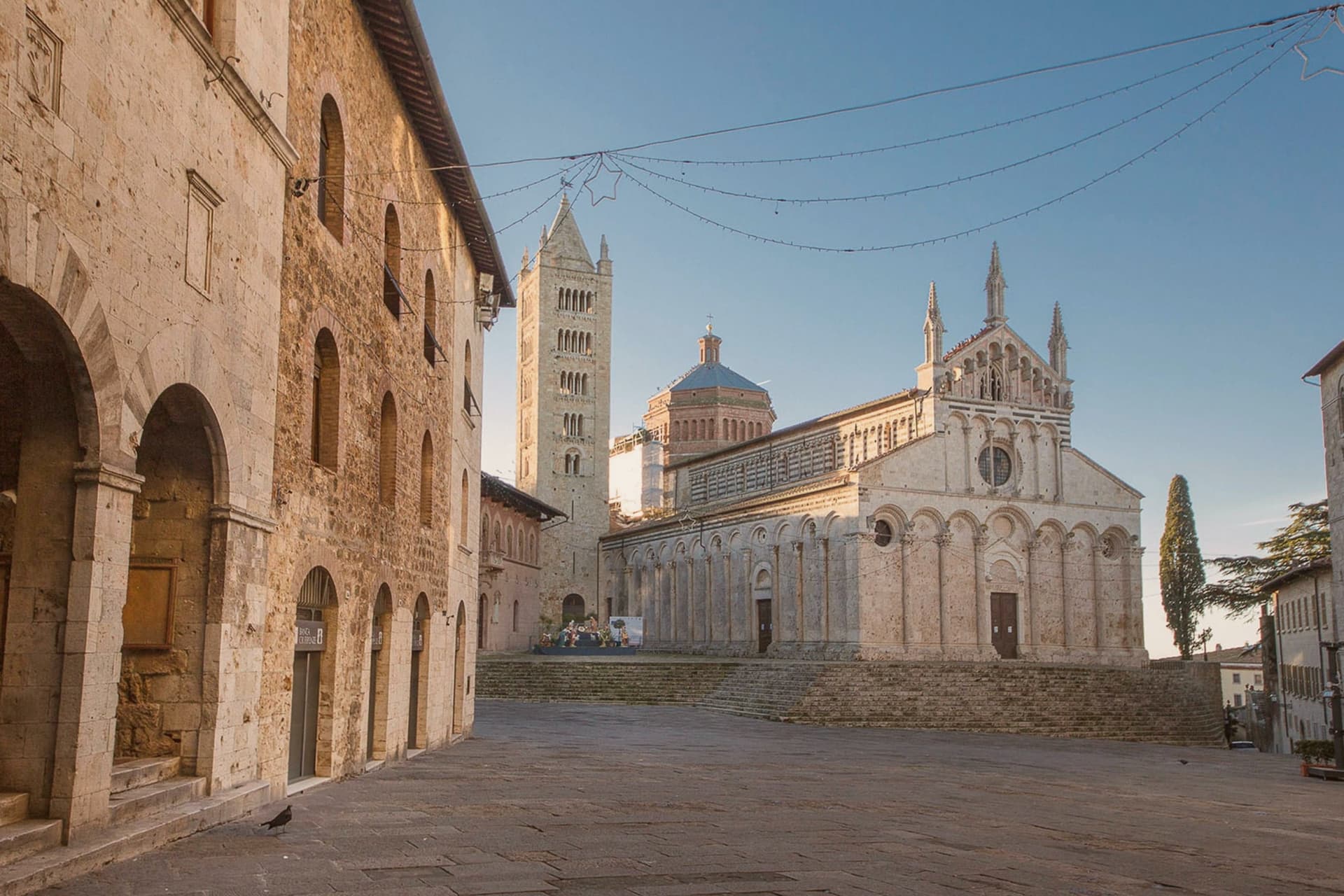
Massa Marittima sits on an isolated hill in the Colline Metallifere, the Tuscan hills that supplied copper and silver from Etruscan times. Despite the name, the sea is roughly twenty kilometers away.
The town's wealth as a free commune was built on that ore, and the buildings on Piazza Garibaldi still date from the century of its independence: the cathedral, the communal palace, the Palazzo Comunale, all raised while the mines were active. The old center keeps a medieval grid, with the Città Nuova rising above it and the watchtower marking the join between the two.
Mining gave way to tourism after the seams ran out, but the layout never had to be redrawn for cars or commerce: what stands today is largely what stood when the terzieri divided the town for its crossbow contest. The hill, the ore beneath it and the thirteenth-century square form one continuous fact: the town's shape was set by what it dug out of the ground, and its history stopped adding new layers once the ground stopped paying.
We confirmed you can reach this one by train.
What to see in Massa Marittima
- Duomo di San Cerbone. Pisan Romanesque cathedral on Piazza Garibaldi, its facade rising in tiers above the square. The Arca inside holds the saint's remains beneath carved marble figures.
- Fonti dell'Abbondanza. The vaulted fountain building where the fresco survives on the interior wall, plaster and pigment exposed after centuries hidden under whitewash.
- Palazzo del Podestà. Communal palace on Piazza Garibaldi, now housing the Museo Archeologico, with the Maestà by Ambrogio Lorenzetti among its rooms.
How to get to Massa Marittima
There is a railway station in the town, so you can arrive without a car and never need one while you are here. Livorno is roughly 95 minutes away by road.
Our tip
April through June and September into October are the months Massa Marittima opens up. The Balestro del Girifalco runs on the fourth Sunday of May and again on the second Sunday of August, and the town fills with archers in costume from the three terzieri. July and August are hot inland and the centro storico thins in the afternoon; the Tyrrhenian beaches at Follonica are half an hour away by car. Balestro del Girifalco di Agosto a Massa Marittima falls in August.
Seravezza
Why visit Seravezza
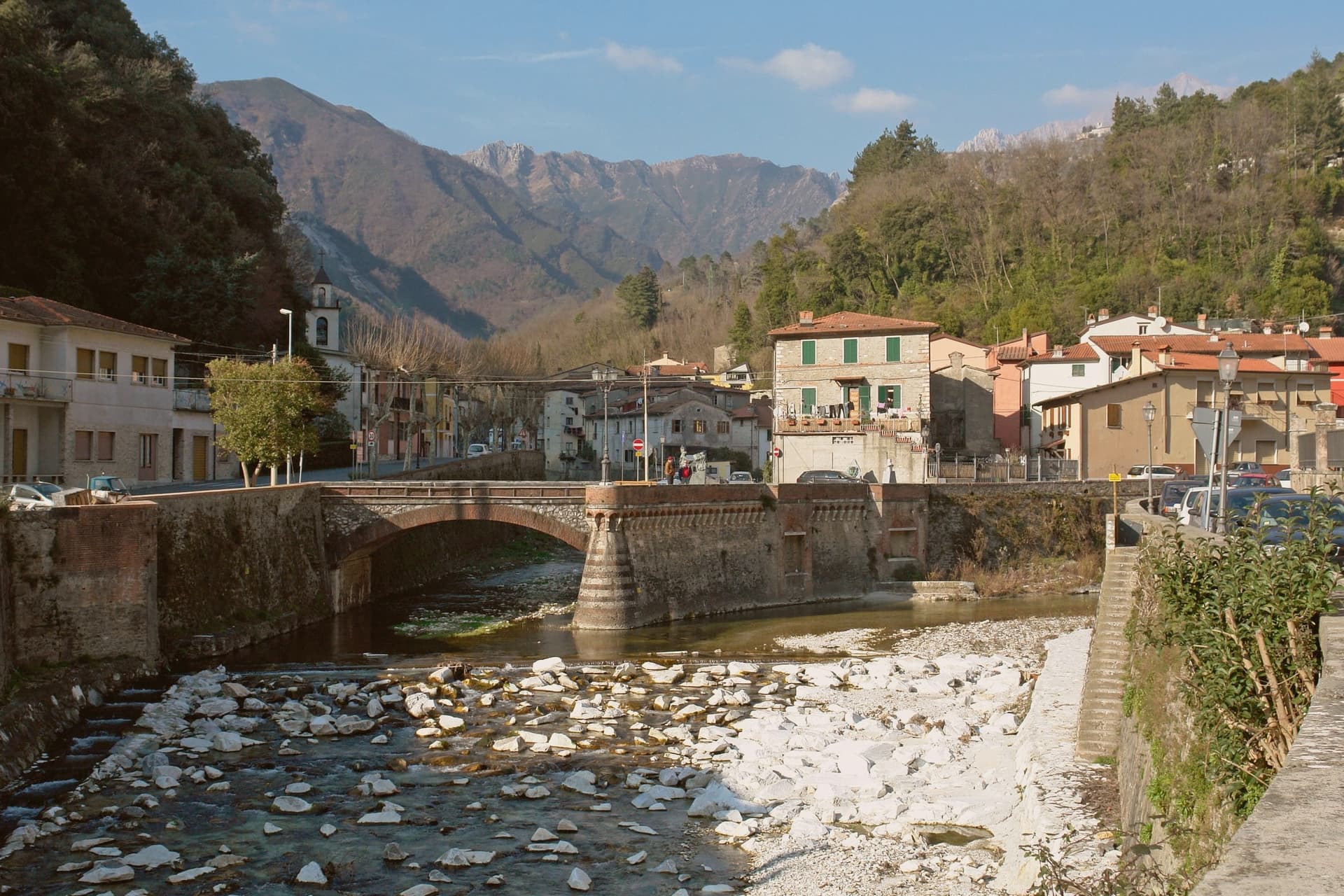
Seravezza sits at 100 meters where the Vezza and Serra streams meet, in Versilia Storica, between the Apuan Alps and the Tyrrhenian. The territory was contested between Pisa, Lucca, Genoa and Florence for centuries before passing to the Medici, and the town's position at the junction of the two watercourses, with the mountains at its back and the coast within reach, explains why it mattered enough for all four to want it.
Michelangelo spent three years on Monte Altissimo behind the town, found his veins of white stone, and built a road to take it down toward the sea. Half a century later Cosimo I commissioned the Palazzo Mediceo here, a summer residence rather than a fortress, which says something about how settled Medici rule had become by the time it was built.
The two episodes, a papal quarry and a ducal villa, sit one above the other on the same small territory: the mountain supplied the stone that Florence wanted, and the valley below became a place worth building a palace in once the stone trade had made the route familiar.
We confirmed you can reach this one by train.
What to see in Seravezza
- Palazzo Mediceo. The residence stands in the centro, its design passed from one architect to the next as the project went on. It carries the UNESCO listing among the Medici Villas.
- Pieve di San Martino alla Cappella. Eleventh-century Romanesque parish church between Seravezza and Azzano, with the ruined Annunziata Oratory alongside.
- Monte Altissimo. The peak rises behind the town at 1,589 meters. The road Michelangelo built to bring the stone down still marks the route from quarry to valley, and the mountain is worked as a quarry to this day.
How to get to Seravezza
There is a railway station in the town, so you can arrive without a car and never need one while you are here. Pisa is roughly 63 minutes away by road.
Our tip
May through September is the working Versilia season, the inland equivalent of the coastal months at Forte dei Marmi and Pietrasanta six kilometers away. June and September are the best moments to walk up to the Cappella and Azzano: the mountain trails open, the marble quarries above visible from below. July and August are hot in the lower town but cool on the slopes, and the Apuan rains hold off until late September. Sagra di Fine Estate falls in August.
Castelnuovo di Garfagnana
Why visit Castelnuovo di Garfagnana
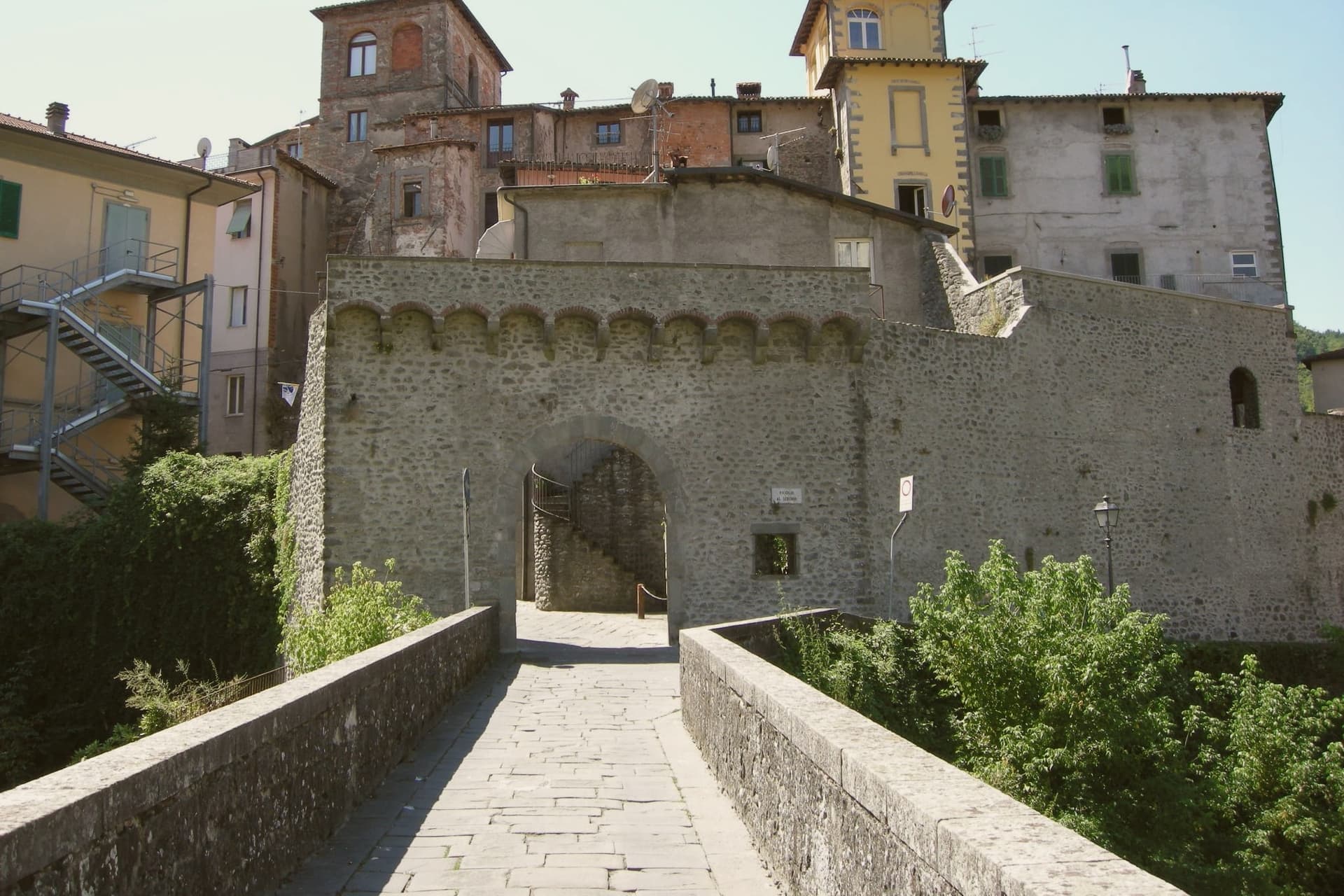
Castelnuovo di Garfagnana is the historic capital of the Garfagnana, the deep mountain valley between the Apuane Alps and the Tuscan Apennine main ridge, 50 km north of Lucca along the Serchio river. The town sits where the Serchio meets the Turrite, and it anchors the valley both politically and economically: 5,600 residents, and the only real services, hospital, secondary schools, government offices, for the 30,000 people spread across the Garfagnana comuni around it.
The historic core is the fortress that now serves as the municipal museum, the building where the Este governor lived out his posting writing to friends about being stuck among bandits and chestnut-eaters even as he completed the final additions to his poem. Above the town, on the hill, stands the much larger Este fortress of 1579, built to control the trans-Apennine trade route and now a cultural centre and concert venue with the most photographed view of the Apuane peaks.
The two fortresses read together as a record of how the valley was held: one seat of government inside the town, one larger garrison commanding the pass above it. Castelnuovo is also the point of departure for the higher ground: the Apuane Regional Park, whose white-marble peaks are the same stone quarried at Carrara seen from the back, the Parco dell'Orecchiella further up, the show cave reached 45 minutes to the south, the Eremo di Calomini cliff-monastery, and over 200 km of marked Apennine trails.
The valley's food follows the same logic of scarcity turned to identity: alongside the farro and the chestnut dishes there is formentone otto file, a local maize cornbread, pecorino della Garfagnana, biroldo, a sweet-spiced blood sausage, and salt-cured prosciutto bazzone from the indigenous Garfagnana pig breed. A town built to govern a valley still does exactly that: the fortress on the hill and the one in the center were both instruments of control over a mountain pass, and the food still served in its bakeries and trattorie is what the same isolation once made necessary.
We confirmed you can reach this one by train.
What to see in Castelnuovo di Garfagnana
- Rocca Ariostesca. The fortress core of the town, now the municipal museum. Its rooms hold the record of the governor who complained about the posting even as he finished his poem here.
- Fortezza di Mont'Alfonso. Larger Este fortress on the hill above town (1579), built to control the trans-Apennine route. Now a cultural centre and concert venue with the great Apuane view.
- Farro della Garfagnana IGP + zuppa di farro. Terraced hillsides still grow the grain that shows up in every trattoria's soup bowl. Bags of it are sold at the Saturday market.
How to get to Castelnuovo di Garfagnana
There is a railway station in the town, so you can arrive without a car and never need one while you are here. Pisa is roughly 84 minutes away by road.
Our tip
Castelnuovo di Garfagnana is mountain-seasonal — June through September is the sweet spot, when the trails are clear, the festivals run (Sagra del Farro late August, San Pellegrino in Alpe pilgrimages), and the high refugi are open. October is chestnut and porcini season — the best food month. Winter is alpine — heavy snow possible above 800m, several ski-touring options, but the borgo itself stays accessible.
Campiglia Marittima
Why visit Campiglia Marittima
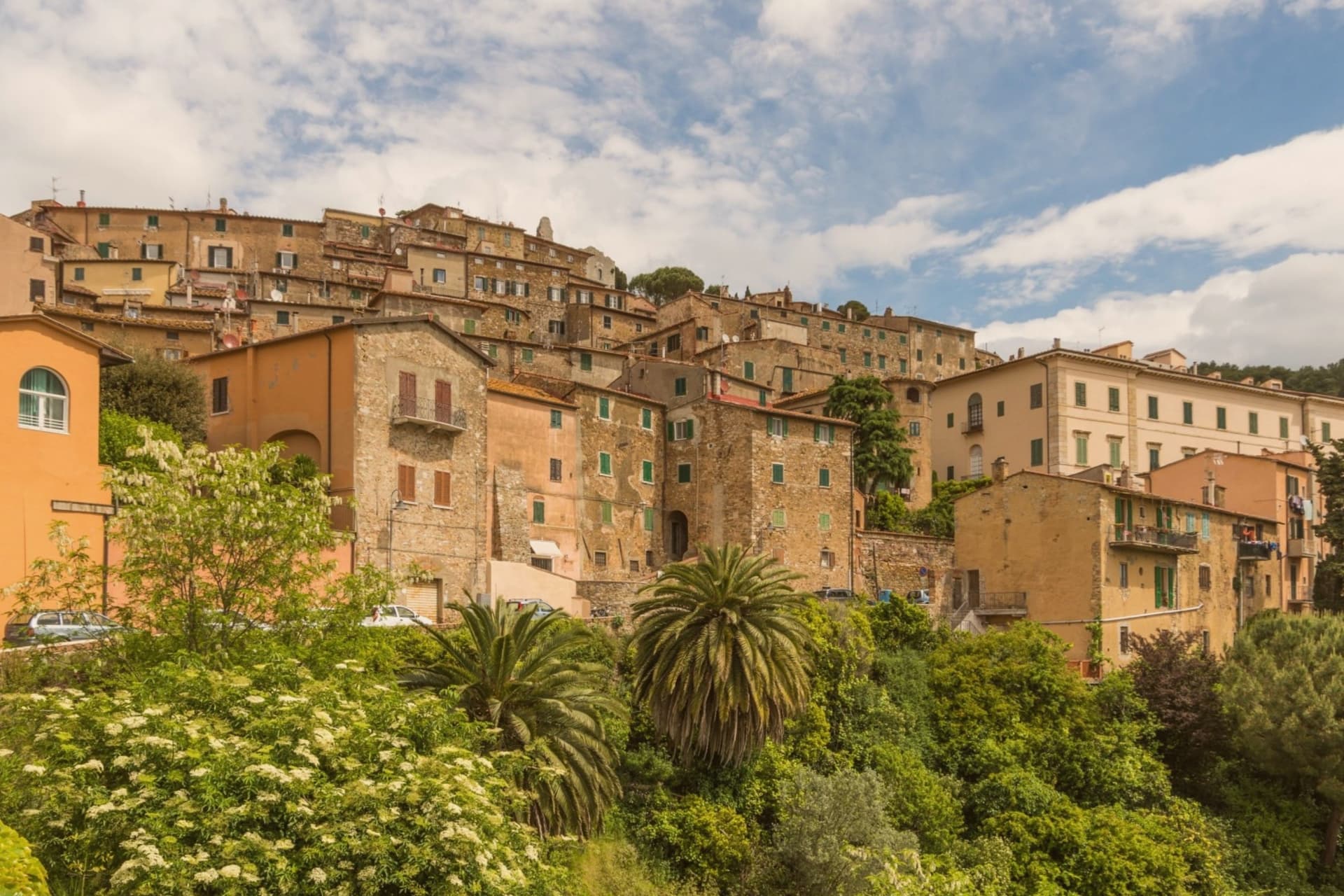
Campiglia Marittima sits at 231 meters on the last slopes of the Colline Metallifere above the Val di Cornia, eight kilometers inland from the Tyrrhenian coast and 60 kilometers southeast of Livorno. The Rocca occupies the highest point at 281 meters, a fortified semicircle whose 14th-century tower and town walls trace the medieval defensive line.
The territory has been mined since the Etruscans: copper, silver, lead and tin from the hills behind town, worked continuously until the last galleries closed in 1976. The Parco Archeominerario di San Silvestro, opened in 1996 on 450 hectares behind the town, centers on Rocca San Silvestro, a tenth and eleventh-century miners' village abandoned in the fourteenth century and excavated since 1984.
Visitors enter through restored galleries on a small electric train. Down on the plain the DOC Val di Cornia produces Sangiovese and Cabernet, and the thermal springs at Venturina, the frazione south of town, have flowed since Roman use as Aquae Populoniae.
We confirmed you can reach this one by train.
What to see in Campiglia Marittima
- Rocca di Campiglia. Fortified semicircle at 281 meters with the 14th-century tower, walls and the Pieve di San Giovanni, the highest point of the town.
- Parco Archeominerario di San Silvestro. 450-hectare park behind town, opened 1996, with restored mining galleries, a small electric train, and the abandoned medieval miners' village of Rocca San Silvestro.
- Centro storico. Walled hilltop borgo of stone houses, with Piazza della Repubblica at its center, the medieval gates Porta a Mare and Porta Fiorentina still intact.
How to get to Campiglia Marittima
There is a railway station in the town, so you can arrive without a car and never need one while you are here. Livorno is roughly 67 minutes away by road.
✷ We have written about Campiglia Marittima
“That is the thing the young man on the beach did not see, and the man who lives here cannot stop seeing. This is an industrial coast wearing a beach towel. Run it back far enough and the whole of it, the swamp and the steel and the slag and the white water, is one long story about iron, and the holiday is the costume the story put on after the work ran out.”
Read our piece on Campiglia Marittima →The Iron Coast | The Wrong Sea
Our tip
May through September is the season on the Val di Cornia: warm days, sea breezes that climb the hill, harvest of Sangiovese and Vermentino from late August. The beaches at San Vincenzo and Baratti are eight to fifteen kilometers away and pull the day-traffic. July and August are hot and busy on the coast; the borgo on the hill stays a few degrees cooler.
San Giuliano Terme
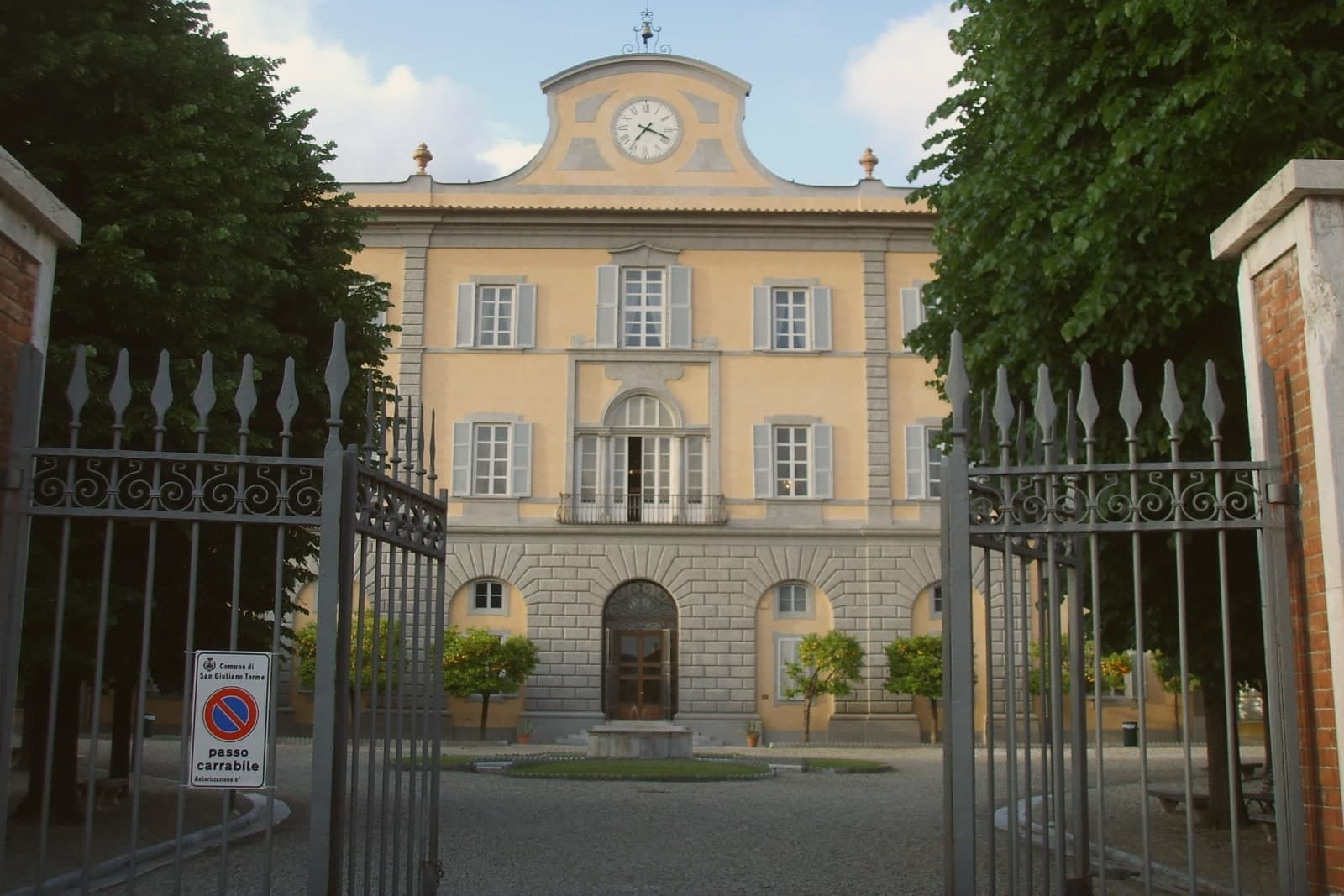
Why visit San Giuliano Terme
San Giuliano Terme sits at 10 meters at the southern foot of Monte Pisano, ten kilometers north of Pisa. The name Aquae Pisanae was the ancient one for the springs that rise here, and the town's own name records the later dedication to San Giuliano rather than to Pisa, though the waters remain tied to the city below by the aqueduct that still carries them there.
The frazioni climb the slope of Monte Pisano itself, olive groves stepping up the lower ground while the plain beneath opens into the pine forests and dunes of the Parco di Migliarino-San Rossore-Massaciuccoli, so the comune runs in one line from mountain ridge to coastal flat with the spa town fixed at the hinge between them. What holds the place together is water moving downhill: from the spring, through the baths where the waters were taken, along the arches to Pisa, and out across the plain toward the sea.
We confirmed you can reach this one by train.
What to see in San Giuliano Terme
- Bagni di Pisa. The restored complex occupies the eighteenth-century Lorena baths, its rooms the ones where Byron, Shelley and Leopardi lodged while taking the waters.
- Acquedotto Mediceo. The line of arches runs from the springs of Asciano down to Pisa, parallel to the modern road, still legible as a single continuous structure across the plain.
- Monte Pisano. The granite ridge above the town, with olive groves on the lower slopes and trails leading to Rocca della Verruca.
How to get to San Giuliano Terme
There is a railway station in the town, so you can arrive without a car and never need one while you are here. Pisa is roughly 8 minutes away by road.
✷ We have written about San Giuliano Terme
“By the sea, cold hits differently. When that flat grey sky arrives, it means two things in our house: a big pot of bollito, and a thermal bath. The problem is finding one, the whole apparatus, multiple pools, the salt pool, sauna, steam room, mud, the entire game. For us, that means San Giuliano Terme, at the foot of Monte Pisano, and the Bagni di Pisa.”
Read our piece on San Giuliano Terme →Bagni di Pisa | The Tuesday Cure
Our tip
The thermal town runs year-round. Winter is the original spa season, with the warm pools welcome against the cold air off the Monte Pisano. April through June and September into October are the dry mild months for combining a spa stay with walks on Monte Pisano and the Parco di San Rossore. Sagra del Pesce falls in the season.
Piombino
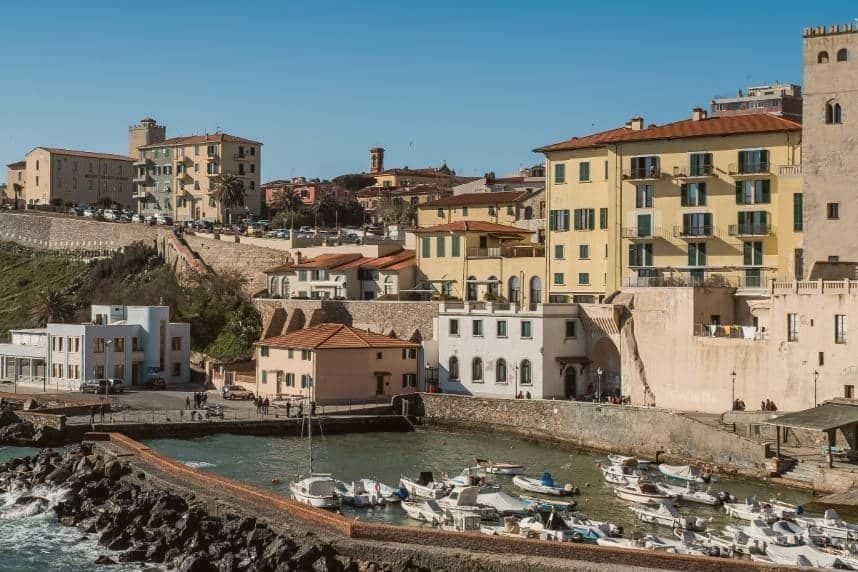
Why visit Piombino
Piombino sits on a triangular promontory pointing southeast into the Tyrrhenian, at the northern edge of the Maremma. The town was founded in the ninth century by refugees from the Etruscan port after Greek pirates attacked the city; they called the new settlement Populino, small Populonia, and the name shortened over time to what it is now.
The old city, now a frazione north on the coast, became the source of the newer town's name rather than the other way round. In the medieval period Piombino became an independent signoria under the Appiani, who ruled from here over a small state that reached out to the islands across the water.
The castle at the seafront, the piazza cantilevered out over the cliff toward Elba, and the working ferry port make up the contemporary town, each looking the same direction the refugees once looked back from: toward the older settlement to the north and the channel to the islands beyond it. The Bandiera Blu coast covers the four kilometers between the port and the old acropolis, so that the walk from new town to old runs along the same shoreline that separates them by name only.
We confirmed you can reach this one by train.
What to see in Piombino
- Castello di Piombino. Principal defensive fortress of the city on a headland pointing southeast into the sea, with the Torrione, the Rivellino and the Cittadella complex, now a museum.
- Piazza Bovio. Long rocky breakwater extending into the sea as La Rocchetta, terraced as a piazza, with a balcony view across the channel to Elba.
- Parco Archeologico di Baratti e Populonia. Chamber tombs from the seventh to second centuries BC cut into the ground of the Gulf of Baratti, laid out for walking among the excavated structures rather than viewed from a distance.
How to get to Piombino
There is a railway station in the town, so you can arrive without a car and never need one while you are here. Livorno is roughly 77 minutes away by road.
Our tip
May, June, September and October are the months when the Piombino promontory is at its best, sea warm enough to swim and the ferry to Elba running every hour without the August crush. July and August are full season, with the centro storico filling by late morning and the Baratti beach turning over twice a day. November through March is cold and windy on the promontory, with limited ferry crossings and many seaside trattorie closed. Sagra del Pesce - Piombino falls in July.
Viareggio
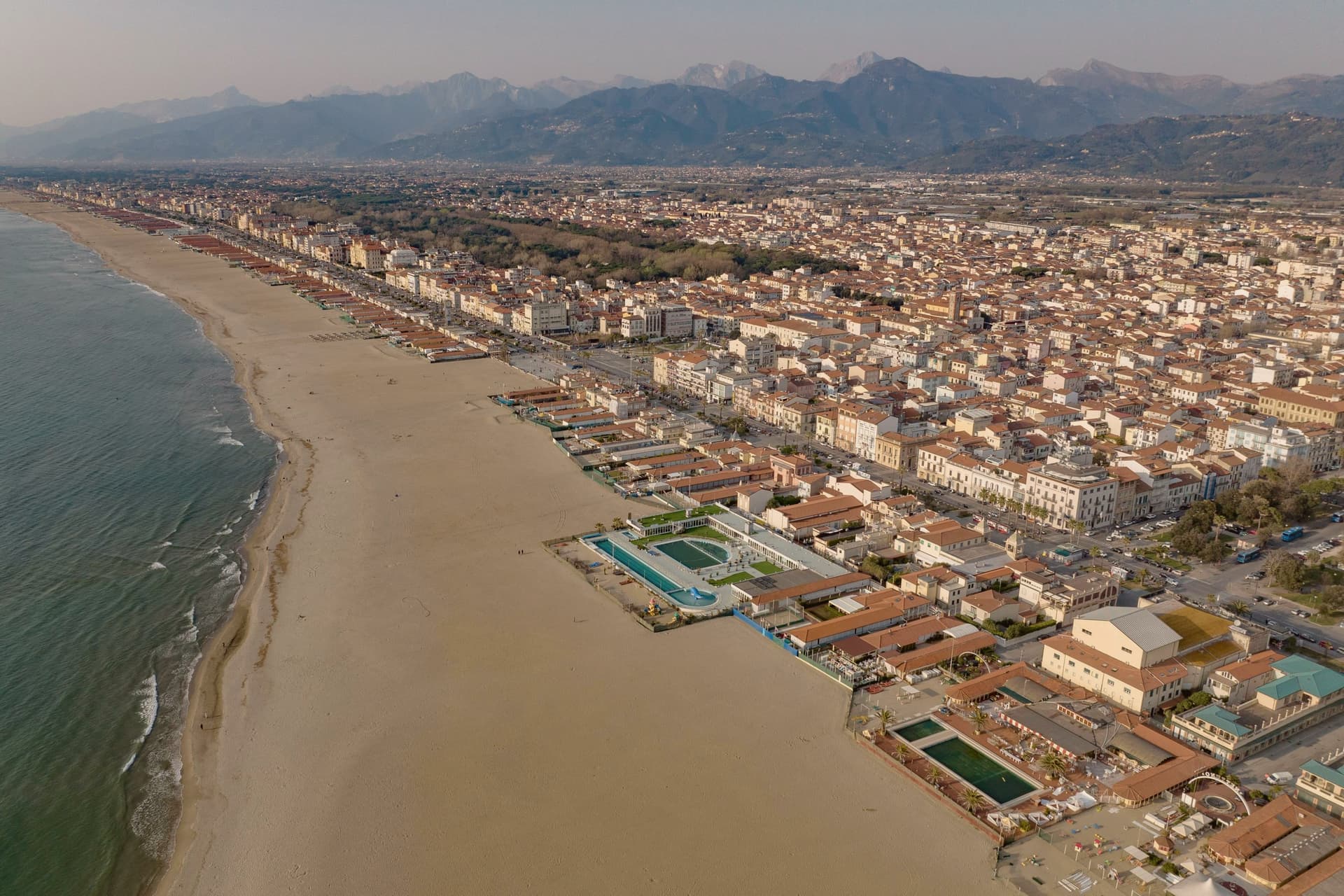
Why visit Viareggio
Viareggio sits at sea level on the Versilia coastal plain, the largest commune on the Tuscan riviera. The first parade ran in 1873, organized by middle-class residents as a float procession down the seafront; the masked protest against tax policy that followed gave the event its character.
The mascot's colour scheme, red and white, was taken from the beach umbrellas that line the shore, a detail that ties the Carnival's invented figure back to the town's own beach culture rather than to any outside tradition. The rail link to Lucca and Florence arrived in 1890, and the city turned into a Belle Époque resort in response: the seafront was rebuilt in the ornamented style of that era over the following decades.
The Magazzini Duilio 48 along Viale Margherita, together with the promenade's other survivors, mark out where that resort-era rebuilding is still legible today. The city's two identities sit side by side on the same stretch of shore: one built by a rail-borne resort economy, the other by a homegrown winter festival that turned into the town's defining export.
We confirmed you can reach this one by train.
What to see in Viareggio
- Passeggiata Liberty. Three-kilometer Belle Époque seafront promenade lined with Stile Liberty villas, cafés and bath houses built between 1890 and 1925.
- Cittadella del Carnevale. Sixteen vast hangars where the papier-mâché floats are built year-round, with the Museo del Carnevale and the float-construction workshops open to visitors.
- Spiaggia di Viareggio. Ten-kilometer Bandiera Blu beach lined with the original bagni concessions of the Belle Époque, fine sand and shallow seabed.
How to get to Viareggio
There is a railway station in the town, so you can arrive without a car and never need one while you are here. Pisa is roughly 29 minutes away by road.
✷ We have written about Viareggio
“The bike lane starts at the bottom of Lido di Camaiore and runs south along the coast for about eight kilometers before it hits the pier at Viareggio, and the thing it teaches you, if you ride it often enough, is that Viareggio is a city you should almost always see from the saddle of a bicycle and never, if you can help it, from the pavement. The pavement has the crowd on it. The bike lane has the city.”
Read our piece on Viareggio →Viareggio | The cat at the end of the road
Our tip
May through September runs the season. June and September are calmer than the July-August peak when the beach concessions sell out and the parking on Lungomare fills by ten. February brings Carnival weekends and the largest crowds of the year for the parades along Viale Manin and Viale Margherita; the floats run through a full Sunday route.
Pisa
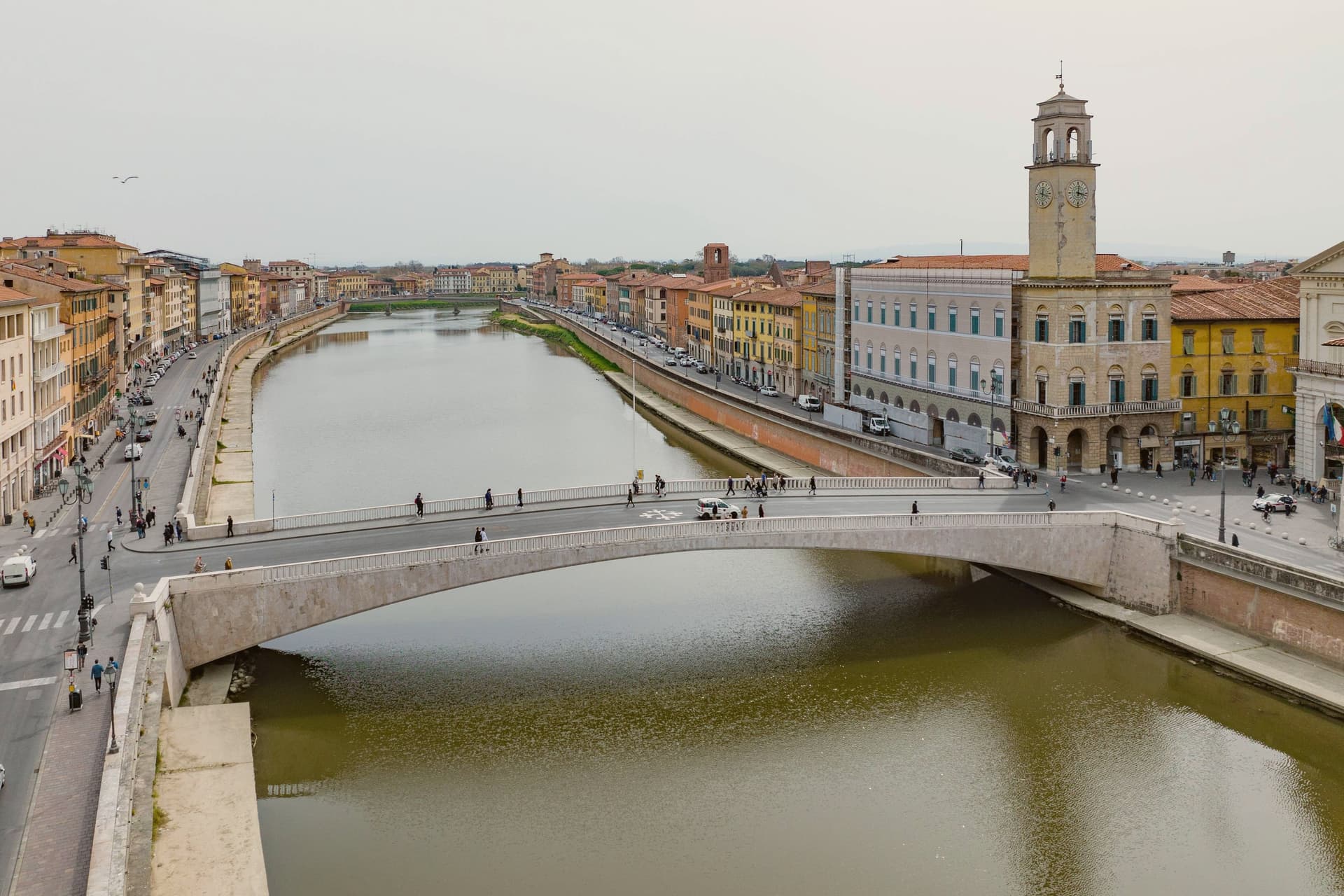
Why visit Pisa
The Arno reaches the Ligurian Sea twelve kilometers past the city, and the river is what built it: an Arsenal on its banks built galleys for the Crusades, and Mediterranean trade paid for the walled compound northwest of the centro. That compound, inscribed by UNESCO as one of the first Italian sites in 1987, gathers four buildings of the same Pisan Romanesque school in one field, the cathedral, the baptistery, the cemetery cloister and the bell tower, close enough to read as a single composition rather than a set of monuments visited separately.
The city has a second center away from that field. Piazza dei Cavalieri became the Medici political seat after the republic fell, and the university founded in 1343 keeps both squares populated with people who live and work there rather than pass through.
The Lungarni tie the two halves together physically, two quays following the river on both banks, lined with palazzi spanning the twelfth to the nineteenth century. What this adds up to is a town built in two unequal pieces: a religious and civic compound frozen at its medieval peak, and a working river city around it that never stopped adding centuries to its banks.
We confirmed you can reach this one by train.
What to see in Pisa
- Torre Pendente. Finished 1372, two centuries after it began, the lean is visible from ground level without needing to climb it, south of vertical against the other three white buildings of the square.
- Duomo di Pisa. Pisan Romanesque cathedral begun 1064 by Buscheto, financed from the Mediterranean trade, with bronze doors by Bonanno Pisano and a pulpit by Giovanni Pisano.
- Battistero di San Giovanni. Largest baptistery in Italy at 54.86 meters tall, begun 1152, Romanesque base and Gothic upper level, with a pulpit by Nicola Pisano.
How to get to Pisa
There is a railway station in the town, so you can arrive without a car and never need one while you are here. Pisa is roughly 16 minutes away by road.
✷ We have written about Pisa
“It was a Tuesday in January, ten degrees, the kind of soft grey Tuscan winter rain that does not quite commit to being rain, and what we wanted, in a way that surprised both of us, was a bowl of Japanese noodle soup. The nearest place to get one was Pisa.”
Read our piece on Pisa →Pisa | Beyond the Tower
Our tip
May, June, September and October are the months when the Lungarni are at their best, the temperature stays in the twenties, and the lines at Piazza dei Miracoli compress by mid-afternoon. The Luminara di San Ranieri, on 16 June, lights the riverbank with eighty thousand candles and is the night the city sees most. July and August are hot and humid, with the day-tripper waves from cruise ships at Livorno filling the compound from morning. Gioco del Ponte falls in June.
Livorno
Why visit Livorno
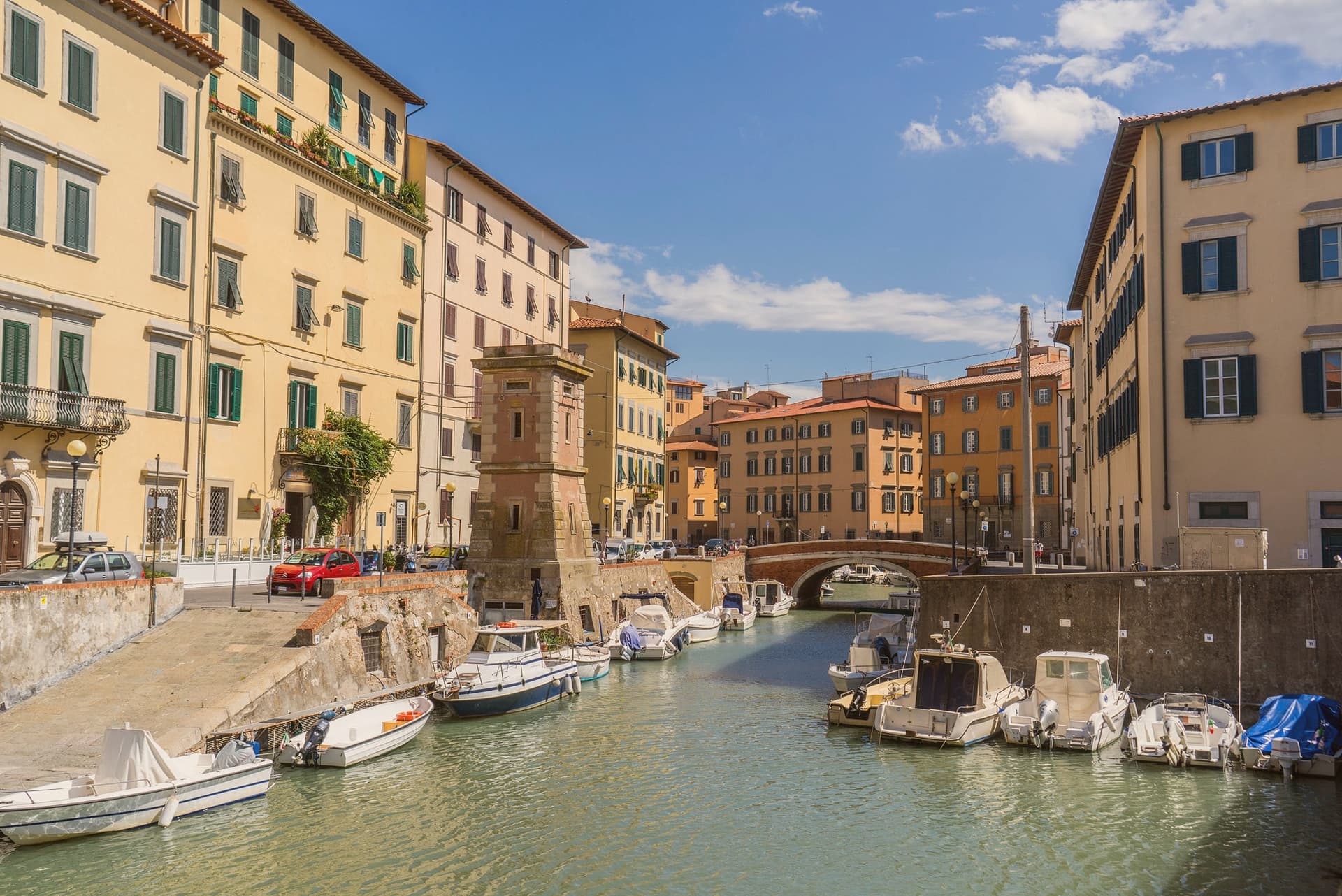
Livorno is the Tuscan coast you don't expect: Medici-founded in 1577 as Nova Civitas, planned from scratch by Bernardo Buontalenti as a free port to rival Genoa and Venice, and unique among Tuscan cities for being entirely a Renaissance-era invention rather than a medieval inheritance. The original pentagonal city walls enclosed a Venetian-style quarter (Venezia Nuova) laced with navigable canals where merchant warehouses opened directly to the water — Jews, Greeks, Armenians, English, Dutch and North Africans were all invited to settle under the 1591–1593 'Livornine' laws granting freedom of worship and trade, making Livorno the most cosmopolitan port on the Mediterranean for two centuries.
What you see today: Fortezza Vecchia (1521) and Fortezza Nuova (1590) guarding the inner harbour; the four bronze Moors (1626) chained to the base of Ferdinando I's monument facing the port; the Terrazza Mascagni (a 1925 Art Deco chequerboard promenade with 4,100 black-and-white tiles facing the Tyrrhenian); the Cattedrale rebuilt after 1944 bombing; the Pentagono di Buontalenti street grid still visible from above. The Macchiaioli painters' movement was born here in the 1860s (Fattori, Lega, Signorini all lived and painted the local light).
Modigliani was born in Livorno in 1884. And the food: cacciucco — a 5-fish stew with toasted bread and red wine, the city's totemic dish — plus ponce alla livornese (rum-spiked coffee) at the Caffè Civili.
The Tuscan archipelago (Capraia, Gorgona, Elba) ferries out from the port within view of the promenade.
We confirmed you can reach this one by train.
What to see in Livorno
- Terrazza Mascagni. A 1925 Art Deco seafront promenade with 4,100 black-and-white tiles facing the open Tyrrhenian — locals call it the world's most beautiful balcony, especially at sunset.
- Venezia Nuova quarter. The Medici-planned canal district from 1629. Walkable bridges, warehouse-doors-on-water, and the Effetto Venezia summer festival turn it into Tuscany's Venice.
- Quattro Mori (Monumento dei Quattro Mori). Pietro Tacca's four bronze Moors (1626) chained to the base of Grand Duke Ferdinando I's statue facing the port. Livorno's civic icon.
How to get to Livorno
There is a railway station in the town, so you can arrive without a car and never need one while you are here. Livorno is roughly 11 minutes away by road.
✷ We have written about Livorno
“I lived in Naples for weeks once, and those days remain among the best I have had, and the people there are among the finest I have met anywhere in this country, and I love the place without reservation. Naples is the same love story as Livorno.”
Read our piece on Livorno →Livorno | The City With No Time For You
Our tip
Livorno is a true year-round port city, but the sweet spot is April–June and September–October. May and June have the warm Tyrrhenian light, the Effetto Venezia festival (last week of July) brings the canal quarter alive at night, and September is still beach-warm without the crowds. July and August get hot and the port traffic peaks. Effetto Venezia falls in July.
More from Anywhere Italy
- The 6 best coastal towns inside a nature park in Toscana
- The 7 best towns inside a nature park that have a serious restaurant in Toscana
 The 6 best hidden towns inside a nature park in Toscana
- The best coastal towns inside a nature park within 90 minutes of Pisa
 The 8 best towns you can reach by train in the province of Lucca
 The best hot-spring towns within 75 minutes of Pisa