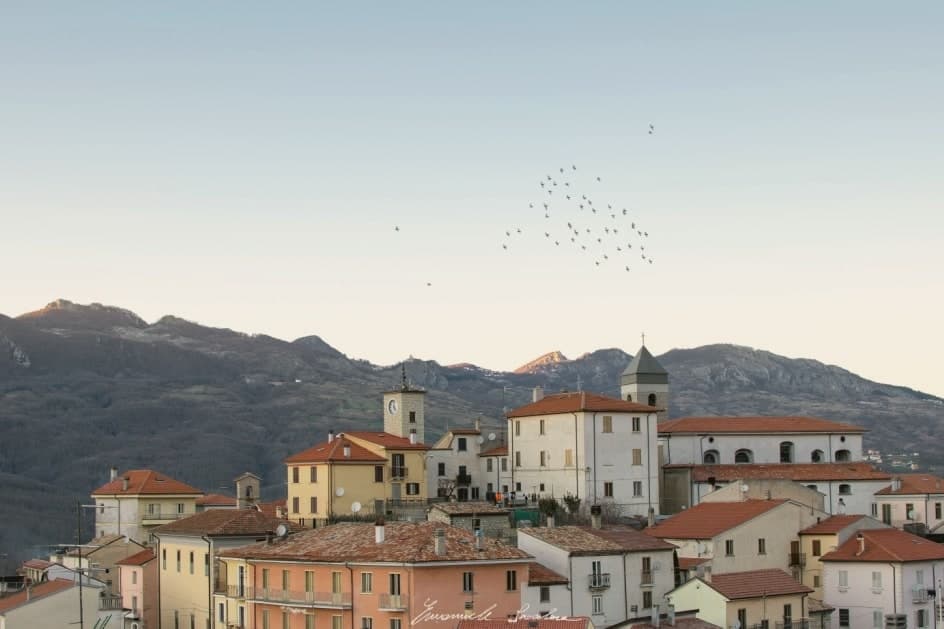
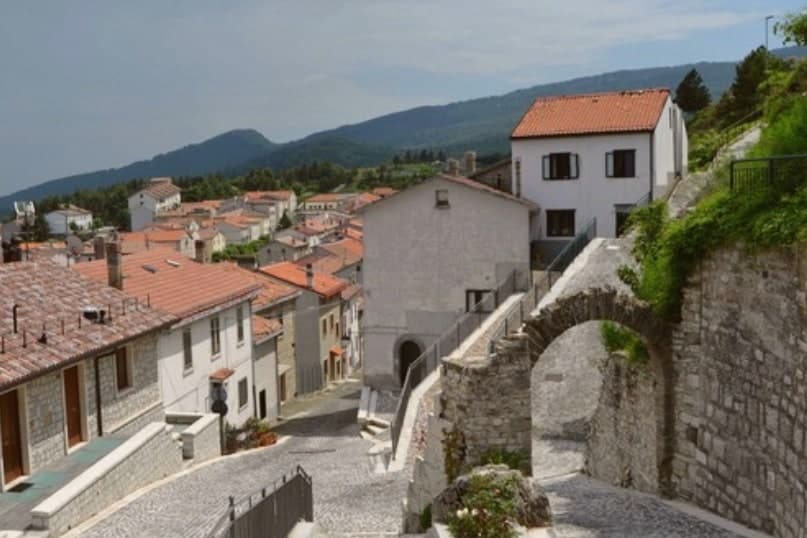
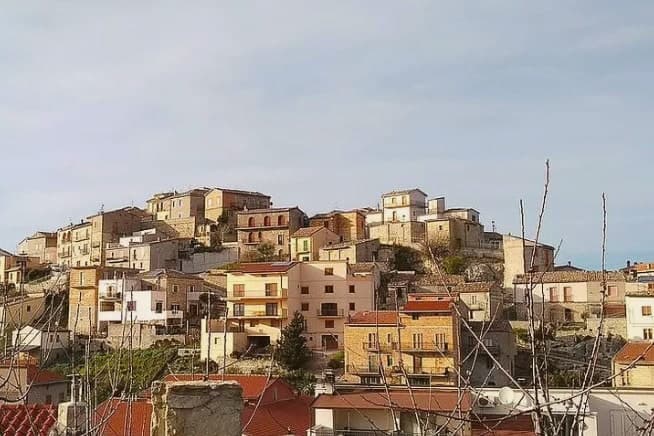
The best towns inside a national park in the province of Isernia
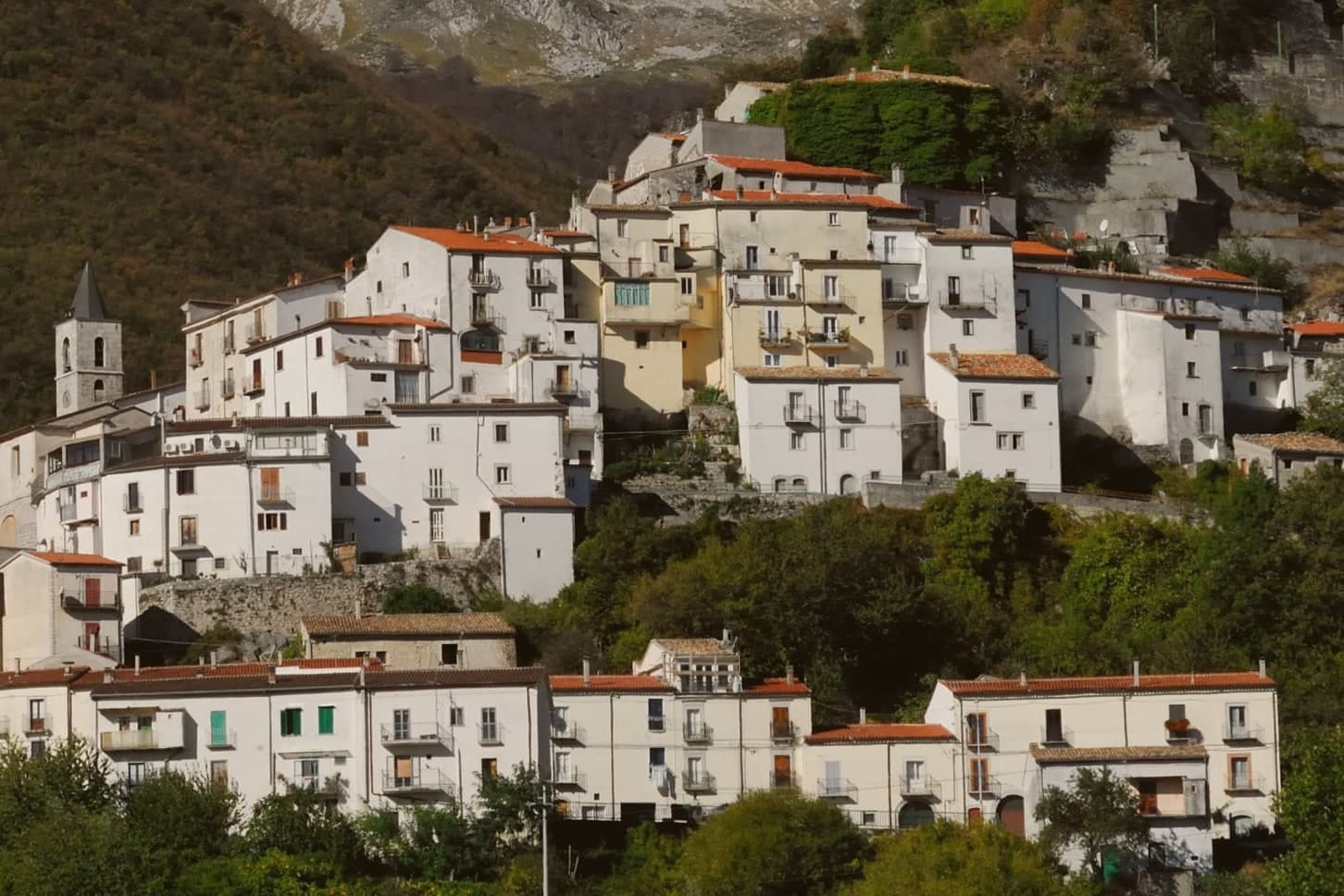
The province of Isernia is mountain country, limestone ridges running north into the Mainarde and south towards the Matese, with beech forest that turns copper in late October and holds snow into April. Houses are built from the pale local stone, roofs low against the wind, and the villages sit at the height where wolves and Marsican bears still cross the tracks above the treeline. The food follows the altitude: sheep's cheese, lamb, chestnuts, cured pork, bread cooked in wood ovens, and on the warmer western flank around Venafro the olive oil that Roman writers already knew about. Spring brings transhumance routes back into use, and summer nights in the higher squares stay cool enough for a jacket.
Almost everyone who comes to see the Abruzzo, Lazio and Molise National Park enters from the Abruzzo side, at Pescasseroli, where the visitor centre, the hotels and the coach parties are. In August the road through the Sangro valley to Barrea and Civitella Alfedena moves at walking pace, and the popular trails to the beech woods above are queued at the trailhead. It is the right park and the wrong door, chosen because it is the one the guidebooks describe.
The park does not stop at the regional border. Its southern quarter falls in Molise, in the province of Isernia, along with a slice of the Matese park to the south, and the towns inside those boundaries see a fraction of the visitors. They are working villages rather than resorts, with bagpipe workshops, castle ruins on rock spurs, artificial lakes the colour of slate, and paths into the same forest that people are standing in line for on the far side of the ridge.
Of the 14 communes we have mapped in the province of Isernia, 7 qualify as towns inside a national park: each sits inside the boundary of a national park. The smallest, Pizzone, has 313 residents.
Elsewhere in the catalogue: The best small towns inside a national park in Molise and The best towns that eat well in the province of Isernia.
Pizzone
Why visit Pizzone
Pizzone sits at 724 meters on the eastern flank of the range that closes the northern edge of Molise against the Abruzzo border. In 1990 the commune ceded part of its territory to the national park, together with Castel San Vincenzo, Rocchetta a Volturno, Filignano and Scapoli, adding high pasture and beech forest to what became the Mainarde sector.
The karst plateau on Pizzone's own territory is one of the signature high meadows of the southern Apennines. The Volturno springs at the foot of the range and the Rio Jemmare that crosses Pizzone feed the lake just below the village.
The village itself is small, stone houses set on a ridge under the peaks, with the church at its centre. A few kilometers north stands the abbey of San Vincenzo al Volturno.
Pizzone reads as a mountain edge settlement: its territory gave ground to the park and kept the high meadow, while the water descending from its slopes shapes the lake and the abbey site below.
What to see in Pizzone
- Mainarde. Limestone mountain range on the Abruzzo-Molise border, the Molise sector of the Parco Nazionale d'Abruzzo, Lazio e Molise.
- Pianoro delle Forme. Karst high meadow on Pizzone's territory, one of the signature plateaus of the southern Apennines and a summer pasture for grazing flocks.
- Lago di Castel San Vincenzo. Turquoise artificial lake at the foot of the range, four kilometers downhill from the village.
How to get to Pizzone
Napoli is roughly 115 minutes away by road.
Our tip
May through October is the open season for Pizzone. The Mainarde trails clear of snow by late May and stay walkable into October. June through September is peak: alpine flowers on the Pianoro delle Forme in early summer, summer pasture in July and August, the first turning of the beech woods in late September.
Castel San Vincenzo
Why visit Castel San Vincenzo
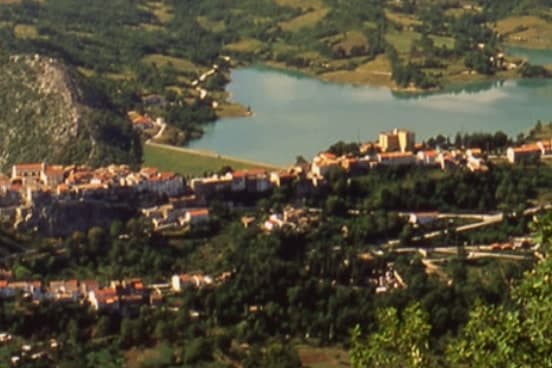
Castel San Vincenzo sits at 749 meters in the upper Volturno valley, in the Parco Nazionale d'Abruzzo, Lazio e Molise, fifteen kilometers northwest of Isernia. The village shares its name and its territory with the Abbazia di San Vincenzo al Volturno, a Benedictine monastery founded in the eighth century near the river source.
Charlemagne granted it fiscal and jurisdictional privileges; by the early ninth century it housed more than three hundred monks and held estates across central and southern Italy. Saracen raiders sacked it in 881, killing the abbot.
The community returned in 914 and rebuilt across the river in a defensible position, and Pope Paschal II consecrated the new abbey church in 1115. The standout survival is the Cripta di Epifanio, frescoed between 824 and 842 with one of the most important ninth-century cycles in Europe.
World War II bombing damaged the site again. Below the village, the artificial Lago di Castel San Vincenzo, built in the 1950s for hydroelectric use, reflects the Mainarde peaks.
What to see in Castel San Vincenzo
- Abbazia di San Vincenzo al Volturno. Benedictine abbey founded in the eighth century, one of the most powerful in medieval Europe; current church consecrated in 1115.
- Cripta di Epifanio. Frescoed crypt built by Abbot Epiphanius between 824 and 842, one of the most important Carolingian fresco cycles in Europe.
- Lago di Castel San Vincenzo. Artificial lake built in the 1950s for a hydroelectric plant, with the Mainarde mountains reflected in its water.
How to get to Castel San Vincenzo
Napoli is roughly 104 minutes away by road.
Our tip
May through October is the season at 749 meters. The Mainarde trails open, the lake reaches full level, and the abbey complex is reachable on foot from the village in a long morning. June and September give the clearest air.
Scapoli
Why visit Scapoli
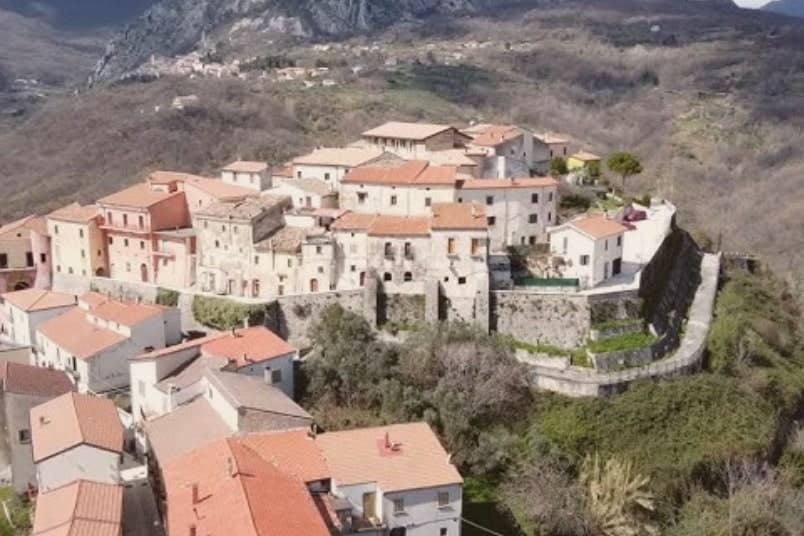
The borgo sits at 668m in the Mainarde, the limestone massif that forms the western edge of the national park spanning Abruzzo, Lazio and Molise. The zampogna itself is a goat-or-sheep-skin bag with two melody chanters and two drones, traditionally played in pairs at Christmas pastorali, the shepherds' processions.
Scapoli's link to the instrument goes back to at least the 18th century, when shepherds wintering their flocks on the Roman Campagna carried the instruments down from these mountains and sold them in Naples and Rome. That is how a mountain craft became a valley trade: the raw material and the customers came from elsewhere, but the workshops stayed fixed in the centro, passed down through the same families to today, with prices from €600 to €2,500 depending on size and decoration.
Up-valley to the west, the Mainarde peaks, Monte Marrone and Monte Cavallo, rise past 2,000m, and the source of the Volturno river lies 5 km west at Rocchetta a Volturno. The national park stretches across the border into Abruzzo, taking in Camosciara and Forca d'Acero.
The same slopes that shelter the village also feed the river draining the wider area, and the park boundary makes the Mainarde one continuous landscape rather than a local backdrop. The borgo is small and ultraperiferico: one trattoria, no petrol station, no ATM.
Whoever comes for the day brings what is needed. Food is Molisan-mountain, pampanella, caciocavallo, pasta alla chitarra with wild boar, the local Tintilia red, and on festival weekend the centro turns into one open-air kitchen alongside the concerts and workshops.
What holds the place together is the pairing of an isolated mountain setting with a trade that only makes sense because of that isolation: a village too remote to live off anything but a craft it could carry out on foot, still practiced by the same families in the same streets.
What to see in Scapoli
- Festival Internazionale della Zampogna (last weekend July). 4-day International Bagpipe Festival: players from Galicia, Scotland, Bulgaria, Bretagne, Turkey, plus Italian zampognari from across the Apennines. Concerts, workshops, jamming.
- Zampogna workshops (4–5 active). Family workshops in the centro hand-build the instruments to order: cherry wood, brass, tanned goat skin. 6–12 month waiting list. Demonstrations on weekends.
- Museo della Zampogna (Palazzo Battiloro). In the Palazzo Battiloro. 200+ bagpipes from across the Mediterranean, laid out with manufacturing-process exhibits and recordings of historic players: the regional documentation centre of the tradition.
How to get to Scapoli
Napoli is roughly 104 minutes away by road.
Our tip
Scapoli is mountain-seasonal — May through September is the sweet spot, with the International Bagpipe Festival last weekend of July as the year's headline event (10,000+ visitors, book accommodation in Isernia or nearby Castel San Vincenzo 2 months ahead). October is chestnut and porcini season. Winter is severely cold at 668m, services minimal, and the village is dependably quiet.
Roccamandolfi
Why visit Roccamandolfi
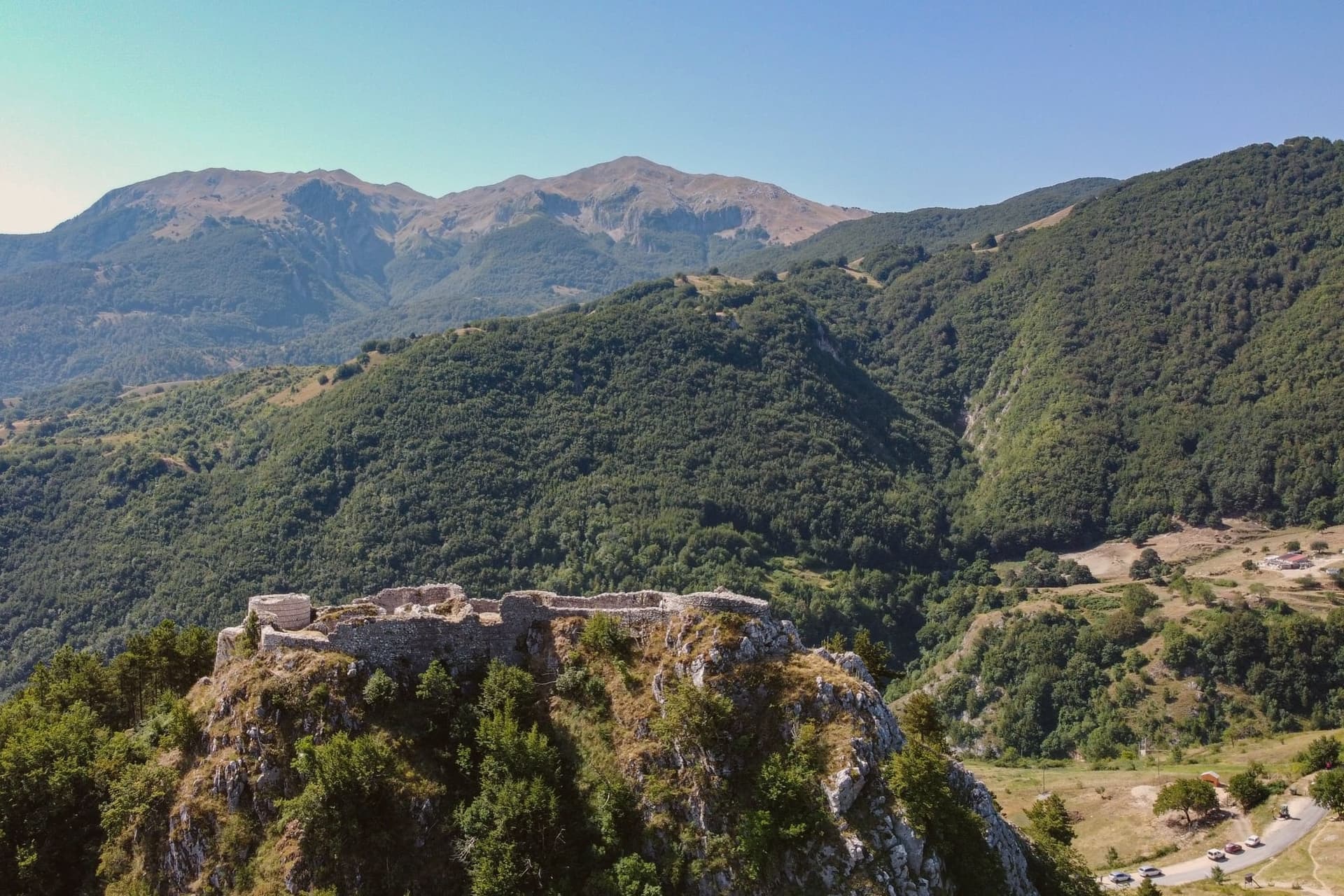
Roccamandolfi sits at 850 meters on the Molise flank of the Matese massif, the high karst range that separates the region from Campania, with Monte Miletto rising above it to the west. The Samnites held this ground before Rome.
The village itself reads as two layers stacked on the slope: the ruined castle on the hill above, and the centro storico below it gathered around the parish church, with the woods beyond still marked by the paths the nineteenth-century brigands used and the village now retraces with its documentation centre and signed route. The Callora stream cuts a canyon below the settlement, and the suspension bridge that now crosses it sits at the start of a trail running up toward the Sentiero dei Fringuelli, so the walk out of the village leads a hiker from the ruins on the hill, past the memory of the brigands in the streets, and out over the canyon toward the mountain itself.
A Lombard rock, a resisted emperor, a century of outlaws in the woods, and a modern steel span: the village has kept building new reasons to climb the same slope.
What to see in Roccamandolfi
- Castello Longobardo. Ruined fortress on the hill above the village, demolished in 1223 by order of Frederick II after its lord defied imperial authority. The broken walls are still the first thing seen against the skyline from the houses below.
- Ponte Tibetano. The suspension deck sways over open air where the Callora canyon drops away beneath it, at the start of a marked Matese trail.
- Monte Miletto. Highest peak of the Matese at 2,050 meters, the western anchor of the range that frames the village.
How to get to Roccamandolfi
Napoli is roughly 147 minutes away by road.
Our tip
May through October is the window for Roccamandolfi. The Matese trails open, the Tibetan bridge sees its busiest months, and the temperature at 850 meters stays mild through August while the lowlands swelter. June and September give the clearest light off Monte Miletto.
Fornelli
Why visit Fornelli
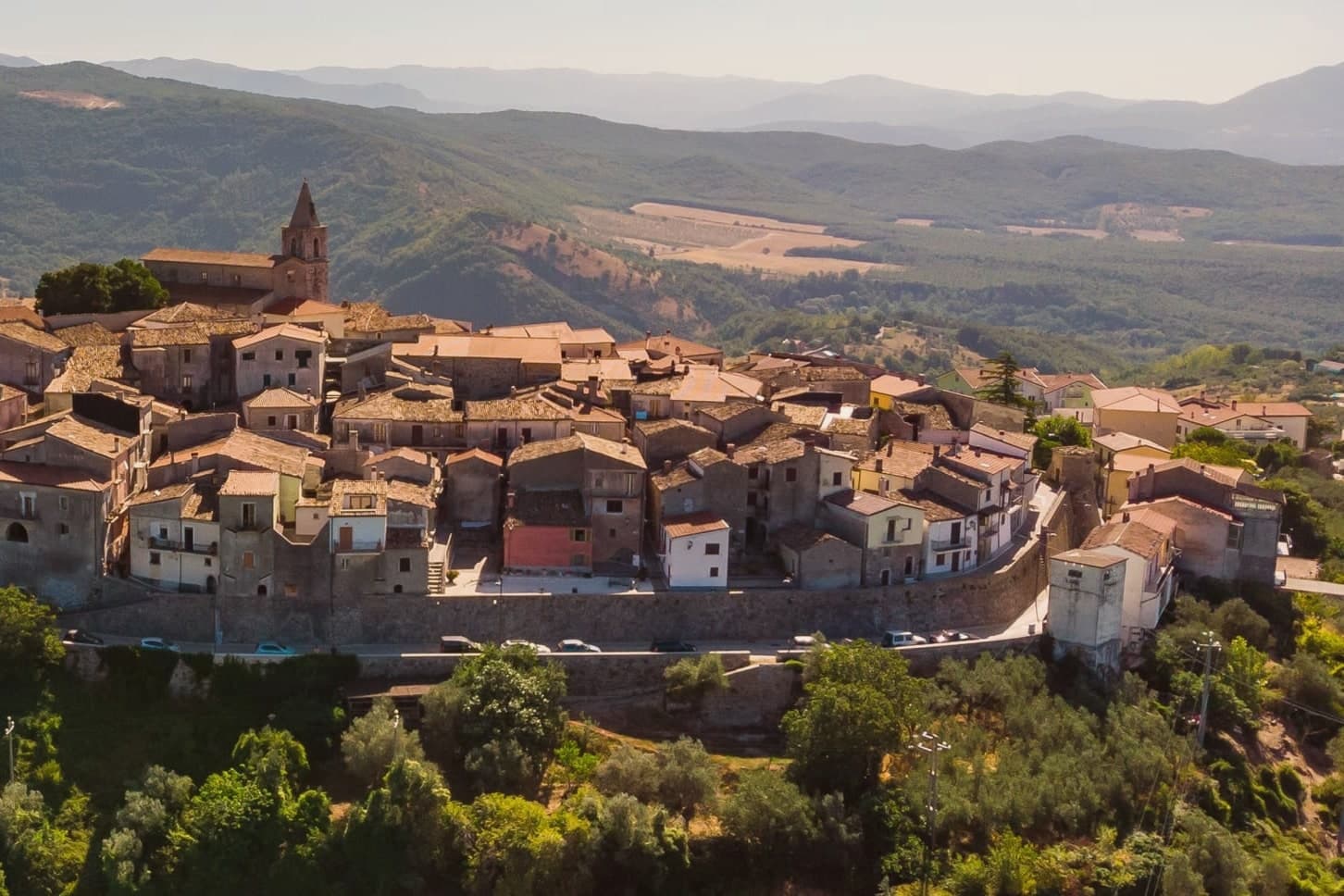
Fornelli sits at 530 meters on a hill west of Isernia, surrounded by olive groves and oak woods on the southern edge of the Parco Nazionale d'Abruzzo, Lazio e Molise. The village is documented from the tenth century as one of the castles defending the abbey of San Vincenzo al Volturno, and its name probably comes from the furnaces that once worked iron and brick on the slope.
What stands today is one of the best-preserved medieval wall circuits in Molise, accessed through a single gate that once had a drawbridge and moat. Seven towers ring the perimeter; the Palazzo Baronale anchors the centro storico with its circular corner towers and Baroque facing.
Annunziata Lombardi, mother of US Speaker Nancy Pelosi, was born here in 1909 and left for Baltimore as a toddler. The town carries three institutional badges at once: Borghi più belli, Parco Nazionale, Città dell'Olio.
What to see in Fornelli
- Cinta muraria medievale. One of the best-preserved medieval wall circuits in Molise, with seven towers and a single gate that once carried a drawbridge and moat.
- Palazzo Baronale. Feudal palace at the heart of the borgo, with two circular corner towers and a Baroque-trimmed façade softening the fortified shell.
- Chiesa di San Michele Arcangelo. Parish church inside the walls, dedicated to the archangel and holding the village's principal religious artworks.
How to get to Fornelli
Napoli is roughly 102 minutes away by road.
Our tip
April through June and September into October are the months for Fornelli. The olive harvest begins in late October and runs through November, and the slopes below the walls fill with families and crates. Summer afternoons cross thirty degrees and the centro storico empties between three and six.
Venafro
Why visit Venafro
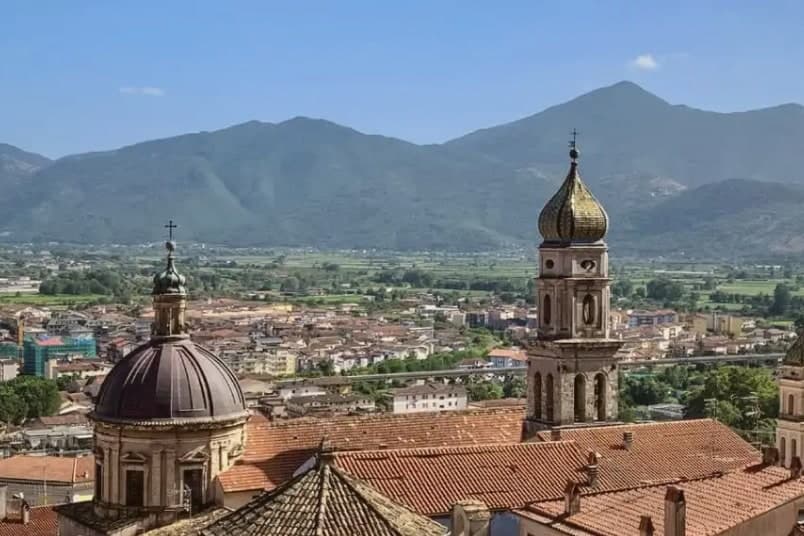
Venafro lies at 222 meters in the lower Volturno valley, on the road between Cassino and Isernia, near the Lazio border. Horace praised the place as a resort, and the surrounding hills still carry the native Aurino olive groves that made the town's name.
Until 1863 Venafro belonged to the Terra di Lavoro and the province of Caserta, was then reassigned to Campobasso, and joined the new Isernia province only in 1970, a late arrival to the map it now sits on. The old town climbs from the lower quarters up toward the castle at its highest point, with the basilica and its convent anchoring the base of that climb below.
Roman remains, amphitheatre, theatre, and aqueduct, lie folded into and beneath the medieval fabric, so that walls, churches, and antiquity share the same ground rather than sitting in separate districts. Venafro carries Parco Nazionale and Città dell'Olio marks.
The town reads as a place where a Roman colony, a resort praised by poets, and a shifting patchwork of provincial borders all left their layer without erasing the ones beneath.
What to see in Venafro
- Castello Pandone. Hilltop castle of the Pandone family from the fifteenth century. The noble rooms carry the equestrian frescoes, among them the Sala del Cavallo di Carlo V and the gallery of racehorses, painted over the whole cycle of chambers.
- Basilica di San Nicandro. Town basilica with attached convent, where Padre Pio stayed for medical treatment in the early twentieth century.
- Centro storico. Old town said to hold 33 churches between Roman remains and medieval walls, climbing toward the castle at its high point.
How to get to Venafro
There is a railway station in the town, so you can arrive without a car and never need one while you are here. Napoli is roughly 79 minutes away by road.
Our tip
April through October is the working season. Spring brings the Volturno valley back into colour and the Pandone castle's outdoor rooms back into use. June and September are the steadiest months for walking the centro storico.
Isernia
Why visit Isernia
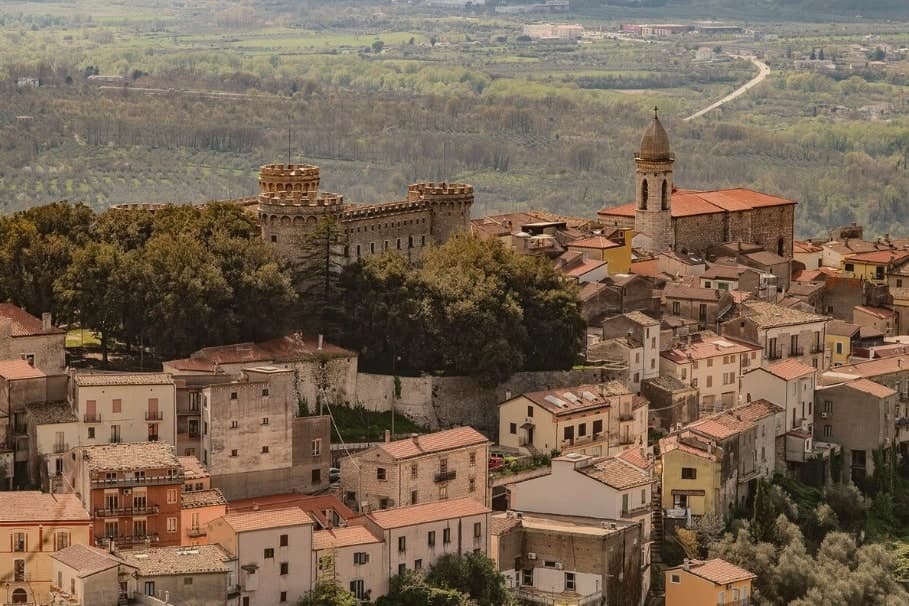
Isernia stands on a narrow rock spine between two rivers, 423 meters above sea level, in the upper Volturno valley. The hill is one of the oldest inhabited places in Europe.
The archaeological site of Isernia La Pineta has yielded tools and animal bones dated to about 700,000 years ago and the milk tooth of a child who lived 583,000 years ago. The Pentri Samnites built Aesernia here in the seventh century BC; Rome took it in 295 BC and founded a Latin colony in 264 BC.
The medieval city replaced the Roman streets with its own grid, and in 1240 the public Fontana Fraterna went up in the centro storico, six water jets behind a stone arcade made of repurposed Roman blocks. The Cattedrale di San Pietro Apostolo, built from 1349 on the foundations of a Samnite-era temple, sits a short walk away.
Isernia carries the Città del Tartufo mark for the white truffle harvested in the surrounding woods.
What to see in Isernia
- Museo Nazionale del Paleolitico (Isernia La Pineta). Archaeological site and museum showing tools and bones dated to 700,000 years ago, one of the oldest human sites in Europe.
- Fontana Fraterna. Thirteenth-century public fountain with six water jets behind a stone arcade, made of repurposed Roman blocks.
- Cattedrale di San Pietro Apostolo. Cathedral begun in 1349 on the foundations of a third-century-BC Italic temple, seat of the Bishop of Isernia-Venafro.
How to get to Isernia
There is a railway station in the town, so you can arrive without a car and never need one while you are here. Napoli is roughly 103 minutes away by road.
Our tip
April through October is the open season. Spring brings the Volturno valley green and the truffle hills back into walkable shape. June and September are the cleanest months for the centro storico.